Tag Archives: camping

Lolo National Forest

Lolo National Forest

Montana

Managed by U.S. Forest Service, Northern Region

2,639,224 acres (2,197,966 federal/ 441,258 other)

Website: https://www.fs.usda.gov/r01/lolo

Overview

Located in western Montana, the elevation of Lolo National Forest ranges from less than 2,400 feet on the Clark Fork River below Thompson Falls to the top of 9,186-foot Scapegoat Mountain.  West of Missoula off Interstate 90, the Ninemile Historic Remount Depot preserves a Civilian Conservation Corps (CCC) camp and pack stock training facility.  Founded in 1907, the Savenac Historic Tree Nursery Area is also well developed for visitors, including an arboretum and cabin rentals in what were formerly the cookhouse and bunkhouse. 

Highlights

Rattlesnake National Recreation Area, Lolo Pass Visitor Center, Lolo National Historic Trail, Fort Fizzle, Blue Mountain Recreation Area, Cascade Falls, Savenac Nursery, Petty Creek Bighorn Sheep Viewing Site, Clearwater Canoe Trail, Stark Mountain Vista, Lewis and Clark National Historic Trail

Must-Do Activity

Lolo National Forest surrounds Missoula, where the Aerial Fire Depot and Smokejumper Center offers guided tours and exhibits.  Right outside of the city are numerous hiking trails in Blue Mountain Recreation Area and Rattlesnake National Recreation Area, which contains 73 miles of trails (and has its own blog entry on our website).  Following a path used by the Corps of Discovery in 1805, the Lolo National Historic Trail shadows Highway 12 west into Idaho (see Clearwater National Forest). Take time to stop at the Lolo Pass Visitor Center managed by the U.S. Forest Service.

Best Trail

Morrell Falls National Recreation Trail leads to a 90-foot-tall waterfall on the western slope of the Swan Range.  The trail is 5.5 miles out-and-back, mostly flat with some short inclines as it cuts through a burned area now full of beargrass and fireweed.  The waterfall cascades down a rocky outcrop and is well lit in the afternoon.  The trailhead is located 7.5 miles from Highway 83 on a good gravel road that has well-signed intersections.  Also nearby, the Pyramid Pass Trailhead provides access to the Bob Marshall Wilderness in adjacent Flathead National Forest.

Watchable Wildlife

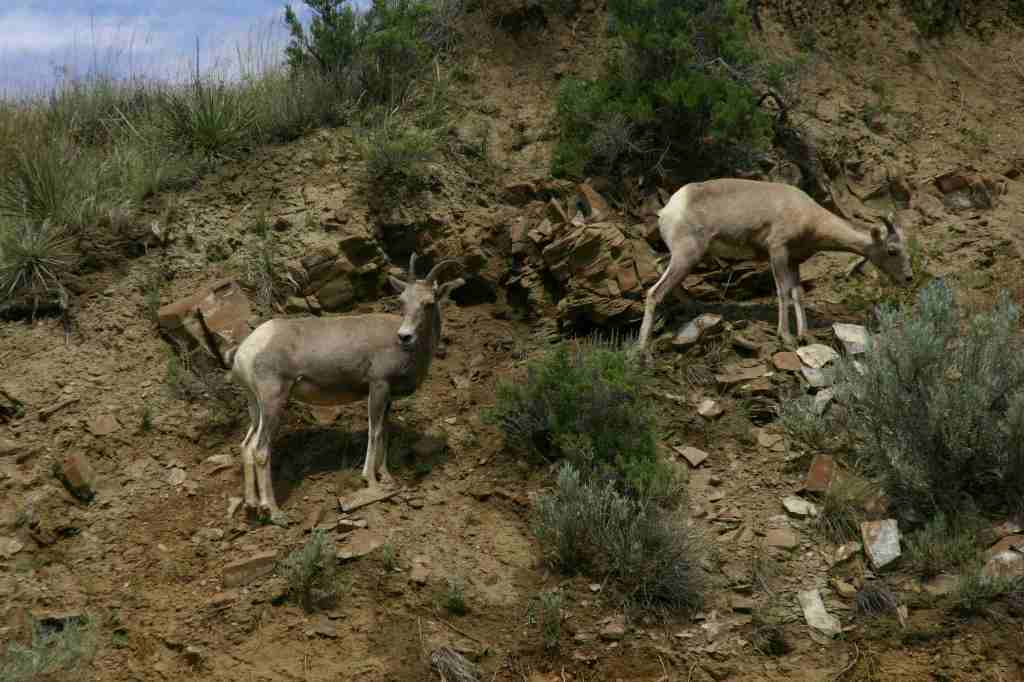
There are 60 species of mammals found in Lolo National Forest, including grizzly/brown bears, black bears, mountain lions, gray wolves, mountain goats, bighorn sheep, elk, moose, and mule deer.  Among the largest of the more than 300 birds spotted are bald eagles, golden eagles, and trumpeter swans.  The five rivers and over 100 lakes are home to 30 varieties of ducks and 20 types of fish.

Photographic Opportunity

Located on the western slope of the Swan Range, 90-foot-tall Morrell Falls is accessed on a 5.5-mile out-and-back hike.

Peak Season

Summer

Fees

None

Road Conditions

The unpaved roads we took were in good shape to Morrell Falls National Recreation Trail and Rattlesnake National Recreation Area.

Camping

The forest has 12 improved campgrounds and several historic fire lookout towers available for overnight rental through the website Recreation.gov

Wilderness Areas

Rattlesnake Wilderness

Scapegoat Wilderness (also in Helena and Lewis and Clark National Forests)

Selway-Bitterroot Wilderness (also in Bitterroot, Clearwater, and Nez Perce National Forests)

Welcome Creek Wilderness

Related Sites

Deerlodge National Forest (Montana)

Upper Missouri River Breaks National Monument (Montana)

Beaverhead National Forest (Montana)

Nearest National Park

Glacier

Conifer Tree Species

western redcedar, alpine larch, western larch, whitebark pine, ponderosa pine, grand fir, subalpine fir, Engelmann spruce, mountain hemlock

Flowering Tree Species

quaking aspen, Rocky Mountain maple, western serviceberry

Explore More – What is the origin of the name Lolo?

Learn more about this and the 154 other National Forests in our new guidebook Out in the Woods

Lincoln National Forest

Lincoln National Forest

New Mexico

Managed by U.S. Forest Service, Southwestern Region

1,271,064 acres (1,103,897 federal/ 167,167 other)

Website: https://www.fs.usda.gov/r03/lincoln

Overview

Lincoln National Forest is best known as the birthplace of Smokey Bear, a black bear cub that survived a 1950 wildfire in the Capitan Mountains and became a national symbol.  The nearby Smokey Bear Historical State Park is the final resting place for the famous bear that passed away at Washington D.C.’s National Zoo in 1976.  Lincoln National Forest includes parts of the Guadalupe, Sacramento, Sierra Blanca/White Mountains, Capitan, and Gallinas ranges.  There are several long trails through the National Forest, including the 20-mile Crest Trail in the White Mountain Wilderness and the 11-mile South Base Trail in the Capitan Wilderness.  All but one mile of the 29-mile-long Rim Trail is open to OHVs.

Highlights

Sunspot Scenic Byway, Billy the Kid Scenic Byway, Trestle Recreation Area, Sitting Bull Falls, Sierra Blanca Peak, Rim Trail, Willie White Trail, Dog Canyon National Recreation Trail, Capitan Peak Trail

Must-Do Activity

Sunspot Scenic Byway (State Road 6563) provides great views and access to one of the world’s largest solar observatories that is open for tours on summer weekends.  At its remote southern end, the National Forest borders both Carlsbad Caverns and Guadalupe Mountains National Parks.  Roads only connect with the latter, where a short detour takes you to the half-mile trail for 150-foot-tall Sitting Bull Falls.  In 1898, the Alamogordo and Sacramento Mountain Railway was constructed to access timberland 4,747 feet in the mountains above.  One of its scenic remnants is the 320-foot trestle over Mexican Canyon near Cloudcroft.  Lincoln National Forest has six fire lookouts listed on the National Register of Historic Places, including the stone Monjeau Lookout built by the Civilian Conservation Corps (CCC) that is accessible on a steep dirt road.  Given its proximity to Carlsbad Caverns National Park, it is not surprising that there are hundreds of caves in the National Forest that require a permit to explore.

Best Trail

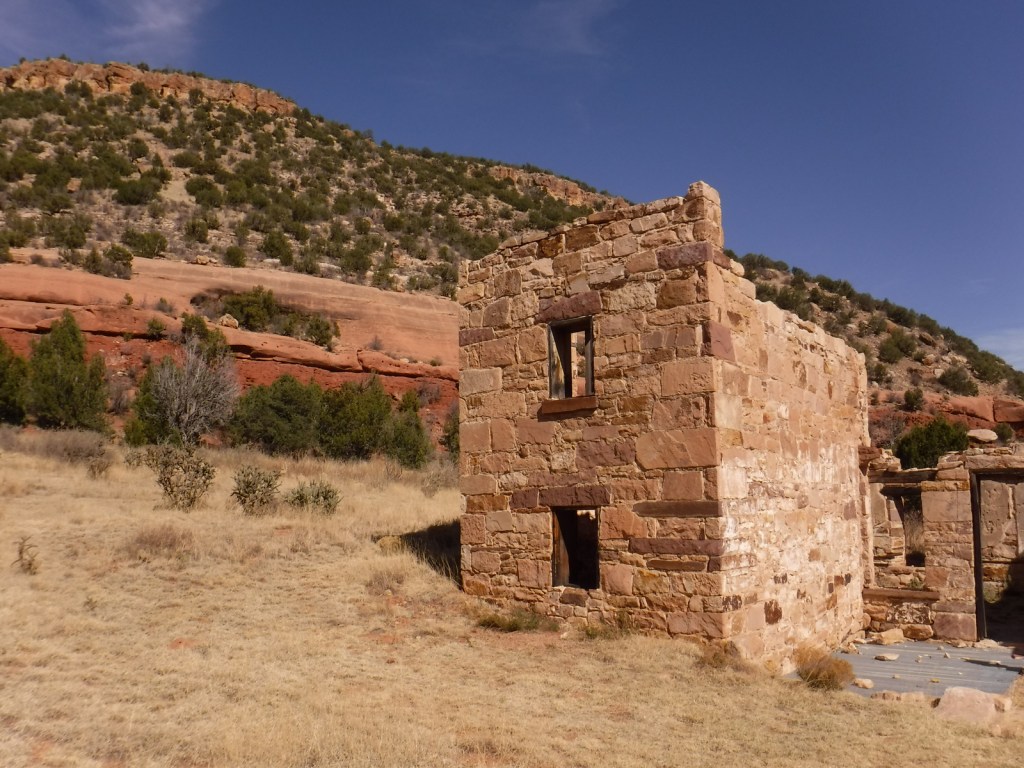
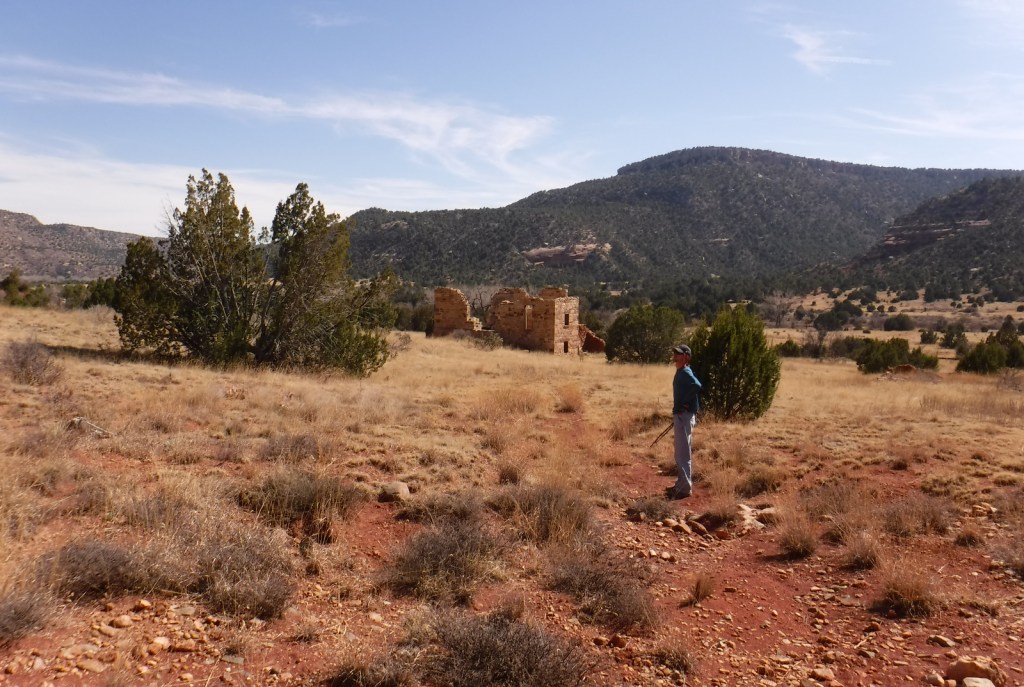
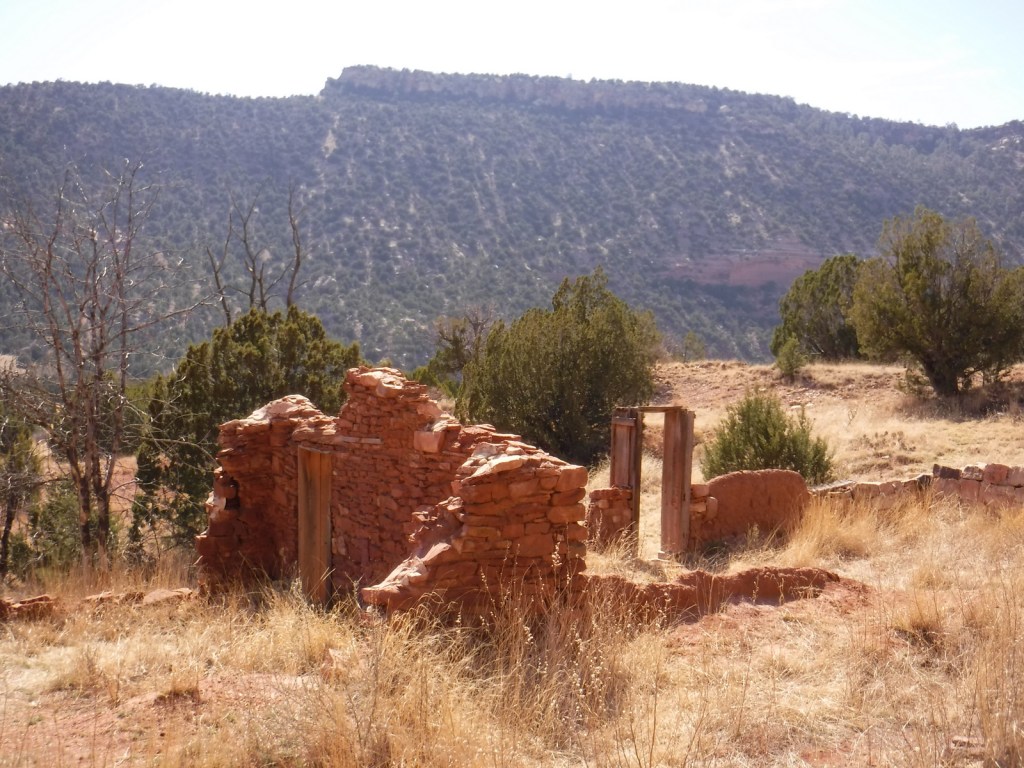
Dog Canyon National Recreation Trail follows a prehistoric travel route into the Sacramento Mountains east of White Sands National Park.  The trailhead starts in Oliver Lee Memorial State Park, which has a nice campground and charges a day use fee (though we have seen cars avoid this by parking just outside its entrance).  The 5.5-mile one-way trail climbs quickly above a beautiful canyon providing views of the Tularosa Basin before leveling out.  Past the cabin ruins at the three-mile point, look for fossils along the trail as it again steeply rises into the agave and cacti-studded mountains.  After gaining more than 3,000 feet in elevation, it dead ends at Forest Road 90B.

Watchable Wildlife

Ecosystems in the National Forest vary widely since it is spread across several mountain ranges and encompasses Chihuahuan Desert, pinyon-juniper woodlands, pine forests, and alpine meadows above 11,000 feet.  Game species include elk, mule deer, black bear, mountain lion, and exotic Barbary sheep.

Photographic Opportunity

Look for fossils in the rocks along Dog Canyon National Recreation Trail.

Peak Season

Spring and fall

Fees

None

Road Conditions

The Sunspot Scenic Byway and the road into Oliver Lee Memorial State Park are both paved and maintained, although the paved access road (137) through Lincoln National Forest to the north part of Guadalupe Mountains National Park has many potholes in it.  Be aware that there are also four-wheel-drive only roads to some trailheads.

Camping

There are a few developed campgrounds in the middle of the National Forest off Highway 82.  Although not all areas are open to dispersed camping, popular spots include Upper Bonito Dispersed Camping Area northwest of Ruidoso and Lower Karr Canyon south of Cloudcroft.

Wilderness Areas

Capitan Wilderness

White Mountain Wilderness

Related Sites

Cibola National Forest (New Mexico)

Salinas Pueblo Missions National Monument (New Mexico)

Gila National Forest (New Mexico)

Nearest National Park

Carlsbad Caverns

Conifer Tree Species

ponderosa pine, pinyon pine, limber pine, one-seed juniper, Engelmann spruce, Douglas-fir, white fir

Flowering Tree Species

New Mexico locust, quaking aspen, bigtooth maple, Rocky Mountain maple, mountain-mahogany, hophornbeam, Texas madrone

Explore More – What was the Lincoln County War of 1878?

Learn more about this and the 154 other National Forests in our new guidebook Out in the Woods

Lewis and Clark National Forest

Lewis and Clark National Forest

Montana

Managed by U.S. Forest Service, Northern Region

1,999,256 acres (1,863,788 federal/ 135,468 other)

Website: https://www.fs.usda.gov/r01/helena-lewisclark

Overview

East of the Continental Divide in Montana, Lewis and Clark National Forest is split across eight mountain ranges east and west of the Missouri River.  The largest western section butts up against Glacier National Park to the north and includes parts of the Scapegoat and the Bob Marshall Wilderness areas, which provide crucial habitat for grizzly/brown bears and world-class places for backpacking.  The Lewis and Clark Forest Reserve dates back to 1897, with the now-defunct Jefferson and Absaroka National Forests added in 1932 and 1945 respectively.  Since 2014, it has been co-managed with Helena National Forest.

Highlights

King Hill Scenic Byway, Cataract Falls, Sun River Gorge, Gibson Reservoir, Mt. Wright, Deep Creek Loop National Recreation Trail, Windy Mountain Trail, Crystal Cascades Trail, Crystal Lake Shoreline Loop Trail, Continental Divide National Scenic Trail

Must-Do Activity

We have always wanted to visit the National Park Service and U.S. Forest Service’s 25,000 square-foot Lewis and Clark Interpretive Center in Great Falls, Montana.  It features an exhibit hall, hiking trails, and a 158-seat theater, and it is open daily in the summer and Wednesday through Sunday in the offseason.  We have also wanted to backpack in the rugged Snowy Mountains, which draw backcountry skiers in the winter and horseback riders in the summer.  We will have to return to this central part of Montana, which includes one of our favorite places to explore: Upper Missouri River Breaks National Monument run by the Bureau of Land Management.

Best Trail

One of the most famous formations along the Continental Divide National Scenic Trail is the 15-mile long Chinese Wall, a 1,000-foot-tall cliff composed of five-million-year-old limestone.  Its closest access is 15 miles one-way from the South Fork Sun Trailhead, which is often marked as Packers on maps at the end of the gravel Benchmark Road (Forest Road 235).  The trail begins by following the South Fork Sun River before crossing a bridge and entering the Bob Marshall Wilderness.  We got a late start on the way in and came across a grizzly/brown bear grazing near the trail that evening and, on the drive out, we stopped to photograph three moose near Wood Lake Campground and a common loon in Anderson Lake.

Watchable Wildlife

Grizzly/brown bears are the most famous residents of the National Forest.  Additional mammals include black bears, mountain lions, Canada lynxes, wolverines, mule deer, Columbian white-tailed deer, mountain goats, bighorn sheep, elk, and moose.  Bald eagles, red-tailed hawks, and three types of grouse are often spotted.  There are excellent fly-fishing opportunities in the 1,600 miles of rivers and streams.

Photographic Opportunity

The 15-mile long Chinese Wall is an iconic landmark along the Continental Divide National Scenic Trail

Peak Season

Summer

Fees

None except for the Lewis and Clark Interpretive Center in Great Falls, which costs $8 per person or you can use an America the Beautiful pass.

Road Conditions

We drove the gravel Benchmark Road (Forest Road 235), which was long and in excellent condition.

Camping

There are 29 vehicle-accessible campgrounds in Lewis and Clark National Forest, including Wood Lake Campground near the South Fork Sun Trailhead.  Backcountry and dispersed camping options abound.

Wilderness Areas

Bob Marshall Wilderness (also in Flathead National Forest)

Scapegoat Wilderness (also in Helena and Lolo National Forests)

Related Sites

Deerlodge National Forest (Montana)

Bighorn National Forest (Wyoming)

Little Bighorn Battlefield National Monument (Montana)

Nearest National Park

Glacier

Conifer Tree Species

western redcedar, Douglas-fir, limber pine, whitebark pine, lodgepole pine, ponderosa pine, Engelmann spruce, subalpine fir, western larch, common juniper

Flowering Tree Species

quaking aspen, Rocky Mountain maple, western serviceberry

Explore More – Why is the 200 square-mile Badger-Two Medicine area of the National Forest managed differently?

Learn more about this and the 154 other National Forests in our new guidebook Out in the Woods

Lassen National Forest

Lassen National Forest

California

Managed by U.S. Forest Service, Pacific Southwest Region

1,375,593 acres (1,070,992 federal/ 304,601 other)

Website: https://www.fs.usda.gov/r05/lassen

Overview

Lassen National Forest Reserve dates back to 1905, then a decade later when Lassen Peak explosively erupted (the first eruption to be photographed in the continental U.S.), 106,589-acre Lassen Volcanic National Park was carved out.  The two federal areas are connected by the 187-mile-long Lassen Scenic Byway (Highways 44 and 89) that traces the volcanic legacy of the southern Cascade Range.  The 41,100-acre Ishi Wilderness was named in 1984 to honor the last surviving member of the Yahi band of Southern Yanas, taken from his native home near Oroville in 1911 and employed as a janitor at the University of California’s Anthropology Museum in San Francisco until his death from tuberculosis five years later.

Highlights

Lassen Scenic Byway, Lake Almanor, Eagle Lake, Subway Cave, Hat Creek Recreational Area, Triangle Lake, Heart Lake National Recreation Trail, Bizz Johnson Trail, Spencer Meadows National Recreation Trail, Pacific Crest National Scenic Trail

Must-Do Activity

Lassen National Forest runs campgrounds and boat ramps on both Lake Almanor and Eagle Lake, although most of their shorelines are privately owned.  Between the two lakes is the town of Susanville, where a railroad bed abandoned in 1978 was converted into the Bizz Johnson Trail that follows the Susan River for 26 miles. The trail features 12 river crossings and two tunnels with scenic mountain views.  Camping is restricted to specific portions of the trail. The 20,546-acre Caribou Wilderness was one of America’s first Primitive Areas designated in 1932 and along with the 16,335-acre Thousand Lakes Wilderness was established immediately following passage of the 1964 Wilderness Act.  In a proposed Wilderness area on the west side of Lassen Volcanic National Park, Heart Lake National Recreation Trail is a 2.4-mile one-way hike up to a glacial lake that connects to the longer Twin Meadows Trail.

Best Trail

Subway Cave is only 1,300 feet long, but the lava tube is the main attraction in Lassen National Forest, with free guided tours offered on summer weekends.  Lava flowed through here less than 2,000 years ago and interpretive signs along the 0.7-mile loop trail explain lavacicles and other geologic oddities.  A flashlight is necessary to explore past the openings of the 46°F cave, which drops to four feet in some places with a maximum ceiling of 17 feet.  One mile south on the Lassen Scenic Byway (Highway 44) is the 1.7-mile roundtrip Spatter Cone Trail (across from Hat Creek Campground).  The trail passes a variety of volcanic formations in a forest of Jeffrey pine trees.

Watchable Wildlife

Lassen National Forest is home to black bears, pine martens, mountain lions, bobcats, red foxes, coyotes, and a few gray wolves that migrated south from Oregon.  You are most likely to see mule deer or one of the variety of chipmunks or squirrels.  Bird sightings include mountain chickadees, Steller’s jays, Clark’s nutcrackers (at high elevations), and eight species of woodpeckers such as pileated and white-headed.

Photographic Opportunity

Sitting at 4,505 feet in elevation, Lake Almanor stretches for 13 miles near Chester, California and is a good place for summer boating and fishing.

Peak Season

Summer

Fees

None

Road Conditions

Subway Cave is located right off Lassen Scenic Byway (Highways 44 and 89) and most of the unpaved roads we have explored in the National Forest have been maintained, probably because of the continued harvesting activities that we witnessed on our field trip from Cal Poly University in 2010.

Camping

Lassen National Forest runs campgrounds on both Lake Almanor and Eagle Lake, plus Hat Creek Recreational Area has seven campgrounds.  If you are looking to disperse camp outside Lassen Volcanic National Park, take the road west outside the southern entrance (but keep a clean campsite as we saw a black bear in the area).

Wilderness Areas

Caribou Wilderness

Ishi Wilderness (also managed by BLM)

Thousand Lakes Wilderness

Related Sites

Lava Beds National Monument (California)

Devils Postpile National Monument (California)

Whiskeytown-Shasta-Trinity National Recreation Area (California)

Nearest National Park

Lassen Volcanic

Conifer Tree Species

red fir, white fir, western hemlock, Jeffrey pine, ponderosa pine, lodgepole pine, western white pine, California juniper, incense-cedar

Flowering Tree Species

quaking aspen, Fremont cottonwood, ceanothus, manzanita

Explore More – Other than the namesake for Lassen Peak, who was Peter Lassen?

Learn more about this and the 154 other National Forests in our guidebook Out in the Woods

Buffalo Gap National Grassland

Buffalo Gap National Grassland

South Dakota

Managed by U.S. Forest Service, Rocky Mountain Region

Established 1960

679,805 acres (595,715 federal/ 84,090 other)

Website: https://www.fs.usda.gov/recarea/nebraska/recarea/?recid=30329

Overview

Buffalo Gap is the second-largest National Grassland and it surrounds Badlands National Park and Minuteman Missile National Historic Site east of Black Hills National Forest.  The town of Wall, South Dakota is home to the National Grasslands Visitor Center, which serves as the main interpretive site for all 20 National Grasslands (plus Midewin National Tallgrass Prairie).  The exhibit hall is still under reconstruction following a flood that forced a relocation into a temporary trailer for years, but the theater is reopened showing a short film.  This is a good spot to pick up a map and buy some hard-to-find National Grassland merchandise. 

Highlights

National Grasslands Visitor Center, French Creek Agate Beds

Must-Do Activity

After starting your visit at the National Grasslands Visitor Center in Wall (and making a required visit to Wall Drug—America’s best roadside attraction), head south through Buffalo Gap National Grassland towards the entrance booth for Badlands National Park (see Photographic Opportunity).  The only developed site is much further west at French Creek Agate Beds, where there is a campground and rockhounding is legal for Fairburn agate (the official State Gem of South Dakota), rose quartz, and banded jasper.  The collection and duplication of vertebrate fossils requires a permit and no commercial gathering of fossils is allowed, except for petrified wood. 

Best Trail

Right to the southeast of the Wyoming border on Highway 18 is a section of Buffalo Gap National Grassland where we did some off-trail hiking along a waterway.  Conata Basin south of Badlands National Park is also a good option for prairie exploration.

Watchable Wildlife

Buffalo Gap National Grassland contains grazing allotments for cattle and domesticated bison herds, as well as wild herds of white-tailed deer and pronghorn.  In 2003, 151 black-footed ferret kits were reintroduced and placed in coyote-free areas, but these nocturnal predators only spend a few minutes above ground each day.  Swift fox and bighorn sheep have also been reintroduced in neighboring Badlands National Park.  Watch in prairie dog towns for burrowing owls and prairie rattlesnakes, as well as northern harriers, prairie falcons, golden eagles, and other raptors. 

Photographic Opportunity

There are free designated campsites along the popular Nomad Vw S Road just north of the Pinnacles Entrance to Badlands National Park, which offer great views from the cliffs above the striped geologic formations.

Peak Season

Summer

Fees

None

Road Conditions

The bentonite clay soils can make the unpaved roads impassable to passenger vehicles when muddy.  There is also a deep stream crossing to access the French Creek Agate Beds that would require high clearance when there is water present. 

Camping

Unlike most National Grasslands, this one has a developed campground at French Creek (fee required) with vault toilets, fire grates, and picnic tables, but no potable water.  It is free to camp in designated sites along the busy Nomad Vw S Road just north of the Pinnacles Entrance to Badlands National Park.

Related Sites

Fort Pierre National Grassland (South Dakota)

Jewel Cave National Monument (South Dakota)

Wind Cave National Park (South Dakota)

Nearest National Park

Badlands

Explore More – What is the status of 48,000 acres of the National Grassland set to be designated as Wilderness in a 2010 bill sponsored by South Dakota Senator Tim Johnson?