Tag Archives: backpacking

Top 10 Backpacking Books

I am about to head back out to finish the northernmost 100 miles of the Arizona National Scenic Trail (follow along live), so it seemed like a good time for this list.  As is often the case when I start ranking the top 10 books in any given category, I thought to myself that I have not read enough books in the backpacking genre to really leave any off the list.  And again, as usual, I remembered ones that I had forgotten and started making hard decisions about what got shifted to the Honorable Mentions.  There are so many first-person narratives about hiking long trails in the U.S. that I have not really scratched the surface here.  I hope you are inspired to pick up one of them, just as I was to recently read Heather Anderson’s Thirst: 2600 Miles to Home after reading reviews.  The next backpacking book on my to read list is Carrot Quinn’s Thru-Hiking Will Break Your Heart: An Adventure on the Pacific Crest TrailClick here to see all the Top 10 Lists.

If you or someone you love are interested in hiking or backpacking in the 155 National Forests, our travel guidebook Out in the Woods makes a great gift!

10. Wild: From Lost to Found on the Pacific Crest Trail by Cheryl Strayed (2012)

The most famous book about the Pacific Crest National Scenic Trail can be heartbreaking to read, but it is better than the movie version.

9. Northland: A 4,000-Mile Journey along America’s Forgotten Border by Porter Fox (2018)

The northern U.S. border with Canada is the subject of this autobiography that involves traveling by canoe, freighter, car, and foot.

8. A Walk in the Park: The True Story of a Spectacular Misadventure in the Grand Canyon by Kevin Fedarko (2024)

Mostly a series of off-trail misadventures and a what-not-to-do guide set in Grand Canyon National Park by the author of The Emerald Mile (#2 on the Top 10 Non-Fiction Books Set in a National Park).

7. The Sun Is a Compass: A 4,000-Mile Journey into the Alaskan Wilds by Caroline Van Hemert (2019)

A well-written account of a biologist and her husband’s epic journey by rowboat, ski, foot, raft, and canoe.

6. Grandma Gatewood’s Walk: The Inspiring Story of the Woman Who Saved the Appalachian Trail by Ben Montgomery (2014)

A fun biography of the woman who popularized thru-hiking the Appalachian National Scenic Trail (and was an Honorable Mention for the Top 10 Non-Fiction Books on National Forests)

5. How to Be Alone: an 800-mile hike on the Arizona Trail by Nicole Antoinette (2023)

I read this autobiography before my own trip in the opposite direction on the Arizona National Scenic Trail where I spent the great majority of my hours walking alone.

4. The Pursuit of Endurance: Harnessing the Record-Breaking Power of Strength and Resilience by Jennifer Pharr Davis (2018)

At a library event in Wyoming, I got to meet this author and one-time record holder for the Fastest Known Time (FKT) on the Appalachian National Scenic Trail.

3. Thirst: 2600 Miles to Home by Heather Anderson  (2019)

An engrossing narrative of chasing the FKT for the Pacific Crest National Scenic Trail in 2013, she also wrote Mud, Rocks, Blazes: Letting Go on the Appalachian Trail (2021) and Farther: Eight Months on America’s Triple Crown Trails (2026).

2. A Walk in the Woods: Rediscovering America on the Appalachian Trail by Bill Bryson (1998)

This funny tale of the Appalachian National Scenic Trail was an Honorable Mention on the Top 10 Non-Fiction Books Set in a National Park list (which is by far my most popular Top 10 List).

…and finally the #1 backpacking book:

1. A Walk Across America by Peter Jenkins (1979)

This is the book that inspired that part of Forrest Gump where he walks on roads for years.  I was blown away when I read this as a teenager and I think it had a big impact on me (I even hiked with a Siberian husky like the author).

.

Honorable Mentions

You Are Here by David Nicholls (2024)

This book does not fit this list at all because it is the only one that is fiction and it is set in England, but I have not identified with a protagonist this much in decades.

Freedom by Sebastian Junger (2021)

All 400 miles walked on the railroad lines of the east coast during the 2020 pandemic were breaking trespassing laws, which gives this narrative an added sense of danger.

On Trails: An Exploration by Robert Moor (2016)

A reflection on trails of all kinds by a man who thru-hiked the Appalachian National Scenic Trail was an Honorable Mention for the Top 10 Non-Fiction Books on National Forests.

The Last Season by Eric Blehm (2006)

A well-researched investigation into the disappearance of a National Park Ranger in the rugged backcountry of California’s Sierra Nevadas also placed on the Top 10 Non-Fiction Books Set in a National Park list.

A Long Trek Home: 4,000 Miles by Boot, Raft, and Ski by Erin McKittrick (2009)

An Honorable Mention for the Top 10 Non-Fiction Books Set in Alaska, most of this amazing journey was spent paddling on water, not walking under the weight of a pack raft.

Know someone who loves National Parks? Gift them our travel guidebook A Park to Yourself: Finding Solitude in America’s 63 National Parks

Monongahela National Forest

Monongahela National Forest

West Virginia

Managed by U.S. Forest Service, Northern Region

1,706,898 acres (921,150 federal/ 785,748 other)

Website: https://www.fs.usda.gov/r09/monongahela

Overview

Monongahela National Forest contains the highest point in West Virginia, 4,863-foot-tall Spruce Knob with an observation tower for seeing over the trees at its summit.  It is part of Spruce Knob-Seneca Rocks National Recreation Area (see our full blog post), which is very popular with rock climbers.  The National Forest’s initial 7,200 acres were purchased by the federal government in 1915, and it the grew to 150,367 acres over the next decade.  During World War II, the U.S. Army utilized the area as an artillery and mortar range, in addition to training soldiers in climbing techniques at Seneca, Nelson, and Champe Rocks.  This area receives an average of 60 inches of annual precipitation on the west side of the Allegheny Front and only half that on the rain shadow side.  It is the headwaters of six major rivers: the Monongahela, Potomac, Greenbrier, Elk, Tygart, and Gauley.
Know someone who loves the National Forests? Gift them our travel guidebook Out in the Woods so they can learn more about all 155 National Forests.
Highlights

Spruce Knob-Seneca Rocks National Recreation Area, Cranberry Glades Botanical Area, Highland Scenic Highway, Lake Sherwood Recreation Area, Gaudineer Knob Scenic Area, Cassell Cave, Sinks of Gandy, Stuart Memorial Drive, Champe Rocks, Dolly Sods Scenic Area

Must-Do Activity

There are 94,991 acres in eight designated Wildernesses in Monongahela National Forest, more than half of which is in the Cranberry Wilderness.  A boardwalk traverses the bogs at Cranberry Glades Botanical Area, which has a visitor center run by the Forest Service.  Fishing is a popular pastime, especially at Lake Sherwood, Spruce Knob Lake, and Lake Buffalo.  When winter conditions are right, there is a snowmobile area on Highland Scenic Highway.  The forest is mostly second growth, but 318 acres of old-growth remains, which can be seen at Fanny Bennett Hemlock Grove, Gaudineer Scenic Area (for red spruce), Shavers Mountain Spruce-Hemlock Stand, North Fork Mountain Red Pine Botanical Area, North Spruce Mountain Old Growth Site, and Virgin White Pine Botanical Area.
Best Trail

There is great hiking in Spruce Knob-Seneca Rocks National Recreation Area, and other trails can be found at Lake Sherwood Recreation Area, Falls of Hill Creek Scenic Area, Mt. Porte Canyon, and Stuart Recreation Area.  The 17,371-acreDolly Sods Wilderness encompasses much of the Red Creek drainage with high-elevation bogs and heaths like those found in southern Canada.

Watchable Wildlife

It is hard to believe given their abundant numbers today, but in the 1930s white-tailed deer had to be reintroduced from Michigan.  In 1969, 23 fishers were reintroduced from New Hampshire.  Other large mammals include black bear, red and gray fox, coyote, bobcat, snowshoe hare, beaver, river otter, raccoon, mink, skunk, and opossum.  Of the 230 bird species identified, 159 are known to breed here.  Approximately 90% of the trout waters in West Virginia are within the National Forest, and trout are stocked at Spruce Knob Lake and other locations.

Photographic Opportunity

The iconic Seneca Rocks are a 900-foot-tall quartzite crag heavily used by rock climbers.  On October 22, 1987, a prominent pinnacle dubbed “the Gendarme” fell to the ground.

Peak Season

Summer

Fees

A day use fee applies at Lake Sherwood Recreation Area.

Road Conditions

Most roads are open year-round, including the paved road to the top of Spruce Knob when it is snow-free.

Camping

The National Forest has 23 campgrounds, including popular options in Spruce Knob-Seneca Rocks National Recreation Area at Seneca Shadows and Big Bend (with hot showers). 

Wilderness Areas

Big Draft Wilderness

Cranberry Wilderness

Dolly Sods Wilderness

Laurel Fork North Wilderness

Laurel Fork South Wilderness

Otter Creek Wilderness

Roaring Plains West Wilderness

Spice Run Wilderness

Related Sites

Allegheny National Forest (Pennsylvania)

George Washington National Forest (Virginia-West Virginia)

Jefferson National Forest (Virginia-West Virginia-Kentucky)

Harpers Ferry National Historical Park (West Virginia-Virginia-Maryland)

Nearest National Park

New River Gorge

Conifer Tree Species

eastern hemlock, balsam fir, red spruce, red pine, eastern white pine

Flowering Tree Species

black ash, mountain ash, black cherry, yellow birch, sugar maple, red maple, sweet birch, cucumber magnolia, American beech, basswood, speckled alder, mountain laurel, white rhododendron

Explore More – The Monongahela River gets its name from the Lenape language, and it translates as what in English?

Learn more about this and the 154 other National Forests in our new guidebook Out in the Woods

Modoc National Forest

Modoc National Forest

California

Managed by U.S. Forest Service, Pacific Southwest Region

1,979,327 acres (1,663,401 federal/ 315,926 other)

Website: https://www.fs.usda.gov/r05/modoc

Overview

In the northeast corner of California, Modoc National Forest contains the largest shield volcano in North America: 7,921-foot Medicine Lake Volcano.  This region has a long history of volcanism, as seen at Pumice Stone Mountain, Burnt Lava Flow, High Hole Crater, Hot Spot, and Glass Mountain (composed of rhyolite obsidian and glossy dacite).  The basalt-topped plateau of Devil’s Garden is home to an 800-acre stand of western juniper.  East of Goose Lake, the Warner Mountains rise from 4,300 feet to 9,892-foot Eagle Peak, and are covered by a mixed conifer forest of lodgepole pine, whitebark pine, ponderosa pine, incense-cedar, and red fir. 

Know someone who loves the National Forests? Gift them our travel guidebook Out in the Woods so they can learn more about all 155 National Forests.

Highlights

Sáttítla Highlands National Monument, Volcanic Legacy Scenic Byway, Medicine Lake Recreation Area, Glass Mountain, Devil’s Garden Natural Area, Mill Creek Falls, Highgrade National Recreation Trail, Pine Creek Trail

Must-Do Activity

Medicine Lake offers boat ramps, trails, and campgrounds and nearby is Giant Crater, which has the longest known lava tube system in the world at 18 miles (although it is partially collapsed).  Located up a dirt road often blocked by snowdrifts late into the summer, Glass Mountain has a crater full of sharp pieces of rhyolite obsidian and glossy dacite.  This remote corner of California has some of the darkest skies in the continental U.S., so it is great for stargazing on moonless nights.  In the winter, snowmobiling and cross-country skiing are popular activities on groomed trails.  The South Warner Mountain Wilderness is traversed by the 21-mile Summit Trail that passes Eagle Peak, the Devil’s Knob, and The Slide. Mill Creek Falls is also in the Warner Mountains, accessed by a 3.4-mile out-and-back trail.

Best Trail

In the Warner Mountains near the border with Oregon’s Fremont National Forest, the 5.5-mile one-way Highgrade National Recreation Trail provides excellent views of Goose Lake.  The trailhead is reached by taking paved County Road 9 five miles east from Highway 395 then turning north on the steep and unpaved Del Pratt Spring Road (Forest Road 47N72) for 6.3 miles.  The trail quickly leaves the shade of the forest as it steadily climbs 800 feet through a slope covered in woolly mule’s ears flowers to a saddle west of 8,224-foot Mt. Vida.  It is possible to summit Mt. Vida from this point, but the trail heads away toward Yellow Mountain following Forest Road 48N10.

Watchable Wildlife

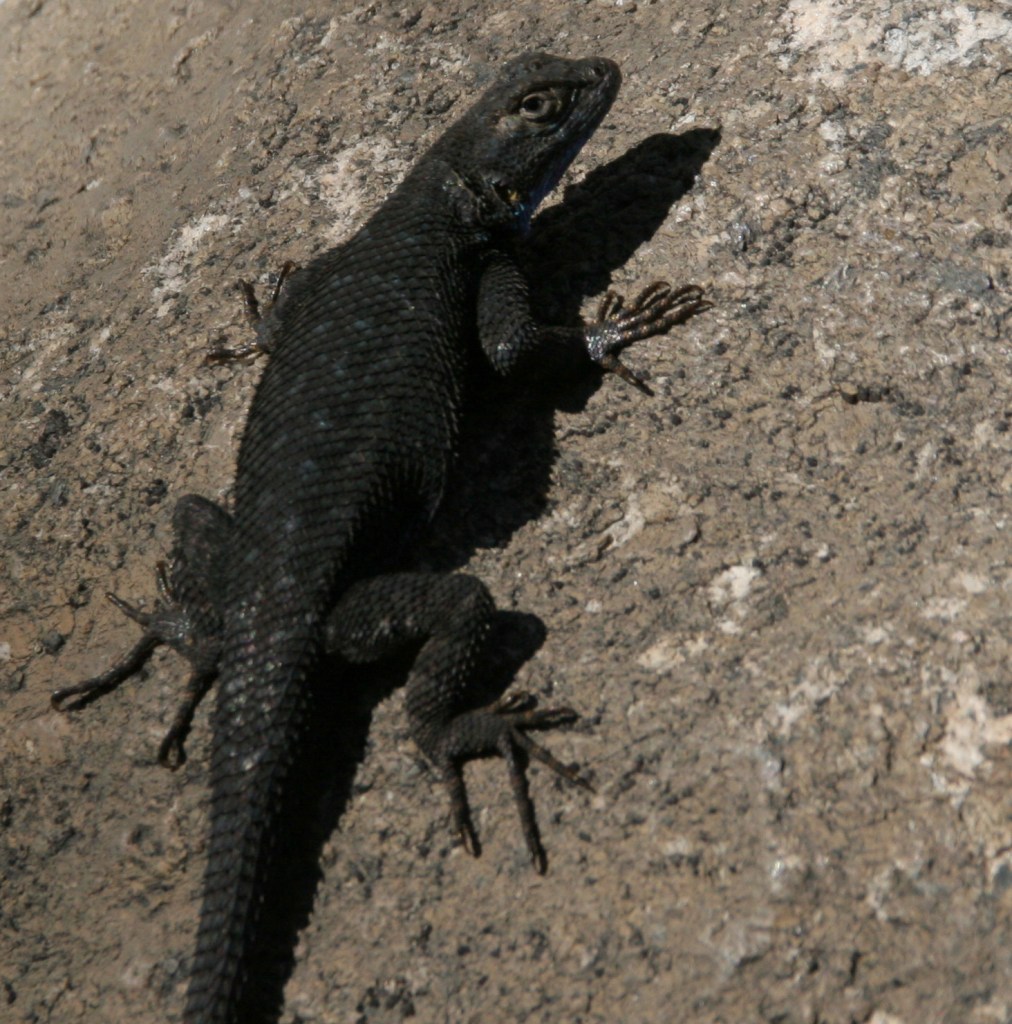
Modoc National Forest borders Lower Klamath National Wildlife Refuge, in addition to Tule Lake, Clear Lake, and Modoc National Wildlife Refuges.  These wetlands provide habitat crucial for bird nesting and migration on the Pacific Flyway.  The many lava tubes provide habitat for numerous species of bats, in addition to violet-green swallows and bushy-tailed woodrats.  Larger mammals include mule deer, pronghorn, badger, skunk, raccoon, pika, jackrabbit, yellow-bellied marmot, coyote, bobcat, and mountain lion.  Large birds found here are great horned owl, short-eared owl, and bald eagle (winter resident).  Reptiles are abundant, including the western fence lizard, northern sagebrush lizard, western skink, Rocky Mountain rubber boa, gopher snake, desert night, and western rattlesnake.

Photographic Opportunity

Not far up the steep Highgrade National Recreation Trail there are excellent views of Goose Lake to the west.

Peak Season

Summer

Fees

$5 per vehicle (or the America the Beautiful Pass) at Medicine Lake

Road Conditions

This area receives abundant winter snowfall, and roads can be blocked by snow into July, which we experienced trying to get to Glass Mountain.  The road to Medicine Lake is paved, but almost every other road through the National Monument is unpaved, some requiring a high-clearance vehicle.  Giant Crater is a Geologic Special Interest Area that can be accessed two miles off Medicine Lake Road on Forest Road 43N11. 

Camping

There are multiple Forest Service campgrounds on Medicine Lake, plus two nearby at Blanche Lake and Bullseye Lake.  Dirt roads in Modoc National Forest provide ample dispersed campsites.

Wilderness Areas

South Warner Wilderness

Related Sites

Lava Beds National Monument (California)

Tule Lake National Monument (California)

Sáttítla Highlands National Monument (California)

Butte Valley National Grassland (California)

Nearest National Park

Lassen Volcanic

Conifer Tree Species

ponderosa pine, whitebark pine, red fir, incense-cedar, white fir, lodgepole pine, western white pine, Jeffrey pine, incense-cedar, western juniper

Flowering Tree Species

quaking aspen, curlleaf mountain mahogany, elderberry, sagebrush

Explore More – The Modoc Tribe traditionally lived in this area and the Klamath called them “Moadok Maklaks” that translates as what?

Learn more about this and the 154 other National Forests in our new guidebook Out in the Woods

Arizona Trail Days 24 to 34

After two “zero days” I returned to the Gila River at the lowest point on the Arizona Trail (AZT) where temperatures had cooled considerably from two weeks before. In 36 days (including six zeroes), I have now completed the southernmost 713 miles on the 800-mile AZT since starting on March 4, 2026. Good news is the National Park Service is planning to reopen the North Kaibab Trail on May 15, so I plan to wait to do the final 100 miles through the Grand Canyon and up to the Utah border.

This journey has exceeded my expectations as my first “long trail.” I have seen amazing wildlife and scenery. I met some interesting people. I had days where I did not see another person. It has been introspective and healing. I have walked further and faster than I imagined possible. I’m thankful that past thru-hikers have made this a socially acceptable (even laudable) activity. Mostly, it’s just really fun and feels like an accomplishment to walk between two arbitrary borderlines. I could not have done it without my parents and friends driving all across the state to resupply me. I cannot say thank you enough!

Arizona Trail Day 26, Mile 265 to 291 plus 2 when I took a wrong turn from the Gila River where I took an afternoon dip. So many grasshoppers! Tried out a sun umbrella then didn’t need it when clouds rolled in for an awesome sunset hour. This was my restart point after avoiding desert heat for two weeks.
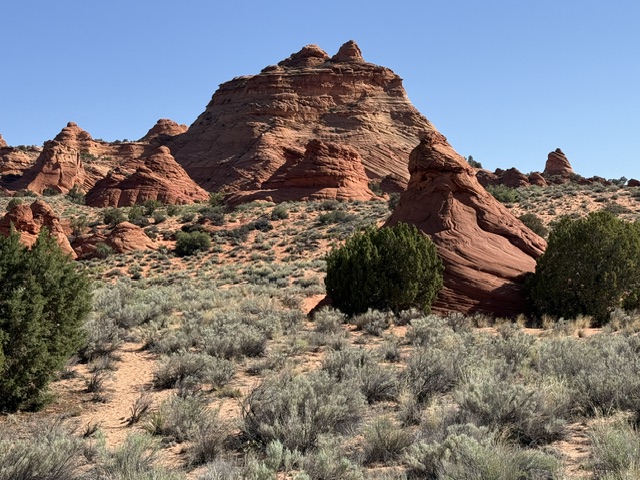
Arizona Trail Day 27, Mile 291 to 321 across Highway 60 climbing steeply into the Superstition Wilderness. Started at 5 a.m. when it was sprinkling and my sun umbrella worked well for rain. Saw my first ever Gila monster, which was amazing.
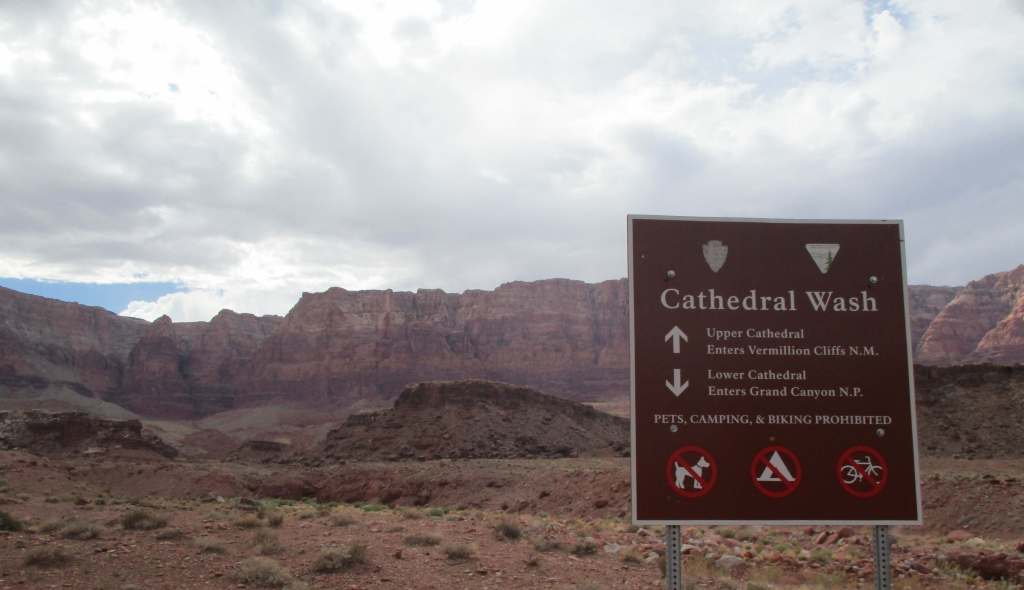
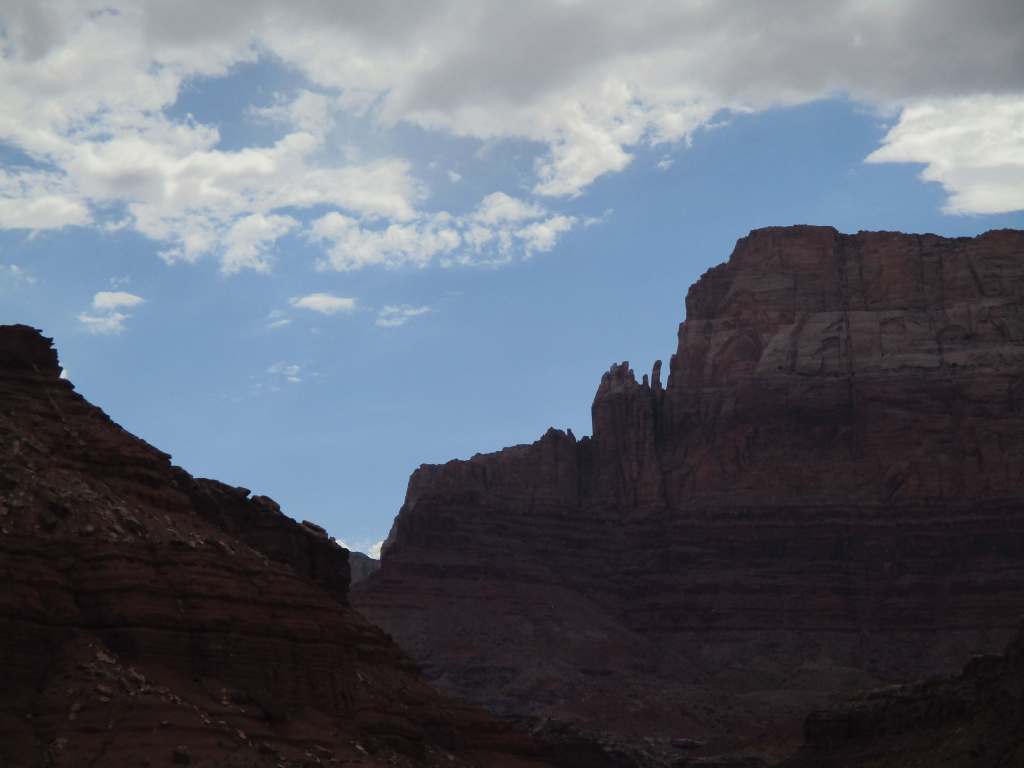
Arizona Trail Day 28, Mile 321 to 347 down from Reavis Ranch in Tonto National Forest to Roosevelt Lake. It was nice to hike a while with Michelle and Adam from Seattle. I saw my second ever Gila monster, which was also amazing! Big thanks to my parents who drove down from Pine to resupply me before sunset.

Arizona Trail Day 29, Mile 347 to 366 across Roosevelt Lake Bridge up into the Four Peaks Wilderness. Shake Spring was flowing nicely this afternoon so I decided to camp nearby and cut my day short to enjoy the shade.

Arizona Trail Day 30, Mile 366 to 387 down the mountain from Four Peaks Wilderness to the Beeline Highway 87. At some point Saturday I surpassed 600 miles on the 800-mile Arizona National Scenic Trail! My parents brought me a milkshake down from Payson, which tasted amazing.

Arizona Trail Day 32, Mile 387 to 417 into the Mazatzal Wilderness after a zero day to spend Easter with family in Chandler. Cloudy and drizzly weather helped me stay cool and I didn’t have to drink much. Cumulative 6,500-foot ascent and 4,000-foot descent over the 30 miles! Great sunset over Horseshoe Lake.

Arizona Trail Day 33, Mile 417 to 442 out of the Mazatzal Mountains down to the East Verde River where I took an afternoon swim. I met a lot of friendly people backpacking today, including one volunteer doing trail maintenance who provided trail magic in the form of a delicious cheese stick.

Arizona Trail Day 34, Mile 442 to 459 back home to Pine. I have now completed the southernmost 713 miles of the AZT since March 4. I plan to finish the final 100 miles when North Kaibab Trail through Grand Canyon National Park opens after May 15. I could not have done this without the help of my parents and friends along the way. Thank you so much!

I have also been updating my Instagram account daily with photos: https://www.instagram.com/ravenabouttheparks/

Top 10 Backpacking Songs

This is my first Top 10 list involving music after decades of making mixtapes and playlists.  This month I have been backpacking the Arizona National Scenic Trail, but these songs would be great on any walk.  I have only listened to music on less than 10% of my miles so far, but this was a fun project think about (especially while walking dirt roads which can be tedious and requires less concentration). I included my favorite lyrics from each song and a couple about Alaska in the Honorable Mentions since living there last summer is when I first conceived of attempting this 800-mile trek. Click here for all my Top 10 lists. This link should work to see the playlist on Amazon Music.

10. Beauty In Walking Away by Marié Digby

It’s never quite simple, it’s never that safe

It never seems perfect until it’s too late

It’s never the right time to find a new way

9. Avalanches (Culla’s Song) by A Fine Frenzy

We found ourselves atop of a mountain peak

The air was thin as a beggar’s sleeve

The city lights were miles away

The hush was as thick as your winter coat

8. Above The Timberline by Five For Fighting

Things get slower when it’s harder to breath

I can almost touch the stars that are hanging over me

7. The Climb by Miley Cyrus

Always gonna be an uphill battle

Sometimes I’m gonna have to lose

Ain’t about how fast I get there

Ain’t about what’s waiting on the other side

It’s the climb

6. Walking Slow by Jackson Browne

Don’t know why I’m happy

I’ve got no reason to feel this good

Maybe it’s because I’m all alone and I’ve got no place to go

5. Have You Ever by Brandi Carlile

Have you ever wandered lonely through the woods?

And everything there feels just as it should

You’re part of the life there

You’re part of something good

4. Walk Hard by John C. Reilly

Seen my share of the worst that this world can give

But I still got a dream and a burning rage to live

Walk hard

3. Ends Of The Earth by Lord Huron

No time for ponderin’ why I’m-a wanderin’

Not while we’re both still alive

To the ends of the earth, would you follow me?

There’s a world that was meant for our eyes to see

2. Boulevard Of Broken Dreams by Green Day

I walk a lonely road, the only one that I have ever known

Don’t know where it goes but it’s home to me and I walk alone

…and finally my #1 backpacking song:

1. Keep On Walking by Jem

If it’s true that love makes the world go round, please give some love to me

‘Cause I’m feeling so alone right now, it’s suffocating me

God give me strength to keep on walking

.

Honorable Mentions              

Arizona Night by Roger Clyne & The Peacemakers

When the mad sun′s, mad day’s tirade is through

Evening comes to seduce you in diamonds on her dress of velvet blue

Something in the Arizona night

Makes us crazy from the heat and dizzy from the height

Middle Of Nowhere by Kacey Musgraves

Gonna find my own peace, I wanna be

Somewhere in the middle of nowhere

I think maybe I’ll just stay there

More Than This by Roxy Music (especially the cover by Missy Higgins)  

As free as the wind

Hopefully learning

Why the sea on the tide

Has no way of turning

More than this

Alaska by Maggie Rogers       

I was walking through icy streams

That took my breath away

Moving slowly through westward water

Over glacial plains

And I walked off you and I walked off an old me

Winter’s Lament by Jamestown Revival

Pinyon pines, horizon lines, the fading of the snow

Darling it’s a pity all this idle time

Let’s set out for the countryside and see what we can find

Walk the Way the Wind Blows by Kathy Mattea

I think I’ll just go out alone and walk my blues away

I’ve gotta do some thinkin’ of where to go from here

Walk the way the wind blows

Where Did You Sleep Last Night by Lead Belly (cover by Nirvana)             

In the pines, in the pines

Where the sun don’t ever shine

I would shiver the whole night through

To The Wild Country by John Denver

Then my heart turns to Alaska

And freedom on the run

I can hear her spirit calling me

To the mountains, I can rest there

To the rivers, I will be strong

To the forests, I’ll find peace there

To the wild country, where I belong

Know someone who loves National Parks? Gift them my travel guidebook A Park to Yourself: Finding Solitude in America’s 63 National Parks.