43,994,573 acres
Statehood 1821 (24th)
Capital: Jefferson City
Population: 6,154,913 (18th)
High Point: Taum Sauk Mountain (1,772 feet)
Best time of year: Spring and fall
After publishing the guidebook 50 States of Great: Road Trip Guide to America, I have been creating blog posts with a travel itinerary for every state. After starting with Kansas, Georgia, Idaho, Rhode Island, Minnesota, Hawai‘i, Arizona, Louisiana, South Dakota, Indiana, Montana, Mississippi, and Wyoming, I decided to do a central state that borders the most other states (eight). I made an ambitious seven-day plan starting in St. Louis, with plenty of options to extend the trip.
Day 1
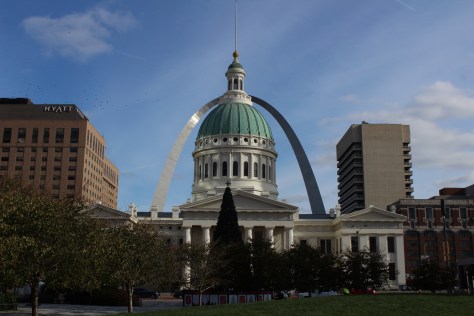
Gateway Arch National Park (click here for our blog post)
Formerly Jefferson National Expansion Memorial, in 2018, this 193-acre site was named the country’s 60th (and smallest) National Park. It has a new museum and theater, and the claustrophobia-inducing tram cars still take visitors to the top of the arch for excellent views of St. Louis and across the Mississippi River into Illinois. The city is also home to 1,371-acre Forest Park (site of the 1904 World’s Fair), with many attractions like a zoo, art museum, ice skating rink, outdoor musical theater, history museum, and science center.
Optional stop at Ulysses S. Grant National Historic Site (click here for our blog post)
The antebellum plantation of White Haven is where the future General and President raised a family in the 1850s following his initial resignation from the U.S. Army. A thought-provoking museum is housed in the former horse stables, while access inside the house is only on a free ranger-guided tour. It is located next to Grant’s Farm that offers free Budweiser brewery tours and a chance to see the famous Clydesdale horses.

Day 2
Mark Twain Boyhood Home and Museum
The celebrated author’s hometown of Hannibal on the Mississippi River is a pilgrimage site for a half-million visitors annually. The museum has eight buildings, including the house his father built in 1843. Across the street is the Becky Thatcher House, where Twain’s childhood sweetheart (Laura Hawkins) lived. Held every July, National Tom Sawyer Days features frog-jumping and fence-painting contests.
Optional stop at Clarence Cannon National Wildlife Refuge
Named in honor of a U.S. Congressman, these 3,750 acres provide a variety of wetland habitats for migratory birds along the Mississippi River floodplain.
Day 3
Jefferson City
The capitol building is known for its stained glass, murals, carvings, and statuary, as well as being home to the Missouri State Museum. Nearby, Jefferson Landing State Historic Site preserves the Lohman Building and Union Hotel that were restored along the Missouri River.
Optional stop at Mark Twain National Forest (click here for our blog post)
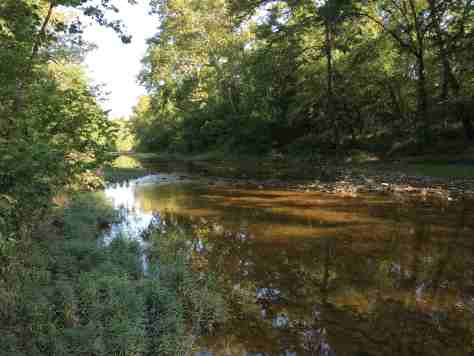
Spread across nine separate units, this sprawling jurisdiction used to be two National Forests until 1976 when the more northerly Clark National Forest was administratively combined. Between Jefferson City and Columbia, Pine Ridge Recreation Area accesses Cedar Creek Trail, which has multiple trailheads and four loops totaling 36 miles.
Day 4
Kansas City
The city that crosses the western state border has more than 200 fountains, the most of anywhere outside Rome, Italy. Kansas City is best known for its barbecued meats slathered in thick, tangy sauce, a tradition dating back to 1908. The two oldest contenders for best barbecue in K.C. are Arthur Bryant’s Barbecue and Gates and Sons Bar-B-Q, but it is hard to find a bad restaurant due to the stiff competition.
The most photographed spot in the city might be the giant shuttlecock sculptures on the lawn of the free art museum (where there’s also a free mini-golf course). Near Union Station, the National World War I Museum at Liberty Memorial features a 217-foot-tall Art Deco tower with an Egyptian motif.
Harry S Truman National Historic Site (click here for our blog post)
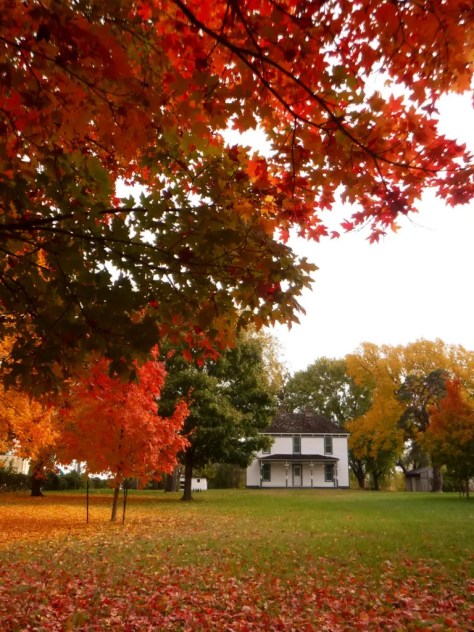
The visitor center in downtown Independence offers a film and a few artifacts, as well as first-come, first-served tickets for ranger-guided tours of the Truman Home. About a 30-minute drive from Independence, take a self-guided cell phone tour around the ten acres surrounding the 1894 Truman Farm Home, which once stood on a 600-acre farm that is now the suburb of Grandview.
Optional stop at National Frontier Trails Museum
If you make it to Independence, pay to visit this museum located where emigrants once departed to begin their long journeys on the Santa Fe, Oregon, and California National Historic Trails.
Day 5
George Washington Carver National Monument (click here for our blog post)
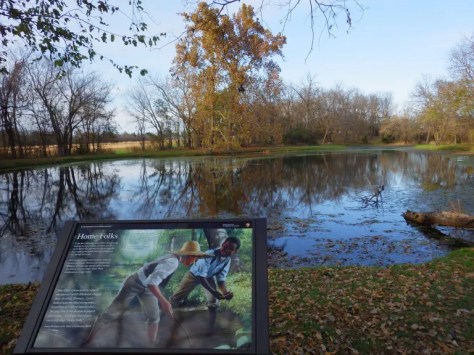
When Carver died in 1943, this site became the first National Park Service unit to honor an African-American. The scientist was born into slavery on this farm but went on to earn a master’s degree in botany from Iowa State University in 1896 and to work at Tuskegee Institute for 47 years where he popularized peanut, sweet potato, and soy agriculture. There is a museum with interactive exhibits and a self-guided one-mile loop trail with interpretive signs.
Wonders of Wildlife National Museum & Aquarium
The original Bass Pro Shops in Springfield has almost 500,000 square-feet dedicated to outdoor recreation, including the Archery Hall of Fame and this impressive aquarium (fee).
Optional stop at Wilson’s Creek National Battlefield (click here for our blog post)
Missouri stayed in the Union throughout the Civil War despite the $10-million in property damage caused by guerrilla fighters, making it the third most fought-over state. Start your visit by watching a short film, then peruse the excellent museum before taking the five-mile driving route that provides an overview of the battle at eight interpretive stops.

Day 6
Branson
The entertainment capital of the central U.S. has a main strip lit up like Las Vegas without the casinos. The main draw is the variety of live music and magic shows offered every day of the week in 37 theaters, but do not miss the historic downtown with the iconic Dick’s 5 & 10 Cent Store on Main Street. There are also mini-golf courses, a wax museum (topped by King Kong), an amusement park, a Ripley’s Believe It or Not! Odditorium, and a building shaped like the bow of the Titanic hitting a giant iceberg.
Mark Twain National Forest (click here for our blog post)
Spread throughout the Ozark Mountains, 1.5-million-acre Mark Twain National Forest is full of caves, sinkholes, springs, and streams. Greer Spring is the second largest in Missouri, with a daily flow of 222-million gallons as it drains 1.2 miles into the Eleven Point National Scenic River. Several long trails explore the National Forest’s seven designated Wilderness areas, including sections of the 350-mile Ozark Trail. Mark Twain National Forest also has three designated Scenic Byways: Blue Buck Knob, Sugar Camp, and Glade Top Trail.

Optional stop at the “Tri-Lakes”
The reservoirs of Table Rock, Taneycomo, and Bull Shoals offer opportunities for boating, fishing, and water sports. The U.S. Army Corps of Engineers runs a museum at 252-foot-tall Table Rock Dam on the White River.
Day 7
Ozark National Scenic Riverways (click here for our blog post)
The Jacks Fork and Current Rivers flow freely within Ozark National Scenic Riverways. The best way to explore the serpentine park boundaries is on the water, but roads access several swimming holes and the bright red Alley Mill. The dolomite and limestone karst underneath this park is riddled with caves and sinkholes, like Devils Well, Round Spring Cave (offering ranger-guided tours for a fee), and Jam Up Cave (only accessible from the Jacks Fork River).

Optional stop at Johnson’s Shut-Ins State Park
After suffering catastrophic damage from a 2005 dam breach, this park has been redeveloped and still has the chutes and waterfalls that provided its name. Its campground is considered one of the nation’s best for RVs on public land.
Day 8+
Ste. Genevieve National Historical Park (click here for our blog post)
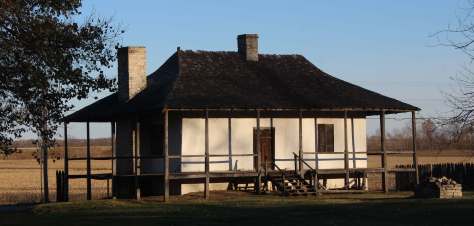
Established in 2020 to protect the French colonial-era houses of Missouri’s first permanent settlement where residents still go all out to celebrate Bastille Day. The oldest standing structure is the Bolduc House that dates back to 1792, while the Old Brick House from 1804 is now a restaurant.
This geologic wonderland features a natural bridge, caves, sinkholes, limestone bluffs, and a large natural spring, but may be best known for the burned-out ruins of a mansion.
The M-K-T (Missouri-Kansas-Texas) Railroad has been converted into the 240-mile-long Katy Trail, running across the state from north of St. Louis to Clinton (75 miles southeast of Kansas City). Camping along the trail is an option, but it passes through many towns with hotels.
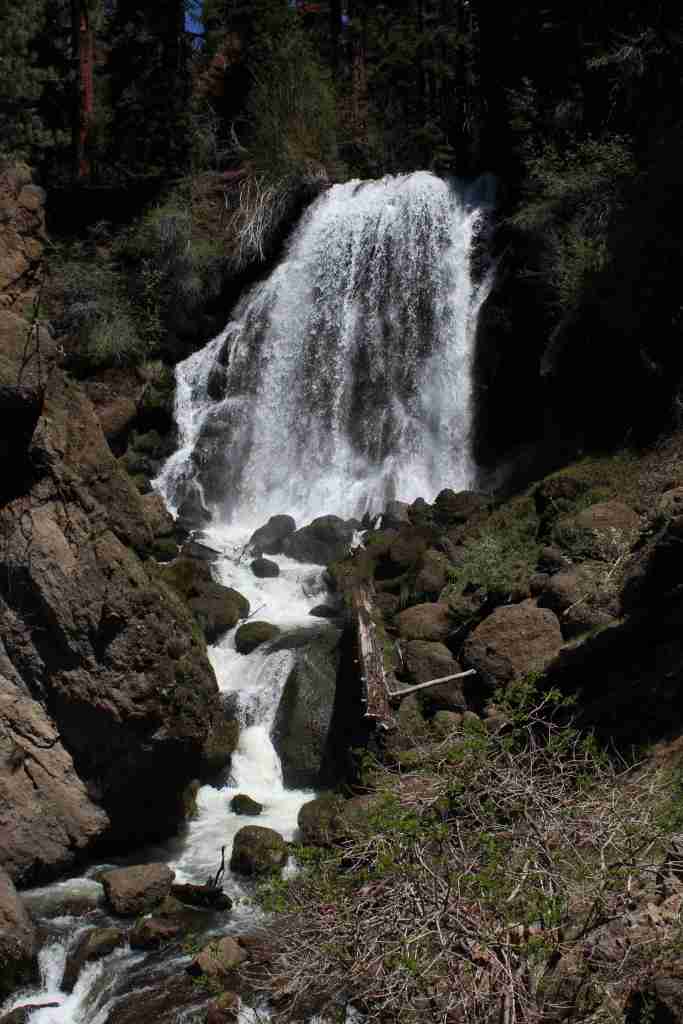
Accessed from the same trailhead as the state’s high point, Mina Sauk Falls is a 132-foot cascade accessed via a three-mile out-and-back hike that gains 430 feet in elevation. Missouri’s tallest waterfall typically flows best during the spring season; otherwise, it is reduced to a trickle.
The park’s billion-year-old granite rocks are broken into vertical cracks and eroded into huge “elephants” like 680-ton Dumbo (27 feet tall and 35 feet long). The park even has a one-mile paved path designed specifically for the visually impaired with signs in Braille.
Loess Bluffs National Wildlife Refuge
In northwest Missouri, winter is the time to visit to see nearly one-million snow geese, plus trumpeter swans, bald eagles, and a variety of shorebirds and waterfowl.

Learn more about Missouri’s Most Scenic Drive, Wonderful Waterfall, Top State Park, and other categories in our new travel guidebook 50 States of Great: Road Trip Guide to America.