Tag Archives: wilderness

Spruce Knob-Seneca Rocks National Recreation Area

Spruce Knob-Seneca Rocks National Recreation Area

West Virginia

Managed by U.S. Forest Service, Northern Region

99,794 acres (57,232 federal/ 42,562 other)

Website: https://www.fs.usda.gov/r09/monongahela/recreation/spruce-knob-seneca-rocks-national-recreation-area

Overview

In 1965, this portion of Monongahela National Forest became the first National Recreation Area managed by the U.S. Forest Service.  It includes 4,863-foot-tall Spruce Knob, the highest point in West Virginia and the Alleghany Mountains.  Seneca Rocks is a 900-foot-tall quartzite crag heavily used by rock climbers, including by the military during World War II.  Also part of this area, Smoke Hole Canyon is a rugged 20-mile gorge on the South Branch of the Potomac River.  It is best seen by kayaking and whitewater canoeing since there are few trails.  Formerly, the canyon had remote family homesteads and moonshine stills, and now it is considered one of the most biologically diverse spots in the eastern U.S. 

Highlights

Seneca Rocks Discovery Center, Smoke Hole Canyon, Spruce Knob Tower

Must-Do Activity

When the road is not closed due to snow, it is easy to drive to the top of Spruce Knob where an observation tower was built for seeing over the trees at the flat summit.  The half-mile Whispering Spruce Trail has interpretive signs at the top, and an extensive network of backcountry trails leave from the parking lot to access Seneca Creek and Alleghany Mountain.  To the west, 25-acre Spruce Knob Lake has campgrounds and picnic tables, as well as boating and fishing opportunities (but no swimming is allowed).  Rock climbing is one of the biggest draws to this area, especially at Seneca Rocks and in Smoke Hole Canyon (at Eagle Rocks, the Route 220 entrance, and the walls of Long Branch).

Best Trail

For those not interested in roping up to climb the steep cliffs, stop into the Seneca Rocks Discovery Center open Thursday through Monday in the summer.  Next door at the Sites Homestead, on Saturdays pioneer interpreters demonstrate quilting, fiddling, and basket-weaving.  Hikers can access the narrow rock ledge at Seneca Rocks via a steep 1.3-mile one-way trail that circles the formation. 

Photographic Opportunity

The jagged spires of Seneca Rocks are the most photogenic rock formation in the state.  Since 1971, more than a dozen people have died from falls at the site, so exercise extreme caution at the top of the cliff.

Peak Season

Summer

Fees

None

Road Conditions

The paved road to the top of Spruce Knob is open year-round when it is snow-free.

Camping

Big Bend Campground offers 46 sites with hot showers and is located on a peninsula in Smoke Hole Canyon.  Seneca Shadows Campground accepts online reservations April through October for walk-to tent sites and standard RV sites.  Spruce Knob Lake Campground is more primitive with vault toilets, as are some other campgrounds in Monongahela National Forest.

Related Sites

Allegheny National Recreation Area (Pennsylvania)

Gauley River National Recreation Area (West Virginia)

Mt. Rogers National Recreation Area (Virginia)

Cumberland Gap National Historical Park (Kentucky-Tennessee-Virginia)

Nearest National Park

New River Gorge

Explore More – When was the log house first built at the historic Sites Homestead?

Monongahela National Forest

Monongahela National Forest

West Virginia

Managed by U.S. Forest Service, Northern Region

1,706,898 acres (921,150 federal/ 785,748 other)

Website: https://www.fs.usda.gov/r09/monongahela

Overview

Monongahela National Forest contains the highest point in West Virginia, 4,863-foot-tall Spruce Knob with an observation tower for seeing over the trees at its summit.  It is part of Spruce Knob-Seneca Rocks National Recreation Area (see our full blog post), which is very popular with rock climbers.  The National Forest’s initial 7,200 acres were purchased by the federal government in 1915, and it the grew to 150,367 acres over the next decade.  During World War II, the U.S. Army utilized the area as an artillery and mortar range, in addition to training soldiers in climbing techniques at Seneca, Nelson, and Champe Rocks.  This area receives an average of 60 inches of annual precipitation on the west side of the Allegheny Front and only half that on the rain shadow side.  It is the headwaters of six major rivers: the Monongahela, Potomac, Greenbrier, Elk, Tygart, and Gauley.

Know someone who loves the National Forests? Gift them our travel guidebook Out in the Woods so they can learn more about all 155 National Forests.

Highlights

Spruce Knob-Seneca Rocks National Recreation Area, Cranberry Glades Botanical Area, Highland Scenic Highway, Lake Sherwood Recreation Area, Gaudineer Knob Scenic Area, Cassell Cave, Sinks of Gandy, Stuart Memorial Drive, Champe Rocks, Dolly Sods Scenic Area

Must-Do Activity

There are 94,991 acres in eight designated Wildernesses in Monongahela National Forest, more than half of which is in the Cranberry Wilderness.  A boardwalk traverses the bogs at Cranberry Glades Botanical Area, which has a visitor center run by the Forest Service.  Fishing is a popular pastime, especially at Lake Sherwood, Spruce Knob Lake, and Lake Buffalo.  When winter conditions are right, there is a snowmobile area on Highland Scenic Highway.  The forest is mostly second growth, but 318 acres of old-growth remains, which can be seen at Fanny Bennett Hemlock Grove, Gaudineer Scenic Area (for red spruce), Shavers Mountain Spruce-Hemlock Stand, North Fork Mountain Red Pine Botanical Area, North Spruce Mountain Old Growth Site, and Virgin White Pine Botanical Area.

Best Trail

There is great hiking in Spruce Knob-Seneca Rocks National Recreation Area, and other trails can be found at Lake Sherwood Recreation Area, Falls of Hill Creek Scenic Area, Mt. Porte Canyon, and Stuart Recreation Area.  The 17,371-acreDolly Sods Wilderness encompasses much of the Red Creek drainage with high-elevation bogs and heaths like those found in southern Canada.

Watchable Wildlife

It is hard to believe given their abundant numbers today, but in the 1930s white-tailed deer had to be reintroduced from Michigan.  In 1969, 23 fishers were reintroduced from New Hampshire.  Other large mammals include black bear, red and gray fox, coyote, bobcat, snowshoe hare, beaver, river otter, raccoon, mink, skunk, and opossum.  Of the 230 bird species identified, 159 are known to breed here.  Approximately 90% of the trout waters in West Virginia are within the National Forest, and trout are stocked at Spruce Knob Lake and other locations.

Photographic Opportunity

The iconic Seneca Rocks are a 900-foot-tall quartzite crag heavily used by rock climbers.  On October 22, 1987, a prominent pinnacle dubbed “the Gendarme” fell to the ground.

Peak Season

Summer

Fees

A day use fee applies at Lake Sherwood Recreation Area.

Road Conditions

Most roads are open year-round, including the paved road to the top of Spruce Knob when it is snow-free.

Camping

The National Forest has 23 campgrounds, including popular options in Spruce Knob-Seneca Rocks National Recreation Area at Seneca Shadows and Big Bend (with hot showers). 

Wilderness Areas

Big Draft Wilderness

Cranberry Wilderness

Dolly Sods Wilderness

Laurel Fork North Wilderness

Laurel Fork South Wilderness

Otter Creek Wilderness

Roaring Plains West Wilderness

Spice Run Wilderness

Related Sites

Allegheny National Forest (Pennsylvania)

George Washington National Forest (Virginia-West Virginia)

Jefferson National Forest (Virginia-West Virginia-Kentucky)

Harpers Ferry National Historical Park (West Virginia-Virginia-Maryland)

Nearest National Park

New River Gorge

Conifer Tree Species

eastern hemlock, balsam fir, red spruce, red pine, eastern white pine

Flowering Tree Species

black ash, mountain ash, black cherry, yellow birch, sugar maple, red maple, sweet birch, cucumber magnolia, American beech, basswood, speckled alder, mountain laurel, white rhododendron

Explore More – The Monongahela River gets its name from the Lenape language, and it translates as what in English?

Learn more about this and the 154 other National Forests in our new guidebook Out in the Woods

Modoc National Forest

Modoc National Forest

California

Managed by U.S. Forest Service, Pacific Southwest Region

1,979,327 acres (1,663,401 federal/ 315,926 other)

Website: https://www.fs.usda.gov/r05/modoc

Overview

In the northeast corner of California, Modoc National Forest contains the largest shield volcano in North America: 7,921-foot Medicine Lake Volcano.  This region has a long history of volcanism, as seen at Pumice Stone Mountain, Burnt Lava Flow, High Hole Crater, Hot Spot, and Glass Mountain (composed of rhyolite obsidian and glossy dacite).  The basalt-topped plateau of Devil’s Garden is home to an 800-acre stand of western juniper.  East of Goose Lake, the Warner Mountains rise from 4,300 feet to 9,892-foot Eagle Peak, and are covered by a mixed conifer forest of lodgepole pine, whitebark pine, ponderosa pine, incense-cedar, and red fir. 

Know someone who loves the National Forests? Gift them our travel guidebook Out in the Woods so they can learn more about all 155 National Forests.

Highlights

Sáttítla Highlands National Monument, Volcanic Legacy Scenic Byway, Medicine Lake Recreation Area, Glass Mountain, Devil’s Garden Natural Area, Mill Creek Falls, Highgrade National Recreation Trail, Pine Creek Trail

Must-Do Activity

Medicine Lake offers boat ramps, trails, and campgrounds and nearby is Giant Crater, which has the longest known lava tube system in the world at 18 miles (although it is partially collapsed).  Located up a dirt road often blocked by snowdrifts late into the summer, Glass Mountain has a crater full of sharp pieces of rhyolite obsidian and glossy dacite.  This remote corner of California has some of the darkest skies in the continental U.S., so it is great for stargazing on moonless nights.  In the winter, snowmobiling and cross-country skiing are popular activities on groomed trails.  The South Warner Mountain Wilderness is traversed by the 21-mile Summit Trail that passes Eagle Peak, the Devil’s Knob, and The Slide. Mill Creek Falls is also in the Warner Mountains, accessed by a 3.4-mile out-and-back trail.

Best Trail

In the Warner Mountains near the border with Oregon’s Fremont National Forest, the 5.5-mile one-way Highgrade National Recreation Trail provides excellent views of Goose Lake.  The trailhead is reached by taking paved County Road 9 five miles east from Highway 395 then turning north on the steep and unpaved Del Pratt Spring Road (Forest Road 47N72) for 6.3 miles.  The trail quickly leaves the shade of the forest as it steadily climbs 800 feet through a slope covered in woolly mule’s ears flowers to a saddle west of 8,224-foot Mt. Vida.  It is possible to summit Mt. Vida from this point, but the trail heads away toward Yellow Mountain following Forest Road 48N10.

Watchable Wildlife

Modoc National Forest borders Lower Klamath National Wildlife Refuge, in addition to Tule Lake, Clear Lake, and Modoc National Wildlife Refuges.  These wetlands provide habitat crucial for bird nesting and migration on the Pacific Flyway.  The many lava tubes provide habitat for numerous species of bats, in addition to violet-green swallows and bushy-tailed woodrats.  Larger mammals include mule deer, pronghorn, badger, skunk, raccoon, pika, jackrabbit, yellow-bellied marmot, coyote, bobcat, and mountain lion.  Large birds found here are great horned owl, short-eared owl, and bald eagle (winter resident).  Reptiles are abundant, including the western fence lizard, northern sagebrush lizard, western skink, Rocky Mountain rubber boa, gopher snake, desert night, and western rattlesnake.

Photographic Opportunity

Not far up the steep Highgrade National Recreation Trail there are excellent views of Goose Lake to the west.

Peak Season

Summer

Fees

$5 per vehicle (or the America the Beautiful Pass) at Medicine Lake

Road Conditions

This area receives abundant winter snowfall, and roads can be blocked by snow into July, which we experienced trying to get to Glass Mountain.  The road to Medicine Lake is paved, but almost every other road through the National Monument is unpaved, some requiring a high-clearance vehicle.  Giant Crater is a Geologic Special Interest Area that can be accessed two miles off Medicine Lake Road on Forest Road 43N11. 

Camping

There are multiple Forest Service campgrounds on Medicine Lake, plus two nearby at Blanche Lake and Bullseye Lake.  Dirt roads in Modoc National Forest provide ample dispersed campsites.

Wilderness Areas

South Warner Wilderness

Related Sites

Lava Beds National Monument (California)

Tule Lake National Monument (California)

Sáttítla Highlands National Monument (California)

Butte Valley National Grassland (California)

Nearest National Park

Lassen Volcanic

Conifer Tree Species

ponderosa pine, whitebark pine, red fir, incense-cedar, white fir, lodgepole pine, western white pine, Jeffrey pine, incense-cedar, western juniper

Flowering Tree Species

quaking aspen, curlleaf mountain mahogany, elderberry, sagebrush

Explore More – The Modoc Tribe traditionally lived in this area and the Klamath called them “Moadok Maklaks” that translates as what?

Learn more about this and the 154 other National Forests in our new guidebook Out in the Woods

Arizona Trail Days 24 to 34

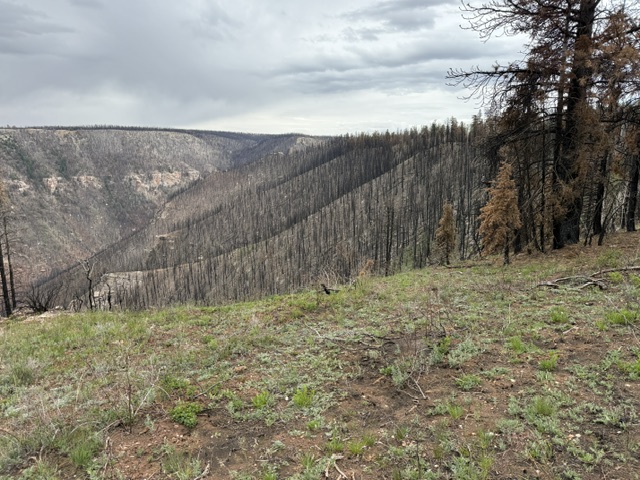
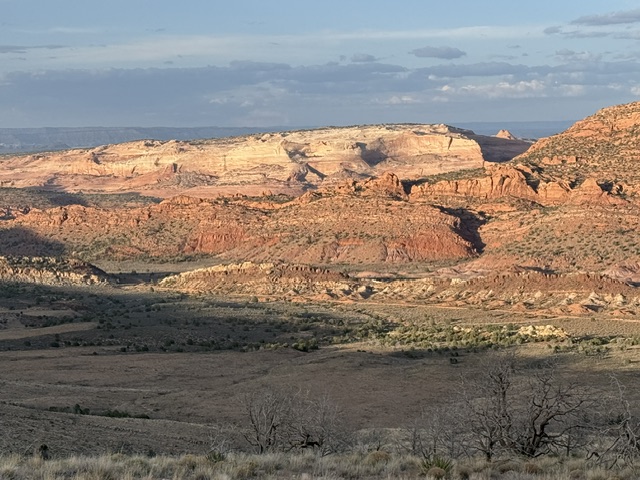
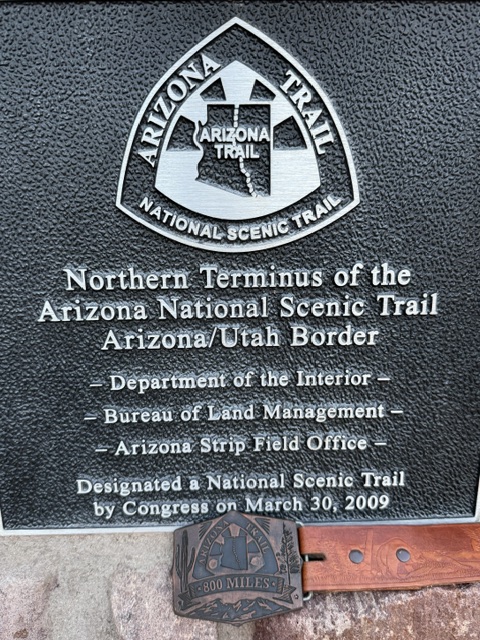
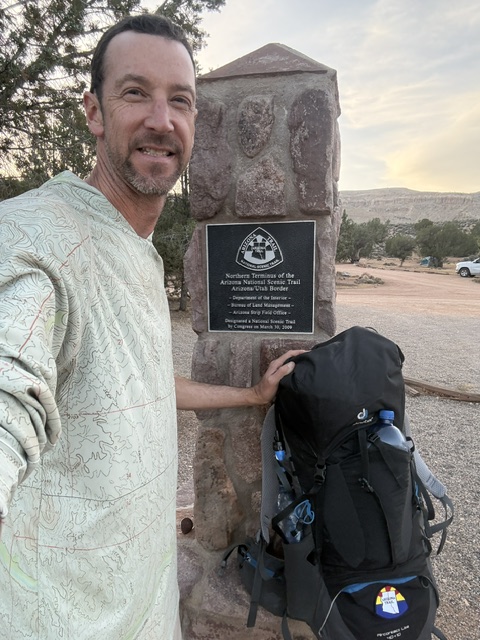
After two “zero days” I returned to the Gila River at the lowest point on the Arizona Trail (AZT) where temperatures had cooled considerably from two weeks before. In 36 days (including six zeroes), I have now completed the southernmost 713 miles on the 800-mile AZT since starting on March 4, 2026. Good news is the National Park Service is planning to reopen the North Kaibab Trail on May 15, so I plan to wait to do the final 100 miles through the Grand Canyon and up to the Utah border.

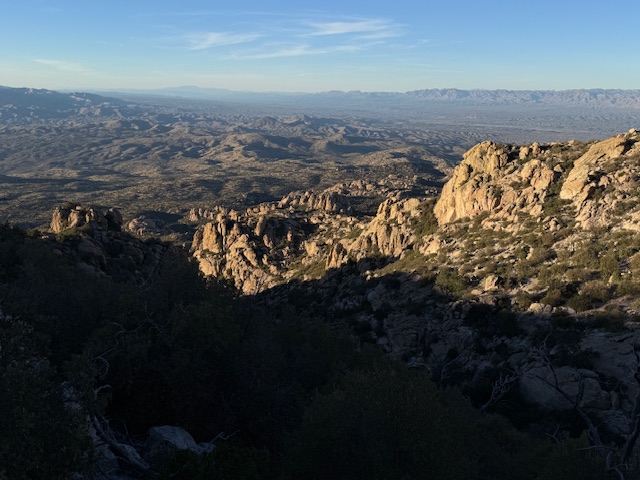
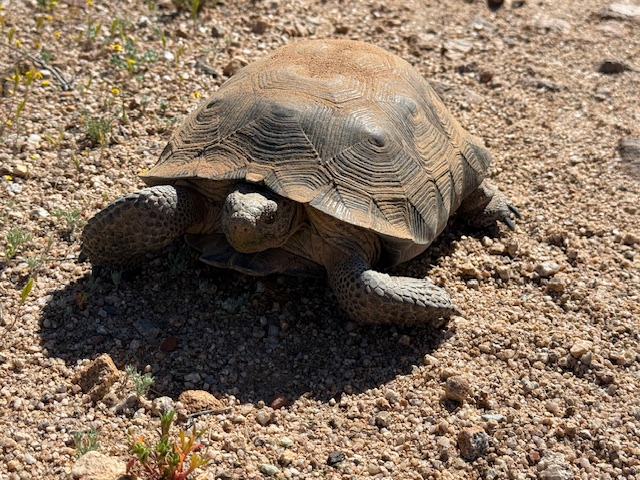
This journey has exceeded my expectations as my first “long trail.” I have seen amazing wildlife and scenery. I met some interesting people. I had days where I did not see another person. It has been introspective and healing. I have walked further and faster than I imagined possible. I’m thankful that past thru-hikers have made this a socially acceptable (even laudable) activity. Mostly, it’s just really fun and feels like an accomplishment to walk between two arbitrary borderlines. I could not have done it without my parents and friends driving all across the state to resupply me. I cannot say thank you enough!

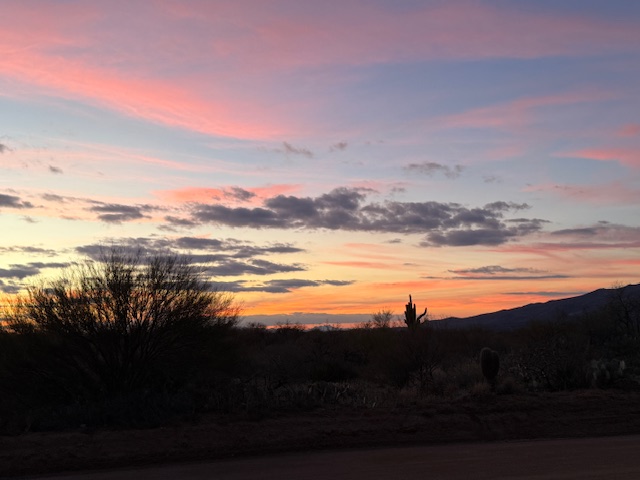
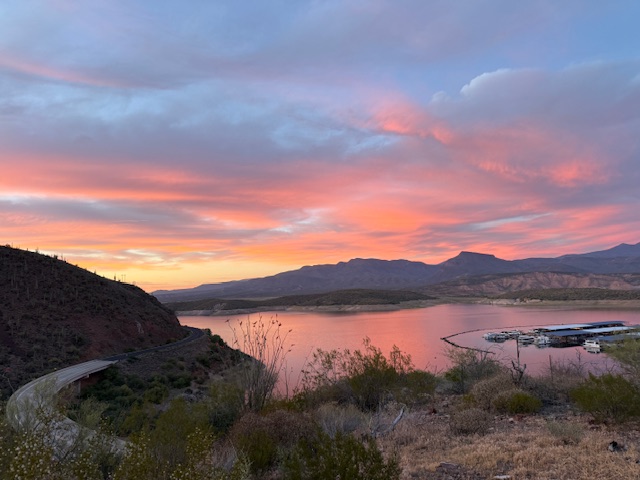
Arizona Trail Day 26, Mile 265 to 291 plus 2 when I took a wrong turn from the Gila River where I took an afternoon dip. So many grasshoppers! Tried out a sun umbrella then didn’t need it when clouds rolled in for an awesome sunset hour. This was my restart point after avoiding desert heat for two weeks.

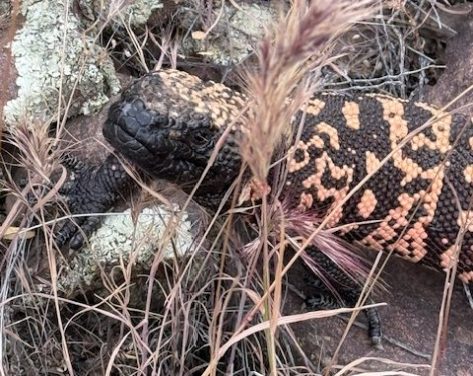
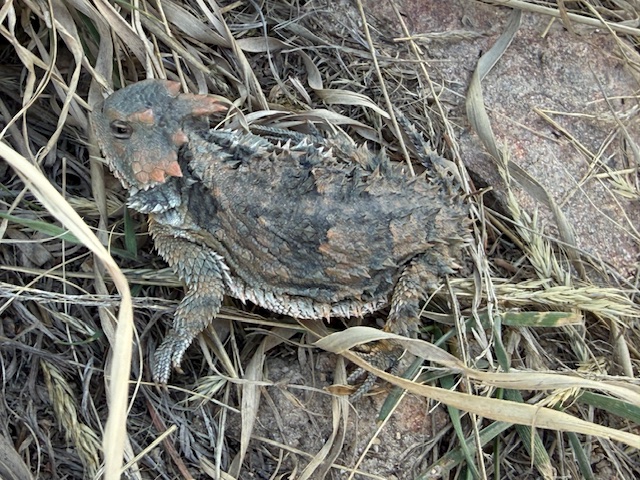
Arizona Trail Day 27, Mile 291 to 321 across Highway 60 climbing steeply into the Superstition Wilderness. Started at 5 a.m. when it was sprinkling and my sun umbrella worked well for rain. Saw my first ever Gila monster, which was amazing.

Arizona Trail Day 28, Mile 321 to 347 down from Reavis Ranch in Tonto National Forest to Roosevelt Lake. It was nice to hike a while with Michelle and Adam from Seattle. I saw my second ever Gila monster, which was also amazing! Big thanks to my parents who drove down from Pine to resupply me before sunset.

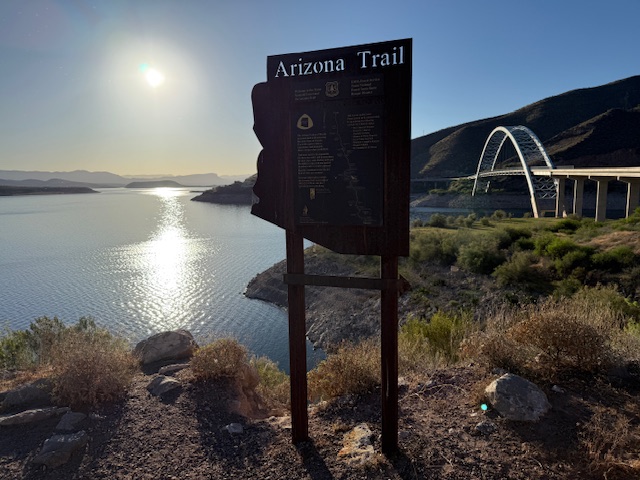
Arizona Trail Day 29, Mile 347 to 366 across Roosevelt Lake Bridge up into the Four Peaks Wilderness. Shake Spring was flowing nicely this afternoon so I decided to camp nearby and cut my day short to enjoy the shade.

Arizona Trail Day 30, Mile 366 to 387 down the mountain from Four Peaks Wilderness to the Beeline Highway 87. At some point Saturday I surpassed 600 miles on the 800-mile Arizona National Scenic Trail! My parents brought me a milkshake down from Payson, which tasted amazing.

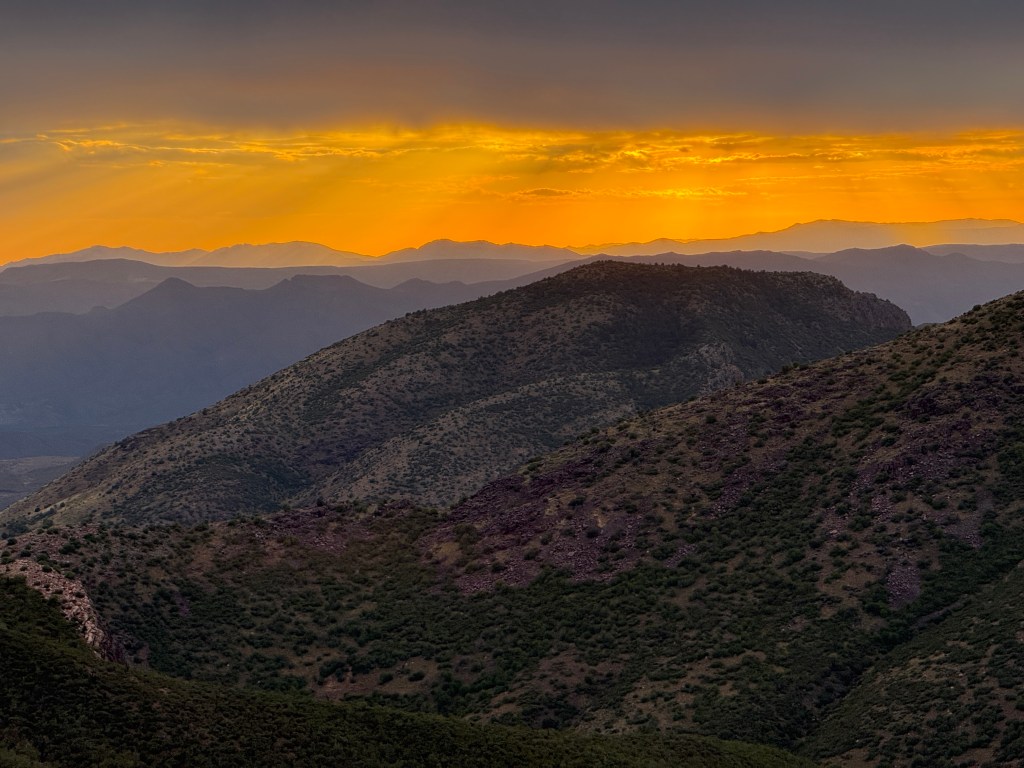
Arizona Trail Day 32, Mile 387 to 417 into the Mazatzal Wilderness after a zero day to spend Easter with family in Chandler. Cloudy and drizzly weather helped me stay cool and I didn’t have to drink much. Cumulative 6,500-foot ascent and 4,000-foot descent over the 30 miles! Great sunset over Horseshoe Lake.

Arizona Trail Day 33, Mile 417 to 442 out of the Mazatzal Mountains down to the East Verde River where I took an afternoon swim. I met a lot of friendly people backpacking today, including one volunteer doing trail maintenance who provided trail magic in the form of a delicious cheese stick.

Arizona Trail Day 34, Mile 442 to 459 back home to Pine. I have now completed the southernmost 713 miles of the AZT since March 4. I plan to finish the final 100 miles when North Kaibab Trail through Grand Canyon National Park opens after May 15. I could not have done this without the help of my parents and friends along the way. Thank you so much!

I have also been updating my Instagram account daily with photos: https://www.instagram.com/ravenabouttheparks/

Mendocino National Forest

Mendocino National Forest

California

Managed by U.S. Forest Service, Pacific Southwest Region

1,079,850 acres (911,733 federal/ 168,117 other)

Website: https://www.fs.usda.gov/r05/mendocino

Overview

Originally called California National Forest in 1908, this area between Interstate 5 and Highway 101 was renamed Mendocino National Forest 24 years later.  It stretches north-south along the Coast Range covering parts of six counties north of San Francisco.  Similar to Los Padres National Forest, it contains rocky serpentine ridgelines where only specially adapted plants can tolerate the heavy metals in the soil, like Sargent cypress and the shorter McNab cypress.  Both species can be found along Frenzel Creek near Little Stoney Campground.  In 1953, a Forest Service employee and 14 volunteer firefighters died in the Rattlesnake Fire and a memorial overlooking Rattlesnake Canyon is located off Forest Highway 7 on Alder Springs Road.  Mendocino National Forest includes the northern portion of Berryessa Snow Mountain National Monument (see our full blog post), established in 2015 and administered in cooperation with the Bureau of Land Management.

Know someone who loves the National Forests? Gift them our travel guidebook Out in the Woods so they can learn more about all 155 National Forests.

Highlights

Berryessa Snow Mountain National Monument, Lake Pillsbury, Thomes Gorge, Hull Mountain, Frenzel Creek, Harvey Peak, Ide’s Cove Trail

Must-Do Activity

There are 18 National Forests in California (the most of any state), but Mendocino is the only one not crossed by a paved highway.  It is a wonderful destination for outdoor recreation, both motorized and non-motorized, including Hull Mountain which is popular with hang gliders.  Lake Pillsbury is 2,280 acres and offers boat ramps, campgrounds, and a resort, while 35-acre Letts Lake has a campground and access to hiking trails.

Best Trail

As we drove the winding road from Stonyford to the tiny roadside pullout for Deafy Glade Trail, we passed campgrounds full of RVs that were getting ready for a motorcycle event.  Our hike took us far from any road noise, as we dropped down to and waded across the frigid South Fork of Stony Creek and then climbed steeply to 5,300 feet in elevation.  The trail continued to the summit of 7,056-foot Snow Mountain, but we already had great views of the Rice Valley and decided to turn around at the 4.5-mile point, just inside the official boundary of the Snow Mountain Wilderness.  We expected a desolate landscape after reading about recent fires, but about three-quarters of the trees along the trail were still alive and showed only minor charring at their bases.

Watchable Wildlife

Mendocino National Forest protects a biodiverse area home to tule elk, black-tailed deer, river otters, black bears, and mountain lions.  Rivers that drain these highlands are used by California coastal chinook salmon and Northern California steelhead.  Fishing in the lakes is a popular activity and a chance to see ospreys and bald eagles.

Photographic Opportunity

On Deafy Glade Trail, there were congregations of lady bugs that numbered in the hundreds along the South Fork of Stony Creek.

Peak Season

Summer

Fees

None

Road Conditions

Fouts Springs Road (Forest Road M10) is a well-maintained gravel road that crosses the National Forest west of Stonyford.  That area is popular with motorcycles and OHVs, so keep an eye out for them while driving. 

Camping

Mendocino National Forest manages Bear Creek Campground and Lower Nye Dispersed Campground among many others, plus there are countless places for dispersed camping. 

Wilderness Areas

Sanhedrin Wilderness

Snow Mountain Wilderness

Yolla Bolly-Middle Eel Wilderness (also in Six Rivers and Trinity National Forests)

Yuki Wilderness (also run by the Bureau of Land Management)

Related Sites

Berryessa Snow Mountain National Monument (California)

Lassen National Forest (California)

Point Reyes National Seashore (California)

Nearest National Park

Redwood

Conifer Tree Species

Douglas-fir, red fir, white fir, ponderosa pine, sugar pine, gray pine, Sargent cypress, McNab cypress

Flowering Tree Species

western redbud, interior live oak, tanoak, Pacific madrone

Explore More – In 1542, Cape Mendocino was named by explorer Roderiques de Cabrillo to honor whom?

Learn more about this and the 154 other National Forests in our travel guidebook Out in the Woods