Tag Archives: wildflowers

Allegheny National Forest

Allegheny National Forest

Pennsylvania

Managed by U.S. Forest Service, Eastern Region

742,693 acres (513,175 federal/ 229,518 other)

Website: https://www.fs.usda.gov/allegheny

Overview

The only National Forest in Pennsylvania was created in 1923 utilizing the federal government’s ability to purchase land under the Weeks Act of 1911.  However, they could not afford the subsurface or mineral rights, which has created issues in this oil-producing area.  Before it became Allegheny National Forest, most of the hillsides were clearcut to feed the area’s wood chemical plants, allowing black cherry and early successional species to dominate the second growth forests.  The National Forest contains two Wild and Scenic Rivers: the Clarion River (51.7 miles) and Allegheny River (87 miles in three separate sections).

Highlights

Allegheny National Recreation Area, Hearts Content Scenic Area, Willow Bay Recreation Area, Old Powerhouse, Timberdoodle Flats Interpretive Trail, Minister Creek, Buzzard Swamp Hiking Area, Clarion Wild and Scenic River, Allegheny Wild and Scenic River, Buckaloons Recreation Area, Hall Barn Wildlife Viewing Area, North Country National Scenic Trail

Must-Do Activity

A good place to start exploring Allegheny National Forest is by driving the Longhouse Scenic Byway, a 36-mile loop, which includes views of the Allegheny Reservoir and Kinzua Dam, plus a side trip up to Jakes Rocks Overlook.  We drove in from the east and found the easy walks on the Timberdoodle Flats Wildlife Interpretive Trail to be a good introduction to this region.  This is one of the few places in Pennsylvania with old-growth forests, so be sure to stop at Hearts Content Scenic Area or Tionesta Scenic and Research Natural Areas. 

Best Trail

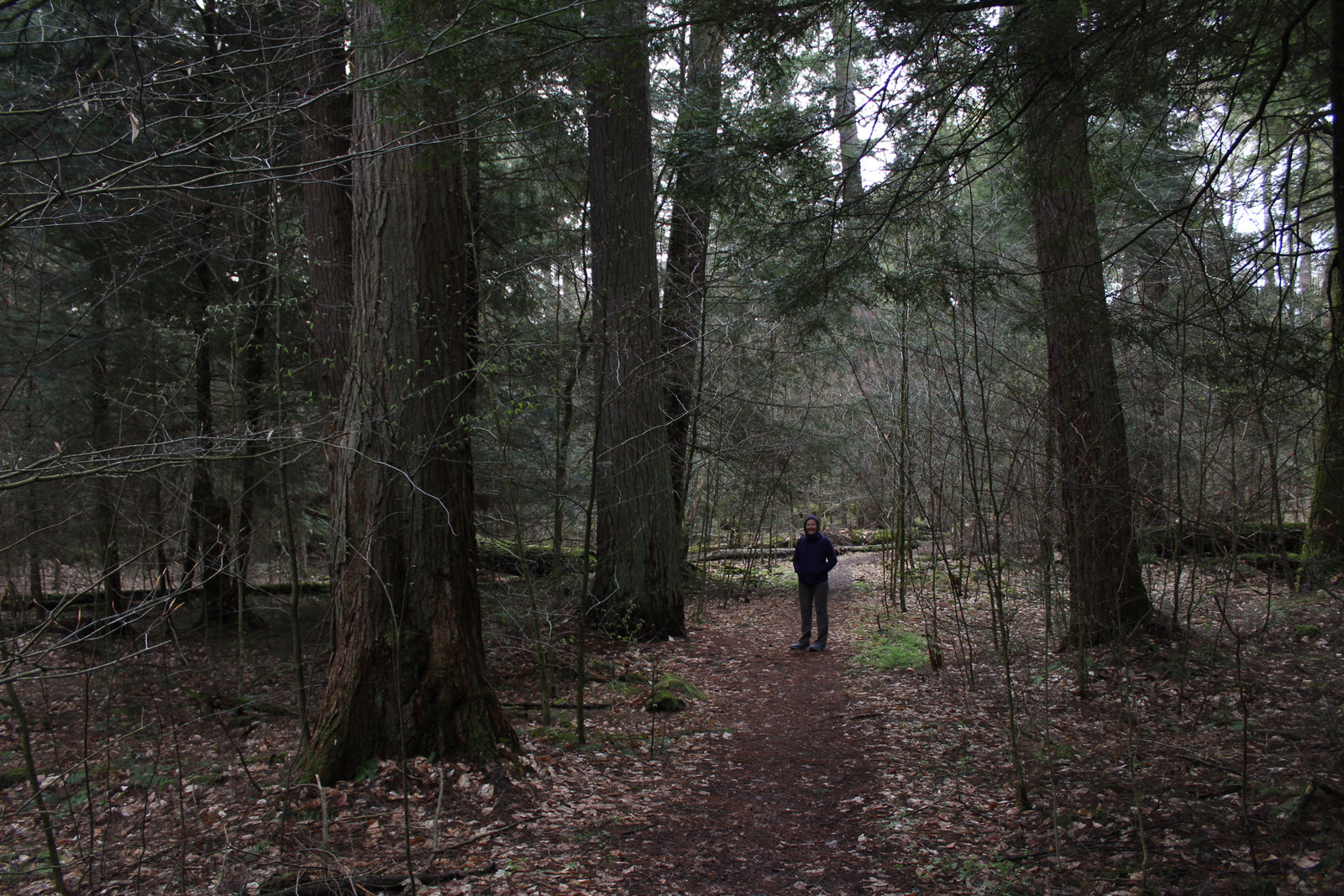
Huge eastern hemlock and eastern white pine trees up to 400 years old can be found in the 20-acre Hearts Content Scenic Area.  This National Natural Landmark has a picnic area constructed by the Civilian Conservation Corps (CCC) and is located across from a nice campground.  There are two short, flat loop trails located here, but you can also connect into 7.8 miles of cross-country skiing and snowshoeing routes.  Other popular hiking destinations include Rimrock Trail and a 10-mile section of the North Country National Scenic Trail within the Tracy Ridge Hiking Trail System (see our post on Allegheny National Recreation Area for more information).

Watchable Wildlife

As hard as it is to believe given their prevalence now, low populations of white-tailed deer in the 1920s allowed this new National Forest to grow back quickly.  Campers should exercise caution with their food and trash since black bears are in the area.  Turkeys, bald eagles, barred owls, Canada geese, black-capped chickadees, and pileated woodpeckers are common bird species.  Hall Barn Wildlife Viewing Area is known for its summer population of 1,000 roosting bats.  There is also evidence of beavers on the Timberdoodle Flats Wildlife Interpretive Trail.  Allegheny Reservoir has walleye, trout, bass, catfish, northern pike, and muskellunge, and small native brook trout can be found in the Farnsworth Stream and other creeks.  We recently learned that the PA Firefly Festival is held in Tionesta, Pennsylvania every June because of their population of synchronous fireflies (or lightning bugs).

Instagram-worthy Photo

Kinzua Dam was completed in 1965 and stands 179 feet tall and 1,897 feet in length.  Kinzua is a Seneca Indian word that translates as “place of many big fishes.”  Watch for fish that gather in eddies at the edges of the Allegheny Reservoir near the dam, but remember that fishing and feeding the fish is prohibited at this spot.

Peak Season

Summer

Fees

There is an entrance fee at both Willow Bay and Buckaloons Recreation Areas, but it is half price with an America the Beautiful pass.

Road Conditions

All roads are paved to Willow Bay Recreation Area and Hearts Content Scenic Area, which are popular with RV campers. 

Camping

Allegheny National Forest contains 15 campgrounds with more than 1,000 sites, and Willow Bay Recreation Area also has cabins for rent.  We enjoyed our stay at Heart’s Content Campground, but found Buckaloons Campground to be too crowded.  Allegheny Islands Wilderness has seven islands that can be used for boat-in dispersed camping.

Wilderness Areas

Allegheny Islands Wilderness

Hickory Creek Wilderness

Related Sites

Allegheny National Recreation Area (Pennsylvania)

Grey Towers National Historic Site (Pennsylvania)

Fort Necessity National Battlefield (Pennsylvania)

Nearest National Park

Cuyahoga Valley (Ohio)

Conifer Tree Species

eastern hemlock, eastern white pine

Flowering Tree Species

sugar maple, black maple, red maple, striped maple, silver maple, mountain maple, yellow birch, sweet birch, black walnut, bitternut hickory, shagbark hickory, sycamore, American beech, white ash, tulip-poplar, green ash, cucumber magnolia, quaking aspen, bigtooth aspen, black cherry, pin cherry, choke cherry, northern red oak, basswood, American elm, slippery elm

Explore More – Timberdoodle is a local nickname for which native bird species that nests in this forest?


Glacier National Park

Overview

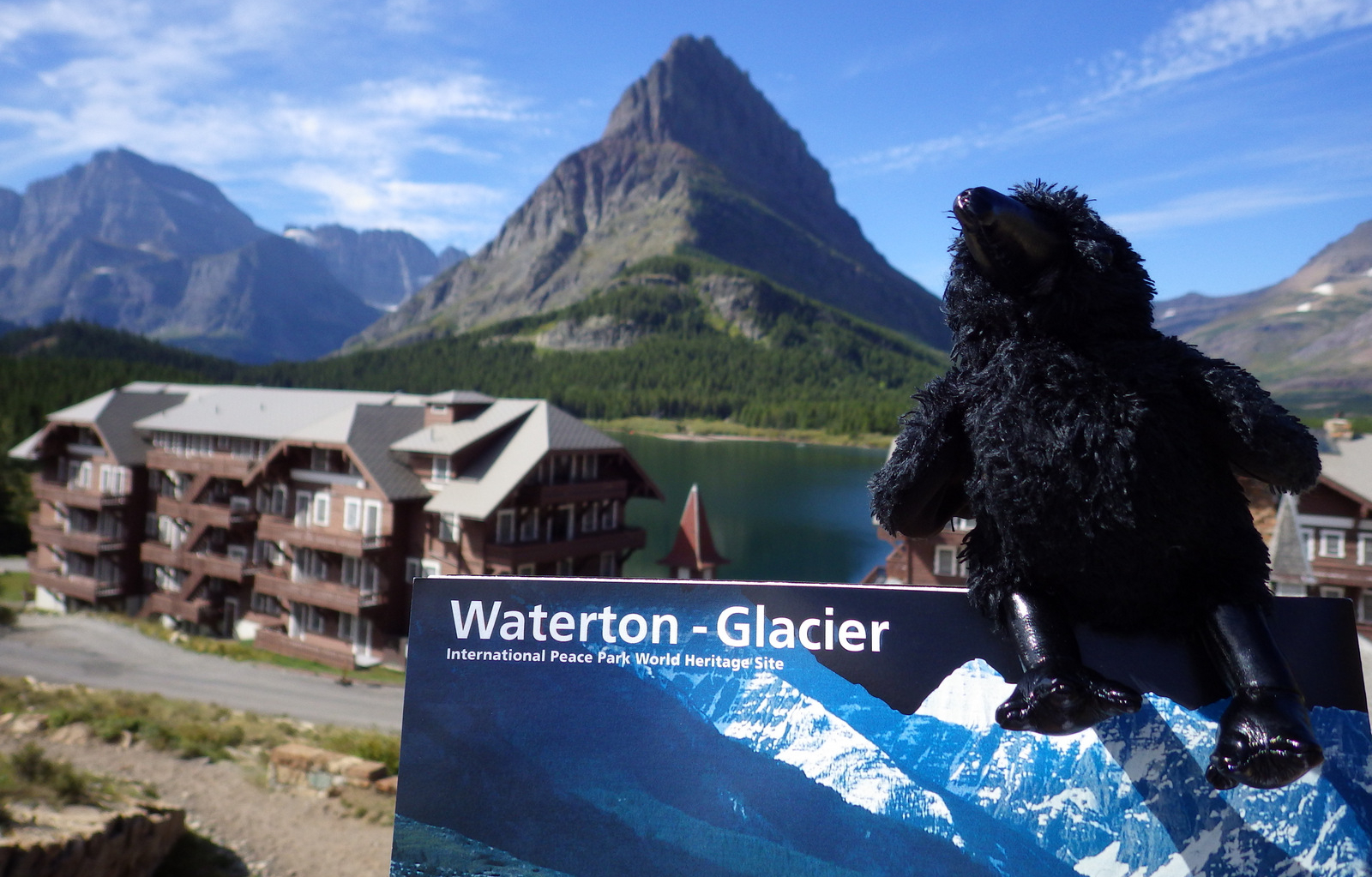
Officially, since 1932 this American-Canadian natural reserve has been called Waterton-Glacier International Peace Park.  We will focus on the U.S. side since you still need a passport to cross the border (when it is open).  The million-acre Glacier National Park was established in 1910 as a tourist destination and to protect its wildlife, including grizzly/brown bears.  It is open year round, but sees more than half its visitors in July and August.

Learn more in our guidebook to the National Parks, A Park to Yourself: Finding Adventure in America’s National Parks (available on Amazon).

Highlights

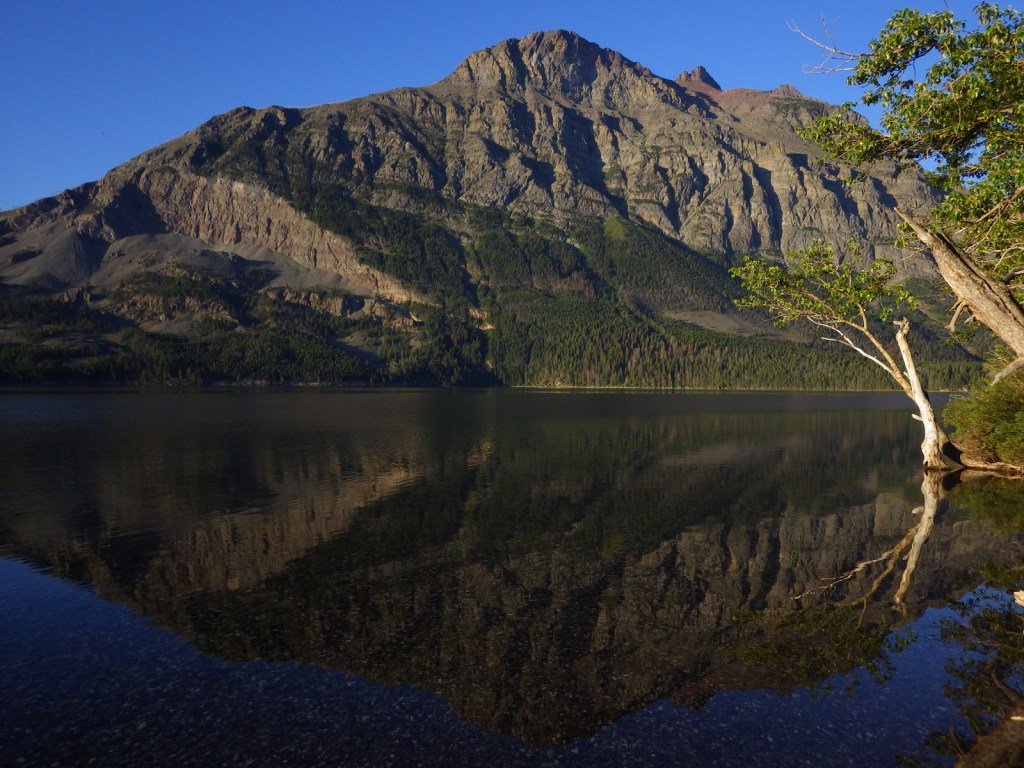
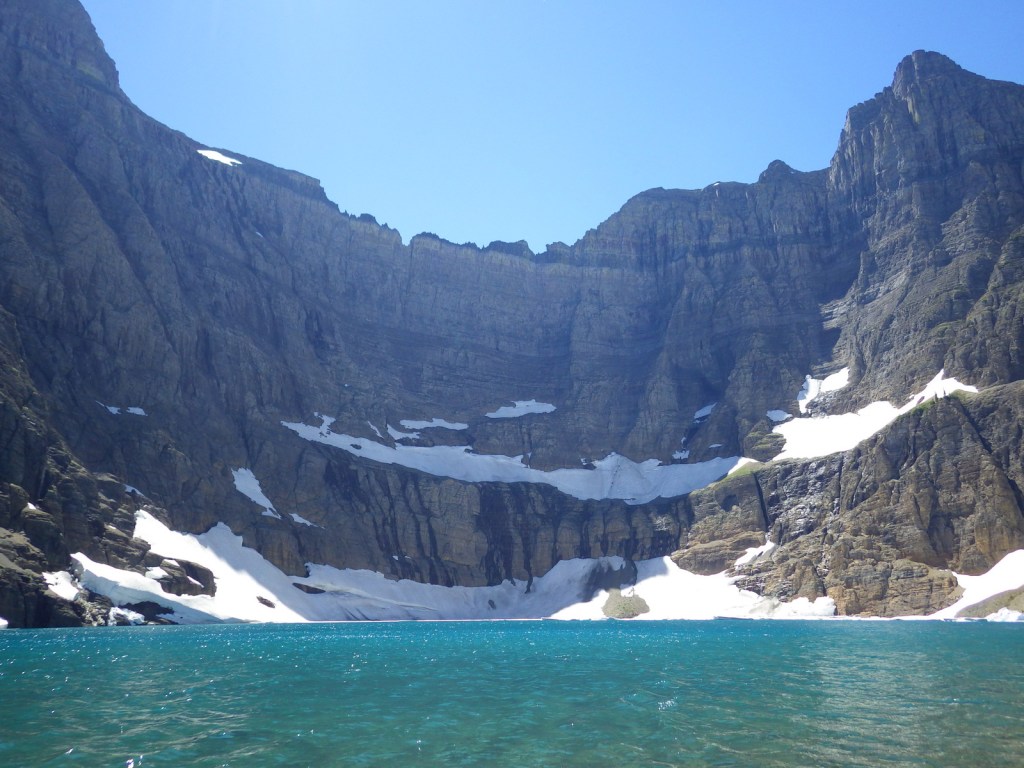
Going-to-the-Sun Road, St. Mary Lake, Logan Pass, Many Glacier Hotel, Iceberg Lake

Must-Do Activity

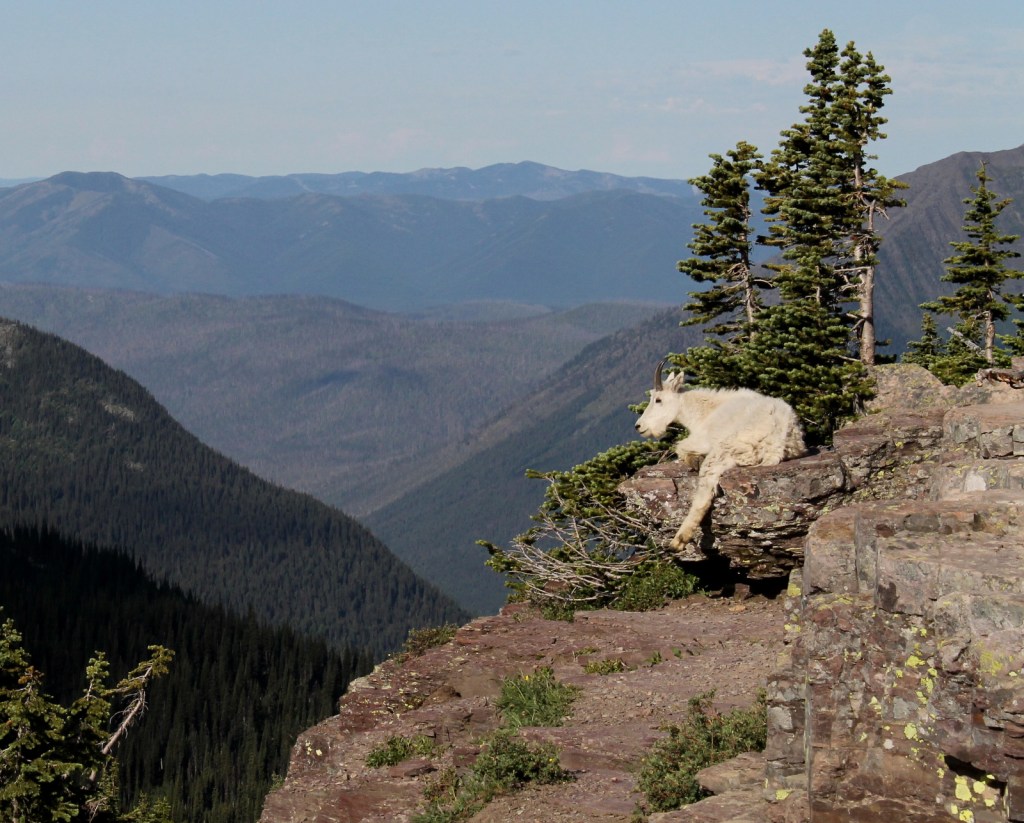
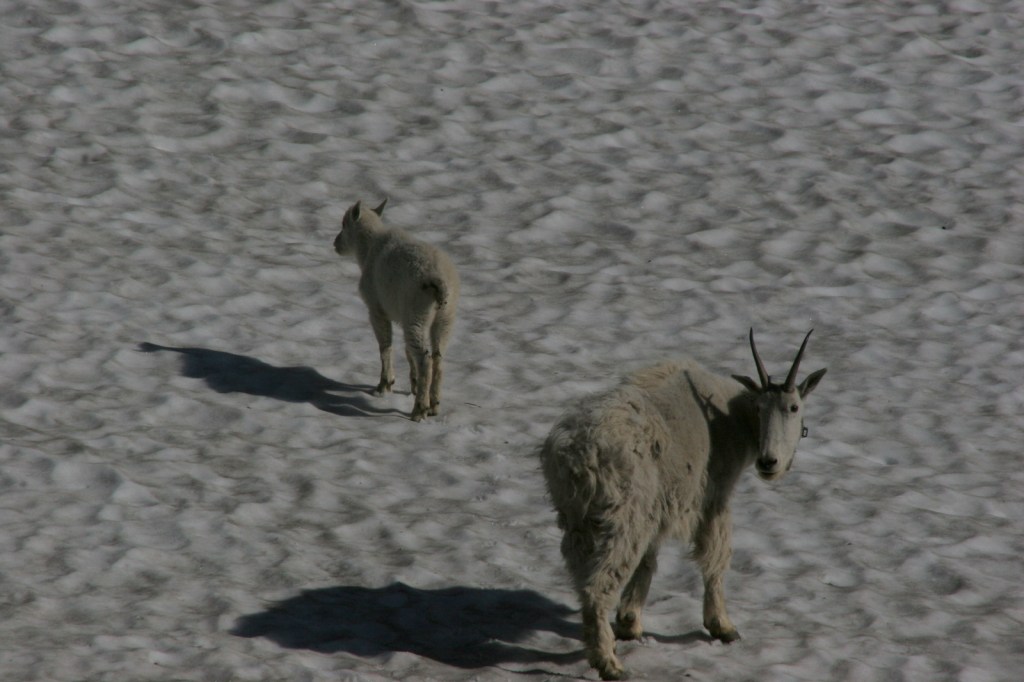
The world renowned Going-to-the-Sun Road was built to cross the park from east to west in the 1920s.  At its highest point (6,646-foot Logan Pass), the road crosses the Continental Divide, an imaginary line where a raindrop drains all the way into the Atlantic Ocean on one side and into the Pacific Ocean on the other.  Hidden Lake Overlook near the Logan Pass Visitor Center is known for sightings of mountain goats, bighorn sheep, and hoary marmots.

Best Trail

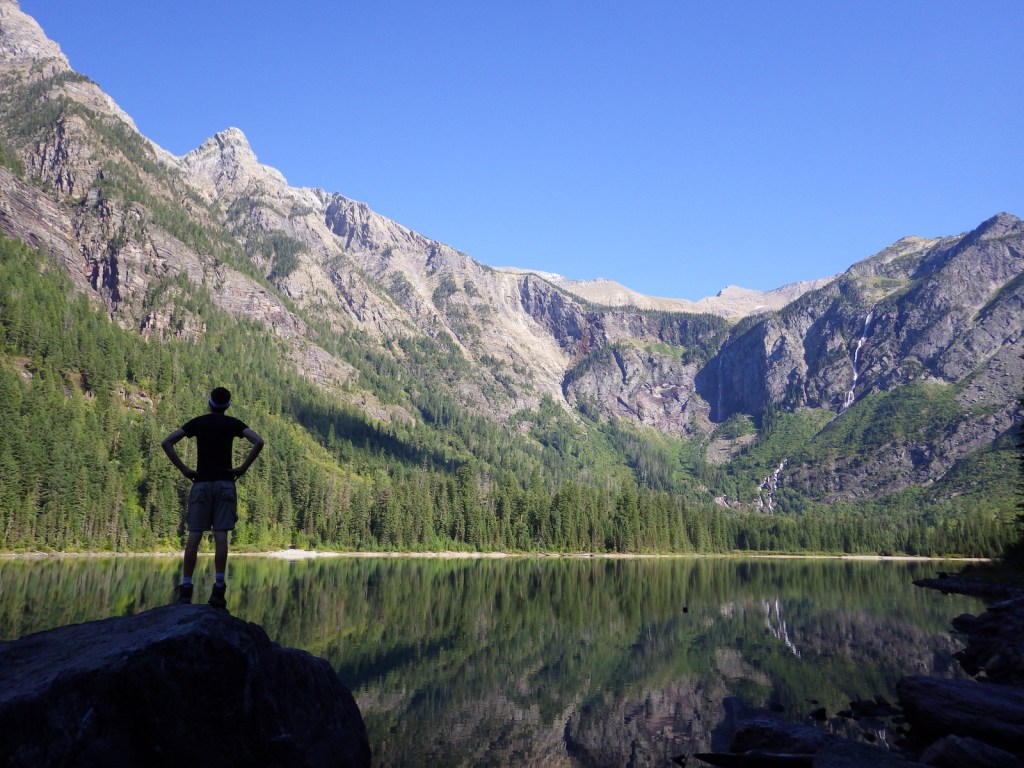
Avalanche Lake is located at the end of a two-mile one-way hike from the famous Going-to-the-Sun Road.  We spotted a grizzly/brown bear on the way back from our hike there.

Instagram-worthy Photo

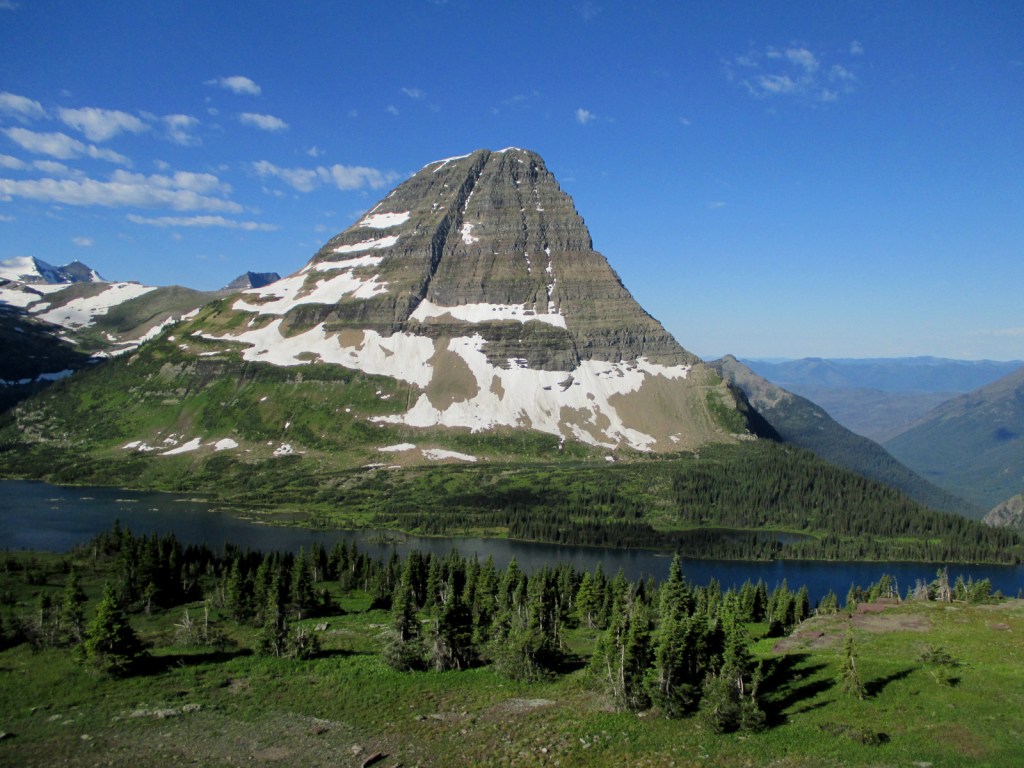
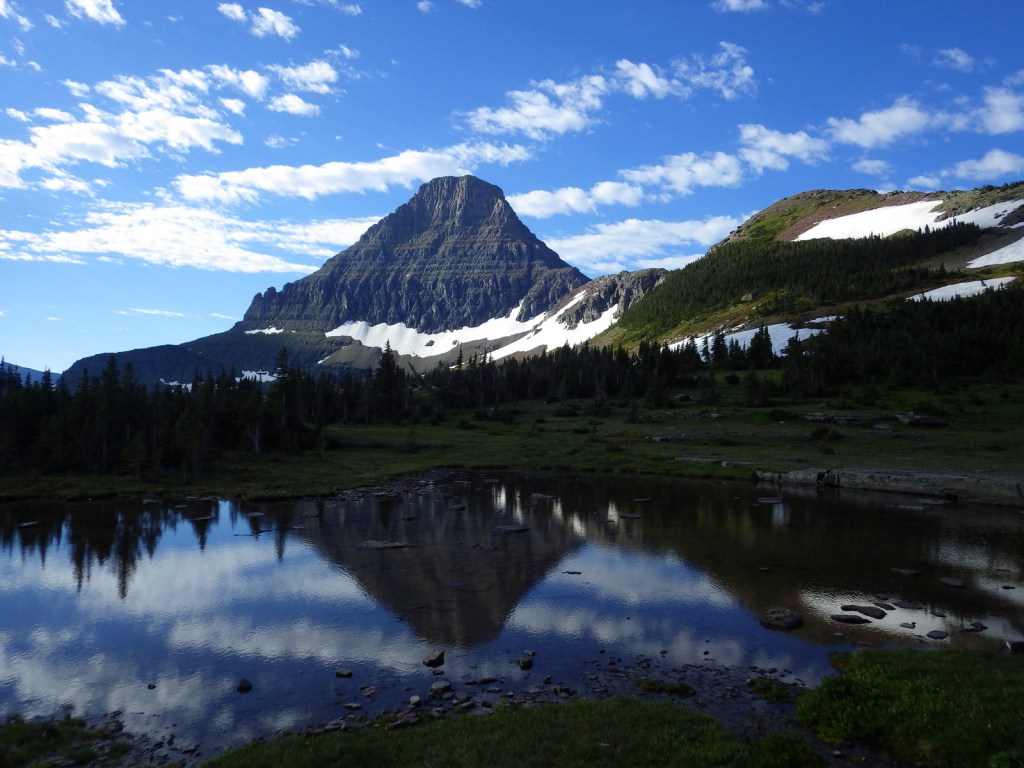
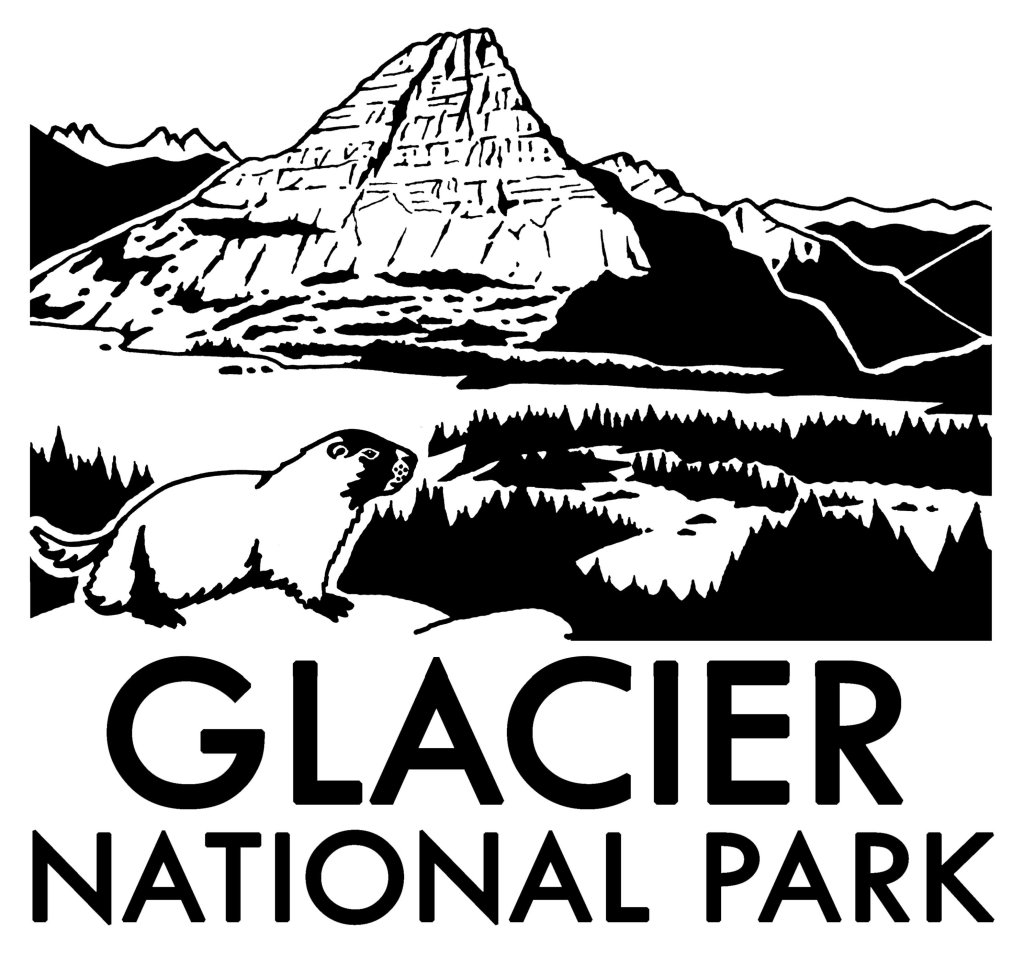
Hidden Lake often reflects the image of Bearhat Mountain, which is why we chose it as our logo design for Glacier National Park (see below).

Peak Season

Summer

Hours

https://www.nps.gov/glac/planyourvisit/hours.htm

Fees

$35 per vehicle or America the Beautiful pass

Road Conditions

Vehicles over 21 feet in length or eight feet in width are prohibited in the middle sections of Going-to-the-Sun Road.  Good dirt roads lead to campgrounds at Bowman Lake and Kintla Lake on the west side of the park.

Camping

St. Mary and Fish Creek Campgrounds accept reservations and several others are available on a first-come, first-served basis.

Related Sites

Yellowstone National Park (Wyoming-Montana-Idaho)

Grant-Kohrs Ranch National Historic Site (Montana)

Big Hole National Battlefield (Montana)

This design we created to celebrate Glacier National Park is available on a variety of products at Cafe Press and Amazon.

Explore More – When were the iconic “red jammer” buses first introduced to the park?

We are a participant in the Amazon Services LLC Associates Program, an affiliate advertising program designed to provide a means for us to earn fees by linking to Amazon.com and affiliated sites.

National Mall

Overview

Part of Pierre L’Enfant’s 1791 design for Washington, D.C., his “grand avenue” was not fully realized until the 1900s when a train station was removed to fully open up two miles of grass between the U.S. Capitol and Lincoln Memorial.  Today, America’s front lawn is lined with National Park Service (NPS) monuments and Smithsonian museums.  The 2003 Reserve Act declared the National Mall a completed work of civic art and restricted further construction after completion of the World War II Memorial.  However, in 2014 the American Veterans Disabled for Life Memorial was dedicated at its eastern end.

Highlights

Lincoln Memorial, Reflecting Pool, Washington Monument, Ulysses S. Grant Memorial, U.S. Capitol

Must-Do Activity

There is no official visitation count kept for the National Mall, but if there was its 24-million annual visitors would make it the number one busiest site in the entire NPS system.  Not far from the steps of the Lincoln Memorial where he gave his most famous speech in 1963, is the Martin Luther King, Jr. Memorial, one of the numerous NPS sites located here.  The National Air and Space Museum is one of several awesome galleries of the Smithsonian Institution, containing Charles Lindbergh’s The Spirit of Saint Louis, an Apollo Lunar Module, and the original Wright Brothers flyer used in 1903.  There is so much to see and do, you could easily spend more than a week exploring.

Best Trail

One of the greatest overlooks of the National Mall is from the U.S. Marine Corps War Memorial (part of George Washington Memorial Parkway), located across the Potomac River in Arlington, Virginia.  It is a bit of a walk from the National Mall, but the view is especially breathtaking at night.

Instagram-worthy Photo

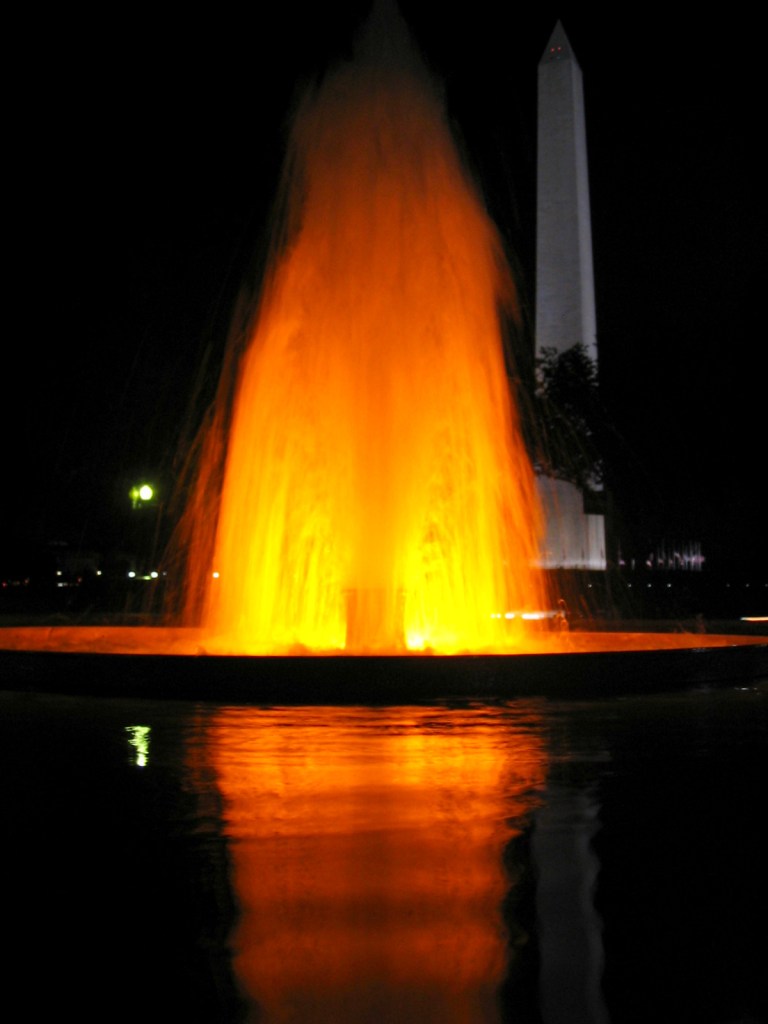
At some point during your visit, do yourself a favor and come after dark.  It is nicely decorated each December (but you might need a tripod for photographs).

Peak Season

Summer, and also weekends during the National Cherry Blossom Festival (March-April)

Hours

https://www.nps.gov/nama/planyourvisit/hours.htm

Fees

None

Road Conditions

As with most NPS sites in Washington, D.C., it is easier to walk or take the Metro than find parking for your car.

Camping

There are no NPS campgrounds in the Washington, D.C. area, so it might be best to head for Shenandoah National Park in Virginia.

Related Sites

Lincoln Memorial (District of Columbia)

Constitution Gardens (District of Columbia)

Korean War Veterans Memorial (District of Columbia)

Explore More – The Tidal Basin (home to the Thomas Jefferson Memorial and Franklin Delano Roosevelt Memorial) is considered part of the National Mall, so when were the famous cherry trees (a gift from Japan) planted there?

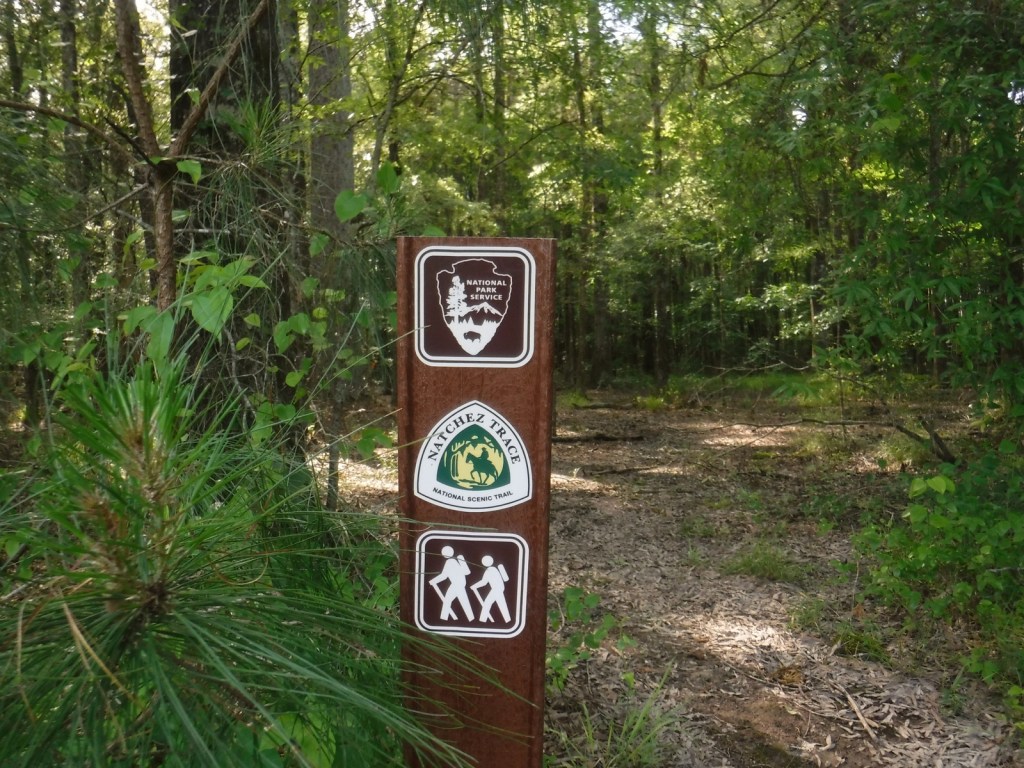
Natchez Trace National Scenic Trail

Natchez Trace National Scenic Trail

Mississippi-Alabama-Tennessee

Managed by National Park Service

Established 1983

67 miles

Website: nps.gov/natt

Overview

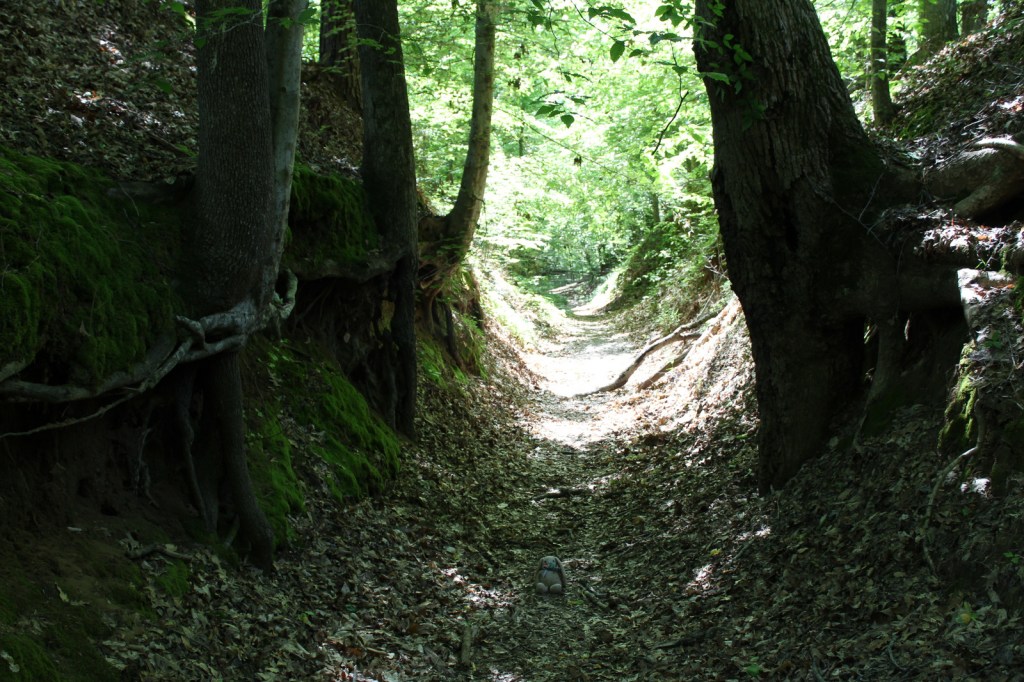
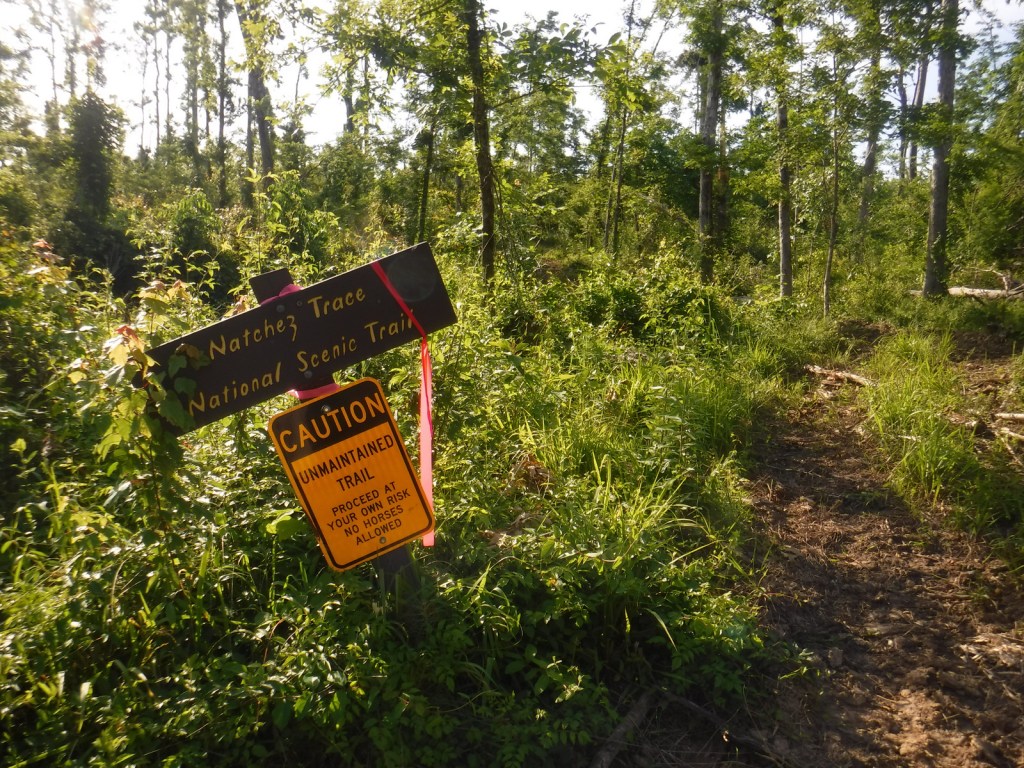
Not as well-known as the Natchez Trace Parkway it parallels, Natchez Trace National Scenic Trail is one of only six National Scenic Trails officially managed by the National Park Service (NPS).  The trace (or trail) started as an American Indian footpath.  Some of the mound builder sites protected here were inhabited when Hernando de Soto led the first Europeans into this area in 1540.  The Natchez Trace was heavily used in the 1800s by “Kaintuck” flatboatmen returning from New Orleans who left the Mississippi River from Natchez, Mississippi and continued on foot north to Nashville, Tennessee.  Today you can follow portions of the “sunken” trail worn down by travelers for centuries.

Highlights

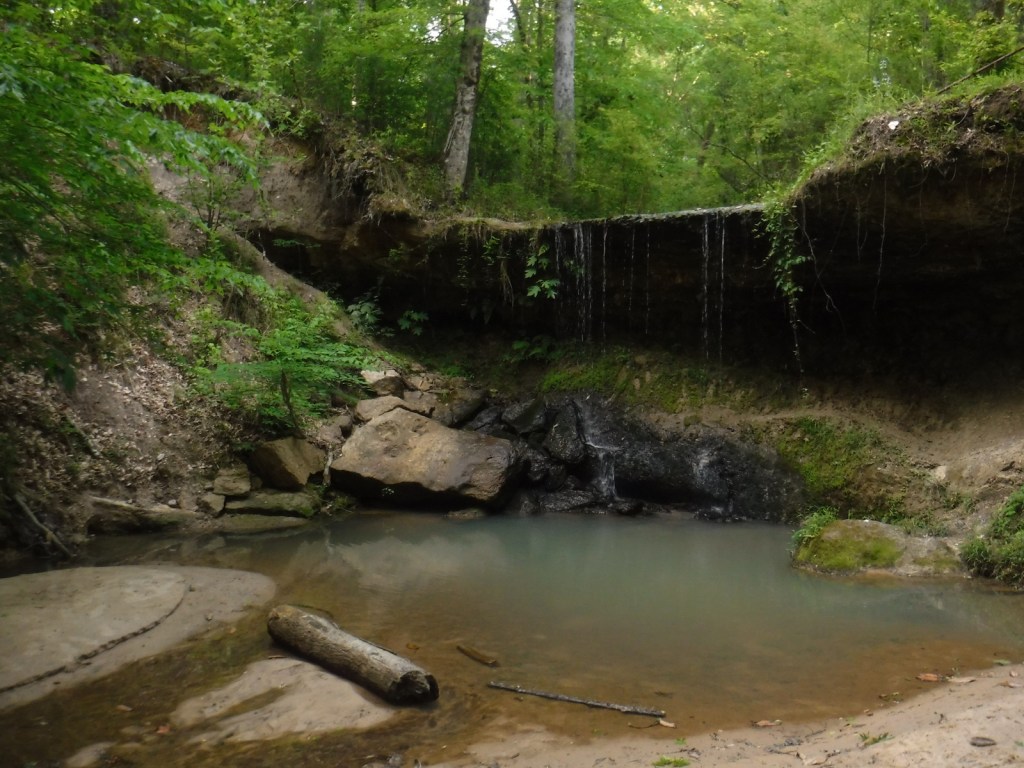
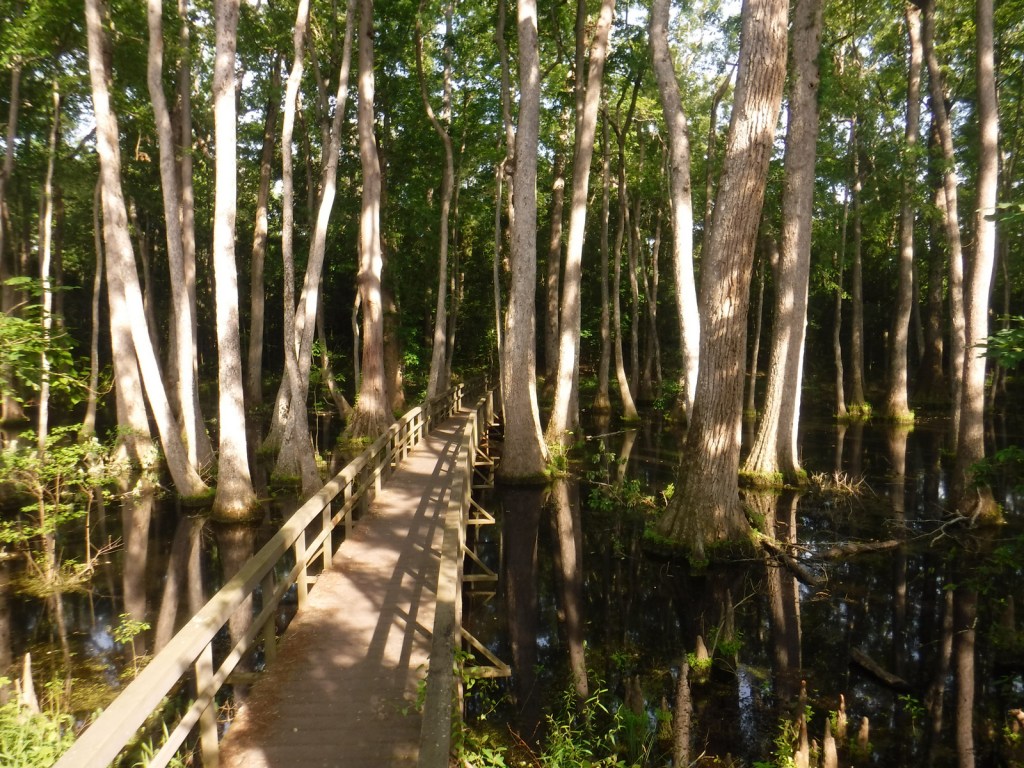
Rocky Springs, Owens Creek Waterfall, Tupelo-Baldcypress Swamp, Grindstone Ford, Witch Dance Horse Trail, War of 1812 Memorial

Must-Do Activity

The Natchez Trace National Scenic Trail does not follow the entire 444-mile parkway, but exists in five segments totaling 67 miles in length.  The two longest sections are near Leipers Fork, Tennessee (Miles 408-427) and north of Jackson, Mississippi (Miles 108-130).  There are many other places to go hiking along the Natchez Trace Parkway, including one of our favorite spots, Tishomingo State Park (Mile 304) in Mississippi.  Near Tupelo, the Parkway Visitor Center at Mile 266 is another must-do stop to learn the history of the trace.

Best Trail

There are eight miles of the original trail around the Rocky Springs Campground near Mile 58 in Mississippi, which provides access to Owens Creek Waterfall and a historic town site.

Instagram-worthy Photo

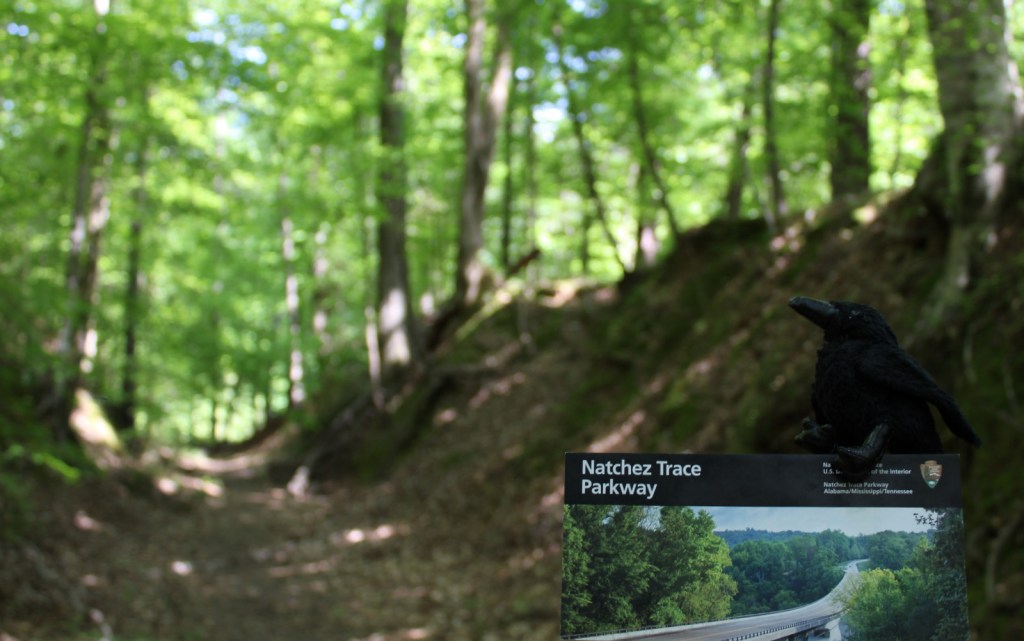
In early April the dogwood trees bloom along the Natchez Trace Parkway.  At Mile 275 is Dogwood Valley, which also has a short section of “sunken” historic trail.

Peak Season

Spring and fall

Hours

https://www.nps.gov/natt/planyourvisit/hours.htm

Fees

None

Road Conditions

The entire 444-mile Natchez Trace Parkway is paved from Natchez, Mississippi to Nashville, Tennessee, but not all trailheads are RV accessible.

Camping

There are three NPS campgrounds along the Natchez Trace Parkway, as well as those in sites like Mississippi’s Tishomingo State Park.  The three NPS campgrounds are free with running water, plus there are also five bike-only campsites along the route.

Related Sites

Tupelo National Battlefield (Mississippi)

Natchez National Historical Park (Mississippi)

Natchez Trace Parkway (Mississippi-Alabama-Tennessee)

Vicksburg National Military Park (Mississippi)

Nearest National Park

Hot Springs

Explore More – The Natchez Trace Parkway officially joined the NPS system in 1938, but when was construction of the road finally completed?

Pinnacles National Park

Overview

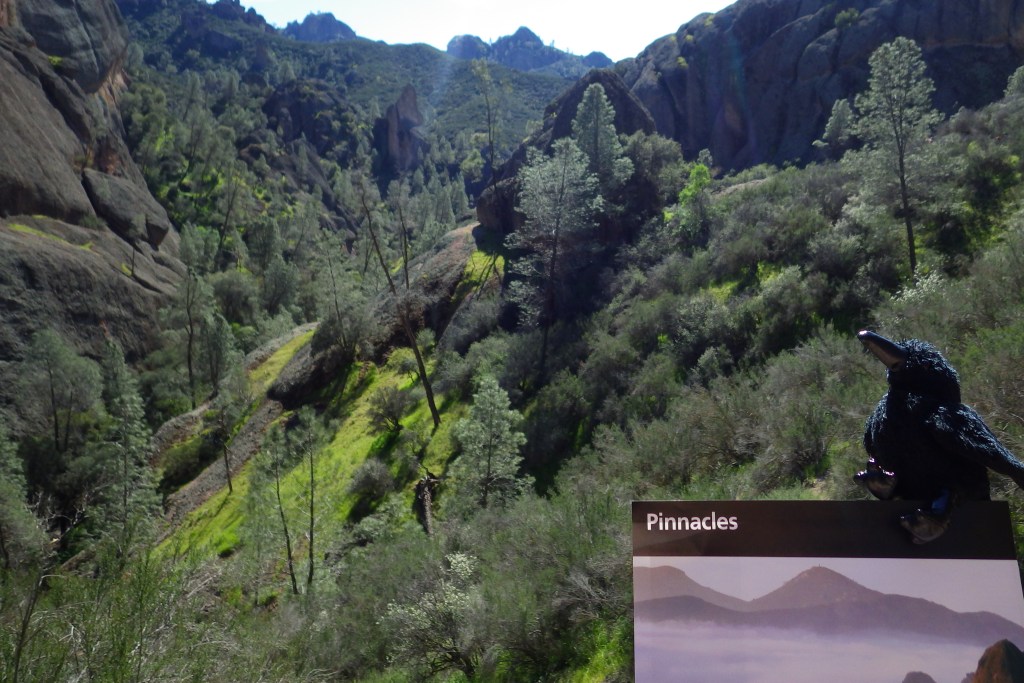
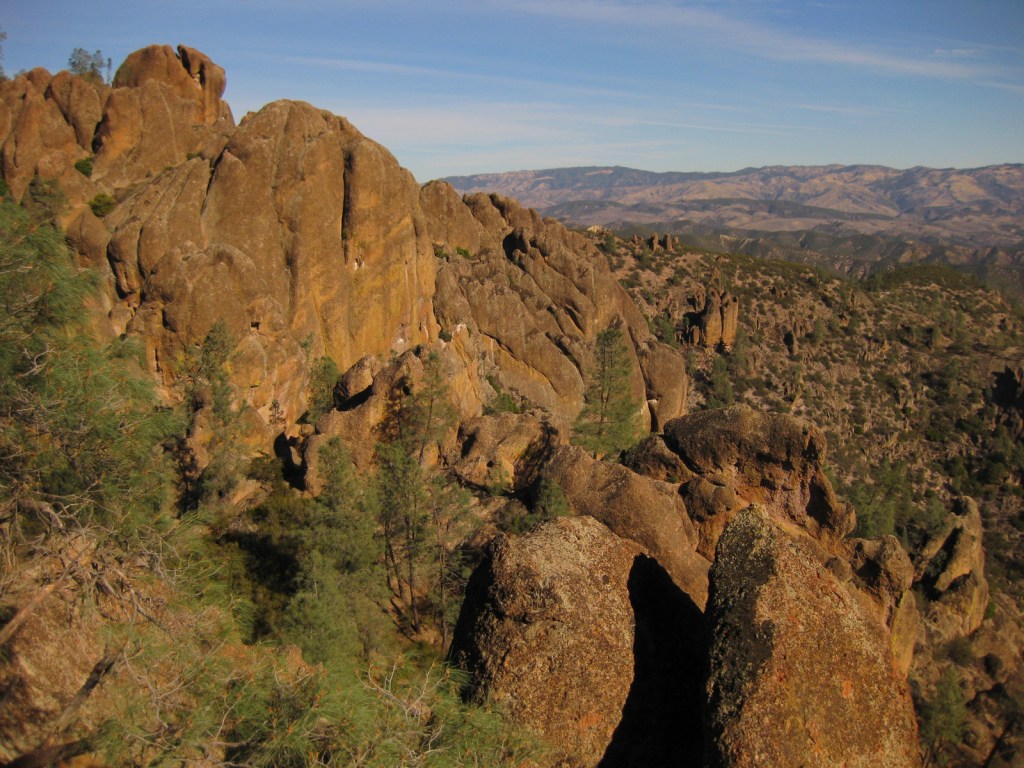
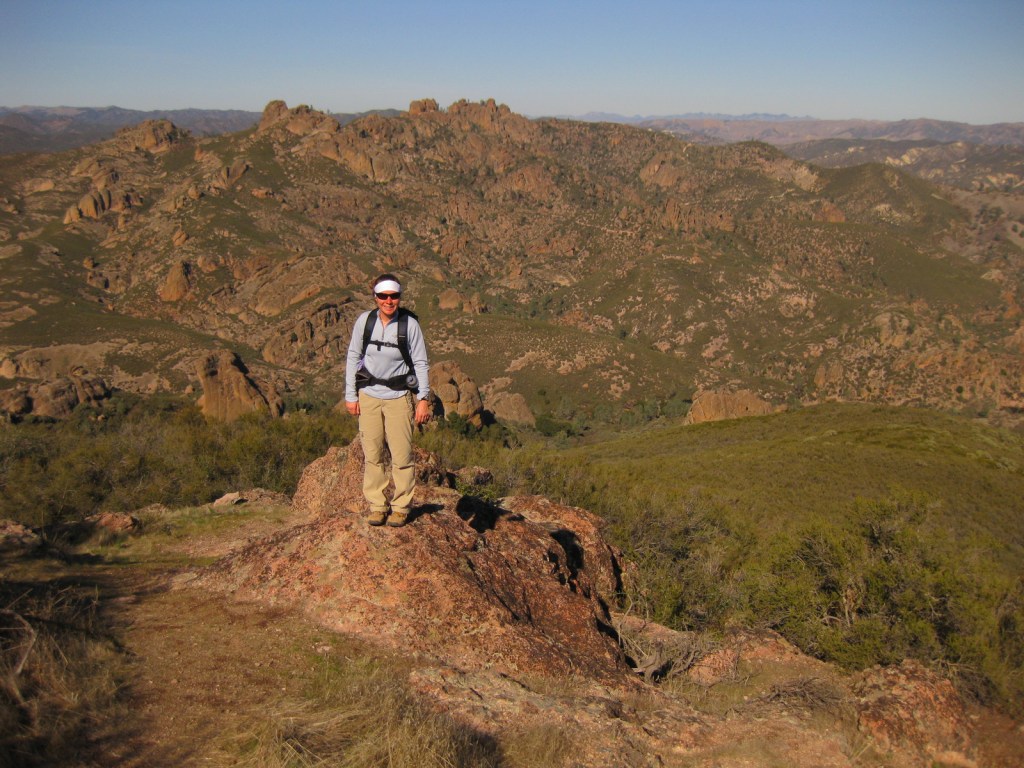
California has nine National Parks, which is more than any other state, including Alaska.  The newest is Pinnacles National Park, upgraded from a National Monument in 2013.  Rising above the agricultural Salinas Valley, it does have quite a long history, going back even before President Theodore Roosevelt officially recognized its significance in 1908.  The park’s West Entrance is accessible from Highway 101 and the East Entrance is closer to Interstate 5 and the Central Valley.  It is actually faster to hike from one side to another, than to drive two hours around. 

Learn more in our guidebook to the National Parks, A Park to Yourself: Finding Adventure in America’s National Parks (available on Amazon).

Highlights

Scenic views, talus caves, rock climbing, endangered California condors

Must-Do Activity

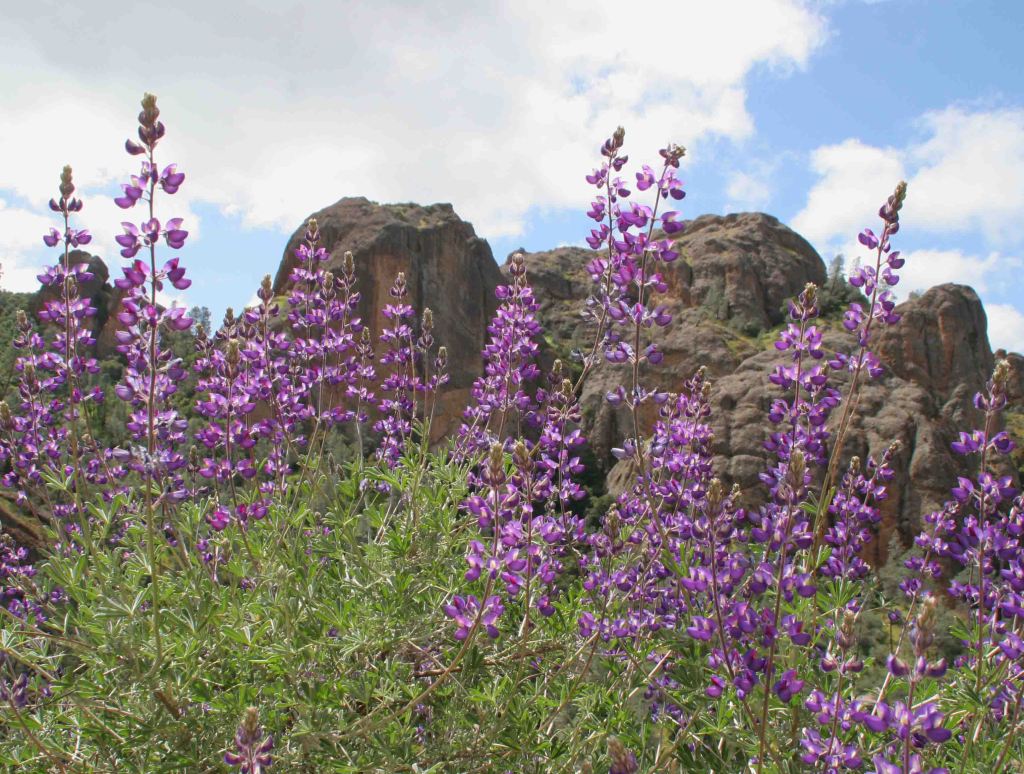
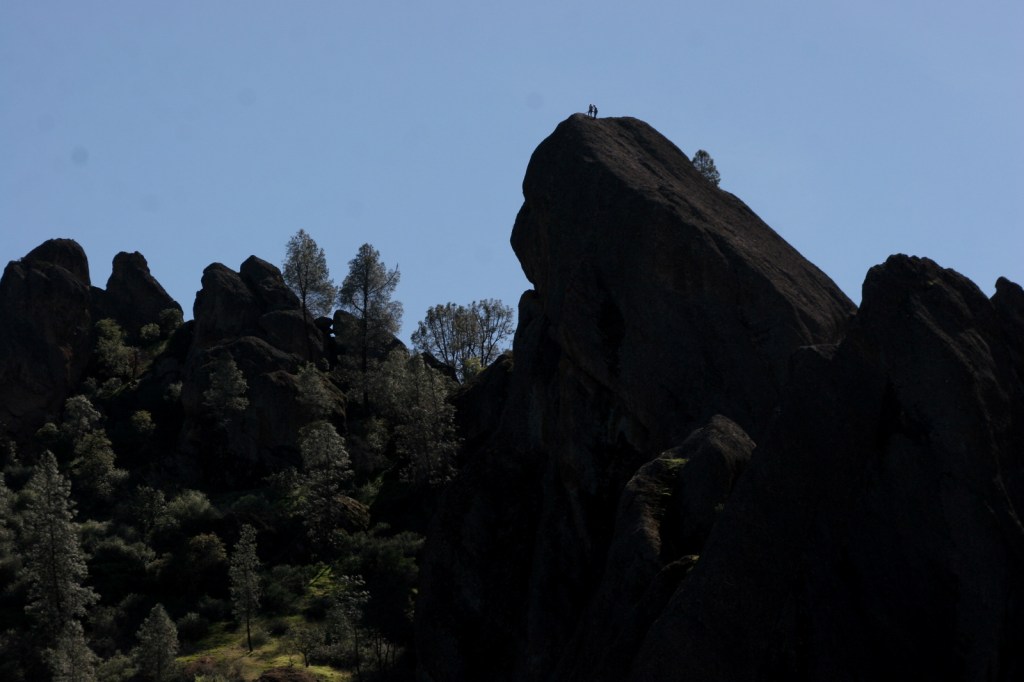
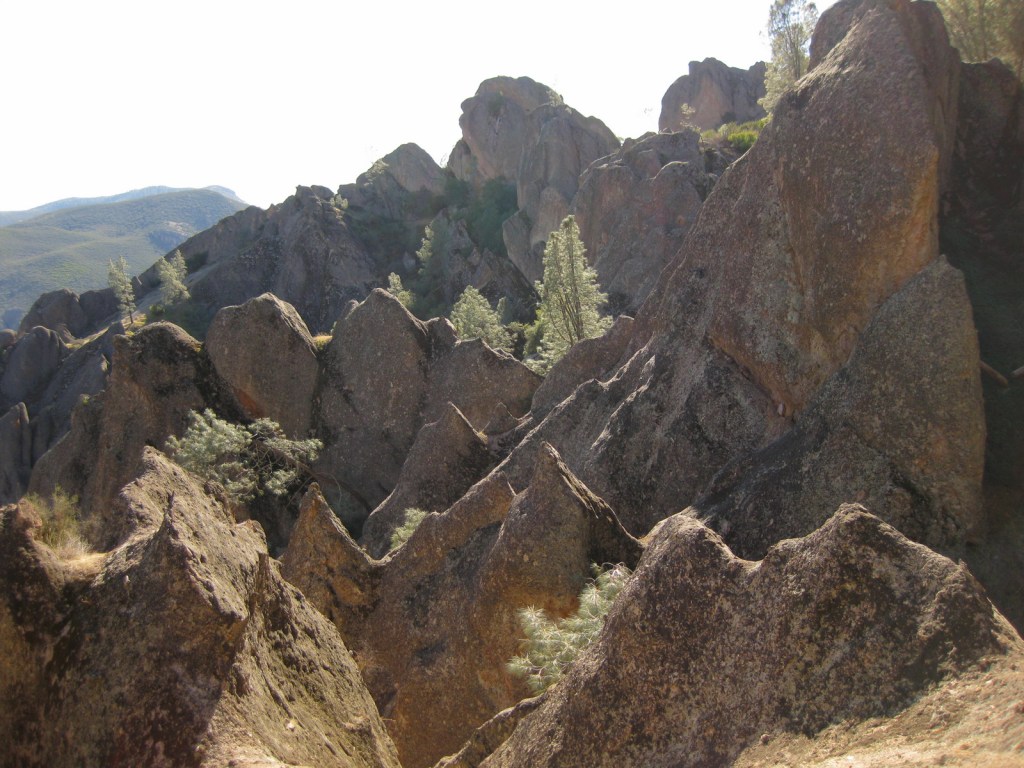
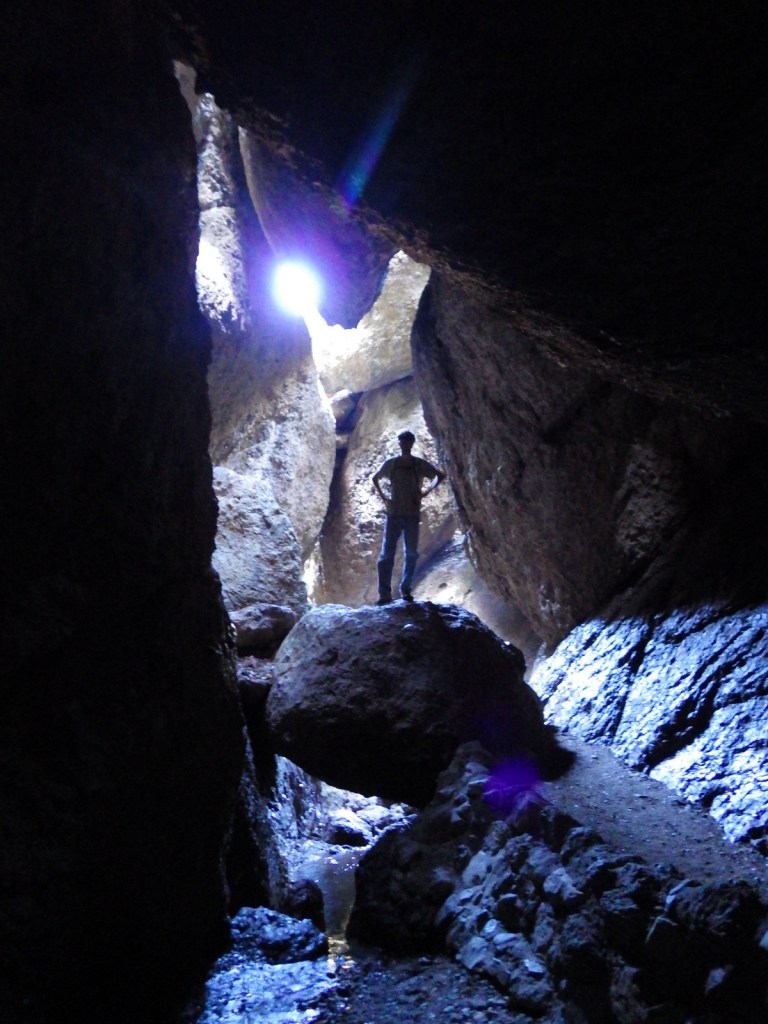
In addition to its striking rock spires, the park is known for talus caves, which are tunnels formed by boulders falling and catching between narrow canyon walls.  Flashlights are necessary to navigate through them, although small gaps in the chaotic ceiling often allow shafts of light through in picturesque fashion.  You might spot a bat flying through the caves, which are seasonally closed for their protection.

Best Trail

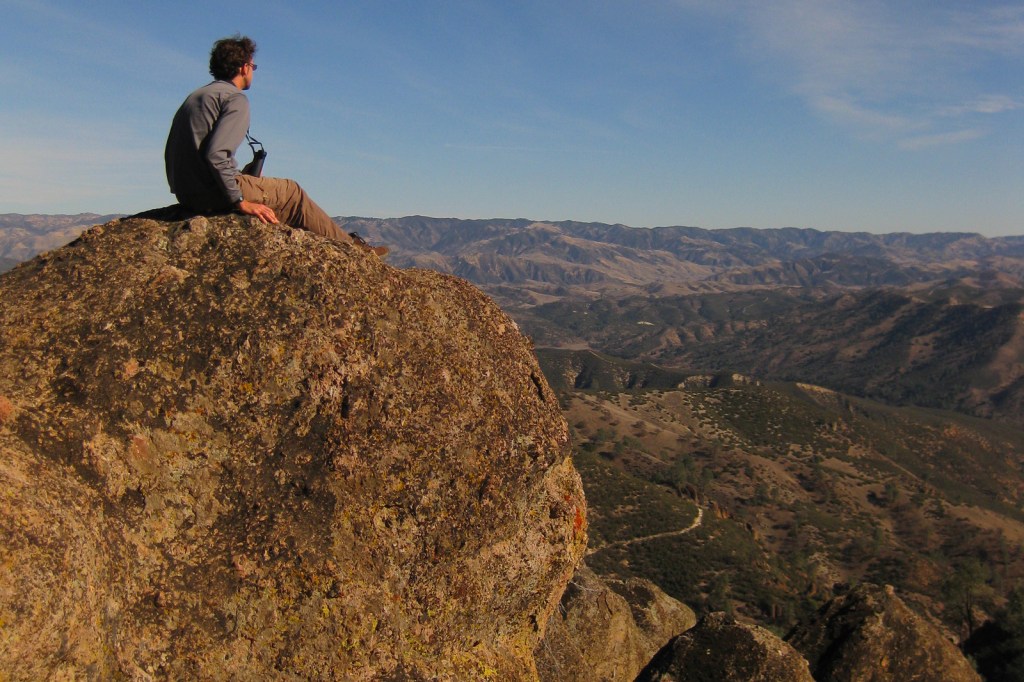
Mild temperatures make this a park for hiking in all seasons.  Just be sure to hold onto the chains while navigating the Steep and Narrow section of the steep High Peaks Trail.

Instagram-worthy Photo

While you may not see a bat in the talus caves of Pinnacles National Park, it is likely you will spot the nine-foot wingspan of a California condor slicing the blue sky outside the caves.  This is perhaps the most successful of all release sites for this species teetering on the brink of extinction.

Peak Season

Summer

Hours

https://www.nps.gov/pinn/planyourvisit/hours.htm

Fees

$30 per vehicle or America the Beautiful pass

Road Conditions

All roads are paved, but there is not a road connecting the East and West Entrances, which are about a two-hour drive apart.

Camping

The West Entrance gate is locked every night as it is day use only, but there is a campground that takes reservations at the East Entrance.  No backcountry camping is allowed.

Related Sites

Yosemite National Park (California)

Channel Islands National Park (California)

Sequoia National Park (California)

This design we created to celebrate Joshua Tree National Park is available on a variety of products at Cafe Press and Amazon.

Explore More – Accessible by a nine-mile roundtrip hike with more than 2,000 feet of elevation gain, how tall is North Chalone Peak?

We are a participant in the Amazon Services LLC Associates Program, an affiliate advertising program designed to provide a means for us to earn fees by linking to Amazon.com and affiliated sites.