Tag Archives: trail

Kiowa National Grassland

Kiowa National Grassland

New Mexico

Managed by U.S. Forest Service, Southwestern Region

137,131 acres

Website: https://www.fs.usda.gov/r03/cibola/recreation/kiowa-national-grasslands-0

Overview

Kiowa National Grassland encompasses two discrete units in northeast New Mexico, the eastern one bordering Texas and Oklahoma’s Rita Blanca National Grassland.  This patchwork of public and private lands is administered together with the larger Cibola National Forest and Black Kettle National Grassland.  Elevations range from 4,500 up to 6,300 feet in the western unit where La Frontera del Llano Scenic Byway (NM 39) runs north to south.  Shortgrass prairie is the dominant cover type, with sand sagebrush and pinyon-juniper woodland mostly found in the west.  Ponderosa pines are dispersed on wetter hill faces and riparian areas support Fremont cottonwoods and willows. 

Highlights

Mills Canyon, Santa Fe National Historic Trail

Must-Do Activity

Melvin Mills (an attorney, territorial legislator, and entrepreneur) established the Mills Orchard and Ranch along the Canadian River in 1881.  Flash flooding devastated the orchard in 1904, leading to the ranch’s abandonment a decade later.  In 2005, the U.S. Forest Service and National Park Service collaborated to restore three ranch buildings, and for their efforts they won the Windows on the Past Award for historic preservation.  There are also interpretive signs and a free campground at the bottom of Mills Canyon, located nine miles down unpaved Mills Canyon Road.

Best Trail

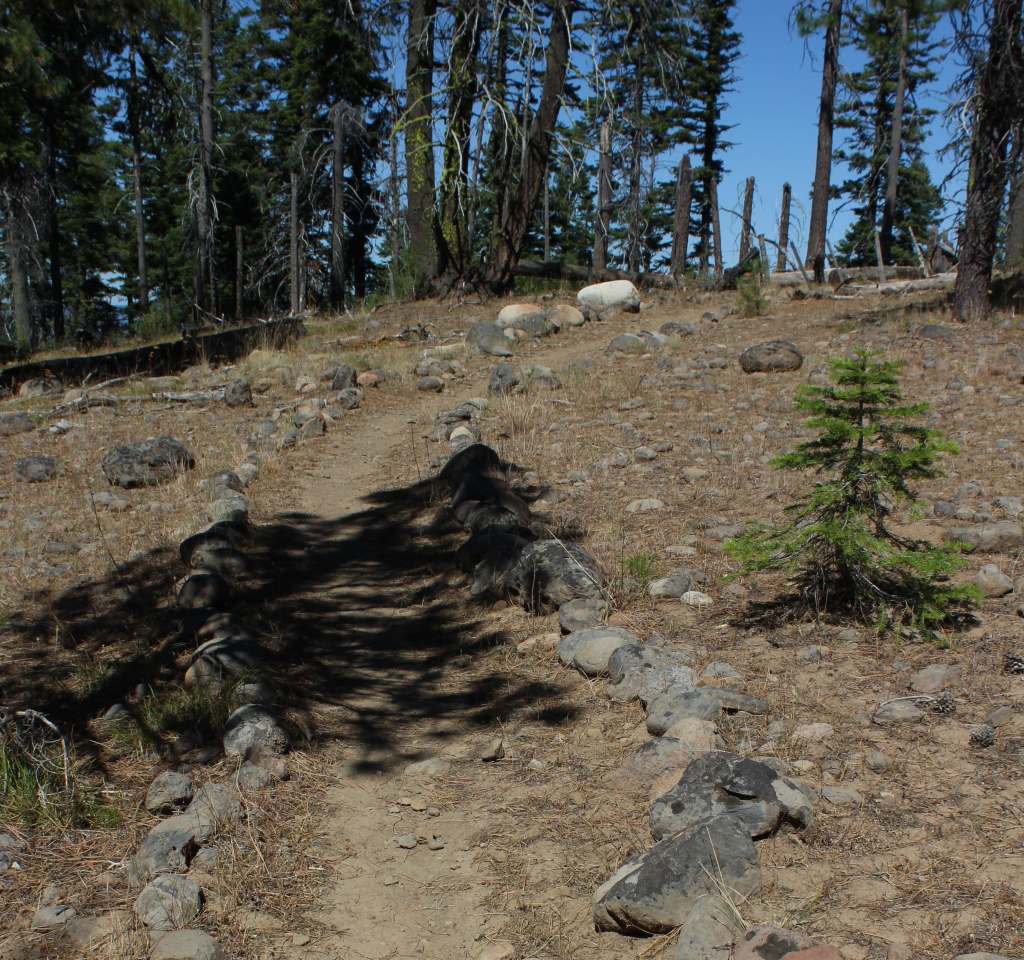
A three-mile stretch of the Santa Fe National Historic Trail’s Cimarron Route is marked by rock posts 17 miles north of Clayton, and it is open for walking and horseback riding.  There are interpretive signs along the route and wagon ruts remain visible. 

Watchable Wildlife

An introduced herd of Barbary sheep are thriving in the Mills Canyon area.  The Canadian River supports largemouth bass and channel catfish.  Nomadic Naturalists blog reported seeing swift foxes, spiny softshell turtles, black-chinned sparrows, and pinyon jays on their visit.

Photographic Opportunity

Mills Canyon was cut by the Canadian River through sedimentary rocks ranging in age from 200-million to 90-million years old. 

Peak Season

Summer

Fees

None

Road Conditions

Past Mills Canyon Rim Campground, the unpaved Mills Canyon Road #600 is not recommended for trailers or passenger vehicles as it switchbacks down into Mills Canyon.  A high-clearance vehicle is also recommended for the two-track paralleling the Santa Fe National Historic Trail’s Cimarron Route.

Camping

Both the Mills Canyon Rim Campground (6 campsites) and Mills Canyon Campground (12 sites) are free with vault toilets, but no water.  Dispersed camping is allowed in the eastern unit around the Santa Fe National Historic Trail.

Related Sites

Cimarron National Grassland (Kansas)

Bent’s Old Fort National Historic Site (Colorado)

Comanche National Grassland (Colorado)

Fort Union National Monument (New Mexico)

Nearest National Park

Great Sand Dunes

Explore More – As an attorney, Melvin Mills’ work often involved outlaws, American Indians, and politicians; who saved his life when he was nearly hanged by an angry mob?
Jimmy Carter National Historical Park

Jimmy Carter National Historical Park

Georgia

Managed by National Park Service

Established 1987 National Historic Site, 2021 National Historical Park

71 acres

Website: nps.gov/jica

Overview

Jimmy Carter was the 39th U.S. President (1977-1981) and the first to reach the age of 100 before he passed away on December 29, 2024.  Following his presidency, he and his wife (Rosalynn) returned to their hometown of Plains and cemented their legacy as diplomats and humanitarians, mostly through their work with the Carter Center in Atlanta (he was awarded a Nobel Peace Prize in 2002).  Up until the end, Jimmy Carter taught Sunday school at Maranatha Baptist Church, which is open to the public.  The National Historical Park encompasses Jimmy’s boyhood farm, high school, and the old Plains railroad depot.  It also includes his residence since 1961, which continues to be closed but will eventually be turned into a museum by the National Park Service (NPS).  In July 2025, the Carter Gardens and Burial Site of Jimmy and Rosalynn Carter opened to the public.

Highlights

Plains High School, film, train depot, boyhood farm, burial site, Carter Gardens

Must-Do Activity

The best place to start a visit is the NPS visitor center and museum in the former Plains High School, which is full of artifacts and information on the Carters.  Next, drive or walk to the main street, where the train depot that shut down in 1951 was turned into Jimmy’s presidential campaign headquarters.  While downtown, check out the shops for souvenirs and try some boiled peanuts or soft-serve peanut-flavored ice cream.  There are several other sites of interest around Plains, including the boyhood home, burial site, Carter Gardens, Maranatha Baptist Church, and peanut statue (see Photographic Opportunity).

Best Trail

A half-mile trail winds through the boyhood farm where Jimmy lived starting at age four.  Farm animals and seasonal crops are raised here, including peanuts.  You can take a self-guided tour through his boyhood home, which was restored to its appearance before electricity was installed in 1938.

Photographic Opportunity

While not part of the official National Historical Park, when you drive up Buena Vista Road to see Maranatha Baptist Church, you pass the 13-foot-tall Jimmy Carter peanut statue built during the 1976 presidential election to support the former peanut farmer.

Peak Season

Spring and fall

Hours

https://www.nps.gov/jica/planyourvisit/hours.htm

Fees

None

Road Conditions

Paved parking is available at the high school, train depot, and boyhood farm (located about three miles west of town). 

Camping

About 30 miles away in each direction are campgrounds at Georgia Veterans State Park and Providence Canyon State Park (which is featured on a U-Haul super graphic). 

Related Sites

Andersonville National Historic Site (Georgia)

Cumberland Island National Seashore (Georgia)

Ocmulgee Mounds National Historical Park (Georgia)

Nearest National Park

Great Smoky Mountains

Explore More – According to an urban legend, why was a hole cut in the back of the Jimmy Carter peanut statue by the U.S. Secret Service?

Lolo National Forest

Lolo National Forest

Montana

Managed by U.S. Forest Service, Northern Region

2,639,224 acres (2,197,966 federal/ 441,258 other)

Website: https://www.fs.usda.gov/r01/lolo

Overview

Located in western Montana, the elevation of Lolo National Forest ranges from less than 2,400 feet on the Clark Fork River below Thompson Falls to the top of 9,186-foot Scapegoat Mountain.  West of Missoula off Interstate 90, the Ninemile Historic Remount Depot preserves a Civilian Conservation Corps (CCC) camp and pack stock training facility.  Founded in 1907, the Savenac Historic Tree Nursery Area is also well developed for visitors, including an arboretum and cabin rentals in what were formerly the cookhouse and bunkhouse. 

Highlights

Rattlesnake National Recreation Area, Lolo Pass Visitor Center, Lolo National Historic Trail, Fort Fizzle, Blue Mountain Recreation Area, Cascade Falls, Savenac Nursery, Petty Creek Bighorn Sheep Viewing Site, Clearwater Canoe Trail, Stark Mountain Vista, Lewis and Clark National Historic Trail

Must-Do Activity

Lolo National Forest surrounds Missoula, where the Aerial Fire Depot and Smokejumper Center offers guided tours and exhibits.  Right outside of the city are numerous hiking trails in Blue Mountain Recreation Area and Rattlesnake National Recreation Area, which contains 73 miles of trails (and has its own blog entry on our website).  Following a path used by the Corps of Discovery in 1805, the Lolo National Historic Trail shadows Highway 12 west into Idaho (see Clearwater National Forest). Take time to stop at the Lolo Pass Visitor Center managed by the U.S. Forest Service.

Best Trail

Morrell Falls National Recreation Trail leads to a 90-foot-tall waterfall on the western slope of the Swan Range.  The trail is 5.5 miles out-and-back, mostly flat with some short inclines as it cuts through a burned area now full of beargrass and fireweed.  The waterfall cascades down a rocky outcrop and is well lit in the afternoon.  The trailhead is located 7.5 miles from Highway 83 on a good gravel road that has well-signed intersections.  Also nearby, the Pyramid Pass Trailhead provides access to the Bob Marshall Wilderness in adjacent Flathead National Forest.

Watchable Wildlife

There are 60 species of mammals found in Lolo National Forest, including grizzly/brown bears, black bears, mountain lions, gray wolves, mountain goats, bighorn sheep, elk, moose, and mule deer.  Among the largest of the more than 300 birds spotted are bald eagles, golden eagles, and trumpeter swans.  The five rivers and over 100 lakes are home to 30 varieties of ducks and 20 types of fish.

Photographic Opportunity

Located on the western slope of the Swan Range, 90-foot-tall Morrell Falls is accessed on a 5.5-mile out-and-back hike.

Peak Season

Summer

Fees

None

Road Conditions

The unpaved roads we took were in good shape to Morrell Falls National Recreation Trail and Rattlesnake National Recreation Area.

Camping

The forest has 12 improved campgrounds and several historic fire lookout towers available for overnight rental through the website Recreation.gov

Wilderness Areas

Rattlesnake Wilderness

Scapegoat Wilderness (also in Helena and Lewis and Clark National Forests)

Selway-Bitterroot Wilderness (also in Bitterroot, Clearwater, and Nez Perce National Forests)

Welcome Creek Wilderness

Related Sites

Deerlodge National Forest (Montana)

Upper Missouri River Breaks National Monument (Montana)

Beaverhead National Forest (Montana)

Nearest National Park

Glacier

Conifer Tree Species

western redcedar, alpine larch, western larch, whitebark pine, ponderosa pine, grand fir, subalpine fir, Engelmann spruce, mountain hemlock

Flowering Tree Species

quaking aspen, Rocky Mountain maple, western serviceberry

Explore More – What is the origin of the name Lolo?

Learn more about this and the 154 other National Forests in our new guidebook Out in the Woods

Rattlesnake National Recreation Area

Rattlesnake National Recreation Area

Montana

Managed by U.S. Forest Service, Northern Region

28,000 acres

Website: https://www.fs.usda.gov/r01/lolo/recreation/rattlesnake-national-recreation-area-wilderness

Overview

Situated only four miles from Missoula, Montana within Lolo National Forest, Rattlesnake National Recreation Area is a popular area for outdoor recreation year-round.  It was established in 1980, at the same time as the adjacent 32,976-acre Rattlesnake Wilderness, which ranges in elevation from 4,200 feet up to 8,620-foot McLeod Peak.  The National Recreation Area has one of the only Sphagnum bogs in the western U.S. and Rattlesnake Creek hosts bull trout, cutthroat trout, and mountain whitefish. 

Highlights

Rattlesnake Main Trail, Ravine Creek Trail. Sawmill Curry Gulch Loop Trail, Spring Gulch Trail, Stuart Peak Trail

Must-Do Activity

There are 73 miles of hiking trails in the National Recreation Area, but the most heavily used are the first three miles of Rattlesnake Main Trail along Rattlesnake Creek.   These trails are also open to horseback riders, mountain bikers, and cross-country skiers.  Be aware that mountain lions and black bears frequent the area, and we came across a bear on a warm morning in early August. 

Best Trail

Rattlesnake Main Trail follows an old logging road along the creek for the first nine miles before it gets steeper.  Other popular hiking options include Ravine Creek Trail, Sawmill Curry Gulch Loop Trail, Spring Gulch Trail with its moderate elevation gain, and Stuart Peak Trail that climbs steeply up into the Rattlesnake Wilderness.

Photographic Opportunity

Rattlesnake Creek attracts many animals, including the American dipper or ouzel, an aquatic songbird.

Peak Season

Summer

Fees

None

Road Conditions

From the Van Buren Street exit #105 off Interstate 90, head north as it turns into Rattlesnake Drive, which you drive for approximately three miles to the entrance.

Camping

There is no campground within the National Recreation Area and the closest ones in Lolo National Forest are much further west on Interstate 90 or to the north off Highway 83.

Related Sites

Helena National Forest (Montana)

Bitterroot National Forest (Montana)

Clearwater National Forest (Idaho)

Nearest National Park

Glacier

Explore More – What species of native orchids can be found growing here?

George Washington Birthplace National Monument

George Washington Birthplace National Monument

Virginia

Managed by National Park Service

Established 1930

662 acres

Website: nps.gov/gewa

Overview

George Washington’s great-grandfather John first came to Virginia in 1657 and later settled this slave plantation on Popes Creek.  The future general and president was born on the property in 1732 in a house that burned down whose foundation is now outlined in the ground by crushed oyster shells.  The current Memorial House was constructed to celebrate the bicentennial of his birth, although the architect had no idea of the original house’s layout.  Those interested in the first U.S. President should combine this free tour with an expensive visit to his mansion at Mount Vernon located 68 miles north. 

Learn more about the other 137 National Monuments in our newest travel guidebook Monumental America: Your Guide to All 138 National Monuments.  It is now available for sale on Amazon.com.

Highlights

Memorial Obelisk, film, Memorial House, Family Burial Ground, Nature Trail, Dancing Marsh Loop Trail

Must-Do Activity

After passing the Memorial Obelisk on the drive in, your first stop should be the visitor center to watch the 15-minute film, see artifacts from the burned-down house, and find out about a tour.  The hour-long ranger-guided walking tour covers about a half-mile on a gravel pathway to the Memorial House with frequent interpretive stops.  In the summer, the house also has open hours for dropping in before and after the tour.  There may be living history demonstrations at the colonial herb and flower garden, farm workshop, and colonial revival kitchen.  It is worth a short drive to the tidewater beach on the Potomac River and a stop along the way at the Washington Family Burial Ground that has replicas of gravestones.

Best Trail

From the Memorial House, it is less than a mile to walk Dancing Marsh Loop Trail including open views on the footbridge across Popes Creek and the boardwalk through the marsh.  This trail connects with the one-mile Nature Trail loop for a longer walk, and that is also accessible from the picnic area parking lot.

Photographic Opportunity

Originally constructed in 1896 by the War Department on the site where Memorial House now stands, the 50-foot-tall Memorial Obelisk is made of Vermont granite at one-tenth scale of the Washington Monument 70 miles to the north in Washington, D.C.

Peak Season

Spring and fall

Hours

https://www.nps.gov/gewa/planyourvisit/hours.htm

Fees

None

Road Conditions

All roads are paved, but be aware there is a toll to cross the bridge into Virginia on Highway 301 southbound from Maryland. 

Camping

There is no camping at the National Monument, so the nearest campground is seven miles southeast at Westmoreland State Park, which offers RV sites with hookups.

Related Sites

Washington Monument (District of Columbia)

Valley Forge National Historical Park (Pennsylvania)

Colonial National Historical Park (Virginia)

Nearest National Park

Shenandoah

Explore More – How many generations of George Washington’s forebears are buried on the property?

Learn more about this and the other 137 National Monuments in our book Monumental America: Your Guide to All 138 National Monuments