Tag Archives: museum

Perry’s Victory and International Peace Memorial

Overview

Perry’s Victory and International Peace Memorial is located on South Bass Island in western Lake Erie.  Commodore Oliver Hazard Perry not only had the best name in the War of 1812, his naval victory near here on September 10, 1813 was a turning point.  The 1817 Rush-Bagot Agreement is still in effect today, assuring that the U.S. and Canada maintain the world’s longest undefended international border.  The 352-foot tall memorial tower was built between 1912-15 and became part of the National Park Service (NPS) system in 1936.

Highlights

Museum, film, 352-foot tall memorial tower, black squirrels

Must-Do Activity

After departing from your ferry or airplane, head to the NPS visitor center for the free museum and film, then pay for your ticket to ascend the granite memorial tower in an elevator.  On a sunny day the views from the 317-foot tall viewing level across Lake Erie are splendid, including the shoreline of Canada and the roller coasters at Cedar Point.  The rotunda at the tower’s base also contains the remains of three American and three British soldiers who died during the 1813 battle.

Best Trail

It is about two miles from the ferry terminal to the NPS visitor center, but if the weather is nice it is a pleasant walk on roads that are not busy.

Instagram-worthy Photo

The windows facing the memorial tower at the NPS visitor center are mirrored, which makes for a really interesting and distorted reflection.

Peak Season

Summer (May to October is the only time you can enter the memorial)

Hours

Open seasonally: https://www.nps.gov/pevi/planyourvisit/hours.htm

Fees

Free for museum, $10 per person for elevator to top of tower or free with America the Beautiful pass

Road Conditions

South Bass Island is only accessible by boat or airplane.  Ferry service allows you to bring your own vehicle to the island, which is small enough to walk everywhere or drive in a rental golf cart.

Camping

South Bass Island State Park has more than 100 primitive campsites on the island and East Harbor State Park on the mainland has more than 500 campsites with modern facilities.

Related Sites

River Raisin National Battlefield Park (Michigan)

Cuyahoga Valley National Park (Ohio)

Dayton Aviation Heritage National Historical Park (Ohio)

Explore More – What is the significance of the “DON’T GIVE UP THE SHIP” flag?
We are a participant in the Amazon Services LLC Associates Program, an affiliate advertising program designed to provide a means for us to earn fees by linking to Amazon.com and affiliated sites.

River Raisin National Battlefield Park

River Raisin National Battlefield Park

Michigan

Managed by National Park Service

Established 2009

42 acres

Website: nps.gov/rira

Overview

River Raisin National Battlefield Park is located in Monroe, Michigan near where the mouth of the river empties into Lake Erie.  During the War of 1812, the U.S. had a plan to invade Canada which fell through after the surrender of Detroit.  Five months later in January 1813, U.S. troops were heading towards Detroit when they made a detour to Frenchtown to drive off a small detachment of Canadians.  Following an initial victory, a few mornings later a British surprise attack captured or killed all but 33 of nearly 1,000 troops.  When Indian allies of the British returned to scalp six (according to the British) or 42 (according to the Americans) injured prisoners the devastating defeat became immortalized in the rallying cry “Remember the Raisin!”

Highlights

Museum, film, River Raisin Heritage Trail

Must-Do Activity

River Raisin National Battlefield Park was not authorized until 2009, so it has a nice new visitor center opened in 2011.  The National Park Service (NPS) has even attempted to make it kid-friendly by creating a stuffed animal of Major Muskrat with multiple costume options available in the gift shop.  It is not often that an NPS site commemorates an American defeat in battle.  In 1813, the U.S. went onto victory at the Battle of Lake Erie and the Battle of Thames in southern Ontario.  The Canadians do not have their own National Battlefield Parks dedicated to those defeats.

Best Trail

The 42-acre park is mostly a lawn with a paved path dotted by interpretive signs.  You can also hook into the River Raisin Heritage Trail, which takes you to Sterling State Park on Lake Erie.

Instagram-worthy Photo

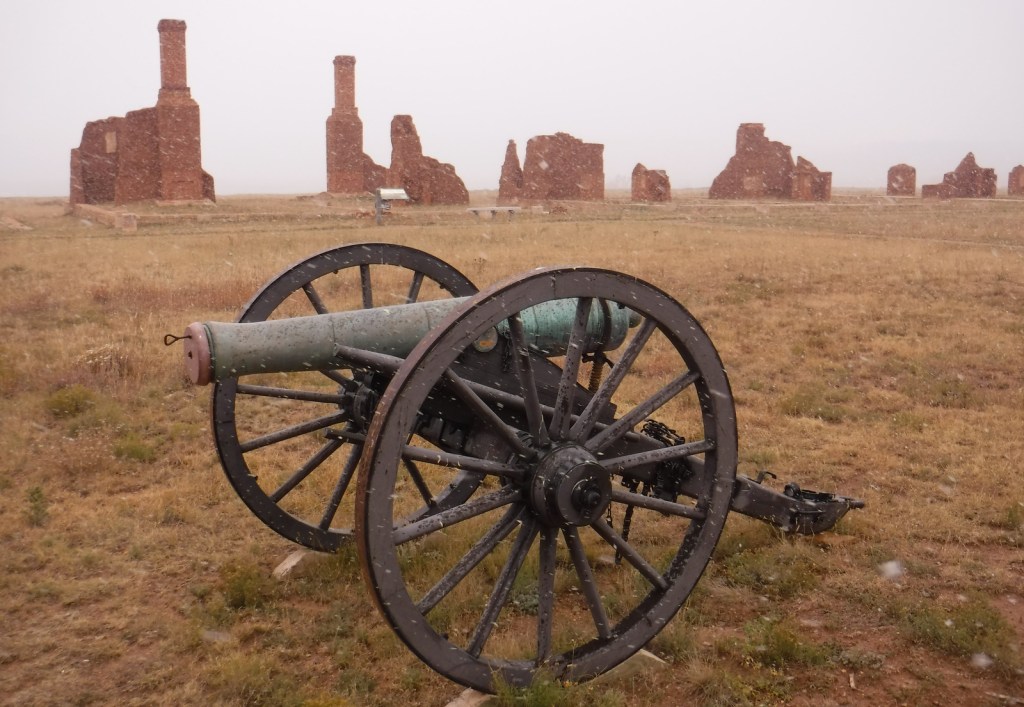
A replica of a cannon used at the January battle is on sled runners; pretty unique!

Peak Season

Summer

Hours

https://www.nps.gov/rira/planyourvisit/hours.htm

Fees

None

Road Conditions

All roads paved

Camping

Sterling State Park offers a 256-site campground on Lake Erie.

Related Sites

Perry’s Victory and International Peace Memorial (Ohio)

Horseshoe Bend National Military Park (Alabama)

Sleeping Bear Dunes National Lakeshore (Michigan)

Explore More – Native Americans were left out of the Treaty of Ghent that ended the War of 1812, so when did the U.S. sign the Treaty of Springwells officially ending hostilities?

Montezuma Castle National Monument

Overview

Central Arizona’s Montezuma Castle was one of the first four National Monuments established by President Theodore Roosevelt in 1906.  Conveniently accessible just off Interstate 17 on the way to Sedona or the Grand Canyon, it is a great place to stretch your legs after the 90-minute car ride from Phoenix.  Located in the scenic Verde River Valley, it is one of several sites related to the Sinagua people managed by the National Park Service (also see Walnut Canyon, Tuzigoot, and Wupatki).

Highlights

Cliff dwelling, Montezuma Well

Must-Do Activity

Protected in a cliff recess above Beaver Creek, the five-story tall ruin is not accessible to tourists and can only be viewed from below.  Its name “Montezuma” refers to the mistaken belief that it was somehow connected to the Aztec Empire of Mexico, but its inhabitants had more in common with the Sinagua people living in around Arizona in the 1400s.  Continue on the paved walkway to the ground-level ruins of Castle A and views of Beaver Creek.

Best Trail

To investigate a separate unit of Montezuma Castle National Monument, drive 11 miles north to Montezuma Well, a limestone sinkhole filled by a natural spring that produces 1.5-millions gallons of 74°F water daily.  The trail is only a half-mile long loop, but it is worth the trip to see the historic irrigation ditches and the 55-foot deep sinkhole.

Instagram-worthy Photo

It is unclear why the Sinagua people abandoned the cliff dwelling around 1425, but it may have been due to disease, drought, or climate change.  There were 35 to 50 inhabitants of Montezuma Castle and even more at Castle A, which had approximately 50 rooms.

Peak Season

Summer

Hours

https://www.nps.gov/moca/planyourvisit/hours.htm

Fees

$10 per person or America the Beautiful pass; Montezuma Well is free

Road Conditions

Access roads are paved.

Camping

There is no campground at the National Monument, but many located within massive Coconino National Forest, which also allows dispersed camping.

Related Sites

Tuzigoot National Monument (Arizona)

Tonto National Monument (Arizona)

Sunset Crater Volcano National Monument (Arizona)

Explore More – In what year did the National Park Service stop allowing visitors to climb ladders to walk inside Montezuma Castle?

Big Thicket National Preserve

Overview

When most people think of Texas they do not think of the bayou, but since 1974 this unique ecosystem and eight others were preserved in several units in the southeastern portion of the state.  The Big Thicket once covered 3.5-million acres, however, now only 112,000 acres is protected by the National Park Service (NPS) in 15 remnant sections.  Here you can also discover longleaf pine savannah, saltwater estuaries, and wetlands harboring carnivorous plants.  Understandably, the region is noted for its high biodiversity, highlighted by 85 tree species, 20 orchids, and wildlife as dissimilar as alligators and roadrunners.

Highlights

Kirby Nature Trail, Pine Island Bayou, Cooks Lake Paddling Trail, Neches River, birding

Must-Do Activity

We recommend you start by learning about the nine different ecosystems within the preserve at the NPS visitor center located eight miles north of Kountze, Texas.  The best way to get to know Big Thicket National Preserve is on the water.  Motorboats are allowed in most units, but paddling is preferred for exploring the shallow bayous.  Lined with baldcypress trees, Pine Island Bayou is best explored by kayak or canoe, as is the Cooks Lake Paddling Trail (a five mile loop).  It is also possible to float the park’s 80 miles of the Neches River depending upon the amount of water released from B.A. Steinhagan Lake.

Best Trail

There are 40 miles of hiking trails, but it may be best to start with the Kirby Nature Trail near the NPS visitor center in Kountze, Texas.  Also located in the Turkey Creek Unit, the short Pitcher Plant Trail is best in the spring when the carnivorous plants bloom in the wet savanna.

Instagram-worthy Photo

Inside the NPS visitor center located eight miles north of Kountze, Texas, you can pose with a giant-sized pitcher plant model.

Peak Season

Fall and spring to avoid peak mosquito season.

Hours

https://www.nps.gov/bith/planyourvisit/hours.htm

Fees

None

Road Conditions

The main access roads are paved, but some boat launches may be dirt.

Camping

The NPS offers free backcountry permits, but the nearest campgrounds are at Village Creek State Park and B.A. Steinhagan Lake (managed by the U.S. Army Corps of Engineers).

Related Sites

Jean Lafitte National Historical Park and Preserve (Louisiana)

Big Cypress National Preserve (Florida)

Everglades National Park (Florida)

Explore More – In addition to pitcher plants, how many other carnivorous plant species are found in Big Thicket National Preserve?

Hopewell Furnace National Historic Site

Overview

In Hopewell, Pennsylvania, the proximity of iron ore, limestone, and charcoal led to this iron furnace’s success from 1771 to 1883.  It also needed water from French Creek to run the air blast machinery allowing the furnace to reach smelting temperature.  During the American Revolution, it produced cannon, shot, and shells for the Continental Navy.  The 848-acre National Historic Site was authorized in 1938, making it one of the oldest in the nation.

Highlights

Anthracite furnace, film, cast house, tenant houses, ironmaster’s mansion, Bethesda Church

Must-Do Activity

Start with the short film at the visitor center, then take the self-guided walk through the “iron plantation.”  Though the cold-blast charcoal process became outdated by 1883, the original furnace is still used each summer to produce aluminum products.  Other costumed interpreters depict village life from late June to Labor Day.  In September and October, visitors can pick 30 varieties of apples in the orchards for a small fee, similar to Capitol Reef National Park in Utah.

Best Trail

The site’s 12 miles of forested trails also connect into the neighboring French Creek State Park.

Instagram-worthy Photo

Inside the cast house, moulders cast molten iron into stove plates, cannonballs, and other products.

Peak Season

Summer and apple picking season

Hours

https://www.nps.gov/hofu/planyourvisit/hours.htm

Fees

None, but “you pick” apples cost $1 per pound

Road Conditions

Access roads are paved

Camping

French Creek State Park has more than 200 campsites with access to running water and showers.

Related Sites

Saugus Iron Works National Historic Site (Massachusetts)

Valley Forge National Historical Park (Pennsylvania)

Independence National Historical Park (Pennsylvania)

Explore More – How high of a temperature could the Hopewell Furnace reach when smelting?