All posts by Raven About The Parks

Top 10 National Recreation Areas in National Forests

There are 21 National Recreation Areas administered solely by the U.S. Forest Service (and one co-managed with the National Park Service).  This is a list of our favorites, since we already ranked our Top 10 National Recreation Areas run by the National Park Service.  The U.S. Forest Service also manages nine National Scenic Areas, so we will probably never rank those, but by far the two best are Oregon’s Columbia River Gorge and California’s Mono BasinClick here to see all our Top 10 lists.

10. Land Between The Lakes (Kentucky-Tennessee)

A planetarium and a bison herd can be found in the land between Lake Barkley and Kentucky Lake

9. Grand Island (Michigan)

An undeveloped island beckons hikers and bikers at the western edge of Pictured Rocks National Lakeshore

8. Winding Stair Mountain (Oklahoma)

Eastern Oklahoma is surprisingly mountainous and densely forested

7. Mt. Rogers (Virginia)

Hike the Appalachian National Scenic Trail to the top of Virginia or hop on a bike to coast down the Virginia Creeper Rail Trail

6. Spring Mountains (Nevada)

Snow frequently falls in these scenic peaks just north of Las Vegas

5. Hells Canyon (Oregon-Idaho)

The whitewater rapids of the Snake River cut what is arguably the deepest canyon in North America

4. Oregon Dunes (Oregon)

Coastal sand dunes interspersed with Douglas-fir forests attract hikers and ORV drivers

3. Spruce Knob-Seneca Rocks (West Virginia)

The state’s highest point and a popular rock climbing area are separated by a narrow valley

2. Mt. Baker (Washington)

One of the prettiest roads in the U.S., Mt. Baker Scenic Byway (Highway 542) dead ends at the high elevation of Artist Point

…and finally our #1 National Recreation Area in a National Forest:

1. Sawtooth (Idaho)

The jagged peaks here live up to their name at the intersection of Boise, Challis, and Sawtooth National Forests

.

Honorable Mentions

Ed Jenkins (Georgia)

Encompassing Springer Mountain, the southern terminus of the Appalachian National Scenic Trail

Arapaho (Colorado)

The Continental Divide National Scenic Trail cuts through this lake-filled basin west of Rocky Mountain National Park

Flaming Gorge (Wyoming-Utah)

A red rock canyon on the Green River was dammed to form this pretty border-crossing reservoir

Pine Ridge (Nebraska)

An extension of the Black Hills into northwestern Nebraska, this seldom visited area is home to reintroduced bighorn sheep

Moosalamoo (Vermont)

The Falls of Lana, Silver Lake, Voter Brook Overlook, and Robert Frost Interpretive Trail are all worth a visit

Learn more about these National Recreation Areas and the 155 National Forests they are in with our guidebook Out in the Woods

Emmett Till and Mamie Till-Mobley National Monument         

Emmett Till and Mamie Till-Mobley National Monument         

Mississippi, Illinois

Managed by National Park Service

Established 2023

5.7 acres

Website: nps.gov/till

Overview

In 1955, 14-year-old Emmett “Bo” Till left Chicago to visit family in Mississippi, where he whistled at Carolyn Bryant, a white woman who ran the Bryant’s Grocery & Meat Market in the town of Money.  A few nights later on August 28, Carolyn’s husband (Roy Bryant) and his half-brother (John William “J.W.” Milam) abducted Emmett Till from his relatives’ house.  They took Emmett to Milam’s farm where he was tortured and killed according to their admission in Look magazine a year later.  After Till’s body was recovered at Graball Landing and sent back to Chicago for a funeral, a five-day trial took place in Sumner’s Tallahatchie County Courthouse where Bryant and Milam were acquitted of the crime.  It is probably not a coincidence that the National Monument was proclaimed by President Joe Biden following the release of the 2022 film Till.  Not open to the public but also part of the National Monument in Illinois, the Roberts Temple Church of God in Christ in the Chicago neighborhood of Bronzeville is where Mamie Till-Mobley insisted on an open-casket funeral service so the public could see the terrible results of the murder.  Historians believe the outcry over this lynching of a 14-year-old boy helped lead to the Civil Rights Act of 1957.

Highlights

Emmett Till Interpretive Center, Tallahatchie County Courthouse, Emmett Till Historic Intrepid Center (ETHIC), Black Bayou Bridge, Graball Landing, Greenwood statue, Bryant’s Grocery site

Must-Do Activity

Emmett Till Historic Intrepid Center (ETHIC) is located in a former cotton gin near the site of Emmett Till’s torture and murder on the farm of “J.W.” Milam in Glendora, Mississippi.  Established in 2005, there is an atmosphere to the museum that bears the full weight of history, heightened by the short introductory video showing Emmett Till’s family members’ recollections of the events of 1955.  Inside, there is a recreation of the Bryant’s Grocery & Meat Market storefront, as well as a coffin with the prop used in the film Till depicting Emmett’s shockingly disfigured head.  The museum also has artifacts highlighting the Mississippi Delta’s history with slavery, indigenous people, and blues music (specifically Sonny Boy Williamson II).  Although not part of the National Monument, we recommend a half-hour drive south to Money to see the ruins of Bryant’s Grocery & Meat Market with a restored gas station next door, part of the Mississippi Freedom Trail.

Best Trail

From ETHIC, drive or walk to the Black Bayou Bridge where Emmett “Bo” Till’s body was dumped into the Black Bayou tied to a heavy fan from the cotton gin.  We were grateful to get a personal tour from Tamita Davis who helps run ETHIC.  It is also a short drive down a dirt road to Graball Landing on the Tallahatchie River where there is a small interpretive sign explaining it as the site Till’s body was recovered.

Instagram-worthy Photo

The National Park Service operates out of the Emmett Till Interpretive Center, located in a strip mall opposite the Tallahatchie County Second District Courthouse in Sumner, Mississippi.  It has limited hours, but the courtroom where the September 1955 trial was held was unlocked when we visited on a Tuesday morning. 

Peak Season

Spring and fall

Hours

In Sumner, the Emmett Till Interpretive Center is open to the public Tuesday through Saturday 12-5, while the Tallahatchie County Courthouse is open to the public on Mondays when the center is closed.  In Glendora, Emmett Till Historic Intrepid Center (ETHIC) is open Monday through Saturday 10-5.

Fees

$12 per adult at ETHIC, $5 donation recommended at Emmett Till Interpretive Center

Road Conditions

Paved roads lead to the Tallahatchie County Courthouse in Sumner and Emmett Till Historic Intrepid Center (ETHIC) in Glendora, where a gravel road in good shape leads to Graball Landing.

Camping

To the south, Delta National Forest offers online reservations for campsites (September through March when the forest is not seasonally flooded).

Related Sites

Medgar and Myrlie Evers Home National Monument (Mississippi)

Birmingham Civil Rights National Monument (Alabama)

Freedom Riders National Monument (Alabama)

Pullman National Historical Park (Illinois)

Explore More – A statue of Emmett Till was added in 2022 to Greenwood, Mississippi’s Rail Spike Park, but what city in Colorado has his statue alongside one of Dr. Martin Luther King, Jr.?

Hawai‘i Volcanoes National Park

Hawai‘i Volcanoes National Park

Hawai‘i

Managed by National Park Service

Established 1916

344,812 acres

Website: nps.gov/havo

Overview

Hawai‘i National Park was created in 1916, before being split in 1961 into this park on the Big Island of Hawai‘i and Haleakala National Park on Maui.  Encompassing two of the world’s most active volcanoes (Kīlauea and Mauna Loa), Hawaiʻi Volcanoes National Park is constantly changing.  Indigenous people considered Kīlauea Caldera and its bubbling Halemaʻumaʻu Crater as the sacred home of Pele, goddess of the volcano.  This area first became a tourist attraction in the 1840s when Volcano House was still a grass shack.  A small, wooden hotel was built in 1877 that now serves as Volcano Art Center Gallery, before the larger lodge was finished in the 1940s on the edge of the caldera.  A strenuous backpacking trail summits the world’s largest shield volcano, 13,677-foot Mauna Loa, which erupted in 1926, 1942, 1950, 1984, and 2022. 

To learn more about the separate Kahuku Unit and how to find solitude in this National Park that saw 1.6-million visitors in 2023, check out our expanded 2nd edition of our guidebook A Park to Yourself: Finding Solitude in America’s 63 National Parks

Highlights

Volcano Art Center, Halemaʻumaʻu Crater, Chain of Craters Road, Kīlauea Iki Crater, Nāhuku (Thurston Lava Tube), Hōlei Sea Arch, Lava Tree Molds, Mauna Loa Overlook, Kīpukapuaulu Trail, Pu‘u Loa Petroglyphs Trail

Must-Do Activity

Arrive early or late at the visitor center to avoid tour bus crowds, then check with a ranger to find the best overlooks to view any volcanic activity in Halemaʻumaʻu Crater (depicted in our illustration below).  Consider returning to view the molten lava after dark, although parking can be a challenge.  The Chain of Craters Road leads 20 miles south from the forested caldera rim above 4,078 feet in elevation down to the sparsely vegetated seashore, descending through a wide range of environments before it dead ends into recent lava flows near the Hōlei Sea Arch and 1.5-mile Pu‘u Loa Petroglyphs Trail, where the crisp images chipped into the black lava have been spared from centuries of volcanic activity. 

Best Trail

Kīlauea Iki Trail makes a four-mile loop descending 400 feet to the bottom of the crater that was a lake of lava in 1959.  It is recommended to hike it in a counter-clockwise direction to avoid ascending the steepest sections. 

Instagram-worthy Photo

Kīlauea erupted nonstop from 1983 through 2018, when lava poured in a near constant stream into the ocean, and it has been sporadically active since then.  Lava made it into the #1 spot on our Top 10 Natural Phenomena to See in the U.S.

Peak Season

Year round or whenever a volcano is active

Hours

https://www.nps.gov/havo/planyourvisit/hours.htm

Fees

$30 per vehicle or America the Beautiful pass

Road Conditions

Chain of Craters Road is paved, but can be closed during volcanic eruptions, just as half of Crater Rim Drive has been closed since March 19, 2008.  The side road to Hilina Pali Overlook is usually closed beyond Kulanaokuaiki Campground.  The one-lane, potholed Mauna Loa Road is doable with a passenger vehicle if you take it slow, as is the unpaved road into the western Kahuku Unit. 

Camping

The name of Kulanaokuaiki Campground translates as “shaking earth,” and this nine-site primitive camp has no drinking water, unlike the concessionaire-run Nāmakanipaio Campground and Cabins on Highway 11.  Even though this is Hawai‘i, bring some warm clothes as it can be quite rainy and windy, especially when the volcano is erupting; the temperature around Halemaʻumaʻu Crater did not rise above 59°F all day during our 2023 visit.

Related Sites

Pu‘uhonua o Honaunau National Historical Park (Hawai‘i)

Kaloko-Honokohau National Historical Park (Hawai‘i)

Pu’ukohola Heiau National Historic Site (Hawai‘i)

Explore More – When was the 115,788-acre Kahuku Unit added to the National Park?

This design we created to celebrate Hawai’i Volcanoes National Park is available on a variety of products at Cafe Press
We designed this ‘ohi’a lehua logo for the park available on Amazon.com

We are a participant in the Amazon Services LLC Associates Program, an affiliate advertising program designed to provide a means for us to earn fees by linking to Amazon.com and affiliated sites.
Top 10 Natural Phenomena to See in the U.S.

We like to make Top 10 Lists for our readers to prioritize where to go, so here is a new one we came up with specifically to celebrate our 500th blog post.  If we already have a post highlighting the type of natural wonder mentioned, we included a link (plus a few extra for future posts).  These lists are by no means exhaustive of all the states or public lands where you can witness these phenomena.  Click here for all our Top 10 Lists.

10. Natural bridge or arch (Alabama, Arkansas, Kentucky, Nevada, Ohio, Utah, Virginia, Wyoming)

Arches National Park, Canyonlands National Park, Capitol Reef National Park, Daniel Boone National Forest, Natural Bridges National Monument

9. Sand dune field (California, Colorado, Indiana, Michigan, New Mexico, Texas, Utah)

Death Valley National Park, Great Sand Dunes National Park and Preserve, Indiana Dunes National Park, Mojave National Preserve, Sleeping Bear Dunes National Lakeshore, White Sands National Park

8. Sea cave (California, Michigan, Oregon, Wisconsin)

Apostle Islands National Lakeshore, Channel Islands National Park, Pictured Rocks National Lakeshore

7. Slot canyon (Arkansas, California, New Mexico, Utah)

Capitol Reef National Park, Death Valley National Park, Kasha-Katuwe Tent Rocks National Monument

6. Coral reef (American Samoa, Florida, Hawai‘i, Virgin Islands)

National Park of American Samoa, Buck Island Reef National Monument, Dry Tortugas National Park, Pu‘uhonua o Honaunau National Historical Park, Virgin Islands Coral Reef National Monument, Virgin Islands National Park

5. Giant sequoia or coast redwood tree (California)

Giant Sequoia National Monument, Kings Canyon National Park, Los Padres National Forest, Redwood National Park, Sequoia National Park, Sierra National Forest

4. Geyser or geothermal area (California, Hawai‘i, Nevada, Oregon, Wyoming)

Hawai‘i Volcanoes National Park, Lassen Volcanic National Park, Yellowstone National Park

3. Bioluminescence (Alabama, Florida, Hawai‘i, Puerto Rico, Virgin Islands)

Canaveral National Seashore, Hawai‘i Volcanoes National Park, Salt River Bay National Historical Park and Ecological Preserve

2. Aurora borealis (Alaska, Michigan, Minnesota)

Chippewa National Forest, Denali National Park and Preserve, Hiawatha National Forest, Keweenaw National Historical Park, Voyageurs National Park

…and finally our #1 natural phenomenon to see in the U.S.:

1. Lava (Hawai‘i)

Hawai‘i Volcanoes National Park

.

Honorable Mentions

Cave (Alabama, Arizona, California, Indiana, Kentucky, Missouri, New Mexico, South Dakota, Tennessee)

Caribou National Forest, Carlsbad Caverns National Park, Great Basin National Park, Jewel Cave National Monument, Mammoth Cave National Park, Sequoia National Park, Wind Cave National Park

Tidepool (Alaska, California, Maine, Oregon, Washington)

Acadia National Park, Cabrillo National Monument, Glacier Bay National Park and Preserve, Lewis and Clark National Historical Park, Olympic National Park, Redwood National Park

Tidewater glacier (Alaska)

Glacier Bay National Park and Preserve, Kenai Fjords National Park

Natural hot springs (Arkansas, California, Idaho, Oklahoma, Texas, Wyoming)

Beaverhead National Forest, Big Bend National Park, Boise National Forest, Chickasaw National Recreation Area, Clearwater National Forest, Hot Springs National Park, Yellowstone National Park

Walk behind a waterfall (Arkansas, Colorado, Indiana, New York, Ohio, Oregon, Utah)

Buffalo National River, Cuyahoga Valley National Park, Hoosier National Forest, Zion National Park

Alpine tundra (Alaska, California, Colorado, Idaho, Montana, Wyoming)

Bighorn National Forest, Bridger National Forest, Coconino National Forest, Eldorado National Forest, Gallatin National Forest, Glacier National Park, Grand Teton National Park, Inyo National Forest, Rocky Mountain National Park, Yosemite National Park

Our 500th Blog Post!

A big thank you to our readers for continuing to support our website!  We recently reflected on our love of travel for the website All Fifty States Club and wanted to share that with you. And if you are around Wyoming, please check out our next 4 presentations at local libraries.

Our travel website Raven About The Parks is dedicated to providing information on recreating on U.S. public lands.  Our mission is to shine a light on the lesser-known National Forests and National Park Service sites in America, and eventually to expand into covering National Wildlife Refuges and State Parks.  We enjoy outdoor pursuits like backpacking, kayaking, camping, and snowshoeing, but we also love touring historic buildings, exploring museums, reading interpretive signs, and attending college football games.  We take joy in discovering new places, and it seems like every time we visit one new spot, we add two more to our list.  That is fine with us, since we believe travel is a never-ending quest to live life to its fullest.  We hope that sharing our travels helps inspire others to “Find what you love and do more of it.” 

In 2016, we took ten months off work in Wyoming to travel the world and we visited all 50 states between April and November.  We had already been to more than 40 states at that point, and Tiff’s final state was New Jersey, while Scott’s was Connecticut.  Our goal that year was in every state to stop into at least one State Park and a National Park Service site that we had never been to (some states like New Hampshire only have one).  We printed blank sheets for each state to record the dates we visited, wildlife spotted, favorite places and people, and our impressions of each state’s drivers, roads, and topography.  One of the best things we recorded was a list of places and events to return for, which has helped us plan some awesome trips in the subsequent years.

Between 2017 and 2023, we visited all 50 states once again (Delaware was the final one) while researching travel guidebooks we wrote on all 155 National Forests and road tripping in each state.  We also made sure by the end that we had spent the night in every state (with Rhode Island being our last).  The 50 States of Great guidebook is based on our experiences and thousands of hours of research; we picked our favorite National Park, State Park, National Forest (40 states have at least one), museum, roadside attraction, and eight other categories for all states.  We even included shorter chapters on American Samoa, D.C., Puerto Rico, and the U.S. Virgin Islands (and we hope to visit Guam and Saipan someday).  If you are interested, 50 States of Great: Road Trip Guide to America is available on Amazon.

We continue to travel across the U.S. seeking new adventures and returning to favorite places.  In 2022, we came upon the book The Happiness of Pursuit by Chris Guillebeau that explained the mental health benefits of working toward a greater life goal (like running a marathon in all 50 states or attending a baseball game at every MLB stadium).  We had been doing this all along, but since reading the book we have gone back to check in how many states we have bought a stuffed animal (45), hiked to a waterfall (38), crushed a penny (46), climbed to the highest point (29), visited the capital city (50 finished in Olympia, WA in 2023), showered at a Planet Fitness (29), and entered a museum (46).  Our current active pursuits include attending a college football game (39) and hiking in a National Wildlife Refuge (33) in every state.

Basically, we write about the places we have been to inspire others to “Find what you love and do more of it.”  We especially enjoy visiting new places, knowing that some of them will exceed our expectations and surprise us in ways we never could have anticipated.  We flip through travel magazines and scroll through Pinterest boards (check out ours here), but some of our more interesting finds have been inspired by obscure sources such as U.S. Mint quarters and U-Haul Super Graphics (we are mildly obsessed with these and have been known to burst into jubilation upon seeing a Saskatchewan moose on a dune).  We look forward to a future filled with travel across the U.S. and abroad.  To put our expertise on U.S. travel to good use, we have started posting one-week itineraries for all 50 states (starting with Kansas, Georgia, Idaho, and Rhode Island).

After reading an article on the website All Fifty States Club by Bob Rainville, we were inspired to determine how many state-to-state border crossings we had completed.  It took more than an hour of poring over maps and searching our memories, but we figured out there are 104 drivable border crossings and that we have made 96 of them already on our cross-country journeys.  Half of the eight remaining involve the corners of Missouri, which touches eight different states (the most of any state).
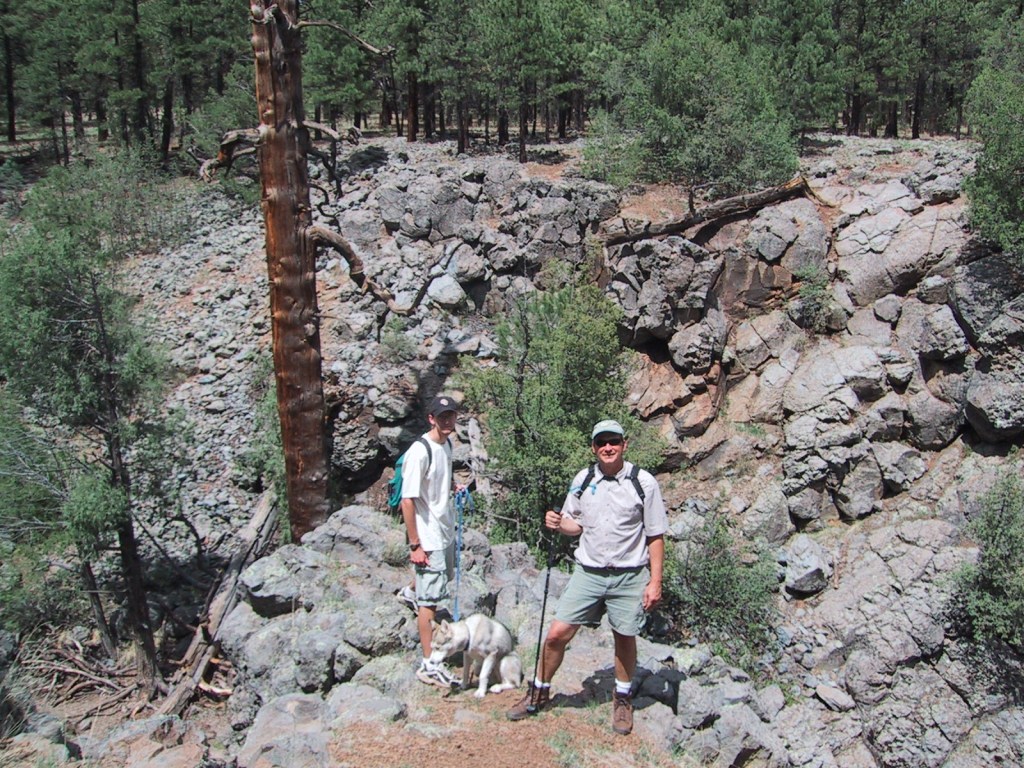
We appreciate your time and hope to produce another 500 quality posts for our audience in the coming years.  We have previously made Top 10 Lists of our favorite posts from each 100 post milestone, but this time we decided to create a different list highlighting the Top 10 Natural Phenomena to See in the U.S.  Watch for it soon!

Thank you for reading our blog! 

Scott and Tiff

Cheyenne, WY

Please check out our next 4 presentations at libraries in Wyoming!

“Find what you love and do more of it.” 

We recently published the expanded 2nd edition of our guidebook to the National Parks— A Park to Yourself: Finding Solitude in America’s 63 National Parks (available for sale on Amazon). The new edition is more than 60 pages longer with four-page chapters on Alaska’s wilderness National Parks that formerly had only a page. We also wrote a six-page chapter on the newest National Park— New River Gorge National Park and Preserve.

Our travel guidebook 50 States of Great: Road Trip Guide to America is also available for sale on Amazon