Tag Archives: wildlife

Canyon de Chelly National Monument

Overview

In the heart of the Navajo Nation in northeast Arizona lies Canyon de Chelly National Monument.  Humans have inhabited this area for 4,500 years, leaving behind numerous pictographs and the dramatic ruins of Ancestral Puebloan cliff dwellings.  The Navajo arrived in this region around AD1700 with sheep they gained from Spanish colonists which they utilized to weave intricate wool blankets.  Wars with the Utes, Spanish, Mexicans, and then U.S. government eventually led to their forced migration (“The Long Walk”) to Bosque Redondo in New Mexico around 1864.

Highlights

Spider Rock Overlook, White House Ruin, guided vehicle tours, horseback tours

Must-Do Activity

Four years after being forced to the uninhabitable Bosque Redondo, the Navajo were granted the largest reservation in the country and families still inhabit Canyon de Chelly (pronounced “d’shay”) to this day.  The 84,000-acre National Monument is administered cooperatively with the National Park Service (NPS).  However, entrance into the canyon is limited to guided trips and one publicly accessible trail that drops 500 feet to White House Ruin.  Overlooks along the North and South Rim Drives (17 and 18 miles respectively) are free and open year-round, though.  It not only seems like everything runs on a different clock here, but, unlike the rest of Arizona (and now New Mexico), the Navajo Nation observes Daylight Savings Time, so is always an hour later in the summer months (the same time as New Mexico until the fall).

Best Trail

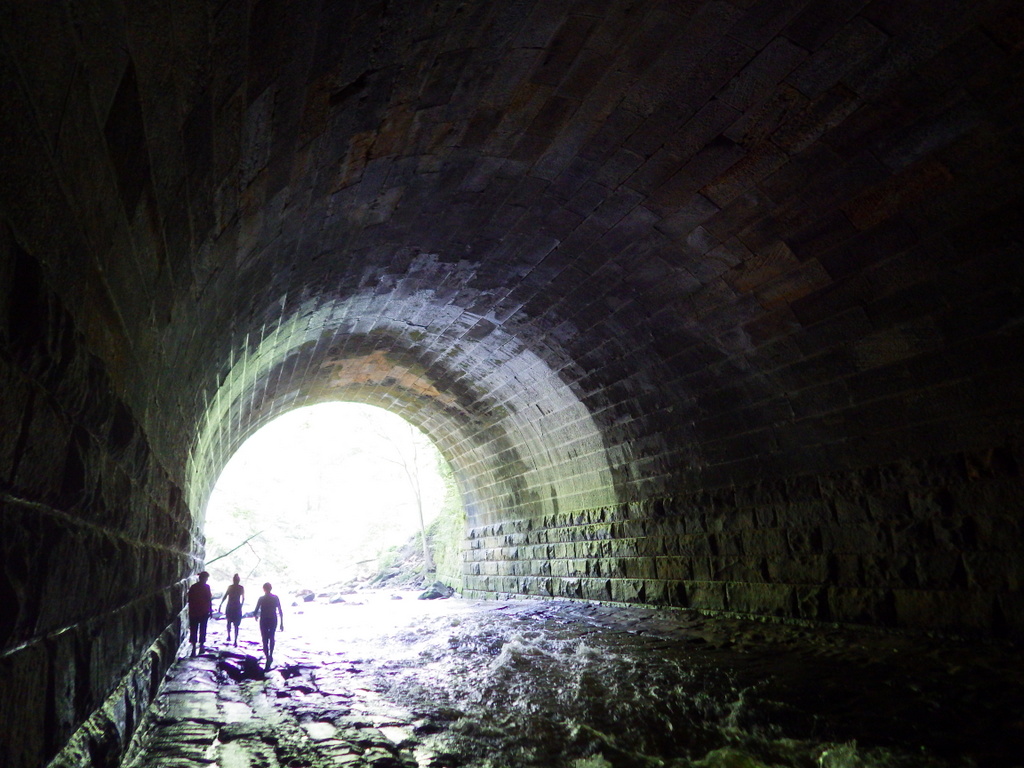
White House Ruin was inhabited AD1060-1275 and is named for the white plaster used to coat the wall in the upper dwelling.  The 2.5-mile roundtrip White House Trail drops down the canyon wall and cuts through a tunnel.

Instagram-worthy Photo

At the end of South Rim Drive is 800-foot tall Spider Rock, a great spot to watch the sun set, which is an ideal time to photograph the canyon’s red sandstone walls.

Peak Season

Summer

Hours

https://www.nps.gov/cach/planyourvisit/hours.htm

Note that there is typically a time difference because Arizona and New Mexico do not observe Daylight Savings Time.

Fees

There is no entrance fee for the North and South Rim Drives, but guided tours into the canyon do charge admission.

Road Conditions

All roads open to the public are paved, but guided tours can be very bumpy since they use the canyon bottom as a road.

Camping

The NPS runs Cottonwood Campground with 96 spaces (and running water in the summer) in a grove of Fremont cottonwood trees that turn yellow in the late autumn.  Guided camping trips in the canyon are also available.

Related Sites

Grand Canyon National Park (Arizona)

Navajo National Monument (Arizona)

Hubbell Trading Post National Historic Site (Arizona)

Explore More – How many millions of years ago did sand dunes turn into Canyon de Chelly’s red sandstone?

Bighorn Canyon National Recreation Area

Overview

Bighorn Canyon National Recreation Area is an underappreciated gem in the National Park Service (NPS) system.  It has gorgeous scenery, a winding reservoir, and abundant wildlife, including bighorn sheep and wild horses.  The 525-foot tall Yellowtail Dam was completed in 1968, creating a 71-mile long reservoir, the majority of which is in narrow Bighorn Canyon where cliffs soar up to 2,000 feet above the water.

Highlights

Devil Canyon Overlook, Hillsboro Dude Ranch, Horseshoe Bend, Yellowtail Dam

Must-Do Activity

No road connects the north and south portion of the park, making for a long drive between the NPS visitor center in Lovell, Wyoming and the one at the Yellowtail Dam in Montana.  Thus, it is best to choose either one side or the other and explore the canyon by boat.  Devil Canyon Overlook and most of the 27 miles of hiking trails are in the southern section.  This is also where the Pryor Mountain Wild Horse Range enters into Bighorn Canyon National Recreation Area.  In the summer there are lifeguards at the designated swimming areas at Horseshoe Bend and Ok-A-Beh.

Best Trail

The southern portion of Bighorn Canyon National Recreation Area has trails to historic sites like Hillsboro Dude Ranch and several tipi rings found along Bad Pass Trail, a route which has seen over 10,000 years of human use.

Instagram-worthy Photo

If you are unable to get out on the water, the highlight of the park is Devil Canyon Overlook where the cliffs drop over 1,000 feet straight down to the lake.

Peak Season

Summer

Hours

https://www.nps.gov/bica/planyourvisit/hours.htm

Fees

None

Road Conditions

Almost every road is paved, but they are narrow and winding so may not be advisable for very long RVs.

Camping

There are drive-in campgrounds (fee) in both states, as well as free boat-in campgrounds on the Montana side.  Backcountry camping is allowed below the highwater mark of Bighorn Lake.

Related Sites

Little Bighorn Battlefield National Monument (Montana)

Devils Tower National Monument (Wyoming)

Jewel Cave National Monument (South Dakota)

Explore More – The Yellowtail Dam is named after whom?

Boston Harbor Islands National Recreation Area

Overview

Established in 1996, there are 34 separate sites encompassed within Boston Harbor Islands National Recreation Area.  Not all of the areas are islands, some, like Worlds End, are the tips of peninsulas with roads accessing them from the suburbs of Boston, Massachusetts.  The park is a managed by a hodgepodge of agencies, including the U.S. Coast Guard’s Boston Light on Little Brewster Island (open to ranger-led tours in the summer months).

Highlights

Worlds End, Governors Island, Webb Memorial State Park, Spectacle Island

Must-Do Activity

It is probably best to pick one island and thoroughly explore it by catching a ferry from Long Wharf North in downtown Boston, Hingham Shipyard, or Pemberton Point in Hull.  We chose Georges Island which is mostly taken up by Fort Warren, which dates back to 1850.  During the Civil War, the fort served as an artillery base and a prison.  The National Park Service (NPS) operates an excellent museum on the island and shows a film on its history.  Georges and Spectacle Islands are the only two islands that offer food for sale, plus they have water taxis leave from each dock to access many of the other islands.

Best Trail

Spectacle Island has five miles of hiking trails and also contains the highest point within Boston Harbor Islands National Recreation Area at 157 feet in elevation.

Instagram-worthy Photo

The site of the first lighthouse in America, Boston Light on Little Brewster Island can be seen from Georges Island and is open to guided tours in the summer.

Peak Season

Summer

Hours

https://www.nps.gov/boha/planyourvisit/basicinfo.htm

Fees

Passengers ferries charge fares, but there is not an entrance fee to the islands or Webb Memorial State Park.

Road Conditions

Most of the islands do not allow private vehicles, but you can bring your bicycle onto the ferries.  Webb Memorial State Park, Deer Island, Worlds End, and Nut Island are accessible by paved roads in the Boston area.

Camping

There are yurts on Peddocks Island and tent camping is allowed on Bumpkin, Grape, Peddocks, and Lovells Islands from late June through Labor Day.  Backcountry permits are required for stays on undeveloped islands.

Related Sites

Boston National Historical Park (Massachusetts)

Cape Cod National Seashore (Massachusetts)

Gateway National Recreation Area (New York-New Jersey)

Explore More – During the Civil War, who wrote the lyrics to “John Brown’s Body” while serving at Fort Warren?

Gila Cliff Dwellings National Monument

Overview

Archaeological evidence suggests indigenous farmers lived around the Gila River dating back thousands of years, but the cliff dwellings were only briefly inhabited between AD 1270 and 1300.  After their initial discovery by Anglo-American settlers in 1878 heavy looting occurred, prompting President Theodore Roosevelt to establish Gila Cliff Dwellings National Monument in 1907.  It is not an easy part of the country to access, but offers two incredibly scenic drives through the Gila National Forest in southwestern New Mexico.  Plan to spend at least a couple days in the area, maybe hiking or backpacking to some hot springs.

Highlights

Museum, film, ruins, scenic views, hot springs in area

Must-Do Activity

The Gila Visitor Center is jointly managed for the 533-acre National Monument and 558,000-acre Gila Wilderness (which in 1924 became the world’s first designated Wilderness).  From the National Park Service (NPS) contact station located just down the road, a one-mile loop trail climbs 180 feet to a well-preserved collection of cliff dwellings.  If you find that you enjoy climbing ladders up to cliff dwellings, then check out Bandelier National Monument and Balcony House at Mesa Verde National Park.

Best Trail

The trailhead also provides access to the Gila Wilderness, so watch for backpackers on the road and black bears along the West Fork Gila River.  Lightfeather Hot Springs is less than one mile from a different trailhead located closer to the Gila Visitor Center.

Instagram-worthy Photo

There are about 40 rooms in the cliff dwelling ruins, which housed approximately ten families.  The south-facing cliff dwellings received the sun in the winter and shade in the summer.

Peak Season

Summer

Hours

https://www.nps.gov/gicl/planyourvisit/hours.htm

Fees

None

Road Conditions

The access roads are paved, but narrow and curvy, especially Highway 15 that heads north from Silver City, New Mexico.

Camping

Upper and Lower Scorpion Campgrounds are located just outside the National Monument boundaries in Gila National Forest.  No permits are necessary to backpack in the Gila Wilderness.

Related Sites

Montezuma Castle National Monument (Arizona)

Fort Bowie National Historic Site (Arizona)

Chiricahua National Monument (Arizona)

Explore More – The people who built the cliff dwellings were part of what culture, with pottery designs unique to the Tularosa phase (AD 1100 to 1300)?

Kenai Fjords National Park

Overview

Our favorite of the eight National Parks in Alaska is Kenai Fjords.  It is a great place to witness the thunderous calving of a tidewater glacier, an experience that should be on everyone’s bucket list.  Boat tours leave from the port of Seward and travel up beautiful Resurrection Bay, a long saltwater-filled valley (or fjord).  The town was named in 1903 for the Secretary of State who purchased the Alaska Territory from Russia in 1867 for less than two cents per acre, a move then known as “Seward’s Folly.”  Exit Glacier is the only portion of the park accessible by road and is worth the side trip. 

Learn more in our guidebook to the National Parks, A Park to Yourself: Finding Adventure in America’s National Parks (available on Amazon).

Highlights

Exit Glacier, boat tours, tidewater glaciers, marine wildlife

Must-Do Activity

A tour boat is the easiest way to get up close to the variety of marine mammals and seabirds, but hardier souls can kayak the silty blue waters of Resurrection Bay.  Along the route to actively calving Aialik Glacier, you will see an abundance of wildlife: orcas, humpback whales, sea otters, sea lions, bald eagles, puffins, cormorants, and so much more.  Some tour boats have a National Park Service ranger on board to narrate, answer questions, and help kids earn Junior Ranger badges.  Tour boats get you close to the action to witness a tidewater glacier calving into the ocean.  These glaciers are one of 32 arms of the massive Harding Ice Field.

Best Trail

It is a short and worthwhile hike from the parking lot to the face of the rapidly receding Exit Glacier; black bears are common in the area, so keep an eye out for them.  You can continue hiking the steep 3.7-mile one-way trail up to 3,500 feet to view the expansive Harding Ice Field, but that requires at least four hours, serious endurance, and gear for the winter conditions that persist year round at that elevation.

Instagram-worthy Photo

Bundle up as it gets chilly when you pull up close to the actively calving Aialik Glacier.  You will be tempted to try capturing it all on your camera, but take some time to experience the action with your eyes, not through a viewfinder. 

Peak Season

Summer

Hours

https://www.nps.gov/kefj/planyourvisit/hours.htm

Fees

None at Exit Glacier; boat tours cost about $200 per person

Road Conditions

The roads to Exit Glacier and Seward, Alaska are paved.

Camping

Two public-use cabins are available for rent in the summer and only accessible by water.  A free 12-site, walk-in tent campground is available at Exit Glacier, plus a winter-use cabin.  There are multiple RV parks in Seward, Alaska, a beautiful place to spend a few days fishing and visiting the Alaska SeaLife Center (recommended to do before your boat tour of Kenai Fjords National Park).

Related Sites

Glacier Bay National Park and Preserve (Alaska)

Lake Clark National Park and Preserve (Alaska)

Wrangell-St. Elias National Park and Preserve (Alaska)

This design we created to celebrate Kenai Fjords National Park is available on a variety of products at Cafe Press and Amazon.

Explore More – Who is Rockwell Kent and what is his connection with Resurrection Bay (hint: check out our Top 10 list of Alaska non-fiction books)?

We are a participant in the Amazon Services LLC Associates Program, an affiliate advertising program designed to provide a means for us to earn fees by linking to Amazon.com and affiliated sites.