Tag Archives: wildflowers

Grand Mesa National Forest

Grand Mesa National Forest

Colorado

Managed by U.S. Forest Service, Rocky Mountain Region

351,715 acres (346,555 federal/ 5,160 other)

Website: https://www.fs.usda.gov/gmug

Overview

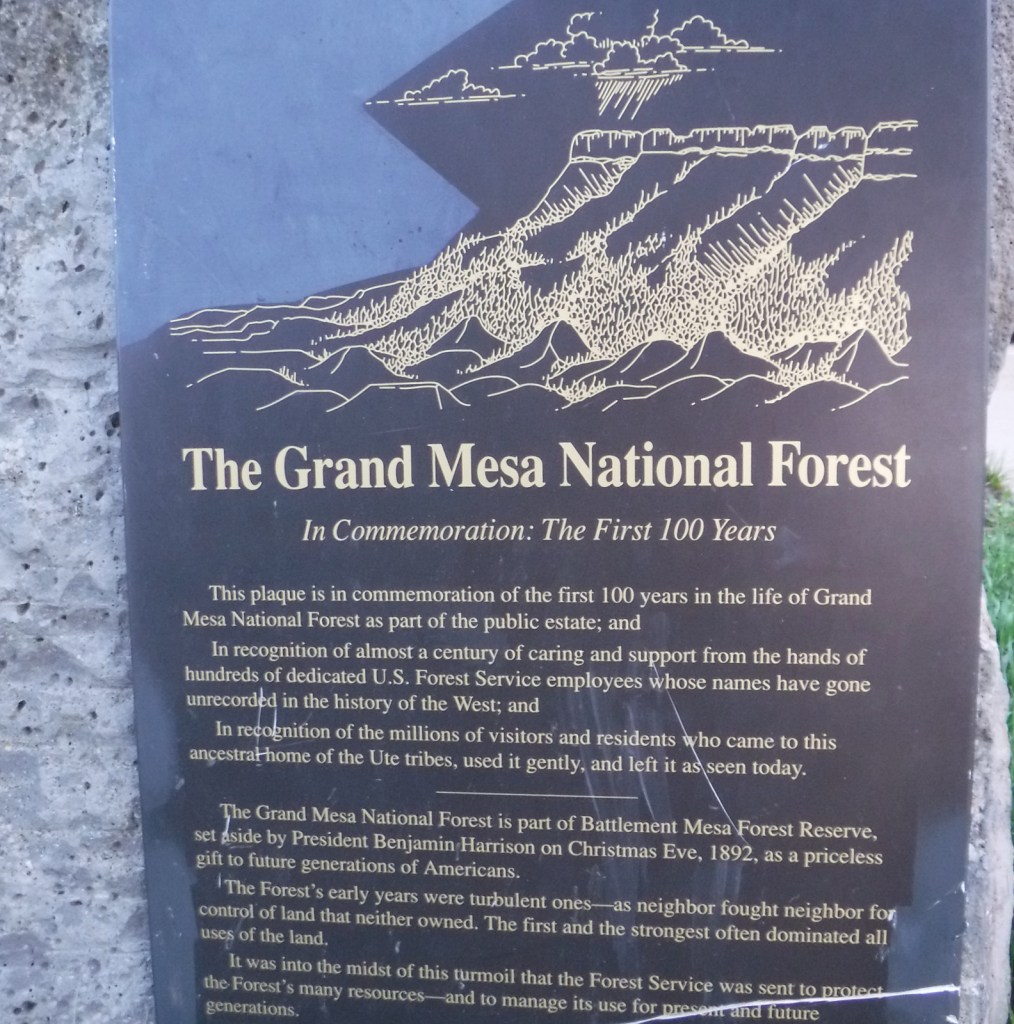
Covering 540 square-miles, Grand Mesa is the largest flattop mountain in the world and has an average elevation of 10,500 feet.  It rises east of Grand Junction and is easily explored via paved Highway 65, also known as Grand Mesa Scenic Byway.  Due to its high elevation, Grand Mesa National Forest is a popular destination for snowmobiles in the winter.  This area was first set aside by President Harrison in 1892 as Battlement Mesa Forest Reserve, only the third such designation in U.S. history.  It is now co-managed with Colorado’s Gunnison and Uncompahgre National Forests.

Highlights

Grand Mesa Scenic Byway, Land’s End Ranger Observatory, Ward Lake, Island Lake Interpretive Trail, Crag Crest National Recreation Trail, Eggleston Lake, Leon Peak, Battlement Trail

Must-Do Activity

Also covering a portion of Battlement Mesa, Grand Mesa National Forest contains more than 300 lakes, several of which have campgrounds.  The Grand Mesa Visitor Center on Highway 65 near Island Lake is a great place to start, with a 20-minute film shown detailing the 1999 Land’s End archaeological excavation that found evidence of 8,000 years of human activity at 9,000 feet in elevation.  Dirt roads travel east from there deeper into the National Forest, or you can take a side trip west on the Grand Mesa Scenic Byway to the visitor center at Land’s End Ranger Observatory for views all the way into Utah’s La Sal National Forest. 

Best Trail

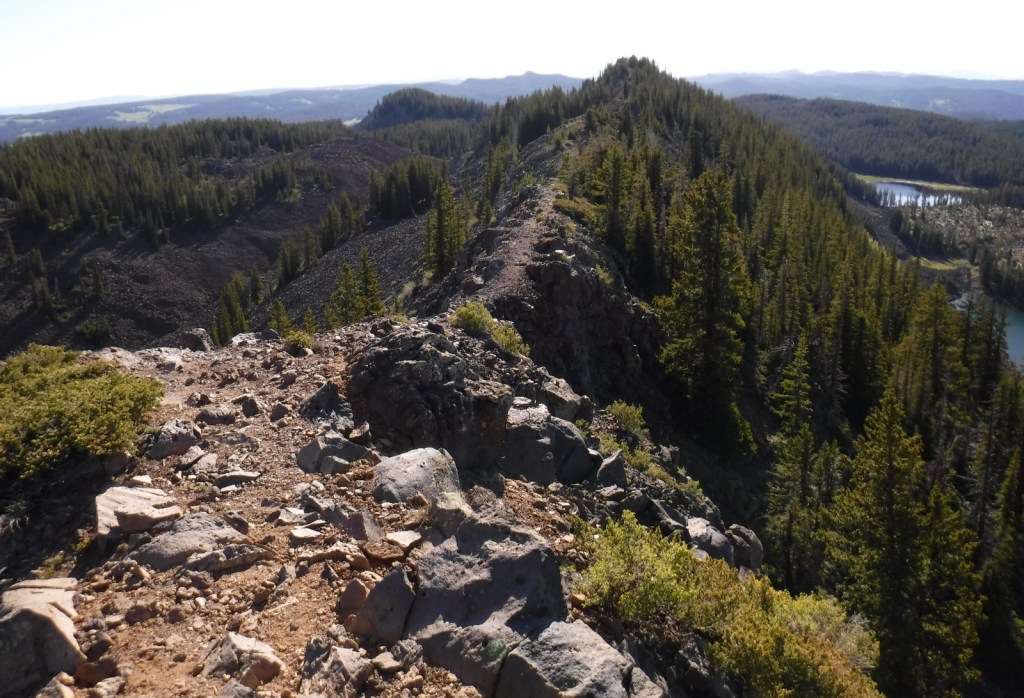
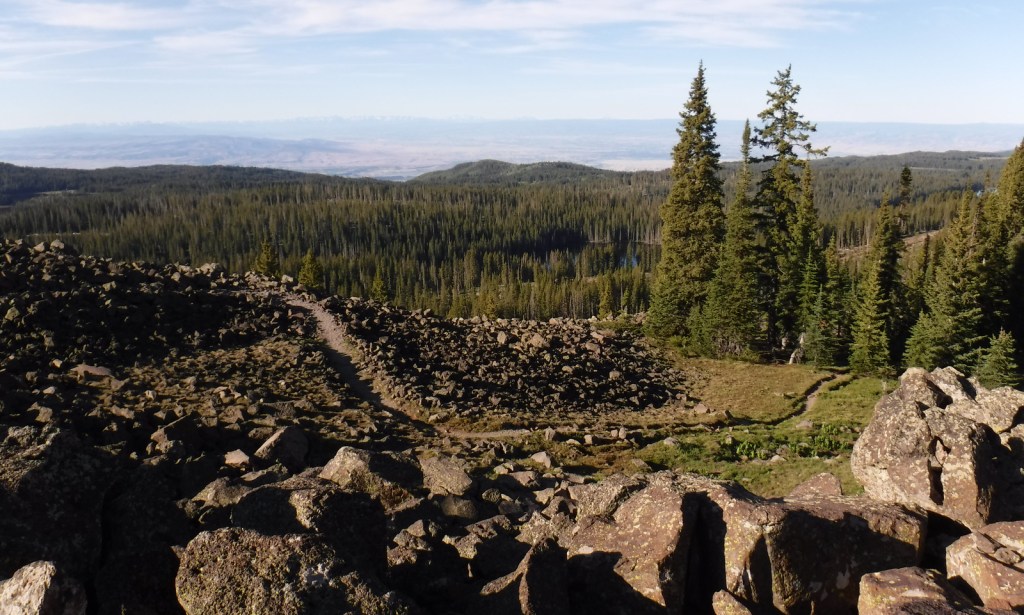
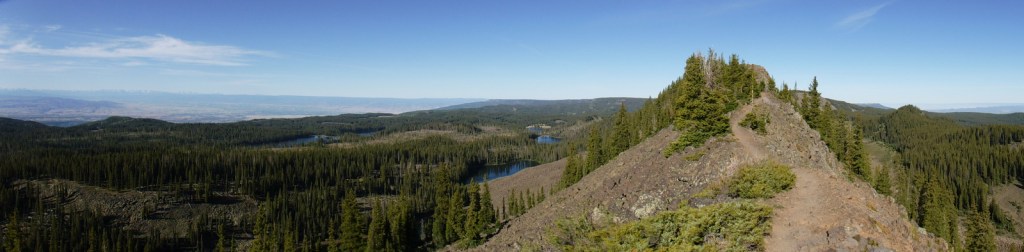
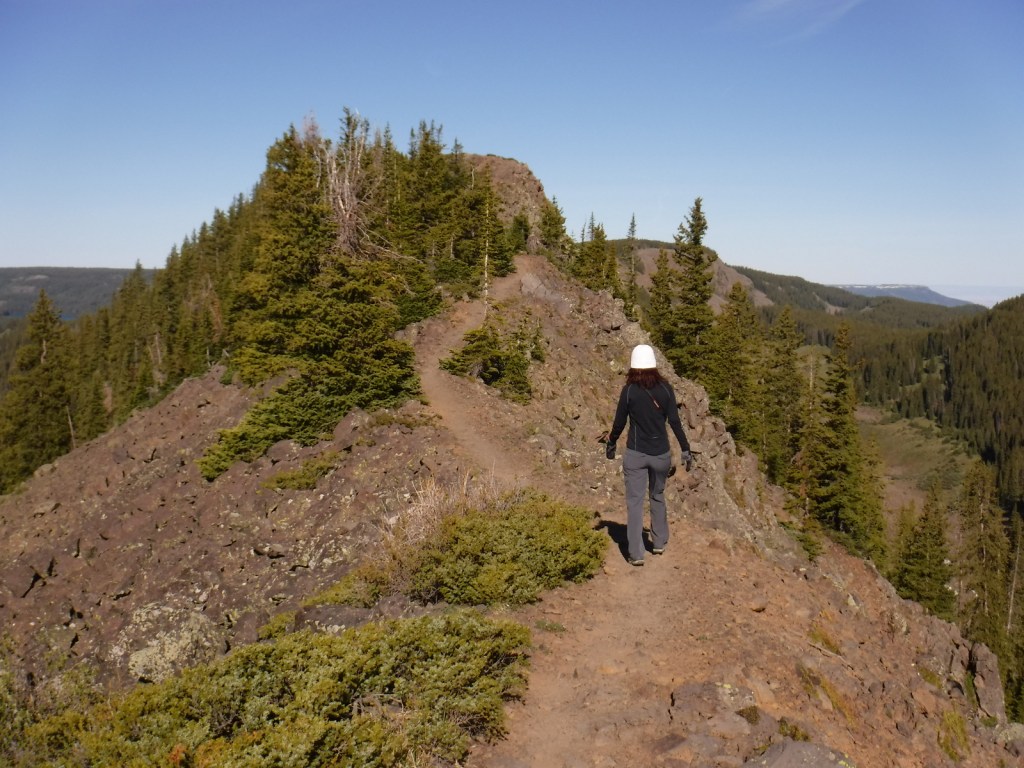
The best trail in Grand Mesa National Forest is without a doubt Crag Crest National Recreation Trail.  It can be hiked as a 10.3-mile loop from two trailheads, one at Island Lake (paved access) and the other at Eggleston Lake (that requires some dirt road driving).  The crest portion of the hike is the highlight as it follows a narrow ridge of volcanic rock that offers spectacular views.  Due to its exposure and the high altitude (up to 11,189 feet) it is recommended that you get an early start to avoid afternoon thunderstorms.  For those not wishing to do the entire loop, we found that by starting out counterclockwise from Eggleston Lake the trail climbs steeply providing panoramas within two miles.  We completed five miles out-and-back with a cumulative elevation gain of 1,100 feet and felt we had gotten the full experience.

Watchable Wildlife

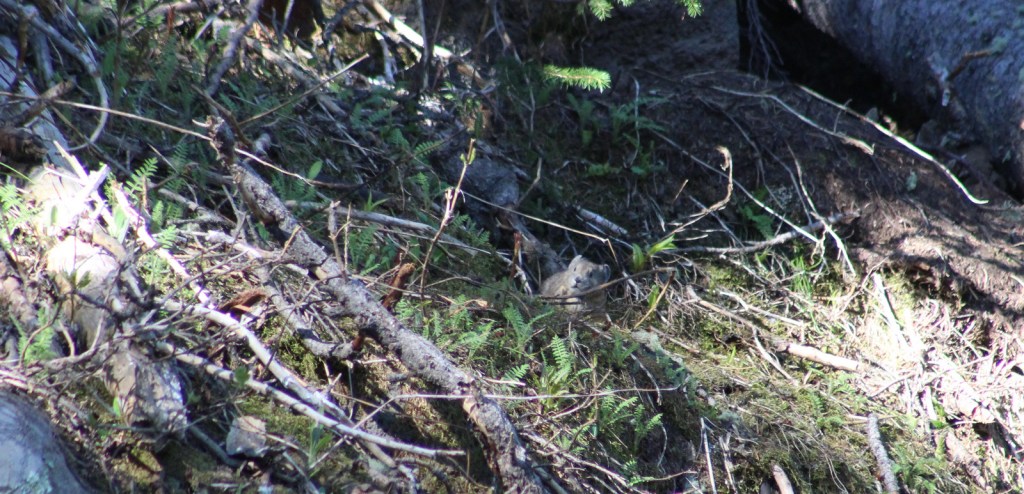
Trout fishing is one of the main draws to the 300 lakes in Grand Mesa National Forest.  The lakes and streams also attract elk, mule deer, bighorn sheep, raccoons, red foxes, black bears, and mountain lions, in addition to large birds like bald eagles, golden eagles, peregrine falcons, common ravens, and wild turkeys.  Due to its high elevation, look for pikas in the rocks along Crag Crest National Recreation Trail.

Instagram-worthy Photo

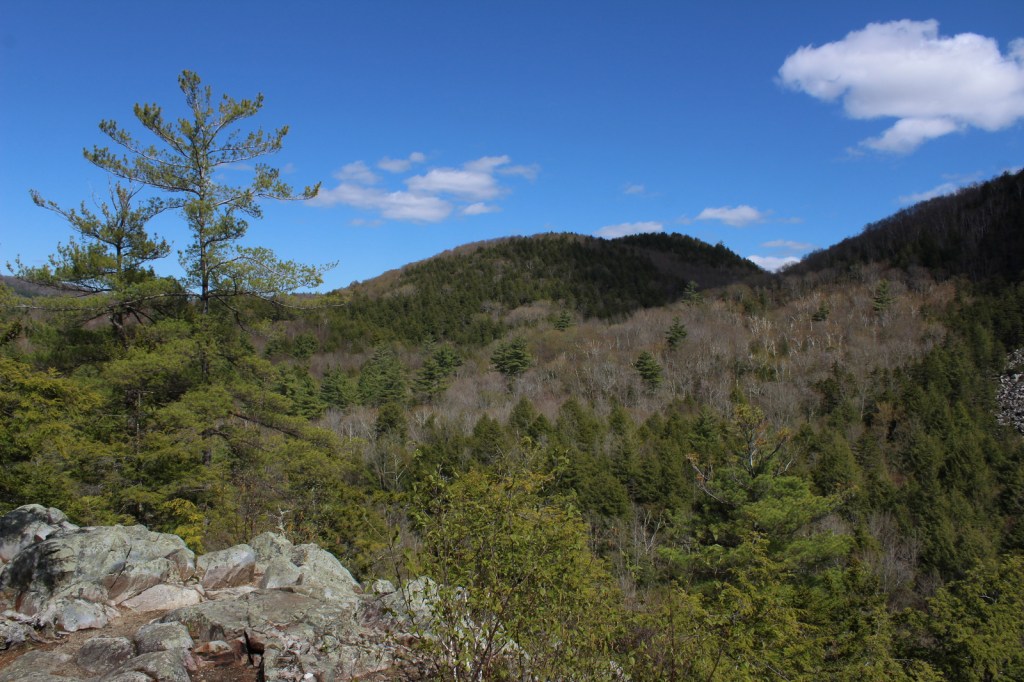
Starting counterclockwise on the Crag Crest National Recreation Trail from Eggleston Lake, we climbed to stunning panoramas within two miles. 

Peak Season

Summer

Fees

None

Road Conditions

Grand Mesa Scenic Byway follows paved Highway 65 up above 10,000 feet in elevation, as well as west to Land’s End Ranger Observatory.  The unpaved Land’s End Road continues switchbacking down the mesa to Highway 50, but is not recommended for vehicles more than 21 feet in length.  The unpaved roads on Grand Mesa were in good shape during our June visit, but are closed in the winter.

Camping

There are campgrounds at several lakes in Grand Mesa National Forest, as well as dispersed camping options along the dirt roads.

Wilderness Areas

None

Related Sites

Gunnison National Forest (Colorado)

Colorado National Monument (Colorado)

Arapaho National Forest (Colorado)

Nearest National Park

Black Canyon of the Gunnison

Conifer Tree Species

Engelmann spruce, subalpine fir, Douglas-fir, two-needle pinyon pine, ponderosa pine

Flowering Tree Species

Gambel oak, quaking aspen, narrowleaf cottonwood, mountain-mahogany, chokecherry

Explore More – Now a geological term, what does “mesa” mean in Spanish?

Learn more about this and the 154 other National Forests in our new guidebook Out in the Woods

We are a participant in the Amazon Services LLC Associates Program, an affiliate advertising program designed to provide a means for us to earn fees by linking to Amazon.com and affiliated sites.

George Washington National Forest

George Washington National Forest

Virginia, West Virginia

Managed by U.S. Forest Service, Southern Region

1,795,084 acres (1,065,369 federal/ 729,715 other)

Website: https://www.fs.usda.gov/gwj

Overview

First established as the Shenandoah National Forest in 1918, George Washington National Forest covers portions of the Blue Ridge and Allegheny Mountains.  It includes the northern 60 miles of the Blue Ridge Parkway and a significant stretch of the Appalachian National Scenic Trail south of Shenandoah National Park.  The National Forest’s proximity to Washington, D.C. and Baltimore makes it a major recreation destination, particularly for trail runners.  It is now co-managed with the more western Jefferson National Forest, together encompassing 230,000 acres of old-growth forests, 139,461 acres of Wilderness areas, and more than 2,000 miles of trails.

Highlights

Mt. Pleasant National Scenic Area, Big Walker Mountain Scenic Byway, Highland Scenic Tour, Massanutten Visitor Center, Sherando Lake, White Rock Creek Falls, Lake Moomaw, Woodstock Tower, Upper Shamokin Falls, Slacks Overlook, High Knob Fire Tower, Maple Flats, Bird Knob Loop Trail, Lion’s Tale National Recreation Trail, Waterfall Mountain Loop Trail, McDowell Battlefield Trail, Big Schloss Trail, Crabtree Falls Observation Trail, Story Book Trail, Pig Iron Loop Trail, Dragons Tooth Trail, Appalachian National Scenic Trail

Must-Do Activity

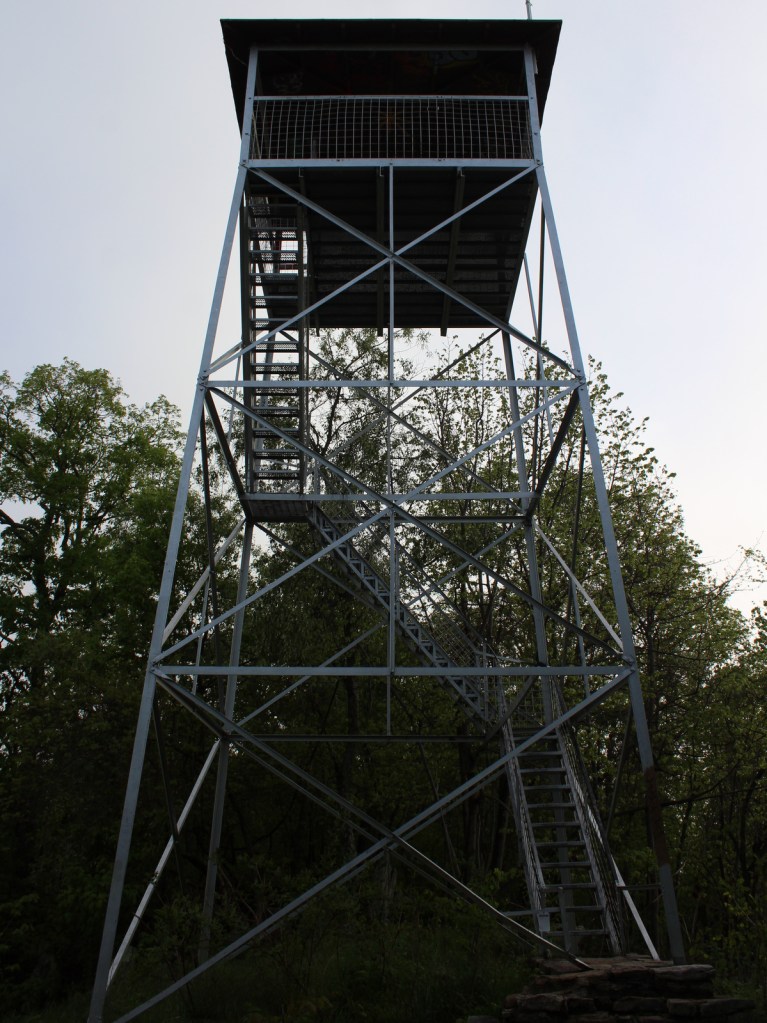
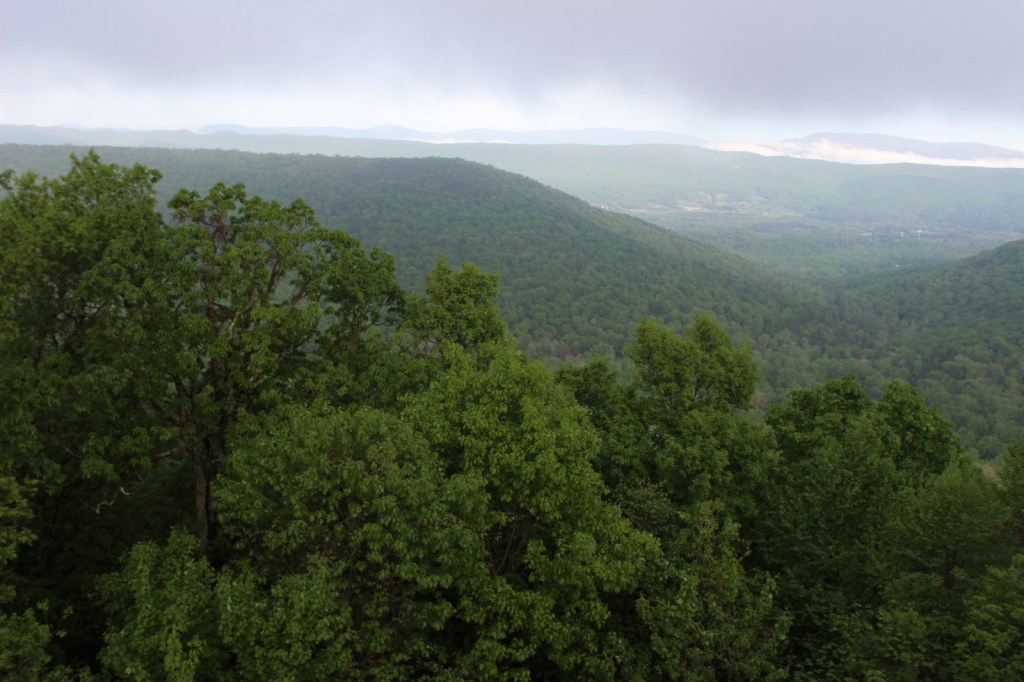
Driving the Blue Ridge Parkway through George Washington National Forest is a must-do, but there are other attractions to be found in this ridgeline-running forest.  Not far east off Interstate 81, it is a short drive up a gravel road to Woodstock Lookout Tower, where a short, flat trail accesses the metal structure that provides views of the Seven Bends of the Shenandoah River.  Downhill on the eastern side of that ridge (and protected from freeway noise) is the free Little Fort Campground with nine campsites.  There is a charge to ride the Peters Mill Gap and Taskers Run ATV/OHV trails (covering 40 miles) that leave from the campground.  A one-mile hiking trail leaves from Campsite 8 and climbs up to Woodstock Tower.

Best Trail

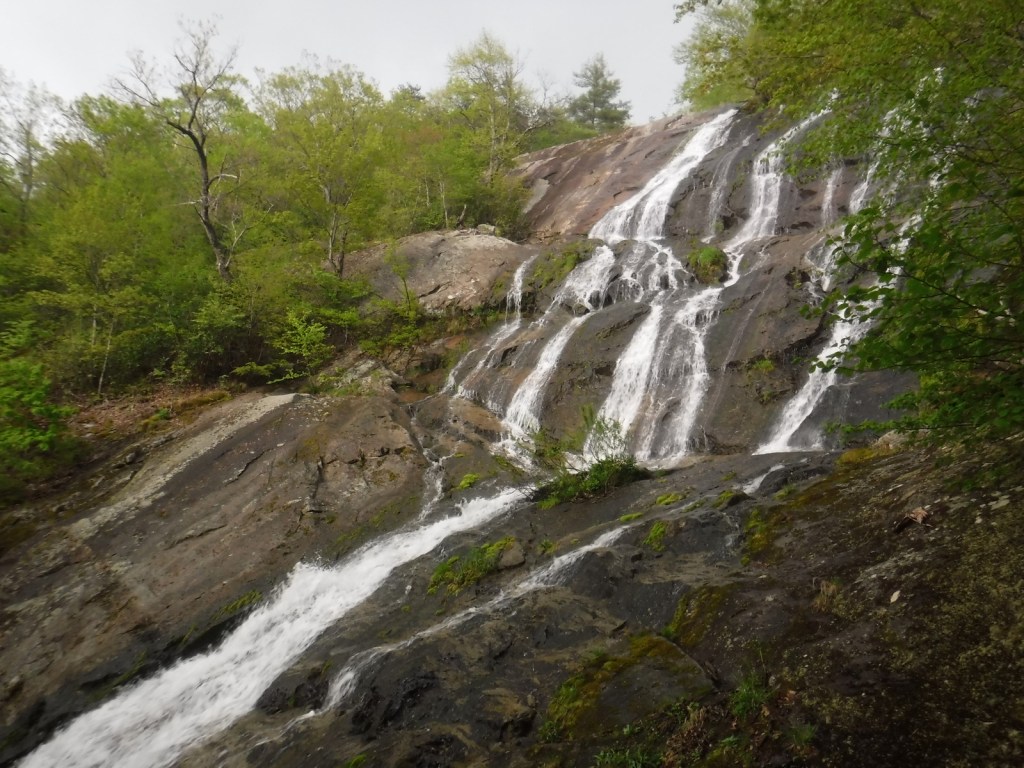
Crabtree Falls Observation Trail (day use fee) is easy to access from paved State Route 56 east of the Blue Ridge Parkway.  There are actually five waterfalls here with a total drop of 1,200 feet spread over a half-mile.  The first overlook of the lower falls is only 500 feet from the parking lot and is handicap accessible.  From there, the trail switchbacks up 1.7 miles one-way to a fourth and final view of the falls, then continues on another two miles to the Appalachian National Scenic Trail after gaining more than 1,000 feet in elevation. 

Watchable Wildlife

Extensive sections of old-growth forest can be found in Mt. Pleasant National Scenic Area and much of the Rich Hole and Ramsey’s Draft Wildernesses.  This provides habitat for a healthy population of black bears, as well as white-tailed deer, bobcats, raccoons, river otters, martens, and weasels.  Large birds found in George Washington National Forest include wild turkeys, turkey vultures, bald eagles, peregrine falcons, and several types of hawks.  Wetlands, like Maple Flats, are home to cricket frogs, painted turtles, spotted turtles, and many species of salamanders, such as marbled, Cow Knob, Cheat Mountain, Shenandoah, and tiger salamanders.  Over 100 species of freshwater fish reside here, and fishing is popular activity in the Jackson River and 152-foot-deep Lake Moomaw.

Instagram-worthy Photo

With five major cascades dropping 1,200 feet in total, there are plenty of places to catch your breath and snap some photographs along the steep Crabtree Falls Observation Trail.

Peak Season

Spring and fall

Fees

There is a day use fee for hiking Crabtree Falls Observation Trail and riding the Peters Mill Gap and Taskers Run ATV/OHV trails. 

Road Conditions

Parking at Crabtree Falls is paved and RV accessible, and the one unpaved road we took to Woodstock Tower and Little Fort Campground was in good shape.

Camping

There are many designated campgrounds found throughout George Washington National Forest, including the free, nine-site Little Fort Campground not far east off Interstate 81 (see Must-Do Activity).  Although dispersed camping can be hard to find, we read there are sites on the four-wheel-drive road (SR 826) at the top of Crabtree Falls Observation Trail near where it meets the Appalachian National Scenic Trail. 

Wilderness Areas

Barbours Creek Wilderness (also in Jefferson National Forest)

Priest Wilderness

Ramsey’s Draft Wilderness

Rich Hole Wilderness

Rough Mountain Wilderness

Saint Mary’s Wilderness

Shawvers Run Wilderness (also in Jefferson National Forest)

Three Ridges Wilderness

Related Sites

Booker T. Washington National Monument (Virginia)

Cedar Creek and Belle Grove National Historical Park (Virginia)

Jefferson National Forest (Virginia, West Virginia, Kentucky)

Daniel Boone National Forest (Kentucky)

Nearest National Park

Shenandoah

Conifer Tree Species

eastern hemlock, eastern white pine, shortleaf pine, Table Mountain pine, red spruce, eastern redcedar

Flowering Tree Species

tulip-poplar, American beech, shagbark hickory, white oak, black oak, northern red oak, rock chestnut oak, pin oak, yellow birch, gray birch, sweet birch, striped maple, red maple, black gum, sassafras, basswood, flowering dogwood, sourwood, cucumber magnolia, mountain laurel, quaking aspen, paper birch, witch hazel, dwarf willow, winterberry, rhododendron

Explore More – In 1972, what company sponsored the planting of the National Children’s Forest in a burned-out area east of Jordan Mines?

Learn more about this and the 154 other National Forests in our new guidebook Out in the Woods

We are a participant in the Amazon Services LLC Associates Program, an affiliate advertising program designed to provide a means for us to earn fees by linking to Amazon.com and affiliated sites.

Gallatin National Forest

Gallatin National Forest

Montana

Managed by U.S. Forest Service, Northern Region

2,151,461 acres (1,819,515 federal/ 331,946 other)

Website: https://www.fs.usda.gov/main/custergallatin/home

Overview

Gallatin National Forest borders much of the north and west sides of Yellowstone National Park, providing important wildlife habitat in the Absaroka-Beartooth and Lee Metcalf Wilderness areas.  The National Forest also contains portions of the Bridger Range and Crazy Mountains north of Bozeman and Interstate 90.  The Gallatin Petrified Forest is only accessible by trail, either from a short two-mile one-way jaunt (that gains 650 feet of elevation) or by backpacking the 27-mile Gallatin Divide-Devils Backbone Trail.  Free permits are available from Forest Service Ranger Stations to collect up to 20 cubic-inches of petrified wood each year.  Since 2014, it has been co-managed as the Custer-Gallatin National Forest, stretching east into South Dakota.

Highlights

Earthquake Lake Visitor Center, film, Fairy Lake, Devils Slide, Flathead Pass, Big Timber Canyon, Palisade Falls, Spire Rock Campground, Natural Bridge, Kersey Lake, Hardscrabble Peak, Pine Creek Falls, Bridger Mountains National Recreation Trail, Spanish Creek Trail, Red Canyon Trail, Petrified Forest Interpretive Trail

Must-Do Activity

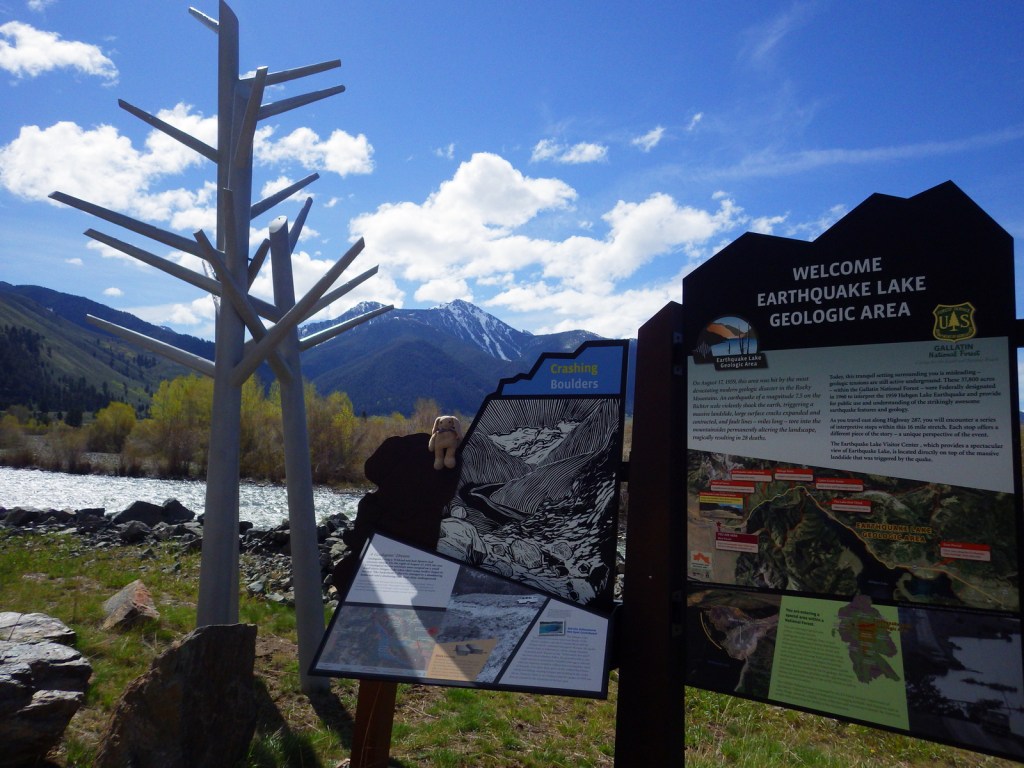
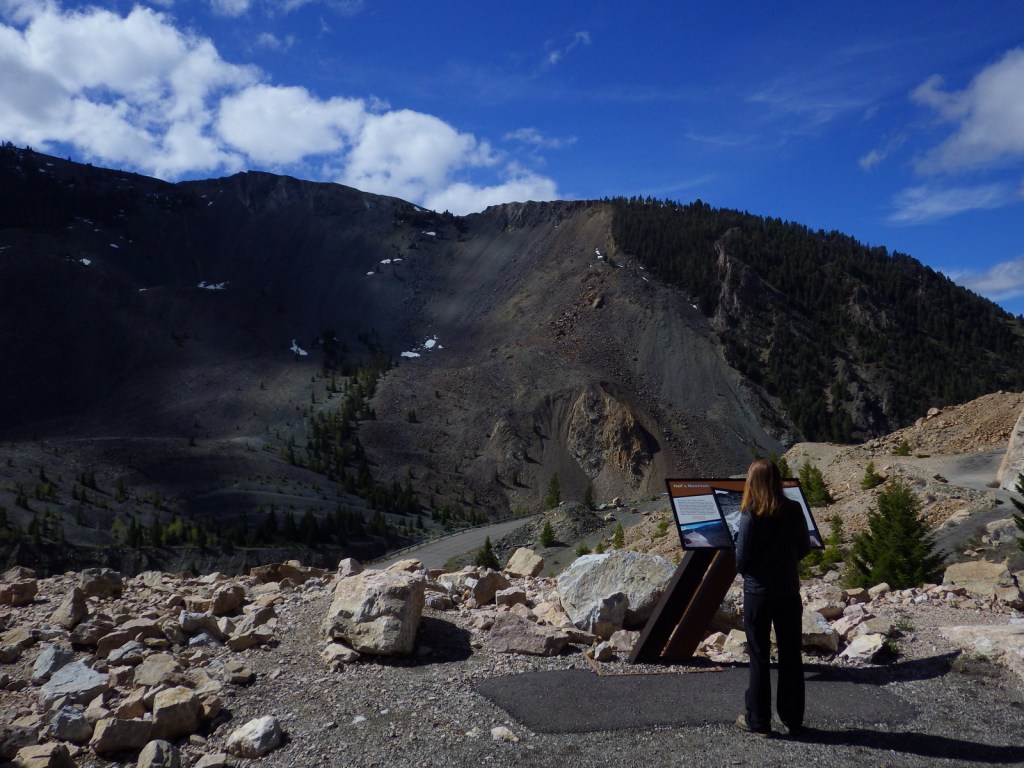
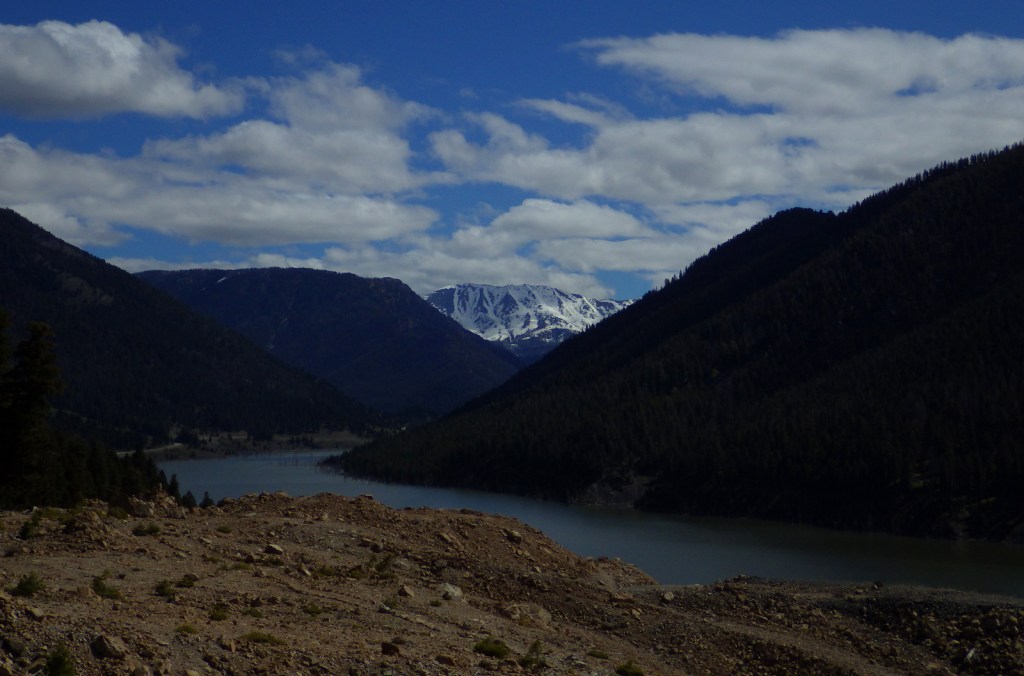
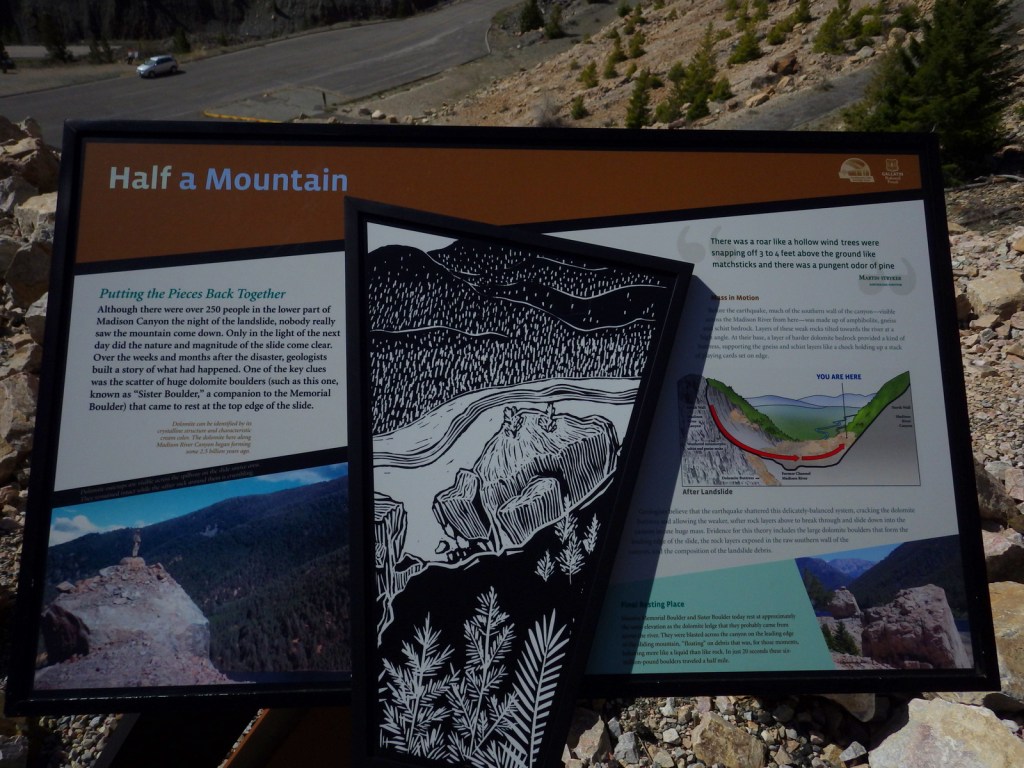
Earthquake Lake Geologic Area stretches along Highway 287 to commemorate the events that occurred around midnight on August 17, 1959 when a magnitude 7.5 earthquake hit West Yellowstone, Montana.  The strongest earthquake ever recorded in the Rocky Mountains caused a hillside to crumble and block the Madison River and form Quake Lake, which is still there today.  Seiches (“lake tsunamis”) on Hebgen Lake and landslides claimed 28 lives and trapped hundreds campers.  The next day, after Forest Service smokejumpers parachuted in to assist survivors, the most seriously injured were evacuated out by helicopter.  Today there is an interpretive auto tour with multiple stops along the highway.  In addition, a visitor center operates in the summer where they show a film and the 0.3-mile Landslide Trail has signs explaining the events and how the massive Memorial Boulder crossed from one side of the valley to the other in less than 20 seconds (see Instagram-worthy Photo).

Best Trail

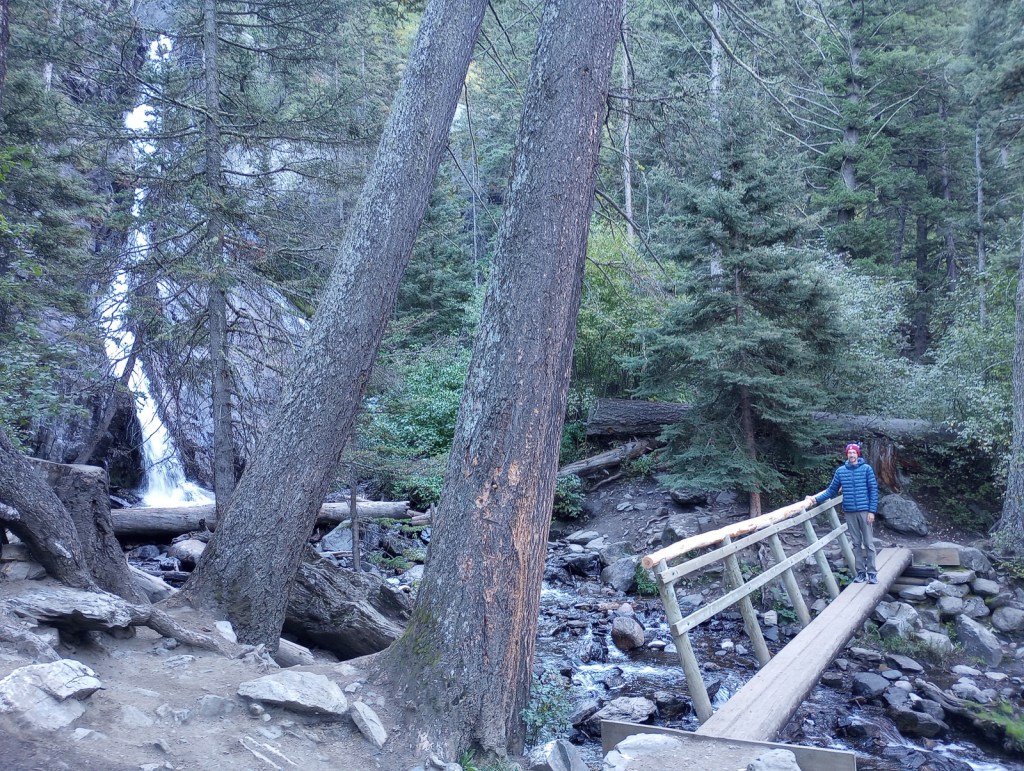
Pine Creek Falls is located 1.3 miles from the Pine Creek Campground after a 400 foot elevation gain.  The popular route first enters a burned forest then crosses a bridge over the creek at a half-mile before reaching the waterfall where most hikers turn around.  The trail gets steeper as it continues another four miles to Pine Creek Lake climbing about 3,400 feet, including one grueling stretch that ascends 1,800 feet in only 1.3 miles.

Watchable Wildlife

There are more than 4,000 miles of streams and rivers in the National Forest, including major tributaries of the Yellowstone and Missouri Rivers.  This makes Gallatin National Forest one of the premiere fly fishing destinations in the U.S. and also attracts bald eagles and ospreys.  Due to its proximity to Yellowstone National Park, there are also gray wolves and grizzly bears.  Other large mammals include elk, mule deer, moose, bighorn sheep, pronghorns, mountain lions, and black bears.

Instagram-worthy Photo

Memorial Boulder and Sister Boulder used to be located across the valley, but during the 1959 earthquake these six-million-pound dolomite slabs crossed the half-mile distance in less than 20 seconds.

Peak Season

Summer

Fees

None

Road Conditions

The roads are paved up to the Earthquake Lake Visitor Center, Pine Creek Campground, and Big Sky Mountain Village (south of Bozeman).  It is 13 miles (mostly unpaved) from Highway 89 to the Petrified Forest Interpretive Trail, and there is a free campground where Rock Creek Road dead ends at the trailhead.  There are also many miles of four-wheel-drive roads to explore throughout the National Forest.

Camping

There are many campgrounds in Gallatin National Forest (like Eagle Creek just outside Gardiner on the northern border of Yellowstone National Park), as well as dispersed camping options. 

Wilderness Areas

Absaroka-Beartooth Wilderness (also in Custer and Shoshone National Forests)

Lee Metcalf Wilderness (also in Beaverhead National Forest)

Related Sites

Custer National Forest (Montana-South Dakota)

Big Hole National Battlefield (Montana)

BeaverheadDeerlodge National Forest (Montana)

Nearest National Park

Yellowstone

Conifer Tree Species

lodgepole pine, ponderosa pine, whitebark pine, subalpine fir, Douglas-fir, Engelmann spruce

Flowering Tree Species

quaking aspen, balsam poplar, cottonwood, alder, mountain maple, mountain ash

Explore More – Why was the National Forest named after Albert Gallatin?

Learn more about this and the 154 other National Forests in our new guidebook Out in the Woods

We are a participant in the Amazon Services LLC Associates Program, an affiliate advertising program designed to provide a means for us to earn fees by linking to Amazon.com and affiliated sites.

Midewin National Tallgrass Prairie

Midewin National Tallgrass Prairie

Illinois

Managed by U.S. Forest Service, Northern Region

20,283 acres

Website: https://www.fs.usda.gov/midewin

Overview

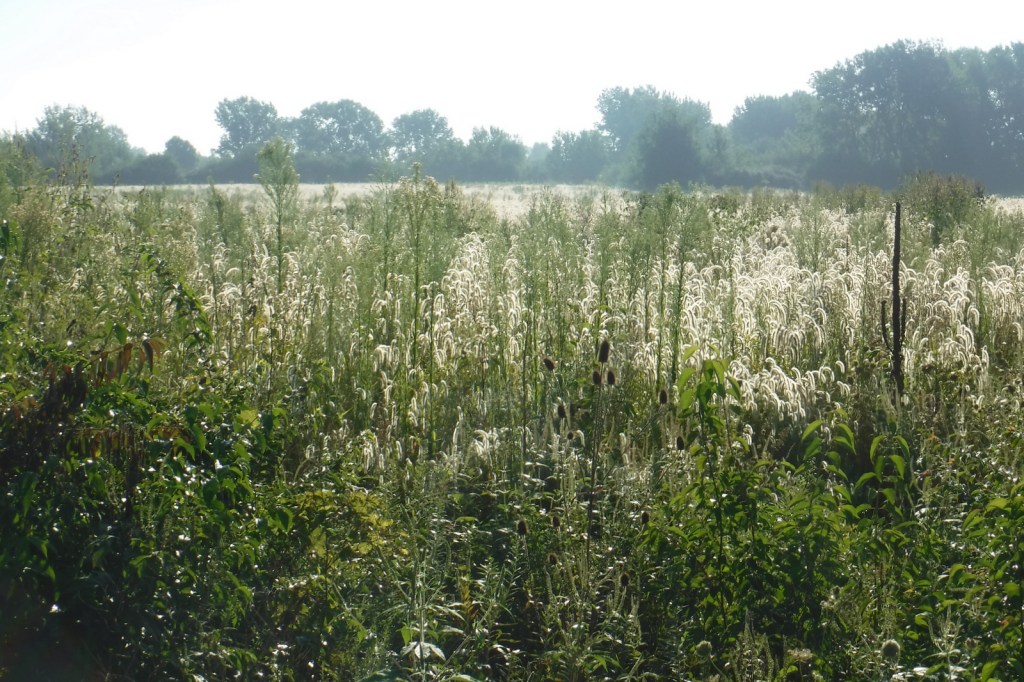
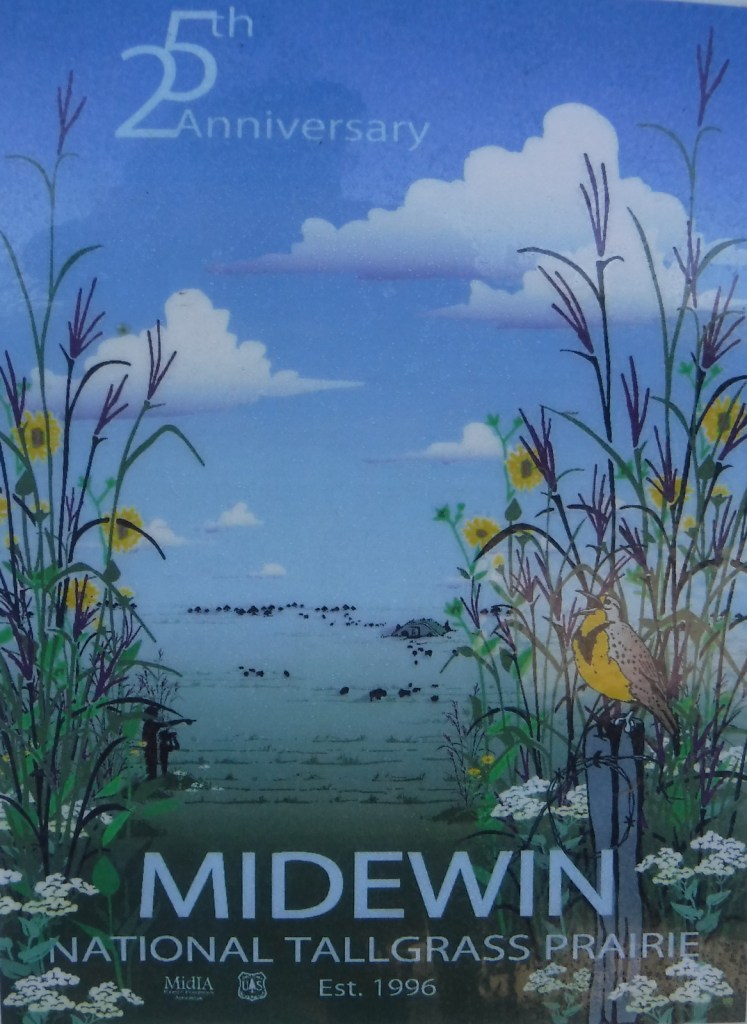
Midewin National Tallgrass Prairie was established in 1996 and opened to visitors eight years later following some ecological restoration and decontamination.  It is located on the site of the Joliet Army Ammunition Plant that produced TNT from 1940 to 1976.  In combination with neighboring Des Plaines Fish and Wildlife Area and other preserves, over 40,000 acres are protected in this area south of Chicago’s suburbs.  Restoration of the tallgrass prairie is ongoing with planting and prescribed burning to promote the growth of native plants.  In 2015, 27 bison were introduced on 1,200 acres and the herd has grown to more than 50.  Midewin (pronounced “mi-DAY-win”) is a Potowatomi word referring to tribal healers.

Highlights

Midewin Welcome Center, Route 66, historic bunkers, bison herd

Must-Do Activity

The best place to start a visit is the Midewin Welcome Center on Highway 53, just south of the Southwest Bison Overlook.  There you can read about the history of the area, pick up pamphlets on birds and wildflowers, and get information on the more than 30 miles of trails, including 21.7 miles open to bikers and equestrians.  The 7,000 acres of accessible public lands are open 4 a.m. to 10 p.m. daily.

Best Trail

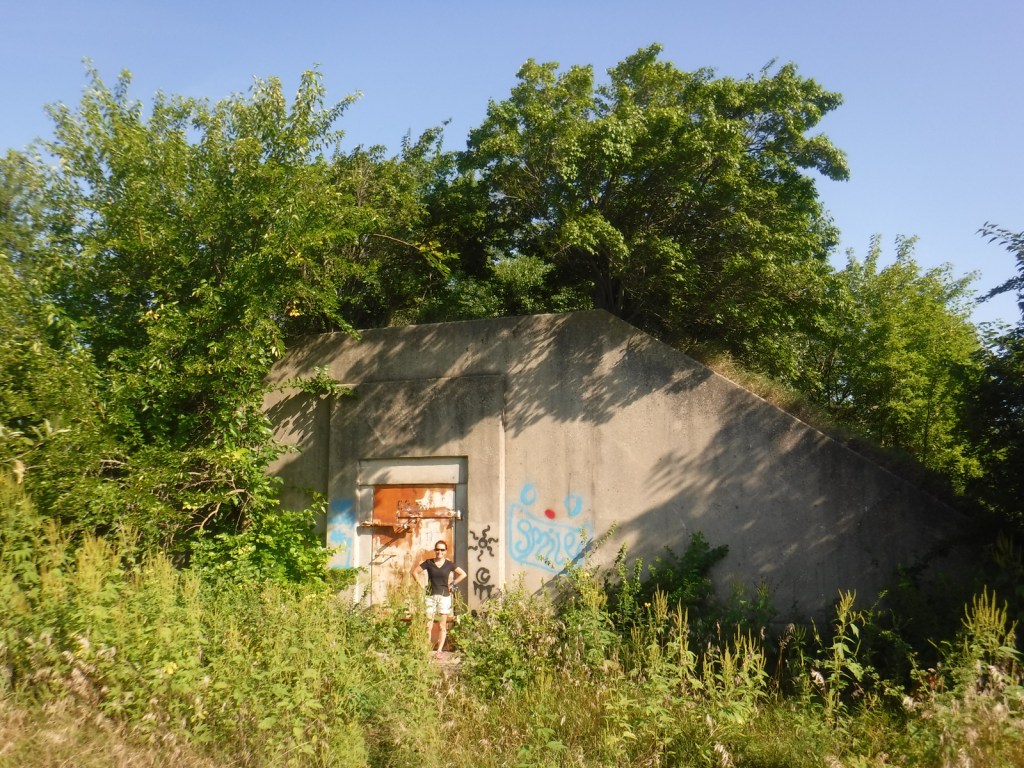
Several trails leave from the Iron Bridge Trailhead north of the visitor center.  We took Group 63 Trail that starts in a forest then opens up as it accesses Bunker 63-1, which is unlocked for exploration.  The entire trail makes a 3.5-mile loop around a group of bunkers following the northern border of the fenced-off bison pasture. 

Watchable Wildlife

Midewin remains the only federal tallgrass prairie preserve east of the Mississippi River, restoring an extremely rare ecosystem that was mostly converted to agriculture.  Golden gophers (or 13-lined ground squirrels) fill the ecological niche of prairie dogs here.  Coyotes and white-tailed deer are also found in this area.  In 2015, bison were introduced on 1,200 acres of the preserve, and the herd has increased from the original four bulls and 23 cows.  A color pamphlet highlighting native birds is available at the visitor center and trailheads.  In addition to songbirds, raptors like red-tailed hawks, northern harriers, and short-eared owls can be seen.  We came across a flock of turkeys near the turtle pond south of Hoff Road. 

Instagram-worthy Photo

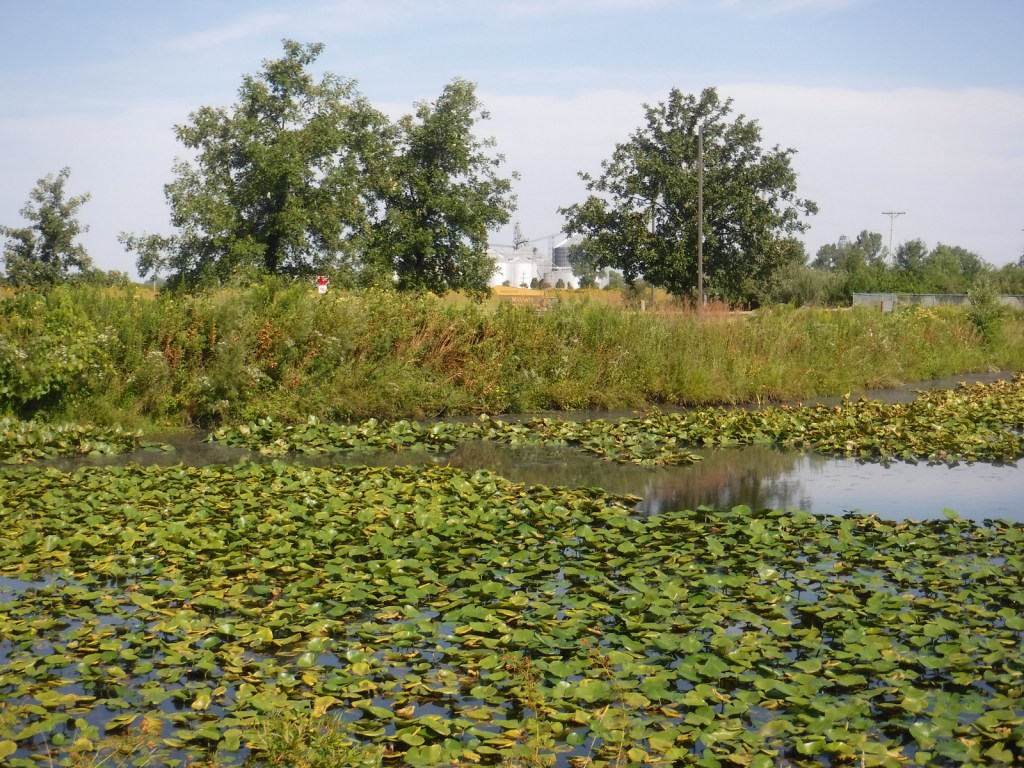
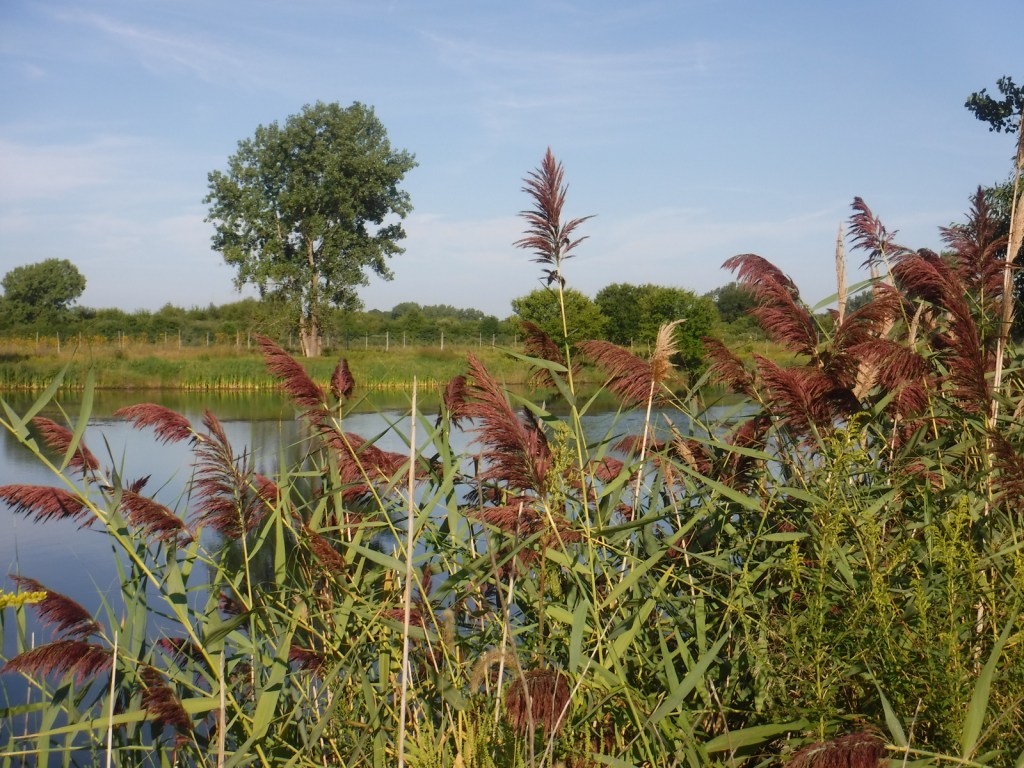
A turtle pond is accessible by walking a closed road one mile from the Hoff Road Trailhead.

Peak Season

Spring

Fees

None

Road Conditions

The main access roads are paved and the trailhead parking areas are gravel lots.  Many of the trails are former roads, both paved and unpaved.  At the Iron Bridge Trailhead, bicycles are available to rent as part of the 75 miles of trails following the Illinois and Michigan Canal National Heritage Corridor.

Camping

There is no camping at Midewin National Tallgrass Prairie, as the public lands are only open 4 a.m. to 10 p.m. daily.  Campgrounds outside of Chicago include Starved Rock State Park, Illini State Park, Des Plaines Conservation Area, and across the state border at Indiana Dunes National Park.

Related Sites

Tallgrass Prairie National Preserve (Kansas)

Pullman National Historical Park (Illinois)

Cedar River National Grassland (North Dakota)

Nearest National Park

Indiana Dunes

Explore More – During World War II, 3,400 women worked at the Joliet Army Ammunition Plant, representing what percentage of the workforce?

Continental Divide National Scenic Trail

Continental Divide National Scenic Trail

New Mexico, Colorado, Wyoming, Idaho, Montana

Managed by U.S. Forest Service (70%), Bureau of Land Management (12%), National Park Service (10%), other (8%)

Established 1978

3,028 miles

Website: https://www.fs.usda.gov/managing-land/trails/cdt

Overview

We decided to write about the Continental Divide National Scenic Trail (CDT) now, since Tiff recently finished backpacking the entire 512-mile Wyoming section of the route.  The CDT stretches 3,028 miles from the Crazy Cook Monument on the border with Mexico north to Waterton-Glacier International Peace Park.  The official trail is known as the “red route,” with popular alternatives called “blue routes” detouring through sections like New Mexico’s Gila Wilderness (which 95% of thru-hikers choose).  Tiff was supported by Scott along portions of the trail and they both backpacked through Yellowstone National Park together.  Tiff met dozens of thru-hikers doing the entire trail this year, many of whom were “flip-flopping” after getting stopped north bound (NOBO) by snowy Colorado mountains so switching to a south bound (SOBO) direction to finish.

Highlights

Rocky Mountain National Park, Yellowstone National Park, Glacier National Park, Gila Wilderness, El Malpaís National Monument, South Pass City State Park, Wind River Range, Lemhi Pass, Chinese Wall, Triple Divide Pass

Must-Do Activity

It takes the average thru-hiker 147 days to complete the trek (including “zeros days”), but you can get a feel for the experience on shorter point-to-point or loop hikes.  We have done the Rocky Mountain National Park section as a long day hike and Scott has backpacked the minimum 40 miles to see the famous Chinese Wall in Montana’s Lewis and Clark National Forest.  We had all three of our backcountry campsites to ourselves along Yellowstone National Park’s 67-mile stretch of CDT and went a full day without seeing another person near the park’s Idaho border.

Best Trail

The Wind River Range in Wyoming’s Bridger National Forest is probably the most scenic stretch of mountains on the entire CDT.  Many thru-hikers detour to a blue route to see beautiful, but overcrowded Titcomb Basin and the Cirque of the Towers (actually in neighboring Shoshone National Forest).  Read more about our 2020 trip (mostly) following the CDT 120 miles through the range in our newspaper article.

Instagram-worthy Photo

The CDT goes right past crowded Old Faithful in Yellowstone National Park’s Lower Geyser Basin, although there are other areas of colorful hot springs like those near Heart Lake (pictured).

Peak Season

Summer

Fees

Fees apply if you camp inside or drive into Rocky Mountain, Yellowstone, and Glacier National Parks

Road Conditions

Much of the trail is actually walking dirt roads and some paved roads, especially in New Mexico.  Access roads to certain trailheads can be very rough and require driving long unpaved sections, such as the 30 miles to busy Big Sandy Trailhead in Bridger National Forest.

Camping

Camping is dispersed except for designated sites (permit required) in Rocky Mountain, Yellowstone, and Glacier National Parks.

Related Sites

Appalachian National Scenic Trail (Georgia to Maine)

Pacific Crest National Scenic Trail (California-Oregon-Washington)

Natchez Trace National Scenic Trail (Mississippi-Alabama-Tennessee)

Explore More – Which three oceans receive water from Triple Divide Pass in Montana?