In Providence, Rhode Island lies Roger Williams National Memorial, dedicated to the man who left the Puritan-led Massachusetts Bay Colony in 1636 to found a city based on religious freedom. A small National Park Service (NPS) visitor center houses a tiny museum and shows a brief film.
Highlights
Statue, 4.5-acre park, film
Must-Do Activity
After watching the 7-minute film, engage the passionate NPS employees in a discussion about the importance of the First Amendment and freedom of religion to American history.
Best Trail
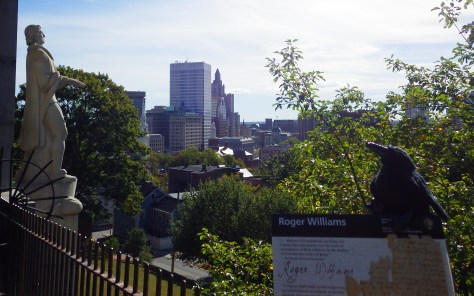
A short, but steep walk takes you to a large statue of Roger Williams that offers a great overlook of the city, though it is not technically in the National Memorial.
Instagram-worthy Photo
It has to be the Roger Williams statue with its incredible views of Providence.
All roads paved, but steep if you drive up to the statue.
Camping
Twenty miles away, Casimir Pulaski Memorial State Park offers camping.
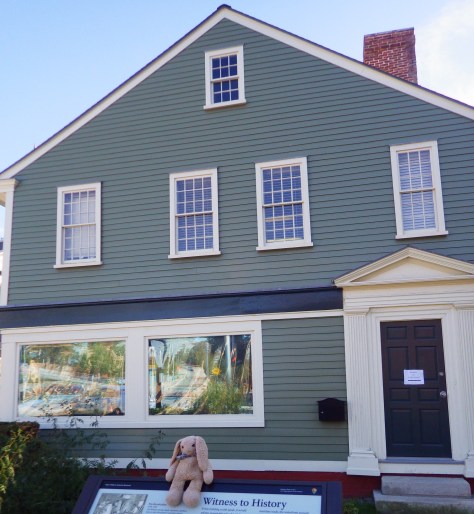
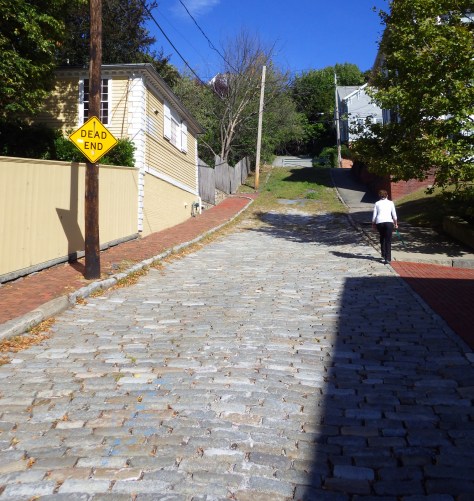
The NPS visitor center is housed in this small historic building in downtown Providence.Tiff near the historic well in the 4.5-acre park in downtown Providence.Wondon hanging out with Roger Williams in the tiny visitor center (the video screen is in the background).Tiff walking uphill to the statue.This granite statue of Roger Williams is actually 15-feet tall, but you can’t get too close to it.
Explore More – In what year was most of Providence destroyed (including Roger Williams’ homestead) during King Philip’s War?
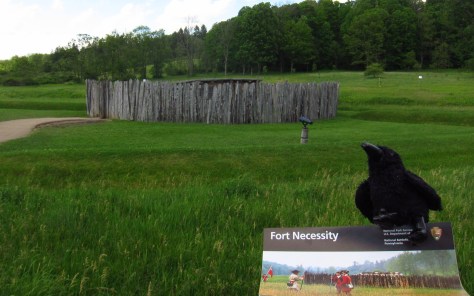
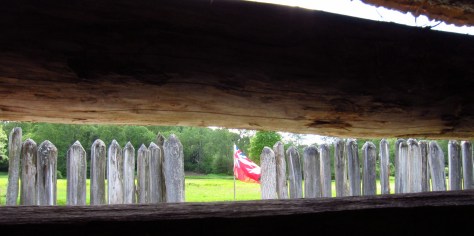
In a nondescript field in rural western Pennsylvania, a battle began what some historians consider the first worldwide war. In April 1754, a young George Washington led British troops, Virginia militia, and their American Indian allies on a mission to push the French out of the western frontier. After Washington’s troops ambushed and scalped French officers, an angry retaliatory force pinned him down at the hastily constructed Fort Necessity. Washington surrendered on July 3, 1754, starting a global conflict that became known as the Seven Years War (or the French and Indian War).
Highlights
Museum, reconstructed fort, Mount Washington Tavern
Must-Do Activity
The National Park Service manages an excellent museum and a re-creation of the small fort. There is a playground, too, perhaps to entice children to come learn that little actions can have big consequences.
Best Trail
Make a side trip to nearby Jumonville Glen, where a short loop trail guides visitors through the forest where the initial ambush on the French occurred.
Instagram-worthy Photo
The reconstructed Mount Washington Tavern, a stagecoach stop on the historic National Road. Construction of the National Road began in 1811 and businesses like this one soon popped up to serve travelers.
Peak Season
Open year round, except Jumonville Glen and Braddock’s Grave are only open in summer.
Ohiopyle State Park has running water, as do several private campgrounds nearby.
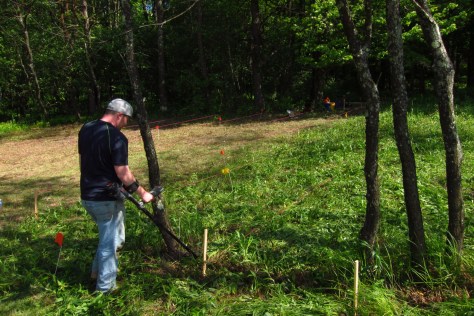
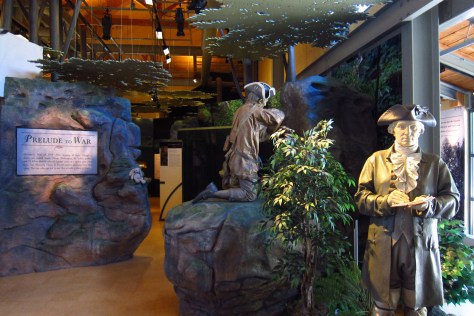
Archaeologist using a metal detector to look for artifacts from 1754.Not many National Park Service sites have a playground like Fort Necessity National Battlefield.The free National Park Service museum details the battle and its global ramifications; there’s young George Washington.
Inside the Mount Washington Tavern.
Ambush site at Jumonville Glen.
Explore More – Despite its name, the Seven Years War actually lasted how many years after fighting took place on four continents (as well as in the Philippines and Caribbean islands)?
There is nothing like a great novel, especially one set in a National Park. Here is a list of our 10 favorite fiction books set in a unit of the National Park Service System. Our previous list covered non-fiction books set in a National Park. Click here to see all our Top 10 Lists.
Hiaasen sets all of his funny novels in South Florida (including the wonderful children’s book Hoot). We have read several, but this is our favorite with swamps, subtropical islands, alligators, and a dive from a cruise boat.
A Newbery Medal Winner that tells the story of a girl marooned for 18 years in the Channel Islands off California in the 1800s. Based loosely on a true story.
Ranger Anna Pigeon mysteries are a staple in most National Park bookstores. They are entertaining and we always learn about something new, like wolf research and hypothermia prevention in this one.
Long before it became a National Park, cave tours were led by slaves in Kentucky. This children’s book also deals with the cave’s brief history as an infirmary for tuberculosis patients.
A classic about a wild pony that grows up on Assateague and Chincoteague Islands on the Atlantic border of Maryland and Virginia. She also wrote the excellent Brighty of the Grand Canyon.
Humans are not main characters in this imaginative novel that details the happenings in the lives of the many animals inhabiting this California forest.
Historical fiction follows the decades of changes experienced by a woman who is exiled to the leper colony on the isolated Kalaupapa Peninsula of Moloka’i Island in Hawai’i. Alan Brennert’s Moloka’i is a similar book.
This novel is set in the years prior to the creation of the park when ruthless logging companies rushed to maximize their profits. Also a feature film starring Jennifer Lawrence and Bradley Cooper.
The greatest Western novelist ever turned his attention to a wildlife manager on the North Rim of the canyon in the wake of World War I. Another of his works set in a National Park is Boulder Dam (Lake Mead National Recreation Area).
Narratives of the momentous events at Gettysburg in July 1863 told from the point-of-view of some of its most prominent players. Arguably the best work of historical fiction ever written.
Tom Robbins is hilarious. His books are character driven (like the unforgettable Sissy Hankshaw with her oversized thumbs) but the South Dakota setting is also important to this book.
There are three units of this National Monument named for the John Day River that drains this region in the rain shadow of the Cascades. It is less green than much of Oregon, but that lack of vegetation allows the wonderful colors of the soil to show through in places like the Painted Hills and Blue Basin.
Highlights
Scenic views, geologic formations, fossils, museum
Must-Do Activity
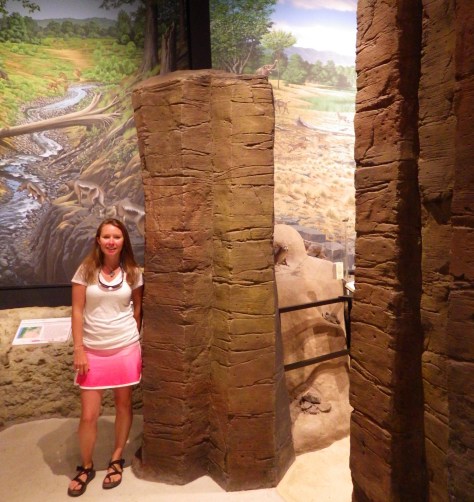
The Thomas Condon Paleontology Center gets our vote for the best museum in the entire National Park Service System. Across from Sheep Rock, it has awesome exhibits on the 40-million years of mammalian history this monument protects. Plus, watch real laboratory specimens being prepared by archaeologists. Across the highway, have a picnic at the James Cant Ranch Historic District and learn about sheep and cattle ranching in this region.
Best Trail
The Blue Basin is accurately named at the end of the one-mile Island in Time Trail.
Instagram-worthy Photo
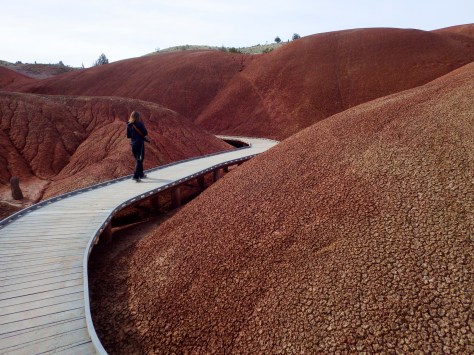
If you can only see one unit of the monument, make sure it is the surreal Painted Hills. Stunning colors on large clay hills with several interpretive loop trails describe the geological history and fossils found there.
Dirt roads at the Painted Hills are passable with most vehicles when dry.
Camping
None within the monument, but there are several campgrounds in the area, including a nice one we stayed at in the town of Fossil, Oregon.
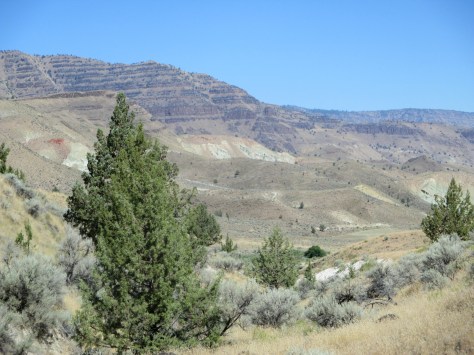
The John Day River running through the National Monument.The Thomas Condon Paleontology Center gets our vote for the best museum in the entire NPS System.The blue badlands at the end of the one-mile Island in Time Trail.
There are several trails through the Painted Hills for up-close views of the colorful soil.
Explore More – Which unit of the National Monument is known for its fossil plants in mudstone?
In 1976, Platt National Park was combined with the nearby reservoir at Arbuckle National Recreation Area to form Chickasaw National Recreation Area, named for the neighboring Chickasaw Nation of central Oklahoma. The trails and infrastructure in the park were predominantly built in the 1930s by the Civilian Conservation Corps (CCC).
Highlights
Natural springs, bison herd, Lincoln Bridge, reservoir
Must-Do Activity
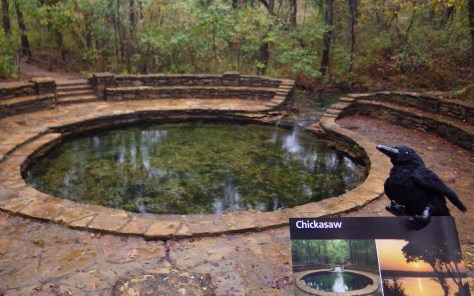
Visitors should start at the Travertine Nature Center, then visit the bison pasture and “take the waters” at Vendome Well. Other diverse recreational opportunities include camping and water sports on the Lake of the Arbuckles.
Best Trail
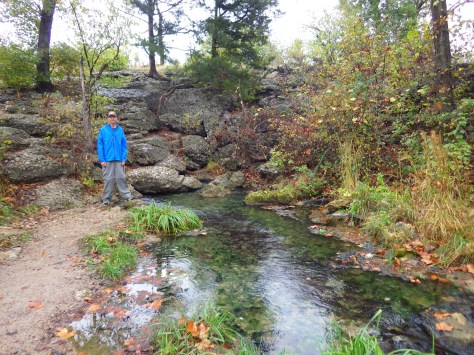
Take the trail from the Travertine Nature Center to Antelope Springs and photogenic Buffalo Springs. There is also loop trail around the bison pasture.
Instagram-worthy Photo
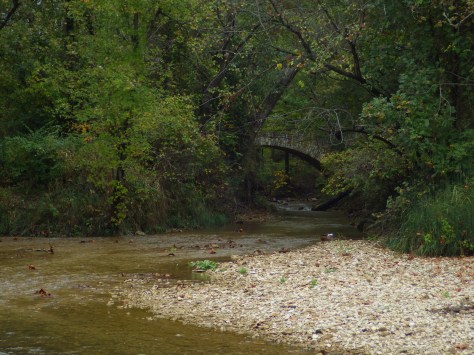
The U.S. Mint quarter (see photo below) for Oklahoma depicts the Lincoln Bridge built by the CCC, but it can be difficult to photograph through the trees.
We are a participant in the Amazon Services LLC Associates Program, an affiliate advertising program designed to provide a means for us to earn fees by linking to Amazon.com and affiliated sites.
34.461543-97.006404
Start your U.S. National Forests, National Parks, and National Monuments adventure here!


















 Raven About The Parks