All posts by Raven About The Parks

Chiricahua National Monument

Overview

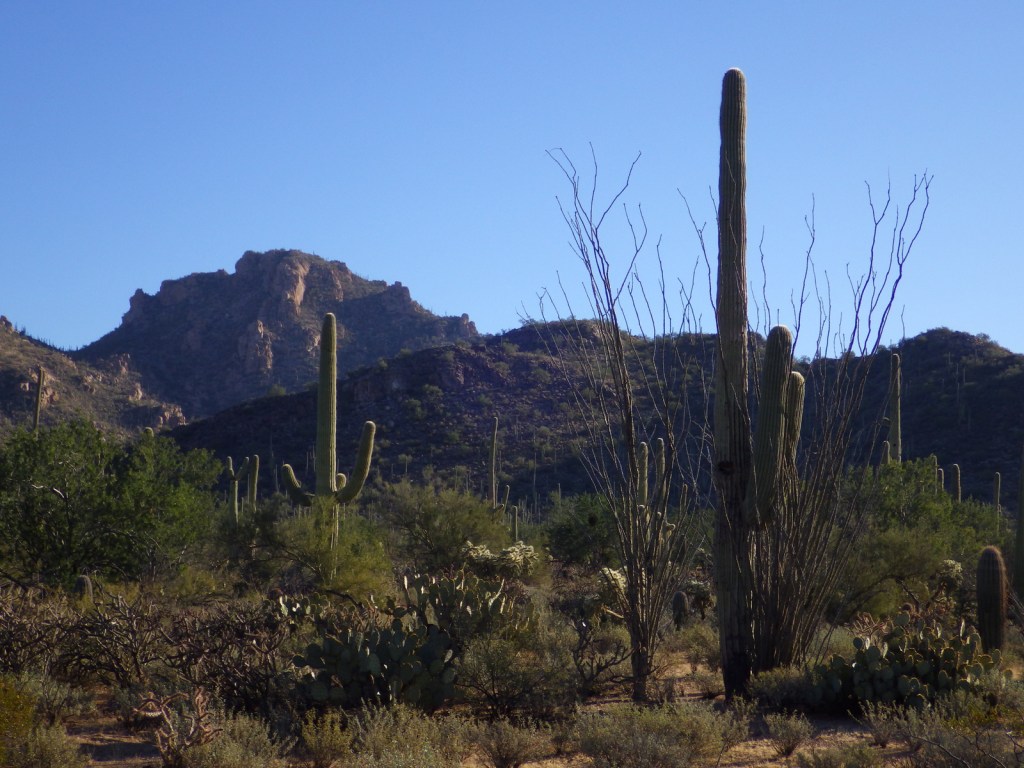
Tucked away in the southeastern corner of Arizona, Chiricahua National Monument was established in 1924 to protect a spectacular collection of rhyolite rock formations.  Millions of years of erosion left behind tall pinnacles that rise above surrounding evergreen trees.  A six-mile long paved road leads up from the National Park Service (NPS) visitor center to Massai Point for great views of the volcanic pillars.  At an elevation of around 7,000 feet it can get cold in the winter, but still quite hot in the summer, so spring and fall are the best seasons to visit.

Highlights

Massai Point, Echo Canyon, Big Balanced Rock, Heart of Rocks Loop

Must-Do Activity

We recommend an all-day loop hike through Echo Canyon to the Heart of Rocks Loop where you will find rocks resembling camels, ducks, and anything else you can imagine.  The wildlife and vegetation here is diverse and representative of many ecosystems because of the elevation range of this “sky island.”  Many visitors that spend the night in the NPS campground report seeing coatimundi, a unique long-tailed omnivore related to the raccoon with a species distribution stretching into South America. 

Best Trail

There are 17 miles of trails in the park and hiking is the best way to explore the rock formations.  A self-guided loop at Massai Point is an option if you are short on time and cannot make it all the way to the impressive Big Balanced Rock.

Instagram-worthy Photo

There is a formation on the Heart of Rocks Loop that is appropriately known as Duck on a Rock. 

Peak Season

Spring and fall

Hours

https://www.nps.gov/chir/planyourvisit/hours.htm

Fees

None

Road Conditions

All roads paved

Camping

The small 24-site NPS campground is known for its nocturnal visitations by coatimundi.

Related Sites

Coronado National Memorial (Arizona)

Organ Pipe Cactus National Monument (Arizona)

Tumacacori National Historical Park (Arizona)

Explore More – Big Balanced Rock is 22-feet in diameter, so how much is it estimated to weigh?
Theodore Roosevelt Island National Memorial

Overview

As a strict adherent to his own personal philosophy promoting “the strenuous life,” President Theodore Roosevelt regularly swam in the Potomac River, even in the middle of winter.  As a president with a proud record of conservation (especially in creating National Monuments), it is meaningful that his memorial lies on an 80-acre island with 2.5 miles of gravel trails leading through its beautiful and diverse deciduous forest. 

Highlights

Upland Trail, Swamp Trail, statue

Must-Do Activity

Fittingly, Theodore Roosevelt Island National Memorial is only accessible via a footbridge from the Virginia side of the Potomac River.  Dedicated in 1967, a 17-foot statue of the man is surrounded by several fountains and four monoliths carved with his words.  The foundation of a brick mansion owned by the Mason family in the 1800s can be seen from the trails on the island.

Best Trail

Teddy would surely appreciate that the island is situated along the Mount Vernon Trail, an 18-mile pathway that follows the western bank of the Potomac River.

Instagram-worthy Photo

Teddy Roosevelt was known as a flamboyant orator, which is even captured in his silent statue.  In 1912, he famously gave an 84-minute campaign speech after being shot in the chest by a would-be assassin.

Peak Season

Summer

Hours

https://www.nps.gov/this/planyourvisit/hours.htm

Fees

None

Road Conditions

The parking lot is only accessible from the northbound lanes of the George Washington Memorial Parkway, which is itself a unit of the National Park Service (NPS) system.

Camping

None

Related Sites

George Washington Memorial Parkway (Maryland-Virginia)

Franklin Delano Roosevelt Memorial (District of Columbia)

Rock Creek Park (District of Columbia)

Explore More – When did the Theodore Roosevelt Memorial Association purchase the island?

Top 10 Waterfalls in the National Park Service System

Who doesn’t love a beautiful waterfall?  America’s National Park Service (NPS) sites are full of some of the prettiest examples of flowing water in the world.  A few can be seen from drive-up overlooks, while others require a hike, but they are all worth the effort.  We already ranked the best waterfalls of the 62 National Parks and now are releasing a top 10 list for the other 358 NPS units (click here to see all our Top 10 lists).

10. Lake Chelan National Recreation Area (Washington)

The Cascade Mountains are named for their waterfalls, including Rainbow Falls in Stehekin.

9. Paterson Great Falls National Historical Park (New Jersey)

Unobstructed views of this 77-foot tall waterfall are difficult to find in its urban setting.

8. Buffalo National River (Arkansas)

Hemmed-In-Hollow features a 210-foot tall waterfall, accessible by a long hiking trail or a shorter walk from the river.

7. Mississippi National River and Recreation Area (Minnesota)

St. Anthony Falls is the only true waterfall on the entire river, plus check out the falls in Minnehaha Regional Park.

6. Delaware Water Gap (Pennsylvania-New Jersey)

Raymondskill Falls and Dingmans Falls are located at the end of short hikes in the Poconos.

5. Pictured Rocks National Lakeshore (Michigan)

Short hikes lead to Munising Falls and Sable Falls, or boat to falls along the cliffs of Lake Superior.

4. Niobrara National Scenic River (Nebraska)

Pull ashore on your float down the river to visit waterfalls in Fort Niobrara National Wildlife Refuge and Smith Falls State Park.

3. Whiskeytown-Shasta-Trinity National Recreation Area (California)

Four scenic waterfalls (Whiskeytown, Boulder Creek, Brandy Creek, and Crystal Creek) are accessible by hiking a total of 11 miles.

2. Little River Canyon National Preserve (Alabama)

The wide Little River Falls plunges 45 feet, but Graces High Falls drops 133 feet.

…and finally our #1 waterfall in a National Park Service unit:

1. Devils Postpile National Monument (California)

Rainbow Falls is one of the most picturesque waterfalls in the world, plus check out Minaret Falls.

Honorable Mentions

George Washington Memorial Parkway (Maryland-Virginia)

Great Falls Park on the Potomac River also contains ruins of George Washington’s Patowmack Canal.

Big South Fork National River and Recreation Area (Tennessee-Kentucky)

Yahoo Falls is one of several waterfalls visible within this diverse park.

Lowell National Historical Park (Massachusetts)

It is manmade, but the waterfall created by the Lower Locks in downtown Lowell is still beautiful.

Paterson Great Falls National Historical Park

Overview

A flowing 77-foot waterfall in a narrow 300-foot wide gorge, Paterson Great Falls has long stood out as a natural wonder in New Jersey.  The entire Passaic River drops over this volcanic ridge, making it the second largest waterfall by volume east of the Mississippi River (Niagara Falls is first).  In 1792, the nation’s first Secretary of the Treasury, Alexander Hamilton, founded the City of Paterson to harness this hydropower for manufacturing.  Paterson Great Falls was named a National Natural Landmark in 1966 and a National Historical Park in 2011.

Highlights

Great Falls Historic District Cultural Center, Colt Gun Mill, Overlook Park, Mary Ellen Kramer Park

Must-Do Activity

Start your visit at the Great Falls Historic District Cultural Center, and, if you have time, explore the Paterson Museum (donation requested).  Carefully cross the street to Overlook Park for excellent view of the Great Falls Power Plant, then take the footbridges behind the hydroelectric plant to Mary Ellen Kramer Park for better photographic angles of the waterfall.  Guided tours by park rangers are offered in the summer months.

Best Trail

A walking tour of Paterson, New Jersey continues beyond Mary Ellen Kramer Park to Hinchcliffe Stadium where Negro League Baseball was once played.  On the other side of the Passaic River, follow the river’s raceways to the red-brick ruins of Allied Textile Printing and the Colt Gun Mill.

Instagram-worthy Photo

The Great Falls Power Plant opened in 1914 and still produces enough power to supply 11,000 households.  The “S.U.M. 1791” on the building’s exterior refers to Alexander Hamilton’s Society for Establishing Useful Manufactures.

Peak Season

Summer

Hours

https://www.nps.gov/pagr/planyourvisit/hours.htm

Fees

None

Road Conditions

All roads are paved and there is a free parking lot at Overlook Park.

Camping

None

Related Sites

Lowell National Historical Park (Massachusetts)

Thomas Edison National Historical Park (New Jersey)

Morristown National Historical Park (New Jersey)

Explore More – It cost $14.5-million to refurbish the Great Falls Power Plant in 1986; how much did it cost to build the entire thing in 1914?

Little River Canyon National Preserve

Overview

Authorized in 1992, Little River Canyon National Preserve covers about 14,000 acres in northeast Alabama.  Elevations range from 1,900-foot tall Lookout Mountain down to 650-foot Weiss Lake reservoir, as the Little River plunges from the Cumberland Plateau.  With cliffs up to 600 feet in height, this unique gorge contains several endemic species of plants and animals.  Only the southern half of the preserve is readily accessible by roads, with DeSoto State Park offering the best way to see the northern section.

Highlights

Little River Falls, Canyon Mouth, Graces High Falls

Must-Do Activity

Start your visit at the Little River Canyon Center on Highway 35, then make the short drive to the parking area for 45-foot tall Little River Falls.  From there, drive Highway 176 for 11 miles along the west side of the canyon, which has nine scenic overlooks, including one for seasonal Graces High Falls.

Best Trail

There are a few short trails in the preserve, many of which drop steeply from the rim to the riverside.  At the southern end near the intersection of Highways 273 and 275 is Canyon Mouth, a flat trail that follows alongside the Little River.  There is better hiking and even more waterfalls in nearby DeSoto State Park.

Instagram-worthy Photo

Graces High Falls is 133 feet tall, making it the tallest (aboveground) waterfall in Alabama, but it only flows in the spring and after large rain events.

Peak Season

Spring

Hours

https://www.nps.gov/liri/planyourvisit/hours.htm

Fees

None except at Canyon Mouth ($15 per day or America the Beautiful pass)

Road Conditions

All roads paved

Camping

De Soto State Park offers camping, in addition to excellent hiking trails to several waterfalls.  There are also three backcountry campsites in Little River Canyon National Preserve available from February through September with a permit.

Related Sites

Russell Cave National Monument (Alabama)

Horseshoe Bend National Military Park (Alabama)

Tuskegee Airmen National Historic Site (Alabama)

Explore More – How many endemic species of caddisflies are found in Little River Canyon and nowhere else on Earth?