All posts by Raven About The Parks

Top 10 National Park Service Sites for Swimming

Swimming at National Park Service (NPS) sites can range from soaking in hot springs to dipping in mountain lakes to riding ocean waves.  We tried to include a variety of experiences in this list, although if you love the beach be sure to check out our ranking of the Top 10 National SeashoresClick here to see all of our Top 10 Lists.

10. Olympic National Park (Washington)

If a frigid dip in Lake Quinault does not sound nice, then warm up at Sol Duc Hot Springs

9. Chickasaw National Recreation Area (Oklahoma)

The swimming hole at Little Niagara draws summer crowds, as does the Lake of the Arbuckles

8. Grand Teton National Park (Wyoming)

Jenny Lake is shockingly cold, so it might not be appealing except on the warmest days

7. Gulf Islands National Seashore (Florida-Mississippi)

Incredible white sand beaches, though not known for its big waves

6. Yellowstone National Park (Wyoming-Montana-Idaho)

The hot springs are all off limits except seasonally at the Boiling River near Mammoth Hot Springs

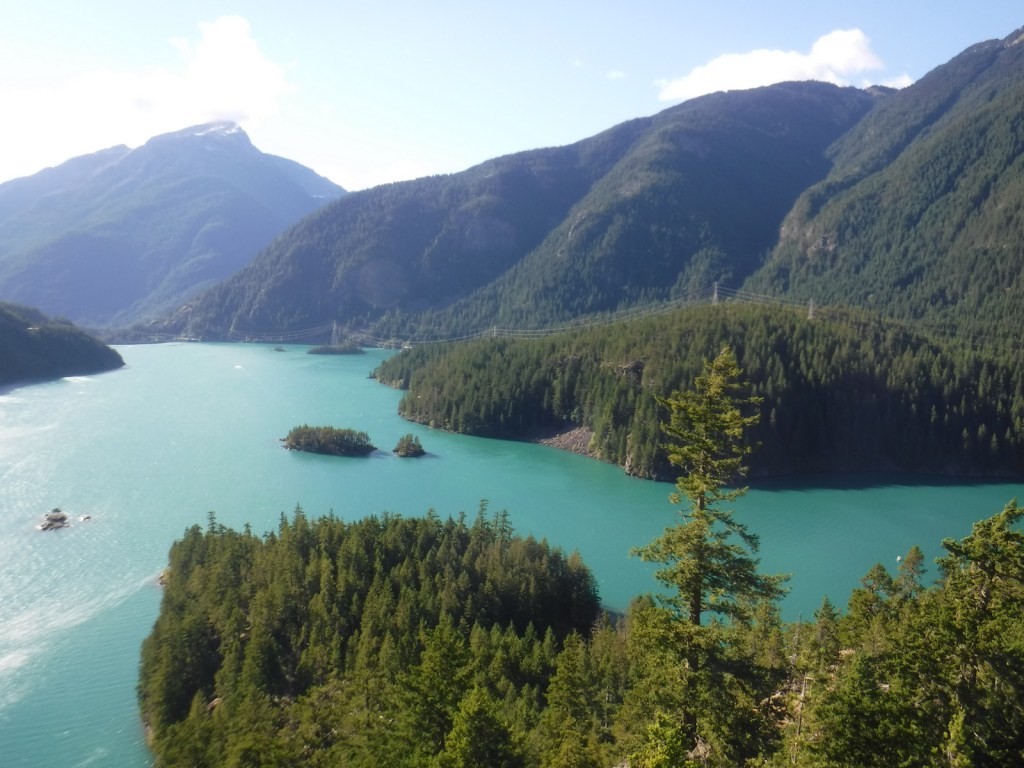
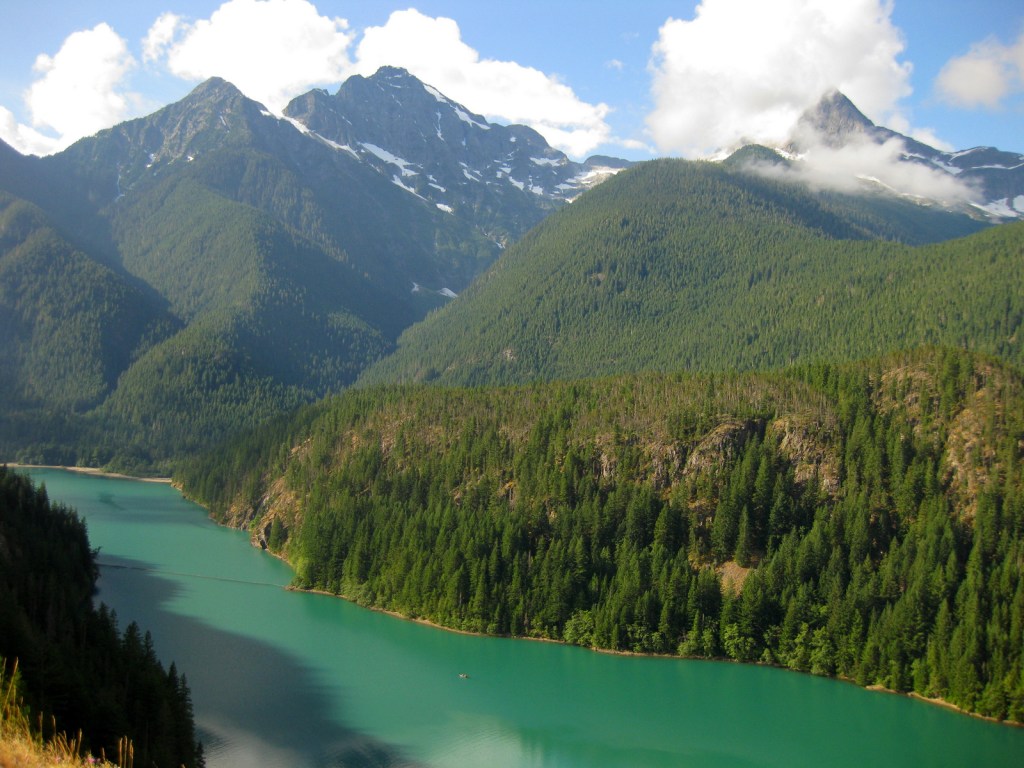
5. Lake Chelan National Recreation Area (Washington)

Another cold water spot in an incredibly clear lake that seems to glow turquoise in the sun

4. Haleakalā National Park (Hawai‘i)

In the coastal Kipahulu District, the freshwater Seven Sacred Pools attract tourists

3. Dry Tortugas National Park (Florida)

A variety of sea life is attracted to the human structures in the clear subtropical waters

2. Cape Hatteras National Seashore (North Carolina)

Long stretches of beach, warm water, and awesome waves

…and finally the #1 National Park Service site for swimming:

1. Virgin Islands National Park (U.S. Virgin Islands)

A snorkeler’s (and sea turtle’s) paradise accessible right from the beautiful tropical beaches

Honorable Mentions

Pu’uhonua o Honaunau National Historical Park (Hawai‘i)

Swimming is not allowed within the NPS site, but one of the Big Island’s best snorkeling spots is next door

Big Bend National Park (Texas)

The foundation of a bathhouse still holds in hot springs water on the side of the Rio Grande

Gila Cliff Dwellings National Monument (New Mexico)

Lightfeather and Jordan Hot Springs are actually in neighboring Gila National Forest

Wrangell-St. Elias National Park and Preserve (Alaska)

The truly adventurous can jump into an icy pool atop melting Root Glacier

El Malpais National Monument

Overview

Navajo legend states that during a battle on Mount Taylor, the Twin Gods struck off a giant’s head which became Cabezon Peak, its blood flowing southward, coagulating into the Malpais.  Meaning “the badland” in Spanish, this National Monument contains lava tubes and ice caves among its 114,000 rugged acres.  Easily accessible from Interstate 40, it does not take long before you feel like you are in the middle of nowhere watching beautiful patterns of cloud shadows drift slowly across the landscape.

Highlights

El Calderon lava tubes, Sandstone Bluffs Overlook, Zuni-Acoma Trail, La Ventana Natural Arch

Must-Do Activity

Be sure to take a hike to truly appreciate these lava flows, the most recent of which inundated agricultural fields of the Acoma people as recently as the 1400s.  Carefully stepping across the jagged rocks, we wondered if another cinder cone may be forthcoming to the region.  Geologists suggest that the volcanic activity in this area has ceased indefinitely, yet some of the eruptions here go back over a million years, making us wonder if it is only a temporary lull.  Be careful during the monsoon season, when giant cumulostratus clouds form in the wide-open blue sky foretelling afternoon thunderstorms. 

Best Trail

Lava tube caves are a major attraction to the park (and are sometimes closed), but before entering you must pick up a free permit to ensure you do not spread white-nosed bat syndrome.  El Calderon Area is easier to access than the rough road to Big Tubes Area, and in a 3.8-mile loop passes a cinder cone and bat cave, then enters a lava tube.  The Continental Divide National Scenic Trail and difficult 7.5-mile Zuni-Acoma Trail also traverse this mostly shadeless environment.

Instagram-worthy Photo

Take the short hike back to stand below towering La Ventana Natural Arch and enjoy the aroma of juniper wafting through the desert air.  It is technically in the Bureau of Land Management’s El Malpais National Conservation Area, not the neighboring National Monument run by the National Park Service.

Peak Season

Summer

Hours

https://www.nps.gov/elma/planyourvisit/hours.htm

Fees

None

Road Conditions

Most trailheads are off paved roads, but some roads in El Malpais National Monument require four-wheel drive (especially when wet), so check at a visitor center before setting out.

Camping

There are no developed campgrounds, but primitive camping is allowed on back roads and in the surrounding Cibola National Forest.  On Interstate 40, Bluewater Lake State Park has full RV hookups.  There is also a small campground located west down Highway 53 in El Morro National Monument.

Related Sites

Petroglyph National Monument (New Mexico)

Lava Beds National Monument (California)

Sunset Crater Volcano National Monument (Arizona)

Explore More – Privately owned and open for tourists, what makes nearby Bandera Crater special?

Chattahoochee River National Recreation Area

Overview

Similar to the other National Park Service (NPS) sites in the Atlanta, Georgia metropolitan area (see Related Sites below), visiting Chattahoochee River National Recreation Area requires navigating many suburban streets.  Established in 1978, this park is a combination of government jurisdictions and private land that protects 48 miles of the Chattahoochee River downstream from Lake Sidney Lanier northeast of the city.  Due to its lack of large rapids it is popular with canoers, although a release from Buford Dam can lead to a quick rise in river levels and the water is typically a chilly 44° to 58°F.

Highlights

Hewlett Lodge, Vickery Creek, Cochran Shoals, Sope Creek mountain bike trail

Must-Do Activity

A good place to start your visit is the NPS headquarters at Island Ford, which is housed in Hewlett Lodge, a beautiful Adirondack-style mansion built in the 1930s.  There you can get information about hiking, canoeing, and fishing within the National Recreation Area.  You can also walk down to the river’s edge to watch boaters and wildlife from shore.  Not far away in Roswell, Georgia, a short creekside trail leads to the ruins of a textile mill and a dam.

Best Trail

Most sections of the park have some type of hiking trail and there is a wetlands boardwalk within the Cochran Shoals unit.

Instagram-worthy Photo

The covered walking bridge is quite photogenic at the old mill in Roswell, Georgia.

Peak Season

Summer (although we have heard from an Alan Jackson song that it can get “hotter than a hootchie cootchie”)

Hours

https://www.nps.gov/chat/planyourvisit/hours.htm

Fees

Parking fee of $5 per day or America the Beautiful pass

Road Conditions

All roads paved

Camping

No camping is allowed along the river.  The U.S. Corps of Engineers manages campgrounds on Lake Sidney Lanier at the northeastern end of Chattahoochee River National Recreation Area.

Related Sites

Kennesaw Mountain National Battlefield Park (Georgia)

Martin Luther King, Jr. National Historical Park (Georgia)

Ocmulgee Mounds National Historical Park (Georgia)

Explore More – How long is the Chattahoochee River from its mountain headwaters to its confluence with the Flint River at Lake Seminole?

Top 20 National Parks for Photography

The 63 National Parks in the United States are among the most photogenic places on the planet, so this was our hardest Top 10 List to choose.  Instead, for the first time we ranked the top 20!  We still had to leave off some all-time favorites, which says something about the natural beauty of this country.  We previously released a ranking of the top 20 photography destinations among the other National Park Service sites.  Click here to see all of our Top 10 Lists.

10. Arches (Utah)

There are too many fantastic sandstone wonders to count in this park

9. Channel Islands (California)

Giant coreopsis provide nests for western sea gulls atop rocky cliffs rising from the ocean

8. Katmai (Alaska)

Alpine scenery and Brooks Falls, the world-famous salmon fishing grounds of grizzly/brown bears

7. Great Basin (Nevada)

Cave formations, snow-covered peaks, and photogenic bristlecone pine trees

6. Haleakalā (Hawai‘i)

People come from around the globe to watch the sunrise and hike rainbow-hued Sliding Sands Trail

5. Badlands (South Dakota)

Awesome geologic features and a surprising diversity of large mammals

4. Dry Tortugas (Florida)

Fish teem in the turquoise ocean water surrounding a picturesque brick fort

3. Bryce Canyon (Utah)

Bright orange hoodoos fill this giant natural amphitheater that lights up at sunrise and sunset

2. Death Valley (California)

With little vegetation, the earth is laid bare here in all its raw and colorful glory

…and finally the #1 National Park for Photography:

1. Yellowstone (Wyoming-Montana-Idaho)

Unbelievably colorful geothermal features and numerous charismatic wild animals

The Next 10

11. Grand Canyon (Arizona)

12. Yosemite (California)

13. Denali (Alaska)

14. Mesa Verde (Colorado)

15. Grand Teton (Wyoming)

16. Great Sand Dunes (Colorado)

17. Mount Rainier (Washington)

18. Glacier Bay (Alaska)

19. Glacier (Montana)

20. Virgin Islands (U.S. Virgin Islands)

Glacier National Park

Overview

Officially, since 1932 this American-Canadian natural reserve has been called Waterton-Glacier International Peace Park.  We will focus on the U.S. side since you still need a passport to cross the border (when it is open).  The million-acre Glacier National Park was established in 1910 as a tourist destination and to protect its wildlife, including grizzly/brown bears.  It is open year round, but sees more than half its visitors in July and August.

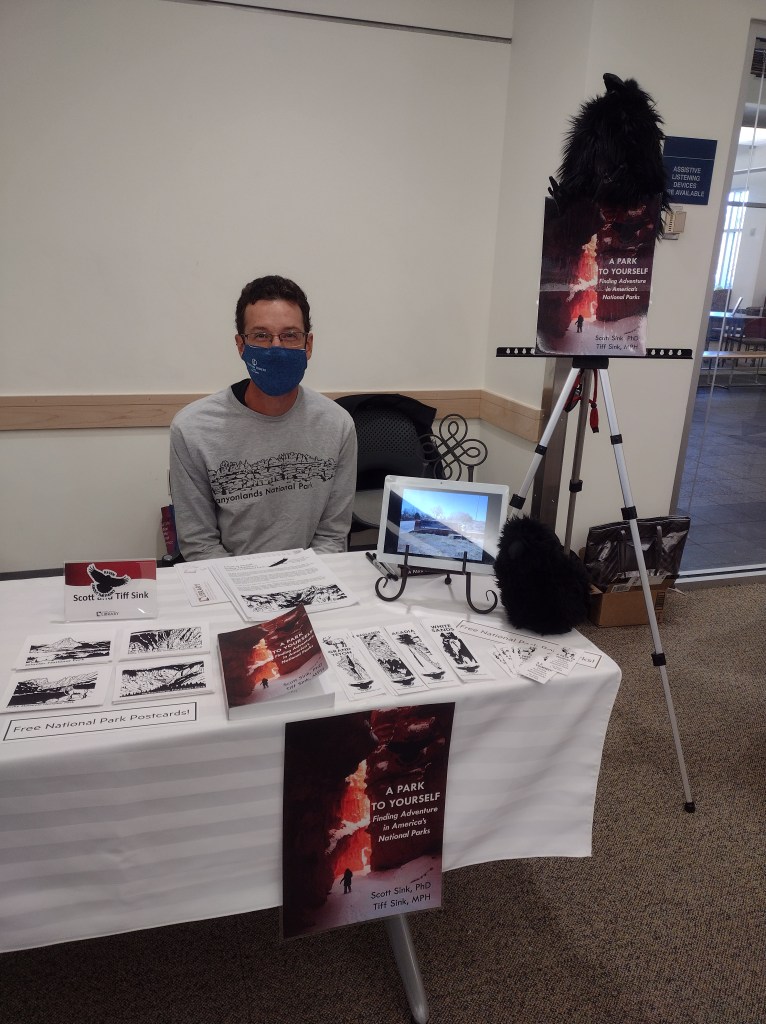
Learn more in our guidebook to the National Parks, A Park to Yourself: Finding Adventure in America’s National Parks (available on Amazon).

Highlights

Going-to-the-Sun Road, St. Mary Lake, Logan Pass, Many Glacier Hotel, Iceberg Lake

Must-Do Activity

The world renowned Going-to-the-Sun Road was built to cross the park from east to west in the 1920s.  At its highest point (6,646-foot Logan Pass), the road crosses the Continental Divide, an imaginary line where a raindrop drains all the way into the Atlantic Ocean on one side and into the Pacific Ocean on the other.  Hidden Lake Overlook near the Logan Pass Visitor Center is known for sightings of mountain goats, bighorn sheep, and hoary marmots.

Best Trail

Avalanche Lake is located at the end of a two-mile one-way hike from the famous Going-to-the-Sun Road.  We spotted a grizzly/brown bear on the way back from our hike there.

Instagram-worthy Photo

Hidden Lake often reflects the image of Bearhat Mountain, which is why we chose it as our logo design for Glacier National Park (see below).

Peak Season

Summer

Hours

https://www.nps.gov/glac/planyourvisit/hours.htm

Fees

$35 per vehicle or America the Beautiful pass

Road Conditions

Vehicles over 21 feet in length or eight feet in width are prohibited in the middle sections of Going-to-the-Sun Road.  Good dirt roads lead to campgrounds at Bowman Lake and Kintla Lake on the west side of the park.

Camping

St. Mary and Fish Creek Campgrounds accept reservations and several others are available on a first-come, first-served basis.

Related Sites

Yellowstone National Park (Wyoming-Montana-Idaho)

Grant-Kohrs Ranch National Historic Site (Montana)

Big Hole National Battlefield (Montana)

This design we created to celebrate Glacier National Park is available on a variety of products at Cafe Press and Amazon.

Explore More – When were the iconic “red jammer” buses first introduced to the park?

We are a participant in the Amazon Services LLC Associates Program, an affiliate advertising program designed to provide a means for us to earn fees by linking to Amazon.com and affiliated sites.