Tag Archives: wildlife

Cumberland Island National Seashore

Overview

Off the coast of Georgia, Cumberland Island National Seashore was established in 1972 and is only accessible by boat.  While kayaks and private boats are allowed, most visitors arrive by ferry from St. Marys (reservations recommended).  Much of the northern half of the island is designated wilderness with backpacking campsites dispersed near places where freshwater is available for filtration.  Bicycles can be rented once you arrive on the island (they are not allowed on the ferry) and are permitted on the many miles of roads, but not on the trails or beach. 

Highlights

Dungeness Ruins, Ice House Museum, Marsh Boardwalk, First African Baptist Church

Must-Do Activity

While it is fun to spend time beachcombing, what really sets Cumberland Island apart are the trails that cut through the maritime forest of twisty live oak trees.  Watch for feral horses, white-tailed deer, armadillos, turkeys, and other birds along the way.  Alligators can also be seen in the freshwater ponds.  Fossilized shark teeth are commonly found on the island, especially on the roads.  Guided tours in vans can be reserved, which can be a good option on rainy days or if you want to make it to the 1890s African-American settlement at the northern end of the island.

Best Trail

The island has more than 50 miles of trails and you can form loops of varying lengths by walking the beach and the inland Parallel Trail.  The trails are very well packed though sandy, and not as hard to walk on as we imagined.  The only deep sand we encountered was on the designated dune crossings between the beach and the inland forest.

Instagram-worthy Photo

Dungeness is the name of a mansion built by the Carnegie family that burned down in 1959.  It was constructed atop the ruins of a house of the same name previously owned by Revolutionary War General Nathanael Greene.

Peak Season

Summer

Hours

https://www.nps.gov/cuis/planyourvisit/hours.htm

Fees

$10 per person or America the Beautiful pass, plus the charges for ferry tickets and overnight campsites

Road Conditions

Roads are packed sand and heavily rutted, but unless you own property on the island or take the van tour you will not have to worry about their spine-rattling condition.

Camping

Reservations are required for all overnight stays, including at the privately-owned inn.  Sea Camp offers cold showers and potable water a moderately short walk from the ferry dock.  There are numerous backcountry campsites, but all camping is limited to seven days.

Related Sites

Fort Frederica National Monument (Georgia)

Timucuan Ecological and Historic Preserve (Florida)

Cape Lookout National Seashore (North Carolina)

Explore More – Related to American Quarter Horses, Tennessee Walkers, Arabians, and Paso Fino, what is the total population of feral horses living on Cumberland Island?

Buck Island Reef National Monument

Overview

Located 1.5 miles north of the large Caribbean island of St. Croix is Buck Island, which covers only 176 acres of the 19,015 acres designated as Buck Island Reef National Monument.  Arguably the best coral reef in the entire National Park Service (NPS) system is the barrier reef around the island’s northern and eastern shore, which includes large examples of elkhorn coral with its beautiful yellow branches.  Private boats can get a permit to visit the island, but most tourists reserve trips with an NPS-authorized concessionaire that provides the gear for guided snorkeling and scuba diving experiences.

Highlights

Snorkeling, Underwater Trail, West Beach, Observation Point

Must-Do Activity

Snorkeling on the eastern end of the island is the highlight of a day trip to Buck Island.  The water offshore from St. Croix is cooler, even though your boat will moor in a lagoon, so consider wearing a wet suit.  There is an Underwater Trail with interpretive signs at one location along the coral reef.  Watch for a variety of parrotfish, angelfish, filefish, and sharks (lemon and nurse).  Sea turtles (green, hawksbill, loggerhead, and leatherback) are more common the west side of the island.

Best Trail

A steep, sandy trail climbs from Diedrichs Point and forms a loop when you walk West Beach, the designated anchorage area.  The 45-minute trek has a must-do spur to Observation Point for the best views, otherwise you will not be able to see through the thick vegetation of thorny trees interspersed with organ pipe cactus.  Stay on the trail and be careful not to touch poisonous manchineel trees or Christmas bush (related to poison-ivy).

Instagram-worthy Photo

Bring an underwater camera for great photo opportunities.  We followed a spotted eagle ray and a large school of blue tangs around the reef.  We also saw a nurse shark, lemon shark, and dozens of barracudas.

Peak Season

Anytime except hurricane season

Hours

Buck Island is only open during daylight hours

https://www.nps.gov/buis/planyourvisit/hours.htm

Fees

None, except for concessionaire boat trip

Road Conditions

There are no roads on the island, so a boat tour through an NPS-authorized concessionaire is necessary to access it.  There is a large parking lot (fee) near the Christiansted marina and floatplane airport.  Note: you drive on the left side of the road in the U.S. Virgin Islands, but in standard American left-side driver seat vehicles.

Camping

Buck Island is closed between sunset and sunrise, with no overnight mooring allowed.  On St. Croix, there is no official NPS campground at Salt River Bay National Historical Park and Ecological Preserve, but people camp along the coast there and at many beachside locations around the entire island.

Related Sites

Christiansted National Historic Site (U.S. Virgin Islands)

Salt River Bay National Historical Park and Ecological Preserve (U.S. Virgin Islands)

Virgin Islands National Park (U.S. Virgin Islands)

Explore More – What type of domesticated animals were let loose on Buck Island in the 1700s (permanently altering the vegetation)?

Top 10 National Parks for Wildlife Watching

There are 63 National Parks of the 430+ units in the National Park Service (NPS) system and they are among the best places to watch wildlife.  As with all of our Top 10 lists, this is a ranking of our favorite parks and not necessarily a true reflection of biodiversity or the likelihood of spotting the animals listed.  Note: brown bears and grizzly bears are the same species, so we stuck with the Alaskan name.  We have published a travel guidebook to the 63 parks with much more information about where to go to see wildlife (available on Amazon).

Know someone who loves National Parks? Gift them our travel guidebook A Park to Yourself: Finding Solitude in America’s 63 National Parks

10. Theodore Roosevelt (North Dakota)

Bison, elk, pronghorn, white-tailed deer, mule deer, prairie dogs, wild horses, prairie rattlesnakes

9. Virgin Islands (U.S. Virgin Islands)

Sea turtles, stingrays, barracudas, parrotfish, iguanas (introduced), frigatebirds, bananaquits, pelicans

8. Rocky Mountain (Colorado)

Elk, moose, bighorn sheep, white-tailed deer, mule deer, black bears, yellow-bellied marmots, pikas

7. Glacier (Montana)

Mountain goats, bighorn sheep, moose, elk, mule deer, brown bears, black bears, lynx, yellow-bellied marmots, pikas

6. Great Smoky Mountains (Tennessee-North Carolina)

Elk, white-tailed deer, black bears, raccoons, turkeys, salamanders, synchronous fireflies

5. Denali (Alaska)

Caribou, moose, Dall sheep, brown bears, black bears, gray wolves, beavers, hoary marmots

4. Badlands (South Dakota)

Bison, bighorn sheep, pronghorn, white-tailed deer, mule deer, prairie dogs, black-footed ferrets

3 (tie). Kenai Fjords/Glacier Bay (Alaska)

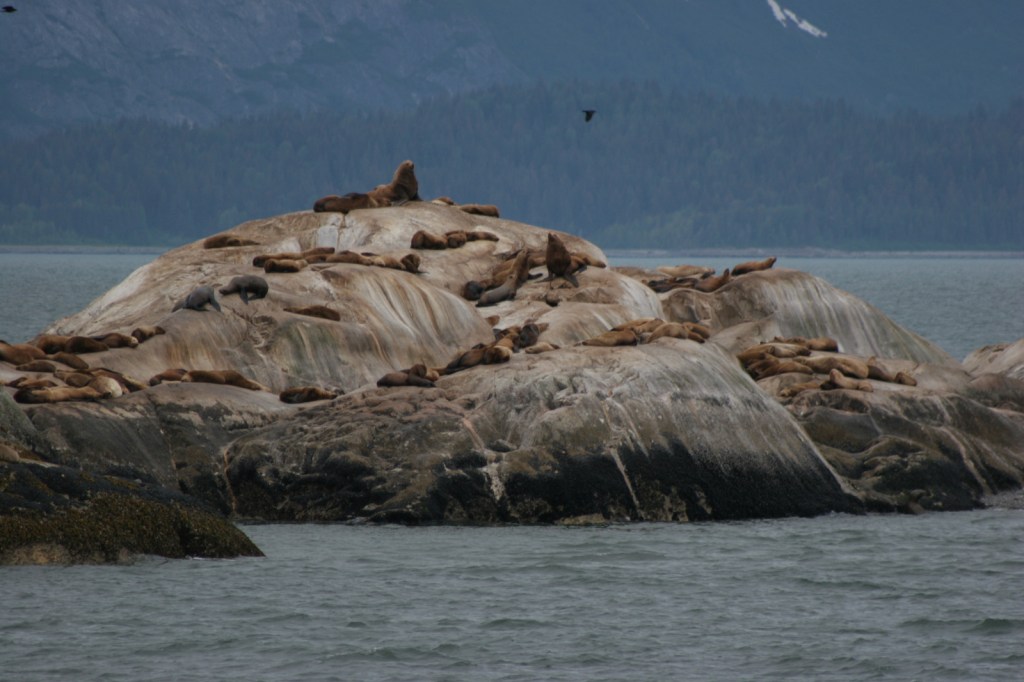
Sea otters, sea lions, harbor seals, whales, porpoises, moose, mountain goats, brown bears, black bears, bald eagles

2. Everglades (Florida)

Alligators, crocodiles, dolphins, barred owls, anhingas, roseate spoonbills, wood storks, ospreys, pelicans

…and finally our #1 National Park for watching wildlife:

1. Yellowstone (Wyoming-Montana-Idaho)

Bison, elk, moose, bighorn sheep, pronghorn, brown bears, black bears, mountain lions, gray wolves

Honorable Mentions

Voyageurs (Minnesota)

River otters, beavers, moose, white-tailed deer, black bears, gray wolves, lynx, bald eagles, loons

Channel Islands (California)

Sea otters, sea lions, harbor seals, whales, dolphins, anemones, sea urchins, starfish, sea gulls, pelicans

Dry Tortugas (Florida)

Sea turtles, parrotfish, groupers, tarpons, sharks, crocodiles, frigatebirds, noddies, boobies, terns, pelicans

Know someone who loves National Parks? Gift them our travel guidebook A Park to Yourself: Finding Solitude in America’s 63 National Parks

Haleakalā National Park

Overview

On the tropical island of Maui, Haleakalā National Park is accessible by two memorable roads.  One road climbs from sea level up to 10,023 feet overlooking Haleakalā Crater, which has almost no vegetation.  To the east, a lush tropical rainforest thrives in the Kīpahulu District located at the end of the winding road to Hana.  Both districts offer great hiking opportunities and free campgrounds. There is much more information about this park in our National Park guidebook, available on Amazon.

Highlights

Haleakalā Crater, Sliding Sands Trail, Hosmer Grove, ‘Ohe‘o Gulch pools, Waimoku Falls

Must-Do Activity

The thing to do at Haleakalā National Park is drive up the curvy entrance road in the pitch dark to catch a sunrise from 10,000 feet.  Haleakalā translates to “the house of the sun” so it is kind of a big deal here.  It is like a party atmosphere in the chilly air waiting for the guest of honor.  Of course, we were up there one morning, though we thought the sunsets were prettier and much less crowded.  Several tours drive visitors to the summit for sunrise then provide bicycles to coast back down the switchbacks outside the park boundaries.

Best Trail

In the Kīpahulu District, we hiked the two-mile Pipiwai Trail to the 400 foot cascades of Waimoku Falls in a steady downpour.   The trail offers some protection from rain under sprawling banyan trees and incredibly dense bamboo thickets.  Like many of the plant and animal species found throughout Hawai‘i, the banyan and bamboo are not native to the islands, but have thrived on this isolated landmass 2,400 miles from the nearest continent. 

Instagram-worthy Photo

Silversword (‘ahinahina) plants grow all along the Sliding Sands Trail that accesses the bottom of the 2,000 foot deep crater.

Peak Season

Year round, though summer might be slightly warmer at 10,000 feet in elevation.

Hours

https://www.nps.gov/hale/planyourvisit/hours.htm

Fees

$30 per vehicle or America the Beautiful pass

Road Conditions

All roads are paved, but the road to the summit is full of switchbacks and bicyclists.  The curvy road to Hana is well known for its one-lane bridges, of which we counted 53 before we reached the Kīpahulu District.

Camping

The two National Park Service campgrounds here are free, a big savings in a place that can be expensive to visit.  There is a lottery for three hike-in cabins and permits available for wilderness backpacking campsites.

Related Sites

Kalaupapa National Historical Park (Hawai‘i)

Hawai‘i Volcanoes National Park (Hawai‘i)

Kaloko-Honokōhau National Historical Park (Hawai‘i)

This design we created to celebrate Haleakalā National Park is available on a variety of products at Cafe Press.

Explore More – How much annual precipitation does the Kīpahulu District receive (making it one of the wettest places on Earth)?

We are a participant in the Amazon Services LLC Associates Program, an affiliate advertising program designed to provide a means for us to earn fees by linking to Amazon.com and affiliated sites.

Point Reyes National Seashore

Overview

North of San Francisco, California, Point Reyes National Seashore is the only park so designated on the Pacific Coast of the U.S.  Be prepared to get wet as this piece of land located on the San Andreas Fault is frequently enveloped by a fog belt year round.  It might not be the best spot to sunbathe on the beach, but this unique seashore is a great place to watch wildlife.

Highlights

Point Reyes Lighthouse, beaches, Arch Rock, Historic Pierce Point Ranch, Tomales Bay

Must-Do Activity

The main attraction is the Point Reyes Lighthouse, where you can try to spot sea lions and gray whales on their winter migration.  It is 300 steps down to the historic lighthouse, then you have to turn around and climb back up.  Nearby Drakes Beach is off limits in the winter months when elephant seals gather there and you can watch (and listen to) them from an overlook.  The park is popular with road and mountain bikers, and well-protected Tomales Bay attracts kayakers.
Best Trail

An extensive trail system with backcountry campsites (including two near the beach) is best accessed from the Bear Valley Visitor Center.  Plus, you can always walk the 11-mile long Point Reyes Beach.
Instagram-worthy Photo

The park has a reintroduced herd of Tule elk near the Historic Pierce Point Ranch on Tomales Point.  If you visit in January, you might find a bull was waiting for his other antler to drop.

Peak Season

Summer, though the weather is pretty much the same year round.

Hours

https://www.nps.gov/pore/planyourvisit/hours.htm

Fees

None

Road Conditions

All roads paved, except a few short ones that access trailheads.

Camping

There is no campground in Point Reyes National Seashore, but there are backcountry campsites that area available with a permit (reservations available).

Related Sites

Cabrillo National Monument (California)

Golden Gate National Recreation Area (California)

Olympic National Park (Washington)

Explore More – How far did the entire Point Reyes Peninsula permanently shift during the 1906 San Francisco Earthquake?