Tag Archives: wildflowers

Mark Twain National Forest

Mark Twain National Forest

Missouri

Managed by U.S. Forest Service, Eastern Region

3,012,464 acres (1,491,840 federal/ 1,520,624 other)

Website: https://www.fs.usda.gov/r09/marktwain

Overview

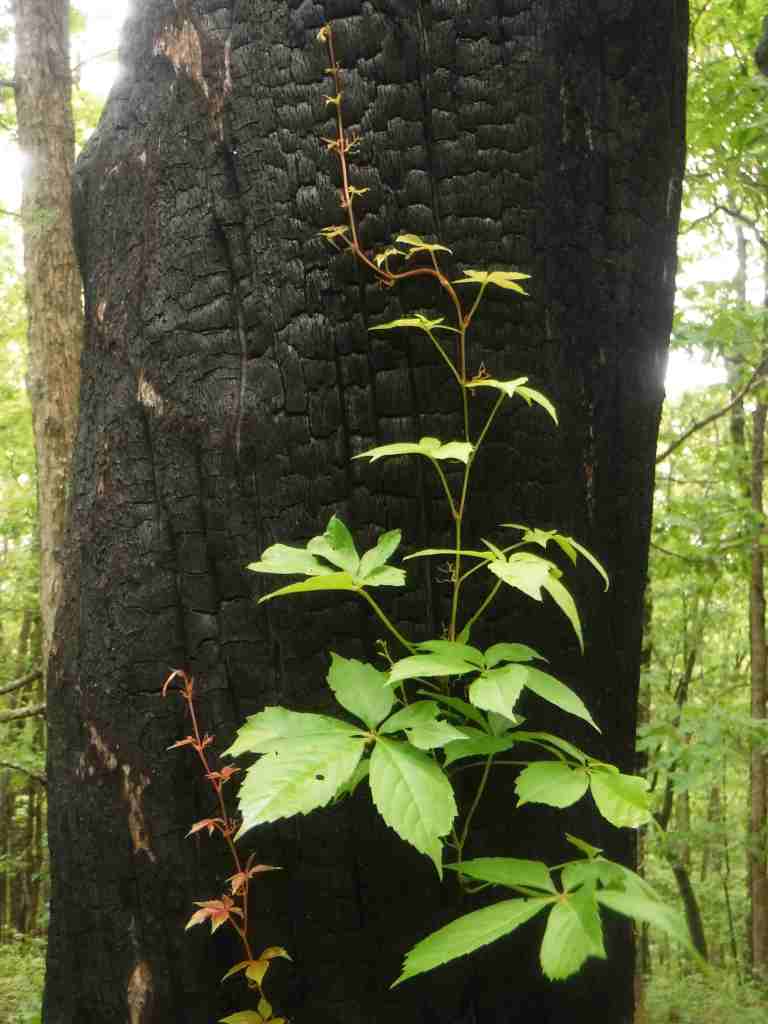
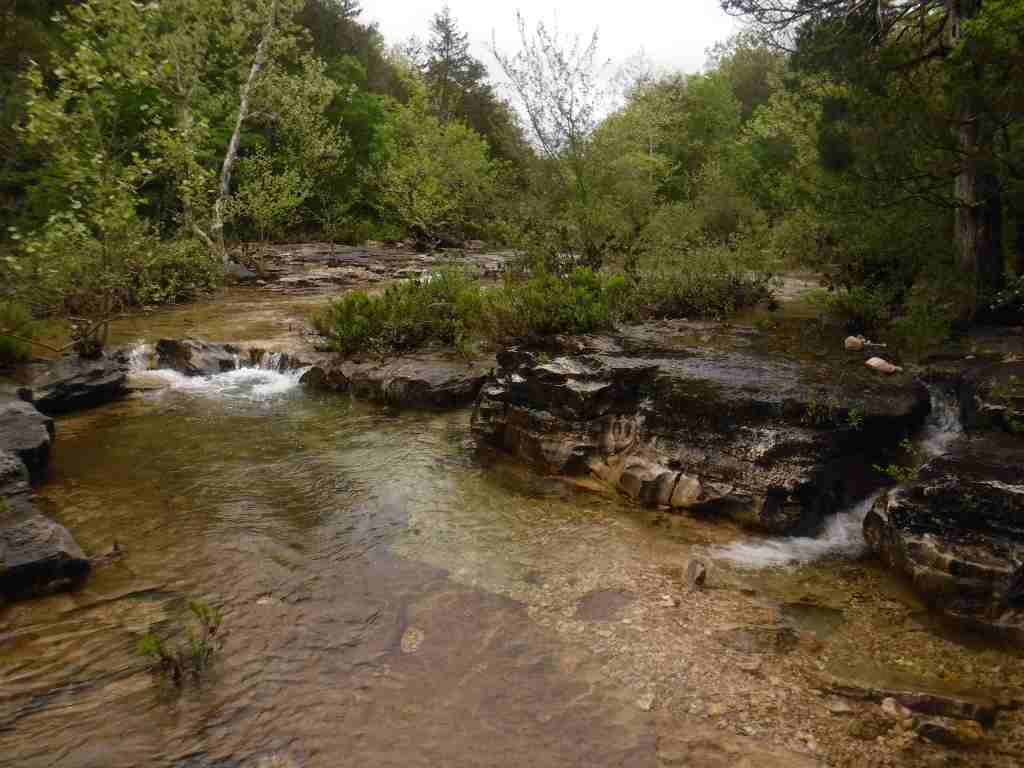
In the 1970s, the more northerly Clark National Forest in Missouri was administratively combined with Mark Twain National Forest, encompassing 11% of the state’s forests across 29 counties.  Much of the forest was planted by the Civilian Conservation Corps (CCC), with their work still visible at the Rolla Ranger Station and Winona Ranger Station Historic Districts.  Spread across nine separate units throughout southern Missouri’s Ozark Mountains, Mark Twain National Forest’s Karst topography is full of caves, sinkholes, streams, and springs.  Greer Spring is the second largest in Missouri with a daily flow of 222-million gallons as it drains 1.25 miles into the Eleven Point National Scenic River.  Greer Spring is accessible by a one-mile trail downhill from Highway 19, but no fishing or wading is allowed.
Highlights

Glade Top Trail Scenic Byway, Blue Buck Knob Scenic Byway, Greer Spring, Table Rock Lake, Council Bluff Recreation Area, Overcup Oak Sink, Silver Mine Recreation Area, Bellevue Trail, Cedar Creek Trail, Devil’s Backbone Trail, Ridge Runner National Recreation Trail, Big Piney Trail, Ozark Trail

Must-Do Activity

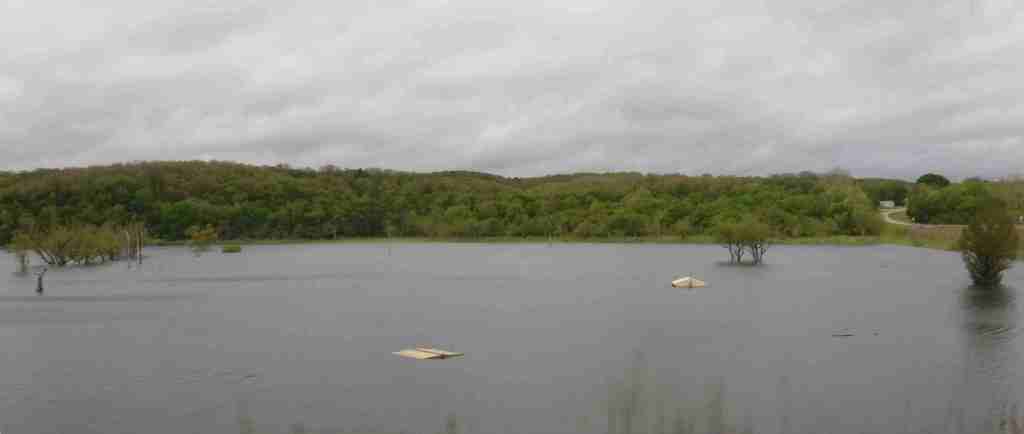
Most trails in Mark Twain National Forest are open to hikers, mountain bikers, and equestrians, including Ridge Runner National Recreation Trail that totals 33 miles.  Two areas at Chadwick and Sutton Bluff are designated for ATV, UTV, and motorcycle use.  Fishing is a popular activity on the Eleven Point National Scenic River and numerous lakes, like Noblett Lake and Table Rock Lake.  There are so many recreation areas spread around this massive National Forest, it is impossible to cover them all here.  We recommend you start with one of the spots listed under Highlights above.

Best Trail

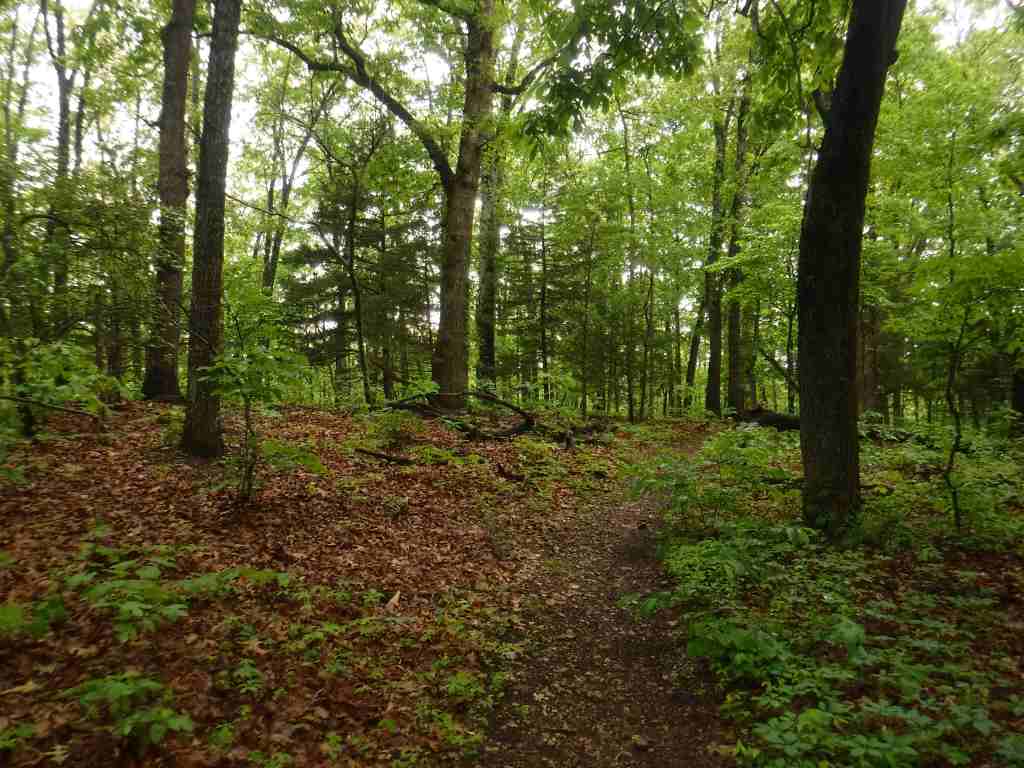
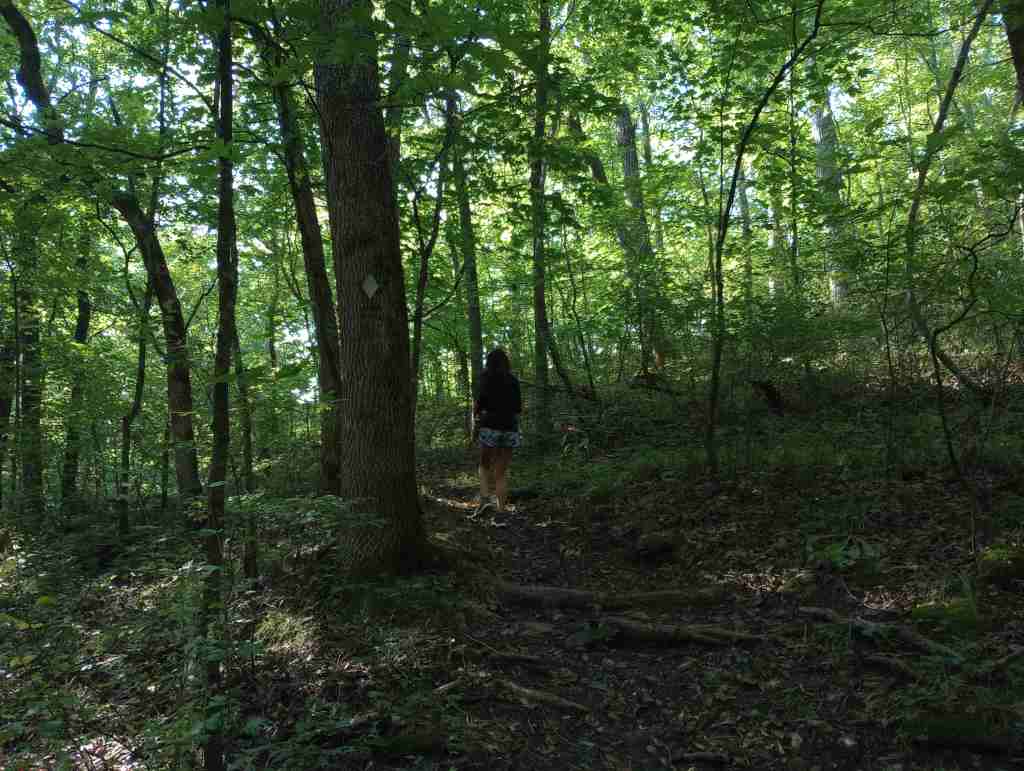
Mark Twain National Forest has several long trails that explore its 78,000 acres of Wilderness areas, including sections of the 350-mile Ozark Trail.  Northeast of Branson, Hercules-Glades Wilderness protects 12,413 acres of forested hillsides, limestone outcroppings, and glades of native grasses.  There are three trailheads on the edge of the Wilderness, but we chose Blair Ridge because of its paved access 5.3 miles off Highway 160.  From a small roadside parking area, the trail follows a ridgeline for 1.2 miles to some excellent backpacking campsites that overlook the countryside before it drops 600 feet in the next mile.  At that point the trail intersects with Coy Bald Trail, which can be taken a short distance to a small scenic waterfall on Long Creek.

Watchable Wildlife

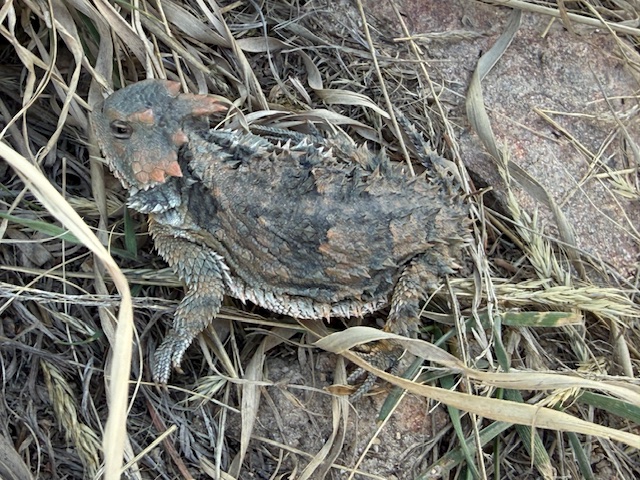
The Ozark Mountains provide habitat for common eastern species like white-tailed deer, wild turkeys, gray squirrels, cottontail rabbits, red foxes, and raccoons.  You may also encounter venomous copperheads, timber rattlesnakes, and pygmy rattlesnakes.  The oak savannahs are home to several endemic plants, as well as prickly pear cacti and animals more associated with the Southwest U.S., like roadrunners, collared lizards, scorpions, and tarantulas.  Gamefish include smallmouth bass, largemouth bass, rock bass, walleye, and rainbow trout.

Photographic Opportunity

Between Jefferson City and Columbia, Pine Ridge Recreation Area accesses Cedar Creek Trail, which has multiple trailheads and four loops totaling 36 miles.

Peak Season

Spring and fall

Fees

There are day use fees at several sites, including $5 at Noblett Lake and $2 at Blue Hole Trailhead and North Fork Recreation Area

Road Conditions

Many of the curvy back roads in Mark Twain National Forest are paved, such as Blair Ridge that led to a trailhead 5.3 miles off Highway 160.  There are likely some rough unpaved roads in the Ozarks, so check road conditions before departing.

Camping

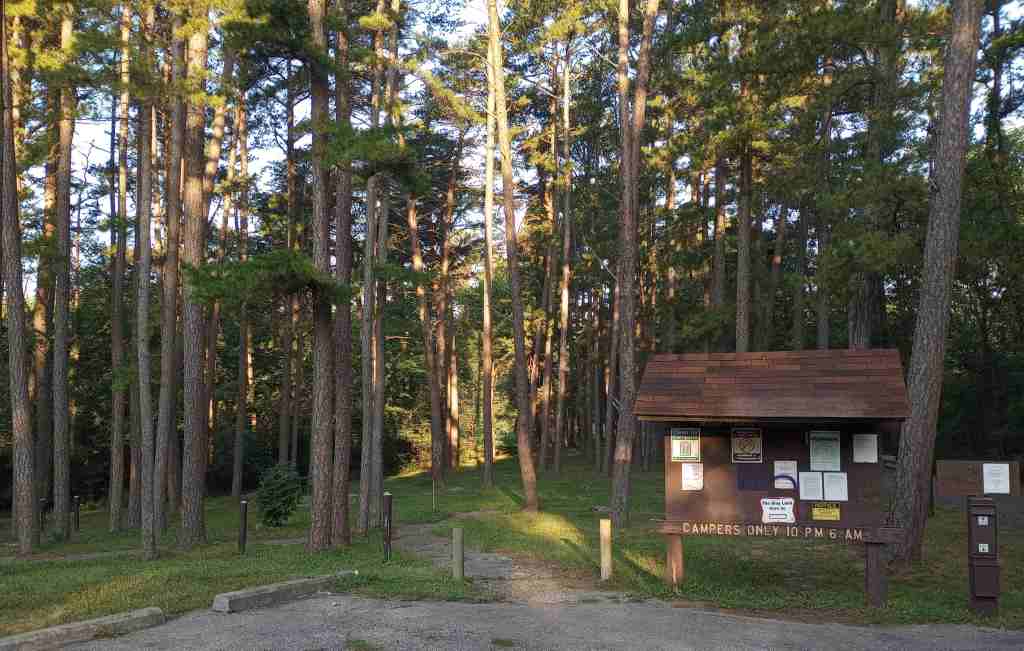
There are numerous campgrounds in Mark Twain National Forest, although it can be harder to find good dispersed campsites due to the proximity to private land.  In the northernmost area outside Columbia, we paid to camp in the quiet Pine Ridge Recreation Area.  On the edge of the Hercules-Glades Wilderness at the Hercules Tower (with restrooms) and Coy Bald Trailheads, there are a handful of car camping sites for free. 

Wilderness Areas

Bell Mountain Wilderness

Devils Backbone Wilderness

Hercules-Glades Wilderness

Irish Wilderness

Paddy Creek Wilderness

Piney Creek Wilderness

Rockpile Mountain Wilderness

Related Sites

Ozark National Scenic Riverways (Missouri)

George Washington Carver National Monument (Missouri)

Ozark National Forest (Arkansas)

Nearest National Park

Gateway Arch

Conifer Tree Species

shortleaf pine, eastern redcedar

Flowering Tree Species

sweetgum, water tupelo, sugar maple, red maple, boxelder, honeylocust, Ohio buckeye, red buckeye, black cherry, sassafras, persimmon, Kentucky coffee tree, black gum, blackjack oak, Nuttall oak, overcup oak, white oak, black oak, scarlet oak, post oak, black hickory, shagbark hickory, mockernut hickory, bitternut hickory, brookside alder

Explore More – Mark Twain National Forest’s Greer Spring is the second largest natural spring in Missouri, so which one is in first place?

Learn more about this and the 154 other National Forests in our new guidebook Out in the Woods

Manistee National Forest

Manistee National Forest

Michigan

Managed by U.S. Forest Service, Eastern Region

1,331,673 acres (540,322 federal/ 791,351 other)

Website: https://www.fs.usda.gov/r09/huron-manistee

Overview

Even though they are on opposite sides of Michigan’s Lower Peninsula, Manistee and Huron National Forests have been co-managed since 1945.  Only seven years earlier, Manistee National Forest was created from tax-forfeited lands and purchases of logged forests unsuitable for farming, so it is remains a mosaic of private and public lands.  Much of this area was replanted by the Civilian Conservation Corps (CCC) and many of those trees are now very large.  It contains the highest point on Michigan’s Lower Peninsula, 1,706-foot Briar Hill, which has no marked trails to the summit and obstructed views from the top.  It is also home to Caberfae Peaks Ski Resort, which receives high accumulations of lake-effect snow and is one of the oldest ski resorts in the U.S. opened in 1938. 

Highlights

Pere Marquette National Scenic River, Nordhouse Dunes, Newaygo Prairies, Caberfae Winter Sports Area, Udell Rollways, Briar Hill, Manistee River Trail, North Country National Scenic Trail

Must-Do Activity

Manistee National Forest is popular for hiking, fishing, camping, boating, snowmobiling, cross-country skiing, and hunting.  The National Forest’s primary visitor attractions are the Nordhouse Dunes along Lake Michigan and Loda Lake National Wildflower Sanctuary, a 1,000-acre area set aside in 1938 to grow native plants.  The 6,270-acre sand dunes complex around Big Sable Point on Lake Michigan was formed 3,500 years ago and reaches 140 feet in height above lake level.  The southern portion is contained within Ludington State Park and the northern half is managed by the Forest Service. 

Best Trail

We accessed the Nordhouse Dunes from the Arrowhead Trailhead (fee), nine miles on paved West Forest Trail Road from Highway 31.  We hiked a 2.7-mile loop by connecting the Middle Trail to the Arrowhead/ Nipissing Trail then following the shoreline back.  We passed dozens of backpackers camping on the beach, mostly ignoring the requirement to stay 400 feet from Lake Michigan and 100 feet from trails.  The North Country National Scenic Trail passes through Manistee National Forest and can be connected with the 11-mile-long Manistee River Trail to make a 23-mile loop.

Watchable Wildlife

The Nordhouse Dunes encompass the largest area of freshwater interdunal ponds in the world, home to the federally endangered pitcher’s thistle.  On the Lake Michigan shoreline, the dune grass provides habitat for endangered piping plovers.  More common species are white-tailed deer, coyote, red fox, porcupine, and raccoon, and the occasional black bear and bobcat.  A variety of gamefish are found in the Manistee River, Lake Michigan, and smaller ponds.

Photographic Opportunity

The rows of trees in the red pine plantations make for some interesting photographic subjects.

Peak Season

Summer

Fees

There is a $5 day use fee (or $15 for a week) to park at trailheads for the Nordhouse Dunes Wilderness with automated fee collection station available at Nurnberg Trailhead, or you can hang an America the Beautiful pass in your vehicle.

Road Conditions

The main roads are paved from Highway 31 to access the Nordhouse Dunes Wilderness; Nurnberg Trailhead in the southeast corner is open year round and Lake Michigan Recreation Area in the north is gated in the offseason. 

Camping

There is a 102-site campground near the trailhead within Lake Michigan Recreation Area, but dispersed car camping is allowed to the east on the sandy side roads off West Forest Trail Road.  It seems that backpackers in the Nordhouse Dunes area ignore the requirement to stay 400 feet from the lake and 100 feet from trails. 

Wilderness Areas

Nordhouse Dunes Wilderness

Related Sites

Huron National Forest (Michigan)

Sleeping Bear Dunes National Lakeshore (Michigan)

River Raisin National Battlefield Park (Michigan)

Nearest National Park

Indiana Dunes

Conifer Tree Species

red pine, jack pine, eastern white pine, eastern hemlock, arborvitae, tamarack, black spruce

Flowering Tree Species

northern red oak, black oak, white oak, red maple, paper birch, yellow birch, American beech, black cherry, green ash, bigtooth aspen, sassafras, witch hazel    

Explore More – How is the Ojibwe word Manistee translated into English?

Learn more about this and the 154 other National Forests in our new guidebook Out in the Woods

Natchez Trace Parkway

Natchez Trace Parkway

Mississippi-Alabama-Tennessee

Managed by National Park Service

Established 1938

52,302 acres

Website: nps.gov/natr

Overview

The Natonal Park Service (NPS) administers the Natchez Trace Parkway, a two-lane All-American Road that extends 444 miles from Natchez, Mississippi to Nashville, Tennessee.  The trace started as a game trail that was utilized as an American Indian footpath.  Some of the mound builder sites protected here were inhabited when Hernando de Soto led the first Europeans into this area in 1540.  The Natchez Trace was heavily used in the 1800s by “Kaintuck” flatboatmen returning from New Orleans who left the Mississippi River from Natchez, Mississippi and continued on foot north to Kentucky and beyond.  Today you can still follow portions of the sunken trail worn down by travelers for centuries.  The parkway began as a Civilian Conservation Corps (CCC) project during the Great Depression and the final two segments were completed in 2005.

Highlights

Rocky Springs, Owens Creek Waterfall, Emerald Mound, Mount Locust, Chickasaw Village, Meriwether Lewis Monument and Gravesite, Cypress Swamp Walk, Witch Dance Horse Trail, Natchez Trace National Scenic Trail

Must-Do Activity

Near Tupelo, the Parkway Visitor Center at Milepost 266 is a must-do stop to learn the history of the trace, and it also serves as the NPS contact station for tiny Brices Cross Roads National Battlefield Site and Tupelo National Battlefield.  There are numerous roadside informational pullouts and trailheads along the route, so use the NPS app or pick up an official “unigrid” map.  You can easily spend days exploring, but at a minimum we recommend you check out Emerald Mound, Mount Locust, Cypress Swamp, and Meriwether Lewis Monument and Grave Site.

Best Trail

Our favorite trail is the Cypress Swamp Walk at Milepost 122, where a boardwalk crosses a scenic tupelo-baldcypress swamp.  The Natchez Trace National Scenic Trail (click here for our blog post) does not follow the entire 444-mile parkway, but exists in five segments totaling 67 miles in length.  There are also 15 miles of equestrian trails at Witch Dance (Milepost 233.2) in Tombigbee National Forest.

Photographic Opportunity

Not far from Natchez National Historical Park, Emerald Mound (a short detour at Milepost 10.3) is the second-largest American Indian ceremonial mound in the U.S.  It stands 35 feet tall and 770 by 435 feet at its base. 

Peak Season

Spring and fall

Hours

https://nps.gov/natr/planyourvisit/hours.htm

Fees

None

Road Conditions

The entire 444-mile Natchez Trace Parkway is paved from Natchez, Mississippi to Nashville, Tennessee with commercial traffic prohibited and a maximum speed limit of 50 miles per hour.  There is a detour from Milepost 181 to 204 due to ongoing construction.  Watch for bicycles and white-tailed deer on the road.

Camping

There are three free NPS campgrounds (at Milepost 54, 193.1, and 385.9) along the route, as well as those in sites like Mississippi’s Tishomingo State Park.  The three NPS campgrounds have water and bathrooms (but no RV hookups), plus there are also five bike-only campsites along the route.  Jeff Busby Campground closed in June 2025 for repairs.

Related Sites

Natchez National Historical Park (Mississippi)

Tupelo National Battlefield (Mississippi)

Brices Cross Roads National Battlefield Site (Mississippi)

Vicksburg National Military Park (Mississippi)

Nearest National Park

Hot Springs

Explore More – When were Ackia Battleground National Monument and Meriwether Lewis National Monument disbanded and added to the Natchez Trace Parkway?

Los Padres National Forest

Los Padres National Forest

California

Managed by U.S. Forest Service, Pacific Southwest Region

1,963,836 acres (1,762,767 federal/ 201,069 other)

Website: http://www.fs.usda.gov/r05/lospadres

Overview

Los Padres National Forest stretches more than 200 miles from Monterrey south beyond Santa Barbara.  It contains most of Big Sur, a name that conjures images of craggy cliffs dropping precipitously into white-capped ocean waves.  This sparsely inhabited stretch of coastline is known as much for its historic bohemians as its coast redwood trees.  It is home to multiple rare tree species with limited native ranges, especially those that can tolerate serpentine soils.  As the only National Forest in California that touches the Pacific Ocean, a road trip down scenic Highway 1 should be on everyone’s bucket list, including stops at Julia Pfeiffer Burns State Park, Bixby Creek Bridge, Hearst Castle State Park, and the elephant seal rookery at Piedras Blancas.  We have hiked many trails here since Scott taught for three years at Cal Poly State University in San Luis Obispo.

Highlights

Big Sur, Sykes Hot Springs, Salmon Creek Falls, Jade Cove, Cuesta Ridge Botanical Area, Figueroa Mountain, Mt. Pinos, Knapp’s Castle, Seven Falls, Sespe Hot Springs

Must-Do Activity

Los Padres National Forest is 48% designated Wilderness, so the recommended activity is to hike into those natural areas.  The Matilija Wilderness is in the Santa Ynez Mountains that loom above the coastal city of Santa Barbara, home to a university, art museum, and historic Presidio built in 1782.  If you go to hike to the ruins of Knapp’s Castle in the National Forest, also make a quick stop at Chumash Painted Cave State Historic Park, which contains colorful pictographs dating back to the 1600s.  Another popular U.S. Forest Service trailhead located closer to town goes either to Inspiration Point or Seven Falls, the latter a better choice on foggy days, which are common on the coast.

Best Trail

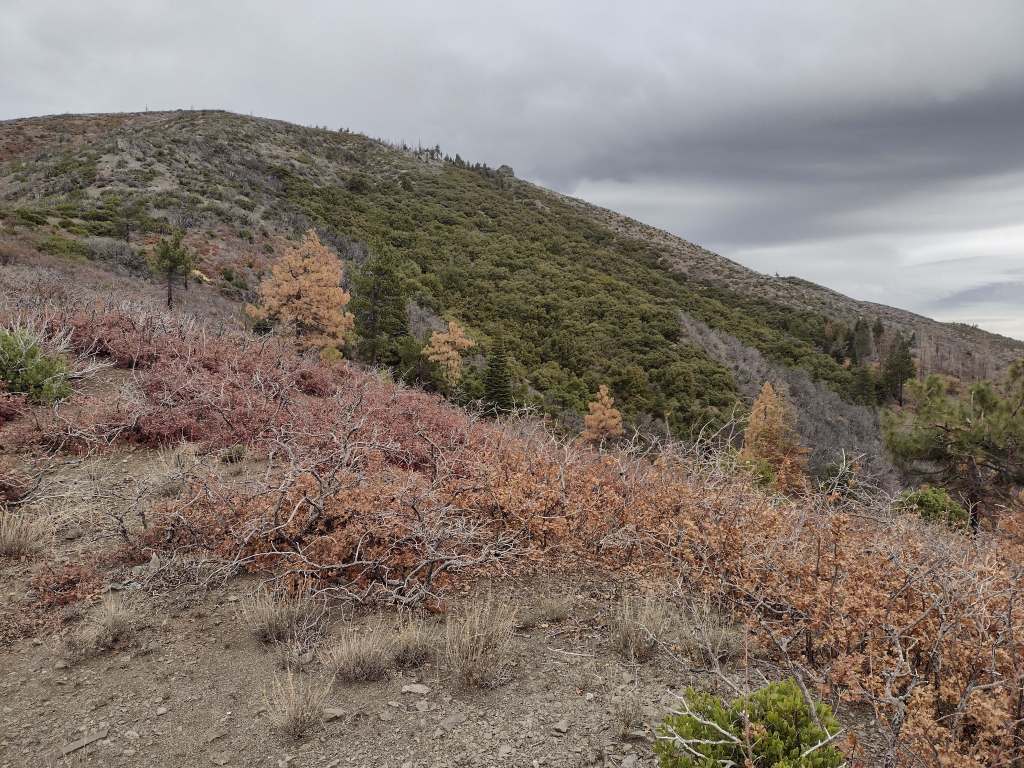
There are 323 miles of incredible hiking trails throughout Los Padres National Forest, including a few that access hot springs.  Our favorite trails are in the Santa Lucia Mountains that tower above Big Sur.  One pinnacle accessible by trail is Cone Peak at 5,155 feet in elevation.  The access road is typically closed in the winter, but when it is open the trail is only 2.3 miles to the summit with a vertical gain of 1,400 feet.  Do not expect any shade since multiple fires have burned most of the mountain, although there are still a few surviving examples of the rare Santa Lucia fir tree.  Although some areas are no longer vegetated, the plentiful sunshine above the fog belt means there are often incredible displays of wildflowers along the trail early in summer, including lupine, sticky monkeyflower, and yucca. 

Watchable Wildlife

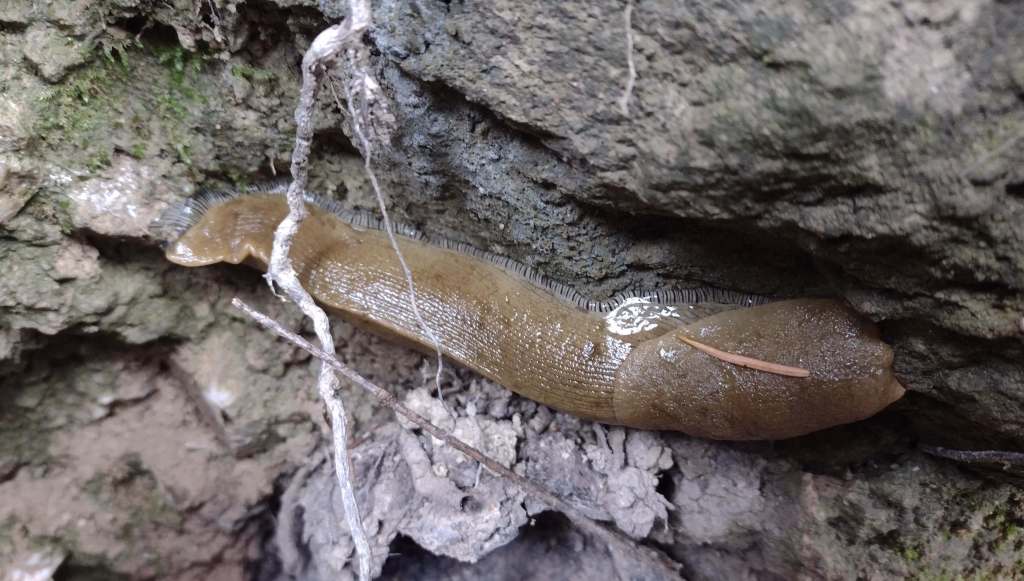
There is a wide range of wildlife found here from sea level up to 8,847 feet in elevation, and the most famous is the reintroduced California condor that nests in the Sespe Condor Sanctuary.  Other birds include barn owls, great horned owls, red-tailed hawks, bald eagles, California quail, and California scrub jays.  Coyotes, black bears, bobcats, mountain lions, black-tailed deer, bighorn sheep, and raccoons are common large mammals.  Species of concern include the foothill yellow-legged frog and California mountain kingsnake.  Look for California newts and banana slugs in the moist understory of coast redwood forests.

Photographic Opportunity

Even if you are not spending the night at Kirk Creek Campground, you can park and walk down the trail to the south that goes past redwood trees to the beach where there is a sea arch and tidepools. 

Peak Season

Fall and winter

Fees

$5 per vehicle Adventure Pass (or America the Beautiful pass) required at most trailheads

Road Conditions

There are some steep unpaved roads in Los Padres National Forest, which can be impassable in wet or snowy conditions.  Portions of the unpaved Tassajara Road to Chews Ridge are narrow and steep, requiring a four-wheel-drive vehicle to reach Tassajara Hot Springs.

Camping

A night spent listening to the ocean waves breaking far below the U.S. Forest Service’s clifftop Kirk Creek Campground is enchanting, which is why it made it on our list of Top 10 Campgrounds in National Forests.  There are 11 campgrounds in total, and a free campfire permit is required if you use a camp stove (which can be obtained online). Sespe Hot Springs is a popular ten-mile one-way backpacking destination.

Wilderness Areas

Chumash Wilderness

Dick Smith Wilderness

Garcia Wilderness

Machesna Mountain Wilderness

Matilija Wilderness

San Rafael Wilderness

Santa Lucia Wilderness

Sespe Wilderness

Silver Peak Wilderness

Ventana Wilderness

Related Sites

Angeles National Forest (California)

Muir Woods National Monument (California)

Point Reyes National Seashore (California)

Channel Islands National Park (California)

Nearest National Park

Pinnacles

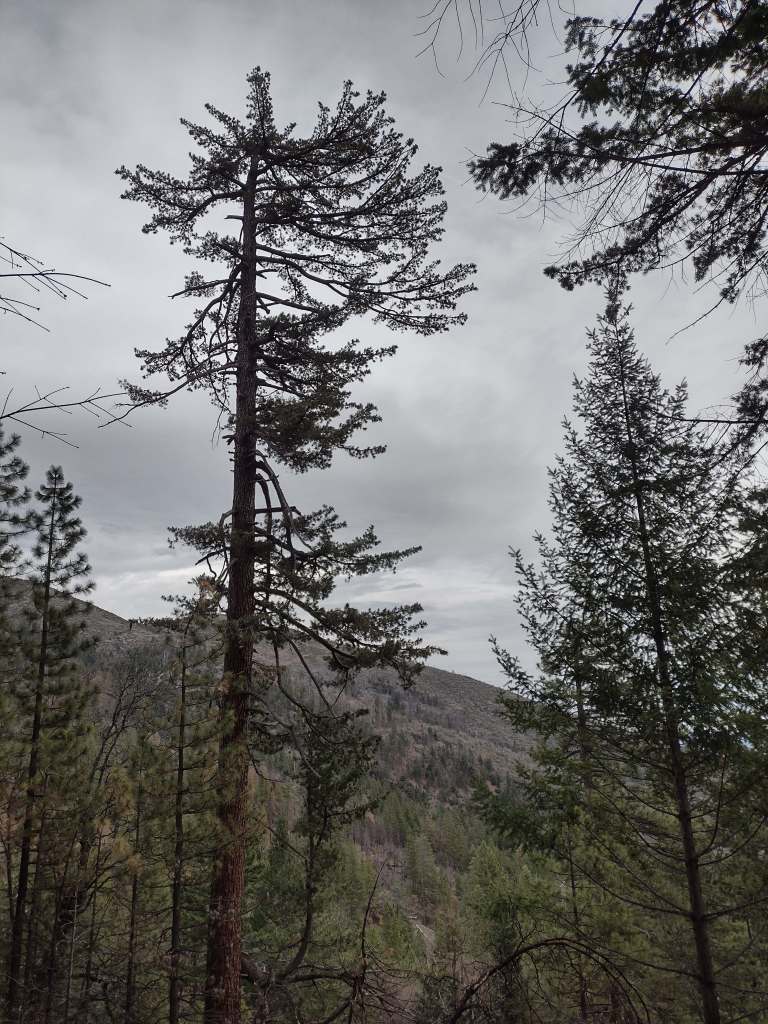
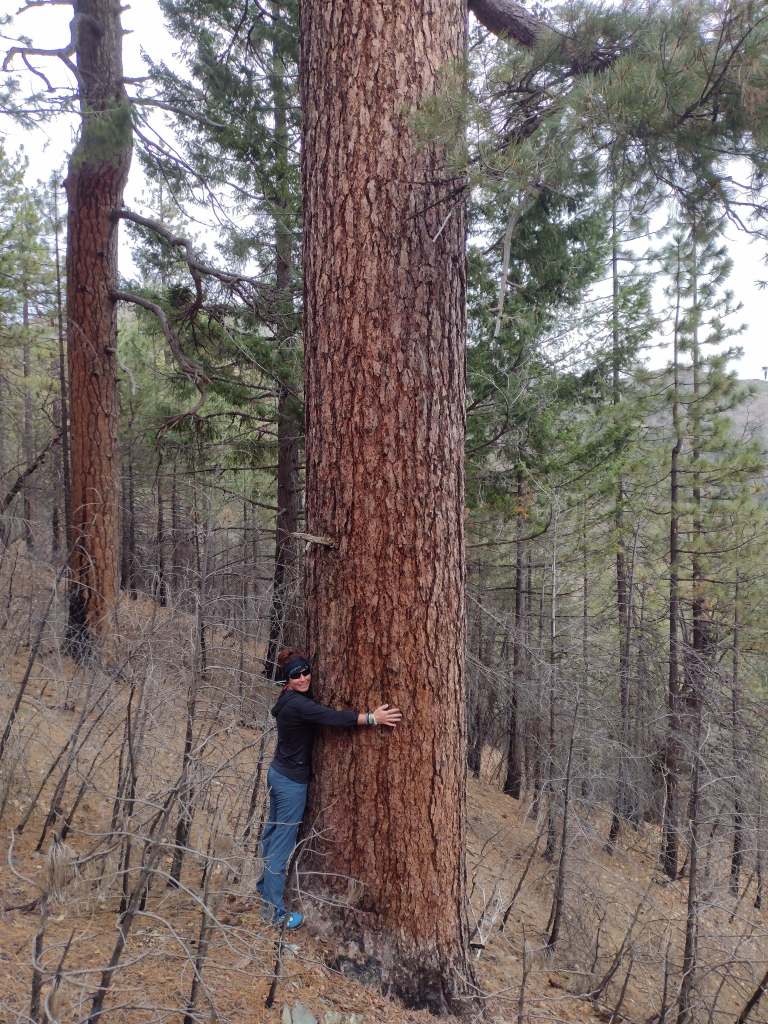
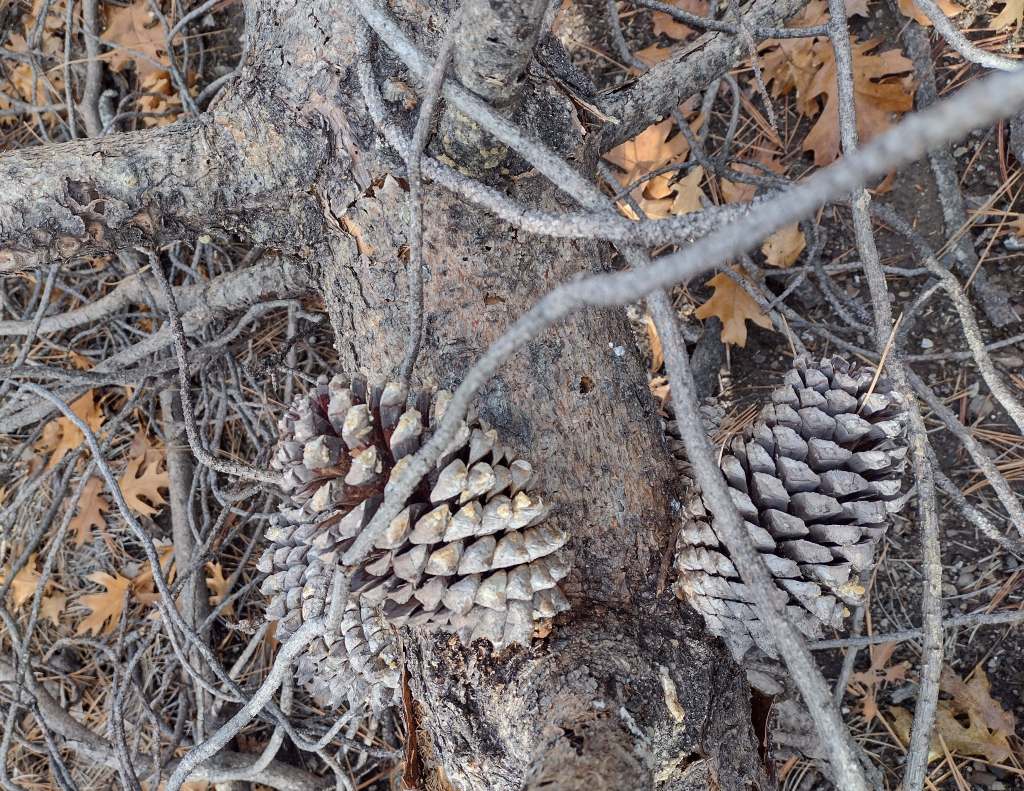
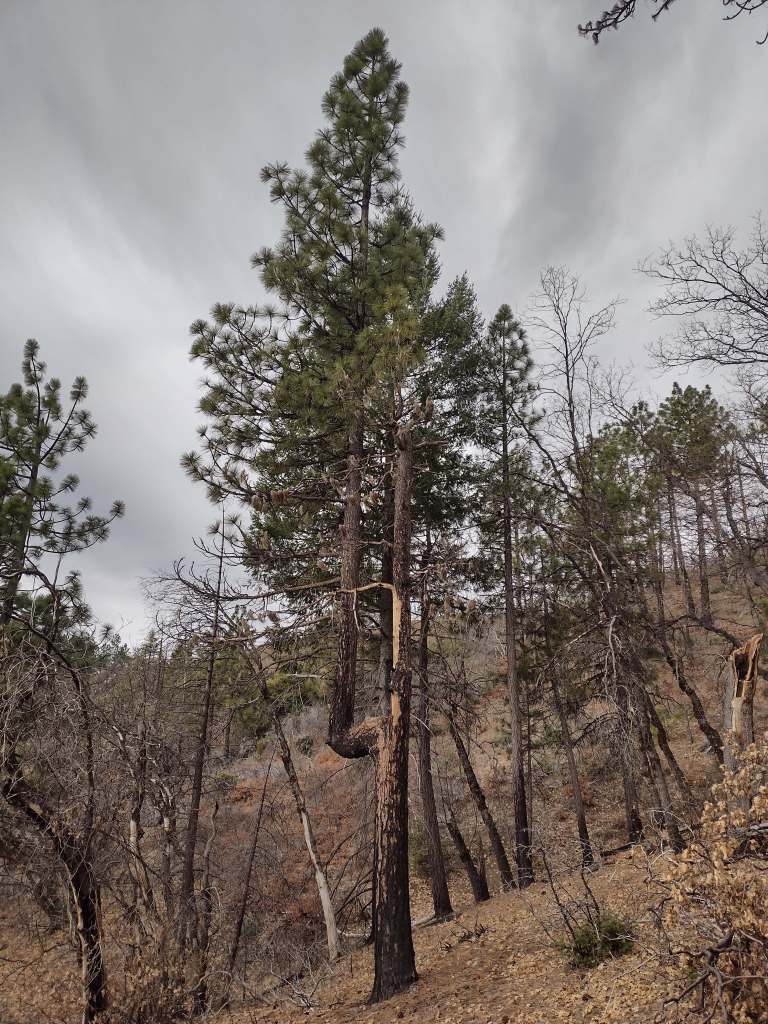
Conifer Tree Species

coast redwood, Monterey pine, Coulter pine, gray pine, Jeffrey pine, ponderosa pine, limber pine, bigcone Douglas-fir, Sargent cypress, Monterey cypress, white fir, Santa Lucia fir

Flowering Tree Species

coast live oak, California black oak, tanoak, western redbud, Pacific madrone, manzanita

Explore More – What is the name of the nomadic group that lived in Big Sur dating back 5,500 years ago?

Lolo National Forest

Lolo National Forest

Montana

Managed by U.S. Forest Service, Northern Region

2,639,224 acres (2,197,966 federal/ 441,258 other)

Website: https://www.fs.usda.gov/r01/lolo

Overview

Located in western Montana, the elevation of Lolo National Forest ranges from less than 2,400 feet on the Clark Fork River below Thompson Falls to the top of 9,186-foot Scapegoat Mountain.  West of Missoula off Interstate 90, the Ninemile Historic Remount Depot preserves a Civilian Conservation Corps (CCC) camp and pack stock training facility.  Founded in 1907, the Savenac Historic Tree Nursery Area is also well developed for visitors, including an arboretum and cabin rentals in what were formerly the cookhouse and bunkhouse. 

Highlights

Rattlesnake National Recreation Area, Lolo Pass Visitor Center, Lolo National Historic Trail, Fort Fizzle, Blue Mountain Recreation Area, Cascade Falls, Savenac Nursery, Petty Creek Bighorn Sheep Viewing Site, Clearwater Canoe Trail, Stark Mountain Vista, Lewis and Clark National Historic Trail

Must-Do Activity

Lolo National Forest surrounds Missoula, where the Aerial Fire Depot and Smokejumper Center offers guided tours and exhibits.  Right outside of the city are numerous hiking trails in Blue Mountain Recreation Area and Rattlesnake National Recreation Area, which contains 73 miles of trails (and has its own blog entry on our website).  Following a path used by the Corps of Discovery in 1805, the Lolo National Historic Trail shadows Highway 12 west into Idaho (see Clearwater National Forest). Take time to stop at the Lolo Pass Visitor Center managed by the U.S. Forest Service.

Best Trail

Morrell Falls National Recreation Trail leads to a 90-foot-tall waterfall on the western slope of the Swan Range.  The trail is 5.5 miles out-and-back, mostly flat with some short inclines as it cuts through a burned area now full of beargrass and fireweed.  The waterfall cascades down a rocky outcrop and is well lit in the afternoon.  The trailhead is located 7.5 miles from Highway 83 on a good gravel road that has well-signed intersections.  Also nearby, the Pyramid Pass Trailhead provides access to the Bob Marshall Wilderness in adjacent Flathead National Forest.

Watchable Wildlife

There are 60 species of mammals found in Lolo National Forest, including grizzly/brown bears, black bears, mountain lions, gray wolves, mountain goats, bighorn sheep, elk, moose, and mule deer.  Among the largest of the more than 300 birds spotted are bald eagles, golden eagles, and trumpeter swans.  The five rivers and over 100 lakes are home to 30 varieties of ducks and 20 types of fish.

Photographic Opportunity

Located on the western slope of the Swan Range, 90-foot-tall Morrell Falls is accessed on a 5.5-mile out-and-back hike.

Peak Season

Summer

Fees

None

Road Conditions

The unpaved roads we took were in good shape to Morrell Falls National Recreation Trail and Rattlesnake National Recreation Area.

Camping

The forest has 12 improved campgrounds and several historic fire lookout towers available for overnight rental through the website Recreation.gov

Wilderness Areas

Rattlesnake Wilderness

Scapegoat Wilderness (also in Helena and Lewis and Clark National Forests)

Selway-Bitterroot Wilderness (also in Bitterroot, Clearwater, and Nez Perce National Forests)

Welcome Creek Wilderness

Related Sites

Deerlodge National Forest (Montana)

Upper Missouri River Breaks National Monument (Montana)

Beaverhead National Forest (Montana)

Nearest National Park

Glacier

Conifer Tree Species

western redcedar, alpine larch, western larch, whitebark pine, ponderosa pine, grand fir, subalpine fir, Engelmann spruce, mountain hemlock

Flowering Tree Species

quaking aspen, Rocky Mountain maple, western serviceberry

Explore More – What is the origin of the name Lolo?

Learn more about this and the 154 other National Forests in our new guidebook Out in the Woods