Tag Archives: wilderness

Beaverhead National Forest

Beaverhead National Forest

Montana

Managed by U.S. Forest Service, Northern Region

2,199,013 acres (2,130,671 federal/ 68,342 other)

Website: https://www.fs.usda.gov/bdnf

Overview

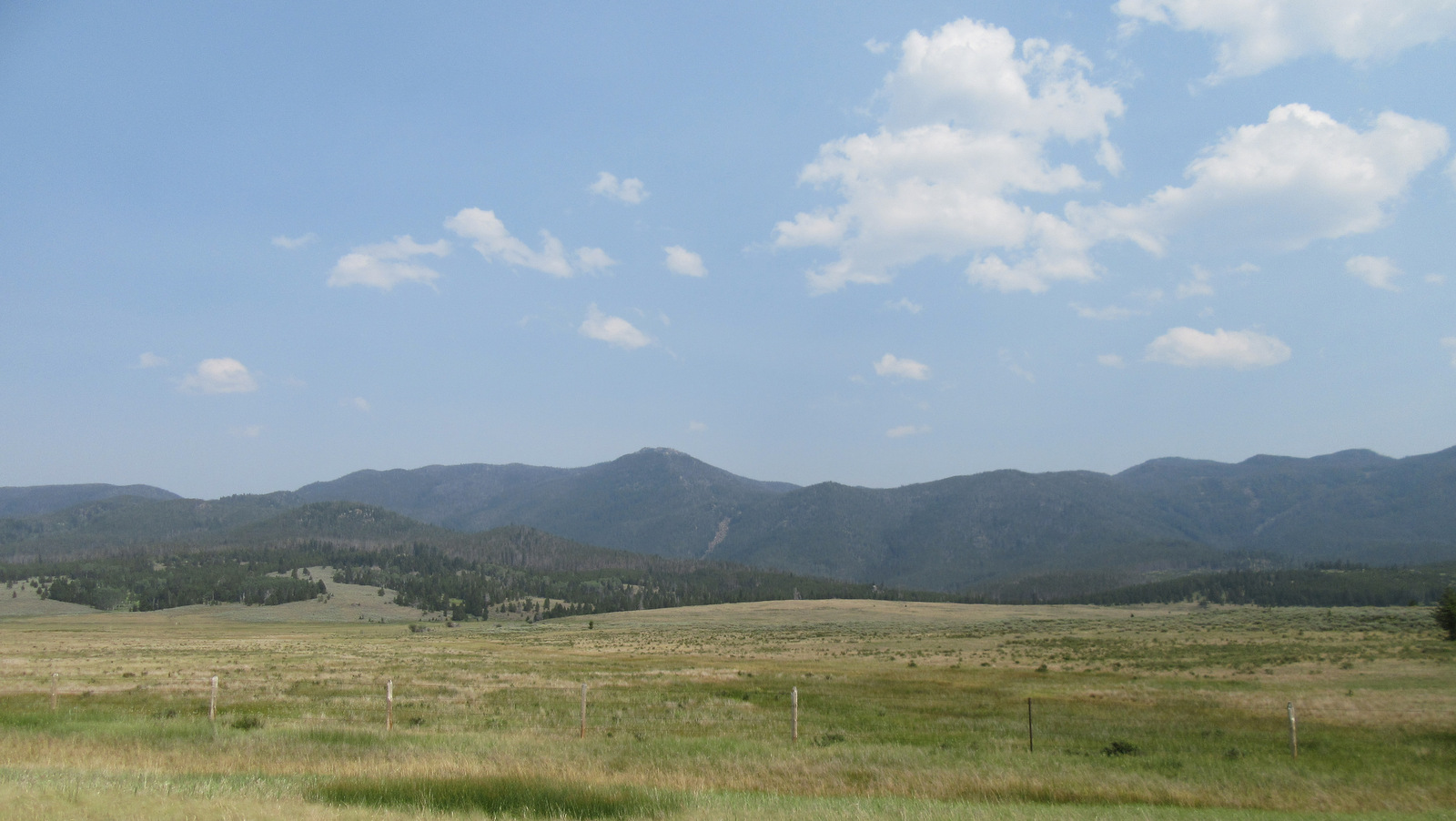
Co-managed since 1996, Beaverhead-Deerlodge National Forest is spread across multiple mountain ranges in the southwest corner of Montana.  The dividing boundaries between the two forests are unclear, though Beaverhead National Forest tends to be more southeast than Deerlodge National Forest and includes portions of the Beaverhead, Bitterroot, Centennial, Gravelly, Madison, Pioneer, Tendoy, and Tobacco Root Mountains.  Bordering Idaho’s Salmon National Forest, 7,323-foot Lemhi Pass is located on the Lewis and Clark National Historic Trail.  This is where the Corps of Discovery crossed the Continental Divide in 1805 and is why the Sacajawea Memorial Area was established here in 1932.

Highlights

Pioneer Mountains Scenic Byway, Lemhi Pass, Sacajawea Memorial, Chief Joseph Pass, Pintler Falls, Upper Potosi Hot Springs, Charcoal Kilns, Gravelly Range Auto Tour, Nez Perce National Historic Trail, Continental Divide National Scenic Trail

Must-Do Activity

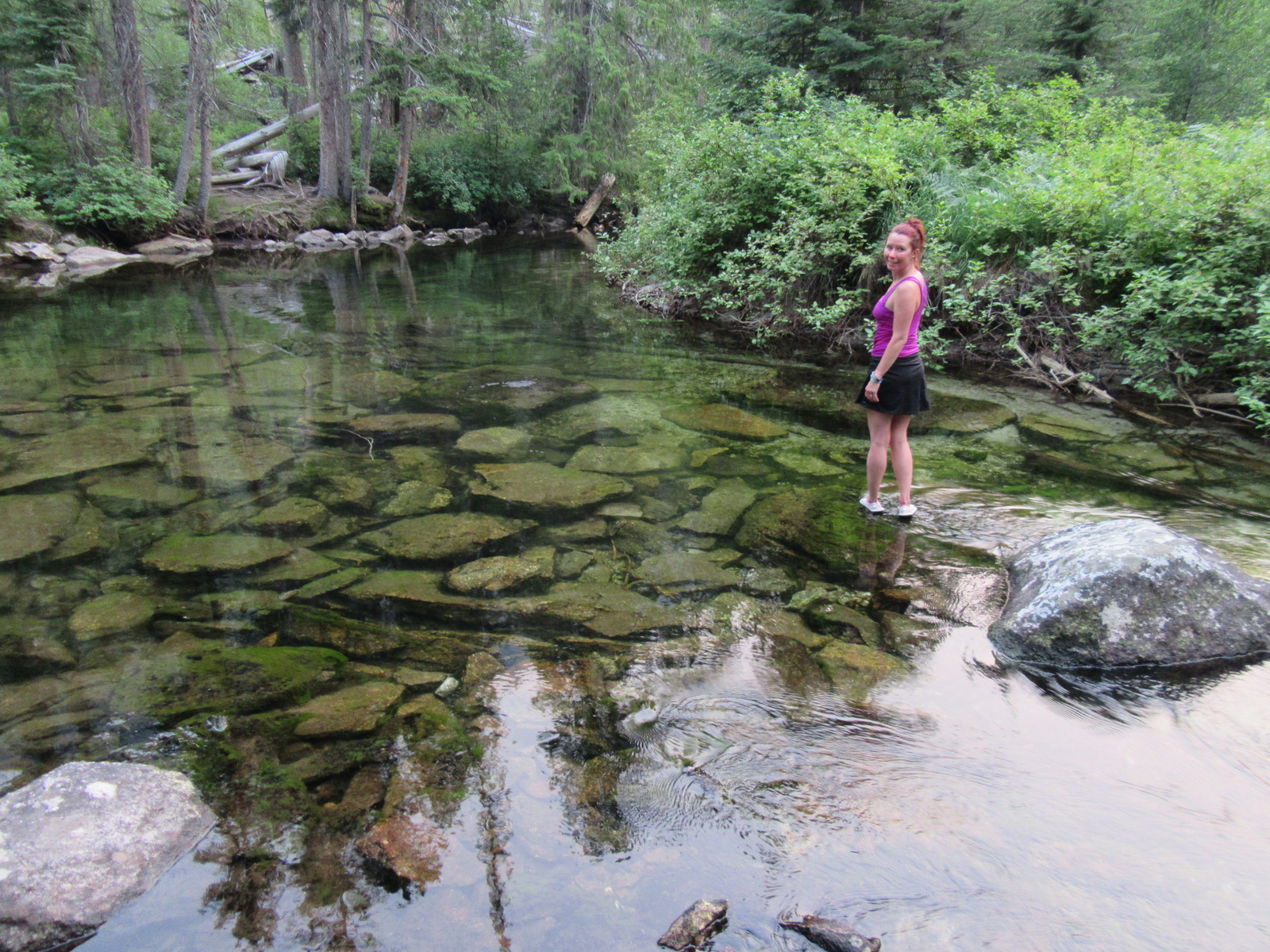
It is about a 17-mile drive from Harrison, Montana back to the free Potosi Campground, but it is well signed and worth the effort.  From here a 0.8-mile trail leads to Upper Potosi Hot Springs, a clear 100°F pool with room for about six adults.  Further west, about ten miles north of Highway 278, is the privately owned Elkhorn Hot Springs (fee), a great place to relax after hiking around Big Hole National Battlefield (managed by the National Park Service).  If you keep driving north on Wise River Polaris Road (FR 484), there are plenty of dispersed campsites and trailheads for several long hikes into the Pioneer Mountains.

Best Trail

We only hiked less than a mile trail to Upper Potosi Hot Springs, but that trail keeps climbing three miles to the top of the ridge.  We read good reviews for Louise Lake National Recreation Trail (see note on Road Conditions below), Pioneer Lake National Recreation Trail, Browns Lake Trail, Blue Creek Trail, Sand Lake/Lily Lake Trail, and Gold Butte Trail.  Hopefully we will make it back here to go backpacking someday.

Watchable Wildlife

Beaverhead National Forest still has most of its pre-settlement carnivores: grizzly bears, black bears, mountain lions, Canadian lynx, coyotes, and gray wolves.  Grazing ungulate species include moose, elk, mule deer, white-tailed deer, bighorn sheep, mountain goats, and pronghorns.  We saw bald eagles and ospreys on our drive out from Upper Potosi Hot Springs.  Mountain whitefish, golden trout, cutthroat trout, rainbow trout, brook trout, lake trout, arctic grayling, and burbot are some of the gamefish sought by fishermen.

Instagram-worthy Photo

The ruins of a developed hot springs resort (located on private land) are visible from Upper Potosi Hot Springs.  Watch for moose downhill in South Willow Creek and a cute little garter snake that hangs out in the rocks by the pool (possibly year round if it stays warm enough not to hibernate).

Peak Season

Summer

Fees

None

Road Conditions

The dirt roads to Potosi Campground and over Lemhi Pass are both in very good condition, but we do not know about all the other dirt roads that cross the Continental Divide.  We read the access road to Louise Lake National Recreation Trail is pretty rough, requiring four-wheel drive the last two miles.

Camping

There are more than 20 spots to set up at Potosi Campground, which is free and located near the trailhead for Upper Potosi Hot Springs.  You will want a high-clearance vehicle to drive across South Willow Creek to the official trailhead, but there are also pedestrian bridges.

Wilderness Areas

Anaconda-Pintler Wilderness (also in Deerlodge and Bitterroot National Forests)

Lee Metcalf Wilderness (also in Gallatin National Forest)

Related Sites

Deerlodge National Forest (Montana)

Big Hole National Battlefield (Montana)

Grant-Kohrs Ranch National Historic Site (Montana)

Nearest National Park

Yellowstone (Wyoming-Montana-Idaho)

Conifer Tree Species

lodgepole pine, whitebark pine, ponderosa pine, Douglas-fir, Engelmann spruce, subalpine fir, subalpine larch

Flowering Tree Species

quaking aspen, balsam poplar, Bebb willow, sagebrush

Explore More – How tall is Hilgard Peak, the highest point in Beaverhead National Forest?

Ashley National Forest

Ashley National Forest

Utah, Wyoming

Managed by U.S. Forest Service, Intermountain Region

1,402,656 acres (1,382,346 federal/ 20,310 other)

Website: https://www.fs.usda.gov/ashley

Overview

Ashley National Forest is located on the Utah-Wyoming border and includes the High Uintas Wilderness and Flaming Gorge National Recreation Area (which we will discuss in our next blog post).  The Uinta Mountains are a popular destination for campers, hikers, mountain bikers, horseback riders, and anybody who is into magnificent mountain peaks and picturesque lakes.  It is one of the few east-west running ranges in North America and includes the highest point in Utah: 13,528-foot tall Kings Peak.  In 2019, Congress set aside 173,475 acres of the National Forest as the Ashley Karst National Recreation and Geologic Area, the first such designation in the U.S.

Highlights

Flaming Gorge National Recreation Area, Red Cloud Loop Scenic Backway, Flaming Gorge-Uinta Scenic Byway, Indian Canyon Scenic Byway, Outlaw ATV Trail, Moon Lake, Strawberry Peak, Swett Ranch, Kings Peak, Highline Trail

Must-Do Activity

The High Uintas Wilderness is a premier backpacking destination with numerous lakes and 545 miles of trails.  The Wilderness is actually found in both the Wasatch and Ashley National Forests, but not Uinta National Forest.  Even if that makes sense to you, you will probably still need a good map to navigate your way to the highest point in Utah.  Summiting Kings Peak is a minimum 30 miles roundtrip from the Henrys Fork Trailhead in Wasatch National Forest to the north, and even further from the southern trailheads.

Best Trail

We backpacked into the High Uintas Wilderness on a 41-mile lollipop loop leaving from the Uinta Canyon Trailhead.  The first portion along the Uinta River Trail was flat, then started climbing when we split off on the Chain Lakes-Atwood Trail to cross Roberts Pass and Trail Rider Pass into Painter Basin, a beautiful area that sits below Kings Peak.  At more than 90 miles in length, the Highline Trail runs east-west through the area and is accessible from many side-trails, including the ones we were on.

Watchable Wildlife

Flaming Gorge Reservoir is known for its large population lake trout, as well as kokanee salmon, rainbow trout, brown trout, smallmouth bass, channel catfish, and burbot.  The reservoir also hosts a large nesting colony of ospreys, as well as many other raptors.  In the mountains, watch for moose, elk, mule deer, mountain goats, and black bears.

Instagram-worthy Photo

Leaving from the Uinta Canyon Trailhead, after about an hour of walking the Uinta River Trail reaches a bridge across its namesake.  The river is popular with fisherman and we spotted a moose grazing near the water.

Peak Season

Summer

Fees

Every boat launch and day-use area in Flaming Gorge National Recreation Area requires a recreation pass ($5 per day, $15 per week) or America the Beautiful pass, but there is no charge to drive the Flaming Gorge-Uinta Scenic Byway or cross the dam.  We did not encounter any fees in the rest of Ashley National Forest, except in campgrounds.

Road Conditions

The 82-mile Flaming Gorge-Uinta Scenic Byway is paved the whole way, but there are many unpaved roads off it including access to popular Red Canyon and Sheep Creek National Geological Area.  Many roads are closed seasonally, like Red Cloud Loop and Spirit Lake Scenic Backways.

Camping

There are numerous campgrounds on and off the lake in Flaming Gorge National Recreation Area, mostly open May to September, although Dripping Springs is open year round.  There are also campgrounds near most of the trailheads that access the High Uintas Wilderness.  We found dirt roads off Highway 191 to be packed with dispersed campers and RVs in mid-July 2020.

Wilderness Areas

High Uintas Wilderness (also in Wasatch National Forest)

Related Sites

Dinosaur National Monument (Utah-Colorado)

Timpanogos Cave National Monument (Utah)

Fossil Butte National Monument (Wyoming)

Nearest National Park

Arches (Utah)

Conifer Tree Species

lodgepole pine, limber pine, ponderosa pine, pinyon pine, Douglas-fir, subalpine fir, white fir, Engelmann spruce, Rocky Mountain juniper

Flowering Tree Species

quaking aspen, blue elderberry, Gambel oak, bigtooth maple, boxelder, western birch, red osier dogwood, narrowleaf cottonwood, sagebrush

Explore More –Ashley National Forest is named after whom?

Apache National Forest

Apache National Forest

Arizona, New Mexico

Managed by U.S. Forest Service, Southwestern Region

1,876,891 acres (1,813,601 federal/ 63,290 other)

Website: https://www.fs.usda.gov/main/asnf/home

Overview

Growing up in Arizona, we only ever heard this referred to as Apache-Sitgreaves National Forest since it was merged in 1974.  The more eastern Apache National Forest section represents about 69% of the combined forests total acreage and partly spills into New Mexico.  On its west side it borders the Fort Apache and the San Carlos Indian Reservations, only containing one side of Mt. Baldy (which is famous for its ski resort).  The National Forest contains the eastern portions of the White Mountains and Mogollon Rim, a forested escarpment that cuts 200 miles across much of the state of Arizona.

Highlights

Coronado Trail Scenic Byway, Mt. Baldy, Butler Canyon, Escudilla National Recreation Trail, Hannagan Meadow, Chitty Canyon, Big Tree Trail, Eagle National Recreation Trail

Must-Do Activity

The Coronado Trail Scenic Byway (Highway 191) is a narrow, winding paved road that runs 120 miles north-south through Apache National Forest and is the best way to explore.  Near the northern end of the highway, a steep unpaved road leads east up to the trailhead for Escudilla National Recreation Trail.  A fire burned the 10,912-foot mountain that the trail summits and on our hike in May 2020 we counted 75 downed trees that we had to step over, both on the three miles in and the three miles out.  To the east, the remote Blue Range Primitive Area was created in 1933, but has yet to receive Wilderness designation.  About 18 miles south of Alpine make a stop at the historic Hannagan Meadow lodge, the only place to get gas along the route (or air if like us you have to put on your spare tire).  The highway continues south dropping down from the Mogollon Rim into a more desert-like environment.

Best Trail

A short, but worthwhile hike descends west from Sardine Saddle near the southern end of the Coronado Trail Scenic Byway.  At the end of the 0.4-mile trail is the largest Arizona cypress tree growing in the United States (97 feet tall with a 181-inch trunk circumference).  There are also some big alligator juniper trees growing near the bottom of the canyon, and if you see their bark you will realize why they got their name.

Watchable Wildlife

We were excited to find horned lizards (a.k.a. frogs or toads) along the Escudilla National Recreation Trail.  The cliffs of the Mogollon Rim provide good thermal updrafts so are a good place to looks for turkey vultures and a variety of raptors.  The ranges of mule deer and Coues whitetail deer overlap in this part of the country.  We saw turkeys on the road back to Rose Spring Trail (Forest Road 54).

Instagram-worthy Photo

There are great views from atop the Mogollon Rim at Blue Point Overlook on the Coronado Trail Scenic Byway.

Peak Season

Spring and fall

Fees

None

Road Conditions

Highway 191 is paved, but is a slow drive due to its many curves.  Many of the side roads are very rough and a high-clearance vehicle is recommended.  We got a flat tire on the rocky Forest Road 54.

Camping

There are several developed campgrounds, including one at Luna Lake and several along the East Fork of the Black River.  Dispersed camping options abound, including on the road to Escudilla National Recreation Trail and we found a nice campsite near the entrance to Forest Road 54.

Wilderness Areas

Bear Wallow Wilderness

Escudilla Wilderness

Mount Baldy Wilderness

[Blue Range Primitive Area]

Related Sites

Coronado National Memorial (Arizona)

Chiricahua National Monument (Arizona)

Fort Bowie National Historic Site (Arizona)

Nearest National Park

Petrified Forest (Arizona)

Conifer Tree Species

Arizona cypress, alligator juniper, pinyon pine, ponderosa pine, Chihuahua pine, Douglas-fir, white fir, Engelmann spruce

Flowering Tree Species

quaking aspen, Emory oak, Arizona white oak, turbinella oak, New Mexico locust, Rocky Mountain maple, pointleaf manzanita

Explore More – The Apache arrived in this area from the north in the 1300s and their name comes from a Zuni word translated as what?

We are a participant in the Amazon Services LLC Associates Program, an affiliate advertising program designed to provide a means for us to earn fees by linking to Amazon.com and affiliated sites.

Angelina National Forest

Angelina National Forest

Texas

Managed by U.S. Forest Service, Southern Region

402,231 acres (153,180 federal/ 249,051 other)

Website: https://www.fs.usda.gov/main/texas/home

Overview

Angelina National Forest lies in the piney woods region of eastern Texas dominated by longleaf, loblolly, and shortleaf pine trees.  In 1935, land acquisition began to create Angelina and the three other nearby National Forests it is co-managed with (Davy Crockett, Sabine, and Sam Houston).  Sam Rayburn Reservoir bisects Angelina National Forest into a north and south section in the flooded Neches River Basin.

Highlights

Sam Rayburn Reservoir, Boykin Springs Recreation Area, Caney Creek Recreation Area, Black Branch Barrens, Bouton Lake, Aldridge Sawmill Historic Site, Sawmill Trail

Must-Do Activity

Other than Sam Rayburn Reservoir, the most developed portion of the National Forest is Boykin Springs Recreation Area.  The lake, campground, and Civilian Conservation Corps (CCC) structures are at the end of 2.5-mile long Forest Road 313 off Highway 63.  About twenty minutes away Bouton Lake (12 acres) is located seven miles down Forest Road 303 and offers primitive camping, fishing, and an overgrown hiking trail amidst bottomland hardwoods and baldcypress trees (please respect the private property on the west side).

Best Trail

The 5.5-mile out-and-back Sawmill Trail connects Boykin Springs Recreation Area to the Aldridge Sawmill Historic Site.  The trail goes through a burn and can be hard to follow in places due to multiple user trails, so be sure to follow the yellow-painted metal markers on trees.  The sawmill has been heavily sprayed with graffiti, but if you aim your camera up to the second story it does not look as bad.  The trail that used to connect to the sawmill from Bouton Lake has been closed since it crossed private property.

Watchable Wildlife

At Boykin Springs Recreation Area we spotted a pileated woodpecker, cardinal, robins, and crows.  The endangered red-cockaded woodpecker can be found in the longleaf pine forests.  On the Sawmill Trail we saw a copperhead snake near the creek and turtles in the pond at the end.  Hunters seek white-tailed deer, wild turkey, American woodcock, and bobwhite quail in the forest, which also provides wintering habitat for bald eagles.

Instagram-worthy Photo

A cool rock spillway originally built by the Civilian Conservation Corps (CCC) in 1938 drains from the nine-acre lake at Boykin Springs Recreation Area.  It was reconstructed to its original appearance in the years after Hurricane Rita hit in 2005.

Peak Season

Spring and fall

Fees

None

Road Conditions

Forest Road 303 to Bouton Lake is a very good dirt road, but the west side of the lake is privately owned and a one-lane road leads to a gate, so unless you want to drive backwards for a ways just park as soon as you get to the camping area.

Camping

There are developed campgrounds at Boykin Springs and Caney Creek Recreation Areas, plus an undeveloped (and free) area to camp at Bouton Lake.

Wilderness Areas

Turkey Hill Wilderness

Upland Island Wilderness

Related Sites

Big Thicket National Preserve (Texas)

Davy Crockett National Forest (Texas)

Sabine National Forest (Texas)

Nearest National Park

Hot Springs (Arkansas)

Conifer Tree Species

baldcypress, longleaf pine, shortleaf pine, loblolly pine

Flowering Tree Species

laurel oak, blackjack oak, post oak, overcup oak, swamp chestnut oak, cherrybark oak, water oak, black hickory, water hickory, red maple, American beech, American holly, yaupon holly, southern magnolia, sweetbay magnolia, swamp red bay, water tupelo, water elm, winged elm, Carolina ash, green ash, wax myrtle

Explore More – Other than looking cool, what function do the knees serve that protrude from the baldcypress root system?

We are a participant in the Amazon Services LLC Associates Program, an affiliate advertising program designed to provide a means for us to earn fees by linking to Amazon.com and affiliated sites.

San Gabriel Mountains National Monument

San Gabriel Mountains National Monument

California

Managed by U.S. Forest Service, Angeles National Forest

452,096 acres

Website: https://www.fs.usda.gov/r05/angeles/recreation/san-gabriel-mountains-national-monument

Overview

San Gabriel Mountains National Monument was proclaimed on October 10, 2014, by President Barack Obama under the power of the 1906 Antiquities Act and expanded by 105,919 acres ten years later.  Located just north of the Los Angeles metropolitan area, about 15-million people live within 90 minutes of this mountain range, which provides 30% of their drinking water.  Despite this region’s reputation for sun and surf, the high elevations (topping out at 10,064 feet on Mt. San Antonio) regularly get snow in the winter.  The vegetation ranges from chaparral to oak and mixed evergreen forest and is prone to wildfire (see our post on Angeles National Forest for information on recent fires).

Highlights

Angeles Crest Highway, Inspiration Point, Lightning Ridge Nature Trail, Mt. San Antonio, Mt. Baden-Powell, Throop Peak, Silver Moccasin Trail, Gabrielmo National Recreation Trail, High Desert National Recreation Trail, Pacific Crest National Scenic Trail

Must-Do Activity

It was a sunny November afternoon at 7,000 feet in elevation on the Angeles Crest Highway (Highway 2), which traverses the steep-sided San Gabriel Mountains that rise above southern California’s infamous smog.  The rich odor of incense-cedar trees filled the warm air as we ascended the rocky trail from the historic Big Pines Visitor Center. This soulful smell may be more familiar to you than you think since its wood is commonly used to make pencils. The partially shaded path was lined with interpretive signs that introduced the trees and shrubs growing on this dry, south-facing hillside. Across the narrow valley, a ski resort was cut into the dense stands of conifers on the shady north slope.

Best Trail

The 2,600-mile Pacific Crest National Scenic Trail cuts across much of the National Monument with easy access from Highway 2 at the Lightning Ridge Nature Trail and Grassy Hollow Visitor Center.  Other long trails include the Gabrielmo National Recreation Trail and High Desert National Recreation Trail.

Instagram-worthy Photo

Just west on Highway 2 from the Big Pines Visitor Center is Inspiration Point, which looks south at the often smoggy Los Angeles metropolitan area.

Peak Season

Spring and fall

Fees

An Adventure Pass is required to park at many trailheads.  The Forest Service also accepts all America the Beautiful Passes, which can be also used at National Park Service sites.
Road Conditions

The paved Angeles Crest Highway cuts through the National Monument and it used to go through to Glendale, but closed due to damage from the 2020 Bobcat Fire.

Camping

There are many campgrounds in Angeles National Forest, but we did not see any great places to do dispersed car camping when we drove through different portions of it (although we did not drive any dirt roads which is where they typically are found).

Wilderness Areas

Pleasant View Ridge Wilderness

San Gabriel Wilderness

Sheep Mountain Wilderness (also in San Bernardino National Forest)

Related Sites

Saint Francis Dam Disaster National Memorial and Monument (California)

Santa Monica Mountains National Recreation Area (California)

Santa Rosa and San Jacinto Mountains National Monument (California)

Nearest National Park

Channel Islands (California)

Explore More – The movement to preserve the San Gabriel Mountains began in 2003 with what Congresswoman initiating an environmental feasibility report?