Tag Archives: Scenic Byway

Gila National Forest

Gila National Forest

New Mexico

Managed by U.S. Forest Service, Southwestern Region

2,797,628 acres (2,710,659 federal/ 86,969 other)

Website: https://www.fs.usda.gov/gila

Overview

Nearly 25% of Gila National Forest is designated Wilderness, and the renowned Gila Wilderness became the world’s first such-titled area on June 3, 1924.  There are multiple hot springs that attract backpackers to this area and 95% of thru-hikers on the Continental Divide National Scenic Trail (CDT) veer from the official route to enjoy its beauty.  The nearby Aldo Leopold Wilderness is named for the Forest Service ranger that helped campaign for that designation and later became a famous ecologist and author of A Sand County Almanac (see our Top 10 Non-Fiction Books on Trees and Forests).  In 2016, the Cosmic Campground became the first International Dark Sky Sanctuary in North America (and one of only 18 in the world), so it is a great spot for stargazing.  Gila National Forest also manages the part of Arizona’s Apache National Forest that is in New Mexico, adding an additional 614,202 acres.

Highlights

Inner Loop Scenic Byway, Hulsey Lake, Cosmic Campground, Turkey Creek Hot Springs, Lake Roberts, Signal Peak, Quemado Lake, Chimney Rock Canyon, Jordan Hot Springs, Sawmill National Recreation Trail, Catwalk National Recreation Trail, Wood Haul Road National Recreation Trail, Continental Divide National Scenic Trail

Must-Do Activity

You do not have to journey far into the Gila Wilderness to reach Lightfeather Hot Springs on the Middle Fork Trail.  Less than a mile down the trail a shallow pool is formed by stacked rocks where 150-degree hot springs water combines with the cool Middle Fork of the Gila River.  It is a great place to watch and listen to wildlife.  Seven miles further is Jordan Hot Springs, a very popular backpacking destination that requires countless stream crossings (it is best to wear fast-drying shoes and use trekking poles).  The trailhead is located 43 miles north of Silver City on the Inner Loop Scenic Byway, not far from a visitor center co-managed by the Forest Service and National Park Service (that operates nearby Gila Cliff Dwellings National Monument).  The Gila Wilderness is the reason this National Forest made it on our list of the Top 10 National Forests for Backpacking.

Best Trail

The most popular spot in Gila National Forest is the Catwalk National Recreation Trail, which requires driving through two stream crossings that are doable by a passenger car when the water is low.  The one-mile trail is partially elevated above Whitewater Creek on wide, steel grates complete with handrails.  The Catwalk started in 1893 as a way for miners to service a four-inch water pipe, then fell into disrepair before being upgraded by the Civilian Conservation Corps (CCC) in 1935.  Today’s safer, tourist-friendly Catwalk was installed in 1961.  This trail made our list of the Top 10 Day Hiking Trails in National Forests.

Watchable Wildlife

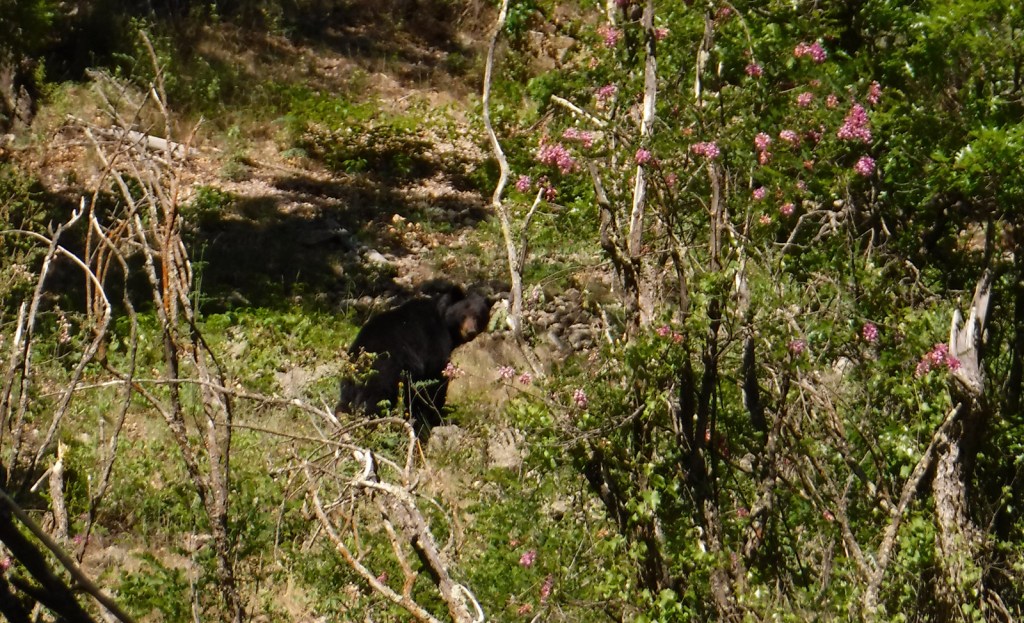
The Gila River gives its name to this National Forest, as well as animals like the venomous Gila monster, Gila woodpecker, and fish, including a trout, topminnow, and several species of chub.  Mexican wolves have been reintroduced to this region, and other predators like mountain lions, bobcats, and black bears (we saw one and followed another’s wet footprints while backpacking near Gila Cliff Dwellings National Monument).  Unique mammals include the javelina (collared peccary), gray fox, white-nosed coatimundi, and Coues white-tailed deer.  Mule deer, elk, pronghorns, and bighorn sheep are additional ungulates found in Gila National Forest.  Large birds include roadrunners, Mexican spotted owls, bald eagles, ospreys, peregrine falcons, and wild turkeys.  Most of our wildlife encounters were with reptiles like horned lizards (a.k.a. frogs or toads), western fence lizards, and rattlesnakes.

Instagram-worthy Photo

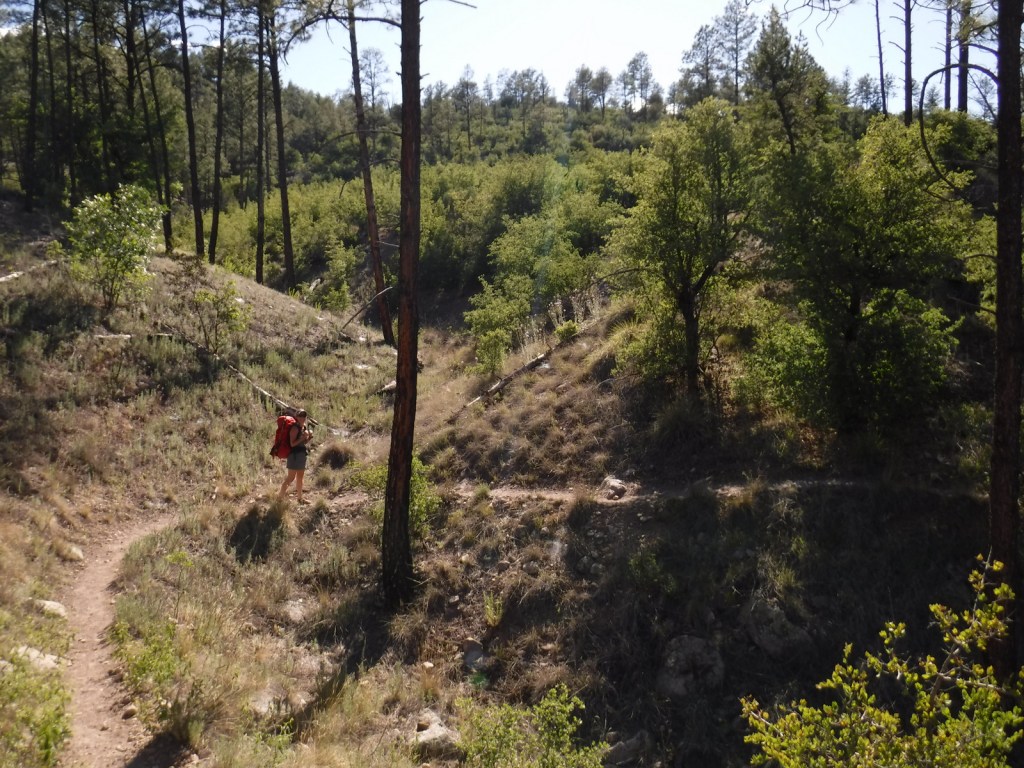
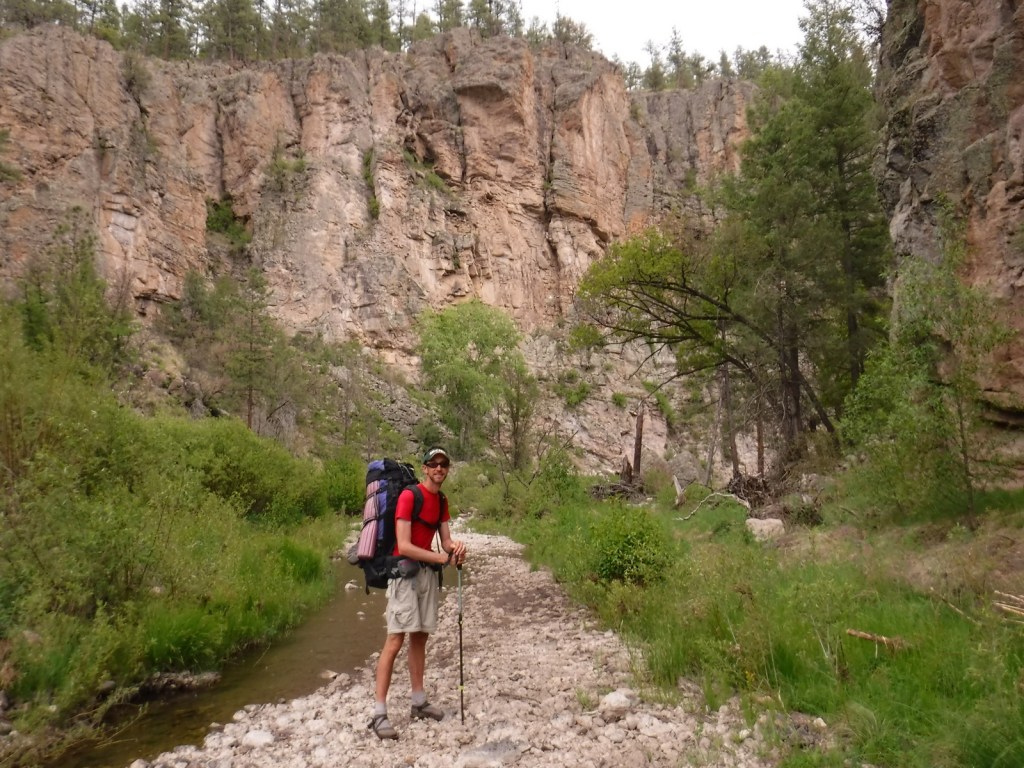
In May 2020, we did a 72-mile backpacking loop connecting the West Fork of the Gila River with the Middle Fork, through gorgeous canyons and old-growth forests protected as the Gila Wilderness since 1924.

Peak Season

Summer

Fees

There is a parking fee at Catwalk National Recreation Trail (or you can display an America the Beautiful Pass), but some cars parked across the river to avoid paying.

Road Conditions

The eastern part of Inner Loop Scenic Byway is paved to the visitor center co-managed by the Forest Service and National Park Service, but the western portion is unpaved and has some steep grades not recommended for RVs.  The unpaved road to Catwalk National Recreation Trail with its two stream crossings is doable with a passenger car when the water is low.

Camping

Cosmic Campground became the first International Dark Sky Sanctuary in North America (and one of only 14 in the world), so it is a great spot for stargazing.  Pueblo Park Campground offers a trail through Chimney Rock Canyon and Upper End Campground is near 72-acre Lake Roberts.  Cottonwood Campground is located near the Blue Range Wilderness on the Arizona border.  In eastern Gila National Forest along Highway 152 are found both Upper Gallinas and Iron Creek Campgrounds.  In the north, there are three campgrounds on 131-acre Quemado Lake and the Continental Divide National Scenic Trail cuts through primitive Apache Creek Campground.

Wilderness Areas

Aldo Leopold Wilderness

Blue Range Wilderness

Gila Wilderness

Related Sites

Gila Cliff Dwellings National Monument (New Mexico)

Apache National Forest (Arizona-New Mexico)

Cibola National Forest (New Mexico)

Nearest National Park

White Sands

Conifer Tree Species

two-needle pinyon pine, ponderosa pine, Chihuahua pine, southwestern white pine, white fir, one-seed juniper

Flowering Tree Species

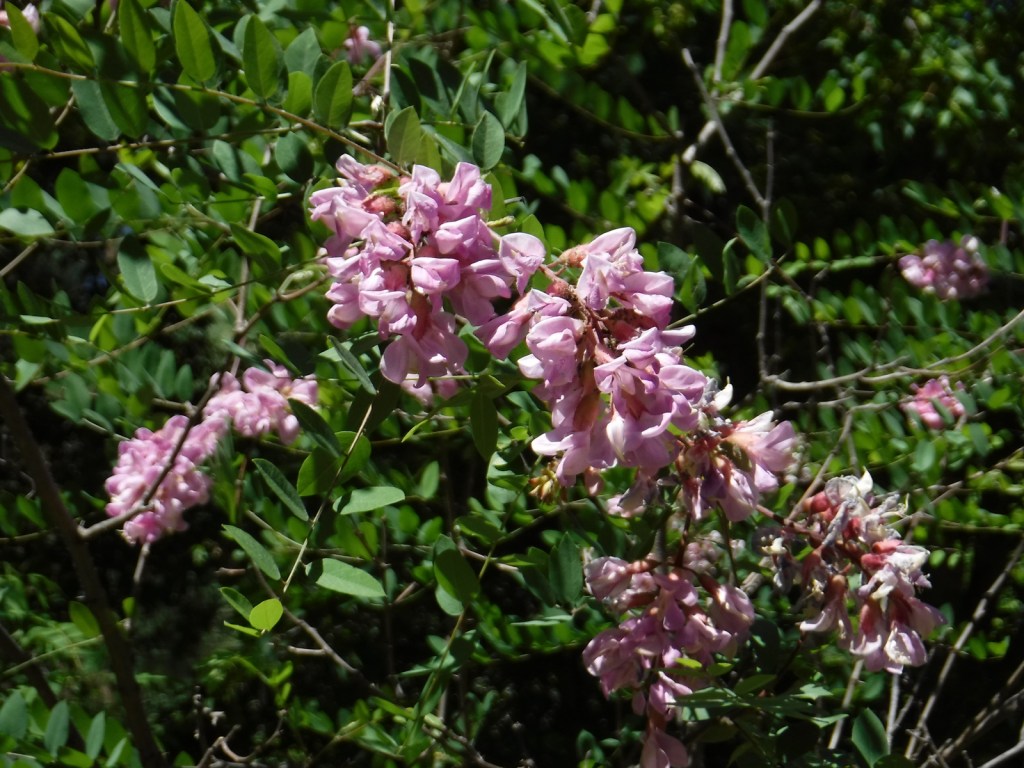
Gambel oak, gray oak, silverleaf oak, New Mexico locust, quaking aspen, narrowleaf cottonwood, Fremont cottonwood, Arizona alder, Arizona sycamore, Arizona walnut, boxelder, velvet ash, netleaf hackberry, mountain-mahogany, chokecherry

Explore More – Gila is a Spanish simplification of the Yuma word “hah-quah-sa-eel,” translated as what?

Learn more about this and the 154 other National Forests in our new guidebook Out in the Woods

We are a participant in the Amazon Services LLC Associates Program, an affiliate advertising program designed to provide a means for us to earn fees by linking to Amazon.com and affiliated sites.

Mt. St. Helens National Volcanic Monument

Mt. St. Helens National Volcanic Monument

Washington

Managed by U.S. Forest Service, Pacific Northwest Region

Established 1982

110,000 acres

Website: https://www.fs.usda.gov/visit/destination/mount-st-helens-national-volcanic-monument-0

Overview

Mt. St. Helens erupted Sunday, May 18, 1980 decreasing its elevation by 1,300 feet and depositing all of that material across the landscape as ash and a lahar (volcanic mudslide) claiming 57 human lives.  The site is now protected as Mt. St. Helens National Volcanic Monument and is accessed from the east or west through Gifford Pinchot National Forest.  Mt. St. Helens is geologically young as it began to form only 37,600 years ago.  It is considered the most active volcano in the Cascade Range, with a major eruption in 1480 several times larger than that which occurred 500 years later, as well as written records that noted activity from 1800 to 1857.  Prior to the most recent blast it was distinguished for its perfect cone shape, likened to the renowned outline of Mt. Fuji in Japan. 

Highlights

Johnston Ridge Observatory, films, Forest Learning Center, Windy Ridge, Spirit Lake, Bear Meadows, Winds of Change Trail

Must-Do Activity

Coming from Mount Rainier National Park, we decided to visit the more remote eastern side of the National Monument (see Best Trail) on Spirit Lake Memorial Highway.  From Interstate 5 on the volcano’s west side, Highway 504 leads east past an excellent visitor center (Milepost 5) at Seaquest State Park in Silver Lake (admission charged).  Highway 504 next reaches the free Forest Learning Center managed by the Weyerhaeuser Company, Washington State Department of Transportation, and the Rocky Mountain Elk Foundation.  The road ends at Johnston Ridge Observatory (Milepost 52), which is known for its awesome views of Mt. St. Helens.  We have been told not to miss the introductory films at the museum (admission charged).  [Update: Highway 504 closed due to landslides at Milepost 43 in June 2023 and has not reopened yet.]  Climbers need a permit to ascend Mt. St. Helens, but even from an overlook the scene is enough to fill one with an appreciation for nature’s awesome power. 

Best Trail

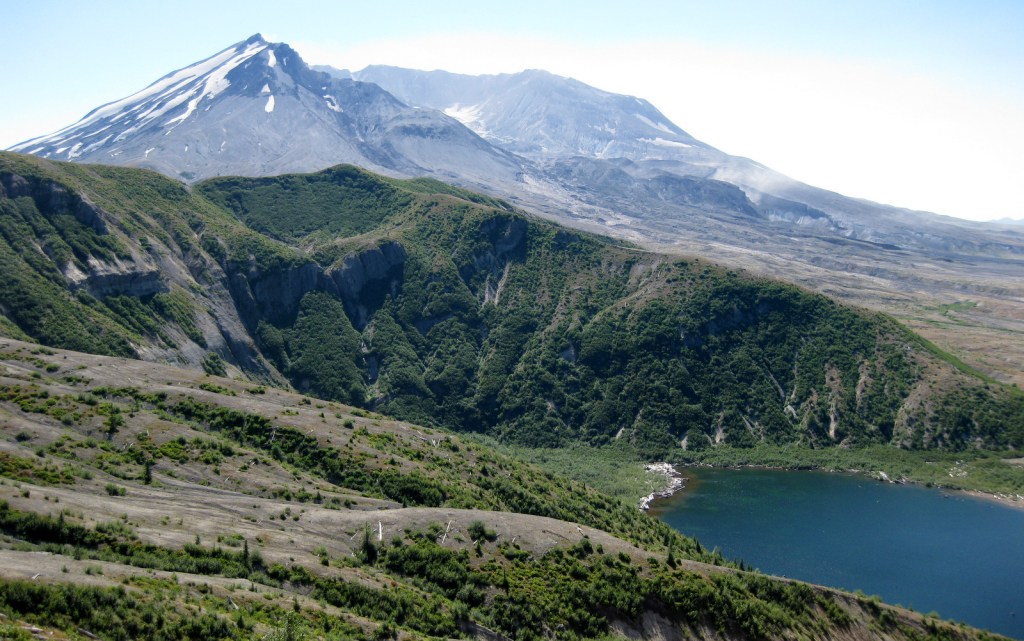
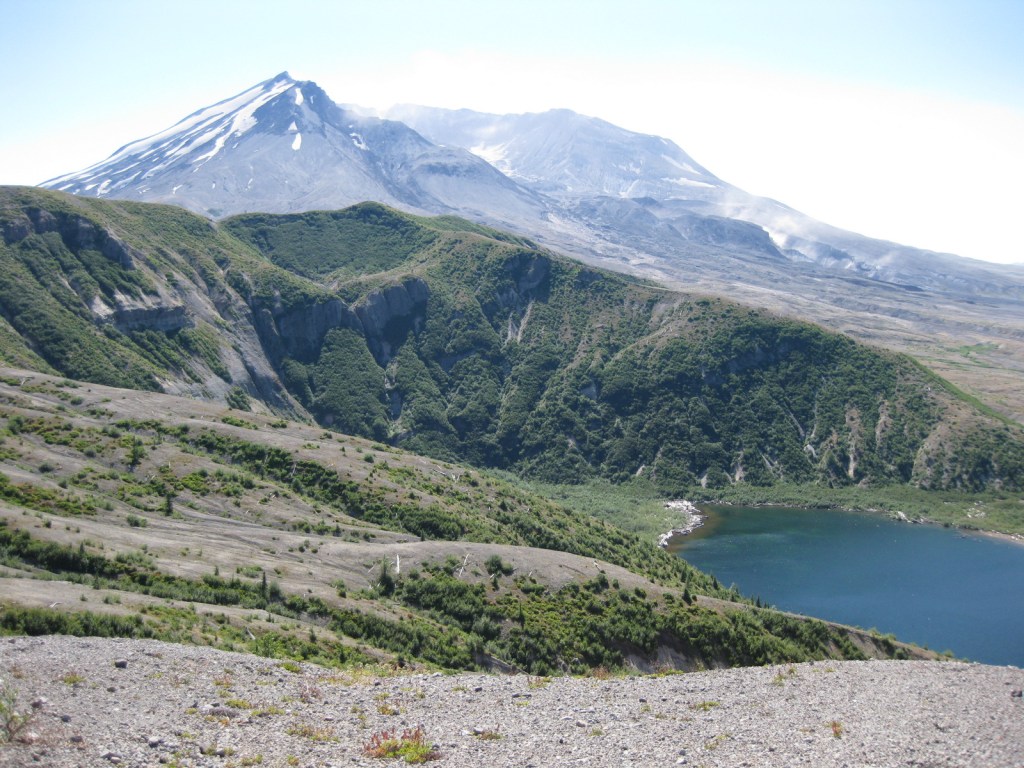
After a breathtaking ascent of 361 steps, we reached a breathtaking view atop the aptly named Windy Ridge.  It provided a panorama of the destruction wrought by the volcano, which is still visibly spewing smoke and cinders.  Today the waters of Spirit Lake remain clogged with thousands of weathered snags, floating upon its surface like debarked, sun-bleached ghosts.  Elsewhere the rate of reforestation has been astounding.  Due to natural regeneration and planting efforts within Gifford Pinchot National Forest, millions of Douglas-fir, noble fir, and other trees are rapidly growing in the nitrogen-rich deposits, up to 100 feet deep in some places.

Instagram-worthy Photo

From Windy Ridge, the pale gray summit of the horseshoe-shaped volcano was still streaked in glacial ice on a warm September afternoon, the venting steam clearly visible against the deep blue sky.

Peak Season

Summer

Hours

https://www.parks.wa.gov/245/Mount-St-Helens

Fees

Admission to Johnston Ridge Observatory is $8 per adult or free with an America the Beautiful Pass.  At Seaquest State Park, a $5 per adult admission fee is charged to enter Mt. St. Helens Visitor Center operated by Washington State Parks in Silver Lake.

Road Conditions

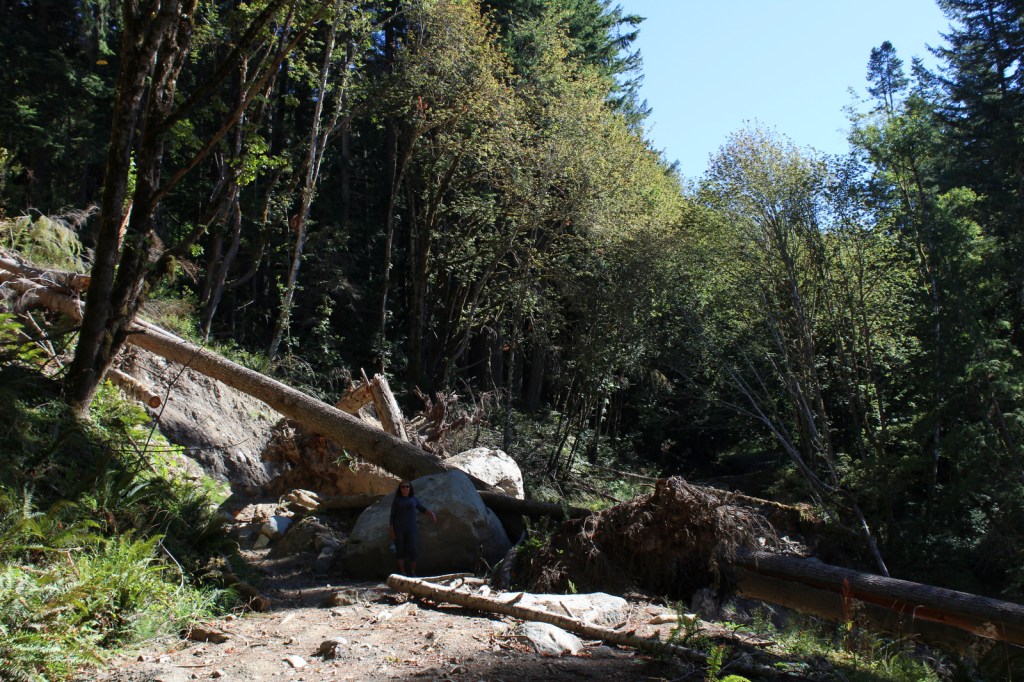
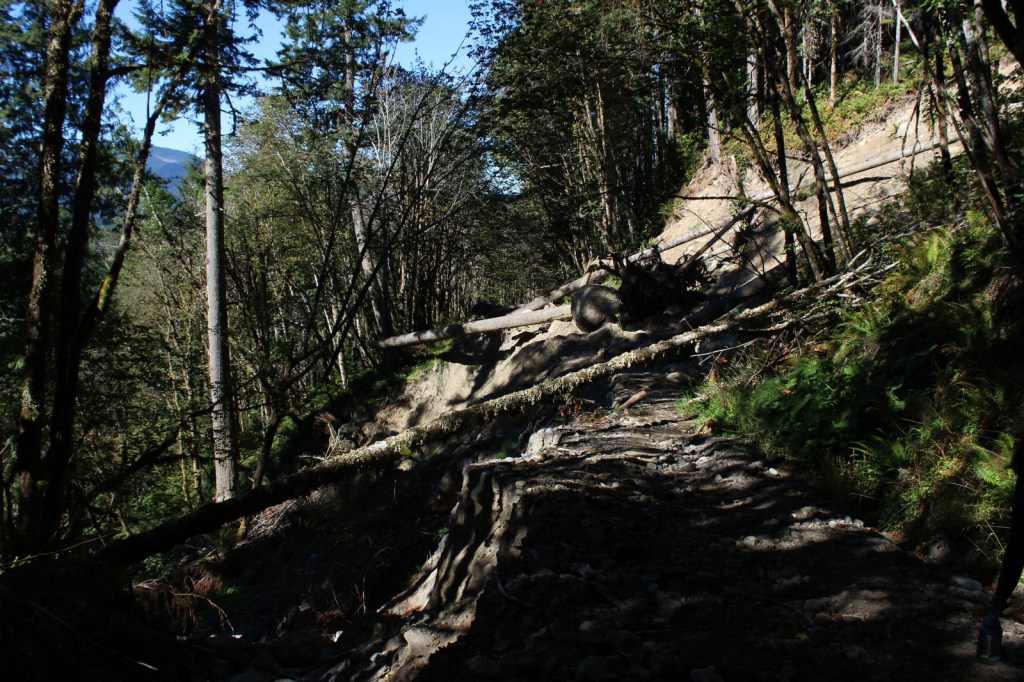
The major roads (like Highway 504) are paved to viewpoints in Mt. St. Helens National Volcanic Monument.  [Update: Highway 504 closed due to landslides at Milepost 43 in June 2023 and has not reopened, but Windy Ridge is still accessible.] 

Camping

There is a campground in Seaquest State Park on Silver Lake near Interstate 5, plus dispersed camping is allowed in parts of Gifford Pinchot National Forest.

Related Sites

Mount Rainier National Park (Washington)

Lake Chelan National Recreation Area (Washington)

Oregon Caves National Monument and Preserve (Oregon)

Explore More – Opened in 1997, Johnston Ridge Observatory is named for whom?

Gifford Pinchot National Forest

Gifford Pinchot National Forest

Washington

Managed by U.S. Forest Service, Pacific Northwest Region

1,409,966 acres (1,321,506 federal/ 88,460 other)

Website: https://www.fs.usda.gov/giffordpinchot/

Overview

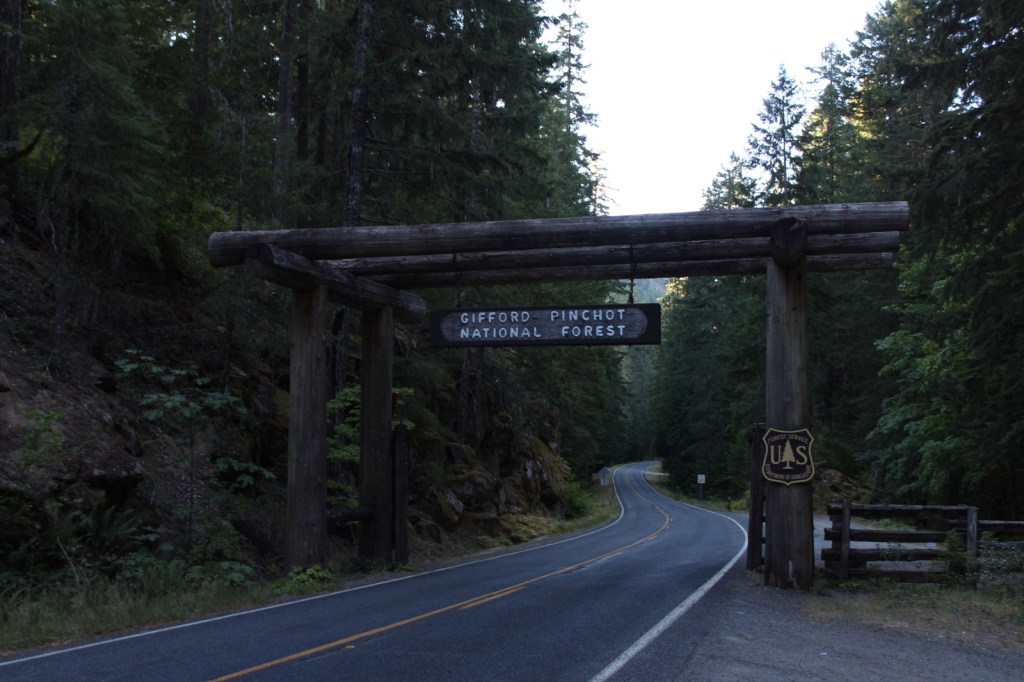
First set aside as Mt. Rainier Forest Reserve in 1897, nearly one-million acres were renamed Columbia National Forest in 1908.  It became Gifford Pinchot National Forest in 1949 to honor the chief of the U.S. Division of Forestry (1898-1905) and first chief of the U.S. Forest Service (1905-1910).  The Yale graduate studied forestry in Europe and his family founded the Yale Forest School (see Grey Towers National Historic Site).  Gifford Pinchot National Forest borders the Columbia River to the south, across from Oregon’s Mt. Hood National Forest.  It stretches north to Mt. Rainier National Park and contains 12,276-foot Mt. Adams (the state’s second tallest volcano) and Mt. St. Helens, which was designated a National Monument after its eruption on Sunday, May 18, 1980.  There are 1,475 miles of trails and more than 4,000 miles of roads in the National Forest, so there is plenty to explore outside the volcanoes. 

Highlights

Mt. St. Helens National Volcanic Monument, Silver Star Scenic Area, Lower Falls of the Lewis River, Tatoosh Range, Packwood Lake, Quartz Creek, Ape Cave, Langfield Falls, Horseshoe Lake, Panther Creek Falls, Ice Cave, Mt. Adams, Midway High Lakes Area, Takhlakh Lake, Lava Canyon Trail, Pacific Crest National Scenic Trail

Must-Do Activity

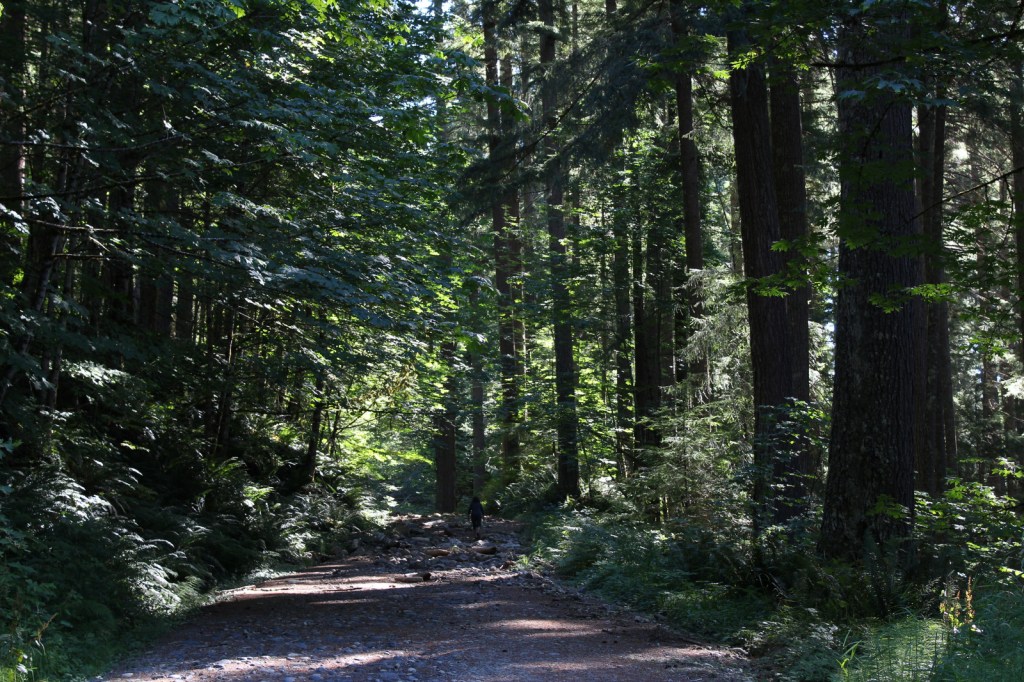
We will cover Mt. St. Helens National Volcanic Monument in a separate post, so here we will focus on the National Forest’s other attractions.  North of Mt. St. Helens, a half-mile trail follows Quartz Creek through an old-growth forest of huge Douglas-firs.  To the south, check out Lava Canyon Trail and Cedar Flats Research Natural Area where old-growth western redcedar trees are draped in lichen.  There are numerous waterfalls in the National Forest, including dual Panther Creek Falls that drops 175 feet side by side and the triple Falls Creek Falls that cascades 150 feet.  This lush region is also known for its berry picking, especially the renowned Sawtooth Berry Fields. 

Best Trail

Ape Cave is a lava tube located south of Mt. St. Helens, which at 2.5 miles is the third longest in North America.  The cave is not named for a fossil discovery, but rather the local Boy Scout troop that explored its interior in the 1950s after its discovery.  It is believed that the lava tube formed during a basaltic flow 1,900 years ago.  Ape Cave Trail is a National Recreation Trail receiving approximately 170,000 visitors annually (a timed reservation is required).  There are two layers to the cave, a smoother 0.8-mile upper level and a rougher 1.5-mile lower level that requires scaling an eight-foot lava wall.  Bundle up if you visit, as the underground temperature is 42°F year round.  The 650-foot-long Ice Cave is another lava tube known for its ice stalactites in spring (reservation required).

Watchable Wildlife

Located on the rainy side of the Cascades, Gifford Pinchot National Forest receives plenty of precipitation to feed its many rivers, including the glacier-fed White Salmon National Wild and Scenic River.  Four species of fish identified as threatened inhabit this region’s waters: bull trout, steelhead, chinook salmon, and coho salmon.  Another threatened species, the northern spotted owl requires buffer zones around its nests.  Mammals of Gifford Pinchot National Forest include elk, black-tailed deer, black bears, bobcats, and several species of marmots.  The wettest parts of the forest, especially in riparian corridors, have a variety of frogs, salamanders, and newts.

Instagram-worthy Photo

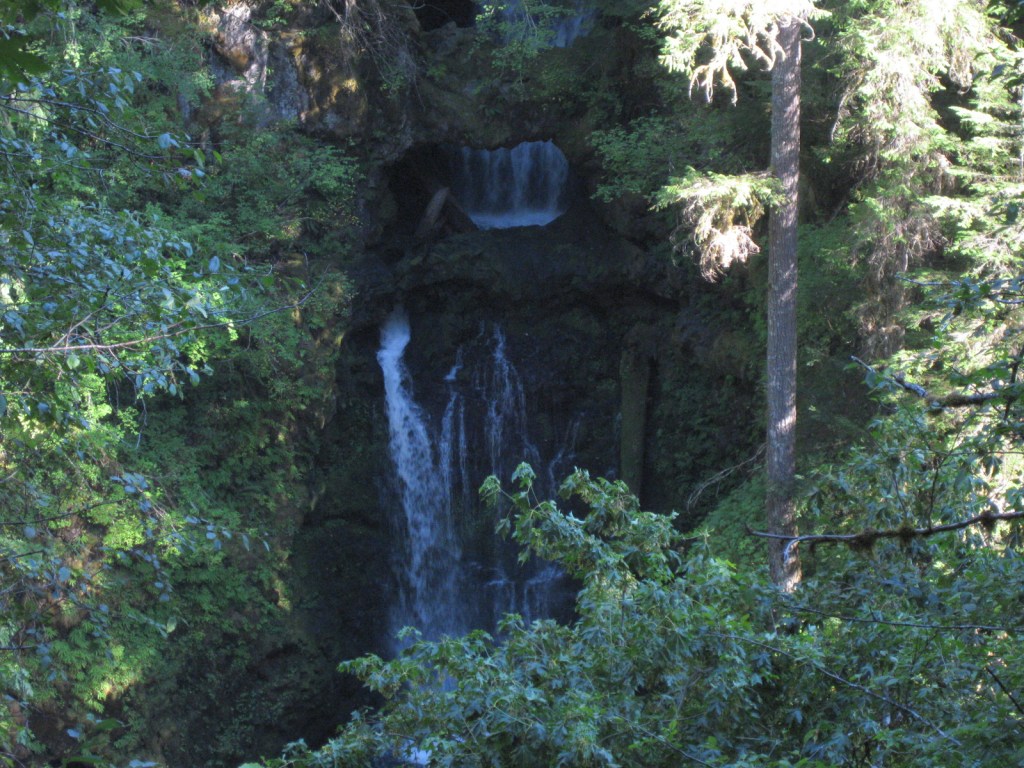
There are numerous waterfalls in this forest due to its high annual rainfall and steep elevation gradients.

Peak Season

Summer

Fees

An America the Beautiful Pass or Northwest Forest Pass ($5 day use) is required at many parking areas in the National Forest, including Ice Cave and Ape Cave (where a timed reservation is required from recreation.gov). 

Road Conditions

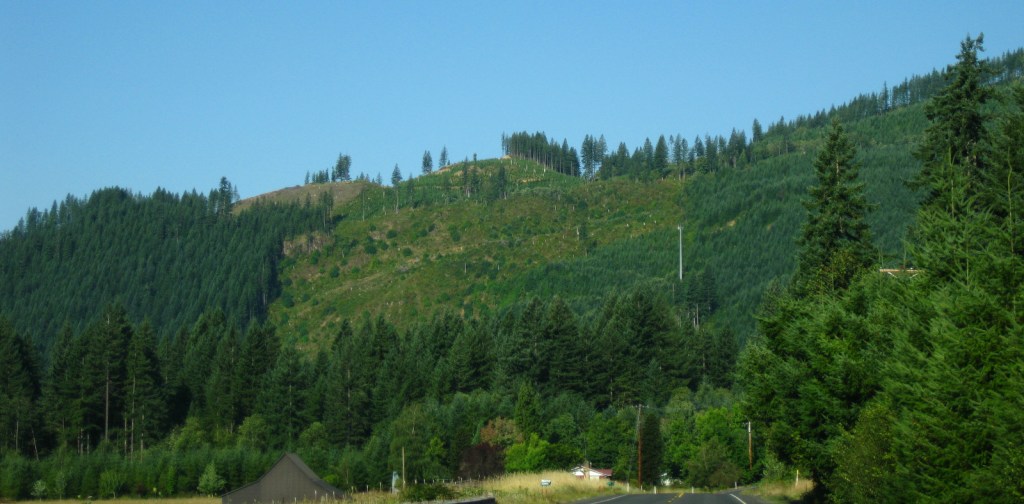
The major roads are paved to viewpoints in Mt. St. Helens National Volcanic Monument, but there are plenty of unpaved roads throughout the National Forest, some requiring high-clearance vehicles. 

Camping

Iron Creek Campground north of Mt. St. Helens has two short trails, a quarter-mile trail through old-growth forest and one that follows a river 1.5 miles under a canopy of Douglas-fir and western redcedar.  Dispersed camping is allowed throughout the National Forest, and we have camped here to avoid the crowds while visiting the beautiful waterfalls of Columbia River Gorge National Scenic Area, part of Oregon’s Mt. Hood National Forest.

Wilderness Areas

Dark Divide Roadless Area

Glacier View Wilderness

Goat Rocks Wilderness (also in Wenatchee National Forest)

Indian Heaven Wilderness

Mount Adams Wilderness

Tatoosh Wilderness

Trapper Creek Wilderness

William O. Douglas Wilderness (also in Wenatchee National Forest)

Related Sites

Mt. St. Helens National Volcanic Monument (Washington)

Ross Lake National Recreation Area (Washington)

Fort Vancouver National Historic Site (Washington)

Nearest National Park

Mount Rainier

Conifer Tree Species

Douglas-fir, western redcedar, Pacific silver fir, noble fir, subalpine fir, mountain hemlock, western hemlock, whitebark pine, lodgepole pine, Alaska yellow-cedar

Flowering Tree Species

balsam poplar, paper birch, willow, red alder, bigleaf maple, Pacific rhododendron

Explore More – In addition to the White Salmon River, which four other waterways in the National Forest have been recommended to be added to the Wild and Scenic River System?

Learn more about this and the 154 other National Forests in our new guidebook Out in the Woods

We are a participant in the Amazon Services LLC Associates Program, an affiliate advertising program designed to provide a means for us to earn fees by linking to Amazon.com and affiliated sites.

George Washington National Forest

George Washington National Forest

Virginia, West Virginia

Managed by U.S. Forest Service, Southern Region

1,795,084 acres (1,065,369 federal/ 729,715 other)

Website: https://www.fs.usda.gov/gwj

Overview

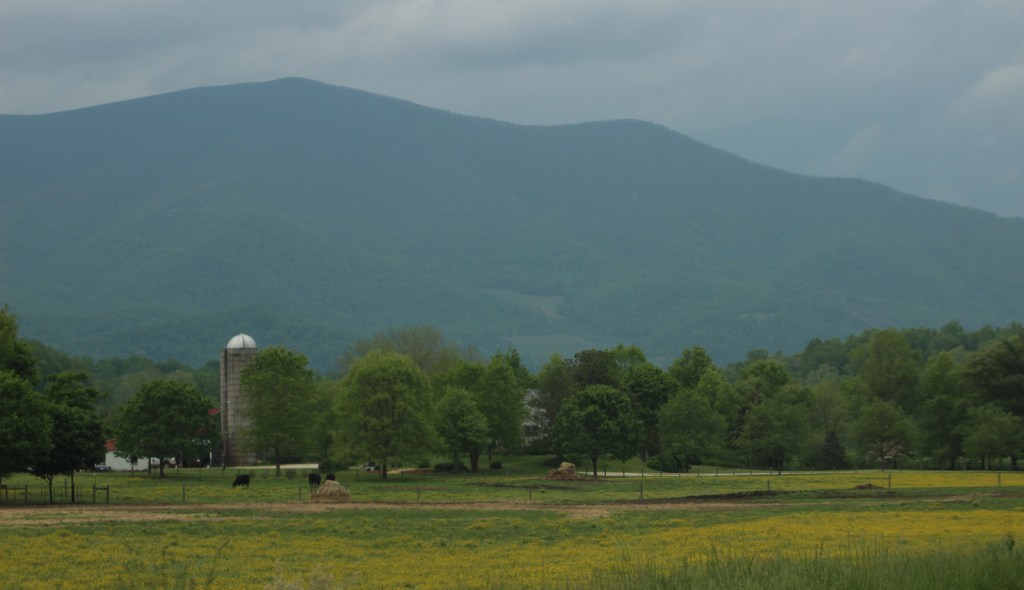
First established as the Shenandoah National Forest in 1918, George Washington National Forest covers portions of the Blue Ridge and Allegheny Mountains.  It includes the northern 60 miles of the Blue Ridge Parkway and a significant stretch of the Appalachian National Scenic Trail south of Shenandoah National Park.  The National Forest’s proximity to Washington, D.C. and Baltimore makes it a major recreation destination, particularly for trail runners.  It is now co-managed with the more western Jefferson National Forest, together encompassing 230,000 acres of old-growth forests, 139,461 acres of Wilderness areas, and more than 2,000 miles of trails.

Highlights

Mt. Pleasant National Scenic Area, Big Walker Mountain Scenic Byway, Highland Scenic Tour, Massanutten Visitor Center, Sherando Lake, White Rock Creek Falls, Lake Moomaw, Woodstock Tower, Upper Shamokin Falls, Slacks Overlook, High Knob Fire Tower, Maple Flats, Bird Knob Loop Trail, Lion’s Tale National Recreation Trail, Waterfall Mountain Loop Trail, McDowell Battlefield Trail, Big Schloss Trail, Crabtree Falls Observation Trail, Story Book Trail, Pig Iron Loop Trail, Dragons Tooth Trail, Appalachian National Scenic Trail

Must-Do Activity

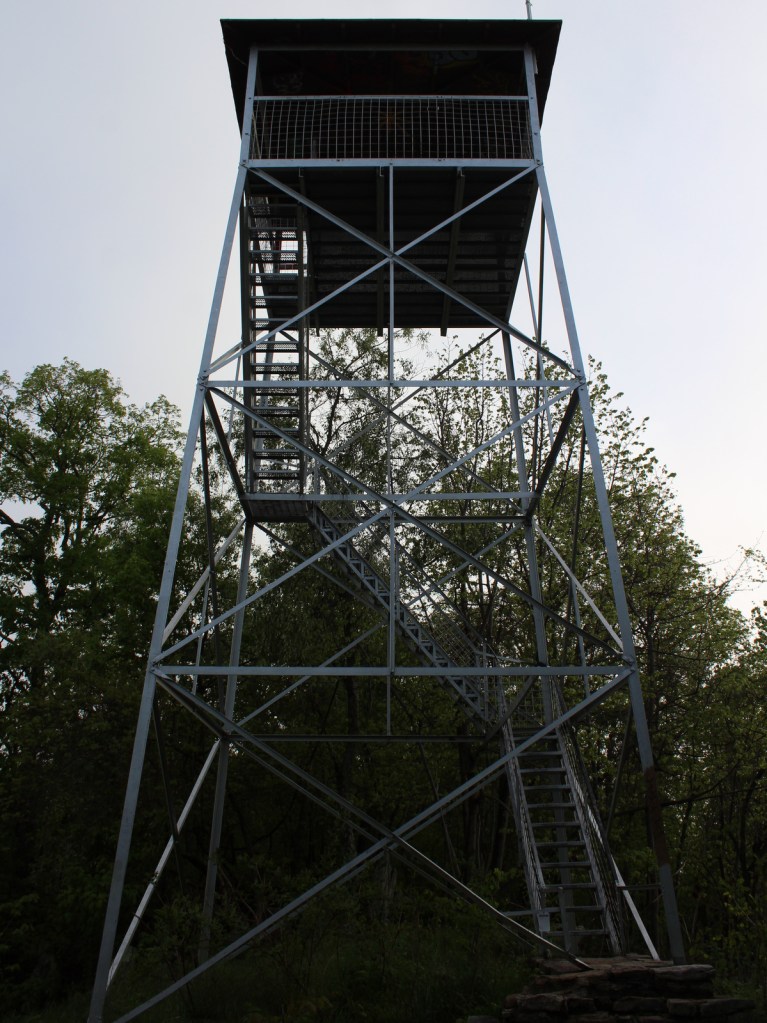
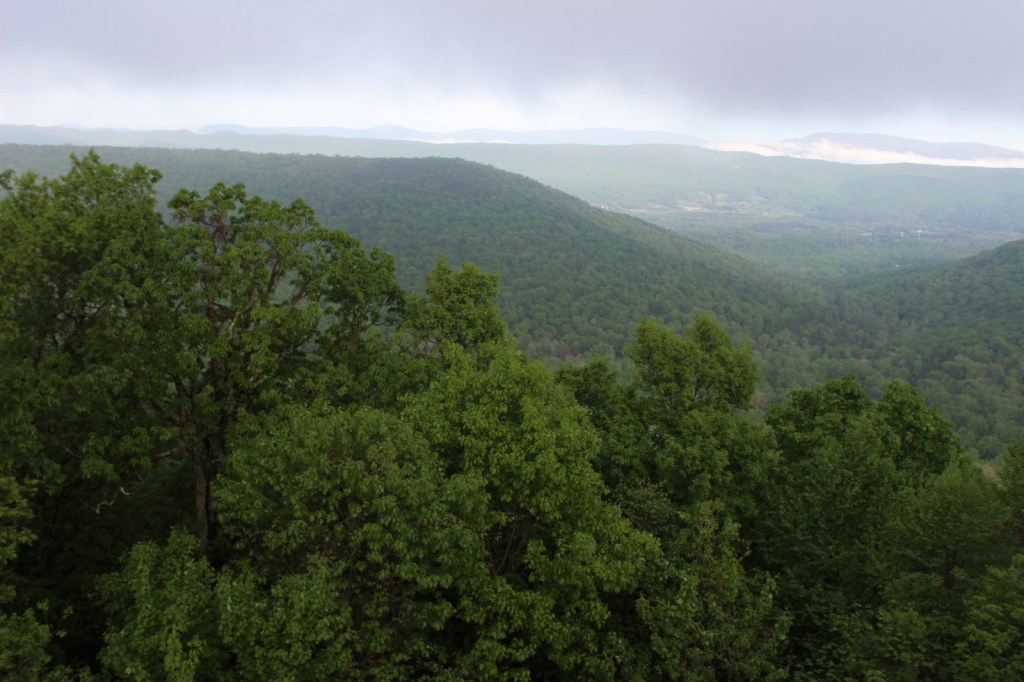
Driving the Blue Ridge Parkway through George Washington National Forest is a must-do, but there are other attractions to be found in this ridgeline-running forest.  Not far east off Interstate 81, it is a short drive up a gravel road to Woodstock Lookout Tower, where a short, flat trail accesses the metal structure that provides views of the Seven Bends of the Shenandoah River.  Downhill on the eastern side of that ridge (and protected from freeway noise) is the free Little Fort Campground with nine campsites.  There is a charge to ride the Peters Mill Gap and Taskers Run ATV/OHV trails (covering 40 miles) that leave from the campground.  A one-mile hiking trail leaves from Campsite 8 and climbs up to Woodstock Tower.

Best Trail

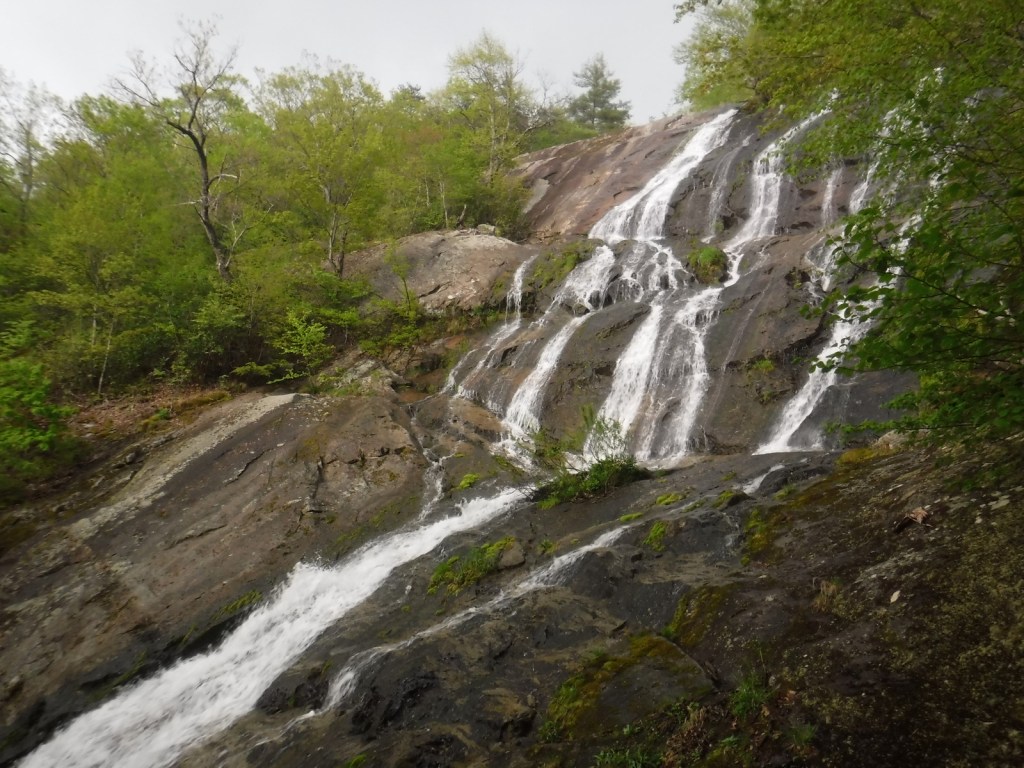
Crabtree Falls Observation Trail (day use fee) is easy to access from paved State Route 56 east of the Blue Ridge Parkway.  There are actually five waterfalls here with a total drop of 1,200 feet spread over a half-mile.  The first overlook of the lower falls is only 500 feet from the parking lot and is handicap accessible.  From there, the trail switchbacks up 1.7 miles one-way to a fourth and final view of the falls, then continues on another two miles to the Appalachian National Scenic Trail after gaining more than 1,000 feet in elevation. 

Watchable Wildlife

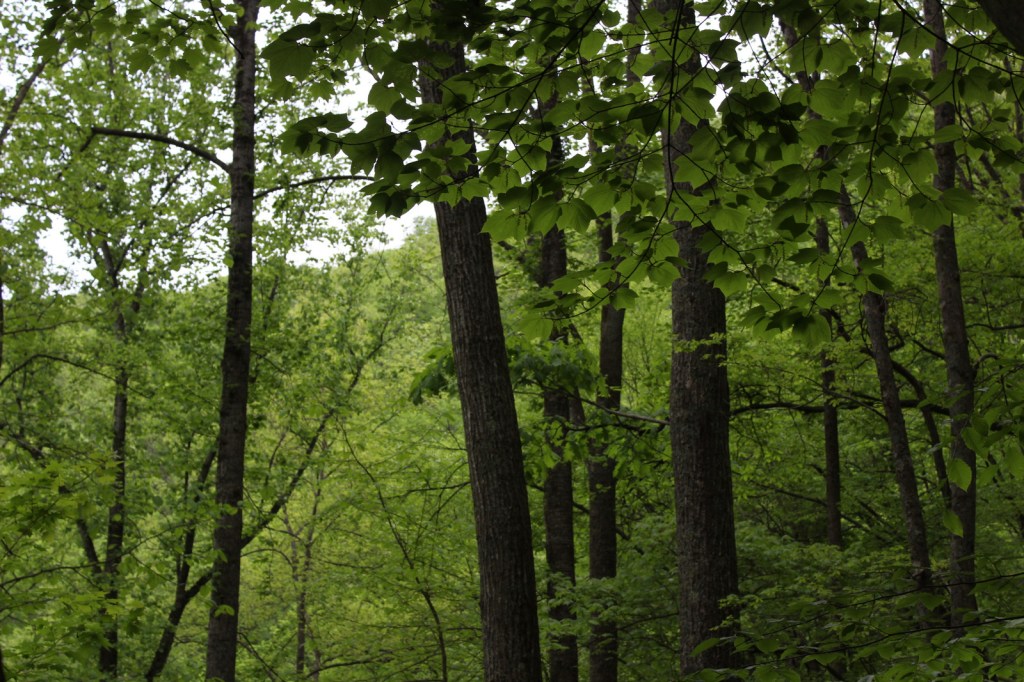
Extensive sections of old-growth forest can be found in Mt. Pleasant National Scenic Area and much of the Rich Hole and Ramsey’s Draft Wildernesses.  This provides habitat for a healthy population of black bears, as well as white-tailed deer, bobcats, raccoons, river otters, martens, and weasels.  Large birds found in George Washington National Forest include wild turkeys, turkey vultures, bald eagles, peregrine falcons, and several types of hawks.  Wetlands, like Maple Flats, are home to cricket frogs, painted turtles, spotted turtles, and many species of salamanders, such as marbled, Cow Knob, Cheat Mountain, Shenandoah, and tiger salamanders.  Over 100 species of freshwater fish reside here, and fishing is popular activity in the Jackson River and 152-foot-deep Lake Moomaw.

Instagram-worthy Photo

With five major cascades dropping 1,200 feet in total, there are plenty of places to catch your breath and snap some photographs along the steep Crabtree Falls Observation Trail.

Peak Season

Spring and fall

Fees

There is a day use fee for hiking Crabtree Falls Observation Trail and riding the Peters Mill Gap and Taskers Run ATV/OHV trails. 

Road Conditions

Parking at Crabtree Falls is paved and RV accessible, and the one unpaved road we took to Woodstock Tower and Little Fort Campground was in good shape.

Camping

There are many designated campgrounds found throughout George Washington National Forest, including the free, nine-site Little Fort Campground not far east off Interstate 81 (see Must-Do Activity).  Although dispersed camping can be hard to find, we read there are sites on the four-wheel-drive road (SR 826) at the top of Crabtree Falls Observation Trail near where it meets the Appalachian National Scenic Trail. 

Wilderness Areas

Barbours Creek Wilderness (also in Jefferson National Forest)

Priest Wilderness

Ramsey’s Draft Wilderness

Rich Hole Wilderness

Rough Mountain Wilderness

Saint Mary’s Wilderness

Shawvers Run Wilderness (also in Jefferson National Forest)

Three Ridges Wilderness

Related Sites

Booker T. Washington National Monument (Virginia)

Cedar Creek and Belle Grove National Historical Park (Virginia)

Jefferson National Forest (Virginia, West Virginia, Kentucky)

Daniel Boone National Forest (Kentucky)

Nearest National Park

Shenandoah

Conifer Tree Species

eastern hemlock, eastern white pine, shortleaf pine, Table Mountain pine, red spruce, eastern redcedar

Flowering Tree Species

tulip-poplar, American beech, shagbark hickory, white oak, black oak, northern red oak, rock chestnut oak, pin oak, yellow birch, gray birch, sweet birch, striped maple, red maple, black gum, sassafras, basswood, flowering dogwood, sourwood, cucumber magnolia, mountain laurel, quaking aspen, paper birch, witch hazel, dwarf willow, winterberry, rhododendron

Explore More – In 1972, what company sponsored the planting of the National Children’s Forest in a burned-out area east of Jordan Mines?

Learn more about this and the 154 other National Forests in our new guidebook Out in the Woods

We are a participant in the Amazon Services LLC Associates Program, an affiliate advertising program designed to provide a means for us to earn fees by linking to Amazon.com and affiliated sites.

Fremont National Forest

Fremont National Forest

Oregon

Managed by U.S. Forest Service, Pacific Northwest Region

1,713,891 acres (1,207,039 federal/ 506,852 other)

Website: https://www.fs.usda.gov/fremont-winema

Overview

In central Oregon, the sagebrush-dominated high desert is also known as the Oregon Outback because of its rural resemblance to the arid Australian bush.  Fremont National Forest encompasses the wooded mountains that rise to the west above Lake Abert and Summer Lake in the Warner Valley, an important wetland area for wildlife.  In addition, a separate section located to the southeast covers the Warner Mountains and Abert Rim.  The cliffs of Hadley Butte are popular with hang gliders.  The Mitchell Monument honors the six American civilians who lost their lives during World War II when a Japanese balloon bomb exploded after traveling 6,000 miles. 

Highlights

Oregon Outback Scenic Byway, Goodlow Mountain Natural Area, Drake Peak Lookout, North Warner Viewpoint, Abert Rim, Heart Lake, North Fork of Sprague National Wild and Scenic River, Mitchell Monument, Cottonwood Lake, Crane Mountain National Recreation Trail, Fremont National Recreation Trail, Gearhart Mountain Trail

Must-Do Activity

While it is not an official trail, the 4.6-mile out-and-back hike to Coleman Rim does have a good payoff with views of the Chewaucan River Valley.  It is reached by driving nine miles up paved Forest Road 3360 from Highway 140, then turning right for two miles on gravel Forest Road 024 to Shepard Camp Creek.  From there, you start hiking north to the head of Shepard Camp Meadow, while watching for black-tailed deer, sandhill cranes, and the numerous cattle that frequent this area.  At that point, the route starts to gain elevation as it turns east through a forest of ponderosa pine, Sierra white fir, and western white pine trees.  You will likely have to climb over a few downed trees as you navigate toward the rocky Coleman Rim that sits above 7,000 feet in elevation.
Best Trail

After the Bootleg Fire swept through the area between our 2020 and 2022 visits, it was amazing to see the differences around Gearhart Mountain.  We drove as far up the mountain as we could to Lookout Rock Trailhead, parking at the edge of the Gearhart Mountain Wilderness, walking up the gated road to a fire lookout tower that remained unburnt on its rocky ridgetop.  It was difficult to the follow the official Gearhart Mountain trail because of downed trees and the blanket of dead needles on the forest floor, but it was worth a look around to see the fire’s aftermath (please exercise caution due to the hazards of standing dead trees).  The trail accesses the volcanic Palisade Rocks within one mile from the trailhead.

Watchable Wildlife

Mule deer, elk, and pronghorns are large ungulates found in Fremont National Forest, sharing habitat with carnivores like black bears, coyotes, mountain lions, and bobcats.  The National Forest borders Summer Lake and several large wetlands that are important stops for migrating birds on the Pacific Flyway.  Commonly seen waterfowl are Canada geese, mallards, and whistling swans, and the elusive northern spotted owl nests in old-growth forests.  There are largemouth bass in the lakes, while streams support several species of trout, including the threatened bull trout. 

Instagram-worthy Photo

Nearly 10,000 Fugo balloons were launched by the Japanese during World War II, but only one caused casualties, killing six American civilians when it exploded on May 5, 1945.  At the Mitchell Monument, you can read their story and see a ponderosa pine tree that still contains shrapnel from the balloon bomb.

Peak Season

Summer

Fees

None

Road Conditions

Paved Highway 140 runs east-west through the heart of the National Forest, while Highway 395 splits a separate southeastern section on the California border.  We found unpaved Forest Road 34 to be full of potholes, but it got better the further east we went towards the Mitchell Monument and Gearhart Mountain.  Even after the 2021 fire, we found Forest Road 3660 to the Coleman Rim to be a good gravel road, while Forest Road 024 was a bit overgrown.

Camping

This is a good National Forest for dispersed camping, but we also passed Corral Creek Campground on our way up to Gearhart Mountain and Cottonwood Recreation Area offers a campground on a lake.  Rentals are available in the summer for the Drake Peak Lookout, Currier Guard Station, and Bald Butte Lookout.

Wilderness Areas

Gearhart Mountain Wilderness

Related Sites

Deschutes National Forest (Oregon)

Winema National Forest (Oregon)

Newberry National Volcanic Monument (Oregon)

Nearest National Park

Crater Lake

Conifer Tree Species

ponderosa pine, western white pine, lodgepole pine, Douglas-fir, Engelmann spruce, white fir, western juniper

Flowering Tree Species

quaking aspen, curlleaf mountain-mahogany, willow, sagebrush

Explore More – The National Forest is named after John C. Fremont who explored this area for the U.S. Army Corps of Engineers and went on to take control of the California Republic (for which he was convicted of mutiny and later pardoned), serve as a U.S. Senator, run twice for President, and then resign while Governor of what U.S. territory?

Learn more about this and the 154 other National Forests in our new guidebook Out in the Woods

We are a participant in the Amazon Services LLC Associates Program, an affiliate advertising program designed to provide a means for us to earn fees by linking to Amazon.com and affiliated sites.