Tag Archives: Scenic Byway

Kansas Road Trip Itinerary

Kansas

52,325,581 acres (2.3% of U.S.)

Statehood 1861 (34th of 50)

Capital: Topeka

Population:  2,937,880 (35th of 50)

High Point: Mt. Sunflower (4,041 feet)

Best time of year: Fall for apple picking, football games, OZtoberFest, and fall foliage

We recently published our guidebook 50 States of Great: Road Trip Guide to America, so we decided to start a new type of blog post where we create a travel itinerary for all 50 states, in addition to our usual National Forest and National Park entries.  We are starting with Kansas, an often-overlooked travel destination where we have had a lot of fun on multiple visits dating back to 2007.  We made a seven-day plan starting in the southwest corner of the state, with plenty of options to extend the trip.

Day 1

Cimarron National Grassland (click here for our blog post) / Santa Fe National Historic Trail

The state’s largest parcel of public land at 108,175 acres contains Middle Springs, Cottonwood Picnic Area (with the 10.5-mile Turkey Trail), and Point of Rocks, an important landmark on the Santa Fe Trail and third highest point in Kansas.  In the spring, birdwatchers gather at two viewing blinds to watch the elaborate mating rituals of lesser prairie-chickens, one of the more than 360 bird species identified here. 

Liberal

Dorothy’s House landed here after it was swept up in the tornado to the Land of Oz, located next to the free Seward County Coronado Museum.  While visiting, you can pose with your favorite character from L. Frank Baum’s allegory along a yellow brick walkway. 

Optional stop at Dalton Gang Hideout Museum

Walk the 95-foot-long escape tunnel built by the notorious outlaw family beneath their farmhouse to evade law enforcement. 

Day 2

Big Well Museum in Greensburg

Completed in 1888, it is the world’s largest hand dug well at 109 feet deep (and 32 feet in diameter) to access the massive Ogallala Aquifer.  On May 4, 2007, the town of Greensburg was devastated by a powerful tornado, but the resilient population rebuilt around the historic well. 

Boot Hill Museum in Dodge City

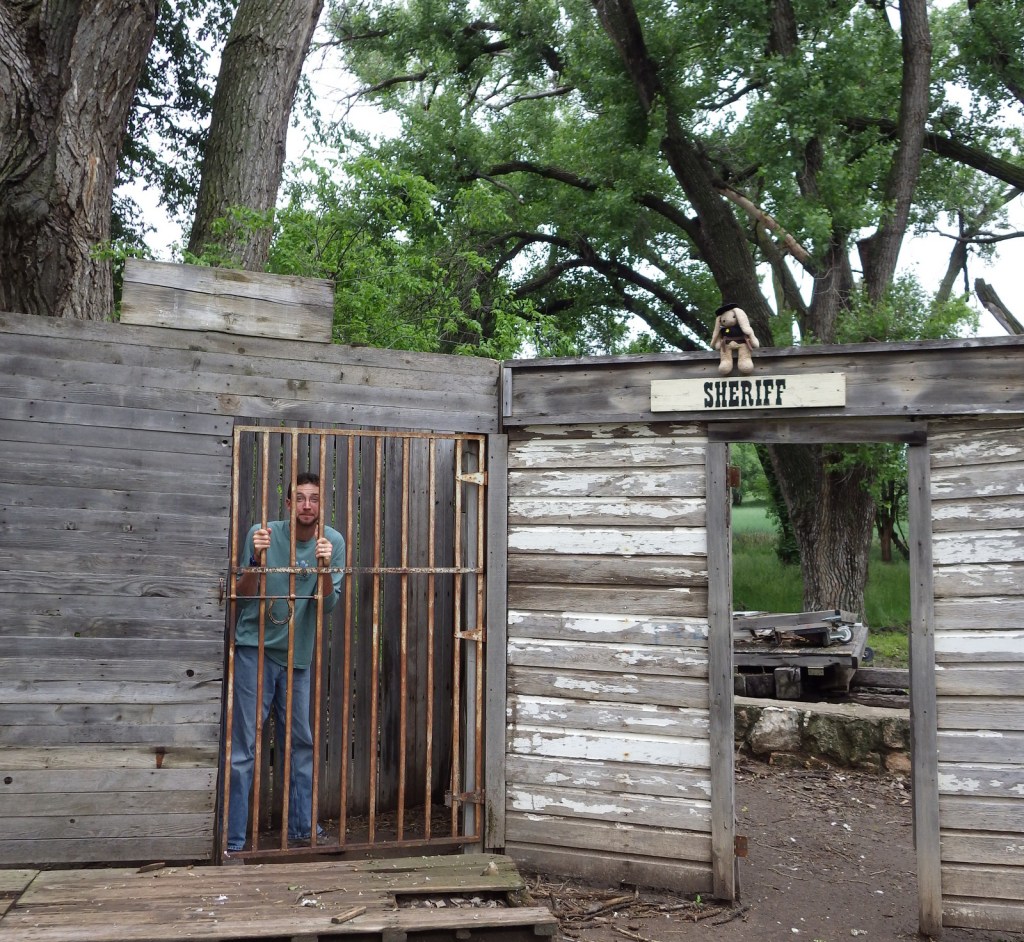
This bloody frontier town earned the moniker “Wickedest Little City in America.”  Even though the buildings on Front Street are mostly reproductions, there remains an authentic Wild West vibe in the air as you walk past artifacts from the 1800s.  If you plan to spend the night after your visit to the Boot Hill Museum, consider paying extra for the brisket dinner and nightly variety show (in the summer) at the Long Branch Saloon. 

Optional stop at Dodge City Zoo

Across the railroad tracks from the Boot Hill Museum, the Dodge City Zoo in Wright Park offers free admission to see a multitude of mammals and birds. 

Day 3

Fort Larned National Historic Site (click here for our blog post)

The fort was only active from 1860 to 1878, but after becoming private property it continued to function as a working ranch which explains why it is in such good shape today.  Costumed re-enactors are really what make this site special, from the blacksmith to the schoolteacher to the commissar to the officers’ wives. 

Quivira National Wildlife Refuge

A 14-mile auto route and hiking trails to observation blinds offer great opportunities to see a variety of birds and mammals in this wetland south of the great bend of the Arkansas River.

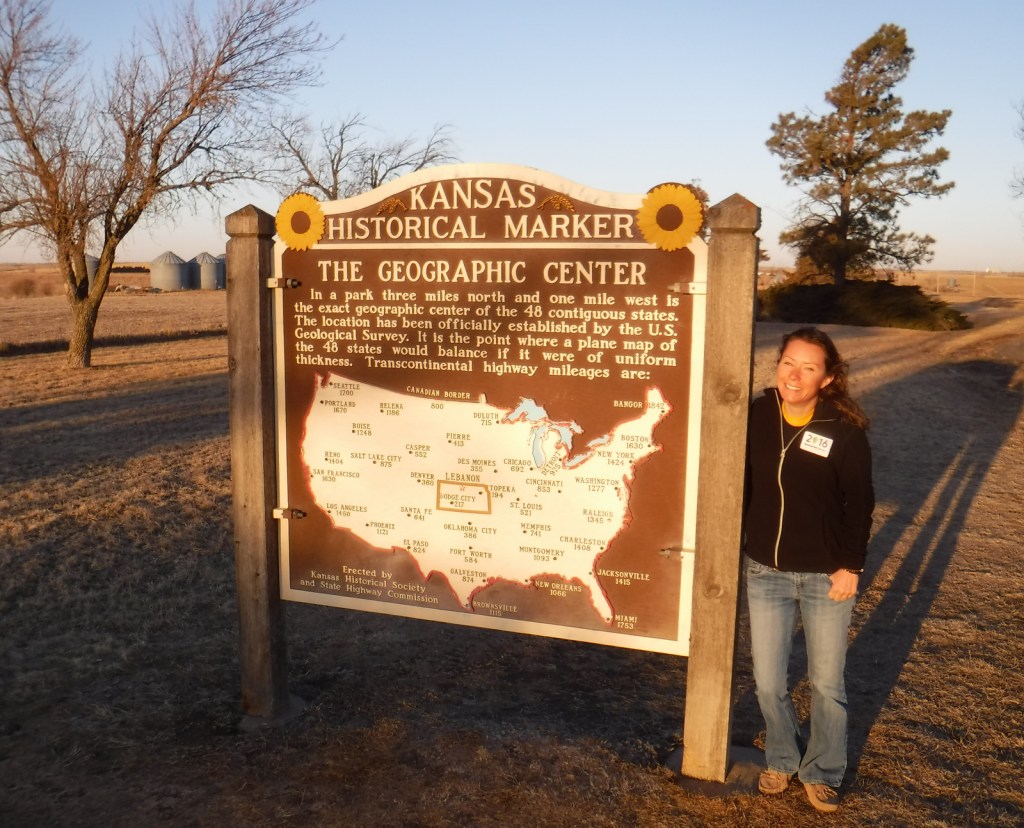
Optional stops at Geographic Center, Coronado Heights Park, Big Basin Prairie Preserve, and Mushroom Rock State Park

Roadside attractions in central Kansas include the Geographic Center of the 48 contiguous states and the hilltop tower at Coronado Heights Park near historic Lindsborg.  There is also a small herd of bison in 1,818-acre Big Basin Prairie Preserve.  At Mushroom Rock State Park, interesting sandstone concretions held together by calcium carbonate have withstood the erosion that washed away the surrounding bedrock over time.

Day 4

Strataca in Hutchinson

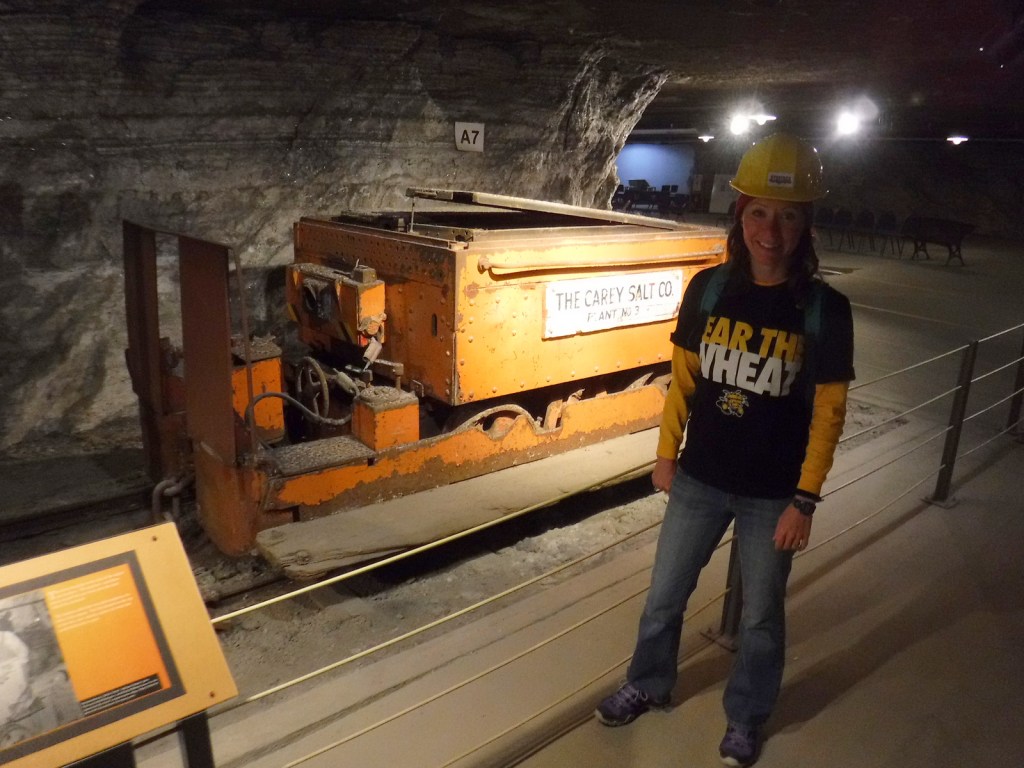
Strataca takes visitors in an elevator 650 feet down through the Equus Beds Aquifer into an underground salt mine with 67 miles of tunnels.  A tram tour (hardhat provided) is part of the admission price, as is the opportunity to take home a big chunk of salt. 

Cosmosphere in Hutchinson

Cosmosphere International SciEd Center and Space Museum contains the largest collection of space artifacts outside the Smithsonian’s National Air and Space Museum in Washington, D.C.

Wichita

The state’s largest city and “Airplane Capital of the World” has the Great Plains Nature Center, Kansas Aviation Museum, and a fun dinner theater at Mosley Street Melodrama.

Optional stop at Hutchinson Zoo

Another one of the many free zoos located throughout Kansas.

Day 5

Fort Scott National Historic Site (click here for our blog post)

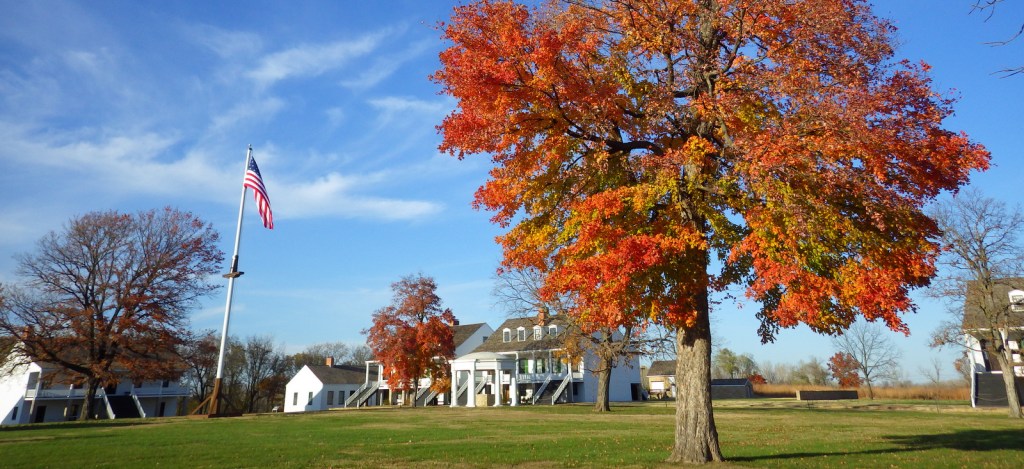
The maple trees were changing colors during our November visit to Fort Scott National Historic Site, their vibrant leaves in sharp contrast to the fort’s white buildings. 

Louisburg Cider Mill

Fall is a great time to visit the cider mill to see the apples being processed and eat some freshly made cider donuts.

Tallgrass Prairie National Preserve (click here for our blog post)

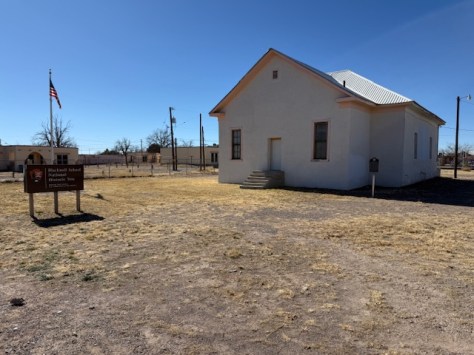
There are many miles of trails that wander through the 10,894-acre preserve that is jointly run by the Nature Conservancy and National Park Service.  A reintroduced bison herd roams these hills, where you can visit the historic Spring Hill Ranch and the one-room Lower Fox Creek School, which was open from 1884 to 1930. 

Brown v. Board of Education National Historic Site (click here for our blog post)

In downtown Topeka, you can tour the former African-American-only Monroe Elementary School, restored to its 1950s appearance with some classrooms turned into exhibits on the civil rights movement worldwide. 

Optional stop at Kansas University in Lawrence

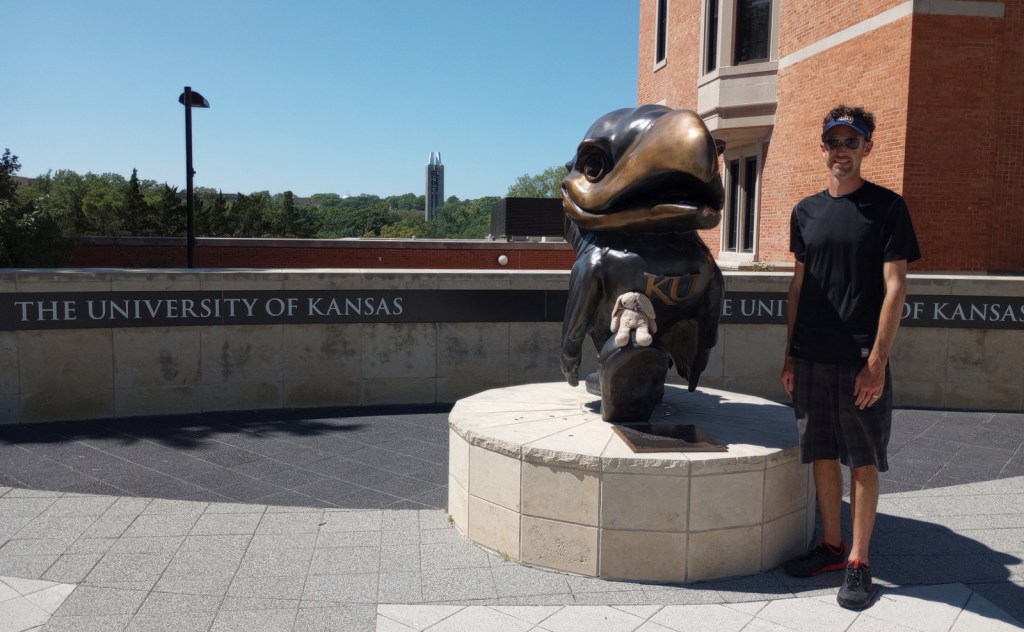
Come for a college football or basketball game and stay to see the original rules for basketball written by Dr. James Naismith, the free Spencer Museum of Art, the historic Natural History Museum, and numerous Jayhawk statues across campus.

Day 6

Kansas City

Not all the best attractions of Kansas City are in Missouri, so explore the beautiful Museum at PrairieFire, try some famous barbecue at Joe’s gas station, and go apple picking in the fall at Cider Hill Family Orchard.

Wamego

Like Liberal on the other side of the state, Wamego also has a Wizard of Oz-themed part of town and holds the annual OZtoberFest in October.

Optional stop at Kansas State University in Manhattan

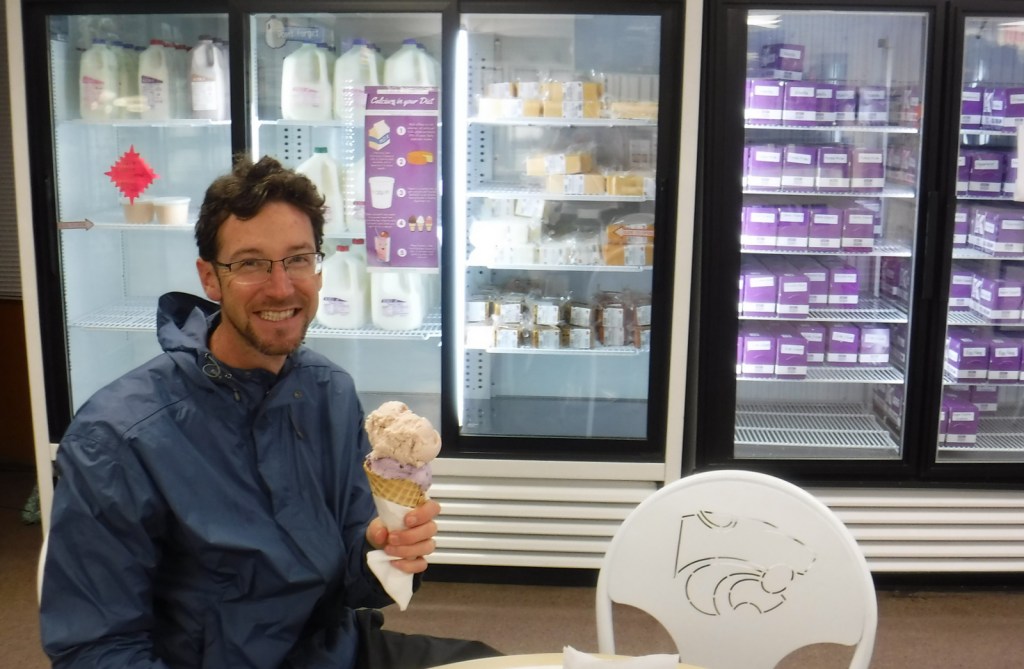
Sample some Purple Pride and Apple Dapple ice cream at Call Hall Dairy Bar, then visit the free Beach Museum of Art and the American Museum of Baking inside Emerson Library that displays a sample of Egyptian bread dating back 3,800 years (insert fruit cake joke here).  Kansas State University Gardens is a great stop regardless of the season given its fountains and Insect Zoo with a modest $3 entry fee. 

Day 7

Ft. Leavenworth

Check in and get your day pass from the military visitor center before driving onto the army base to visit the Buffalo Soldiers Memorial and Frontier Army Museum at Fort Leavenworth.

Atchison

Amelia Earhart Birthplace Museum and Haunted Tours that include the infamous Sallie House.

Optional stop at Marysville

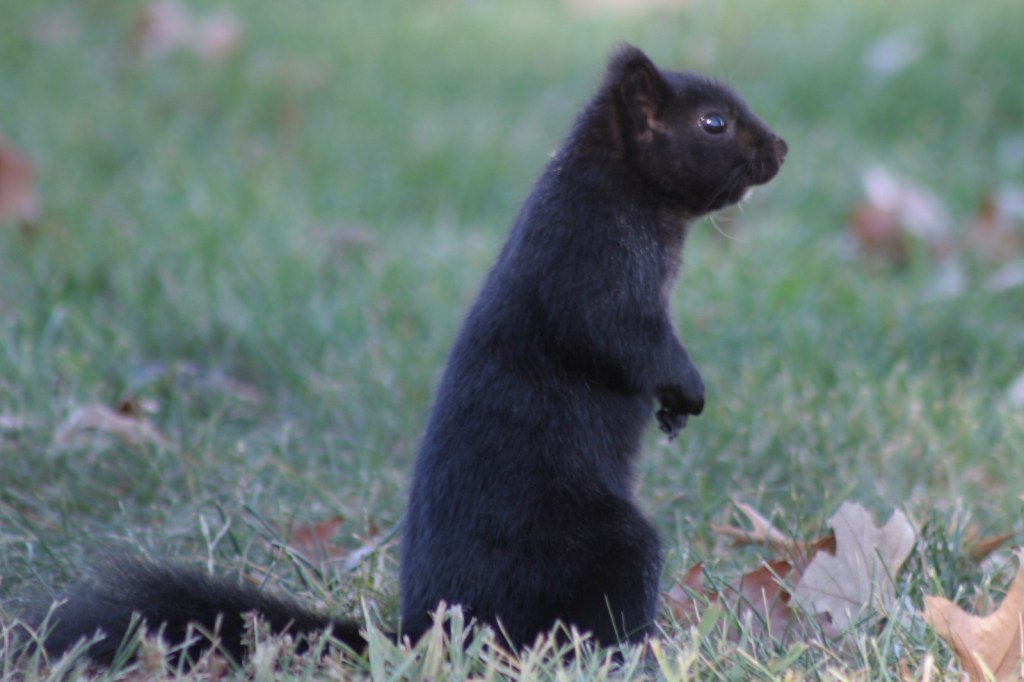
An Oregon Trail town founded in 1855 that still has its old Pony Express Station located downtown near the beautiful 1891 Marshall County Courthouse.  It is also home to a population of black squirrels that are reportedly escapees from a traveling circus. 

Day 8+ optional swing through northwestern Kansas

Nicodemus National Historic Site (click here for our blog post)

Founded in 1877 by former slaves from Kentucky freed after the Civil War, this historic town is representative of the African-American population boom in Kansas that jumped from only 627 to 43,107 between 1860 and 1880.

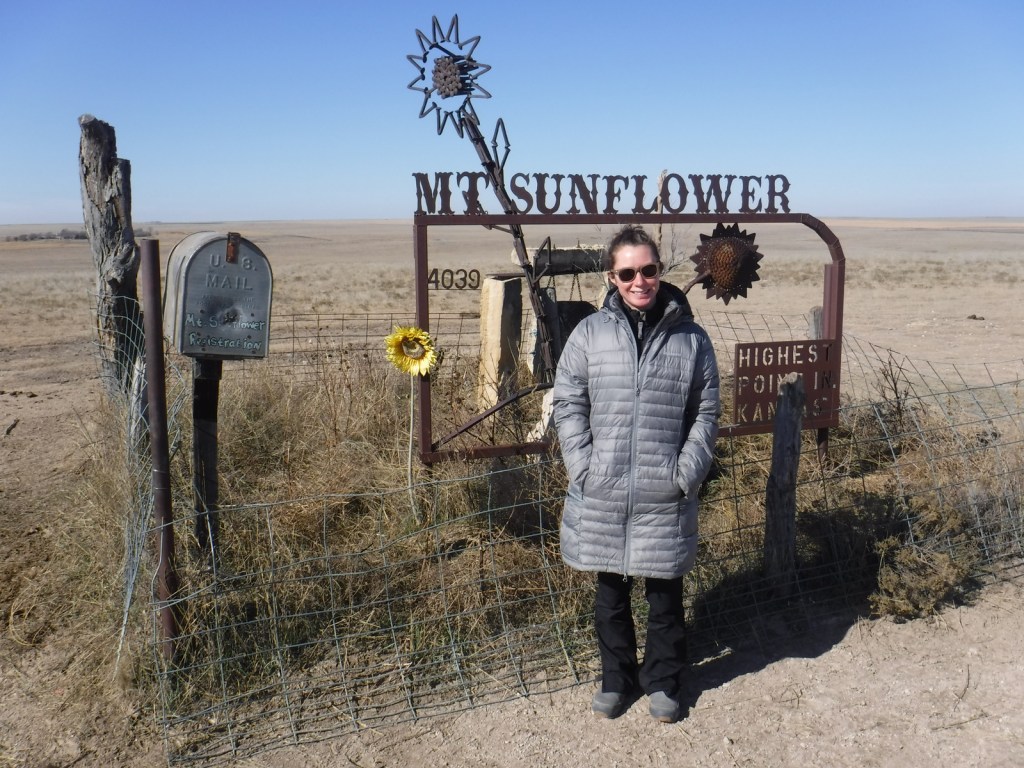
Mt. Sunflower

You can drive to the top of Kansas, a small hill near the western border with Colorado.

Buffalo Bill bronze sculpture in Oakley

An impressive 9,000-pound bronze statue stands outside a Cultural Center highlighting Buffalo Bill’s fascinating life.  Also worthwhile is the Fick Fossil and History Museum.

Monument Rocks

A dirt road detour south of Interstate 70 takes travelers to Monument Rocks, the first National Natural Landmark designated by the U.S. Department of the Interior in 1968.  The 70-foot-tall chalk formations are chock full of fossils formed 80-million years ago during the Cretaceous Period.  The white monoliths really light up at sunset and sunrise, but since they are on private property no camping is allowed at the site. 

Learn more about Kansas’ Most Scenic Drive, Wonderful Waterfall, Top State Park, and other categories in in our new travel guidebook 50 States of Great: Road Trip Guide to America.

Gunnison National Forest

Gunnison National Forest

Colorado

Managed by U.S. Forest Service, Rocky Mountain Region

1,766,941 acres (1,671,941 federal/ 95,000 other)

Website: https://www.fs.usda.gov/gmug

Overview

Gunnison National Forest surrounds the town of Crested Butte, a prime destination for mountain bikers and winter sports enthusiasts.  It also shares mountainous borders and four of its eight designated Wilderness areas with neighboring Rio Grande, San Isabel, Uncompahgre, and White River National Forests.  It was originally called the Cochetopa Forest Reserve, created by President Teddy Roosevelt on June 13, 1905.  It is now co-managed with the Grand Mesa and Uncompahgre National Forests.

Highlights

Silver Thread Scenic Byway, Slumgullion Slide, Mt. Emmons Iron Bog, Taylor Park Reservoir, San Luis Peak, Fossil Ridge Recreation Area, Gothic Research Natural Area, Judd Falls, Alpine Tunnel, Mineral Creek Trail

Must-Do Activity

Much of the area was mined in the past, so there are many miles of four-wheel-drive roads to explore over mountain passes like Tomichi, Hancock, Taylor, Tincup, and Pearl Pass.  Near the Victorian-era town of Lake City, the famous Slumgullion Slide crosses Highway 149 where a massive earth flow created Lake San Cristobal about 700 years ago.  Visible from a pullout at Windy Point, a secondary flow of sludgy montmorillonite continues to move trees downslope to this day.

Best Trail

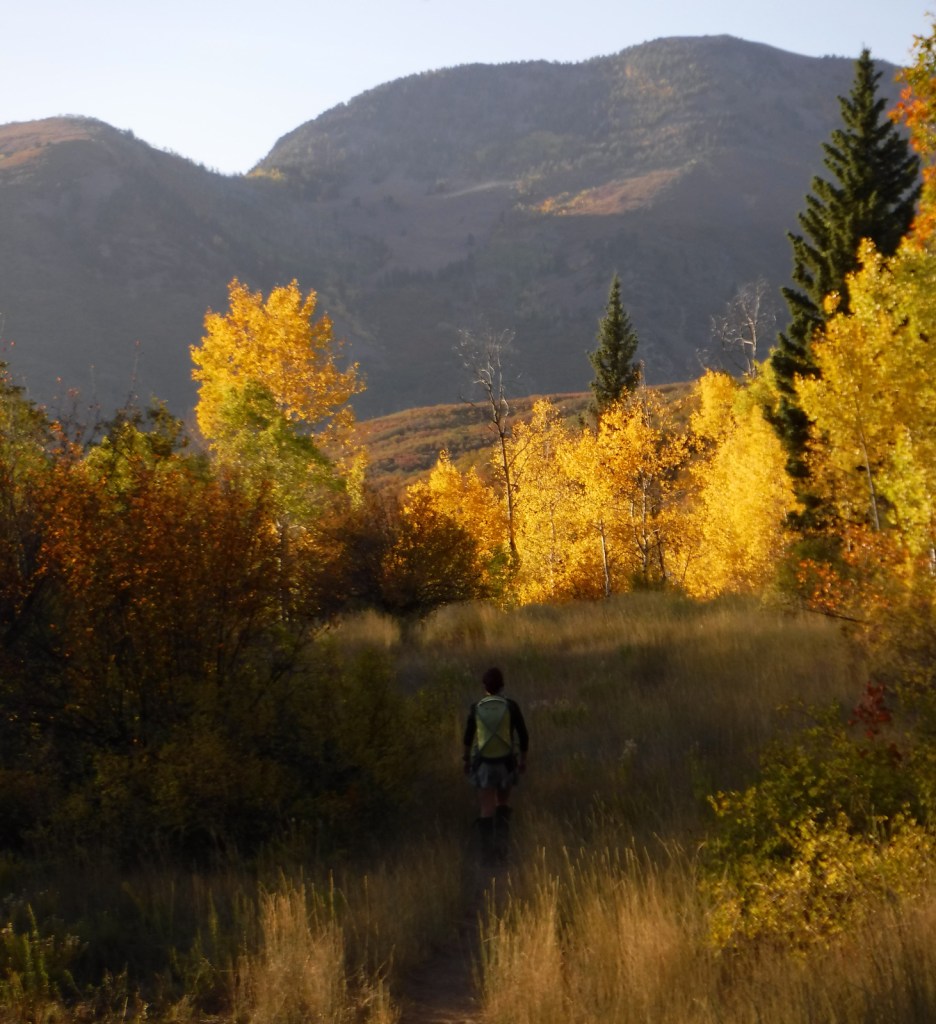
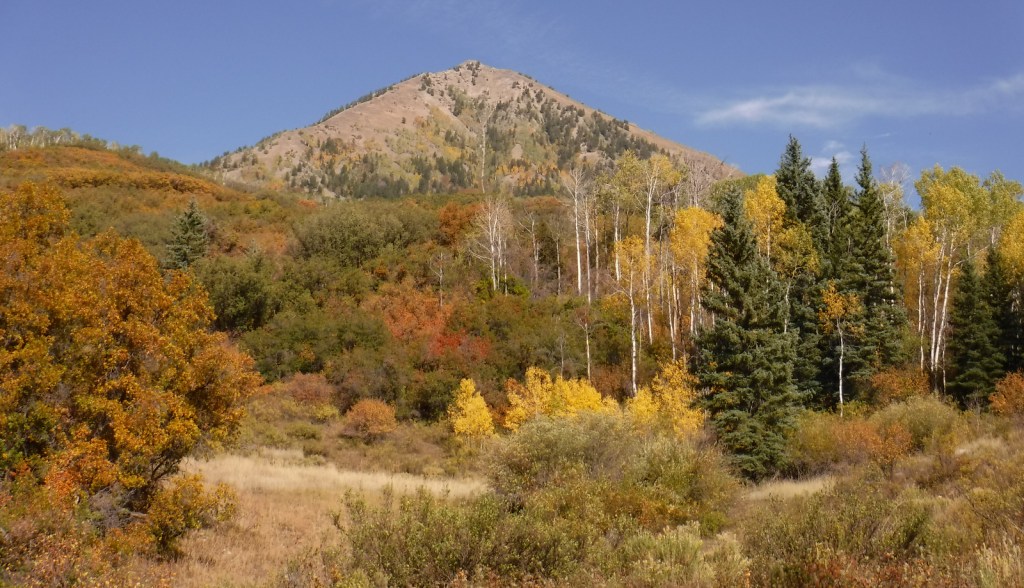
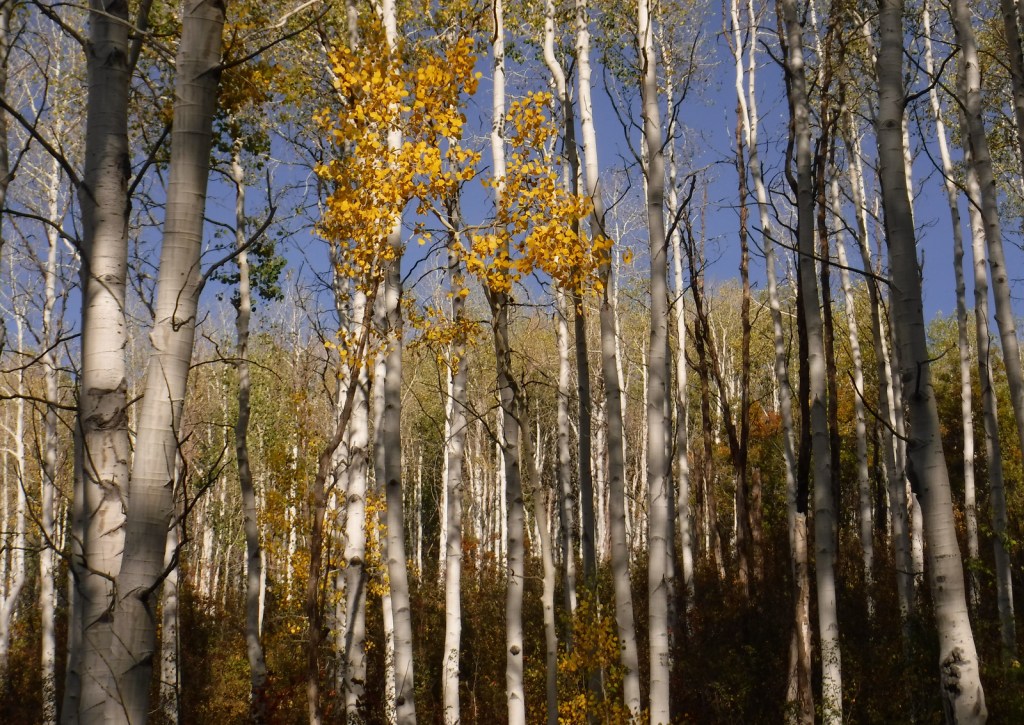
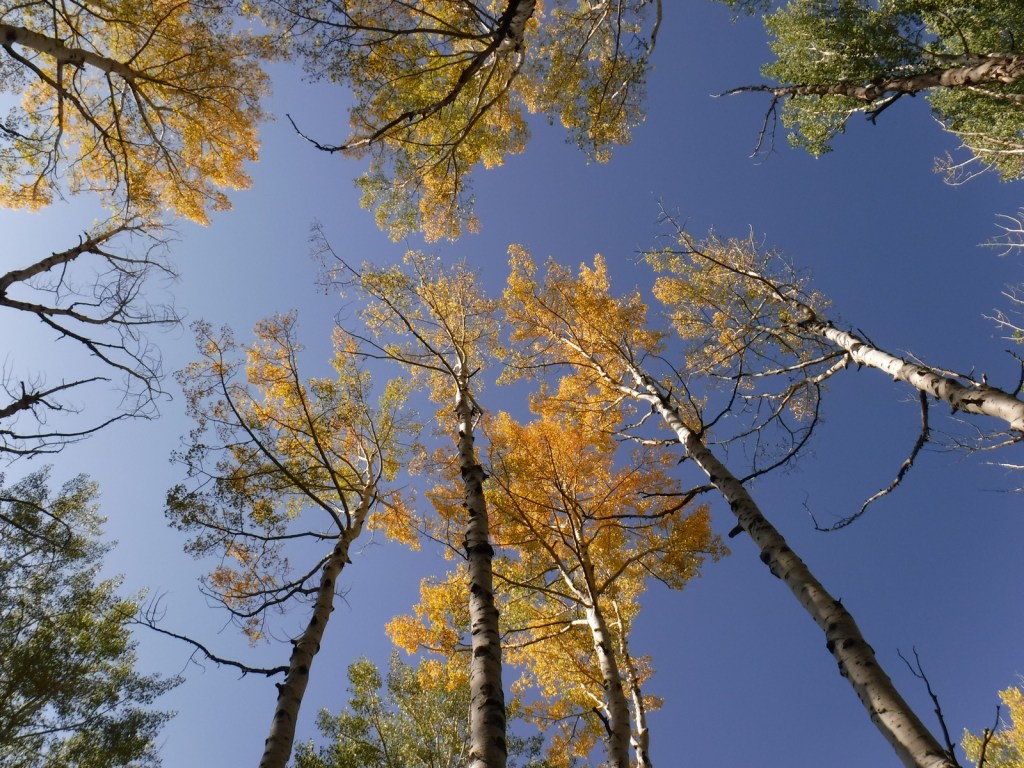
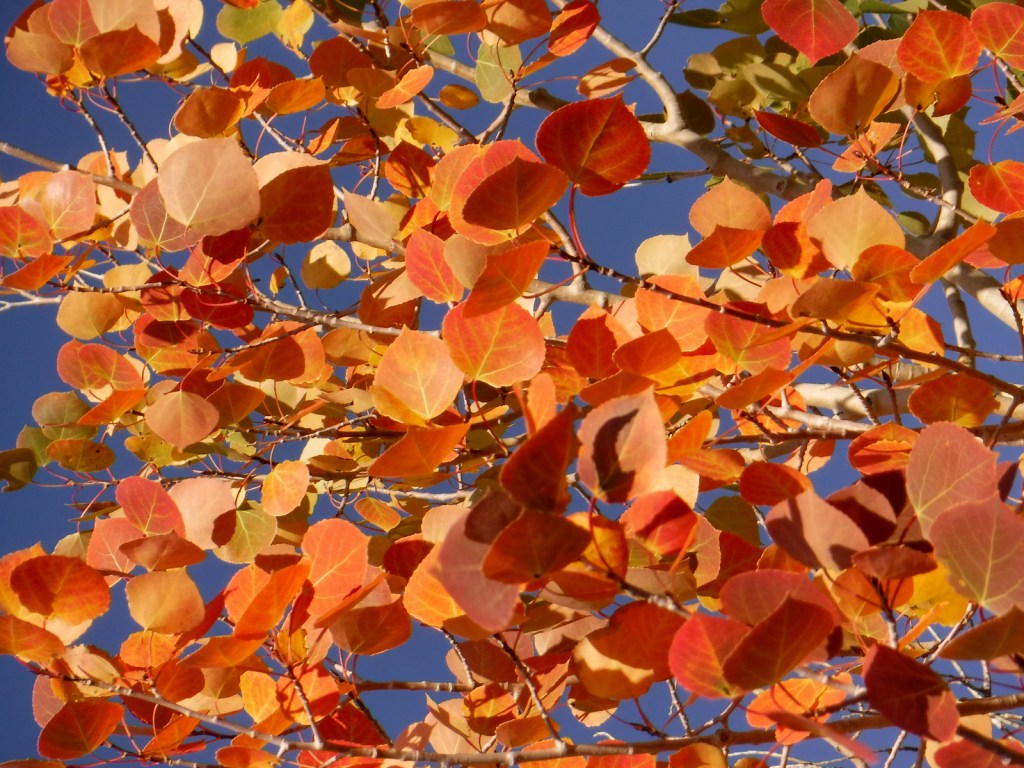
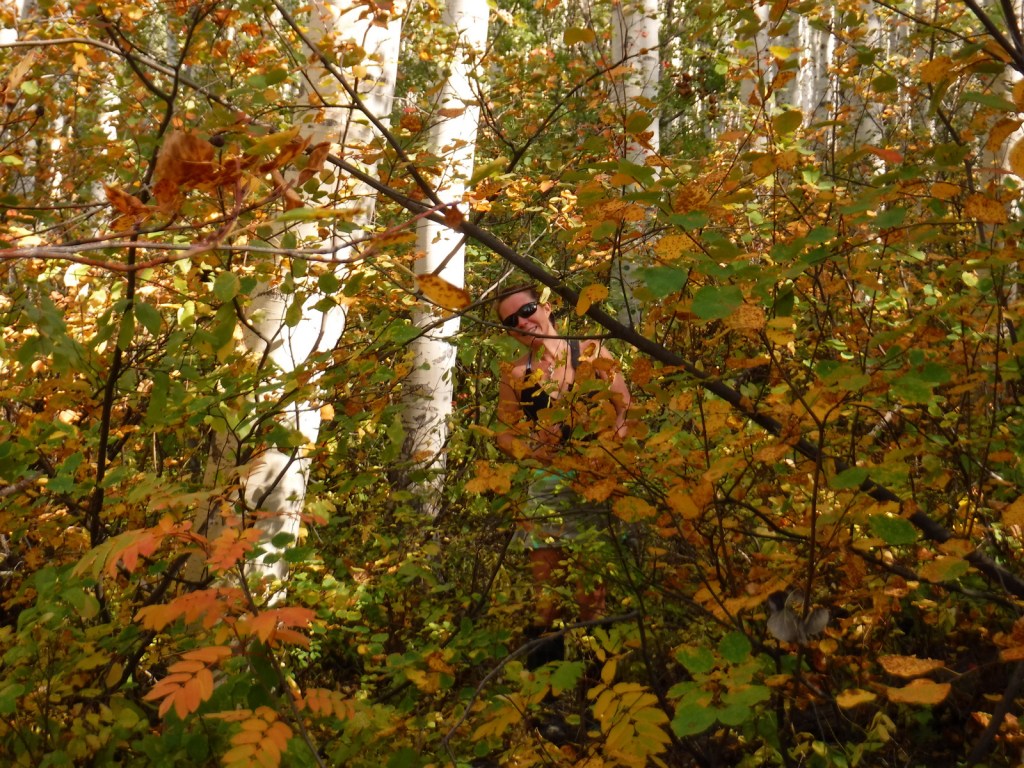
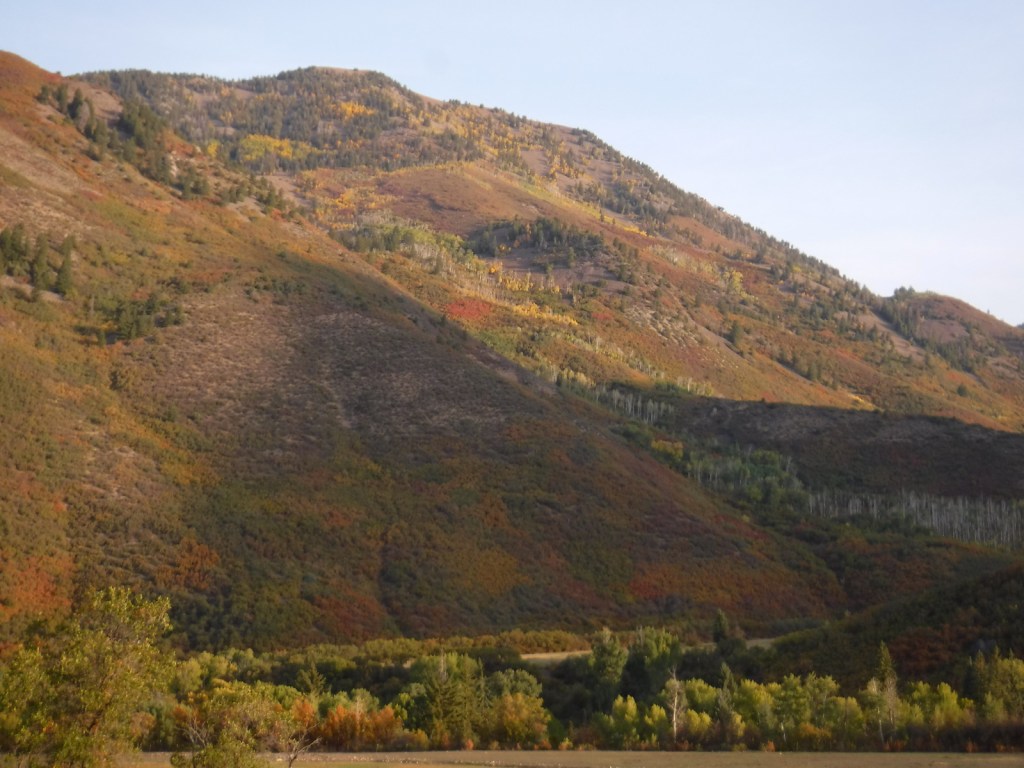
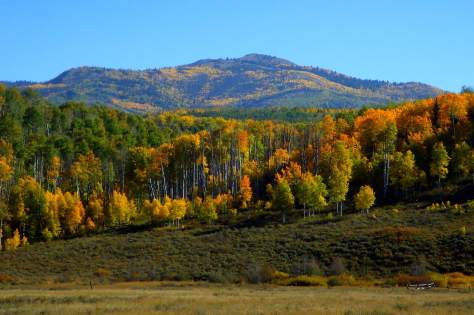
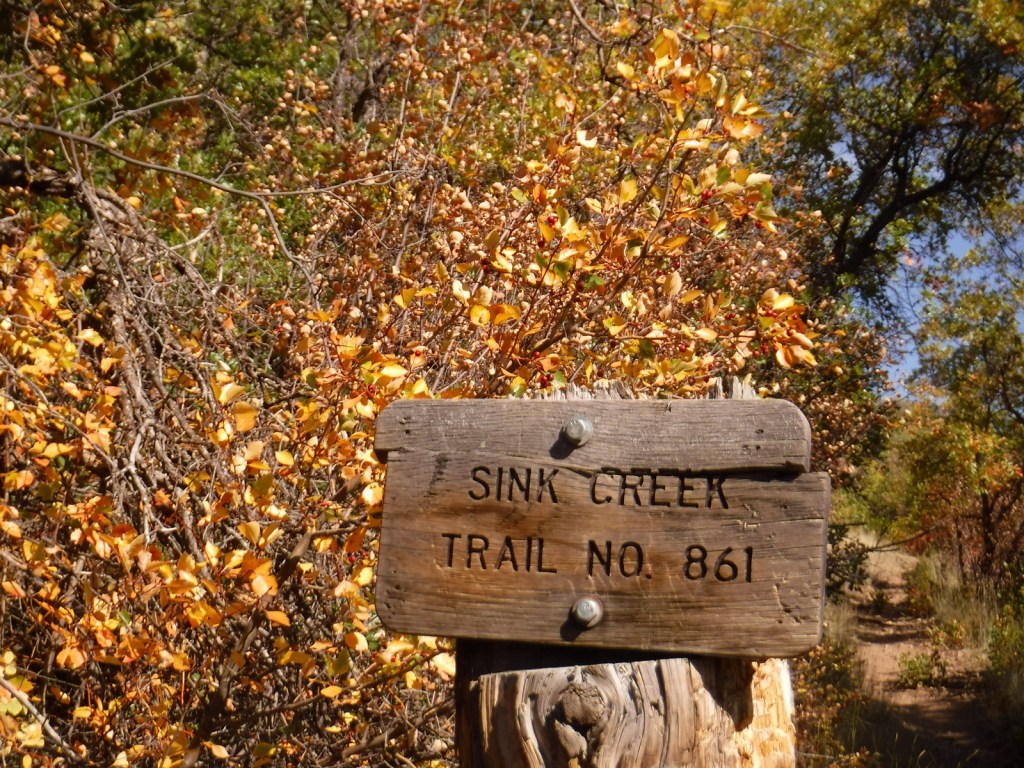
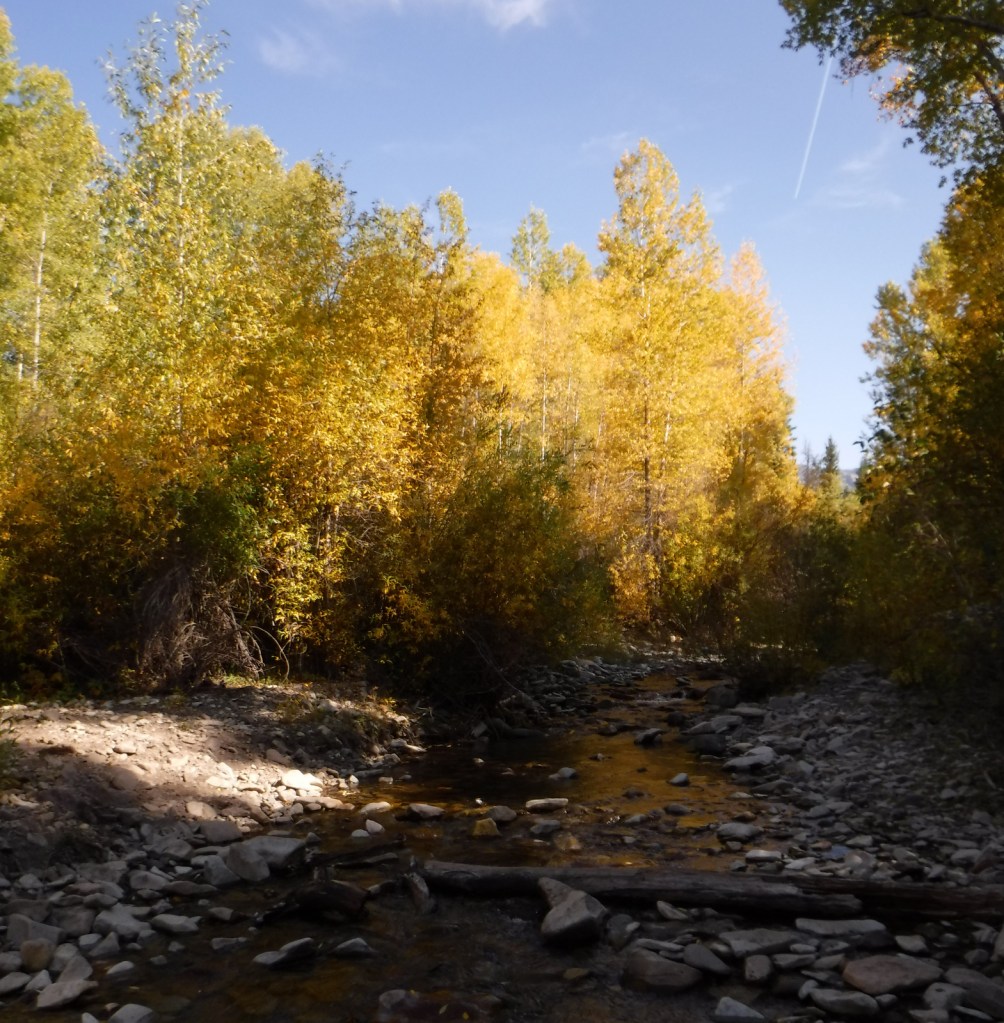
Just past the Bureau of Land Management (BLM) recreation site at Needle Rock, a gravel road enters Gunnison National Forest where two trailheads afford entrance into the West Elk Wilderness.  Throughline Trail heads northeast toward 12,719-foot Mt. Gunnison, but it can be connected with the Lone Pine Trail at the 3.5-mile point to form a loop with Sink Creek Trail (a total of 13 miles roundtrip).  We hiked a portion of Sink Creek Trail in late September when the aspen trees were changing colors and found a nice place for dispersed camping near the South Smith Fork Trailhead (high-clearance vehicle recommended).

Watchable Wildlife

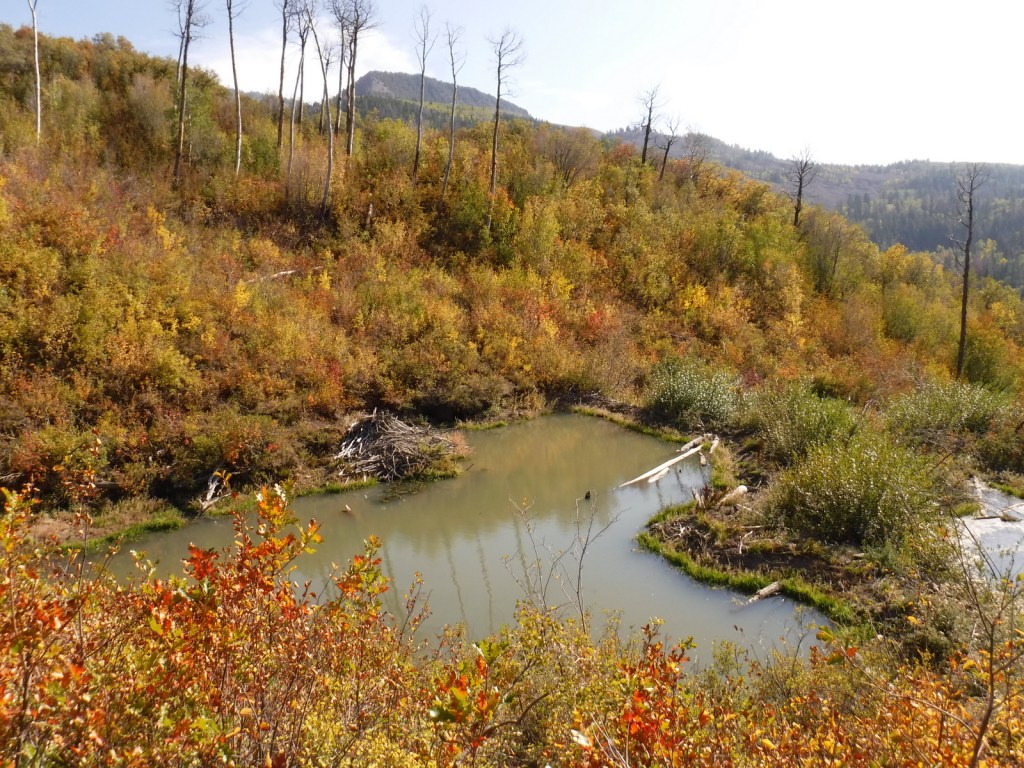
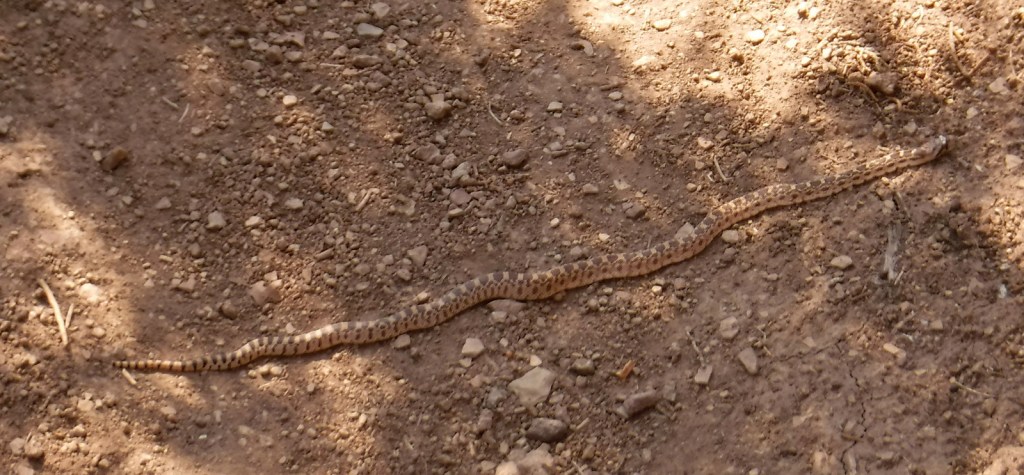
There are presumably elk in the mountainous West Elk Wilderness, as well as mule deer and bighorn sheep (a herd overwinters near the junction of the East and Taylor Rivers).  Mountain lions, black bears, and pine martens also inhabit Gunnison National Forest.  On our hikes we came across a gopher snake and a dam built by a beaver.  Watch the skies for raptors like golden eagles, red-tailed hawks, and peregrine falcons.

Instagram-worthy Photo

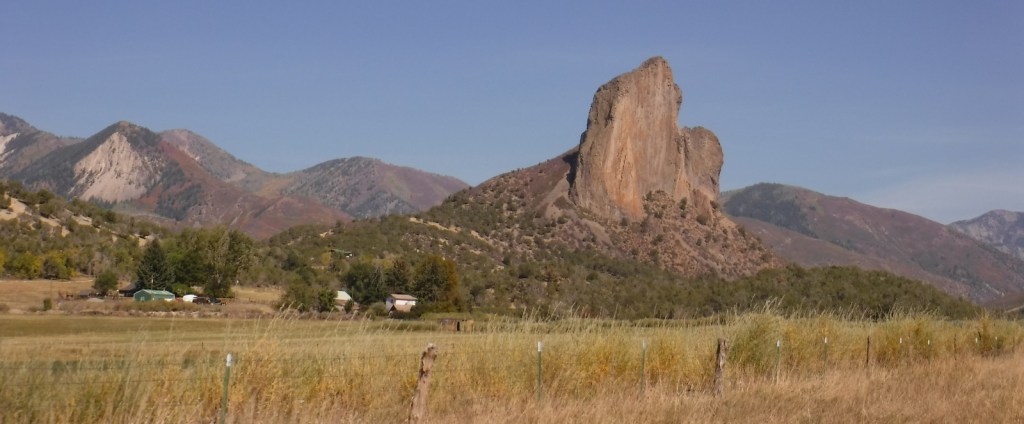
A good gravel road east of Crawford leads into Gunnison National Forest past Needle Rock Outstanding Natural Area, run by the Bureau of Land Management (BLM).  The landmark is a 28-million-year-old volcanic plug which can be explored on a steep trail that does not completely circle it because of private land.

Peak Season

Summer and fall

Fees

None

Road Conditions

Several paved highways crisscross the National Forest, including a stretch of the Silver Thread Scenic Byway.  Not every back road requires a high-clearance vehicle, as good graded roads go over Kebler Pass, Ohio Pass, and Cumberland Pass into the town of Pitkin.  Popular four-wheel-drive routes include Pearl Pass Road, Old Monarch Pass Road, and Schofield Pass north into Crystal Canyon. 

Camping

There are many nice campgrounds in Gunnison National Forest, including Slumgullion Campground at 11,200 feet, Lost Lake Campground next to a wildflower meadow, and Dorchester Campground on the road to 11,928-foot Taylor Pass (accessible by four-wheel-drive vehicles).  Dispersed camping is also allowed throughout the National Forest; we found a nice spot near the South Smith Fork Trailhead (high-clearance vehicle recommended).

Wilderness Areas

Collegiate Peaks Wilderness Area (also in San Isabel National Forest)

Fossil Ridge Wilderness

La Garita Wilderness (also in Rio Grande National Forest)

Maroon Bells-Snowmass Wilderness (also in White River and San Isabel National Forests)

Powderhorn Wilderness (also on BLM land)

Raggeds Wilderness (also in White River National Forest)

West Elk Wilderness

Uncompahgre Wilderness (also in Uncompahgre National Forest)

Related Sites

Arapaho National Forest (Colorado)

Colorado National Monument (Colorado)

Grand Mesa National Forest (Colorado)

Nearest National Park

Black Canyon of the Gunnison

Conifer Tree Species

Engelmann spruce, subalpine fir, Douglas-fir, ponderosa pine, lodgepole pine, two-needle pinyon pine, Rocky Mountain juniper

Flowering Tree Species

Gambel oak, quaking aspen, Utah serviceberry, red elderberry, sagebrush

Explore More – Who was John Gunnison, the Gunnison River’s namesake?

Learn more about this and the 154 other National Forests in our new guidebook Out in the Woods
Grand Mesa National Forest

Grand Mesa National Forest

Colorado

Managed by U.S. Forest Service, Rocky Mountain Region

351,715 acres (346,555 federal/ 5,160 other)

Website: https://www.fs.usda.gov/gmug

Overview

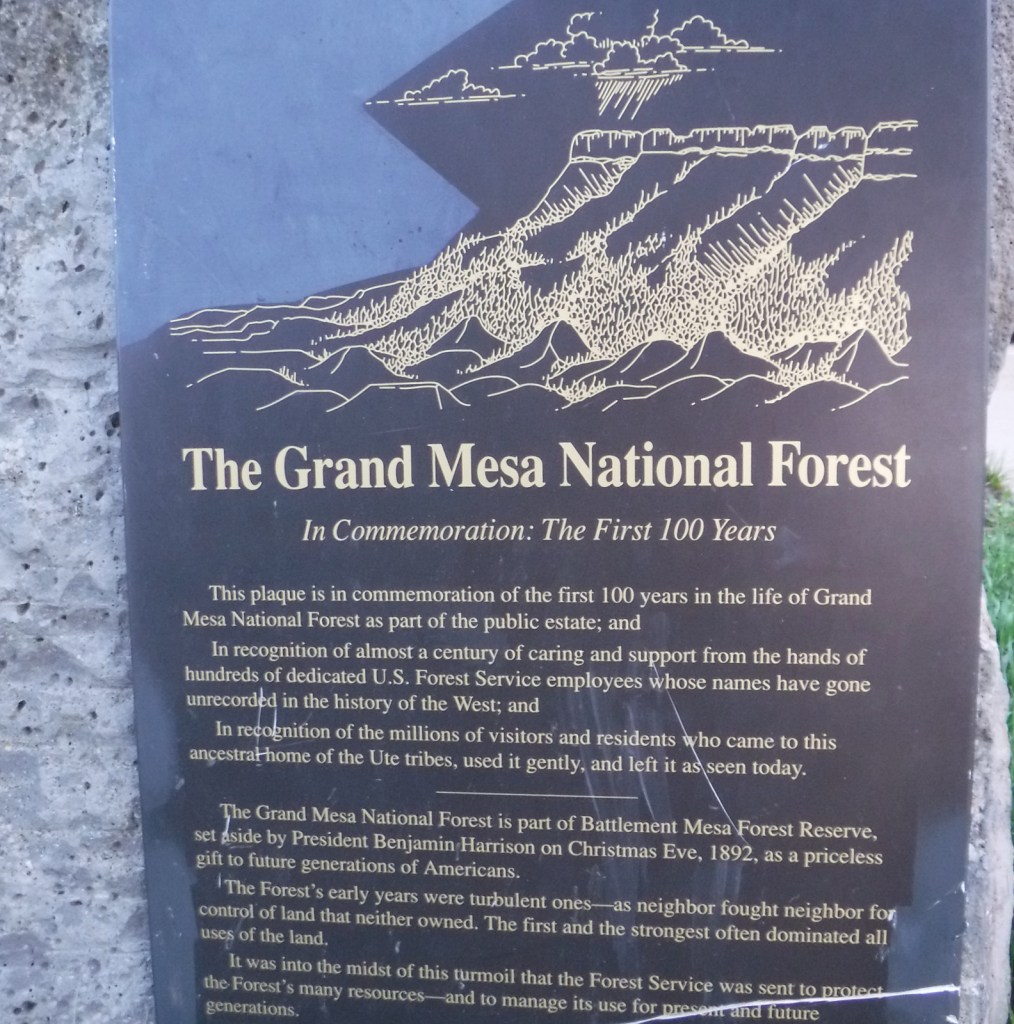
Covering 540 square-miles, Grand Mesa is the largest flattop mountain in the world and has an average elevation of 10,500 feet.  It rises east of Grand Junction and is easily explored via paved Highway 65, also known as Grand Mesa Scenic Byway.  Due to its high elevation, Grand Mesa National Forest is a popular destination for snowmobiles in the winter.  This area was first set aside by President Harrison in 1892 as Battlement Mesa Forest Reserve, only the third such designation in U.S. history.  It is now co-managed with Colorado’s Gunnison and Uncompahgre National Forests.

Highlights

Grand Mesa Scenic Byway, Land’s End Ranger Observatory, Ward Lake, Island Lake Interpretive Trail, Crag Crest National Recreation Trail, Eggleston Lake, Leon Peak, Battlement Trail

Must-Do Activity

Also covering a portion of Battlement Mesa, Grand Mesa National Forest contains more than 300 lakes, several of which have campgrounds.  The Grand Mesa Visitor Center on Highway 65 near Island Lake is a great place to start, with a 20-minute film shown detailing the 1999 Land’s End archaeological excavation that found evidence of 8,000 years of human activity at 9,000 feet in elevation.  Dirt roads travel east from there deeper into the National Forest, or you can take a side trip west on the Grand Mesa Scenic Byway to the visitor center at Land’s End Ranger Observatory for views all the way into Utah’s La Sal National Forest. 

Best Trail

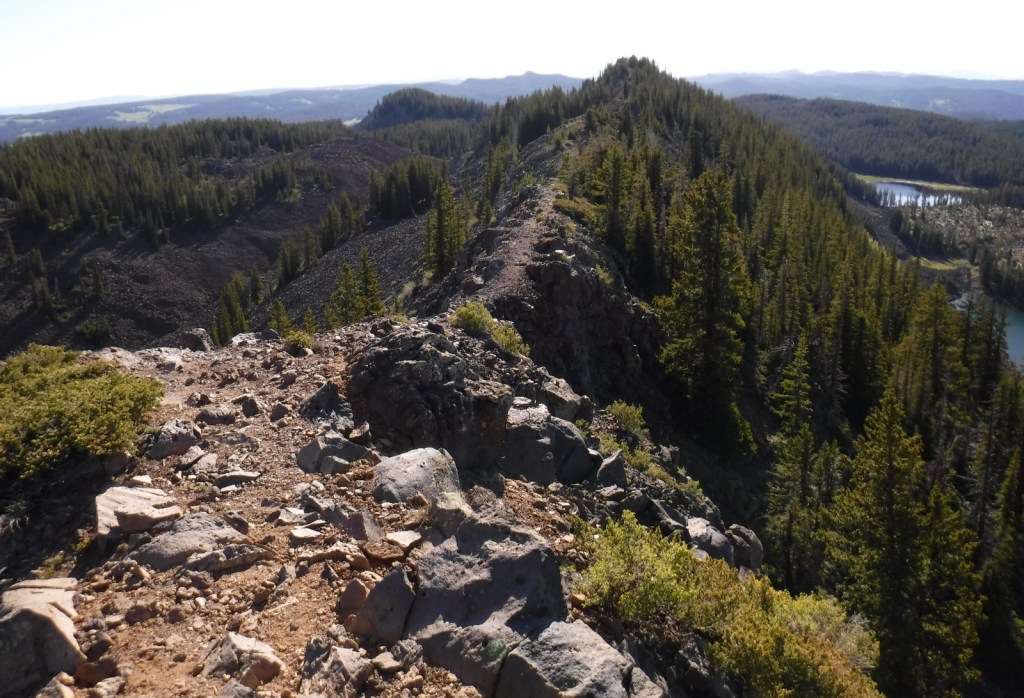
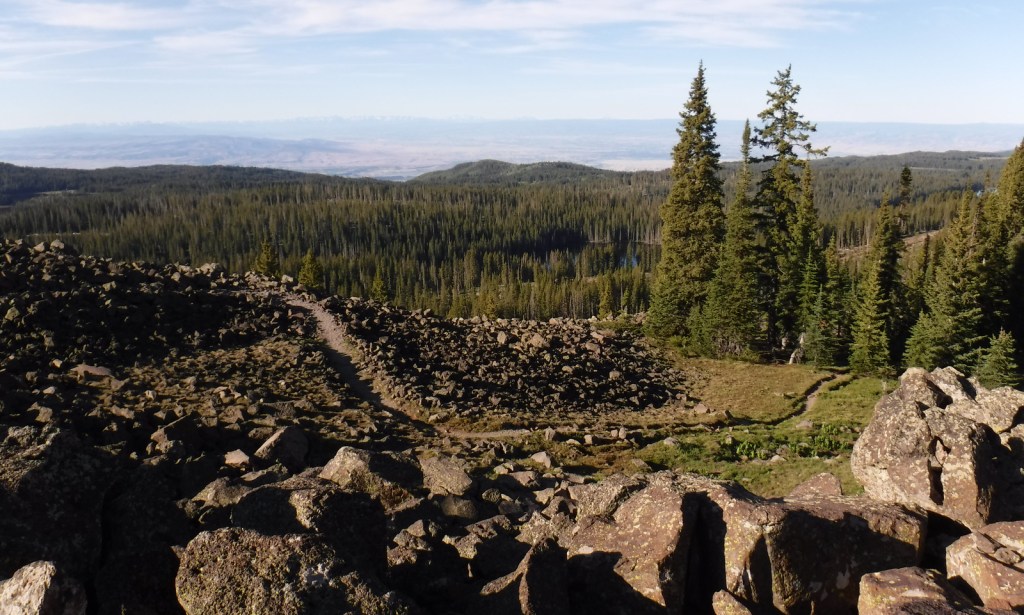
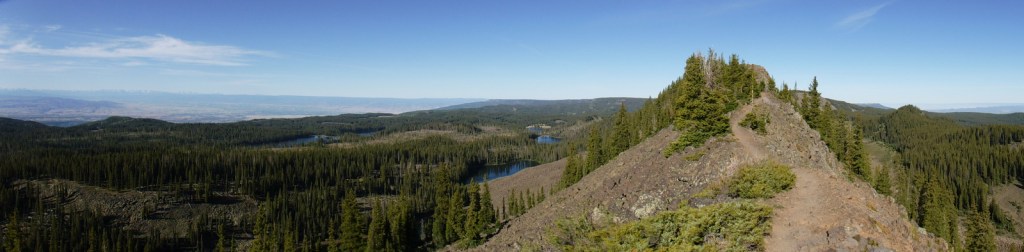
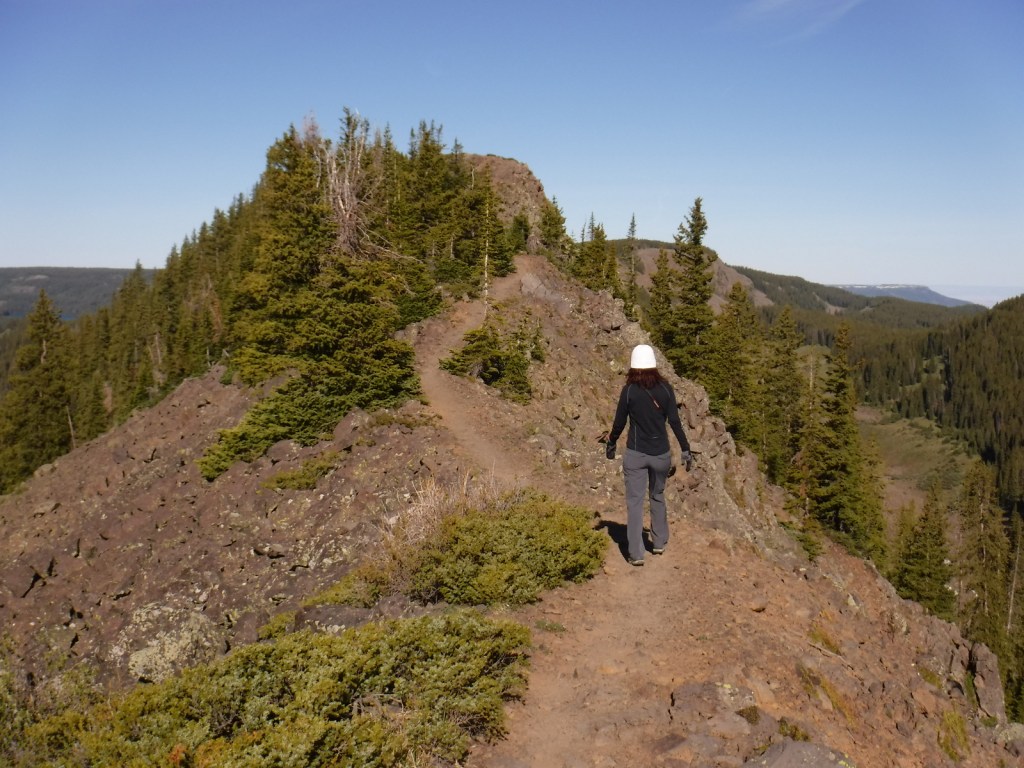
The best trail in Grand Mesa National Forest is without a doubt Crag Crest National Recreation Trail.  It can be hiked as a 10.3-mile loop from two trailheads, one at Island Lake (paved access) and the other at Eggleston Lake (that requires some dirt road driving).  The crest portion of the hike is the highlight as it follows a narrow ridge of volcanic rock that offers spectacular views.  Due to its exposure and the high altitude (up to 11,189 feet) it is recommended that you get an early start to avoid afternoon thunderstorms.  For those not wishing to do the entire loop, we found that by starting out counterclockwise from Eggleston Lake the trail climbs steeply providing panoramas within two miles.  We completed five miles out-and-back with a cumulative elevation gain of 1,100 feet and felt we had gotten the full experience.

Watchable Wildlife

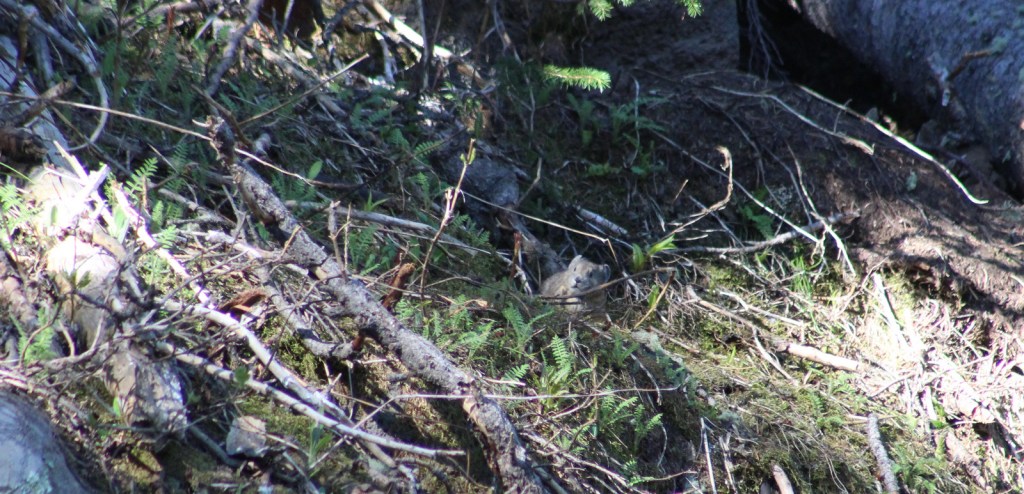
Trout fishing is one of the main draws to the 300 lakes in Grand Mesa National Forest.  The lakes and streams also attract elk, mule deer, bighorn sheep, raccoons, red foxes, black bears, and mountain lions, in addition to large birds like bald eagles, golden eagles, peregrine falcons, common ravens, and wild turkeys.  Due to its high elevation, look for pikas in the rocks along Crag Crest National Recreation Trail.

Instagram-worthy Photo

Starting counterclockwise on the Crag Crest National Recreation Trail from Eggleston Lake, we climbed to stunning panoramas within two miles. 

Peak Season

Summer

Fees

None

Road Conditions

Grand Mesa Scenic Byway follows paved Highway 65 up above 10,000 feet in elevation, as well as west to Land’s End Ranger Observatory.  The unpaved Land’s End Road continues switchbacking down the mesa to Highway 50, but is not recommended for vehicles more than 21 feet in length.  The unpaved roads on Grand Mesa were in good shape during our June visit, but are closed in the winter.

Camping

There are campgrounds at several lakes in Grand Mesa National Forest, as well as dispersed camping options along the dirt roads.

Wilderness Areas

None

Related Sites

Gunnison National Forest (Colorado)

Colorado National Monument (Colorado)

Arapaho National Forest (Colorado)

Nearest National Park

Black Canyon of the Gunnison

Conifer Tree Species

Engelmann spruce, subalpine fir, Douglas-fir, two-needle pinyon pine, ponderosa pine

Flowering Tree Species

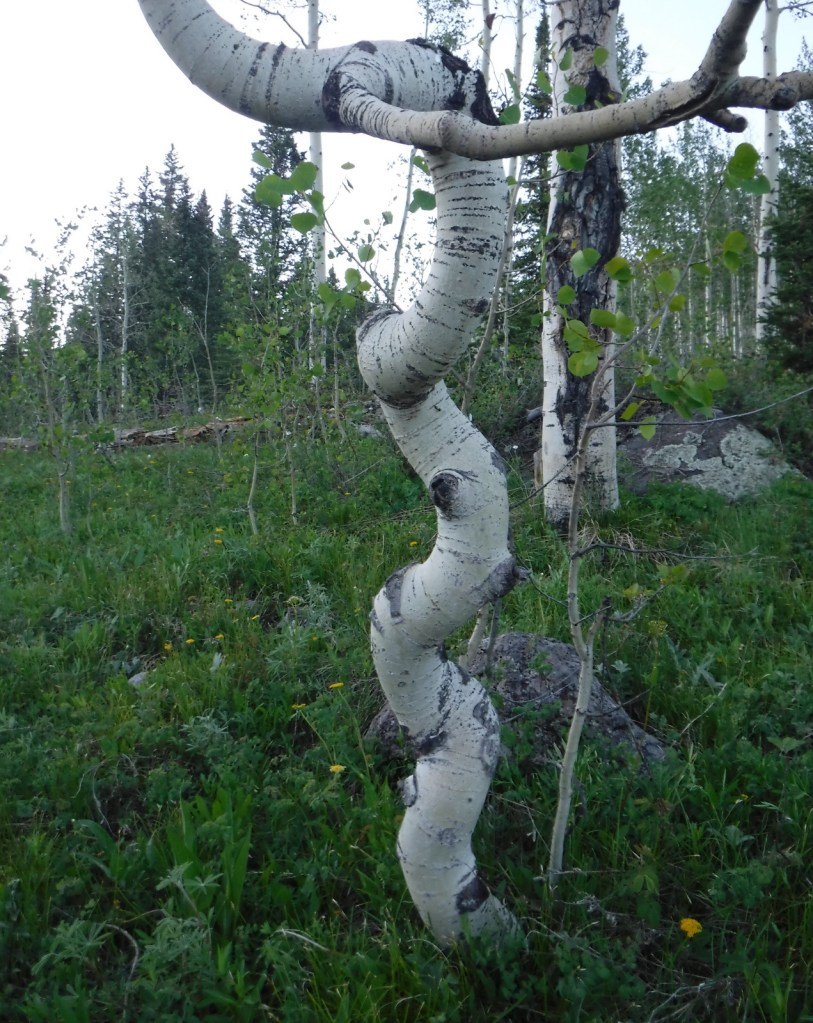
Gambel oak, quaking aspen, narrowleaf cottonwood, mountain-mahogany, chokecherry

Explore More – Now a geological term, what does “mesa” mean in Spanish?

Learn more about this and the 154 other National Forests in our new guidebook Out in the Woods

We are a participant in the Amazon Services LLC Associates Program, an affiliate advertising program designed to provide a means for us to earn fees by linking to Amazon.com and affiliated sites.

Top 10 Non-Fiction Books about Road Trips

In honor of publishing our newest travel guidebook 50 States of Great: Road Trip Guide to America, we decided to rank our favorite non-fiction books about road trips.  We did not realize how many we had read until we started researching other lists on the subject, so the competition was stiff.  Two classics that did not crack our Top 10 are Zen and the Art of Motorcycle Maintenance by Robert M. Pirsig (1974) and Blue Highways: A Journey into America by William Least Heat Moon (1982).  We would love to hear your favorite road trip book, fiction or non-fiction.  Click here to see all our Top 10 lists, including some road trip books in our Top 10 Non-Fiction Books Set in Multiple National Parks.

10. Rammer Jammer Yellow Hammer: A Journey into the Heart of Fan Mania by Warren St. John (2004)

A lifelong Alabama fan follows his team through an entire football season in the late-1990s and learns about the RV culture of dedicated tailgaters

9. South to America: A Journey Below the Mason-Dixon to Understand the Soul of a Nation by Imani Perry (2022)

Most of the books on this list are light-hearted, but this one takes on racism and other serious subjects

8. A Life on the Road by Charles Kuralt (1990)

Autobiography of a reporter who spent much of his career doing human interest stories across the U.S.

7. Stephen Fry in America: Fifty States and the Man Who Set Out to See Them All by Stephen Fry (2010)

An interesting perspective from a British actor who filmed a documentary series while visiting all 50 states in the 2000s

6. A Walk Across America by Peter Jenkins (1979)

Does it count as a road trip if you walk the road instead of driving it? We think so, and the sequel The Walk West is also good

5. Travels with Charley in Search of America by John Steinbeck (1962)

Perhaps a bit dated now, but this is a cherished travelogue from the national treasure who wrote The Grapes of Wrath (a novel which is sort of a road trip book itself)

4. The Lost Continent: Travels in Small-Town America by Bill Bryson (2001)

A comedic take on American quirks by an ex-pat who lived in Great Britain for years

3. The Electric Kool-Aid Acid Test by Tom Wolfe (1968)

Delve “furthur” into the 1960s drug culture alongside One Flew over the Cuckoo’s Nest author Ken Kesey and his band of Merry Pranksters

2. Assassination Vacation by Sarah Vowell (2005)

A highly-entertaining travelogue of visiting the many places made famous by assassinations throughout American history

…and finally our #1 book about a road trip:

1. On the Road by Jack Kerouac (1957)

This classic does not really have a plot, just a bunch of interesting characters to drive back and forth across 1950s America with (it is often considered fiction, but it is based on real people and events)

.

Honorable Mentions

Rising from the Plains (Annals of the Former World, Book 3 of 4) by John McPhee (1986)

Road cuts along highways are often destinations for geologists, especially in the Rocky Mountains

Northland: A 4,000-Mile Journey Along America’s Forgotten Border by Porter Fox (2018)

The author writes of his experiences traveling by canoe, freighter, car, and foot along the U.S.-Canada border

Fear and Loathing in Las Vegas by Hunter S. Thompson (1971)

This is a fun book that made it on many similar lists, but we are not sure it really qualifies as a road trip or just a “trip”

Roads: Driving America’s Great Highways by Larry McMurtry (2000)

We have not read this book yet, but it is now on our list

.

We are a participant in the Amazon Services LLC Associates Program, an affiliate advertising program designed to provide a means for us to earn fees by linking to Amazon.com and affiliated sites.

We Published Our Newest Travel Guidebook to America!

Today we published our newest guidebook to all 50 states available for sale on Amazon

50 States of Great: Road Trip Guide to America is a starting point for planning a road trip of any length, covering the best of each state in 12 categories: scenic drive, State Park, museum, waterfall, roadside attraction, National Forest, campsite, and more.  50 States of Great is a culmination of our extensive travels through the United States of America seeking out well-known destinations and less-frequented spots.  The goal of our book is to be useful whether you are taking a cross-country road trip or exploring your home state.

We are also giving a presentation on road tripping in the U.S.A. at the Laramie County Library in Cheyenne, Wyoming.  It will be held in the Cottonwood Room (1st floor) at 7 p.m. on Tuesday, December 5, 2023.  We will have all our books for sale before and after the talk and would be happy to sign them for you.

If you go to our book page on Amazon (https://amzn.to/3tZsK3K) click on the cover image to Look Inside.  We have included the Introduction below and will post a sample chapter on this website tomorrow.

Check out our Amazon author page and Shop tab for all four of our books, plus other products!

Introduction

We love traveling in the United States of America (U.S.). We have driven hundreds-of-thousands of miles across the country while on dozens of road trips, plus three flights taken to Hawai‘i. Utilizing our expertise, we wrote this guidebook with the goal of helping readers plan a road trip to see the best of what each state has to offer. This informative book presents all 50 states in alphabetical order, with abbreviated chapters at the end on American Samoa, the District of Columbia, Puerto Rico, and the U.S. Virgin Islands.
In our travels, we have visited every state—at least twice. We have spent the night in all 50 states. Between the two of us, we have lived in ten different states from coast to coast (Alaska, Arizona, Arkansas, California, Colorado, New York, North Carolina, Ohio, Tennessee, and Wyoming—our current home of more than a decade). We have visited in person more than 90% of the locations mentioned in this guidebook and we are excited to see some of the ones we learned about during our research, as well as making it to the remote territories of Guam and Northern Mariana Islands. As the old saying goes: “We have not been everywhere, but it is on our list.”

In 2016, we took ten months off to celebrate the centennial of the National Park Service (NPS) by visiting a State Park and an NPS site in all 50 states. Since then, we have traveled to all 50 states again and three territories, including a special trip in 2022 just to say we finally overnighted in Rhode Island. After the COVID-19 pandemic, we completed our effort to take a hike in all 155 National Forests and all 20 National Grasslands. We are currently on quests to hike in at least one National Wildlife Refuge in every single state (19 down) and finish visiting each state capital (only two to go).

We never liked the idea that parts of the U.S. are considered “flyover country,” and not just because we prefer to drive when we travel. This book started as a way to highlight the attractions in the central U.S., then we realized we knew just as many hidden gems in the most “touristy” states.  Relying on our first-hand knowledge, we selected a few must-see sites to visit in each of these 50 United States of America. [Historical note: It was not until the Civil War was fought to preserve the union in the 1860s that “these United States of America” began to be referred to as “the United States of America.”]

We created categories that focused on our areas of expertise, leaving hotels and restaurants to somebody better qualified to compare those businesses. Our categories became the headings for each state that are explained below.

Map

For each state we included an outline map with a star for the capital city and a triangle located at the high point.

Acreage

Not all states are equal in size, so we included the number of acres and the percentage of the U.S. that it covers.

Statehood

This is the year that state was admitted to the union and its number in sequence.

Capital

The city where the state capital resides is represented by a star on the map.

Population

Based on the 2020 census, we included total population and rank out of 50.

High Point

The name and elevation of the highest point in each state is listed, and its location is represented by a triangle on the map.

Name Origin

We briefly explain the often-mysterious etymology. Most state names come from the languages of American Indians, while others have European roots.

Nickname

Every state has a nickname (some of which have changed over time) and the origins of those names are sometimes convoluted.

Background

A catch-all heading that provides some history or glosses over the famous attractions to a particular state, like those in New York City or Las Vegas.

Must-Do Activity

The one place to make sure to visit if you are only going to do one thing in a given state. Our choices range from a city to walk around, an outdoor activity to do, or a general type of attraction to focus on, each of which is essential to experience the best of what that state has to offer.

Greatest National Forest

There are a few states with only one National Forest (and ten without any), which made the selection process easy, but others like California (with 19) were a real challenge to pick. For those ten states without, we chose a National Grassland, State Forest, or similar natural area. We gave equal space to all National Forests in our guidebook Out in the Woods: An Introductory Guide to America’s 155 National Forests.

National Parks

A simple list of each of the 63 National Parks that lie within that state’s border. For more information on each of these, check out our guidebook A Park to Yourself: Finding Adventure in America’s National Parks.

Best National Park Service Site

Excluding the 63 National Parks, we chose our favorite unit managed by the National Park Service from among the National Monuments, National Historic Sites, National Memorials, and other classifications.

Most Scenic Drive

States designate specific roads as “Scenic Byways,” but we did not limit our choices to the official ones. We have driven hundreds-of-thousands of miles on vacations, so we have a feel for what makes an interesting route.

#1 Roadside Attraction

There are entire websites dedicated to roadside attractions and we cannot claim to have been to even half of them. However, we try to break up our drives with interesting stops, some of which take longer to visit than others.

Unique Museum

There are thousands of museums across the U.S. covering art, science, history, and everything in between. We would not argue that these are necessarily the best museums in each state, only that they were unique enough to get our attention.

That’s So [State Name]

In our research, we came across patterns of similar attractions in a specific state or someplace exceptional that could exist only in one state. This became our catch-all heading for fun spots that did not seem to fit elsewhere.

Top State Park

All 50 states have State Parks and we have visited at least one in each state. We often highlight State Parks under other headings, but here we focus on one that stands out above the rest.

Favorite Short Hike

There are so many hiking trails and websites dedicated to them that it is often hard to choose a destination. We guarantee that if you take the trail we picked that you will get a good feel for that state.

Backpacking Destination

We love backpacking and have read more about these remote destinations than any other areas. Our experience on the East Coast is limited, but we did find at least a one-night excursion for all 50 states.

Cool Campsite

We have camped in nearly every state, but usually not in a campground. We prefer dispersed camping on public lands, like those run by the U.S. Forest Service and Bureau of Land Management. Here we focused on unique spots for pitching a tent that sometimes require boating, backpacking, or riding a train (see West Virigina).

Wonderful Waterfall

Waterfalls are some of the most popular destinations for hikes and drives. However, due to topography some states are more blessed with options than others. Our choice is not always the tallest or busiest, but we think you will not be disappointed if you go.

***

For trip planners, thick guidebooks can often be overwhelming and travel websites are usually more interested selling something than providing any useful information. Our research method usually starts with reading the short descriptions found in free tourist pamphlets or book series like Off the Beaten Path, and then further investigating those places on the internet. State Parks, National Forests, and National Park Service sites typically have useful information on their websites and apps. We apologize for any out-of-date content, as there may have been significant changes to some of the attractions since 2020. A wealth of data on specific destinations and hiking trails is available free online, often with detailed directions on how to get there. Check these frequently-updated websites first before visiting anywhere in our guidebook since they can close due to various economic and natural disasters.

For each state, we selected two original photographs by the authors from a place discussed in the headings above. We limited the number of photos from National Parks and National Forests as those can be found in our other guidebooks. You might notice our stuffed animal named Wondon in a few of the photos since he has his own travel blog (WondonBuns.blogspot.com).

All illustrations are original drawings by Scott based on photographs we have taken. We selected an animal found in each state to represent it, allowing for some duplicates. Scott’s illustrations from this book are available on a variety of products on our travel website (RavenAboutTheParks.com).

We hope that 50 States of Great provides inspiration for your own explorations of the United States of America.

Adventure on!

-Scott and Tiff

Cheyenne, Wyoming

October 2023

We are a participant in the Amazon Services LLC Associates Program, an affiliate advertising program designed to provide a means for us to earn fees by linking to Amazon.com and affiliated sites.