Tag Archives: National Park

Minnesota Road Trip Itinerary

50,961,114 acres

Statehood 1858 (32nd)

Capital: St. Paul

Population: 5,706,494 (22nd)

High Point: Eagle Mountain (2,302 feet)

Best time of year: Summer for the state fair and access to the northern lakes

We recently published our guidebook 50 States of Great: Road Trip Guide to America, so we decided to start a new type of blog post where we create a travel itinerary for all 50 states, in addition to our usual National Forest and National Park entries.  After starting with KansasGeorgia, Idaho, and Rhode Island, we decided to do a state that is part Midwest and part North Woods.  We made an ambitious seven-day plan starting in the southern Minnesota, with plenty of options to extend the trip.

Day 1

SPAM Museum

Located in the small town of Austin, this free museum is full of interactive exhibits and photo opportunities, but the best part is that it does not take itself too seriously.  Even if you do not like to eat the canned “spiced ham” product, you will come to appreciate its significance to World War II history and pop culture, as well as its amazing gift shop with more branded products than you can imagine.

Niagara Cave or Mystery Cave

Niagara Cave is a privately-owned show cave named for its 60-foot-tall underground waterfall that is only viewable on guided tours.  Not far away, Forestville/Mystery Cave State Park contains the state’s longest cave (47 degrees year round) which also offers guided tours.

Optional stop at Pipestone National Monument (click here for our blog post)

If you come into the state from the southwest corner, consider a stop at a spot that people have come for 2,000 years to mine the red quartzite rock (also known as catlinite).  The soft sedimentary stone is relatively easy to carve into smoking pipes and effigies.  April through October, you can watch American Indian carvers at the National Park Service (NPS) museum demonstrate how to sculpt this soft yet durable stone into hollow pipes and other beautiful ornaments, some of which you can buy in the gift shop.

Optional stop at Laura Ingalls Wilder Museum

Fans of the author’s “Little House” series of books will want to see a replica of the Ingalls’ home in Walnut Grove and some of the family’s historic heirlooms.

Day 2

Mall of America

Indoor shopping malls are still thriving in the Twin Cities (Minneapolis-St. Paul) metropolitan area, perhaps due to the cold and snowy winter weather.  The most famous is the Mall of America with its indoor amusement park and 520 stores, making it the largest mall in the western hemisphere (and eleventh largest in the world).

Mississippi National River and Recreation Area (click here for our blog post)

This park follows 72 miles of the great river’s course through Minnesota, from busy metropolitan sections in the Twin Cities to secluded stretches of water where it reaches its confluence with the Saint Croix National Scenic Riverway.  In downtown Minneapolis, Minnehaha Regional Park contains its namesake falls celebrated in Henry Wadsworth Longfellow’s Song of Hiawatha.  Nearby, St. Anthony Falls is the only true waterfall along the entire length of the Mississippi River, now controlled by a lock and dam.  

Optional stop at University of Minnesota Golden Gophers’ football game

We saw wild turkeys wandering around this beautiful campus that sits on a bluff east of the Mississippi River.  Nobody seems to be exactly sure what a golden gopher is (possibly a thirteen-lined ground squirrel), but their mascot Goldie is the cutest in all of college football.  Huntington Bank Stadium has one of the best pregame areas with plenty of photo ops and a pep rally held outside the hockey arena, plus we got free Culver’s custard, a clear bag giveaway, and Mystic Lake casino provided free towels and “spinny video thing.”  The football team typically schedules their home opener on the Thursday before Labor Day during the Minnesota State Fair.

Day 3

Minnesota State Fair

You will need all day to visit America’s best state fair that is held annually the 12 days before Labor Day, welcoming more than two-million visitors annually.  The fair has the standard carnival rides, butter sculptures, farm animals, and artwork, as well as stages where musicians, comedians, and magicians perform throughout the day.  Some of the unique food offerings include hotdish-on-a-stick, poutine, fried cheese curds, pronto pup, fried pickles, pork chop-on-a-stick, and fried buckeyes (chocolate and peanut butter candy).  Since it started in 1979, Sweet Martha’s Cookie Jar has been overfilling buckets of fresh-baked chocolate chip cookies for customers, making up to 200,000 cookies an hour.  To wash all that down, you might want to visit one of the stands offering all-you-can-drink milk.

Optional stop at Hell’s Kitchen restaurant

If you are still hungry after the Minnesota State Fair then you probably didn’t do it right, but we will make one of our rare restaurant recommendations for this unique spot in downtown Minneapolis with interesting décor and really good food (try the poutine or walleye bites).

Day 4

Paul Bunyan Expressway

The legendary giant lumberjack Paul Bunyan is a big deal in Minnesota and he has statues honoring him in many towns along the Paul Bunyan Expressway.  The 18-foot-tall statues in Bemidji were originally built in 1937 to honor these larger-than-life heroes and continue to be an essential roadside attraction.  In Brainerd, Paul Bunyan Land is an entire amusement park built around a 26-foot-tall talking statue of Paul and 19-foot Babe, the latter refurbished after it blew over in a 2006 windstorm.

Chippewa National Forest (click here for our blog post)

The Lost 40 is 144 acres of old-growth red and white pine forest that was never logged due to a surveying error that mapped the area as part of Coddington Lake in 1882.  The oldest tree here is more than 250 years old and can be seen on an easy one-mile loop trail with interpretive signs.  The trailhead is located east of Blackduck on well-signed back roads that are also popular for snowshoeing in the winter.  Nearby, Camp Rabideau is perhaps the best preserved Civilian Conservation Corps (CCC) camp left from the 1930s, with free guided tours in the summer.

Optional stop at Itasca State Park

Lake Itasca is considered the headwaters of the Mississippi River and is located just west of Highway 71 at the beginning of the 2,069-mile-long Great River Road that goes all the way to Louisiana.

Day 5

Roadside Sculptures

Driving north on Highway 71, there is seemingly another great roadside attraction located every few miles.  We saw the statues of Uncle Dan Campbell in Big Falls, Jack Pine Savage in Littlefork, the world’s largest crow in Belgrade, and a giant black duck in the town of Blackduck.  Right outside Voyageurs National Park, which surrounds Lake Kabetogama, was our favorite—a giant walleye with a saddle for riding.  If Kabetogama seems like a mouthful, rest assured that everyone, including park rangers, simply calls it “Lake Kab.”

Voyageurs National Park (click here for our blog post)

The park is famous for its manmade destinations, including Kettle Falls Hotel, Hoist Bay Resort, and the unique sculptures at Ellsworth Rock Gardens.  Try to get out on one of Minnesota’s 10,000 lakes via a ranger-led tour or take your own boat to one of the shoreline campsites inaccessible by car (permit required).  Reservations can be made for the ranger-guided North Canoe Voyage that lets passengers paddle a 26-foot canoe, just like the French-Canadian “voyageurs” of old. 

Day 6

Kawishiwi Falls in Ely

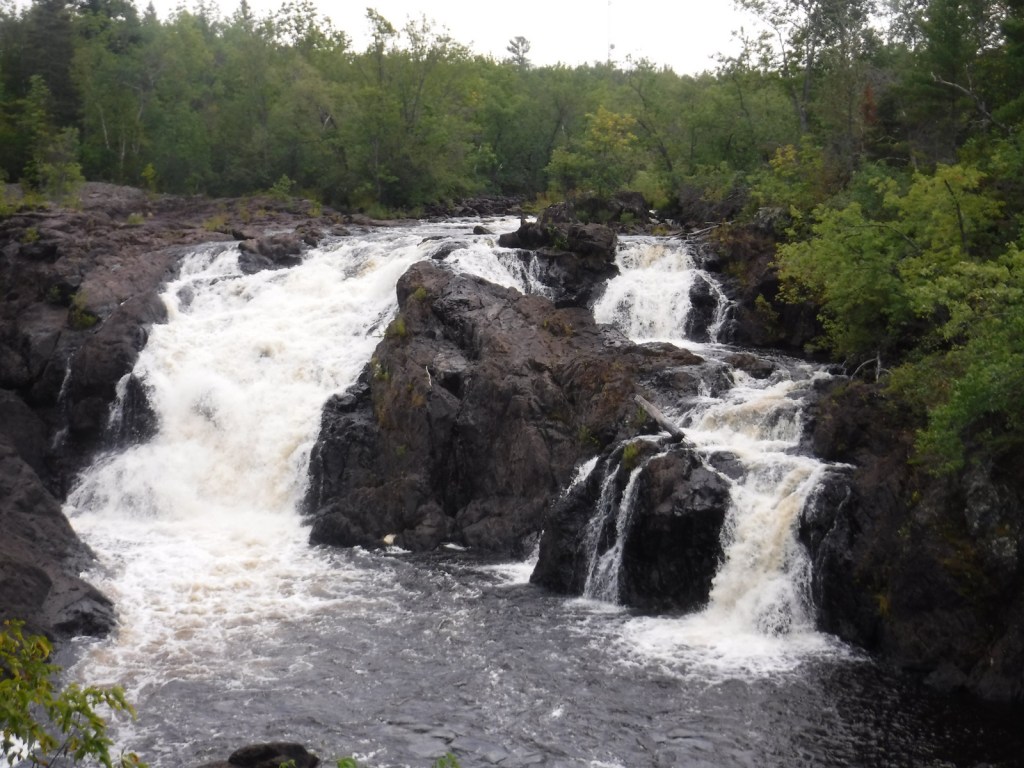
The little town of Ely is the gateway to the Boundary Waters Canoe Area Wilderness (see below), but even if you are just passing through be sure to make the short hike to Kawishiwi Falls below the dam on Garden Lake.

International Wolf Center in Ely

Gray wolves (called timber wolves regionally) reside in the North Woods and while a few lucky travelers might hear them howling, your best bet to see one is at the Wolf Center.  It also has a section dedicated to Sigurd Olson, a talented local author and naturalist.

Optional stop at United States Hockey Hall of Fame in Eveleth

As seen on the side of U-Haul trailers, Eveleth is home to this museum and shrine to American ice hockey players.

Day 7

North Shore Scenic Drive

The northwest shore of Lake Superior is a beautiful stretch of cliffs and waterfalls.  This 148-mile drive starts at the Canadian border near Grand Portage National Monument and passes on its way to Duluth several nice State Parks, including Grand Portage, Gooseberry Falls, Split Rock Lighthouse, Tettegouche, Temperance River, Cascade River, and Judge C. R. Magney State Parks

Grand Portage National Monument (click here for our blog post)

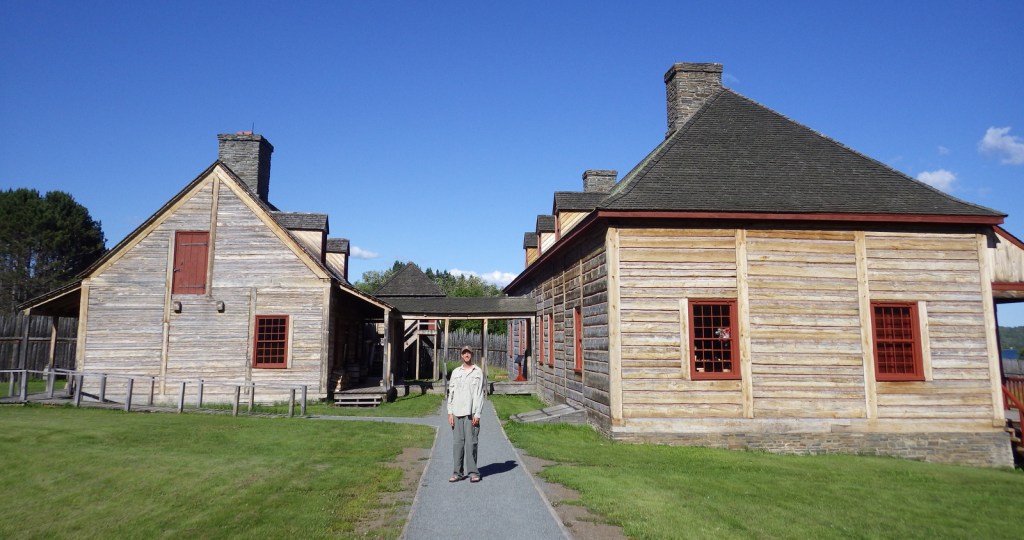
French-Canadian voyageurs had to walk their canoes and goods along an eight-mile-long portage to bypass the rapids on the Pigeon River.  In 1784, the end of the trail on the edge of Lake Superior became the site of the North West Company headquarters where they held an annual rendezvous, where today visitors can walk around the reconstructed buildings and talk with the costumed reenactors during the summer.

Optional stop at Two Harbors

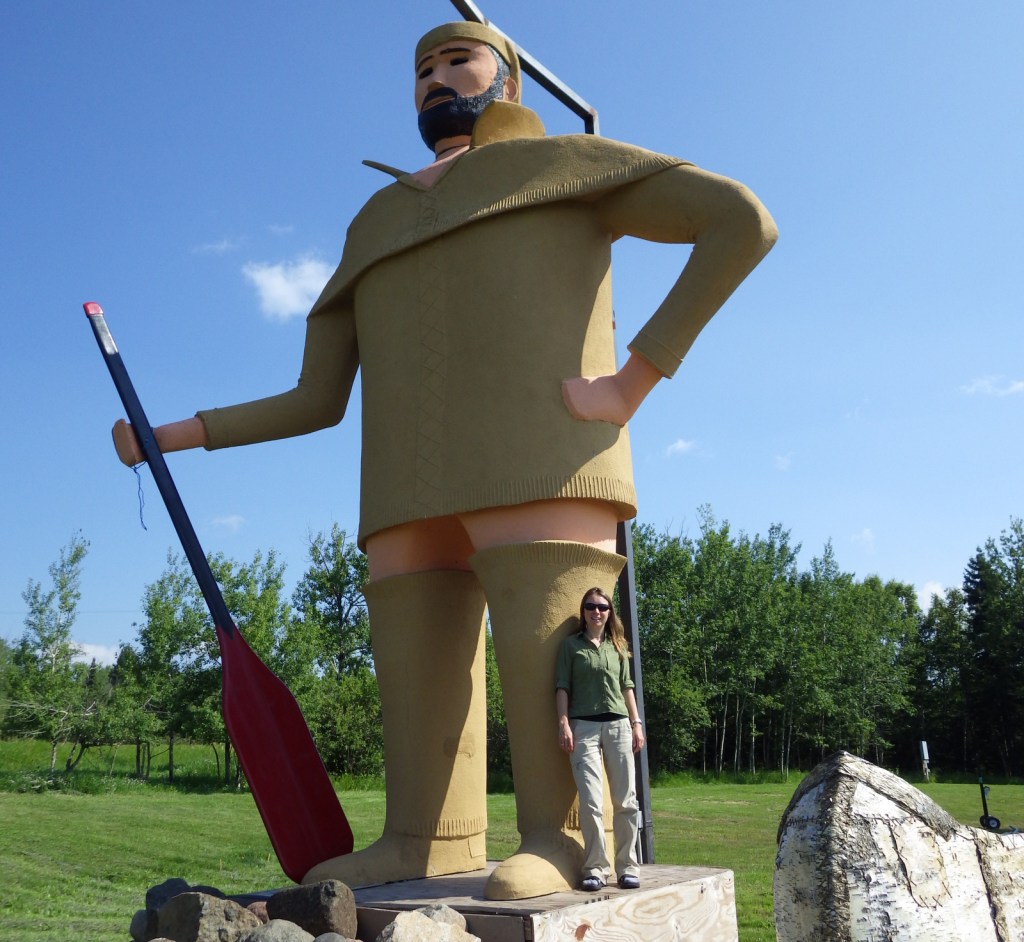
North of Duluth, the North Shore Scenic Drive passes through the town of Two Harbors where there is a giant rooster at Weldon’s Gifts and a huge statue of Pierre the Voyageur outside the Earthwood Inn.  If you press the speaker button at the statue’s base, Pierre will tell you all about the history of the region, but he never explains why he is not wearing any pants. 

Day 8+

Superior National Forest

In addition to encompassing the state’s highest mountain, Superior National Forest also offers scenic drives on the Gunflint Trail (County Road 12), Fernberg Road (State Route 169), and Echo Trail (County Road 116).  Vermilion Gorge Trail is an easy 1.5-mile one-way hike to a narrow canyon cut through Canadian Shield rock in the small community of Crane Lake (on the east side of Voyageurs National Park).  Not far away down a dirt road, a short trail leads to Vermilion Falls where the same river cuts a narrow channel through the rock. 

Boundary Waters Canoe Area Wilderness

Permits for the peak season can be hard to come by for the world’s premiere destination for backcountry canoeing, so plan ahead.  This one-million-acre preserve has more than 1,000 lakes with over 1,500 miles of canoe routes and 2,200 designated backcountry campsites.  In addition to its famous water routes with numerous portages, a few overland trails exist like the 12-mile Angleworm Trail and the 39-mile Kekekebic Trail, an official part of the North Country National Scenic Trail.

Learn more about Minnesota’s Most Scenic Drive, Wonderful Waterfall, Top State Park, and other categories in our new travel guidebook 50 States of Great: Road Trip Guide to America.

Hawai‘i Volcanoes National Park

Hawai‘i Volcanoes National Park

Hawai‘i

Managed by National Park Service

Established 1916

344,812 acres

Website: nps.gov/havo

Overview

Hawai‘i National Park was created in 1916, before being split in 1961 into this park on the Big Island of Hawai‘i and Haleakala National Park on Maui.  Encompassing two of the world’s most active volcanoes (Kīlauea and Mauna Loa), Hawaiʻi Volcanoes National Park is constantly changing.  Indigenous people considered Kīlauea Caldera and its bubbling Halemaʻumaʻu Crater as the sacred home of Pele, goddess of the volcano.  This area first became a tourist attraction in the 1840s when Volcano House was still a grass shack.  A small, wooden hotel was built in 1877 that now serves as Volcano Art Center Gallery, before the larger lodge was finished in the 1940s on the edge of the caldera.  A strenuous backpacking trail summits the world’s largest shield volcano, 13,677-foot Mauna Loa, which erupted in 1926, 1942, 1950, 1984, and 2022. 
To learn more about the separate Kahuku Unit and how to find solitude in this National Park that saw 1.6-million visitors in 2023, check out our expanded 2nd edition of our guidebook A Park to Yourself: Finding Solitude in America’s 63 National Parks

Highlights

Volcano Art Center, Halemaʻumaʻu Crater, Chain of Craters Road, Kīlauea Iki Crater, Nāhuku (Thurston Lava Tube), Hōlei Sea Arch, Lava Tree Molds, Mauna Loa Overlook, Kīpukapuaulu Trail, Pu‘u Loa Petroglyphs Trail

Must-Do Activity

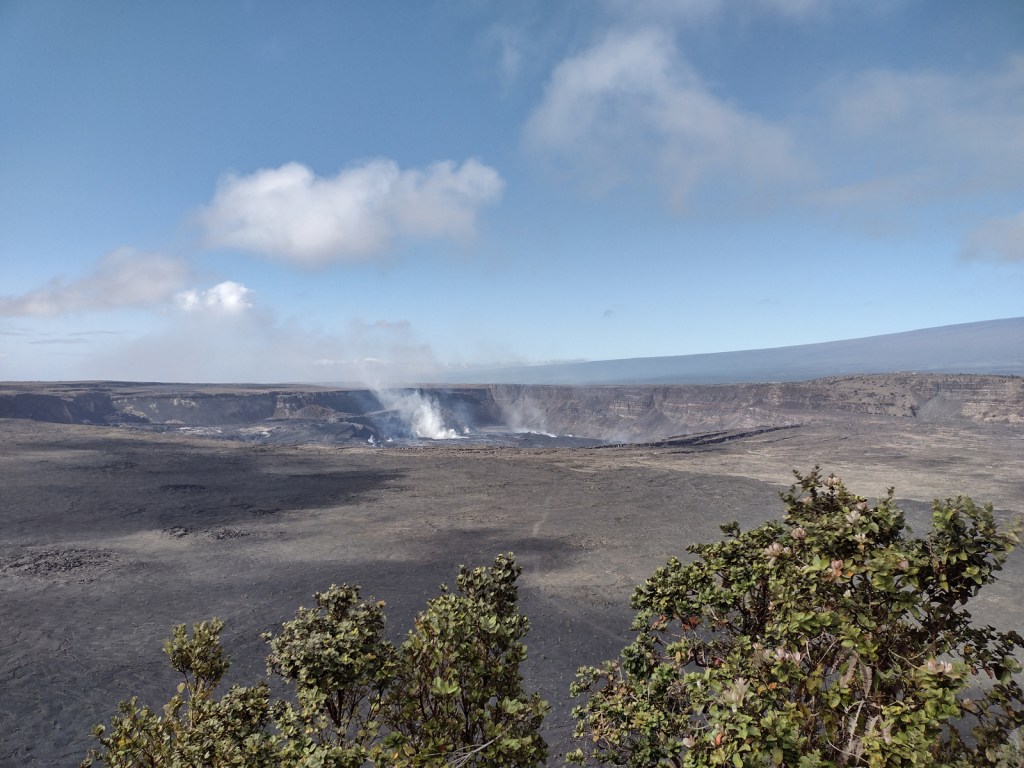
Arrive early or late at the visitor center to avoid tour bus crowds, then check with a ranger to find the best overlooks to view any volcanic activity in Halemaʻumaʻu Crater (depicted in our illustration below).  Consider returning to view the molten lava after dark, although parking can be a challenge.  The Chain of Craters Road leads 20 miles south from the forested caldera rim above 4,078 feet in elevation down to the sparsely vegetated seashore, descending through a wide range of environments before it dead ends into recent lava flows near the Hōlei Sea Arch and 1.5-mile Pu‘u Loa Petroglyphs Trail, where the crisp images chipped into the black lava have been spared from centuries of volcanic activity. 

Best Trail

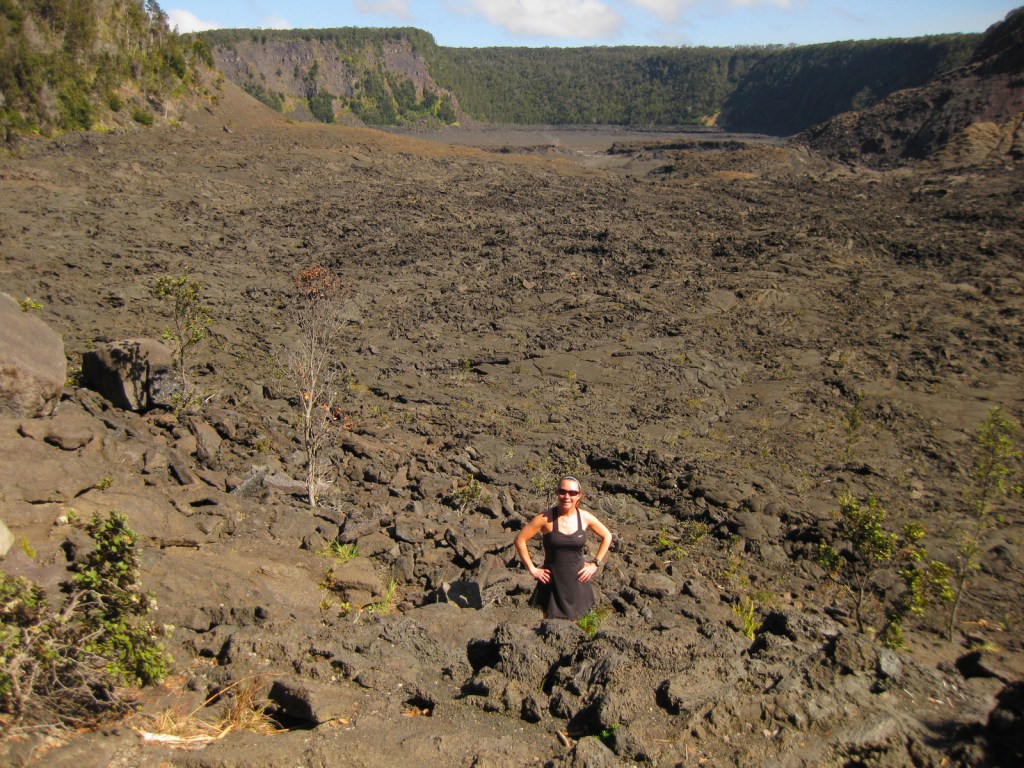
Kīlauea Iki Trail makes a four-mile loop descending 400 feet to the bottom of the crater that was a lake of lava in 1959.  It is recommended to hike it in a counter-clockwise direction to avoid ascending the steepest sections. 

Instagram-worthy Photo

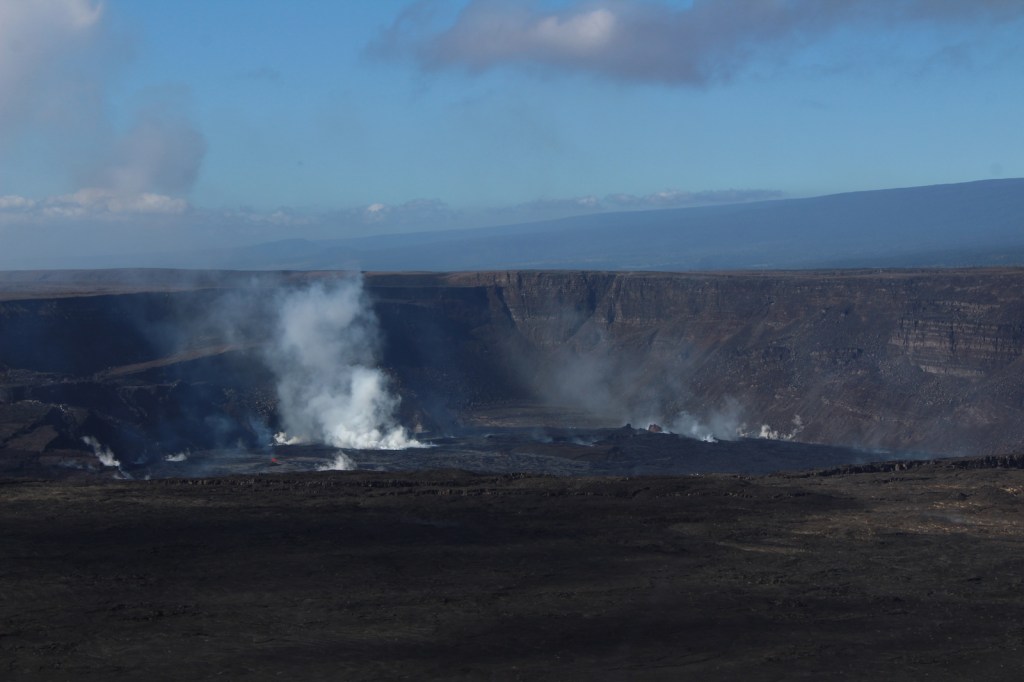
Kīlauea erupted nonstop from 1983 through 2018, when lava poured in a near constant stream into the ocean, and it has been sporadically active since then.  Lava made it into the #1 spot on our Top 10 Natural Phenomena to See in the U.S.

Peak Season

Year round or whenever a volcano is active

Hours

https://www.nps.gov/havo/planyourvisit/hours.htm

Fees

$30 per vehicle or America the Beautiful pass

Road Conditions

Chain of Craters Road is paved, but can be closed during volcanic eruptions, just as half of Crater Rim Drive has been closed since March 19, 2008.  The side road to Hilina Pali Overlook is usually closed beyond Kulanaokuaiki Campground.  The one-lane, potholed Mauna Loa Road is doable with a passenger vehicle if you take it slow, as is the unpaved road into the western Kahuku Unit. 

Camping

The name of Kulanaokuaiki Campground translates as “shaking earth,” and this nine-site primitive camp has no drinking water, unlike the concessionaire-run Nāmakanipaio Campground and Cabins on Highway 11.  Even though this is Hawai‘i, bring some warm clothes as it can be quite rainy and windy, especially when the volcano is erupting; the temperature around Halemaʻumaʻu Crater did not rise above 59°F all day during our 2023 visit.

Related Sites

Pu‘uhonua o Honaunau National Historical Park (Hawai‘i)

Kaloko-Honokohau National Historical Park (Hawai‘i)

Pu’ukohola Heiau National Historic Site (Hawai‘i)

Explore More – When was the 115,788-acre Kahuku Unit added to the National Park?

This design we created to celebrate Hawai’i Volcanoes National Park is available on a variety of products at Cafe Press
We designed this ‘ohi’a lehua logo for the park available on Amazon.com

We are a participant in the Amazon Services LLC Associates Program, an affiliate advertising program designed to provide a means for us to earn fees by linking to Amazon.com and affiliated sites.

Top 10 Natural Phenomena to See in the U.S.

We like to make Top 10 Lists for our readers to prioritize where to go, so here is a new one we came up with specifically to celebrate our 500th blog post.  If we already have a post highlighting the type of natural wonder mentioned, we included a link (plus a few extra for future posts).  These lists are by no means exhaustive of all the states or public lands where you can witness these phenomena.  Click here for all our Top 10 Lists.
10. Natural bridge or arch (Alabama, Arkansas, Kentucky, Nevada, Ohio, Utah, Virginia, Wyoming)

Arches National Park, Canyonlands National Park, Capitol Reef National Park, Daniel Boone National Forest, Natural Bridges National Monument

9. Sand dune field (California, Colorado, Indiana, Michigan, New Mexico, Texas, Utah)

Death Valley National Park, Great Sand Dunes National Park and Preserve, Indiana Dunes National Park, Mojave National Preserve, Sleeping Bear Dunes National Lakeshore, White Sands National Park

8. Sea cave (California, Michigan, Oregon, Wisconsin)

Apostle Islands National Lakeshore, Channel Islands National Park, Pictured Rocks National Lakeshore

7. Slot canyon (Arkansas, California, New Mexico, Utah)

Capitol Reef National Park, Death Valley National Park, Kasha-Katuwe Tent Rocks National Monument

6. Coral reef (American Samoa, Florida, Hawai‘i, Virgin Islands)

National Park of American Samoa, Buck Island Reef National Monument, Dry Tortugas National Park, Pu‘uhonua o Honaunau National Historical Park, Virgin Islands Coral Reef National Monument, Virgin Islands National Park

5. Giant sequoia or coast redwood tree (California)

Giant Sequoia National Monument, Kings Canyon National Park, Los Padres National Forest, Redwood National Park, Sequoia National Park, Sierra National Forest

4. Geyser or geothermal area (California, Hawai‘i, Nevada, Oregon, Wyoming)

Hawai‘i Volcanoes National Park, Lassen Volcanic National Park, Yellowstone National Park

3. Bioluminescence (Alabama, Florida, Hawai‘i, Puerto Rico, Virgin Islands)

Canaveral National Seashore, Hawai‘i Volcanoes National Park, Salt River Bay National Historical Park and Ecological Preserve

2. Aurora borealis (Alaska, Michigan, Minnesota)

Chippewa National Forest, Denali National Park and Preserve, Hiawatha National Forest, Keweenaw National Historical Park, Voyageurs National Park

…and finally our #1 natural phenomenon to see in the U.S.:

1. Lava (Hawai‘i)

Hawai‘i Volcanoes National Park

.

Honorable Mentions

Cave (Alabama, Arizona, California, Indiana, Kentucky, Missouri, New Mexico, South Dakota, Tennessee)

Caribou National Forest, Carlsbad Caverns National Park, Great Basin National Park, Jewel Cave National Monument, Mammoth Cave National Park, Sequoia National Park, Wind Cave National Park

Tidepool (Alaska, California, Maine, Oregon, Washington)

Acadia National Park, Cabrillo National Monument, Glacier Bay National Park and Preserve, Lewis and Clark National Historical Park, Olympic National Park, Redwood National Park

Tidewater glacier (Alaska)

Glacier Bay National Park and Preserve, Kenai Fjords National Park

Natural hot springs (Arkansas, California, Idaho, Oklahoma, Texas, Wyoming)

Beaverhead National Forest, Big Bend National Park, Boise National Forest, Chickasaw National Recreation Area, Clearwater National Forest, Hot Springs National Park, Yellowstone National Park

Walk behind a waterfall (Arkansas, Colorado, Indiana, New York, Ohio, Oregon, Utah)

Buffalo National River, Cuyahoga Valley National Park, Hoosier National Forest, Zion National Park

Alpine tundra (Alaska, California, Colorado, Idaho, Montana, Wyoming)

Bighorn National Forest, Bridger National Forest, Coconino National Forest, Eldorado National Forest, Gallatin National Forest, Glacier National Park, Grand Teton National Park, Inyo National Forest, Rocky Mountain National Park, Yosemite National Park

Isle Royale National Park

Isle Royale National Park

Michigan

Managed by National Park Service

Established 1940

571,790 acres

Website: nps.gov/isro

Overview

Surrounded by Lake Superior, Isle Royale is 45 miles long and nearer to Canada’s shores than it is to the rest of the United States.  Long ferry boat rides with short layovers make this a difficult National Park to see on a daytrip, so the average stay for visitors is 3.5 days.  The main access points are the ferry docks at Windigo in the west and Rock Harbor (which has a lodge) in the east. 

Learn more in the expanded 2nd edition of our guidebook to the National Parks— A Park to Yourself: Finding Solitude in America’s 63 National Parks.

Highlights

Rock Harbor, Suzy’s Cave, Scoville Point, Windigo, Minong Ridge Trail, Greenstone Ridge Trail

Must-Do Activity

Hiking is the main activity at Rock Harbor and popular destinations include Scoville Point (5 miles roundtrip), 1,080-foot tall Mount Franklin (4 miles), and a water-carved arch called Suzy’s Cave (4 miles).  From June to early-September, boat tours leave from the the marina to visit Rock Harbor Lighthouse, Edisen Fishery, Raspberry Island, Hidden Lake Trailhead, and Passage Island Lighthouse.  Kayak and canoe rentals are also available at Rock Harbor Marina.

Best Trail

Since 99% of the park is designated Wilderness, backpacking is the best way to experience Isle Royale (but come prepared for biting insects).  There are 34 backcountry campsites spread across the 165 miles of trail, but not right along the 42-mile Greenstone Ridge Trail that follows the island’s backbone west to east.

Instagram-worthy Photo

There are four lighthouses surrounding Isle Royale and two of them are visited by boat tours.  We circumnavigated the entire island on a ferry boat and our favorite was the red-brick Isle Royale Lighthouse on Menagerie Island.

Peak Season

Summer

Hours

Despite the fact that it is closer to Minnesota (Central Time Zone), Isle Royale is part of Michigan and therefore in the Eastern Time Zone. 

https://www.nps.gov/isro/planyourvisit/hours.htm

Fees

$7 per person, per day or America the Beautiful pass

Road Conditions

There are no roads on Isle Royale, which is only accessible by boat and floatplane.  Ferries run in the summer months from Grand Portage, Minnesota and Copper Harbor and Houghton, Michigan.

Camping

There are nine screened-in shelters and eleven tent sites right at Rock Harbor, but camping there is limited to one night only to accommodate backpackers.  Washington Harbor Campground is located at Windigo and allows up to a three-night stay, but the other 34 campsites require a backpacking permit (available at Rock Harbor, Windigo, and aboard the ferry boats from Michigan).  Advanced reservations are only accepted for groups of more than six people, so plans must be flexible since there are limits to the number of campers per site.

Related Sites

Grand Island National Recreation Area (Michigan)

Pictured Rocks National Lakeshore (Michigan)

Grand Portage National Monument (Minnesota)

Keweenaw National Historical Park (Michigan)

Explore More – After depleting mines on the Keweenaw Peninsula, companies were eyeing Isle Royale’s deposits of what metal when it first gained federal protection in 1931?

This design we created to celebrate Isle Royale National Park is available on a variety of products at Cafe Press and Amazon.

We are a participant in the Amazon Services LLC Associates Program, an affiliate advertising program designed to provide a means for us to earn fees by linking to Amazon.com and affiliated sites.

We published the expanded 2nd edition of our guidebook to the 63 National Parks!

We are excited to announce the publication of the expanded 2nd edition of our guidebook to the National Parks— A Park to Yourself: Finding Solitude in America’s 63 National Parks. It is now available for sale on Amazon. The new edition is more than 60 pages longer with four-page chapters on Alaska’s wilderness National Parks that formerly had only a page. We also wrote a six-page chapter on the newest National Park— New River Gorge National Park and Preserve.

In this Expanded 2nd Edition of A Park to Yourself, we sort through the enormous amount of information about National Parks to select the best trails, guided tours, photography spots, and wildlife viewing areas. America’s 63 National Parks are busier than ever, so we help you decide what places are worth the crowds and where you can find solitude. We identify the peak months of visitation and the busiest places in each park, whether you are attracted to those spots or want to avoid them altogether.

Whether you are looking to camp, backpack, or stay in a lodge, we cover the options, both inside and outside of the park. We also include insider tips and nearby attractions to help you make the most of your vacation.

We hope you enjoy A Park to Yourself: Finding Solitude in America’s 63 National Parks and thank you for your support!

We are a participant in the Amazon Services LLC Associates Program, an affiliate advertising program designed to provide a means for us to earn fees by linking to Amazon.com and affiliated sites.