Tag Archives: museum

Huron National Forest

Huron National Forest

Michigan

Managed by U.S. Forest Service, Eastern Region

694,056 acres (438,584 federal/ 255,472 other)

Website: https://www.fs.usda.gov/hmnf

Overview

Huron National Forest occupies a strip of land in eastern Michigan that follows the Au Sable National Wild and Scenic River to near its confluence with Lake Huron.  The National Forest was established in 1909 after logging in the area went into decline.  In 1945, it was administratively combined with the Manistee National Forest, which is on the western side of the state.  Two years later, the first Au Sable River Canoe Marathon was held when 46 teams entered, but only 15 teams finished the 120-mile-long race.  Held annually the last weekend of July, thousands of spectators watch the event, but if you are not there then at least stop by the Canoer’s Memorial.  In the winter, snowmobiling and cross-country skiing are popular activities in Huron National Forest.

Highlights

River Road Scenic Byway, Lumberman’s Monument, Canoer’s Memorial, Iargo Springs Interpretive Site, Cooke Dam Pond, Tuttle Marsh, Bull Gap ORV Trail, Hoist Lakes Foot Travel Area, Highbanks Trail, Eagle Run Cross-Country Ski and Hiking Trail

Must-Do Activity

The 22-mile-long River Road Scenic Byway follows the Au Sable National Wild and Scenic River with 18 stops at memorials, overlooks, dams, ponds, trailheads, and campgrounds.  The National Forest’s most developed area surrounds the Lumberman’s Monument, a 14-foot bronze statue dedicated in 1932.  The site also has a museum, gift shop, interactive visitor activities, hiking trails, and a campground.  Three other popular stops along the River Road Scenic Byway are the Iargo Springs Interpretive Site, Kiwanis Monument, and Foote Pond Overlook where visitors might spot a bald eagle.

Best Trail

A day use fee is charged to park at the two entrances to Hoist Lakes Foot Travel Area in the northern part of Huron National Forest.  We started at the west entrance, just 1.8 sandy miles off paved Aspen Alley Road, and hiked a half-mile to Carp Lake, which had a large beaver hut in its center.  There are many loop options in this forest that is being managed for old-growth conditions, which makes it ideal for cross-country skiing. 

Watchable Wildlife

Huron National Forest manages its jack pine forests to provide summer nesting habitat for the formerly-endangered Kirtland’s warbler.  After being placed under protection of the Endangered Species Act when its population fell to 167 nesting pairs in 1974, it was delisted in 2019 after rebounding to 2,300 pairs.  Since dense, young stands of jack pine are unsuitable habitat, Kirtland’s warblers need old-growth forests, which are extremely susceptible to crown fires.  Other species prefer old-growth forests, too, like pileated woodpeckers, saw-whet owls, and pine martens.  We saw one of the rare Kirtland’s warblers at Au Sable Scenic River Highbanks Overlook, in addition to spotting a trumpeter swan, hairy woodpecker, raven, black squirrel, porcupine, and white-tailed deer.  The Au Sable River offers trout fishing for people and bald eagles.

Instagram-worthy Photo

We stopped at Au Sable Scenic River Highbanks Overlook and were able to photograph a Kirtland’s warbler.

Peak Season

Summer

Fees

A day use fee is charged to park at the two entrances to Hoist Lakes Foot Travel Area, or you can use the America the Beautiful pass.  Access to the Lumberman’s Monument is free.

Road Conditions

The unpaved roads are very sandy, but they were mostly flat without deep sand and easily drivable with a passenger vehicle in the summer.

Camping

There were signs prohibiting camping at the Hoist Lakes Foot Travel Area trailhead and Au Sable Scenic River Highbanks Overlook, and the dense forest offered no dispersed camping options that we noticed.  A developed campground is available at the Lumberman’s Monument, as well as at Algona Dam Pond, Loud Dam Pond, Cooke Dam Pond, and Foote Dam Pond.

Wilderness Areas

None

Related Sites

Hiawatha National Forest (Michigan)

Manistee National Forest (Michigan)

River Raisin National Battlefield Park (Michigan)

Nearest National Park

Isle Royale

Conifer Tree Species

jack pine, red pine, eastern white pine, eastern hemlock, balsam fir, eastern redcedar, northern white-cedar, tamarack

Flowering Tree Species

red maple, sugar maple, American elm, black ash, quaking aspen, paper birch, northern red oak, pin cherry, shadbush

Explore More – When the first 120-mile-long Au Sable River Canoe Marathon was held in 1947, who were the two paddlers that won with a time of 21 hours and 40 minutes?

Learn more about this and the 154 other National Forests in our new guidebook Out in the Woods

Humboldt National Forest

Humboldt National Forest

Nevada

Managed by U.S. Forest Service, Intermountain Region

2,618,165 acres (2,401,079 federal/ 217,086 other)

Website: https://www.fs.usda.gov/htnf

Overview

Ruby Mountains National Forest was established on May 3, 1906 and two years later it was joined with Independence National Forest to create Humboldt National Forest.  In 1995, Humboldt and Toiyabe National Forests combined their 6.3-million acres to become the largest National Forest outside Alaska.  Spread across separate mountain ranges that rise above the Great Basin Desert, Humboldt National Forest consists of the more northeasterly sections of the two National Forests.  Much of its acreage in the Snake Range was claimed as part of Great Basin National Park in 1986, but it still encompasses 12,050-foot Mt. Moriah. 

Highlights

Lamoille Canyon Scenic Byway, Ruby Mountains, Success Loop Drive, Angel Lake, Currant Mountain, Santa Rosa Range, Three Day Creek Trail, Ruby Crest National Recreation Trail

Must-Do Activity

The Ruby Mountains south of Interstate 80 near Elko are perhaps the most accessible area, with roads dead-ending at the gorgeous Angel Lake Campground and after 12 miles on the paved Lamoille Canyon Scenic Byway.  West of Elko on Interstate 80, the Bureau of Land Management (BLM) runs an excellent visitor center dedicated to the California National Historic Trail.  Colorful displays and sculptures make this one of the best government-run museums in the country and admission is free.  It is situated near where the Hastings Cutoff reconnected with the main California Trail following the Humboldt River.  The Hastings Cutoff skirted the eastern edge of the Ruby Mountains and was utilized by the infamous Donner party in 1846.  This same route that crossed Overland Pass was later part of the Pony Express Trail.

Best Trail

Starting at the end of Lamoille Canyon Scenic Byway, the 43-mile-long Ruby Crest National Recreation Trail passes Dollar and Lamoille Lakes as it steeply climbs to Liberty Pass.  You do not need to hike far to appreciate the beauty of the glacier-carved valley ringed by jagged alpine peaks.  The trail ends at Harrison Pass where a road still uses the same route that the Bidwell-Bartleson party took in 1841.  There are long stretches of the trail that do not have access to water, including a ten-mile section from North Furlong Lake to Overland Lake.

Watchable Wildlife

More than 85% of Nevada is federally-owned land run mostly by the military and BLM.  That acreage also includes Ruby Lake and Sheldon National Wildlife Refuges, two of several large refuges in the state.  The lakes there and in Humboldt National Forest provide habitat for trout and other fish, as well as migratory birds like Canada geese and white pelicans.  Chukars and Himalayan snowcocks are two introduced Asian bird species that have become popular targets for hunters.  The steep mountains provide thermals for soaring raptors like red-tailed hawks, Swainson’s hawks, and turkey vultures.  Due to the extreme elevation gradients in the basin and range topography, mammals include desert dwellers like kangaroo rats and alpine residents like American pikas, in addition to the more commonly seen mule deer and coyotes.

Instagram-worthy Photo

At the end of the 12-mile paved Lamoille Canyon Scenic Byway, you are surrounded by jagged mountains and at the beginning of the 43-mile-long Ruby Crest National Recreation Trail.

Peak Season

Summer

Fees

$5 day-use fee at Angel Lake

Road Conditions

Lamoille Canyon Scenic Byway is paved and the unpaved road to Angel Lake Campground is in good shape.

Camping

The gorgeous Angel Lake Campground made our list of the Top 10 Campgrounds in National Forests, plus there are two designated campgrounds and a couple dispersed campsites along Lamoille Canyon Scenic Byway.

Wilderness Areas

Bald Mountain Wilderness

Currant Mountain Wilderness

East Humboldt Wilderness

Grant Range Wilderness

High Schells Wilderness

Jarbidge Wilderness

Mt. Moriah Wilderness (also managed by BLM)

Quinn Canyon Wilderness

Red Mountain Wilderness

Ruby Mountains Wilderness

Santa Rosa-Paradise Peak Wilderness

Shellback Wilderness

White Pine Range Wilderness

Related Sites

Toiyabe National Forest (Nevada-California)

City of Rocks National Reserve (Idaho)

Lassen Volcanic National Park (California)

Nearest National Park

Great Basin

Conifer Tree Species

Great Basin bristlecone pine, ponderosa pine, Engelmann spruce, California red fir, white fir

Flowering Tree Species

quaking aspen, greenleaf manzanita, sagebrush

Explore More – What was the country of origin of Alexander von Humboldt, a scientist who travelled extensively in the Americas between 1799 and 1804?

Learn more about this and the 154 other National Forests in our new guidebook Out in the Woods

Lincoln Boyhood National Memorial

Lincoln Boyhood National Memorial

Indiana

Managed by National Park Service

Established 1962

200 acres

Website: nps.gov/libo

Overview

In 1816, Thomas and Nancy Lincoln moved their two children, Sarah and Abraham, from Hodgenville, Kentucky to a 160-acre farm in southern Indiana.  The future-President Abraham Lincoln lived there 14 years until he turned 21 and the family relocated to Illinois.  In 1818, his mother Nancy Hanks Lincoln died of milk poisoning because a dairy cow had eaten white snakeroot plant, and visitors can learn more about the poison tremetol in the Memorial Visitor Center and stop at her memorial stone in the pioneer cemetery (although her exact burial place is unknown).

Highlights

Museum, film, Abraham Lincoln Hall, U.S. Post Office, cemetery, spring, Living Historical Farm, Cabin Site Memorial

Must-Do Activity

Start at the Memorial Visitor Center to visit the museum inside and use the U.S. Post Office if needed.  If the weather is nice, take a walk past the pioneer cemetery to the Cabin Site Memorial where a bronze casting of sill logs and the fireplace hearthstones are at the site of the Lincoln’s cabin begun in 1829.  The Living Historical Farm has costumed interpreters in the summer that depict homestead life at an authentic cabin and several outbuildings that were moved here from other parts of Indiana.

Best Trail

It is about one mile roundtrip to walk from the museum to the Living Historical Farm and then return on the Trail of Twelve Stones.  There is a parking area closer to the Cabin Site Memorial, if you do not wish to walk the entire way.  The Boyhood Nature Trail offers an additional one-mile loop through the forest.

Instagram-worthy Photo

The five relief panels on the outside of the Memorial Visitor Center were created from Indiana limestone by E.H. Daniels to depict different periods in Abraham Lincoln’s life.  The building was constructed in the 1940s by the state of Indiana and given to the National Park Service when they took over the site in 1962.

Peak Season

Summer when living history demonstrations occur

Hours

https://www.nps.gov/libo/planyourvisit/hours.htm

Fees

None

Road Conditions

All roads are paved

Camping

There is a campground with running water and RV hookups at adjacent Lincoln State Park.

Related Sites

Abraham Lincoln Birthplace National Historical Park (Kentucky)

Lincoln Home National Historic Site (Illinois)

Lincoln Memorial (District of Columbia)

Hoosier National Forest (Indiana)

Explore More – How many step-siblings did Abraham Lincoln gain when his father wed the widow Sarah Bush Johnston from Kentucky in 1819?

Georgia Road Trip Itinerary

Georgia

36,808,634 acres (1.6% of U.S.)

Statehood 1788 (4th of 50)

Capital: Atlanta

Population:  10,711,908 (8th of 50)

High Point: Brasstown Bald (4,784 feet)

Best time of year: Spring for mild temperatures and flowering dogwood blooms

We recently published our guidebook 50 States of Great: Road Trip Guide to America, so we decided to start a new type of blog post where we create a travel itinerary for all 50 states, in addition to our usual National Forest and National Park entries.  After starting with Kansas, we decided to do an east coast state.  We made an ambitious seven-day plan starting in the northwest corner of Georgia, with many options to extend the trip.

Day 1

Ed Jenkins National Recreation Area (click here for our blog post)

Formerly named after Springer Mountain, the southern terminus of the Appalachian National Scenic Trail (click here for our blog post) is marked with a bronze plaque and trail register.  Most backpackers start from potholed Forest Service Road 42 and ascend 0.9 miles south to the summit then spend the night in the open-front trail shelter or turn around to head back north.  For day hikers, a nice option is to add the eastern part of the Benton MacKaye Trail to make a 4.7-mile loop that passes Owen Vista.

Chattahoochee National Forest (click here for our blog post)

The Gennett Poplar (a tulip-poplar tree more than five feet in diameter) is accessed by hiking 1.8 miles out-and-back with two stream crossings on the Bear Creek Tail.  Other large tulip-poplars and yellow buckeyes are found in 175-acre Sosebee Cove Scenic Area.  You can spend the night riverside at the free Hickey Gap Campground, one of our Top 10 National Forest Campgrounds. 

Optional stop at Chickamauga and Chattanooga National Military Park (click here for our blog post)

Half of this park is situated in Tennessee around Lookout Mountain, but at Georgia’s Chickamauga battlefield a seven-mile long driving tour explains what happened there on September 20, 1863.

Optional stops at Brasstown Bald, Tallulah Gorge State Park, Amicolola Falls State Park, and Cloudland Canyon State Park

Start your itinerary a day early in Georgia’s northeast corner by enjoying some State Parks and the state’s high point Brasstown Bald, managed by Chattahoochee National Forest.

Day 2

Kennesaw Mountain National Battlefield Park (click here for our blog post)

Wait out the morning traffic into Atlanta by driving or hiking to the top of this steep hill in the city’s suburbs.

Georgia Aquarium

Holding more than 10-million gallons of water in its numerous tanks, Georgia Aquarium is the best in the nation (even better than California’s Monterey Bay Aquarium).  It contains more than 500 aquatic species, but the most impressive are the 30-foot-long whale sharks that reside in the 6.3-million-gallon Ocean Voyager Gallery, the world’s largest indoor marine exhibit. 

Optional stop at Martin Luther King, Jr. National Historical Park (click here for our blog post)

A short walk from the visitor center is required to enter King’s boyhood home (which is wheelchair accessible).  Silence is mandatory while inside.  Outside the neighboring King Center, the Reflection Pool contains the tombs of Martin Luther King, Jr. and his wife Coretta Scott King, as well as an eternal flame.

Optional stop at Chattahoochee River National Recreation Area (click here for our blog post)

Established in 1978, this park is a combination of government jurisdictions and private land that protects 48 miles of the Chattahoochee River downstream from Lake Sidney Lanier northeast of Atlanta.  Due to its lack of large rapids it is popular with canoers.

Day 3

Andersonville National Historic Site (click here for our blog post)

This notorious Civil War prison remains an active military cemetery and is also home to the National Prisoner of War Museum run by the National Park Service.  This may not be the best place to bring children, given that the exhibits in the museum do not pull punches in their depictions of the brutality endured by captured combatants throughout the ages.
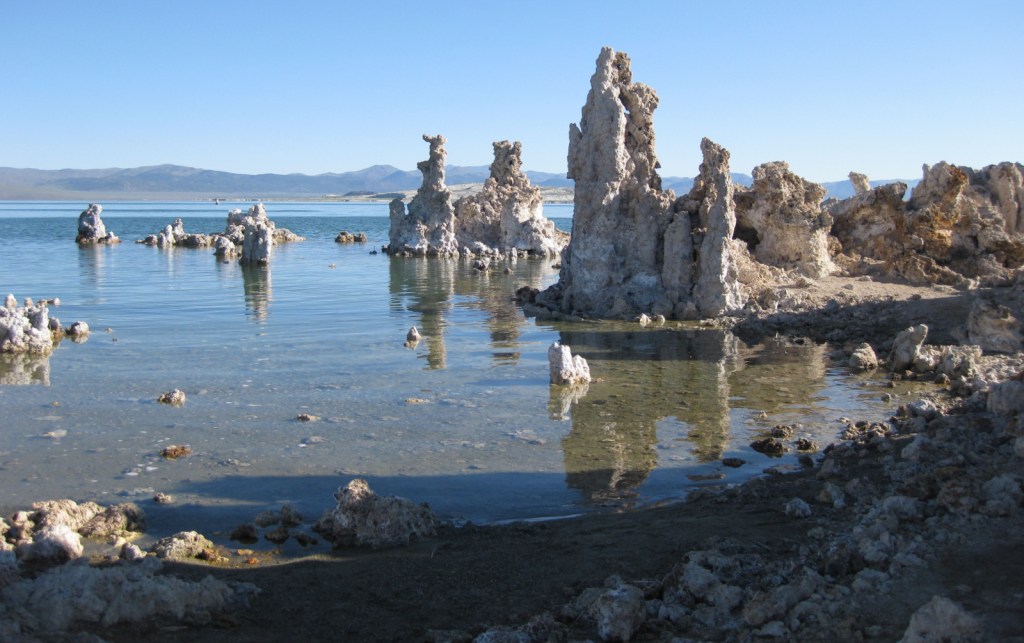
Museum of Aviation in Macon

This free Air Force aviation museum has airplanes on display both inside and outside, everything from a P-40 Flying Tiger to an SR-71 Blackbird.

Optional stop at Ocmulgee Mounds National Historical Park (click here for our blog post)

One of the best examples of temple mounds from the Mississippian Culture that began around 1,100 years ago.  Starting from the National Park Service museum (which contains artifacts dating back to 8000 B.C.E.), walk under the railroad tracks, go inside the replica earth lodge, and up the stairs to access the top of the 55-foot-tall Great Temple Mound. 
Day 4

Savannah

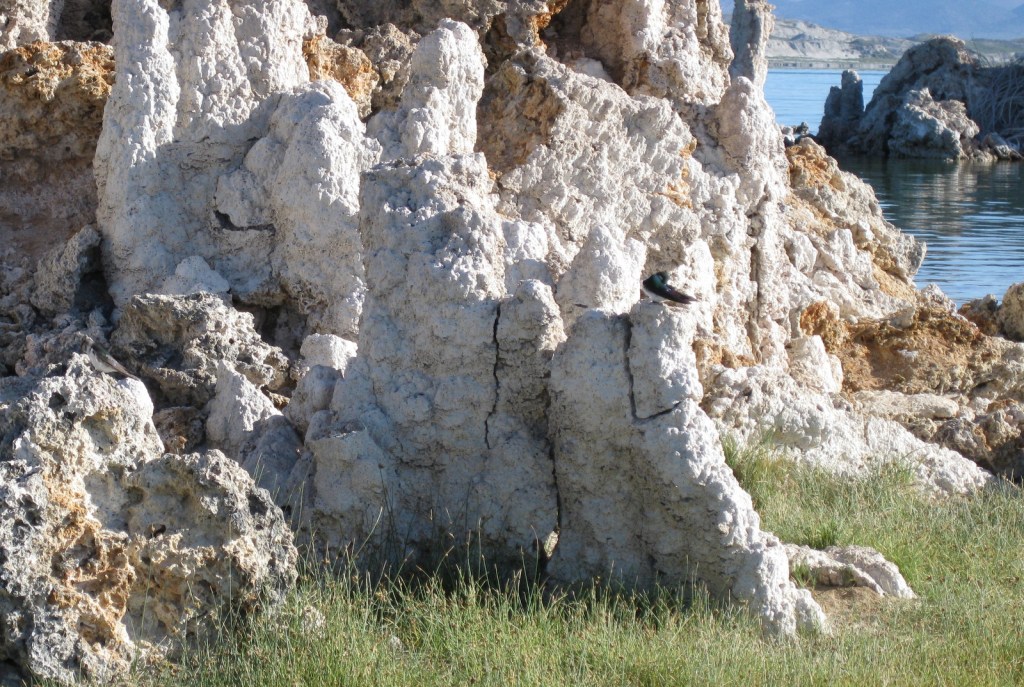
Savannah is a great city for walking that offers countless public squares, beautifully landscaped Forsyth Park with its iconic fountain, spooky Bonaventure Cemetery (see photo), legendary River Street shopping district, and architectural gems like the birthplace of Juliette Gordon Low (who founded the Girl Scouts of America in 1912).  Do not miss a photo at the tree-lined entrance to Wormsloe State Historic Site, a plantation located on the edge of an expansive marsh. 

Optional stop at Tybee Island

After touring the city, drive on to the Atlantic Ocean for some beach time.  Once you have soaked up some saltwater, sand, and sun, check out the Tybee Island Light Station and Museum, built at this site in 1773, then reconstructed after the Civil War.  Also, check out the nearby World War II-era Battery Garland in the decommissioned Fort Screven. 

Day 5

Fort Pulaski National Monument (click here for our blog post)

Located 17 miles from Savannah on Cockspur Island, photogenic Fort Pulaski National Monument protects a brick fort named for a Polish Count who was killed in action during the American Revolution.  Claimed by the Confederacy early during the Civil War, it was surrendered to the Union Army in April 1862 after thirty hours of shelling from nearby Tybee Island. 

Optional stop at Fort Frederica National Monument (click here for our blog post)

The British established Fort Frederica in the 1730s to stop Spanish encroachment from Florida into their American colonies.  The town that formed around the fort peaked at a population of 1,000.  Today it is a beautiful setting with tabby wall ruins and Spanish moss-draped trees.

Day 6

Cumberland Island National Seashore (click here for our blog post)

Only accessible by boat, most visitors arrive by ferry from St. Marys (reservations recommended) and spend a full day here.  Bicycles can be rented once you arrive on the island (they are not allowed on the ferry) and are permitted on the many miles of roads, but not on the trails or beach.  While it is fun to spend time beachcombing or seeing the ruins of the Dungeness mansion, what really sets Cumberland Island apart are the 50 miles of hiking trails that cut through the maritime forest of twisty live oak trees.  Watch for feral horses, white-tailed deer, armadillos, turkeys, and other birds along the way. 

Day 7

Okefenokee National Wildlife Refuge

The largest freshwater wetlands in the country are home to about 12,000 alligators.  The baldcypress swamp spreads across 448,000 acres around the Suwannee River.  There are no roads across Okefenokee National Wildlife Refuge and it is most easily accessible from the west through Stephen C. Foster State Park, which has a campground and kayak rentals to access camping platforms in the swamp.

Day 8+ optional swing through western Georgia

Providence Canyon State Park

Clearing the forests for farmland in the mid-1800s is what allowed these 16 gullies to erode the soft red-clay hills into the colorful spectacle they are today (with many shades of orange, pink, lavender, and yellow).  The 1,003-acre State Park was established in 1971 to protect the area and it is featured as a U-Haul Super Graphic.  The best views are from the rim walk, but to truly appreciate the depth (up to 150 feet deep) and palette of colors you need to hike down into some of the nine canyons with trails. 

Jimmy Carter National Historical Park (click here for our blog post)

The former Governor, Nobel Peace Prize-winner, and U.S. President Jimmy Carter is the most well-known peanut farmer in Plains, and was a regular at the Plains Peanut Festival held every September.  The National Park Service manages the Jimmy Carter National Historical Park with two visitor centers, one at the former Plains High School and the other at the family’s 360-acre farm. 

Learn more about Georgia’s Most Scenic Drive, Wonderful Waterfall, Top State Park, and other categories in in our new travel guidebook 50 States of Great: Road Trip Guide to America.

Hiawatha National Forest

Hiawatha National Forest

Michigan

Managed by U.S. Forest Service, Eastern Region

1,294,645 acres (894,836 federal/ 399,809 other)

Website: https://www.fs.usda.gov/hiawatha

Overview

Hiawatha National Forest is separated into two sections on the Upper Peninsula of Michigan, both of which touch Lake Superior and Lake Michigan.  The East Unit also fronts Lake Huron, and includes scenic Round Island Lighthouse near Mackinac Island, as well as beautiful Point Iroquois Light Station.  Most of these sandy soils in the East Unit were never homesteaded, so they were easily designated Marquette National Forest by President Theodore Roosevelt in 1909.  Land purchases for the West Unit began in 1928, and were later replanted by the Civilian Conservation Corps (CCC).  The West Unit includes 13,500-acre Grand Island National Recreation Area (see our blog post) in Lake Superior, a popular destination for camping, biking, and kayaking at the western edge of Pictured Rocks National Lakeshore.

Highlights

Grand Island National Recreation Area, St. Helena Island National Scenic Area, Whitefish Bay Scenic Byway, Point Iroquois Light Station, Scott Falls, Diamond Hill Lookout, Porcupine Nature Trail, Haymeadow Falls Trail, Naomikong Point Blue Trail, North Country National Scenic Trail

Must-Do Activity

Several lighthouses are located along the shores of the Great Lakes, including the picturesque Round Island Lighthouse near touristy Mackinac Island, Point Iroquois Light Station (see Instagram-worthy Photo) on the Whitefish Bay Scenic Byway, and one on private land near Wick Point within Grand Island National Recreation Area (see our blog post).  Further to the west Highway M-28 follows the shores of Lake Superior, where a Wayside Park at the east side of AuTrain Bay provides parking for those wishing to carefully cross the road to see ten-foot-tall Scott Falls.

Best Trail

Foley Creek Day Use Area is located just off Interstate 75 at a large pullout along paved Mackinac Trail Road.  A hike starts at the north end of a former campground, and soon the sound of the freeway is dispersed by the trees as you enter the small Horseshoe Bay Wilderness.  The trail has boardwalks across the wettest spots and after 1.4 miles opens up to a secluded sandy beach on Lake Huron with views of Mackinac Island.  Naomikong Point Blue Trail is a popular 3.4-mile out-and-back trail that connects with the North Country National Scenic Trail, crossing Naomikong Creek on a suspension bridge then ending at Menekaunee Point on Naomikong Island.

Watchable Wildlife

These forests are home to gray wolves, black bears, bobcats, Canada lynx, mountain lions, red foxes, coyotes, striped skunks, weasels, minks, river otters, porcupines, beavers, muskrats, snowshoe hares, white-tailed deer, and moose.  Large birds found here include wild turkeys, spruce grouse, ruffed grouse, golden eagles, bald eagles, ospreys, great blue herons, sandhill cranes, and trumpeter swans.  Hiawatha National Forest has more than 100 miles of shoreline on three Great Lakes, offering fishing for walleye, northern pike, muskies, Atlantic salmon, and steelhead trout.  In addition, there are 75 inland lakes and 600 miles of streams, including five National Wild and Scenic Rivers: Carp River, Indian River, Sturgeon River, Tahquamenon River (East Branch), and Whitefish River.  The 0.9-mile Haymeadow Falls Trail loop partially follows a productive trout stream.

Instagram-worthy Photo

Located on the Whitefish Bay Scenic Byway, the iconic 65-foot Point Iroquois Light Station stands on the shores of Lake Superior at the mouth of St. Mary’s River.  The first lighthouse and residence were built here in 1855, and the current buildings were placed on the National Register of Historic Places in 1975.  When not under construction, you can pay to enter the museum and climb the spiral staircase to the top of the tower.

Peak Season

Summer

Fees

None

Road Conditions

Whitefish Bay Scenic Byway is fully paved, and we found the unpaved roads to Hovey Lake Campground to be in good enough shape for our passenger vehicle.

Camping

We spent an enjoyable night at the free Hovey Lake Campground and awoke to find a pair of trumpeter swans on the water.  Hiawatha National Forest has many other campgrounds, including two near the Mackinaw Toll Bridge: Lake Michigan (35 campsites) and Carp River (44 sites).  Near the town of Brimley on Lake Superior, Bay View (24 sites) and Monocle Lake (39 sites) Campgrounds are also popular.

Wilderness Areas

Big Island Lake Wilderness

Delirium Wilderness

Horseshoe Bay Wilderness

Mackinac Wilderness

Rock River Canyon Wilderness

Round Island Wilderness

Related Sites

Ottawa National Forest (Michigan)

Keweenaw National Historical Park (Michigan)

Pictured Rocks National Lakeshore (Michigan)

Nearest National Park

Isle Royale

Conifer Tree Species

eastern hemlock, jack pine, eastern white pine, red pine, balsam fir, black spruce, white spruce, eastern arborvitae, tamarack

Flowering Tree Species

basswood, red maple, sugar maple, American beech, quaking aspen, paper birch, white birch, northern red oak, mountain holly

Explore More – The subject of a famous Henry Wadsworth Longfellow poem, who was Hiawatha in real life?

Learn more about this and the 154 other National Forests in our new guidebook Out in the Woods