Tag Archives: Books

Introduction to our new guidebook to National Monuments

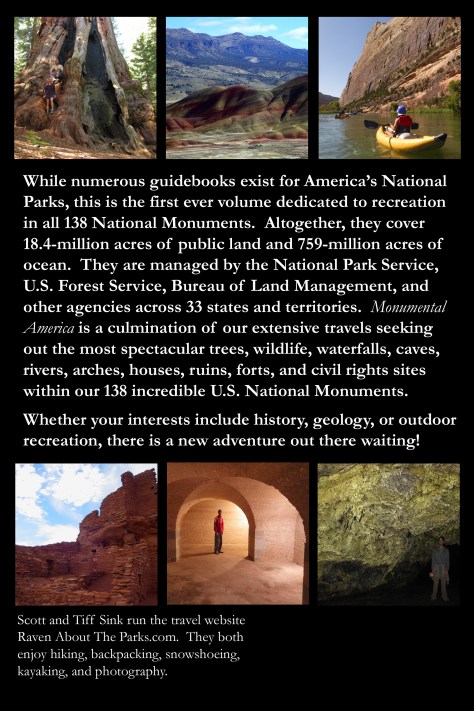
We are excited to announce the publication of our newest guidebook Monumental America: Your Guide to All 138 National Monuments.  It is now available for sale on Amazon.

In our previous post, we promised to share the Introduction to the book, which is included in the post below.

Check out our Amazon.com Author Page and Shop tab for all four of our U.S. travel guidebooks, plus our coloring book and other products!

Introduction

While numerous guidebooks exist for the United States of America’s National Parks, this is the first ever volume dedicated to recreation in all 138 National Monuments.  Altogether, they cover 18.4-million acres of public land across 33 states and territories, plus 759-million acres of ocean in the five expansive Marine National Monuments created since 2006.  Only 40 National Monuments have an entry fee, while the others provide free opportunities to learn about history or enjoy the outdoors.  The mission of this guidebook is to introduce readers to the diversity of National Monuments by providing information on what makes each of them worthy of protection and how to go about experiencing what they have to offer. 

National Monuments feature internationally recognized icons like the Statue of Liberty, as well as overlooked places that even locals rarely visit.  They protect fossil quarries, historic homes of important Americans, caves open for exploration, sites significant to the Civil Rights Movement, volcanic wonders, relics of indigenous cultures, old military forts, and whitewater rafting spots.  Select National Monuments have visitor centers and guided tours, while others are undeveloped wildlands encompassing everything from deserts to glaciers, including wetlands, sand dunes, and coastlines that provide habitat for countless species of wildlife.  Whatever you are interested in, there is a new adventure out there waiting.

Monumental America is a culmination of our extensive travels seeking out the most spectacular trees, wildlife, waterfalls, caves, rivers, arches, houses, ruins, forts, and civil rights sites in National Monuments.  Less than 80 of the 138 National Monuments are managed exclusively by the National Park Service, while others fall under the jurisdiction of the U.S. Forest Service, Bureau of Land Management, U.S. Fish and Wildlife Service, National Oceanic and Atmospheric Administration, and Department of Defense, as well as some state agencies and tribal governments.  The federal agencies provide a plethora of information on their websites, including maps, updated hours and entry fees, and current road conditions.

We focused on hiking in this book as a way to explore each National Monument without needing any special equipment or skills.  America’s National Monuments offer a variety of other recreational opportunities to enjoy the outdoors: camping, backpacking, picnicking, wildlife watching, birding, photography, hunting, fishing, swimming, whitewater rafting, boating, kayaking, canoeing, stand-up paddleboarding, horseback riding, mountain biking, road biking, rock climbing, caving, rockhounding, four-wheeling, scenic driving, snowshoeing, and cross-country skiing, not to mention the more extreme sports like hang gliding and ice climbing.  National Monuments have something for everyone.

History

Most National Monuments have been created unilaterally by the U.S. President under the authority of the Antiquities Act of 1906 without Congressional approval.  The Antiquities Act states that the president may set aside “historic landmarks, historic and prehistoric structures, and other objects of historic or scientific interest.”  President Theodore Roosevelt was the first to utilize this power to protect small cultural sites like Gila Cliff Dwellings and vast wildernesses like the Grand Canyon.  The legality of this executive action has been questioned and debated for over a century. 

While Roosevelt was a Republican, the last member of that party to create a new National Monument in the western U.S. was President Herbert Hoover when in 1933 he set aside 10,288 acres of the Black Canyon of the Gunnison in Colorado.  Smaller historic sites, like Kentucky’s Fort Nelson in 2018, have continued to be preserved by executives of both political parties.  Many of our treasured 63 National Parks started as National Monuments, including all three in Arizona, five of nine in California, four of five in Utah, and, most recently, White Sands in New Mexico after nearly 90 years as a National Monument. On the other end of the spectrum, South Carolina’s Reconstruction Era National Historical Park (established in 2019) was a National Monument for only two years.

Less often, National Monuments are established through congressional bills that go through both the Senate and House of Representatives, such as George Washington Birthplace in Virginia, Hagerman Fossil Beds in Idaho, Grand Portage in Minnesota, Newberry Volcanic in Oregon, and Mill Springs Battlefield in Kentucky. 

While Wyoming boasts the first National Monument ever established at Devils Tower, in 1950 it became the first state to block any future U.S. President from unilaterally designating new National Monuments larger than 5,000 acres after residents protested the creation of Jackson Hole National Monument (now part of Grand Teton National Park).  Congress did use their authority to make 8,198-acre Fossil Butte National Monument in the state in 1972. 

On December 1, 1978, President Jimmy Carter utilized the Antiquities Act to set aside 56-million acres within 17 National Monuments across Alaska.  His actions led many Alaskans to protest and Fairbanks residents to burn the president in effigy.  Two years later, with the congressional passage of the Alaska National Interest Lands Conservation Act (ANILCA), most of the land was redesignated under different categories, mainly as National Parks and National Preserves.  Later, Congress effectively created a 5,000-acre limit on presidential National Monument designations in Alaska, which has been respected in the decades since.

The court system has continually approved the U.S. President’s ability to use the Antiquities Act in this way, although it has not always been popular, especially with industries based on natural resource extraction. Recently, Bears Ears and Grand Staircase–Escalante National Monuments in Utah have been the subject of political ping-pong as their boundaries have been adjusted.  There is a long history of abolishing and redesignating National Monuments, which we highlighted in the introduction for each state.

Monumental America is organized alphabetically by state and each of the 138 National Monuments features the same categories for ease of navigation, starting with the total acreage and the year each was officially designated.

When To Visit

These are the preferred seasons to visit for the best weather.  Some places are snowed-in most of the year while others get unbearably hot in the summer, and a few are pleasant year-round.  It is worthwhile to check online before making a trip since many of the historic sites are closed seasonally and only open certain days of the week.

How It Got Its Name

When we started writing this book, we were unsure of the pronunciation of some of the names of the National Monuments, so we enjoyed learning the history and etymology of why each of them got their specific moniker.

Why It Was Created

Some National Monuments were established to protect a small historic site, while others preserve thousands of acres of undeveloped public land.  We provided some basic background information as to why each place was deemed worthy of its special designation, plus a basic history of the site.

What To See

Presented in list form, these are the places that we frequently came across in our research of a particular National Monument.  They may not be the busiest spots, or include everyone’s personal favorite, but they do tend to be more developed for visitation. 

How To Visit

National Monuments vary greatly in size and development for recreation, so we provided a basic introduction on how most visitors approach their first trip, although there is no wrong way to do it. 

How Much Does It Cost

98 National Monuments have no entry fee!  We noted this at the beginning of each chapter, although we still covered relevant costs for guided tours and ferries, if applicable.  Most admission fees apply at sites managed by the National Park Service where it may save money to purchase an annual America the Beautiful Pass (and if you qualify for discounted senior, access, and military cards you also receive half-off on all tours and campsites). 

Where To Hike

A few National Monuments have extensive trail networks, so we chose one hike that is reasonably easy and provides a good introduction to the area.  Not every site has designated trails, though, and a hike may instead involve city sidewalks or cross-country exploration. 

What To Photograph

In this book we used black-and-white photography in homage to Ansel Adams, who did so much with his stunning imagery to popularize Canyon de Chelly and other National Monuments that later became National Parks.  We selected one original photograph for the 127 National Monuments we have personally visited (not including four Marine National Monuments, three fly-in sites in Alaska, two that are closed to public access in Arizona and Texas, and two new ones in Maine and Pennsylvania). 

How Are The Roads

Not all roads in National Monuments are paved, so we explained which ones actually require a high-clearance vehicle and should be avoided by RVs, as well as covering seasonal road closures.

Where To Camp

Most National Monuments managed by the National Park Service do not allow camping and some of the undeveloped areas do not have any campgrounds.  In these cases, we researched where to stay at nearby State Parks or private campgrounds with RV hookups.  There are often dispersed primitive options for car camping on back roads managed by the U.S. Forest Service and Bureau of Land Management.  Backpacking is a popular activity in some National Monuments, so we clarified if permits are required and where to get them.

We have posts on many National Monuments and other public lands with color photographs on our travel website (RavenAboutTheParks.com).

We hope that Monumental America provides inspiration for your own monumental explorations.

Adventure on! 

–Scott and Tiff

We published Monumental America: Your Guide to All 138 National Monuments!

We are excited to announce the publication of our newest guidebook Monumental America: Your Guide to All 138 National Monuments.  It is now available for sale on Amazon.

The mission of our guidebook is to introduce readers to the diversity of National Monuments by providing information on what makes each of them worthy of protection and how to go about experiencing what they have to offer.  National Monuments cover a broad range of sites of historic and geologic interest from as small as 0.07 of an acre up to 2.2-million acres in size.  

While numerous guidebooks exist for the United States of America’s National Parks, this is the first ever volume dedicated to recreation in all 138 National Monuments.  Altogether, they cover 18.4-million acres of public land across 33 states and territories, plus 759-million acres of ocean in the five expansive Marine National Monuments created since 2006.  Only 40 National Monuments have an entry fee, while the others provide free opportunities to learn about history or enjoy the outdoors.

National Monuments feature internationally recognized icons like the Statue of Liberty, as well as overlooked places that even locals rarely visit.  They protect fossil quarries, historic homes of important Americans, caves open for exploration, sites significant to the Civil Rights Movement, volcanic wonders, relics of indigenous cultures, old military forts, and whitewater rafting spots.  A select few National Monuments have visitor centers and guided tours, while others are undeveloped wildlands encompassing everything from deserts to glaciers, including wetlands, sand dunes, and coastlines that provide habitat for countless species of wildlife.  

Whatever you are interested in, there is a new adventure out there waiting!

Please keep your eye out for our next post with the Introduction to our new guidebook. Check out our entire selection of U.S. travel guidebooks on our Amazon.com Author Page.

We are a participant in the Amazon Services LLC Associates Program, an affiliate advertising program designed to provide a means for us to earn fees by linking to Amazon.com and affiliated sites.

Top 10 Non-Fiction Books on Wildlife

It is the holiday gift buying season again, so in addition to promoting our newest travel guidebook 50 States of Great: Road Trip Guide to America, we decided to rank our favorite non-fiction books about wildlife.  We did not realize how many we had read until we started researching other lists on the subject, so the competition was stiff.  We focused on wildlife, not domesticated wild animals, so we left off three popular books: H is for Hawk by Helen Macdonald, The Daily Coyote by Shreve Stockton, and Wesley the Owl by Stacey O’Brien.  Click here to see all our Top 10 lists, including our Top 10 Gifts for National Park Lovers.

10. Lily Pond: Four Years with a Family of Beavers by Hope Ryden (1989)

A personal story that is enhanced by references to scientific studies on beavers

9. Refuge: An Unnatural History of Family and Place by Terry Tempest Williams (1991)

Mostly autobiographical, this beautifully written tome is a love letter to Utah’s Bear River Migratory Bird Refuge

8. Red Fox: The Catlike Canine by J. David Henry (1996)

Red foxes live almost everywhere in the U.S. having adapted to a wide variety of environments

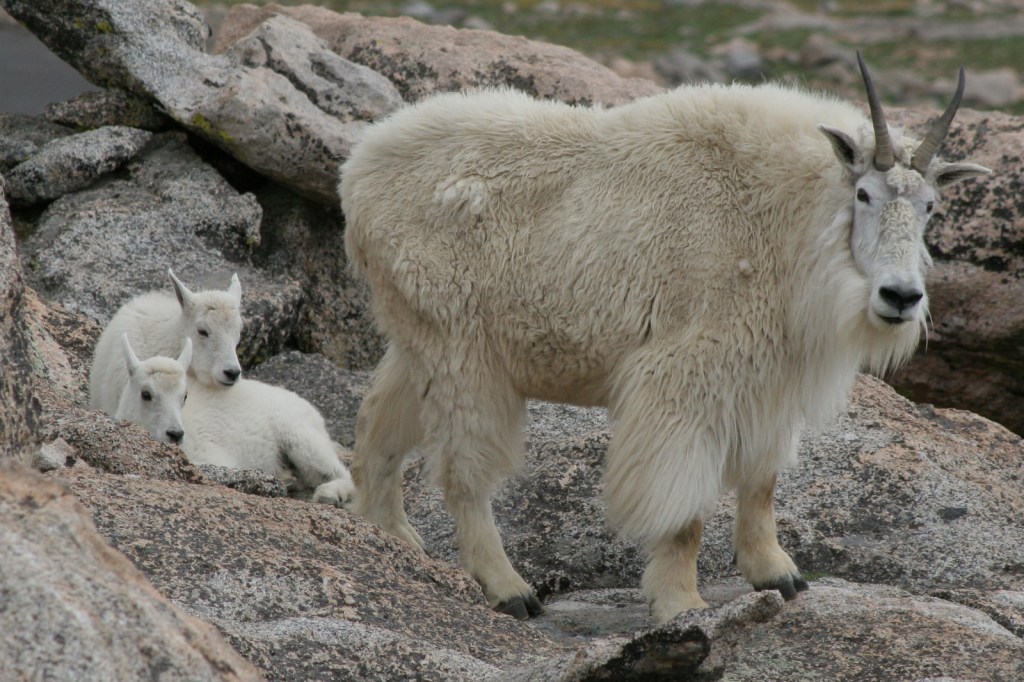
7. A Beast the Color of Winter: The Mountain Goat Observed by Douglas H. Chadwick (1983)

North American mountain goats are the subject of this concise volume; Chadwick has also written The Wolverine Way (2010)

6. Heart and Blood: Living with Deer in America by Richard Nelson (1997)

Set mostly in Alaska’s Tongass National Forest, this is an interesting perspective on a common mammal

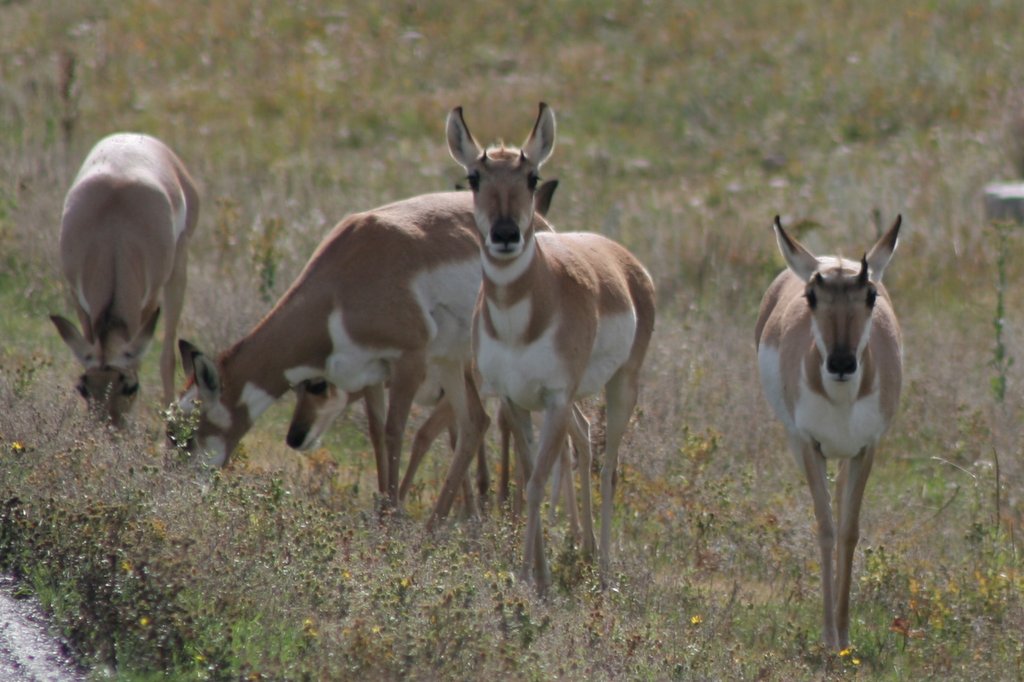
5. Built for Speed: A Year in the Life of Pronghorn by John A. Byers (2003)

This book taught us so much about our backyard neighbors, from their predatory zygotes to their oversized hearts and lungs

4. Birdology: Adventures with Hip Hop Parrots, Cantankerous Cassowaries, Crabby Crows, Peripatetic Pigeons, Hens, Hawks, and Hummingbirds by Sy Montgomery (2010)

The first book we have read by prolific nature writer Sy Montgomery, but certainly not the last

3. The Rise of Wolf 8: Witnessing the Triumph of Yellowstone’s Underdog by Rick McIntyre (2019)

The first of a series that documents the dramatic lives of the reintroduced wolfpacks of Yellowstone National Park over the decades

2. Watch the Bear: A Half Century with the Brown Bears of Alaska by Derek Stonorov (2023)

One of the best books about bears ever written, it dispels myths based on a lifetime of close observation in Alaska

…and finally our #1 non-fiction book about wildlife:

1. Mind of the Raven: Investigations and Adventures with Wolf-Birds by Bernd Heinrich (1999)

Even if you know a lot about these fascinating and intelligent birds, you will learn something new. The obvious #1 choice for Raven About the Parks!

.

Honorable Mentions

North American Tree Squirrels by Michael A. Steele and John L. Koprowski (2003)

Two researchers recount their studies on these frequently seen, but often misunderstood creatures

Wild in Arizona: Photographing Arizona’s Wildlife by Bruce D. Taubert (2016)

Incredible color photographs and expert tips on where to find wildlife in Arizona

Prairie Dogs: A Wildlife Handbook by Kim Long (2002)

A succinct look at this keystone species; we have also read the author’s equally good Squirrels: A Wildlife Handbook

The Social Lives of Animals by Ashley Ward (2022)

A biologist shares her personal experiences with wild animals across the globe

The Sound of a Wild Snail Eating by Elisabeth Tova Bailey (2010)

Well-written and inspirational look at the often-overlooked wildlife that shares our daily existence

The Animal Dialogues: Uncommon Encounters in the Wild by Craig Childs (2007)

Personal encounters with wild animals from the celebrated author of House of Rain: Tracking a Vanished Civilization Across the American Southwest (2007)

 A Naturalist in Alaska by Adolph Murie (1961)

Set in Denali National Park, previously on our list of Top 10 Books Set in a National Park

Wildlife Watching in America’s National Parks: A Seasonal Guide by Gary W. Vequist and Daniel S. Licht (2013)

This useful guide was previously in our Top 10 Guidebooks to National Parks

Tracks of the Unseen: Meditations on Alaska Wildlife, Landscape, and Photography by Nick Jans (2000)

Previously in our Top 10 Non-Fiction Books Set in Alaska; Jans’ work is also included in the anthology Wild Moments: Adventures with Animals of the North (2009)

We are a participant in the Amazon Services LLC Associates Program, an affiliate advertising program designed to provide a means for us to earn fees by linking to Amazon.com and affiliated sites.

Top 10 Novels Set in Hawai‘i

We recently returned from our fourth trip to the Hawai‘i, so we are still island dreaming.  We have previously released our Top 10 Non-Fiction Books Set in Alaska and Top 10 Novels Set in Alaska, now we are turning our attention to the 50th state.  There are many novels to choose from set on the Hawaiian Islands, but all our selections are a good introduction to the Aloha State.  The Stench of Honolulu was a contender, but the comic novel is not really set in Hawai‘i, although it is hilarious.  We have not read enough non-fiction about the state to create a separate list, so we put a few of our favorites at the bottom, not including some interesting works by early tourists Mark Twain, Jack London, and Isabella BirdClick here to see all our Top 10 Lists.

10. From Here to Eternity by James Jones (1962)

A ne’er-do-well soldier goes AWOL in the months before the attack on Pearl Harbor from the author of The Thin Red Line

9. Sharks in the Time of Saviors by Kawai Strong Washburn (2020)

There are magical elements in this gritty story that follows a modern Hawaiian family and was selected as a favorite book by former President Barack Obama

8. Hawaii: A Novel by James A. Michener (1959)

Michener’s epic style covers the history of the islands in an easy-to-digest manner; the story about Mark Twain visiting Kilauea Volcano stood out

7. Micro: A Novel by Michael Crichton and Richard Preston (2011)

A work in progress when the Jurassic Park author passed away, this sci-fi thriller set on Oahu was finished by the author of The Cobra Event and The Wild Trees (which is on our Top 10 Non-Fiction Books Set in a National Park)

6. The Descendants by Kaui Hart Hemmings (2007)

This novel of family dynamics was adapted into an excellent movie starring George Clooney

5. Lei and the Fire Goddess by Malia Maunakea (2023)

This juvenile fiction book follows a 12-year-old girl who is swept up in a supernatural quest after insulting the goddess Pele, the sequel Lei and the Invisible Island is out now

4. Hawaiian Myths of Earth, Sea, and Sky by Vivian L. Thompson (1966)

There are many books to choose from about Pele, Maui, and other gods that are a good introduction to the indigenous culture, including the classic by Martha Beckwith

3. Honolulu by Alan Brennert (2009)

An interesting book of historical fiction, Brennert also wrote Moloka’i about the Kalaupapa leper colony

2. Radar Girls by Sara Ackerman (2021)

A romance novel based on the women who worked for the military during World War II; the characters are great and you will probably want to read Ackerman’s other Hawaiian-set books after finishing

…and finally our #1 novel set in Hawai‘i

1. Song of the Exile by Kiana Davenport (1999)

Historical fiction follows the decades of changes experienced by a woman who is exiled to the leper colony that is now Kalaupapa National Historical Park on Molokai Island (the author’s Shark Dialogues and House of Many Gods are also on our list to read)

.

Honorable Mentions (Favorite Non-Fiction Books Set in Hawai‘i)

The Three-Year Swim Club: The Untold Story of Maui’s Sugar Ditch Kids and Their Quest for Olympic Glory by Julie Checkoway (2015)

A gripping non-fiction tale of the sons and daughters of sugarcane workers that set international swimming speed records in the 1930s and ’40s

By Wind, By Wave: An Introduction to Hawai‘i’s Natural History by David L. Eyre (2000)

Invasive species have a long history of disturbing the ecological balance of these islands in the middle of the Pacific Ocean

Unfamiliar Fishes by Sarah Vowell (2011)

The author of Assassination Vacation turns her sarcastic pen on the haole invaders who “settled” Hawai‘i

No Worries Hawaii by Jerry and Janine Sprout (2009)

We have utilized many guidebooks to the islands, but given the overload of information out there this one is actually helpful in prioritizing options

We are a participant in the Amazon Services LLC Associates Program, an affiliate advertising program designed to provide a means for us to earn fees by linking to Amazon.com and affiliated sites.

Our 500th Blog Post!

A big thank you to our readers for continuing to support our website!  We recently reflected on our love of travel for the website All Fifty States Club and wanted to share that with you. And if you are around Wyoming, please check out our next 4 presentations at local libraries.

Our travel website Raven About The Parks is dedicated to providing information on recreating on U.S. public lands.  Our mission is to shine a light on the lesser-known National Forests and National Park Service sites in America, and eventually to expand into covering National Wildlife Refuges and State Parks.  We enjoy outdoor pursuits like backpacking, kayaking, camping, and snowshoeing, but we also love touring historic buildings, exploring museums, reading interpretive signs, and attending college football games.  We take joy in discovering new places, and it seems like every time we visit one new spot, we add two more to our list.  That is fine with us, since we believe travel is a never-ending quest to live life to its fullest.  We hope that sharing our travels helps inspire others to “Find what you love and do more of it.” 

In 2016, we took ten months off work in Wyoming to travel the world and we visited all 50 states between April and November.  We had already been to more than 40 states at that point, and Tiff’s final state was New Jersey, while Scott’s was Connecticut.  Our goal that year was in every state to stop into at least one State Park and a National Park Service site that we had never been to (some states like New Hampshire only have one).  We printed blank sheets for each state to record the dates we visited, wildlife spotted, favorite places and people, and our impressions of each state’s drivers, roads, and topography.  One of the best things we recorded was a list of places and events to return for, which has helped us plan some awesome trips in the subsequent years.

Between 2017 and 2023, we visited all 50 states once again (Delaware was the final one) while researching travel guidebooks we wrote on all 155 National Forests and road tripping in each state.  We also made sure by the end that we had spent the night in every state (with Rhode Island being our last).  The 50 States of Great guidebook is based on our experiences and thousands of hours of research; we picked our favorite National Park, State Park, National Forest (40 states have at least one), museum, roadside attraction, and eight other categories for all states.  We even included shorter chapters on American Samoa, D.C., Puerto Rico, and the U.S. Virgin Islands (and we hope to visit Guam and Saipan someday).  If you are interested, 50 States of Great: Road Trip Guide to America is available on Amazon.

We continue to travel across the U.S. seeking new adventures and returning to favorite places.  In 2022, we came upon the book The Happiness of Pursuit by Chris Guillebeau that explained the mental health benefits of working toward a greater life goal (like running a marathon in all 50 states or attending a baseball game at every MLB stadium).  We had been doing this all along, but since reading the book we have gone back to check in how many states we have bought a stuffed animal (45), hiked to a waterfall (38), crushed a penny (46), climbed to the highest point (29), visited the capital city (50 finished in Olympia, WA in 2023), showered at a Planet Fitness (29), and entered a museum (46).  Our current active pursuits include attending a college football game (39) and hiking in a National Wildlife Refuge (33) in every state.

Basically, we write about the places we have been to inspire others to “Find what you love and do more of it.”  We especially enjoy visiting new places, knowing that some of them will exceed our expectations and surprise us in ways we never could have anticipated.  We flip through travel magazines and scroll through Pinterest boards (check out ours here), but some of our more interesting finds have been inspired by obscure sources such as U.S. Mint quarters and U-Haul Super Graphics (we are mildly obsessed with these and have been known to burst into jubilation upon seeing a Saskatchewan moose on a dune).  We look forward to a future filled with travel across the U.S. and abroad.  To put our expertise on U.S. travel to good use, we have started posting one-week itineraries for all 50 states (starting with Kansas, Georgia, Idaho, and Rhode Island).

After reading an article on the website All Fifty States Club by Bob Rainville, we were inspired to determine how many state-to-state border crossings we had completed.  It took more than an hour of poring over maps and searching our memories, but we figured out there are 104 drivable border crossings and that we have made 96 of them already on our cross-country journeys.  Half of the eight remaining involve the corners of Missouri, which touches eight different states (the most of any state).

We appreciate your time and hope to produce another 500 quality posts for our audience in the coming years.  We have previously made Top 10 Lists of our favorite posts from each 100 post milestone, but this time we decided to create a different list highlighting the Top 10 Natural Phenomena to See in the U.S.  Watch for it soon!

Thank you for reading our blog! 

Scott and Tiff

Cheyenne, WY

Please check out our next 4 presentations at libraries in Wyoming!

“Find what you love and do more of it.” 

We recently published the expanded 2nd edition of our guidebook to the National Parks— A Park to Yourself: Finding Solitude in America’s 63 National Parks (available for sale on Amazon). The new edition is more than 60 pages longer with four-page chapters on Alaska’s wilderness National Parks that formerly had only a page. We also wrote a six-page chapter on the newest National Park— New River Gorge National Park and Preserve.

Our travel guidebook 50 States of Great: Road Trip Guide to America is also available for sale on Amazon