Tag Archives: arch

Malheur National Forest

Malheur National Forest

Oregon

Managed by U.S. Forest Service, Pacific Northwest Region

1,541,723 (1,465,287 federal/ 76,436 other)

Website: https://www.fs.usda.gov/r06/malheur

Overview

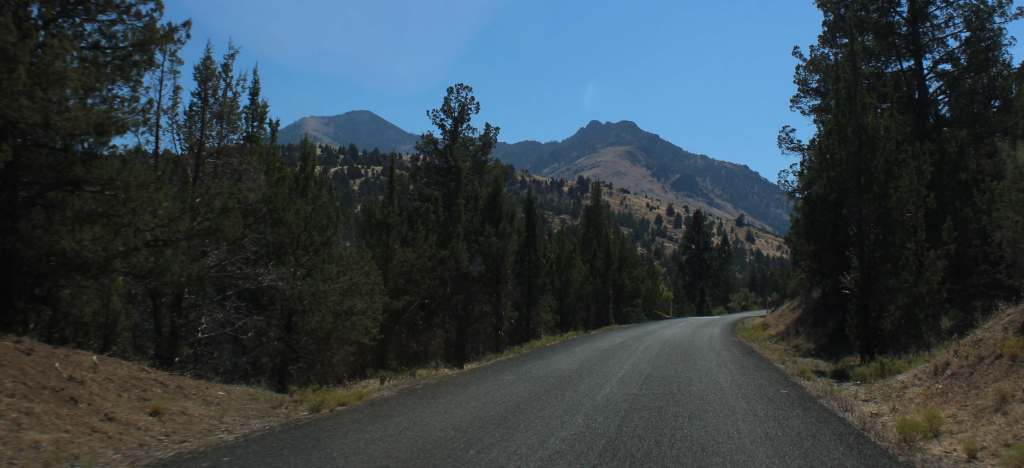
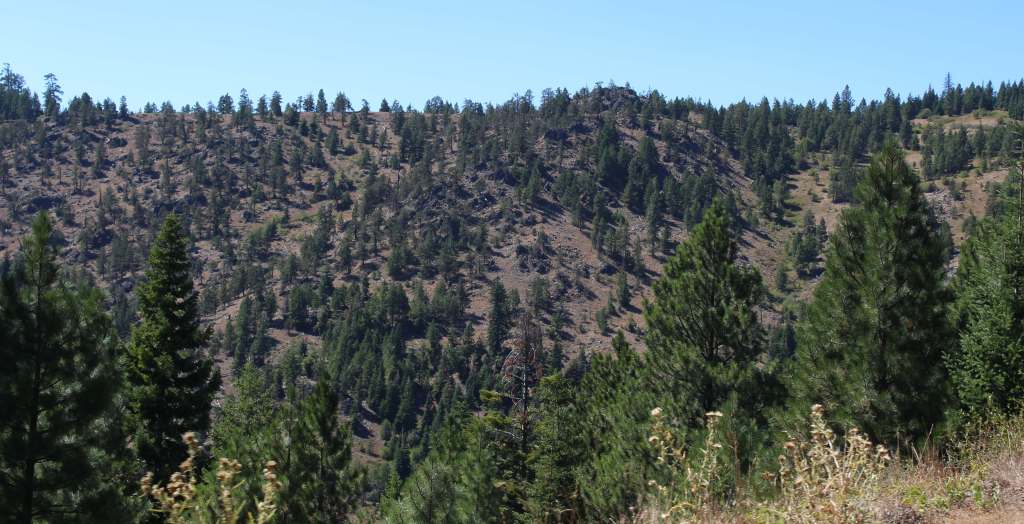
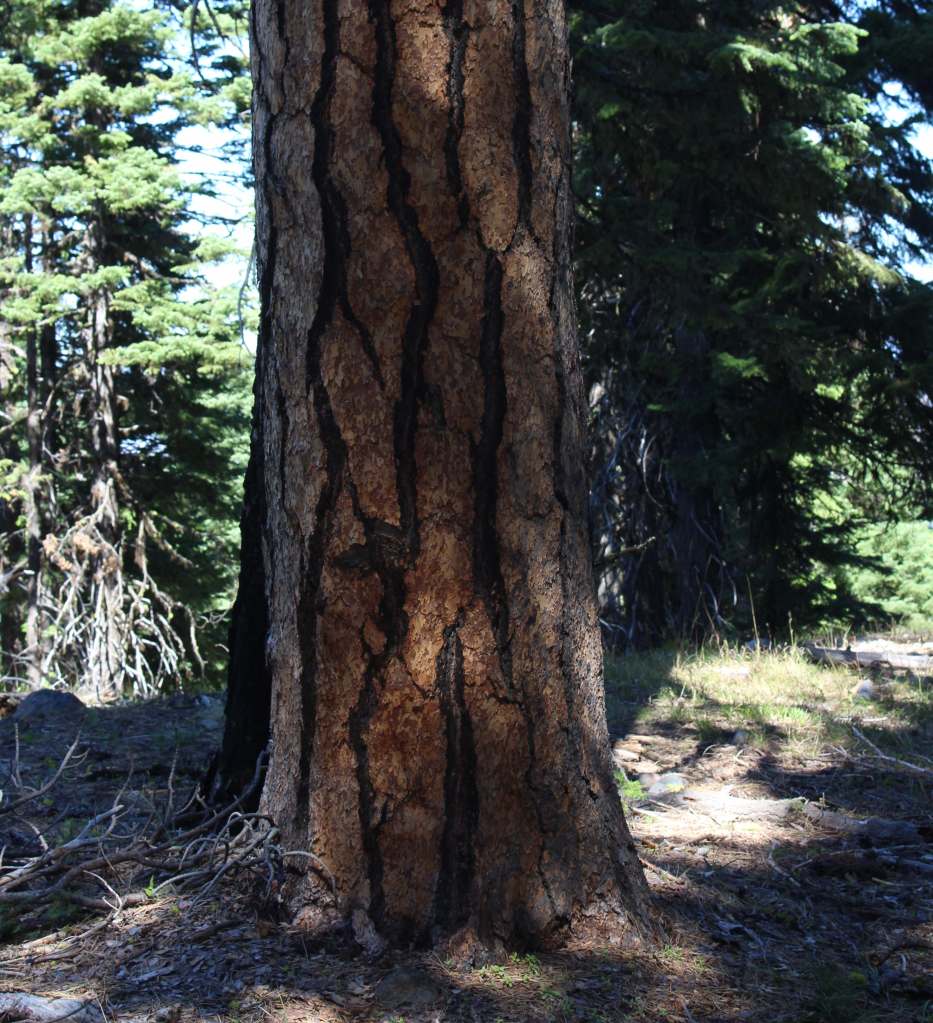
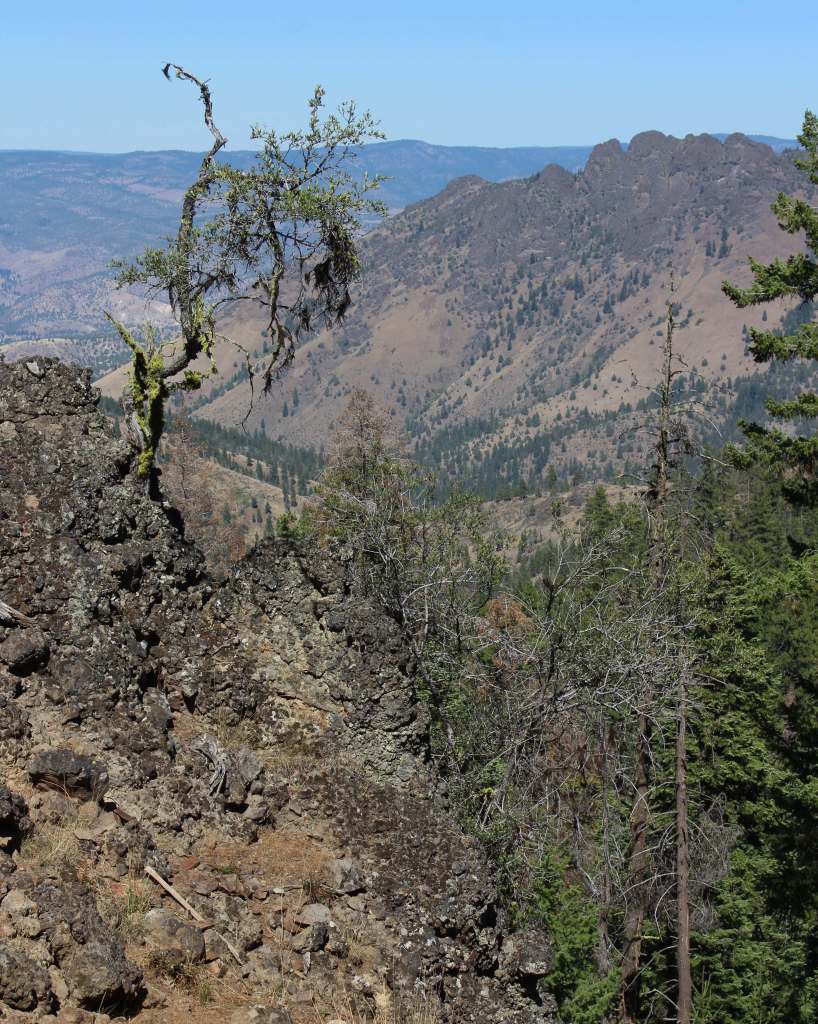
In central Oregon, Malheur National Forest encompasses the Strawberry Range and Aldrich Mountains that run into the Blue Mountains.  Much of its area is high desert, with grasslands, sagebrush, and juniper the predominant vegetation.  Malheur National Forest contains the “Humongous Fungus,” a honey fungus (Armillaria solidipes) that spans 2,200 acres and is considered the largest known organism by area in the world.  It is located mostly underground, high on a ridgeline immediately west of Clear Creek (44.4731°N 118.4816°W).

Highlights

Journey Through Time Scenic Byway, Cedar Grove Botanical Area, Yellowjacket Reservoir, Indian Rock-Vinegar Hill Scenic Area, Swick Old Growth Interpretive Site, Rosebud Creek, Arch Rock, Magone Lake, Tamarack Creek Trail, McClellan Mountain Trail

Must-Do Activity

The northeast corner of the National Forest includes the 4,000-acre Indian Rock-Vinegar Hill Scenic Area with its beautiful alpine meadows that bloom high in the Greenhorn Mountains.  For geology enthusiasts, Arch Rock is an easy hike to a 15-foot opening in soft ashflow tuff, Tex Creek has a natural bridge, and fossilized shells are found around Rosebud Creek.

Best Trail

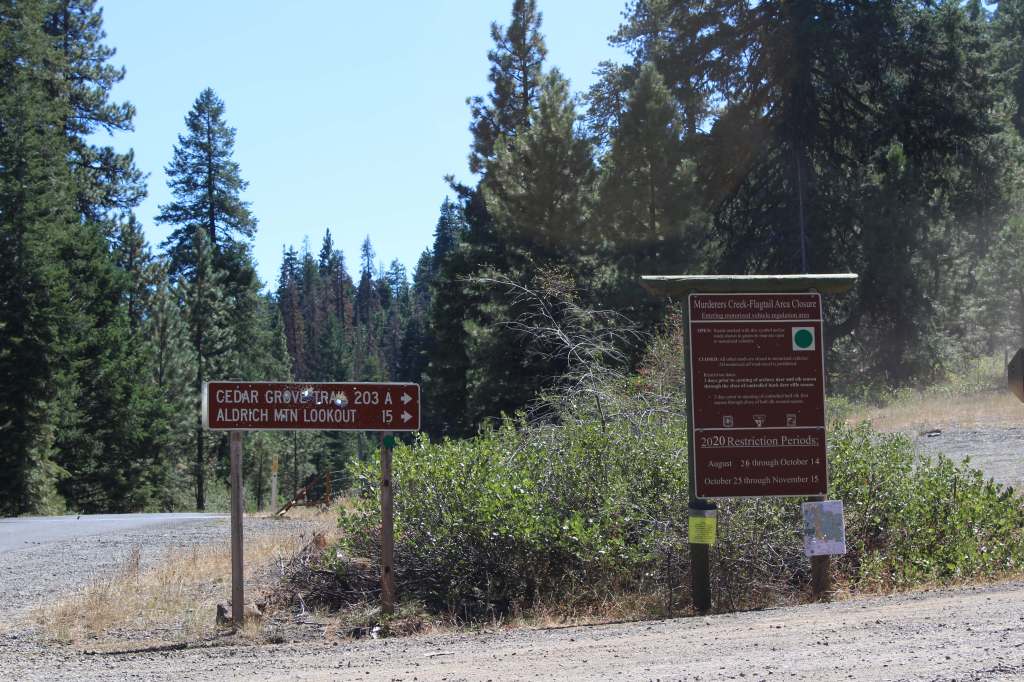
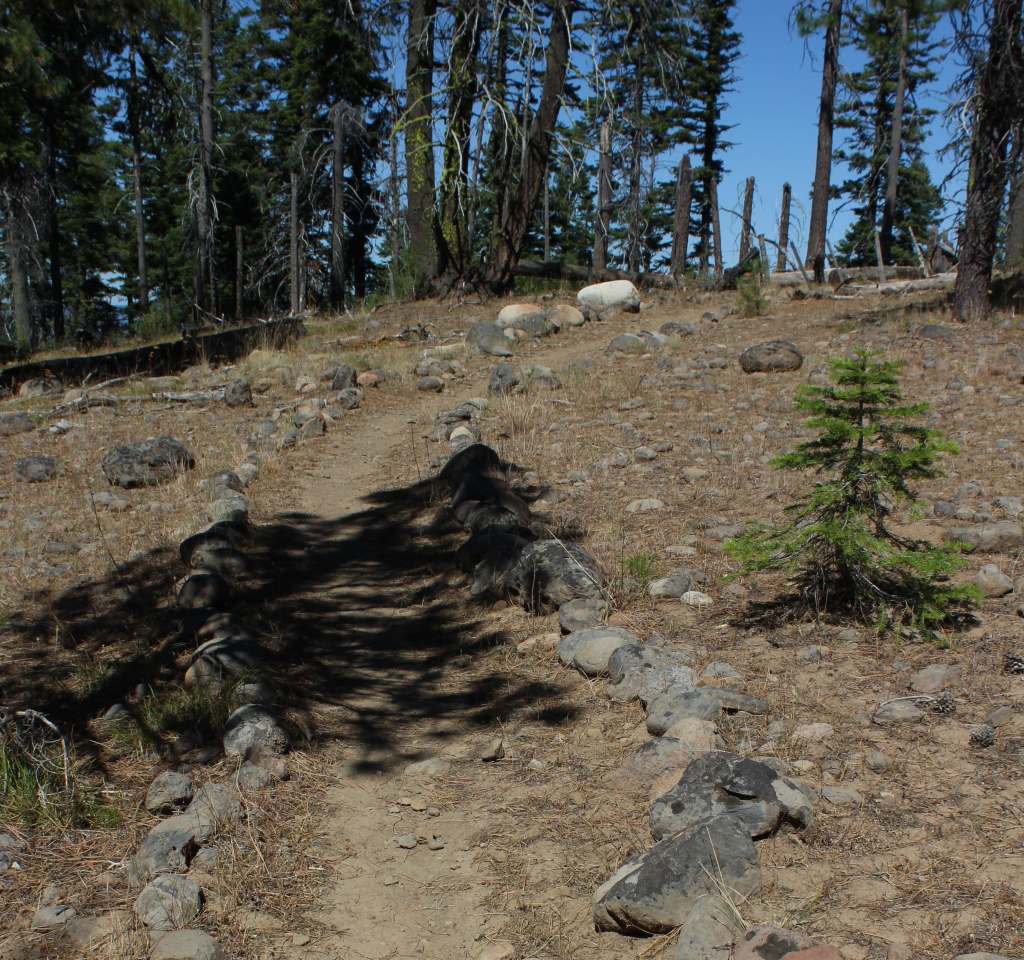
In the Aldrich Mountains, Cedar Grove Botanical Area preserves the only stand of yellow-cedars found east of the Cascade Range.  Some of these trees are more than 300 years old, hanging on for life along Buck Cabin Creek where a fire recently burned more than half of the 60-acre stand.  Access is by a National Recreation Trail, which drops precipitously into the grove, making for a strenuous hike out.  The trail is lined with plant identification placards and was pocked with deer hoofprints when we visited.  The trailhead is well-marked, located 5.5 miles down a dirt road after climbing ten miles on paved Forest Road 21 south of Highway 26.  Check conditions before departing, as some roads may be closed within the Rail Ridge Fire area.

Watchable Wildlife

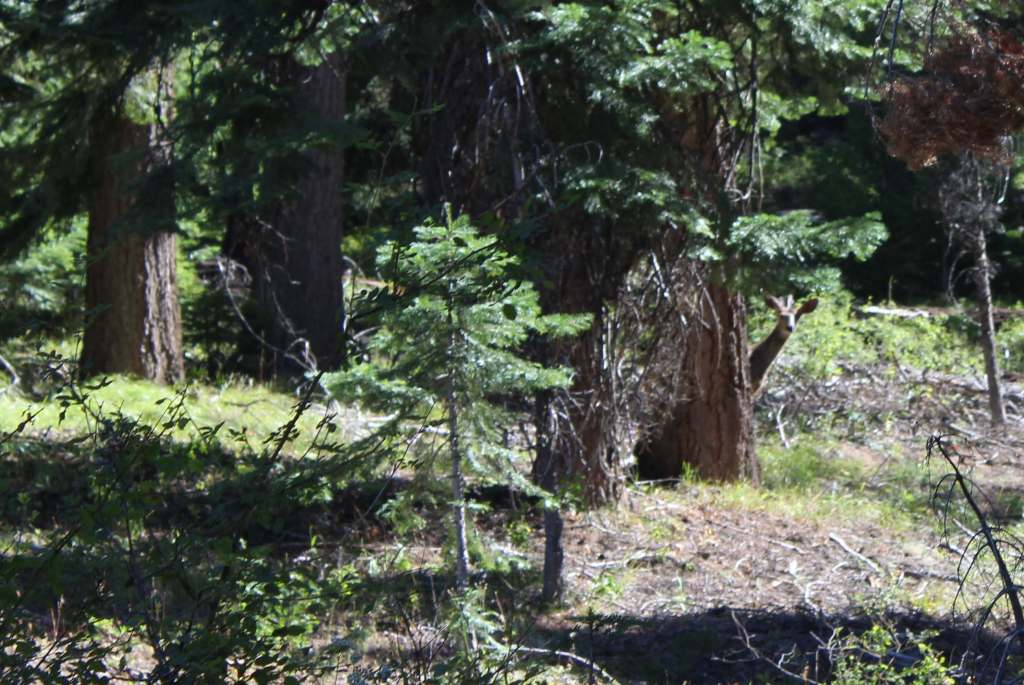
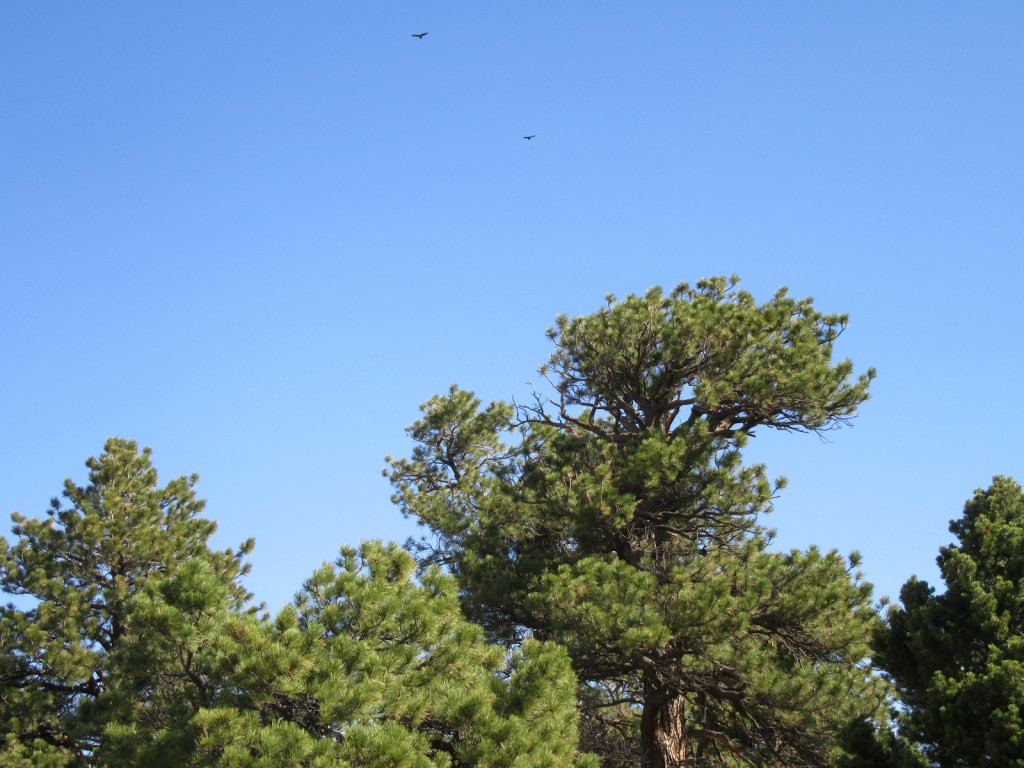
Elevations in Malheur National Forest range from 4,000 feet up to the top of 9,038-foot Strawberry Mountain.  Elk, pronghorn, and mule deer are large ungulates found here.  Carnivorous mammals include black bears, coyotes, mountain lions, and bobcats that roam the high desert environment.  Large birds frequently seen are bald eagles, Canada geese, mallards, and whistling swans.  Streams and lakes found throughout the National Forest support a variety of gamefish, including trout.  To the south, Malheur National Wildlife Refuge encompasses 185,000 acres of marshes, meadows, and man-made ponds that provide habitat crucial for bird nesting and migration. 

Photographic Opportunity

I did my M.S. research project on yellow-cedar (Callitropsis nootkatensis), so I had to visit Cedar Grove Botanical Area.  The trees are a popular ornamental species best known for their drooping branches and shallow root systems that allow them to survive in extremely wet soils.  Found from sea level up to 7,000 feet, they regularly live more than 1,000 years, growing slowly with chemicals compounds that prevent wood rot.

Peak Season

Summer

Fees

None

Road Conditions

Highway 395 runs north-south through the National Forest, while Highway 26 runs east-west.  The dirt roads we drove to access Cedar Grove Botanical Area were in good condition, although dry and dusty at the end of the summer.

Camping

There are numerous campgrounds in Malheur National Forest; none take reservations and some have fees that apply from May through October.  Some campgrounds are free, like Cane Crossing, Crescent, and Elk Creek, and dispersed camping is also allowed.

Wilderness Areas

Monument Rock Wilderness (also in Whitman National Forest)

Strawberry Mountain Wilderness

Related Sites

John Day Fossil Beds National Monument (Oregon)

Newberry National Volcanic Monument (Oregon)

Fremont National Forest (Oregon)

Nearest National Park

Crater Lake

Conifer Tree Species

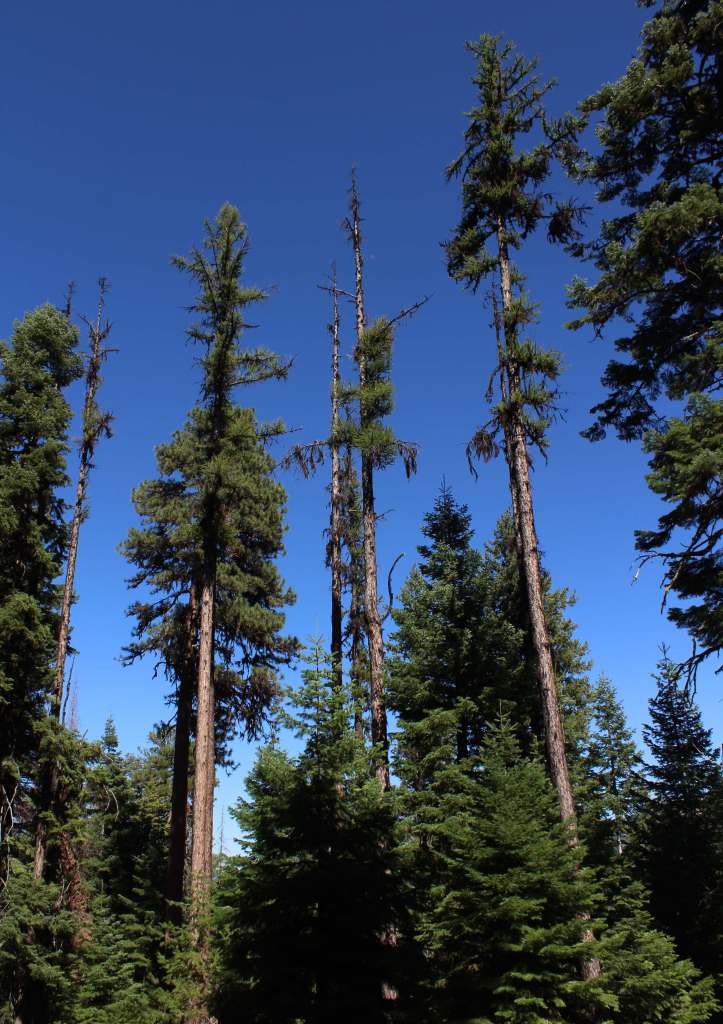
ponderosa pine, Douglas-fir, grand fir, white fir, yellow-cedar, western juniper

Flowering Tree Species

curlleaf mountain mahogany, sagebrush

Explore More – The Malheur River is named for the French word for “misfortune;” why was it given that name?

Learn more about this and the 154 other National Forests in our new guidebook Out in the Woods

Upper Missouri River Breaks National Monument

Upper Missouri River Breaks National Monument

Managed by Bureau of Land Management

Established 2001

377,346 acres

Website: https://www.blm.gov/programs/national-conservation-lands/montana-dakotas/upper-missouri-river-breaks

Overview

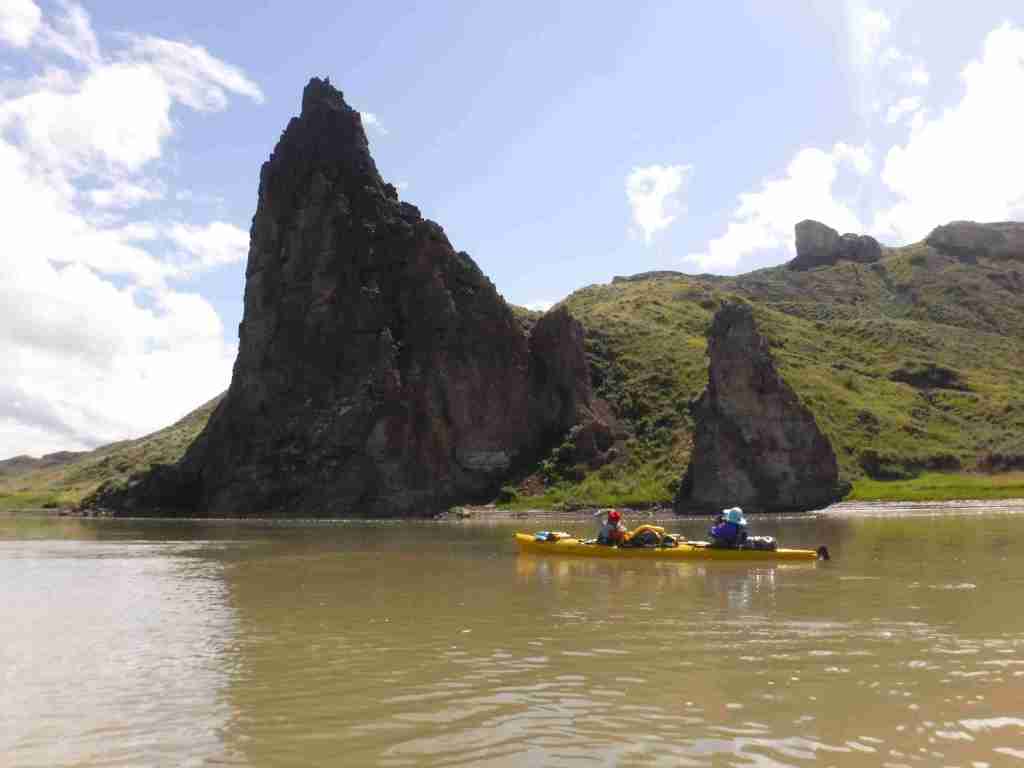
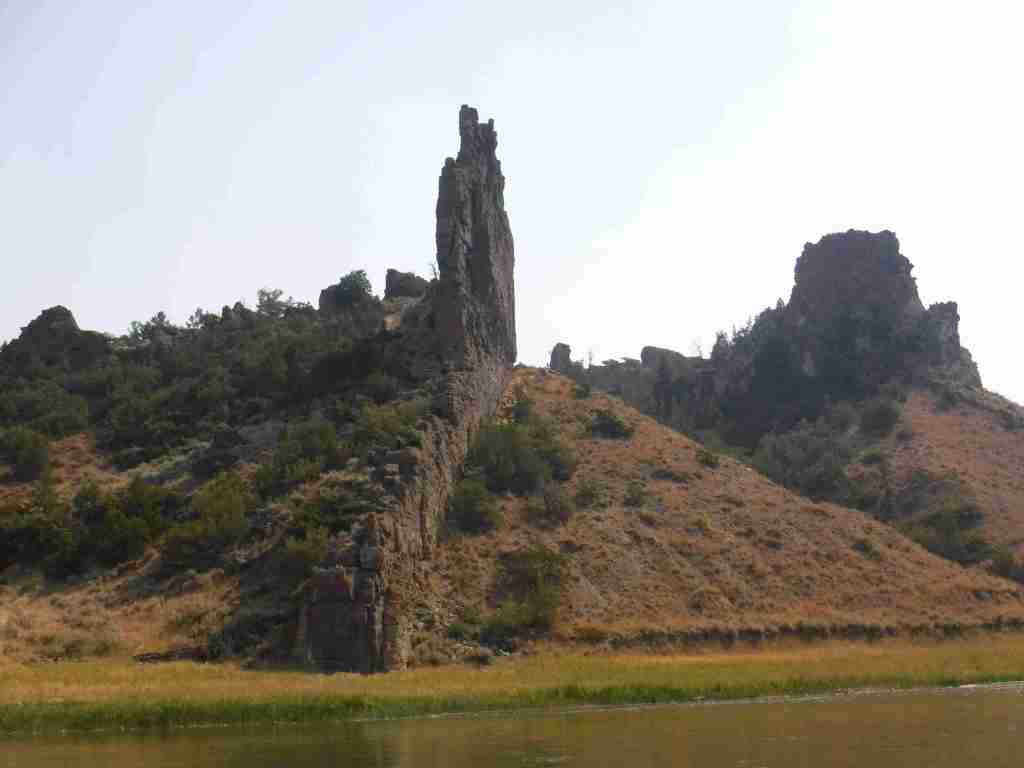
In central Montana, 149 miles of the Upper Missouri River were designated as a National Wild and Scenic River in 1976, upstream from the reservoir in Charles M. Russell National Wildlife Refuge.  This stretch of the river still looks much the way it did when the Lewis and Clark expedition first explored it in 1805 and their former campsites are marked by posts.  The breaks are a topographic area where the Missouri River eroded sedimentary rock that formed as horizontal layers laid down at the bottom of an ancient sea.  The National Monument comprises public land in a matrix with private ranches, with cattle making the water unfit for filtering.  There are a couple places to drive to along the river, but the best way to experience it is by floating a canoe or kayak down the non-motorized sections

Learn more about the other 137 National Monuments in our book Monumental America: Your Guide to All 138 National Monuments. It is now available for sale on Amazon.com.

Highlights

Fort Benton, Decision Point, Neat Coulee, Citadel Rock, Hole-in-the-Wall, Lewis and Clark National Historic Trail

Must-Do Activity

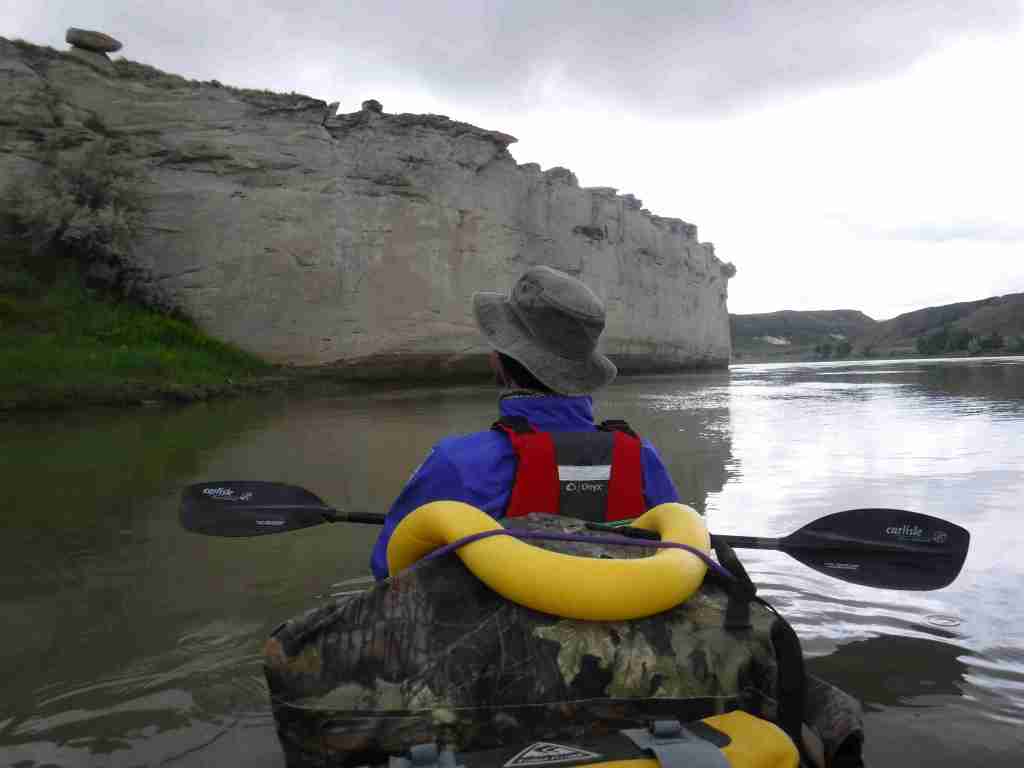
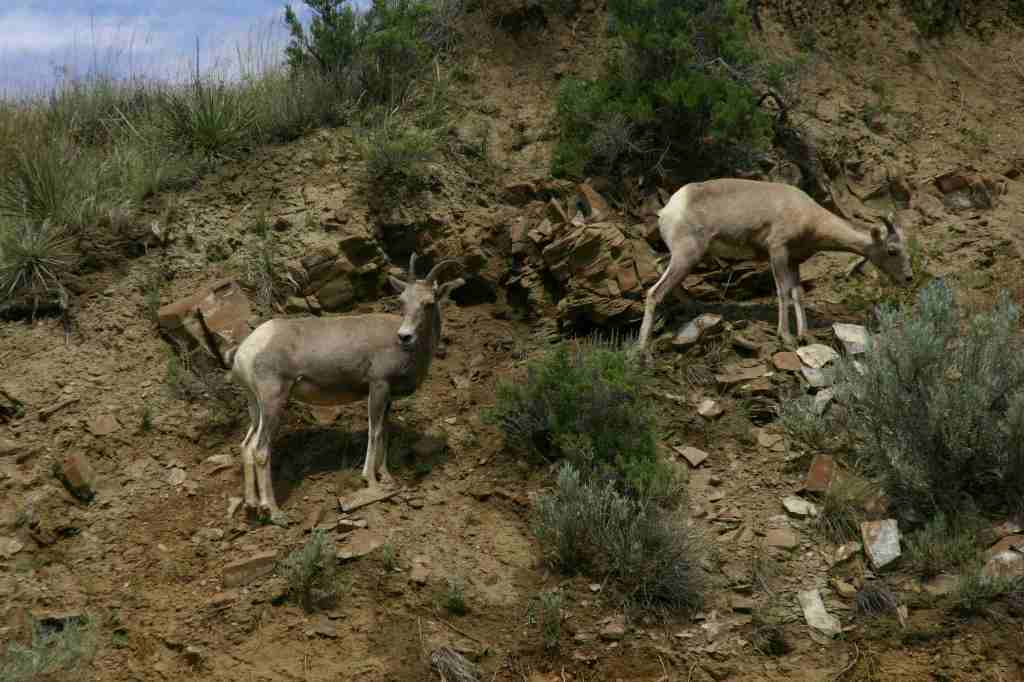
In Fort Benton, start your visit at the free interpretive center run by the Bureau of Land Management (BLM), then head downtown to learn more history by walking the riverfront of Fort Benton National Historic Landmark, including its many museums (admission fees charged) and sculptures of Lewis, Clark, Sacagawea and her son Pompey, and Shep (a local dog famous for his faithfulness).  To find out more about the Corps of Discovery, check out the Lewis and Clark Interpretive Center upstream in Great Falls.  The most scenic stretch to float lies in the 44 miles between Coal Banks Landing and Judith Landing where there are no rapids and the river current is so strong that paddling is mostly reserved for steering.  A permit (fee) is required from the BLM, and we recommend you purchase a Boaters’ Guide and W.A.G. bags.  Wildlife we spotted along the river included bighorn sheep, bald eagles, white pelicans, great blue herons, and beavers. 

Best Trail

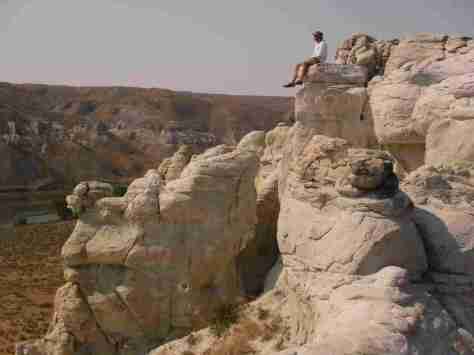
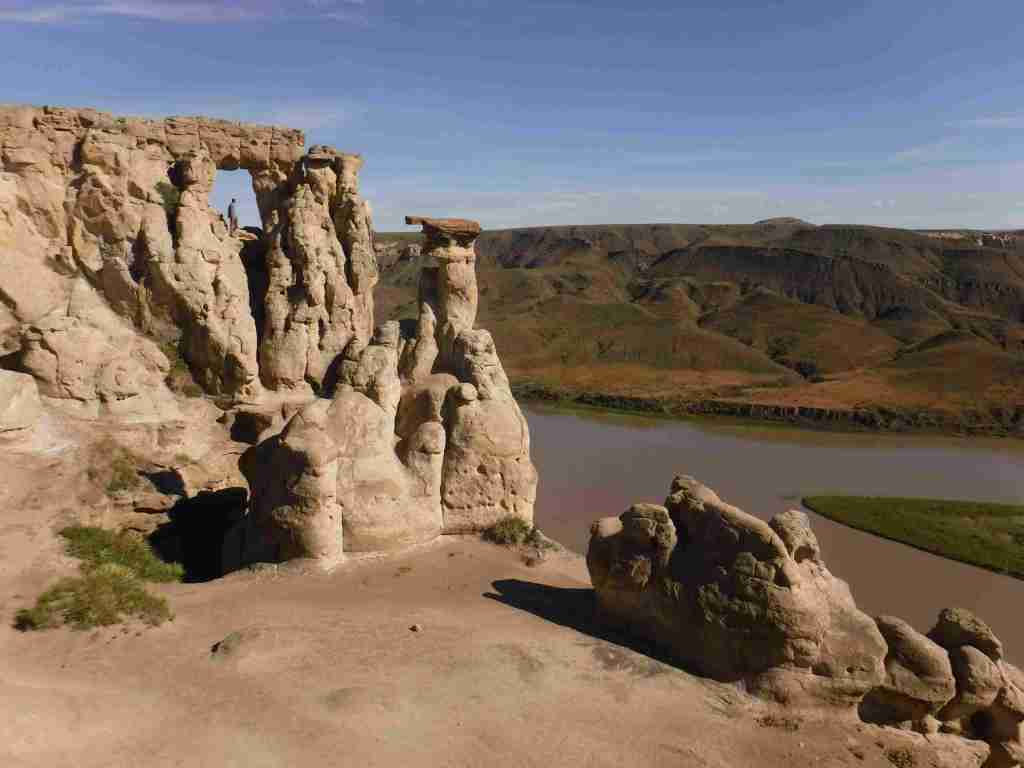
Only accessible by boat, the hike up the slot canyon at Neat Coulee from the Eagle Creek Developed Boat Camp is worth a stop.  It is also possible to scramble up to the eight-foot-tall Hole-in-the-Wall arch that comes into view on the south side of the river just past Citadel Rock.

Photographic Opportunity

One of the few places with road access in Upper Missouri River Breaks National Monument, at Decision Point, Captains Lewis and Clark were not sure which was the main route: the Marias or Missouri River.

Peak Season

Summer

Fees

There is a small fee charged per person per day to be on the river, which helps pay for the maintenance of vault toilets along the route (other waste must be packed out in W.A.G. bags).  An America the Beautiful pass covers the admission fee for the small museum at the BLM visitor center in Ft. Benton.

Road Conditions

Dirt roads doable by passenger vehicles lead to Coal Banks Landing and Judith Landing, while paved roads lead to put-ins at Chouteau County Fairgrounds in Ft. Benton and Kipp Recreation Area at the western edge of Charles M. Russell National Wildlife Refuge.

Camping

There are campgrounds at Chouteau County Fairgrounds, Coal Banks Landing, and Kipp Recreation Area.  Throughout the National Monument developed riverside campgrounds can be accessed by boat, with dispersed camping allowed anywhere on public land (a good map is essential to avoid private land). 

Related Sites

Custer National Forest (Montana)

Pompeys Pillar National Monument (Montana)

Lewis and Clark National Forest (Montana)

Nearest National Park

Glacier

Explore More – Who was Charles M. Russell and why did he get a National Wildlife Refuge named after him?

Learn more about the other 137 National Monuments in our book Monumental America: Your Guide to All 138 National Monuments

Rainbow Bridge National Monument

Rainbow Bridge National Monument

Utah

Managed by National Park Service

Established 1910

160 acres

Website: nps.gov/rabr

Overview

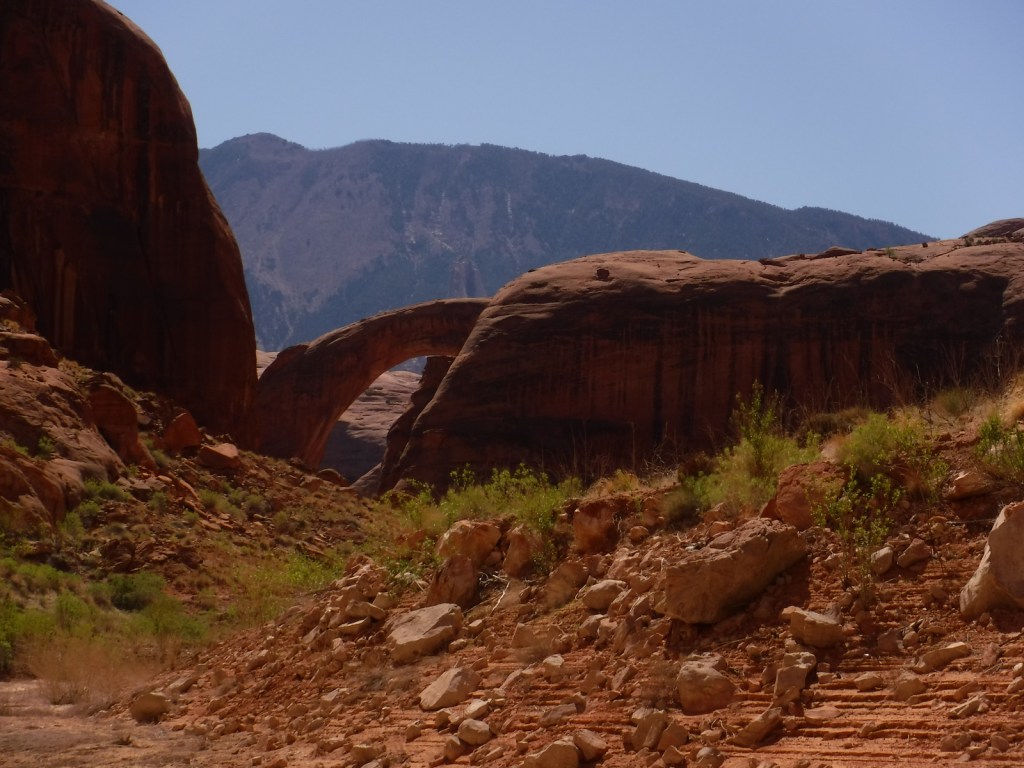
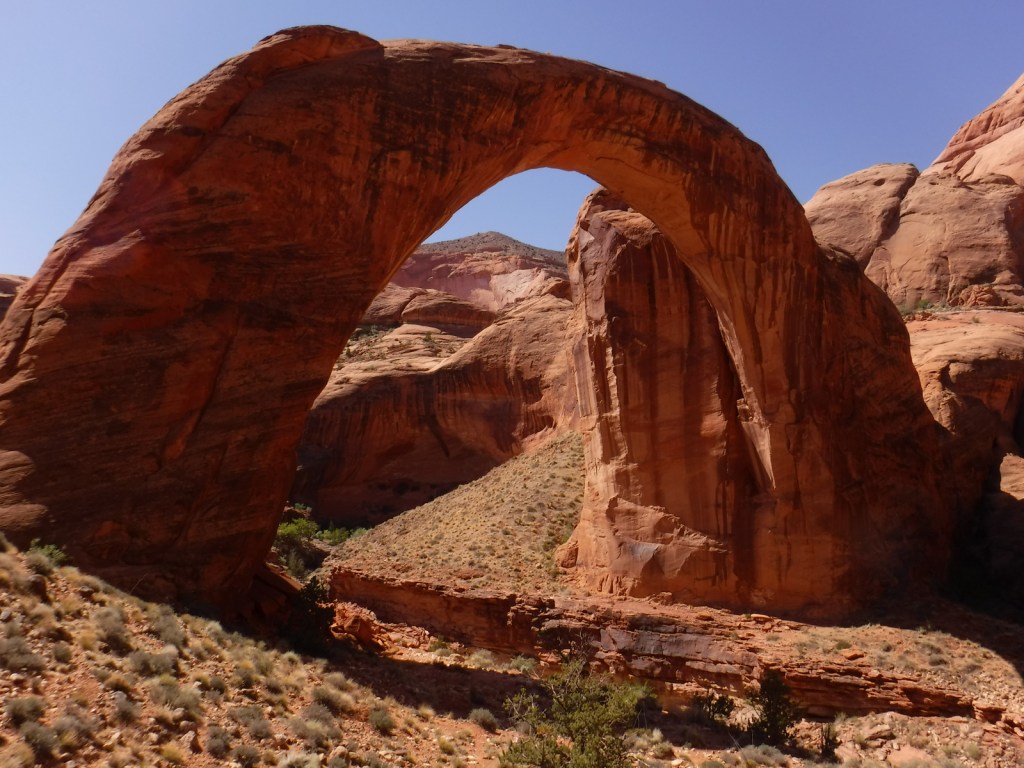
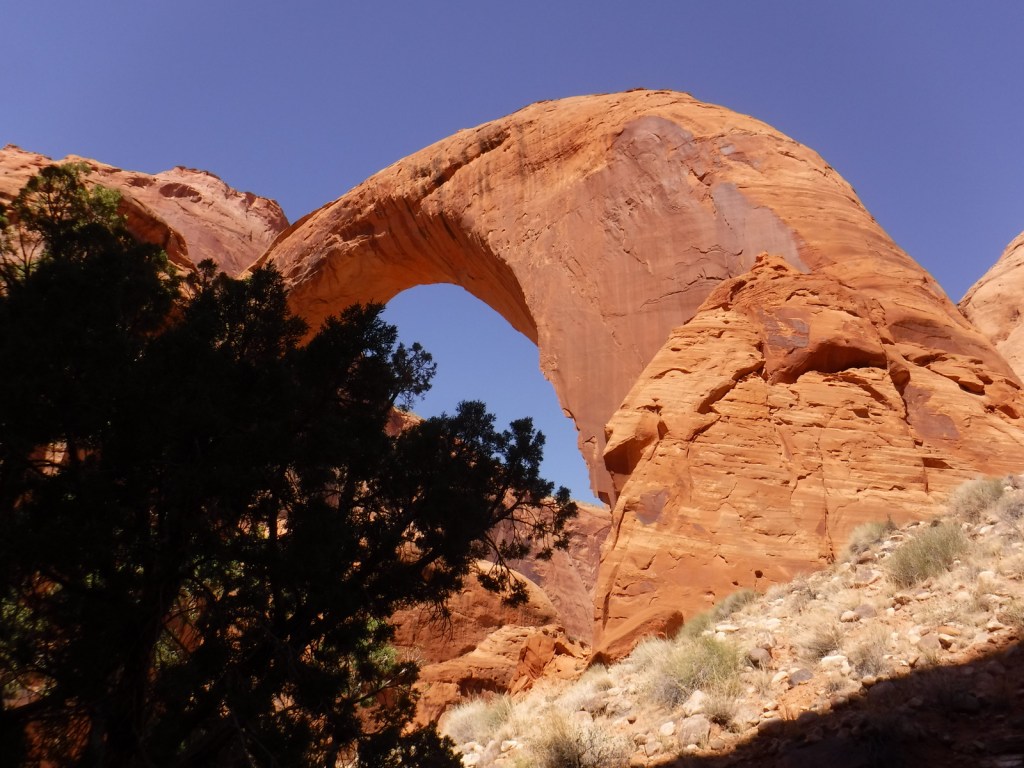
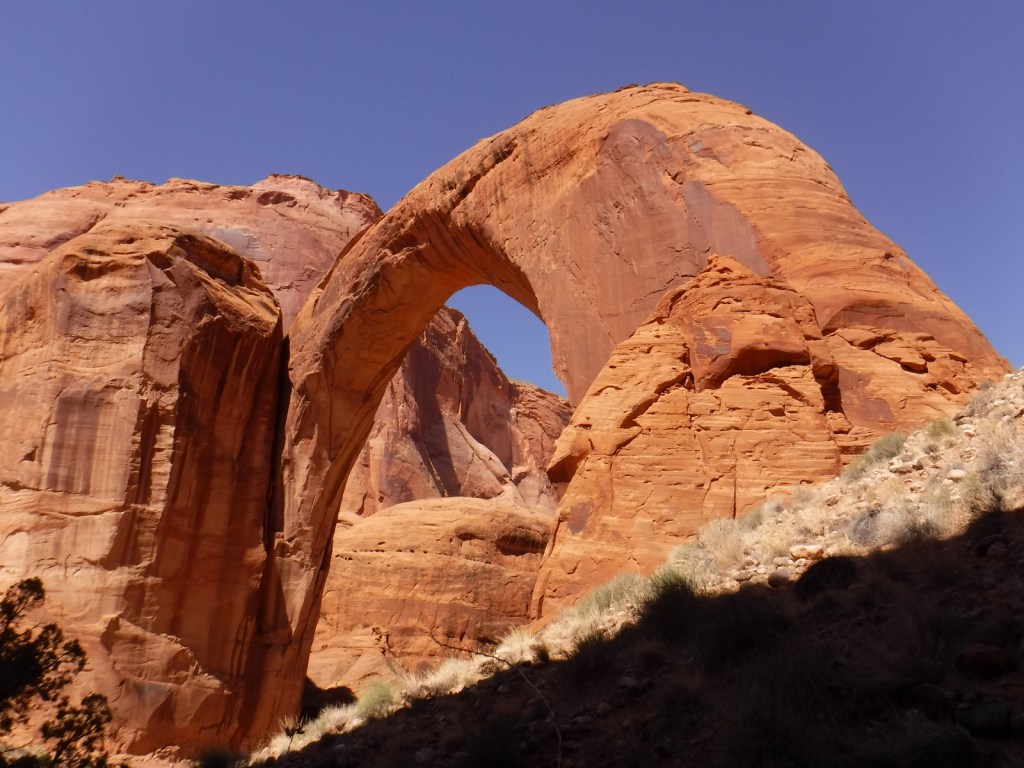
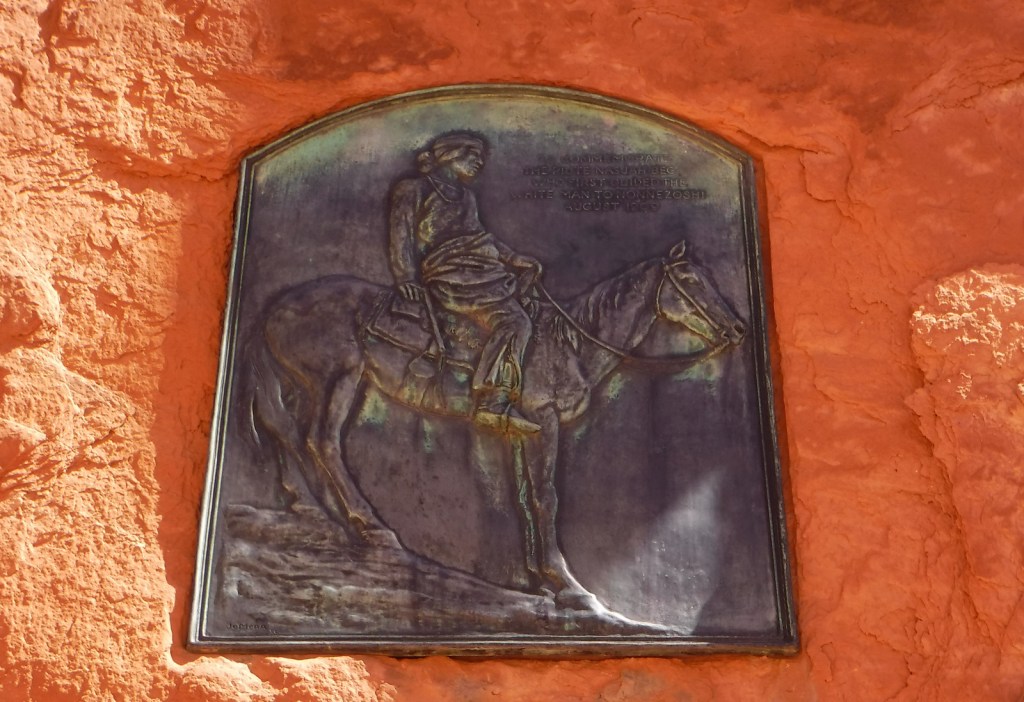
The statistics on Rainbow Bridge are impressive: it spans 275 feet with a height of 290 feet (compare that to the 151-foot-tall Statue of Liberty), and the sandstone at its top is 42 feet thick and 33 feet wide.  Before geologists started lumping together natural bridges and arches, it was considered the largest natural bridge in the world formed by water running underneath it.  The Navajo and other tribes consider Rainbow Bridge sacred and request that nobody walks beneath its span.  When Glen Canyon Dam was completed in 1963, many archaeological sites were submerged beneath Lake Powell and at the reservoir’s peak volume this sacred site has had water reach to its base.  The National Park Service (NPS) manages Rainbow Bridge National Monument as part of Glen Canyon National Recreation Area that straddles the Utah-Arizona border.

Learn more about the other 137 National Monuments in our book Monumental America: Your Guide to All 138 National Monuments. It is now available for sale on Amazon.com.

Highlights

Boat ride, Rainbow Bridge

Must-Do Activity

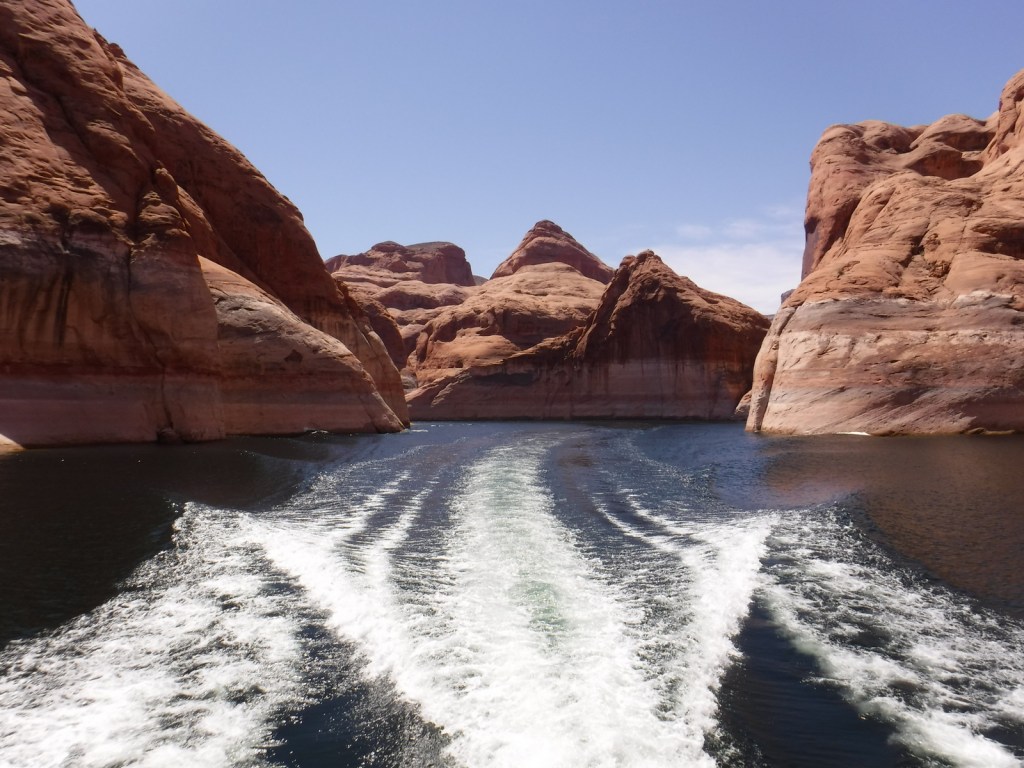
The NPS runs Carl Hayden Visitor Center in Page, Arizona, which is a good place to plan a visit to Rainbow Bridge or purchase tickets for a Glen Canyon Dam tour.  If you do not want to attempt to navigate 50 miles one-way in your own boat (rentals available), there are all-day commercial boat trips into Bridge Canyon.  Depending on the water level, the hike from the boat dock to the first overlook of the natural bridge is around one-mile one-way and is not wheelchair accessible.  Photos do not do Rainbow Bridge justice, and you must see it for yourself to truly appreciate the size of this entry on our Top 10 NPS Sites for Natural Bridges/Arches

Best Trail

There is always a hike from the boat dock to the overlook, but if you are in good shape continue on the trail around to the left to see the other side of Rainbow Bridge.  With proper permits from the Navajo Nation in Window Rock, Arizona, it is possible to backpack into the site on either a 14-mile or 17-mile trail. 

Photographic Opportunity

Obviously, Rainbow Bridge is the star attraction here.  Navajo legends tell how one of the Hero Twins was saved from drowning when his father Jo’hanaa’éí (the Sun) sent a rainbow, later turned to stone to symbolize a father’s love.  Another story says a measuring worm turned itself to stone to save both Hero Twins.

Peak Season

Spring and fall

Hours

https://nps.gov/rabr/planyourvisit/hours.htm

Fees

There is a $30 per vehicle entrance fee at the two marinas in Page (America the Beautiful passes accepted), in addition to charges for guided boat tours.

Road Conditions

The roads are paved to the marinas in Page, Arizona.  Glen Canyon National Recreation Area is famous for its backcountry 4×4 roads (like Hole-in-the-Rock Road) and flash floods, so check with a park ranger before attempting anything unpaved.  A fee is charged to ferry across Lake Powell between Halls Crossing and Bullfrog Marina.

Camping

There are several developed campgrounds in Glen Canyon National Recreation Area (mostly near marinas), but free primitive camping is also allowed along most dirt roads.  A permit is required for backpack camping in the beautiful Coyote Gulch area off Hole-in-the-Rock Road.

Related Sites

Natural Bridges National Monument (Utah)

Capitol Reef National Park (Utah)

Navajo National Monument (Arizona)

Explore More – Where along the trail to the Rainbow Bridge overlook is the three-toed dinosaur print found in the sandstone?

Learn more about the other 137 National Monuments in our book Monumental America: Your Guide to All 138 National Monuments

Bears Ears National Monument

Bears Ears National Monument

Utah

Managed by U.S. Forest Service and Bureau of Land Management

Established 2016

1,351,849 acres

Website: https://www.blm.gov/visit/bears-ears-national-monument

Overview

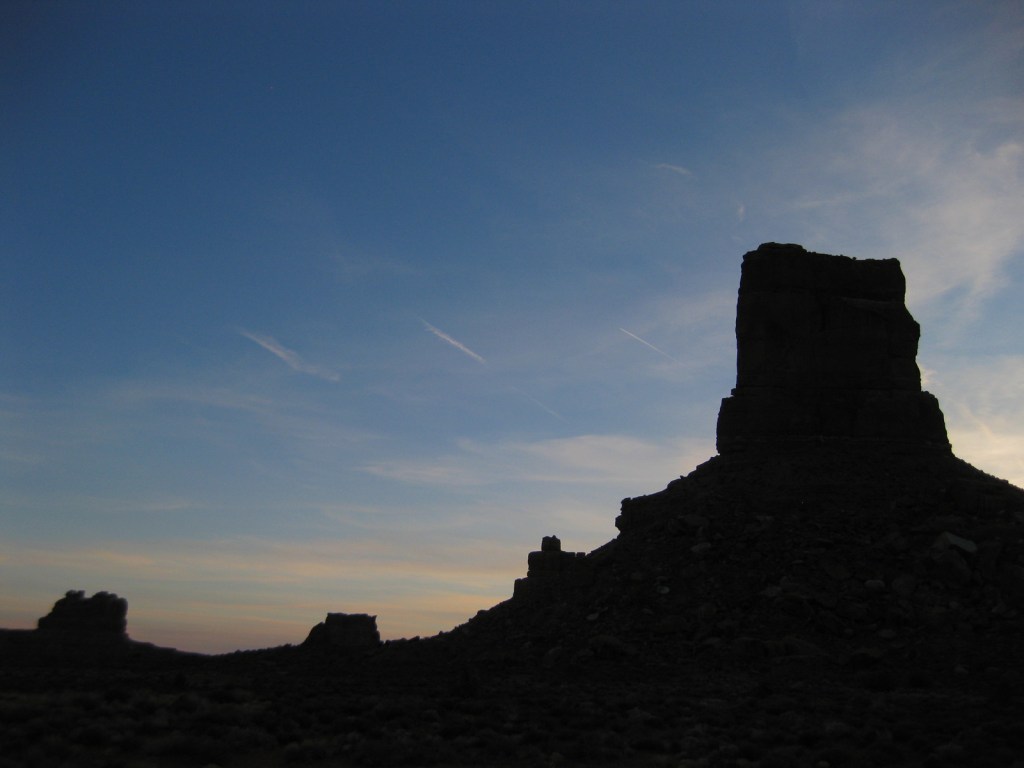
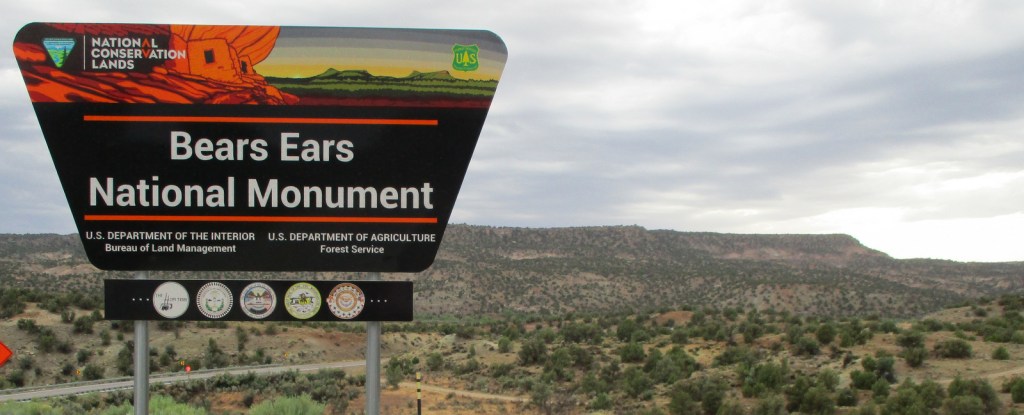
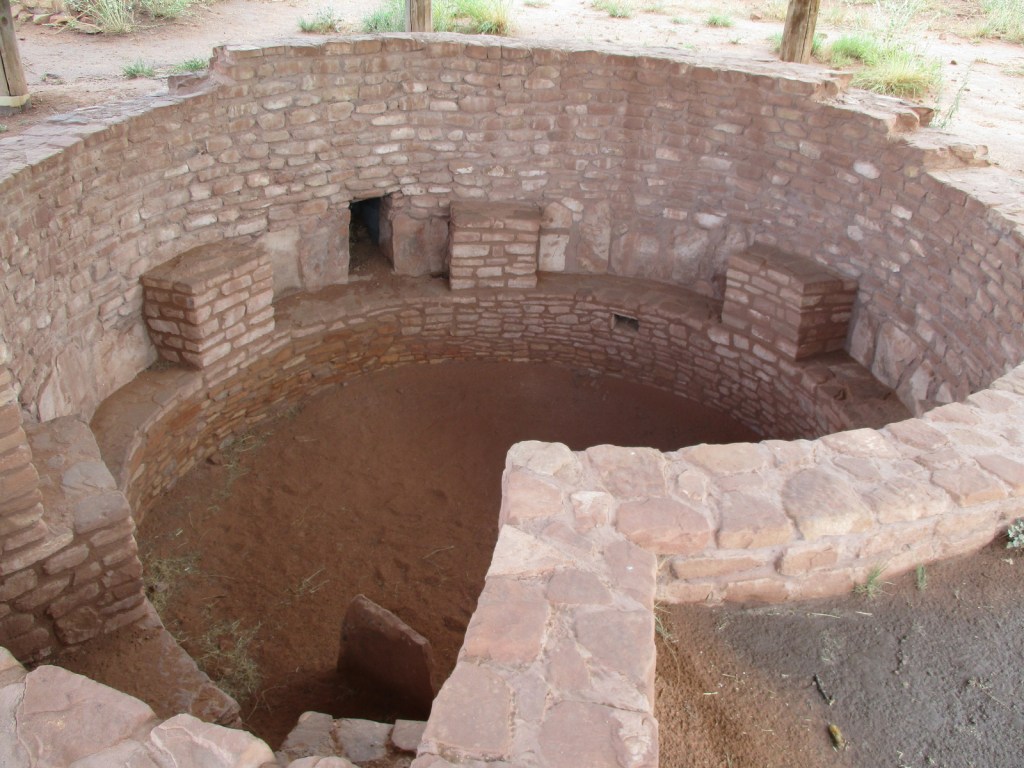
The Bureau of Land Management (BLM) and U.S. Forest Service manage the more than one-million acres of Bears Ears National Monument in partnership with five local Native American tribes.  After it was established, in 2017 it was controversially reduced in size to 201,876 acres before being restored four years later.  Much of the southern portion of La Sal National Forest, including the Dark Canyon Wilderness, is included inside its boundaries.  The entire area protects millions of years of the paleontological record and has more than 100,000 archaeological sites, especially on Cedar Mesa where day-use and overnight permits are required.  The BLM has excellent maps and trip-planning resources available on their website.

Learn more about the other 137 National Monuments in our book Monumental America: Your Guide to All 138 National Monuments. It is now available for sale on Amazon.com.

Highlights

Butler Wash, Moon House Ruin, Newspaper Rock, Moki Dugway, San Juan River, Elk Ridge Scenic Backway, Dark Canyon Wilderness, Mule Canyon, Seven Kivas, The Citadel Trail

Must-Do Activity

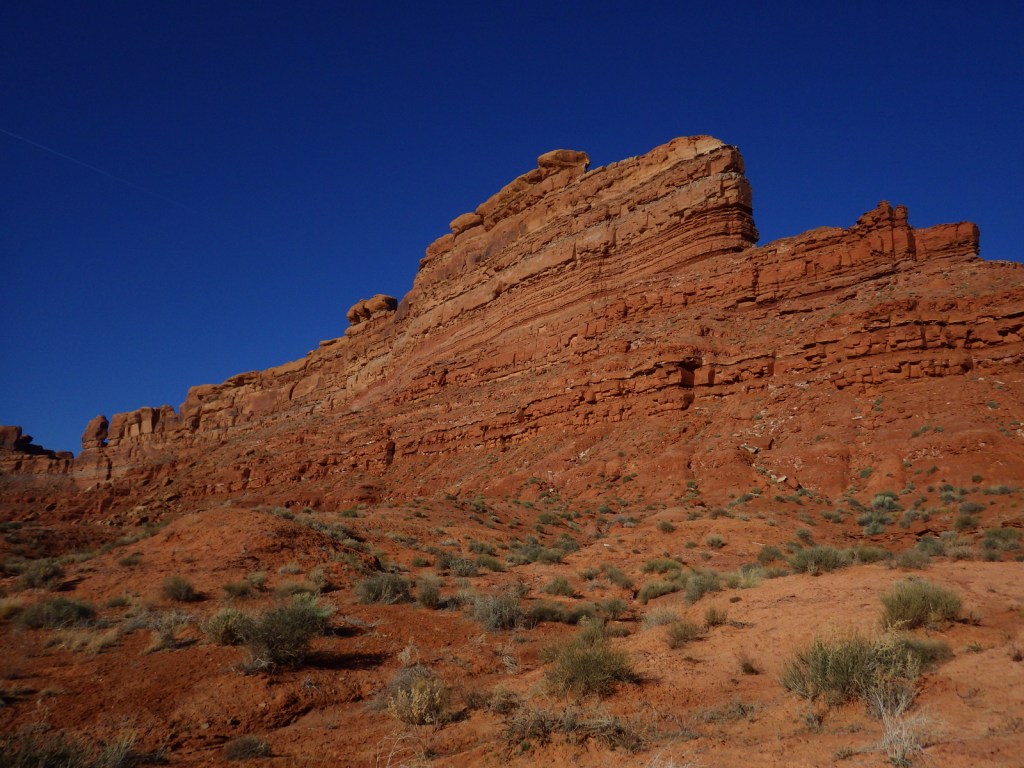
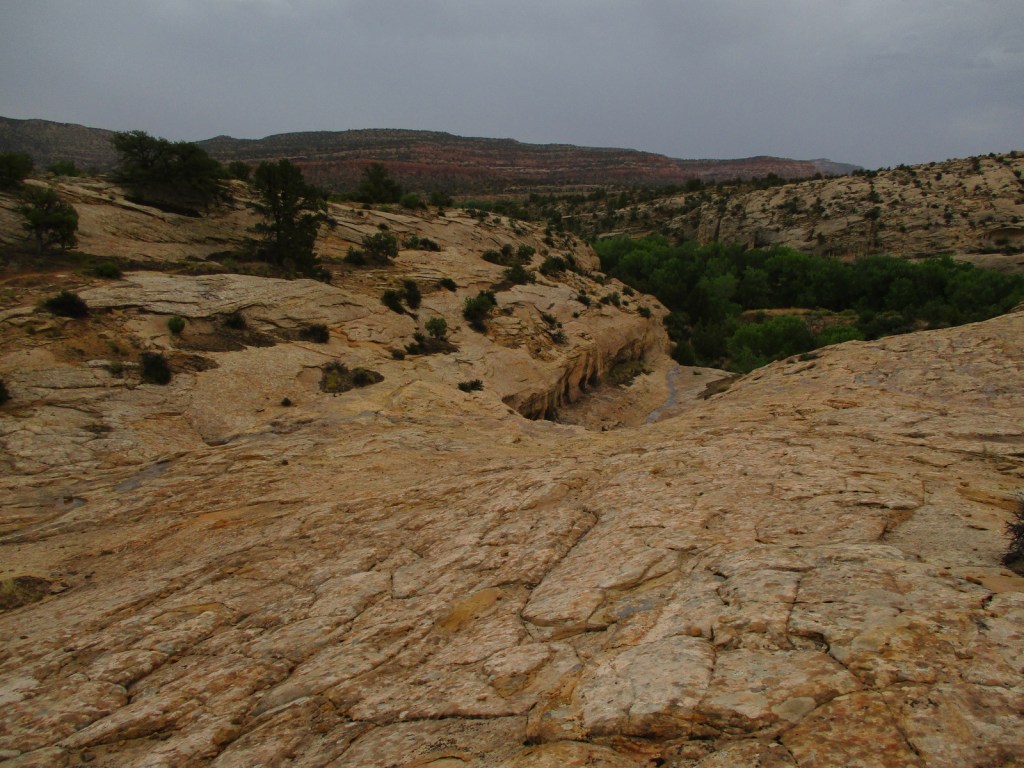
It would be easy to spend more than a week exploring the roads and trails within Bears Ears National Monument.  Everyone should try to drive the good 17-mile-long dirt road through Valley of the Gods to see rock formations like Rooster Butte and Woman in the Tub.  West of Blanding, paved State Route 95 passes Mule Canyon Interpretive site, Butler Wash Interpretive Trail, and Butler Wash Dinosaur Tracksite.  In La Sal National Forest, the 58-mile-long Elk Ridge Scenic Backway is a well-maintained (though unpaved) route that leads north from Natural Bridges National Monument to Highway 211, which connects to the Needles District of Canyonlands National Park.  There are multiple trails along the way that provide access to the Dark Canyon Wilderness, an area known for old-growth forests, natural arches, and Ancestral Puebloan ruins and pictographs. 

Best Trail

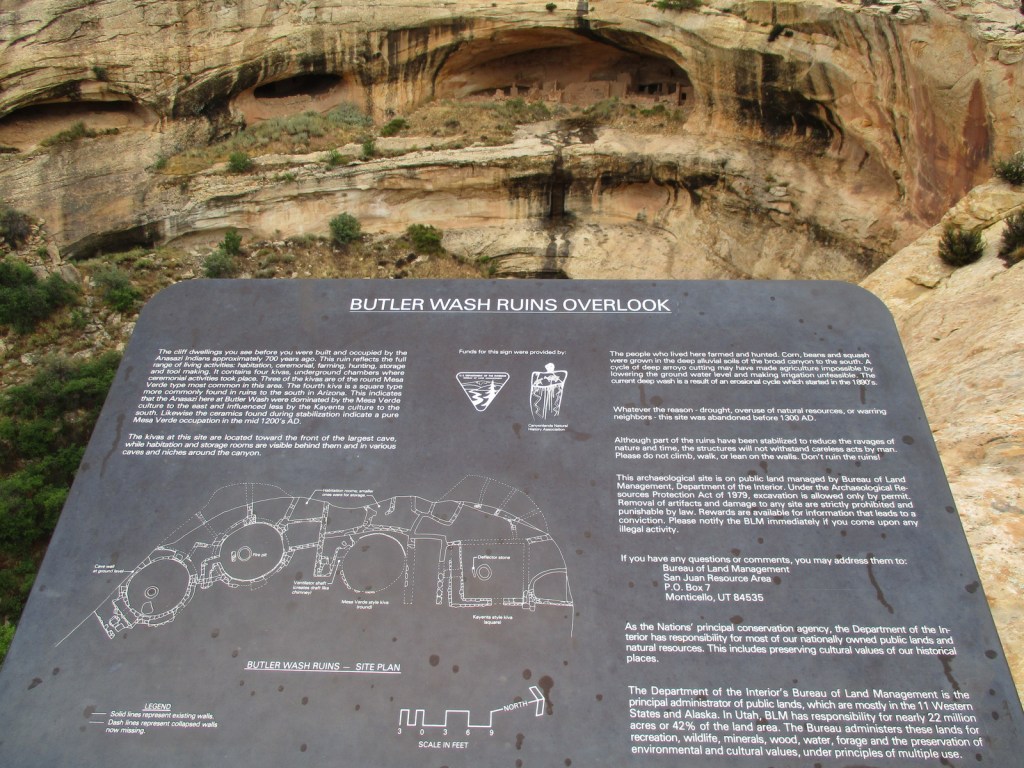
There are many trails to choose from, but one of the most popular is off unpaved Texas Flat Road that enters Mule Canyon (parking fee) and accesses House on Fire, a well-preserved granary located one mile in after multiple stream crossings.  There is a paved parking lot suitable for RVs at Butler Wash Interpretive Trail, a half-mile one-way walk on to an overlook of a cliff dwelling. 

Photographic Opportunity

Along Highway 211 to the Needles District of Canyonlands National Park, be sure to stop at the paved parking lot for Newspaper Rock.  Another nice panel of rock art is found in Sand Island Campground along the San Juan River near Bluff, Utah.

Peak Season

Spring and fall

Fees

A day-use fee of $5 per person applies at several parking areas on Cedar Mesa in southern Bears Ears National Monument, including Mule Canyon access to House on Fire Ruins.  There are pay stations at several sites, as well as pre-paid online permits (including for 20 people per day to access Moon House Ruin). 

Road Conditions

State Route 95 and Highway 211 are both paved, but other roads like the Moki Dugway, Valley of the Gods Road, and 58-mile-long Elk Ridge Scenic Backway should not be attempted by RVs.  A high-clearance vehicle is required to drive many side roads, including six-mile-long Cigarette Springs Road to The Citadel and Seven Kivas Trails.  Be aware that flash floods are a danger as many roads traverse canyons.

Camping

There are numerous developed campgrounds spread throughout Bears Ears National Monument.  We enjoyed our stay at Hamburger Rock Campground outside the Needles District of Canyonlands National Park.  Dispersed camping is also a good option, especially in scenic Valley of the Gods and along lightly-traveled Elk Ridge Scenic Backway.  All backcountry camping on Cedar Mesa requires a permit and no campfires are allowed.

Related Sites

Canyonlands National Park (Utah)

Natural Bridges National Monument (Utah)

Hovenweep National Monument (Utah-Colorado)

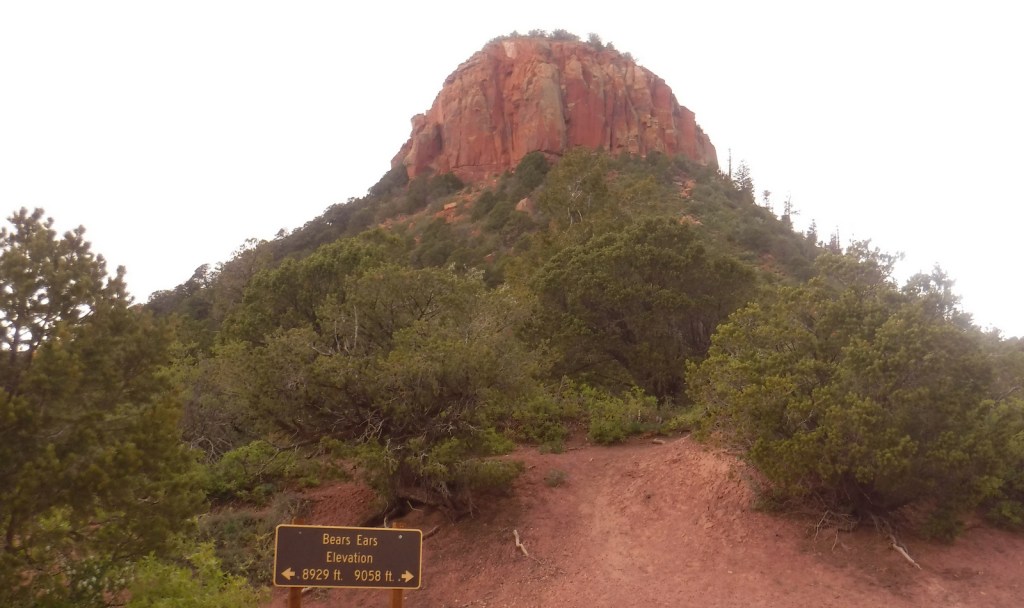
Explore More – Where are the actual Bears Ears formations that give the National Monument its name?

Learn more about the other 137 National Monuments in our book Monumental America: Your Guide to All 138 National Monuments

La Sal National Forest

La Sal National Forest

Utah, Colorado

Managed by U.S. Forest Service, Intermountain Region

535,288 acres

Website: https://www.fs.usda.gov/mantilasal

Overview

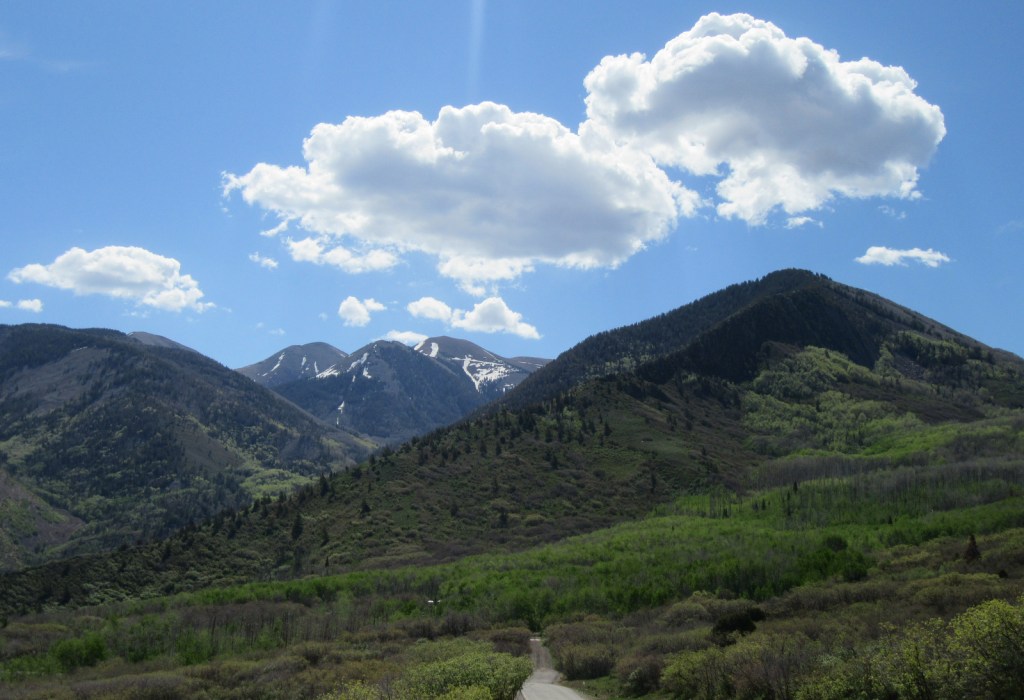
La Sal National Forest is found in two separate sections of southeastern Utah surrounding the La Sal and Abajo Mountains, topping out on 12,721-foot Mt. Peale.  Much of the southern portion of the National Forest, including the Dark Canyon Wilderness, was included in the 1.35-million-acre Bears Ears National Monument, established in 2016 and then controversially reduced in size before being restored.  Since 1949, it has been administratively combined with the northern and separate Manti National Forest, so it can be difficult to find information for La Sal National Forest alone.  

Highlights

Bears Ears National Monument, La Sal Mountain Loop Scenic Backway, Warner Lake, Bull Canyon Dinosaur Tracks, Buckeye Reservoir, Elk Ridge Scenic Backway, Harts Draw Highway, Abajo Loop State Scenic Backway, Mt. Peale, Arch Canyon, Mt. Tukuhnikivatz

Must-Do Activity

Many visitors access the forest south from Moab on the mostly-paved La Sal Mountain Loop Scenic Backway, a steep drive suitable for passenger vehicles that is accessible in the warmer months.  The often snow-capped La Sal Mountains are featured as the backdrop in nearly every photo of Delicate Arch in Arches National Park.  The Sierra La Sal (“Salt Mountains” in Spanish) were a prominent landmark on the Old Spanish Trail between Santa Fe and Los Angeles.  Be sure to make the dirt Gateway Road (FS 207) detour 5.4 miles to visit Bull Canyon Dinosaur Tracks, where there is also a commanding view of Fisher Mesa and Bull Canyon.  Oowah Lake and Warner Lake are also located on unpaved side roads (3.2 and 5.2 miles respectively) from La Sal Mountain Loop Road.

Best Trail

The 58-mile-long Elk Ridge Scenic Backway is a well-maintained, though unpaved route that leads north from Natural Bridges National Monument to Highway 211, which connects to the Needles District of Canyonlands National Park.  There are multiple trails along the way that provide access to the Dark Canyon Wilderness, an area known for old-growth forests, natural arches, and Ancestral Puebloan ruins and pictographs.  A high-clearance vehicle is not required to reach Big Notch Trailhead where a trail steeply drops into Dark Canyon.  Erosion has cut red clay walls that make navigation somewhat difficult in places.  About four miles in, not far past the large Cicada Arch on the north side, you reach a spring at the meeting with Drift Trail Canyon.  Another two miles takes you to Scorup Cabin, a good place to turn around or explore Horse Pasture Canyon.

Watchable Wildlife

Wildlife species are similar to Utah’s Dixie National Forest and Fishlake National Forest, including black bears, mountain lions, bobcats, coyotes, porcupines, raccoons, skunks, badgers, bighorn sheep, elk, mule deer, and pronghorns.  Large birds include bald eagles, golden eagles, northern goshawks, turkey vultures, wild turkeys, common ravens, and various species of owls and woodpeckers.  Look for short-horned lizards in the Dark Canyon Wilderness.  There are many trout and other gamefish found in the streams and small lakes spread across the high-elevations of the La Sal and Abajo Mountains.

Photographic Opportunity

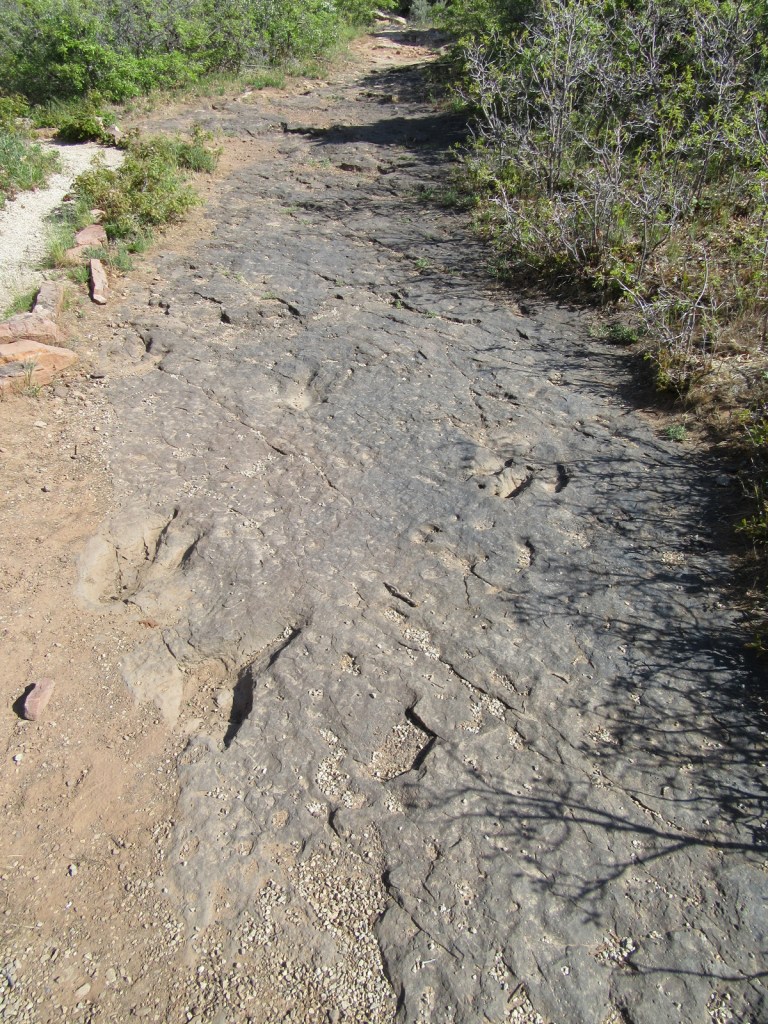
In the summer months, take La Sal Mountain Loop Scenic Backway to Bull Canyon Dinosaur Tracks to see 200-million-year-old therapod tracks, plus an awesome overlook to the north.

Peak Season

Summer

Fees

None

Road Conditions

La Sal Mountain Loop Road is mostly paved, but side roads to Bull Canyon Dinosaur Tracks, Oowah Lake, and Warner Lake are not.  The 58-mile-long Elk Ridge Scenic Backway is a rocky, unpaved route that leads north from Natural Bridges National Monument to Highway 211; and side roads to some trailheads require a high-clearance vehicle.

Camping

Warner Lake Campground takes reservations, as does Buckeye Reservoir in Colorado and a few others.  Dispersed camping is also an option, especially along lightly-traveled Elk Ridge Scenic Backway.

Wilderness Areas

Dark Canyon Wilderness

Wilderness

Related Sites

Arches National Park (Utah)

Bears Ears National Monument (Utah)

Natural Bridges National Monument (Utah)

Nearest National Park

Canyonlands

Conifer Tree Species

Utah juniper, Rocky Mountain juniper, two-needle pinyon pine, ponderosa pine, white fir, subalpine fir, Engelmann spruce, Douglas-fir

Flowering Tree Species

Gambel oak, quaking aspen, Fremont cottonwood, Utah serviceberry, bigtooth maple, manzanita, sagebrush

Explore More – Due to an administrative error in 1908, what was the misspelled name of La Sal National Forest (which was quickly corrected)?

Learn more about this and the 154 other National Forests in our new guidebook Out in the Woods

We are a participant in the Amazon Services LLC Associates Program, an affiliate advertising program designed to provide a means for us to earn fees by linking to Amazon.com and affiliated sites.