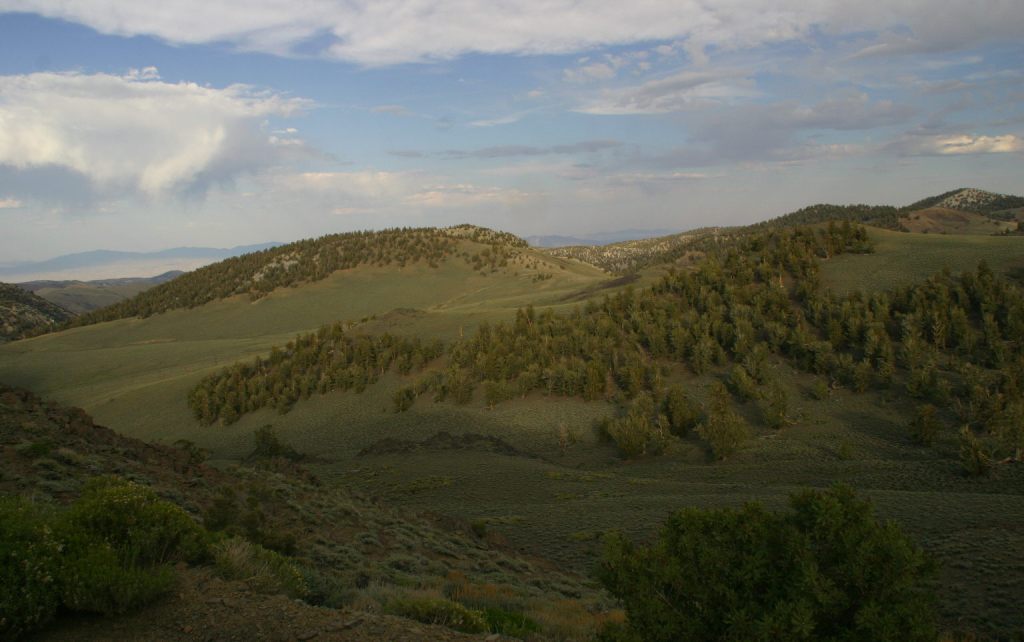
Top 10 Natural Phenomena to See in the U.S.

We like to make Top 10 Lists for our readers to prioritize where to go, so here is a new one we came up with specifically to celebrate our 500th blog post.  If we already have a post highlighting the type of natural wonder mentioned, we included a link (plus a few extra for future posts).  These lists are by no means exhaustive of all the states or public lands where you can witness these phenomena.  Click here for all our Top 10 Lists.
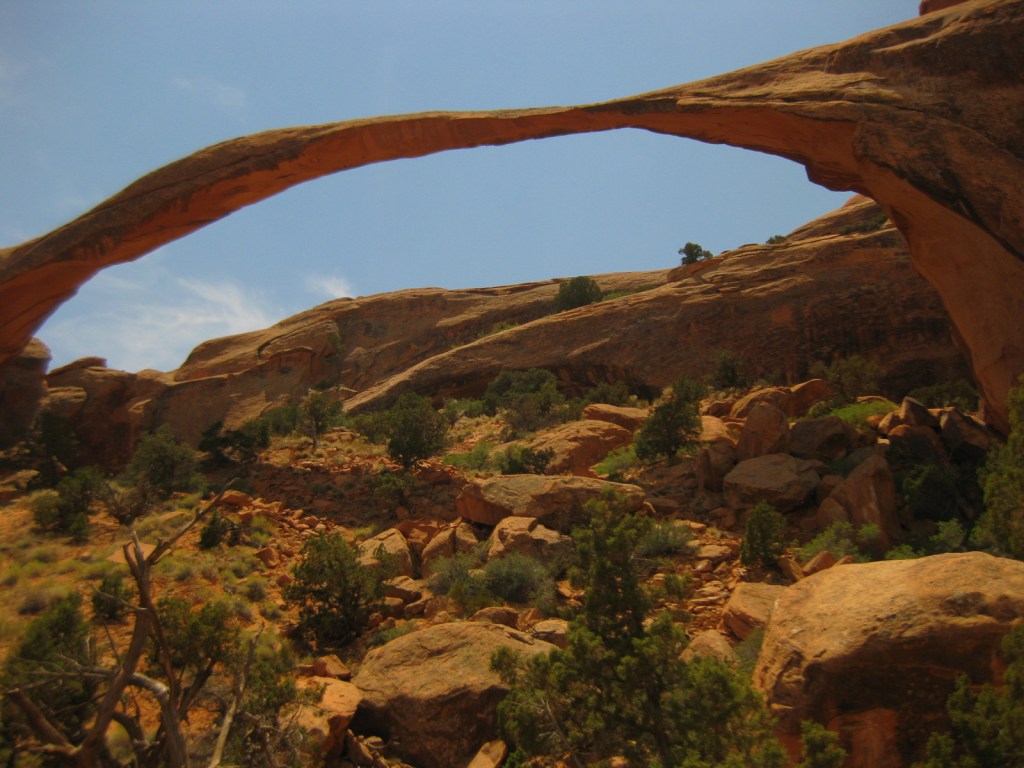
10. Natural bridge or arch (Alabama, Arkansas, Kentucky, Nevada, Ohio, Utah, Virginia, Wyoming)

Arches National Park, Canyonlands National Park, Capitol Reef National Park, Daniel Boone National Forest, Natural Bridges National Monument

9. Sand dune field (California, Colorado, Indiana, Michigan, New Mexico, Texas, Utah)

Death Valley National Park, Great Sand Dunes National Park and Preserve, Indiana Dunes National Park, Mojave National Preserve, Sleeping Bear Dunes National Lakeshore, White Sands National Park

8. Sea cave (California, Michigan, Oregon, Wisconsin)

Apostle Islands National Lakeshore, Channel Islands National Park, Pictured Rocks National Lakeshore

7. Slot canyon (Arkansas, California, New Mexico, Utah)

Capitol Reef National Park, Death Valley National Park, Kasha-Katuwe Tent Rocks National Monument

6. Coral reef (American Samoa, Florida, Hawai‘i, Virgin Islands)

National Park of American Samoa, Buck Island Reef National Monument, Dry Tortugas National Park, Pu‘uhonua o Honaunau National Historical Park, Virgin Islands Coral Reef National Monument, Virgin Islands National Park

5. Giant sequoia or coast redwood tree (California)

Giant Sequoia National Monument, Kings Canyon National Park, Los Padres National Forest, Redwood National Park, Sequoia National Park, Sierra National Forest
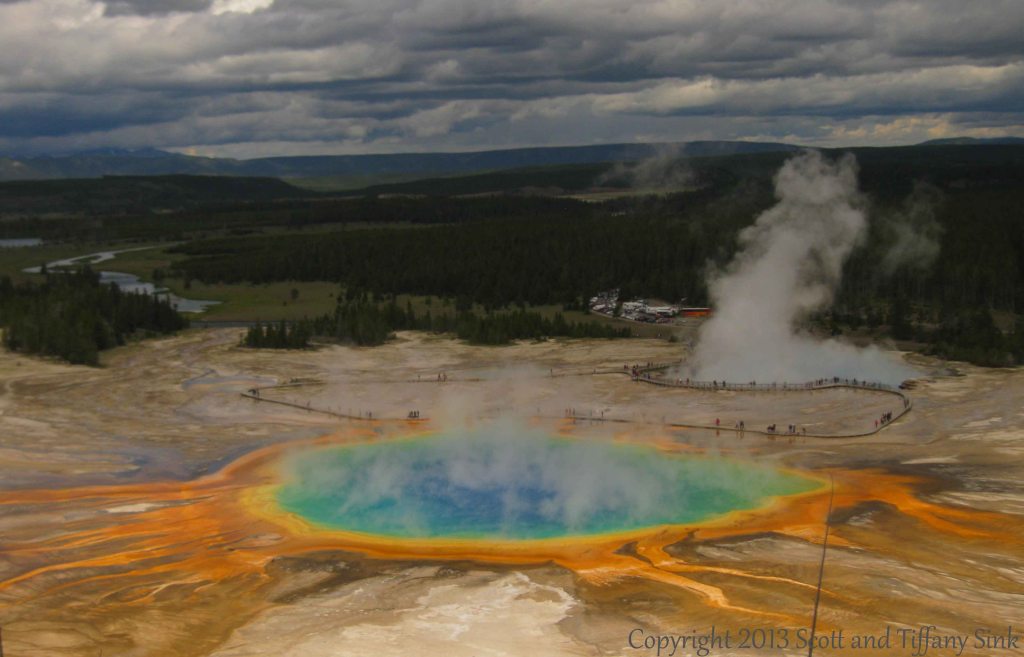
4. Geyser or geothermal area (California, Hawai‘i, Nevada, Oregon, Wyoming)

Hawai‘i Volcanoes National Park, Lassen Volcanic National Park, Yellowstone National Park

3. Bioluminescence (Alabama, Florida, Hawai‘i, Puerto Rico, Virgin Islands)

Canaveral National Seashore, Hawai‘i Volcanoes National Park, Salt River Bay National Historical Park and Ecological Preserve
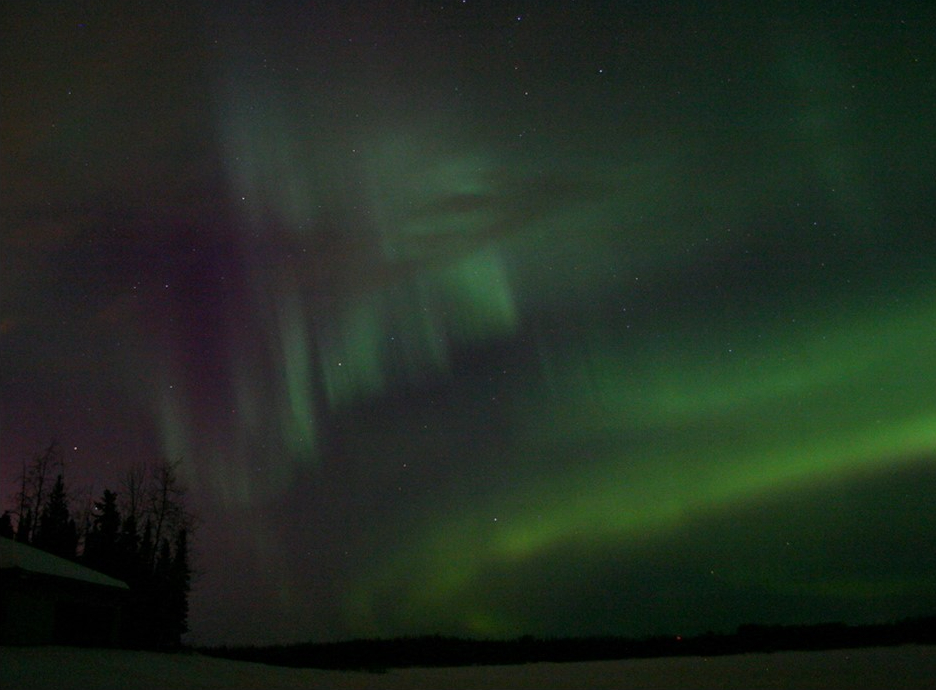
2. Aurora borealis (Alaska, Michigan, Minnesota)

Chippewa National Forest, Denali National Park and Preserve, Hiawatha National Forest, Keweenaw National Historical Park, Voyageurs National Park

…and finally our #1 natural phenomenon to see in the U.S.:
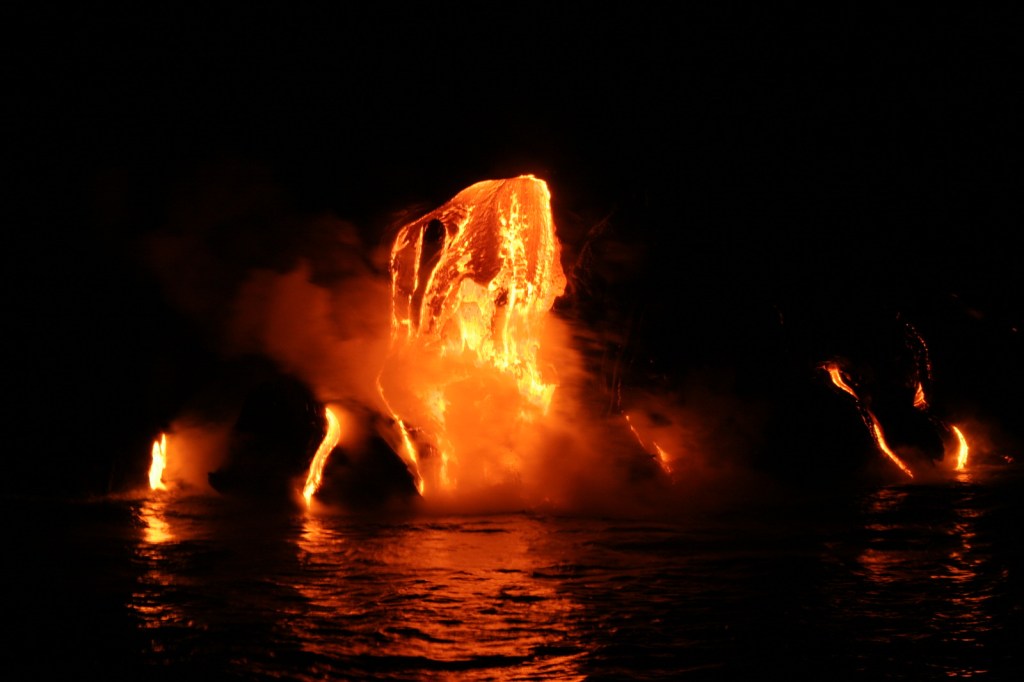
1. Lava (Hawai‘i)

Hawai‘i Volcanoes National Park

.

Honorable Mentions

Cave (Alabama, Arizona, California, Indiana, Kentucky, Missouri, New Mexico, South Dakota, Tennessee)

Caribou National Forest, Carlsbad Caverns National Park, Great Basin National Park, Jewel Cave National Monument, Mammoth Cave National Park, Sequoia National Park, Wind Cave National Park

Tidepool (Alaska, California, Maine, Oregon, Washington)

Acadia National Park, Cabrillo National Monument, Glacier Bay National Park and Preserve, Lewis and Clark National Historical Park, Olympic National Park, Redwood National Park

Tidewater glacier (Alaska)

Glacier Bay National Park and Preserve, Kenai Fjords National Park

Natural hot springs (Arkansas, California, Idaho, Oklahoma, Texas, Wyoming)

Beaverhead National Forest, Big Bend National Park, Boise National Forest, Chickasaw National Recreation Area, Clearwater National Forest, Hot Springs National Park, Yellowstone National Park
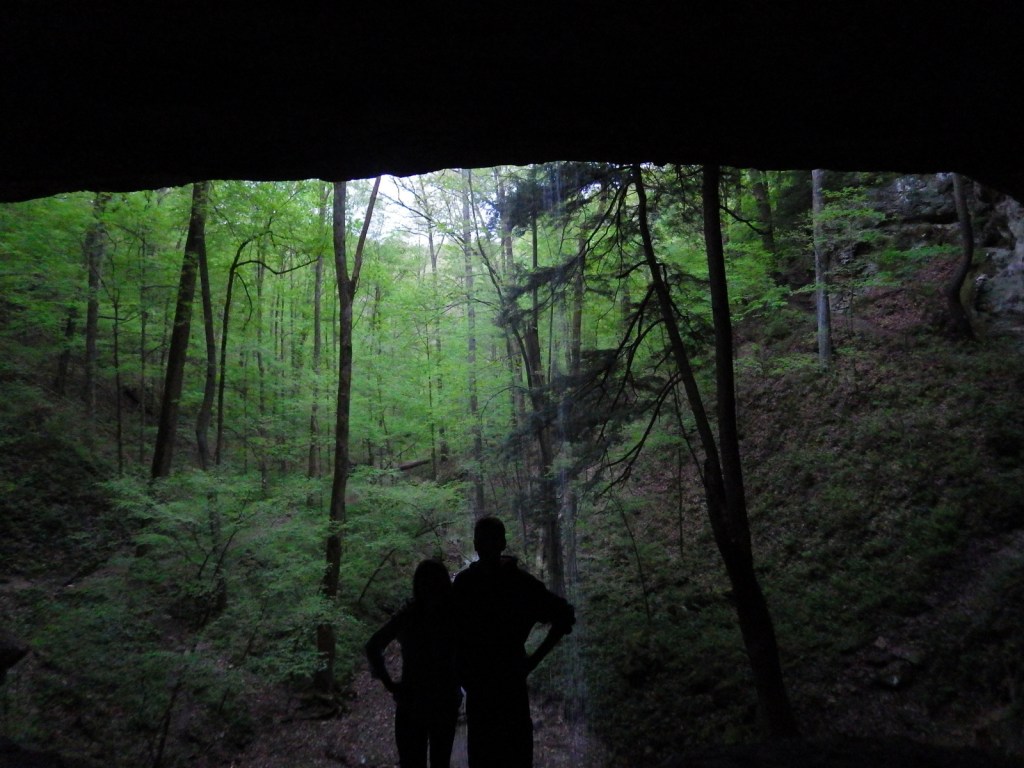
Walk behind a waterfall (Arkansas, Colorado, Indiana, New York, Ohio, Oregon, Utah)

Buffalo National River, Cuyahoga Valley National Park, Hoosier National Forest, Zion National Park

Alpine tundra (Alaska, California, Colorado, Idaho, Montana, Wyoming)

Bighorn National Forest, Bridger National Forest, Coconino National Forest, Eldorado National Forest, Gallatin National Forest, Glacier National Park, Grand Teton National Park, Inyo National Forest, Rocky Mountain National Park, Yosemite National Park

Our 500th Blog Post!

A big thank you to our readers for continuing to support our website!  We recently reflected on our love of travel for the website All Fifty States Club and wanted to share that with you. And if you are around Wyoming, please check out our next 4 presentations at local libraries.

Our travel website Raven About The Parks is dedicated to providing information on recreating on U.S. public lands.  Our mission is to shine a light on the lesser-known National Forests and National Park Service sites in America, and eventually to expand into covering National Wildlife Refuges and State Parks.  We enjoy outdoor pursuits like backpacking, kayaking, camping, and snowshoeing, but we also love touring historic buildings, exploring museums, reading interpretive signs, and attending college football games.  We take joy in discovering new places, and it seems like every time we visit one new spot, we add two more to our list.  That is fine with us, since we believe travel is a never-ending quest to live life to its fullest.  We hope that sharing our travels helps inspire others to “Find what you love and do more of it.” 

In 2016, we took ten months off work in Wyoming to travel the world and we visited all 50 states between April and November.  We had already been to more than 40 states at that point, and Tiff’s final state was New Jersey, while Scott’s was Connecticut.  Our goal that year was in every state to stop into at least one State Park and a National Park Service site that we had never been to (some states like New Hampshire only have one).  We printed blank sheets for each state to record the dates we visited, wildlife spotted, favorite places and people, and our impressions of each state’s drivers, roads, and topography.  One of the best things we recorded was a list of places and events to return for, which has helped us plan some awesome trips in the subsequent years.

Between 2017 and 2023, we visited all 50 states once again (Delaware was the final one) while researching travel guidebooks we wrote on all 155 National Forests and road tripping in each state.  We also made sure by the end that we had spent the night in every state (with Rhode Island being our last).  The 50 States of Great guidebook is based on our experiences and thousands of hours of research; we picked our favorite National Park, State Park, National Forest (40 states have at least one), museum, roadside attraction, and eight other categories for all states.  We even included shorter chapters on American Samoa, D.C., Puerto Rico, and the U.S. Virgin Islands (and we hope to visit Guam and Saipan someday).  If you are interested, 50 States of Great: Road Trip Guide to America is available on Amazon.

We continue to travel across the U.S. seeking new adventures and returning to favorite places.  In 2022, we came upon the book The Happiness of Pursuit by Chris Guillebeau that explained the mental health benefits of working toward a greater life goal (like running a marathon in all 50 states or attending a baseball game at every MLB stadium).  We had been doing this all along, but since reading the book we have gone back to check in how many states we have bought a stuffed animal (45), hiked to a waterfall (38), crushed a penny (46), climbed to the highest point (29), visited the capital city (50 finished in Olympia, WA in 2023), showered at a Planet Fitness (29), and entered a museum (46).  Our current active pursuits include attending a college football game (39) and hiking in a National Wildlife Refuge (33) in every state.

Basically, we write about the places we have been to inspire others to “Find what you love and do more of it.”  We especially enjoy visiting new places, knowing that some of them will exceed our expectations and surprise us in ways we never could have anticipated.  We flip through travel magazines and scroll through Pinterest boards (check out ours here), but some of our more interesting finds have been inspired by obscure sources such as U.S. Mint quarters and U-Haul Super Graphics (we are mildly obsessed with these and have been known to burst into jubilation upon seeing a Saskatchewan moose on a dune).  We look forward to a future filled with travel across the U.S. and abroad.  To put our expertise on U.S. travel to good use, we have started posting one-week itineraries for all 50 states (starting with Kansas, Georgia, Idaho, and Rhode Island).

After reading an article on the website All Fifty States Club by Bob Rainville, we were inspired to determine how many state-to-state border crossings we had completed.  It took more than an hour of poring over maps and searching our memories, but we figured out there are 104 drivable border crossings and that we have made 96 of them already on our cross-country journeys.  Half of the eight remaining involve the corners of Missouri, which touches eight different states (the most of any state).

We appreciate your time and hope to produce another 500 quality posts for our audience in the coming years.  We have previously made Top 10 Lists of our favorite posts from each 100 post milestone, but this time we decided to create a different list highlighting the Top 10 Natural Phenomena to See in the U.S.  Watch for it soon!

Thank you for reading our blog! 

Scott and Tiff

Cheyenne, WY

Please check out our next 4 presentations at libraries in Wyoming!

“Find what you love and do more of it.” 

We recently published the expanded 2nd edition of our guidebook to the National Parks— A Park to Yourself: Finding Solitude in America’s 63 National Parks (available for sale on Amazon). The new edition is more than 60 pages longer with four-page chapters on Alaska’s wilderness National Parks that formerly had only a page. We also wrote a six-page chapter on the newest National Park— New River Gorge National Park and Preserve.

Our travel guidebook 50 States of Great: Road Trip Guide to America is also available for sale on Amazon

4 upcoming library presentations in Wyoming

We are excited about our 4 library presentations over the next month as we kick off the summer travel season!

This weekend, we are first giving a presentation on our 6 P’s of outdoor travel planning at the Laramie County Library in Cheyenne, Wyoming.  It will be held in the Sunflower Room (3rd floor) at 11 a.m. on Saturday, May 11, 2024. 

It is session one of a three-part series called Outdoor Adventure & Trail Ready! Additional sessions will be held June 1 and June 15 covering backpacking essentials and an intro to dendrology at the historic High Plains Arboretum.

We are also presenting our 6 P’s of travel planning at a Carnegie library (built in 1918) in Lusk, Wyoming at 6 p.m. on Wednesday, June 5. Check out the Niobrara County Library website for more information.

We will have all four of our guidebooks for sale before and after the talk and would be happy to sign them for you.

We hope to see you there!

We recently published the expanded 2nd edition of our guidebook to the National Parks— A Park to Yourself: Finding Solitude in America’s 63 National Parks (available for sale on Amazon). The new edition is more than 60 pages longer with four-page chapters on Alaska’s wilderness National Parks that formerly had only a page. We also wrote a six-page chapter on the newest National Park— New River Gorge National Park and Preserve.

Our travel guidebook 50 States of Great: Road Trip Guide to America is also available for sale on Amazon

Mono Basin National Scenic Area

Mono Basin National Scenic Area

California

Managed by U.S. Forest Service, Pacific Southwest Region

128,303 acres

Website: https://www.fs.usda.gov/detail/inyo/specialplaces/?cid=stelprdb5129903

Overview

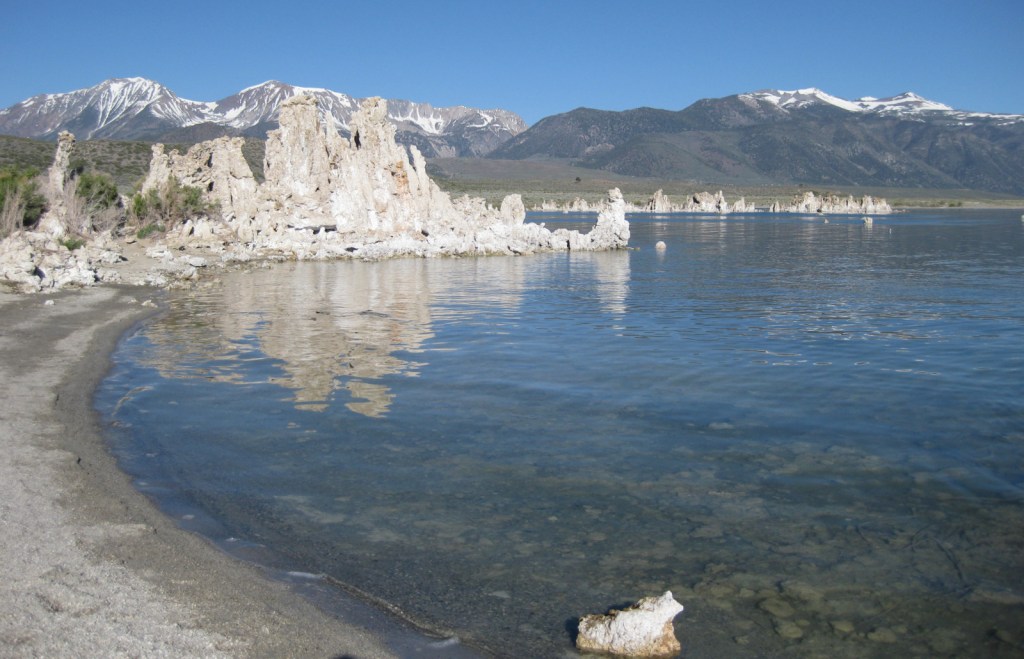
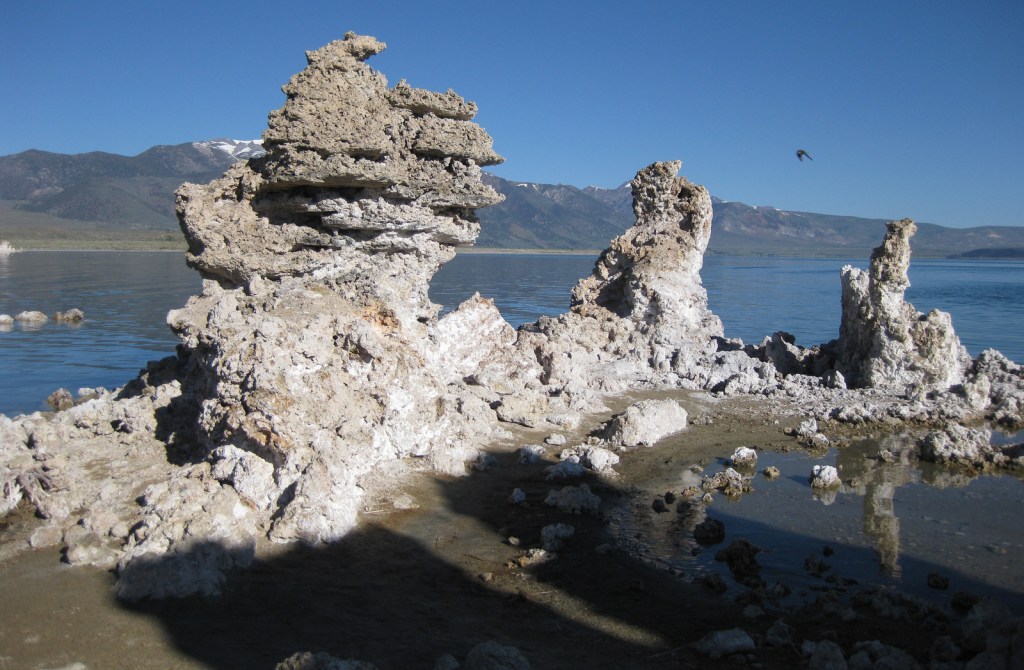
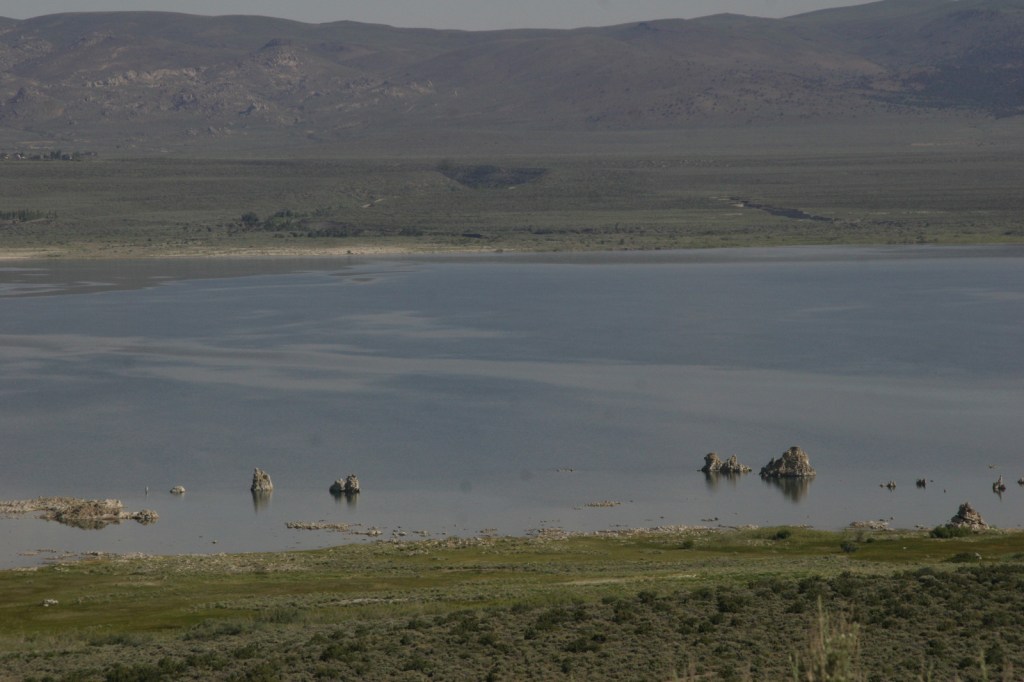
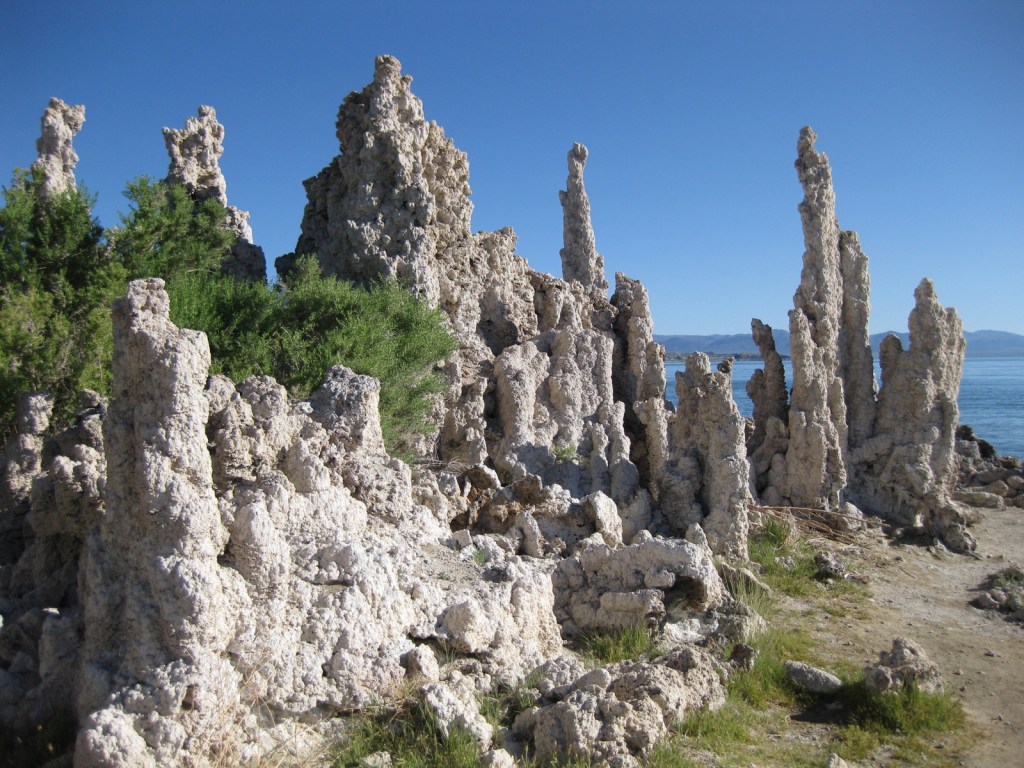
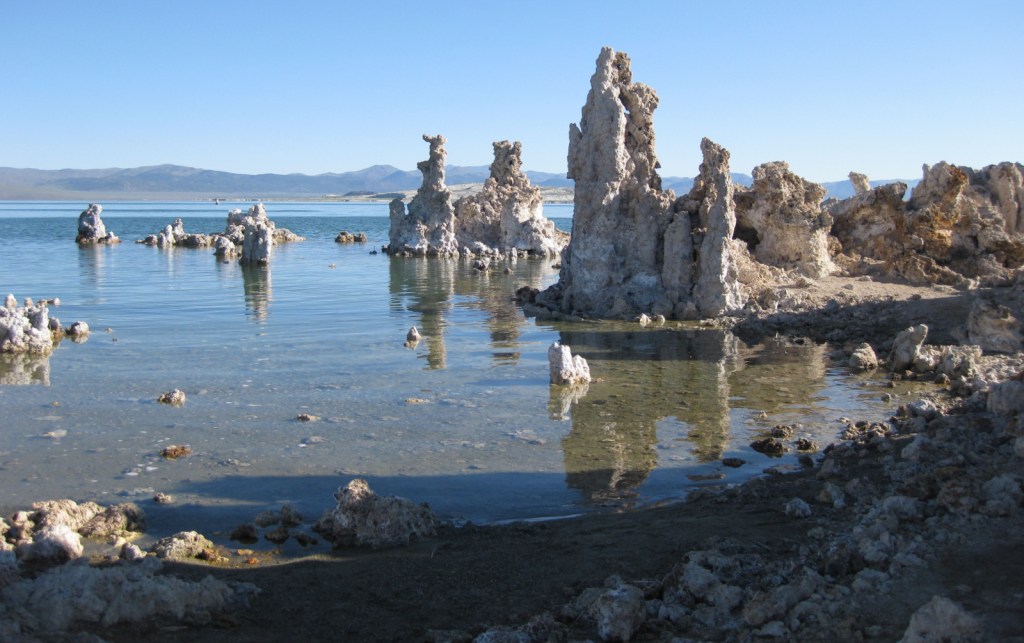
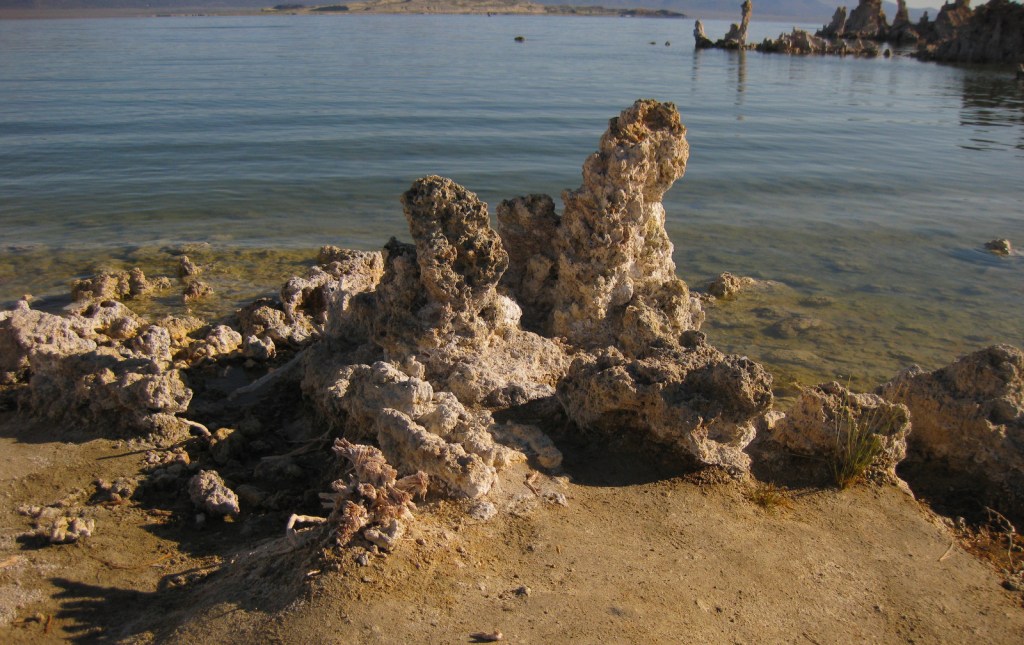
Established in 1984, this portion of Inyo National Forest is a geological wonderland that was once part of the former Mono National Forest.  Along the edge of this ancient salt lake are ten-foot-tall tufa towers exposed after water levels dropped beginning in 1941 when river water was diverted to Los Angeles.  Tufa is limestone that precipitated when the alkaline lake water combined with calcium from underground springs.  Paoha Island in the center of Mono Lake is also a nesting area for snowy plovers and California gulls, giving its salty waters even more of a Pacific Ocean impression.  This entire region is volcanically active as evidenced by isolated hot springs, cinder cones that erupted as recently as 350 years ago, and the forest devastation caused by a 1989 release of carbon dioxide from Horseshoe Lake.  It is also rich in minerals, showcased by the mines at Bodie State Historic Park, a ghost town conserved in “arrested decay.” 

Highlights

Mono Basin National Forest Scenic Area Visitor Center, film, Mono Lake Tufa State Natural Reserve, Panum Crater, Mono Craters, Bodie State Historic Park, South Tufa Trail

Must-Do Activity

Open May through October, the Mono Basin National Forest Scenic Area Visitor Center is located on Highway 395, just east of Tioga Pass (the eastern entrance to Yosemite National Park).  It features interactive displays on geology and human history, the 20-minute film Of Ice and Fire: A Portrait of the Mono Basin, photo exhibits, and a bookstore.  Situated atop a hill on the lake’s western shore, it offers an overlook of Mono Lake, Paoha Island, and the Mono Craters.

Best Trail

On the lake’s south side is the fascinating Mono Lake Tufa State Natural Reserve, established in 1981.  A short trail leads from the unpaved parking area to the shoreline.  Just to the west, the 0.7-mile Plug Trail enters the cone of Panum Crater, a 650-year-old plugged dome volcano.

Instagram-worthy Photo

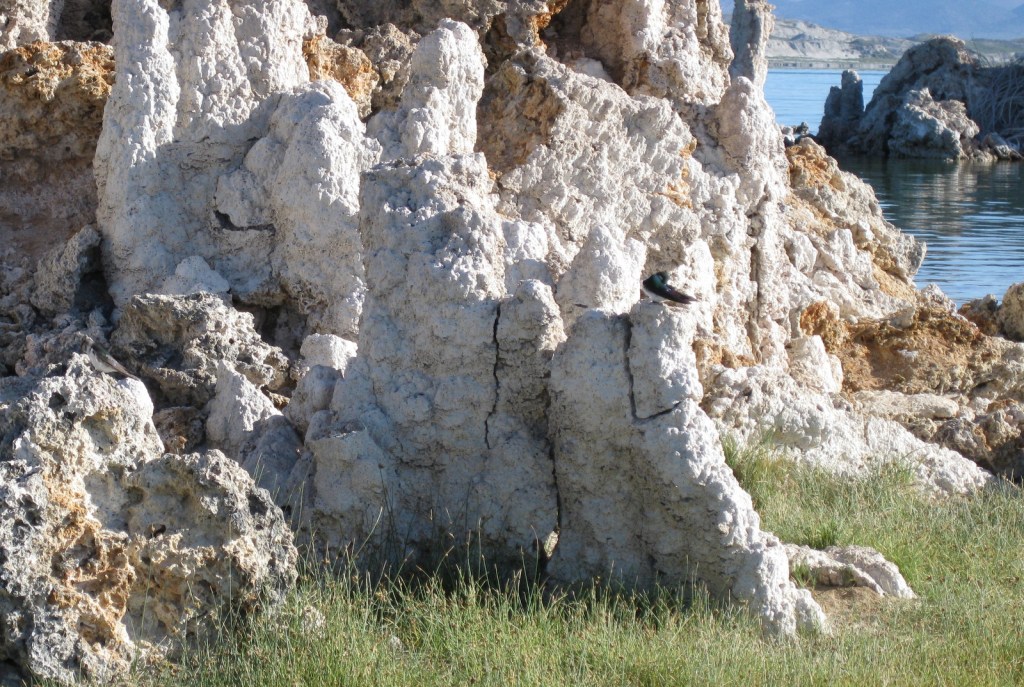
The fragile tufa formations are a great resting place for violet-green swallows and other migratory birds that come to feed on the lake’s abundant brine shrimp and alkali flies.

Peak Season

Summer

Fees

$3 per person at South Tufa Trail or America the Beautiful pass; $8 per person to enter Bodie State Historic Park

Road Conditions

There are well-graded dirt roads to Panum Crater, South Tufa, and Bodie State Historic Park.  However, the routes on the north and east sides of Mono Lake are loose sand that require a four-wheel-drive vehicle.

Camping

There are campgrounds at June Lake and along Highway 120 to Tioga Pass, but that road is closed in the winter.  Dispersed camping is allowed in Inyo National Forest, but be careful on the sandy roads around Mono Lake.

Related Sites

Inyo National Forest (California-Nevada)

Manzanar National Historic Site (California)

Devils Postpile National Monument (California)

Death Valley National Park (California-Nevada)

Nearest National Park

Yosemite

Explore More – Most of the 27 Mono Craters are phreatic volcanoes that have been plugged or over-topped by rhyolite domes and lava flows; what does “phreatic” mean?

Inyo National Forest

Inyo National Forest

California, Nevada

Managed by U.S. Forest Service, Pacific Southwest Region

2,048,459 acres (1,948,726 federal/ 99,733 other)

Website: https://www.fs.usda.gov/inyo

Overview

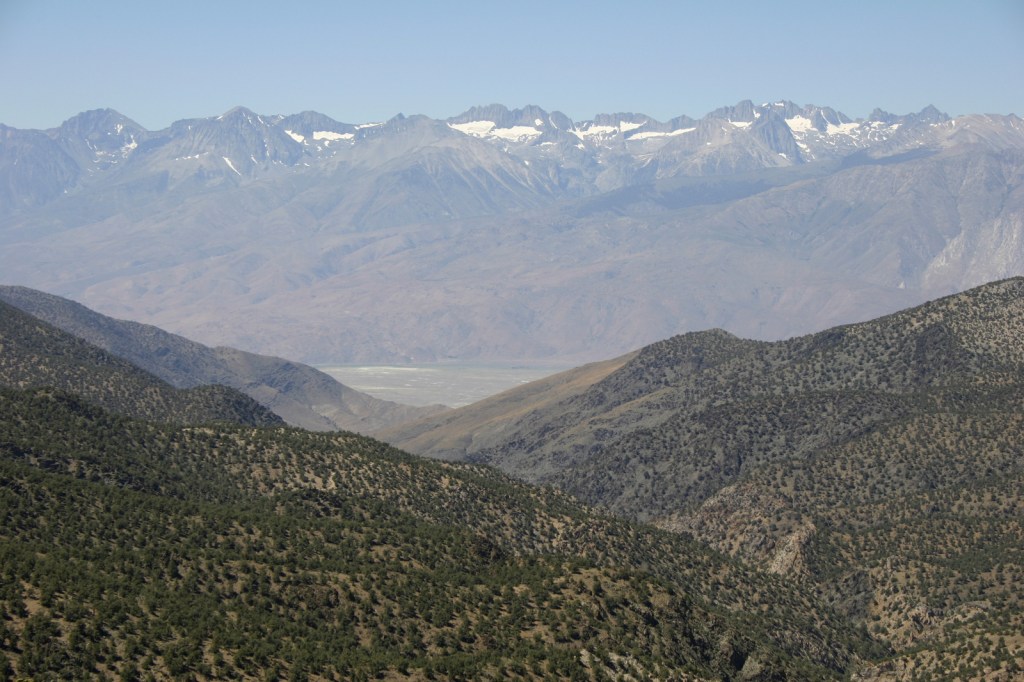
Inyo National Forest was established by President Teddy Roosevelt in 1907 to accommodate the Los Angeles Aqueduct, so it is mostly sagebrush slopes without much dense forest cover.  We added it to our Top 10 Movies Filmed in National Forests after reading its history as a filming location.  Inyo National Forest offers the shortest route to Mt. Whitney, the tallest peak in the contiguous U.S. at 14,495 feet in elevation.  Its proximity to Badwater Basin (282 feet below sea level) in Death Valley National Park makes its rise all the more impressive.  You will need a permit to summit, since this popular peak lies within Sequoia National Park.  One added benefit is you will learn all about how to use a “W.A.G. bag.”  In addition to accessing the eastern Sierra Nevada (see Best Trail), Inyo National Forest also offers a portal to the beautiful White Mountains along the California-Nevada border (see Must-Do Activity) and 800,000 acres of designated Wilderness. 

Highlights

Mono Basin National Scenic Area (see our blog post), Lee Vining Canyon Scenic Byway, Tioga Pass, Ancient Bristlecone Pine Forest, Convict Lake, Hot Creek Geologic Site, Mammoth Lakes, Minaret Summit Vista, Crystal Lake, Mt. Whitney Trail, Minaret Falls, Pacific Crest National Scenic Trail

Must-Do Activity

In the White Mountains, a paved road leads to the U.S. Forest Service visitor center at the Ancient Bristlecone Pine Forest, where a 4.5-mile loop trail through the Methuselah Grove passes one live Great Basin bristlecone pine tree recorded at over 5,000 years of age.  That ranks it as the oldest living single-stem tree on the planet based on annual tree-ring measurements.  You can continue to drive above 11,000 feet in elevation along a narrow gravel road famous for puncturing tires (so bring a spare).  The route offers awesome views of the Owens Valley and Mt. Whitney, then takes you to the Patriarch Grove, a wonderful park of gnarled Great Basin bristlecone pine trees surrounded by snow throughout the summer. 

Best Trail

Onion Valley Road west of Independence dead ends at the trailhead for Kearsarge Pass in the Sierra Nevada.  The trail is a series of endless switchbacks that lead past beautifully twisted foxtail pines and unbelievably blue lakes up to the 11,823-foot pass at the boundary with Kings Canyon National Park.  The view from the pass is worth the effort, even if you do not proceed to enter the National Park, for which you need a permit to camp overnight.  John Muir called these mountains “the range of light,” and from up here you will surely see why. 

Watchable Wildlife

Inyo National Forest is on the rain-shadow side of the Sierra Nevada, so it generally receives less precipitation throughout the year than the western slopes, especially at lower elevations.  In the conifer forests of the mountains look for mule deer, black bears, weasels, martens, mountain lions, and bobcats.  California quail, mountain quail, sooty grouse, and wild turkeys are common game birds.  Watch the skies for raptors like bald eagles, ospreys, red-tailed hawks, and turkey vultures. 

Instagram-worthy Photo

Sun-streaked and wind-blasted branches of bristlecone pine trees twist in backbreaking curls, stretching up towards the deep blue skies above 10,000 feet elevation.

Peak Season

Summer

Fees

There are no day use fees to our knowledge.

Road Conditions

The road is paved to the trailhead for the 4.5-mile loop through the Methuselah Grove in the Ancient Bristlecone Pine Forest.  The unpaved road beyond is famous for puncturing tires (so take it slow and bring a spare) and retains snow late into the summer.  A shuttle ticket or camping permit is required to drive into the National Forest west of the ski resort town of Mammoth Lakes to access Devils Postpile National Monument.

Camping

Grandview Campground near the Ancient Bristlecone Pine Forest lives up to its name.  There is a campground at Whitney Portal Trailhead and two on Onion Valley Road on the way to the trailhead for Kearsarge Pass (plus some epic dispersed campsites). 

Wilderness Areas

Ansel Adams Wilderness (also in Sierra National Forest and Devils Postpile National Monument)

Boundary Peak Wilderness

Golden Trout Wilderness (also in Sequoia National Forest)

Hoover Wilderness (also in Toiyabe National Forest)

Inyo Mountains Wilderness

John Muir Wilderness (also in Sierra National Forest)

Owens River Headwaters Wilderness

South Sierra Wilderness (also in Sequoia National Forest)

White Mountains Wilderness

Related Sites

Humboldt National Forest (Nevada)

Yosemite National Park (California)

Manzanar National Historic Site (California)

Nearest National Park
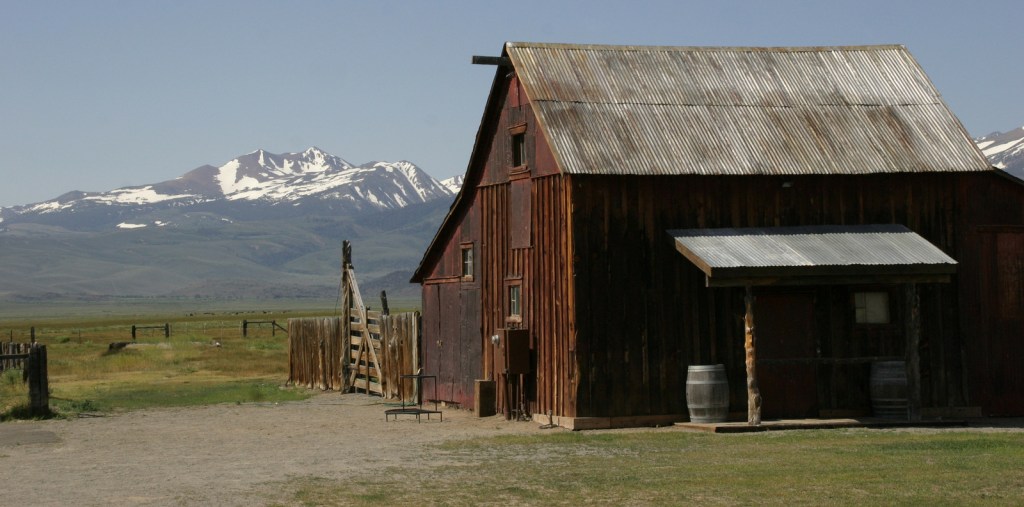
Kings Canyon

Conifer Tree Species

Great Basin bristlecone pine, foxtail pine, Jeffrey pine, ponderosa pine, lodgepole pine, Douglas-fir, California red fir, white fir, incense-cedar

Flowering Tree Species

quaking aspen, greenleaf manzanita, sagebrush

Explore More – What 1973 film starring Clint Eastwood was filmed in Inyo National Forest?

Learn more about this and the 154 other National Forests in our new guidebook Out in the Woods