Tag Archives: trail

Malheur National Forest

Malheur National Forest

Oregon

Managed by U.S. Forest Service, Pacific Northwest Region

1,541,723 (1,465,287 federal/ 76,436 other)

Website: https://www.fs.usda.gov/r06/malheur

Overview

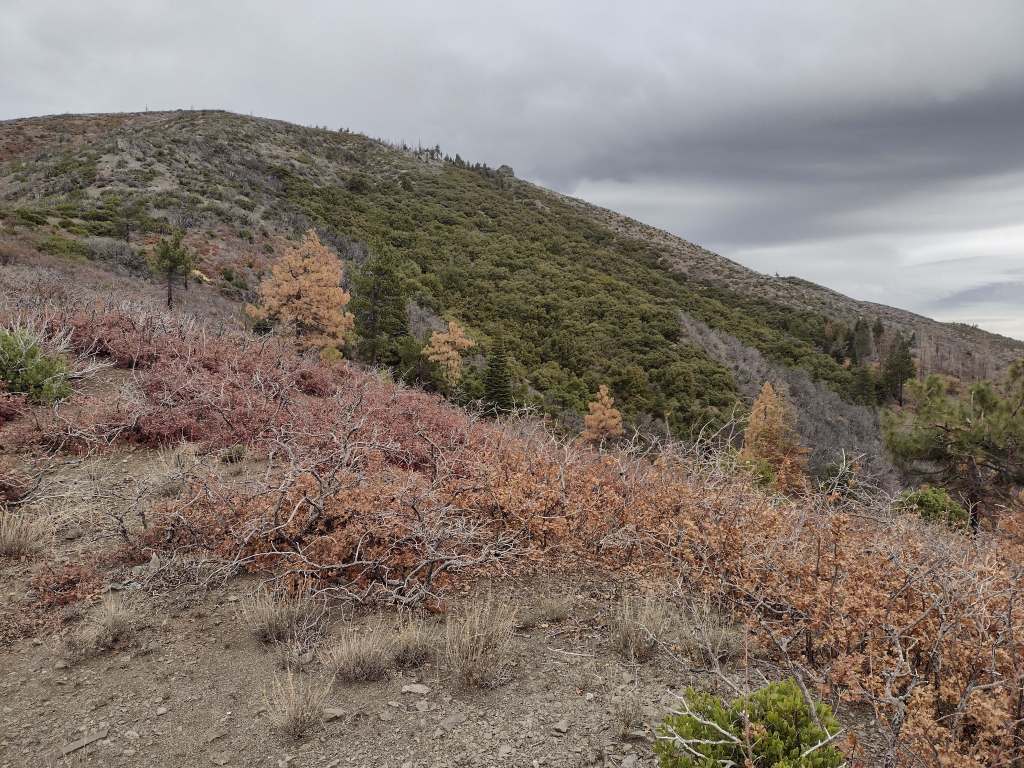
In central Oregon, Malheur National Forest encompasses the Strawberry Range and Aldrich Mountains that run into the Blue Mountains.  Much of its area is high desert, with grasslands, sagebrush, and juniper the predominant vegetation.  Malheur National Forest contains the “Humongous Fungus,” a honey fungus (Armillaria solidipes) that spans 2,200 acres and is considered the largest known organism by area in the world.  It is located mostly underground, high on a ridgeline immediately west of Clear Creek (44.4731°N 118.4816°W).

Highlights

Journey Through Time Scenic Byway, Cedar Grove Botanical Area, Yellowjacket Reservoir, Indian Rock-Vinegar Hill Scenic Area, Swick Old Growth Interpretive Site, Rosebud Creek, Arch Rock, Magone Lake, Tamarack Creek Trail, McClellan Mountain Trail

Must-Do Activity

The northeast corner of the National Forest includes the 4,000-acre Indian Rock-Vinegar Hill Scenic Area with its beautiful alpine meadows that bloom high in the Greenhorn Mountains.  For geology enthusiasts, Arch Rock is an easy hike to a 15-foot opening in soft ashflow tuff, Tex Creek has a natural bridge, and fossilized shells are found around Rosebud Creek.

Best Trail

In the Aldrich Mountains, Cedar Grove Botanical Area preserves the only stand of yellow-cedars found east of the Cascade Range.  Some of these trees are more than 300 years old, hanging on for life along Buck Cabin Creek where a fire recently burned more than half of the 60-acre stand.  Access is by a National Recreation Trail, which drops precipitously into the grove, making for a strenuous hike out.  The trail is lined with plant identification placards and was pocked with deer hoofprints when we visited.  The trailhead is well-marked, located 5.5 miles down a dirt road after climbing ten miles on paved Forest Road 21 south of Highway 26.  Check conditions before departing, as some roads may be closed within the Rail Ridge Fire area.

Watchable Wildlife

Elevations in Malheur National Forest range from 4,000 feet up to the top of 9,038-foot Strawberry Mountain.  Elk, pronghorn, and mule deer are large ungulates found here.  Carnivorous mammals include black bears, coyotes, mountain lions, and bobcats that roam the high desert environment.  Large birds frequently seen are bald eagles, Canada geese, mallards, and whistling swans.  Streams and lakes found throughout the National Forest support a variety of gamefish, including trout.  To the south, Malheur National Wildlife Refuge encompasses 185,000 acres of marshes, meadows, and man-made ponds that provide habitat crucial for bird nesting and migration. 

Photographic Opportunity

I did my M.S. research project on yellow-cedar (Callitropsis nootkatensis), so I had to visit Cedar Grove Botanical Area.  The trees are a popular ornamental species best known for their drooping branches and shallow root systems that allow them to survive in extremely wet soils.  Found from sea level up to 7,000 feet, they regularly live more than 1,000 years, growing slowly with chemicals compounds that prevent wood rot.

Peak Season

Summer

Fees

None

Road Conditions

Highway 395 runs north-south through the National Forest, while Highway 26 runs east-west.  The dirt roads we drove to access Cedar Grove Botanical Area were in good condition, although dry and dusty at the end of the summer.

Camping

There are numerous campgrounds in Malheur National Forest; none take reservations and some have fees that apply from May through October.  Some campgrounds are free, like Cane Crossing, Crescent, and Elk Creek, and dispersed camping is also allowed.

Wilderness Areas

Monument Rock Wilderness (also in Whitman National Forest)

Strawberry Mountain Wilderness

Related Sites

John Day Fossil Beds National Monument (Oregon)

Newberry National Volcanic Monument (Oregon)

Fremont National Forest (Oregon)

Nearest National Park

Crater Lake

Conifer Tree Species

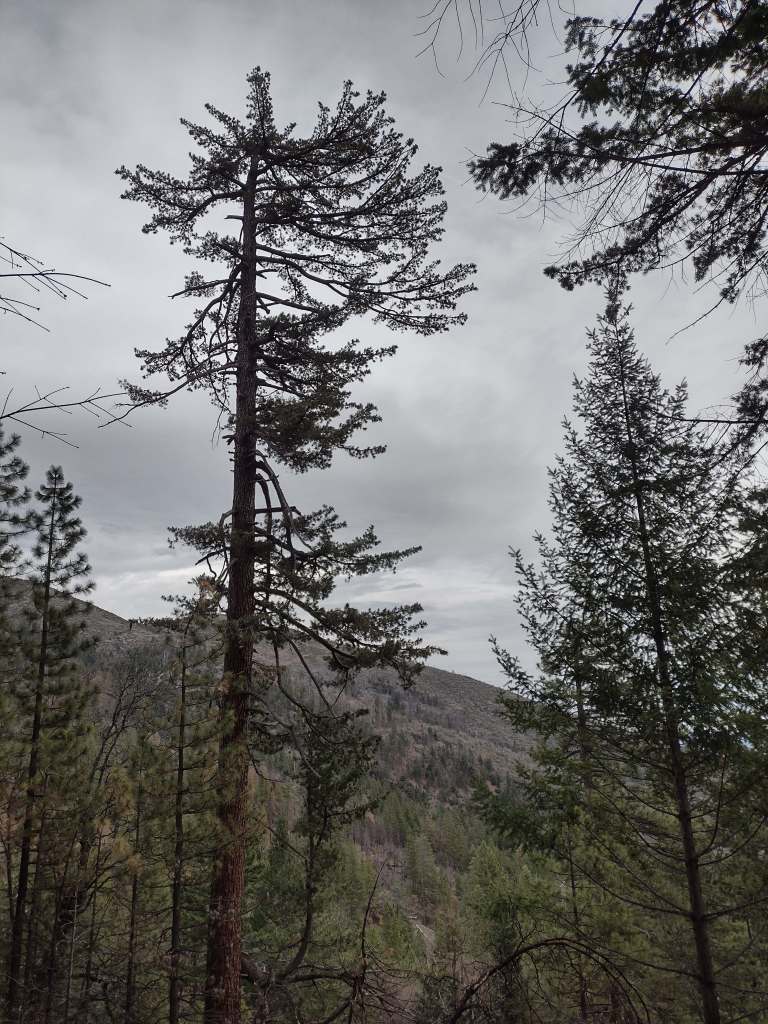
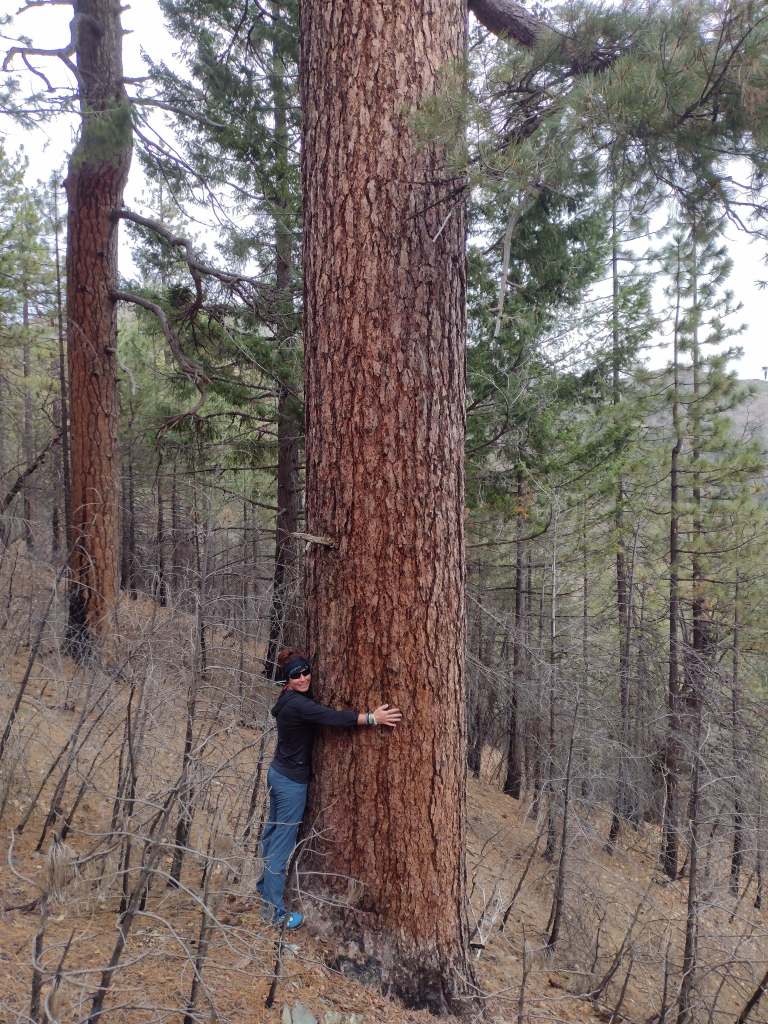
ponderosa pine, Douglas-fir, grand fir, white fir, yellow-cedar, western juniper

Flowering Tree Species

curlleaf mountain mahogany, sagebrush

Explore More – The Malheur River is named for the French word for “misfortune;” why was it given that name?

Learn more about this and the 154 other National Forests in our new guidebook Out in the Woods
Natchez Trace Parkway

Natchez Trace Parkway

Mississippi-Alabama-Tennessee

Managed by National Park Service

Established 1938

52,302 acres

Website: nps.gov/natr

Overview

The Natonal Park Service (NPS) administers the Natchez Trace Parkway, a two-lane All-American Road that extends 444 miles from Natchez, Mississippi to Nashville, Tennessee.  The trace started as a game trail that was utilized as an American Indian footpath.  Some of the mound builder sites protected here were inhabited when Hernando de Soto led the first Europeans into this area in 1540.  The Natchez Trace was heavily used in the 1800s by “Kaintuck” flatboatmen returning from New Orleans who left the Mississippi River from Natchez, Mississippi and continued on foot north to Kentucky and beyond.  Today you can still follow portions of the sunken trail worn down by travelers for centuries.  The parkway began as a Civilian Conservation Corps (CCC) project during the Great Depression and the final two segments were completed in 2005.

Highlights

Rocky Springs, Owens Creek Waterfall, Emerald Mound, Mount Locust, Chickasaw Village, Meriwether Lewis Monument and Gravesite, Cypress Swamp Walk, Witch Dance Horse Trail, Natchez Trace National Scenic Trail

Must-Do Activity

Near Tupelo, the Parkway Visitor Center at Milepost 266 is a must-do stop to learn the history of the trace, and it also serves as the NPS contact station for tiny Brices Cross Roads National Battlefield Site and Tupelo National Battlefield.  There are numerous roadside informational pullouts and trailheads along the route, so use the NPS app or pick up an official “unigrid” map.  You can easily spend days exploring, but at a minimum we recommend you check out Emerald Mound, Mount Locust, Cypress Swamp, and Meriwether Lewis Monument and Grave Site.

Best Trail

Our favorite trail is the Cypress Swamp Walk at Milepost 122, where a boardwalk crosses a scenic tupelo-baldcypress swamp.  The Natchez Trace National Scenic Trail (click here for our blog post) does not follow the entire 444-mile parkway, but exists in five segments totaling 67 miles in length.  There are also 15 miles of equestrian trails at Witch Dance (Milepost 233.2) in Tombigbee National Forest.

Photographic Opportunity

Not far from Natchez National Historical Park, Emerald Mound (a short detour at Milepost 10.3) is the second-largest American Indian ceremonial mound in the U.S.  It stands 35 feet tall and 770 by 435 feet at its base. 

Peak Season

Spring and fall

Hours

https://nps.gov/natr/planyourvisit/hours.htm

Fees

None

Road Conditions

The entire 444-mile Natchez Trace Parkway is paved from Natchez, Mississippi to Nashville, Tennessee with commercial traffic prohibited and a maximum speed limit of 50 miles per hour.  There is a detour from Milepost 181 to 204 due to ongoing construction.  Watch for bicycles and white-tailed deer on the road.

Camping

There are three free NPS campgrounds (at Milepost 54, 193.1, and 385.9) along the route, as well as those in sites like Mississippi’s Tishomingo State Park.  The three NPS campgrounds have water and bathrooms (but no RV hookups), plus there are also five bike-only campsites along the route.  Jeff Busby Campground closed in June 2025 for repairs.

Related Sites

Natchez National Historical Park (Mississippi)

Tupelo National Battlefield (Mississippi)

Brices Cross Roads National Battlefield Site (Mississippi)

Vicksburg National Military Park (Mississippi)

Nearest National Park

Hot Springs

Explore More – When were Ackia Battleground National Monument and Meriwether Lewis National Monument disbanded and added to the Natchez Trace Parkway?

Los Padres National Forest

Los Padres National Forest

California

Managed by U.S. Forest Service, Pacific Southwest Region

1,963,836 acres (1,762,767 federal/ 201,069 other)

Website: http://www.fs.usda.gov/r05/lospadres

Overview

Los Padres National Forest stretches more than 200 miles from Monterrey south beyond Santa Barbara.  It contains most of Big Sur, a name that conjures images of craggy cliffs dropping precipitously into white-capped ocean waves.  This sparsely inhabited stretch of coastline is known as much for its historic bohemians as its coast redwood trees.  It is home to multiple rare tree species with limited native ranges, especially those that can tolerate serpentine soils.  As the only National Forest in California that touches the Pacific Ocean, a road trip down scenic Highway 1 should be on everyone’s bucket list, including stops at Julia Pfeiffer Burns State Park, Bixby Creek Bridge, Hearst Castle State Park, and the elephant seal rookery at Piedras Blancas.  We have hiked many trails here since Scott taught for three years at Cal Poly State University in San Luis Obispo.

Highlights

Big Sur, Sykes Hot Springs, Salmon Creek Falls, Jade Cove, Cuesta Ridge Botanical Area, Figueroa Mountain, Mt. Pinos, Knapp’s Castle, Seven Falls, Sespe Hot Springs

Must-Do Activity

Los Padres National Forest is 48% designated Wilderness, so the recommended activity is to hike into those natural areas.  The Matilija Wilderness is in the Santa Ynez Mountains that loom above the coastal city of Santa Barbara, home to a university, art museum, and historic Presidio built in 1782.  If you go to hike to the ruins of Knapp’s Castle in the National Forest, also make a quick stop at Chumash Painted Cave State Historic Park, which contains colorful pictographs dating back to the 1600s.  Another popular U.S. Forest Service trailhead located closer to town goes either to Inspiration Point or Seven Falls, the latter a better choice on foggy days, which are common on the coast.

Best Trail

There are 323 miles of incredible hiking trails throughout Los Padres National Forest, including a few that access hot springs.  Our favorite trails are in the Santa Lucia Mountains that tower above Big Sur.  One pinnacle accessible by trail is Cone Peak at 5,155 feet in elevation.  The access road is typically closed in the winter, but when it is open the trail is only 2.3 miles to the summit with a vertical gain of 1,400 feet.  Do not expect any shade since multiple fires have burned most of the mountain, although there are still a few surviving examples of the rare Santa Lucia fir tree.  Although some areas are no longer vegetated, the plentiful sunshine above the fog belt means there are often incredible displays of wildflowers along the trail early in summer, including lupine, sticky monkeyflower, and yucca. 

Watchable Wildlife

There is a wide range of wildlife found here from sea level up to 8,847 feet in elevation, and the most famous is the reintroduced California condor that nests in the Sespe Condor Sanctuary.  Other birds include barn owls, great horned owls, red-tailed hawks, bald eagles, California quail, and California scrub jays.  Coyotes, black bears, bobcats, mountain lions, black-tailed deer, bighorn sheep, and raccoons are common large mammals.  Species of concern include the foothill yellow-legged frog and California mountain kingsnake.  Look for California newts and banana slugs in the moist understory of coast redwood forests.

Photographic Opportunity

Even if you are not spending the night at Kirk Creek Campground, you can park and walk down the trail to the south that goes past redwood trees to the beach where there is a sea arch and tidepools. 

Peak Season

Fall and winter

Fees

$5 per vehicle Adventure Pass (or America the Beautiful pass) required at most trailheads

Road Conditions

There are some steep unpaved roads in Los Padres National Forest, which can be impassable in wet or snowy conditions.  Portions of the unpaved Tassajara Road to Chews Ridge are narrow and steep, requiring a four-wheel-drive vehicle to reach Tassajara Hot Springs.

Camping

A night spent listening to the ocean waves breaking far below the U.S. Forest Service’s clifftop Kirk Creek Campground is enchanting, which is why it made it on our list of Top 10 Campgrounds in National Forests.  There are 11 campgrounds in total, and a free campfire permit is required if you use a camp stove (which can be obtained online). Sespe Hot Springs is a popular ten-mile one-way backpacking destination.

Wilderness Areas

Chumash Wilderness

Dick Smith Wilderness

Garcia Wilderness

Machesna Mountain Wilderness

Matilija Wilderness

San Rafael Wilderness

Santa Lucia Wilderness

Sespe Wilderness

Silver Peak Wilderness

Ventana Wilderness

Related Sites

Angeles National Forest (California)

Muir Woods National Monument (California)
Point Reyes National Seashore (California)

Channel Islands National Park (California)

Nearest National Park

Pinnacles

Conifer Tree Species

coast redwood, Monterey pine, Coulter pine, gray pine, Jeffrey pine, ponderosa pine, limber pine, bigcone Douglas-fir, Sargent cypress, Monterey cypress, white fir, Santa Lucia fir

Flowering Tree Species

coast live oak, California black oak, tanoak, western redbud, Pacific madrone, manzanita

Explore More – What is the name of the nomadic group that lived in Big Sur dating back 5,500 years ago?

Katahdin Woods and Waters National Monument
Katahdin Woods and Waters National Monument
Managed by National Park Service

Established 2016

87,564 acres

Website: nps.gov/kaww

Overview

Central Maine is an ecological transition zone between boreal and broadleaf deciduous forests that provides habitat for Canada lynx, black bear, moose, and beaver.  The waters are home to brook trout and Atlantic salmon, which are being reestablished with cooperation between government agencies and the Penobscot and other Wabanaki Nations.  The official northern terminus of the Appalachian National Scenic Trail, Katahdin means “greatest mountain” in the Penobscot language and is the name of the 5,269-foot peak outside National Monument boundaries in neighboring Baxter State Park.  This undeveloped landscape was purchased by the businesswoman Roxanne Quimby beginning in 2001 with the plan to turn it into a National Park.  It was donated to the National Park Service to mark the centennial of its creation and, despite some controversy, was established by President Barack Obama. 

Learn more about the other 137 National Monuments in our book Monumental America: Your Guide to All 138 National Monuments. It is now available for sale on Amazon.com.

Highlights

Tekαkαpimək Contact Station, Patten Lumbermen’s Museum, Katahdin Loop Road, Barnard Mountain, Stair Falls

Must-Do Activity

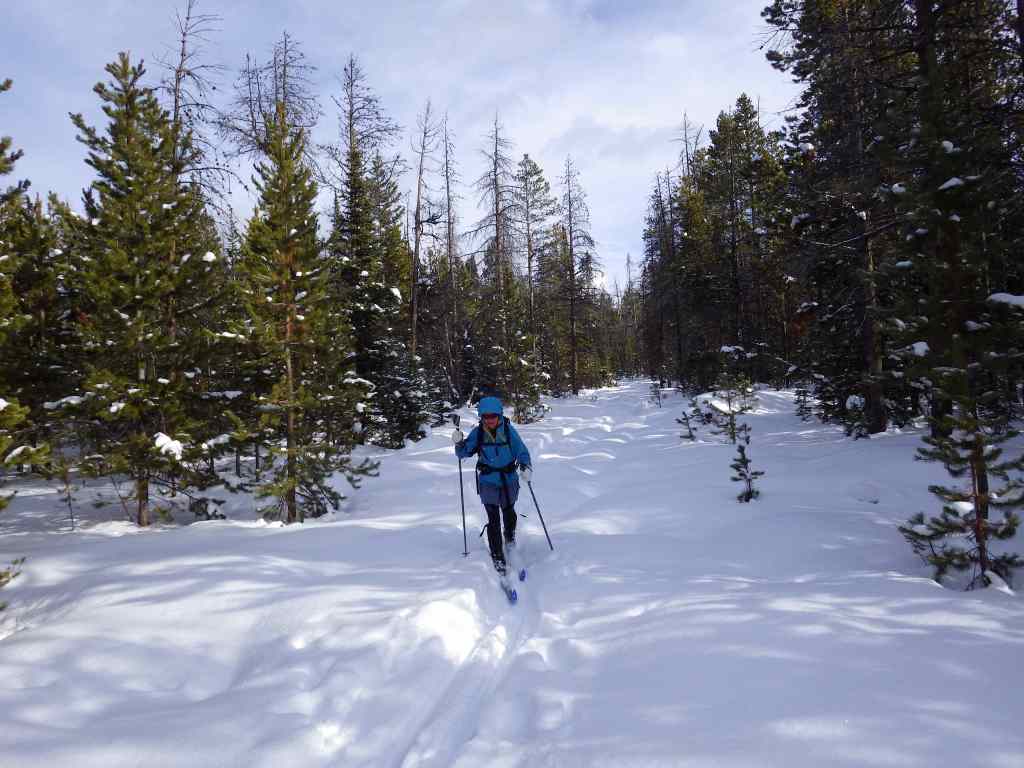
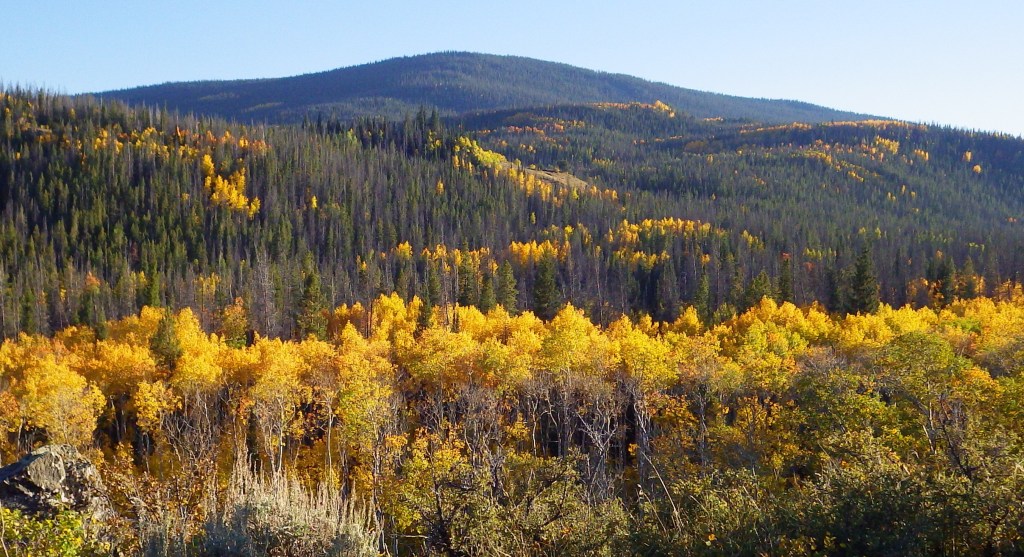
Opened in 2025 near the south entrance, the Tekαkαpimək Contact Station is seasonally open Friday through Sunday in a building inspired by Wabanaki culture.  The National Park Service no longer works out of the Patten Lumbermen’s Museum (but it is still worth a visit).  The 17-mile-long Katahdin Loop Road in the southern section of the National Monument is the most developed with picnic areas, vault toilets, and overlooks.  The unpaved loop road is accessed from the east by miles of unpaved road and has no access to Baxter State Park.  About 30 miles of the International Appalachian Trail runs through Katahdin Woods and Waters National Monument with lean-tos dispersed along the route.  Other than hiking, visitors enjoy stargazing, birding, leaf peeping in the fall, canoeing the East Branch of the Penobscot River with portages around its many waterfalls.  In the winter, there are opportunities for cross-country skiing, snowshoeing, and snowmobiling. 
Best Trail

From the Haskell Gate at the end of New River Road, it is 3.5 miles out-and-back to Stair Falls on the East Branch of the Penobscot River.  The first part follows an old road and the International Appalachian Trail before branching north at a signed junction to access the water and is also open to bicycles.  The only trailhead accessed from a paved road is the 13.6-mile Seboeis Riverside Trail that starts outside the National Monument off Grand Lake Road.     

Photographic Opportunity

One of the best views of Katahdin is from the top of Barnard Mountain, accessed by a two-mile one-way hike with 725 feet of elevation gain. 

Peak Season

Summer

Hours

https://www.nps.gov/kaww/planyourvisit/basicinfo.htm

Fees

None

Road Conditions

Every road within the National Monument is unpaved, so watch for potholes and logging trucks.  The north and south entrances have gates that close seasonally.

Camping

Reservations are required to car camp at designated sites within Katahdin Woods and Waters National Monument and can be made online at Recreation.gov
Related Sites

Appalachian National Scenic Trail (Maine to Georgia)

Saint Croix Island International Historic Site (Maine)

White Mountain National Forest (New Hampshire, Maine)

Nearest National Park

Acadia

Explore More – When did Katahdin Woods and Waters National Monument receive official recognition as a Dark Sky Sanctuary?

Learn more about the other 137 National Monuments in our book Monumental America: Your Guide to All 138 National Monuments

Upper Missouri River Breaks National Monument

Upper Missouri River Breaks National Monument

Managed by Bureau of Land Management

Established 2001

377,346 acres

Website: https://www.blm.gov/programs/national-conservation-lands/montana-dakotas/upper-missouri-river-breaks

Overview

In central Montana, 149 miles of the Upper Missouri River were designated as a National Wild and Scenic River in 1976, upstream from the reservoir in Charles M. Russell National Wildlife Refuge.  This stretch of the river still looks much the way it did when the Lewis and Clark expedition first explored it in 1805 and their former campsites are marked by posts.  The breaks are a topographic area where the Missouri River eroded sedimentary rock that formed as horizontal layers laid down at the bottom of an ancient sea.  The National Monument comprises public land in a matrix with private ranches, with cattle making the water unfit for filtering.  There are a couple places to drive to along the river, but the best way to experience it is by floating a canoe or kayak down the non-motorized sections

Learn more about the other 137 National Monuments in our book Monumental America: Your Guide to All 138 National Monuments. It is now available for sale on Amazon.com.

Highlights

Fort Benton, Decision Point, Neat Coulee, Citadel Rock, Hole-in-the-Wall, Lewis and Clark National Historic Trail

Must-Do Activity

In Fort Benton, start your visit at the free interpretive center run by the Bureau of Land Management (BLM), then head downtown to learn more history by walking the riverfront of Fort Benton National Historic Landmark, including its many museums (admission fees charged) and sculptures of Lewis, Clark, Sacagawea and her son Pompey, and Shep (a local dog famous for his faithfulness).  To find out more about the Corps of Discovery, check out the Lewis and Clark Interpretive Center upstream in Great Falls.  The most scenic stretch to float lies in the 44 miles between Coal Banks Landing and Judith Landing where there are no rapids and the river current is so strong that paddling is mostly reserved for steering.  A permit (fee) is required from the BLM, and we recommend you purchase a Boaters’ Guide and W.A.G. bags.  Wildlife we spotted along the river included bighorn sheep, bald eagles, white pelicans, great blue herons, and beavers. 

Best Trail

Only accessible by boat, the hike up the slot canyon at Neat Coulee from the Eagle Creek Developed Boat Camp is worth a stop.  It is also possible to scramble up to the eight-foot-tall Hole-in-the-Wall arch that comes into view on the south side of the river just past Citadel Rock.

Photographic Opportunity

One of the few places with road access in Upper Missouri River Breaks National Monument, at Decision Point, Captains Lewis and Clark were not sure which was the main route: the Marias or Missouri River.

Peak Season

Summer

Fees

There is a small fee charged per person per day to be on the river, which helps pay for the maintenance of vault toilets along the route (other waste must be packed out in W.A.G. bags).  An America the Beautiful pass covers the admission fee for the small museum at the BLM visitor center in Ft. Benton.

Road Conditions

Dirt roads doable by passenger vehicles lead to Coal Banks Landing and Judith Landing, while paved roads lead to put-ins at Chouteau County Fairgrounds in Ft. Benton and Kipp Recreation Area at the western edge of Charles M. Russell National Wildlife Refuge.

Camping

There are campgrounds at Chouteau County Fairgrounds, Coal Banks Landing, and Kipp Recreation Area.  Throughout the National Monument developed riverside campgrounds can be accessed by boat, with dispersed camping allowed anywhere on public land (a good map is essential to avoid private land). 

Related Sites

Custer National Forest (Montana)

Pompeys Pillar National Monument (Montana)

Lewis and Clark National Forest (Montana)

Nearest National Park

Glacier

Explore More – Who was Charles M. Russell and why did he get a National Wildlife Refuge named after him?

Learn more about the other 137 National Monuments in our book Monumental America: Your Guide to All 138 National Monuments