Tag Archives: National Forest

Angeles National Forest

Angeles National Forest

California

Managed by U.S. Forest Service, Pacific Southwest Region

694,175 acres (668,887 federal/ 25,288 other)

Website: https://www.fs.usda.gov/angeles

Overview

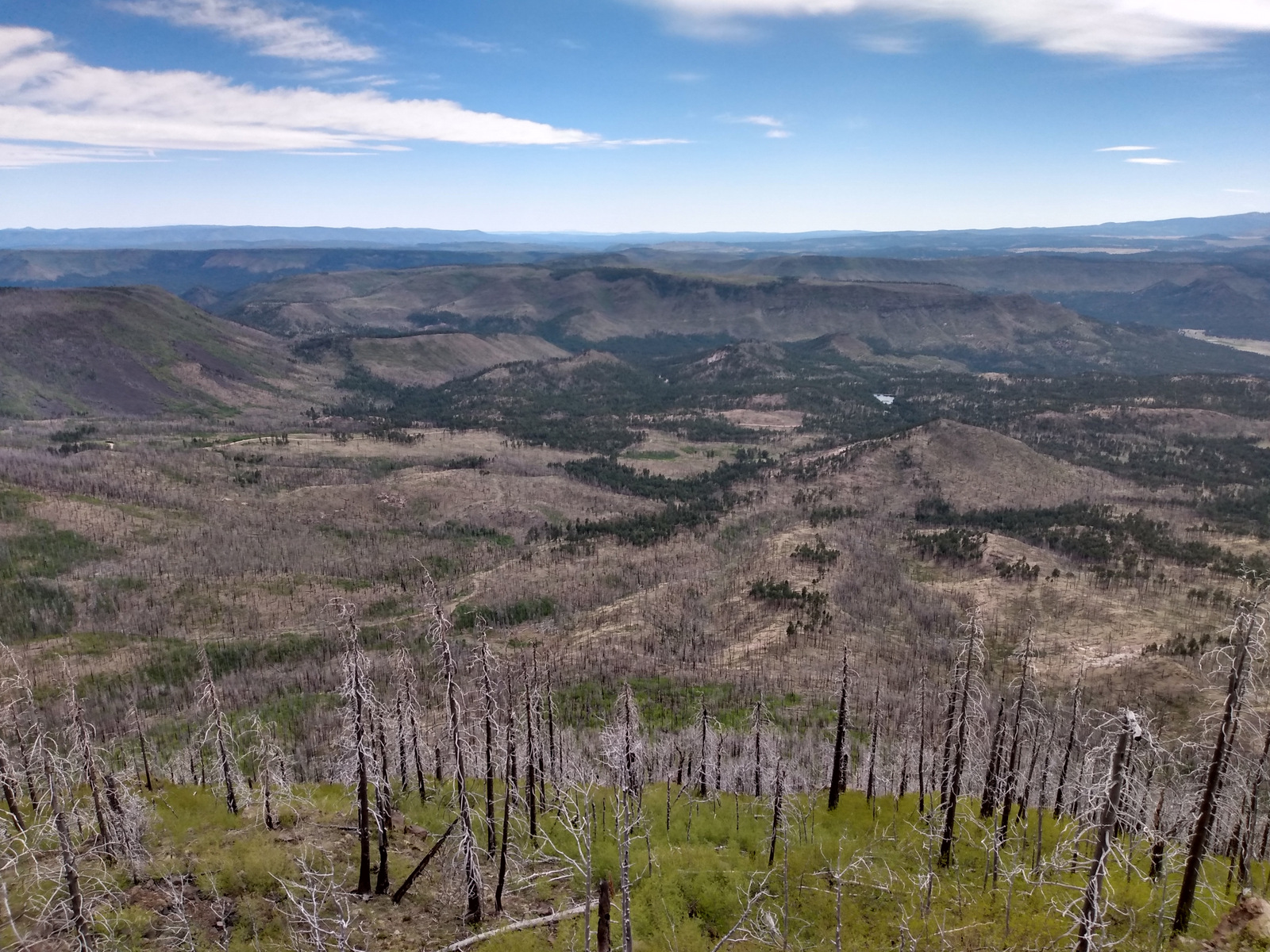
Angeles National Forest is registered as a California Historical Landmark since it became the first protected woodland in the state as the San Gabriel Timberland Reserve in 1891.  It serves as a major recreation destination north of the Los Angeles metropolitan area with 697 miles of hiking trails, several lakes, and two alpine ski areas.  Most of the shrub and tree species are adapted to periodic fire and about one-quarter of the National Forest burned in the 2009 Station Fire and an additional 115,796 acres in the 2020 Bobcat Fire.

Highlights

San Gabriel Mountains National Monument, Saint Francis Dam Disaster National Memorial and Monument, Angeles Crest Highway, Crystal Lake Recreation Area, Mt. Wilson Observatory, Bouquet Reservoir, Mt. Baldy, San Antonio Falls, Gabrielino National Recreation Trail, High Desert National Recreation Trail, Pacific Crest National Scenic Trail

Must-Do Activity

Angeles Crest Highway (Highway 2) cuts through the San Gabriel Mountains National Monument, established in 2014.  Coming from the east, a good place to start is the Big Pines Visitor Center or the Grassy Hollow Visitor Center, both of which have short interpretive trails with signs identifying local species.  Further west, Saint Francis Dam Disaster National Memorial and Monument (est. 2019) commemorates the tragedy that cost at least 431 people their lives in 1928.  Watch in the coming weeks for blog posts specifically detailing these two National Monuments.

Best Trail

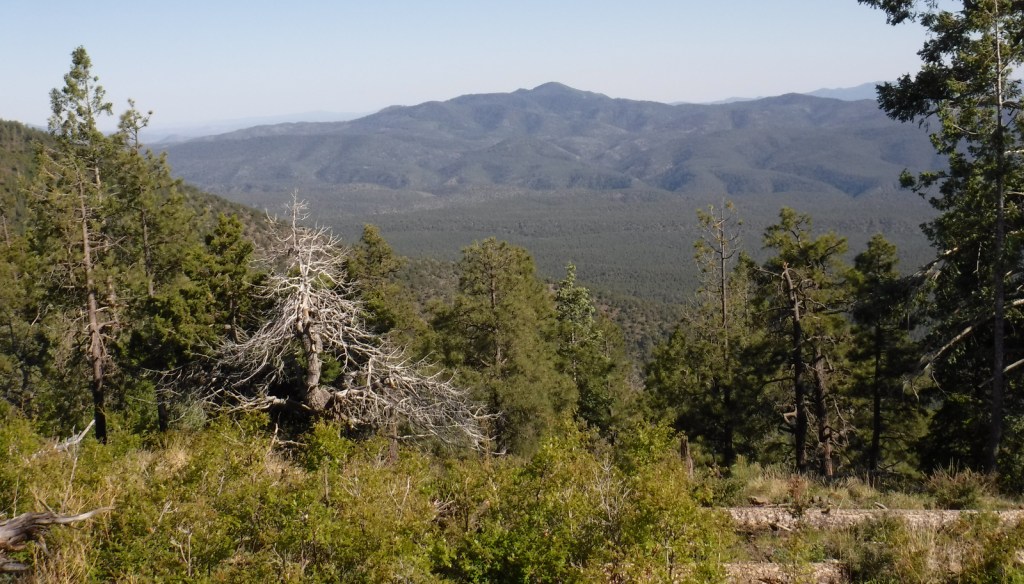
Across from Inspiration Point on Highway 2, there is a parking lot for Lightning Ridge Nature Trail.  The half-mile loop trail offers great panoramas of the surrounding mountains.  It even includes a portion of the 2,600-mile Pacific Crest National Scenic Trail.  Along the trail, my wife and I stopped to sniff the orange, platy bark of a Jeffrey pine for its pleasant vanilla scent, which brought back memories of our time spent living in California. 

Watchable Wildlife

On our November visit, we first saw a western gray squirrel with an incredibly poofy tail atop the Big Pines Visitor Center.  On the Big Pines Interpretive Trail, we spotted dark-eyed juncos and Steller jays flitting about.  Despite its proximity to the city, there are even black bears, mountain lions, and bobcats in this National Forest.  You are more likely to come across coyotes, gray foxes, or mule deer.

Instagram-worthy Photo

Many species commonly found in this National Forest are endemic to this region and grow nowhere else on Earth, including Coulter pine (famous for its massive pinecones that weigh up to 11 pounds).

Peak Season

Spring and fall

Fees

An Adventure Pass is required to park at many trailheads.  The Forest Service also accepts all America the Beautiful Passes, which can be also used at National Park Service sites.

Road Conditions

The paved Angeles Crest Highway cuts through San Gabriel Mountains National Monument and it used to go through to Glendale, but closed due to damage from the 2020 Bobcat Fire.

Camping

There are many campgrounds in the National Forest, but we did not see any great places to do dispersed car camping when we drove through different portions of it (although we did not drive any dirt roads which is where they typically are found).

Wilderness Areas

Cucamonga Wilderness (also in San Bernardino National Forest)

Magic Mountain Wilderness

Pleasant View Ridge Wilderness

San Gabriel Wilderness

Sheep Mountain Wilderness (also in San Bernardino National Forest)

Related Sites

Pinnacles National Park (California)

Santa Monica Mountains National Recreation Area (California)

César E. Chávez National Monument (California)

Nearest National Park

Channel Islands (California)

Conifer Tree Species

incense-cedar, bigcone Douglas-fir, Jeffrey pine, Coulter pine, knobcone pine, gray pine, lodgepole pine

Flowering Tree/Shrub Species

California black oak, canyon live oak, California walnut, serviceberry, western mountain-mahogany, California coffeeberry, cup-leaf ceonothus, flannel bush, Parry’s manzanita

Explore More – How long are the Gabrielino and High Desert National Recreation Trails?

Saint Francis Dam Disaster National Memorial and Monument

Saint Francis Dam Disaster National Memorial and Monument

California

Managed by U.S. Forest Service, Angeles National Forest

353 acres

Website: https://stfrancisdammemorial.org/

Overview

Saint Francis Dam Disaster National Memorial and Monument was authorized on March 12, 2019 to commemorate the 431 lives that were lost when an 185-foot-tall concrete gravity dam failed around midnight on the same date 91 years earlier. The death toll is second in the history of California to the 1906 earthquake in San Francisco.  Saint Francis Dam was only two years old when it failed, and other dams from that time period remain in use as part of the Los Angeles aqueduct system.  Currently, a California Historical Landmark is located 1.5 miles south at Powerhouse No. 2, but there is nothing developed at the actual site. In 2003 in Santa Paula, a memorial statue was erected featuring two motorcycle officers in honor of two heroes who warned sleeping residents of the impending flood, saving countless lives.

A detailed historical account of the disaster is available on Wikipedia.

Highlights

Ruins of dam, California Historical Landmark #919, Santa Paula Memorial

Must-Do Activity

There are plans to build a National Memorial at the dam, but currently it is a pile of rubble heavily spray-painted by local teenagers.  After its fall in 1928, authorities further toppled the structure with dynamite, bulldozers, and jackhammers to discourage sightseers and souvenir hunters.  The site is located in a scenic canyon where the leaves were just turning yellow for winter during our mid-November visit.  It is less than a mile walk to the site from the unmarked pulloff on the east side of San Francisquito Canyon Road in Angeles National Forest.  The pathway is the heavily overgrown original roadbed that was abandoned after a storm in 2005 and it reeked of urine.  It will be interesting to see how the Forest Service cleans up the area in the future.

Best Trail

There is no official trail, and it is quite a steep drop from the paved remnants of old San Francisquito Canyon Road to the actual rubble pile down at creek level.

Instagram-worthy Photo

The dam disaster site is not much to look at right now, but there are some angles where you can avoid getting graffiti in your photo.

Peak Season

Spring and fall

Fees

None

Road Conditions

San Francisquito Canyon Road is paved, but exercise caution as there is currently no sign for the parking areas nor is there a turn lane on this high-speed two-lane highway.

Camping

There are numerous Forest Service campgrounds in the area, with Spunky Canyon and South Portal being the closest to the north.

Related Sites

Santa Gabriel Mountains National Recreation Area (California)

Santa Monica Mountains National Recreation Area (California)

Sand to Snow National Monument (California)

Nearest National Park

Channel Islands (California)

Explore More – How many billions of gallons of water were released when the St. Francis Dam failed in 1928?

Allegheny National Forest

Allegheny National Forest

Pennsylvania

Managed by U.S. Forest Service, Eastern Region

742,693 acres (513,175 federal/ 229,518 other)

Website: https://www.fs.usda.gov/allegheny

Overview

The only National Forest in Pennsylvania was created in 1923 utilizing the federal government’s ability to purchase land under the Weeks Act of 1911.  However, they could not afford the subsurface or mineral rights, which has created issues in this oil-producing area.  Before it became Allegheny National Forest, most of the hillsides were clearcut to feed the area’s wood chemical plants, allowing black cherry and early successional species to dominate the second growth forests.  The National Forest contains two Wild and Scenic Rivers: the Clarion River (51.7 miles) and Allegheny River (87 miles in three separate sections).

Highlights

Allegheny National Recreation Area, Hearts Content Scenic Area, Willow Bay Recreation Area, Old Powerhouse, Timberdoodle Flats Interpretive Trail, Minister Creek, Buzzard Swamp Hiking Area, Clarion Wild and Scenic River, Allegheny Wild and Scenic River, Buckaloons Recreation Area, Hall Barn Wildlife Viewing Area, North Country National Scenic Trail

Must-Do Activity

A good place to start exploring Allegheny National Forest is by driving the Longhouse Scenic Byway, a 36-mile loop, which includes views of the Allegheny Reservoir and Kinzua Dam, plus a side trip up to Jakes Rocks Overlook.  We drove in from the east and found the easy walks on the Timberdoodle Flats Wildlife Interpretive Trail to be a good introduction to this region.  This is one of the few places in Pennsylvania with old-growth forests, so be sure to stop at Hearts Content Scenic Area or Tionesta Scenic and Research Natural Areas. 

Best Trail

Huge eastern hemlock and eastern white pine trees up to 400 years old can be found in the 20-acre Hearts Content Scenic Area.  This National Natural Landmark has a picnic area constructed by the Civilian Conservation Corps (CCC) and is located across from a nice campground.  There are two short, flat loop trails located here, but you can also connect into 7.8 miles of cross-country skiing and snowshoeing routes.  Other popular hiking destinations include Rimrock Trail and a 10-mile section of the North Country National Scenic Trail within the Tracy Ridge Hiking Trail System (see our post on Allegheny National Recreation Area for more information).

Watchable Wildlife

As hard as it is to believe given their prevalence now, low populations of white-tailed deer in the 1920s allowed this new National Forest to grow back quickly.  Campers should exercise caution with their food and trash since black bears are in the area.  Turkeys, bald eagles, barred owls, Canada geese, black-capped chickadees, and pileated woodpeckers are common bird species.  Hall Barn Wildlife Viewing Area is known for its summer population of 1,000 roosting bats.  There is also evidence of beavers on the Timberdoodle Flats Wildlife Interpretive Trail.  Allegheny Reservoir has walleye, trout, bass, catfish, northern pike, and muskellunge, and small native brook trout can be found in the Farnsworth Stream and other creeks.  We recently learned that the PA Firefly Festival is held in Tionesta, Pennsylvania every June because of their population of synchronous fireflies (or lightning bugs).

Instagram-worthy Photo

Kinzua Dam was completed in 1965 and stands 179 feet tall and 1,897 feet in length.  Kinzua is a Seneca Indian word that translates as “place of many big fishes.”  Watch for fish that gather in eddies at the edges of the Allegheny Reservoir near the dam, but remember that fishing and feeding the fish is prohibited at this spot.

Peak Season

Summer

Fees

There is an entrance fee at both Willow Bay and Buckaloons Recreation Areas, but it is half price with an America the Beautiful pass.

Road Conditions

All roads are paved to Willow Bay Recreation Area and Hearts Content Scenic Area, which are popular with RV campers. 

Camping

Allegheny National Forest contains 15 campgrounds with more than 1,000 sites, and Willow Bay Recreation Area also has cabins for rent.  We enjoyed our stay at Heart’s Content Campground, but found Buckaloons Campground to be too crowded.  Allegheny Islands Wilderness has seven islands that can be used for boat-in dispersed camping.

Wilderness Areas

Allegheny Islands Wilderness

Hickory Creek Wilderness

Related Sites

Allegheny National Recreation Area (Pennsylvania)

Grey Towers National Historic Site (Pennsylvania)

Fort Necessity National Battlefield (Pennsylvania)

Nearest National Park

Cuyahoga Valley (Ohio)

Conifer Tree Species

eastern hemlock, eastern white pine

Flowering Tree Species

sugar maple, black maple, red maple, striped maple, silver maple, mountain maple, yellow birch, sweet birch, black walnut, bitternut hickory, shagbark hickory, sycamore, American beech, white ash, tulip-poplar, green ash, cucumber magnolia, quaking aspen, bigtooth aspen, black cherry, pin cherry, choke cherry, northern red oak, basswood, American elm, slippery elm

Explore More – Timberdoodle is a local nickname for which native bird species that nests in this forest?

Explanation of National Forest Blog Posts

Welcome to the new Raven About The Parks | Raven About The Forests!  This week we are starting to post about the 155 National Forests (in alphabetical order), as well as the National Monuments and National Recreation Areas that they manage (which will be three of our first five posts).  For more information about how the U.S. Forest Service is different from the National Park Service, check out our previous blog post.

There will be a few differences in our posts on the National Forests, including some new headings, like a paragraph on Watchable Wildlife and a list of Wilderness Areas.  At the top of each page, we are going to start putting the managing agency (i.e. U.S. Forest Service), acreage, and a link to the government website.  We will still link to three of our blog posts on Related Sites on our public lands, plus now the nearest of the 63 National Parks. 

Another change is the addition of a list of Conifer Tree Species (cone-bearing Gymnosperms or softwoods often called “pines” or “evergreens”) and Flowering Tree Species (Angiosperms or hardwoods that are often called “deciduous” because many species lose their leaves in autumn).  Scott has a Ph.D. in forestry and always wanted to teach dendrology, so this keeps him happy.

We will still have all the headings that simplify getting information from our blog posts, including Overview, Highlights, Must-Do Activity, Best Trail, Instagram-worthy Photo, Peak Season, Fees, Road Conditions, Camping, and the final trivia question in Explore More.

We also plan to keep up with our Top 10 Lists, so watch for those, too.

Thank you for reading.  Happy New Year!

Scott and Tiff

Raven About The Forests in addition to the Parks

Starting in 2022, Raven About The Parks is now also covering American National Forests! 

So what does this actually mean?  We will now be posting about the 155 National Forests in America that are managed by the U.S. Forest Service (USFS) not the National Park Service (NPS – we just posted on our 300th NPS site in December!).  For more information on the history of the USFS check out our newspaper article from November.

As a quick reminder of the differences between the two government agencies:

U.S. Forest Service (USFS) is in the Department of Agriculture and manages 155 National Forests (in 40 states and 1 territory), 20 National Grasslands, 22 National Recreation Areas, 13 National Monuments, and 1 National Historic Site.  Hunting is allowed in most National Forests and rules are generally more relaxed about hiking off trail and dispersed camping.  The USFS was founded in 1905 on the ideal of conservation, which includes natural resource extraction and logging in a sustainable manner.

National Park Service (NPS) is in the Department of Interior and manages 433 sites (in all 50 states and 4 territories plus Washington, D.C.), which are made up of no National Forests nor Grasslands, 63 National Parks, 20 National Recreation Areas, 87 National Monuments, 82 National Historic Sites, and many other designations.  Hunting is not allowed in most NPS units and rules are generally stricter about hiking off trail and dispersed camping.  The NPS was founded in 1916 on the ideal of preservation, which does not allow for natural resource extraction or logging.

I feel like my old forestry professor self was coming out there.  There will not be a test, though.

Our Goals

When the pandemic shut down most NPS sites, it inspired us to do something we had talked about for years: hiking in all 155 National Forests.  We determined that we already had traveled enough to write about 55 National Forests in places we previously lived, including Alaska, Arizona, California, North Carolina, and Wyoming.  That left 100 more to go.  Of course, that did not stop us from returning to a few favorites along the way, like Black Hills, Bridger, Gila, Medicine Bow, Nebraska, and Roosevelt National Forests.

Over the past 17 months, to complete this monumental task I (being Scott) needed lots of support from both my wife (being Tiff who was still working full time at the local hospital) and my recently-retired mother.  Together we drove more than 40,000 miles across 42 states (plus Puerto Rico).  We hiked and backpacked well over 700 miles of trails in 117 National Forests, spending 129 nights camping.

Our major objective in visiting all 155 National Forests was to finish research so we can publish a guidebook in 2022.  Watch for updates on how that project progresses, but in the meanwhile enjoy learning more about our public lands as we start posting on National Forests (in alphabetical order) and their associated National Monuments and National Recreation Areas.  We start next Thursday with Pennsylvania’s Allegheny National Forest.

Thank you for reading.  Happy New Year!

Scott and Tiff