| Acer circinatum |
| vine maple |
| This twisting, often multi-stemmed shrub can reach 25 feet in height in its streamside habitat. Its leaves are relatively rounded for a maple, turning from bright green to orange or red in the autumn. |
| Acer glabrum |
| Rocky Mountain maple |
| This is the northernmost maple species found in North America, ranging from Arizona to southeast Alaska. It is also called dwarf maple because it often grows as a shrub in wet soils and reaches a maximum height of 30 feet. |
| Acer grandidentatum |
| bigtooth maple |
| Its scientific name refers to the deep lobes of the leaves tipped with blunt teeth, which turn red or yellow in the autumn. Closely related to the sugar maple of the east, its sap can be used to make maple sugar. |
| Acer macrophyllum |
| bigleaf maple |
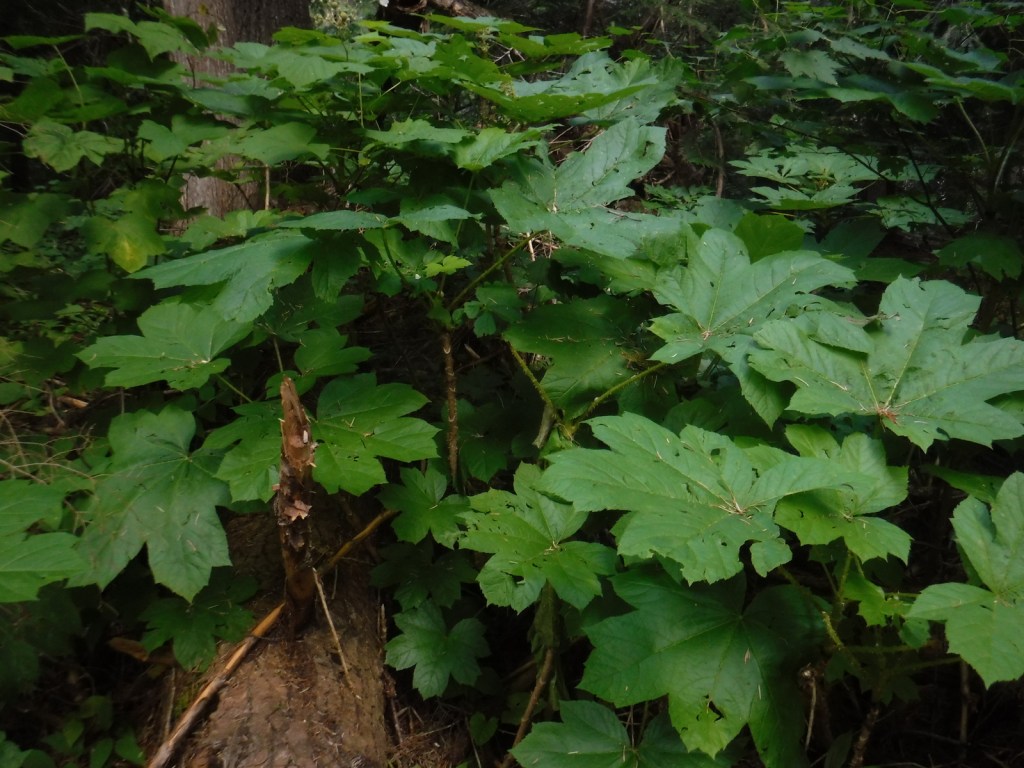
| This shade toleranttree is aptly named since it has the largest leaves of any maple species, often reaching over a foot in width. Although rarely exceeding 70 feet in height, the wood of this wetland tree is commonly used for furniture, veneer, and handles. |
| Acer negundo |
| boxelder |
| Unlike other maples that it is related to, boxelder has compound leaves in groups of three, making its root sprouts easy to mistake for poison-ivy. Both species grow in riparian environments, but boxelder can reach 60 feet in height. It is found from the Rocky Mountains all the way to Florida. |
| Acer rubrum |
| red maple |
| Found from Florida to Maine and sea level to 6,000 feet in elevation, red maple may have North America’s most spectacular display of fall foliage with yellow, orange, and red shades often found on the same tree. |
| Acer saccharinum |
| silver maple |
| Found from floodplains to mountain coves, silver maple is a shallow-rooted, medium-sized tree with the largest samaras of any eastern maple. |
| Acer saccharum |
| sugar maple |
| Sugar maple is the primary species whose sap is tapped in the spring to make maple syrup. This large tree of the northeast U.S. can reach seven feet in diameter and its wood is prized for furniture, flooring, and veneer. |
| Aesculus californica |
| California buckeye |
| California buckeye is a small, thicket-forming tree identified by its palmately compound leaves and three-inch capsule fruit containing poisonous seeds. In the dry foothills of the Coast Range and Sierra Nevada, its large leaves often turn brown by mid-summer. |
| Aesculus flava |
| yellow buckeye |
| One of only a few large American trees with palmately compound leaves, this water-loving species can reach three feet in diameter and more than 100 feet in height. Indigenous people were able to eat the large, toxic nuts by roasting and soaking them. |
| Alnus incana |
| gray alder |
| Also called mountain or thinleaf alder, this riparian shrub is found from Alaska to New Mexico. Like other alders, it has nodules on its roots that help bacteria fix nitrogen from the atmosphere improving overall soil quality. |
| Alnus rhombifolia |
| white alder |
| A riparian species often found in the dry chaparral and foothill woodlands throughout California and western Idaho from near sea level up to 8,000 feet in elevation. Also called Sierra alder, this straight-trunked tree can reach 80 feet in height. Its small fruit look similar to miniature pine cones. |
| Alnus rubra |
| red alder |
| Typically a riparian species, the fast-growing red alder is the most commercially important hardwood tree in the western U.S. An early successional species throughout the Pacific Coast, it often forms pure stands following wildfires or clearcut logging. |
| Amelanchier alnifolia |
| Saskatoon serviceberry |
| Also known as saskatoon, juneberry, or shadbush, this small tree has smooth, gray bark and rounded leaves. It is typically found in moist soils where it grows an apple-like pome that is edible to humans and wildlife. |
| Amelanchier utahensis |
| Utah serviceberry |
| Also known as Utah juneberry, this small, shade tolerant tree produces an apple-like pome that is edible to humans and wildlife. Its straight branches were traditionally used to mark arrow shafts. |
| Arbutus menziesii |
| Pacific madrone |
| Easily identified by its shiny red bark, the evergreen Pacific madrone tree can reach 100 feet in height and more than four feet in diameter. Found from sea level up to 5,900 feet, its wood is used for a wide variety of products. |
| Arbutus xalapensis |
| Texas madrone |
| The smooth, red bark of Texas madrone makes it easily identifiable, though it rarely reaches more than 20 feet in height. Like its relative the manzanita bush, it produces bright red clusters of berrylike fruit that are eaten by many bird species. |
| Arctostaphylos patula |
| greenleaf manzanita |
| There are numerous species of this red-barked shrub found throughout the western U.S. in chaparral and dry woodlands. Manzanita means “little apple” in Spanish and many varieties produce mealy fruit eaten by wildlife and used by some American Indians to make cider. |
| Artemisia tridentata |
| big sagebrush |
| A widely distributed shrub of the Great Basin Desert and dry foothills of the Rocky Mountains, this aromatic species is an important food source for mule deer, pronghorns, and a variety of birds, including sage grouse. |
| Betula alleghaniensis |
| yellow birch |
| The shiny bronze or silver bark with small peeling papery strips differentiates yellow birch from its lighter barked relatives. Found throughout the northeast and Appalachian Mountains, this valuable timber commercial tree species can reach two feet in diameter and 110 feet in height. |
| Betula occidentalis |
| water birch |
| Water birch is a riparian tree found throughout the Rocky Mountains from Alaska south to New Mexico with an elevation range of 330 to 9,840 feet. It can hybridize with paper birch, but is known for its darker bronze bark. |
| Betula papyrifera |
| paper birch |
| Transcontinental in its distribution, paper birch is easily identifiable by its white bark that comes off in papery strips. Birchbark canoes were made by sewing together these strips and caulking the seams with pine resin. |
| Betula pumila |
| bog birch |
| Also called bog birch, this deciduous shrub generally grows in wetlands and stays under 12 feet in height. As with other birches, it has dentate leaves, catkins, and large lenticels on its bark. |
| Carya cordiformis |
| bitternut hickory |
| Bitternut hickory grows from Texas into Quebec, farther north than any other North American hickory. It is the shortest-lived of those hickories, but does reproduce from stump and root sprouts. |
| Carya glabra |
| pignut hickory |
| One of many species of hickory found in the eastern U.S., pignut (or red) hickory is a medium-sized tree typically only growing to 60 feet tall and two feet in diameter. |
| Carya illinoinensis |
| Pecan |
| One of North America’s most valuable native trees in cultivation, this bottomland species produces large, edible nuts. Related to hickories, pecan can reach 130 feet tall and more than four feet in diameter. |
| Carya ovata |
| shagbark hickory |
| Shagbark gets its descriptive name from the curved strips of gray bark loosely attached to its trunk. Historically, hickory trees were utilized for their edible nuts, dense wood good for tool handles, and yellow dye produced from nut husks. |
| Carya tomentosa |
| mockernut hickory |
| Mockernut hickory is the most common hickory of the sandy coastal plains that are usually dominated by pine forests. It is a slow growing tree, but can survive for 500 years. |
| Cercocarpus ledifolius |
| curl-leaf mountain-mahogany |
| This small tree can reach 30 feet in height, but is typically a shrub common throughout the Great Basin where its evergreen leaves provide year-round browse for mule deer. It is not a true mahogany, but its dark heartwood may have led to the misnomer as it was used by the Navajo to make red dye. |
| Chrysolepis chrysophylla |
| giant chinquapin |
| Also called goldenleaf chestnut, this evergreen hardwood can grow as a shrub or a straight-trunked tree that reaches 80 feet in height. While not a true chestnut, it grows similar spiny fruit with edible nuts. |
| Cornus florida |
| flowering dogwood |
| This small, understory tree can grow in a variety of soil types across the eastern U.S. Its flowers are flanked by four large, white brachts that form in early spring, making it a popular ornamental tree. Its dense wood was historically used to make weaving-shuttles. |
| Cornus nuttallii |
| Pacific dogwood |
| The four petal-like, white bracts that surround the center flowers of Pacific dogwoods make them a popular ornamental tree, especially since they frequently bloom twice a year. An understory species that prefers moist soils, they rarely reach more than 50 feet in height or one foot in diameter. |
| Cornus sericea |
| red-osier dogwood |
| Also called kinnikinnik, red-osier dogwood is transcontinental in its range, but rarely reaches more than ten feet in height. Its red stems are similar to those of some willows (known as osiers) that are used to make baskets. The shrub is planted ornamentally and for streambank erosion control. |
| Corylus cornuta |
| beaked hazel |
| Beaked hazel grows across North America as a smooth-barked, multi-stemmed shrub that rarely reaches more than 30 feet in height. Its fruit has a brown husk with distinctive fibrous “beaks.” The edible nuts are important for wildlife, but are not the commercially grown European hazelnut or filbert. |
| Crataegus chrysocarpa |
| Piper’s hawthorn |
| First identified along the Columbia River, this multi-stemmed shrub (also called red hawthorn) is a western relative of fireberry hawthorn. Its purplish-red fruits mature in late summer in its streamside habitat. |
| Crataegus douglasii |
| black hawthorn |
| A small tree that can reach 30 feet in height, black hawthorn can grow as far north as southeast Alaska. Typically a riparian species, its glossy leaves provide browse for ungulates and its shiny, black berries food for several species of birds. Its half-inch white flowers make it a common ornamental. |
| Diospyros virginiana |
| common persimmon |
| A medium-sized tree of the southeast U.S., common persimmon produces an astringent, pulpy fruit eaten by opossums, raccoons, skunks, white-tailed deer, and a variety of birds, as well as humans (especially baked in cakes). |
| Fagus grandifolia |
| American beech |
| The papery thin, deciduous leaves of American beech allow it to grow in shady conditions throughout the eastern U.S. where it can reach more than three feet in diameter. It is known for its smooth, gray bark and edible beechnuts, which are an important food source for wildlife. |
| Fraxinus americana |
| white ash |
| This upland ash tree is identifiable by its seven to nine leaflets per leaf and terminal bud that resembled a horned Viking helmet. Its wood is valuable for making baseball bats, cabinets, and furniture. |
| Fraxinus pennsylvanica |
| green ash |
| This riparian species is widespread from the Great Plains to Nova Scotia, plus it is often planted for shelterbelts and mine reclamation. All native ash trees are being impacted by invasive emerald ash borers, an insect species which has already killed more than 100-million trees in North America. |
| Gleditsia triacanthos |
| honeylocust |
| Native to the central U.S., honeylocust is now naturalized to the east coast and planted ornamentally nationwide as a fast-growing shade tree or hedge shrub. This medium-sized tree is notable for its 18-inch-long legume pods and large thorns that often grow in clusters. |
| Gymnocladus dioicus |
| Kentucky coffeetree |
| This tree is planted as an ornamental, even though it sheds its leaves early and is uncommon in its native bottomland hardwood forests. It is easily identifiable by its thick, brown legumes that reach up to seven inches in length. The raw seeds and the pulp between them are poisonous, but roasted seeds were historically used as a coffee substitute. |
| Hesperocyparis sargentii |
| Sargent cypress |
| Sargent cypress and the shorter McNab cypress grow on outcrops of serpentine rock where they can tolerate the high magnesium levels in the soil that are toxic to other plants. Both species can be found along Frenzel Creek near Little Stoney Campground in Mendocino National Forest. |
| Ilex opaca |
| American holly |
| Widespread throughout the southeast U.S., this shade tolerant tree is easily recognized by its spiny-pointed evergreen leaves and bright red fruit, which is eaten by birds and mammals. |
| Ilex vomitoria |
| yaupon holly |
| Alternatively called Christmas-berry, this evergreen shrub produces shiny red berries that make it a prized ornamental. Its interesting scientific name comes from the fact that American Indians brewed the leaves into a tea to serve as an emetic and laxative. |
| Juglans major |
| Arizona walnut |
| This riparian species can be found in the Sycamore Canyon Wilderness of Kaibab National Forest. The tree’s range continues south into Mexico where the small walnuts (or “nogales”) are collected. It can reach 50 feet in height and two feet in diameter, often growing burls at its base that are cut to make beautiful tabletops. |
| Juglans nigra |
| black walnut |
| This large deciduous tree has a distinctive smell that comes from allelopathic chemical compounds that prevent certain plants from growing beneath them. Not the same species that is commercially grown for edible walnuts, nevertheless its wood is valuable for furniture and veneer. |
| Liquidambar styraciflua |
| sweetgum |
| This fast-growing tree is widespread throughout the southeastern U.S. and also planted as an ornamental (especially in California). Sweetgum is easily identified by its five-pointed leaves and spiky capsule fruit. |
| Liriodendron tulipifera |
| tulip-poplar |
| Also called yellow-poplar or tuliptree because of its showy green and orange flowers that grow in the spring just after the leaves unfold, this long-lived tree can reach 175 feet in height and eleven feet in diameter. It is a valuable timber species due to the fast growth of its straight, self-pruning trunks, especially those that arise from stump sprouts. |
| Lyonia ferruginea |
| palo colorado |
| This same species grows as a shrub called “titi” in swamps of the southeastern U.S., but in Puerto Rican tropical rainforests it can reach up to 50 feet in height. The hollow trunks of these red-barked trees were historically used for nesting by Puerto Rican parrots, an endangered species once down to only 13 wild individuals. |
| Maclura pomifera |
| Osage-orange |
| There is only one species in this Genus with a very limited range in eastern Texas and Oklahoma, although it has been widely planted throughout the Great Plains for windbreaks. Female trees produce heavy, round, green fruits about five inches in diameter that are eaten by livestock, giving it the common name of horse-apple. American Indians used the spiny branches to make archery bows, which is why it also known as bodark. |
| Magnolia grandiflora |
| southern magnolia |
| A commonly planted ornamental tree worldwide, southern magnolia is native to the Coastal Plain of the southeast U.S. It is notable for its thick evergreen leaves and 6-inch showy white flowers (featured on the Mississippi state flag). |
| Magnolia macrophylla |
| bigleaf magnolia |
| Living up to its alternate common name of umbrella-tree, bigleaf magnolia has the largest leaves (up to 30 inches long) of any native North American tree. This understory species grows to about 40 feet in height and is only found in moist soils. |
| Malus fusca |
| Oregon crab apple |
| A small tree reaching only 30 feet in height, Oregon crab apple produces an oblong-shaped pome eaten by wildlife. Its fruit is used by humans to make jellies and its wood for tool handles. |
| Notholithocarpus densiflorus |
| tanoak |
| The bark of tanoak was historically used in the leather tanning industry. Although it is not a true oak tree, it does produce acorns and grows pubescent, evergreen leaves. Often found growing near coast redwoods, it reproduces extensively by coppice sprouting, especially after fires. |
| Nyssa aquatica |
| water tupelo |
| Primarily found growing in swamps and margins of ponds, water tupelo can reach 100 feet in height and up to eight feet in diameter. Its heavy seeds are distributed by birds, rodents, and water (that can often reach six feet deep in the winter). |
| Nyssa biflora |
| swamp tupelo |
| Swamp tupelo and the related water tupelo tolerate long periods of flooding, which is why their Genus is named for mythical Greek water nymphs. All tupelo species are deciduous and important bee trees. |
| Nyssa sylvatica |
| black tupelo |
| Unlike the related water and swamp tupelos, black tupelo (or blackgum) does not tolerate long periods of flooding. This deciduous tree can reach more than 100 feet in height and three feet in diameter. |
| Ostrya virginiana |
| eastern hophornbeam |
| The alternate common names of musclewood and ironwood give some idea of the density of this slow-growing, understory tree that was historically used for tool handles and fenceposts. |
| Oxydendrum arboreum |
| sourwood |
| An understory tree that prefers moist soils, sourwood can be identified by its finely-tooted seven-inch leaves that taste like sour candy and turn red in autumn. The honey from bee hives located near sourwood trees is prized. |
| Parkinsonia florida |
| blue paloverde |
| Paloverde is Spanish for “green stick,” which is what allows this small tree to photosynthesize even when it does not have leaves, which is most of the year. The ranges of blue and yellow paloverde trees overlap throughout the Sonoran Desert, with the blue paloverde more common along drainages where it grows large yellow flowers that mature into legumes eaten by wildlife and, historically, indigenous people. |
| Philadelphus lewisii |
| syringa |
| This deciduous shrub was first collected by Meriwether Lewis in 1806 and another common name is Lewis’ mock-orange. Syringa’s white blooms are the state flower of Idaho. |
| Platanus occidentalis |
| sycamore |
| The thin, mottled bark makes sycamore easy to identify in its riparian habitat in the eastern U.S., as does its one-inch spherical fruit composed of elongated achenes. It is also called American planetree to distinguish it from the ornamentally-planted London planetree. |
| Platanus wrightii |
| Arizona sycamore |
| The beautiful white bark and spreading canopy of Arizona sycamore trees can be found in riparian areas like Oak Creek Canyon. You can see Arizona sycamores (as well as the remains of a historic lodge and orchard) on the West Fork Trail, a place immortalized in Zane Grey’s novel The Call of the Canyon. |
| Populus angustifolia |
| narrowleaf cottonwood |
| Named for its lance-shaped, finely toothed leaves, narrowleaf cottonwood is a riparian species like its relatives. However, unlike other cottonwoods, it rarely grows more than 50 feet tall. |
| Populus balsamifera |
| balsam poplar |
| This deciduous species is primarily found in the boreal forest, where it grows farther north than any other tree in North America. It is found in patches throughout Wyoming, where its root sprouts provide browse for moose, deer, and elk, just as they do throughout Canada. |
| Populus deltoides |
| eastern cottonwood |
| The plains cottonwood of Nebraska is sometimes described as a separate species or a subspecies of eastern cottonwood. Both are known for their triangular leaves and growth along waterways where they can reach diameters in excess of ten feet, though the big trees often suffer heart rot in their center. |
| Populus fremontii |
| Fremont cottonwood |
| Named for explorer John C. Fremont, this riparian species is commonly found throughout California east to the Rio Grande Valley of New Mexico. An indicator of permanent subsurface water, trees can reach more than four feet in diameter, though they are often afflicted with heart rot and parasitic mistletoe. Their roots are the wood traditionally used by the Hopi to carve kachinas. |
| Populus grandidentata |
| bigtooth aspen |
| This medium-sized tree of the northeast U.S. can be found growing alongside the related quaking aspen, but is distinguished by its larger leaves with coarse, curved teeth. Both species are root-sprouting pioneers browsed by wildlife. |
| Populus tremuloides |
| quaking aspen |
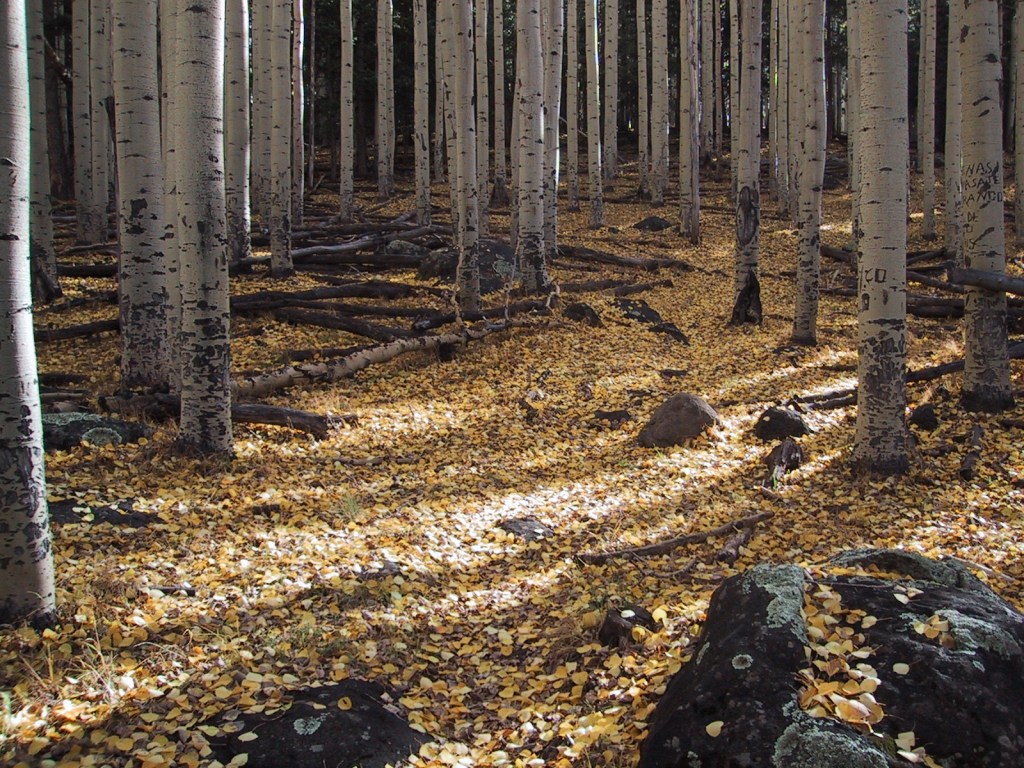
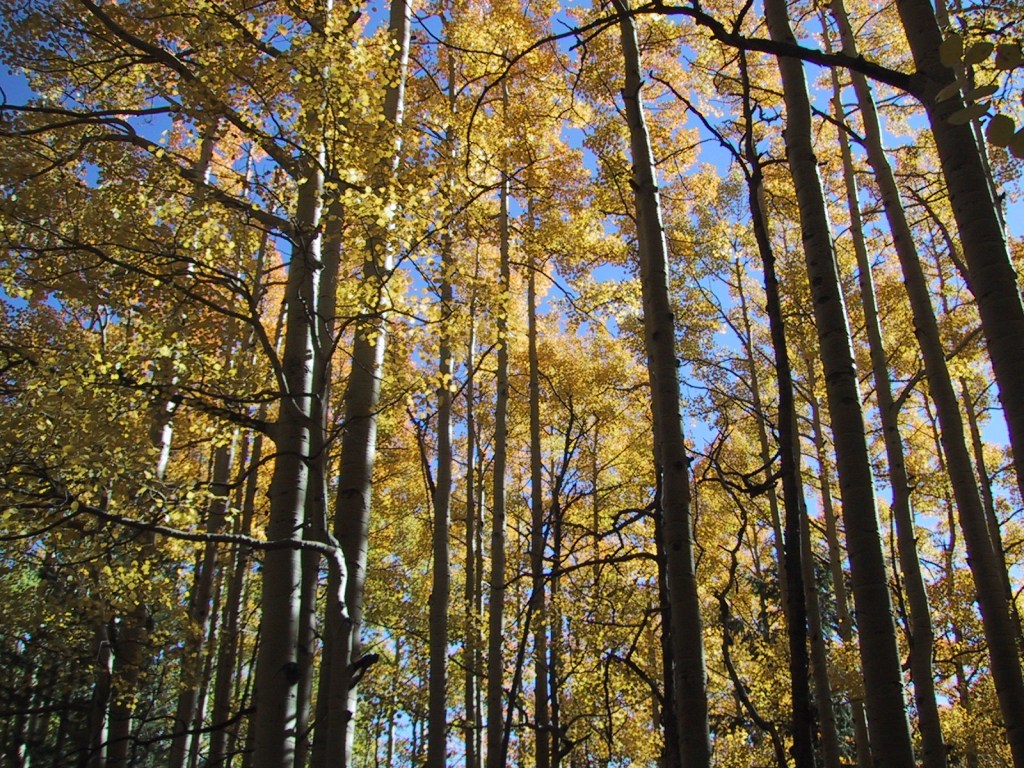
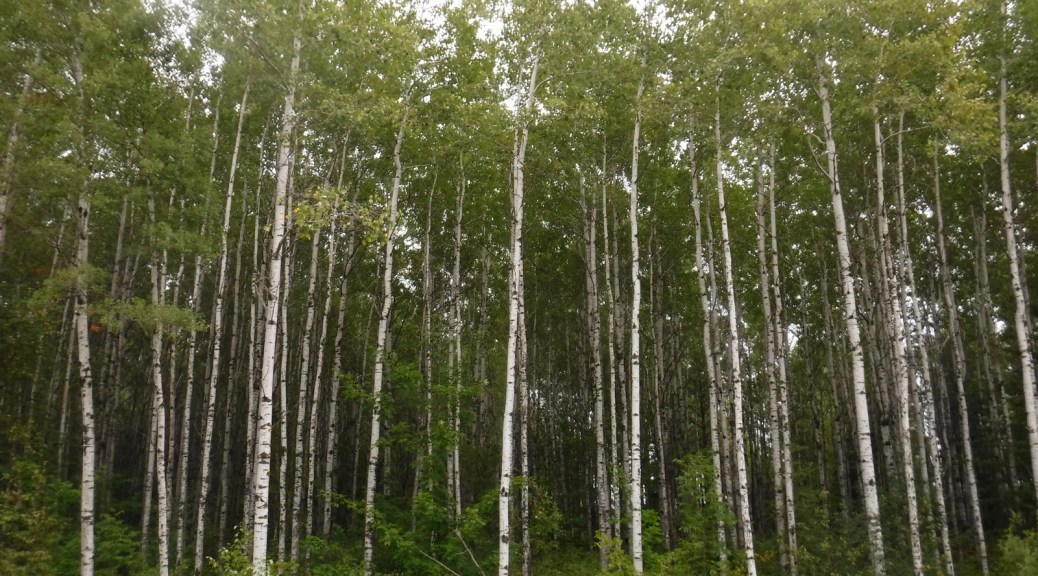
| Transcontinental in distribution, quaking aspen is named for the way the leaves flutter in the slightest breeze as they dangle on very long, flattened stems. Aspen trees are beautiful in the autumn when their leaves turn golden yellow, or, occasionally, shades of red and orange. |
| Prosopis velutina |
| velvet mesquite |
| Like honey mesquite that grows across Texas, this Arizona species is utilized by bees to produce a fragrant honey. Its large taproot allows it to survive in the Sonoran Desert where other trees cannot, which made its eight-inch-long seedpods an important food source for indigenous people. |
| Prunus emarginata |
| bitter cherry |
| As its name suggests, humans do not eat the fruit of this shrub, though many songbirds and mammals do. It is found in a variety of habitats along the Pacific Coast, as well as northeastern Oregon and northern Idaho. |
| Prunus serotina |
| black cherry |
| Widespread in the eastern half of the United States, and found as far west as Arizona, this species famous for its veneer and furniture wood may grow best on the Allegheny Plateau. |
| Prunus virginiana |
| choke cherry |
| Distributed from California to Newfoundland, this shrub produces small, blackish cherries that are very astringent, but can be made into preserves. |
| Quercus alba |
| white oak |
| White oak is a dominant tree in mixed hardwood forests throughout the eastern U.S., reaching a maximum size of 150 feet tall and nine feet in diameter. It is an important commercial lumber species, specifically used to make watertight casks for aging whiskey and wine. |
| Quercus arizonica |
| Arizona white oak |
| One of several oak species native to eastern Arizona (many of which hybridize), this evergreen oak can reach up to 65 feet in height in moist soils. Its one-inch acorns are an important food source for wildlife. |
| Quercus falcata |
| southern red oak |
| A common upland oak species, this large tree can reach more than 100 feet tall and up to nine feet in diameter in mixed hardwood and pine stands. Its leaves grow in a wide variety of shapes, but are notable for the fuzzy pubescence on the underside that dries to a rusty brown color. |
| Quercus gambelii |
| Gambel oak |
| Named for a nineteenth-century naturalist from Philadelphia, this oak tree is prevalent in the Southwest U.S. where it can reach 70 feet in height, but is more commonly a thicket-forming shrub. The deciduous foliage is browsed by mule deer and its small acorns are an important food source for wild turkeys, quail, squirrels, and livestock. |
| Quercus garryana |
| Oregon white oak |
| Known for its spreading, round-topped crown, this medium-sized deciduous tree rarely reaches more than 50 to 70 feet tall in its dry, rocky habitat. |
| Quercus laevis |
| turkey oak |
| The only oak tree associated with longleaf pine stands on the sandy coastal plain, it rarely reaches more than 40 feet in height or one foot in diameter. Its common name refers to its leaves’ tendency to grow like a three-toed turkey foot. |
| Quercus macrocarpa |
| bur oak |
| Wyoming represents the westernmost extent of this species, notable for its acorns that are conspicuously fringed along their cap giving it the alternate common name of mossycup oak. This long-lived tree (up to 440 years) is more drought tolerant than other oaks, which is why it is has been successful growing on the prairies and Great Plains. |
| Quercus montana |
| rock chestnut oak |
| This represents the westernmost extent of this oak tree found on dry, rocky ridges throughout the Appalachian Mountains. Its deciduous leaves have crenate margins, unlike the serrate and bristle-tipped leaves of American chestnut. |
| Quercus nigra |
| water oak |
| As its name suggests, water oak prefers to grow in bottomland forests where its oblong leaves make it easy to distinguish from the other oak species it grows beside throughout the southeastern U.S. |
| Quercus rubra |
| northern red oak |
| One of the most widespread and important commercial species in the eastern U.S., this tree can reach 140 feet in height and eight feet in diameter. |
| Quercus velutina |
| black oak |
| An eastern oak found from sea level to 5,000 feet in elevation, where it can tolerate poorer soils with its deep taproot. It is somewhat fast growing for an oak tree, rarely surviving more than 200 years. |
| Quercus virginiana |
| live oak |
| The long, curved branches of live oak trees were once important to the shipbuilding industry, but now they are more appreciated for their picturesque beauty when draped with Spanish moss. This short, evergreen oak is found growing in sandy soils from the coast of Virginia to Texas. |
| Quercus wislizeni |
| interior live oak |
| A prominent species in the dry foothills of the Sierra Nevada and inner Coast Ranges, this slow-growing, evergreen oak can reach seven feet in diameter. |
| Rhododendron maximum |
| great rhododendron |
| The largest rhododendron of North America, it is also called rosebay or great-laurel (not to be confused with mountain-laurel). This evergreen shrub’s foliage and bark are poisonous, and be aware that smoke from its burning wood is also toxic to humans. |
| Rhododendron macrophyllum |
| Pacific rhododendron |
| An understory species of temperate rainforests and coast redwood forests, this evergreen shrub can form dense thickets up to 25 feet in height. Its large, pink flower clusters bloom in spring. |
| Rhododendron periclymenoides |
| wild azalea |
| Rhododendrons with deciduous leaves are called azaleas, and this species blooms its pinkish flowers before its leaves start growing in the spring. |
| Robinia neomexicana |
| New Mexico locust |
| This spiny tree with showy clusters of pink pea flowers can reach 25 feet in height. Like other members of the Legume Family, it grows pinnately compound leaves, pea pods up to four inches in length, and root nodules that assist bacteria in nitrogen fixation. |
| Robinia pseudoacacia |
| black locust |
| This spiny-limbed legume tree is native to the east-central U.S., but after being introduced to Germany in 1601 is now an invasive throughout Europe. This fast-growing root-sprouter rarely reaches more than 60 feet in height, either forming a spreading thicket or a single, straight trunk. |
| Salix bebbiana |
| Bebb willow |
| Rarely reaching more than 25 feet in height, this multi-stemmed shrub is named for Michael Shuck Bebb, an American specialist in willows from the 1800s. It is one of several willows that form “diamond willow” patterns caused by fungi that are commonly used for walking sticks and railings. |
| Salix interior |
| sandbar willow |
| Also called narrowleaf or coyote willow, this shrub is found from Alaska to the Great Lakes, and is a common riparian species in the Great Plains and Southwest where it can grow at elevations up to 8,000 feet. This drought tolerant willow is commonly planted to prevent stream bank erosion. |
| Salix lucida |
| shining willow |
| This species grows along riverbanks throughout western North America, including the Pacific Northwest where abundant rainfall allows it to reach up to 60 feet in height and three feet in diameter. Like most of the 30 species of tree-sized American willows, it has lance-shaped deciduous leaves and its young twigs are reddish in color. |
| Salix scouleriana |
| Scouler’s willow |
| Named for a Scottish naturalist of the 1800s, Scouler willow has a range extending from the Rocky Mountains all the way up to Alaska. An important browse species for wildlife, it can grow up to 10,000 feet in elevation. |
| Sambucus canadensis |
| American elder |
| A large shrub of the eastern U.S., this root sprouter produces elderberries used to make jelly, pies, and wine. The evergreen variety that grows in Florida blooms throughout the year. |
| Sambucus nigra |
| black elderberry |
| Planted ornamentally for its white flower clusters and edible bluish fruit, this shrub is found throughout western North America. California Indians made flutes from cut twigs by removing the pith. |
| Sassafras albidum |
| sassafras |
| Sassafras is an understory tree distinguished by its deeply-lobed leaves that turn orange to red in the fall and are used as thickening agent in Creole food. |
| Sorbus scopulina |
| Greene’s mountain-ash |
| This thicket-forming shrub is found throughout the Rocky Mountains and north into Alaska. Its European relatives are called “rowan-trees” in reference to their clusters of bright red berries. |
| Umbellularia californica |
| California-laurel |
| The streaky wood of this shade tolerant evergreen tree is often marketed as Oregon-myrtle. Found in the Coast Range and Sierra Nevada foothills, its foliage and twigs have a pungent camphor-like odor when crushed. |






































 Raven About The Parks