Tag Archives: hiking

Wilson’s Creek National Battlefield

Overview

Early in the Civil War control of the state of Missouri hung in the balance.  Union and Confederate forces gathered near Springfield and both organized surprise attacks for the morning of August 10, 1861.  Rain overnight caused Confederate General Sterling Price to cancel his plan, but Union General Nathaniel Lyon went through with his in the face of overwhelming odds.  The strategy worked briefly but cost Lyon his life.  Even though the Union army retreated that day, seven months later they prevailed during the Battle of Pea Ridge in northern Arkansas, successfully keeping Missouri in the Union. 

Highlights

Museum, film, driving tour, Ray House, cannons

Must-Do Activity

Missouri stayed in the Union throughout the war despite the $10-million in property damage caused by guerrilla fighters, making it the third most fought-over state.  Start your visit by watching a short film, then peruse the excellent museum before taking the five-mile driving route that provides an overview of the battle at eight interpretive stops.  The paved road is heavily used by locals for jogging and biking, so drive carefully.

Best Trail

A portion of the infamous Trail of Tears crosses through this park following the route of the telegraph wire south towards Elkhorn Tavern in Arkansas’ Pea Ridge National Military Park.  There are also hiking and equestrian trails through the park’s 1,926 acres.

Instagram-worthy Photo

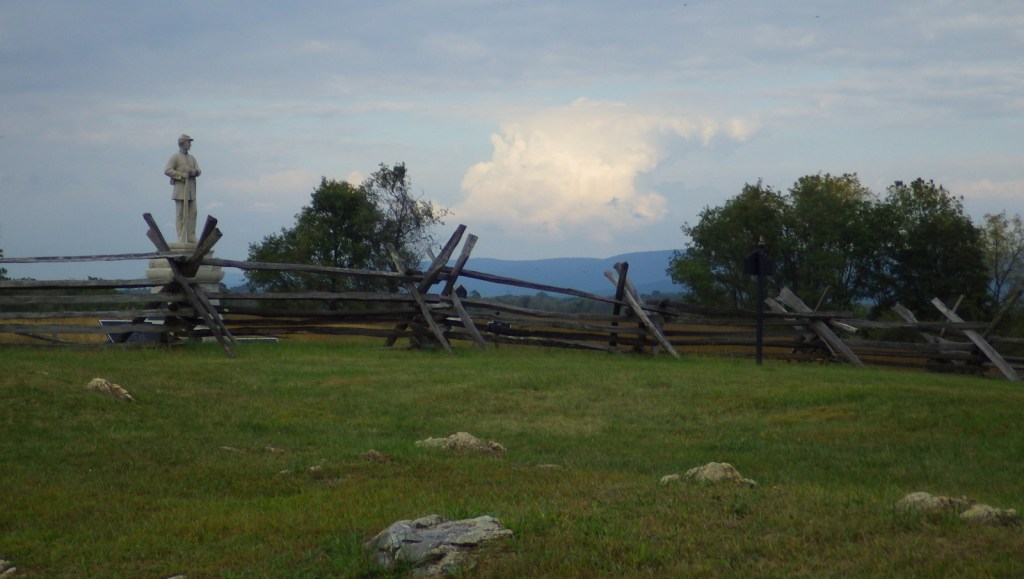
Rebuilt at its original location, there is a reconstruction of the Ray House, which was used as a Confederate hospital.  Nearby split-rail fences add to the bucolic ambiance.

Peak Season

Summer

Hours

https://www.nps.gov/wicr/planyourvisit/hours.htm

Fees

$20 per vehicle or America the Beautiful pass

Road Conditions

Paved, but gate closes tour road exactly at 5 p.m.

Camping

Within five miles there is a private campground near Interstate-44, plus a variety of state parks within an hour’s drive.

Related Sites

Pea Ridge National Military Park (Arkansas)

Ulysses S. Grant National Historic Site (Missouri)

George Washington Carver National Monument (Missouri)

Explore More – How many Union soldiers were buried in the sinkhole near Totten’s Battery on Bloody Hill (then in 1867 were moved to a National Cemetery in Springfield)?

Manassas National Battlefield Park

Overview

The first major confrontation of the Civil War occurred on July 21, 1861 at Bull Run Creek near Manassas, Virginia.  Due to its proximity to Washington, D.C., civilians drove their carriages down to picnic and watch the spectacle of 34,000 men trying to kill each other.  It was on Henry Hill that Confederate General Thomas “Stonewall” Jackson earned his nickname when he refused to flee in the face of a Union advance.  In the north it was known as the Battle of Bull Run and run they did when Confederate reinforcements arrived to take the field.  The next year there was another fight here, which the southern army also won on its march north before being turned back at Antietam.

Highlights

Museum, film, “Stonewall” Jackson statue, cannons, Stone House

Must-Do Activity

As with other battlefield sites, Manassas National Battlefield Park has a National Park Service (NPS) visitor center with a movie, maps, driving tour, and hiking trails.  Start in the museum, as the fiber-optic maps with recorded narration are one of the best ways to understand the events of each battle.  The first of the two Battles of Bull Run took place around the visitor center on Henry Hill.  The second battle was spread across the landscape and is the focus of the 18-mile driving tour.

Best Trail

Cannons line the one-mile hiking trail on Henry Hill, where one of the first civilian casualties of the Civil War occurred in a house that was rebuilt in 1870 and still stands.

Instagram-worthy Photo

General Thomas “Stonewall” Jackson earned his nickname at the first battle at Manassas.  We understand that Confederate statues are justifiably controversial, but this is one place that they actually belong.

Peak Season

Summer

Hours

https://www.nps.gov/mana/planyourvisit/hours.htm

Fees

None

Road Conditions

Exercise caution as the 18-mile driving tour goes through residential areas with a couple unpaved roads.

Camping

There is not an NPS campground, but nearby Bull Run Regional Park has 150 sites with RV hookups.

Related Sites

Antietam National Battlefield (Maryland)

Fredericksbug and Spotsylvania County Battlefields Memorial National Military Park (Virginia)

Cedar Creek and Belle Grove National Historical Park (Virginia)

Explore More – What state has a memorial to its troops on the spot where 123 men were killed in five minutes on August 30, 1862 (which was the greatest loss of life in any single infantry regiment in a Civil War battle)?

Harpers Ferry National Historical Park

Overview

Robert Harper started ferrying folks across the Potomac River at this site in 1747.  It had a strategic location at the confluence of the Shenandoah and Potomac Rivers where the point of what is now the state of West Virginia meets the border of Maryland and Virginia.  Harpers Ferry is most famous for the 1859 raid led by abolitionist John Brown of Kansas in attempt to seize the federal armory to incite a slave rebellion.  His trial and execution for treason helped foment the Civil War, during which conflict the town changed hands between the two sides an astounding eight times!

Highlights

Historic buildings, museums, Jefferson Rock, Appalachian National Scenic Trail

Must-Do Activity

A portion of the town today is run as a series of museums by the National Park Service (NPS), though other parts remain open for business as restaurants, shops, and inns.  Parking is limited in town, so the NPS runs a shuttle (free with parking fee) two miles from their visitor center.

Best Trail

You can hike into town on the 2,185-mile Appalachian Trail that cuts right through the buildings and over the footbridge across the Potomac River.

Instagram-worthy Photo

Jefferson Rock is located just up the hill from town, named for Thomas Jefferson who visited in 1783.

Peak Season

Summer

Hours

https://www.nps.gov/hafe/planyourvisit/hours.htm

Fees

$20 to park at NPS visitor center or free with America the Beautiful pass

Road Conditions

There is limited parking in town so it is easier to take a shuttle from the NPS visitor center.

Camping

There are multiple private campgrounds in the area, as well as Maryland’s Gambrill State Park.

Related Sites

Shenandoah National Park (Virginia)

Fort Scott National Historic Site (Kansas)

New River Gorge National Park and Preserve (West Virginia)

Explore More – Which famous member of the Corps of Discovery visited the national armory in Harpers Ferry in 1803 before heading to the Pacific Ocean?

We are a participant in the Amazon Services LLC Associates Program, an affiliate advertising program designed to provide a means for us to earn fees by linking to Amazon.com and affiliated sites.

Fort Scott National Historic Site

Overview

Near the border of Kansas and Missouri sits Fort Scott, which like Fort Smith (to the south) was an important frontier military post during the Mexican-American War and skirmishes with Plains Indians.  Several buildings were sold off in 1853, two becoming hotels that catered to pro-slavery and anti-slavery clients when this region was dubbed “Bleeding Kansas.”  During the Civil War, the town became a strategic location utilized to quell uprisings and maintain supply lines.  Abandoned by the military after the war, soldiers returned when settlers opposed railroad construction in the 1870s.  This 17-acre historic site was authorized in 1965 but not established as a part of the National Park Service (NPS) system until 1979.

Highlights

Museum, film, Officers’ Quarters, restored tallgrass prairie

Must-Do Activity

The NPS visitor center is located in the old hospital at Fort Scott National Historic Site.  There are 11 original structures here and you can walk through the well-maintained Officers’ Quarters, bake house, and carriage house.  Posted here 1842-1853 were flamboyantly-uniformed dragoons, who were elite fighters on foot or horseback.  Dragoons knew they were only as effective as their horses, so they took good care of them.  In fact, the horse stables remain the largest building at Fort Scott on the edge of the beautifully-landscaped parade ground.

Best Trail

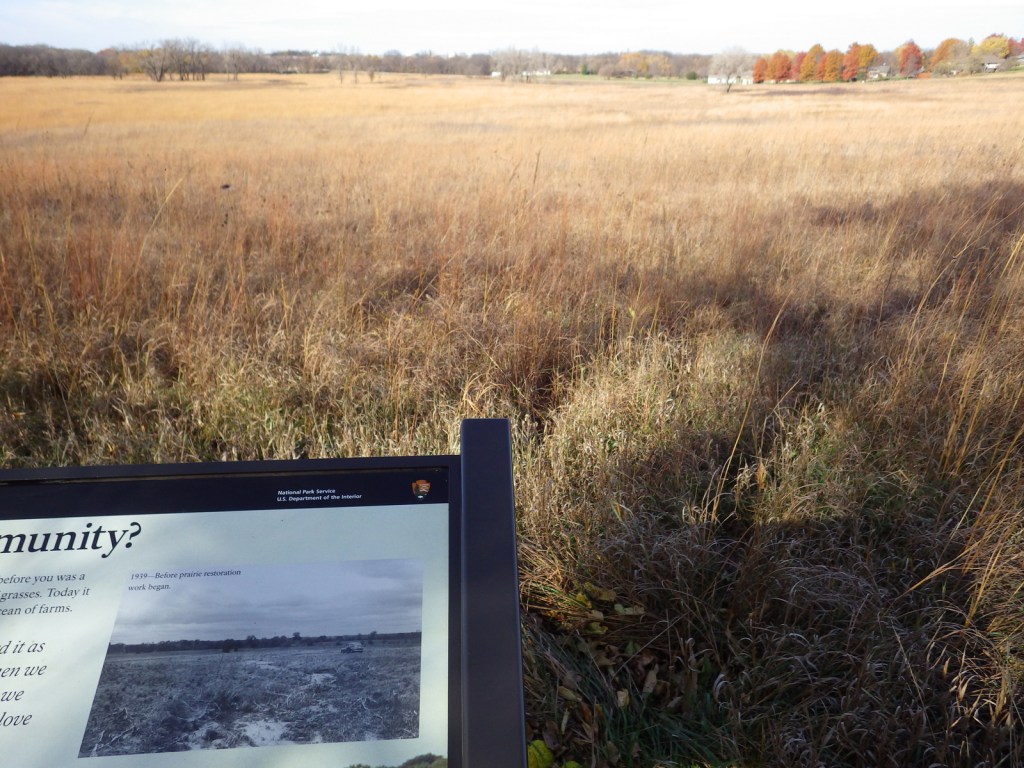
The site may be small and surrounded by roads and development, but it does maintain five acres of restored tallgrass prairie (utilizing controlled burning) with a short nature trail.

Instagram-worthy Photo

The site is especially pretty in November, when the maple leaves turn red and orange in sharp contrast to the white buildings.

Peak Season

Summer

Hours

https://www.nps.gov/fosc/planyourvisit/hours.htm

Fees

None

Road Conditions

All roads paved

Camping

There is a city-operated campground about two miles from the fort, as well as several state parks in the region.

Related Sites

Fort Smith National Historic Site (Arkansas-Oklahoma)

Fort Larned National Historic Site (Kansas)

Tallgrass Prairie National Preserve (Kansas)

Explore More – What are the three architectural styles reflected in the buildings are Fort Scott?

Yosemite National Park

Overview

Given its 4-million annual visitors, it can be hard to practice social distancing at Yosemite National Park.  In the summer, it can even be difficult to find parking in bustling Yosemite Valley.  The legendary valley is home to El Capitan and Half Dome, rock formations known around the world, as well as countless waterfalls.  For more ideas on what to do during your visit and how to avoid the crowds, check out our National Park guidebook, A Park to Yourself: Finding Adventure in America’s National Parks (available on Amazon).

Highlights

Yosemite Valley, Glacier Point, Tuolumne Meadows, Mariposa Grove

Must-Do Activity

When entering Yosemite Valley on Highway 41 from the south, your first sight of the valley is stunning upon emerging from a long tunnel.  You simply have to stop at the iconic Tunnel View parking area.  Although the forest here is denser than in the past, the scene has not changed much since President Lincoln signed the bill to preserve this area in 1864.  While the Yosemite Valley can get incredibly busy during peak tourist season, hike a mile up a trail and you might find a solitary place to enjoy one of the numerous waterfalls.

Best Trail

Formerly a paved tram route, the trail through the Mariposa Grove of giant sequoia trees is a major highlight outside Yosemite Valley.  We especially enjoyed snowshoeing there in the winter.
Instagram-worthy Photo

From May to November, you can drive up to Glacier Point for great views into Yosemite Valley from the cliffs above.  We chose this overlook for our original logo of Yosemite National Park (see below).

Peak Season

Summer

Hours

https://www.nps.gov/yose/planyourvisit/hours.htm

Fees

$35 per vehicle or America the Beautiful pass

Road Conditions

All roads are paved, even the one that goes over 9,945-foot high Tioga Pass, which crosses the Sierra Nevada and is closed in the winter (as is Glacier Point Road, though it remains open to cross-country skiers).

Camping

There are multiple campgrounds within the park and some take reservations, but there are no RV hookups except outside the park.

Related Sites

Sequoia National Park (California)

Devils Postpile National Monument (California)

Whiskeytown National Recreation Area (California)

This design we created to celebrate Yosemite National Park is available on a variety of products at Cafe Press and Amazon.

Explore More – John Muir wrote extensively about the Yosemite Valley and Sierra Nevada, but many of his readers do not know he was an immigrant to America; in what country was he born?

We are a participant in the Amazon Services LLC Associates Program, an affiliate advertising program designed to provide a means for us to earn fees by linking to Amazon.com and affiliated sites.