Tag Archives: fishing

Bridger National Forest

Bridger National Forest

Wyoming

Managed by U.S. Forest Service, Intermountain Region

1,744,705 acres (1,736,115 federal/ 8,590 other)

Website: https://www.fs.usda.gov/btnf

Overview

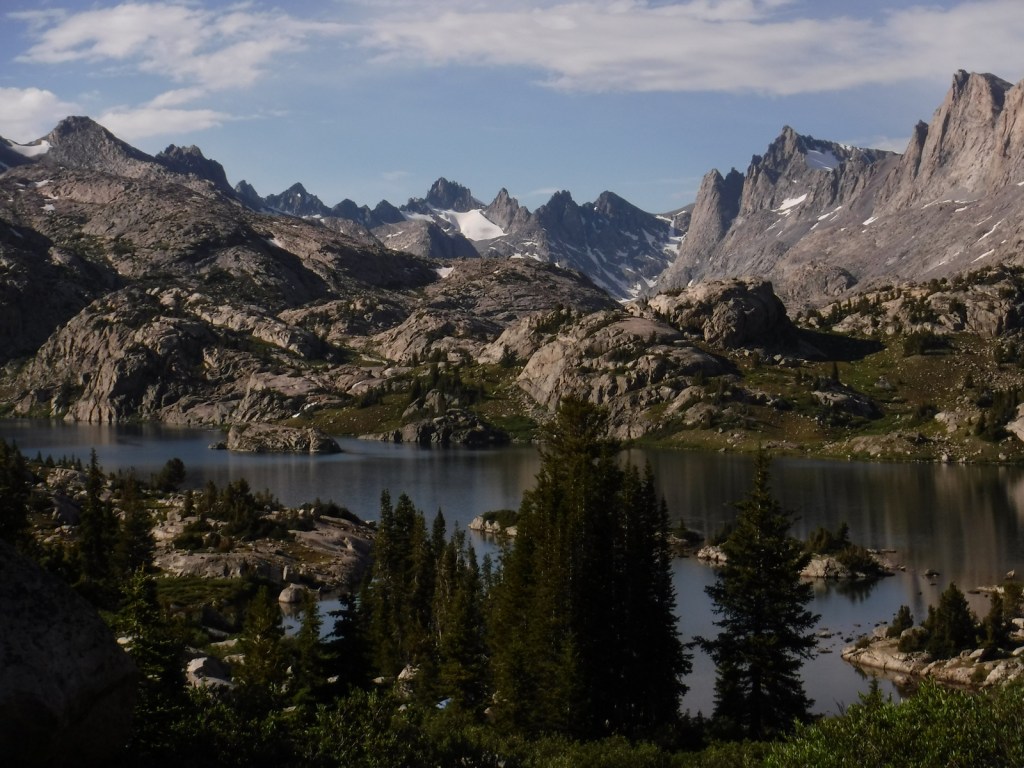
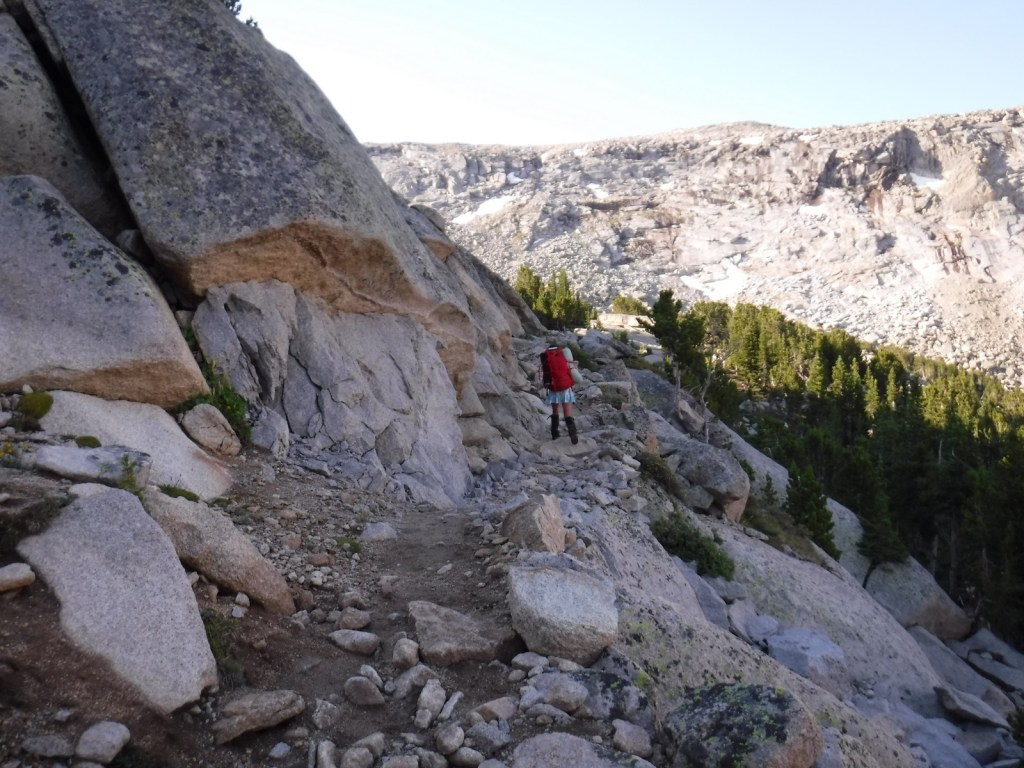
The peaks of the Wind River Range not only represent the Continental Divide, but also a division between Bridger-Teton National Forest and Shoshone National Forest which happen to be in two different U.S. Forest Service Regions.  These mountains are our favorite place to go backpacking in the entire world with jagged peaks that rival the Teton Range for picturesqueness and a fraction of the visitors (except at overcrowded Titcomb Basin and the Cirque of the Towers).  Read more about our 120-mile trip on the Highline Trail in our newspaper article.

Know someone who loves the National Forests? Gift them our travel guidebook Out in the Woods so they can learn more about this and the 154 other National Forests.

Highlights

Fremont Lake, Kendall Warm Springs, Green River Lakes, Wind River Range, Titcomb Basin, Periodic Spring geyser, Lake Alice, Wyoming Range National Recreation Trail, Highline Trail, Continental Divide National Scenic Trail

Must-Do Activity

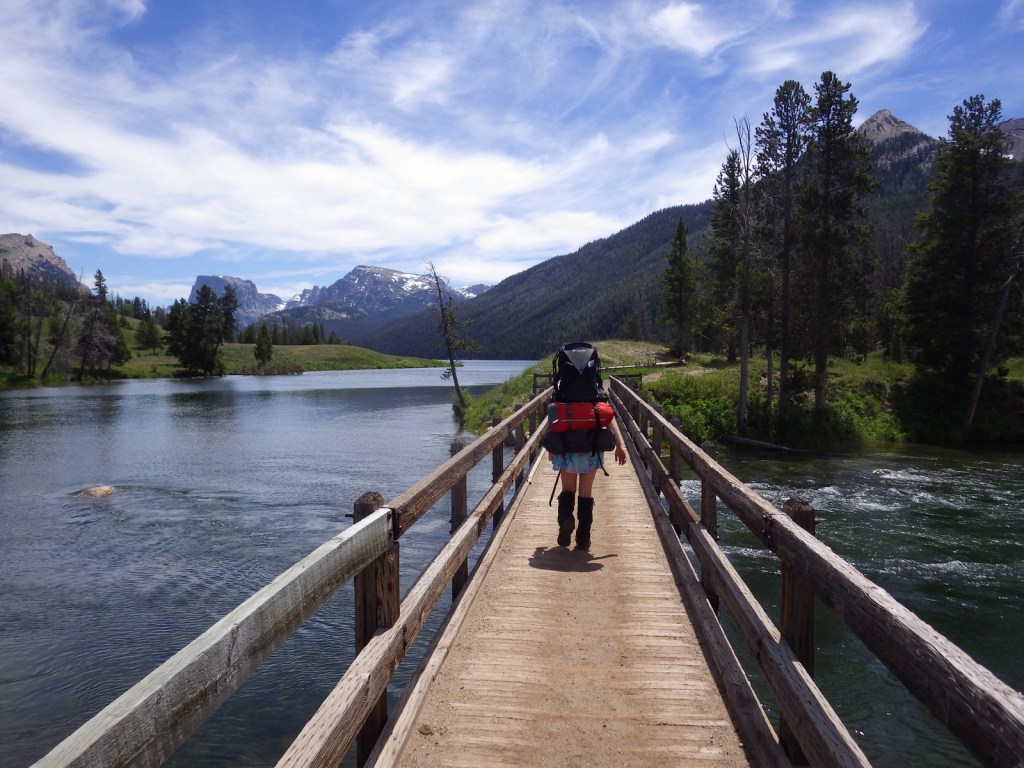
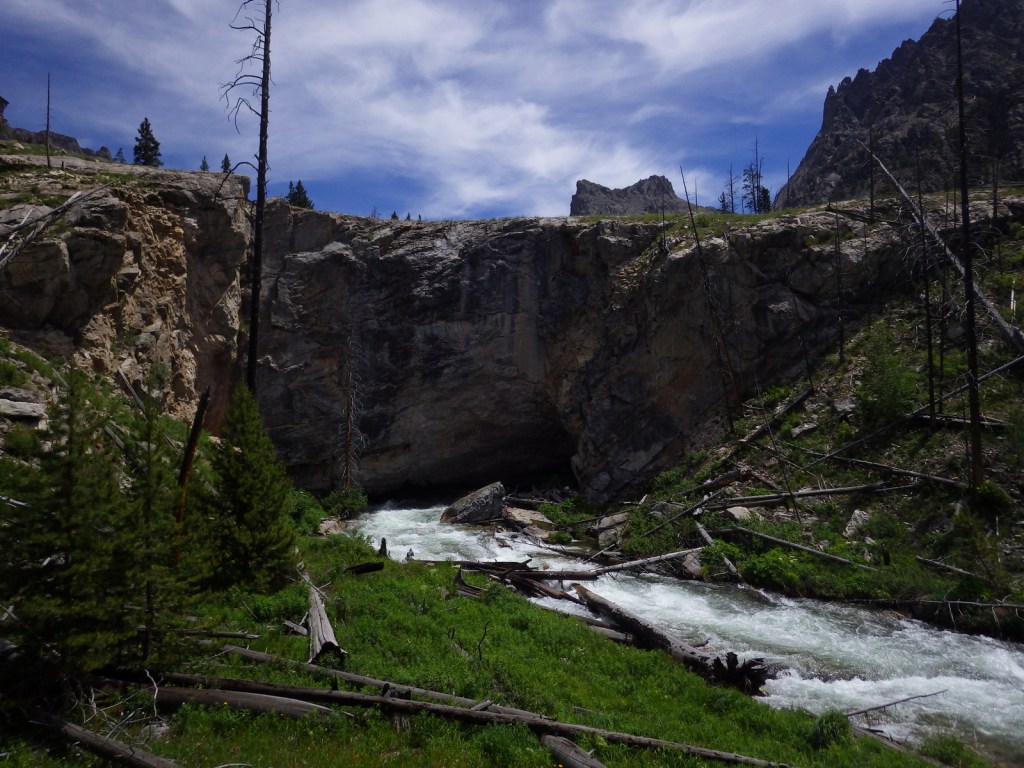
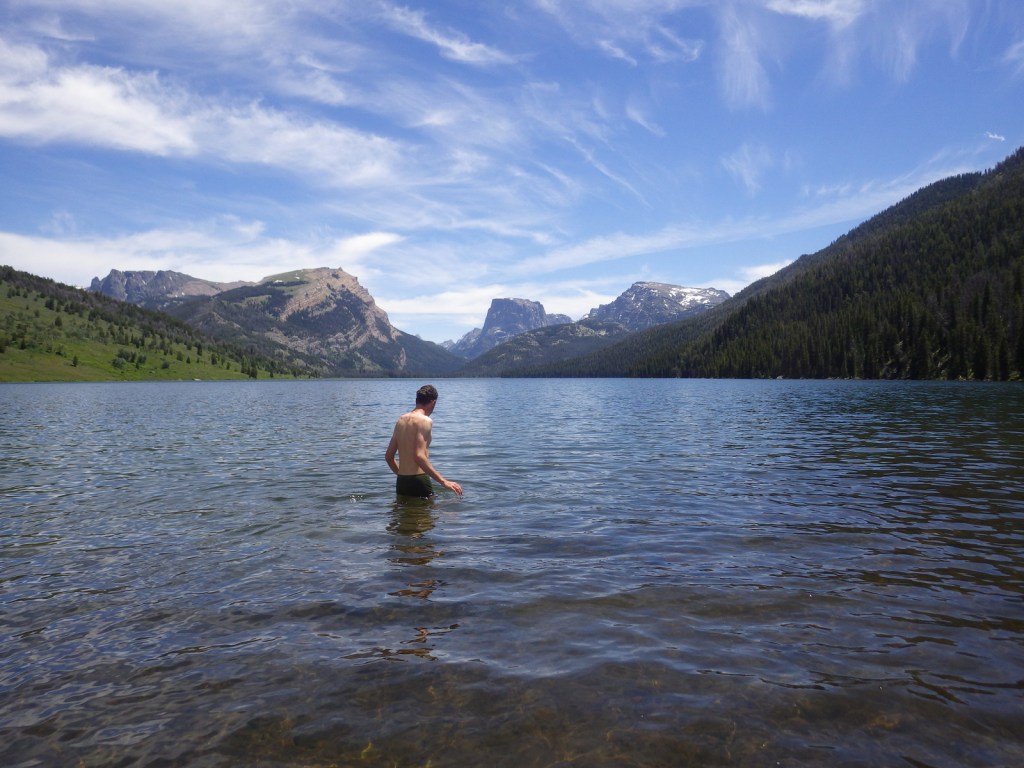
From Pinedale, Wyoming, a 50-mile partially-paved drive leads to the campground at Green River Lakes, which opens up into a beautiful valley that frames photogenic Squaretop Mountain.  Hiking around the northerly of the two lakes makes a great couple-hour jaunt, but if you are looking for a unique destination add the two-mile spur to fascinating Clear Creek Natural Bridge.  Here the water pours through and continues to widen a four-foot tall gap in the limestone.  Starting from the campground, the Highline Trail is a 72-mile one-way trek popular with backpackers.  The first ten miles are very flat following the river to Beaver Meadows, which offers 360° mountain views. 

Best Trail

Further south in the Wind River Range than stunning Squaretop Mountain, it is only eight miles from Big Sandy Trailhead to the Cirque of the Towers, which is famous among rock climbers and actually in neighboring Shoshone National Forest.  Even though there were a lot of campers back there, we found a secluded spot between Big Sandy Lake and Clear Lake in Bridger National Forest.  When we finally made it over 10,800-foot Jackass Pass to the cirque, it was full of fog and hail was dropping from the sky.  Although we have been back on a sunny day, that was the more memorable experience, which is why we selected a photo from that morning for the cover of our new guidebook Out in the Woods (see bottom of this post).

Watchable Wildlife

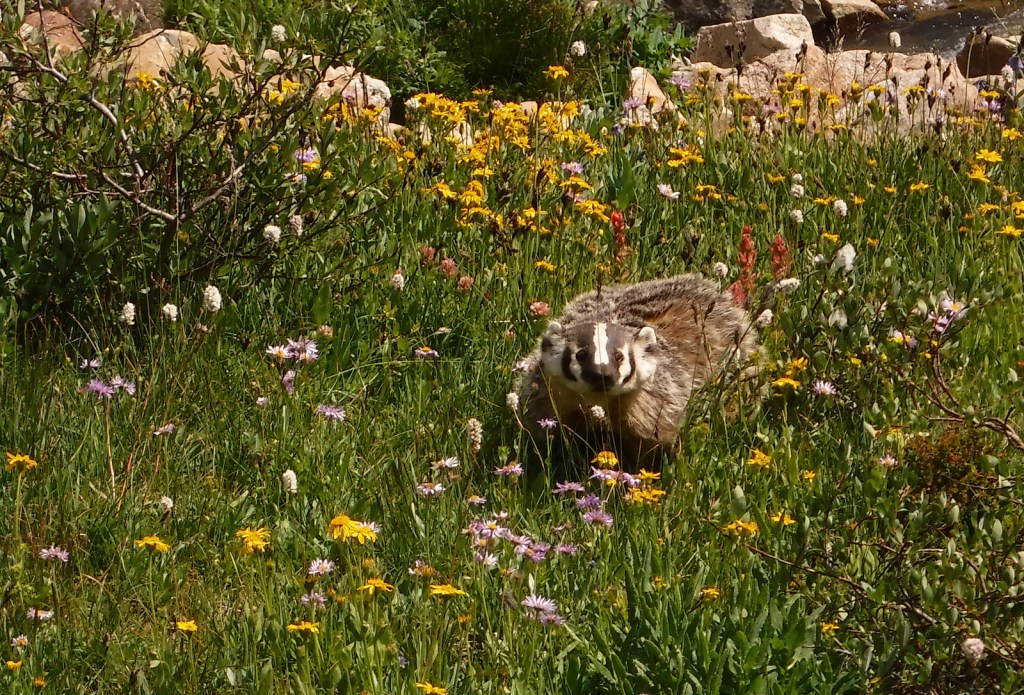
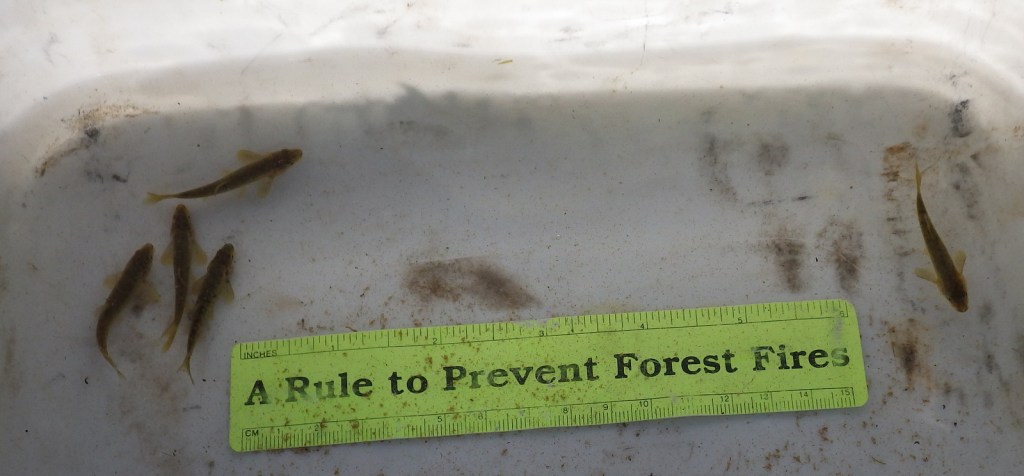
On the way to Green River Lakes outside Pinedale, Wyoming, make time for a quick stop at Kendall Warm Springs where the water is a constant 85°F but is protected from human bathing.  The main attraction is a fish less than 2-inches long, the endangered Kendall Warm Springs dace.  During spawning (which occurs frequently throughout the year due to the warm water), the males turn purple and the females light green.  U.S. Forest Service biologists keep careful track of the population and if you’re lucky, you’ll meet them when they are out there conducting a survey.  On the trails and roads, keep an eye out for moose, elk, mule deer, pronghorns, both black and grizzly bears, and badgers (even in the middle of the day).  Trout fishing is also a major attraction to this area’s many lakes and streams.

Instagram-worthy Photo

This incredible view of Squaretop Mountain and Green River Lakes is at the end of a long drive down a washboard dirt road; maybe that is why it is on the Wyoming license plate.

Peak Season

Summer

Fees

None

Road Conditions

The long dirt roads back to the trailheads at Big Sandy and Green River Lakes are well maintained, and we have never had a problem accessing them in a passenger vehicle.  Limited parking when you get there is the bigger problem.

Camping

The campground at Green River Lakes has an incredible view of Squaretop Mountain (which is on the 2010s Wyoming license plate).  There are more dispersed campsites on the road to Big Sandy Trailhead than Green River Lakes.

Wilderness Areas

Bridger Wilderness

Related Sites

Shoshone National Forest (Wyoming)

Fossil Butte National Monument (Wyoming)

Yellowstone National Park (Wyoming-Montana-Idaho)

Nearest National Park

Grand Teton (Wyoming)

Conifer Tree Species

Engelmann spruce, subalpine fir, Douglas-fir, lodgepole pine, ponderosa pine, limber pine, whitebark pine

Flowering Tree Species

quaking aspen, Rocky Mountain maple, bog birch, Booth’s willow, red osier dogwood, sagebrush

Explore More – What is the entire length of the stream that is the only place where the endangered Kendall Warm Springs dace lives (before it pours into the chilly Green River, home to a genetically distinct dace population)?

Know someone who loves the National Forests? Gift them our travel guidebook Out in the Woods so they can learn more about this and the 154 other National Forests.

Black Hills National Forest

Black Hills National Forest

South Dakota, Wyoming

Managed by U.S. Forest Service, Rocky Mountain Region
1,534,471 acres (1,253,308 federal/ 281,163 other)

Website: https://www.fs.usda.gov/blackhills

Overview

Straddling the Wyoming-South Dakota border is a region known as the Black Hills, where a gold rush took place in the mid-1870s.  The area was a traditional hunting ground for American Indians and site of the sacred Bear Butte, which led to numerous conflicts.  The hills may be called black because of the ponderosa pine forests that dominate the rocky landscape that rises above the surrounding prairie.  Explore some of its 353 miles of trails on foot, drive the miles of back roads, and be sure to keep an eye out for wildlife. 

Highlights

Peter Norbeck Scenic Byway, Black Elk Peak, Pactola Reservoir, Spearfish Canyon Scenic Byway, Bridal Veil Falls, Centennial Trail, Old Baldy Trail, Flume National Recreation Trail, Buzzards Roost Trail

Must-Do Activity

In Wyoming, scenic Bear Lodge Road cuts through the forest between Sundance and Alva, east of Devils Tower National Monument.  In South Dakota, we love Black Hills National Forest because it offers tranquil dispersed camping not far from the hubbub that surrounds Custer State Park, Mount Rushmore, Crazy Horse Memorial, Roughlock Falls, and Deadwood.  To escape the crowds, hike a portion of the 111-mile Centennial Trail or 108-mile George S. Mickelson Rail Trail (which is free to hike or bike, but requires a parking fee at its official trailheads). 

Best Trail

Rising in the center of the Black Elk Wilderness is 7,242-foot tall Black Elk Peak (formerly Harney Peak), the highest spot in South Dakota and the highest point in the U.S. east of the Rocky Mountains.  Trails to the summit start from near Mount Rushmore National Memorial (4.7 miles one-way) and Sylvan Lake in Custer State Park (parking fee, 3.8 miles one-way).

Watchable Wildlife

Elk can be found spread throughout Black Hills National Forest, but these nocturnal ungulates are elusive.  Mule deer, white-tailed deer, bighorn sheep, pronghorns, prairie dogs, and turkeys are more commonly sighted.  While driving past Mount Rushmore National Memorial keep an eye out for mountain goats that were introduced to this area.  Both Wind Cave National Park (free) and Custer State Park (entrance fee) have herds of bison, but fences keep them out of the National Forest.

Instagram-worthy Photo

West of Rapid City, South Dakota on Highway 44 is the trailhead for the Buzzards Roost trail system.  Loops of different lengths connect to the scenic overlook at Buzzards Roost Lookout, the shortest option being 1.1 miles one-way.

Peak Season

Summer, plus Buffalo Roundup weekend (late September)

Fees

None

Road Conditions

Iron Mountain Road (Highway 16A) is part of the Peter Norbeck National Scenic Byway where you will discover the meaning of the term “pigtail bridges.”  Although it cuts through Custer State Park, you do not have to pay the entrance fee if you are driving straight through.  We have found the dirt roads in Black Hills National Forest to be well maintained throughout the year.

Camping

The U.S. Forest Service operates 32 campgrounds (no RV hookups) with nominal fees, especially compared to Custer State Park.  There is also a campground at Wind Cave National Park, but we prefer dispersed camping along Forest Service roads although you have to be careful of private property boundaries.

Wilderness Areas

Black Elk Wilderness

Related Sites

Mount Rushmore National Memorial (South Dakota)

Jewel Cave National Monument (South Dakota)

Badlands National Park (South Dakota)

Nearest National Park

Wind Cave (South Dakota)

Conifer Tree Species

ponderosa pine, lodgepole pine, limber pine, white spruce, Rocky Mountain juniper

Flowering Tree Species

quaking aspen, paper birch, boxelder, green ash, American elm, eastern cottonwood, red osier dogwood, bur oak, hophornbeam

Explore More – When was the stone fire lookout tower atop Black Elk Peak built by the Civilian Conservation Corps?

Bitterroot National Forest

Bitterroot National Forest

Montana, Idaho

Managed by U.S. Forest Service, Northern Region

1,655,753 acres (1,587,070 federal/ 68,683 other)

Website: https://www.fs.usda.gov/bitterroot

Overview

First established as the 4.1-million-acre Bitter Root Forest Reserve in 1898, the smaller Bitterroot National Forest today flanks both sides of Highway 93 and the Bitterroot River Valley.  This stretch of the Idaho-Montana border is rough, mountainous country and about half this National Forest is designated Wilderness (see below).  The Continental Divide National Scenic Trail follows a portion of the boundary between Bitterroot National Forest and Beaverhead National Forest, heading northeast from Lost Trail Pass where Highway 93 crosses into Idaho.

Highlights

Nez Perce Auto Trail, Lost Trail Pass, Lake Como, Magruder Massacre Site, Trapper Peak, Skalkaho Falls, Blodgett Canyon, Boulder Creek Falls, Palisade Mountain National Recreation Trail, Continental Divide National Scenic Trail

Must-Do Activity

There are trails going west up seemingly every canyon in the Bitterroot Mountains, while Lost Horse Creek has a road that follows it nearly to the Idaho border.  Wildfire smoke obscured the views during our visit in July 2021, but the glacier-carved mountain scenery was still impressive on Blodgett Creek Trail.  We imagine on a clear day the views would rival California’s Yosemite Valley.  There are many more roads (and some trails) to explore in the Sapphire Mountains east of Highway 93.

Best Trail

Blodgett Creek Trail leads 12.6 miles one-way to Blodgett Lake, but you do not have to go that far to appreciate its incredible beauty.  The trail climbs steadily as it follows the creek, passing the memorial to smokejumper Don Mackey on its way to two waterfalls: the first at 4.5 miles hidden in a slot canyon and the second a wide cascade only a half-mile further (for a cumulative elevation gain of 1,637 feet).  Leaving from a nearby trailhead, Blodgett Overlook Trail is a steep 2.8 miles out-and-back.  A similar trek with outstanding views, Bear Creek Overlook Trail climbs about 1,000 feet as it switchbacks 2.6 miles one-way.

Watchable Wildlife

On our backpacking trip into Blodgett Canyon we saw bats, many trout and a beaver dam in the creek, plus a variety of bird life, including a dipper (or ouzel) and a hairy woodpecker.  We also heard hermit thrushes and pikas calling in the rocky scree slopes.  The Bitterroot and Sapphire Mountains are home to elk, mule deer, white-tailed deer, bighorn sheep, mountain goats, and moose, as well as mountain lions, black bears, and grizzly bears (which were reintroduced starting in 2003).  Wildlife watchers should drive the U.S. Forest Service’s Sula Deer, Elk, and Bighorn Driving Tour.

Instagram-worthy Photo

As you hike the Blodgett Creek Trail keep an eye on the ridgeline to the south for a massive natural arch that punches a hole in the skyline.

Peak Season

Summer

Fees

None

Road Conditions

The last three miles to Blodgett Trailhead were well-groomed dirt road and the route from Hamilton, Montana had signs at every turn.

Camping

Located on a creek, Blodgett Campground (fee) seemed like a nice spot, though it was a bit noisy and smoky on a weekend in mid-July.  We also read that Deep Creek Campground is nice and is located near the ruins of a 1930s Civilian Conservation Corps camp.

Wilderness Areas

Anaconda-Pintler Wilderness (also in Beaverhead-Deerlodge National Forest)

Frank Church-River of No Return Wilderness (also in Payette, Salmon-Challis, Boise, and Nez Perce National Forests)

Selway-Bitterroot Wilderness (also in Nez Perce, Clearwater, and Lolo National Forests)

[Allan Mountain Roadless Area]

Related Sites

Beaverhead National Forest (Montana)

Big Hole National Battlefield (Montana)

Yellowstone National Park (Wyoming-Montana-Idaho)

Nearest National Park

Glacier (Montana)

Conifer Tree Species

ponderosa pine, whitebark pine, lodgepole pine, Douglas-fir, western redcedar, subalpine larch, Engelmann spruce, subalpine fir, grand fir, western yew

Flowering Tree Species

quaking aspen, black cottonwood, bog birch, Rocky Mountain maple, red alder, red-osier dogwood, sagebrush

Explore More – How tall is Trapper Peak, the highest point in Bitterroot National Forest?

Bighorn National Forest

Bighorn National Forest

Wyoming

Managed by U.S. Forest Service, Rocky Mountain Region

1,115,160 acres (1,107,571 federal/ 7,589 other)

Website: https://www.fs.usda.gov/bighorn

Overview

In northern Wyoming, the Bighorn Mountains are crisscrossed by three scenic byways: Cloud Peak Skyway, Bighorn Scenic Byway, and Medicine Wheel Passage.  Bighorn National Forest has such amazing views you can even enjoy them without stepping foot on the ground.  While you could enjoy the National Forest strictly through your windshield, you should lace up your hiking boots and explore some of the 150 miles of trails within the spectacular 189,039-acre Cloud Peak Wilderness.

Highlights

Shell Falls, Fallen City, Medicine Wheel National Historic Landmark, Bucking Mule Falls, Coney Lake, Porcupine Falls, Crazy Woman Creek, Ten Sleep Canyon, Mistymoon Trail

Must-Do Activity

Medicine Wheel National Historic Landmark is an 80-foot-diameter circle of rocks divided into 28 spokes to match the lunar cycle.  This breathtaking archaeological site lies at nearly 10,000 feet in elevation with stunning panoramas in all directions.  It is possible to drive all the way to the site with a four-wheel-drive vehicle, but most visitors park in the lot located three miles up the road that climbs steeply from the turnoff on Highway 14A.  From the parking area, it is a 1.5-mile walk down the undulating road, which can be cold and windy even in the middle of the summer.

Best Trail

Mistymoon Trail is one of the most famous backpacking areas in the state of Wyoming, a six-mile jaunt into scenic Cloud Peak Wilderness with only about 1,000 feet elevation gain to Mistymoon Lake.  Leaving from the same trailhead at West Tensleep Lake, another trail leads to Mirror Lake and Lost Twin Lakes after multiple stream crossings.

Watchable Wildlife

As you might guess from its name, the National Forest is home to bighorn sheep, although they had to be reintroduced after being eradicated by diseases and hunting.  Given its location at the edge of the Great Plains, both white-tailed deer and mule deer overlap here, usually to the detriment of less-aggressive mule deer.  The North Tongue River is one of several clear waterways that attract trout fishermen, and elk hunters crowd this area in the fall.

Instagram-worthy Photo

You will definitely want to get out of the car to see 120-foot tall Shell Falls, which is located right off Highway 14. 

Peak Season

Summer

Fees

None

Road Conditions

Snow can close Cloud Peak Skyway (Highway 16) and Bighorn Scenic Byway (Highway 14) temporarily in the winter, and Medicine Wheel Passage (Highway 14A) until late spring.  Forest Road 27 is a wide gravel road that leads seven miles north from Highway 16 to West Tensleep Lake Campground and trailhead.  Accessing the short trail to 600-foot tall Bucking Mule Falls involves driving about ten miles of dirt roads.

Camping

There are many campgrounds, including popular ones at Meadowlark Lake and West Tensleep Lake.  For a more-developed experience, try Medicine Lake Lodge or Meadowlark Lake Resort.  We have driven through this area multiple times and found a couple good dispersed campsites on dirt roads.

Wilderness Areas

Cloud Peak Wilderness

Related Sites

Bighorn Canyon National Recreation Area (Montana-Wyoming)

Little Bighorn Battlefield National Monument (Montana)

Black Hills National Forest (South Dakota-Wyoming)

Nearest National Park

Yellowstone (Wyoming-Montana-Idaho)

Conifer Tree Species

Douglas-fir, Rocky Mountain juniper, subalpine fir, Engelmann spruce, white spruce, limber pine, ponderosa pine, lodgepole pine

Flowering Tree Species

quaking aspen, Rocky Mountain maple, curlleaf mountain-mahogany, sagebrush

Explore More – How tall is Cloud Peak, namesake for the 189,039-acre Cloud Peak Wilderness?

Bienville National Forest

Bienville National Forest

Mississippi

Managed by U.S. Forest Service, Southern Region

382,821 acres (178,541 federal/ 204,280 other)

Website: https://www.fs.usda.gov/mississippi

Overview

Managed collectively with Mississippi’s five other National Forests, Bienville is centered around the town of Forest, which has numerous rooster statues.  The ranger station is located just south of Interstate 20 and has an interpretive trail that passes a pond on a half-mile loop.  Just north of the freeway, there is Harrell Prairie Hill National Natural Landmark and 189 acres of old-growth forest protected in Bienville Pines Scenic Area (which we could not locate any signs nor trailheads to access).

Highlights

Harrell Prairie Hill National Natural Landmark, Marathon Lake Recreation Area, Coursey Lookout Tower, Shongelo Lake Recreation Area, Shockaloe Horse Trail

Must-Do Activity

Marathon Lake is 50 acres in size and got its name from Marathon Lumber Company, which closed in 1929.  The lake was built in the 1950s for recreation in the former logging camp.  Bienville National Forest also has the upper courses of the Leaf and Strong Rivers and several other lakes, including five-acre Shongelo Lake (with a swimming area and hiking trail open May to September), 67-acre Beaver Lake (open year round), and 33-acre Greentree Reservoir (open year round).

Best Trail

Despite the lake being at flood levels that submerged many parts of the trail, we circumnavigated Marathon Lake in about 1.7 miles and didn’t get our feet wet.  The 22-mile long Shockaloe Horse Trail was too muddy for us to hike in April.

Watchable Wildlife

The National Forest’s lakes have largemouth bass, bream, catfish, and crappie that attract fishermen.  At Marathon Lake we saw several great egrets, little blue herons, and a very noisy murder of crows.  Endangered red-cockaded woodpeckers nest in large pines trees (at least 60 years old), especially longleaf pines.  Gray rat snakes can climb trees, so red-cockaded woodpeckers drill small holes around their nesting cavity because fresh pine resin causes the snakes to turn around or slip off the tree.  There are three Wildlife Management Areas within Beinville National Forest that provide hunting opportunities for white-tailed deer, wild turkey, and invasive wild pigs.

Instagram-worthy Photo

Harrell Prairie is the largest and least disturbed alkaline prairie in the state and is burned about every three years to maintain native vegetation.  It is located down Forest Road 518 in Caney Creek Wildlife Management Area, which is closed May 2 to September 14, perhaps to protect wildflowers.

Peak Season

Spring and fall

Fees

There is a $5 day-use fee at Shongalo Lake and Marathon Lake, but no day-use fee at the Shockaloe Trailhead or Greentree Reservoir.

Road Conditions

The dirt roads were in good condition in April, even when the trails were flooded and muddy.

Camping

Marathon Lake has 34 campsites ($20 per night with water and electric hook-ups), a boat ramp, a swimming area, and two bath houses with warm showers.  Camping is only $7 per night at Shockaloe Base Camp I, but no camping is allowed at Base Camp II.

Wilderness Areas

None

Related Sites

Natchez Trace National Scenic Trail (Mississippi-Alabama-Tennessee)

Medgar and Myrlie Evers Home National Monument (Mississippi)

Tupelo National Battlefield (Mississippi)

Nearest National Park

Hot Springs (Arkansas)

Conifer Tree Species

baldcypress, loblolly pine, longleaf pine, shortleaf pine

Flowering Tree Species

white oak, southern red oak, willow oak, overcup oak, blackjack oak, laurel oak, shagbark hickory, winged elm, black gum, tupelo gum, sweetgum, red maple, flowering dogwood, tulip-poplar, sweet bay, southern magnolia, black cherry, loblolly bay, Amerian holly, yaupon holly, dahoon holly, black titi, azalea

Explore More – Bienville National Forest is named after whom?