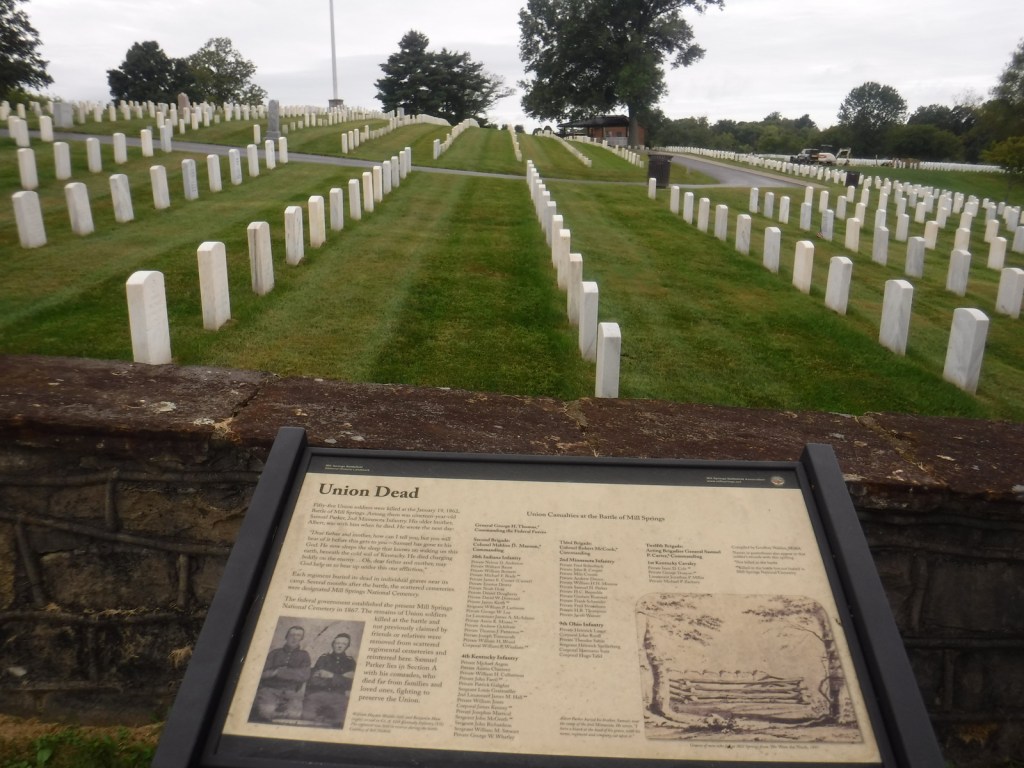
During the Civil War, the Battle of Mill Springs started on January 19, 1862 in the Union state of Kentucky (where slavery was still legal). North of the Cumberland River, a surprise attack by the Confederate Army was repelled and celebrated as the first decisive Union victory in the western theater. The battlefield was declared a National Historic Landmark in 1993 and acquired by the National Park Service (NPS) in 2020.
Museum, film, Mill Springs National Cemetery, Zollicoffer Park, Brown-Lanier House, Mill Springs Mill, Lake Cumberland
Must-Do Activity
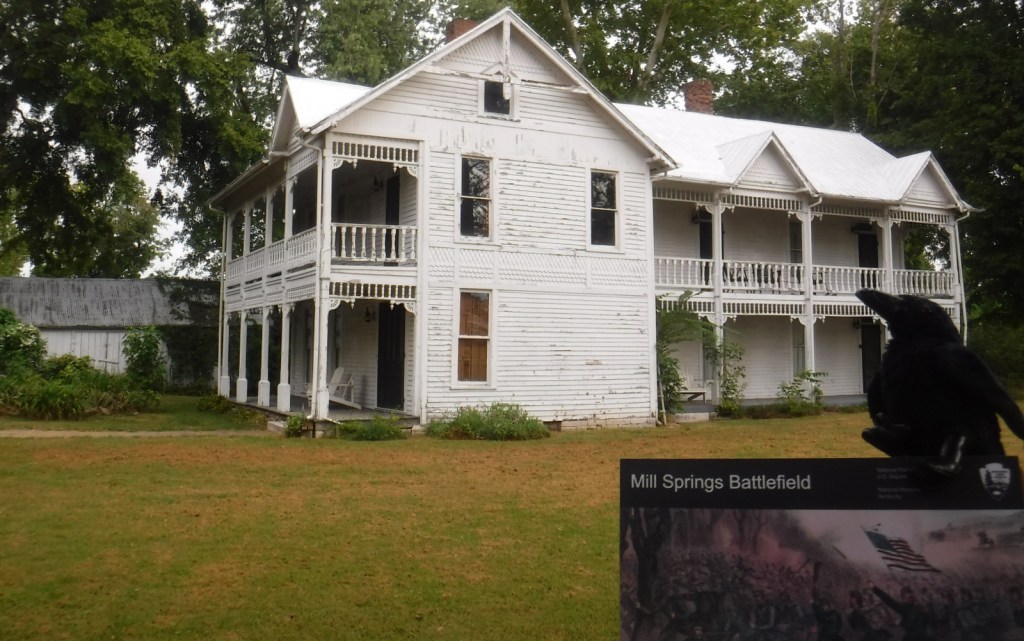
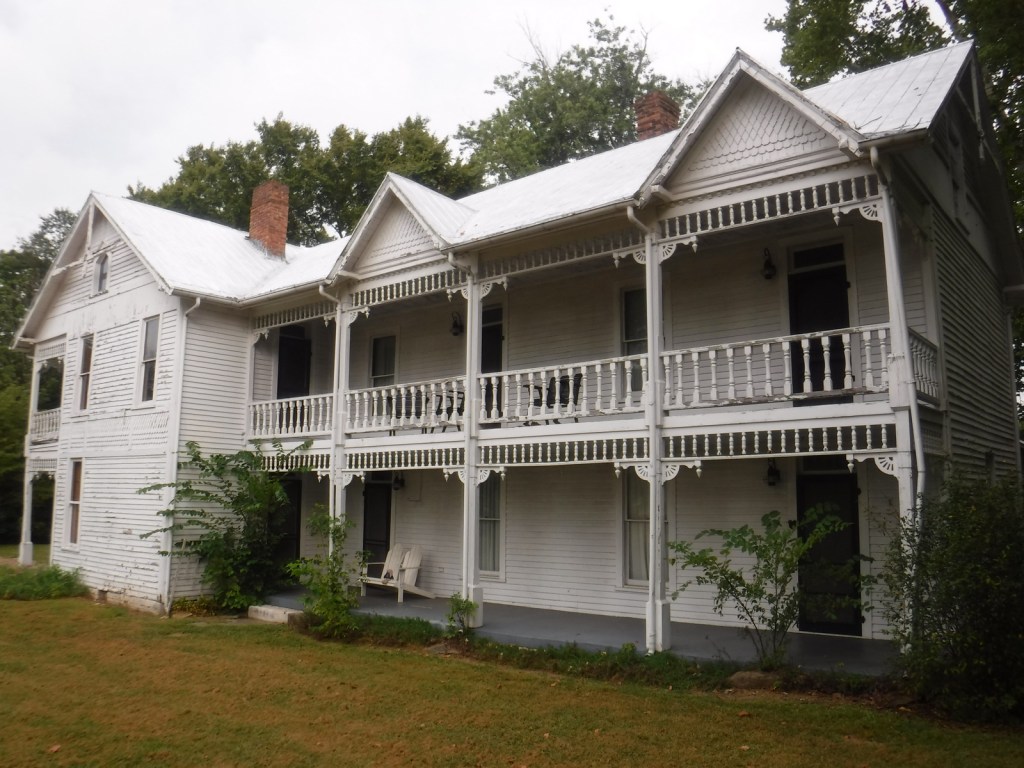
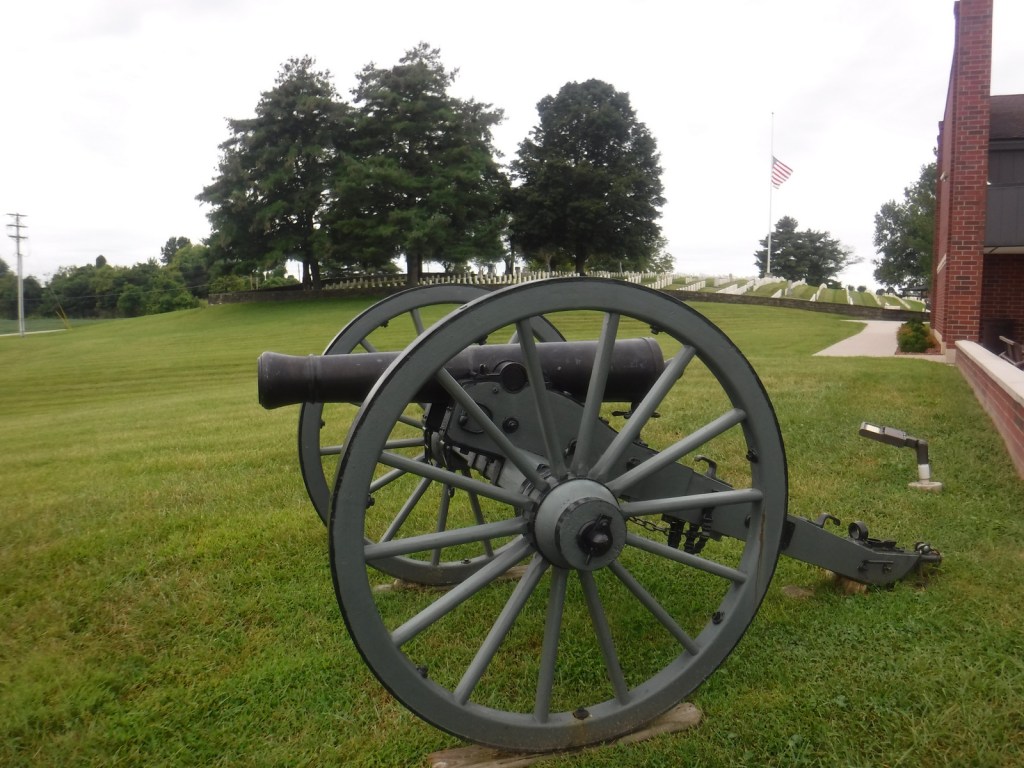
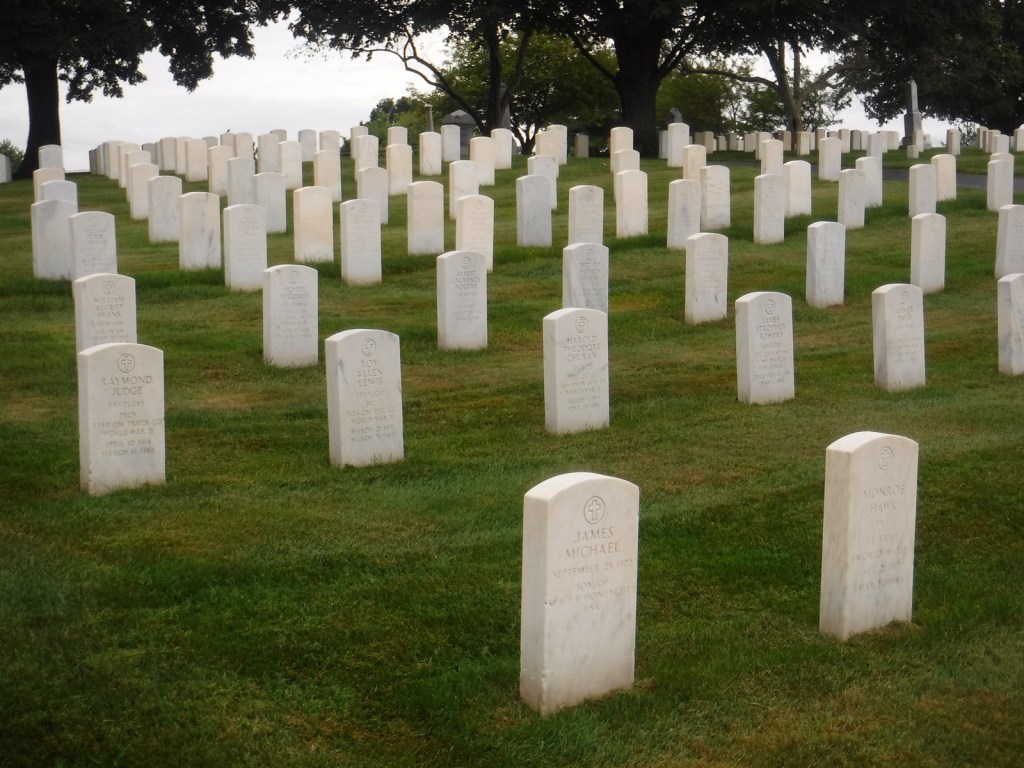
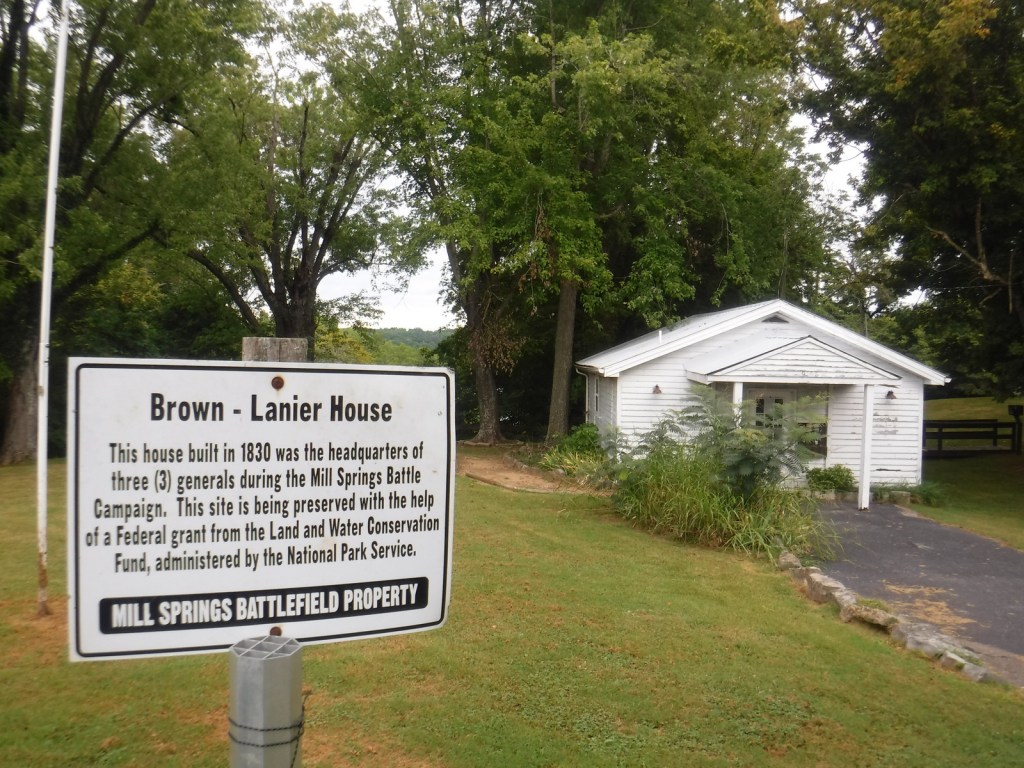
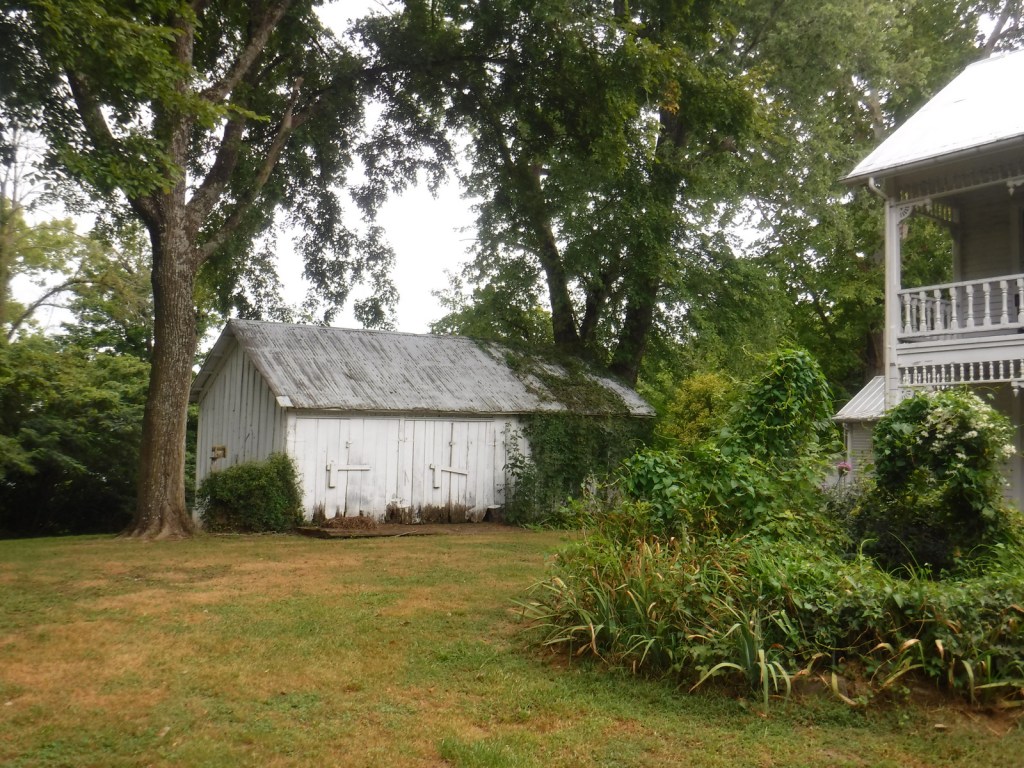
Start your visit by watching the film at the NPS visitor center next to Mill Springs National Cemetery, opened in 1867 as one of 12 original National Cemeteries. The driving tour starts from there south down Kentucky Highway 235 to Zollicoffer Park where there are markers for Confederate General Felix K. Zollicoffer (buried beneath the “Zollie Tree”) and a Confederate mass grave. There are six more stops on the driving tour north of Lake Cumberland, but there is no bridge across the reservoir, so to reach the final two stops requires backtracking and connecting to Kentucky Highway 1275. There you will reach the Brown-Lanier House at Mill Springs that was utilized by both sides of the battle. Open seasonally to the public, the working grist mill on Lake Cumberland dates to 1877 and is managed by the Army Corps of Engineers. The final tour stop is at the West-Metcalfe House that served as a Confederate headquarters and hospital, but is not currently open.
Best Trail
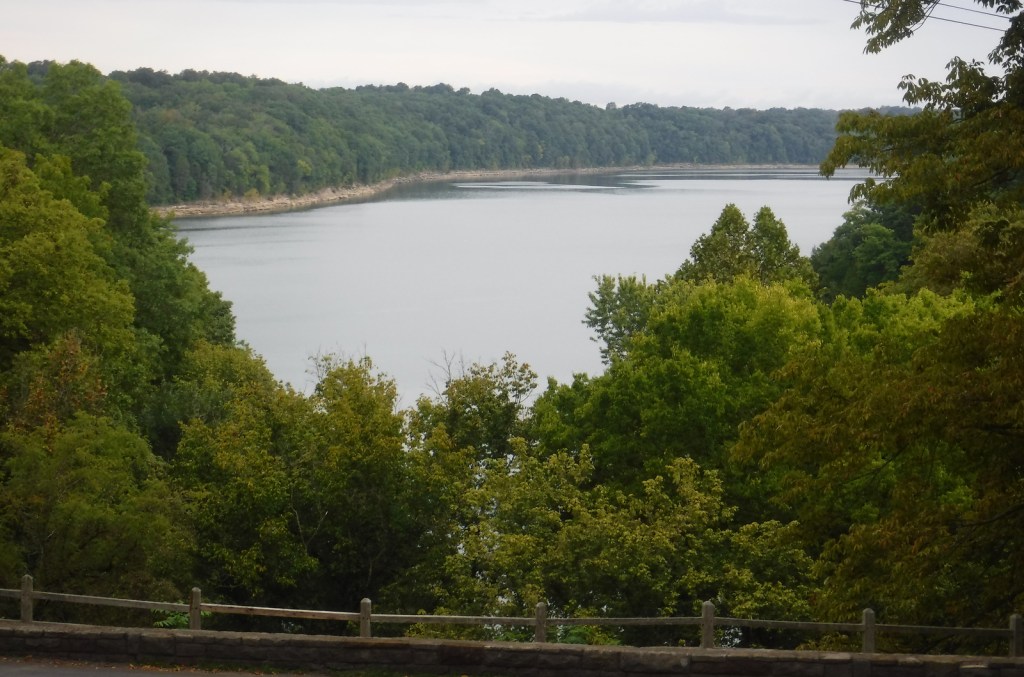
A 0.75-mile walking trail in Zollicoffer Park goes down into a ravine that was behind the Confederate lines, as explained by interpretive signs there. You can also walk to the edge of Lake Cumberland at Ferry Landing on the north shore and Mill Springs Mill on the south shore.
Photographic Opportunity
Built in 1860, the Brown-Lanier House offers guided tours inside the house that was twice hit by artillery during the Battle of Mill Springs.
Best time of year: Summer for the state fair and access to the northern lakes
We recently published our guidebook 50 States of Great: Road Trip Guide to America, so we decided to start a new type of blog post where we create a travel itinerary for all 50 states, in addition to our usual National Forest and National Park entries. After starting with Kansas, Georgia, Idaho, and Rhode Island, we decided to do a state that is part Midwest and part North Woods. We made an ambitious seven-day plan starting in the southern Minnesota, with plenty of options to extend the trip.
Located in the small town of Austin, this free museum is full of interactive exhibits and photo opportunities, but the best part is that it does not take itself too seriously. Even if you do not like to eat the canned “spiced ham” product, you will come to appreciate its significance to World War II history and pop culture, as well as its amazing gift shop with more branded products than you can imagine.
Niagara Cave is a privately-owned show cave named for its 60-foot-tall underground waterfall that is only viewable on guided tours. Not far away, Forestville/Mystery Cave State Park contains the state’s longest cave (47 degrees year round) which also offers guided tours.
If you come into the state from the southwest corner, consider a stop at a spot that people have come for 2,000 years to mine the red quartzite rock (also known as catlinite). The soft sedimentary stone is relatively easy to carve into smoking pipes and effigies. April through October, you can watch American Indian carvers at the National Park Service (NPS) museum demonstrate how to sculpt this soft yet durable stone into hollow pipes and other beautiful ornaments, some of which you can buy in the gift shop.
Fans of the author’s “Little House” series of books will want to see a replica of the Ingalls’ home in Walnut Grove and some of the family’s historic heirlooms.
Indoor shopping malls are still thriving in the Twin Cities (Minneapolis-St. Paul) metropolitan area, perhaps due to the cold and snowy winter weather. The most famous is the Mall of America with its indoor amusement park and 520 stores, making it the largest mall in the western hemisphere (and eleventh largest in the world).
This park follows 72 miles of the great river’s course through Minnesota, from busy metropolitan sections in the Twin Cities to secluded stretches of water where it reaches its confluence with the Saint Croix National Scenic Riverway. In downtown Minneapolis, Minnehaha Regional Park contains its namesake falls celebrated in Henry Wadsworth Longfellow’s Song of Hiawatha. Nearby, St. Anthony Falls is the only true waterfall along the entire length of the Mississippi River, now controlled by a lock and dam.
Optional stop at University of Minnesota Golden Gophers’ football game
We saw wild turkeys wandering around this beautiful campus that sits on a bluff east of the Mississippi River. Nobody seems to be exactly sure what a golden gopher is (possibly a thirteen-lined ground squirrel), but their mascot Goldie is the cutest in all of college football. Huntington Bank Stadium has one of the best pregame areas with plenty of photo ops and a pep rally held outside the hockey arena, plus we got free Culver’s custard, a clear bag giveaway, and Mystic Lake casino provided free towels and “spinny video thing.” The football team typically schedules their home opener on the Thursday before Labor Day during the Minnesota State Fair.
You will need all day to visit America’s best state fair that is held annually the 12 days before Labor Day, welcoming more than two-million visitors annually. The fair has the standard carnival rides, butter sculptures, farm animals, and artwork, as well as stages where musicians, comedians, and magicians perform throughout the day. Some of the unique food offerings include hotdish-on-a-stick, poutine, fried cheese curds, pronto pup, fried pickles, pork chop-on-a-stick, and fried buckeyes (chocolate and peanut butter candy). Since it started in 1979, Sweet Martha’s Cookie Jar has been overfilling buckets of fresh-baked chocolate chip cookies for customers, making up to 200,000 cookies an hour. To wash all that down, you might want to visit one of the stands offering all-you-can-drink milk.
If you are still hungry after the Minnesota State Fair then you probably didn’t do it right, but we will make one of our rare restaurant recommendations for this unique spot in downtown Minneapolis with interesting décor and really good food (try the poutine or walleye bites).
Day 4
Paul Bunyan Expressway
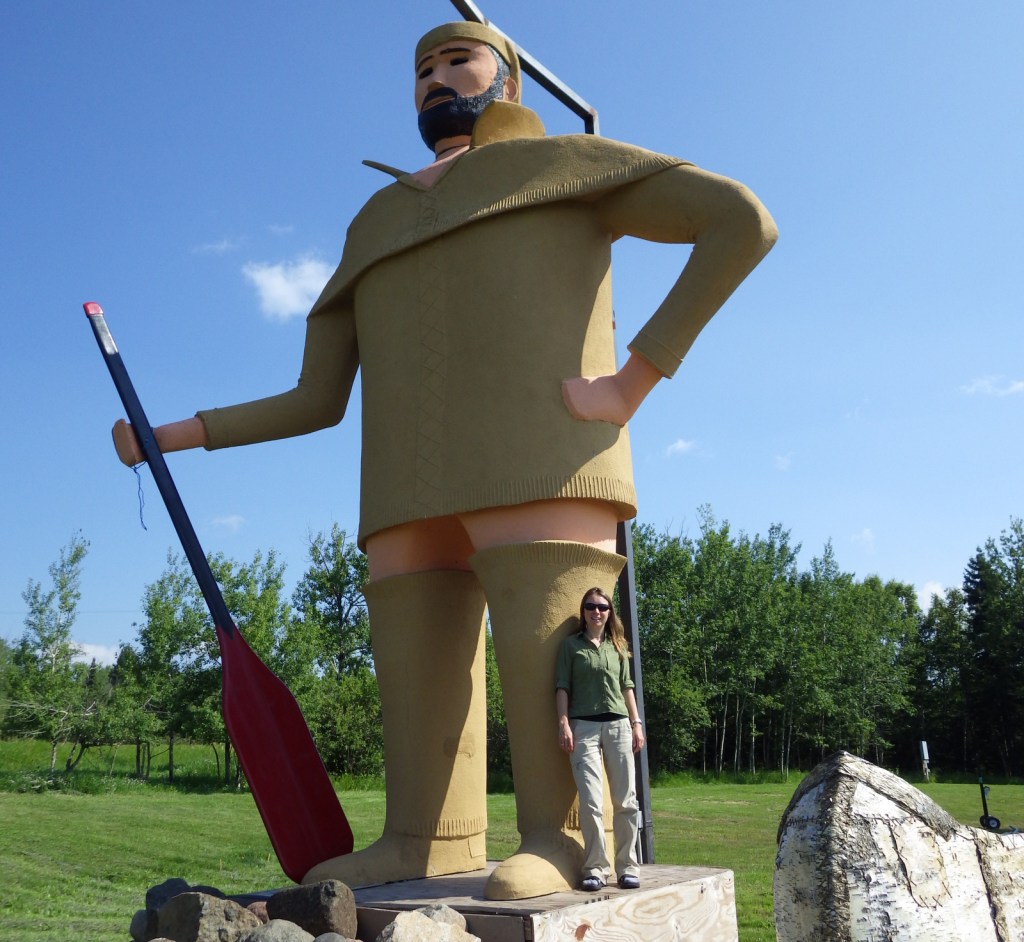
The legendary giant lumberjack Paul Bunyan is a big deal in Minnesota and he has statues honoring him in many towns along the Paul Bunyan Expressway. The 18-foot-tall statues in Bemidji were originally built in 1937 to honor these larger-than-life heroes and continue to be an essential roadside attraction. In Brainerd, Paul Bunyan Land is an entire amusement park built around a 26-foot-tall talking statue of Paul and 19-foot Babe, the latter refurbished after it blew over in a 2006 windstorm.
The Lost 40 is 144 acres of old-growth red and white pine forest that was never logged due to a surveying error that mapped the area as part of Coddington Lake in 1882. The oldest tree here is more than 250 years old and can be seen on an easy one-mile loop trail with interpretive signs. The trailhead is located east of Blackduck on well-signed back roads that are also popular for snowshoeing in the winter. Nearby, Camp Rabideau is perhaps the best preserved Civilian Conservation Corps (CCC) camp left from the 1930s, with free guided tours in the summer.
Lake Itasca is considered the headwaters of the Mississippi River and is located just west of Highway 71 at the beginning of the 2,069-mile-long Great River Road that goes all the way to Louisiana.
Day 5
Roadside Sculptures
Driving north on Highway 71, there is seemingly another great roadside attraction located every few miles. We saw the statues of Uncle Dan Campbell in Big Falls, Jack Pine Savage in Littlefork, the world’s largest crow in Belgrade, and a giant black duck in the town of Blackduck. Right outside Voyageurs National Park, which surrounds Lake Kabetogama, was our favorite—a giant walleye with a saddle for riding. If Kabetogama seems like a mouthful, rest assured that everyone, including park rangers, simply calls it “Lake Kab.”
The park is famous for its manmade destinations, including Kettle Falls Hotel, Hoist Bay Resort, and the unique sculptures at Ellsworth Rock Gardens. Try to get out on one of Minnesota’s 10,000 lakes via a ranger-led tour or take your own boat to one of the shoreline campsites inaccessible by car (permit required). Reservations can be made for the ranger-guided North Canoe Voyage that lets passengers paddle a 26-foot canoe, just like the French-Canadian “voyageurs” of old.
Day 6
Kawishiwi Falls in Ely
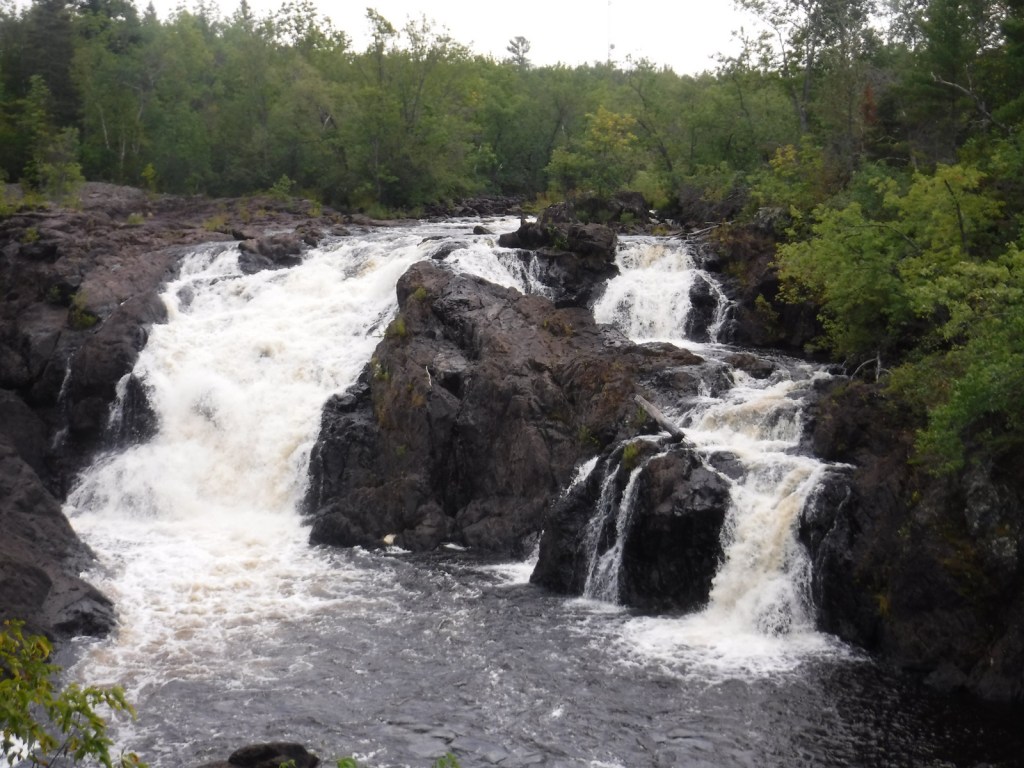
The little town of Ely is the gateway to the Boundary Waters Canoe Area Wilderness (see below), but even if you are just passing through be sure to make the short hike to Kawishiwi Falls below the dam on Garden Lake.
Gray wolves (called timber wolves regionally) reside in the North Woods and while a few lucky travelers might hear them howling, your best bet to see one is at the Wolf Center. It also has a section dedicated to Sigurd Olson, a talented local author and naturalist.
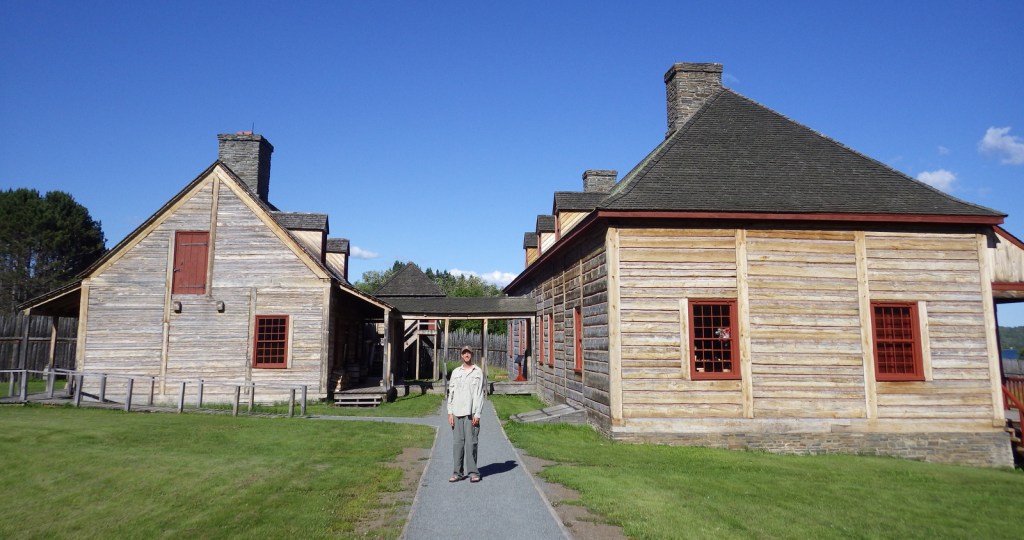
French-Canadian voyageurs had to walk their canoes and goods along an eight-mile-long portage to bypass the rapids on the Pigeon River. In 1784, the end of the trail on the edge of Lake Superior became the site of the North West Company headquarters where they held an annual rendezvous, where today visitors can walk around the reconstructed buildings and talk with the costumed reenactors during the summer.
Optional stop at Two Harbors
North of Duluth, the North Shore Scenic Drive passes through the town of Two Harbors where there is a giant rooster at Weldon’s Gifts and a huge statue of Pierre the Voyageur outside the Earthwood Inn. If you press the speaker button at the statue’s base, Pierre will tell you all about the history of the region, but he never explains why he is not wearing any pants.
In addition to encompassing the state’s highest mountain, Superior National Forest also offers scenic drives on the Gunflint Trail (County Road 12), Fernberg Road (State Route 169), and Echo Trail (County Road 116). Vermilion Gorge Trail is an easy 1.5-mile one-way hike to a narrow canyon cut through Canadian Shield rock in the small community of Crane Lake (on the east side of Voyageurs National Park). Not far away down a dirt road, a short trail leads to Vermilion Falls where the same river cuts a narrow channel through the rock.
Permits for the peak season can be hard to come by for the world’s premiere destination for backcountry canoeing, so plan ahead. This one-million-acre preserve has more than 1,000 lakes with over 1,500 miles of canoe routes and 2,200 designated backcountry campsites. In addition to its famous water routes with numerous portages, a few overland trails exist like the 12-mile Angleworm Trail and the 39-mile Kekekebic Trail, an official part of the North Country National Scenic Trail.
Best time of year: Summer for beaches, music festivals, and WaterFire in Providence
We recently published our guidebook 50 States of Great: Road Trip Guide to America, so we decided to start a new type of blog post where we create a travel itinerary for all 50 states, in addition to our usual National Forest and National Park entries. After starting with Kansas, Georgia, and Idaho, we decided to do a New England state. Despite it being the smallest of all 50 states, we were able to make a five-day plan starting in northern Rhode Island, with some options to extend the trip.
Day 1
Providence
Until 2020, the state’s full legal name was Rhode Island and Providence Plantations, but the legislature felt that had slavery connotations so they shortened it to Rhode Island. At the head of Narragansett Bay, the capital city of Providence holds a summerlong event called WaterFire, where on weekend nights 86 wood-filled braziers blaze around the confluence of the Woonasquatucket and Moshassuck Rivers.
Dedicated to the man who left the Puritan-led Massachusetts Bay Colony in 1636 to found a city based on religious freedom, this 4.5-acre park in downtown Providence houses a small National Park Service (NPS) visitor center. A short, but steep walk takes you to a large statue of Roger Williams that offers a great overlook of the city.
Optional stop at Roger Williams Park
Not to be confused with Roger Williams National Memorial, this large park is home to a zoo. Providence also has two famous historic homes: the Sullivan-Dorr House and John Brown House.
Day 2
Blackstone River State Park
A scenic drive follows Highway 122 to this park, which has a free museum inside the historic Kelly House and a section of the canal that once followed the river. It also has 3.5 miles of the 24-mile (of a planned 48) paved bikeway along the canal towpath.
Blackstone River State Park is part of this park, which commemorates the industrial revolution that changed the landscape of America during the 1800s, as well as the immigration of factory workers that changed its face. The NPS works with a partnership of government agencies, non-profits, and businesses in Massachusetts and Rhode Island. The National Historical Park’s centerpiece is the nation’s first successful water-powered cotton-spinning factory:
Old Slater Mill National Historical Landmark
Located at a short, 180-foot-long dam on the Blackstone River in Pawtucket, free NPS ranger-guided tours are offered at this site. Check out the bus station across the street for more interpretive displays and information. By 1880, this “hardest working river” was one of the most polluted in the country, but it has recovered so that canoeists can now safely float portions of its 46-mile length.
Optional stop at Jerimoth Hill
It is a short, flat walk from a pullout on Highway 101 to the highest point in the state near the border with Connecticut.
Day 3
Shannock
This small village is situated on the Pawcatuck River, which has fueled grist mills, sawmills, woolen mills, cotton mills, and silk mills throughout its history. Today, the curved shape of ten-foot-tall Horseshoe Falls Dam and fishway makes it unique and very picturesque.
One of many red-brick coastal fortifications built in the U.S. after the War of 1812, visitors must purchase a ticket for a guided tour to explore inside the fort. It hosts the famous Newport Folk Festival and Newport Jazz Festival on successive summer weekends in August, as well as the Great Chowder Cook-Off and Classic Yacht Regatta every Labor Day weekend. During the Newport Winter Festival, ice carving and sand sculpture competitions are held here.
In North Kingston, the A-shaped Chapel in the Pines and a three-dimensional statue of the Seabee logo are photogenic spots at this collection of Quonset Huts that honors the military engineers of World War II.
Day 4
Newport
Primarily built during the Gilded Age of the late 1800s, there are 11 houses open for tours that were the summer “cottages” of affluent families with recognizable last names like Carnegie, Vanderbilt, Morgan, Astor, and Rockefeller.
Cliff Walk National Recreation Trail
Only 3.5 miles long, there are multiple public access points to this pathway that follows the shoreline through the backyards of some of the most expensive houses in Newport. If you can only do part of the trail, make sure it includes the scenic area around the 40 Steps, a granite staircase located at the end of Narragansett Avenue.
The nation’s oldest standing synagogue was originally built in 1763, although its congregation dates back to a century earlier when they came to Newport seeking religious freedom. There is an admission fee for the 30-minute tour to see the ornate interior of the synagogue, and, next door, the Loeb Visitor Center opened in 2009 with an excellent museum upstairs.
Newport Tower/Old Stone Mill
A 28-foot-tall tower in Touro Park has been variously attributed to the Vikings, the Knights Templar, Chinese sailors, Portuguese explorers, or the English astronomer John Dee. We first learned about it from reading the side of a U-Haul trailer. Although there is no information about it at the site, the nearby Newport Tower Museum provides plenty of speculation on its mysterious origins. The most likely explanation is that it was built by Rhode Island’s first Governor, Benedict Arnold (great-grandfather of the infamous Revolutionary War General), as the base for a windmill.
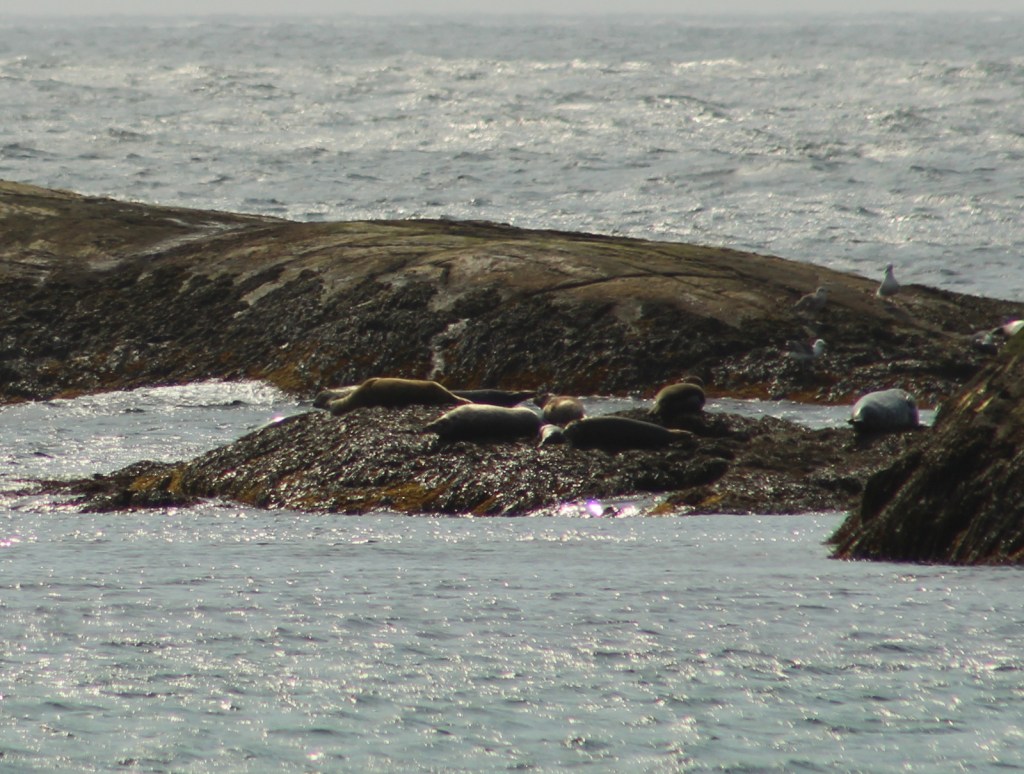
The Ocean State has 384 miles of Atlantic shoreline, much of it in Narragansett Bay, where harbor seals, hooded seals, gray seals, and harp seals can be seen on a guided cruise.
Walk the beach of a barrier island in Ninigret Conservation Area, or park inland at the Kettle Pond Visitor Center to hike trails through the woods on these 900 acres set aside in 1970 as a National Wildlife Refuge.
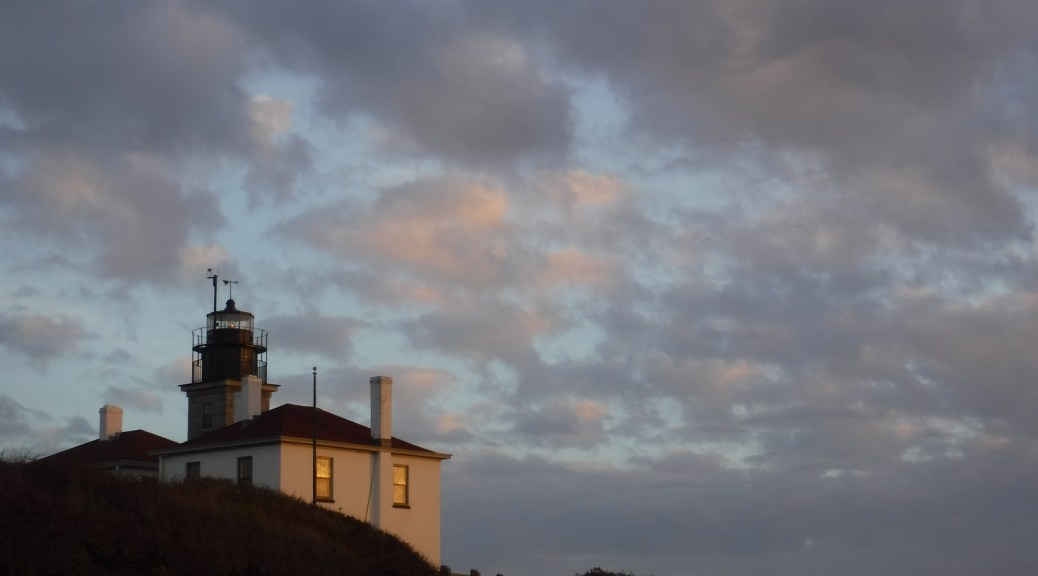
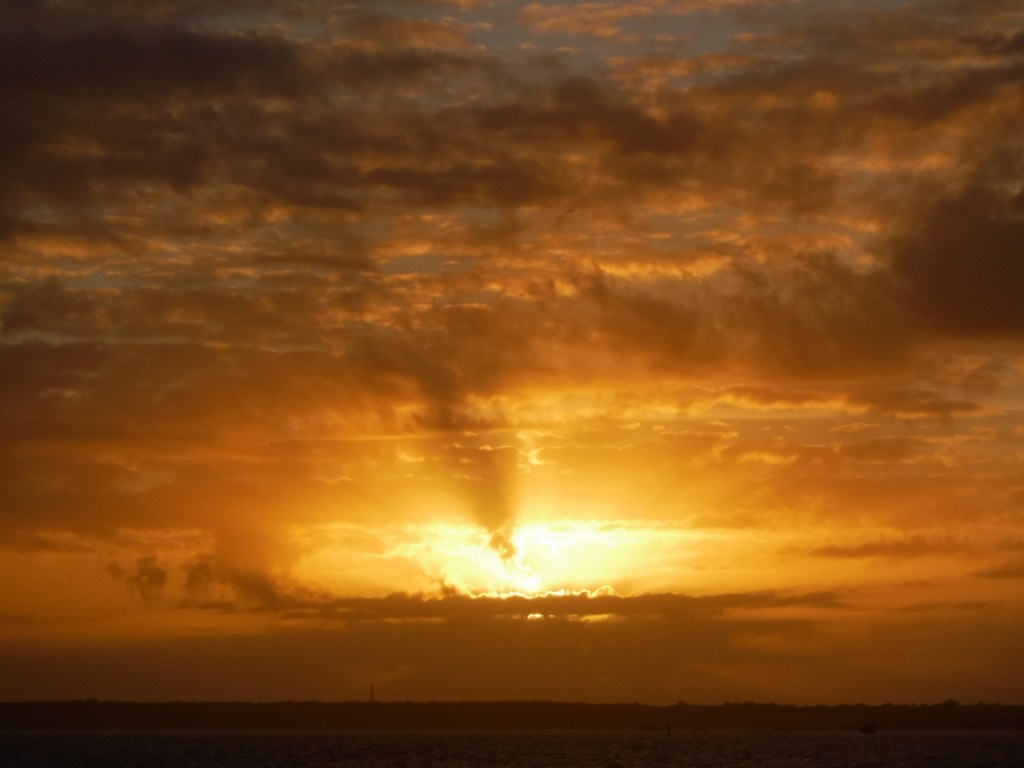
Sitting on 153 acres at the southern tip of Conanicut Island, this park at the entrance to Narragansett Bay is famous for its 1856 lighthouse, but even more so for its sunsets. The assistant keeper’s house now contains the Beavertail Lighthouse Museum where you will learn about the construction of Beaver Tail Fort during the American Revolution and Fort Burnside during World War II.
Located not on the beach but inland in the town of Narragansett, this campground is near Roger Wheeler State Beach, Salty Brine State Beach, and Scarborough State Beach, as well as the Block Island Ferry Dock at Point Judith. It is extremely popular in the summer, so reservations are recommended.
This commune on the coast in Charleston has a small store selling handmade artwork and decorations, mostly with a beach theme.
Day 6+ optional ferry to Block Island
Pick up a ferry in Newport or Point Judith to spend a few nights on scenic Block Island (where we hope to visit someday). There are few cars allowed on the island, so everyone is encouraged to bicycle or walk its 28 miles of nature trails. More than 47% of the island is preserved from development, including Rodman’s Hollow and Mohegan Bluffs Scenic Natural Areas.
Located at the northern end of the 6,000-acre island situated 12 miles off mainland Rhode Island, the refuge is an important stop for migratory birds since its many ponds contain significant sources of freshwater. Block Island and its 17 miles of sandy beaches have been attracting summer vacationers for decades, but the National Wildlife Refuge was not established until 1973.
Learn more about Rhode Island’s Most Scenic Drive, Wonderful Waterfall, Top State Park, and other categories in our new travel guidebook 50 States of Great: Road Trip Guide to America.
Huron National Forest occupies a strip of land in eastern Michigan that follows the Au Sable National Wild and Scenic River to near its confluence with Lake Huron. The National Forest was established in 1909 after logging in the area went into decline. In 1945, it was administratively combined with the Manistee National Forest, which is on the western side of the state. Two years later, the first Au Sable River Canoe Marathon was held when 46 teams entered, but only 15 teams finished the 120-mile-long race. Held annually the last weekend of July, thousands of spectators watch the event, but if you are not there then at least stop by the Canoer’s Memorial. In the winter, snowmobiling and cross-country skiing are popular activities in Huron National Forest.
Highlights
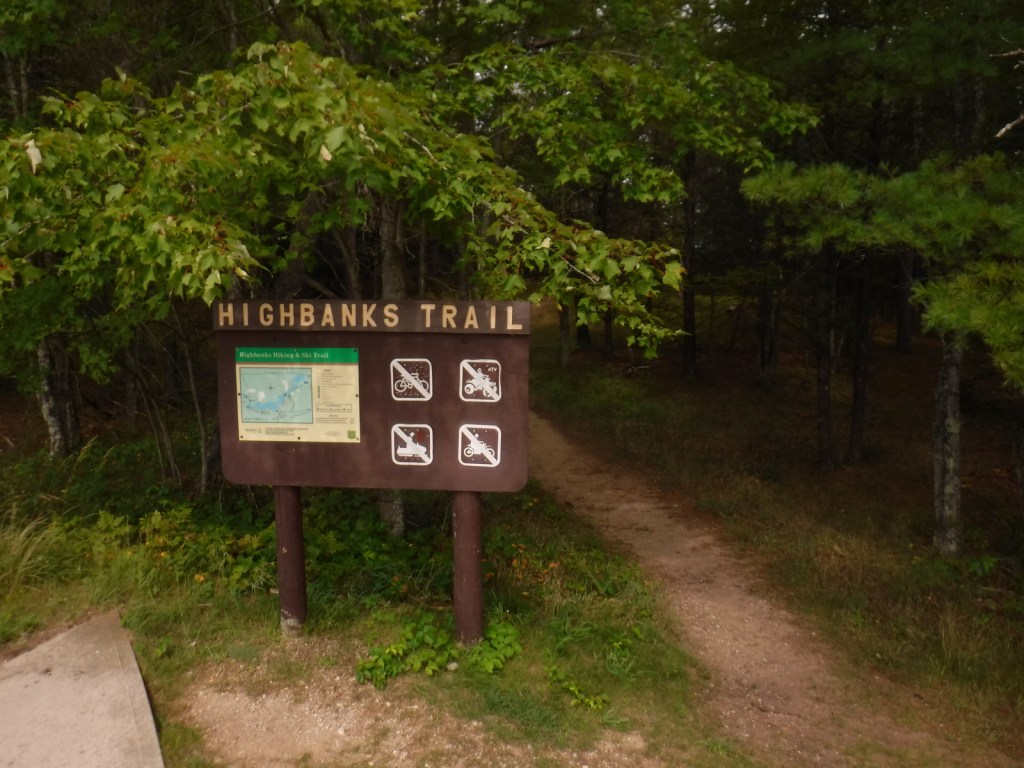
River Road Scenic Byway, Lumberman’s Monument, Canoer’s Memorial, Iargo Springs Interpretive Site, Cooke Dam Pond, Tuttle Marsh, Bull Gap ORV Trail, Hoist Lakes Foot Travel Area, Highbanks Trail, Eagle Run Cross-Country Ski and Hiking Trail
Must-Do Activity
The 22-mile-long River Road Scenic Byway follows the Au Sable National Wild and Scenic River with 18 stops at memorials, overlooks, dams, ponds, trailheads, and campgrounds. The National Forest’s most developed area surrounds the Lumberman’s Monument, a 14-foot bronze statue dedicated in 1932. The site also has a museum, gift shop, interactive visitor activities, hiking trails, and a campground. Three other popular stops along the River Road Scenic Byway are the Iargo Springs Interpretive Site, Kiwanis Monument, and Foote Pond Overlook where visitors might spot a bald eagle.
Best Trail
A day use fee is charged to park at the two entrances to Hoist Lakes Foot Travel Area in the northern part of Huron National Forest. We started at the west entrance, just 1.8 sandy miles off paved Aspen Alley Road, and hiked a half-mile to Carp Lake, which had a large beaver hut in its center. There are many loop options in this forest that is being managed for old-growth conditions, which makes it ideal for cross-country skiing.
Watchable Wildlife
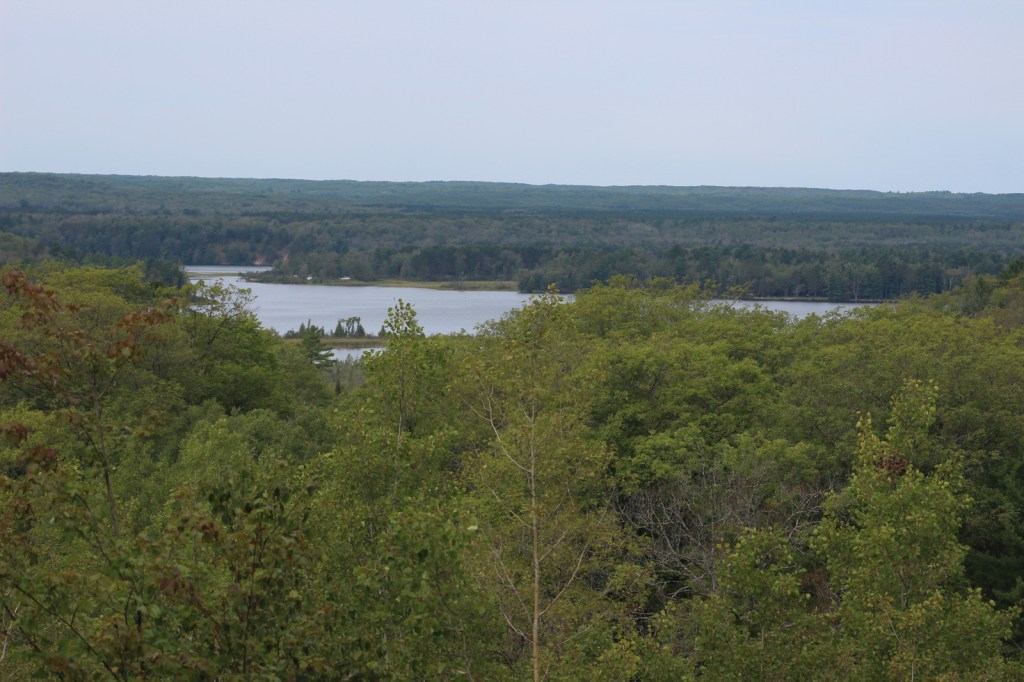
Huron National Forest manages its jack pine forests to provide summer nesting habitat for the formerly-endangered Kirtland’s warbler. After being placed under protection of the Endangered Species Act when its population fell to 167 nesting pairs in 1974, it was delisted in 2019 after rebounding to 2,300 pairs. Since dense, young stands of jack pine are unsuitable habitat, Kirtland’s warblers need old-growth forests, which are extremely susceptible to crown fires. Other species prefer old-growth forests, too, like pileated woodpeckers, saw-whet owls, and pine martens. We saw one of the rare Kirtland’s warblers at Au Sable Scenic River Highbanks Overlook, in addition to spotting a trumpeter swan, hairy woodpecker, raven, black squirrel, porcupine, and white-tailed deer. The Au Sable River offers trout fishing for people and bald eagles.
Instagram-worthy Photo
We stopped at Au Sable Scenic River Highbanks Overlook and were able to photograph a Kirtland’s warbler.
Peak Season
Summer
Fees
A day use fee is charged to park at the two entrances to Hoist Lakes Foot Travel Area, or you can use the America the Beautiful pass. Access to the Lumberman’s Monument is free.
Road Conditions
The unpaved roads are very sandy, but they were mostly flat without deep sand and easily drivable with a passenger vehicle in the summer.
Camping
There were signs prohibiting camping at the Hoist Lakes Foot Travel Area trailhead and Au Sable Scenic River Highbanks Overlook, and the dense forest offered no dispersed camping options that we noticed. A developed campground is available at the Lumberman’s Monument, as well as at Algona Dam Pond, Loud Dam Pond, Cooke Dam Pond, and Foote Dam Pond.
red maple, sugar maple, American elm, black ash, quaking aspen, paper birch, northern red oak, pin cherry, shadbush
Explore More – When the first 120-mile-long Au Sable River Canoe Marathon was held in 1947, who were the two paddlers that won with a time of 21 hours and 40 minutes?
Learn more about this and the 154 other National Forests in our new guidebook Out in the Woods
Best time of year: Summer for mountain access and whitewater rafting
We recently published our guidebook 50 States of Great: Road Trip Guide to America, so we decided to start a new type of blog post where we create a travel itinerary for all 50 states, in addition to our usual National Forest and National Park entries. After starting with Kansas and Georgia, we decided to do a western state. We made an ambitious seven-day plan starting in the northern panhandle of Idaho, with plenty of options to extend the trip.
Located right off Interstate 90, this white-painted, timber-frame church dates back to 1850 (making it the oldest building standing in the state). It was constructed by Coeur d’Alene Indians and Catholic missionaries without using nails and visitors can admire the wooden pegs used instead. There is a parking fee, plus separate admission to the museum.
St. Joe National Forest
Part of the larger Idaho Panhandle National Forest, this area encompasses the famous Route of the Hiawatha bicycling trail that follows the former Milwaukee Railroad grade, dropping 1,000 feet in 13 miles. Due to its 200-foot-tall trestles and a 1.6-mile-long unlit tunnel, a flashlight and helmet are required, as are permits available only at Lookout Pass Ski Area, which also offers equipment rentals and shuttles.
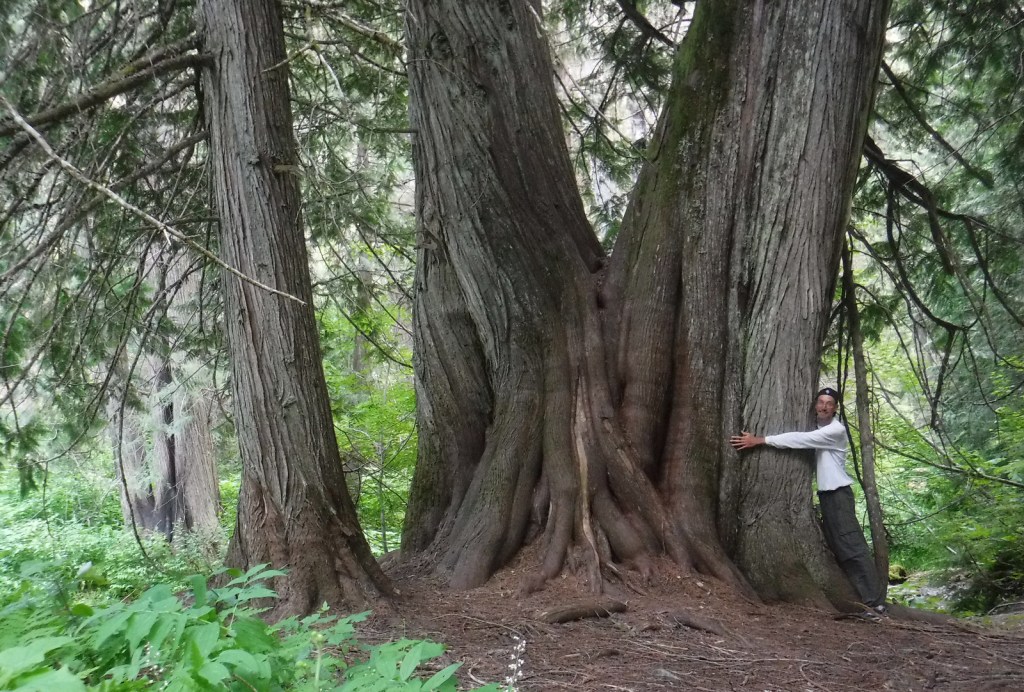
Home to the 173-acre Settler’s Grove of Ancient Cedars, it is part of Idaho Panhandle National Forest that also contains 240-acre Hobo Cedar Grove Botanical Area and 20-acre Roosevelt Grove of Ancient Cedars (technically in neighboring Washington).
An excellent film is shown at the main National Park Service visitor center in Spalding on the Nez Perce Indian Reservation. Nearby, check out interpretive signs at Heart of the Monster and historic buildings of Spalding.
Highway 12 follows the beautiful Clearwater River providing access points for the dusty Lolo Motorway (a section of the Nez Perce National Historical Trail) and its many scenic overlooks. It is worth the short, flat hike to soak in Jerry Johnson Hot Springs.
Day 3
Hells Canyon National Recreation Area
Hells Canyon is considered the deepest in the nation when measured nearly 8,000 feet from river level to the top of 9,383-foot He Devil Mountain. We did a daytrip combination whitewater rafting and jet boat tour that was a blast with stops to see petroglyphs, McGafee Cabin, and Kirkwood Ranch, which can also be accessed via the Snake River National Recreation Trail in Payette National Forest.
Optional stop at Payette National Forest
Fast-flowing Goose Creek Falls is accessed on an incredibly steep 3.3-mile, out-and-back trail. Dispersed camping is allowed nearby on the shores of Brundage Reservoir, which has views to the north of the 8,292-foot-tall Black Tip. The picturesque town of McCall on Payette Lake is home to a Forest Service smokejumper base where tours are available by reservation.
The headquarters of the Peregrine Fund is home to a California condor, red-tailed hawk, American kestrel, Swainson’s hawk, turkey vulture, western screech owl, and Harris’ hawk, in addition to exotic species like the harpy eagle and ornate hawk-eagle.
A different kind of “bird of prey” is on display in this hangar next to the small Nampa Airport, with military artifacts and aircraft, some of which still fly on special occasions.
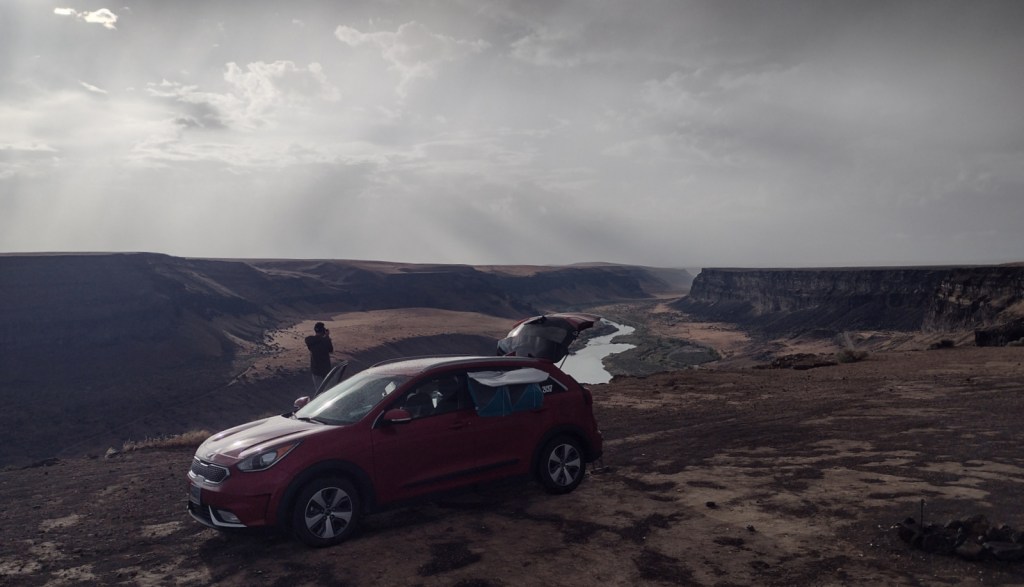
South of Boise, this 484,873-acre area was established in 1993 because of its dense population of nesting raptors due to huge numbers of ground squirrels and other small burrowing mammals. It is run by the Bureau of Land Management, so dispersed camping is allowed.
South of Interstate 84, this is a fun spot for kids with sandcastle building, swimming, camping, sandboarding (rentals available), and stargazing at night around the park’s observatory.
Day 5
Idaho City
This gold rush town was briefly the largest settlement in the Pacific Northwest with a population of 7,000. It subsequently burned down and was rebuilt four times in 1865, 1867, 1868, and 1871. Today it retains its Wild West charm with saloons, antique shops, and a couple of parlors where you can try delicious huckleberry ice cream.
Follow the Ponderosa Pine Scenic Byway (Highway 21) 131 miles northeast through Idaho City and Lowman, where the road follows the South Fork of the Payette River past the campgrounds at Kirkham and Bonneville Hot Springs (reservations recommended) and up to 7,056-foot Banner Summit at the boundary with Challis National Forest (click here for our blog post).
The jagged Sawtooth Mountains live up to their name, rising majestically above the Salmon River Valley. There are numerous campgrounds, including several on Redfish Lake, which is a gateway for backpackers into the beautiful Sawtooth Wilderness. The Sawtooth Scenic Byway runs 116 miles from Stanley south to Shoshone, through Galena Pass and the ski resort towns of Ketchum and Sun Valley.
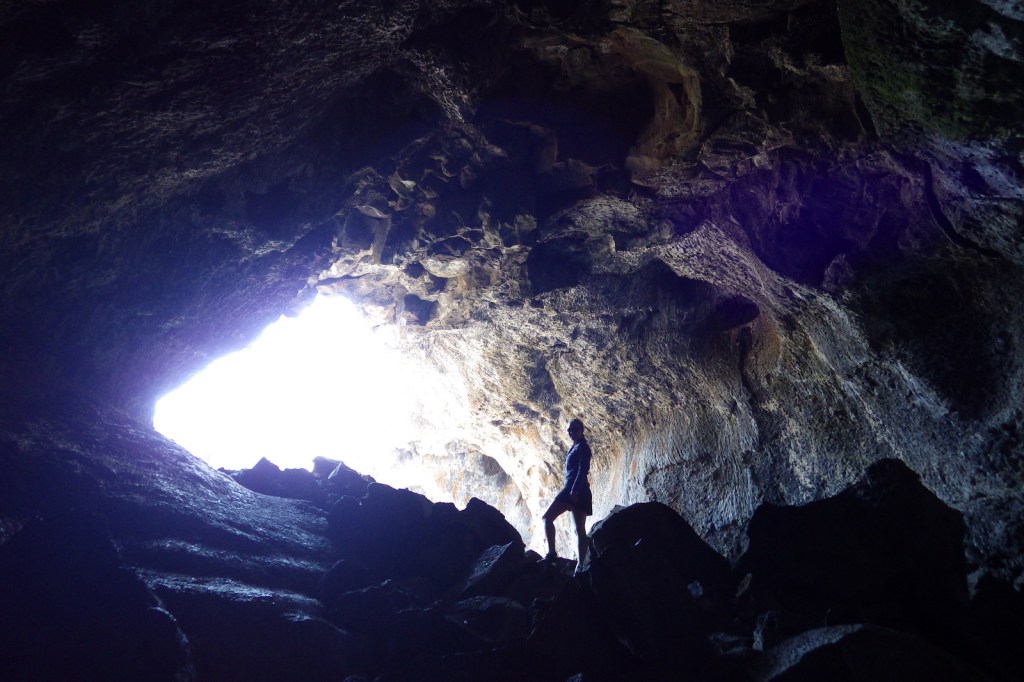
In the 1800s, this massive lava flow proved a major obstacle to avoid for immigrants on the Oregon Trail. Most of today’s highways follow in their tracks, going around and not through the 62-mile-long Great Rift. In 1969, the National Monument truly earned its lunar moniker by serving as a field school on volcanic geology for NASA Apollo astronauts. There are several short lava tubes found here, including Boy Scout Cave that retains ice well into the blazing hot summer months.
Day 6
Shoshone Falls
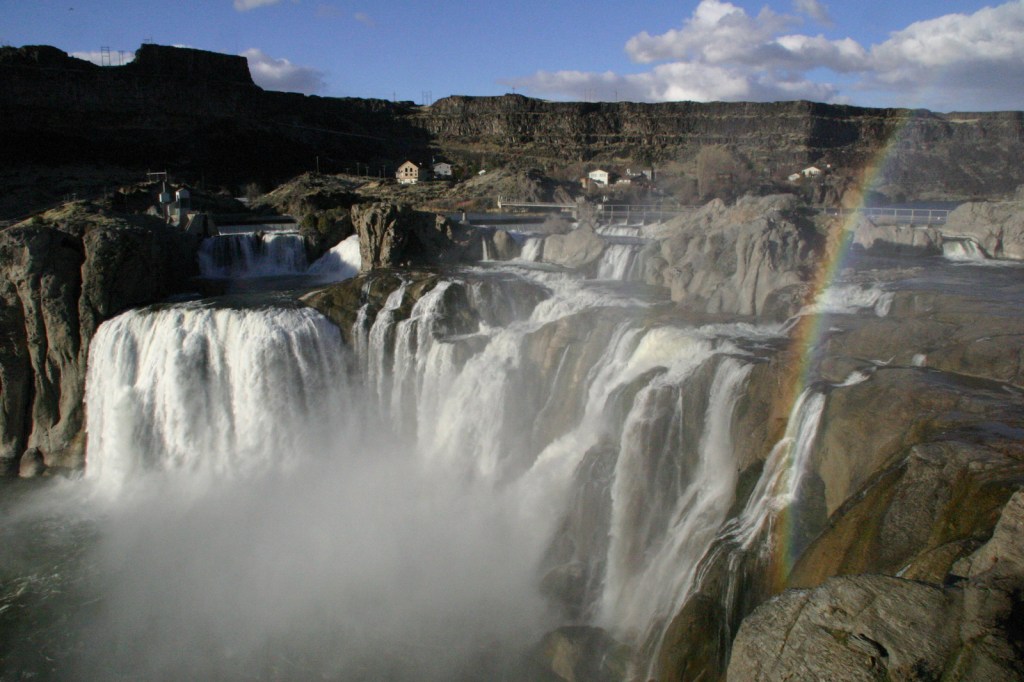
Twin Falls is home to this impressive cascade that drops 212 feet down the Snake River canyon. Its mist can form a brilliant rainbow, especially when the river is flowing strong in the spring before much of its water is diverted for agriculture.
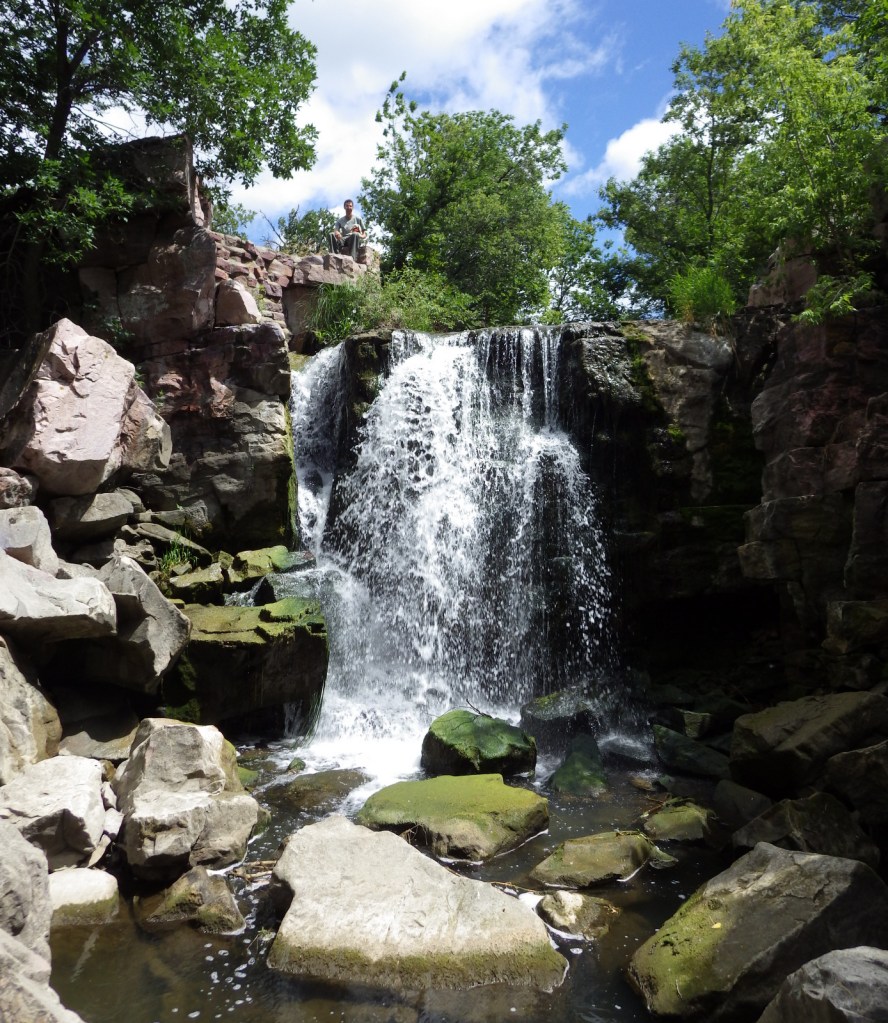
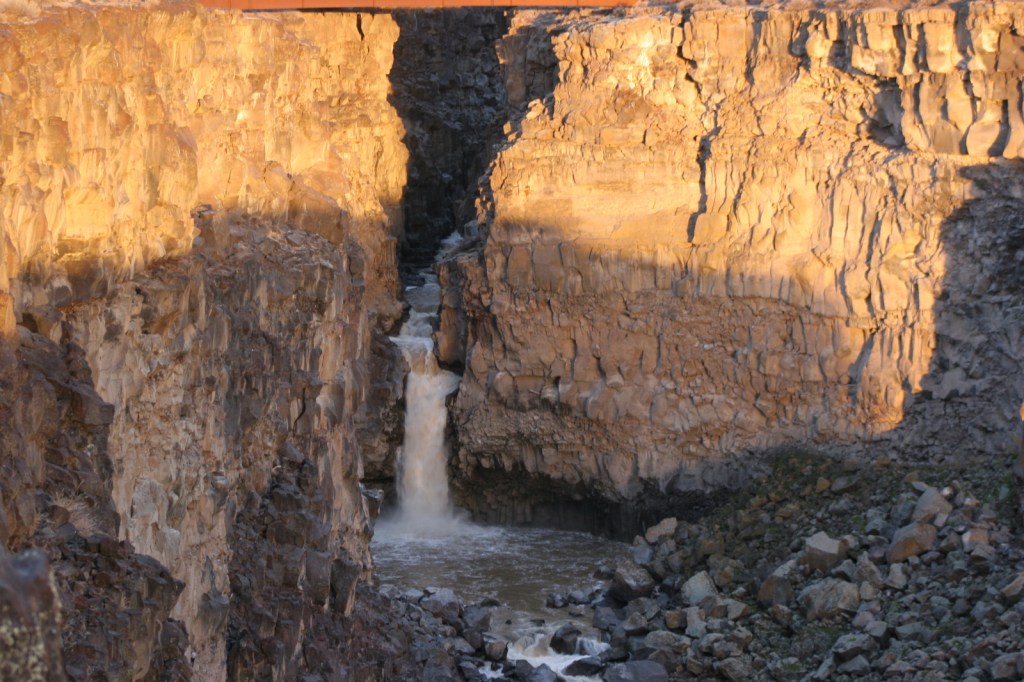
Situated directly beneath a bridge on Interstate 84, this is one of seven units in Thousand Springs State Park. Malad Gorge contains an awesome waterfall known as the Devil’s Washbowl and a beautiful volcanic rock canyon lined with natural springs.
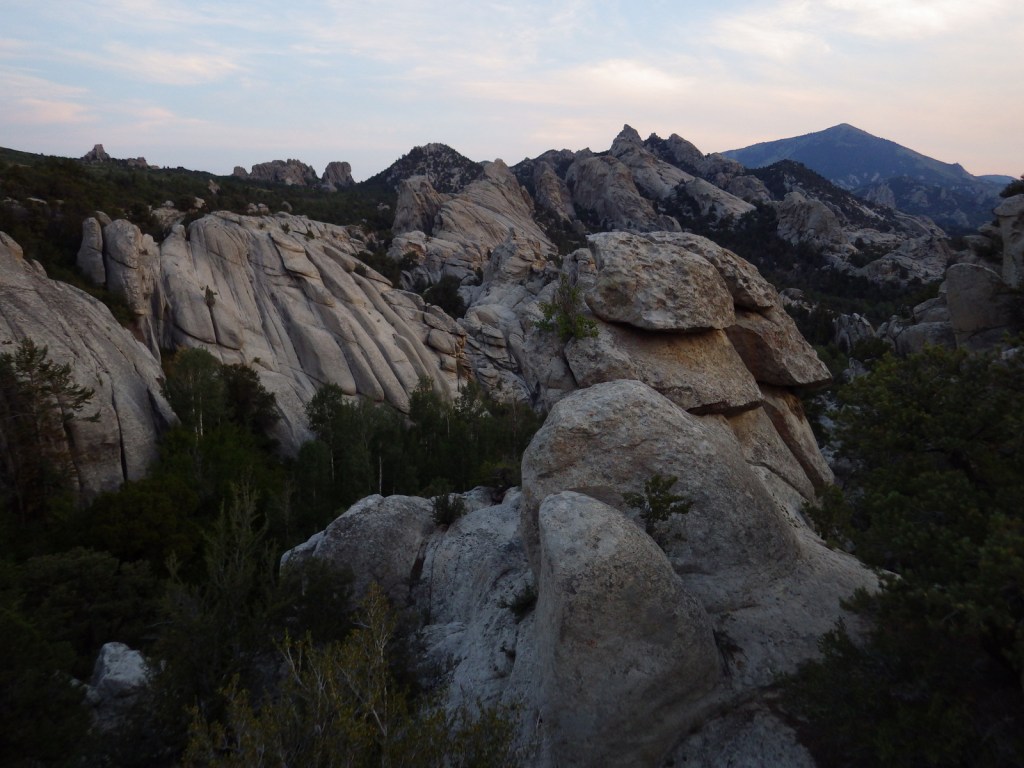
This collection of granite spires served as a rest stop along the California National Historic Trail. At the height of the gold rush in 1852, some 50,000 emigrants passed this site in a single year, many leaving their names painted in axle grease (still legible on Camp Rock and Register Rock). Today the National Reserve is a popular destination for rock climbers, and it also has 78 primitive campsites and 30 miles of hiking and equestrian trails.
Numerous mammal fossils from the Pliocene Epoch are on display at the National Park Service visitor center located on the main drag in the small town of Hagerman. Scenic overlooks of the Snake River and Oregon Trail are located further south, but there is no public access to the fossil beds.
Most of the 13,000 Japanese-Americans imprisoned in central Idaho were from Oregon, Alaska, and Washington (specifically Bainbridge Island where a memorial stands today). There is a new visitor center completed in 2020 with a large museum space and a small theater that shows an excellent film. A 1.6-mile interpretive trail loops past historic structures, including the Hermann House, root cellar, baseball field, barracks, and mess hall.
Located in a six-story building in downtown Pocatello, the museum offers more than one mile of displays, many of them light-hearted and downright hilarious (especially if you like puns). It was established by Don Aslett who started a janitorial services company while studying at nearby Idaho State University. The museum has a reasonable admission fee, and it is easy to spend two hours or more perusing the 10,000 artifacts and pieces of artwork inside.
A 15-foot-long model spud sits out front, providing an excellent photo opportunity. The museum has a collection of exhibits on cultivating the state’s principal crop and also boasts the world’s largest potato chip.
Even though the signs still read Cache National Forest, Minnetonka Cave offers one of the few developed cave tours offered by the U.S. Forest Service. In the 1930s, 444 stairs were installed to allow large groups to visit, and guides make multiple stops on this steep, out-and-back tour to allow you to catch your breath at this high elevation.
Day 8+ optional swing through eastern Idaho
Targhee National Forest
Mesa Falls Scenic Byway provides overlooks of both the 114-foot Upper Falls and 65-foot Lower Falls on the Henrys Fork of the Snake River. Palisades National Recreation Trail may be the most popular trail in Idaho as it leads to two beautiful mountain lakes located at 5,700 and 6,750 feet in elevation.
Salmon National Forest
Salmon National Forest includes a significant section of the 2.4-million-acre Frank Church-River of No Return Wilderness (the second largest Wilderness in the contiguous U.S.). Many multi-night rafting trips on the Salmon National Wild and Scenic River begin around the small town of North Fork. This upper 46-mile segment of the river is designated Recreational, so it only requires a self-issued permit. Those wishing to raft the 79-mile section west of Corn Creek Campground must enter a lottery, but out-of-state travelers typically go with a guide.
An Interpretive Center in Challis celebrates the mining history of this region with audiovisual programs and gold panning stations making this a great place to bring children. The State Park also includes the Challis Bison Kill Site where animals were stampeded off a cliff by American Indians.



































 Raven About The Parks