Tag Archives: bridge

Kootenai National Forest

Kootenai National Forest

Montana, Idaho

Managed by U.S. Forest Service, Northern Region

2,145,268 acres (1,812,380 federal/ 332,888 other)

Website: https://www.fs.usda.gov/kootenai

Overview

In northwest Montana, Kootenai National Forest includes parts of the Cabinet, Purcell, Salish, Selkirk, and Whitefish Mountains on the border of Canada.  In 1975, the 422-foot-tall Libby Dam on the Kootenai River created 90-mile-long international Lake Koocanusa (a contraction of Kootenai-Canada-U.S.A.).  Elevations in Kootenai National Forest range from 1,832 feet up to 8,738-foot Snowshoe Peak in the Cabinet Mountains Wilderness, encompassing a variety of habitats from subalpine meadows to arid plains with cacti.

Highlights

Lake Koocanusa Scenic Byway, Northwest Peak Scenic Area, McGregor Lake, Yaak Falls, Ten Lakes Scenic Area, Ross Creek Cedar Grove Scenic Area, Loon Lake, Tenmile Falls, Bluebird Basin Trail, Vinal McHenry Boulder National Recreation Trail, Pacific Northwest National Scenic Trail

Must-Do Activity

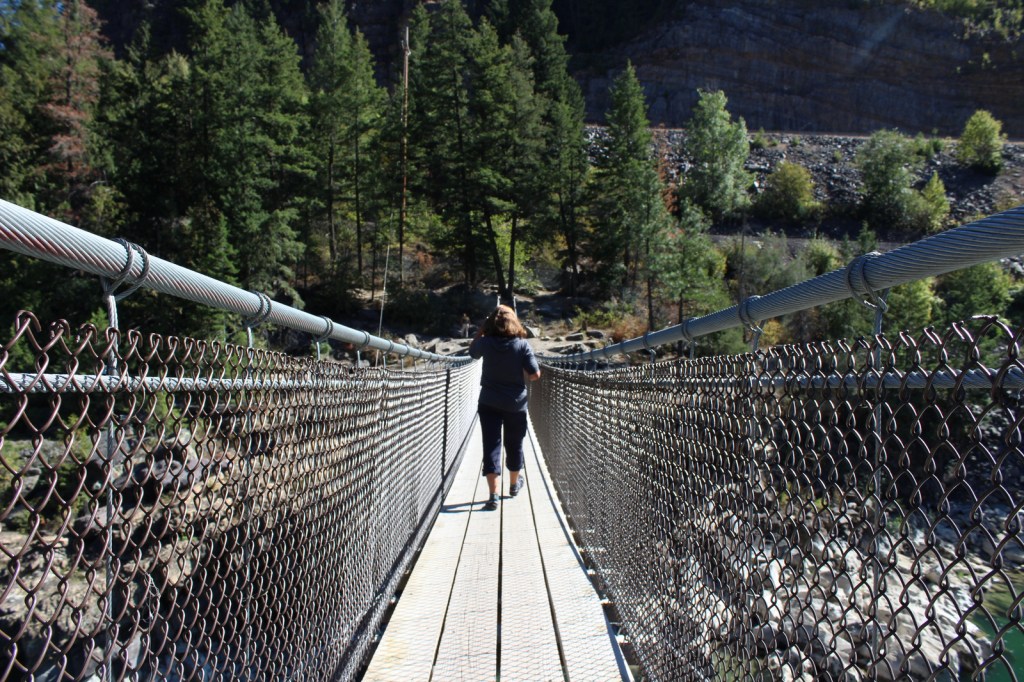
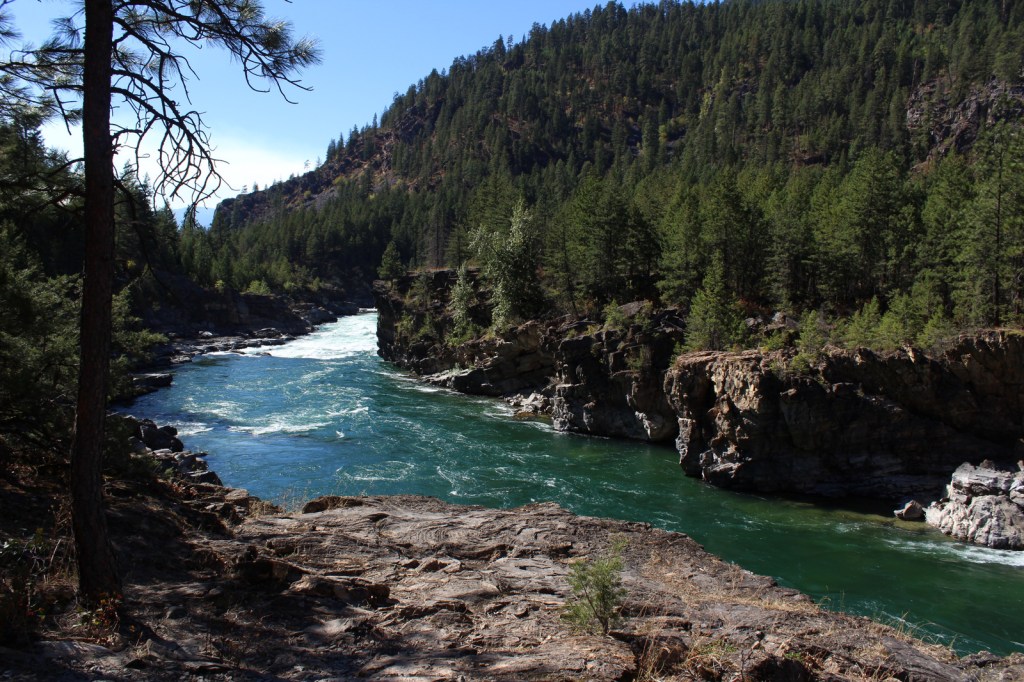
There are more than 1,200 miles of trails in Kootenai National Forest, including 90 miles of the Pacific Northwest National Scenic Trail.  Two of the best places to hike are the Northwest Peak and Ten Lakes Scenic Areas, in the remote upper corners of the National Forest.  Outside of Libby, Montana, Blue Mountain Trail (1.5 miles one-way), Skyline National Recreation Trail (22 miles), and Scenery Mountain Lookout Trail (2.5 miles) all climb to incredible overlooks.  At Kootenai Falls (see Photographic Opportunity), a new suspension bridge crosses the Kootenai River to Forest Service land on the north shore.  From there, Koot Creek Canyon Trail travels another three miles to a dirt road in Kootenai National Forest.

Best Trail

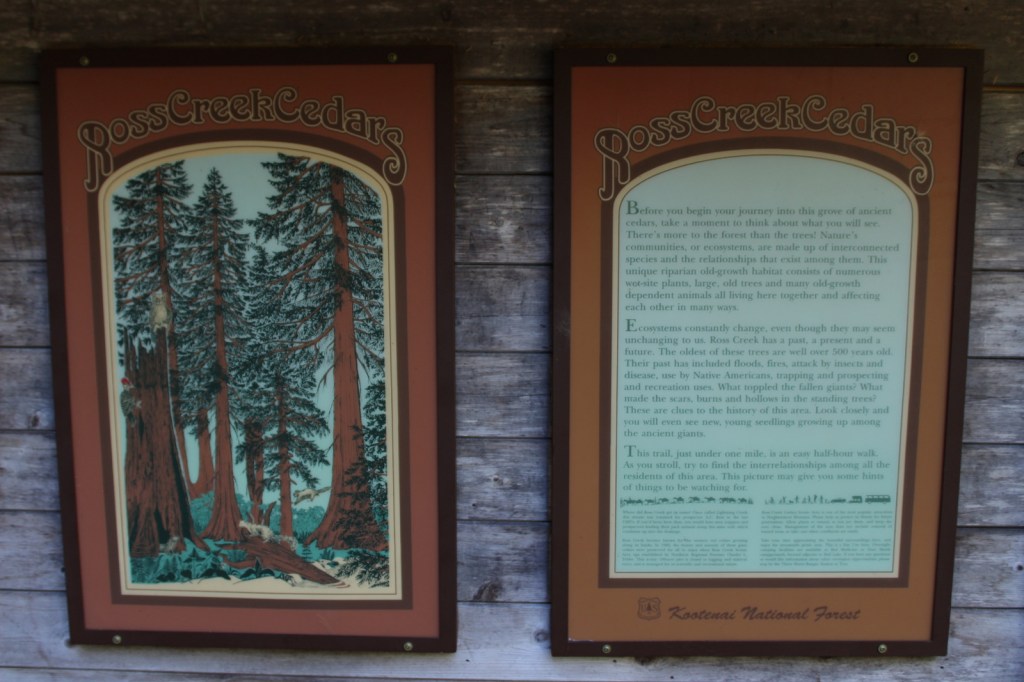
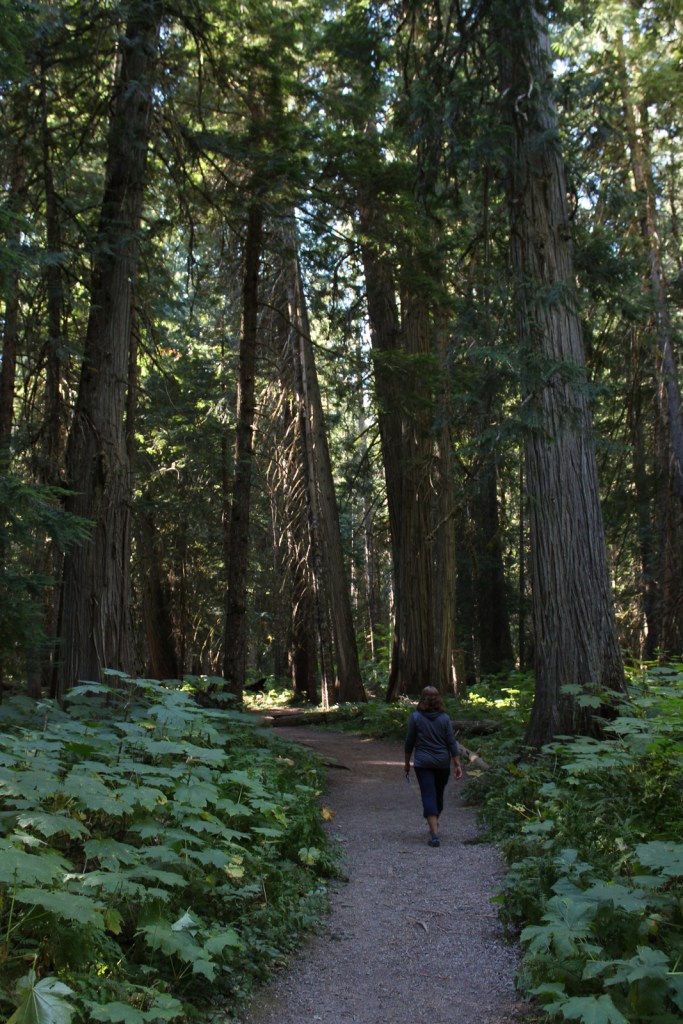
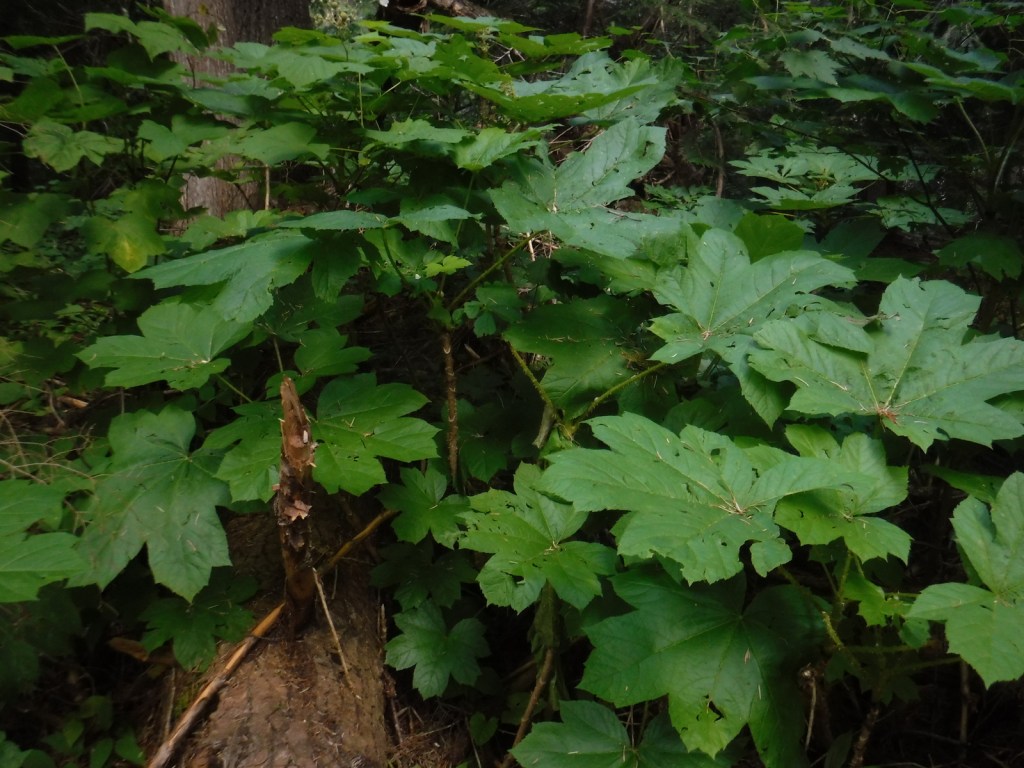
In 1959, Ross Creek Cedar Grove Scenic Area preserved 101 acres of western redcedar trees up to eight feet in diameter.  A one-lane paved road with pullouts leads 4.3 miles from Highway 56 to a large parking area with a day-use fee.  The main trail is a less than one-mile loop with interpretive signs, but continues five miles to the North Fork of Ross Creek.  The old-growth forest is also home to large Douglas-fir, Engelmann spruce, grand fir, and western hemlock trees growing above a lush green understory of ferns and Devil’s-club.

Watchable Wildlife

The mountains provide habitat for grizzly bears, black bears, Canada lynxes, bobcats, mountain lions, wolverines, mink, pine martens, long-tailed weasels, porcupines, snowshoe hares, pika, moose, bighorn sheep, and mountain goats.  Hoskins Lake is a wintering range for mule deer and white-tailed deer, as well as an osprey nesting area in the summer.  The National Forest’s numerous rivers and more than 100 lakes support gamefish like cutthroat, rainbow, brown, and endangered bull trout.  The endangered white sturgeon is also found in this area.

Photographic Opportunity

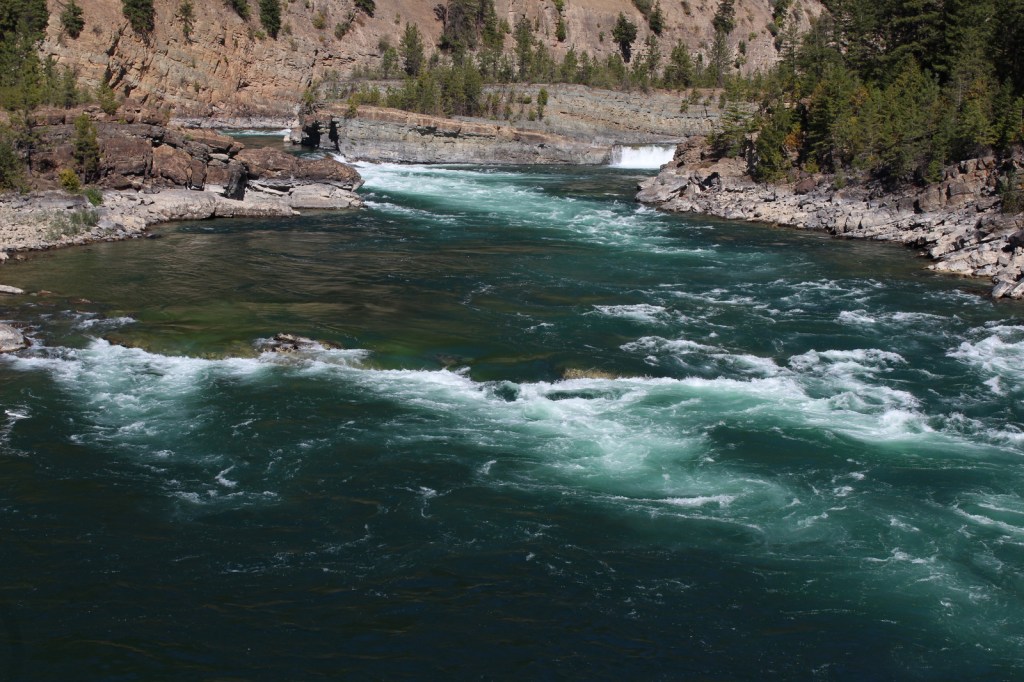
Located in a county park on the side of Highway 2, Kootenai Falls is only about 20 feet tall, but it is impressively wide and beautiful.  An overlook is located one-tenth of a mile from the parking lot, but there is also a walking bridge that crosses over the railroad tracks to a viewpoint at the edge of the falls, and a suspension bridge only a quarter-mile further downstream.

Peak Season

Summer

Fees

Ross Creek Cedar Grove Scenic Area has a day-use fee (or the America the Beautiful pass is also accepted).

Road Conditions

Paved roads like the Lake Koocanusa Scenic Byway, U.S. Highway 2, and State Highway 56 make it easy to explore Kootenai National Forest.  To access Ross Creek Cedar Grove Scenic Area, a one-lane paved road with pullouts leads 4.3 miles from Highway 56.  A nice drive through the Purcell Mountains can be made by looping State Route 508 and Forest Road 68.

Camping

There are Forest Service campgrounds at Kilbrennan Lake, Loon Lake, Rexford Branch, Caribou, Red Top, Whitetail, Pete Creek, Howard Lake, and elsewhere.  Big Creek Baldy Mountain lookout cabin can be rented, too.

Wilderness Areas

Cabinet Mountains Wilderness (also in Kaniksu National Forest)

Related Sites

Kaniksu National Forest (Idaho-Montana-Washington)

Bitterroot National Forest (Montana-Idaho)

Coeur d’Alene National Forest (Idaho)

Nearest National Park

Glacier

Conifer Tree Species

lodgepole pine, whitebark pine, ponderosa pine, Douglas-fir, western hemlock, western redcedar, , western larch, alpine larch, Engelmann spruce, subalpine fir, grand fir

Flowering Tree Species

Rocky Mountain maple, boxelder, quaking aspen, balsam poplar, dwarf birch, paper birch, Piper’s hawthorn, Bebb willow, western mountain-ash, choke cherry, western serviceberry

Explore More – The Kootenai (or Kootenay in Canada) River is named after the local Ktunaxa Indians, which translates as what in the Algonquian language?

Learn more about this and the 154 other National Forests in our new guidebook Out in the Woods

We are a participant in the Amazon Services LLC Associates Program, an affiliate advertising program designed to provide a means for us to earn fees by linking to Amazon.com and affiliated sites.

Baaj Nwaavjo I’tah Kukveni–Ancestral Footprints of the Grand Canyon National Monument

Baaj Nwaavjo I’tah Kukveni–Ancestral Footprints of the Grand Canyon National Monument

Arizona

Managed by U.S. Forest Service, Bureau of Land Management

Established 2023

917,618 acres

Website: https://www.blm.gov/national-conservation-lands/arizona/ancestral-footprints

Overview

This new National Monument is situated on both the North and South Rim of the Grand Canyon, but outside the boundaries of Grand Canyon National Park.  It includes the entirety of the Tusayan District of Kaibab National Forest on the South Rim, as well as two sections east and west of the 9,000-foot Kaibab Plateau on the Arizona Strip.  Its name is derived from the Havasupai words Baaj Nwaavjo, which translate as “where indigenous peoples roam,” plus the Hopi term I’tah Kukveni, which means “our ancestral footprints.”  According to the Bureau of Land Management (BLM) website it is pronounced “Baahj-Nuh-Waahv-Joh, Ee-Tah-Kook-Venny.”  The National Monument was created primarily to prevent future uranium mining claims in this area and further protect evidence of thousands of years of human habitation (see Best Trail).

Learn more about the other 137 National Monuments in our book Monumental America: Your Guide to All 138 National Monuments. It is now available for sale on Amazon.com.

Highlights

Red Butte, Hull Cabin, Apex Logging Camp, Grand Canyon Airport Historic District, Marble Canyon, Snake Gulch, Arizona National Scenic Trail

Must-Do Activity

Red Butte is located just east of paved Highway 64/180 on the way to Grand Canyon National Park’s South Rim.  A short 3.3-mile out-and-back trail with 912 feet of elevation gain is found at this geological formation sacred to the Havasupai, Hualapai, Navajo, Hopi, and Zuni people.  Also in this area, Hull Cabin dates back to 1889 and Apex Logging Camp was situated along the Grand Canyon Railroad between 1928 and 1936 (although not much remains other than the foundation of a one-room schoolhouse).  The Arizona National Scenic Trail runs through this part of Kaibab National Forest before entering the Grand Canyon and crossing the Kaibab Plateau.

Best Trail

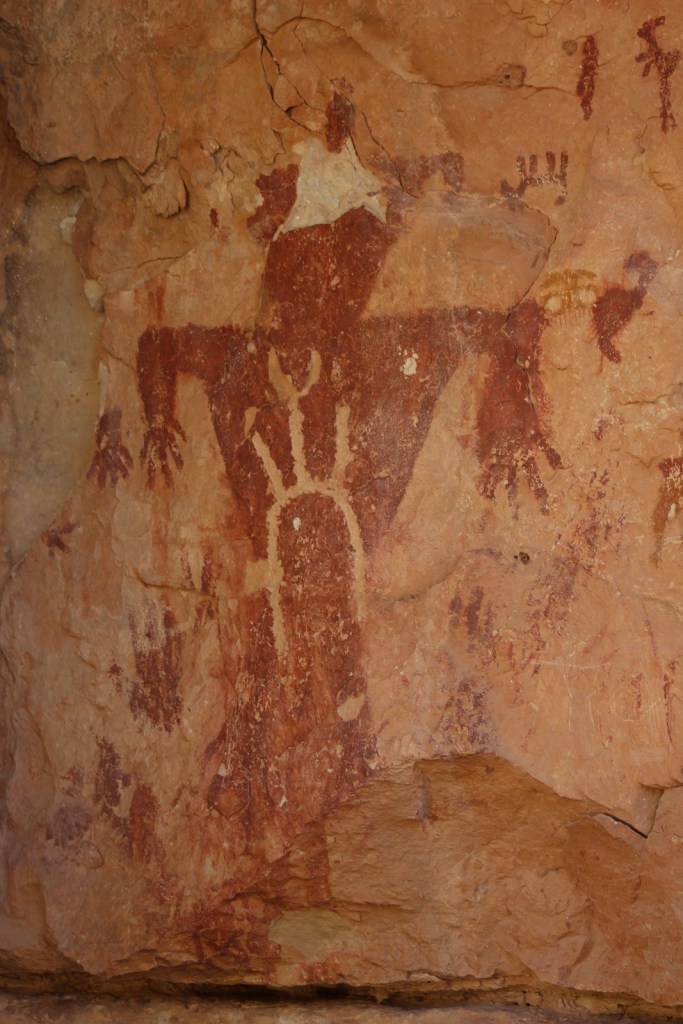
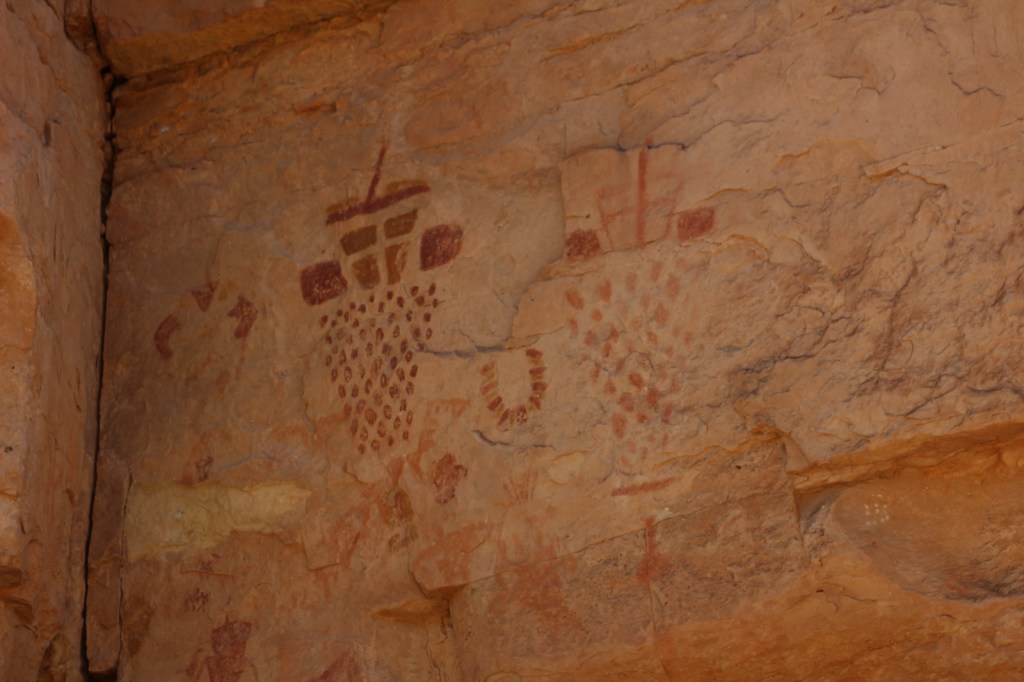
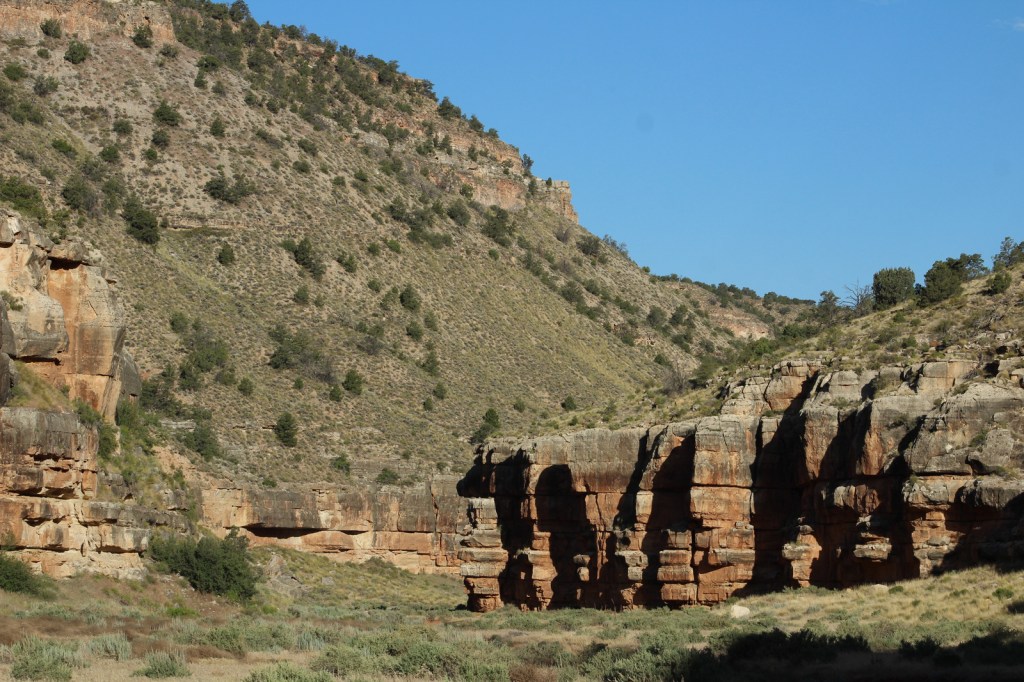
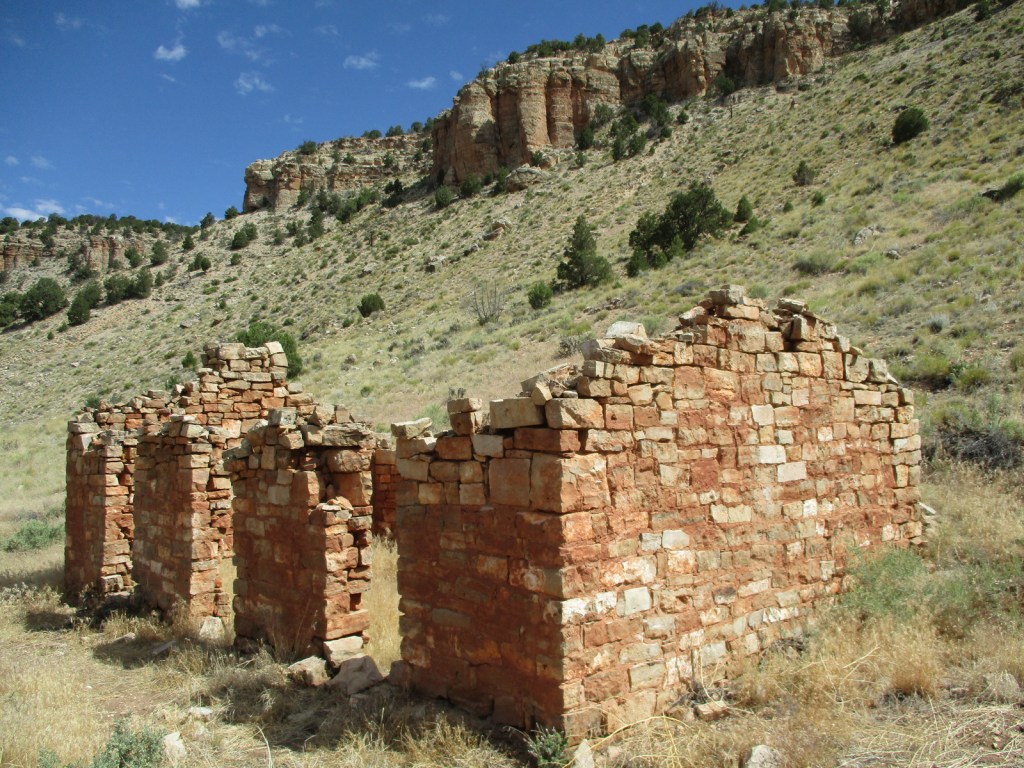
Snake Gulch-Kanab Creek Trail #59 starts at the end of unpaved Forest Road 642 (about five miles from the end of pavement on Forest Highway 22).  It soon passes an old homestead and turns left to enter the canyon, part of the extensive Kanab Creek Wilderness (and within the National Monument boundary).  The first pictographs can be seen about 2.5 miles in and from then on consistently on the north side of the canyon.  The images are primarily done in red paint from the Basketmaker People who resided in this region from 300 BCE to AD 800.  We hiked in seven miles then turned around as it started to get really hot in late June, but the trail through the canyon continues 21 miles to where it connects with Ranger Trail #41.  Our favorite pictographs were located about four miles in, which would make a good turnaround point for a day hike.

Instagram-worthy Photo

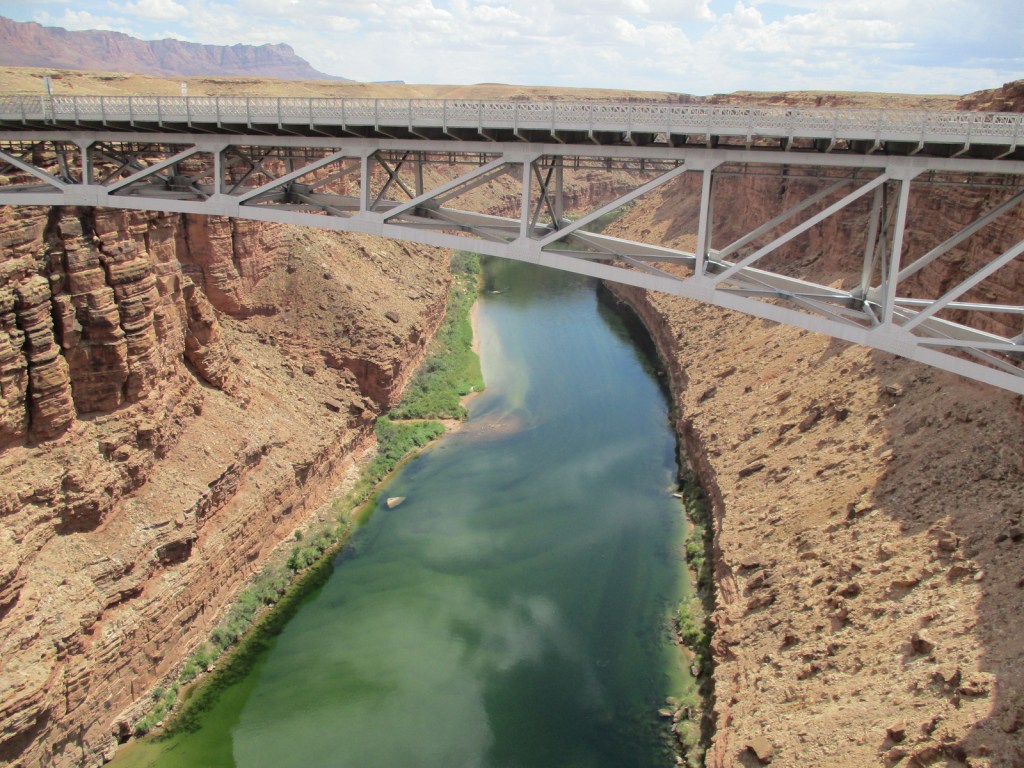
Stop at the historic Navajo Bridge that crosses the Colorado River at Marble Canyon where four public lands meet: Grand Canyon National Park, Glen Canyon National Recreation Area, Vermilion Cliffs National Monument, and Baaj Nwaavjo I’tah Kukveni-Ancestral Footprints of the Grand Canyon National Monument.

Peak Season

Spring and fall, as summer can be very hot

Hours

Navajo Bridge Visitor Center (National Park Service)

https://www.nps.gov/glca/planyourvisit/visitorcenters.htm

Fees

None

Road Conditions

There are many unpaved and four-wheel-drive-only roads spread across this area, but Highway 64/180 to the South Rim is paved.  High clearance is recommended to access Snake Gulch-Kanab Creek Trailhead.  Highway 67 and most Forest Roads on the Kaibab Plateau are closed in winter due to heavy snowfall.

Camping

There are good, dispersed camping options throughout Kaibab National Forest, including along the dirt roads just outside the east entrance of Grand Canyon National Park’s South Rim before entering the Navajo Nation.

Related Sites

Glen Canyon National Recreation Area (Arizona-Utah)

Vermilion Cliffs National Monument (Arizona)

Grand Canyon-Parashant National Monument (Arizona)

Pipe Spring National Monument (Arizona)

Explore More – When were beefalo (bison and cattle mix) introduced to the House Rock Valley area west of Marble Canyon (and now found roaming inside Grand Canyon National Park and Kaibab National Forest)?

Learn more about the other 137 National Monuments in our book Monumental America: Your Guide to All 138 National Monuments

Hiawatha National Forest

Hiawatha National Forest

Michigan

Managed by U.S. Forest Service, Eastern Region

1,294,645 acres (894,836 federal/ 399,809 other)

Website: https://www.fs.usda.gov/hiawatha

Overview

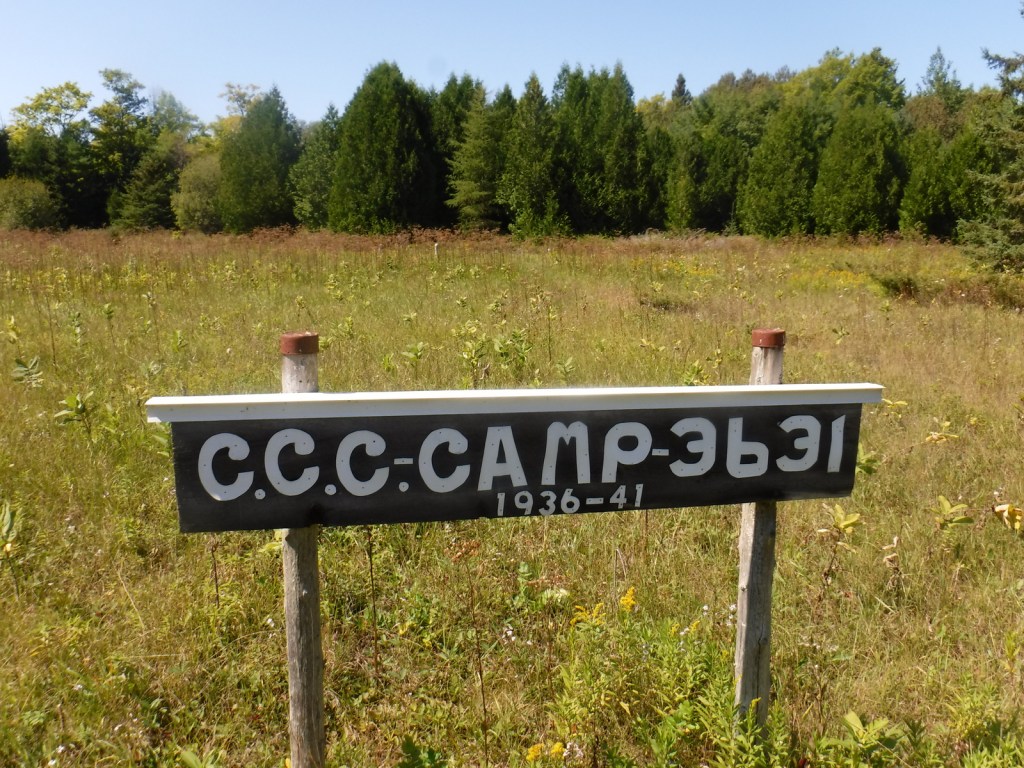
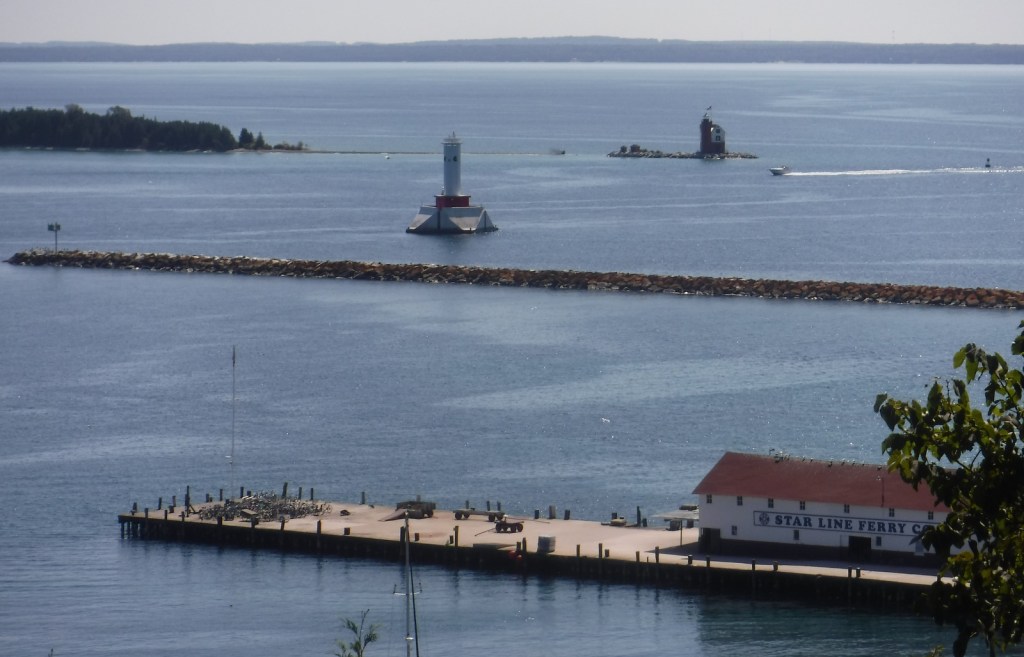
Hiawatha National Forest is separated into two sections on the Upper Peninsula of Michigan, both of which touch Lake Superior and Lake Michigan.  The East Unit also fronts Lake Huron, and includes scenic Round Island Lighthouse near Mackinac Island, as well as beautiful Point Iroquois Light Station.  Most of these sandy soils in the East Unit were never homesteaded, so they were easily designated Marquette National Forest by President Theodore Roosevelt in 1909.  Land purchases for the West Unit began in 1928, and were later replanted by the Civilian Conservation Corps (CCC).  The West Unit includes 13,500-acre Grand Island National Recreation Area (see our blog post) in Lake Superior, a popular destination for camping, biking, and kayaking at the western edge of Pictured Rocks National Lakeshore.

Highlights

Grand Island National Recreation Area, St. Helena Island National Scenic Area, Whitefish Bay Scenic Byway, Point Iroquois Light Station, Scott Falls, Diamond Hill Lookout, Porcupine Nature Trail, Haymeadow Falls Trail, Naomikong Point Blue Trail, North Country National Scenic Trail

Must-Do Activity

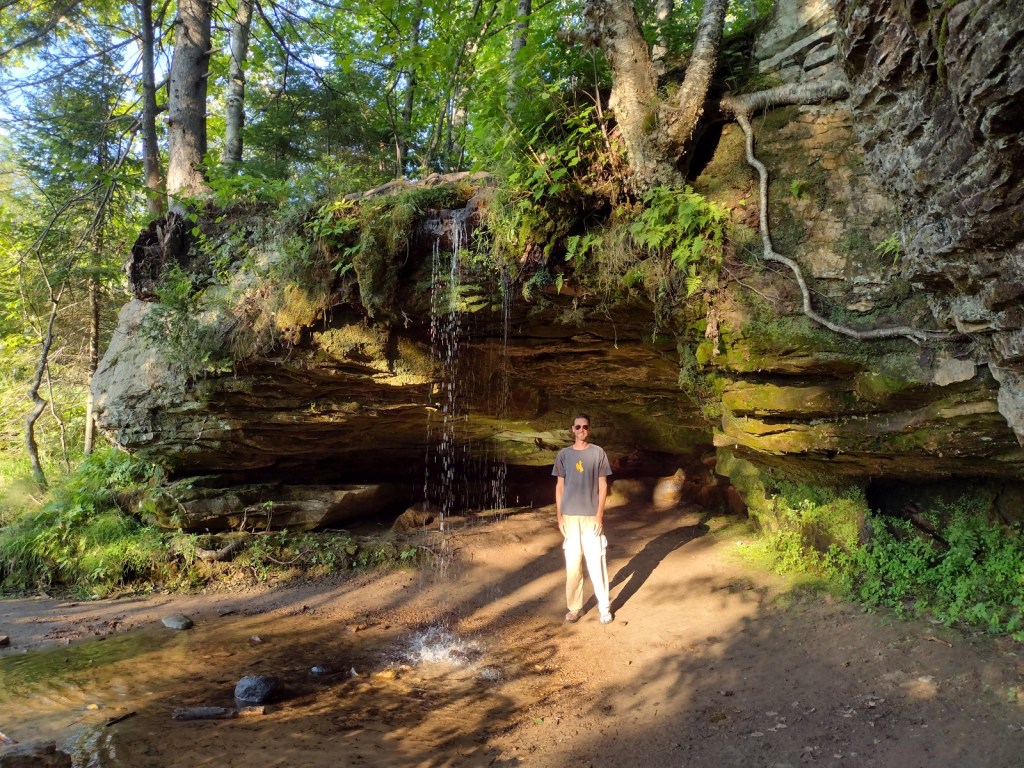
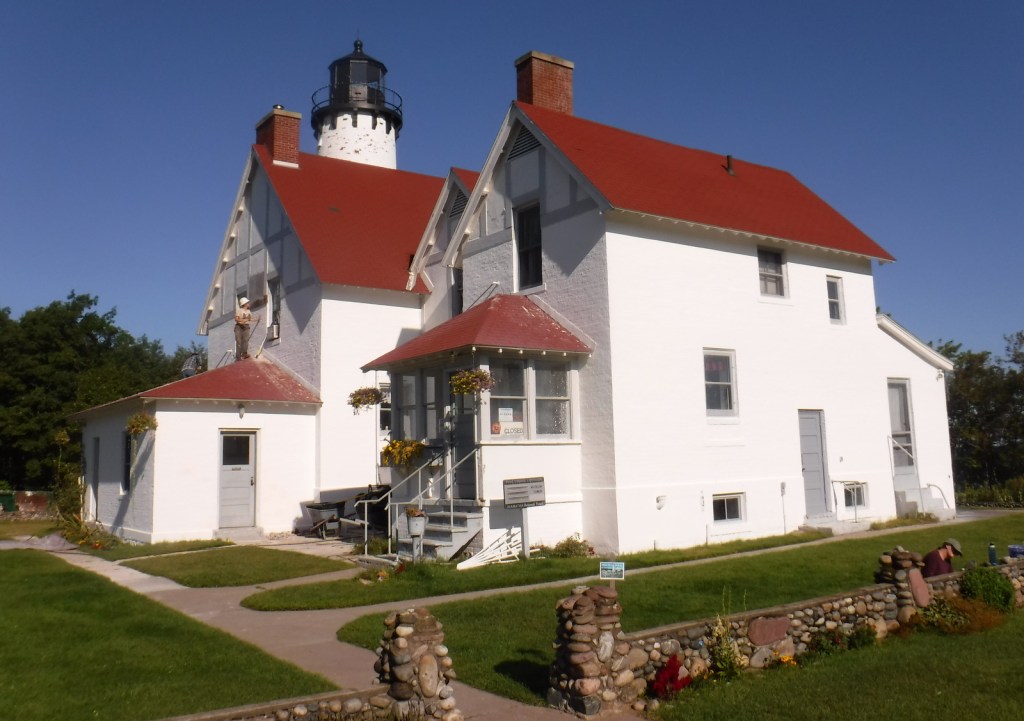
Several lighthouses are located along the shores of the Great Lakes, including the picturesque Round Island Lighthouse near touristy Mackinac Island, Point Iroquois Light Station (see Instagram-worthy Photo) on the Whitefish Bay Scenic Byway, and one on private land near Wick Point within Grand Island National Recreation Area (see our blog post).  Further to the west Highway M-28 follows the shores of Lake Superior, where a Wayside Park at the east side of AuTrain Bay provides parking for those wishing to carefully cross the road to see ten-foot-tall Scott Falls.

Best Trail

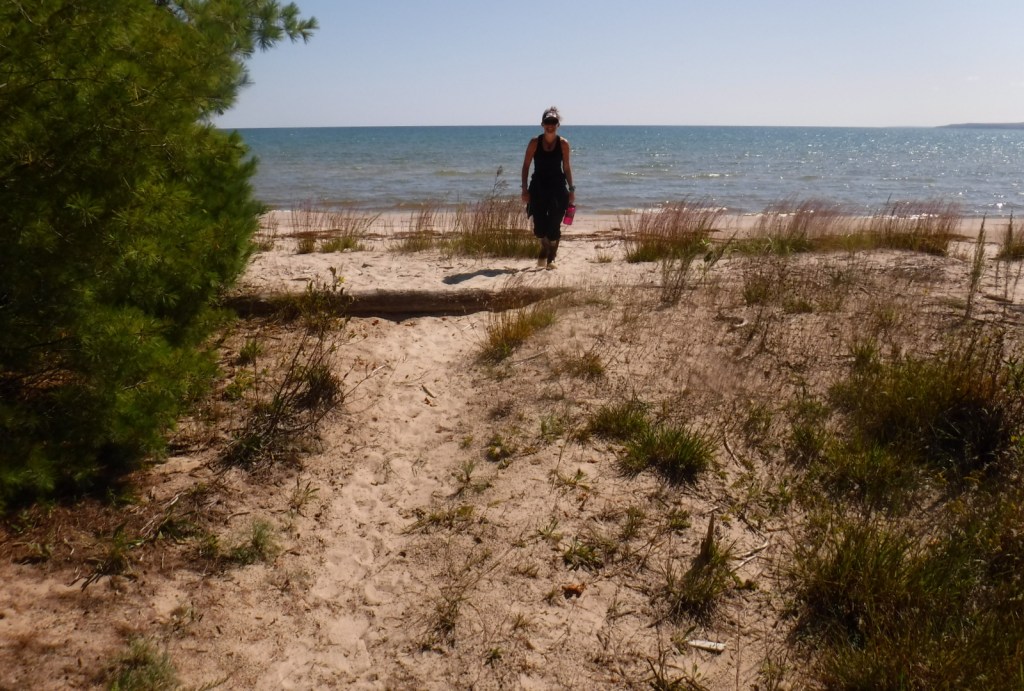
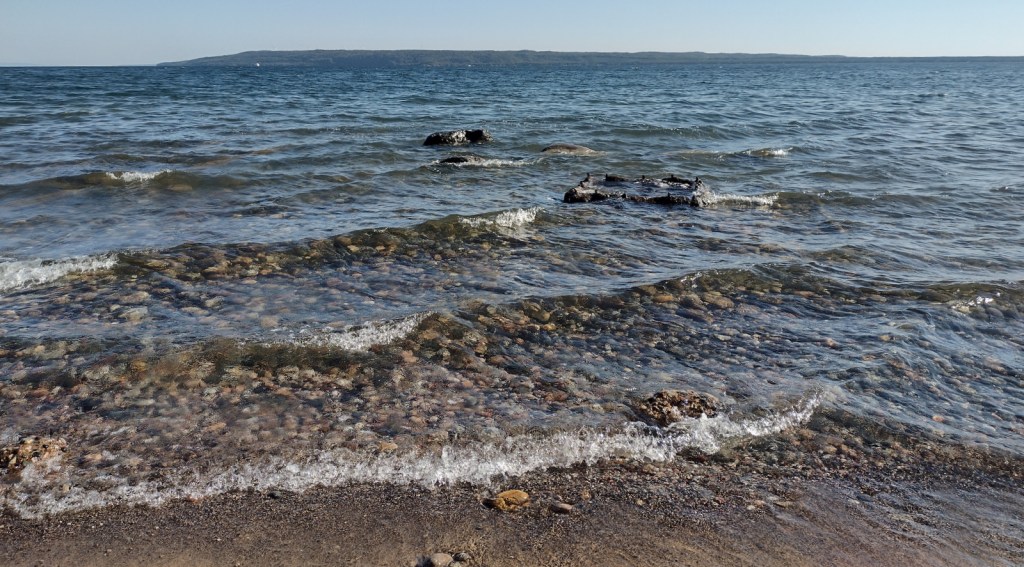
Foley Creek Day Use Area is located just off Interstate 75 at a large pullout along paved Mackinac Trail Road.  A hike starts at the north end of a former campground, and soon the sound of the freeway is dispersed by the trees as you enter the small Horseshoe Bay Wilderness.  The trail has boardwalks across the wettest spots and after 1.4 miles opens up to a secluded sandy beach on Lake Huron with views of Mackinac Island.  Naomikong Point Blue Trail is a popular 3.4-mile out-and-back trail that connects with the North Country National Scenic Trail, crossing Naomikong Creek on a suspension bridge then ending at Menekaunee Point on Naomikong Island.

Watchable Wildlife

These forests are home to gray wolves, black bears, bobcats, Canada lynx, mountain lions, red foxes, coyotes, striped skunks, weasels, minks, river otters, porcupines, beavers, muskrats, snowshoe hares, white-tailed deer, and moose.  Large birds found here include wild turkeys, spruce grouse, ruffed grouse, golden eagles, bald eagles, ospreys, great blue herons, sandhill cranes, and trumpeter swans.  Hiawatha National Forest has more than 100 miles of shoreline on three Great Lakes, offering fishing for walleye, northern pike, muskies, Atlantic salmon, and steelhead trout.  In addition, there are 75 inland lakes and 600 miles of streams, including five National Wild and Scenic Rivers: Carp River, Indian River, Sturgeon River, Tahquamenon River (East Branch), and Whitefish River.  The 0.9-mile Haymeadow Falls Trail loop partially follows a productive trout stream.

Instagram-worthy Photo

Located on the Whitefish Bay Scenic Byway, the iconic 65-foot Point Iroquois Light Station stands on the shores of Lake Superior at the mouth of St. Mary’s River.  The first lighthouse and residence were built here in 1855, and the current buildings were placed on the National Register of Historic Places in 1975.  When not under construction, you can pay to enter the museum and climb the spiral staircase to the top of the tower.

Peak Season

Summer

Fees

None

Road Conditions

Whitefish Bay Scenic Byway is fully paved, and we found the unpaved roads to Hovey Lake Campground to be in good enough shape for our passenger vehicle.

Camping

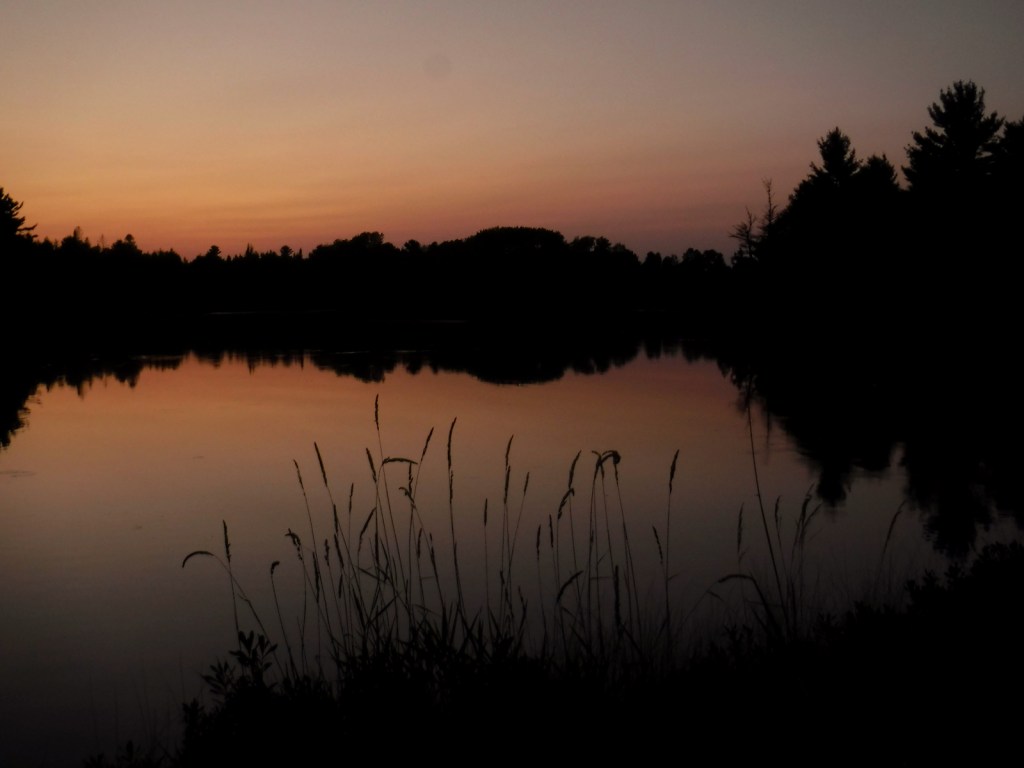
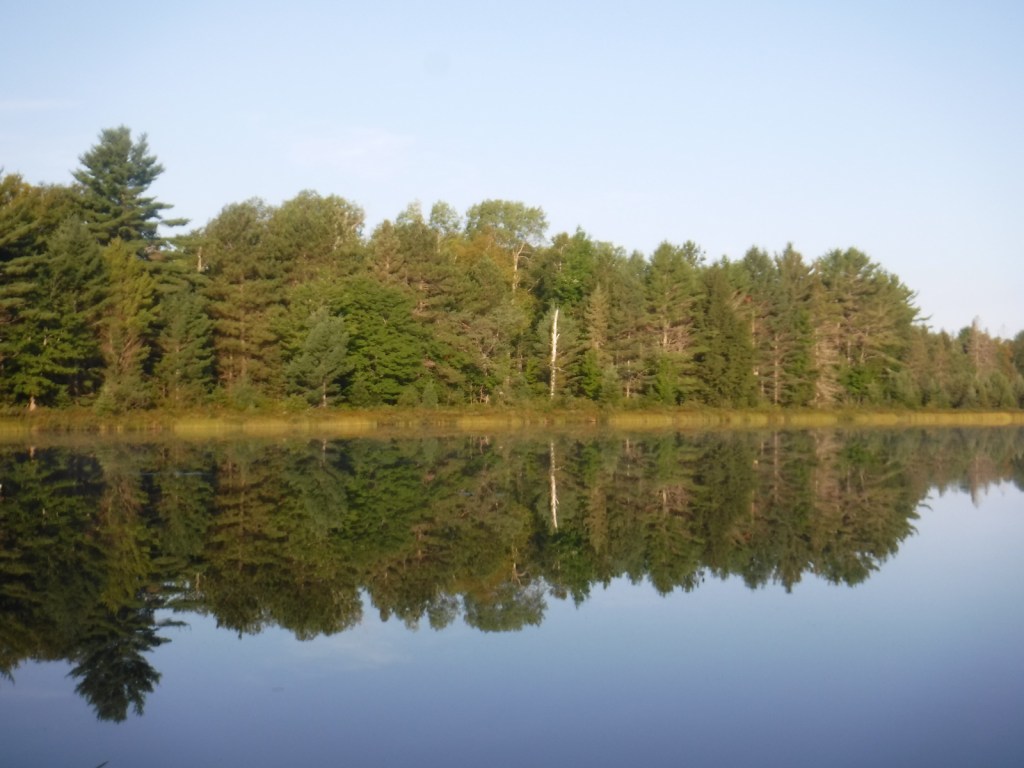
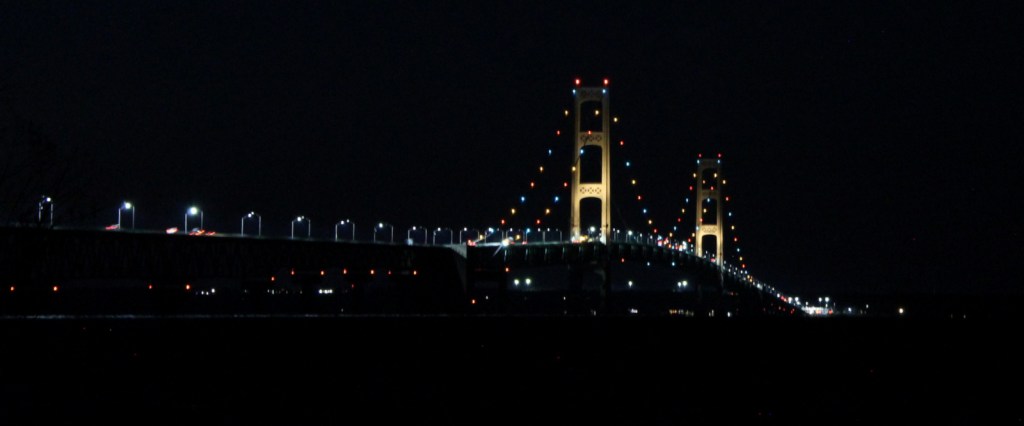
We spent an enjoyable night at the free Hovey Lake Campground and awoke to find a pair of trumpeter swans on the water.  Hiawatha National Forest has many other campgrounds, including two near the Mackinaw Toll Bridge: Lake Michigan (35 campsites) and Carp River (44 sites).  Near the town of Brimley on Lake Superior, Bay View (24 sites) and Monocle Lake (39 sites) Campgrounds are also popular.

Wilderness Areas

Big Island Lake Wilderness

Delirium Wilderness

Horseshoe Bay Wilderness

Mackinac Wilderness

Rock River Canyon Wilderness

Round Island Wilderness

Related Sites

Ottawa National Forest (Michigan)

Keweenaw National Historical Park (Michigan)

Pictured Rocks National Lakeshore (Michigan)

Nearest National Park
Isle Royale

Conifer Tree Species

eastern hemlock, jack pine, eastern white pine, red pine, balsam fir, black spruce, white spruce, eastern arborvitae, tamarack

Flowering Tree Species

basswood, red maple, sugar maple, American beech, quaking aspen, paper birch, white birch, northern red oak, mountain holly

Explore More – The subject of a famous Henry Wadsworth Longfellow poem, who was Hiawatha in real life?

Learn more about this and the 154 other National Forests in our new guidebook Out in the Woods

Coeur d’Alene National Forest

Coeur d’Alene National Forest

Idaho

Managed by U.S. Forest Service, Northern Region

801,759 acres (725,797 federal/ 75,962 other)

Website: https://www.fs.usda.gov/ipnf/

Overview

Coeur d’Alene National Forest is located on both sides of Interstate 90, east of the city of Coeur d’Alene, which was the French name given to the indigenous people.  In 1973, it was joined with Kaniksu and St. Joe National Forests to form Idaho Panhandle National Forests.  A good base for exploration, Wallace is a silver mining boomtown that refused to die despite its close call during the infamous Big Burn of 1910 (read more about it and the Pulaski Tunnel in Timothy Egan’s book).  On the Montana border, Lookout Pass Ski Area provides permits, equipment rentals, and shuttles for the famous Route of the Hiawatha bicycling trail (that is technically in St. Joe National Forest).

Highlights

Lake Hayden, Lookout Pass, Prichard Bridge, Stevens Lake, Willow Creek Falls, Steamboat Rock, Grassy Mountain Lookout, Lake Hayden, Settler’s Grove of Ancient Cedars, Pulaski Tunnel Trail

Must-Do Activity

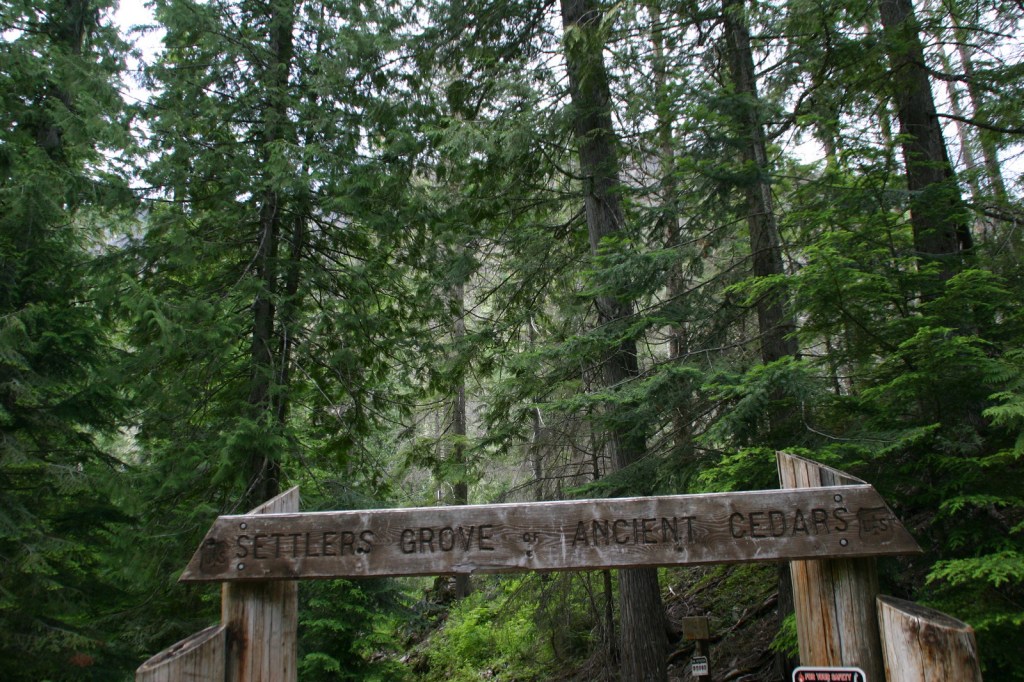
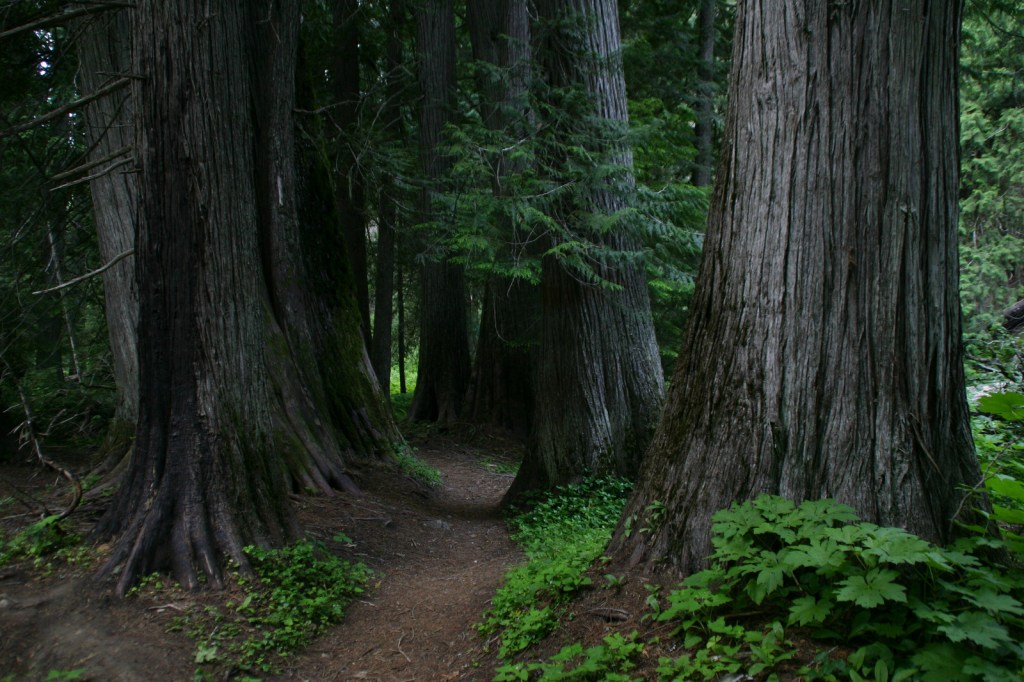
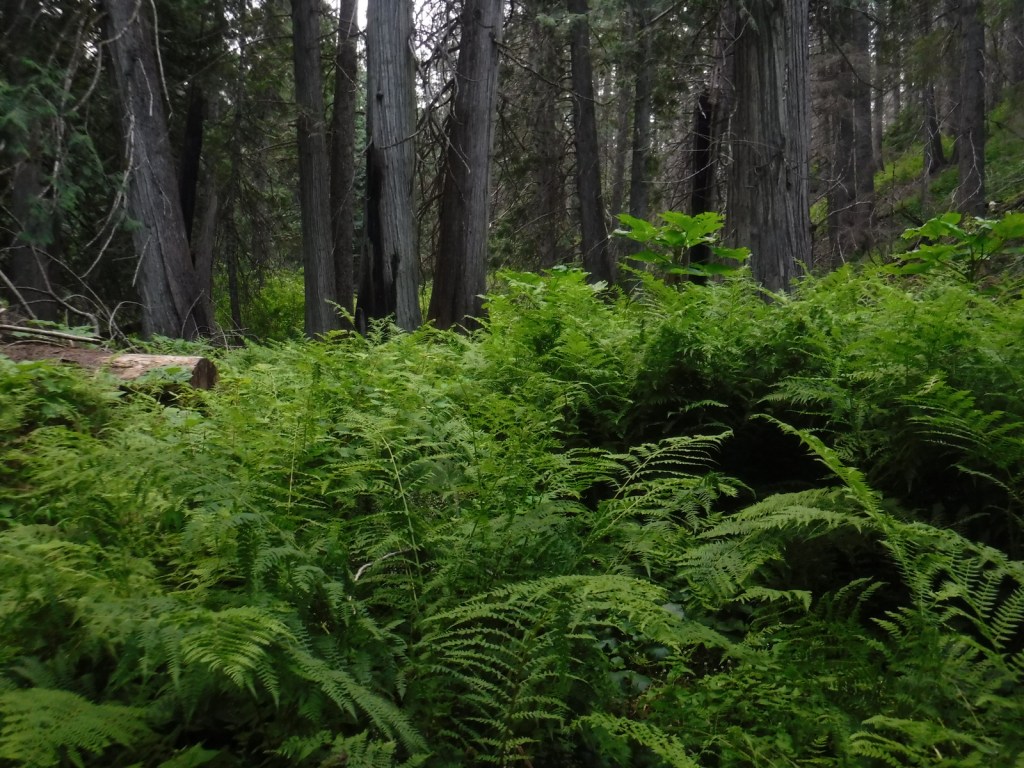
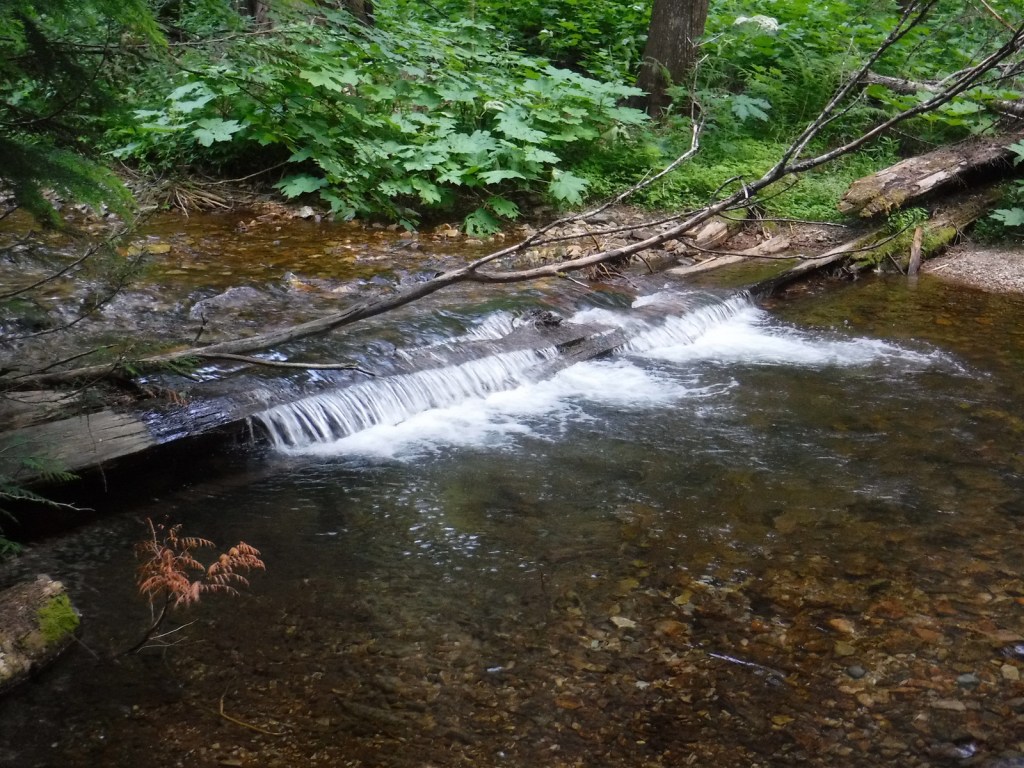
North of Wallace, a good dirt road follows the West Fork of Eagle Creek to the Settler’s Grove of Ancient Cedars.  This 173-acre stand contains western redcedar trees up to seven feet in diameter, as well as large western hemlocks.  Fire has burned through the understory of this grove freeing nutrients for a lush growth of ferns and devil’s-club.  Look for a geocache near the sign that reads “end of Cedar Grove Trail” and points uphill to Trail No. 162, which continues another three miles.

Best Trail

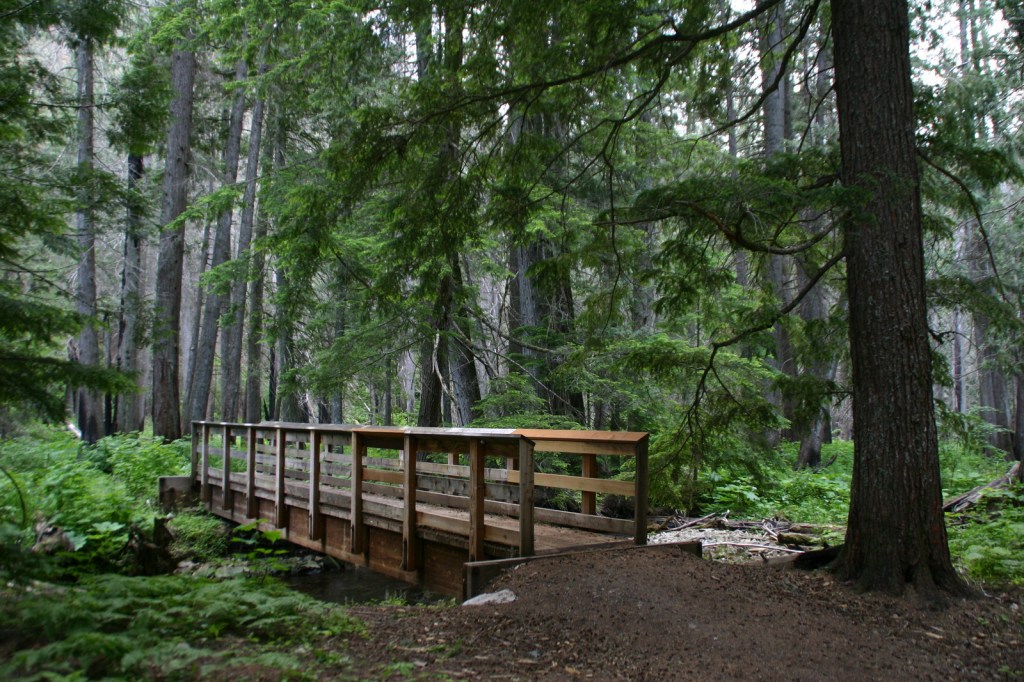
The Idaho Centennial Trail follows the mountainous Idaho-Montana border on the eastern side of Coeur d’Alene National Forest, although it does dip west to cross Interstate 90 near the town of Mullan.  The old Mullan Road was cut through this rugged area in 1859-61; the terrain was so steep that workers had to construct 47 bridges to cover a distance of only 28 miles. 

Watchable Wildlife

Coeur d’Alene National Forest is home to mule deer, elk, moose, black bears, bobcats, coyotes, and mountain lions.  This close to Canada, it is also possible to find grizzly bears and gray wolves.  Common large birds include ospreys, golden eagles, bald eagles, wild turkeys, and ravens.  Although the National Forest does not encompass Lake Coeur d’Alene, it does contain many of the rivers and creeks that feed it, which provide incredible fishing opportunities.

Instagram-worthy Photo

There are some impressive western redcedar trees growing in the Settler’s Grove of Ancient Cedars.

Peak Season

Summer

Fees

None

Road Conditions

Even the paved roads we drove north of Wallace were slow going—very steep with hairpin switchbacks.  Once we got on the unpaved road following the West Fork of Eagle Creek, it was wide and flat.  We drove through Coeur d’Alene National Forest to access Bullion Pass on a four-wheel-drive-only road up a steep three-mile-long grade about a mile west (on a paved frontage road) from the Dena Mosa-Lookout Pass Rest Area on eastbound Interstate 90.

Camping

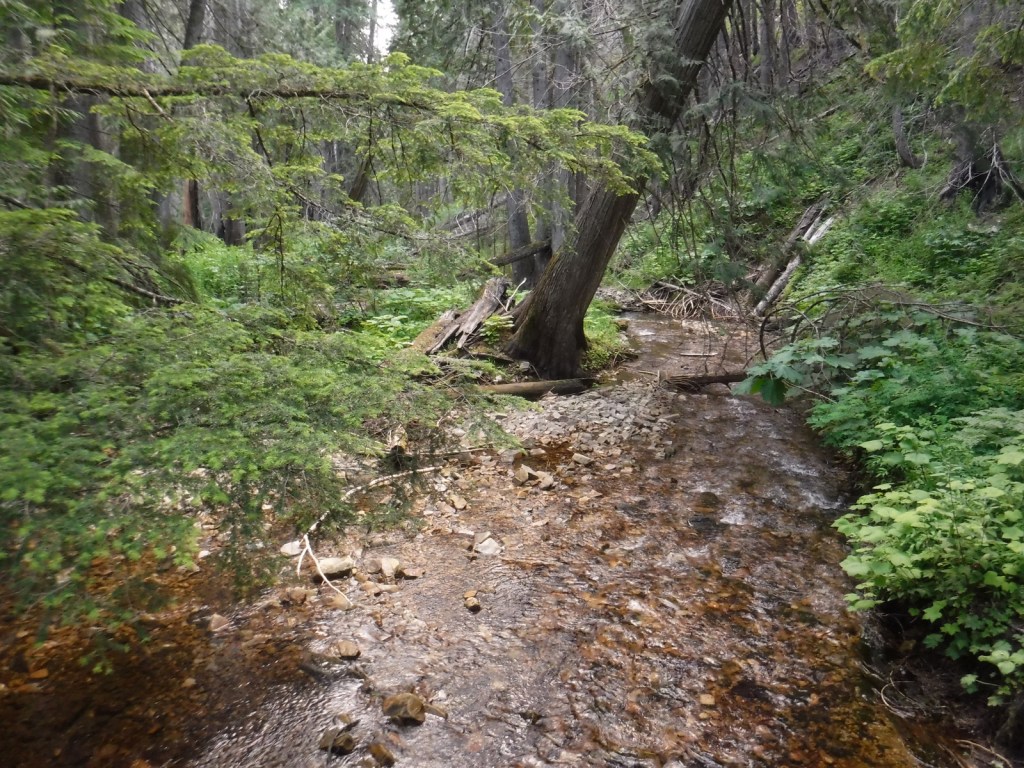
There are campgrounds located throughout the National Forest, including Mokins Bay Campground on Hayden Lake and Bell Bay Campground on Lake Coeur d’Alene.  We found a good dispersed campsite along the West Fork of Eagle Creek on the road to the Settler’s Grove of Ancient Cedars.

Wilderness Areas

None

Related Sites

Challis National Forest (Idaho)

Clearwater National Forest (Idaho)

Nez Perce National Historical Park (Idaho-Oregon-Montana)

Nearest National Park

Glacier

Conifer Tree Species

western redcedar, Engelmann spruce, lodgepole pine, western white pine, Douglas-fir, western hemlock, grand fir, subalpine fir, Pacific yew, western larch

Flowering Tree Species

quaking aspen, Pacific dogwood, red alder, balsam poplar, dwarf birch, paper birch, Piper’s hawthorn, boxelder, Bebb willow, western mountain-ash, choke cherry, western serviceberry, red alder, mountain alder

Explore More – How did the Coeur d’Alene tribe get its French name?

Learn more about this and the 154 other National Forests in our new guidebook Out in the Woods

We are a participant in the Amazon Services LLC Associates Program, an affiliate advertising program designed to provide a means for us to earn fees by linking to Amazon.com and affiliated sites.

Chugach National Forest

Chugach National Forest

Alaska

Managed by U.S. Forest Service, Alaska Region

6,908,540 acres (5,384,460 federal/ 1,524,080 other)

Website: https://www.fs.usda.gov/chugach/

Overview

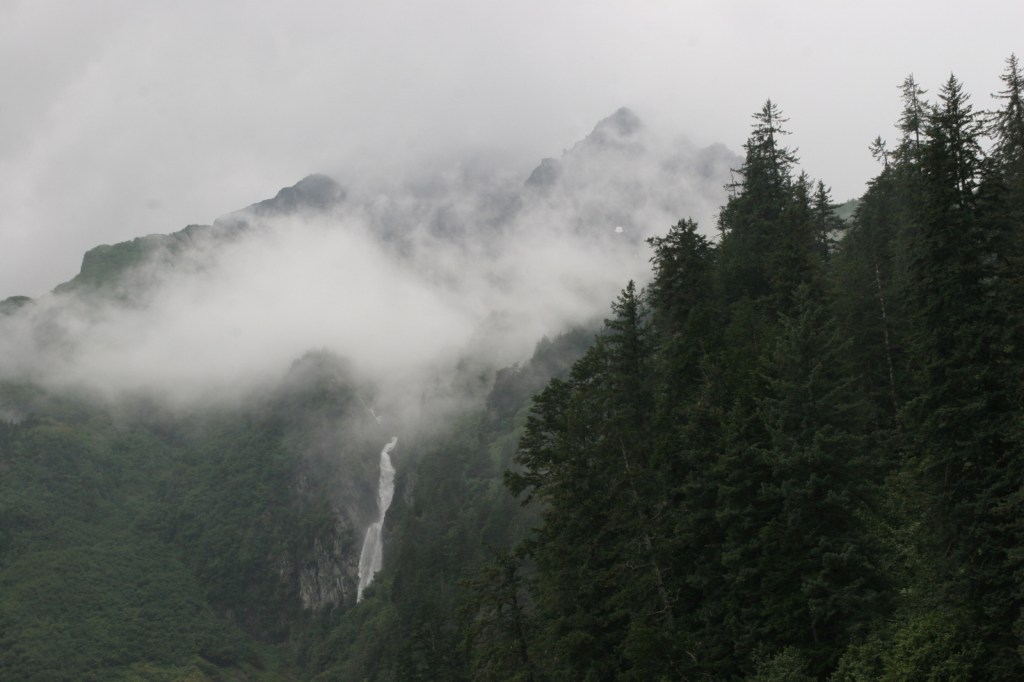
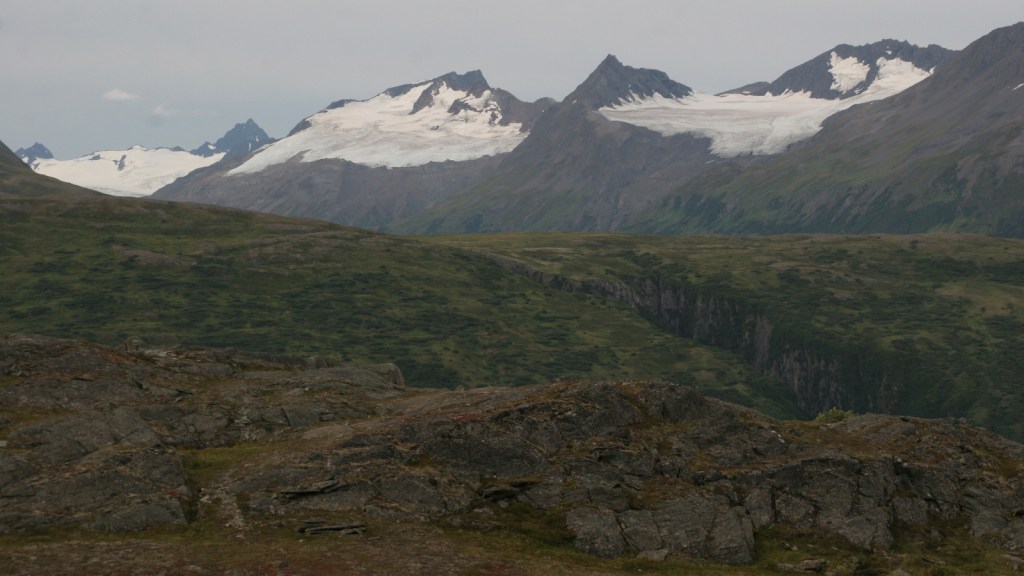
Roughly the size of New Hampshire, Chugach National Forest stretches from Seward, Alaska to the east beyond Cordova.  It encompasses 3,500 miles of shoreline in scenic Prince William Sound, one of the sport fishing world’s top destinations for halibut, ling cod, and salmon.  It is the northernmost and westernmost of all 155 National Forests, and 30% of its acreage is covered by glaciers (including 22 tidewater glaciers).  Chugach National Forest was established in 1907 from part of a Forest Reserve originally created in 1892, only 25 years after Alaska was purchased from Russia.

Highlights

Seward Scenic Byway, Turnagain Arm, Portage Glacier, Porcupine Campground, Russian River, Columbia Glacier, Million Dollar Bridge, Childs Glacier, Grayling Lake, Porcupine Creek Falls, Hope Point Trail, Iditarod National Historic Trail, Johnson Pass Trail, Russian Lakes Trail

Must-Do Activity

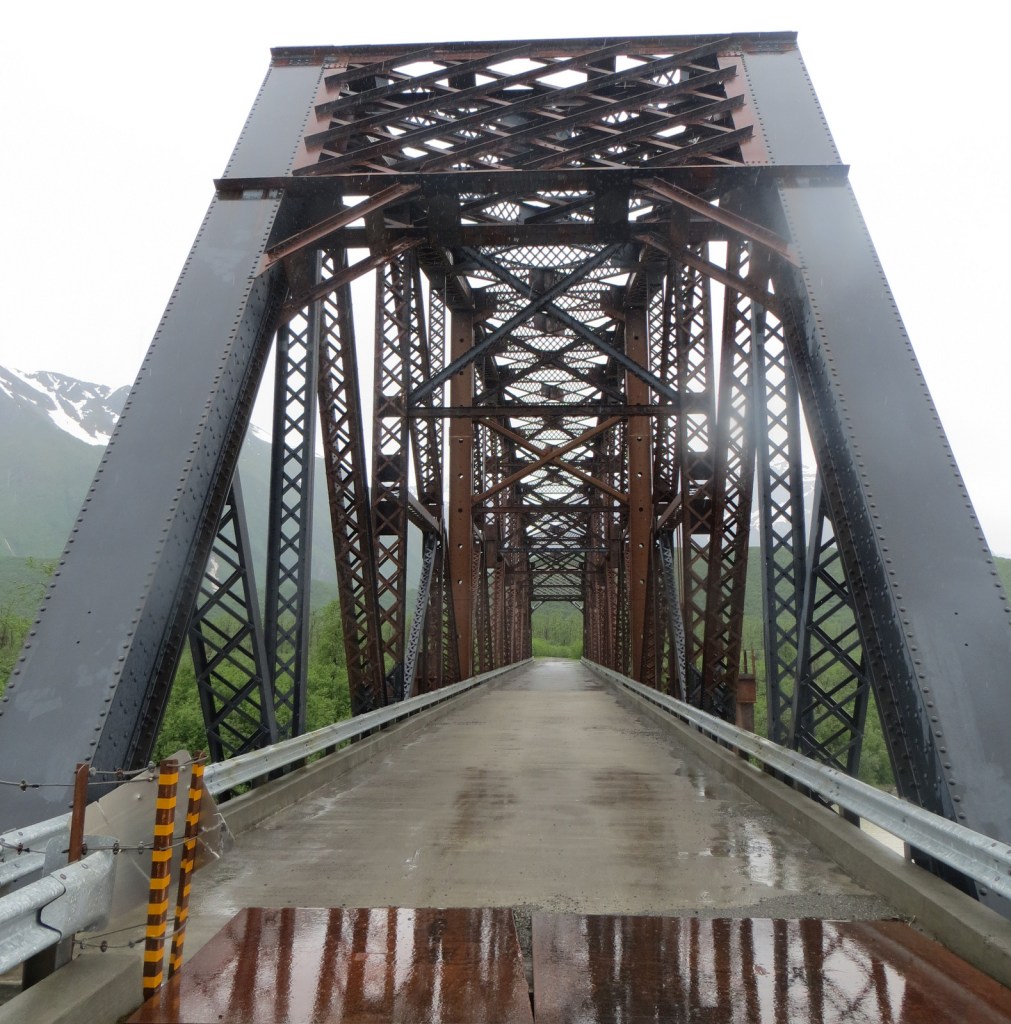
Cut off from the road system of Alaska, Cordova is a fishing village on Prince William Sound at the end of the Copper River Delta, which is considered the largest contiguous wetlands complex on North America’s Pacific coast.  Surrounded by Chugach National Forest, Cordova’s road network was dramatically shortened in 2011 when the mighty Copper River washed out a bridge 36 miles outside of town.  Now if you want to get to the dramatic Million Dollar Bridge or stunning Childs Glacier you have to arrange a trip by air boat.  Starting in 1911, the Million Dollar Bridge brought railcars full of copper ore from Kennecott Mine (which is now part of Wrangell-St. Elias National Park and Preserve).  Just across the Million Dollar Bridge, a short climb up a small hill provides great views of Miles Lake and the surrounding area.

Best Trail

There are over 500 miles of designated trails in the National Forest, including several long trails on the Kenai Peninsula, which is accessible by paved roads from Anchorage.  Three trails popular with backpackers are the 23-mile Johnson Pass Trail, 22-mile long Russian Lakes Trail (with three Forest Service cabins for rent along its route), and 39-mile Resurrection Pass Trail (with eight Forest Service cabins). 

Watchable Wildlife

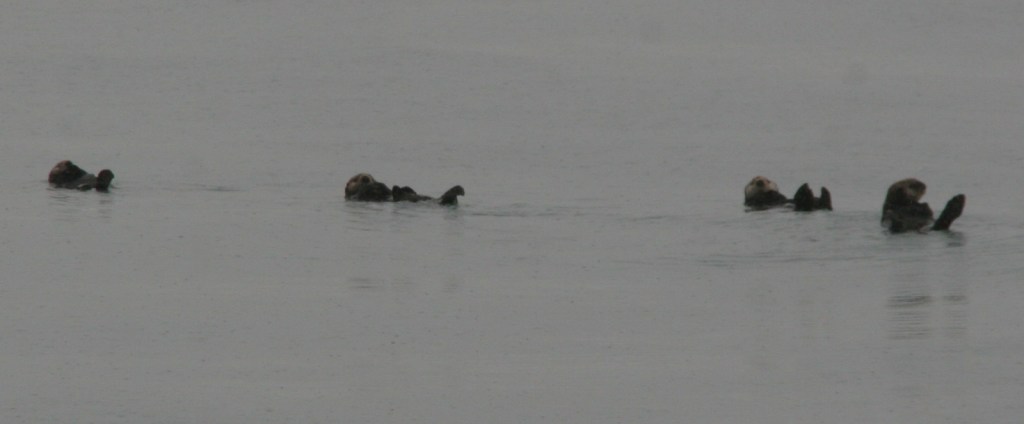
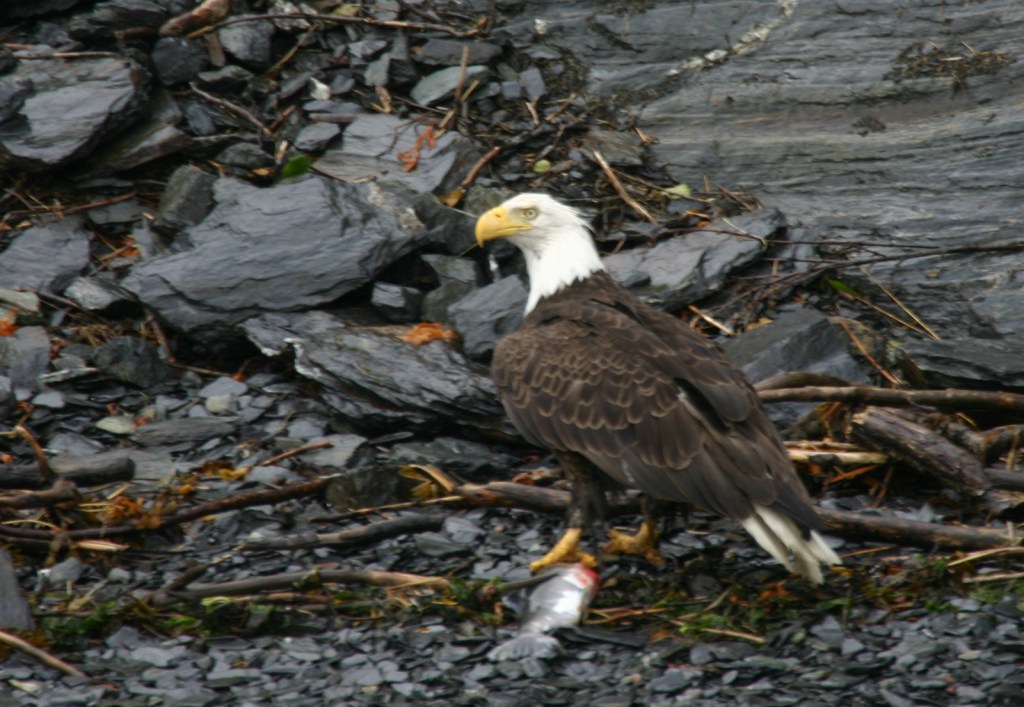
Chugach National Forest provides nesting habitat for millions of birds, including a huge population of bald eagles and more than 200 colonies of seabirds.  Large mammals include moose, caribou, Sitka black-tailed deer, Dall sheep, mountain goats, pine martens, coyotes, gray wolves, black bears, and grizzly/brown bears.  Marine mammals include humpback whales, minke whales, Dall’s porpoises, Steller sea lions, and sea otters.  Rivers and creeks provide spawning beds for all five species of Pacific salmon: chinook/king, sockeye/red, coho/silver, chum/dog, and pink/humpback. 

Instagram-worthy Photo

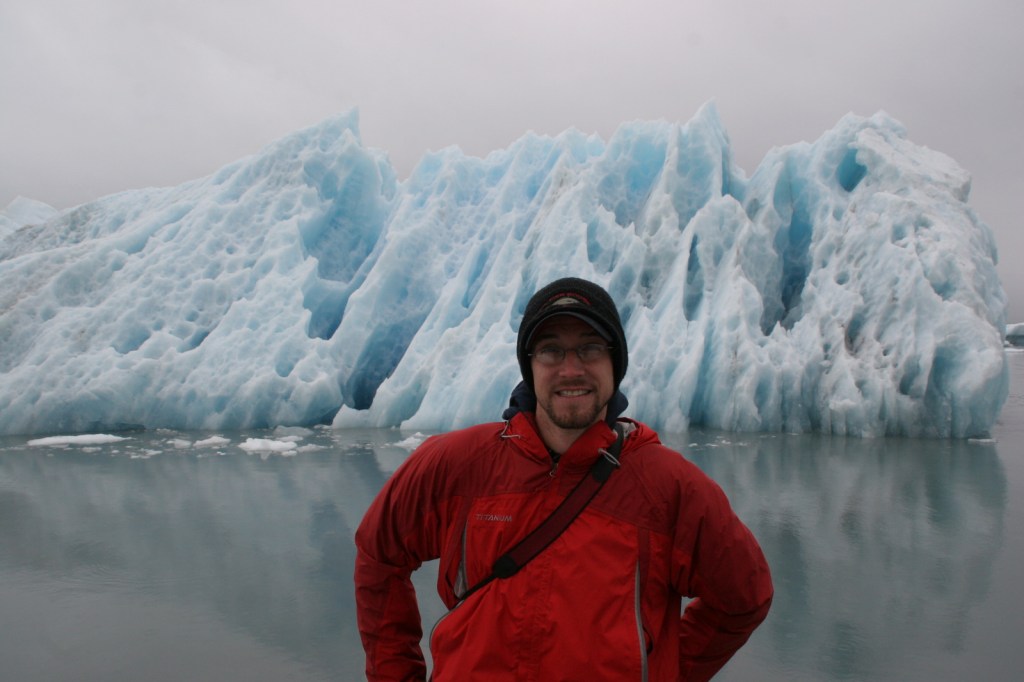
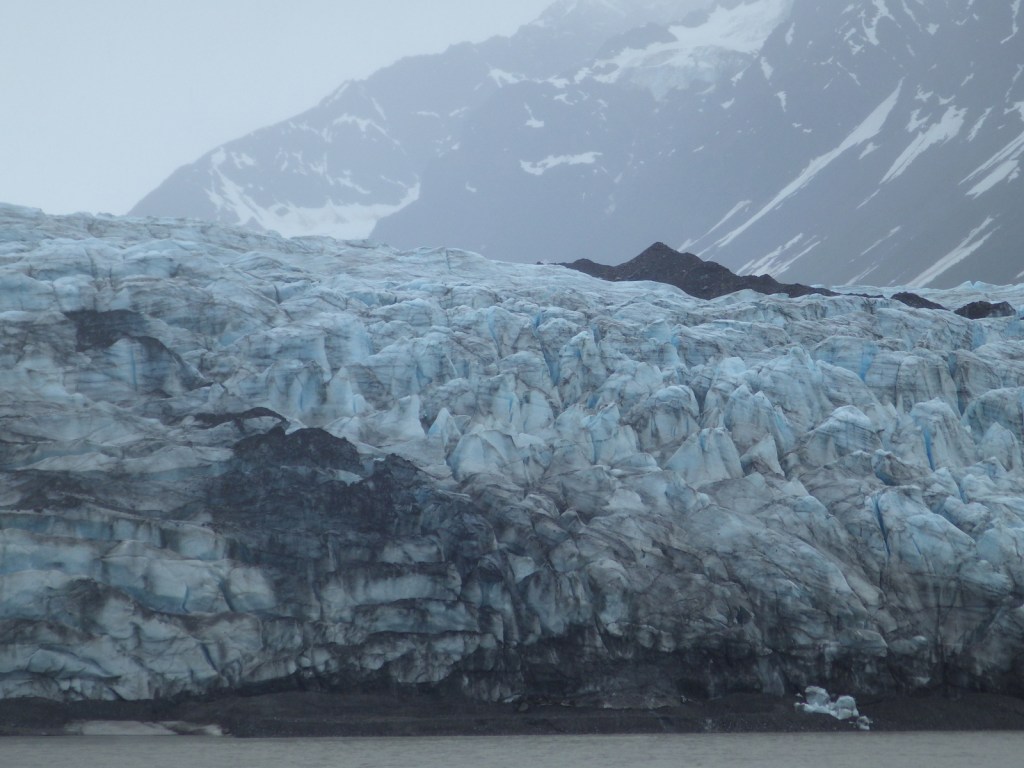
Boat tours out of the beautiful port of Valdez get close to the massive Columbia Glacier, a tidewater glacier that produces so many icebergs that it is inaccessible from the water.

Peak Season

Summer

Fees

None

Road Conditions

There are not many roads in Chugach National Forest, and to access the Million Dollar Bridge and Childs Glacier outside Cordova you will need to arrange a trip by air boat since a bridge washed out in 2011.

Camping

There are 16 campgrounds in Chugach National Forest, including the Porcupine Campground in Hope near a creek popular for salmon fishing.

Wilderness Areas

Nellie Juan-College Fiord Wilderness Study Area

Related Sites

Katmai National Park and Preserve (Alaska)

Wrangell-St. Elias National Park and Preserve (Alaska)

Glacier Bay National Park and Preserve (Alaska)

Nearest National Park

Kenai Fjords

Conifer Tree Species

Sitka spruce, western hemlock, mountain hemlock, yellow-cedar

Flowering Tree Species

thinleaf alder, balsam poplar, paper birch, Scouler willow, Bebb willow, feltleaf willow, undergreen willow, Barclay willow, netleaf willow, arctic willow, Sitka willow, Sitka mountain-ash, Oregon crab apple

Explore More – Chugach National Forest covers nearly seven-million acres of land, but how many miles of Forest Service roads are there?

Learn more about Chugach and the 154 other National Forests in our new guidebook Out in the Woods

We are a participant in the Amazon Services LLC Associates Program, an affiliate advertising program designed to provide a means for us to earn fees by linking to Amazon.com and affiliated sites.