Top 10 World War II National Park Sites

The official end of World War II occurred on September 2, 1945 on the deck of the battleship USS Missouri (now docked at Pearl Harbor National Memorial in Hawai‘i).  To celebrate the 75th anniversary of this event we have assembled our Top 10 National Park Service (NPS) units dedicated to the war.  There are more than you might think for a war fought predominantly overseas (including sites in our 62 National Parks, which we will rank in a separate list).  Click here to see all our Top 10 lists, including our favorite WWII books and films.

10. World War II Memorial (District of Columbia)

This large memorial on the National Mall in Washington, D.C. opened in 2004.

9. Gateway National Recreation Area (New York-New Jersey)

Fort Hancock and Floyd Bennett Air Field were busy places during WWII.

8. American Memorial Park (Northern Marianas Islands)

This 133-acre park honors the 5,204 soldiers and civilians who gave their lives during the Marianas Campaign.

7. Fort Sumter and Fort Moultrie National Historical Park (South Carolina)

Coastal fortifications from the 1940s are well-maintained on the Charleston Harbor islands.

6. Manhattan Project National Historical Park (New Mexico-Tennessee-Washington)

The Manhattan Project raced humanity into the atomic age and helped end the war.

5. War in the Pacific National Historical Park (Guam)

The battlefields on Guam represent the many sacrifices made while “island hopping” across the Pacific Theater.

4. Manzanar National Historic Site (California)

The shameful internment of thousands of Japanese Americans is remembered here and also at Idaho’s Minidoka National Historic Site (under development).

3. Tuskegee Airmen National Historic Site (Alabama)

Racism in the military and American society is directly addressed at this excellent interpretive site.

2. Pearl Harbor National Memorial (Hawai‘i)

Take the ferry to the emotional USS Arizona Memorial and step aboard the battleship USS Missouri.

…and finally our #1 NPS site dedicated to World War II:

1. Rosie the Riveter/WWII Homefront National Historical Park (California)

An excellent museum interprets the work done by women and minorities to supply the war effort.

Honorable Mentions

Lewis and Clark National Historical Park (Oregon-Washington)

Multiple WWII coastal fortifications are preserved in this park, as well as at Ebey’s Landing National Historical Reserve in Washington.

Aleutian WWII National Historic Site (Alaska)

An affiliated site on the remote island of Unalaska interprets the fighting that took place in Alaska.

Port Chicago Naval Magazine National Monument (California)

Prior security clearance is required before visiting this site where 320 men died in a 1944 accident; for more local WWII history visit San Francisco Maritime National Historical Park and Golden Gate National Recreation Area.

We are a participant in the Amazon Services LLC Associates Program, an affiliate advertising program designed to provide a means for us to earn fees by linking to Amazon.com and affiliated sites.

Pecos National Historical Park

Overview

In 1540, Pecos (called Cicuyé by the natives) was a thriving trading center connecting Plains Indians and the Pueblos of northern New Mexico.  It was that year that Spanish conquistador Francisco Vasquez de Coronado led his army to the site during his futile search for the Seven Cities of Gold.  Today you can explore the fascinating ruins at Pecos National Historical Park not far off Interstate 25, which came to replace portions of Route 66, which itself replaced the original Santa Fe Trail.  All of these routes funneled through the mountains at 7,562-foot Glorieta Pass, one of the main reasons for the creation of Northern Rio Grande National Heritage Area.  Glorieta Pass was also the site of a March 26-28, 1862 Civil War battle.

Highlights

Museum, film, Pueblo and Mission Ruins Trail, Glorieta Unit

Must-Do Activity

A massive Catholic mission with walls eight feet thick was the legacy the Spanish left behind, which was subsequently destroyed in the widespread revolt of 1680.  The church ruins seen today are a remnant of one rebuilt at a smaller scale in 1717, which interestingly includes ceremonial kivas adjacent to its lofty walls.  In the following centuries Comanche raids commenced, trade routes changed, and the pueblo abandoned in 1838.  At the main National Park Service (NPS) visitor center, you can get the combination for the lock at Pigeon’s Ranch where a 2.25-mile trail passes through parts of the 1862 Battle of Glorieta Pass.

Best Trail

A 1.25-mile self-guided trail allows you to take a peek inside the mission and climb down into two reconstructed kivas to imagine what life was like when this was a bustling pueblo of over 2,000 inhabitants.

Instagram-worthy Photo

There are two reconstructed kivas along the 1.25-mile Pueblo and Mission Ruins Trail, including one right outside the walls of the Catholic mission.  Climb down into a kiva for a trip back in time and a great photographic opportunity (once the dust settles).

Peak Season

Summer

Hours

https://www.nps.gov/peco/planyourvisit/hours.htm

Fees

None

Road Conditions

All roads paved

Camping

There is no NPS campground at the site, but there are numerous camping opportunities throughout Santa Fe National Forest.

Related Sites

Salinas Pueblo Missions National Monument (New Mexico)

Petroglyph National Monument (New Mexico)

Fort Union National Monument (New Mexico)

Explore More – Who was the religious leader credited with organizing the 1680 Pueblo Revolt that drove the Spanish out of northern New Mexico (though they returned in 1692)?

Top 10 Civil War National Park Sites

At least 22 of the 419 units in the National Park Service (NPS) system deal directly with the Civil War and a few others are related (like Rock Creek Park and Fort Monroe National Monument).  This does not even take into account the multiple sites devoted to Abraham Lincoln.  While we have not been to all of them yet, this is our ranking of our favorite NPS sites dedicated to remembering the Civil War.  Click here to see all of our Top 10 lists, including our favorite Civil War books and films.

10. Antietam National Battlefield (Maryland)

9. Pea Ridge National Military Park (Arkansas)

8. Manassas National Battlefield Park (Virginia)

7. Shiloh National Military Park (Tennessee-Mississippi)

6. Appomattox Court House National Historical Park (Virginia)

5. Chickamauga and Chattanooga National Military Park (Tennessee-Georgia)

4. Fort Sumter and Fort Moultrie National Historical Park (South Carolina)

3. Gettysburg National Military Park (Pennsylvania)

2. Andersonville National Historic Site (Georgia)

…and finally, our #1 NPS site dedicated to the Civil War:

1. Vicksburg National Military Park (Mississippi)

.

Honorable Mentions

Harpers Ferry National Historical Park (West Virginia-Maryland-Virginia)

Pecos National Historical Park (New Mexico)

Ford’s Theatre National Historic Site (District of Columbia)

Appomattox Court House National Historical Park

Overview

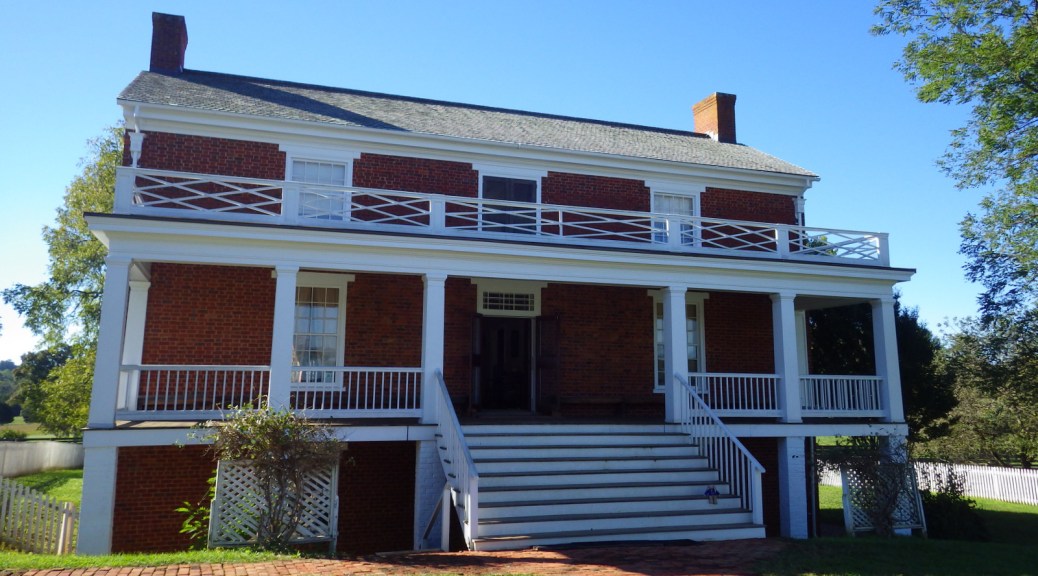
If the name Appomattox Court House rings a bell, that is because in U.S. History class you learned it was where the Civil War ended on April 9, 1865.  There was a courthouse in the town of Appomattox Court House, Virginia, but that is not where Robert E. Lee and Ulysses S. Grant signed surrender papers; actually it was the home of Wilmer McLean.  In 1893, the McLean house was completely disassembled to be turned into an offsite museum, but was later brought back and rebuilt by the National Park Service (NPS).  The county jail is one of several other restored buildings in the park originally designated a National Monument in 1935 and changed to a National Historical Park in 1954.

Highlights

Museum, film, reconstructed McLean House, guided tours

Must-Do Activity

The restored courthouse now serves as the NPS visitor center and museum, from where visitors can start their walk through Meeks General Store, Clover Hill Tavern, the county jail, and other period buildings.  Much of the furniture from the McLean House was taken as souvenirs by Union officers, as well as a doll owned by 7-year-old Lula McLean that was not returned until 1992.

Best Trail

A four-mile hiking trail connects the Village of Appomattox Court House with the April 9, 1865 battlefield and the two General’s headquarters.

Instagram-worthy Photo

You have to take a photo inside the restored room in the McLean house where Lee surrendered his army of 9,000 men, essentially ending the Civil War.

Peak Season

Summer

Hours

https://www.nps.gov/apco/planyourvisit/hours.htm

Fees

None

Road Conditions

All roads paved

Camping

None in the park, but the campground at Holliday Lake State Park is only 12 miles away.

Related Sites

Petersburg National Battlefield (Virginia)

Richmond National Battlefield Park (Virginia)

Booker T. Washington National Monument (Virginia)

Explore More – Seven regiments of African American soldiers in the Union Army participated in the Battle of Appomattox Court House; how many men is that?

Richmond National Battlefield Park

Overview

Richmond, Virginia was the capital of the Confederate States of America during the Civil War, located only 110 miles south of Washington, D.C.  The heavily fortified city repelled Union attacks in 1862 and 1864, but was abandoned following the retreat from Petersburg on April 2, 1865.  Richmond National Battlefield Park is composed of thirteen units connected by an 80-mile driving tour, some of which are only staffed seasonally.  The main National Park Service (NPS) visitor center at Tredegar Iron Works is located near the historic Virginia capitol building and not far from Maggie L. Walker National Historic Site.

Highlights

Tredegar Iron Works, film, Cold Harbor battlefield, Chimborazo Medical Museum

Must-Do Activity

The modern NPS visitor center is located downtown inside the Tredegar Iron Works on the Canal Walk.  During the war, this foundry produced almost 1,100 cannons, as well as armor plating for ironclad gunboats.  Today the stabilized and enclosed remains of Tredegar Iron Works offer three stories of exhibits, including a film and several interactive multimedia displays.  The site of the June 1864 Battle of Cold Harbor has a year-round visitor center northeast of Richmond.  We also highly recommend a stop at the Chimborazo Medical Museum, which covers an often overlooked aspect of a war that claimed 620,000 soldiers’ lives, many from disease.

Best Trail

Short trails help visitors understand the battles at Beaver Dam Creek, Gaines’ Mill, Malvern Hill, Cold Harbor, Fort Harrison, Fort Brady, Parker’s Battery, and Drewry’s Bluff.

Instagram-worthy Photo

The stabilized brick walls of Tredegar Iron Works are an interesting subject for photographs.  The foundry was protected by its workers from destruction by the retreating Confederate army on April 2, 1865.  This proved important during Reconstruction after the war.

Peak Season

Summer

Hours

https://www.nps.gov/rich/planyourvisit/hours.htm

Fees

None except for parking at Tredegar Iron Works

Road Conditions

All roads paved

Camping

Pocahontas State Park and Forest offers a campground with running water just outside Richmond, Virginia.

Related Sites

Maggie L. Walker National Historic Site (Virginia)

Fredericksbug and Spotsylvania County Battlefields Memorial National Military Park (Virginia)

Appomattox Court House National Historical Park (Virginia)

Explore More –Opened in October 1861, how many sick and wounded soldiers were treated at Chimborazo Hospital (with its 3,000 bed capacity and 20% mortality rate) by the end of the Civil War?