It is gift buying season again, so here are the best ideas for the person on your list who loves National Monuments. This year we published Monumental America, our travel guidebook to the 138 National Monuments, so we have had those often-overlooked public lands on our minds. We previously published our Top 10 Gifts for National Park Lovers.Click here to see all of our Top 10 Lists, including some book lists that may help you find a special gift for your favorite reader. As always, products we have created are available under the Shop tab above. We also have a Pinterest board for National Monuments, as well as one for National Park gifts and those harder-to-find National Forest gifts.
10. Postcards
For someone who loves one of the 138 National Monuments, pick up a postcard from Anderson Design Group
9. Quarters
The U.S. Mint finished releasing its America the Beautiful series in 2021; there are books and maps highlighting all 56 quarters (and you can buy the entire set for little more than the coins’ value)
8. Phone Case
Devils Tower became the first National Monument in 1906, so why not commemorate it on the one thing you take with you everywhere?
7. Coasters
We often purchase a Lantern Press coaster from the National Park Service bookstore during our visits, but there are also sets for sale online
Artwork or photographs of our beautiful National Monuments make a great gift and there are an overwhelming number of options (try starting at Creative Action Network)
2. Clothing
T-shirts, hoodies, socks, and anything else people wear have all been emblazoned with National Monument logos and images; did you know the Statue of Liberty is a National Monument?
…and finally our #1 gift featuring National Monuments:
Especially if your National Monuments journey is just getting started, our one-of-a-kind guidebook can help with planning the travel logistics
.
Honorable Mentions
Puzzles
Jigsaw puzzles had a renaissance during the pandemic and there are many National Monument options in photographs or artwork
Photo album or photo board
We passport stamp all of the “unigrid” pamphlets (like the ones Echo the Raven poses with for each NPS blog post) from the parks and collect them in a photo album (actually three since we have visited 414 of 433 units so far)
We are a participant in the Amazon Services LLC Associates Program, an affiliate advertising program designed to provide a means for us to earn fees by linking to Amazon.com and affiliated sites.
Even though they are on opposite sides of Michigan’s Lower Peninsula, Manistee and Huron National Forests have been co-managed since 1945. Only seven years earlier, Manistee National Forest was created from tax-forfeited lands and purchases of logged forests unsuitable for farming, so it is remains a mosaic of private and public lands. Much of this area was replanted by the Civilian Conservation Corps (CCC) and many of those trees are now very large. It contains the highest point on Michigan’s Lower Peninsula, 1,706-foot Briar Hill, which has no marked trails to the summit and obstructed views from the top. It is also home to Caberfae Peaks Ski Resort, which receives high accumulations of lake-effect snow and is one of the oldest ski resorts in the U.S. opened in 1938.
Highlights
Pere Marquette National Scenic River, Nordhouse Dunes, Newaygo Prairies, Caberfae Winter Sports Area, Udell Rollways, Briar Hill, Manistee River Trail, North Country National Scenic Trail
Must-Do Activity
Manistee National Forest is popular for hiking, fishing, camping, boating, snowmobiling, cross-country skiing, and hunting. The National Forest’s primary visitor attractions are the Nordhouse Dunes along Lake Michigan and Loda Lake National Wildflower Sanctuary, a 1,000-acre area set aside in 1938 to grow native plants. The 6,270-acre sand dunes complex around Big Sable Point on Lake Michigan was formed 3,500 years ago and reaches 140 feet in height above lake level. The southern portion is contained within Ludington State Park and the northern half is managed by the Forest Service.
Best Trail
We accessed the Nordhouse Dunes from the Arrowhead Trailhead (fee), nine miles on paved West Forest Trail Road from Highway 31. We hiked a 2.7-mile loop by connecting the Middle Trail to the Arrowhead/ Nipissing Trail then following the shoreline back. We passed dozens of backpackers camping on the beach, mostly ignoring the requirement to stay 400 feet from Lake Michigan and 100 feet from trails. The North Country National Scenic Trail passes through Manistee National Forest and can be connected with the 11-mile-long Manistee River Trail to make a 23-mile loop.
Watchable Wildlife
The Nordhouse Dunes encompass the largest area of freshwater interdunal ponds in the world, home to the federally endangered pitcher’s thistle. On the Lake Michigan shoreline, the dune grass provides habitat for endangered piping plovers. More common species are white-tailed deer, coyote, red fox, porcupine, and raccoon, and the occasional black bear and bobcat. A variety of gamefish are found in the Manistee River, Lake Michigan, and smaller ponds.
Photographic Opportunity
The rows of trees in the red pine plantations make for some interesting photographic subjects.
Peak Season
Summer
Fees
There is a $5 day use fee (or $15 for a week) to park at trailheads for the Nordhouse Dunes Wilderness with automated fee collection station available at Nurnberg Trailhead, or you can hang an America the Beautiful pass in your vehicle.
Road Conditions
The main roads are paved from Highway 31 to access the Nordhouse Dunes Wilderness; Nurnberg Trailhead in the southeast corner is open year round and Lake Michigan Recreation Area in the north is gated in the offseason.
Camping
There is a 102-site campground near the trailhead within Lake Michigan Recreation Area, but dispersed car camping is allowed to the east on the sandy side roads off West Forest Trail Road. It seems that backpackers in the Nordhouse Dunes area ignore the requirement to stay 400 feet from the lake and 100 feet from trails.
northern red oak, black oak, white oak, red maple, paper birch, yellow birch, American beech, black cherry, green ash, bigtooth aspen, sassafras, witch hazel
Explore More – How is the Ojibwe word Manistee translated into English?
Learn more about this and the 154 other National Forests in our new guidebook Out in the Woods
The Vietnam Veterans Memorial Fund was incorporated as a nonprofit charity in 1979 to build a monument listing all the names of those killed or missing during the Vietnam War. It was originally the idea of Jan Scruggs, an infantry corporal, and it was important to the veterans that it not make a political statement about the controversial war in Southeast Asia. Selected from 1,421 design entries, Maya Ying Lin intended her memorial to be a quiet, protected place for reflection. The polished black marble she chose to inscribe the half-inch-tall names also reflects the surrounding trees and grass in Constitution Gardens adjacent to the National Mall. The $7-million cost of the memorial was entirely funded by corporate and private donations, including those from 275,000 individual Americans.
Highlights
Memorial wall, Three Soldiers sculpture, Vietnam Women’s Memorial, In Memory plaque
Must-Do Activity
Located near the Lincoln Memorial, the walls of the Vietnam Veterans Memorial stretch 246.75 feet in length, inscribed with 58,256 names listed chronologically by date of casualty. People come to make rubbings of their loved one’s name and often leave small items at its base. Added nearby in 1984, a life-size bronze sculpture by Frederick Hart depicts three male soldiers beneath a 60-foot flagpole. The In Memory plaque was added in 2004 to recognize the many men and women who served and later died from causes related to the war.
Best Trail
There is no trail here, but there is always plenty of walking done when visiting the many memorials on the National Mall.
Photographic Opportunity
Dedicated on November 11, 1993, the Vietnam Women’s Memorial is a bronze sculpture by Glenna Goodacre that depicts three women helping a fallen soldier. There were also eight yellowwood trees planted to commemorate the eight servicewomen killed in action in Vietnam.
Peak Season
Spring and fall
Hours
Open 24 hours
Fees
None
Road Conditions
Traffic can be slow and parking expensive in Washington, D.C., so consider taking the Metro to the National Mall.
Camping
There are National Park Service campgrounds in Maryland’s Greenbelt Park and Virginia’s Prince William Forest Park.
Related Sites
Korean War Veterans Memorial (District of Columbia)
Explore More – When her design was selected in 1981, Maya Ying Lin was a 21-year-old student from Athens, Ohio; where was she attending college at the time?
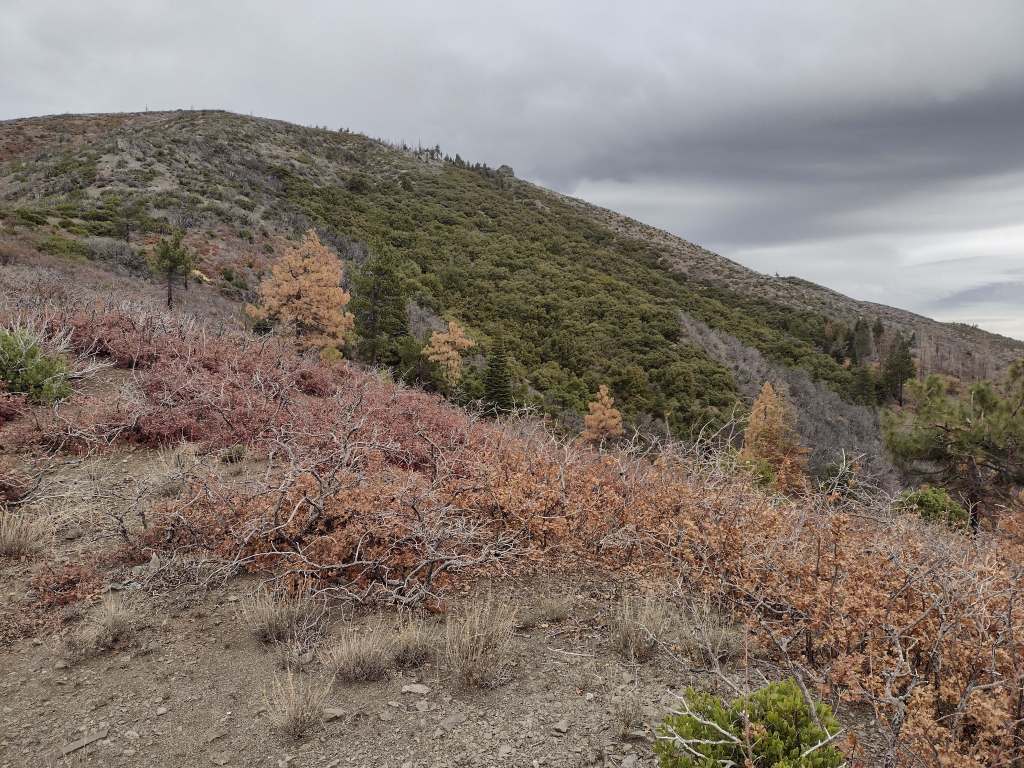
In central Oregon, Malheur National Forest encompasses the Strawberry Range and Aldrich Mountains that run into the Blue Mountains. Much of its area is high desert, with grasslands, sagebrush, and juniper the predominant vegetation. Malheur National Forest contains the “Humongous Fungus,” a honey fungus (Armillaria solidipes) that spans 2,200 acres and is considered the largest known organism by area in the world. It is located mostly underground, high on a ridgeline immediately west of Clear Creek (44.4731°N 118.4816°W).
Highlights
Journey Through Time Scenic Byway, Cedar Grove Botanical Area, Yellowjacket Reservoir, Indian Rock-Vinegar Hill Scenic Area, Swick Old Growth Interpretive Site, Rosebud Creek, Arch Rock, Magone Lake, Tamarack Creek Trail, McClellan Mountain Trail
Must-Do Activity
The northeast corner of the National Forest includes the 4,000-acre Indian Rock-Vinegar Hill Scenic Area with its beautiful alpine meadows that bloom high in the Greenhorn Mountains. For geology enthusiasts, Arch Rock is an easy hike to a 15-foot opening in soft ashflow tuff, Tex Creek has a natural bridge, and fossilized shells are found around Rosebud Creek.
Best Trail
In the Aldrich Mountains, Cedar Grove Botanical Area preserves the only stand of yellow-cedars found east of the Cascade Range. Some of these trees are more than 300 years old, hanging on for life along Buck Cabin Creek where a fire recently burned more than half of the 60-acre stand. Access is by a National Recreation Trail, which drops precipitously into the grove, making for a strenuous hike out. The trail is lined with plant identification placards and was pocked with deer hoofprints when we visited. The trailhead is well-marked, located 5.5 miles down a dirt road after climbing ten miles on paved Forest Road 21 south of Highway 26. Check conditions before departing, as some roads may be closed within the Rail Ridge Fire area.
Watchable Wildlife
Elevations in Malheur National Forest range from 4,000 feet up to the top of 9,038-foot Strawberry Mountain. Elk, pronghorn, and mule deer are large ungulates found here. Carnivorous mammals include black bears, coyotes, mountain lions, and bobcats that roam the high desert environment. Large birds frequently seen are bald eagles, Canada geese, mallards, and whistling swans. Streams and lakes found throughout the National Forest support a variety of gamefish, including trout. To the south, Malheur National Wildlife Refuge encompasses 185,000 acres of marshes, meadows, and man-made ponds that provide habitat crucial for bird nesting and migration.
Photographic Opportunity
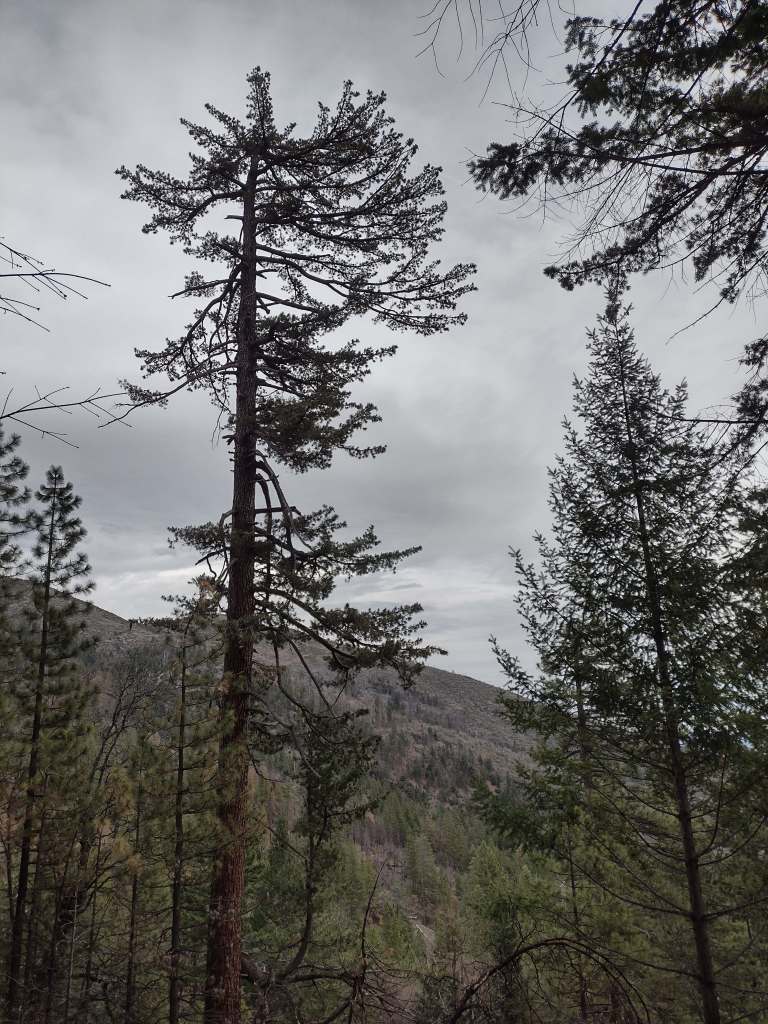
I did my M.S. research project on yellow-cedar (Callitropsis nootkatensis), so I had to visit Cedar Grove Botanical Area. The trees are a popular ornamental species best known for their drooping branches and shallow root systems that allow them to survive in extremely wet soils. Found from sea level up to 7,000 feet, they regularly live more than 1,000 years, growing slowly with chemicals compounds that prevent wood rot.
Peak Season
Summer
Fees
None
Road Conditions
Highway 395 runs north-south through the National Forest, while Highway 26 runs east-west. The dirt roads we drove to access Cedar Grove Botanical Area were in good condition, although dry and dusty at the end of the summer.
Camping
There are numerous campgrounds in Malheur National Forest; none take reservations and some have fees that apply from May through October. Some campgrounds are free, like Cane Crossing, Crescent, and Elk Creek, and dispersed camping is also allowed.
Wilderness Areas
Monument Rock Wilderness (also in Whitman National Forest)
We recently published our guidebook 50 States of Great: Road Trip Guide to America, so we decided to start a new type of blog post where we create a travel itinerary for all 50 states, in addition to our usual National Forest and National Park entries. After starting with Kansas, Georgia, Idaho, Rhode Island, Minnesota, Hawai’i, Arizona, Louisiana, South Dakota, Indiana, and Montana, we decided to do another state in the deep south. We made an ambitious seven-day plan starting in the south on the Gulf Coast and then zigzagging across the state with plenty of options to extend the trip.
You will have to take a ferry to enjoy the white sand beaches of West Ship Island, which are considered some of the best in the U.S. If you are stuck on the mainland, at least check out the visitor center and hiking trails just off Interstate 10.
Biloxi
Biloxi has beaches, a lighthouse, casinos, and the Maritime and Seafood Industry Museum. I still want to see the Patriarch Oak, estimated to be more than 2,000 years old and located at Mary Mahoney’s Old French House seafood restaurant.
Tuxachanie National Recreation Trail runs 12 miles through De Soto National Forest with the path from its western trailhead following an old logging railroad right off Highway 49. Near the far eastern end of the trail is a lakeside World War II Prisoner of War camp with a pond.
Some sandhill cranes migrate to this forested spot for the winter, but a small population lives there year-round. There are trails, interpretive signs, and a visitor center.
National Park Service (NPS) rangers or volunteers are on location at the William Johnson House, Melrose Estate, and the Forks of the Road where hundreds of thousands of slaves were sold in the 1800s. The William Johnson House tells the story of a slave freed at age 11 who apprenticed to a barber, and became a successful businessman before his murder.
There is a nice campground with showers on Clear Springs Lake, accessed by a paved road four miles south of Highway 84. A one-mile trail circles the lake, which has a picnic shelter built by the Civilian Conservation Corps (CCC) in 1935 that is listed on the National Register of Historic Places.
This paved road runs 444 miles from the Mississippi River to Nashville, Tennessee, including 309 miles in Mississippi. The trace (or trail) started as an American Indian footpath and was heavily used in the 1800s by “Kaintuck” flatboatmen returning from New Orleans who left the Mississippi River at Natchez and continued on foot north. At several roadside pullouts, you can still follow portions of the “sunken” trail worn down by travelers over the centuries. Popular stops along the way include the boardwalk at Cypress Swamp outside Jackson and its three free campgrounds.
Paralleling the parkway, this trail exists in five segments totaling 67 miles in length. One of the longest sections is located north of Jackson (Miles 108-130). There are also eight miles of the original trace around the free Rocky Springs Campground (Mile 58) accessing Owens Creek Waterfall and a historic town site.
Day 4
Jackson
The capital city is home to the Mississippi Civil Rights Museum, Museum of Mississippi History, and Mississippi Agriculture and Forestry Museum. The Mississippi Museum of Natural Science is a 73,000-square-foot facility situated in a 300-acre forest with 2.5 miles of trails that also boasts a 200-seat theater and many aquariums, including “The Swamp” where alligators reside inside a large greenhouse.
In Jackson, the National Park Service manages the former home of a prominent Civil Rights Leader who was assassinated in his driveway in 1963. Across the street, there is a sidewalk through Myrlie’s Garden, a community garden where interpretive signs on the wooden fence tell the story of the Evers family.
There are several lakes here open to the public, including 50-acre Marathon Lake (which got its name a lumber company that closed in 1929). The lake was built in the 1950s for recreation in a former logging camp and now has 34 campsites (with water and electric hook-ups), a boat ramp, a swimming area, and a 1.7-mile trail that circles it.
The numerous failed attempts to take Vicksburg by force are evidenced by the 17,000 soldiers buried in the National Cemetery here. Following a 46-day bombardment, the city finally surrendered on July 4, 1863. The best part of visiting the park is walking through the partially-reconstructed U.S.S. Cairo, an ironclad gunboat which was carefully salvaged from the Yazoo River during the 1960s.
Delta National Forest is seasonally flooded for wildlife, but it was dry enough to walk up to the Kay Cypress Tree even when other trails were underwater during our April visit. The tree is more than ten feet in diameter even above the widely fluted base common to baldcypress. It is located across from Blue Lake on unpaved Fire Tower Road.
Located in a former cotton gin near the site of Emmett Till’s torture and murder on the farm of “J.W.” Milam in Glendora. Established in 2005, there is an atmosphere to the museum that bears the full weight of history, heightened by the short introductory video showing Emmett Till’s family members’ recollections of the events of 1955.
The National Park Service operates out of the Emmett Till Interpretive Center, located in a strip mall opposite the Tallahatchie County Second District Courthouse in Sumner. It has limited hours, but the courtroom where the September 1955 trial was held was unlocked when we visited on a Tuesday morning.
Optional stop at a Blues Museum
The Yazoo-Mississippi Delta (or simply “the Delta”) is a distinct section of western Mississippi renowned for its blues musicians. There is plenty to learn and listen to at the Delta Blues Museum in Clarksdale, GRAMMY Museum Mississippi in Cleveland, and B.B. King Museum and Delta Interpretive Center in Indianola. Spend the night in the area to go to a bar for live music in the evening.
Optional stop at Belzoni Catfish Museum and Welcome Center
At its peak in 1993, this region produced 461-million pounds of catfish annually (about 60% of U.S. production) and still hosts the World Catfish Festival every April. The best part is that Belzoni has catfish sculptures spread around town, painted to represent different occupations like a fireman and nurse.
The National Park Service site here is tiny with no facilities and only a couple interpretive signs, but a local battlefield commission owns 1,400 acres with walking trails. The nearby Mississippi Final Stands Interpretive Center is located five miles east of the battlefield in Baldwyn.
Two cannons and a monument mark this one-acre National Park Service site surrounded by the city of Tupelo. Its visitor center is combined with the one for the Natchez Trace Parkway just outside Tupelo.
Tishomingo State Park is located just off the Natchez Trace Parkway (Milepost 304) northeast of Tupelo. The park’s sandstone and limestone rock formations represent the furthest southwest extent of the Appalachian Plateau. The park opened in 1939, after its infrastructure was built using local rock by the Civilian Conservation Corps (CCC). Several structures remain from that period, including a spectacular swinging bridge over Bear Creek.
Chewalla Lake Recreation Area is the most developed site offering a swimming beach and campground, plus fishing and boating opportunities. A 2.3-mile trail at the 260-acre lake passes an overlook and a reconstructed Choctaw burial mound. In the northeast corner off Highway 72, a short trail accesses Baker’s Pond, the source of the Wolf River. Further south, Lake Tillatoba is a fee-free primitive site managed by Tombigbee National Forest.
An important railroad crossroads in Corinth made it a strategic spot during the Civil War. In April 1862, two days of intense fighting across the border in Tennessee resulted in 23,746 soldiers killed, wounded, captured, or missing, and the Confederates abandoned the field and Corinth. There were an additional 7,000 casualties when they failed to recapture the town in October 1862, which is the focus of the museums in town.
Apron Museum
Iuka is home to the Apron Museum that has collected thousands of vintage aprons, plus it has a gift shop with quilts, crafts, and, of course, aprons for sale. Nearby, a restored wooden covered bridge is also worth a look-see and a drive across.