Tag Archives: trail

New Philadelphia National Historic Site

New Philadelphia National Historic Site

Illinois

Managed by National Park Service

Established 2022

124 acres

Website: nps.gov/neph

Overview

About 77 miles west of Springfield, Illinois, a 42-acre parcel of land became the first U.S. town platted and registered by an African American in 1836.  Back then, Illinois had stringent Black Codes that restricted African Americans and required proof they were not slaves.  This did not deter “Free” Frank McWorter who was born into slavery in South Carolina and after being moved to Kentucky worked to purchase his pregnant wife’s freedom in 1817, then his own two years later.  Once settled in Illinois, McWorter paid $100 for 80 acres and platted a portion of it into 144 lots that he named New Philadelphia.  This was a time of racial tension in Illinois, when an abolitionist was killed while trying to protect his printing press in Alton and a violence flared after a petition to abolish slavery was signed in Griggsville only 13 miles east.  It is likely that New Philadelphia served as a major stop on the Underground Railroad.  The town’s population peaked in 1865 with 160 individuals, 30% of whom were black according to the census.  Although the town was abandoned within a century, a major archaeological excavation in 2002 found artifacts including glass bottles, ceramics, children’s toys, possible pieces of the game Mancala, and a 1903 Illinois State Fair badge.  The site was added to the National Register of Historic Places in 2005 and became a National Historic Landmark in 2009.

Highlights

Kiosk, interpretive trail

Must-Do Activity

Where you park right off County Highway 2, there is an information kiosk that includes brochures and interpretive panels.  We could not get the Augmented Reality (AR) Tour app to work when we visited, but you might have better luck if you use the public WiFi provided by the New Philadelphia Association (the WiFi password is Frank1836).  You can always watch the AR videos before or after your visit on their website (http://newphiladelphiail.org/ar-website).  If you want to stamp your National Parks passport, go four miles west to the Barry City Hall or public library, or visit Lincoln Home National Historic Site in Springfield.

Best Trail

A quarter-mile-long walking trail is mowed into the grassy field where the Augmented Reality Tour has guideposts that also include written information. 

Photographic Opportunity

No original structures remain on the site of New Philadelphia, but there are some old farm buildings that make interesting photographic subjects.  Watch for poison-ivy if you step off the mowed trail for photographs.

Peak Season

Spring and fall

Hours

https://www.nps.gov/neph/planyourvisit/hours.htm

Fees

None

Road Conditions

There is a paved parking area right off County Highway 2 when you turn on the gravel 306th Lane, easily accessible from Interstate 72 only 27 miles east of the Mississippi River.  Springfield, Illinois is 76 miles east and St. Louis, Missouri is about 115 miles south.

Camping

There is a campground at Lincoln’s New Salem State Historic Site and other Illinois state parks, plus several in Mark Twain’s hometown of Hannibal, Missouri.

Related Sites

Nicodemus National Historic Site (Kansas)

Springfield 1908 Race Riot National Monument (Illinois)

Emmett Till and Mamie Till-Mobley National Monument (Mississippi-Illinois)

Nearest National Park

Gateway Arch

Explore More – Frank McWorter purchased the freedom from slavery for how many family members, (including his son who had escaped to Canada)?

Lewis and Clark National Forest

Lewis and Clark National Forest

Montana

Managed by U.S. Forest Service, Northern Region

1,999,256 acres (1,863,788 federal/ 135,468 other)

Website: https://www.fs.usda.gov/r01/helena-lewisclark

Overview

East of the Continental Divide in Montana, Lewis and Clark National Forest is split across eight mountain ranges east and west of the Missouri River.  The largest western section butts up against Glacier National Park to the north and includes parts of the Scapegoat and the Bob Marshall Wilderness areas, which provide crucial habitat for grizzly/brown bears and world-class places for backpacking.  The Lewis and Clark Forest Reserve dates back to 1897, with the now-defunct Jefferson and Absaroka National Forests added in 1932 and 1945 respectively.  Since 2014, it has been co-managed with Helena National Forest.

Highlights

King Hill Scenic Byway, Cataract Falls, Sun River Gorge, Gibson Reservoir, Mt. Wright, Deep Creek Loop National Recreation Trail, Windy Mountain Trail, Crystal Cascades Trail, Crystal Lake Shoreline Loop Trail, Continental Divide National Scenic Trail

Must-Do Activity

We have always wanted to visit the National Park Service and U.S. Forest Service’s 25,000 square-foot Lewis and Clark Interpretive Center in Great Falls, Montana.  It features an exhibit hall, hiking trails, and a 158-seat theater, and it is open daily in the summer and Wednesday through Sunday in the offseason.  We have also wanted to backpack in the rugged Snowy Mountains, which draw backcountry skiers in the winter and horseback riders in the summer.  We will have to return to this central part of Montana, which includes one of our favorite places to explore: Upper Missouri River Breaks National Monument run by the Bureau of Land Management.

Best Trail

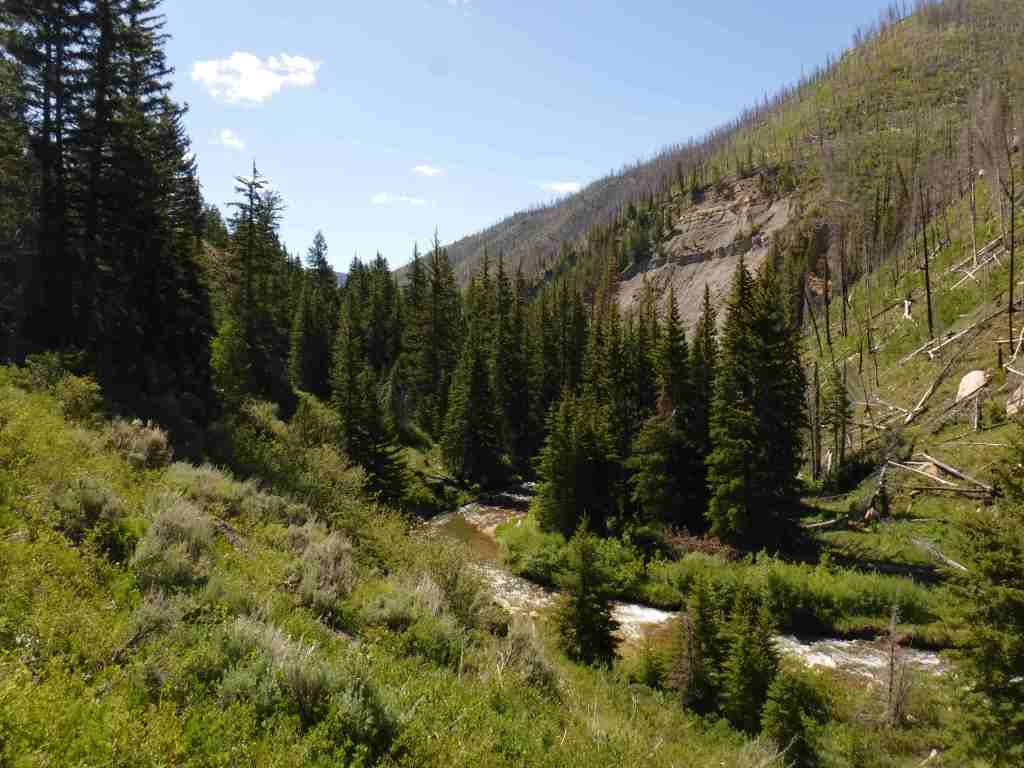
One of the most famous formations along the Continental Divide National Scenic Trail is the 15-mile long Chinese Wall, a 1,000-foot-tall cliff composed of five-million-year-old limestone.  Its closest access is 15 miles one-way from the South Fork Sun Trailhead, which is often marked as Packers on maps at the end of the gravel Benchmark Road (Forest Road 235).  The trail begins by following the South Fork Sun River before crossing a bridge and entering the Bob Marshall Wilderness.  We got a late start on the way in and came across a grizzly/brown bear grazing near the trail that evening and, on the drive out, we stopped to photograph three moose near Wood Lake Campground and a common loon in Anderson Lake.

Watchable Wildlife

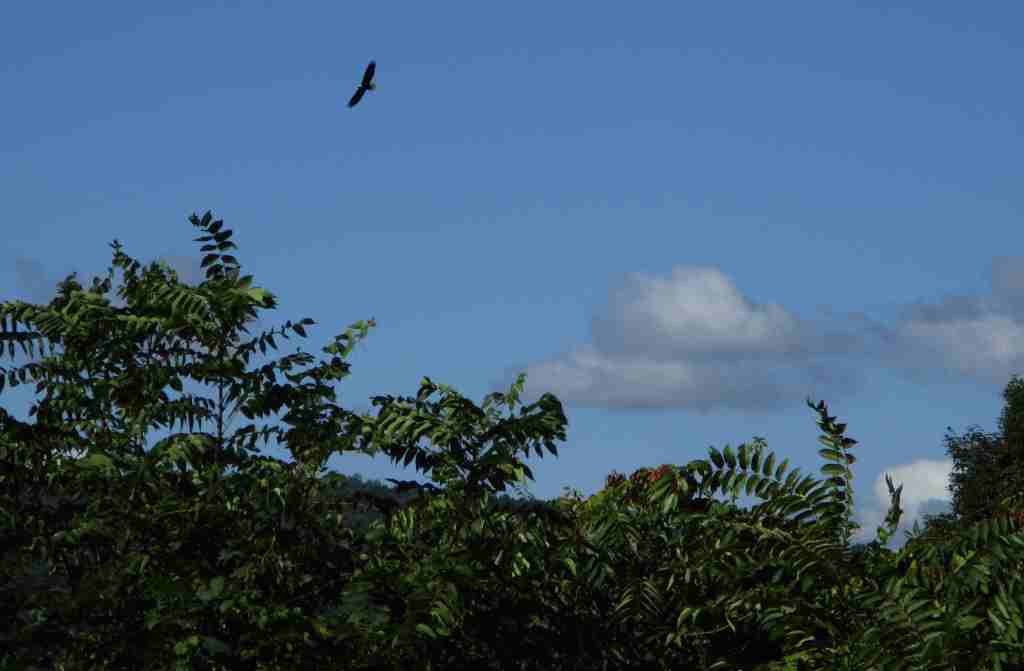
Grizzly/brown bears are the most famous residents of the National Forest.  Additional mammals include black bears, mountain lions, Canada lynxes, wolverines, mule deer, Columbian white-tailed deer, mountain goats, bighorn sheep, elk, and moose.  Bald eagles, red-tailed hawks, and three types of grouse are often spotted.  There are excellent fly-fishing opportunities in the 1,600 miles of rivers and streams.

Photographic Opportunity

The 15-mile long Chinese Wall is an iconic landmark along the Continental Divide National Scenic Trail

Peak Season

Summer

Fees

None except for the Lewis and Clark Interpretive Center in Great Falls, which costs $8 per person or you can use an America the Beautiful pass.

Road Conditions

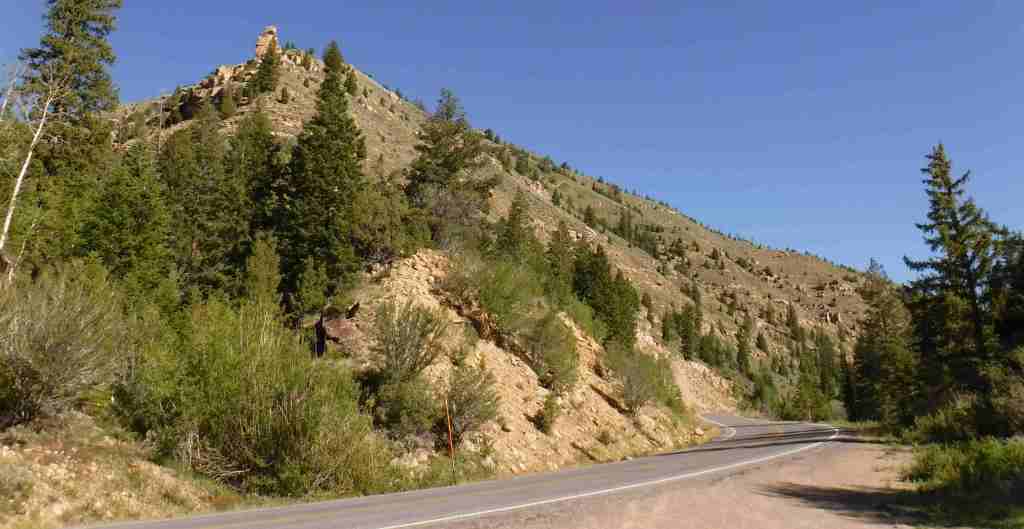
We drove the gravel Benchmark Road (Forest Road 235), which was long and in excellent condition.

Camping

There are 29 vehicle-accessible campgrounds in Lewis and Clark National Forest, including Wood Lake Campground near the South Fork Sun Trailhead.  Backcountry and dispersed camping options abound.

Wilderness Areas

Bob Marshall Wilderness (also in Flathead National Forest)

Scapegoat Wilderness (also in Helena and Lolo National Forests)

Related Sites

Deerlodge National Forest (Montana)

Bighorn National Forest (Wyoming)

Little Bighorn Battlefield National Monument (Montana)

Nearest National Park

Glacier

Conifer Tree Species

western redcedar, Douglas-fir, limber pine, whitebark pine, lodgepole pine, ponderosa pine, Engelmann spruce, subalpine fir, western larch, common juniper

Flowering Tree Species

quaking aspen, Rocky Mountain maple, western serviceberry

Explore More – Why is the 200 square-mile Badger-Two Medicine area of the National Forest managed differently?

Learn more about this and the 154 other National Forests in our new guidebook Out in the Woods

Lassen National Forest

Lassen National Forest

California

Managed by U.S. Forest Service, Pacific Southwest Region

1,375,593 acres (1,070,992 federal/ 304,601 other)

Website: https://www.fs.usda.gov/r05/lassen

Overview

Lassen National Forest Reserve dates back to 1905, then a decade later when Lassen Peak explosively erupted (the first eruption to be photographed in the continental U.S.), 106,589-acre Lassen Volcanic National Park was carved out.  The two federal areas are connected by the 187-mile-long Lassen Scenic Byway (Highways 44 and 89) that traces the volcanic legacy of the southern Cascade Range.  The 41,100-acre Ishi Wilderness was named in 1984 to honor the last surviving member of the Yahi band of Southern Yanas, taken from his native home near Oroville in 1911 and employed as a janitor at the University of California’s Anthropology Museum in San Francisco until his death from tuberculosis five years later.

Highlights

Lassen Scenic Byway, Lake Almanor, Eagle Lake, Subway Cave, Hat Creek Recreational Area, Triangle Lake, Heart Lake National Recreation Trail, Bizz Johnson Trail, Spencer Meadows National Recreation Trail, Pacific Crest National Scenic Trail

Must-Do Activity

Lassen National Forest runs campgrounds and boat ramps on both Lake Almanor and Eagle Lake, although most of their shorelines are privately owned.  Between the two lakes is the town of Susanville, where a railroad bed abandoned in 1978 was converted into the Bizz Johnson Trail that follows the Susan River for 26 miles. The trail features 12 river crossings and two tunnels with scenic mountain views.  Camping is restricted to specific portions of the trail. The 20,546-acre Caribou Wilderness was one of America’s first Primitive Areas designated in 1932 and along with the 16,335-acre Thousand Lakes Wilderness was established immediately following passage of the 1964 Wilderness Act.  In a proposed Wilderness area on the west side of Lassen Volcanic National Park, Heart Lake National Recreation Trail is a 2.4-mile one-way hike up to a glacial lake that connects to the longer Twin Meadows Trail.

Best Trail

Subway Cave is only 1,300 feet long, but the lava tube is the main attraction in Lassen National Forest, with free guided tours offered on summer weekends.  Lava flowed through here less than 2,000 years ago and interpretive signs along the 0.7-mile loop trail explain lavacicles and other geologic oddities.  A flashlight is necessary to explore past the openings of the 46°F cave, which drops to four feet in some places with a maximum ceiling of 17 feet.  One mile south on the Lassen Scenic Byway (Highway 44) is the 1.7-mile roundtrip Spatter Cone Trail (across from Hat Creek Campground).  The trail passes a variety of volcanic formations in a forest of Jeffrey pine trees.

Watchable Wildlife

Lassen National Forest is home to black bears, pine martens, mountain lions, bobcats, red foxes, coyotes, and a few gray wolves that migrated south from Oregon.  You are most likely to see mule deer or one of the variety of chipmunks or squirrels.  Bird sightings include mountain chickadees, Steller’s jays, Clark’s nutcrackers (at high elevations), and eight species of woodpeckers such as pileated and white-headed.

Photographic Opportunity

Sitting at 4,505 feet in elevation, Lake Almanor stretches for 13 miles near Chester, California and is a good place for summer boating and fishing.

Peak Season

Summer

Fees

None

Road Conditions

Subway Cave is located right off Lassen Scenic Byway (Highways 44 and 89) and most of the unpaved roads we have explored in the National Forest have been maintained, probably because of the continued harvesting activities that we witnessed on our field trip from Cal Poly University in 2010.

Camping

Lassen National Forest runs campgrounds on both Lake Almanor and Eagle Lake, plus Hat Creek Recreational Area has seven campgrounds.  If you are looking to disperse camp outside Lassen Volcanic National Park, take the road west outside the southern entrance (but keep a clean campsite as we saw a black bear in the area).

Wilderness Areas

Caribou Wilderness

Ishi Wilderness (also managed by BLM)

Thousand Lakes Wilderness

Related Sites

Lava Beds National Monument (California)

Devils Postpile National Monument (California)

Whiskeytown-Shasta-Trinity National Recreation Area (California)

Nearest National Park

Lassen Volcanic

Conifer Tree Species

red fir, white fir, western hemlock, Jeffrey pine, ponderosa pine, lodgepole pine, western white pine, California juniper, incense-cedar

Flowering Tree Species

quaking aspen, Fremont cottonwood, ceanothus, manzanita

Explore More – Other than the namesake for Lassen Peak, who was Peter Lassen?

Learn more about this and the 154 other National Forests in our guidebook Out in the Woods

Brices Cross Roads National Battlefield Site

Brices Cross Roads National Battlefield Site

Mississippi

Managed by National Park Service

Established 1929

1 acre

Website: nps.gov/brcr

Overview

During General Sherman’s “march to the sea” in 1864, he dispatched troops under Brigadier General Samuel D. Sturgis to northern Mississippi to protect the 151-mile Nashville & Chattanooga Railroad line from Major General Nathan Bedford Forrest’s Confederate cavalry.  The two sides clashed on June 10 at this site in northern Mississippi, when a larger Union force of 8,100 men was routed by 3,500 Confederates.  However, Sherman’s supply line remained intact during his march towards Atlanta.

Highlights

Bethany Church Cemetery, Mississippi Final Stands Interpretive Center

Must-Do Activity

The National Park Service site here is tiny with no facilities and only a couple interpretive signs, but a local battlefield commission owns 1,400 acres with walking trails.  The nearby Mississippi Final Stands Interpretive Center is located five miles east of the battlefield in Baldwyn.  For a passport stamp, stop at the Natchez Trace Parkway visitor center outside Tupelo.  We arrived at Brices Cross Roads National Battlefield Site near sunset, but we were still able to explore the small park at the four-way stop at the crossroads of Highway 370. 

Best Trail

A local battlefield commission owns 1,400 acres with miles of walking trails, with the longest located at Log Cabin Knoll.

Instagram-worthy Photo

A monument was erected where the Brice home once stood, used as a place to treat the wounded of both armies during the battle.

Peak Season

Spring and fall

Hours

The Battlefield Site is never closed, but Mississippi Final Stands Interpretive Center is closed every Sunday, Monday, and most holidays.

Fees

None for Brices Cross Roads National Battlefield Site, but $7 per person at Mississippi Final Stands Interpretive Center.

Road Conditions

Park on the shoulder of the paved highway to access the site.

Camping

J.P. Coleman State Park is located east of Corinth and Tombigbee State Park is near Tupelo.

Related Sites

Holly Springs National Forest (Mississippi)

Tupelo National Battlefield (Mississippi)

Shiloh National Military Park (Tennessee-Mississippi)

Explore More – Who was the Colonel that commanded several regiments of United States Colored Troops (USCT) instrumental in the defensive actions that protected the Union Army’s retreat across the Tishomingo River?

Comanche National Grassland

Comanche National Grassland

Colorado

Managed by U.S. Forest Service, Rocky Mountain Region

Established 1960

467,373 acres (443,081 federal/ 24,292 other)

Website: https://www.fs.usda.gov/psicc

Overview

Near the Oklahoma border in southeast Colorado, Comanche National Grassland is comprised of two areas of shortgrass prairie co-managed with Pike and San Isabel National Forests and Cimarron National Grassland (in nearby Kansas).  The Timpas Unit is in the watershed of the Purgatoire (or Picket Wire) River, while the more southern Carrizo Unit is mostly centered around Carrizo Creek, a tributary of the Cimarron River.  There is a long history of human use of the canyons here, with petroglyphs dating back as far back as 8,000 years.  Before giving the National Grassland its name, the Comanche pushed the Apache out of this area in the 1700s and their circular tipi rings can still be found.  A branch of the Santa Fe National Historic Trail runs through the northern Timpas Unit with interpretive sites at Sierra Vista Overlook and Timpas Picnic Area (including a three-mile trail following the wagon tracks between the two). 

Highlights

Picture Canyon, Crack Cave, Picket Wire Canyon, Dolores Mission, Rourke Ranch, Carrizo Canyon, Vogel Canyon, Santa Fe National Historic Trail

Must-Do Activity

Petroglyphs can be seen on trails near Vogel Canyon and Carrizo Canyon Picnic Areas, with the most famous found in Picture Canyon.  It is about 16 miles of unpaved roads to access Picture Canyon from Highway 287, and there are vault toilets and picnic tables at the site.  From there, the U.S. Forest Service traditionally leads a hike on Arch Rock Trail to Crack Cave on both the spring and fall equinox, when at dawn the sun’s rays illuminate a specific petroglyph that is usually behind a locked gate that blocks a narrow opening in the sandstone.  A similar petroglyph with deeply-carved lines can be seen in an opening above a blue-tinted pictograph about a quarter-mile down the trail.  Rock climbing is also a draw here, with a few permanent anchors in the sandstone behind the picnic tables. 

Best Trail

It is a 17-mile drive down unpaved roads to Picket Wire Canyon, where a long trail leads to dinosaur tracks (19 miles out-and-back) and Rourke Ranch National Historic District (25 miles) that dates back to 1871.  There are approximately 1,900 tracks left by Apatosaurs and Allosaurs over 150-million years ago.  Along the way, look for petroglyphs, a model of a dinosaur fossil, and the ruins of Dolores Mission (see Photographic Opportunity). 

Watchable Wildlife

Elevations range from 3,900 to 6,200 feet atop Fallas Mesa with ponderosa pine, pinyon pine, juniper, Gambel oak, and cottonwoods trees found in moister areas.  Yucca and cacti are common in the prairie, as are desert-dwelling creatures like roadrunners and tarantulas (we saw one crossing the road).  Hunters come here for mule deer, elk, pronghorn, and wild turkey in season.  The National Grassland contains a lek for lesser prairie chickens, but it is typically closed during mating season due to their endangered status.  About 328 bird species have been identified here, including many eastern birds at the extent of their range. 

Photographic Opportunity

On the way to the dinosaur track site in Picket Wire Canyon, hikers pass Dolores Mission with a cemetery and the ruins of a small Catholic church dating back to 1898.

Peak Season

Spring and fall

Fees

None

Road Conditions

We have almost gotten stuck twice on the long dirt roads in Comanche National Grassland, once in deep mud following a spring thunderstorm and another time on thick ice following a spring blizzard. 

Camping

It is free to disperse camp almost anywhere not on private lands in Comanche National Grassland, with the exception of the parking lots at the following canyons: Picture, Carrizo, Vogel, and Picket Wire.

Related Sites

Cimarron National Grassland (Kansas)

Bent’s Old Fort National Historic Site (Colorado)

Sand Creek Massacre National Historic Site (Colorado)

Nearest National Park
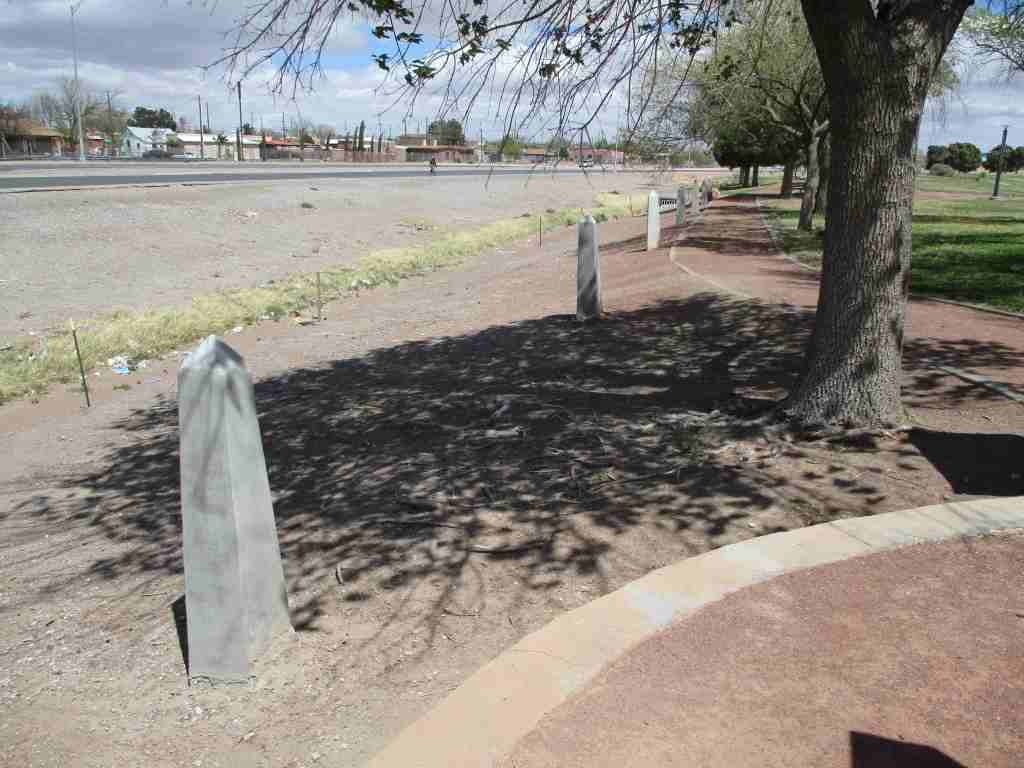
Great Sand Dunes

Explore More – The markings in Crack Cave are theorized by some people to spell out what word in Ogam (an ancient Celtic alphabet)?