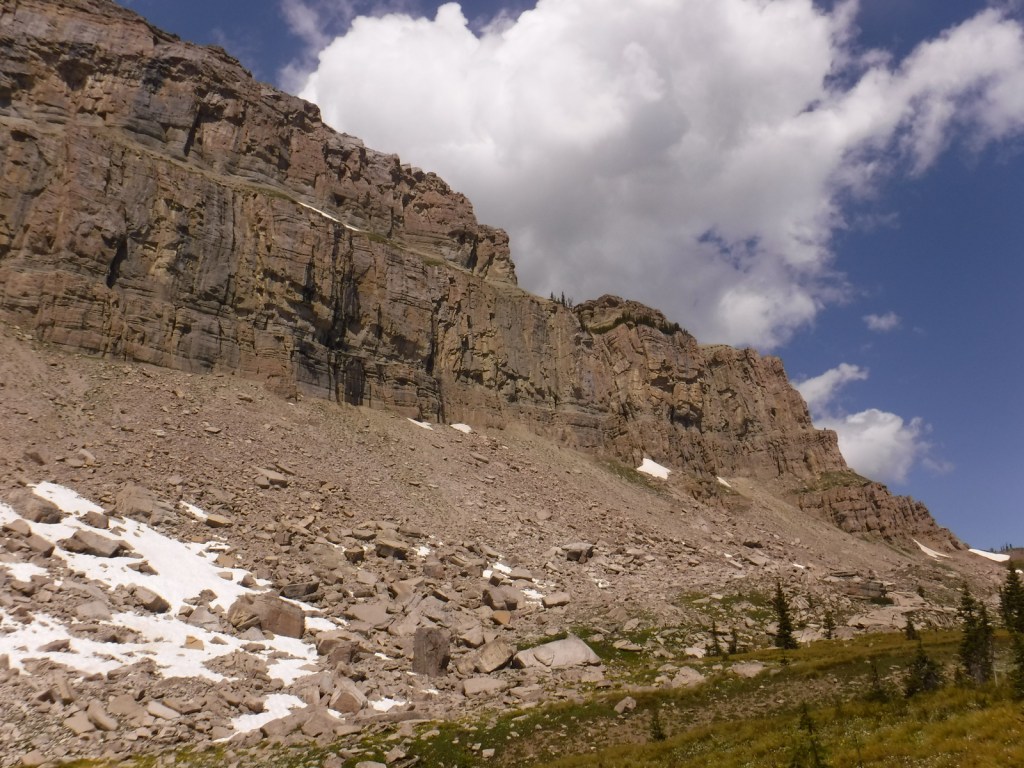
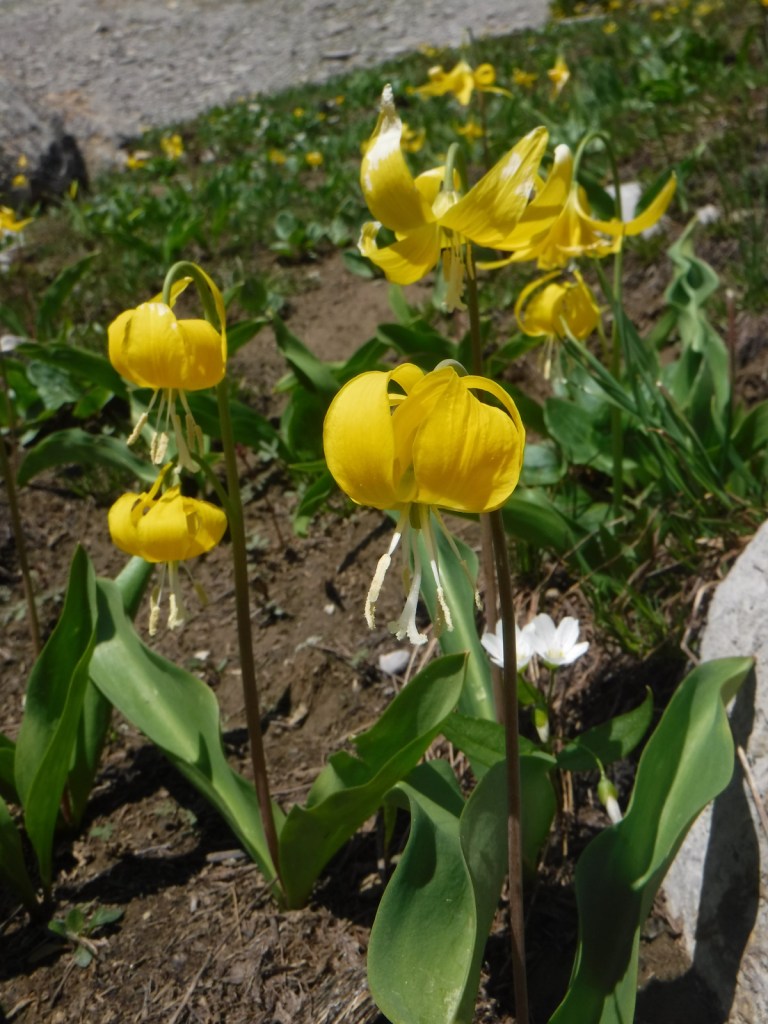
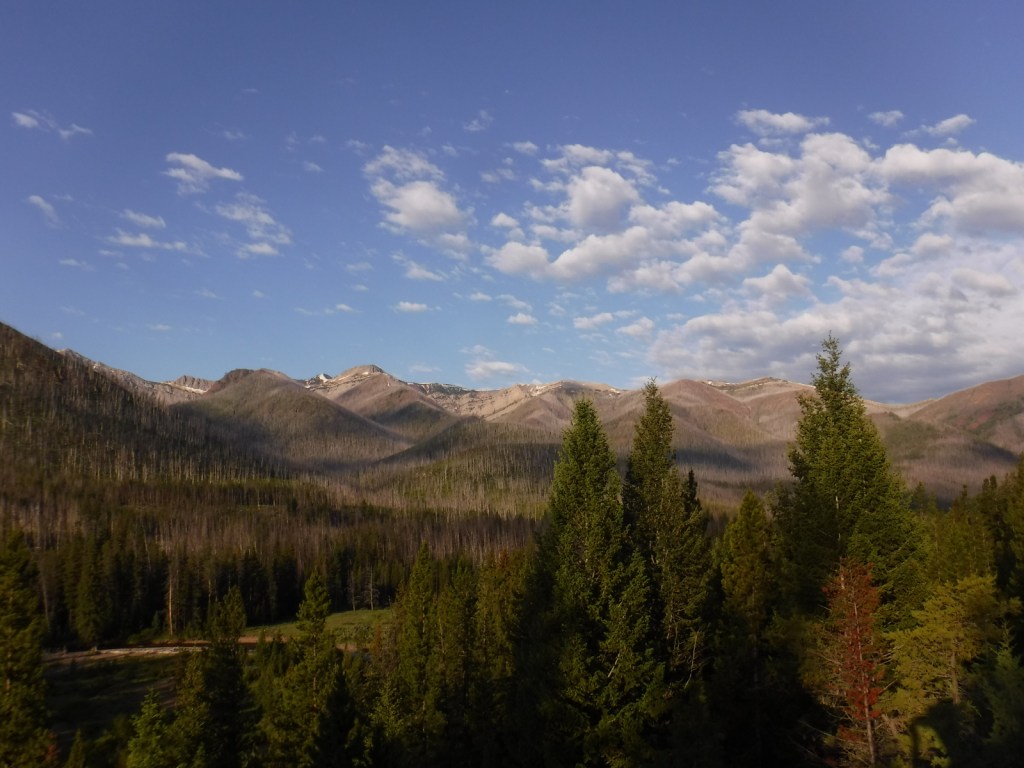
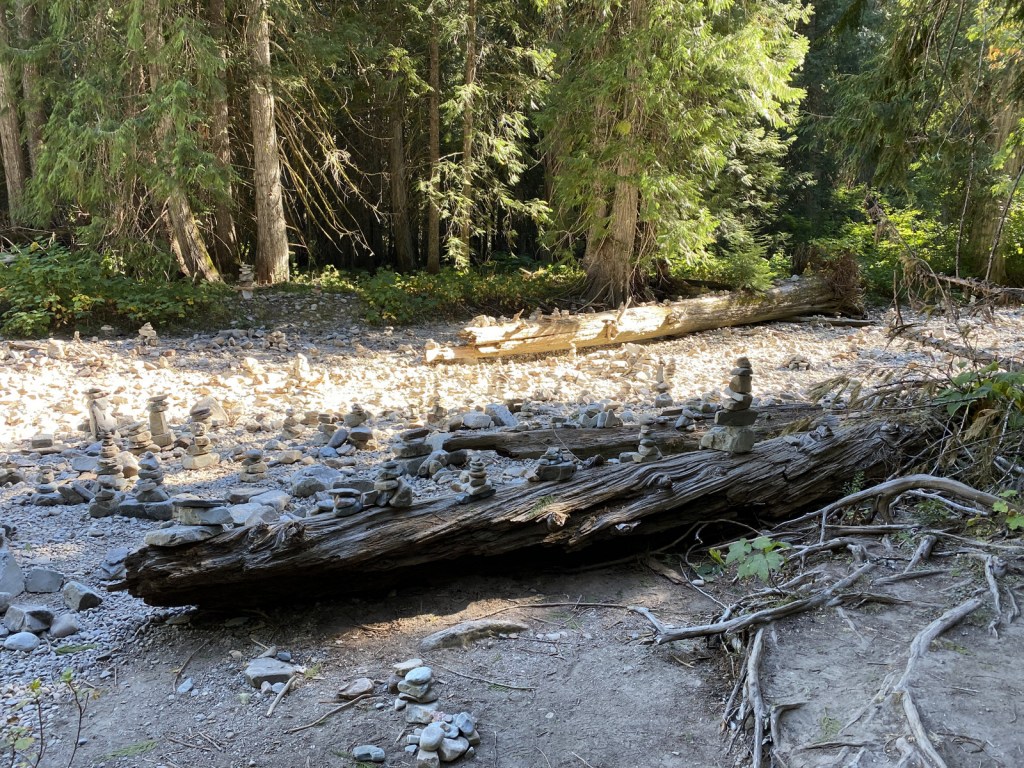
Lassen National Forest Reserve dates back to 1905, then a decade later when Lassen Peak explosively erupted (the first eruption to be photographed in the continental U.S.), 106,589-acre Lassen Volcanic National Park was carved out. The two federal areas are connected by the 187-mile-long Lassen Scenic Byway (Highways 44 and 89) that traces the volcanic legacy of the southern Cascade Range. The 41,100-acre Ishi Wilderness was named in 1984 to honor the last surviving member of the Yahi band of Southern Yanas, taken from his native home near Oroville in 1911 and employed as a janitor at the University of California’s Anthropology Museum in San Francisco until his death from tuberculosis five years later.
Highlights
Lassen Scenic Byway, Lake Almanor, Eagle Lake, Subway Cave, Hat Creek Recreational Area, Triangle Lake, Heart Lake National Recreation Trail, Bizz Johnson Trail, Spencer Meadows National Recreation Trail, Pacific Crest National Scenic Trail
Must-Do Activity
Lassen National Forest runs campgrounds and boat ramps on both Lake Almanor and Eagle Lake, although most of their shorelines are privately owned. Between the two lakes is the town of Susanville, where a railroad bed abandoned in 1978 was converted into the Bizz Johnson Trail that follows the Susan River for 26 miles. The trail features 12 river crossings and two tunnels with scenic mountain views. Camping is restricted to specific portions of the trail. The 20,546-acre Caribou Wilderness was one of America’s first Primitive Areas designated in 1932 and along with the 16,335-acre Thousand Lakes Wilderness was established immediately following passage of the 1964 Wilderness Act. In a proposed Wilderness area on the west side of Lassen Volcanic National Park, Heart Lake National Recreation Trail is a 2.4-mile one-way hike up to a glacial lake that connects to the longer Twin Meadows Trail.
Best Trail
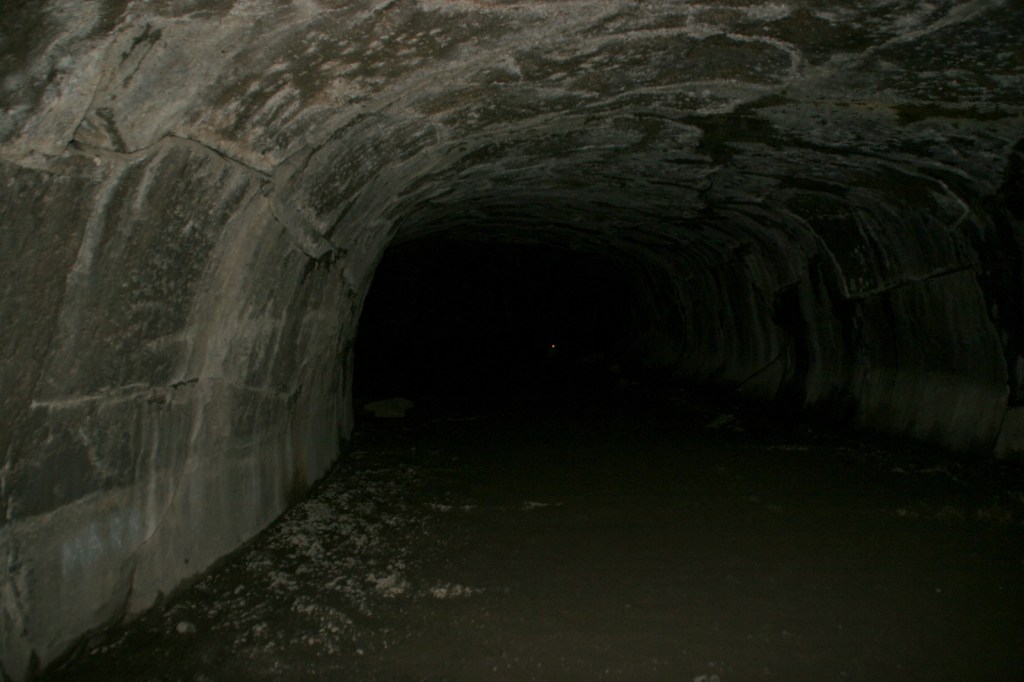
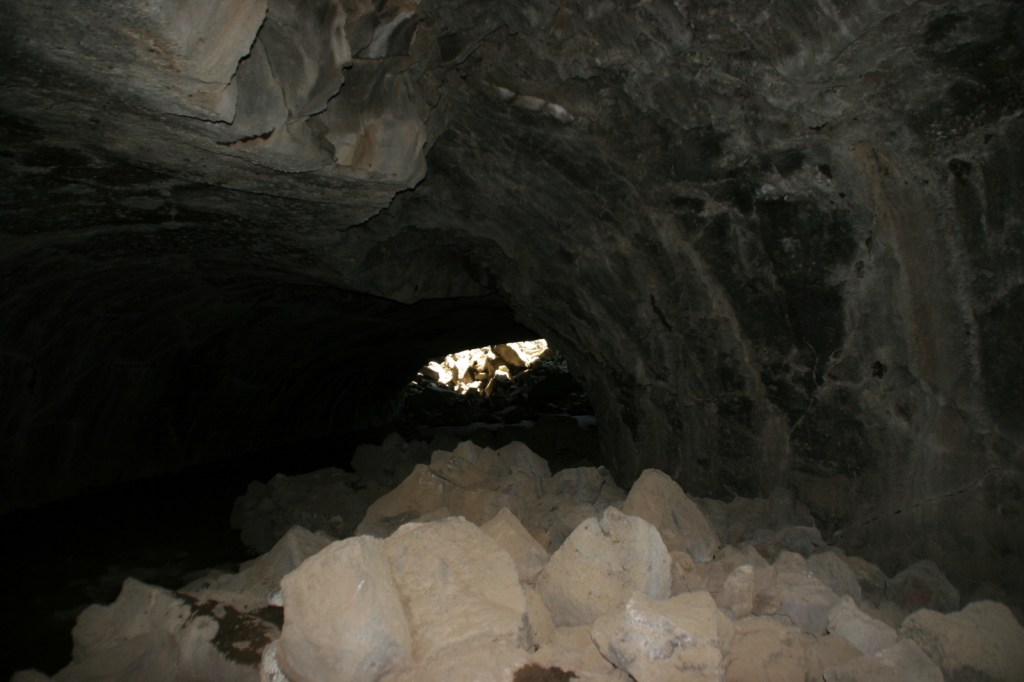
Subway Cave is only 1,300 feet long, but the lava tube is the main attraction in Lassen National Forest, with free guided tours offered on summer weekends. Lava flowed through here less than 2,000 years ago and interpretive signs along the 0.7-mile loop trail explain lavacicles and other geologic oddities. A flashlight is necessary to explore past the openings of the 46°F cave, which drops to four feet in some places with a maximum ceiling of 17 feet. One mile south on the Lassen Scenic Byway (Highway 44) is the 1.7-mile roundtrip Spatter Cone Trail (across from Hat Creek Campground). The trail passes a variety of volcanic formations in a forest of Jeffrey pine trees.
Watchable Wildlife
Lassen National Forest is home to black bears, pine martens, mountain lions, bobcats, red foxes, coyotes, and a few gray wolves that migrated south from Oregon. You are most likely to see mule deer or one of the variety of chipmunks or squirrels. Bird sightings include mountain chickadees, Steller’s jays, Clark’s nutcrackers (at high elevations), and eight species of woodpeckers such as pileated and white-headed.
Photographic Opportunity
Sitting at 4,505 feet in elevation, Lake Almanor stretches for 13 miles near Chester, California and is a good place for summer boating and fishing.
Peak Season
Summer
Fees
None
Road Conditions
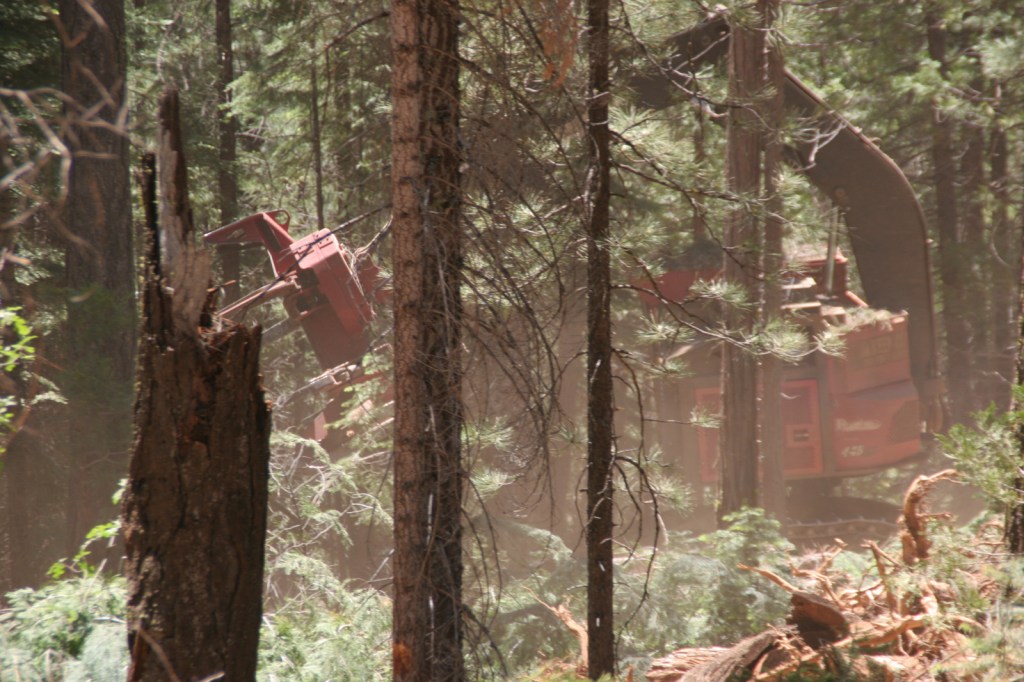
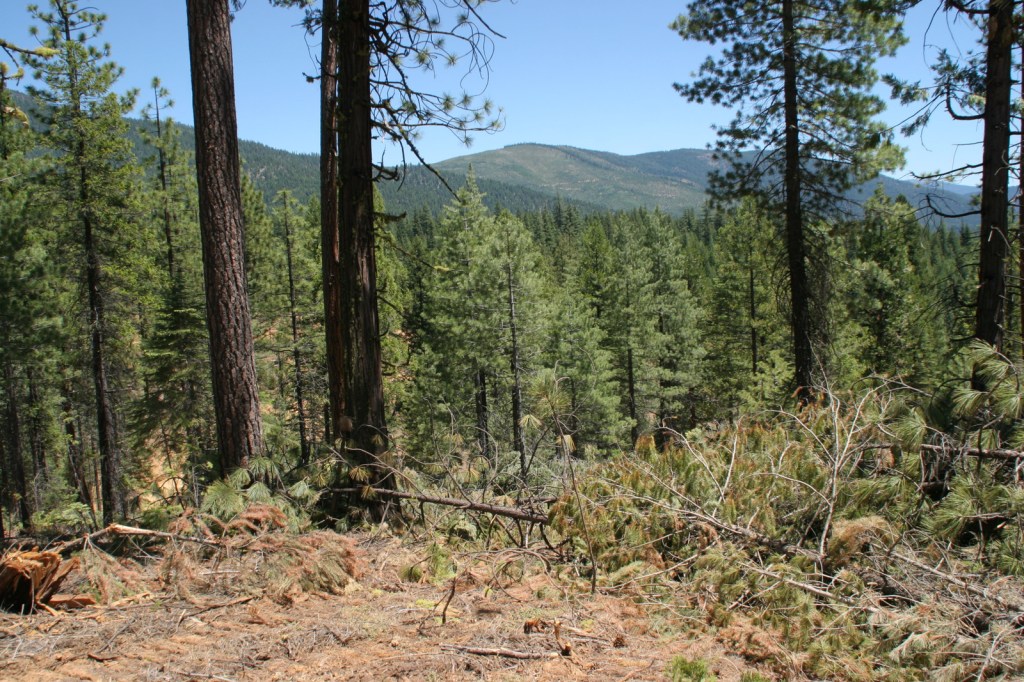
Subway Cave is located right off Lassen Scenic Byway (Highways 44 and 89) and most of the unpaved roads we have explored in the National Forest have been maintained, probably because of the continued harvesting activities that we witnessed on our field trip from Cal Poly University in 2010.
Camping
Lassen National Forest runs campgrounds on both Lake Almanor and Eagle Lake, plus Hat Creek Recreational Area has seven campgrounds. If you are looking to disperse camp outside Lassen Volcanic National Park, take the road west outside the southern entrance (but keep a clean campsite as we saw a black bear in the area).
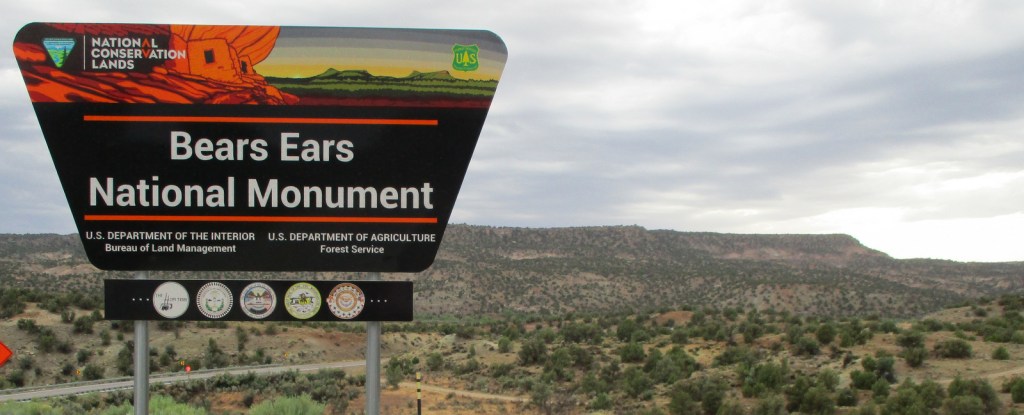
The Bureau of Land Management (BLM) and U.S. Forest Service manage the more than one-million acres of Bears Ears National Monument in partnership with five local Native American tribes. After it was established, in 2017 it was controversially reduced in size to 201,876 acres before being restored four years later. Much of the southern portion of La Sal National Forest, including the Dark Canyon Wilderness, is included inside its boundaries. The entire area protects millions of years of the paleontological record and has more than 100,000 archaeological sites, especially on Cedar Mesa where day-use and overnight permits are required. The BLM has excellent maps and trip-planning resources available on their website.
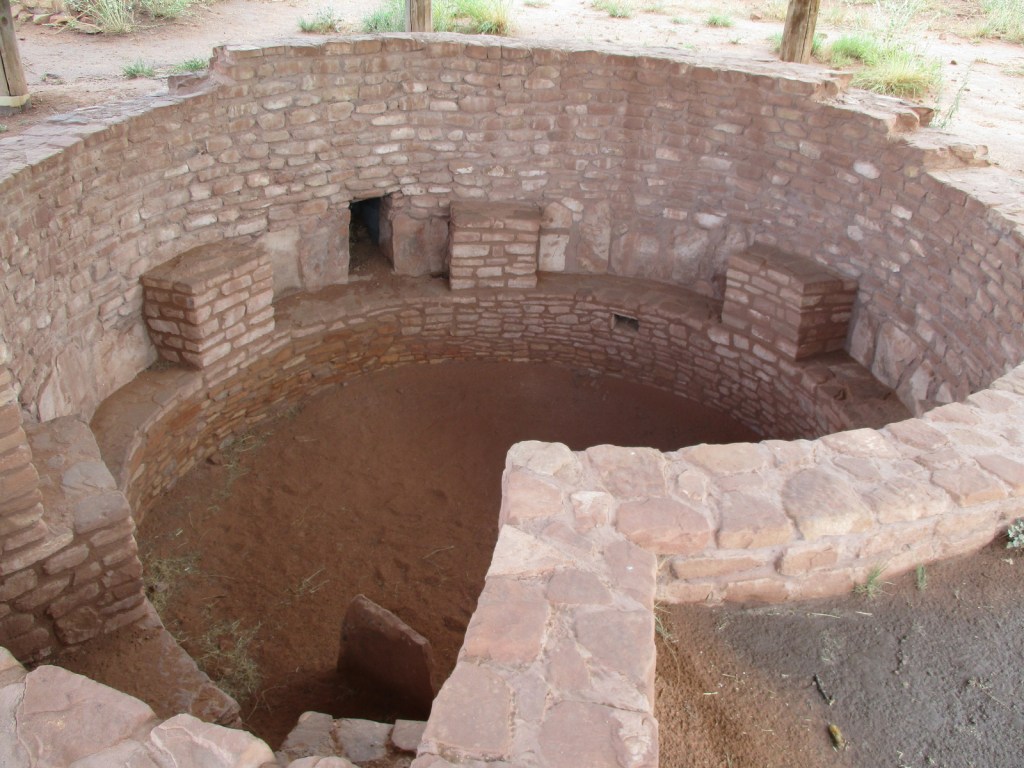
Butler Wash, Moon House Ruin, Newspaper Rock, Moki Dugway, San Juan River, Elk Ridge Scenic Backway, Dark Canyon Wilderness, Mule Canyon, Seven Kivas, The Citadel Trail
Must-Do Activity
It would be easy to spend more than a week exploring the roads and trails within Bears Ears National Monument. Everyone should try to drive the good 17-mile-long dirt road through Valley of the Gods to see rock formations like Rooster Butte and Woman in the Tub. West of Blanding, paved State Route 95 passes Mule Canyon Interpretive site, Butler Wash Interpretive Trail, and Butler Wash Dinosaur Tracksite. In La Sal National Forest, the 58-mile-long Elk Ridge Scenic Backway is a well-maintained (though unpaved) route that leads north from Natural Bridges National Monument to Highway 211, which connects to the Needles District of Canyonlands National Park. There are multiple trails along the way that provide access to the Dark Canyon Wilderness, an area known for old-growth forests, natural arches, and Ancestral Puebloan ruins and pictographs.
Best Trail
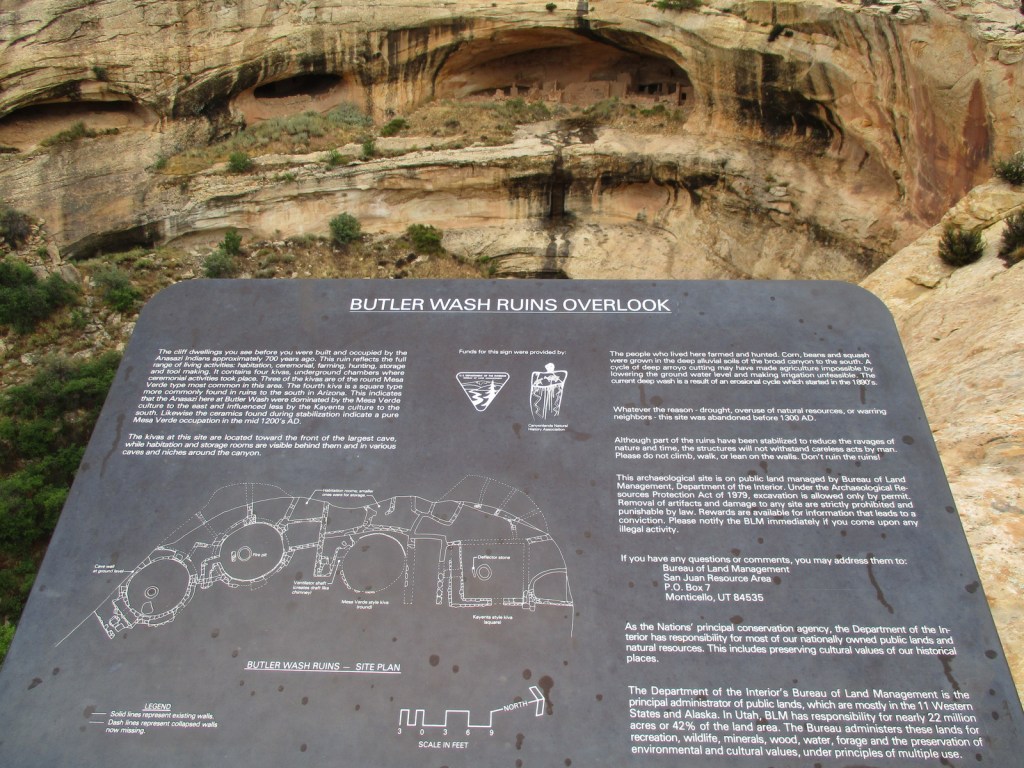
There are many trails to choose from, but one of the most popular is off unpaved Texas Flat Road that enters Mule Canyon (parking fee) and accesses House on Fire, a well-preserved granary located one mile in after multiple stream crossings. There is a paved parking lot suitable for RVs at Butler Wash Interpretive Trail, a half-mile one-way walk on to an overlook of a cliff dwelling.
Photographic Opportunity
Along Highway 211 to the Needles District of Canyonlands National Park, be sure to stop at the paved parking lot for Newspaper Rock. Another nice panel of rock art is found in Sand Island Campground along the San Juan River near Bluff, Utah.
Peak Season
Spring and fall
Fees
A day-use fee of $5 per person applies at several parking areas on Cedar Mesa in southern Bears Ears National Monument, including Mule Canyon access to House on Fire Ruins. There are pay stations at several sites, as well as pre-paid online permits (including for 20 people per day to access Moon House Ruin).
Road Conditions
State Route 95 and Highway 211 are both paved, but other roads like the Moki Dugway, Valley of the Gods Road, and 58-mile-long Elk Ridge Scenic Backway should not be attempted by RVs. A high-clearance vehicle is required to drive many side roads, including six-mile-long Cigarette Springs Road to The Citadel and Seven Kivas Trails. Be aware that flash floods are a danger as many roads traverse canyons.
Camping
There are numerous developed campgrounds spread throughout Bears Ears National Monument. We enjoyed our stay at Hamburger Rock Campground outside the Needles District of Canyonlands National Park. Dispersed camping is also a good option, especially in scenic Valley of the Gods and along lightly-traveled Elk Ridge Scenic Backway. All backcountry camping on Cedar Mesa requires a permit and no campfires are allowed.
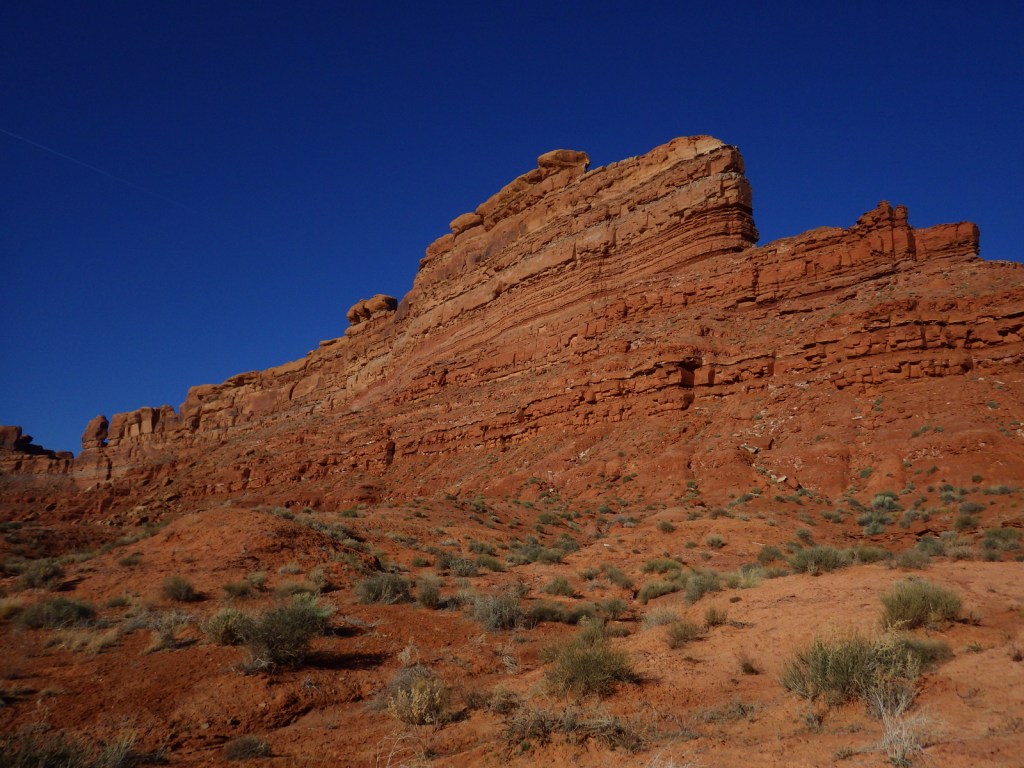
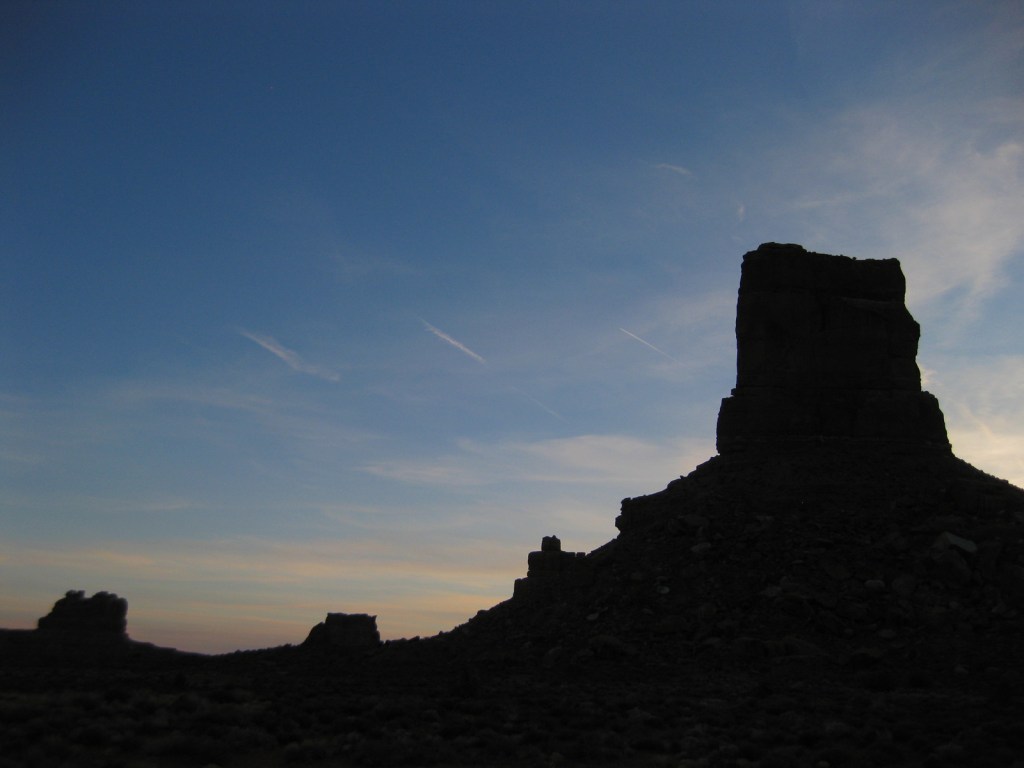
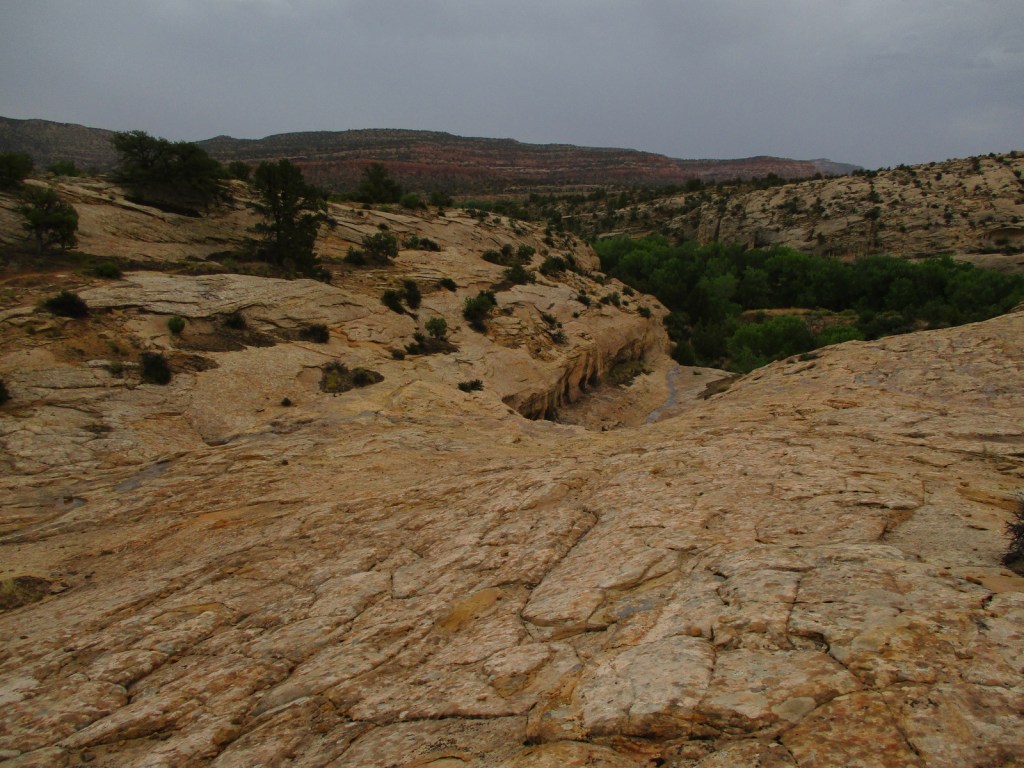
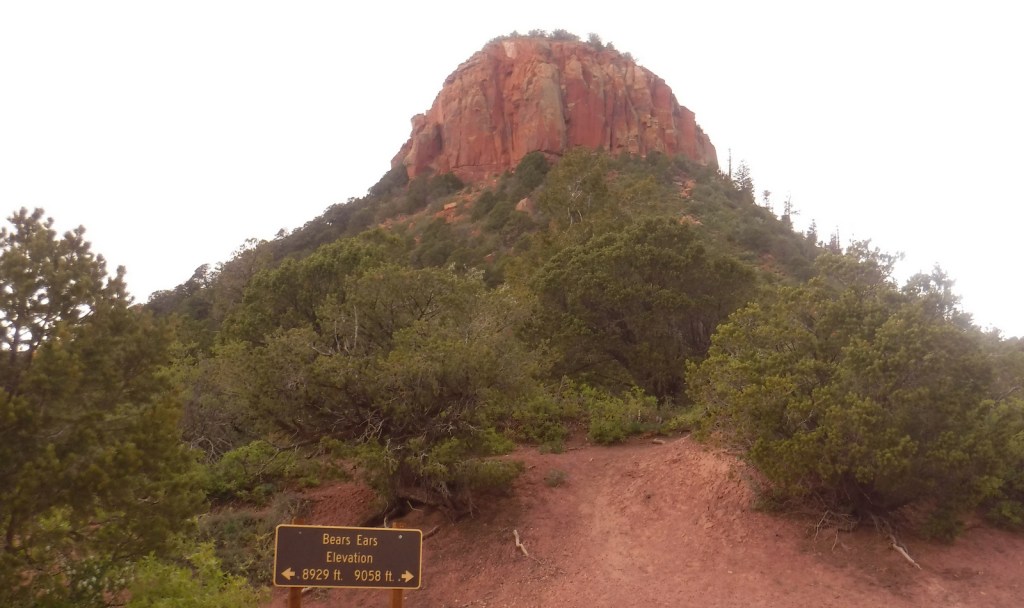
Valley of the GodsWoman in the Tub formationValley of the GodsValley of the GodsValley of the GodsValley of the GodsMexican HatCamping at Hamburger RockTiff on the Moki DugwayDinosaur tracksFlash flood over dinosaur tracksMule CanyonMule CanyonMule CanyonThe “Bears Ears” formationRavens about the park
Explore More – Where are the actual Bears Ears formations that give the National Monument its name?
La Sal National Forest is found in two separate sections of southeastern Utah surrounding the La Sal and Abajo Mountains, topping out on 12,721-foot Mt. Peale. Much of the southern portion of the National Forest, including the Dark Canyon Wilderness, was included in the 1.35-million-acre Bears Ears National Monument, established in 2016 and then controversially reduced in size before being restored. Since 1949, it has been administratively combined with the northern and separate Manti National Forest, so it can be difficult to find information for La Sal National Forest alone.
Highlights
Bears Ears National Monument, La Sal Mountain Loop Scenic Backway, Warner Lake, Bull Canyon Dinosaur Tracks, Buckeye Reservoir, Elk Ridge Scenic Backway, Harts Draw Highway, Abajo Loop State Scenic Backway, Mt. Peale, Arch Canyon, Mt. Tukuhnikivatz
Must-Do Activity
Many visitors access the forest south from Moab on the mostly-paved La Sal Mountain Loop Scenic Backway, a steep drive suitable for passenger vehicles that is accessible in the warmer months. The often snow-capped La Sal Mountains are featured as the backdrop in nearly every photo of Delicate Arch in Arches National Park. The Sierra La Sal (“Salt Mountains” in Spanish) were a prominent landmark on the Old Spanish Trail between Santa Fe and Los Angeles. Be sure to make the dirt Gateway Road (FS 207) detour 5.4 miles to visit Bull Canyon Dinosaur Tracks, where there is also a commanding view of Fisher Mesa and Bull Canyon. Oowah Lake and Warner Lake are also located on unpaved side roads (3.2 and 5.2 miles respectively) from La Sal Mountain Loop Road.
Best Trail
The 58-mile-long Elk Ridge Scenic Backway is a well-maintained, though unpaved route that leads north from Natural Bridges National Monument to Highway 211, which connects to the Needles District of Canyonlands National Park. There are multiple trails along the way that provide access to the Dark Canyon Wilderness, an area known for old-growth forests, natural arches, and Ancestral Puebloan ruins and pictographs. A high-clearance vehicle is not required to reach Big Notch Trailhead where a trail steeply drops into Dark Canyon. Erosion has cut red clay walls that make navigation somewhat difficult in places. About four miles in, not far past the large Cicada Arch on the north side, you reach a spring at the meeting with Drift Trail Canyon. Another two miles takes you to Scorup Cabin, a good place to turn around or explore Horse Pasture Canyon.
Watchable Wildlife
Wildlife species are similar to Utah’s Dixie National Forest and Fishlake National Forest, including black bears, mountain lions, bobcats, coyotes, porcupines, raccoons, skunks, badgers, bighorn sheep, elk, mule deer, and pronghorns. Large birds include bald eagles, golden eagles, northern goshawks, turkey vultures, wild turkeys, common ravens, and various species of owls and woodpeckers. Look for short-horned lizards in the Dark Canyon Wilderness. There are many trout and other gamefish found in the streams and small lakes spread across the high-elevations of the La Sal and Abajo Mountains.
Photographic Opportunity
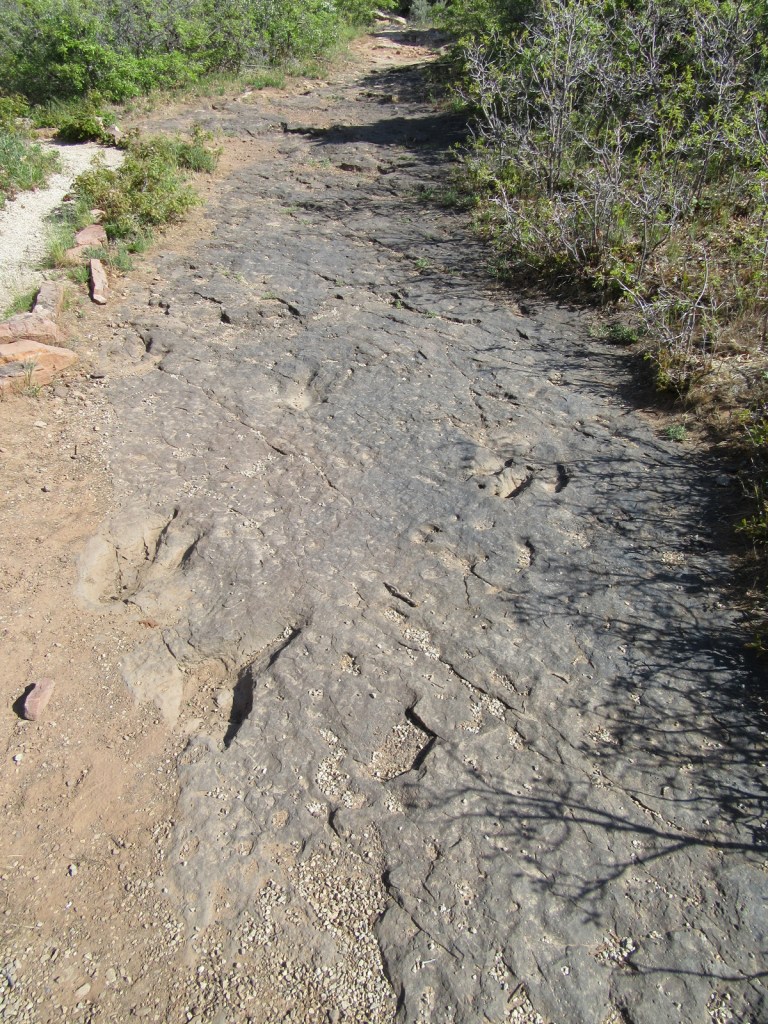
In the summer months, take La Sal Mountain Loop Scenic Backway to Bull Canyon Dinosaur Tracks to see 200-million-year-old therapod tracks, plus an awesome overlook to the north.
Peak Season
Summer
Fees
None
Road Conditions
La Sal Mountain Loop Road is mostly paved, but side roads to Bull Canyon Dinosaur Tracks, Oowah Lake, and Warner Lake are not. The 58-mile-long Elk Ridge Scenic Backway is a rocky, unpaved route that leads north from Natural Bridges National Monument to Highway 211; and side roads to some trailheads require a high-clearance vehicle.
Camping
Warner Lake Campground takes reservations, as does Buckeye Reservoir in Colorado and a few others. Dispersed camping is also an option, especially along lightly-traveled Elk Ridge Scenic Backway.
Explore More – Due to an administrative error in 1908, what was the misspelled name of La Sal National Forest (which was quickly corrected)?
Learn more about this and the 154 other National Forests in our new guidebook Out in the Woods
We are a participant in the Amazon Services LLC Associates Program, an affiliate advertising program designed to provide a means for us to earn fees by linking to Amazon.com and affiliated sites.
In northwest Montana, Kootenai National Forest includes parts of the Cabinet, Purcell, Salish, Selkirk, and Whitefish Mountains on the border of Canada. In 1975, the 422-foot-tall Libby Dam on the Kootenai River created 90-mile-long international Lake Koocanusa (a contraction of Kootenai-Canada-U.S.A.). Elevations in Kootenai National Forest range from 1,832 feet up to 8,738-foot Snowshoe Peak in the Cabinet Mountains Wilderness, encompassing a variety of habitats from subalpine meadows to arid plains with cacti.
Highlights
Lake Koocanusa Scenic Byway, Northwest Peak Scenic Area, McGregor Lake, Yaak Falls, Ten Lakes Scenic Area, Ross Creek Cedar Grove Scenic Area, Loon Lake, Tenmile Falls, Bluebird Basin Trail, Vinal McHenry Boulder National Recreation Trail, Pacific Northwest National Scenic Trail
Must-Do Activity
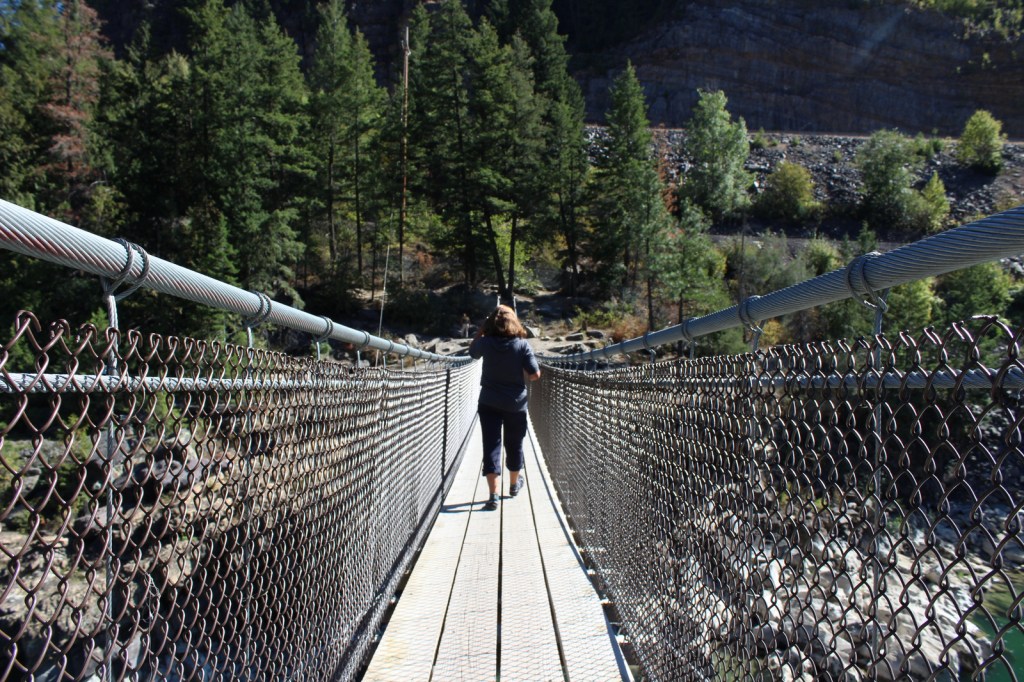
There are more than 1,200 miles of trails in Kootenai National Forest, including 90 miles of the Pacific Northwest National Scenic Trail. Two of the best places to hike are the Northwest Peak and Ten Lakes Scenic Areas, in the remote upper corners of the National Forest. Outside of Libby, Montana, Blue Mountain Trail (1.5 miles one-way), Skyline National Recreation Trail (22 miles), and Scenery Mountain Lookout Trail (2.5 miles) all climb to incredible overlooks. At Kootenai Falls (see Photographic Opportunity), a new suspension bridge crosses the Kootenai River to Forest Service land on the north shore. From there, Koot Creek Canyon Trail travels another three miles to a dirt road in Kootenai National Forest.
Best Trail
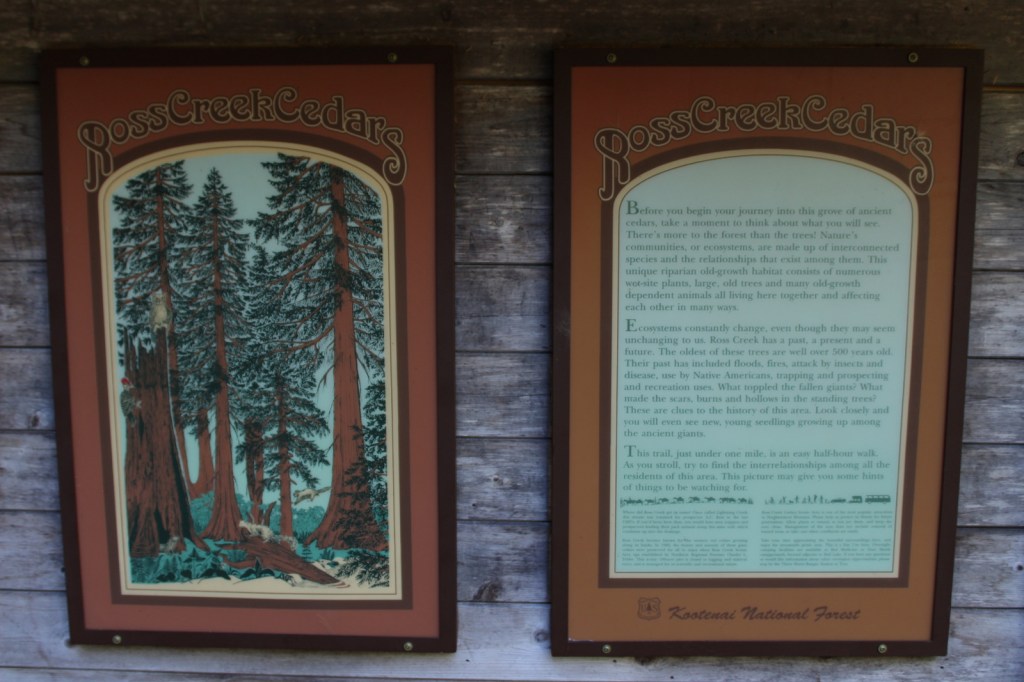
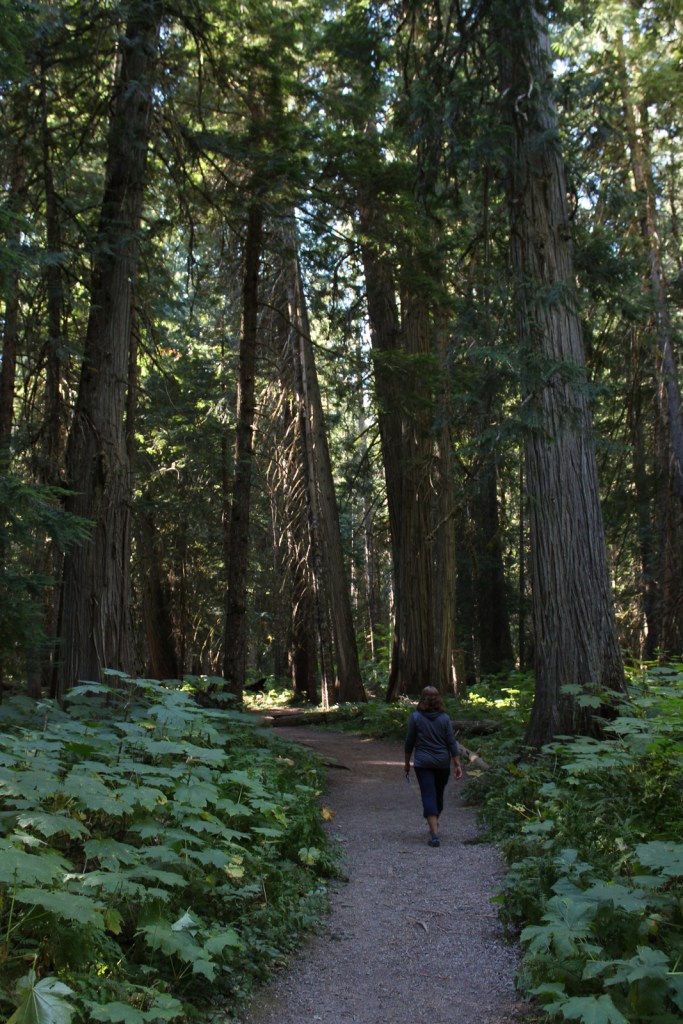
In 1959, Ross Creek Cedar Grove Scenic Area preserved 101 acres of western redcedar trees up to eight feet in diameter. A one-lane paved road with pullouts leads 4.3 miles from Highway 56 to a large parking area with a day-use fee. The main trail is a less than one-mile loop with interpretive signs, but continues five miles to the North Fork of Ross Creek. The old-growth forest is also home to large Douglas-fir, Engelmann spruce, grand fir, and western hemlock trees growing above a lush green understory of ferns and Devil’s-club.
Watchable Wildlife
The mountains provide habitat for grizzly bears, black bears, Canada lynxes, bobcats, mountain lions, wolverines, mink, pine martens, long-tailed weasels, porcupines, snowshoe hares, pika, moose, bighorn sheep, and mountain goats. Hoskins Lake is a wintering range for mule deer and white-tailed deer, as well as an osprey nesting area in the summer. The National Forest’s numerous rivers and more than 100 lakes support gamefish like cutthroat, rainbow, brown, and endangered bull trout. The endangered white sturgeon is also found in this area.
Photographic Opportunity
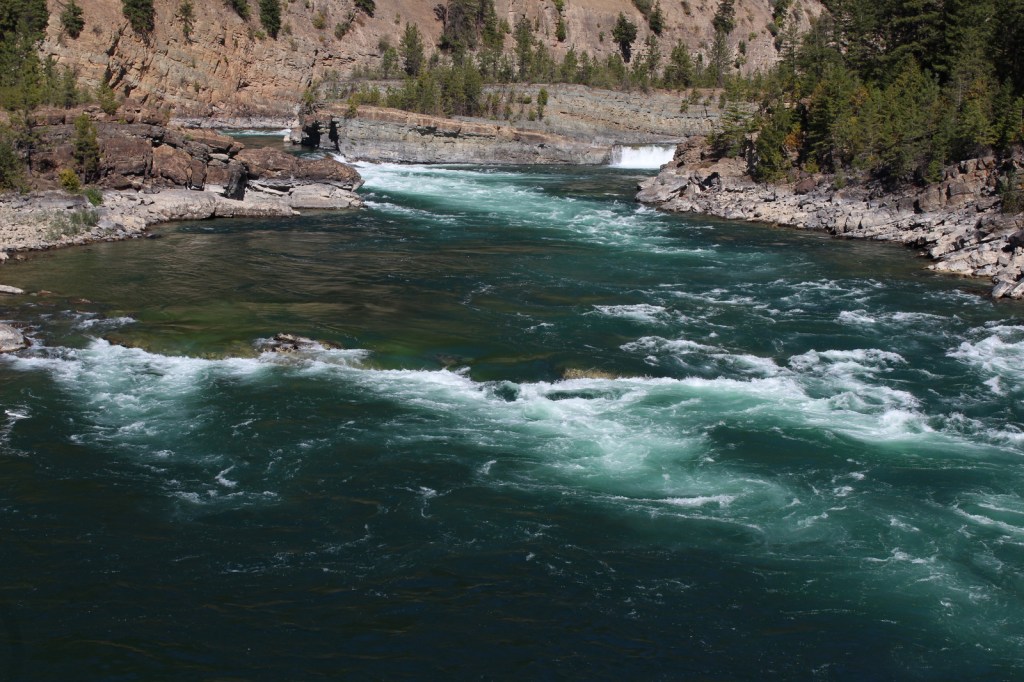
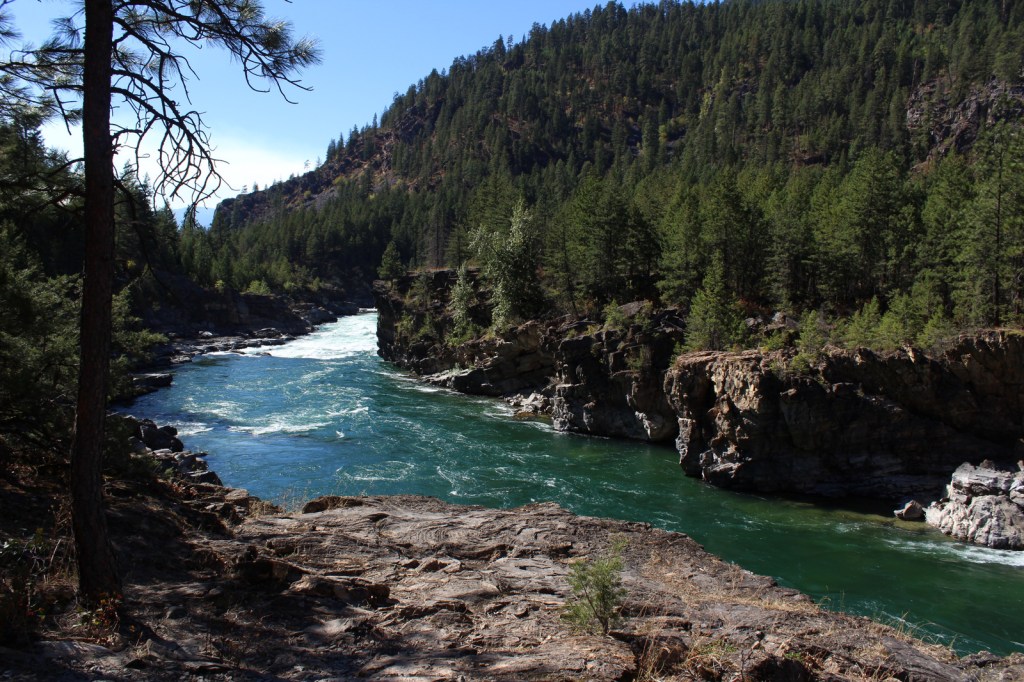
Located in a county park on the side of Highway 2, Kootenai Falls is only about 20 feet tall, but it is impressively wide and beautiful. An overlook is located one-tenth of a mile from the parking lot, but there is also a walking bridge that crosses over the railroad tracks to a viewpoint at the edge of the falls, and a suspension bridge only a quarter-mile further downstream.
Peak Season
Summer
Fees
Ross Creek Cedar Grove Scenic Area has a day-use fee (or the America the Beautiful pass is also accepted).
Road Conditions
Paved roads like the Lake Koocanusa Scenic Byway, U.S. Highway 2, and State Highway 56 make it easy to explore Kootenai National Forest. To access Ross Creek Cedar Grove Scenic Area, a one-lane paved road with pullouts leads 4.3 miles from Highway 56. A nice drive through the Purcell Mountains can be made by looping State Route 508 and Forest Road 68.
Camping
There are Forest Service campgrounds at Kilbrennan Lake, Loon Lake, Rexford Branch, Caribou, Red Top, Whitetail, Pete Creek, Howard Lake, and elsewhere. Big Creek Baldy Mountain lookout cabin can be rented, too.
Kootenai FallsSuspension bridge at Kootenai FallsSuspension bridge at Kootenai FallsKootenai RiverKootenai FallsScott’s mother in Ross Creek Cedar Grove Scenic AreaScott in Ross Creek Cedar Grove Scenic AreaScott’s mother in Ross Creek Cedar Grove Scenic Area
lodgepole pine, whitebark pine, ponderosa pine, Douglas-fir, western hemlock, western redcedar, , western larch, alpine larch, Engelmann spruce, subalpine fir, grand fir
Rocky Mountain maple, boxelder, quaking aspen, balsam poplar, dwarf birch, paper birch, Piper’s hawthorn, Bebb willow, western mountain-ash, choke cherry, western serviceberry
Explore More – The Kootenai (or Kootenay in Canada) River is named after the local Ktunaxa Indians, which translates as what in the Algonquian language?
Learn more about this and the 154 other National Forests in our new guidebook Out in the Woods
We are a participant in the Amazon Services LLC Associates Program, an affiliate advertising program designed to provide a means for us to earn fees by linking to Amazon.com and affiliated sites.
Best time of year: Summer for the state fair and access to the northern lakes
We recently published our guidebook 50 States of Great: Road Trip Guide to America, so we decided to start a new type of blog post where we create a travel itinerary for all 50 states, in addition to our usual National Forest and National Park entries. After starting with Kansas, Georgia, Idaho, and Rhode Island, we decided to do a state that is part Midwest and part North Woods. We made an ambitious seven-day plan starting in the southern Minnesota, with plenty of options to extend the trip.
Located in the small town of Austin, this free museum is full of interactive exhibits and photo opportunities, but the best part is that it does not take itself too seriously. Even if you do not like to eat the canned “spiced ham” product, you will come to appreciate its significance to World War II history and pop culture, as well as its amazing gift shop with more branded products than you can imagine.
Niagara Cave is a privately-owned show cave named for its 60-foot-tall underground waterfall that is only viewable on guided tours. Not far away, Forestville/Mystery Cave State Park contains the state’s longest cave (47 degrees year round) which also offers guided tours.
If you come into the state from the southwest corner, consider a stop at a spot that people have come for 2,000 years to mine the red quartzite rock (also known as catlinite). The soft sedimentary stone is relatively easy to carve into smoking pipes and effigies. April through October, you can watch American Indian carvers at the National Park Service (NPS) museum demonstrate how to sculpt this soft yet durable stone into hollow pipes and other beautiful ornaments, some of which you can buy in the gift shop.
Fans of the author’s “Little House” series of books will want to see a replica of the Ingalls’ home in Walnut Grove and some of the family’s historic heirlooms.
Indoor shopping malls are still thriving in the Twin Cities (Minneapolis-St. Paul) metropolitan area, perhaps due to the cold and snowy winter weather. The most famous is the Mall of America with its indoor amusement park and 520 stores, making it the largest mall in the western hemisphere (and eleventh largest in the world).
This park follows 72 miles of the great river’s course through Minnesota, from busy metropolitan sections in the Twin Cities to secluded stretches of water where it reaches its confluence with the Saint Croix National Scenic Riverway. In downtown Minneapolis, Minnehaha Regional Park contains its namesake falls celebrated in Henry Wadsworth Longfellow’s Song of Hiawatha. Nearby, St. Anthony Falls is the only true waterfall along the entire length of the Mississippi River, now controlled by a lock and dam.
Optional stop at University of Minnesota Golden Gophers’ football game
We saw wild turkeys wandering around this beautiful campus that sits on a bluff east of the Mississippi River. Nobody seems to be exactly sure what a golden gopher is (possibly a thirteen-lined ground squirrel), but their mascot Goldie is the cutest in all of college football. Huntington Bank Stadium has one of the best pregame areas with plenty of photo ops and a pep rally held outside the hockey arena, plus we got free Culver’s custard, a clear bag giveaway, and Mystic Lake casino provided free towels and “spinny video thing.” The football team typically schedules their home opener on the Thursday before Labor Day during the Minnesota State Fair.
You will need all day to visit America’s best state fair that is held annually the 12 days before Labor Day, welcoming more than two-million visitors annually. The fair has the standard carnival rides, butter sculptures, farm animals, and artwork, as well as stages where musicians, comedians, and magicians perform throughout the day. Some of the unique food offerings include hotdish-on-a-stick, poutine, fried cheese curds, pronto pup, fried pickles, pork chop-on-a-stick, and fried buckeyes (chocolate and peanut butter candy). Since it started in 1979, Sweet Martha’s Cookie Jar has been overfilling buckets of fresh-baked chocolate chip cookies for customers, making up to 200,000 cookies an hour. To wash all that down, you might want to visit one of the stands offering all-you-can-drink milk.
If you are still hungry after the Minnesota State Fair then you probably didn’t do it right, but we will make one of our rare restaurant recommendations for this unique spot in downtown Minneapolis with interesting décor and really good food (try the poutine or walleye bites).
Day 4
Paul Bunyan Expressway
The legendary giant lumberjack Paul Bunyan is a big deal in Minnesota and he has statues honoring him in many towns along the Paul Bunyan Expressway. The 18-foot-tall statues in Bemidji were originally built in 1937 to honor these larger-than-life heroes and continue to be an essential roadside attraction. In Brainerd, Paul Bunyan Land is an entire amusement park built around a 26-foot-tall talking statue of Paul and 19-foot Babe, the latter refurbished after it blew over in a 2006 windstorm.
The Lost 40 is 144 acres of old-growth red and white pine forest that was never logged due to a surveying error that mapped the area as part of Coddington Lake in 1882. The oldest tree here is more than 250 years old and can be seen on an easy one-mile loop trail with interpretive signs. The trailhead is located east of Blackduck on well-signed back roads that are also popular for snowshoeing in the winter. Nearby, Camp Rabideau is perhaps the best preserved Civilian Conservation Corps (CCC) camp left from the 1930s, with free guided tours in the summer.
Lake Itasca is considered the headwaters of the Mississippi River and is located just west of Highway 71 at the beginning of the 2,069-mile-long Great River Road that goes all the way to Louisiana.
Day 5
Roadside Sculptures
Driving north on Highway 71, there is seemingly another great roadside attraction located every few miles. We saw the statues of Uncle Dan Campbell in Big Falls, Jack Pine Savage in Littlefork, the world’s largest crow in Belgrade, and a giant black duck in the town of Blackduck. Right outside Voyageurs National Park, which surrounds Lake Kabetogama, was our favorite—a giant walleye with a saddle for riding. If Kabetogama seems like a mouthful, rest assured that everyone, including park rangers, simply calls it “Lake Kab.”
The park is famous for its manmade destinations, including Kettle Falls Hotel, Hoist Bay Resort, and the unique sculptures at Ellsworth Rock Gardens. Try to get out on one of Minnesota’s 10,000 lakes via a ranger-led tour or take your own boat to one of the shoreline campsites inaccessible by car (permit required). Reservations can be made for the ranger-guided North Canoe Voyage that lets passengers paddle a 26-foot canoe, just like the French-Canadian “voyageurs” of old.
Day 6
Kawishiwi Falls in Ely
The little town of Ely is the gateway to the Boundary Waters Canoe Area Wilderness (see below), but even if you are just passing through be sure to make the short hike to Kawishiwi Falls below the dam on Garden Lake.
Gray wolves (called timber wolves regionally) reside in the North Woods and while a few lucky travelers might hear them howling, your best bet to see one is at the Wolf Center. It also has a section dedicated to Sigurd Olson, a talented local author and naturalist.
French-Canadian voyageurs had to walk their canoes and goods along an eight-mile-long portage to bypass the rapids on the Pigeon River. In 1784, the end of the trail on the edge of Lake Superior became the site of the North West Company headquarters where they held an annual rendezvous, where today visitors can walk around the reconstructed buildings and talk with the costumed reenactors during the summer.
Optional stop at Two Harbors
North of Duluth, the North Shore Scenic Drive passes through the town of Two Harbors where there is a giant rooster at Weldon’s Gifts and a huge statue of Pierre the Voyageur outside the Earthwood Inn. If you press the speaker button at the statue’s base, Pierre will tell you all about the history of the region, but he never explains why he is not wearing any pants.
In addition to encompassing the state’s highest mountain, Superior National Forest also offers scenic drives on the Gunflint Trail (County Road 12), Fernberg Road (State Route 169), and Echo Trail (County Road 116). Vermilion Gorge Trail is an easy 1.5-mile one-way hike to a narrow canyon cut through Canadian Shield rock in the small community of Crane Lake (on the east side of Voyageurs National Park). Not far away down a dirt road, a short trail leads to Vermilion Falls where the same river cuts a narrow channel through the rock.
Permits for the peak season can be hard to come by for the world’s premiere destination for backcountry canoeing, so plan ahead. This one-million-acre preserve has more than 1,000 lakes with over 1,500 miles of canoe routes and 2,200 designated backcountry campsites. In addition to its famous water routes with numerous portages, a few overland trails exist like the 12-mile Angleworm Trail and the 39-mile Kekekebic Trail, an official part of the North Country National Scenic Trail.