Tag Archives: Parkway

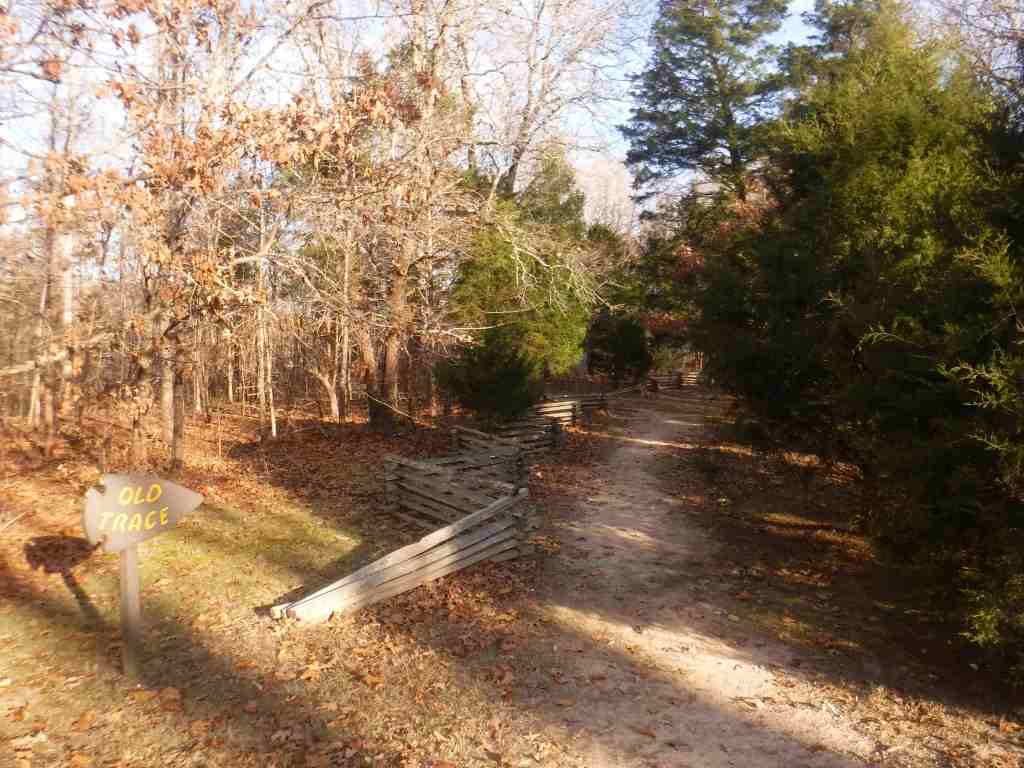
Natchez Trace Parkway

Natchez Trace Parkway

Mississippi-Alabama-Tennessee

Managed by National Park Service

Established 1938

52,302 acres

Website: nps.gov/natr

Overview

The Natonal Park Service (NPS) administers the Natchez Trace Parkway, a two-lane All-American Road that extends 444 miles from Natchez, Mississippi to Nashville, Tennessee.  The trace started as a game trail that was utilized as an American Indian footpath.  Some of the mound builder sites protected here were inhabited when Hernando de Soto led the first Europeans into this area in 1540.  The Natchez Trace was heavily used in the 1800s by “Kaintuck” flatboatmen returning from New Orleans who left the Mississippi River from Natchez, Mississippi and continued on foot north to Kentucky and beyond.  Today you can still follow portions of the sunken trail worn down by travelers for centuries.  The parkway began as a Civilian Conservation Corps (CCC) project during the Great Depression and the final two segments were completed in 2005.

Highlights

Rocky Springs, Owens Creek Waterfall, Emerald Mound, Mount Locust, Chickasaw Village, Meriwether Lewis Monument and Gravesite, Cypress Swamp Walk, Witch Dance Horse Trail, Natchez Trace National Scenic Trail

Must-Do Activity

Near Tupelo, the Parkway Visitor Center at Milepost 266 is a must-do stop to learn the history of the trace, and it also serves as the NPS contact station for tiny Brices Cross Roads National Battlefield Site and Tupelo National Battlefield.  There are numerous roadside informational pullouts and trailheads along the route, so use the NPS app or pick up an official “unigrid” map.  You can easily spend days exploring, but at a minimum we recommend you check out Emerald Mound, Mount Locust, Cypress Swamp, and Meriwether Lewis Monument and Grave Site.

Best Trail

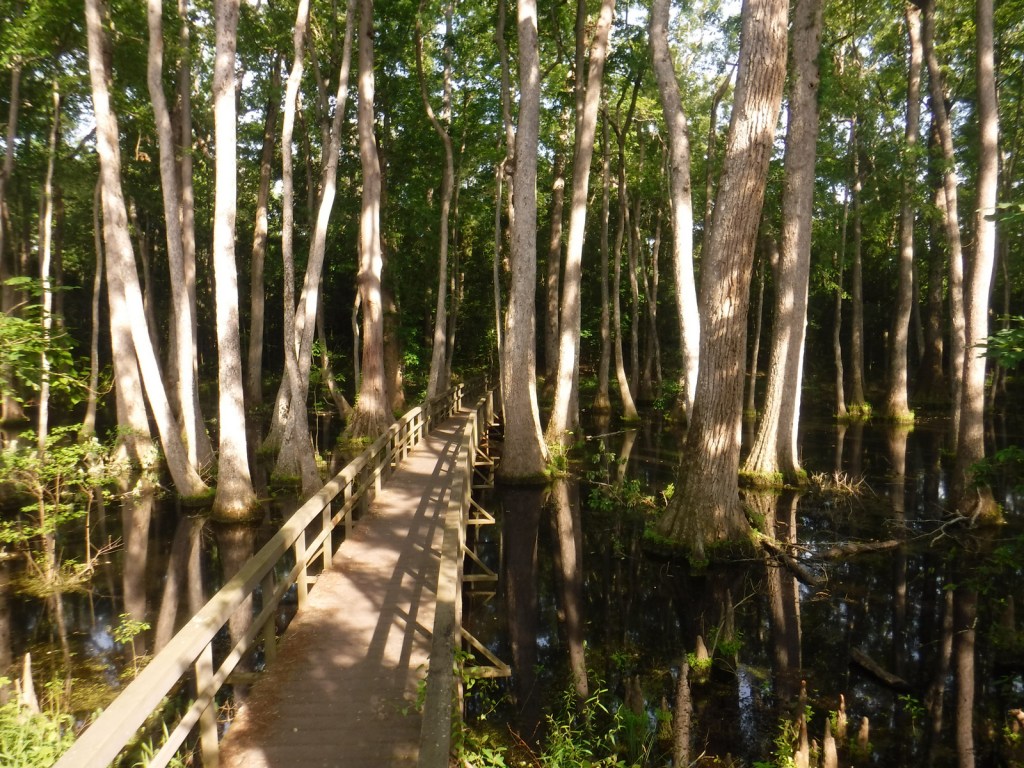
Our favorite trail is the Cypress Swamp Walk at Milepost 122, where a boardwalk crosses a scenic tupelo-baldcypress swamp.  The Natchez Trace National Scenic Trail (click here for our blog post) does not follow the entire 444-mile parkway, but exists in five segments totaling 67 miles in length.  There are also 15 miles of equestrian trails at Witch Dance (Milepost 233.2) in Tombigbee National Forest.

Photographic Opportunity

Not far from Natchez National Historical Park, Emerald Mound (a short detour at Milepost 10.3) is the second-largest American Indian ceremonial mound in the U.S.  It stands 35 feet tall and 770 by 435 feet at its base. 

Peak Season

Spring and fall

Hours

https://nps.gov/natr/planyourvisit/hours.htm

Fees

None

Road Conditions

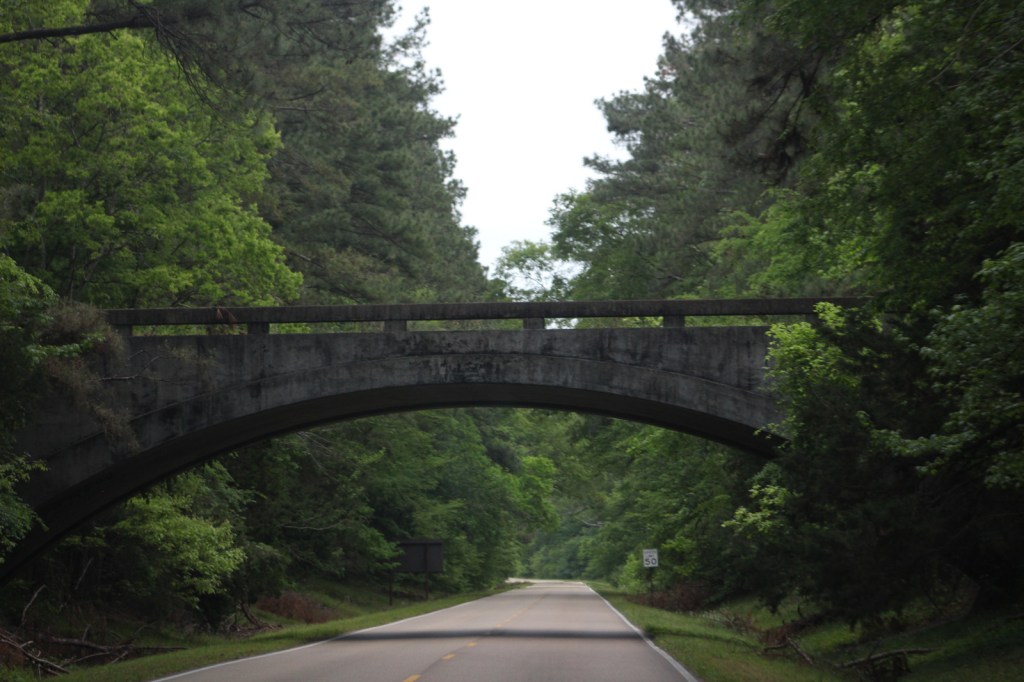
The entire 444-mile Natchez Trace Parkway is paved from Natchez, Mississippi to Nashville, Tennessee with commercial traffic prohibited and a maximum speed limit of 50 miles per hour.  There is a detour from Milepost 181 to 204 due to ongoing construction.  Watch for bicycles and white-tailed deer on the road.

Camping

There are three free NPS campgrounds (at Milepost 54, 193.1, and 385.9) along the route, as well as those in sites like Mississippi’s Tishomingo State Park.  The three NPS campgrounds have water and bathrooms (but no RV hookups), plus there are also five bike-only campsites along the route.  Jeff Busby Campground closed in June 2025 for repairs.

Related Sites

Natchez National Historical Park (Mississippi)

Tupelo National Battlefield (Mississippi)

Brices Cross Roads National Battlefield Site (Mississippi)

Vicksburg National Military Park (Mississippi)

Nearest National Park
Hot Springs

Explore More – When were Ackia Battleground National Monument and Meriwether Lewis National Monument disbanded and added to the Natchez Trace Parkway?

Theodore Roosevelt Island National Memorial

Overview

As a strict adherent to his own personal philosophy promoting “the strenuous life,” President Theodore Roosevelt regularly swam in the Potomac River, even in the middle of winter.  As a president with a proud record of conservation (especially in creating National Monuments), it is meaningful that his memorial lies on an 80-acre island with 2.5 miles of gravel trails leading through its beautiful and diverse deciduous forest. 

Highlights

Upland Trail, Swamp Trail, statue

Must-Do Activity

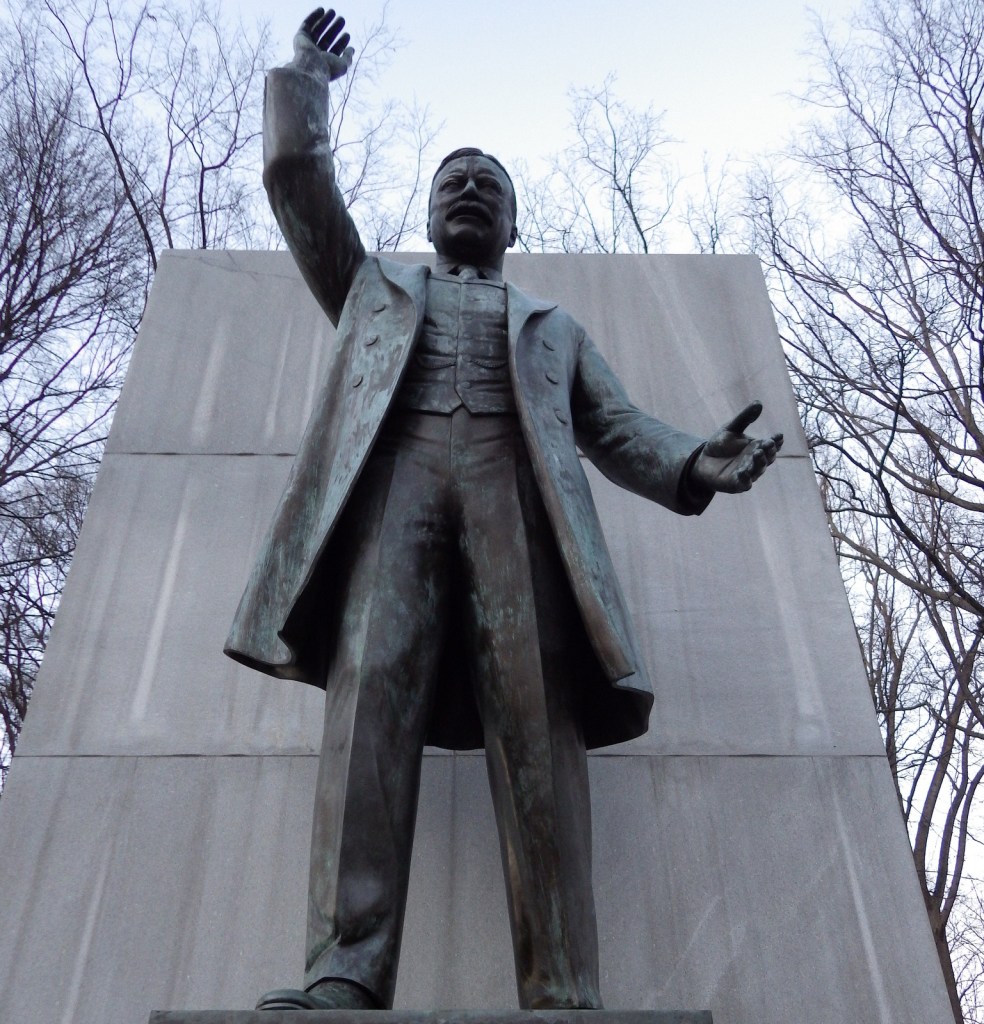
Fittingly, Theodore Roosevelt Island National Memorial is only accessible via a footbridge from the Virginia side of the Potomac River.  Dedicated in 1967, a 17-foot statue of the man is surrounded by several fountains and four monoliths carved with his words.  The foundation of a brick mansion owned by the Mason family in the 1800s can be seen from the trails on the island.

Best Trail

Teddy would surely appreciate that the island is situated along the Mount Vernon Trail, an 18-mile pathway that follows the western bank of the Potomac River.

Instagram-worthy Photo

Teddy Roosevelt was known as a flamboyant orator, which is even captured in his silent statue.  In 1912, he famously gave an 84-minute campaign speech after being shot in the chest by a would-be assassin.

Peak Season

Summer

Hours

https://www.nps.gov/this/planyourvisit/hours.htm

Fees

None

Road Conditions

The parking lot is only accessible from the northbound lanes of the George Washington Memorial Parkway, which is itself a unit of the National Park Service (NPS) system.

Camping

None

Related Sites

George Washington Memorial Parkway (Maryland-Virginia)

Franklin Delano Roosevelt Memorial (District of Columbia)

Rock Creek Park (District of Columbia)

Explore More – When did the Theodore Roosevelt Memorial Association purchase the island?

Great Smoky Mountains National Park

Overview

Great Smoky Mountains National Park straddles the border of Tennessee and North Carolina, with both sides offering incredible views.  The park is similar to Shenandoah National Park in that it was mostly purchased from private landowners before its establishment by the federal government in 1934.  With around 11-million visitors annually, it is easily the most visited of the 62 National Parks in the National Park Service system, perhaps because it has no entrance fee.

Highlights

Clingman’s Dome, Cades Cove, Roaring Fork Motor Nature Trail, Foothills Parkway, Oconaluftee, Appalachian National Scenic Trail

Must-Do Activity

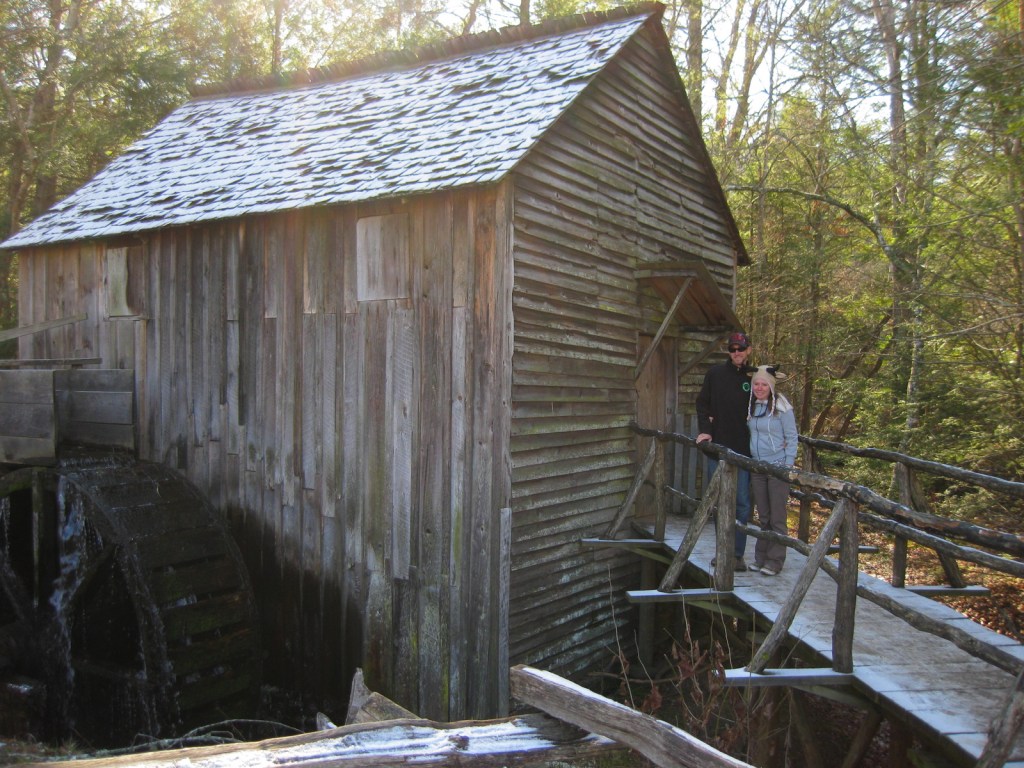
Many interesting sections of Great Smoky Mountains National Park preserve the human history of the region, like the popular Cades Cove with its iconic old grist mill.  To learn more about the Cherokee indigenous to this region, visit Oconaluftee Visitor Center on the North Carolina side.  While there you might also spot a herd of reintroduced elk.

Best Trail

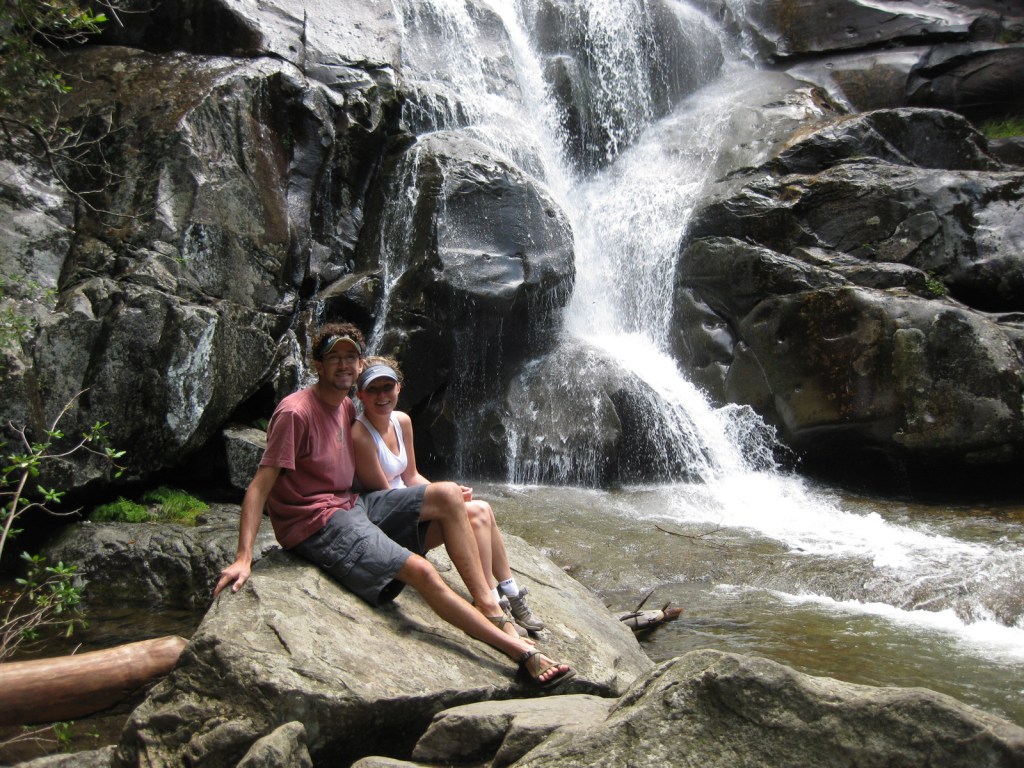
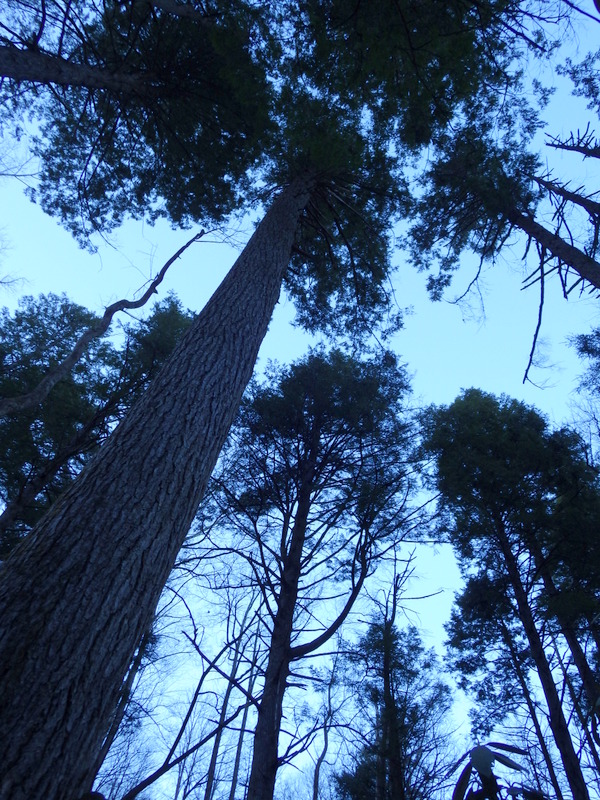
Even on the bumper to bumper Roaring Fork Motor Nature Trail, all you have to do is park and take a hike to find some solitude.  Grotto Falls Trail passes through old-growth hemlock forest, an area very popular with black bears.

Instagram-worthy Photo

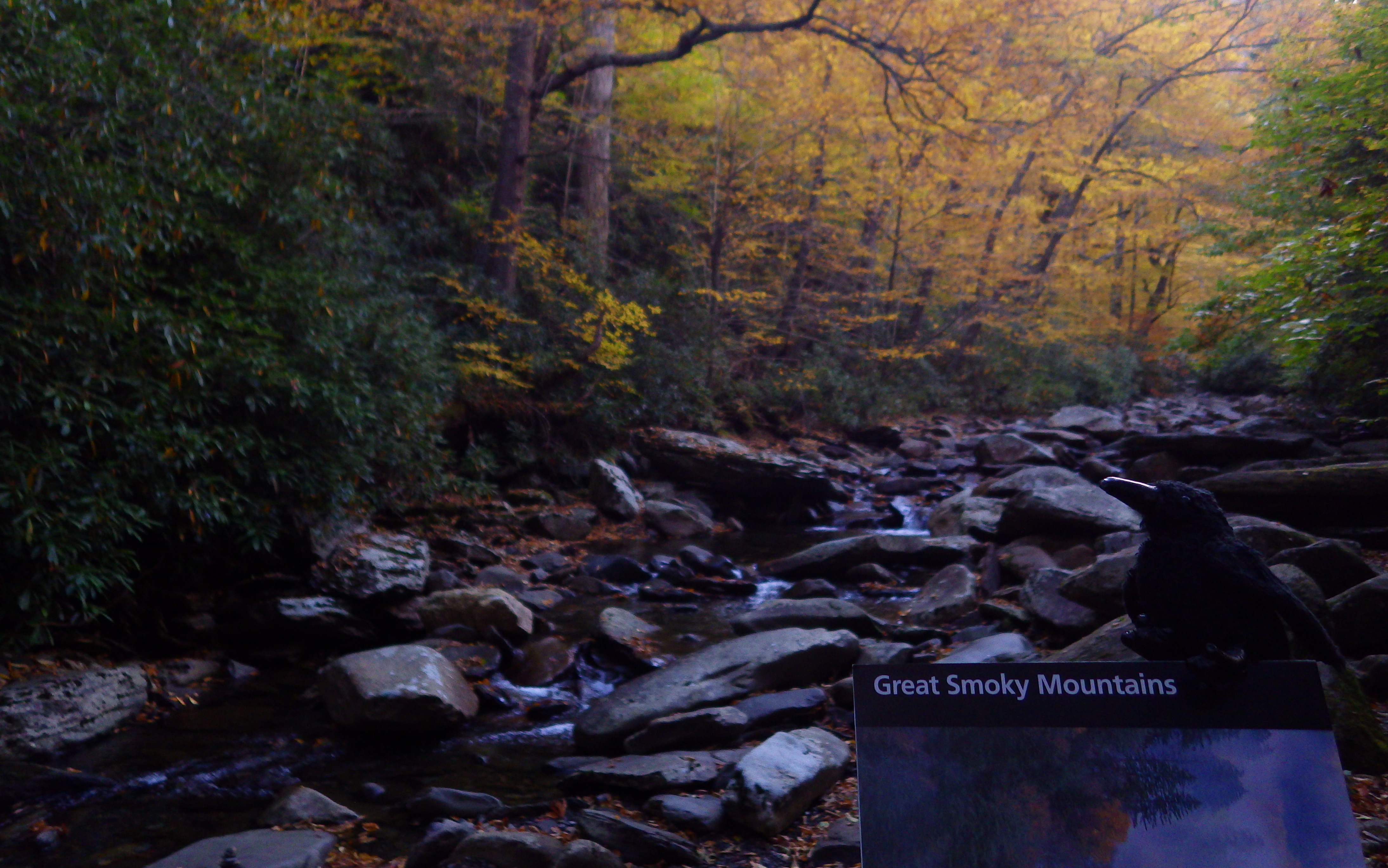
As you can imagine, this park is incredibly popular in October and November because of the beautiful fall foliage.  Early in the season, head to 6,643-foot Clingman’s Dome, then drop in elevation as the autumn progresses.

Peak Season

Summer and fall

Hours

https://www.nps.gov/grsm/planyourvisit/hours.htm

Fees

None

Road Conditions

Newfound Gap Road is the major thoroughfare connecting the two sides of the park and it is plowed throughout the winter.  The 11-mile loop road through Cades Cove is open year round, but the 7-mile spur road up to Clingman’s Dome and the 6-mile one-way Roaring Fork Motor Nature Trail are seasonal.

Camping

There are 10 campgrounds within Great Smoky Mountains National Park, but if you need RV hookups you will have to find a private campground outside the park.

Related Sites

Big South Fork National River and Recreation Area (Tennessee-Kentucky)

Blue Ridge Parkway (North Carolina-Virginia)

Shenandoah National Park (Virginia)

This design we created to celebrate Great Smoky Mountains National Park is available on a variety of products at Cafe Press and Amazon.

Explore More – While most National Parks do not allow dogs on trails, what are the two trails in Great Smoky Mountains National Park that do?

We are a participant in the Amazon Services LLC Associates Program, an affiliate advertising program designed to provide a means for us to earn fees by linking to Amazon.com and affiliated sites.

Tupelo National Battlefield

Overview

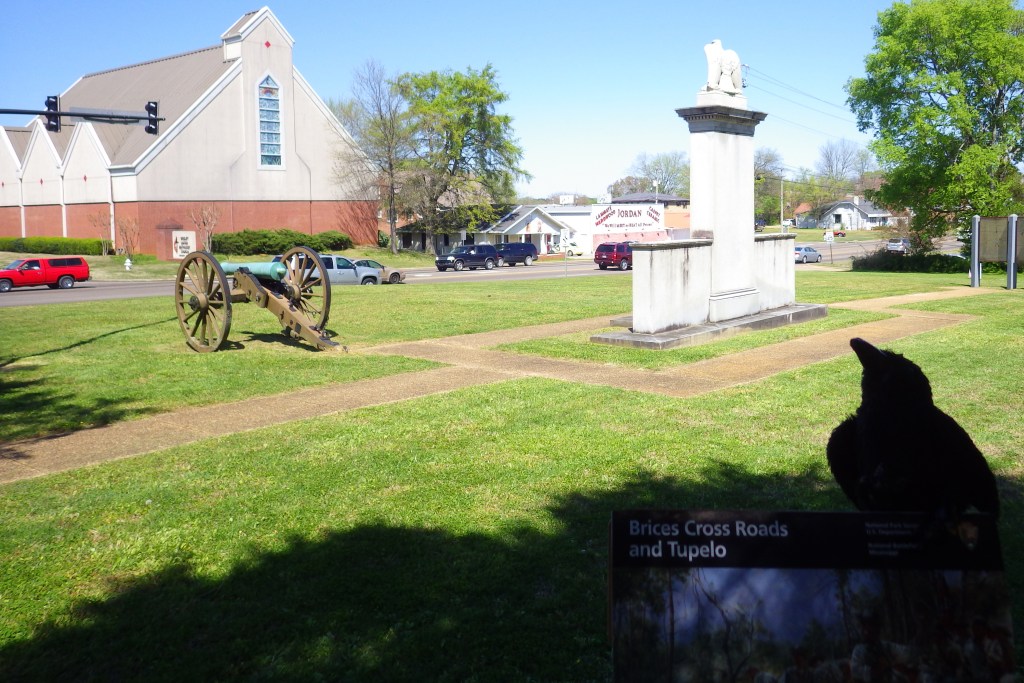
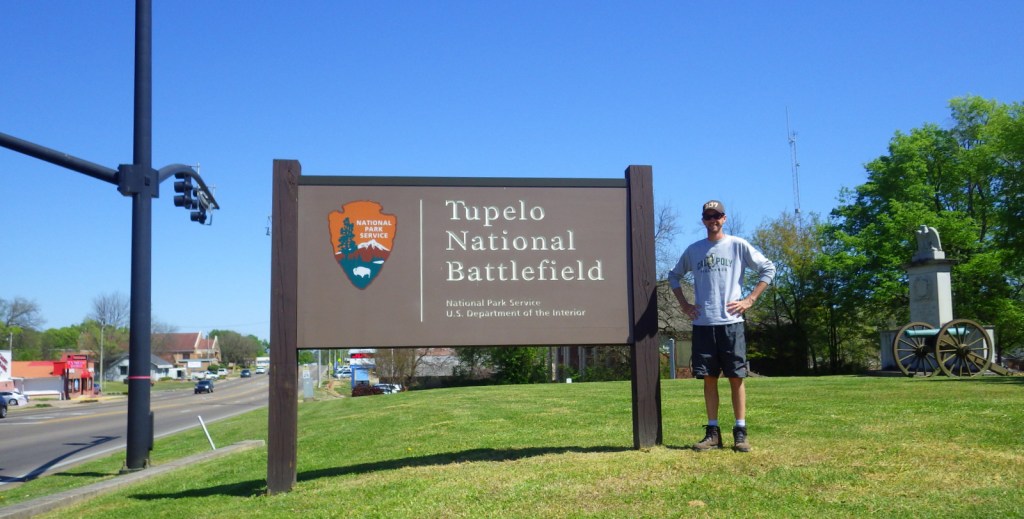
Two cannons and a monument mark this one-acre (less than a football field) National Park Service (NPS) site surrounded by the city of Tupelo, Mississippi.  The park was established in 1929 to memorialize the battle of July 14, 1864, when the Union army drove off Confederate troops trying to disrupt General William T. Sherman’s railroad supply line at the historic town of Harrisburg. Located only one mile off the Natchez Trace Parkway, Tupelo’s own Elvis Presley probably visited this park as a child.

Highlights

Cannons

Must-Do Activity

Unlike other NPS sites, Tupelo National Battlefield provides much easier access to a car wash and a Walmart store.  Its visitor center is combined with the one for the Natchez Trace Parkway just outside Tupelo.  The city of Baldwyn, Mississippi runs an interpretive center (with a small admission fee) that also commemorates a Confederate victory on June 10, 1864 at Brices Cross Roads National Battlefield Site.   

Best Trail

There is a sidewalk on two sides of the one-acre park.

Instagram-worthy Photo

This is one of the smallest units in the NPS system, but from one angle, Tupelo National Battlefield looks like many larger Civil War parks.

Peak Season

“They get about a week of spring then the summer is blistering.” –Jason Isbell from the song “Tupelo”

Hours

https://www.nps.gov/tupe/planyourvisit/hours.htm

Fees

None

Road Conditions

All roads paved, with street parking available.

Camping

Tombigbee State Park offers camping about 10 miles from Tupelo.

Explore More – What does the T. stand for in General William T. Sherman’s name?