Tag Archives: history

Springfield Armory National Historic Site

Overview

The arsenal at Springfield, Massachusetts began manufacturing guns during the American Revolution and became the first National Armory in 1794.  For nearly 200 years it served its purpose before being donated by the military for the creation of Springfield Technical Community College in 1967.  The National Park Service (NPS) maintains a museum and former officer’s quarters on 55 acres at the back of the gated campus.

Highlights

Museum, film, Organ of Muskets

Must-Do Activity

Start your visit with the 14-minute film, then peruse the two halves of the museum, one side dedicated to weaponry and the other to industry.  Watch the scale model of the Blanchard Eccentric Lathe as it demonstrates the shaping of wood to match a metal template.  This technology was first introduced here and is commonly used today to create keys, furniture, and baseball bats. 

Best Trail

There are no trails, but you can walk the sidewalks around the brick buildings that once housed the armory and are now the campus of Springfield Technical Community College.

Instagram-worthy Photo

The “Organ of Muskets” inspired the 1845 anti-war poem by Henry Wadsworth Longfellow, a Harvard professor with his own NPS site. 

Peak Season

Summer

Hours

https://www.nps.gov/spar/planyourvisit/hours.htm

Fees

None

Road Conditions

Follow street signs from Interstate 91 exits to the main gate for Springfield Technical Community College then back to the free parking lot by the NPS museum.

Camping

Granville State Forest is located 20 miles west of Springfield, Massachusetts on Highway 57.

Related Sites

Longfellow House – Washington’s Headquarters National Historic Site (Massachusetts)

Minute Man National Historical Park (Massachusetts)

Coltsville National Historical Park (Connecticut, authorized in 2014 but remains unfunded)

Explore More – Who was the Springfield Armory employee who invented the M 1 rifle used throughout World War II?
Tupelo National Battlefield

Overview

Two cannons and a monument mark this one-acre (less than a football field) National Park Service (NPS) site surrounded by the city of Tupelo, Mississippi.  The park was established in 1929 to memorialize the battle of July 14, 1864, when the Union army drove off Confederate troops trying to disrupt General William T. Sherman’s railroad supply line at the historic town of Harrisburg. Located only one mile off the Natchez Trace Parkway, Tupelo’s own Elvis Presley probably visited this park as a child.

Highlights

Cannons

Must-Do Activity

Unlike other NPS sites, Tupelo National Battlefield provides much easier access to a car wash and a Walmart store.  Its visitor center is combined with the one for the Natchez Trace Parkway just outside Tupelo.  The city of Baldwyn, Mississippi runs an interpretive center (with a small admission fee) that also commemorates a Confederate victory on June 10, 1864 at Brices Cross Roads National Battlefield Site.   

Best Trail

There is a sidewalk on two sides of the one-acre park.

Instagram-worthy Photo

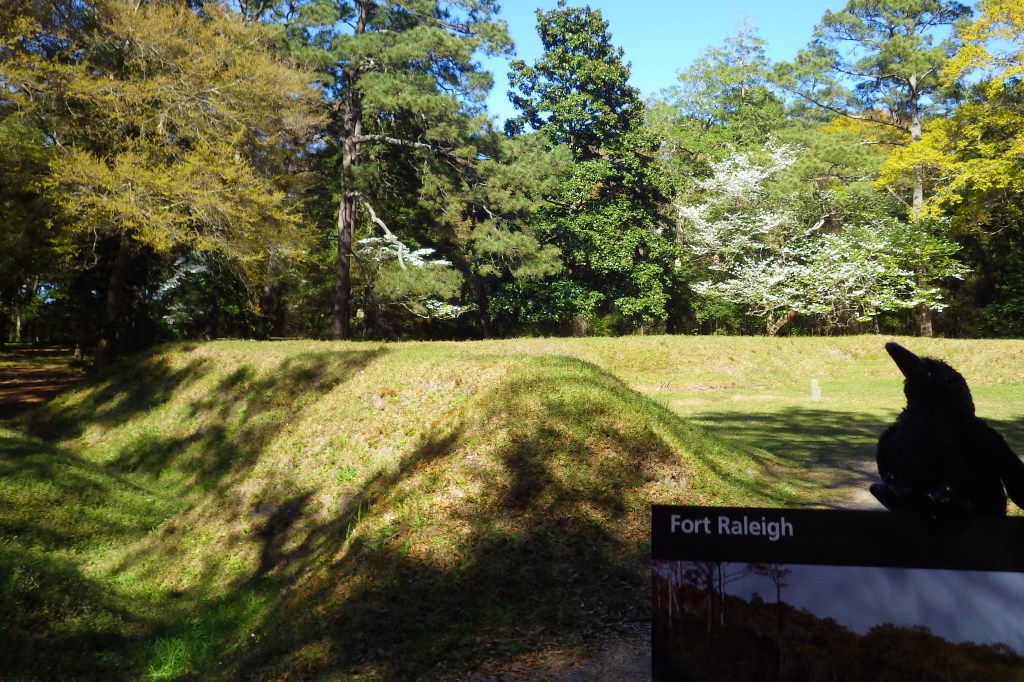
This is one of the smallest units in the NPS system, but from one angle, Tupelo National Battlefield looks like many larger Civil War parks.

Peak Season

“They get about a week of spring then the summer is blistering.” –Jason Isbell from the song “Tupelo”

Hours

https://www.nps.gov/tupe/planyourvisit/hours.htm

Fees

None

Road Conditions

All roads paved, with street parking available.

Camping

Tombigbee State Park offers camping about 10 miles from Tupelo.

Explore More – What does the T. stand for in General William T. Sherman’s name?

Rocky Mountain National Park

Overview

This truly is a National Park for all seasons.  In the summer, it is worth the extra time it takes to drive eleven miles up the unpaved curves of one-way Old Fall River Road to Alpine Visitor Center at 11,796 feet.  Elk bulls spar and bugle in the autumn, when aspen trees briefly turn the mountainsides gold.  Winter is a wonderful time for outdoor recreation if you come prepared for the cold and snow.

Highlights

Bear Lake, Dream Lake, Trail Ridge Road, Adams Falls, Ouzel Falls,

Must-Do Activity

From the famous Trail Ridge Road, you do not even have to get out of your car for amazing panoramas.  If you want to walk, the one-mile Toll Memorial Trail at Tundra Communities Trailhead is paved and flat enough to not be too strenuous at 12,000 feet in elevation.  Elk, pikas, and yellow-bellied marmots frequent the parking area around Rock Cut. 

Best Trail

If you are looking to climb straight up the side of a mountain, there are plenty of options, including popular Flattop Mountain and the strenuous climb up Longs Peak.  For a less busy trail, head to Ypsilon Lake and continue up the hillside, scrambling over boulders all the way to spectacular Spectacle Lakes.

Instagram-worthy Photo

In Grand Lake on the west side of the park, hiking or snowshoeing past Adams Falls up the East Inlet Trail is breathtaking in all seasons.

Peak Season

Summer is the busiest, but winter brings opportunities for snowshoeing.

Hours

https://www.nps.gov/romo/planyourvisit/hours.htm

Fees

$35 per vehicle ($25 for one day) or America The Beautiful pass

Road Conditions

Almost all roads are paved; one-way Old Fall River Road is gravel and only open a few months in the summer.

Camping

There are multiple campgrounds within the park and Glacier Basin is open year round.  Several National Forests surround the park and provide opportunities for dispersed camping, although around Grand Lake it does get crowded on summer weekends.

This design we created to celebrate Rocky Mountain National Park is available on a variety of products at Cafe Press and Amazon.

Explore More – How do the winter survival strategies differ between pikas and yellow-bellied marmots?

This photo from Emerald Lake in Rocky Mountain National Park is for sale on Imagekind

We are a participant in the Amazon Services LLC Associates Program, an affiliate advertising program designed to provide a means for us to earn fees by linking to Amazon.com and affiliated sites.

César E. Chávez National Monument

Overview

César Estrada Chávez was a Latino-American labor leader in the 1960s who led the fight for better working conditions and pay for all agriculture workers.  He helped form the National Farm Workers Association (NWFA) labor union, which became the United Farm Workers of America (UFW).  Similar to Martin Luther King, Jr., Chávez was an advocate of nonviolent protests, including fasts.  Chávez passed away in 1993 and César E. Chávez National Monument was established in 2012.

Highlights

Chávez gravesite, memorial garden, museum, Chávez office

Must-Do Activity

The National Park Service site is located at the historic Nuestra Señora Reina de la Paz property in Keene, California where César E. Chávez lived and the UFW was headquartered from 1970-84.  The site is now the home of the National Chávez Center, his gravesite, and a memorial garden.  The museum here includes exhibits, videos, and an audio program at Chávez’s old office.  A quick Spanish lesson before you go: “Huelga” translates to “Strike” and “Sí, se puede” means “Yes, we can.”

Best Trail

None

Instagram-worthy Photo

César Estrada Chávez is buried at the National Chávez Center in Keene, California surrounded by a well-landscaped memorial garden.

Peak Season

Summer

Hours

https://www.nps.gov/cech/planyourvisit/hours.htm

Fees

None

Road Conditions

The entry road is paved, but is located off the steeply inclined highway through Tehachapi, California in the southern Sierra Nevadas.

Camping

North of Keene, California, there are camping opportunities in Sequoia National Forest and around Isabella Lake.

Explore More – Which famous U.S. Senator called Chavez “one of the heroic figures of our time” in the 1960s?

Dinosaur National Monument

Overview

As its name suggests, Dinosaur National Monument was first created in 1915 to protect an archaeological dig.  The 200-foot long wall of unexcavated fossils at Dinosaur Quarry outside Jensen, Utah is still the park’s main attraction.  A major addition of 200,000 acres was added in 1938, stretching into the neighboring state of Colorado.  More than 90% of the National Monument (click here to see where it ranks in our Top 10) is managed as wilderness and is best explored by whitewater rafting the Green and Yampa Rivers.

Highlights

Dinosaur Quarry, Harpers Corner Road, Fremont pictographs, Jones Hole Trail, whitewater rafting

Must-Do Activity

Whitewater rafting trips on the Green River can last a few hours or multiple days depending upon where you put in.  We highly recommend a three night trip starting at the Gates of Lodore with Adrift Dinosaur or one of several other outfitters.  They also offer multi-day trips down the Yampa River, which is undammed and only navigable during the spring snowmelt.  If you do not feel like getting wet, simply enjoy a quiet picnic on the shoreline at easily-accessible Split Mountain (or take a high-clearance vehicle down the rough road to scenic Echo Park).

Best Trail

The 4-mile long Jones Hole Trail is accessible to rafters on the Green River and from a fish hatchery at the end of a paved road near the Utah-Colorado border.  It provides access to Ely Creek Falls and the Deluge Shelter pictographs, which are approximately 800 to 1,400 years old.

Instagram-worthy Photo

Dinosaur Quarry may be the only mountainside in America surrounded by its own glass-enclosed, air-conditioned building.  It contains thousands of fossilized bones of giant creatures sitting in the same place they have been for the past 148-million years.  It is a completely different experience than seeing dinosaur skeletons reconstructed in a museum, although they have those, too. 

Peak Season

Spring and summer

Hours

https://www.nps.gov/dino/planyourvisit/hours.htm

Fees

No entrance fees for the Colorado side, but $25 per vehicle to enter the Utah side to view the Dinosaur Quarry.

Road Conditions

There are many dirt roads in the National Monument, some of which are impassable when wet, so check at a visitor center before entering.  The roads to the Dinosaur Quarry, Jones Hole Trailhead, Deerlodge Park, and Harpers Corner are paved.

Camping

There are several campgrounds within the park accessible by paved or unpaved roads, as well as numerous backcountry campsites located along the Green and Yampa Rivers (plus, one on the Jones Hole Trail). 

Explore More – Who was the one-armed Civil War veteran that led the first exploration of the Green River (and named the Gates of Lodore after a poem) in 1869?

WONDON WAS HERE