Tag Archives: hiking

Pipestone National Monument

Pipestone National Monument

Minnesota

Managed by National Park Service

Established 1937

282 acres

Website: nps.gov/pipe

Overview

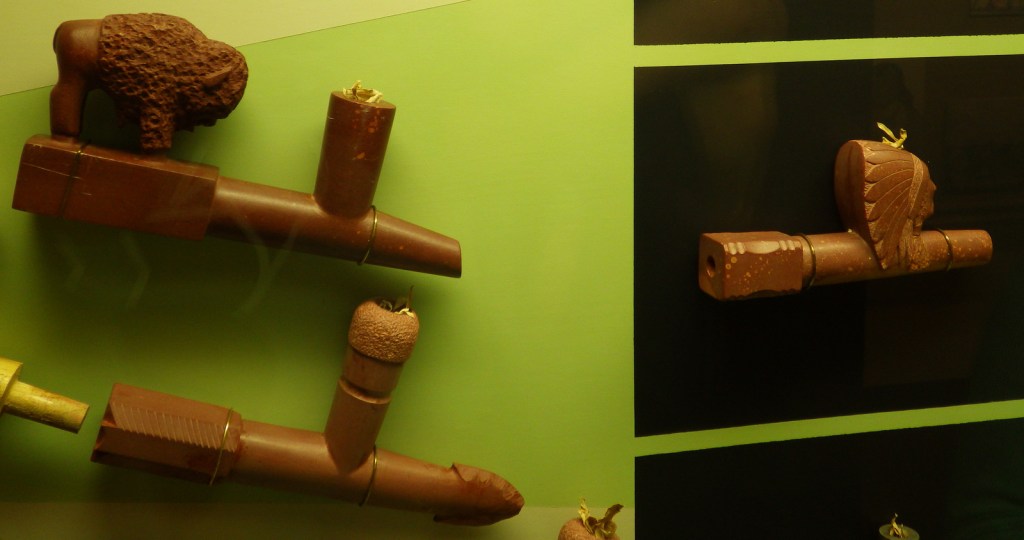
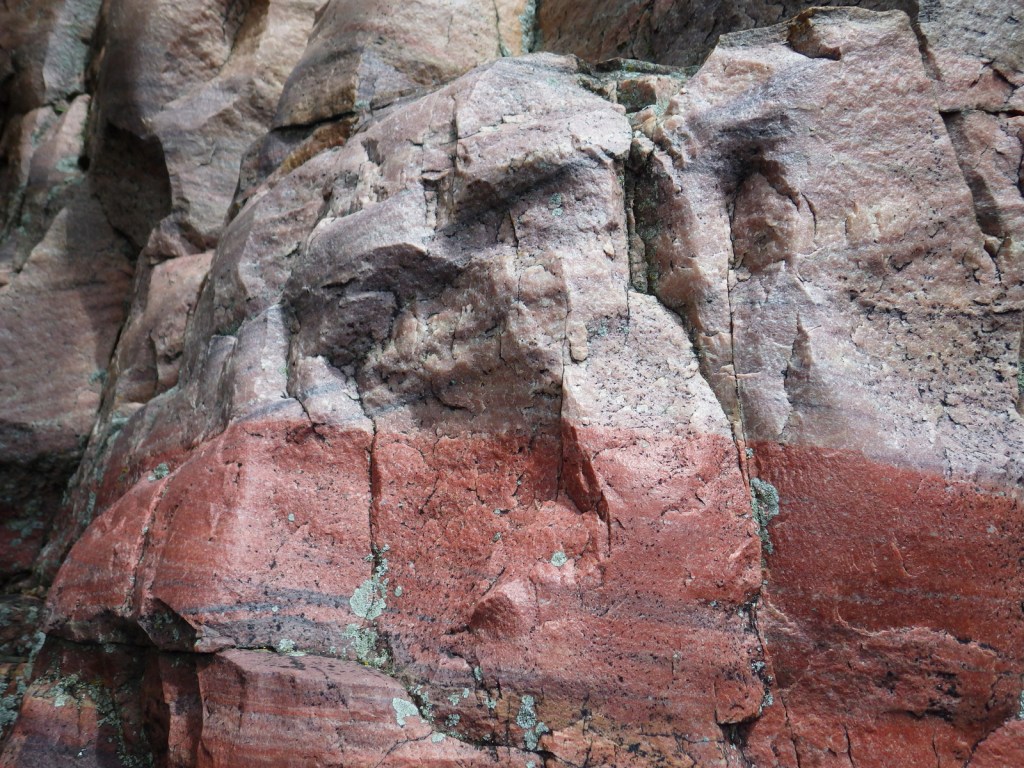
This site is famous as a place people have come for 2,000 years to mine the red quartzite rock (also known as catlinite).  The soft sedimentary stone is relatively easy to carve into smoking pipes and effigies.  Only American Indians are allowed to quarry here today with the proper permits.

Know someone who loves exploring new National Monuments? Gift them our book Monumental America: Your Guide to All 138 National Monuments that is available for sale on Amazon.com.
Highlights

Pipestone quarries, museum, carving demonstrations, Winnewissa Falls

Must-Do Activity

April through October, you can watch American Indian carvers at the National Park Service museum demonstrate how to sculpt this soft yet durable stone into hollow pipes and other beautiful ornaments.  It is illegal to remove any rocks without a permit, but you can buy carvings in the gift shop. See where this site fits into our 7-day Minnesota road trip itinerary.

Best Trail

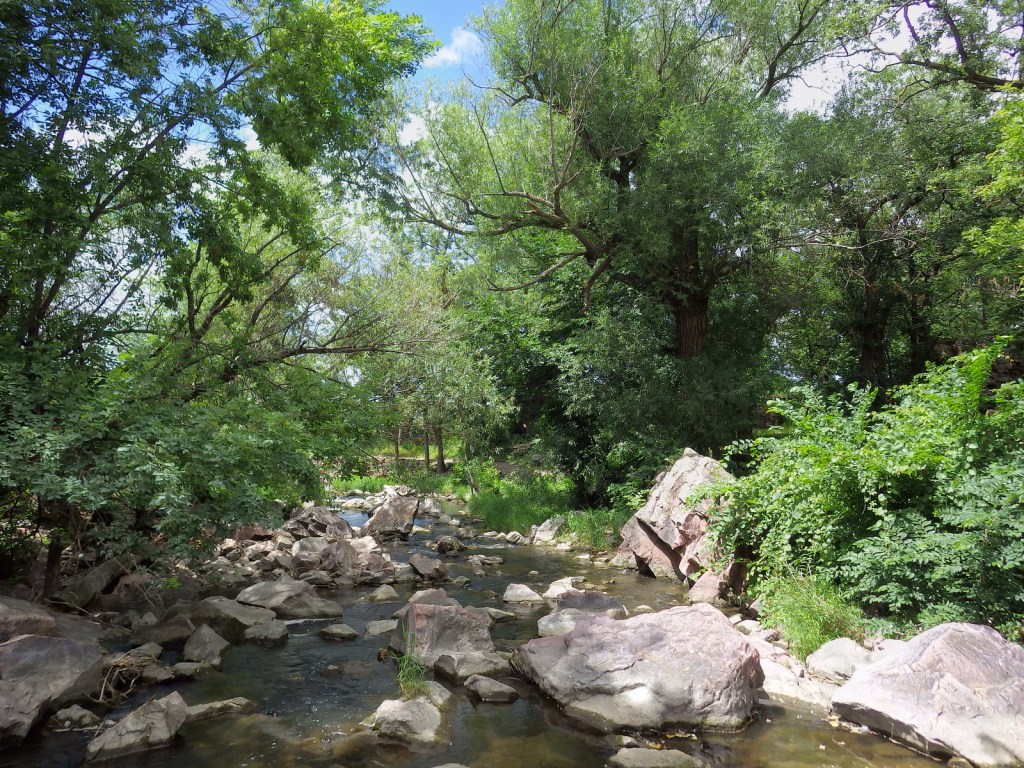
A 0.75-mile trail leads past historic rock quarries to Winnewissa Falls, just the spot to be on a hot summer afternoon.  The remnants of tallgrass prairie protected within the park boundaries give an idea of what this entire region might have looked like before it was converted to farms.

Instagram-worthy Photo

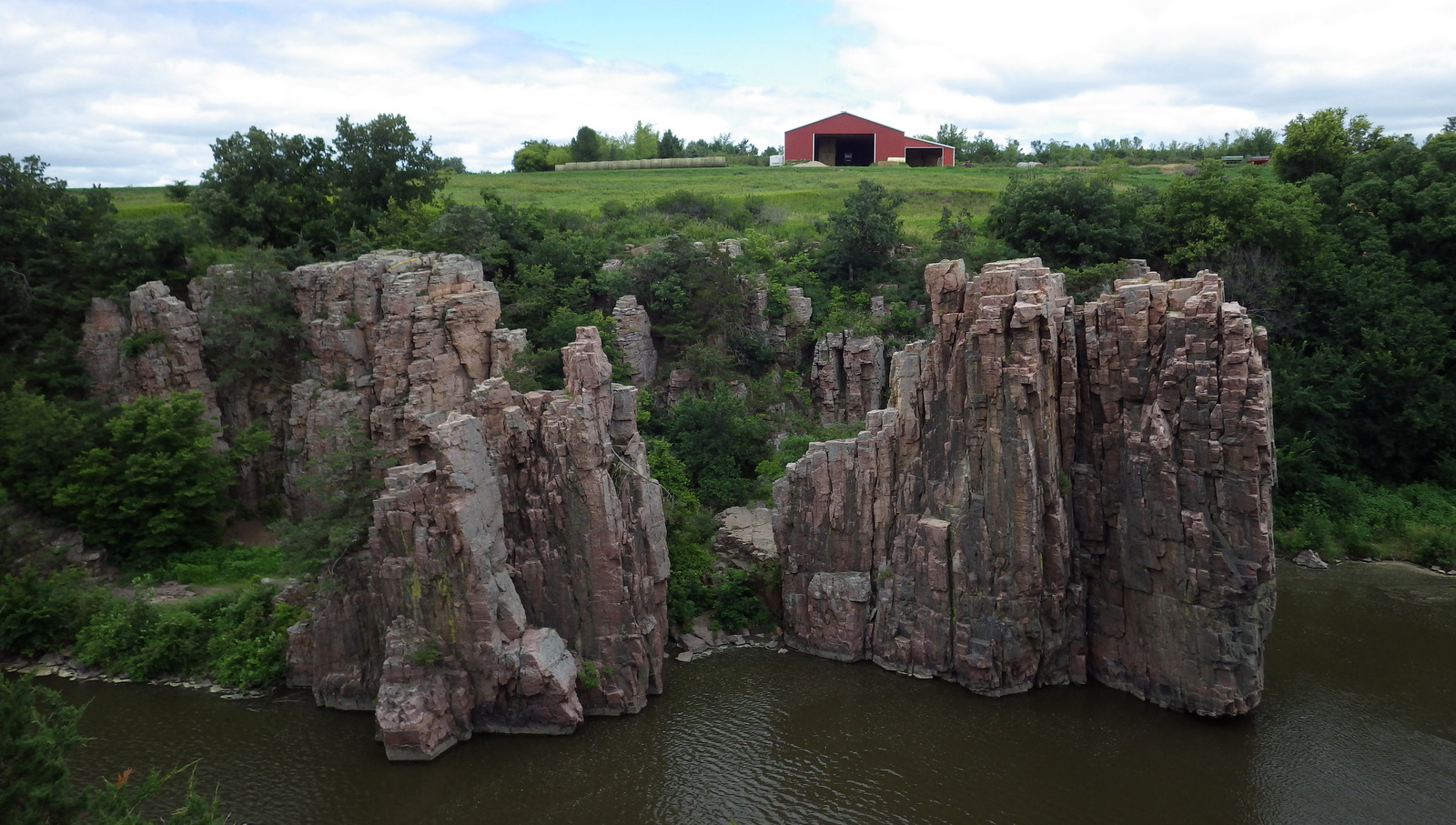
28 miles southwest across the border in South Dakota’s Palisades State Park where the same red quartzite rock dramatically rises above muddy Split Rock Creek and is a great place to picnic or watch rock climbers.

Peak Season

Summer, but it is open year round.

Hours

https://www.nps.gov/pipe/planyourvisit/hours.htm

Fees

None

Road Conditions

All roads paved

Camping

There is a private campground near the monument entrance and Split Rock Creek State Park is 8 miles south.

Related Sites

Grand Portage National Monument (Minnesota)

Chippewa National Forest (Minnesota)

Mississippi National River and Recreation Area (Minnesota)

Nearest National Park

Voyageurs

Explore More – Who is the famous artist that catlinite is named after?

Learn more about the other 137 National Monuments in our book Monumental America: Your Guide to All 138 National Monuments

Ocmulgee Mounds National Historical Park

Overview

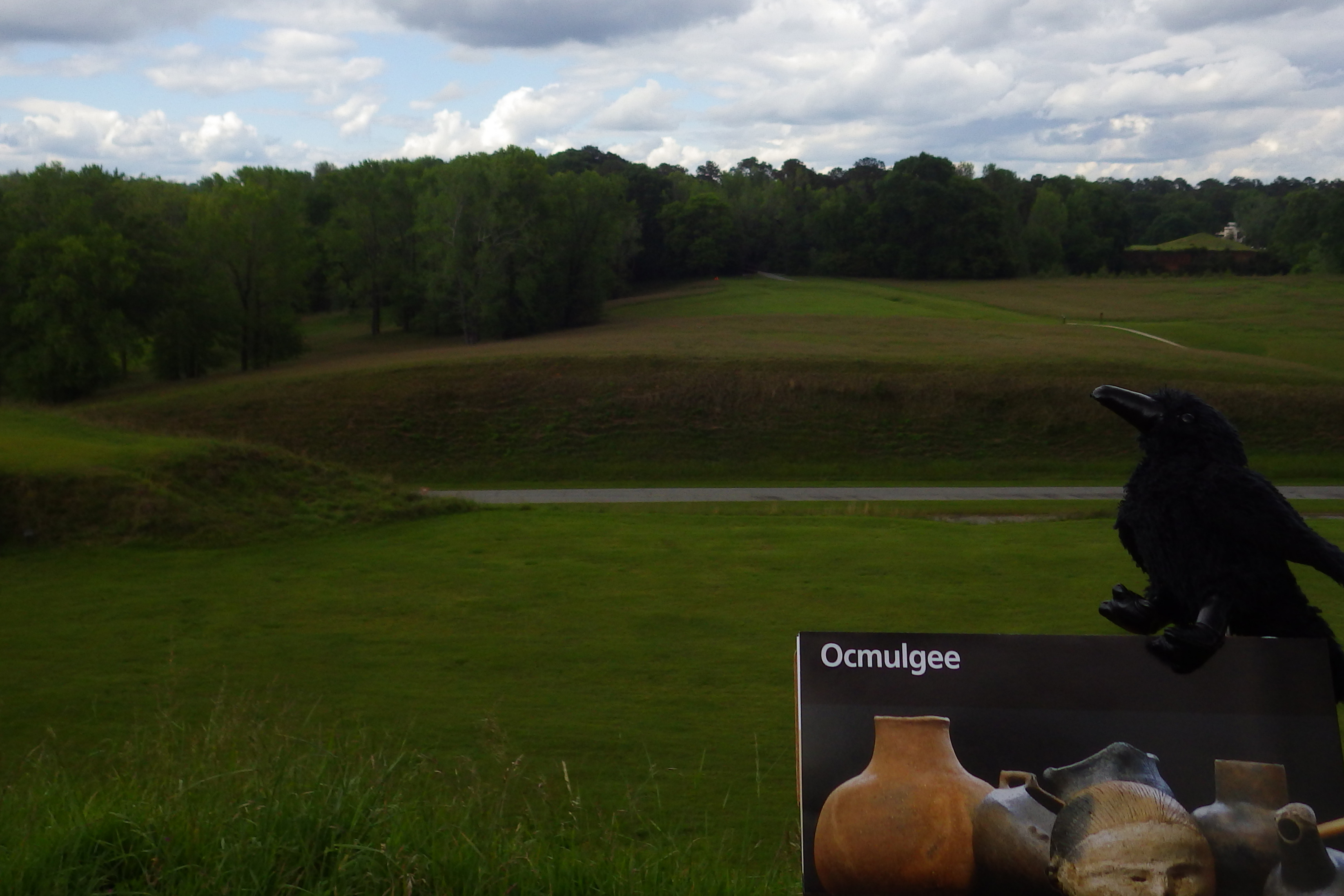
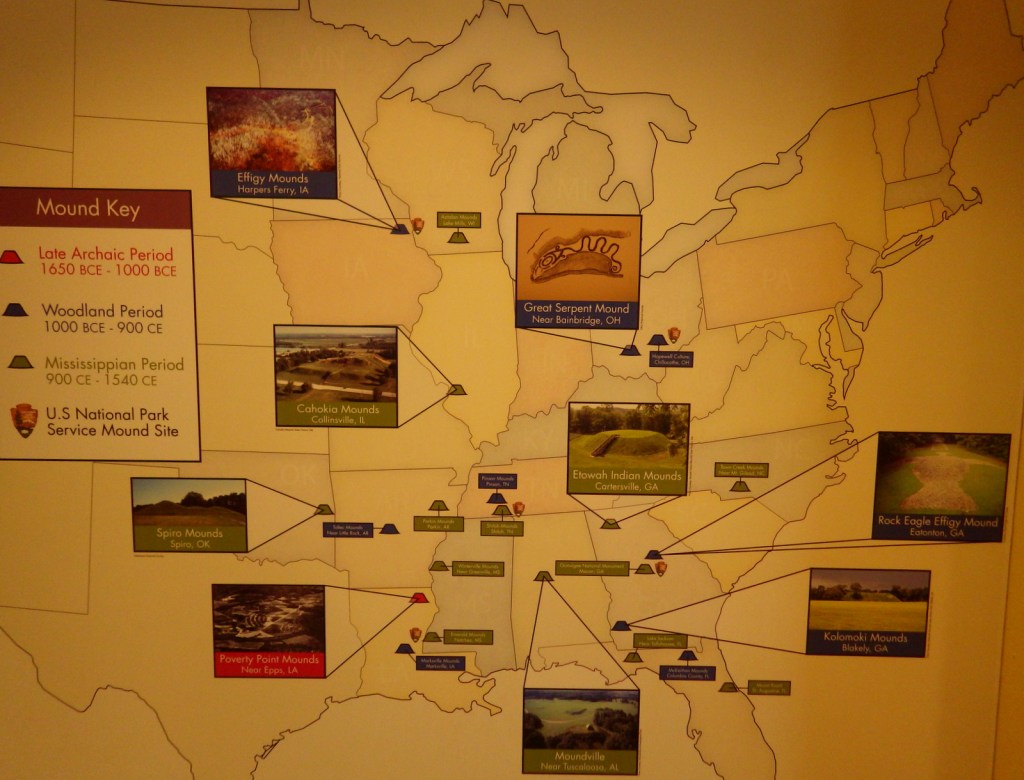
Beginning around 1,100 years ago, the Mississippian Culture became the third and final group of mound builders in the eastern U.S.  In contrast to earlier inhabitants at Poverty Point and Effigy Mounds, they were the first to rely heavily on agriculture.  Located in Macon, Georgia, Ocmulgee Mounds National Historical Park (formerly National Monument) is one of many examples of temple mounds from this time period.

Highlights

Indian mounds, museum, film, Opelofa Nature Trail

Must-Do Activity

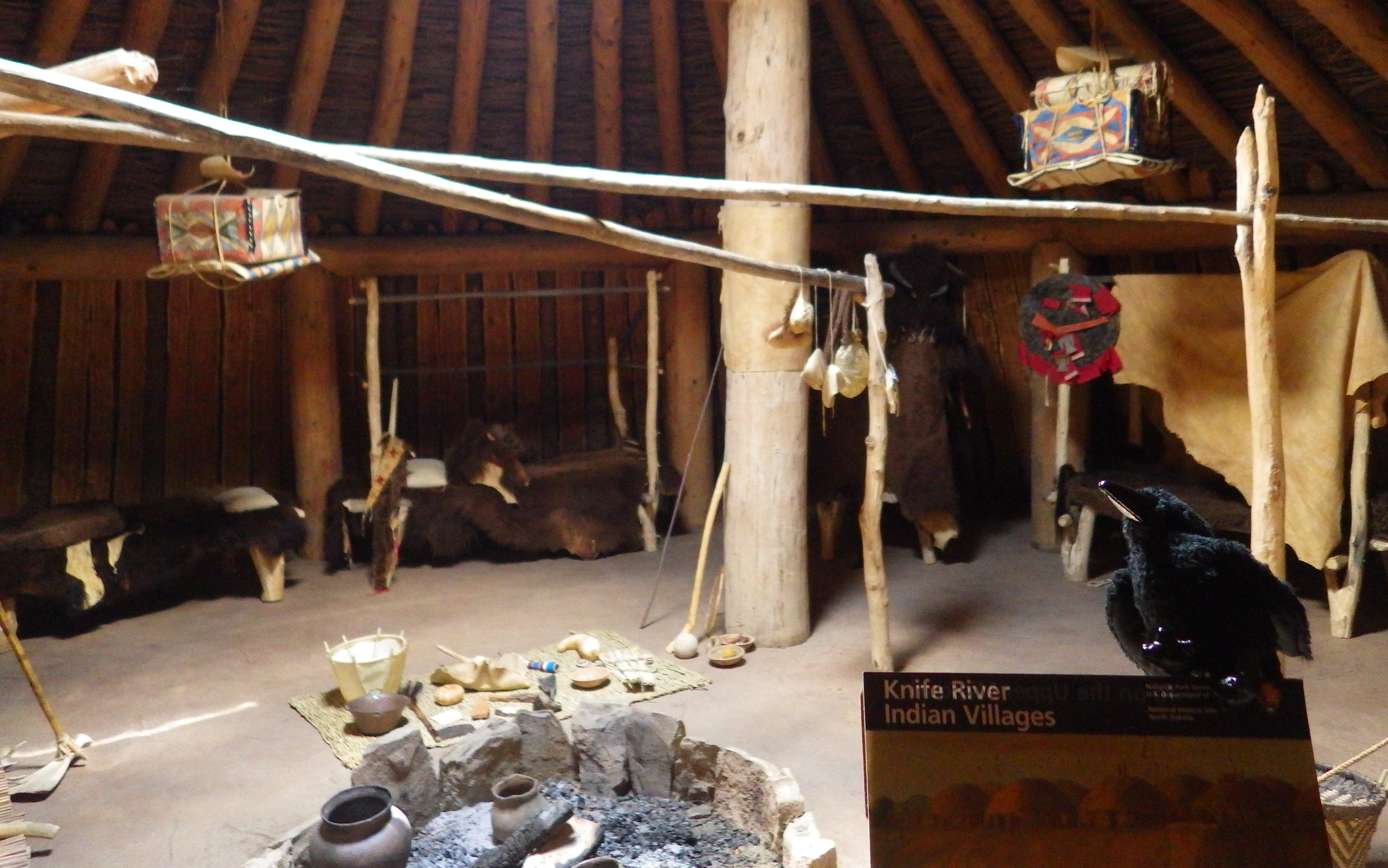
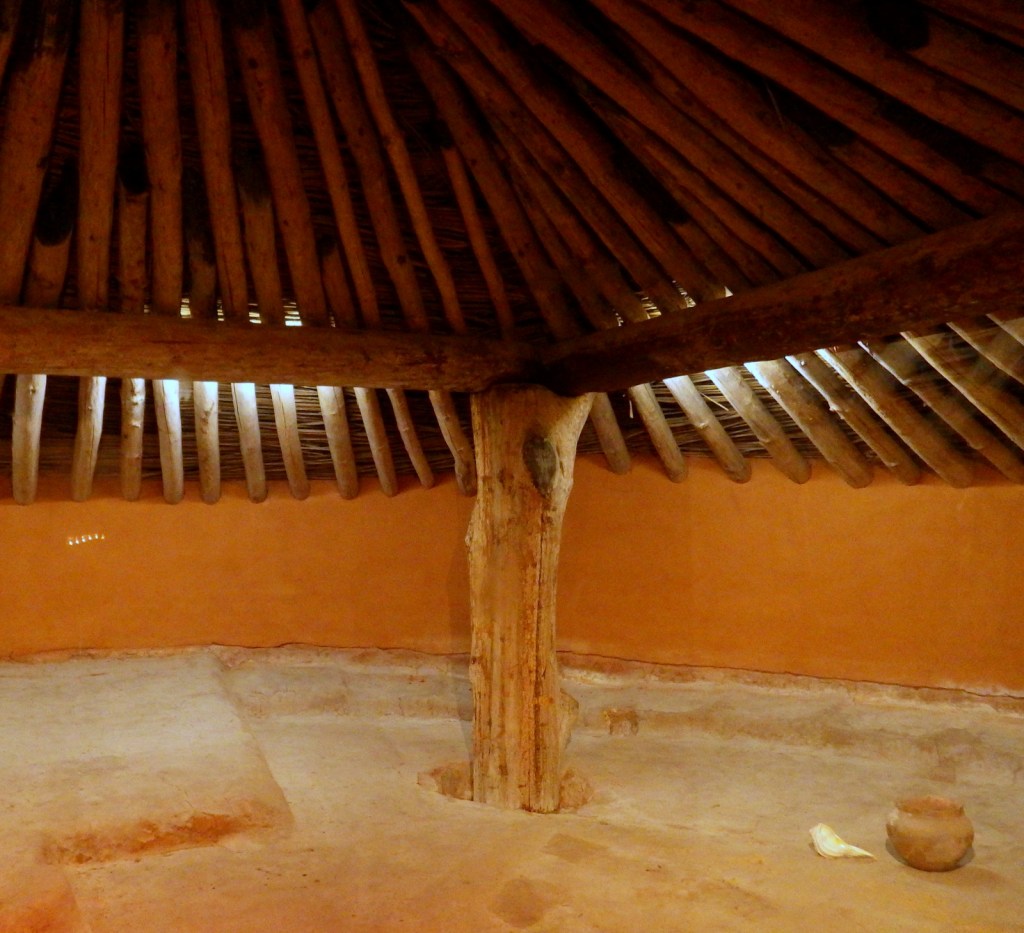
Artifacts dating back to 8000 BCE can be found in the National Park Service museum.  On your walk to the mounds, stop in the reconstructed 42-foot wide earthlodge.  It was an important meeting place for religious leaders (similar to a great kiva) and offers a glimpse into the Mississippian Culture.  There is also evidence of an English trading post from 1690 and trenches from the Civil War.

Best Trail

Walk from the visitor center, under the railroad tracks, and up the stairs to access the top of the 55-foot tall Great Temple Mound.  Then watch for wildlife along the Opelofa Nature Trail in the Walnut Creek wetlands.

Instagram-worthy Photo

The Mississippian Culture had a complex social hierarchy, with a royal Great Sun who lived atop this flat-topped temple mound and traveled on a canopied litter carried by servants.  When a Great Sun died his people made human sacrifices so he would not enter the afterlife alone. 

Peak Season

Open year round

Hours

https://www.nps.gov/ocmu/planyourvisit/basicinfo.htm

Fees

None

Road Conditions

All roads paved

Camping

Indian Springs and High Falls State Parks are both about 35 miles from the park.

Explore More – What was the population of this city in AD1000?

Russell Cave National Monument

Overview

Humans have been visiting Russell Cave in northeast Alabama since about the time its limestone roof collapsed creating an entrance around 10,000 years ago.  A timeline of human invention was preserved in the floor of this hunting camp for millennia, from atlatls to bows, pottery to pump drills.  The park rangers were the friendliest we encountered during Pretirement and often offer demonstrations of prehistoric tools and weapons.

Highlights

Museum with American Indian artifacts, boardwalk to cave entrance, nature trails

Must-Do Activity

There are a select few artifacts displayed on site in the National Park Service (NPS) visitor center.  From there a short boardwalk leads through the forest to an overlook of the archaeological digs at the cave entrance, which you cannot enter. 

Best Trail

Two nature trails (0.6 and 1.2 miles long) split off from the boardwalk to explore the surrounding hills.

Instagram-worthy Photo

This cave is not famous for its pretty cave formations, but for its incredible archaeological record.  If you want to see beautiful stalactites and stalagmites, I recommend you head west to the impressive Cathedral Caverns State Park.

Peak Season

Summer, when it can be muggy and buggy.

Hours

https://www.nps.gov/ruca/planyourvisit/basicinfo.htm

Fees

None

Road Conditions

All roads paved, but RVs are not recommended on Highway 156 if entering from the north.

Camping

DeSoto State Park has a campground and primitive camping is allowed at three sites in nearby Little River Canyon National Preserve.

Explore More – How far down into the cave floor did archaeologists dig in the 1950s?

Timpanogos Cave National Monument

Overview

East of Provo, Utah in Uinta National Forest lies tiny Timpanogos Cave National Monument.  Accessing the cave requires a guided tour (fee) and a one-and-a-half mile hike that climbs 1,092 feet, but the destination is completely worth the effort as it has an amazing collection of helictites and other cave formations.

Highlights

Cave tour, Canyon Nature Trail, Alpine Scenic Drive, Timpanogos Peak, camping

Must-Do Activity

The cave tour actually takes you through three caves that were connected by manmade tunnels after the National Park Service (NPS) took over management in 1922.  It is a bit strange to find yourself turning a door handle when inside of a mountain, though. 

Best Trail

Most caves run by the NPS have an elevator, but Timpanogos Cave requires a one-and-a-half mile hike that climbs 1,092 feet, which might not sound too bad until you consider it starts above 5,600 feet in elevation.  The paved trail has many scenic overlooks at which you can stop to catch your breath.  Canyon Nature Trail is a flatter option near the visitor center if you are not hiking up to the caves.

Instagram-worthy Photo

Timpanogos Cave has the best collection of gravity-defying helictite crystals we have ever seen. 

Peak Season

Summer, closed October to May

Hours

https://www.nps.gov/tica/planyourvisit/hours.htm

Fees

There is an entry fee ($6) for Alpine Scenic Drive through American Fork Canyon, which is covered by the America The Beautiful Pass.  Tickets ($8 per person) for cave tours often sell out on weekends, so reservations are recommended (they can be made 30 days in advance).

Road Conditions

Alpine Scenic Drive is paved, but parking is limited at the NPS visitor center.

Camping

There are numerous campgrounds (both developed and primitive) along the 20-mile Alpine Scenic Drive through Uinta National Forest.  They can fill up due to its proximity to Salt Lake City, Utah, but backpacking is free and does not require a permit.

Explore More – How do helictites form in twisted shapes that defy gravity?

Klondike Gold Rush National Historical Park

Overview

Broadway in Skagway, Alaska still looks much like it did during the 1897 gold rush, lined with boardwalks and bustling with activity, especially when a cruise ship is docked.  Paved streets instead of mud are one major difference between now and when 30,000 stampeders came here aboard ships from Seattle.  The National Park Service (NPS) visitor center is located inside the old railway depot and the NPS owns several other historic structures including the Mascot Saloon and Jefferson “Soapy” Smith’s Parlor.  The NPS also runs a free museum in downtown Seattle, Washington inside the historic Cadillac Hotel.

Highlights

Mascot Saloon, Gold Rush Cemetery, Lower Reid Falls, Chilkoot Trail, Cadillac Hotel museum (Seattle)

Must-Do Activity

Start at the visitor center with the 25-minute introductory film then wander the boardwalks up Broadway to see historic false-front buildings that never burned since the 1897 gold rush.  If you want to learn more about the infamous “Soapy” Smith and laugh really hard, then I recommend purchasing tickets to the Days of ’98 Show offered multiple times daily in the summer. 

Best Trail

The NPS cooperatively manages the Chilkoot Trail with Parks Canada who issues all permits (in Skagway) for backpacking the 33-mile trail.  The trailhead is in the ghost town of Dyea, about 12 miles west of bustling Skagway.  Almost every trekker takes 3 to 5 days to hike one way into Canada and return on the White Pass Railroad.  It is cheaper to only hike the U.S. side and spend two nights at the always empty Pleasant Camp.

Instagram-worthy Photo

During the winter of 1897-98, over 30,000 people hauled one-ton of food and gear per person over the 3,501-foot Chilkoot Pass on their way to the Yukon Territory.  Photograph the 100% slope of the “Golden Stairs” in the summer, as it can be nearly impossible to access in winter.

Peak Season

Summer due to cruise ships and the fact that the rest of the year experiences heavy snowfall.

Hours

https://www.nps.gov/klgo/planyourvisit/hours.htm

Fees

It is free to explore downtown Skagway’s buildings, but overnight backpacking on the Chilkoot Trail has fees ($20.30 per person for U.S.-side only) and is limited to only 50 permits per day to cross the border into Canada.

Road Conditions

Paved to Skagway and the dirt road to Dyea is good enough for all vehicles.

Camping

There is a car campground in Dyea.  Specific backcountry campsite permits (like Sheep Camp) can fill up early.

Explore More – How many times did the average stampeder have to ascend the Golden Stairs to haul one-ton of food and gear over 3,501-foot Chilkoot Pass?