Tag Archives: hiking

Fort Pulaski National Monument

Overview

Located 17 miles east of Savannah, Georgia, Fort Pulaski National Monument makes a great daytrip destination near the coast.  The 5-sided brick fort was built in 1829 along the Savannah River and named for a Polish Count who was killed-in-action during the American Revolution. 

Highlights

Historic fort with a moat, 1856 Cockspur Island Lighthouse

Must-Do Activity

The invention of rifled cannons made forts like this (and Fort Jefferson in Florida) obsolete.  Fort Pulaski was claimed by the Confederacy early during the Civil War, but it was surrendered to the Union Army in April 1862 after thirty hours of shelling from nearby Tybee Island.  It has been mostly reconstructed and is safe to explore.  Rifle and cannon firing demonstrations are held throughout the day inside the parade grounds.

Best Trail

A 0.75-mile trail leads from the fort to an overlook of Cockspur Island Lighthouse, where wading birds are often seen.  Only 3 miles down the road, also check out the Tybee Island Light Station and Museum, first built in 1773, then reconstructed after the Civil War.

Instagram-worthy Photo

Fort Pulaski has 7-foot thick walls, a drawbridge, demilune (earthworks), and even a moat around its perimeter.  The fort’s symmetry makes for beautiful photos, especially inside the powder magazines.

Peak Season

Summer, though it can be quite muggy.

Hours

https://www.nps.gov/fopu/planyourvisit/hours.htm

Fees

$10 per person or America the Beautiful pass

Road Conditions

All roads paved

Camping

Skidway Island State Park has a campground just outside Savannah, Georgia.

Explore More – On nearby Tybee Island, Battery Garland was part of which decommissioned fort also named for a Revolutionary War casualty?

Craters of the Moon National Monument and Preserve

Overview

If you seek an otherworldly experience right here on Earth, look no further than Craters of the Moon National Monument and Preserve in southeastern Idaho.  In the 1800s, this massive lava flow proved an obstacle to avoid for immigrants on the Oregon Trail.  In 1969 it truly earned its lunar label by serving as a field school on volcanic geology for NASA Apollo astronauts. 

Highlights

Boy Scout Cave, Indian Tunnel, cinder cones, tree molds

Must-Do Activity

The 7-mile loop road is paved and provides parking at several trailheads, including the wheelchair-accessible Devils Orchard Nature Trail.  Cinder cones, lava tubes, and tree molds are some of the unique volcanic features seen from the trails.  If you come here in the winter the loop road closes due to the amount of snow they receive at 6,000 feet elevation, but you can still explore on snowshoes and cross-country skis.

Best Trail

If you cannot make it to the incomparable Lava Beds National Monument in northern California, you can explore a couple of short lava tube caves here.  To explore Indian Tunnel you will need a free permit, but you do not even need a flashlight.  That is not the case inside the pitch black Boy Scout Cave.

Instagram-worthy Photo

Unlike the moon, there is life here despite its blackened, rocky appearance.  Hearty syringa bushes and limber pine trees sprout from cracks in the lava providing food and cover for sage grouse, pika, and other animals. 

Peak Season

Summer, but it can get very hot on the black rocks without any shade.

Hours

https://www.nps.gov/crmo/planyourvisit/hours.htm

Fees

$20 per vehicle or America the Beautiful pass

Road Conditions

The 7-mile loop road is paved, but other all roads into the monument require a heavy-duty 4×4 with excellent tires.

Camping

There is a first-come, first-served campground near the visitor center off Highway 93 that provides water, but no RV hookups.  Backpacking is allowed in the wilderness area.

Explore More – In what year did the nearby town of Arco, Idaho became the first community in the world to utilize nuclear power?

Badlands National Park

Overview

Badlands National Park is known for its fossils, but not all of the mammals here are extinct.  Bison and bighorn sheep were reintroduced to the park, in addition to common prairie residents that include pronghorn, mule deer, prairie dogs, and coyotes.

Highlights

Door Trail, Notch Trail, Conata Basin, Sage Creek Road

Must-Do Activity

Driving the dirt road back to the free Sage Creek Primitive Campground, you will likely encounter a roaming bison herd and several prairie dog towns.  Bighorn sheep and pronghorn can also be found near the road.

Best Trail

The Notch Trail is only 1.5 miles in and out, but is an adventure with a large ladder, badlands, cliffs, and an excellent overlook at the end.

Instagram-worthy Photo

Bighorn sheep, many with large curling horns, seem to pose atop the badlands formations, especially around the Pinnacles Overlook.

A big horn sheep in Badlands National Park

Peak Season

Summer, but we prefer the fall when it is less crowded, especially in Sage Creek Primitive Campground.

Hours

https://www.nps.gov/badl/planyourvisit/hours.htm

Fees

$25 per vehicle or America The Beautiful pass

Road Conditions

Badlands Loop Road is paved, and Sage Creek Road and Conata Road are both graded and passable to all vehicles.  Sheep Mountain Table Road in the Stronghold Unit may be more difficult when wet, but otherwise does not require four-wheel drive as designated on the park map.

Camping

Cedar Pass Campground has RV sites and the free Sage Creek Primitive Campground is located down a good dirt road on the west side of the park. Backpacking is free and only requires registration at the trailhead.


This design we created to celebrate Badlands National Park is available on a variety of products at Cafe Press and Amazon.

Explore More – How many endangered black-footed ferrets were reintroduced to the park in 1994?

We are a participant in the Amazon Services LLC Associates Program, an affiliate advertising program designed to provide a means for us to earn fees by linking to Amazon.com and affiliated sites.
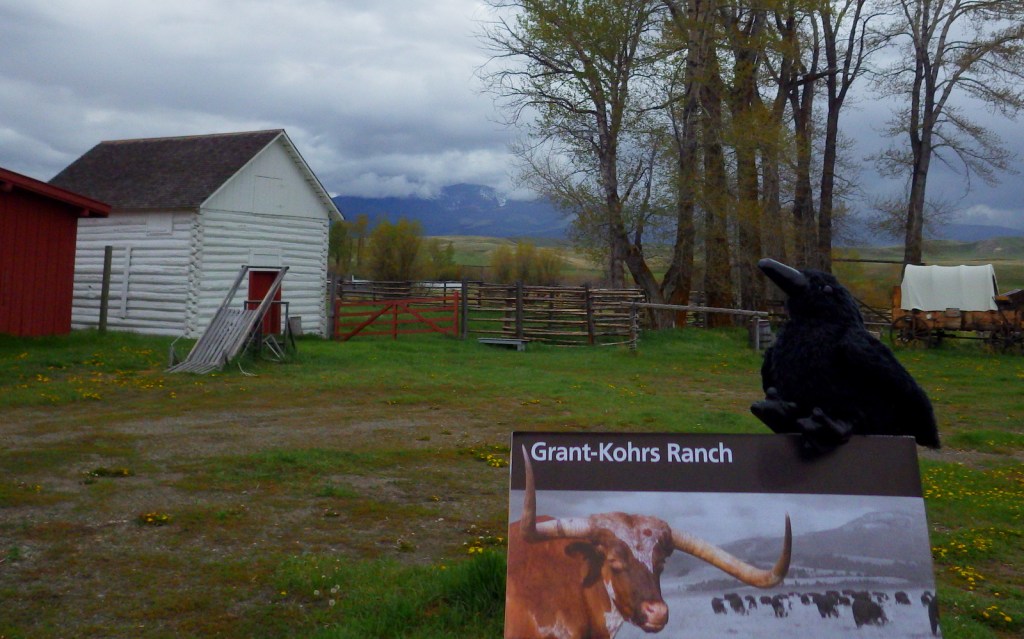

Tumacácori National Historical Park

Overview

South of Tucson in Tubac, Arizona, San Cayetano de Tumacácori is a Spanish mission founded in 1691 by Padre Kino and abandoned in 1848.  It became a National Monument in 1908 when it was restored to its ruined state based on photographs dating from 1868.  Two additional mission ruins were added when it became a National Historical Park in 1990, but they are not open to the public except on special ranger-led tours January through March.

Highlights

Historic mission, historic museum (built in 1937)

Must-Do Activity

Jesuits, like the famous Padre Eusebio Kino, established more than 20 missions in this part of the Sonoran Desert in the late-1600s.  Some of the Pimas they were “serving” attacked in 1751, leading to the move of Tumacácori to its current location and the establishment of Tubac Presidio (now a State Park).   Mexico gained its independence from Spain in 1821 and the final phase of construction on the mission began two years later.  In 1853, the Gadsden Purchase brought this region into the United States of America.  When you visit the ruins of Tumacácori, consider a trip north to beautiful San Xavier del Bac, which is still an active church.

Best Trail

A 4-mile portion of the Juan Bautista de Anza National Historic Trail connects Tumacácori with Tubac Presidio State Historic Park, which offers a museum and an underground archaeological display.

Instagram-worthy Photo

At the end of the day in the winter months, trees surrounding the mission cast interesting shadows on its stucco walls.

Peak Season

Winter

Hours

https://www.nps.gov/tuma/planyourvisit/hours.htm

Fees

$7 per person or America the Beautiful pass

Road Conditions

All roads paved

Camping

Patagonia Lake State Park has more than 200 campsites northeast of Nogales, Arizona.

Explore More – Why was the Jesuit order expelled in 1767 and their missions assigned to Franciscan friars?

Tallgrass Prairie National Preserve

Overview

The tallgrass prairie formerly covered 170-million acres of North America, but today only 4% of that exists in a few isolated pockets due to conversion to agriculture.  The Flint Hills of eastern Kansas were too rocky for tilling, so this was an ideal place to create Tallgrass Prairie National Preserve in 1996.  Occasionally, land managers utilize fire to support fire-adapted native grasses against invasive species. Before our visit in November 2014, large areas were burned.  The bison that live here enjoy eating the fresh green grass that sprouts following a fire and wildflowers thrive with the release of available soil nutrients.
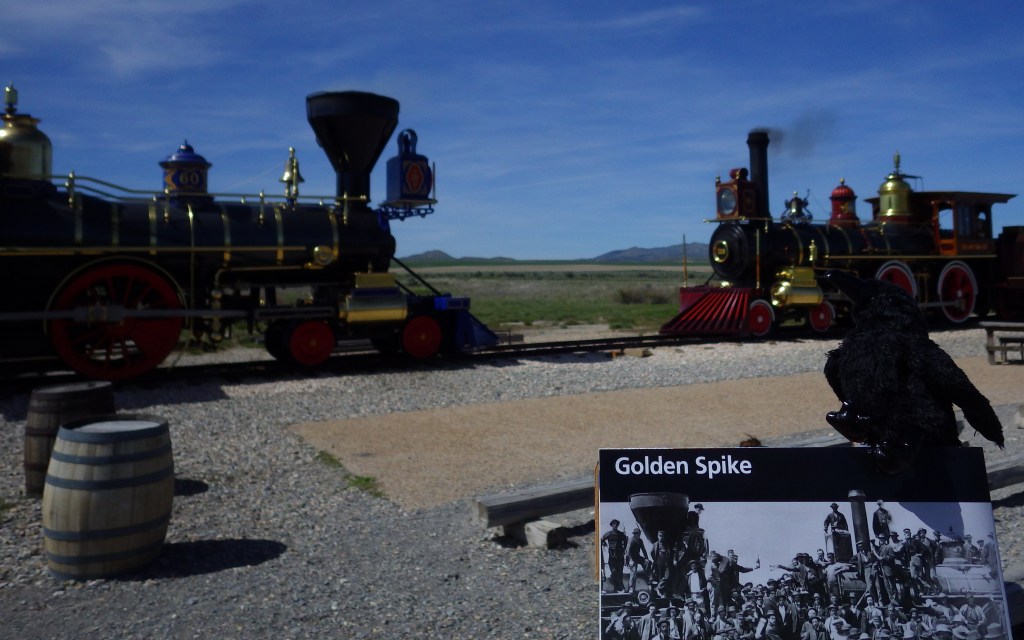
Echo at Tallgrass Prairie

Highlights

Spring Hill Ranch, Lower Fox Creek School, bison herd

Must-Do Activity

After reading the interpretive panels at the visitor center, walk around the buildings next door at the historic Spring Hill Ranch.  The 1881 ranch house is open for tours seasonally.

Best Trail

There are many trails that wander through the 10,894-acre preserve that is jointly run by the Nature Conservancy and National Park Service.  Many loop options are possible, but no backpacking is allowed, possibly due to the bison herd.

Instagram-worthy Photo

Just down the road from Spring Hill Ranch is the one-room Lower Fox Creek School which was open from 1884 to 1930.  Its walls are made of local limestone.

Peak Season

Summer

Hours

https://www.nps.gov/tapr/planyourvisit/hours.htm

Fees

None

Road Conditions

All roads paved

Camping

Chase State Fishing Lake has 10 primitive campsites two miles outside Cottonwood Falls, Kansas.  Several U.S. Army Corps of Engineers campgrounds surround Council Grove Lake, which is located 20 miles north.

Explore More – At first the grasslands may all look the same, but how many species of plants are found within Tallgrass Prairie National Preserve?

We are a participant in the Amazon Services LLC Associates Program, an affiliate advertising program designed to provide a means for us to earn fees by linking to Amazon.com and affiliated sites.