Tag Archives: camping

Ozark National Scenic Riverways

Overview

North of Arkansas’ Buffalo National River on the Ozark Plateau is Ozark National Scenic Riverways, perhaps the wildest section of Missouri.  Unlike the many reservoirs around Branson, here the Current and Jacks Fork Rivers flow freely and have been managed by the National Park Service since 1964.  The best way to explore the serpentine park boundaries is on the water, but roads and trails access several areas.

Ozark

Highlights

Canoeing/kayaking, Blue Spring, Alley Mill, karst landforms and caves

Must-Do Activity

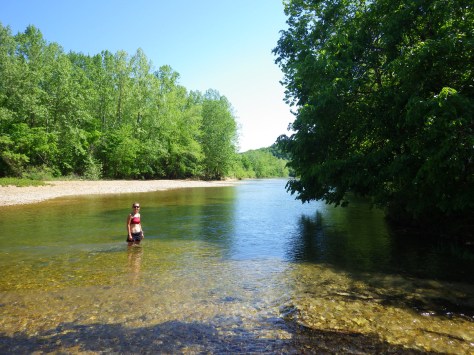
The crystal clear spring-fed water of the Jack’s Fork River is home to a variety of fish, birds, and even the occasional beaver.  We paddled 25 miles from Buck Hollow to Alley Spring, a pleasant day trip.

Best Trail

The dolomite and limestone karst underneath this park is riddled with caves and sinkholes, like Devils Well, Round Spring Cave (ranger guided tours for a fee), and Jam Up Cave (only accessible from the Jack’s Fork River).

Instagram-worthy Photo

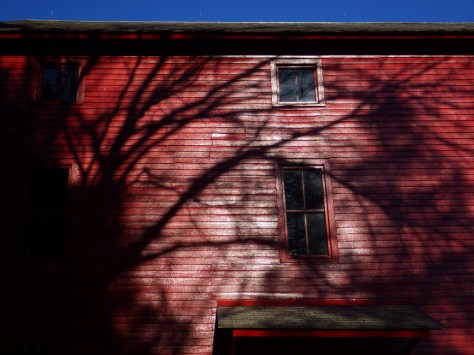
Hike to 310-foot deep Blue Spring (which was aptly called Spring of the Summer Sky by Native Americans) or drive to the bright red Alley Mill that dates back to 1894.

Cool shadows

Peak Season

Spring offers peak water flows for canoeing/kayaking

Hours

https://www.nps.gov/ozar/planyourvisit/basicinfo.htm

Fees

None, but you can pay local concessionaires to rent canoes and shuttle your vehicle.

Road Conditions

Highways are paved and most dirt roads are narrow but passable with a passenger vehicle when dry

Camping

There are many campgrounds within Ozark National Scenic Riverways, some with full RV hookups and some primitive (we especially liked Bay Creek).  Floaters on the Current and Jacks Fork Rivers are allowed to camp on gravel bars.

Tiff in Bananas Trace

Scott at the opening to Jam Up cave
Jam Up Cave is only accessible by beaching your boat along the Jacks Fork River.  Find this photo and others for sale on Imagekind

Wading in the water

A great blue heron taking off

More bluffs

Scott with the source of Blue Spring
Scott at Blue Spring

Explore More – The colorful Blue Spring pumps out how many million gallons of water per day?
1WonsTiny2

WONDON WAS HERE

We are a participant in the Amazon Services LLC Associates Program, an affiliate advertising program designed to provide a means for us to earn fees by linking to Amazon.com and affiliated sites.

Pictured Rocks National Lakeshore

Overview

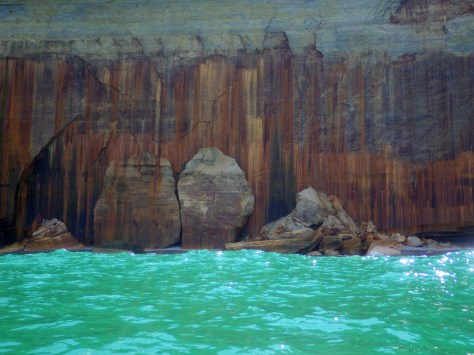
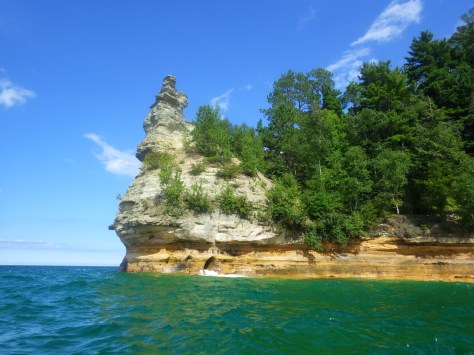
The turquoise waters of Lake Superior beneath the sandstone cliffs of Pictured Rocks National Lakeshore make it seem warmer than it actually is.  Glaciers carved this shoreline thousands of years ago, but the Ice Age never seems far off in the lake’s cold waters.  Minerals leaching from the stone paint the cliffs in many hues, hence the name Pictured Rocks.

Pictured

Highlights

Petit Portal, Miners Castle, Munising Falls, Sable Falls

Must-Do Activity

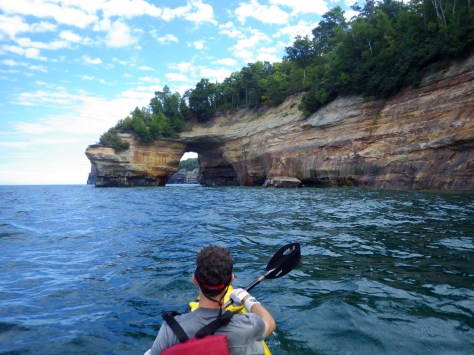
Kayaking through Petit Portal is an unforgettable experience.  Guides can provide the necessary gear and know-how, as well as commercial boat operators that get close to but do not actually pass through the natural arch.

06-IMGP9885

Best Trail

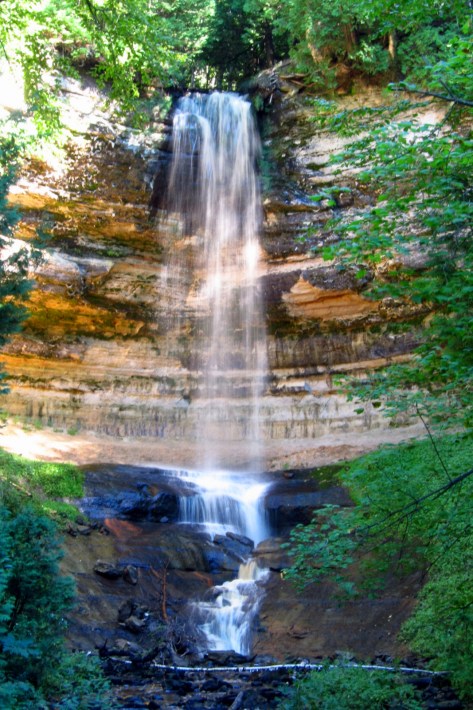
Not far from the visitor center is a short trail to Munising Falls, one of several waterfalls in this 42-mile stretch of shoreline.

Instagram-worthy Photo

It will be hard to maintain a flat horizon line while bobbing on the waves in your kayak as you pass through Petit Portal, so take plenty of pictures.

Peak Season

Primarily a summer destination, but even then be prepared for sudden storms that can suddenly blow across Lake Superior.

Hours

https://www.nps.gov/piro/planyourvisit/hours.htm

Fees

No entry fee, but there is a charge for backcountry camping permits that are only available online.

Road Conditions

All roads are paved (to our knowledge).

Camping

Three campgrounds, plus 14 backcountry camping areas in the National Lakeshore.  More backcountry campsites can be found offshore in Grand Island National Recreation Area, administered by Hiawatha National Forest, which also offers dispersed camping opportunities.

06-IMGP9869

Tiff with the Petit Portal

Colors like Yellowstone

11-IMGP9997

Munising Falls
Munising Falls near the south Visitor Center

Explore More – What valuable mineral stains the sandstone cliffs green and blue?

1WonsTiny2

WONDON WAS HERE


We are a participant in the Amazon Services LLC Associates Program, an affiliate advertising program designed to provide a means for us to earn fees by linking to Amazon.com and affiliated sites.

Appalachian National Scenic Trail

Overview

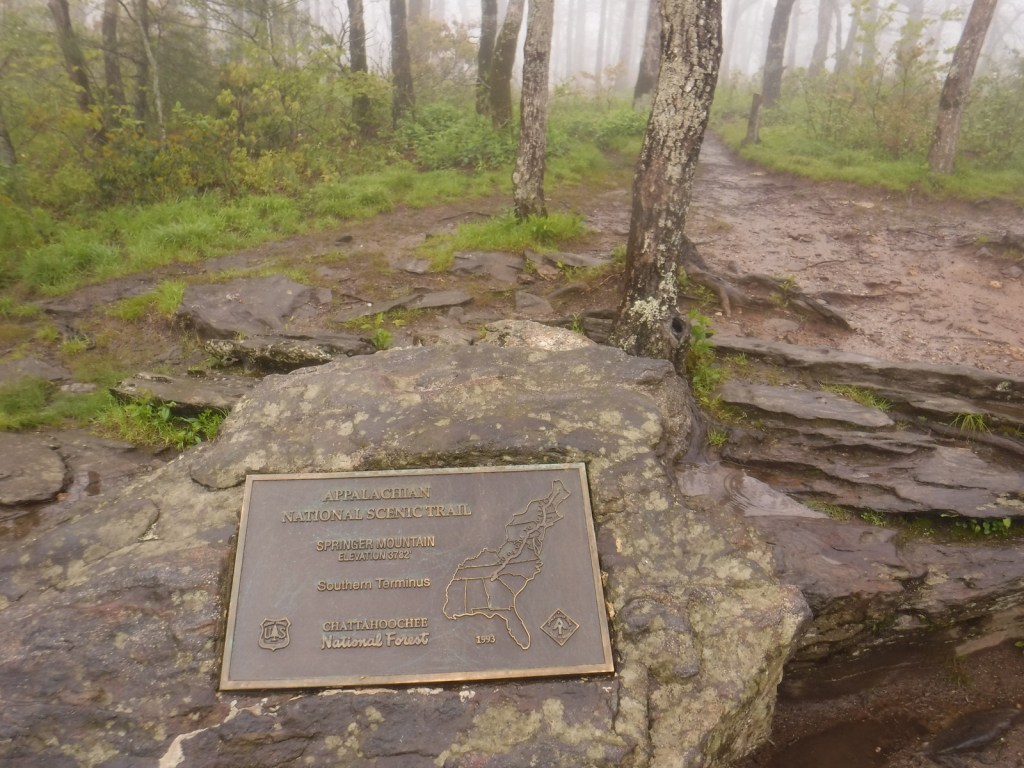
The Appalachian Trail (or A.T.) is one of only three National Scenic Trails that the National Park Service (NPS) includes in its total of 420+ units, despite there being many other affiliated trails (some with their own Visitor Centers).  The trail stretches 2,185 miles from Springer Mountain, Georgia (in Chattahoochee National Forest‘s Ed Jenkins National Recreation Area) to Mount Katahdin, Maine, crossing 14 states, 6 NPS sites, 8 National Forests, and countless other parks.

AT6-IMGP0879.JPG

Highlights

Ed Jenkins National Recreation Area, Great Smoky Mountains National Park, Shenandoah National Park, Mount Washington State Park, Baxter State Park

Must-Do Activity

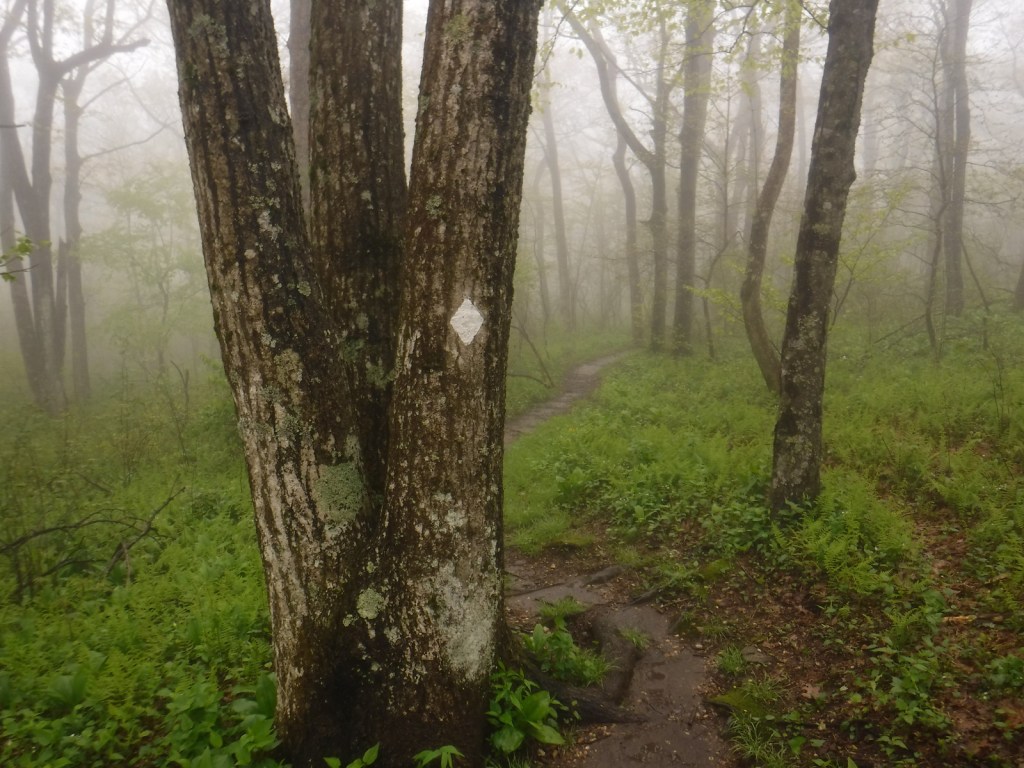
Even if just for a short stretch, gets a taste for the A.T. by following the white rectangular blazes going north or south anywhere along its length.  The trail through Newfound Gap in Great Smoky Mountains National Park is especially popular. Check out our blog post on the short hike to the southern terminus of the A.T. at Georgia’s Springer Mountain in Chattahoochee National Forest‘s Ed Jenkins National Recreation Area.

Best Trail

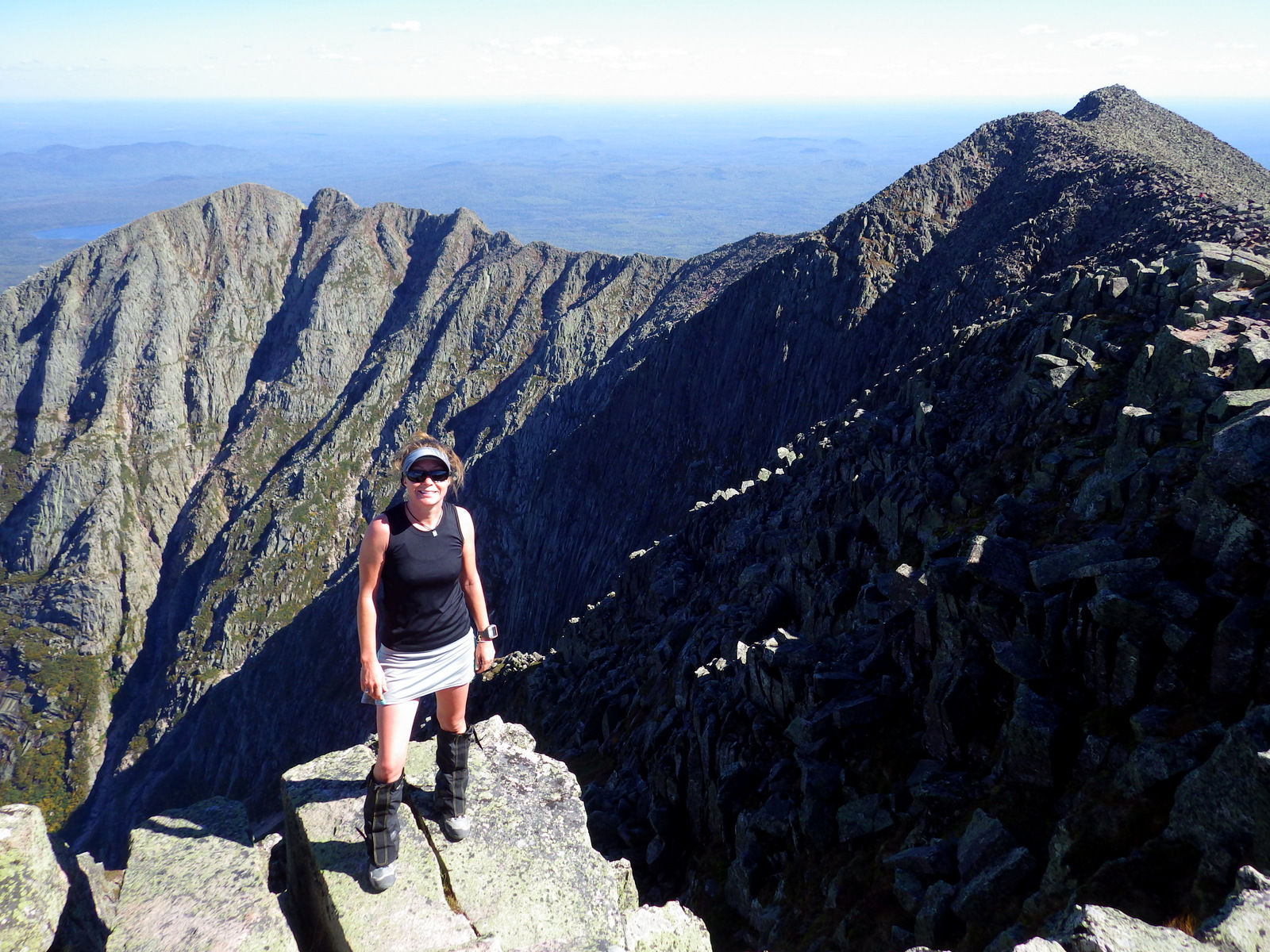
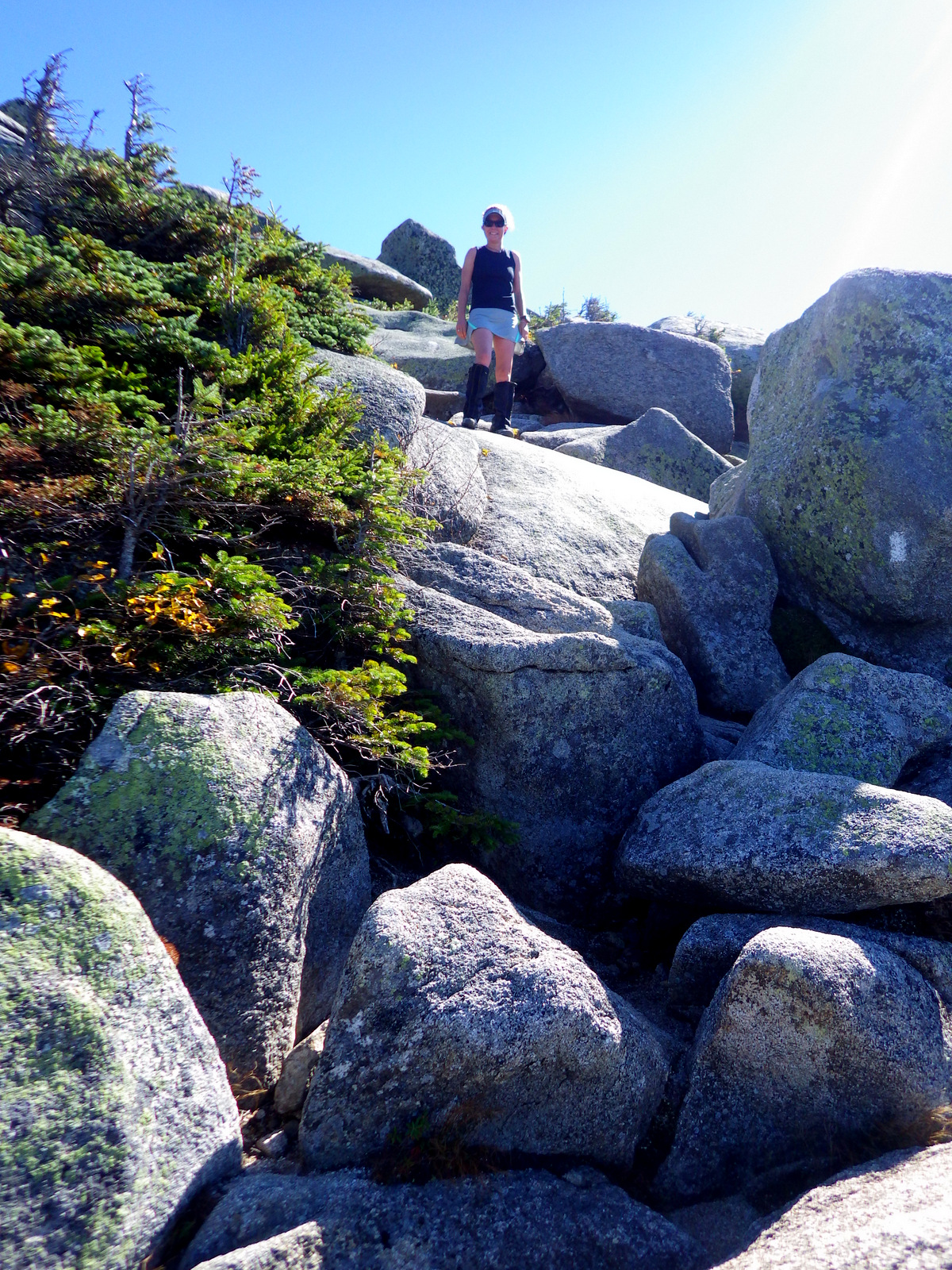
The last stretch of the trail ascends Katahdin in Maine’s Baxter State Park.  My impression from the surly park employees is that they would rather not be the official end of the Appalachian Trail.  For instance, they fined record-setting Scott Jurek for public alcohol consumption and littering when he spilled some champagne celebrating his accomplishment atop Katahdin in 2015.  The funny thing about the A.T. is that it ends (and begins) on top of a mountain where you have to turn around and hike out.

Instagram-worthy Photo

The views on top of Katahdin are unsurpassed and you might get to celebrate with a thru-hiker finishing the 2,185-mile journey.

At the top!  The mountain looks similar to many of the 14ers in Colorado

Peak Season

Most thru-hikers go in the summer due to snow.  Baxter State Park closes in the winter, but most of the trail is accessible year round.

Hours

https://www.nps.gov/appa/planyourvisit/basicinfo.htm

Fees

Free to hike, but some parks (like Shenandoah National Park) charge for admission and camping.

Road Conditions

Trailhead access can be both paved and dirt (which is the case in Baxter State Park).  The trail is only paved in a few portions like atop Clingman’s Dome in Great Smoky Mountains National Park.

Camping

There are more than 160 trail shelters along the A.T. and in some places like Great Smoky Mountains National Park backpackers are required to utilize them.  Otherwise dispersed camping is mostly allowed along the entire length of the trail.

Raven flyover
Raven about the park!
At the peak and end of the AT
Group shot!
AT3-IMGP0829
A view of the new Katahdin Woods and Waters National Monument
A view looking east at the new Katahdin Woods and Waters National Monument.

Explore More – Approximately how many steps must a human take to cover 2,185 miles?

Indiana Dunes National Park

Overview

A 20th-century battleground east of Chicago between industrialists seeking to build more steel mills and conservationists wanting to preserve natural diversity, in 1966 Indiana Dunes National Lakeshore was created as a compromise between the opposing sides.  Its scattered bogs and dunes surround a beachside state park on Lake Michigan that dates back to the 1920s, with an Art Deco bathhouse dating to that era.

Update: As of February 15, 2019 it is called Indiana Dunes National Park.

Indiana

Highlights

West Beach, Bailey Homestead, Chellberg Farm, Century of Progress Homes, Mount Baldy, Glenwood Dunes Trail, heron rookery

Must-Do Activity

It is worth the price of admission to access the trail system within Indiana Dunes State Park to complete the 3 Dunes Challenge.  Take your photos back to the joint NPS-State Park visitor center to claim your prizes.

Best Trail

Cowles Bog Trail covers 5 rugged miles and accesses an isolated beach with views of the Chicago skyline. The trail to the top of Mount Baldy is closed due to erosion.

Instagram-worthy Photo

Beach grasses with a backdrop of a steel mill are a surreal mix on the Cowles Bog Trail.

Peak Season

The park is open year round, with the Lake Michigan beaches attracting crowds in the summer.

Hours

https://www.nps.gov/indu/planyourvisit/hours.htm

Fees

No admission for most of the National Park, except $6 per vehicle for summer lifeguards at West Beach and $12 per vehicle day use fee year round to enter Indiana Dunes State Park.

Road Conditions

All roads are paved.

Camping

While it is not on the beach, we enjoyed the quiet Dunewood Campground (fee) with its hot showers.

INDU4
INDU
Historic bathhouse at Indiana Dunes State Park.
Climbing the dunes - there was a hiking challenge, so we had to do it
A view of Chicago from the dunes
The Chicago skyline is visible from the beach.
Baby geese!
INDU3
INDU
This design we created to celebrate Indiana Dunes National Park is available on a variety of products at Cafe Press and Amazon.

Explore More – Mount Baldy stands 126 feet tall, but how much shorter is that than Mount Tom in neighboring Indiana Dunes State Park?

We are a participant in the Amazon Services LLC Associates Program, an affiliate advertising program designed to provide a means for us to earn fees by linking to Amazon.com and affiliated sites.