Tag Archives: Arizona

Saguaro National Park

Overview

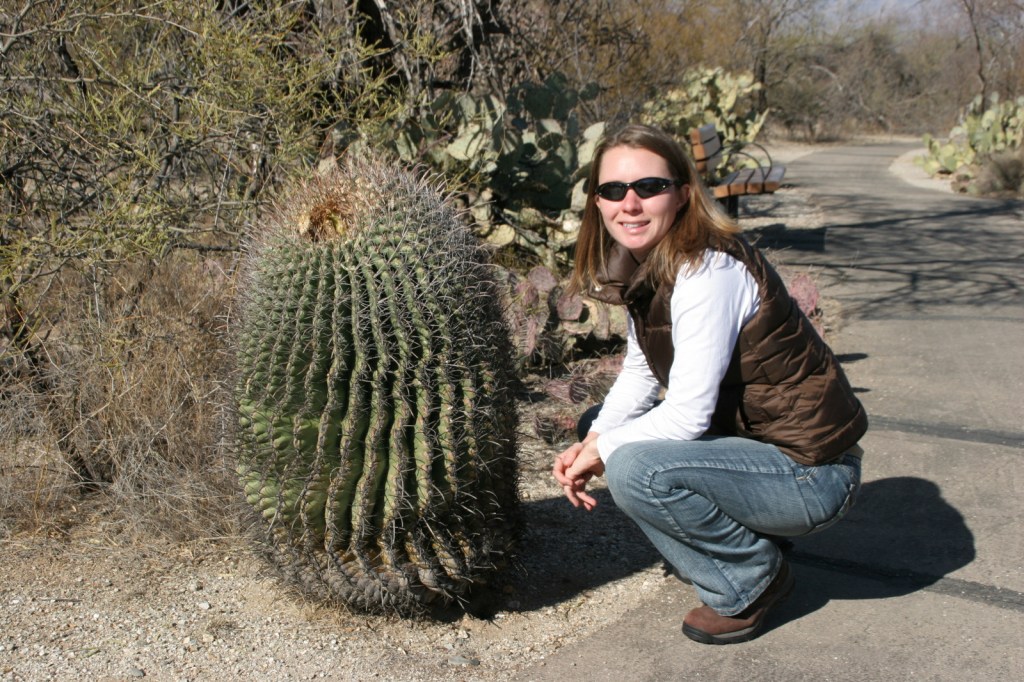
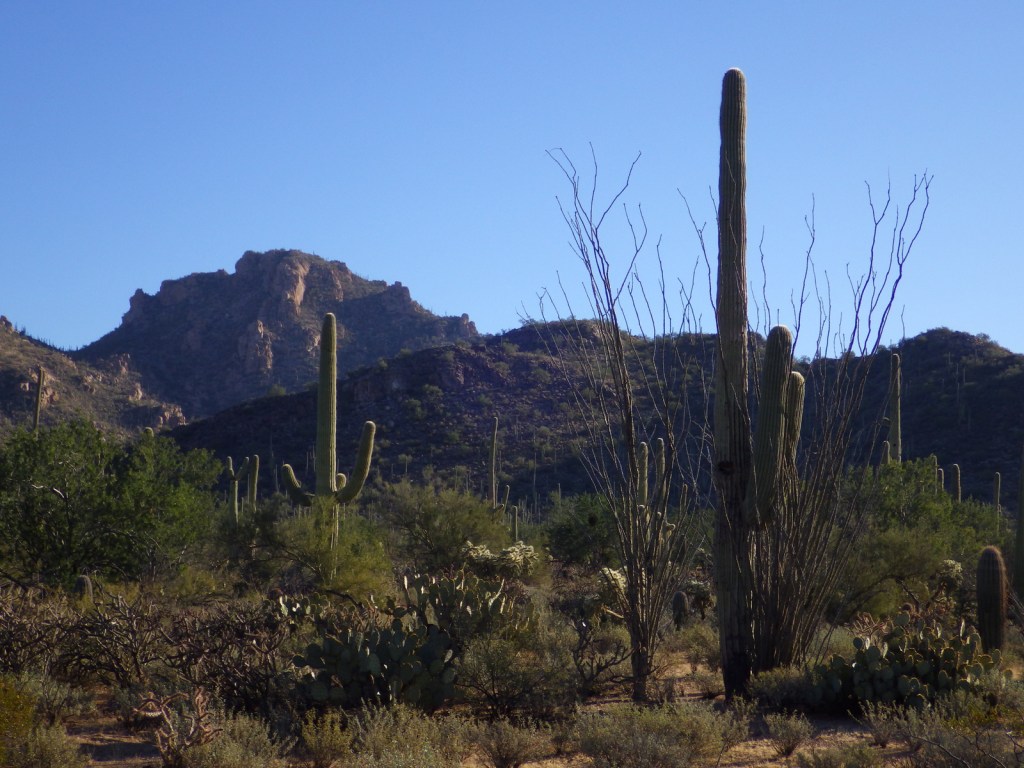
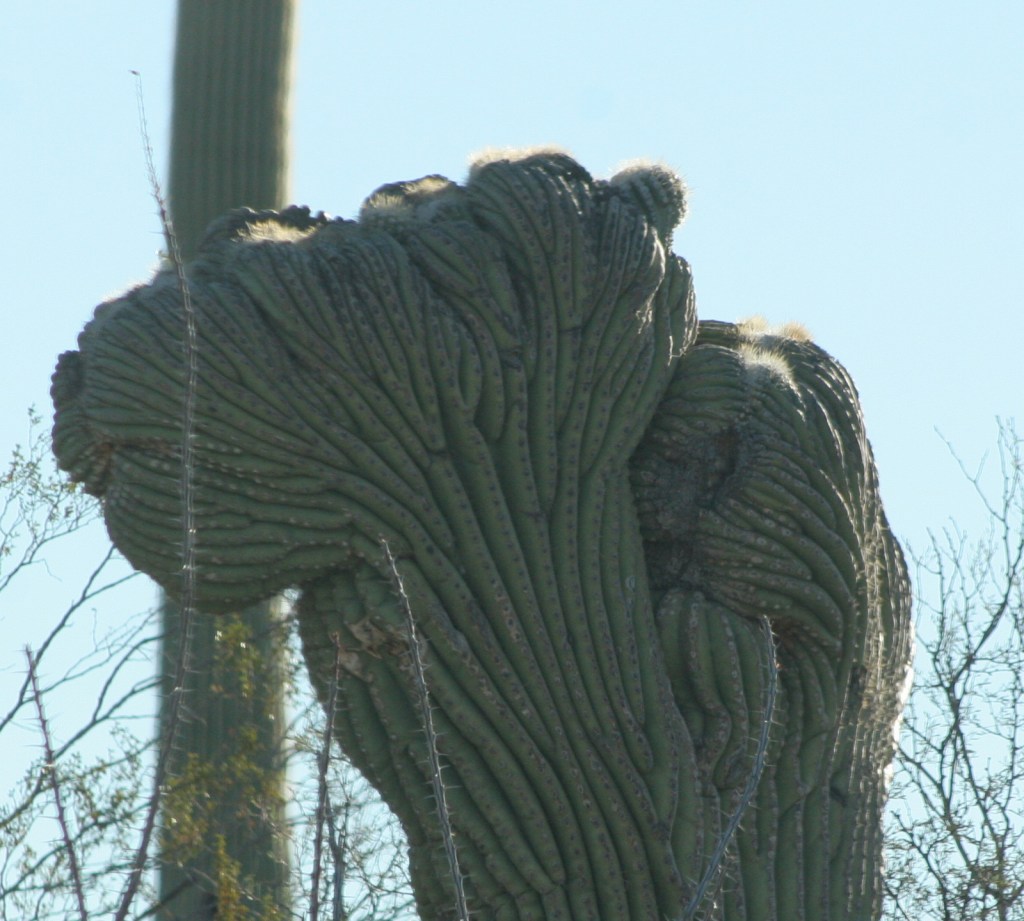
The only U.S. National Park within the expansive Sonoran Desert is divided into two separate districts east and west of Tucson, Arizona.  Its namesake cactus can reach 50 feet in height and weigh more than 16,000 pounds when swelled with water during the rainy season.  Saguaros do not typically branch their first arms until age seventy-five and they can live over 200 years.  They share their home with other cacti that have cuddly names like teddybear cholla, hedgehog, barrel, staghorn cholla, and prickly pear.

Learn more in our guidebook to the 62 National Parks, A Park to Yourself: Finding Adventure in America’s National Parks (available on Amazon).

Highlights

Cactus Forest Drive, Desert Ecology Trail, Scenic Bajada Loop Drive, Desert Discovery Nature Trail

Must-Do Activity

There are National Park Service (NPS) visitor centers in both the Rincon Mountain District and Tucson Mountain District.  In each district, opportunities for visitors include scenic drives, handicap-accessible nature trails, and more strenuous hiking options.  Much of the wildlife is nocturnal in the hot desert, but watch for unique species like javelinas, ringtails, kangaroo rats, roadrunners, phainopeplas, desert tortoises, Gila monsters, and western diamondback rattlesnakes.

Best Trail

Hikers can find great overlooks of the surrounding mountains along the short Ridge View Trail in the eastern Rincon Mountain District of the park.

Instagram-worthy Photo

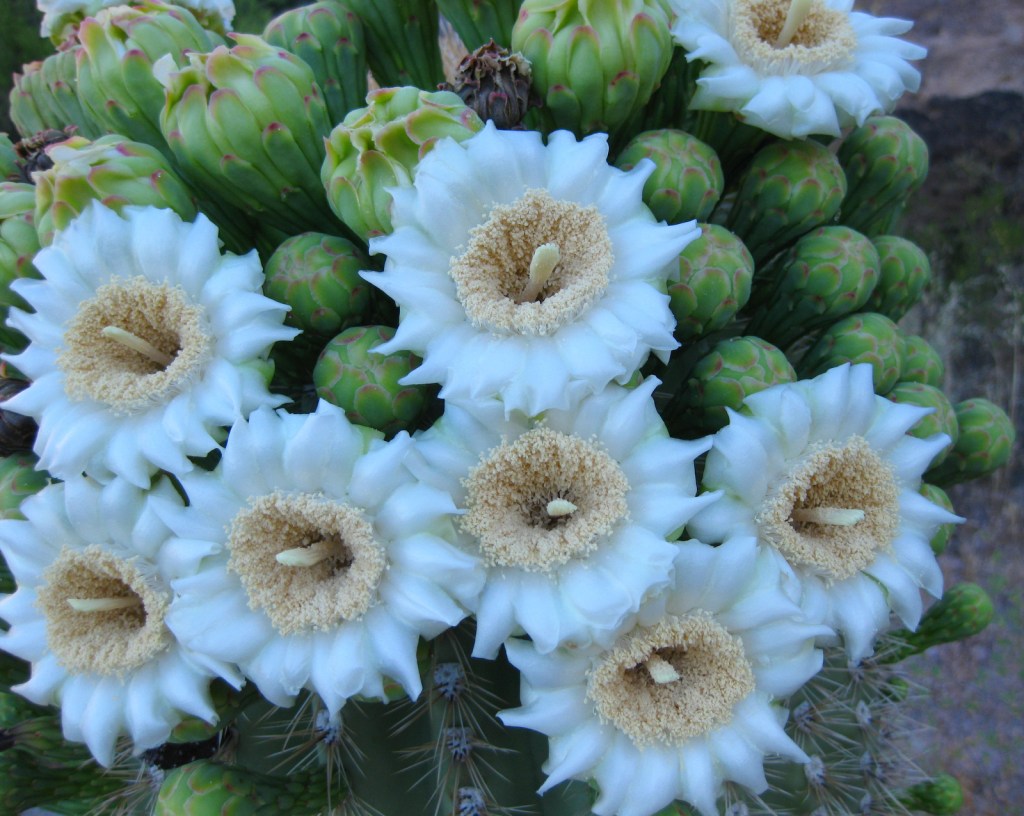
Winter is a great time to come to Saguaro National Park due to mild temperatures, but to see the desert in bloom the spring is best.  Saguaros typically bloom in early June, though their large white blooms are hard to photograph at the top of the tall cacti where moths, bats, and other pollinators can find them.

Peak Season

Spring

Hours

https://www.nps.gov/sagu/planyourvisit/hours.htm

Fees

$25 per vehicle or America the Beautiful pass

Road Conditions

In the Rincon Mountain District the Cactus Forest Drive is all paved, but in the Tucson Mountain District the Scenic Bajada Loop Drive is mostly a graded gravel road.

Camping

Only backcountry camping in designated sites (with a permit) is allowed in the National Park, but campgrounds are available at Tucson Mountain County Park just outside the western district and throughout Coronado National Forest which borders the eastern district.

Related Sites

Organ Pipe Cactus National Monument (Arizona)

Tumacacori National Historical Park (Arizona)

Chiricahua National Monument (Arizona)

This design we created to celebrate Saguaro National Park is available on a variety of products at Cafe Press and Amazon.

Explore More – Tohono O’odham Indians utilized saguaro fruit for jam, syrup, and wine; at what age do the cacti start flowering?

We are a participant in the Amazon Services LLC Associates Program, an affiliate advertising program designed to provide a means for us to earn fees by linking to Amazon.com and affiliated sites.

Chiricahua National Monument

Overview

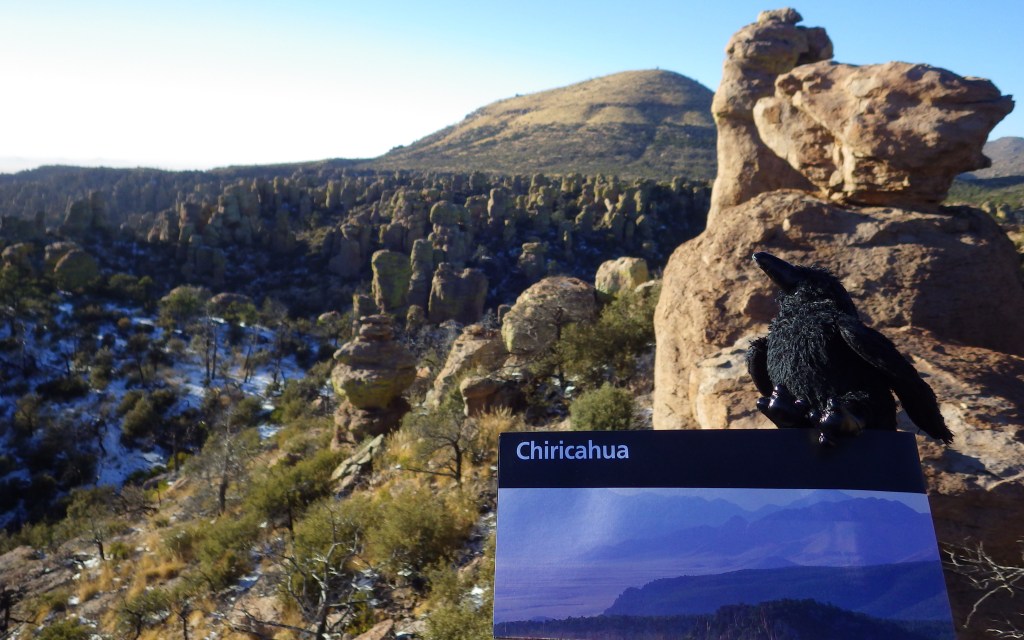
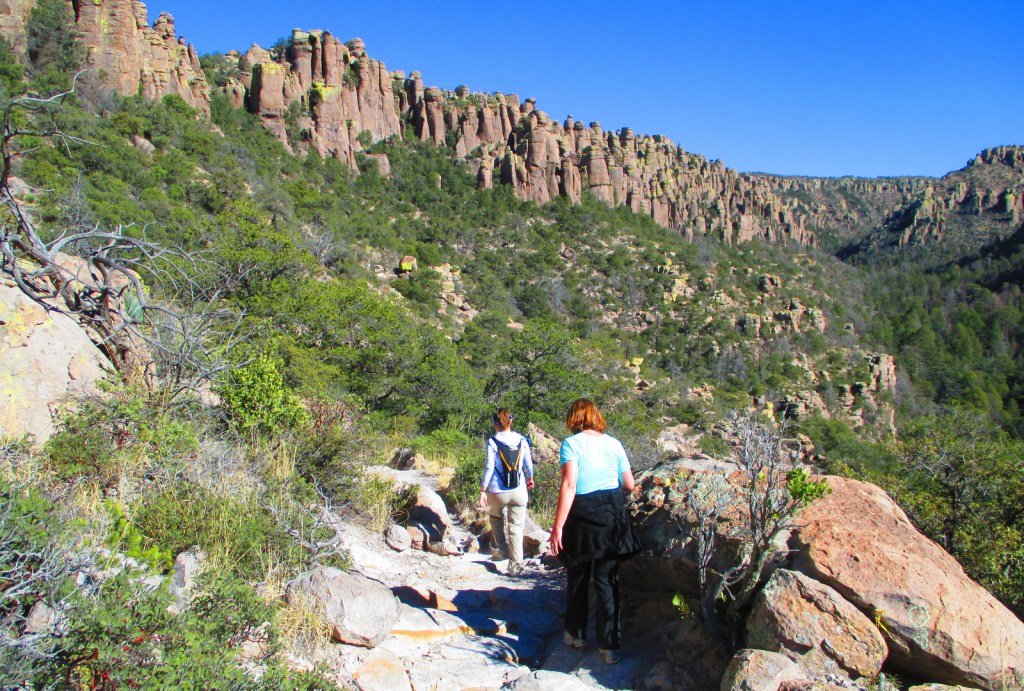
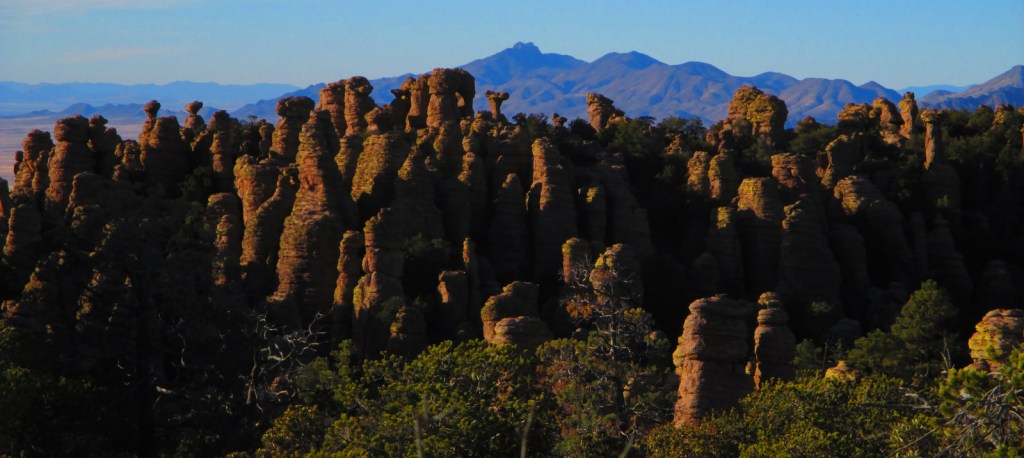
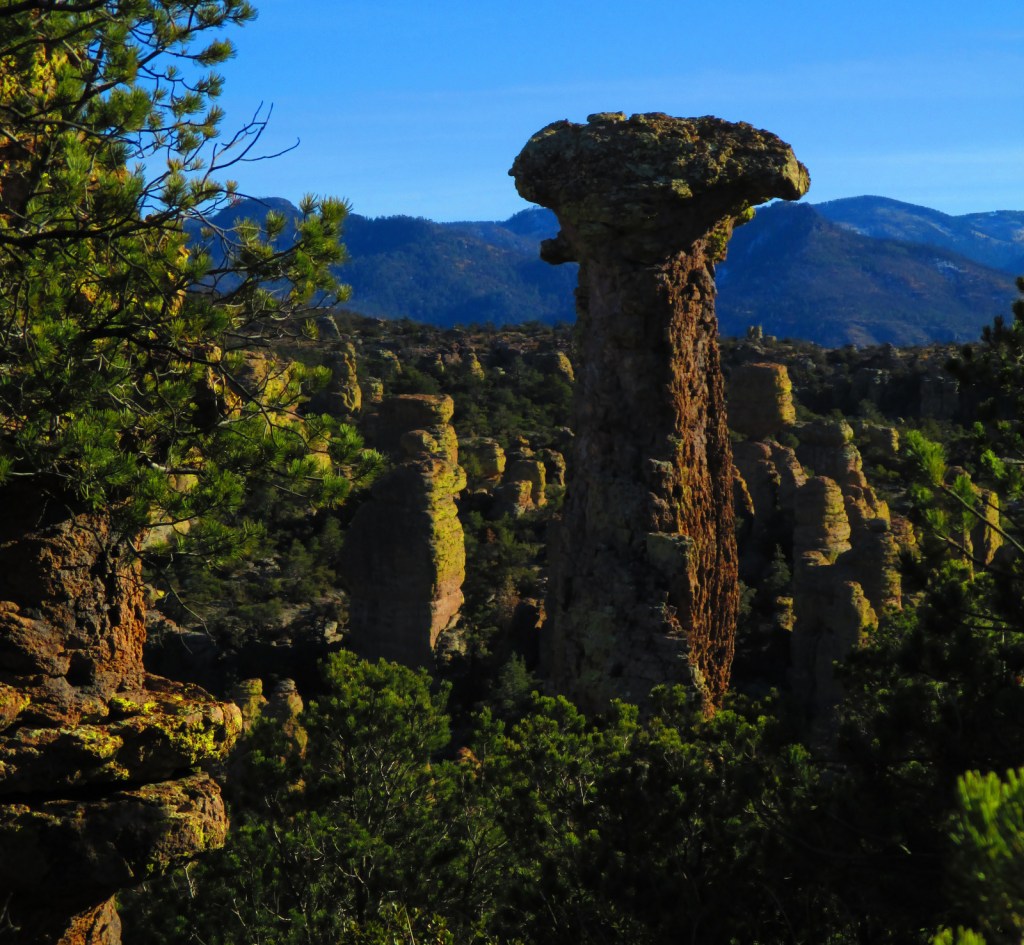
Tucked away in the southeastern corner of Arizona, Chiricahua National Monument was established in 1924 to protect a spectacular collection of rhyolite rock formations.  Millions of years of erosion left behind tall pinnacles that rise above surrounding evergreen trees.  A six-mile long paved road leads up from the National Park Service (NPS) visitor center to Massai Point for great views of the volcanic pillars.  At an elevation of around 7,000 feet it can get cold in the winter, but still quite hot in the summer, so spring and fall are the best seasons to visit.

Highlights

Massai Point, Echo Canyon, Big Balanced Rock, Heart of Rocks Loop

Must-Do Activity

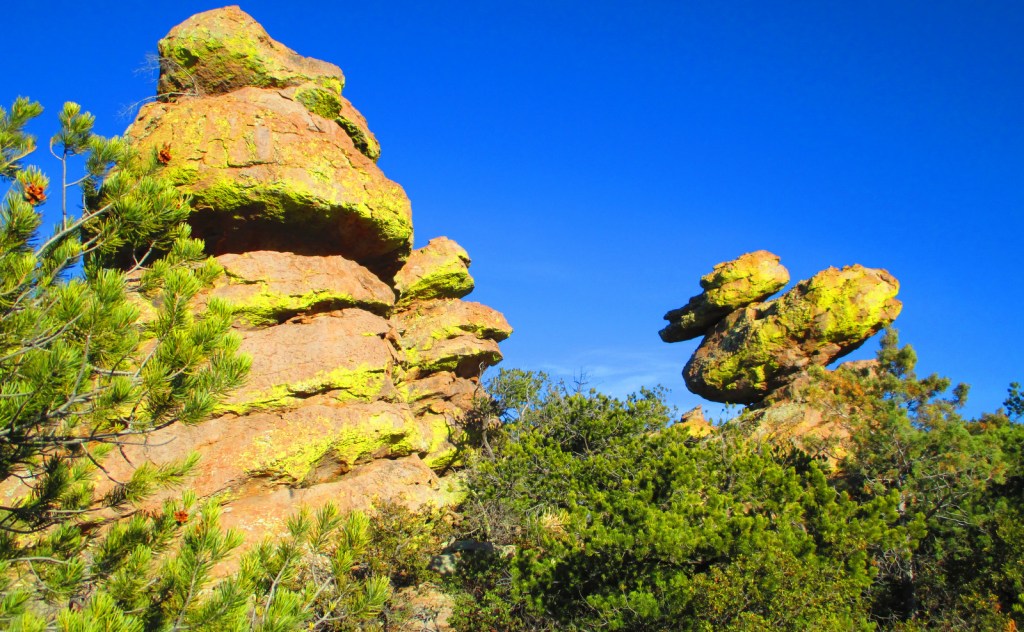
We recommend an all-day loop hike through Echo Canyon to the Heart of Rocks Loop where you will find rocks resembling camels, ducks, and anything else you can imagine.  The wildlife and vegetation here is diverse and representative of many ecosystems because of the elevation range of this “sky island.”  Many visitors that spend the night in the NPS campground report seeing coatimundi, a unique long-tailed omnivore related to the raccoon with a species distribution stretching into South America. 

Best Trail

There are 17 miles of trails in the park and hiking is the best way to explore the rock formations.  A self-guided loop at Massai Point is an option if you are short on time and cannot make it all the way to the impressive Big Balanced Rock.

Instagram-worthy Photo

There is a formation on the Heart of Rocks Loop that is appropriately known as Duck on a Rock. 

Peak Season

Spring and fall

Hours

https://www.nps.gov/chir/planyourvisit/hours.htm

Fees

None

Road Conditions

All roads paved

Camping

The small 24-site NPS campground is known for its nocturnal visitations by coatimundi.

Related Sites

Coronado National Memorial (Arizona)

Organ Pipe Cactus National Monument (Arizona)

Tumacacori National Historical Park (Arizona)

Explore More – Big Balanced Rock is 22-feet in diameter, so how much is it estimated to weigh?

Hubbell Trading Post National Historic Site

Overview

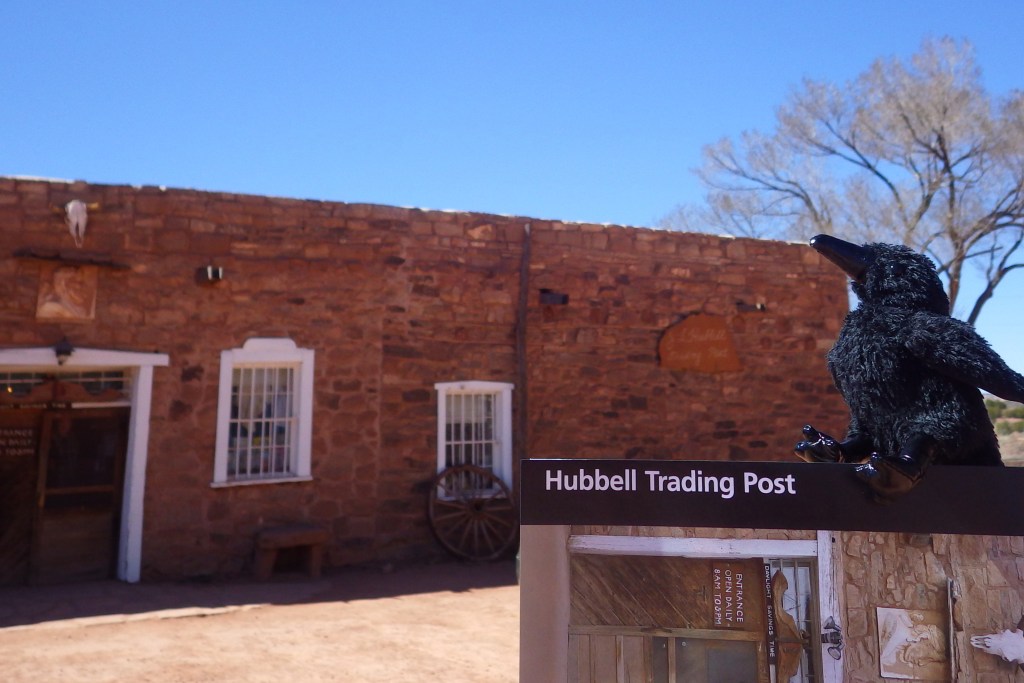
After the tragic “Long Walk” to Bosque Redondo, New Mexico, the Navajo Nation was officially recognized by the U.S. government in 1868 and trading posts were established throughout the reservation.  One near Ganado, Arizona was purchased by John Lorenzo Hubbell in 1876.  He and his sons established a network of 30 trading posts with a wholesale warehouse in Winslow.  Hubbell Trading Post National Historic Site is still an active store (run by a nonprofit organization) with an adjacent National Park Service (NPS) visitor center. 

Highlights

Historic trading post, Hubbell Home, museum, farm animals

Must-Do Activity

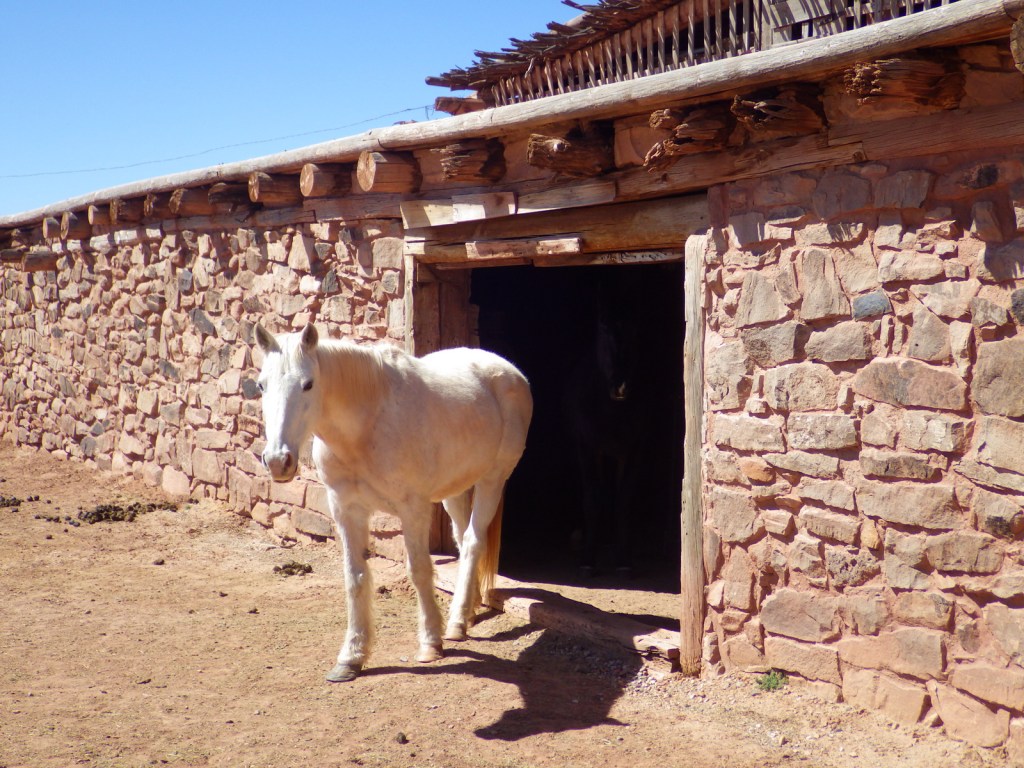
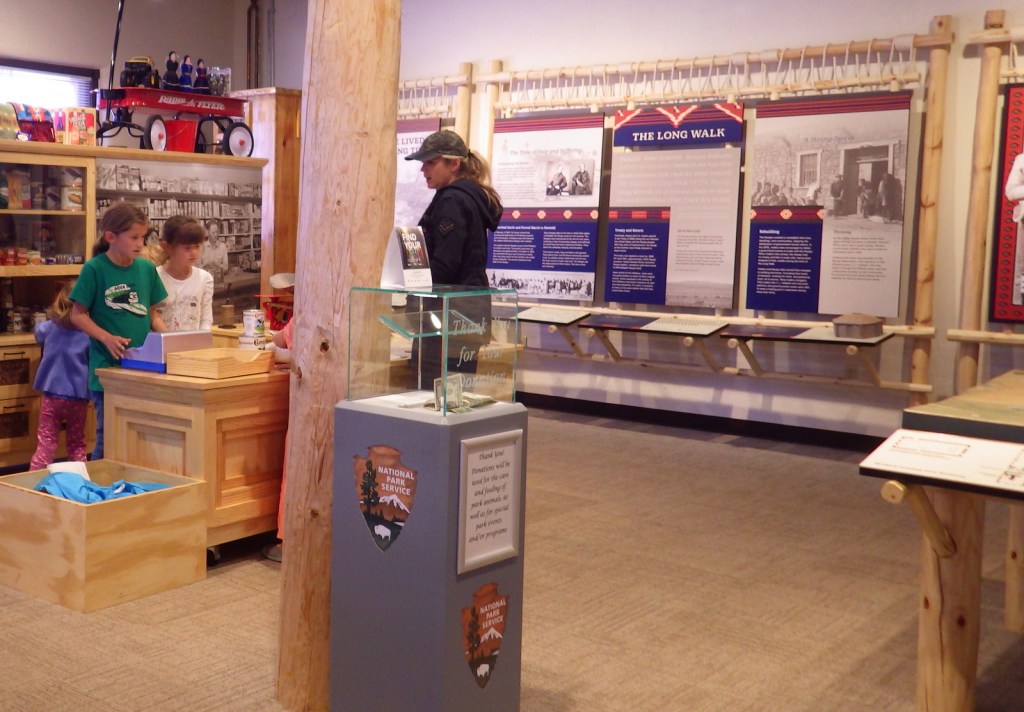
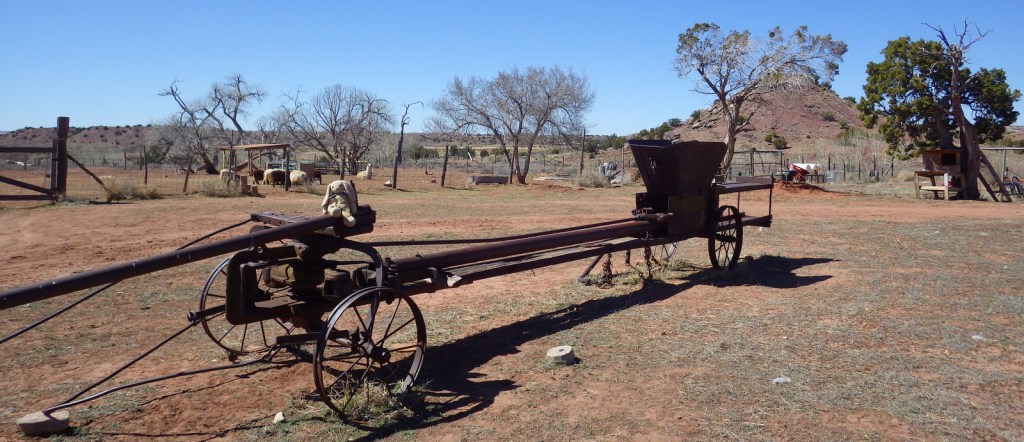
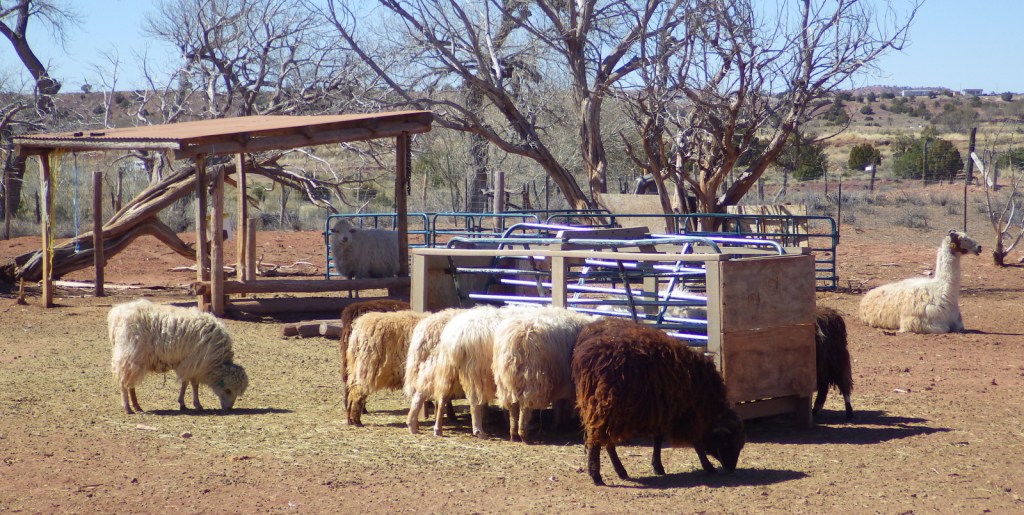
This is a unique NPS site with livestock (sheep, horses, turkeys) and a hands-on play area for children, as well as the original dusty store which allows visitors to travel back into the late-1800s.  There are frequent Navajo rug weaving demonstrations and tours inside the Hubbell Home are available for a fee.  The area has seen many changes over the years, including an 1883 smallpox epidemic that killed thousands of locals, the building of Fred Harvey Company hotels, a 1915 grant of a 160-acre homestead to Hubbell, and the discovery of oil then uranium on the reservation. 

Best Trail

None

Instagram-worthy Photo

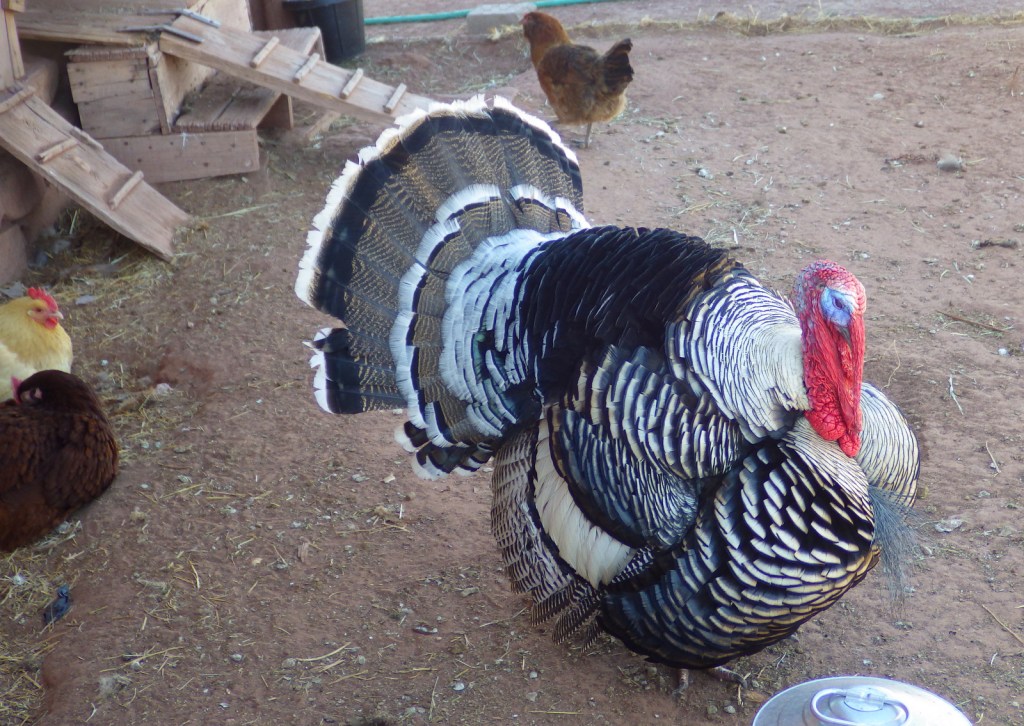
Livestock maintained on site include horses, chickens, turkeys, and sheep, significant for the wool that was such an important trade item when weaved into world-famous Navajo rugs.

Peak Season

Summer

Hours

Note: the Navajo Nation and this NPS site practice Daylight Savings Time while the rest of Arizona (including Grand Canyon National Park) does not

https://www.nps.gov/hutr/planyourvisit/hours.htm

Fees

None, except for the house tour

Road Conditions

The access road is a well-maintained gravel road that can accommodate large RVs.

Camping

None on site, but there is a large NPS-managed campground 40 miles north at Canyon de Chelly National Monument.

Related Sites

Chaco Culture National Historical Park (New Mexico)

Homestead National Monument of America (Nebraska)

Navajo National Monument (Arizona)

Explore More – In the 1920s American Indians were finally permitted citizenship, but Arizona tribes were still not allowed to vote until when?

Montezuma Castle National Monument

Overview

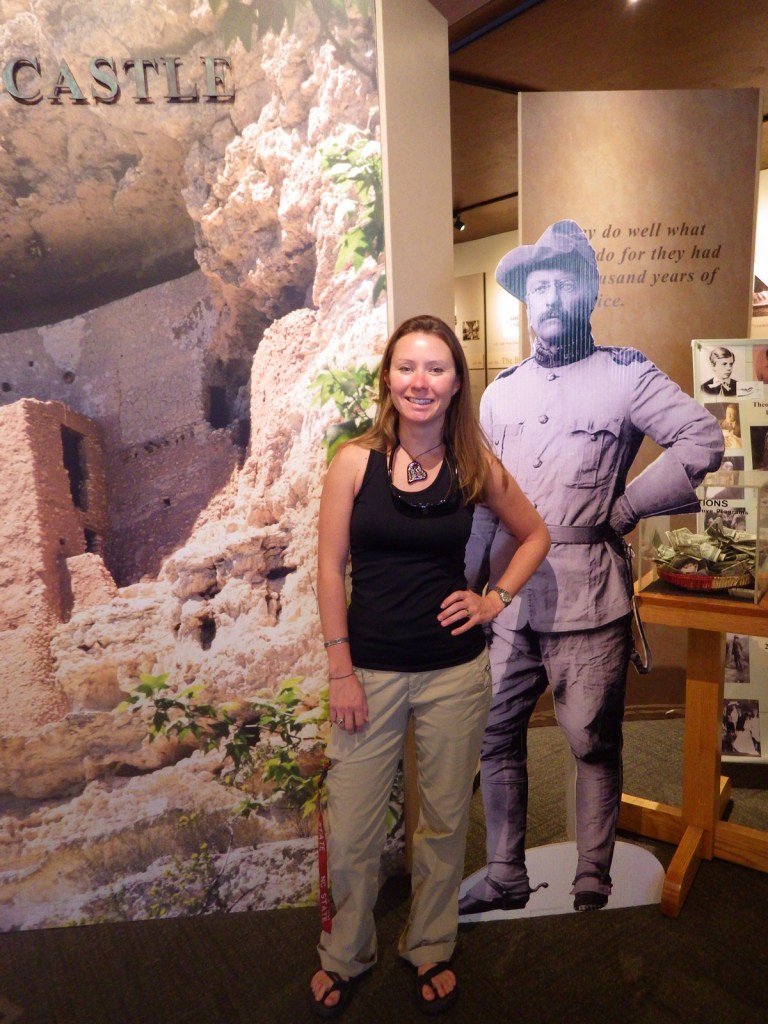
Central Arizona’s Montezuma Castle was one of the first four National Monuments established by President Theodore Roosevelt in 1906.  Conveniently accessible just off Interstate 17 on the way to Sedona or the Grand Canyon, it is a great place to stretch your legs after the 90-minute car ride from Phoenix.  Located in the scenic Verde River Valley, it is one of several sites related to the Sinagua people managed by the National Park Service (also see Walnut Canyon, Tuzigoot, and Wupatki).

Highlights

Cliff dwelling, Montezuma Well

Must-Do Activity

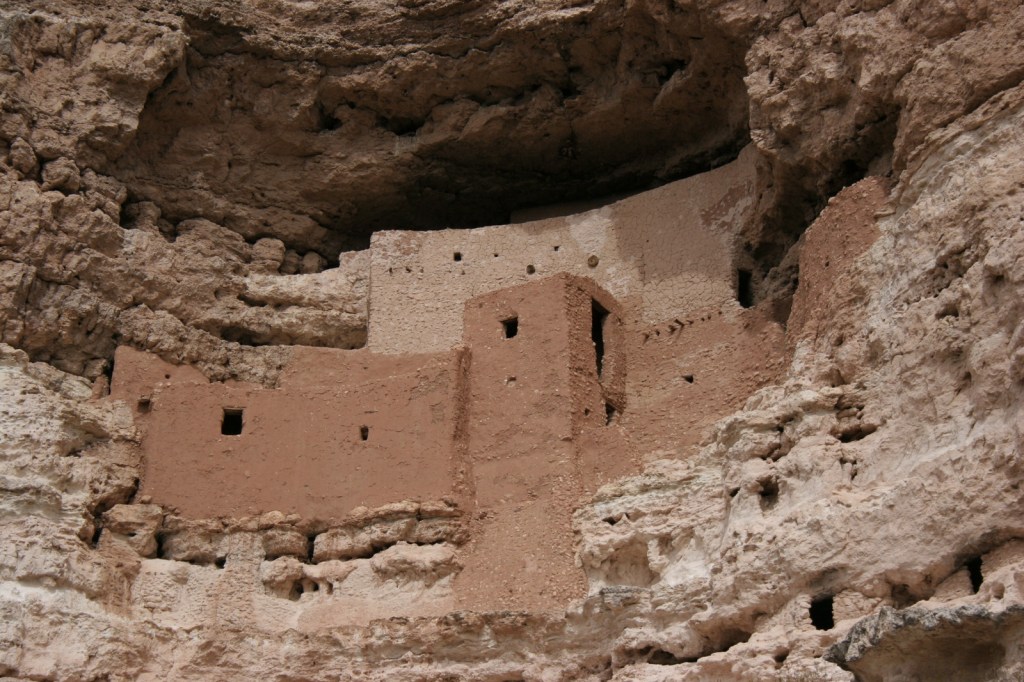
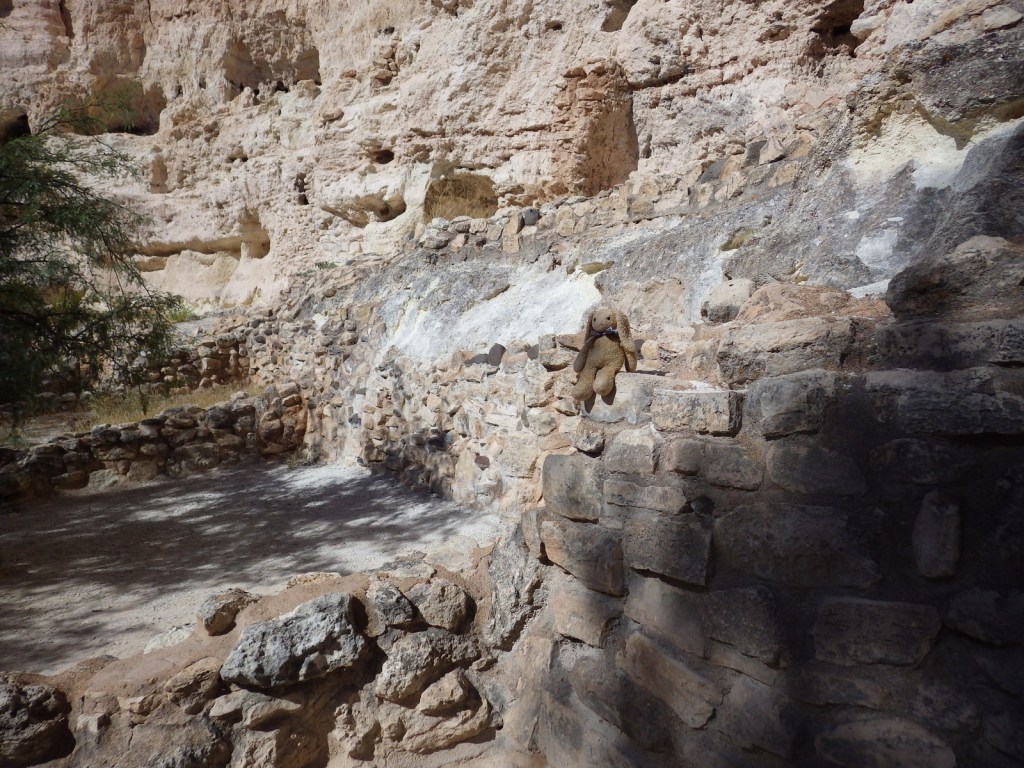
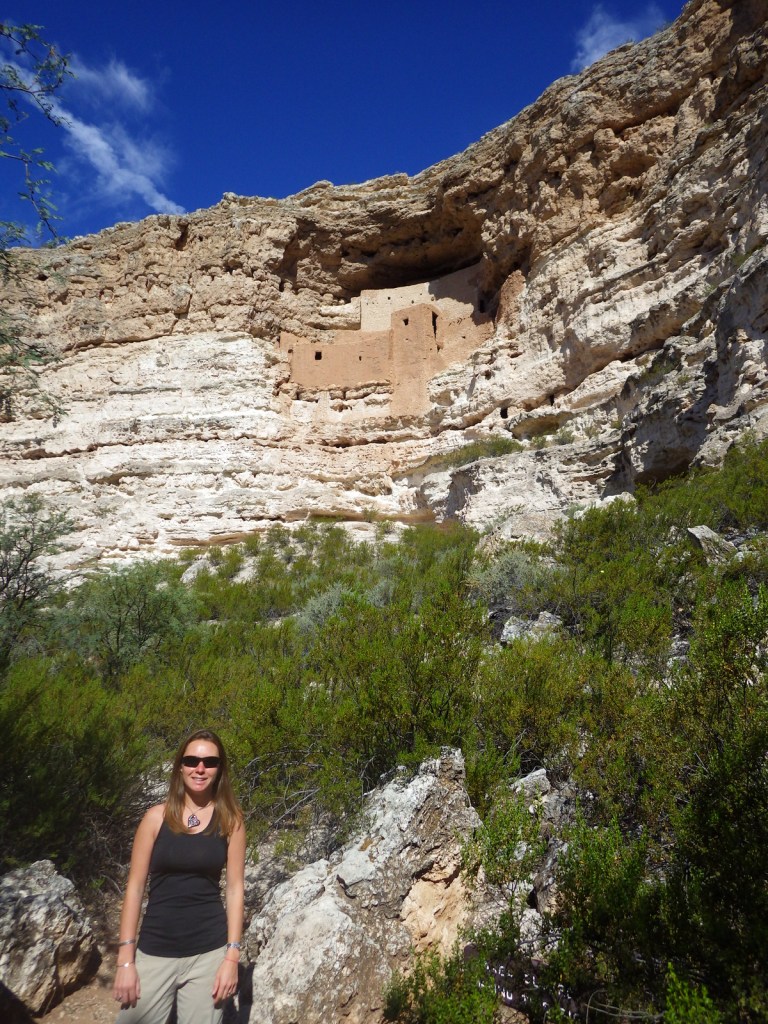
Protected in a cliff recess above Beaver Creek, the five-story tall ruin is not accessible to tourists and can only be viewed from below.  Its name “Montezuma” refers to the mistaken belief that it was somehow connected to the Aztec Empire of Mexico, but its inhabitants had more in common with the Sinagua people living in around Arizona in the 1400s.  Continue on the paved walkway to the ground-level ruins of Castle A and views of Beaver Creek.

Best Trail

To investigate a separate unit of Montezuma Castle National Monument, drive 11 miles north to Montezuma Well, a limestone sinkhole filled by a natural spring that produces 1.5-millions gallons of 74°F water daily.  The trail is only a half-mile long loop, but it is worth the trip to see the historic irrigation ditches and the 55-foot deep sinkhole.

Instagram-worthy Photo

It is unclear why the Sinagua people abandoned the cliff dwelling around 1425, but it may have been due to disease, drought, or climate change.  There were 35 to 50 inhabitants of Montezuma Castle and even more at Castle A, which had approximately 50 rooms.

Peak Season

Summer

Hours

https://www.nps.gov/moca/planyourvisit/hours.htm

Fees

$10 per person or America the Beautiful pass; Montezuma Well is free

Road Conditions

Access roads are paved.

Camping

There is no campground at the National Monument, but many located within massive Coconino National Forest, which also allows dispersed camping.

Related Sites

Tuzigoot National Monument (Arizona)

Tonto National Monument (Arizona)

Sunset Crater Volcano National Monument (Arizona)

Explore More – In what year did the National Park Service stop allowing visitors to climb ladders to walk inside Montezuma Castle?
Lake Mead National Recreation Area

Overview

In 1964, Lake Mead became the first National Recreation Area administered by the National Park Service (NPS).  It actually encompasses two reservoirs on the Colorado River: Lake Mead formed by Boulder Dam in 1936 and (further south) Lake Mohave formed by Davis Dam in 1951.  Boulder Dam was later renamed Hoover Dam and is one big reason this is among the busiest NPS sites with about 7-million annual visitors (also partly due to its proximity to Las Vegas, Nevada).

Highlights

Hoover Dam, Northshore Road, Redstone Trail, Arizona Hot Springs, boating

Must-Do Activity

The most fantastic destination in Lake Mead National Recreation Area is Arizona Hot Springs, where pools are formed by sandbags in a narrow canyon.  It is accessible from Liberty Bell Trailhead by a 6.5-mile roundtrip hike through a beautiful canyon down to the Colorado River.  The trail is closed during the hot summer months, but you can still access it by canoe or kayak from Willow Beach Marina or just downstream from the Hoover Dam (with a special permit). Downriver in Black Canyon, stop at Emerald Cove for incredible photographs.

Best Trail

Redstone Trail is a short loop hike through a fantastic red rock area found just off North Shore Drive.  It is similar to the photogenic Valley of Fire State Park located to the north.

Instagram-worthy Photo

The area around the Hoover Dam can get very crowded, as can the outstanding overlook on the 1,900-foot long Pat Tillman Memorial Bridge (completed in 2010 to route Highway 93 traffic off the dam).  Standing 890-feet above the river below, it ranks as the second highest bridge in the United States behind Colorado’s Royal Gorge Bridge.  Be prepared to pass through a security screening if you park at the bridge or Hoover Dam.

Peak Season

Spring and fall

Hours

https://www.nps.gov/lake/planyourvisit/hours.htm

Fees

$25 per vehicle or America the Beautiful pass to access Willow Beach Marina or Lake Mead itself.  At Hoover Dam there is free parking on the Arizona side, but fees for the museum and tours.

Road Conditions

All major roads are paved, including the steep drive down to Willow Beach Marina, which also has a fish hatchery open to visitors.

Camping

There are multiple NPS campgrounds around the perimeter of Lake Mead and Lake Mohave.  Backcountry camping is allowed without a permit at Arizona Hot Springs, which is even more spectacular after dark.

Related Sites

Grand Canyon National Park (Arizona)

Glen Canyon National Recreation Area (Arizona-Utah)

Tule Springs Fossil Beds National Monument (Nevada)

Explore More – Lake Mead is not often filled to capacity, so when was the last time its spillways were needed during a big snowmelt year?