Category Archives: itinerary

Mississippi Road Trip Itinerary

30,030,893 acres

Statehood 1817 (20th)

Capital: Jackson

Population: 2,961,279 (34th)

High Point: Woodall Mountain (807 feet)

Best time of year: Spring

We recently published our guidebook 50 States of Great: Road Trip Guide to America, so we decided to start a new type of blog post where we create a travel itinerary for all 50 states, in addition to our usual National Forest and National Park entries.  After starting with KansasGeorgia, Idaho, Rhode Island, Minnesota, Hawai’i, Arizona, LouisianaSouth Dakota, Indiana, and Montana, we decided to do another state in the deep south.  We made an ambitious seven-day plan starting in the south on the Gulf Coast and then zigzagging across the state with plenty of options to extend the trip.

Day 1

Gulf Islands National Seashore (click here for our blog post)

You will have to take a ferry to enjoy the white sand beaches of West Ship Island, which are considered some of the best in the U.S.  If you are stuck on the mainland, at least check out the visitor center and hiking trails just off Interstate 10. 

Biloxi

Biloxi has beaches, a lighthouse, casinos, and the Maritime and Seafood Industry Museum.  I still want to see the Patriarch Oak, estimated to be more than 2,000 years old and located at Mary Mahoney’s Old French House seafood restaurant.

De Soto National Forest (click here for our blog post)

Tuxachanie National Recreation Trail runs 12 miles through De Soto National Forest with the path from its western trailhead following an old logging railroad right off Highway 49.  Near the far eastern end of the trail is a lakeside World War II Prisoner of War camp with a pond.

Optional stop at Mississippi Sandhill Crane National Wildlife Refuge

Some sandhill cranes migrate to this forested spot for the winter, but a small population lives there year-round.  There are trails, interpretive signs, and a visitor center.

Day 2

Natchez National Historical Park (click here for our blog post)

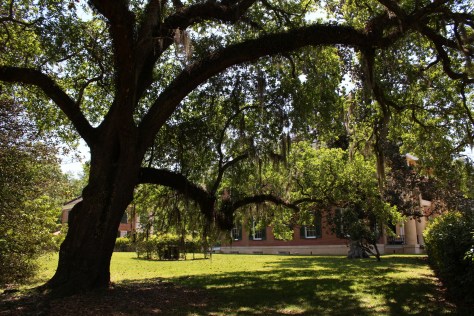
National Park Service (NPS) rangers or volunteers are on location at the William Johnson House, Melrose Estate, and the Forks of the Road where hundreds of thousands of slaves were sold in the 1800s.  The William Johnson House tells the story of a slave freed at age 11 who apprenticed to a barber, and became a successful businessman before his murder.
Grand Village of the Natchez Indians State Historic Site

These historic mounds offer a free museum and film inside an air-conditioned building (which is important on a muggy summer day). 

Optional stop at Homochitto National Forest (click here for our blog post)

There is a nice campground with showers on Clear Springs Lake, accessed by a paved road four miles south of Highway 84.  A one-mile trail circles the lake, which has a picnic shelter built by the Civilian Conservation Corps (CCC) in 1935 that is listed on the National Register of Historic Places.

Day 3

Natchez Trace Parkway (click here for our blog post)

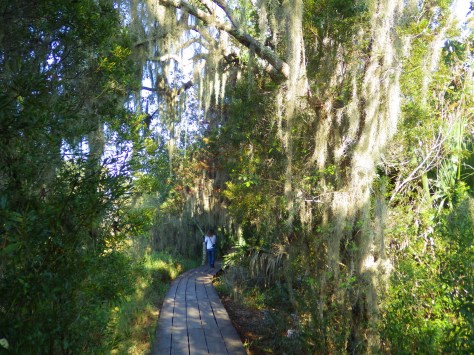
This paved road runs 444 miles from the Mississippi River to Nashville, Tennessee, including 309 miles in Mississippi.  The trace (or trail) started as an American Indian footpath and was heavily used in the 1800s by “Kaintuck” flatboatmen returning from New Orleans who left the Mississippi River at Natchez and continued on foot north.  At several roadside pullouts, you can still follow portions of the “sunken” trail worn down by travelers over the centuries.  Popular stops along the way include the boardwalk at Cypress Swamp outside Jackson and its three free campgrounds.

Optional stop at Natchez Trace National Scenic Trail (click here for our blog post)

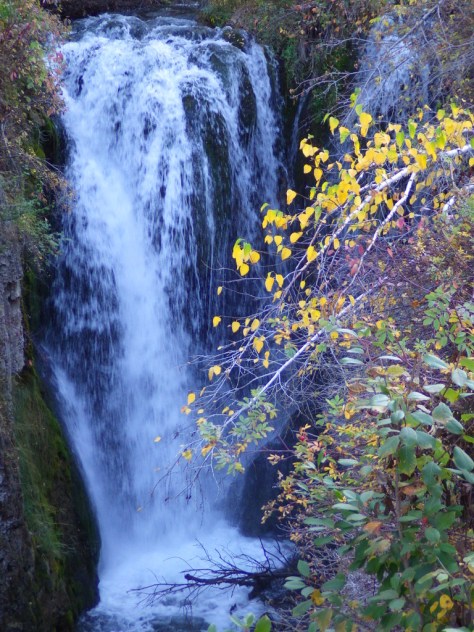
Paralleling the parkway, this trail exists in five segments totaling 67 miles in length.  One of the longest sections is located north of Jackson (Miles 108-130).  There are also eight miles of the original trace around the free Rocky Springs Campground (Mile 58) accessing Owens Creek Waterfall and a historic town site.

Day 4

Jackson

The capital city is home to the Mississippi Civil Rights Museum, Museum of Mississippi History, and Mississippi Agriculture and Forestry Museum.  The Mississippi Museum of Natural Science is a 73,000-square-foot facility situated in a 300-acre forest with 2.5 miles of trails that also boasts a 200-seat theater and many aquariums, including “The Swamp” where alligators reside inside a large greenhouse. 

Medgar and Myrlie Evers Home National Monument (click here for our blog post)

In Jackson, the National Park Service manages the former home of a prominent Civil Rights Leader who was assassinated in his driveway in 1963.  Across the street, there is a sidewalk through Myrlie’s Garden, a community garden where interpretive signs on the wooden fence tell the story of the Evers family.

Optional stop at Bienville National Forest (click here for our blog post)

There are several lakes here open to the public, including 50-acre Marathon Lake (which got its name a lumber company that closed in 1929).  The lake was built in the 1950s for recreation in a former logging camp and now has 34 campsites (with water and electric hook-ups), a boat ramp, a swimming area, and a 1.7-mile trail that circles it. 

Day 5

Vicksburg National Military Park (click here for our blog post)

The numerous failed attempts to take Vicksburg by force are evidenced by the 17,000 soldiers buried in the National Cemetery here.  Following a 46-day bombardment, the city finally surrendered on July 4, 1863.  The best part of visiting the park is walking through the partially-reconstructed U.S.S. Cairo, an ironclad gunboat which was carefully salvaged from the Yazoo River during the 1960s.

Optional stop at Delta National Forest (click here for our blog post)

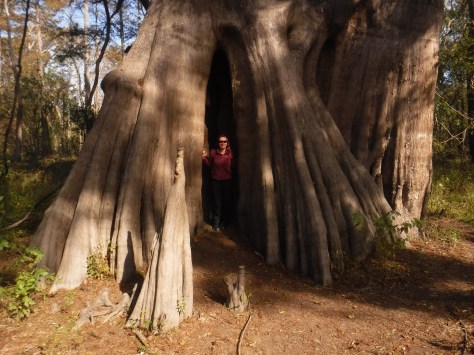
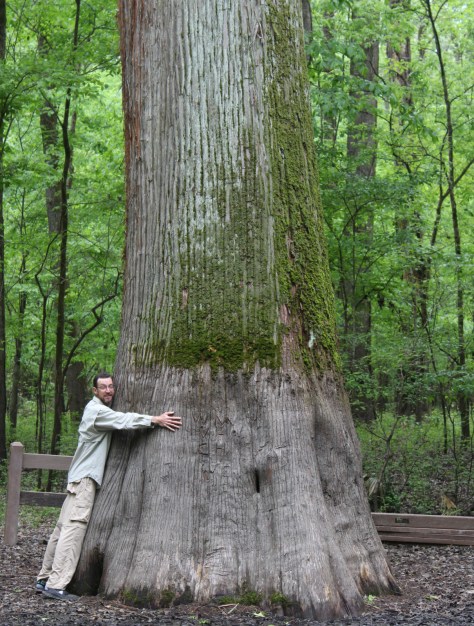
Delta National Forest is seasonally flooded for wildlife, but it was dry enough to walk up to the Kay Cypress Tree even when other trails were underwater during our April visit.  The tree is more than ten feet in diameter even above the widely fluted base common to baldcypress.  It is located across from Blue Lake on unpaved Fire Tower Road.
Day 6

Emmett Till Historic Intrepid Center (ETHIC)

Located in a former cotton gin near the site of Emmett Till’s torture and murder on the farm of “J.W.” Milam in Glendora.  Established in 2005, there is an atmosphere to the museum that bears the full weight of history, heightened by the short introductory video showing Emmett Till’s family members’ recollections of the events of 1955. 

Emmett Till and Mamie Till-Mobley National Monument (click here for our blog post)

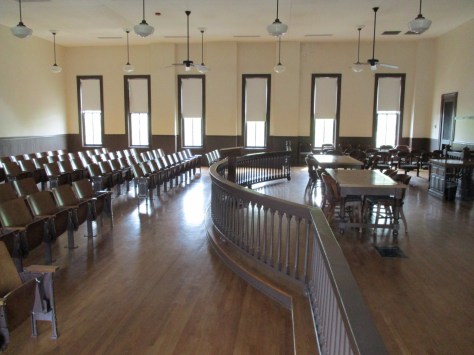
The National Park Service operates out of the Emmett Till Interpretive Center, located in a strip mall opposite the Tallahatchie County Second District Courthouse in Sumner.  It has limited hours, but the courtroom where the September 1955 trial was held was unlocked when we visited on a Tuesday morning.
Optional stop at a Blues Museum

The Yazoo-Mississippi Delta (or simply “the Delta”) is a distinct section of western Mississippi renowned for its blues musicians.  There is plenty to learn and listen to at the Delta Blues Museum in Clarksdale, GRAMMY Museum Mississippi in Cleveland, and B.B. King Museum and Delta Interpretive Center in Indianola.  Spend the night in the area to go to a bar for live music in the evening. 

Optional stop at Belzoni Catfish Museum and Welcome Center

At its peak in 1993, this region produced 461-million pounds of catfish annually (about 60% of U.S. production) and still hosts the World Catfish Festival every April.  The best part is that Belzoni has catfish sculptures spread around town, painted to represent different occupations like a fireman and nurse. 

Day 7

Brices Cross Roads National Battlefield Site (click here for our blog post)

The National Park Service site here is tiny with no facilities and only a couple interpretive signs, but a local battlefield commission owns 1,400 acres with walking trails.  The nearby Mississippi Final Stands Interpretive Center is located five miles east of the battlefield in Baldwyn. 

Tupelo National Battlefield (click here for our blog post)

Two cannons and a monument mark this one-acre National Park Service site surrounded by the city of Tupelo.  Its visitor center is combined with the one for the Natchez Trace Parkway just outside Tupelo.

Optional stop at Elvis Pressley Birthplace and Museum

In Tupelo, the house where Elvis grew up is a main attraction.  The grounds are open 24 hours and the museum is open seven days a week. 

Optional stop at Tishomingo State Park

Tishomingo State Park is located just off the Natchez Trace Parkway (Milepost 304) northeast of Tupelo.  The park’s sandstone and limestone rock formations represent the furthest southwest extent of the Appalachian Plateau.  The park opened in 1939, after its infrastructure was built using local rock by the Civilian Conservation Corps (CCC).  Several structures remain from that period, including a spectacular swinging bridge over Bear Creek.

Day 8+

Holly Springs National Forest (click here for our blog post)

Chewalla Lake Recreation Area is the most developed site offering a swimming beach and campground, plus fishing and boating opportunities.  A 2.3-mile trail at the 260-acre lake passes an overlook and a reconstructed Choctaw burial mound.  In the northeast corner off Highway 72, a short trail accesses Baker’s Pond, the source of the Wolf River.  Further south, Lake Tillatoba is a fee-free primitive site managed by Tombigbee National Forest.

Shiloh National Military Park (click here for our blog post)

An important railroad crossroads in Corinth made it a strategic spot during the Civil War.  In April 1862, two days of intense fighting across the border in Tennessee resulted in 23,746 soldiers killed, wounded, captured, or missing, and the Confederates abandoned the field and Corinth.  There were an additional 7,000 casualties when they failed to recapture the town in October 1862, which is the focus of the museums in town.

Apron Museum

Iuka is home to the Apron Museum that has collected thousands of vintage aprons, plus it has a gift shop with quilts, crafts, and, of course, aprons for sale.  Nearby, a restored wooden covered bridge is also worth a look-see and a drive across.

Learn more about Mississippi’s Most Scenic Drive, Wonderful Waterfall, Top State Park, and other categories in our travel guidebook 50 States of Great: Road Trip Guide to America.
Montana Road Trip Itinerary

93,149,312 acres

Statehood 1889 (41st)

Capital: Helena

Population: 1,084,225 (43rd)

High Point: Granite Peak (12,807 feet)

Best time of year: Summer

After we published our guidebook 50 States of Great: Road Trip Guide to America in 2023, we decided to start a new type of blog post where we create a travel itinerary for all 50 states, in addition to our usual public land entries.  After starting with Kansas, Georgia, Idaho, Rhode Island, Minnesota, Hawai’i, Arizona, Louisiana, South Dakota, and Indiana, we decided to head back west to Montana.  There are so many great trails in the state’s National Forests that we had a difficult time narrowing it down.  We made an ambitious seven-day plan starting in southeast Montana on Interstate 90, with enough options to easily extend the trip into three weeks or more.

Day 1

Little Bighorn Battlefield National Monument (click here for our blog post)

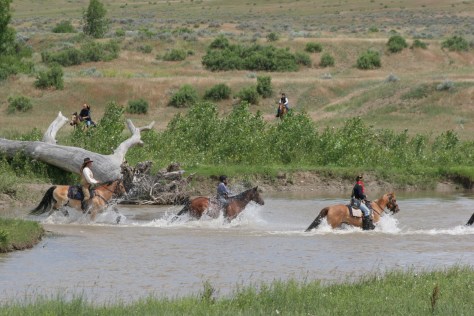
The best time to visit the National Monument is around June 25, the anniversary of Custer’s Last Stand when a reenactment of the battle is held on private land bordering the National Park Service site.

Makoshika State Park

It is illegal to remove dinosaur fossils from these badlands, but there are many on display at the visitor center, in addition to nearby museums (plus reservations can be made to dig on private land).  The few campsites are in high demand to spend the night in these colorful canyons where caprocks rise high above juniper trees. 

Optional stop at Pompeys Pillar National Monument

A sandstone monolith on the Yellowstone River has been a place for humans to record their passing for 11,000 years.  The most famous inscription was left by Captain William Clark on July 25, 1806, the sole on-site evidence of the Corps of Discovery’s three-year journey.

Optional stop at Bighorn Canyon National Recreation Area (click here for our blog post)

This underappreciated gem in the National Park Service system features gorgeous scenery and abundant wildlife, including bighorn sheep and wild horses.  The highlight is across the state line in Wyoming where Devil Canyon Overlook sits atop cliffs that drop over 1,000 feet straight down to the level of the narrow reservoir. 

Day 2

Gallatin National Forest (click here for our blog post)

Gallatin Petrified Forest is only accessible by trail, either from a short two-mile one-way jaunt or by backpacking the 27-mile Gallatin Divide-Devils Backbone Trail.  Earthquake Lake Geologic Area stretches along Highway 287 to commemorate the events that occurred around midnight on August 17, 1959, when a deadly magnitude 7.5 earthquake hit West Yellowstone.

Custer National Forest (click here for our blog post)

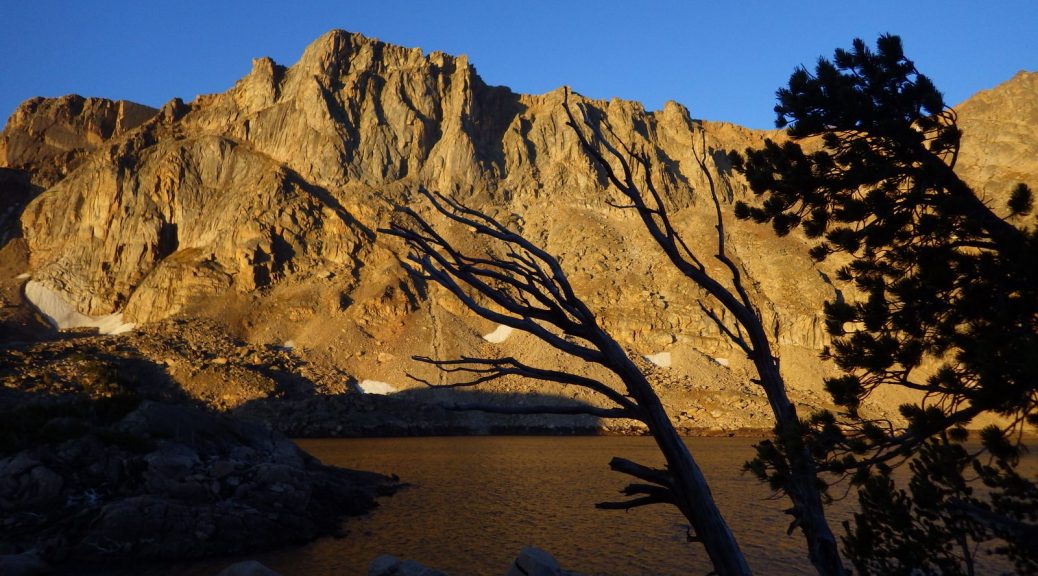
Some of the National Forest’s miles of hiking trails access the Crazy Mountains and Hellroaring Plateau.  The two-mile Glacier Lake Trail steadily climbs 1,100 feet then drops into a bowl containing a stunning reservoir that straddles the Wyoming-Montana border.

Optional drive on Beartooth All-American Road

Custer National Forest is famous for its stretch of Highway 212 that climbs from the prairie around the town of Red Lodge up to 10,947 feet at Beartooth Pass across the Wyoming border in Shoshone National Forest.  The road follows the southern border of the giant 943,626-acre Absaroka-Beartooth Wilderness, which contains the highest point in Montana.

Optional stop at Yellowstone National Park (click here for our blog post)

Located mostly in Wyoming and partly in Montana and Idaho, you could easily spend an entire summer in the world’s first National Park and not see all the thermal features, lakes, waterfalls, wildlife, and hiking trails.

Day 3

Lewis & Clark Caverns State Park

Once a U.S. National Monument, the state now runs a campground here and offers guided tours through a limestone show cave where bats live in the summer.

Beaverhead National Forest (click here for our blog post)

The free Potosi Campground is situated near the trailhead for Upper Potosi Hot Springs where a 0.8-mile trail leads past the uphill side of a clear 100°F pool with room for about six adults.

Optional stop at Chico Hot Springs

If you leave Yellowstone National Park north through Gardiner on Highway 89, consider stopping at this developed hot springs (fee) that offers live music poolside on some nights (especially if the park’s Boiling River was closed).  In business since 1897, even Teddy Roosevelt stopped to rest here.

Day 4

Bannack State Park

East of Lemhi Pass on the Idaho border (which is also the Continental Divide National Scenic Trail through there), Bannack State Park preserves more than 50 buildings from a gold rush town that was the territorial capital in 1864. 

Big Hole National Battlefield (click here for our blog post)

The site of a surprise attack by the U.S. Army on the morning of August 9, 1877, where Nez Perce warriors forced the troops to retreat, capturing a Howitzer cannon and allowing women and children to escape toward the newly created Yellowstone National Park.  Part of the widespread Nez Perce National Historical Park, a small visitor center here overlooks the battlefield and a paved road accesses trails through it.

Bitterroot National Forest (click here for our blog post)

Blodgett Creek Trail leads 12.6 miles one-way to Blodgett Lake, but you do not have to go that far to appreciate its incredible beauty. 

Optional stop at Elkhorn Hot Springs

In the Pioneer Mountains, about ten miles north of Highway 278 is the privately owned Elkhorn Hot Springs (fee), a great place to relax after hiking.  There is free dispersed camping to the north in Beaverhead National Forest.

Day 5

Travelers’ Rest State Park

Follow in the footsteps of the Lewis and Clark expedition by driving the Lolo Trail (Highway 12), soaking at Lolo Hot Springs, or walking around Travelers’ Rest State Park (still a great place to camp). 

Missoula

Do as the University of Montana students do and float tubes down the Clark Fork River through town.  In the summer, look for webcam-famous Iris the Osprey in the parking lot near the football stadium.  The Historical Museum at Fort Missoula preserves buildings dating back to 1877, including an Alien Detention Center used during World War II.

Lolo National Forest (click here for our blog post)

Outside Missoula, there are many trails in Rattlesnake National Recreation Area and Blue Mountain Recreation Area, plus the Aerial Fire Depot and Smokejumper Center, Ninemile Historic Remount Depot, and Savenac Historic Tree Nursery Area.

Optional stop at Grant-Kohrs Ranch National Historic Site (click here for our blog post)

This working ranch commemorates the nineteenth-century lifestyle of cattle barons and cowboys.  Free guided tours are offered inside the large ranch house, and a self-guided walking tour enters 15 buildings with displays on the history of barbwire, branding irons, and much more. 

Day 6

National Bison Range

Established in 1908 under President Theodore Roosevelt and now run by the Confederated Salish and Kootenai Tribes.  Start at the visitor center, then take the 19-mile Red Sleep Mountain Drive to see mule deer, white-tailed deer, elk, pronghorns, bighorn sheep, and the namesake bison. 

Flathead National Forest (click here for our blog post)

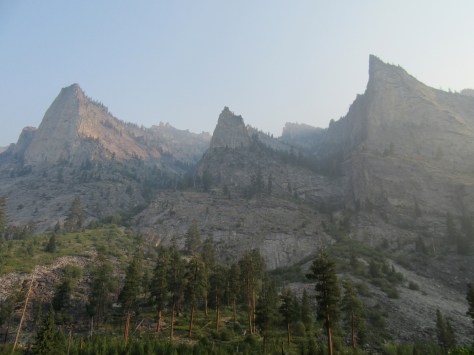
Jewel Basin Hiking Area is famous among backpackers, and further south so is Holland Lake, which has several campgrounds.  The steep Holland-Gordon Trail passes Holland Falls as it climbs 2,100 feet in 5.8 miles to Upper Holland Lake and continues into “the Bob” (Bob Marshall Wilderness).  Flathead National Forest contains more than 2,800 miles of hiking trails, including 38 miles of the Pacific Northwest National Scenic Trail and a stretch of the Continental Divide National Scenic Trail.

Optional stop at Mission Mountains Wilderness

Located within Flathead National Forest, a popular trail accesses multiple mountain lakes; it is only 1.5 miles one-way to Glacier Lake, but we recommend continuing to Turquoise Lake.  It borders the Mission Mountains Tribal Wilderness (permits required). 

Day 7

Glacier National Park (click here for our blog post)

Waterton-Glacier International Peace Park’s renowned Going-to-the-Sun Road was built to cross the park from east to west in the 1920s (reservations are required to drive it between 7 a.m. and 3 p.m. in the summer).  At its highest point at 6,646-foot Logan Pass, the road crosses the Continental Divide National Scenic Trail.

Optional stop at Kootenai National Forest (click here for our blog post)

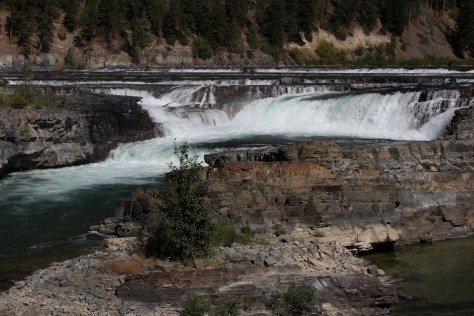
In the state’s northwest corner, incredible views await at Blue Mountain Trail, Skyline National Recreation Trail, Scenery Mountain Lookout Trail, Ross Creek Scenic Area of old-growth western redcedar trees, and Kootenai Falls (located in a county park on the side of Highway 2).

Day 8+

Helena National Forest (click here for our blog post)

Meriwether Lewis named the Gates of the Mountains on July 19, 1805, and today a two-hour jet boat tour on the Missouri River provides history on the Corps of Discovery, American Indian pictographs, the Mann Gulch Fire, and the collapse of Hauser Dam.  A trail through Refrigerator Canyon is less than ten feet wide at its narrowest point, where towering 200-foot limestone cliffs keep it cool and breezy throughout the summer. 

Great Falls

North of Helena on Interstate 15 is the Lewis and Clark Interpretive Center (fee), which is managed by the U.S. Forest Service on the banks of the Missouri River.

Upper Missouri River Breaks National Monument (click here for our blog post)

This 375,000-acre National Monument preserves a stretch of the Missouri River that still looks much the way it did when Lewis and Clark explored it.  Start your journey by paying for permits at the Bureau of Land Management interpretive center in historic Fort Benton, where you can launch your canoe or kayak to access 149 miles of the river.  There are developed boat camps with vault toilets along the route, or you can pick your own spot near one of the Corps of Discovery campsite markers.

Deerlodge National Forest (click here for our blog post)

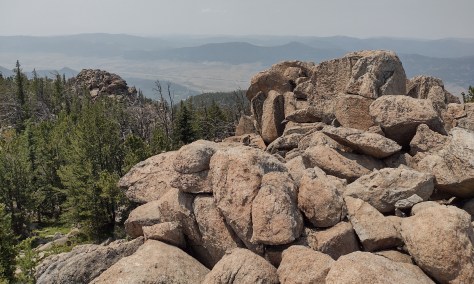
It includes portions of the Boulder Mountains, Flint Creek Range, and Elkhorn Mountains, as well as part of the Anaconda-Pintler Wilderness.  Our favorite hike is Haystack Mountain National Recreation Trail off Interstate 15, where a climb of 2,000 feet ends at a mountaintop boulder field with panoramic views and the remnants of a fire lookout tower.

Lewis & Clark National Forest (click here for our blog post)

Backpacking is a major draw with trails in the Snowy Mountain Range and parts of the Scapegoat and Bob Marshall Wilderness areas, which provide crucial habitat for grizzly bears.  It encompasses one of the most famous formations along the Continental Divide National Scenic Trail, the 15-mile long Chinese Wall (a 1,000-foot-tall cliff composed of five-million-year-old limestone). 

Learn more about Montana’s Most Scenic Drive, Wonderful Waterfall, Top State Park, and other categories in our travel guidebook 50 States of Great: Road Trip Guide to America.

Indiana Road Trip Itinerary

22,928,710 acres

Statehood 1816 (19th)

Capital: Indianapolis

Population: 6,785,528 (17th)

High Point: Hoosier Hill (1,257 feet)

Best time of year: Summer

Last year we published our guidebook 50 States of Great: Road Trip Guide to America, so we decided to start a new type of blog post where we create a travel itinerary for all 50 states, in addition to our usual National Forest and National Park entries.  After starting by jumping around to KansasGeorgia, Idaho, Rhode Island, Minnesota, Hawai’i, Arizona, Louisiana, and South Dakota, we headed to the Midwest for our tenth state.  We start in the northwest corner of Indiana on the shores of Lake Michigan near Chicago, then all roads lead to Indianapolis, so we head south with plenty of options to extend the trip. See for yourself why Indiana made it on our Top 10 States for State Parks list.

Day 1

Indiana Dunes National Park (click here for our complete blog post)

Indiana Dunes National Lakeshore was originally created in 1966 as a compromise between industrialists seeking to build more steel mills and conservationists wanting to preserve biodiversity.  Though it is now one of the 63 National Parks, the quiet Dunewood Campground still provides hot showers in a wooded setting inland from the lakeshore.

Optional stop at Indiana Dunes State Park

Complete the 3 Dune Challenge by climbing the three tallest dunes in the State Park (separate entrance fee) to earn a prize at the visitor center shared with the National Park.

Day 2

Raclin Murphy Museum of Art

This museum on the University of Notre Dame campus in South Bend offers free admission and highlights Christian art from Europe.  Guided tours are offered of the famous football stadium year-round, and the Basilica of the Sacred Heart and adjacent Grotto of Our Lady of Lourdes spiritual shrine are always open.  On a college football gameday, do not miss the midnight drumming circle beneath the golden dome and other traditions throughout the day.

Optional stop at Studebaker National Museum

South Bend was once the headquarters for manufacturing Studebakers and the museum displays many made-in-Indiana automobiles.

Day 3

RV/MH Hall of Fame

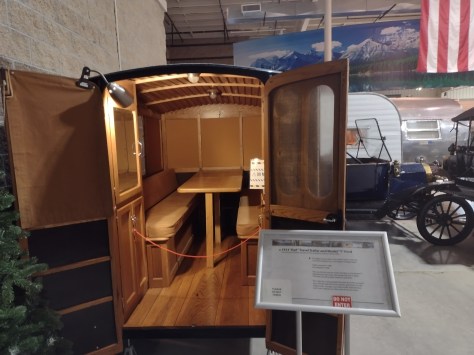
Elkhart is recognized as “the RV Capital of the World” since so many Recreational Vehicles are built in local factories.  The Hall of Fame first opened in 1991 then moved to a larger building where it exhibits more than 50 historic vehicles dating back to the 1913 Earl Travel Trailer.  You can also take a free plant tour of Jayco, Inc. to see RVs being manufactured in nearby Middlebury.

Optional stop at Hall of Heroes Superhero Museum

Six miles down the road in Elkhart, the Hall of Heroes Superhero Museum has more than 50,000 comic books and countless toys and movie props on display.  All-you-can-play arcade games are included with your admission.

Optional stop at Turkey Run State Park

This popular state park is about an hour west of Indianapolis and offers camping, hiking, swimming, kayaking, and fishing.

Day 4

Indianapolis Motor Speedway

The first auto race took place here in 1909 and the first Indy 500 was held two years later.  The car that won that inaugural Indy 500 was the Marmon Wasp and it is held in the track’s Hall of Fame Museum, along with the Borg-Warner Trophy.  This is considered the world’s largest stadium (with a capacity of 257,325).  When cars are not running, you can take a bus tour around the oval (at significantly less than 200 miles-per-hour) and kiss the 36-inch strip of bricks at the finish line left unpaved. 

Optional stop at James A. Allison Exhibition Center

Down the road from the racetrack, the free James A. Allison Exhibition Center tells the story of a local auto parts builder who expanded his company (founded in 1915) into engines for military airplanes.

Optional stop at the Children’s Museum of Indianapolis

Hands-on exhibits abound in this renowned museum southeast of downtown.

Day 5

Spring Mill State Park

Today you can still buy cornmeal ground by the historic gristmill that runs for ten minutes every hour, part of Pioneer Village where costumed reenactors demonstrate chair caning, broom making, and fiddle making.  The park also contains trails, an elevated flume reconstructed by the Civilian Conservation Corps (CCC), Hamer Pioneer Gardens, guided boat trips that enter 500 feet into Twin Caves, and the Grissom Memorial Museum dedicated to the local hero who was the second American astronaut in space and died in a 1967 launchpad fire.

Optional stop at White River State Park

Located in downtown Indianapolis, this unique State Park surrounds the Indiana State Museum, Eiteljorg Museum of American Indian and Western Art, Indiana Zoo, and NCAA Hall of Champions featuring many interactive exhibits next door to the National Collegiate Athletics Association (NCAA) headquarters.

Day 6

Hoosier National Forest (click here for our complete blog post)

Created in 1935 from cutover and abandoned farmland, the National Forest’s best hike is Hemlock Cliffs Trail, a 1.2-mile loop through a canyon that passes two unique waterfalls.  A 0.8-mile trail runs through the 88 acres of old-growth forest of Pioneer Mothers Memorial Forest.  The tall trees here range in age from 150- to 600-years-old, and the black walnuts that grow in a moist cove known as Walnut Cathedral are considered the finest specimens in the country.

Optional stop at Muscatatuck National Wildlife Refuge

A visitor center and auto trail make this the most developed National Wildlife Refuge in Indiana for birding and fishing.  The nearby Big Oaks National Wildlife Refuge encompasses a former military property and requires special authorization to visit.

Day 7

Lanier Mansion State Historic Site

The beautiful Lanier Mansion was built for James Franklin Doughty Lanier, a prominent businessman in the state of Indiana around the mid-1800s. The Greek Revival-style house was completed in 1844 and is one of the finest buildings in Madison’s National Historic Landmark District on the Ohio River.  Well-preserved Madison was an important waystation on the Underground Railroad. 

Clifty Falls State Park

This park protects a deep, boulder-strewn canyon with several waterfalls, including one with a 60-foot drop.  It also has a campground and the blufftop Clifty Inn built in 1924 with views of the Ohio River.

Optional stop on the Indiana Cave Trail

A driving route connects several show caves in the southern part of the state where the brisk air is always a humid 57°F.  Highlights include Indiana Caverns, Wyandotte Caves State Recreation Area, Squire Boone Caverns, Marengo Cave, and Bluespring Caverns that offers a one-hour boat ride through America’s longest navigable underground river. 

Day 8+

George Rogers Clark National Historical Park (click here for our complete blog post)

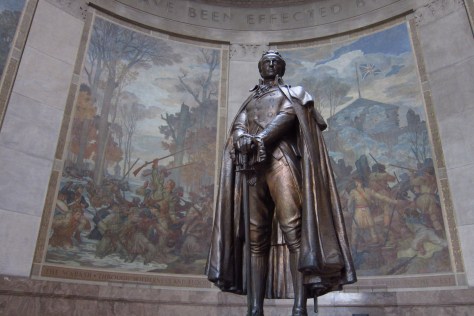
A beautiful 80-foot-tall granite memorial was built on the site of Fort Sackville in the 1930s to commemorate the victory Clark led there on February 25, 1779.  After watching the 20-minute film in the visitor center in Vincennes, go inside the circular memorial with 16 columns in classic Greek style to see a bronze statue surrounded by seven murals.  You can then walk down the Wabash River to see the home of President William Henry Harrison and the old territorial capitol.

Holiday World

Located in the town of Santa Claus, this Christmas-themed amusement park has roller coasters, a water park, and many shops.

Lincoln Boyhood National Memorial (click here for our complete blog post)

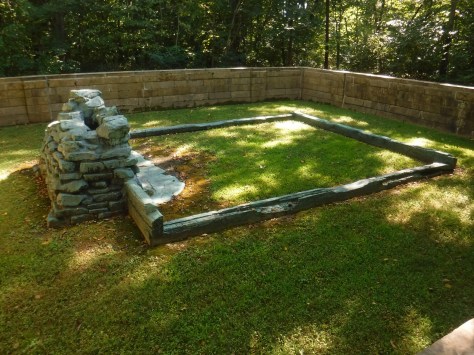
Take a walk past the pioneer cemetery to the Cabin Site Memorial where a bronze casting of sill logs and the fireplace hearthstones are at the site of Abraham Lincoln’s family cabin from 1829.  The Living Historical Farm has costumed interpreters in the summer that depict homestead life at an authentic cabin and several outbuildings that were moved here from other parts of Indiana.

Angel Mounds State Historic Site

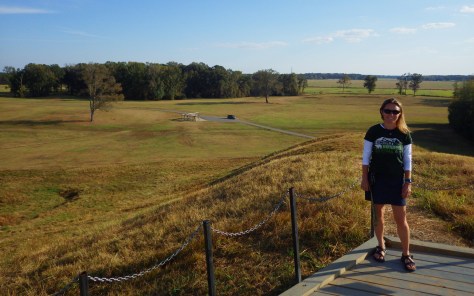
Near Evansville is a 430-acre site where there are 11 grass-covered Mississippian mounds built as early as 1,000 years ago, plus a replica village, simulated excavation site, and a visitor center full of artifacts. 

Milan ’54 Museum

Commemorates the town’s 1954 high school boys’ basketball team that defeated the mighty Muncie Central for the state championship, as immortalized in the 1986 film Hoosiers.

Indiana Basketball Hall of Fame

In a state obsessed with basketball, this museum was moved from the capital city to New Castle in 1990 so it could have more room for expansion. 

Learn more about Indiana’s Most Scenic Drive, Top Backpacking Destination, and other categories in our travel guidebook 50 States of Great: Road Trip Guide to America.

South Dakota Road Trip Itinerary

48,519,040 acres

Statehood 1889 (40th)

Capital: Pierre

Population:  886,667 (46th)

High Point: Black Elk Peak (7,242 feet)

Best time of year: Summer

Last year we published our guidebook 50 States of Great: Road Trip Guide to America, so we decided to start a new type of blog post where we create a travel itinerary for all 50 states, in addition to our usual National Forest and National Park entries.  After starting by jumping around to KansasGeorgia, Idaho, Rhode Island, Minnesota, Hawai’i, Arizona, and Louisiana, we chose one of our favorite states to visit.  Just in time for summer (and the Custer State Park chip flip), we made an ambitious seven-day plan starting in the east near Sioux Falls and following Interstate 90 west, with plenty of options to extend the trip. See for yourself why South Dakota made it on our Top 10 States for State Parks and Top 10 States for National Park Service Sites list.

Day 1

Palisades State Park

Start your trip near Sioux Falls, where pink formations of quartzite rock rise above muddy Split Rock Creek below.  It is a great spot for a picnic, and you might get to watch rock climbers across the creek repelling down the steep cliffs. 

Optional stop at Falls Park

Not only is Sioux Falls the largest city in the state, it is also home to Falls Park where the Big Sioux River tumbles down 100 feet of rosy quartzite in a series of photogenic cascades. 

Day 2

Corn Palace

Not far off Interstate 90 in Mitchell is a great wonder of human creativity dating back to 1892.  Each year a new theme is chosen by artists who design images to decorate the outside of the building completely with organic materials.  By the end of the summer, the face of this unique building is covered with 275,000 ears of corn in a variety of colors.  Be sure to go inside the building to see pictures of past palaces, turn a millstone to grind our own cornmeal, and learn fun facts. 

Dignity sculpture

Also on Interstate 90, there is a new 50-foot sculpture of a Native American woman wearing a traditional star quilt entitled Dignity of Earth and Sky.

State Capitol Building

Visit inside the capitol to learn why the tiny town of Pierre (pronounced “peer”) was chosen as the state’s capital city in 1889 and how the building was constructed starting in 1905.

Optional stop at Fort Pierre National Grassland (click here for our complete blog post)

Look online for the publication South Dakota Fishing Guide to the National Grasslands, which provides information on 41 fishing ponds in the National Grassland.  Originally built in 1934, Richland Dam was renovated in 2014 and now features handicapped-accessible fishing and a concrete boat ramp.  Fishing ponds are generally open December 1 to August 31 to avoid overlap with hunting season.

Day 3

Badlands National Park (click here for our complete blog post)

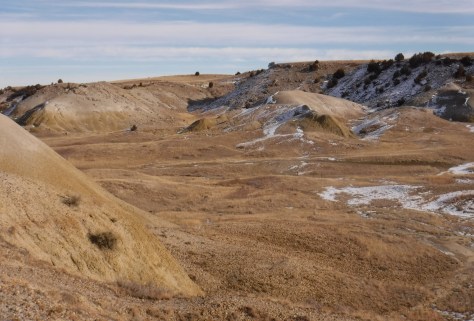
Beyond the geologic formations and hiking trails, this is a good place to camp at the developed Cedar Pass Campground, free Sage Creek Primitive Campground (which can be crowded in the summer), or backpacking out with the bison.  Bighorn sheep are also common, and porcupines, surprising for as treeless as it is.  Prairie dog towns make for an endless variety of entertainment and provide habitat for burrowing owls, prairie rattlesnakes, and endangered black-footed ferrets that have been reintroduced throughout South Dakota. 

Optional stop at Minuteman Missile National Historic Site (click here for our complete blog post)

Outside Badlands National Park on Interstate 90, a small museum and ranger-guided tours of the Delta-01 launch control facility.  Tours have very limited space and a nominal fee, but are no longer solely first-come-first served thanks to an online reservation system. 

Day 4

Wall Drug

Perhaps the greatest roadside attraction in the entire world, famous since 1936 for its “Free Ice Water” road signs.  Today Interstate 90 is inundated with Wall Drug billboards for miles in each direction.  Ice water is still free and the café still offers a cup of coffee for only five cents, as well as the best soft-serve ice cream we have ever tasted.  In the Wall Drug Backyard, you can even ride atop a ten-foot-tall jackalope; and do not leave without a free bumper sticker.

Optional stop at the National Grasslands Visitor Center

This serves as the main interpretive site for all 20 National Grasslands (plus Midewin National Tallgrass Prairie).  The exhibit hall is still under reconstruction following a flood that forced a relocation into a temporary trailer for years, but the theater is reopened showing a short film. 

Optional stop at the South Dakota Air & Space Museum

Admission is free to this museum (currently closed for construction) seven miles east of Rapid City on Interstate 90.  It sits next to Ellsworth Air Force Base, but you do not have to pass through military security to enter.  An impressive B-1B Lancer sits out front alongside other historic aircraft, with many more located inside the hangars.

Day 6

Mount Rushmore National Memorial (click here for our complete blog post)

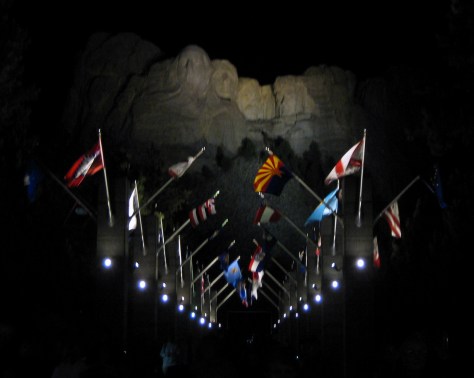
This icon of South Dakota is inspiring to see during the day, but for the full patriotic effect do not miss the night lighting ceremony offered May to September. 

Needles Highway

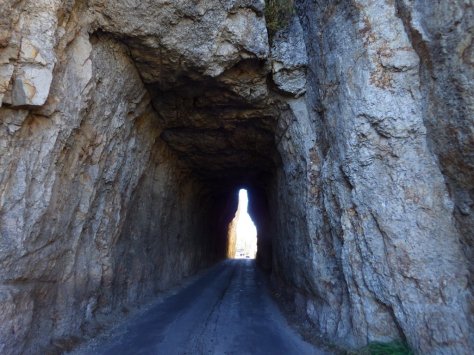
The 14-mile-long Needles Highway was completed in 1922 and is known for its narrow, one-lane tunnels that run straight through mountainsides and the natural arch aptly named the Needle’s Eye (Custer State Park admission required).  Trails leave from along its length to access the Cathedral Spires, Black Elk Peak, Sylvan Lake, and Little Devil’s Tower.  To the northeast, the Highway 16A section of the Peter Norbeck Scenic Highway utilizes more one-lane tunnels and fascinating corkscrew turns called “pigtail bridges” to connect Custer State Park with Mount Rushmore National Memorial (no admission fee required when simply driving through).

Optional stop at Crazy Horse Memorial

Under construction since 1948, this privately-funded monument continues to be carved and blasted to this day.  In addition to the 563-foot-tall memorial to the legendary fighter and leader of the Oglala Lakota, the site also has the Indian Museum of North America full of outstanding artwork and artifacts.  Special tours can be booked up to the 87-foot-tall head of Crazy Horse, plus, a laser-light show runs nightly in the summer.  There is a pretty good view from the highway if you do not want to pay the admission fee.

Day 5

Custer State Park

World famous for its Buffalo Roundup every September, this park has so much more than bison (see Needles Highway above).  Visitors can see bighorn sheep, mountain goats, pronghorn, elk, mule deer, white-tailed deer, coyotes, turkeys, golden eagles, and you might even get nose-to-nose with one of the feral burros that roam free and love handouts. You may find yourself stuck waiting out a “bison jam” as the large ungulates cross a road. 

Wind Cave National Park (click here for our complete blog post)

The interior of Wind Cave is a constant 53°F, so bring a jacket if you sign up for the Natural Entrance Tour, which involves entering a vapor lock revolving door and descending stairs.  On the Candlelight Tour you carry lightweight metal candle-lanterns, just like 19th-century tourists.  It is only offered in the summer and explores an unlit section of the cave.  There are several good trails that traverse the prairie and canyons and we enjoy backpacking (free permit required) on Highland Creek Trail where we always see bison.

Optional stop at Black Hills National Forest (click here for our complete blog post)

Surrounding Custer State Park and Mount Rushmore and spilling into the state of Wyoming, it is home to a fun hike to the state’s high point at 7,242-foot tall Black Elk (formerly Harney) Peak rising in the center of the beautiful Black Elk Wilderness.  We also recommend Old Baldy Trail and Buzzards Roost Trail.

Day 7

Jewel Cave National Monument (click here for our complete blog post)

Currently, Jewel Cave ranks third worldwide with over 160 miles in mapped passages, and based on air flow estimates the cave is less than 10% mapped.  The namesake jewels are actually boxy calcite formations, which crystalized out of water in a manner similar to the way a bathtub ring forms.  The Wild Caving Tour and Lantern Tour are our favorite ranger-guided tour options.

Optional stop at Buffalo Gap National Grassland (click here for our complete blog post)

The only developed site of this sprawling area is located at French Creek Agate Beds, where there is a campground and rockhounding is legal for Fairburn agate (the official State Gem of South Dakota), rose quartz, and banded jasper.

Day 8+

George S. Mickelson Trail

This flat trail runs 109 miles from Deadwood to Edgemont along the former Burlington Northern rail line, but you can choose to hike as far as you like (day-use fee).  Like many rails-to-trails projects, this route is wide enough to accommodate bikes and includes many bridges and tunnels, like those near the Mystic Trailhead.

Spearfish Canyon Nature Area

A scenic byway follows Highway 14A south of Interstate 90 past roadside Bridal Veil Falls and Spearfish Falls.  The limestone cliffs of the canyon are sprinkled with ponderosa pine trees and the creek is lined by deciduous trees that add to the beauty when changing colors in late-September (around Buffalo Roundup weekend).  It is free to park at 30-foot-tall Roughlock Falls (pictured below), but this small park can get congested. 

Geographic Center of the Nation

Belle Fourche is home to a 21-foot-wide monument with a visitor center and museum at the site designated by the National Geodetic Survey as the center of the 50 states after Alaska and Hawai‘i were added in 1959.

Petrified Wood Park in Lemmon

A free park filled with locally gathered petrified wood and other geological specimens. The “world’s largest collection” also has a free museum constructed out of petrified wood that is open from Memorial Day to Labor Day.

Missouri National Recreational River (click here for our complete blog post)

In southeast South Dakota, the river’s lower segment runs 59 miles from the Gavins Point Dam to Ponca State Park, plus a 39-mile stretch was added from the Fort Randall Dam to Niobrara State Park, and includes 20 miles of the Lower Niobrara River (which is itself designated a National Scenic River upstream in Nebraska). 

Learn more about South Dakota’s Most Scenic Drive, Top State Park, and other categories in our travel guidebook 50 States of Great: Road Trip Guide to America.

Louisiana Road Trip Itinerary

27,650,496 acres

Statehood 1812 (18th)

Capital: Baton Rouge

Population: 4,657,757 (25th)

High Point: Driskill Mountain (535 feet)

Best time of year: Winter and spring

Last year we published our guidebook 50 States of Great: Road Trip Guide to America, so we decided to start a new type of blog post where we create a travel itinerary for all 50 states, in addition to our usual National Forest and National Park entries.  After starting by jumping around to KansasGeorgia, Idaho, Rhode Island, Minnesota, Hawai’i, and Arizona, we headed back to the south for Louisiana.  Just in time for Mardi Gras, we made an ambitious seven-day plan starting in New Orleans, with plenty of options to extend the trip.

Day 1

Café du Monde

Eating beignets is a great way to start your trip to Louisiana, and this is the most touristy place to get them, located on the Riverwalk in New Orleans.

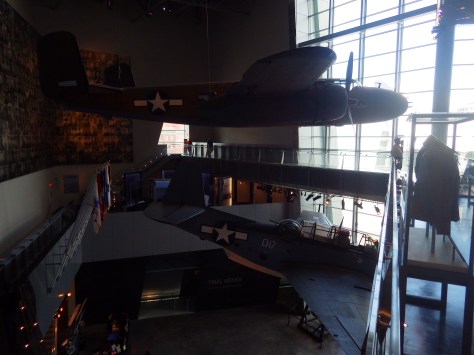
National WWII Museum

It is easy to spend an entire day here (fee) because of all the interactive exhibits and informational touchscreen kiosks.  You do not even have to leave for lunch, since the Soda Shop and American Sector Restaurant & Bar are on site.  We recommend you purchase a ticket including the 4-D film Beyond All Boundaries and the submarine experience based on the final mission of the USS Tang.  This is our vote for #1 museum in the entire U.S.

French Quarter

Every American needs to visit the French Quarter at least once in their life (although whether that’s during the wildness of Mardi Gras is up to you), and it is walkable from the National WWII Museum.  Consider stopping by iconic Lafayette Square, Old Ursuline Convent Museum, or the New Orleans Pharmacy Museum.

Ghost Tour

We have heard rave reviews about the ghost tours offered in New Orleans, and hope to attend one someday to compare it to the others we have done.

Optional stop at Mardi Gras World Museum

Visit this warehouse (fee) where floats are made for Mardi Gras parades, situated right along the Mississippi River.

Optional stop at Bayou Segnette State Park

We camped here and it felt like we were off in the wild while still within the city’s suburbs.

Day 2

New Orleans Jazz National Historical Park

The New Orleans Jazz Museum (fee) is located in the old U.S. mint building right in the heart of the historic French Quarter.  Check the online schedule for musical performances put on by the National Park Service (NPS) and enter the free visitor center shared with Jean Lafitte National Historical Park and Preserve.

Go out to lunch in New Orleans

Louisiana is famous for its Cajun food, including gumbo, étouffée, jambalaya, po’boys, and red beans and rice.

Jean Lafitte National Historical Park and Preserve (click here for our blog post)

Make sure you visit the 24,000-acre Barataria Preserve to experience the bayous of Louisiana, whether you hike or take a boat tour (fee).  South of downtown New Orleans off Highway 45, keep your feet dry by hiking the boardwalks on the Bayou Coquille Trail.  In addition, this park includes three Acadian Cultural Centers spread throughout southwestern Louisiana.

Optional stop at Chalmette Battlefield

Another part of Jean Lafitte National Historical Park and Preserve encompasses the land where Andrew Jackson led the defeat of the British to retain New Orleans for the U.S. after the end of the War of 1812.

Day 3

Baton Rouge

Check out the art-deco capitol building where you might see white pelicans floating on the lake next door.  We read that the pelican on the state flag is supposed to be a brown pelican (the official state bird) even though the artist made it white so it stood out against the blue background.  Also consider visiting the Old State Capitol, Old Governor’s Mansion, or USS Kidd destroyer ship

Optional drive along the Lake Ponchartrain Causeway

Not the most direct route between New Orleans and the capital city, this 23.8-mile causeway is considered the longest continuous bridge over water in the world.  It is free to drive northbound, but don’t attempt it when it’s smoky or foggy, as it becomes very dangerous to drive.

Optional stop at LSU Tigers game

Louisiana State University is located in Baton Rouge and they are famous for their tailgating scene and raucous fans who support their perennially excellent football, women’s basketball, and gymnastics teams.

Day 4

Cat Island National Wildlife Refuge

Northwest of Baton Rouge, the largest of all baldcypress trees in the U.S. is found at the end of a flat, half-mile trail, where there is a new boardwalk built around the tree to protect its roots.  This area is located down six miles of dirt road full of potholes (and is sometimes flooded). 

Optional stop at Atchafalaya National Wildlife Refuge

Louisiana is home to 24 National Wildlife Refuges, many found in its southern half where bayous are full of alligators and mostly uninhabited by humans, like this one west of Baton Rouge.

Day 5

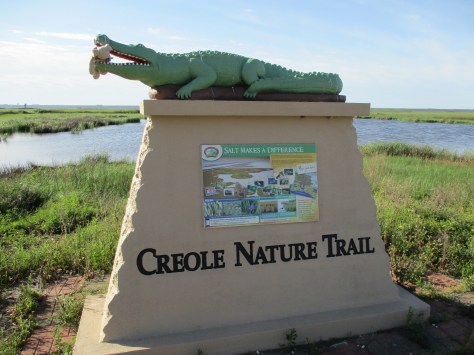
Creole Nature Trail All-American Road

In southwest Louisiana, this route traverses 180 miles of pavement around Calcasieu Lake and the Gulf of Mexico coastline.  Much of the state’s oceanfront is inaccessible swamp, but in this corner of the state there are 26 miles of beautiful sandy beaches where ocean waves and seashells await.  Consider spending the night in Holly Beach.

Sabine National Wildlife Refuge

Further inland, there are 700,000 acres of wetlands that attract waterfowl to Sabine National Wildlife Refuge, while the surrounding area is used by farmers to grow rice and raise crawfish. 

Optional stop at Tabasco Brand Factory Tour and Museum

Before you head west, consider a stop in Avery Island where they have been bottling Tabasco Hot Sauce for over 150 years.

Day 6

Kisatchie National Forest (click here for our blog post)

There are eight parcels that constitute the sprawling 603,360-acre Kisatchie National Forest, which has over 40 developed recreation sites and 100 miles of trails.  It encompasses lakes for boating and swimming, plus baldcypress-lined bayous for canoeing and fishing.  Old-growth longleaf pine forests can be accessed by the paved Longleaf Trail Scenic Byway, just off Interstate 49.  A 1.5-mile interpretive loop at Longleaf Vista is a good place to start.

Red Dirt National Wildlife Management Preserve

Camping is allowed in this area next to the 8,700-acre Kisatchie Hills Wilderness where you can backpack along trails.  Kisatchie National Forest also offers several lakefront camping areas elsewhere.  Lake Fausse Pointe, Lake Bistineau, and Chicot State Parks all have campgrounds with lake access, as well cabins available for rent.

Optional stop at Creole Nature Trail Adventure Point

The Creole Nature Trail Adventure Point is a self-guided audio tour and starts off Interstate 10 in Sulphur, where a museum has hands-on displays that introduce visitors to local wildlife and Cajun culture. 

Day 7

Poverty Point National Monument (click here for our blog post)

Settled 3,700 years ago by hunter-gatherers, this ancient city with a population estimated at 1,500 was situated along Bayou Macon in northeast Louisiana.  The inhabitants constructed several mounds, the most impressive is 72-feet-tall in the shape of a bird, which required approximately 15-million basket-loads of soil to complete. 

Optional stop at Cane River Creole National Historical Park (click here for our blog post)

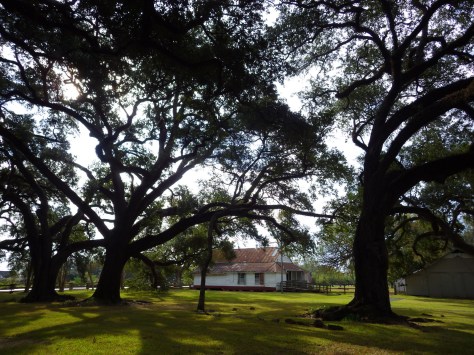
Oakland Plantation survived the Civil War intact, but in the wake of Reconstruction tenant farming created a new form of indentured servitude.  Self-guided tours of the site take you through the mule barn, several cottages, and an old general store that still looks open for business along Highway 494.  Slave/tenant quarters are also preserved at Magnolia Plantation downstream, but the main house is closed to the public. 

Optional stop at Sci-Port Discovery Center in Shreveport

This science museum in northwest Louisiana is great for kids and adults with hands-on exhibits, a planetarium, and IMAX theater.

Day 8+

Rayne Frog Festival or Mudbug Madness

Festivals dedicated to celebrating and eating frogs and crawfish; it does not get any more Louisiana than that!  Also, consider arriving during one of the many music festivals dedicated to jazz, zydeco, or other regional musical styles.

Port Hudson State Historic Site

An annual battle reenactment takes place at the site of a siege during the Civil War; further north, another Civil War reenactment is held at Pleasant Hill.

J.C. “Sonny” Gilbert Wildlife Management Area

This forested Wildlife Management Area is located between Monroe and Alexandria in central Louisiana.  It includes Rock Falls, which at 17 feet in height is the tallest waterfall in the state, accessible on a seven-mile trail.

Learn more about Louisiana’s Most Scenic Drive, Top State Park, and other categories in our new travel guidebook 50 States of Great: Road Trip Guide to America.