All posts by Raven About The Parks

Top 10 Civil War Films

This summer, we are going to cover the many National Park Service (NPS) sites dedicated to remembering the Civil War, the bloodiest conflict in American history with the greatest outcome (freedom for the country’s enslaved people).  Part of what makes the United States a great nation is its ability to remember the painful chapters in its past (i.e. Andersonville and Manzanar National Historic Sites).  It is also important to recall where we started so we can accurately see how far we have come and the positive trajectory we (as a nation) are on.  If you keep up with the daily news it is difficult to get this perspective, especially when living through periods of historical change.  That is what makes our NPS sites essential to the future of our republic.

With that long preamble, we now present our first Top 10 list dedicated to motion pictures.  So make some popcorn and find a comfortable seat!

10. Gods and Generals (2003)

This epically long film could have been titled “The Stonewall Jackson Movie.”

9. The Beguiled (1971, 2017)

More of a psychological thriller than a war movie.

8. Glory (1989)

The story of a regiment of African American troops in the Union Army.

7. Ride with the Devil (1999)

This film directed by Ang Lee follows guerrilla fighters in Missouri.

6. Free State of Jones (2016)

Tells the story of a revolt against the Confederacy in Mississippi in the middle of the Civil War.

5. Cold Mountain (2003)

A look into life on the home front in the South (and based on the novel).

4. Gettysburg (1993)

At over four hours, it does a decent job explaining the three days that changed American history.

3. Lincoln (2012)

Daniel Day-Lewis did arguably the best job of the many actors to portray Abe Lincoln.

2. Harriet (2019)

Believe it or not, Harriet Tubman led troops during the Civil War.

…and finally our #1 movie about the American Civil War:

1. Gone with the Wind (1939)

A classic.

Honorable Mentions

Ken Burns’ documentary The Civil War (1990)

This nine-hour marathon changed documentaries forever and made historian Shelby Foote a star.

The Blue and the Grey (1982) and North and South (1985)

Mixed reviews for these two television miniseries from the 1980s.

Little Women (1918, 1933, 1949, 1994, 2019, etc.)

The war provides the backdrop for the many films based on Louisa May Alcott’s masterpiece.

We are a participant in the Amazon Services LLC Associates Program, an affiliate advertising program designed to provide a means for us to earn fees by linking to Amazon.com and affiliated sites.

Fort Sumter and Fort Moultrie National Historical Park

Overview

Located at the entrance to the harbor of Charleston, South Carolina, a group of defensive forts have gone through many permutations since the 1770s.  The most famous, the five-sided Fort Sumter was still unfinished (after 30 years of construction) when South Carolina became the first state to secede from the United States on December 20, 1860.  This led Major Robert Anderson to flee Fort Moultrie with 85 Union troops for Fort Sumter, which Confederates fired at on April 12, 1861, marking the first shot of the Civil War.  Fort Sumter is only accessible by ferry, but you can drive a car to the National Park Service (NPS) museum at Fort Moultrie, commemorated on the U.S. quarter-dollar coin minted in 2016.

Highlights

Museum, Fort Moultrie, Fort Sumter, wildlife

Must-Do Activity

Fort Sumter was built upon a sandbar in Charleston Harbor, raised and leveled with 70,000 tons of granite brought down from New England.  A toll ferry takes visitors to the island from downtown Charleston or Patriots Point Naval and Maritime Museum.   Dolphins, pelicans, and shore birds are commonly spotted on the 40-minute ferry ride to Fort Sumter.  Destroyed by the end of the Civil War, the fort today looks nothing like it did back then, having gone through multiple upgrades before it was deactivated in 1947.  At the site, the NPS displays cannons representing each era alongside interpretive signs.

Best Trail

A walk through Fort Moultrie explains its 170 years of military use before it became part of Fort Sumter National Monument in 1948.  Constructed on Sullivan’s Island in South Carolina, Fort Moultrie was not yet finished when a British attack was repelled on June 28, 1776 at the beginning of the Revolutionary War.  After being destroyed during the Civil War, it saw new life during World War I with the placement of disappearing rifles and World War II with anti-aircraft guns. 

Instagram-worthy Photo

Major Robert Anderson surrendered and lowered the U.S. flag on April 14, 1861, though there were no casualties during the bombardment.  After rifled cannons had reduced the fort’s walls to rubble, Major Anderson raised the exact same flag above Fort Sumter four years later to-the-date near the end of the Civil War. 

Peak Season

Summer

Hours

https://www.nps.gov/fosu/planyourvisit/hours.htm

Fees

$10 per person to visit Fort Moultrie (or America the Beautiful pass); charge for passenger ferry to Fort Sumter but no NPS fee

Road Conditions

Free parking at Fort Moultrie, but pay parking for the ferry from Liberty Square in downtown Charleston or Patriots Point Naval and Maritime Museum.

Camping

None

Related Sites

Fort Pulaski National Monument (Georgia)

Charles Pinckney National Historic Site (South Carolina)

Congaree National Park (South Carolina)

Explore More – Who was the famous Native American chief who died of scarlet fever as a prisoner at Fort Moutlrie in 1838?

We are a participant in the Amazon Services LLC Associates Program, an affiliate advertising program designed to provide a means for us to earn fees by linking to Amazon.com and affiliated sites.

Top 10 National Park Service Sites for Social Distancing

Last week we chose our Top 10 sites for social distancing in the 62 National Parks, so these are our selections from the other 357 National Park Service (NPS) units.  Many NPS sites concentrate people at a single attraction or crowded overlook, but at these parks it is easier to practice social distancing and explore at your own pace. We also chose places where it is not too hot in the summer (with apologies to the awesome Organ Pipe Cactus National Monument). Click here to see all our Top 10 lists. 

10. Ozark National Scenic Riverways (Missouri)

Numerous trails to hike and miles of rivers to float through a beautiful hardwood forest

9. City of Rocks National Reserve (Idaho)

Rock climbers congregate at specific spots, but there are plenty of scenic trails to explore

8. Natchez Trace National Scenic Trail (Mississippi-Alabama-Tennessee)

There are 67 miles of trails and free campgrounds along the 444-mile Natchez Trace Parkway

7. Cedar Breaks National Monument (Utah)

Hike away from the NPS visitor center to find space at this mini-Bryce Canyon

6. Bighorn Canyon National Recreation Area (Montana-Wyoming)

In addition to the lake, there are numerous trails to explore above the cliffs

5. Buffalo National River (Arkansas)

You do not have to hop in a canoe to see the Ponca Wilderness, there are several hiking trails

4. Lava Beds National Monument (California)

Try self-guided caving through lava tubes in this remote section of northeast California

3. Catoctin Mountain Park (Maryland)

Hit the trails to find solitude in the forests around Camp David

2. Big South Fork National River and Recreation Area (Tennessee-Kentucky)

There are 400 miles of trails here for hikers, mountain bikers, and horseback riders

…and finally our #1 National Park Service site for social distancing:

1. Craters of the Moon National Monument and Preserve (Idaho)

Trailheads provide access to cinder cones, lava tubes, and tree molds (though it can get hot)

Honorable Mentions

Tule Springs Fossil Beds National Monument (Nevada)

There are neither trails nor any development at all in this new NPS site in Las Vegas

Chaco Culture National Historical Park (New Mexico)

One of several seldom-visited NPS sites to visit once the Navajo Nation reopens

Tallgrass Prairie National Preserve (Kansas)

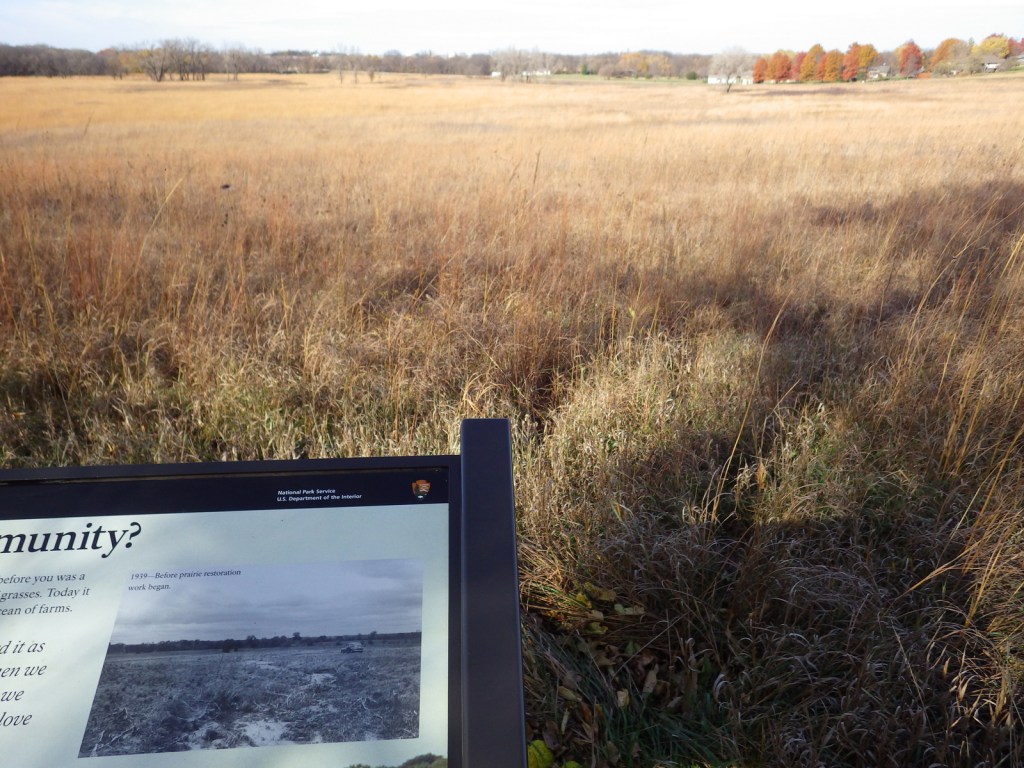
Bison roam this restored grassland in the hills of eastern Kansas

Harpers Ferry National Historical Park

Overview

Robert Harper started ferrying folks across the Potomac River at this site in 1747.  It had a strategic location at the confluence of the Shenandoah and Potomac Rivers where the point of what is now the state of West Virginia meets the border of Maryland and Virginia.  Harpers Ferry is most famous for the 1859 raid led by abolitionist John Brown of Kansas in attempt to seize the federal armory to incite a slave rebellion.  His trial and execution for treason helped foment the Civil War, during which conflict the town changed hands between the two sides an astounding eight times!

Highlights

Historic buildings, museums, Jefferson Rock, Appalachian National Scenic Trail

Must-Do Activity

A portion of the town today is run as a series of museums by the National Park Service (NPS), though other parts remain open for business as restaurants, shops, and inns.  Parking is limited in town, so the NPS runs a shuttle (free with parking fee) two miles from their visitor center.

Best Trail

You can hike into town on the 2,185-mile Appalachian Trail that cuts right through the buildings and over the footbridge across the Potomac River.

Instagram-worthy Photo

Jefferson Rock is located just up the hill from town, named for Thomas Jefferson who visited in 1783.

Peak Season

Summer

Hours

https://www.nps.gov/hafe/planyourvisit/hours.htm

Fees

$20 to park at NPS visitor center or free with America the Beautiful pass

Road Conditions

There is limited parking in town so it is easier to take a shuttle from the NPS visitor center.

Camping

There are multiple private campgrounds in the area, as well as Maryland’s Gambrill State Park.

Related Sites

Shenandoah National Park (Virginia)

Fort Scott National Historic Site (Kansas)

New River Gorge National Park and Preserve (West Virginia)

Explore More – Which famous member of the Corps of Discovery visited the national armory in Harpers Ferry in 1803 before heading to the Pacific Ocean?

We are a participant in the Amazon Services LLC Associates Program, an affiliate advertising program designed to provide a means for us to earn fees by linking to Amazon.com and affiliated sites.

Top 10 National Parks for Social Distancing

With international travel limited in 2020, many Americans are looking to vacation this summer in the country’s amazing National Parks.  The best-known parks often concentrate people at a single attraction with crowded overlooks, so we chose 10 less busy National Parks where it is easy practice social distancing and explore at your own pace, but are also not too hot in the summer (sorry, Death Valley).  For ideas of how to avoid large groups even at the busiest parks, check out our travel guidebook to all 62 National Parks (available on Amazon).

Next week we will choose our Top 10 sites for social distancing from the other 357 National Park Service units (click here to see all our Top 10 lists).

10. White Sands National Park (New Mexico)

Bring your snow sleds and find a dune to play on at America’s newest National Park

9. Great Basin National Park (Nevada)

Cave tours may not be an option, but there are many trails in this seldom-visited mountain range

8. Badlands National Park (South Dakota)

You do not even need a trail to explore Conata Basin and other portions of this park filled with wildlife

7. Sequoia National Park (California)

Avoid the crowds at the General Sherman tree and instead wander trails through the Giant Forest

6. Voyageurs National Park (Minnesota)

You will need a boat to explore these beautiful lakes on the Canadian border

5. Congaree National Park (South Carolina)

This park has 20 miles of forested trails and a creek for canoeing (but prepare for bugs)

4. Theodore Roosevelt National Park (North Dakota)

You may see more bison than people on two scenic drives and several long trails

3. Great Sand Dunes National Park and Preserve (Colorado)

There are no official trails up this sand mountain (plus, pick up a free permit to camp on the dunes)

2. Guadalupe Mountains National Park (Texas)

Skip the trail to the peak and instead hike Dog Canyon and the Permian Reef Geology Trail

…and finally our #1 National Park for social distancing:

1. Capitol Reef National Park (Utah)

The numerous trails and canyons have encouraged us to return often to this isolated park

Honorable Mentions

Isle Royale National Park (Michigan)

Other than on the ferry or floatplane flight, there is plenty of room to explore this island

Everglades National Park (Florida)

Avoid the few trails and get into your canoe to experience the park (but prepare for bugs)

Gates of the Arctic National Park and Preserve (Alaska)

It should be easy to find space in this rarely visited park where the sun never sets in summer

We are a participant in the Amazon Services LLC Associates Program, an affiliate advertising program designed to provide a means for us to earn fees by linking to Amazon.com and affiliated sites.