Tag Archives: museum

Maggie L. Walker National Historic Site

Overview

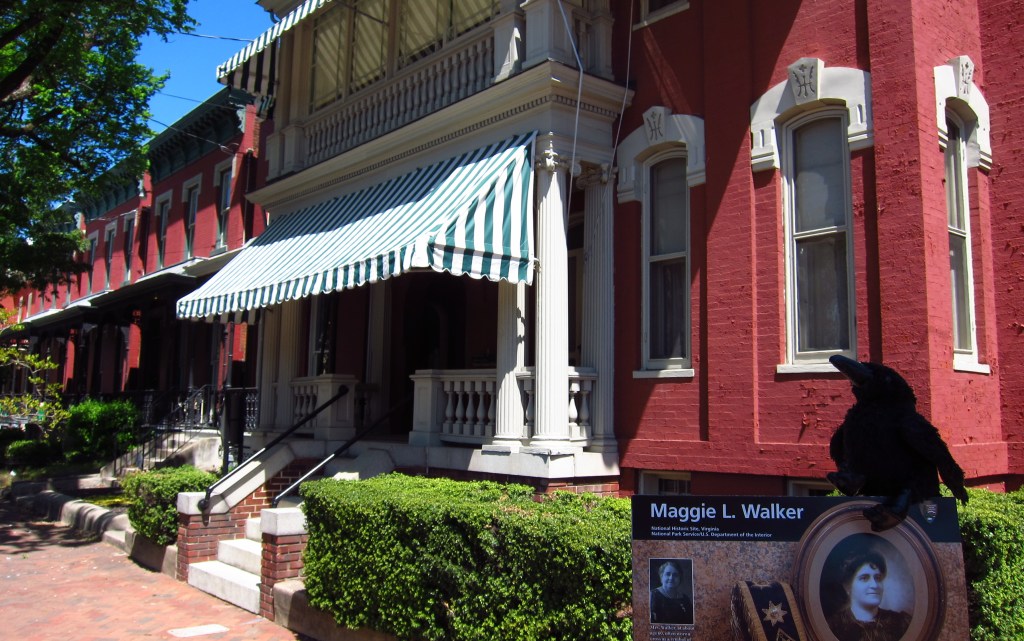
If you visit Richmond National Battlefield Park in Virginia, do not miss the other National Park Service (NPS) site in that city.  Maggie L. Walker was an African American philanthropist that started the St. Luke Penny Savings Bank in 1902 and was the only female bank president in the U.S. at the time.  As a member of the Independent Order of St. Luke since age 14, she also helped establish a newspaper and department store to help the local African American community.
Highlights

Museum, film, house tour, Jackson Ward National Historic Landmark District

Must-Do Activity

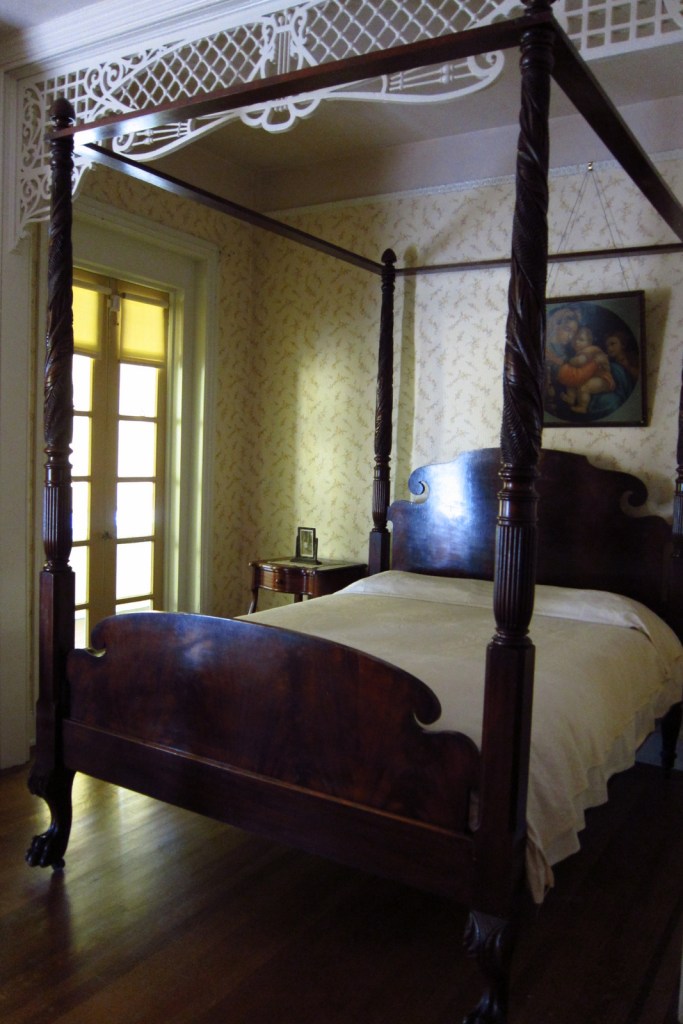
The 1930s-era home of this Civil Rights advocate can only be entered on an NPS ranger guided tour.  Walker lived in the oft-expanded, 28-room house from 1904 until her death thirty years later, and almost every piece of furniture in the house is original.  The NPS visitor center at 600 N 2nd Street is very small, but they do show a short film inside the tiny museum, which provides a good introduction before the tour.

Best Trail

None

Instagram-worthy Photo

The master bathroom includes a bidet, which is not something we have seen on any of the other NPS house tours we have taken (and we have been on a lot!).

Peak Season

Summer

Hours

https://www.nps.gov/mawa/planyourvisit/hours.htm

Fees

None

Road Conditions

Street parking is required as there is not a designated lot.

Camping

Pocahontas State Park and Forest offers a campground with running water just outside Richmond, Virginia.

Related Sites

Richmond National Battlefield Park (Virginia)

Mary McLeod Bethune Council House National Historic Site (District of Columbia)

Fort Monroe National Monument (Virginia)
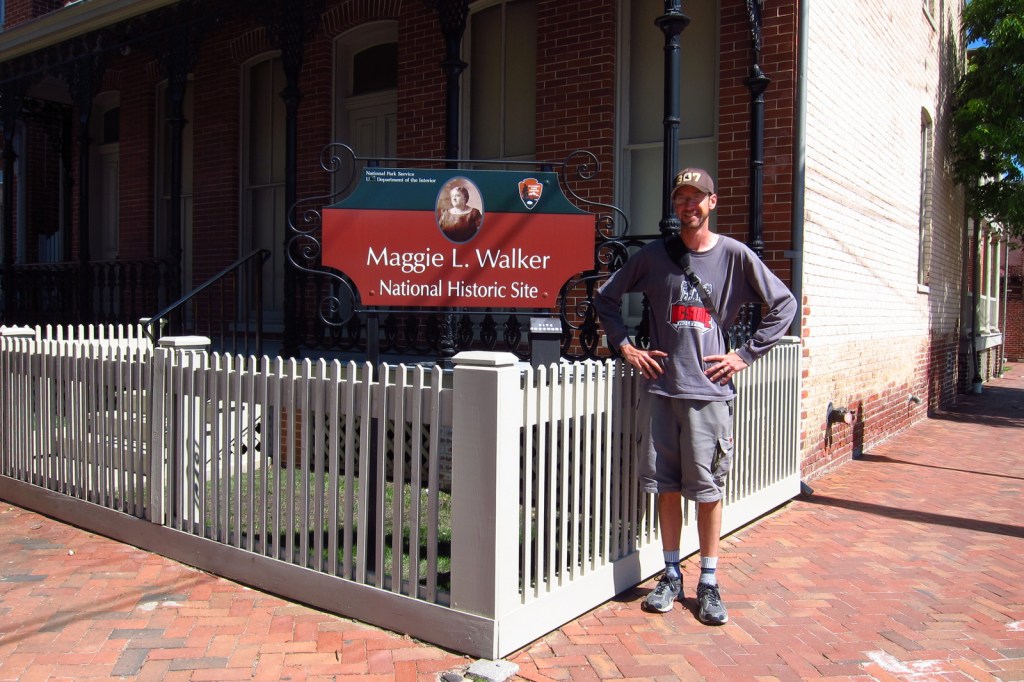
Explore More – The Walker family owned the house until the NPS took ownership of the 1.25-acre property in what year?

Tuskegee Institute National Historic Site

Overview

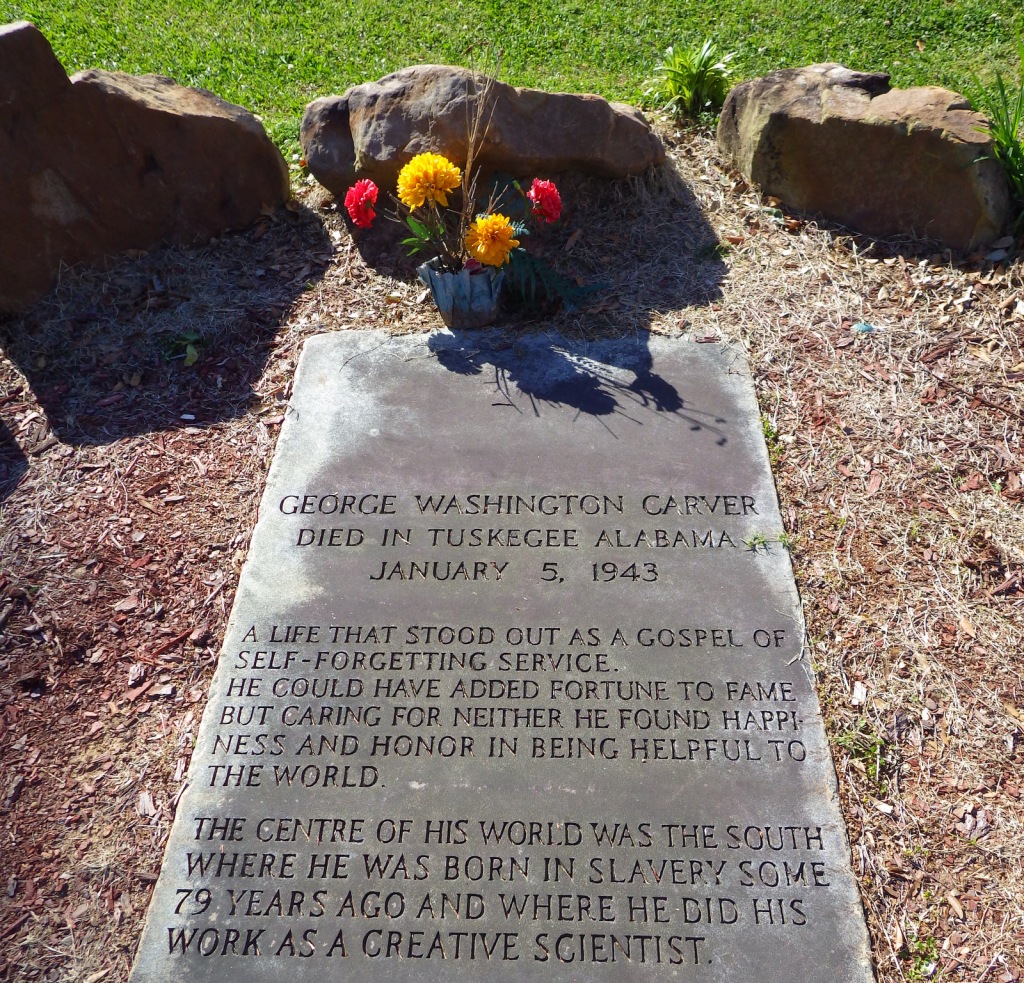
This historic college for African Americans is also the final resting place for pioneering staff members Booker T. Washington and George Washington Carver.  In 1881, a 25-year-old Washington moved to an abandoned plantation in Alabama to found the Tuskegee Normal and Industrial Institute with a $2,000 appropriation from the state.  From its initial enrollment of 30 students, Tuskegee has grown and continues to be an active and prominent university today.

Highlights

Historic campus, George Washington Carver Museum, Tuskegee Chapel, The Oaks

Must-Do Activity

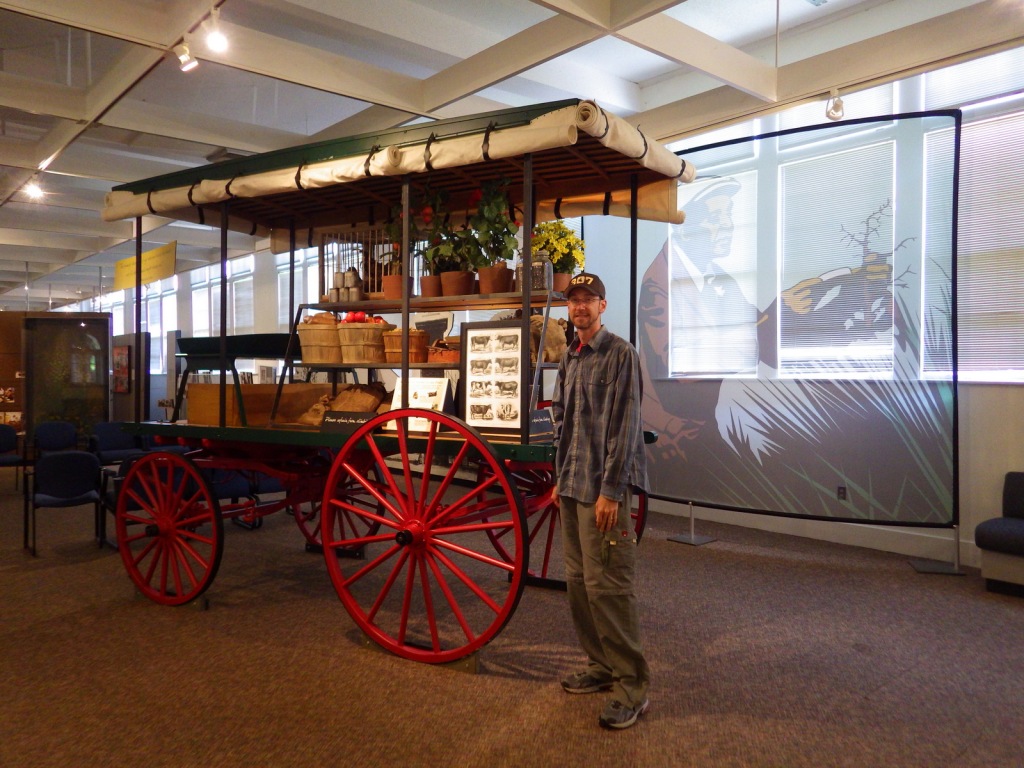
Since only eight of the 58 acres dedicated to this National Historic Site are owned by the National Park Service (NPS) on this active college campus, it behooves you to call ahead to schedule your visit.  Guided tours are available of the university and The Oaks, the historic Washington family home that was built by students.  At least make sure the excellent George Washington Carver Museum is open when you visit.  At the beginning of World War II, the school was selected to train African-American pilots, which is detailed at the nearby Tuskegee Airmen National Historic Site, also managed by the NPS.

Best Trail

None

Instagram-worthy Photo

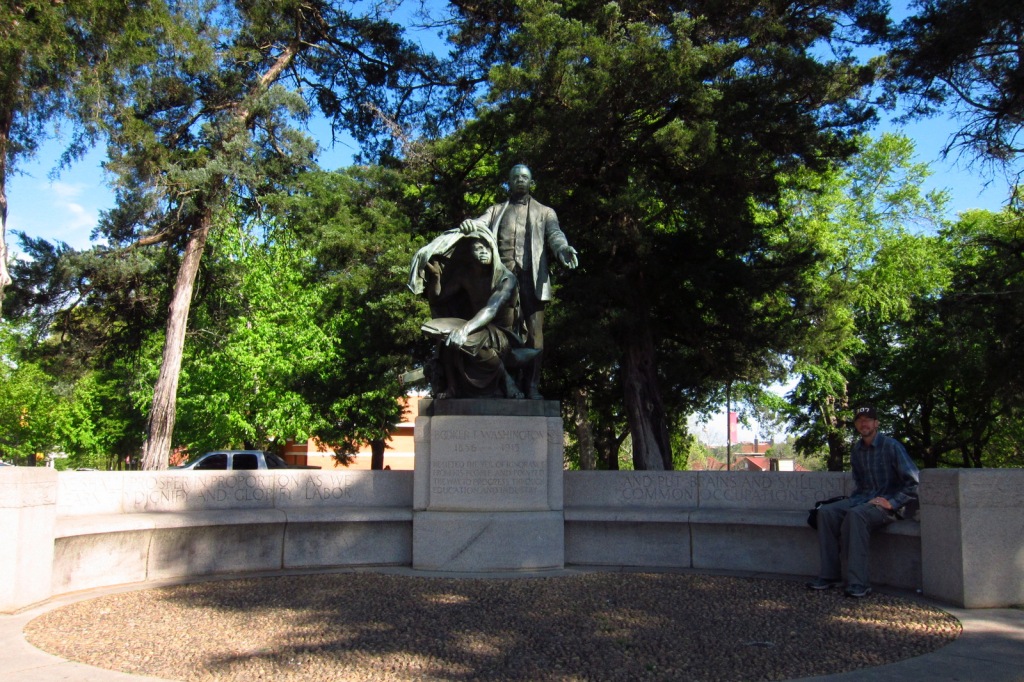
The sculpture of Booker T. Washington lifting the veil of ignorance from a slave was completed by Charles Keck in 1922.

Peak Season

Spring and fall

Hours

https://www.nps.gov/tuin/planyourvisit/hours.htm

Fees

None

Road Conditions

All roads are paved, but there is limited parking on campus for tourists.

Camping

Chewacla State Park is located northeast of town and primitive camping is allowed in Tuskegee National Forest (the smallest U.S. National Forest at 11,252 acres).

Related Sites

Booker T. Washington National Monument (Virginia)

George Washington Carver National Monument (Missouri)

Tuskegee Airmen National Historic Site (Alabama)

Explore More – How many bricks were made and laid by Tuskegee students to build the original chapel in 1896-98?
African Burial Ground National Monument

Overview

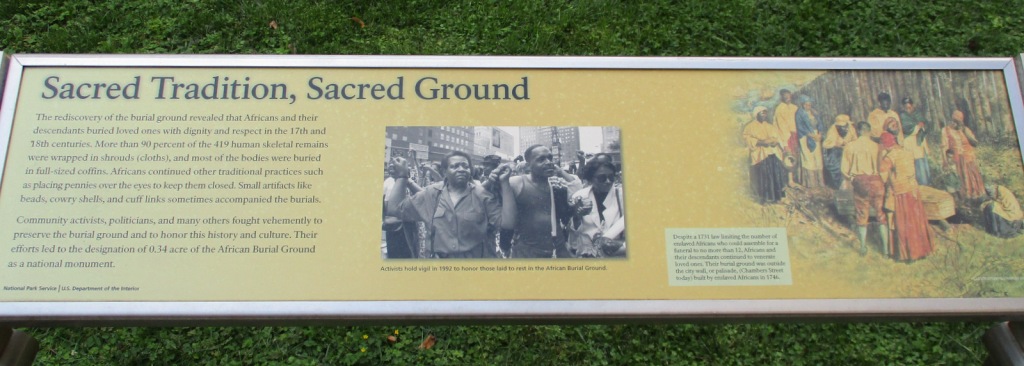
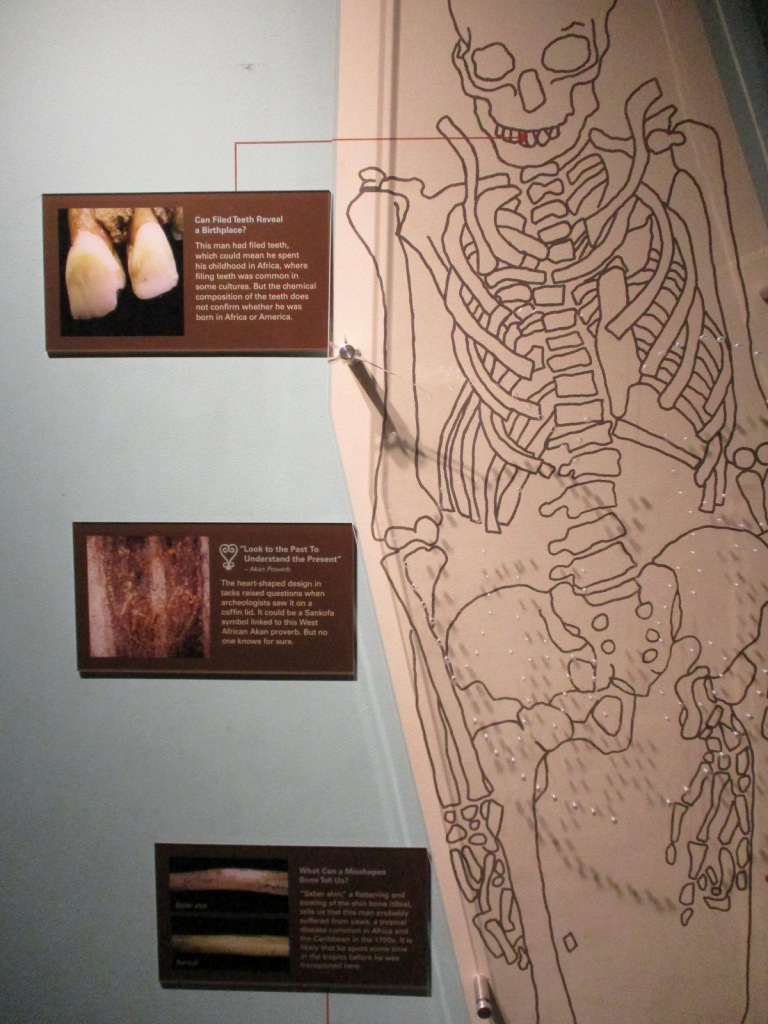
When excavating a federal office building in New York City in 1991, construction workers came upon a massive cemetery forgotten since it closed in 1794.  Archaeologists eventually found the remains of 419 bodies from a time when Africans were not allowed to be buried inside the walls of the Dutch city of New Amsterdam.  There are believed to be about 15,000 people buried in the original six-acre cemetery.

Highlights

Museum, film, Circle of the Diaspora, Ancestral Libation Chamber

Must-Do Activity

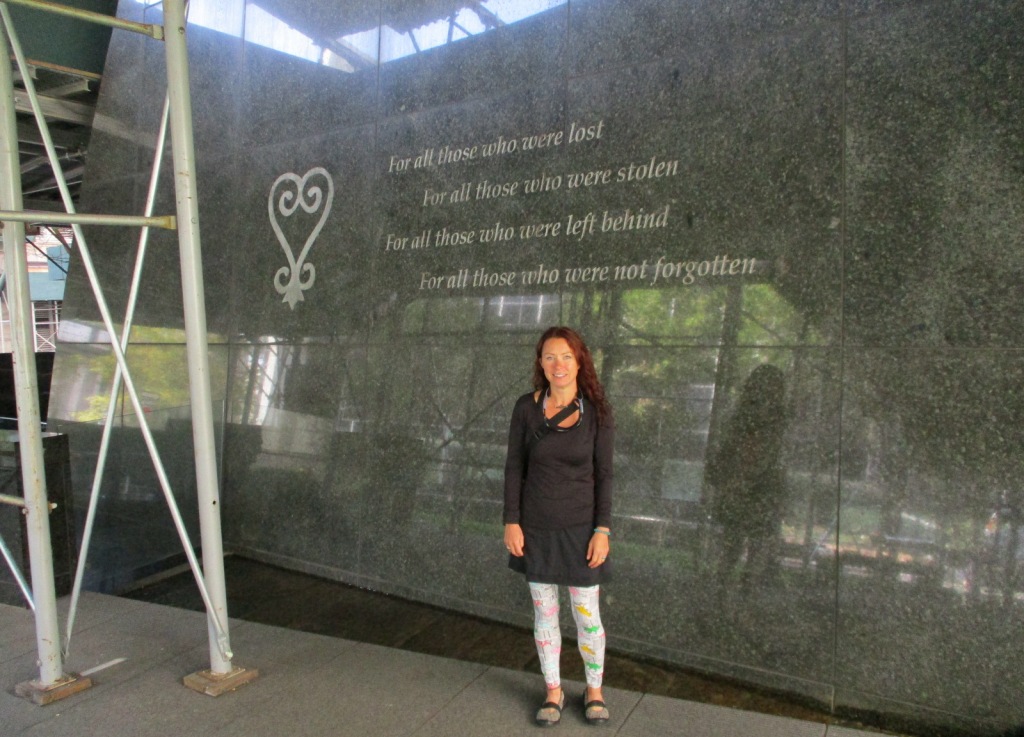
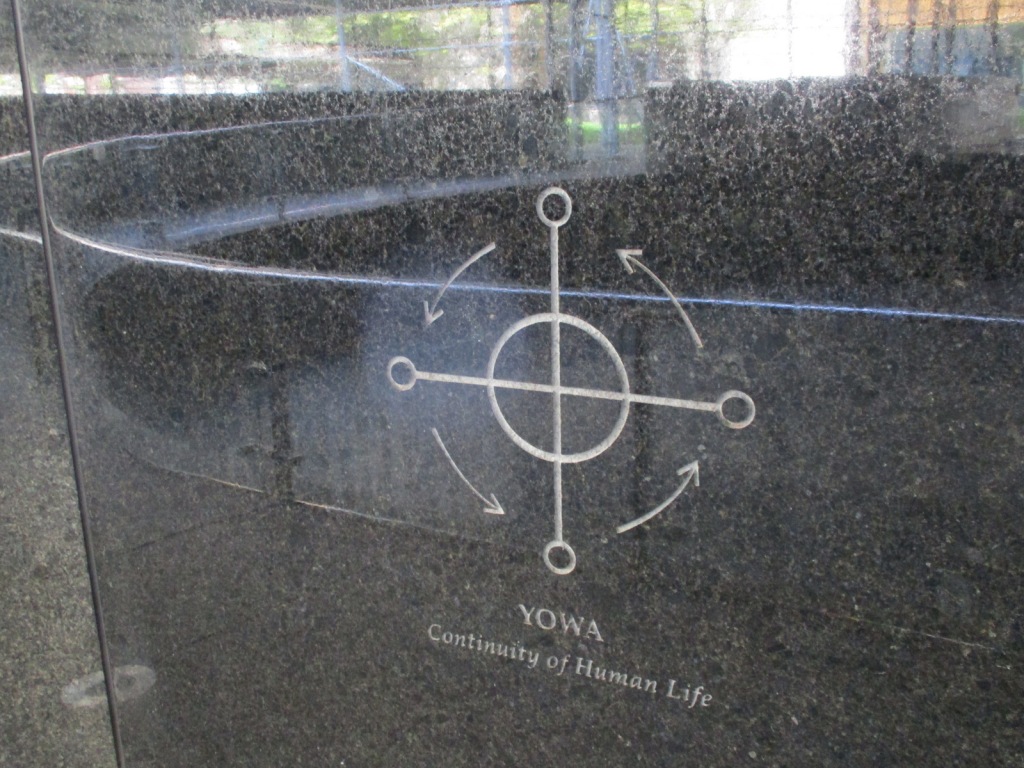
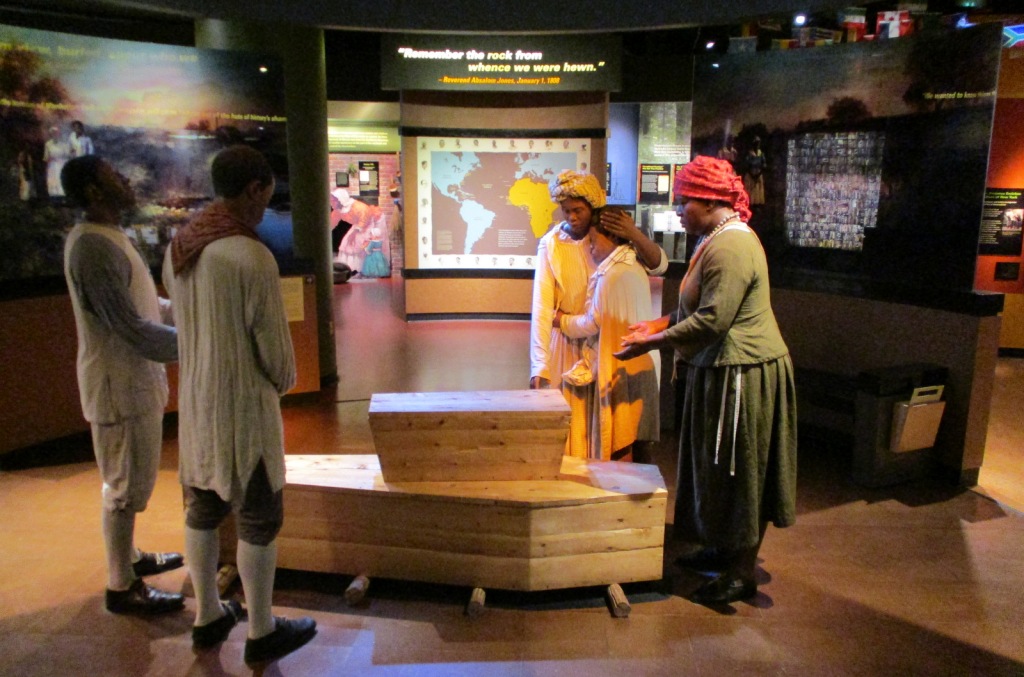
After passing through security, check out the National Park Service (NPS) visitor center that opened in 2010.  It has interactive exhibits about the thousands of captive and freed Africans that lived in the city in the eighteenth century.  Outside, a memorial made of Verde Fontaine green granite from Africa was completed in 2007 with the 24-foot high Ancestral Libation Chamber symbolizing the depth at which the bodies were discovered.  Nearby the 419 bodies were ceremonially reinterred in 2003.  Call ahead to schedule your place on an NPS ranger-led tour of the site.

Best Trail

None

Instagram-worthy Photo

The symbolic “Door of Return” is part of the outdoor memorial, which was entirely covered by scaffolding to protect it from a construction project during our visit in 2019.

Peak Season

Summer

Hours

https://www.nps.gov/afbg/planyourvisit/hours.htm

Fees

None

Road Conditions

Take public transportation!

Camping

Check out our blog post on Gateway National Recreation Area for information on camping in the New York City area.

Related Sites

Saint Paul’s Church National Historic Site (New York)

Stonewall National Monument (New York)

Boston African American National Historic Site (Massachusetts)

Explore More – What does the Sankofa (a West African heart-shaped symbol) mean?

George Washington Carver National Monument

Overview

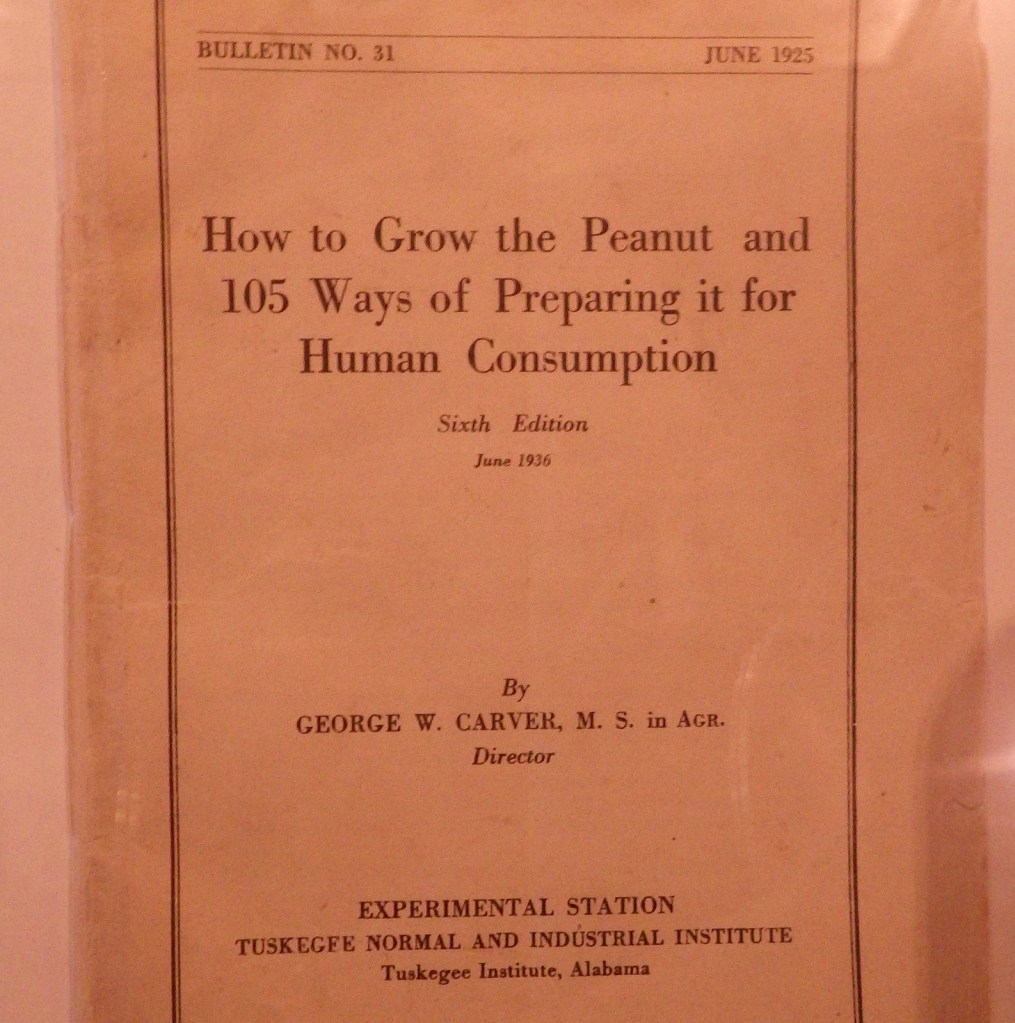
In southwestern Missouri is 210-acre George Washington Carver National Monument where the artist and inventor was born into slavery.  Near the end of the Civil War, raiders captured he and his mother (who was never seen again), but he was returned to his older brother and they were both raised by the Carver family.  He went on to earn a master’s degree in botany from Iowa State University in 1896 and work at Tuskegee Institute in Alabama for 47 years.  His most influential legacy is arguably his outreach work marketing peanut and soy plants, helping to turn them into the widespread agricultural products they are today.

Highlights

Museum, films, bronze sculptures, 1881 Moses Carver House, Williams Pond

Must-Do Activity

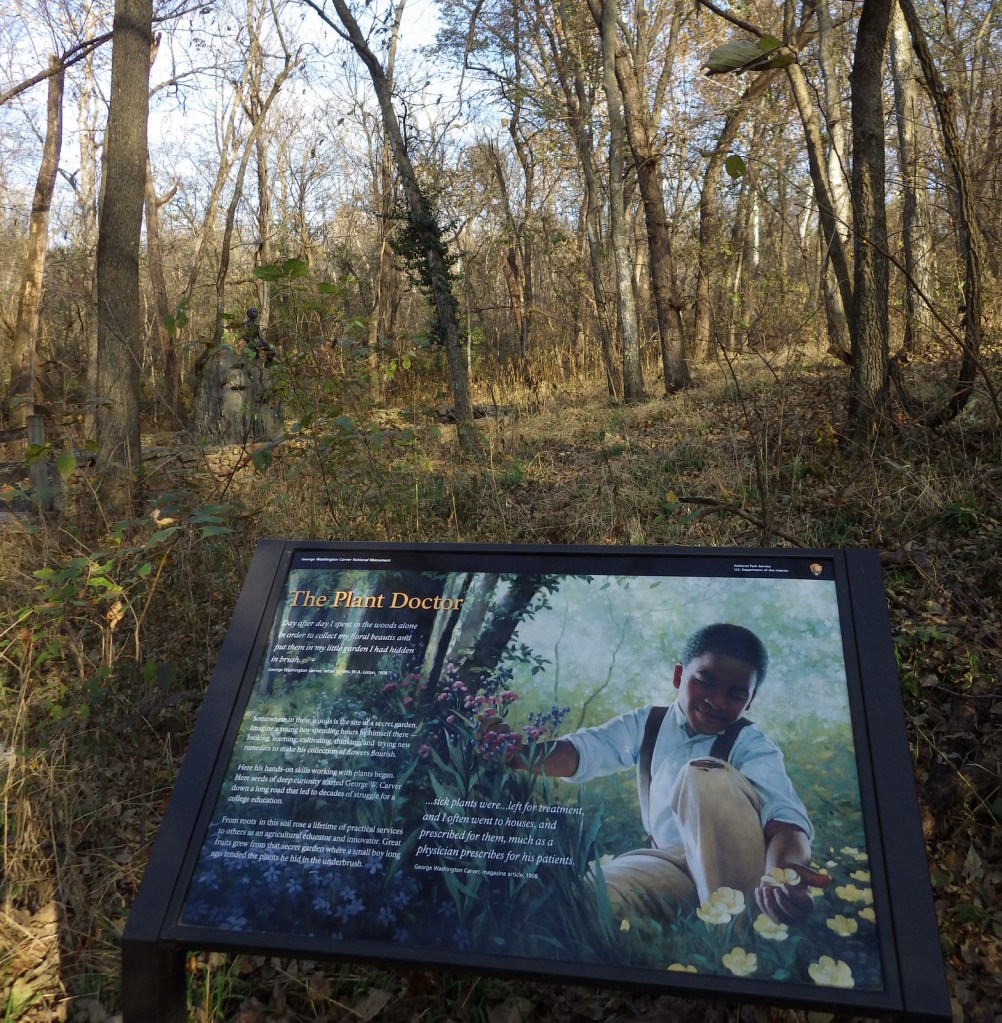
The National Monument has an excellent museum with interactive exhibits and examples of Carver’s paintings.  A self-guided 0.75-mile trail passes several bronze sculptures and interpretive signs.  It leads through the forest to Williams Pond and a house that dates back to 1881.  George Washington Carver’s spirit lives on at this site, inspiring future generations to great aspirations despite humble beginnings.

Best Trail

The self-guided 0.75-mile trail loops from the visitor center and is partially wheelchair accessible.

Instagram-worthy Photo

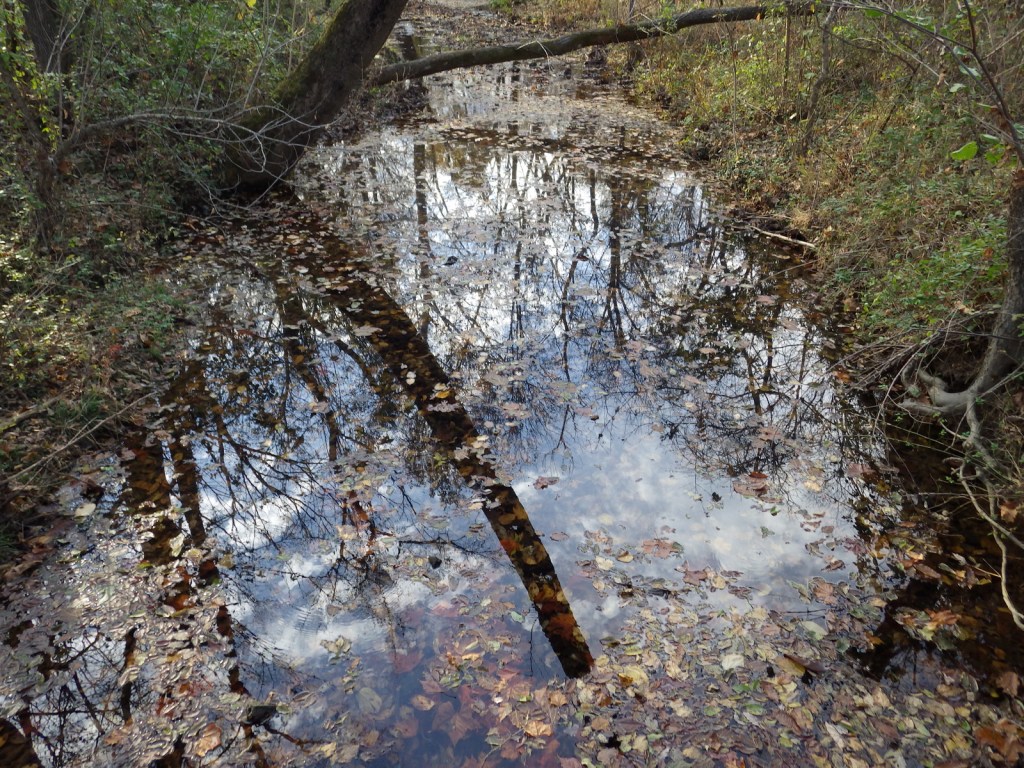
Williams Pond is a nice place to sit and contemplate what each of us can accomplish regardless of how we start.

Peak Season

Summer

Hours

https://www.nps.gov/gwca/planyourvisit/hours.htm

Fees

None

Road Conditions

All roads paved

Camping

There are private campgrounds around Joplin, Missouri and 50 miles away is Roaring River State Park.

Related Sites

Booker T. Washington National Monument (Virginia)

Tuskegee Institute National Historic Site (Alabama)

Wilson’s Creek National Battlefield (Missouri)

Explore More – When was the year the National Monument was dedicated, which was the same year Carver died?

Booker T. Washington National Monument

Overview

Booker T. Washington was born in 1856 on this small plantation farm in Hardy, Virginia and freed shortly after the Confederate army’s surrender at nearby Appomattox Court House.  He went on to earn an education and found the groundbreaking Tuskegee Institute in 1881.  Rather than dwelling on his horrible past, Washington was inspired to work hard and maintain an indefatigable spirit.  Later in life he wrote in his book Up From Slavery: “There was no period of my life that was devoted to play… From the time that I can remember anything, almost every day of my life has been occupied in some kind of labor.”

Highlights

Museum, film, reconstructed buildings, farm animals, Jack-O-Lantern Branch Trail

Must-Do Activity

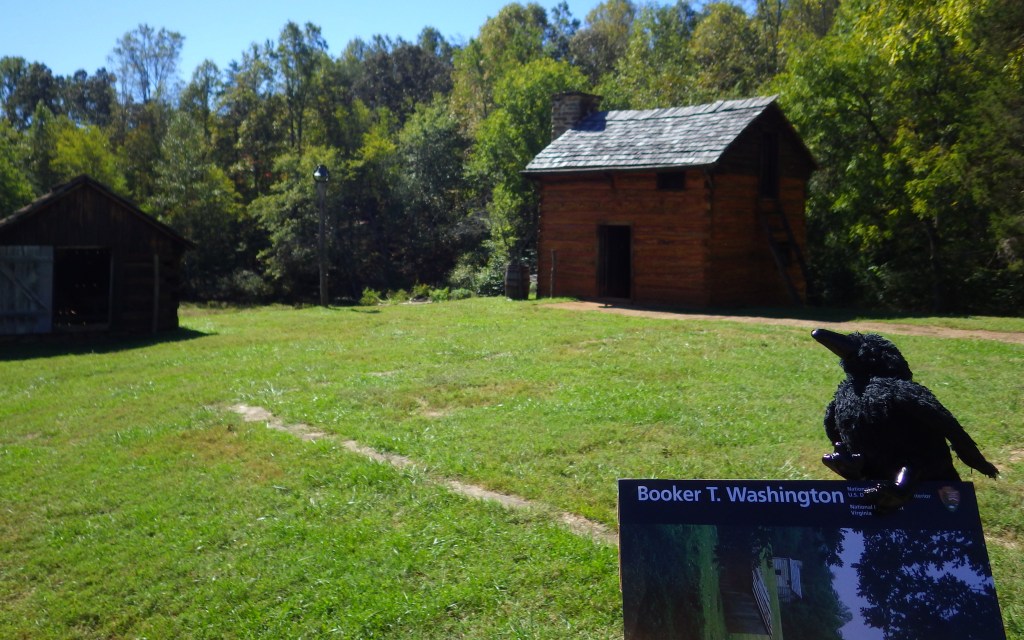
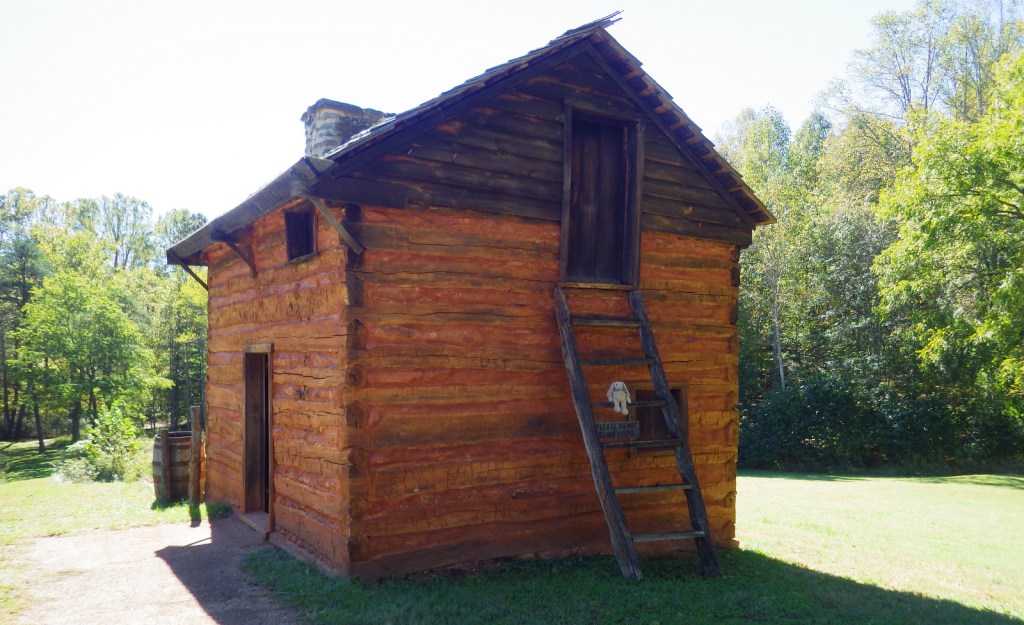
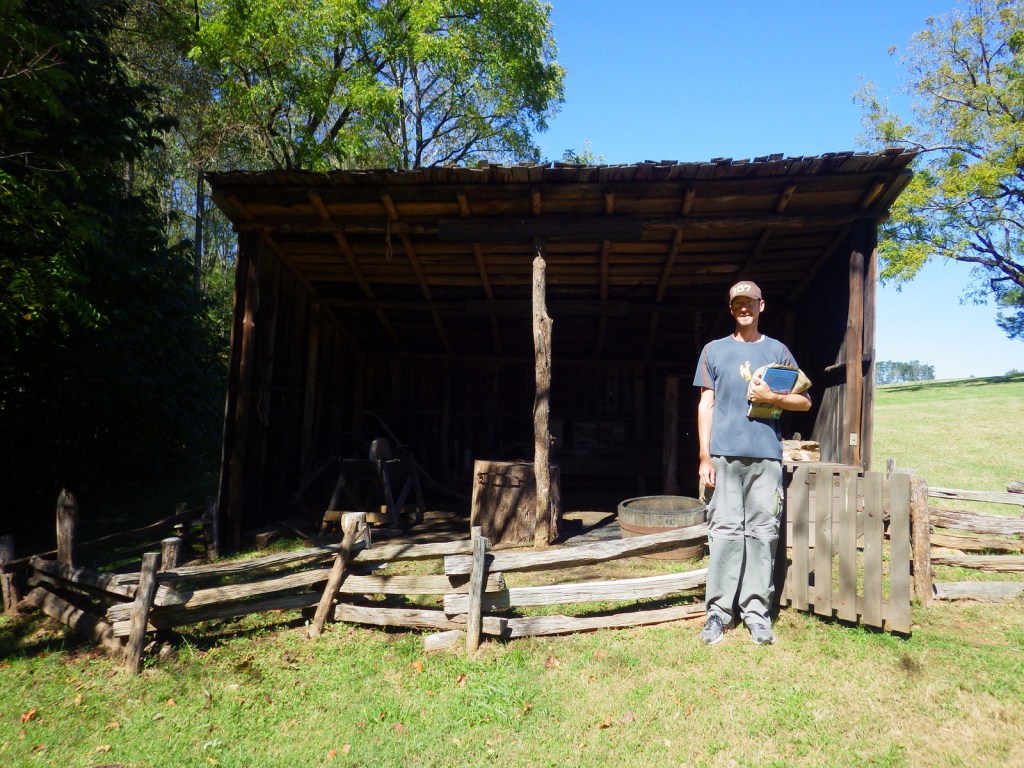
A bronze bust of Booker T. Washington is the first thing visitors see when they approach the National Monument.  The National Park Service (NPS) has reconstructed several buildings on the farm in a style consistent with the 1850s, as seen on the quarter-mile self-guided trail.  The NPS keeps livestock similar to that which was here at the time, including pigs, cattle, chickens, turkeys, and ducks.  This site demonstrates that antebellum life in the South was not all aristocrats on large plantations. 

Best Trail

The Jack-O-Lantern Branch Trail winds 1.5 miles through the forest and fields.

Instagram-worthy Photo

None of the original buildings survive, but several have been reconstructed, including the birthplace cabin of Booker T. Washington.

Peak Season

Summer

Hours

https://www.nps.gov/bowa/planyourvisit/hours.htm

Fees

None

Road Conditions

All roads paved

Camping

Roanoke Mountain Campground is run by the NPS on the Blue Ridge Parkway 19 miles northwest of the monument.

Related Sites

Tuskegee Institute National Historic Site (Alabama)

George Washington Carver National Monument (Missouri)

Shenandoah National Park (Virginia)

Explore More – Washington graduated from what school for ex-slaves in 1875, which inspired him to establish Tuskegee Institute in Alabama?