Tag Archives: history

Manti National Forest

Manti National Forest

Utah

Managed by U.S. Forest Service, Intermountain Region

735,358 acres

Website: https://www.fs.usda.gov/r04/manti-lasal

Overview

Manti Forest Reserve dates back to 1903, becoming a National Forest four years later and expanded in 1915 with the addition of Nebo National Forest.  Despite being separated by more than 100 miles, Manti and La Sal National Forests were combined in 1949, an early example of improved bureaucratic efficiency by the Forest Service.  Due to this longstanding association, it can be difficult to find information for the more northerly Manti National Forest alone.  Manti National Forest covers much of the Wasatch Plateau and also manages the busy Maple Canyon Trail system (technically in Uinta National Forest).

Know someone who loves the National Forests? Gift them our travel guidebook Out in the Woods so they can learn more about this and the 154 other National Forests.

Highlights

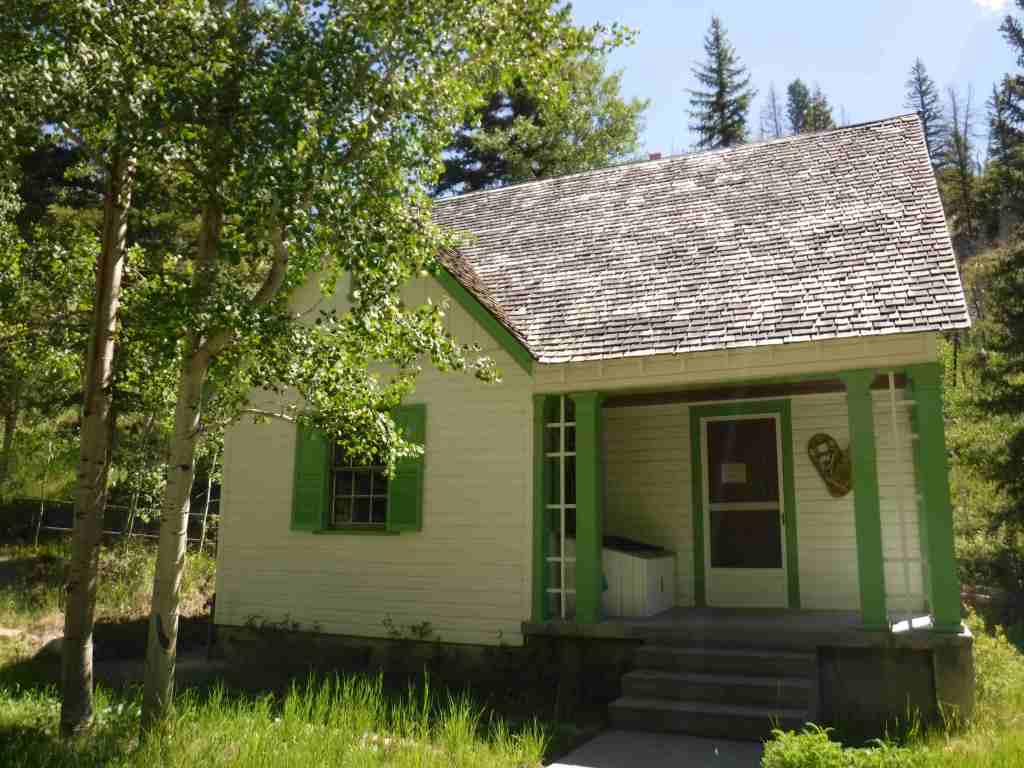
Energy Loop, Skyline, Eccles Canyon, Drive Scenic Backway, Stuart Guard Station National Historic Site, Electric Lake, Nelson Mountain, Maple Canyon, Fish Creek National Recreation Trail, Left Fork of Huntington Creek National Recreation Trail

Must-Do Activity

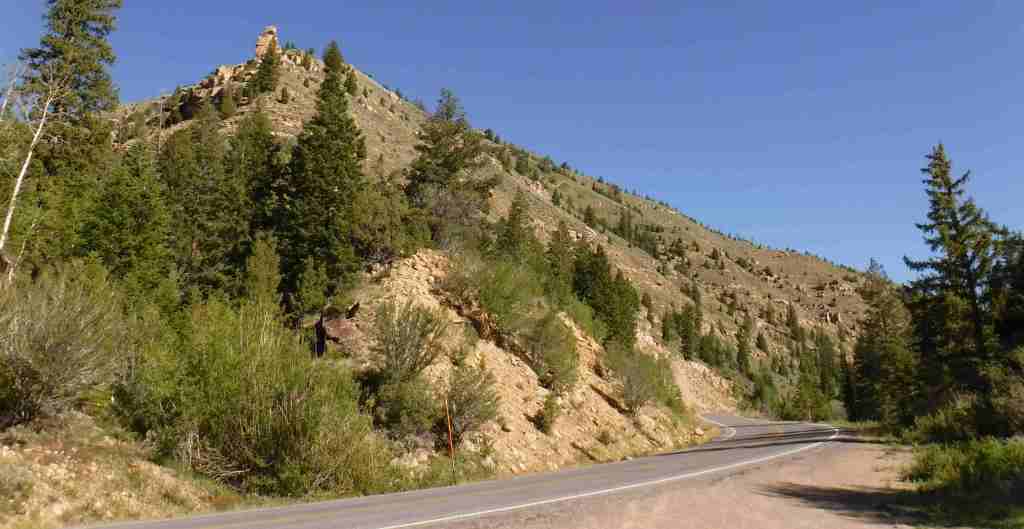
Many visitors to Manti National Forest drive the Energy Loop, named for Utah’s coal country, which partially follows the paved Huntington and Eccles Canyons Scenic Byway.  Campgrounds, historic sites, reservoirs, trails, and trout streams are all accessible along the 86-mile drive.  The more adventurous can take on the unpaved Skyline Drive Scenic Backway that climbs the Wasatch Plateau.  This 58-mile route has many side roads popular with ATV and OHV drivers, and it is open to snowmobiles in the winter. 

Best Trail

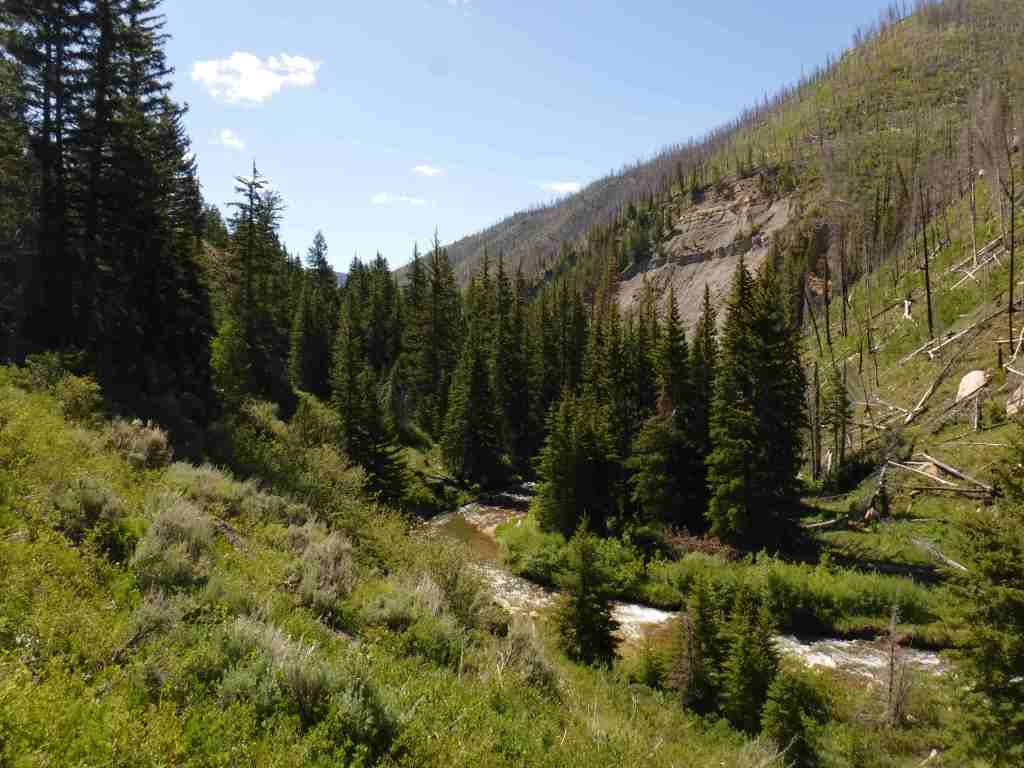
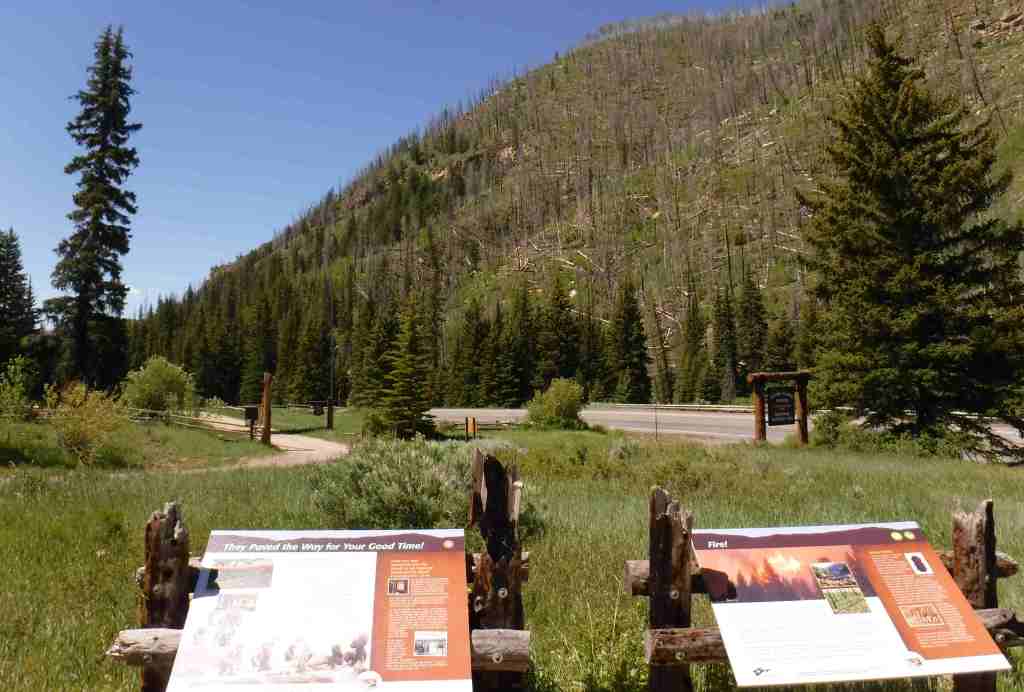
Easily accessible from the Energy Loop drive, the six-mile long Left Fork of Huntington Creek National Recreation Trail follows the canyon gaining 847 feet in elevation.  It can be completed one-way downhill from Miller Flat Trailhead by leaving a vehicle at Forks of Huntington Campground.  Despite a wildfire on the south canyon wall and subsequent erosion, the creek remains a good fishing spot, especially the lower half-mile that has interpretive signs on hydrology for children.  The trail can also be joined with Horse Canyon, Scad Valley, and Mill Canyon Trails to form longer loops, but a vehicle shuttle would still be necessary to avoid walking the highway.  Nearby, Fish Creek National Recreation Trail is ten miles long and open to travel by foot, horse, and bicycle.

Watchable Wildlife

The Wasatch Plateau rises from 5,000 to over 10,000 feet in elevation, and its vertical escarpments and subalpine lakes support a diversity of habitats.  Huntington Creek is one of the premiere fly-fishing streams in Utah.  Joe’s Valley is a 1,200-acre reservoir that offers fishing for splake, and allows motor boats (as does Electric Lake).  Large mammals found here include black bears, mountain lions, bobcats, coyotes, elk, mule deer, and pronghorns.  Birds of Manti National Forest include bald eagles, golden eagles, northern goshawks, turkey vultures, wild turkeys, common ravens, and various species of owls and woodpeckers. 

Photographic Opportunity

Fremont cottonwood trees are named for explorer John C. Fremont and this riparian species is an indicator of permanent subsurface water, with trunks that can reach more than four feet in diameter.

Peak Season

Spring and fall

Fees

None

Road Conditions

The Huntington and Eccles Canyons Scenic Byway is paved, but the Skyline Drive Scenic Backway is not.  Check the Forest Service website for updates on road conditions and closures. 

Camping

There are several designated campgrounds along Huntington and Eccles Canyons Scenic Byway, plus dispersed camping is allowed along most of the unpaved roads.  Maple Canyon Campground is a popular destination with online reservations available May through October.

Wilderness Areas

None

Related Sites

Fishlake National Forest (Utah)

La Sal National Forest (Utah)

Timpanogos Cave National Monument (Utah)

Nearest National Park

Capitol Reef

Conifer Tree Species

subalpine fir, white fir, Engelmann spruce, Douglas-fir, ponderosa pine, limber pine, Rocky Mountain juniper

Flowering Tree Species

Fremont cottonwood, quaking aspen, manzanita, sagebrush

Explore More – In 1849, Brigham Young sent 225 settlers to the San Pitch (now Sanpete) Valley; where did they get the name Manti?

Know someone who loves the National Forests? Gift them our travel guidebook Out in the Woods so they can learn more about this and the 154 other National Forests.

Vietnam Veterans Memorial

Vietnam Veterans Memorial

District of Columbia

Managed by National Park Service

Established 1982

2 acres

Website: nps.gov/vive

Overview

The Vietnam Veterans Memorial Fund was incorporated as a nonprofit charity in 1979 to build a monument listing all the names of those killed or missing during the Vietnam War.  It was originally the idea of Jan Scruggs, an infantry corporal, and it was important to the veterans that it not make a political statement about the controversial war in Southeast Asia.  Selected from 1,421 design entries, Maya Ying Lin intended her memorial to be a quiet, protected place for reflection.  The polished black marble she chose to inscribe the half-inch-tall names also reflects the surrounding trees and grass in Constitution Gardens adjacent to the National Mall.  The $7-million cost of the memorial was entirely funded by corporate and private donations, including those from 275,000 individual Americans.

Highlights

Memorial wall, Three Soldiers sculpture, Vietnam Women’s Memorial, In Memory plaque

Must-Do Activity

Located near the Lincoln Memorial, the walls of the Vietnam Veterans Memorial stretch 246.75 feet in length, inscribed with 58,256 names listed chronologically by date of casualty.  People come to make rubbings of their loved one’s name and often leave small items at its base.  Added nearby in 1984, a life-size bronze sculpture by Frederick Hart depicts three male soldiers beneath a 60-foot flagpole.  The In Memory plaque was added in 2004 to recognize the many men and women who served and later died from causes related to the war.

Best Trail

There is no trail here, but there is always plenty of walking done when visiting the many memorials on the National Mall.

Photographic Opportunity

Dedicated on November 11, 1993, the Vietnam Women’s Memorial is a bronze sculpture by Glenna Goodacre that depicts three women helping a fallen soldier.  There were also eight yellowwood trees planted to commemorate the eight servicewomen killed in action in Vietnam. 

Peak Season

Spring and fall

Hours

Open 24 hours

Fees

None

Road Conditions

Traffic can be slow and parking expensive in Washington, D.C., so consider taking the Metro to the National Mall

Camping

There are National Park Service campgrounds in Maryland’s Greenbelt Park and Virginia’s Prince William Forest Park.

Related Sites

Korean War Veterans Memorial (District of Columbia)

World War II Memorial (District of Columbia)

World War I Memorial (District of Columbia)

Nearest National Park

Shenandoah

Explore More – When her design was selected in 1981, Maya Ying Lin was a 21-year-old student from Athens, Ohio; where was she attending college at the time?

Natchez Trace Parkway

Natchez Trace Parkway

Mississippi-Alabama-Tennessee

Managed by National Park Service

Established 1938

52,302 acres

Website: nps.gov/natr

Overview

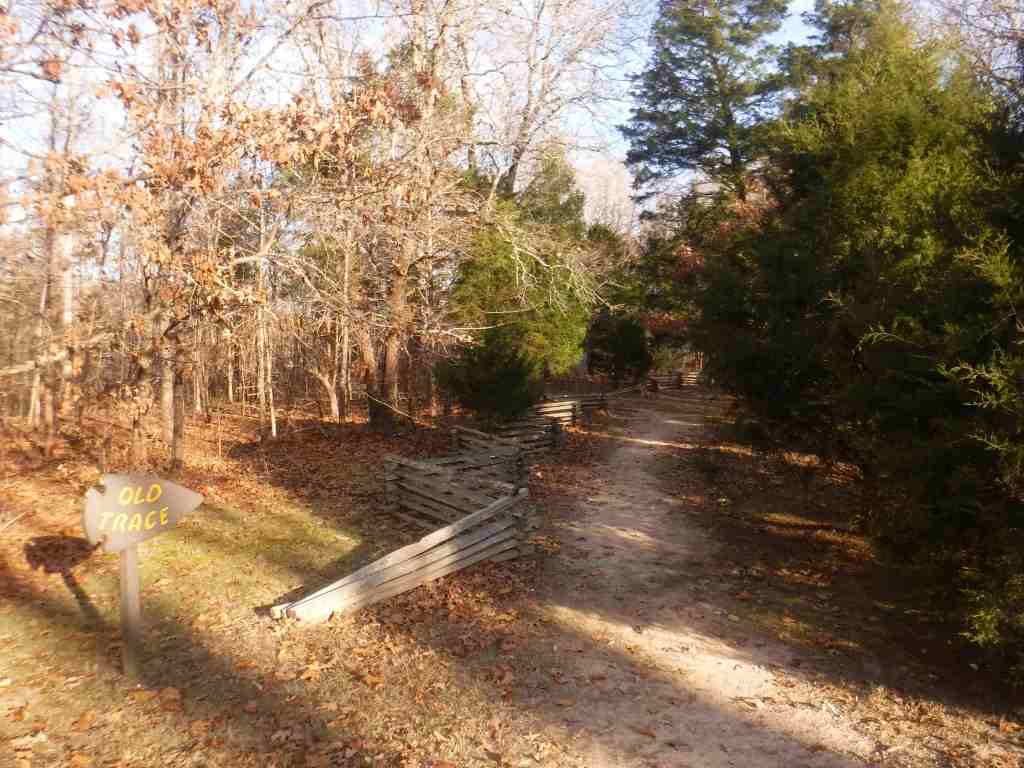
The National Park Service (NPS) administers the Natchez Trace Parkway, a two-lane All-American Road that extends 444 miles from Natchez, Mississippi to Nashville, Tennessee.  The trace started as a game trail that was utilized as an American Indian footpath.  Some of the mound builder sites protected here were inhabited when Hernando de Soto led the first Europeans into this area in 1540.  The Natchez Trace was heavily used in the 1800s by “Kaintuck” flatboatmen returning from New Orleans who left the Mississippi River from Natchez, Mississippi and continued on foot north to Kentucky and beyond.  Today you can still follow portions of the sunken trail worn down by travelers for centuries.  The parkway began as a Civilian Conservation Corps (CCC) project during the Great Depression and the final two segments were completed in 2005.

Highlights

Rocky Springs, Owens Creek Waterfall, Emerald Mound, Mount Locust, Chickasaw Village, Meriwether Lewis Monument and Gravesite, Cypress Swamp Walk, Witch Dance Horse Trail, Natchez Trace National Scenic Trail

Must-Do Activity

Near Tupelo, the Parkway Visitor Center at Milepost 266 is a must-do stop to learn the history of the trace, and it also serves as the NPS contact station for tiny Brices Cross Roads National Battlefield Site and Tupelo National Battlefield.  There are numerous roadside informational pullouts and trailheads along the route, so use the NPS app or pick up an official “unigrid” map.  You can easily spend days exploring, but at a minimum we recommend you check out Emerald Mound, Mount Locust, Cypress Swamp, and Meriwether Lewis Monument and Grave Site.

Best Trail

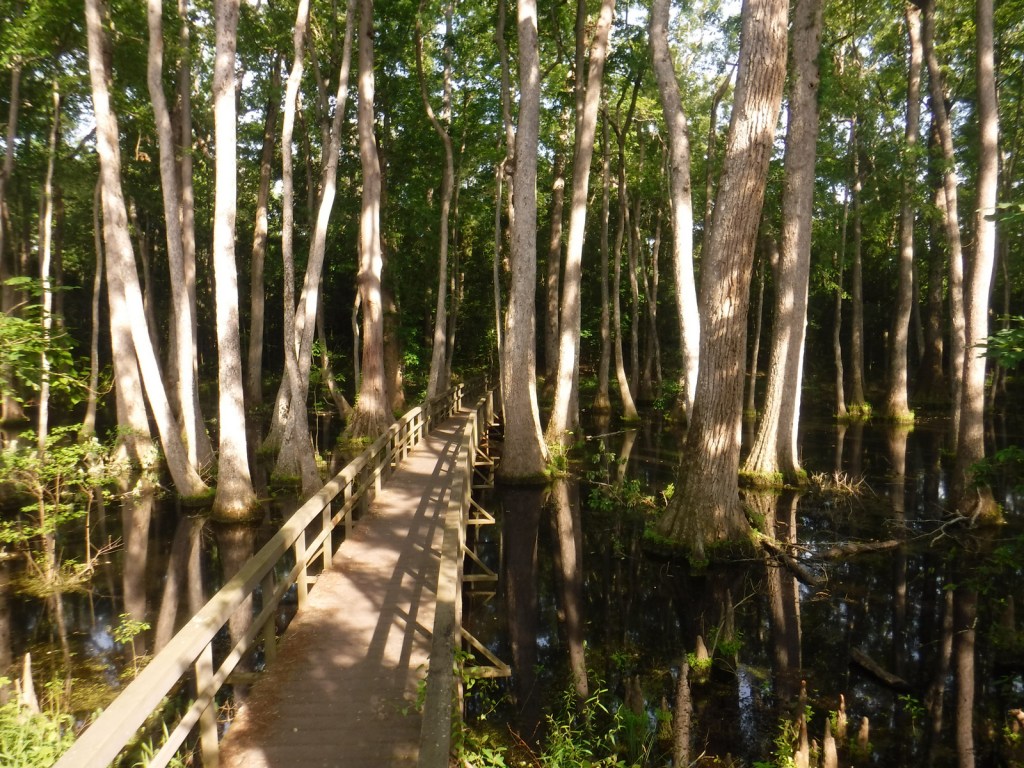
Our favorite trail is the Cypress Swamp Walk at Milepost 122, where a boardwalk crosses a scenic tupelo-baldcypress swamp.  The Natchez Trace National Scenic Trail (click here for our blog post) does not follow the entire 444-mile parkway, but exists in five segments totaling 67 miles in length.  There are also 15 miles of equestrian trails at Witch Dance (Milepost 233.2) in Tombigbee National Forest.

Photographic Opportunity

Not far from Natchez National Historical Park, Emerald Mound (a short detour at Milepost 10.3) is the second-largest American Indian ceremonial mound in the U.S.  It stands 35 feet tall and 770 by 435 feet at its base. 

Peak Season

Spring and fall

Hours

https://nps.gov/natr/planyourvisit/hours.htm

Fees

None

Road Conditions

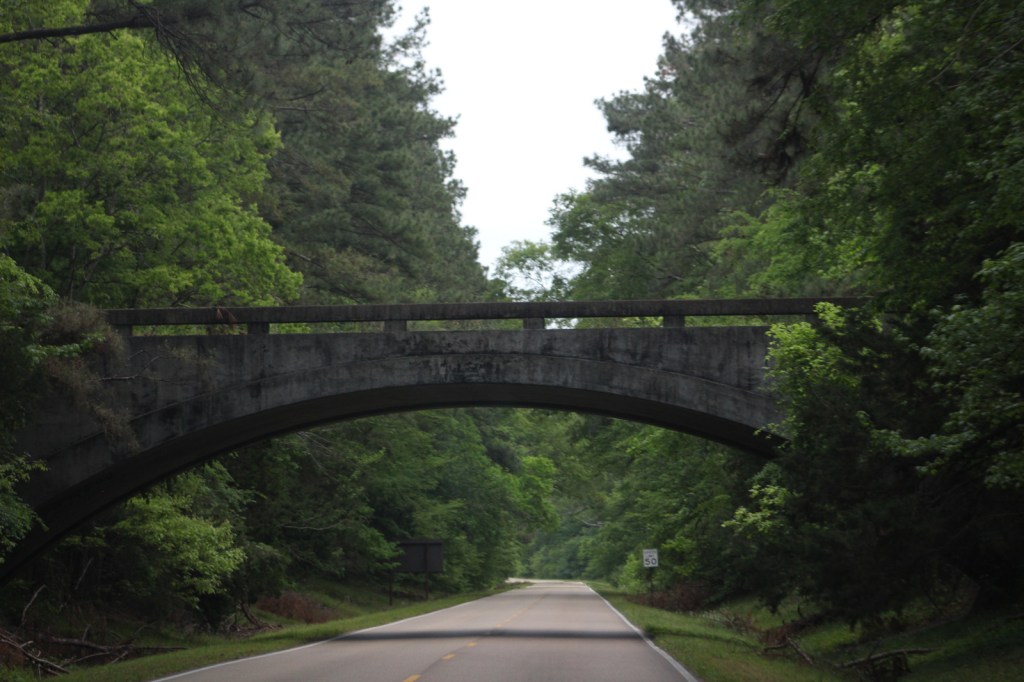
The entire 444-mile Natchez Trace Parkway is paved from Natchez, Mississippi to Nashville, Tennessee with commercial traffic prohibited and a maximum speed limit of 50 miles per hour.  There is a detour from Milepost 181 to 204 due to ongoing construction.  Watch for bicycles and white-tailed deer on the road.

Camping

There are three free NPS campgrounds (at Milepost 54, 193.1, and 385.9) along the route, as well as those in sites like Mississippi’s Tishomingo State Park.  The three NPS campgrounds have water and bathrooms (but no RV hookups), plus there are also five bike-only campsites along the route.  Jeff Busby Campground closed in June 2025 for repairs.

Related Sites

Natchez National Historical Park (Mississippi)

Tupelo National Battlefield (Mississippi)

Brices Cross Roads National Battlefield Site (Mississippi)

Vicksburg National Military Park (Mississippi)

Nearest National Park

Hot Springs

Explore More – When were Ackia Battleground National Monument and Meriwether Lewis National Monument disbanded and added to the Natchez Trace Parkway?

John Fitzgerald Kennedy National Historic Site

John Fitzgerald Kennedy National Historic Site

Massachusetts

Managed by National Park Service

Established 1967

0.09 acre

Website: nps.gov/jofi

Overview

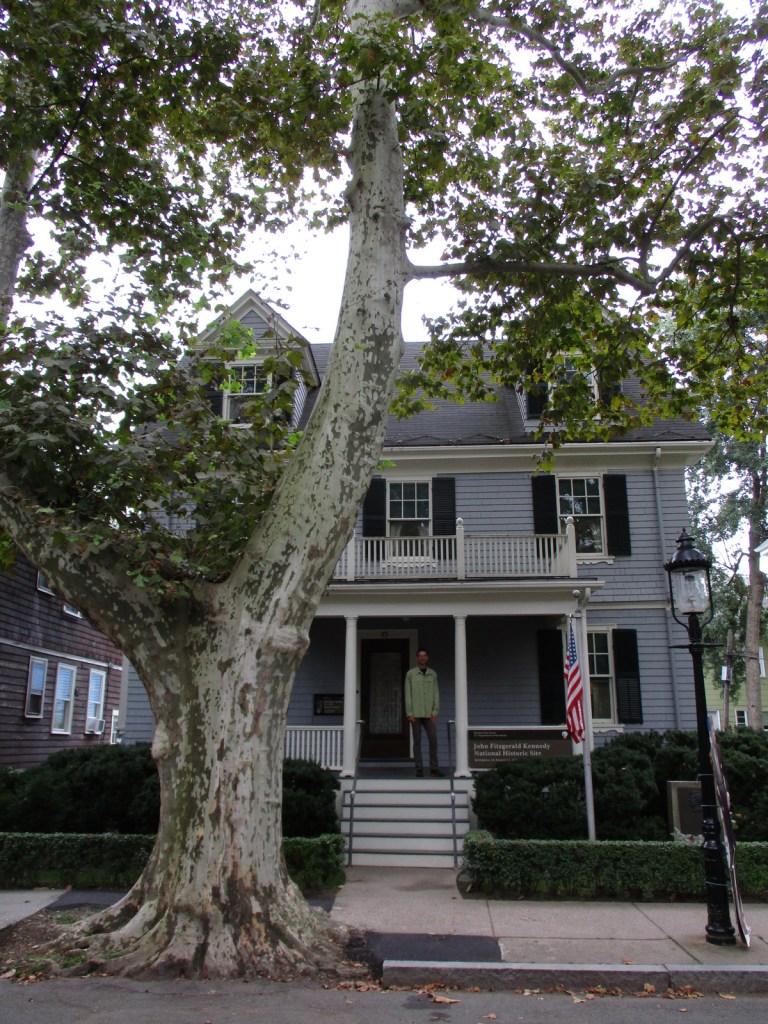
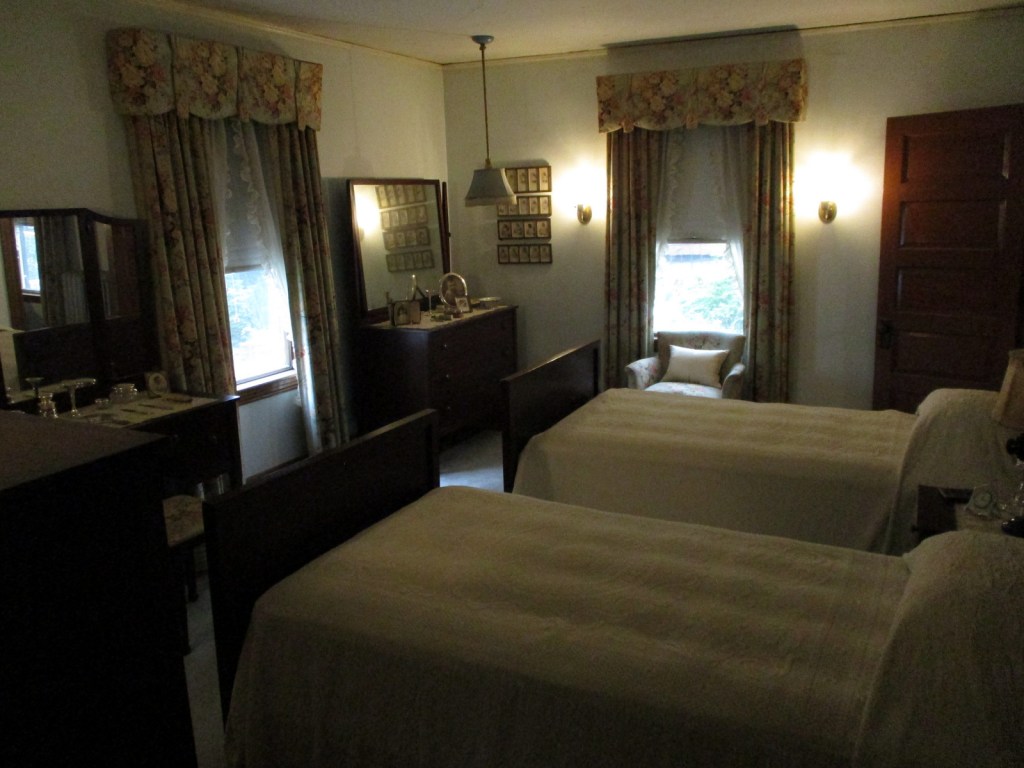
The Coolidge Corner neighborhood of Brookline (a suburb of Boston) contains the birthplace of John F. Kennedy (JFK), the 35th U.S. President and one of four born in Norfolk County.  The house was purchased by Joseph Patrick Kennedy, Sr. in 1914 before his marriage to Rose Elizabeth Fitzgerald.  Rose gave birth to John and his two sisters in the house’s upstairs bedroom before the expanding Irish Catholic family moved a few blocks away in 1920.  Following JFK’s assassination, the family repurchased the home and Rose restored it to its 1917 appearance then donated it to the National Park Service (NPS).

Highlights

Tour, film

Must-Do Activity

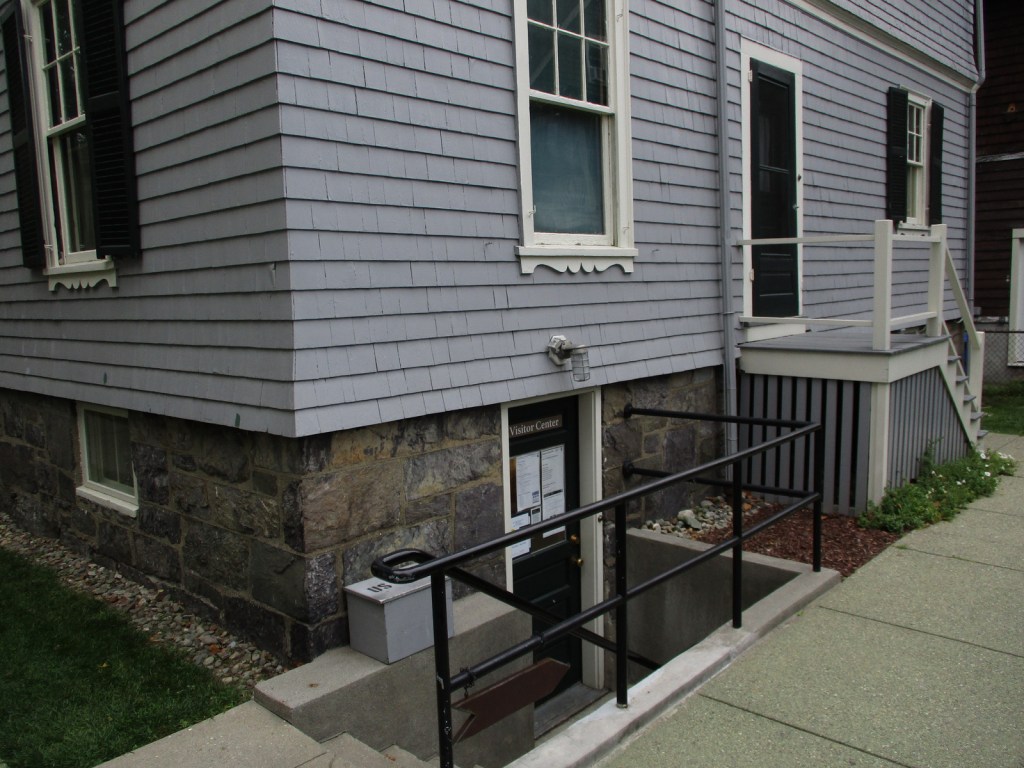
The entrance to the NPS site is through the back door into the basement where a film is shown.  On a free, 30-minute guided house tour, rangers show the room where JFK was born and the nursery containing a bassinet that held each of the nine Kennedy children.  About 19% of the furnishings in the home belonged to the family.  Self-guided tours inside the house are allowed during the lunch hour and the closing hour of the day with free audio wands available in a variety of languages.  The third story where the servants lived is off limits to visitors.  The John F. Kennedy Presidential Library and Museum is located about nine miles away.

Best Trail

You can walk around the neighborhood on your own or reserve a spot on a free 90-minute ranger-guided tour of Boston’s North End (beginning at 2:15 Thursday through Sunday), which includes a stop outside Rose Kennedy’s birthplace home.

Photographic Opportunity

You can drive by the Florida Ruffin Ridley School (formerly known as the Coolidge Corner School and the Edward M. Devotion School) that JFK attended.

Peak Season

Summer

Hours

https://www.nps.gov/jofi/planyourvisit/hours.htm

Fees

None

Road Conditions

The house is located at 83 Beals Street and there is free, two-hour parking available on the street in front of neighbors’ houses.  You can also take the train to Coolidge Corner and walk four blocks north up Harvard Street.

Camping

There is camping in Boston Harbor Islands National Recreation Area and outside the city at the famous Walden Pond.

Related Sites

Adams National Historical Park (Massachusetts)

Frederick Law Olmsted National Historic Site (Massachusetts)

Boston National Historical Park (Massachusetts)

Nearest National Park

Acadia

Explore More – Why did gangster Whitey Bulger toss a Molotov cocktail into the house on September 8, 1975?

Katahdin Woods and Waters National Monument

Katahdin Woods and Waters National Monument

Managed by National Park Service

Established 2016

87,564 acres

Website: nps.gov/kaww

Overview

Central Maine is an ecological transition zone between boreal and broadleaf deciduous forests that provides habitat for Canada lynx, black bear, moose, and beaver.  The waters are home to brook trout and Atlantic salmon, which are being reestablished with cooperation between government agencies and the Penobscot and other Wabanaki Nations.  The official northern terminus of the Appalachian National Scenic Trail, Katahdin means “greatest mountain” in the Penobscot language and is the name of the 5,269-foot peak outside National Monument boundaries in neighboring Baxter State Park.  This undeveloped landscape was purchased by the businesswoman Roxanne Quimby beginning in 2001 with the plan to turn it into a National Park.  It was donated to the National Park Service to mark the centennial of its creation and, despite some controversy, was established by President Barack Obama. 

Learn more about the other 137 National Monuments in our book Monumental America: Your Guide to All 138 National Monuments. It is now available for sale on Amazon.com.

Highlights

Tekαkαpimək Contact Station, Patten Lumbermen’s Museum, Katahdin Loop Road, Barnard Mountain, Stair Falls

Must-Do Activity

Opened in 2025 near the south entrance, the Tekαkαpimək Contact Station is seasonally open Friday through Sunday in a building inspired by Wabanaki culture.  The National Park Service no longer works out of the Patten Lumbermen’s Museum (but it is still worth a visit).  The 17-mile-long Katahdin Loop Road in the southern section of the National Monument is the most developed with picnic areas, vault toilets, and overlooks.  The unpaved loop road is accessed from the east by miles of unpaved road and has no access to Baxter State Park.  About 30 miles of the International Appalachian Trail runs through Katahdin Woods and Waters National Monument with lean-tos dispersed along the route.  Other than hiking, visitors enjoy stargazing, birding, leaf peeping in the fall, canoeing the East Branch of the Penobscot River with portages around its many waterfalls.  In the winter, there are opportunities for cross-country skiing, snowshoeing, and snowmobiling. 

Best Trail

From the Haskell Gate at the end of New River Road, it is 3.5 miles out-and-back to Stair Falls on the East Branch of the Penobscot River.  The first part follows an old road and the International Appalachian Trail before branching north at a signed junction to access the water and is also open to bicycles.  The only trailhead accessed from a paved road is the 13.6-mile Seboeis Riverside Trail that starts outside the National Monument off Grand Lake Road.     

Photographic Opportunity

One of the best views of Katahdin is from the top of Barnard Mountain, accessed by a two-mile one-way hike with 725 feet of elevation gain. 

Peak Season

Summer

Hours

https://www.nps.gov/kaww/planyourvisit/basicinfo.htm

Fees

None

Road Conditions

Every road within the National Monument is unpaved, so watch for potholes and logging trucks.  The north and south entrances have gates that close seasonally.

Camping

Reservations are required to car camp at designated sites within Katahdin Woods and Waters National Monument and can be made online at Recreation.gov

Related Sites

Appalachian National Scenic Trail (Maine to Georgia)

Saint Croix Island International Historic Site (Maine)

White Mountain National Forest (New Hampshire, Maine)

Nearest National Park

Acadia

Explore More – When did Katahdin Woods and Waters National Monument receive official recognition as a Dark Sky Sanctuary?

Learn more about the other 137 National Monuments in our book Monumental America: Your Guide to All 138 National Monuments