Tag Archives: carnivorous plants

Francis Marion National Forest

Francis Marion National Forest

South Carolina

Managed by U.S. Forest Service, Southern Region

414,700 acres (258,864 federal/ 155,836 other)

Website: https://www.fs.usda.gov/scnfs

Overview

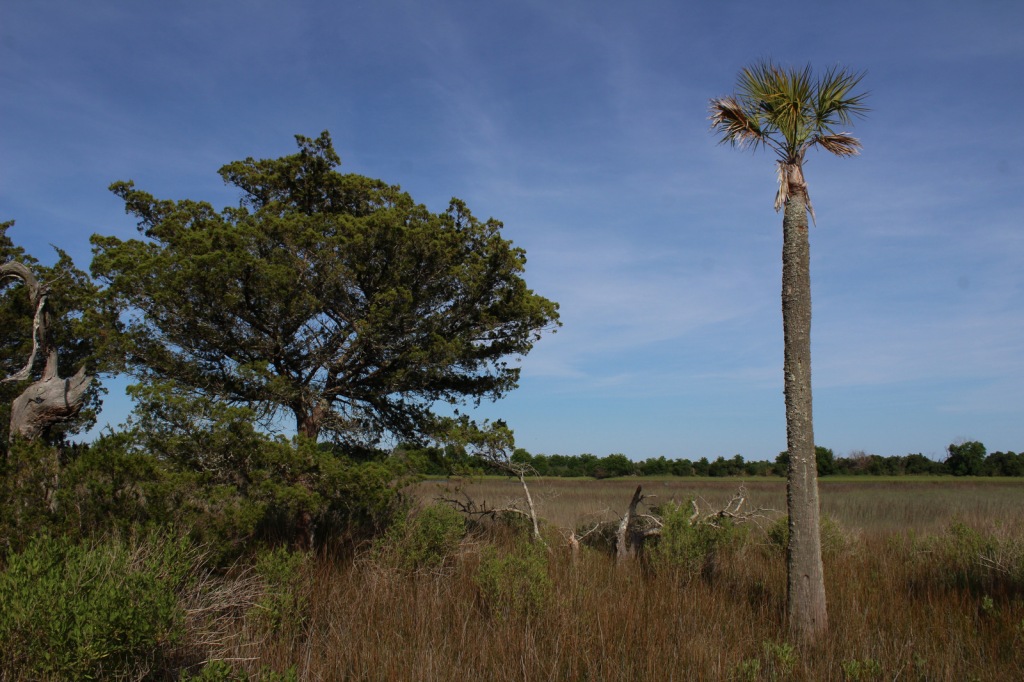
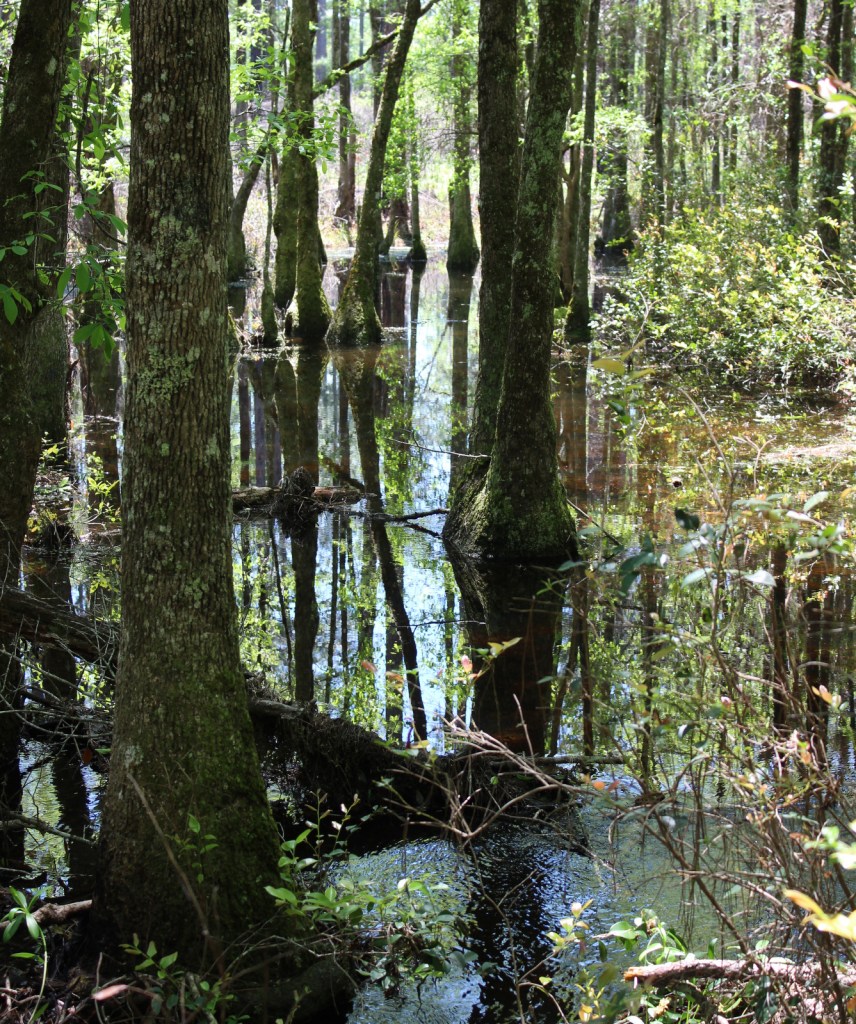
Located on South Carolina’s coast between Myrtle Beach and Charleston, Francis Marion National Forest was devastated by the 130-mile-per-hour winds of Hurricane Hugo in 1989.  Young and damaged trees have grown back in the subtropical coniferous and maritime forests, although some attractions like the Sewee Shell Ring Boardwalk have never been rebuilt.  Other historic sites in the National Forest include the 1768 St. James Church, Battery Warren from the Civil War, and Watahan Historical Area, which has colonial plantations and the site of a 1782 Revolutionary War battle.  On the Santee River, Guilliard Lake Scenic Area has three trails that visit an old-growth baldcypress forest, but the National Forest’s four Wildernesses are mostly inaccessible wetlands. 

Highlights

Sewee Visitor and Environmental Education Center, Buck Hall Recreation Area, Battery Warren Historic Site, Huger Recreation Area, Honey Hill Recreation Area, I’on Swamp Interpretive Trail, Shell Ring Trail, Palmetto Trail

Must-Do Activity

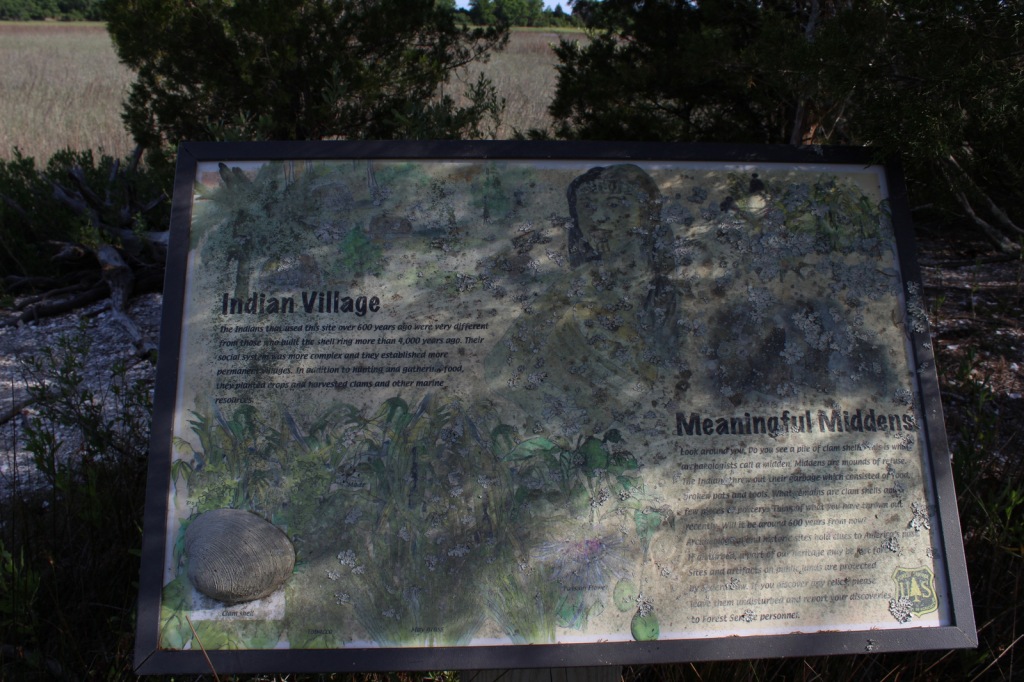
Sewee Visitor and Environmental Education Center is a good place to start a visit, and includes an exhibit on reintroducing red wolves.  Not far away, Sewee Shell Ring Boardwalk was never rebuilt after Hurricane Hugo in 1989, but the trail to the boardwalk remains open (despite what you might read online).  A one-mile loop trail takes visitors to a 4,000-year-old ceremonial ring made of oyster shells and a 600-year-old shell midden, but no longer out into the salt marsh.  Another historic walk is the I’on Swamp Interpretive Trail where signs explain the embankments and ditches built by slaves to create rice paddies.

Best Trail

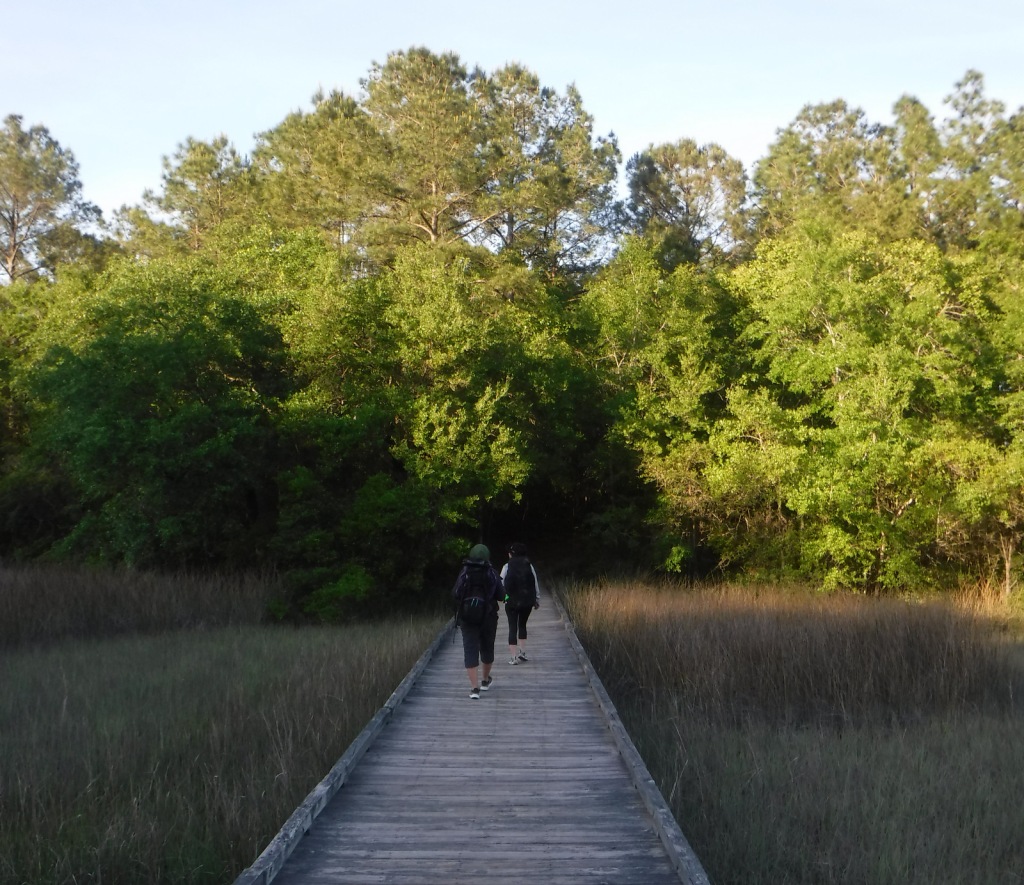
A free permit is required to backpack the Palmetto Trail on its 47-mile stretch through Francis Marion National Forest.  The easternmost seven miles of this statewide trail was opened in 2003 running from the Swamp Fox Trailhead to Buck Hall Recreation Area (fee) on the Intracoastal Waterway bordering Cape Romain National Wildlife Refuge.  Both trailheads are easily accessible from Highway 17.  This sandy section of the Palmetto Trail is known as the Awendaw Passage because it follows Awendaw Creek for most of its length.  There are bridges and boardwalks built over the wettest areas, but very few good places to set up a campsite due to the density of the forest understory. 

Watchable Wildlife

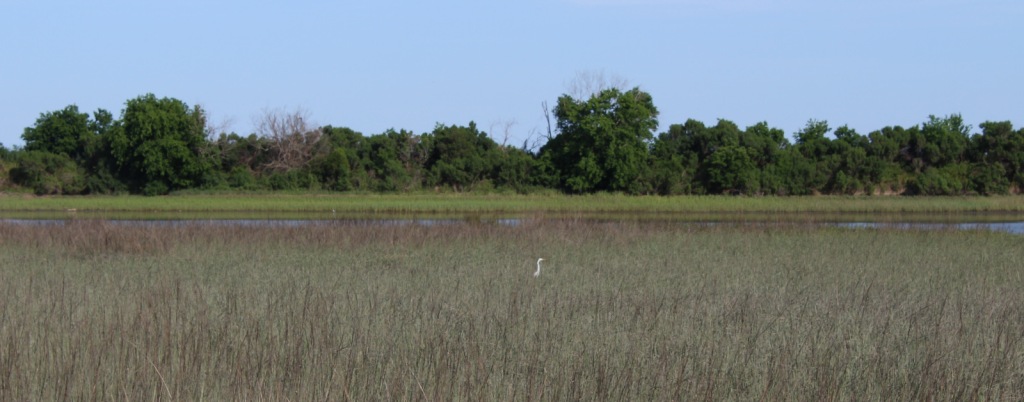
We saw a variety of wildlife in Francis Marion National Forest, including coastal species you do not find in any other National Forest, like crabs and mussels.  The salt marshes provide habitat for large birds like Mississippi kites, ospreys, little blue herons, and great egrets.  We spotted red-headed woodpeckers and pileated woodpeckers, and there are also endangered red-cockaded woodpeckers.  While backpack camping, we saw fireflies, bats, fox squirrels, and a seldom-seen whippoorwill, a bird known for its distinctive, repetitive calls at night.  In Awendaw Creek, we saw a muskrat and four-foot-long rat snake, but did not find any alligators or river otters. 

Instagram-worthy Photo

Battery Warren was built by slaves during the Civil War so soldiers could defend the railroad bridge across the Santee River.  The earth embankments are still visible at the end of a short trail maintained by the U.S. Forest Service.

Peak Season

Spring

Fees

There is a fee to park and launch a boat at Buck Hall Recreation Area.  A free permit (available online) is required to backpack camp on the Palmetto Trail in Francis Marion National Forest.

Road Conditions

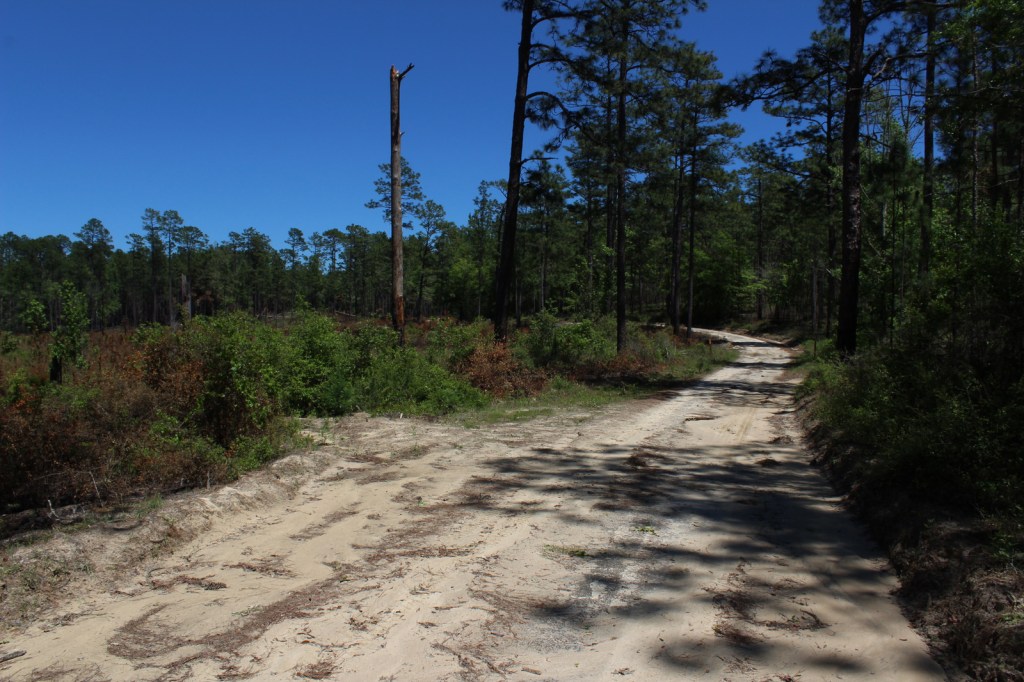
The main roads cutting through the National Forest are paved, and even the unpaved roads we drove were flat, packed sand.

Camping

Buck Hall Campground is located at a boat launch on the Intracoastal Waterway, while scenic Edmund Campground has Spanish moss-draped trees near the northern end of Wambaw Creek Wilderness.  Huger Campground and Halfway Campground are located along the Palmetto Trail.  Extensive wetlands and thick woodlands make dispersed camping and backpacking difficult in Francis Marion National Forest.

Wilderness Areas

Hell Hole Bay Wilderness

Little Wambaw Swamp Wilderness

Wambaw Creek Wilderness

Wambaw Swamp Wilderness

Related Sites

Fort Sumter and Fort Moultrie National Historical Park (South Carolina)

Reconstruction Era National Historical Park (South Carolina)

Charles Pinckney National Historic Site (South Carolina)

Croatan National Forest (North Carolina)

Nearest National Park

Congaree

Conifer Tree Species

baldcypress, longleaf pine, shortleaf pine, loblolly pine

Flowering Tree Species

tulip-poplar, sweetgum, American holly, yaupon holly, live oak,  overcup oak, water oak, cherrybark oak, willow oak, southern red oak, white oak, American beech, green ash, red bay, red buckeye, swamp cottonwood, water tupelo, water locust, water hickory, bitternut hickory, sweet bay magnolia, Carolina willow, titi, southern bayberry

Explore More – What was Francis Marion’s nickname earned by employing guerilla tactics against the British during the American Revolutionary War?

Learn more about this and the 154 other National Forests in our new guidebook Out in the Woods

We are a participant in the Amazon Services LLC Associates Program, an affiliate advertising program designed to provide a means for us to earn fees by linking to Amazon.com and affiliated sites.

Croatan National Forest

Croatan National Forest

North Carolina

Managed by U.S. Forest Service, Southern Region

308,234 acres (159,885 federal/ 148,349 other)

Website: https://www.fs.usda.gov/nfsnc

Overview

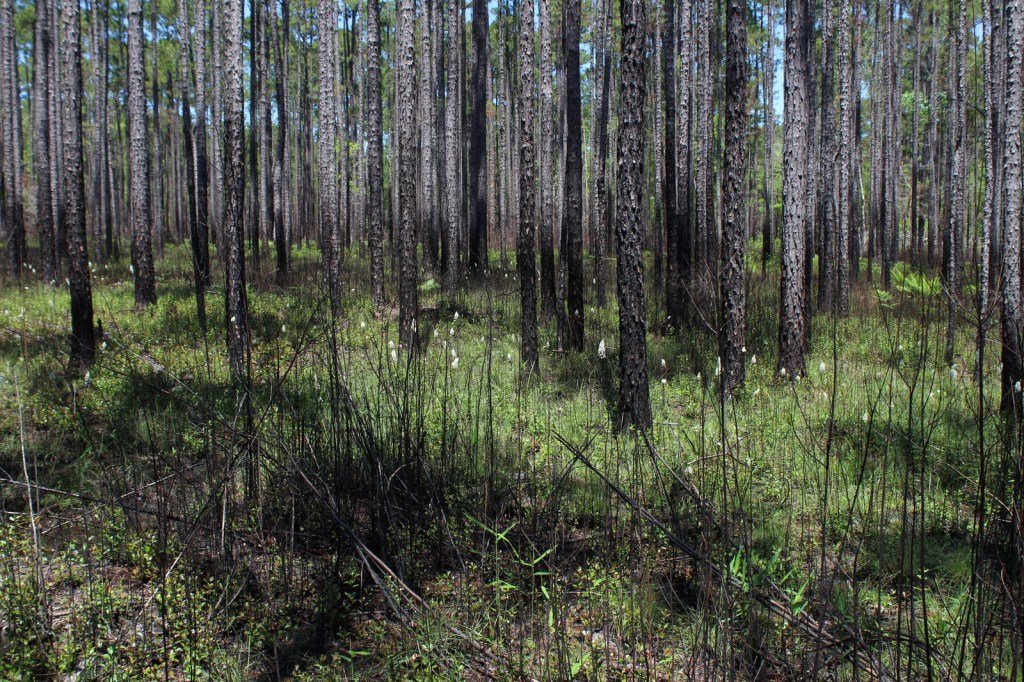
The sandy soil of North Carolina’s coastal plain is where you will find Croatan National Forest, the land of the longleaf pine (which is the official state tree).  Longleaf pines are adapted to frequent surface fires by going through a “grass stage” when young, so the Forest Service conducts controlled burns in some stands.  Much of the National Forest has standing water (in pocosins and Carolina bays), which is why there is not a single trail through its 31,000 acres of designated Wilderness areas.  Pocosins are raised bogs and home to 11 species of carnivorous plants, including the federally-protected Venus flytrap.  A Carolina bay is one of many oval-shaped depressions typically filled with water that are oriented in a northwest-southeast direction across the coastal plain.  They range in size from small ponds to two miles in diameter, but the exact cause of their formation is unknown.

Highlights

Cedar Point Tideland National Recreation Trail, Flanner Beach, Fishers Landing, Brice Creek canoe trail, Black Swamp OHV Trail, Island Creek Trail, Patsy Pond Nature Trail, Cedar Point Tideland National Recreation Trail, Neusiok Trail

Must-Do Activity

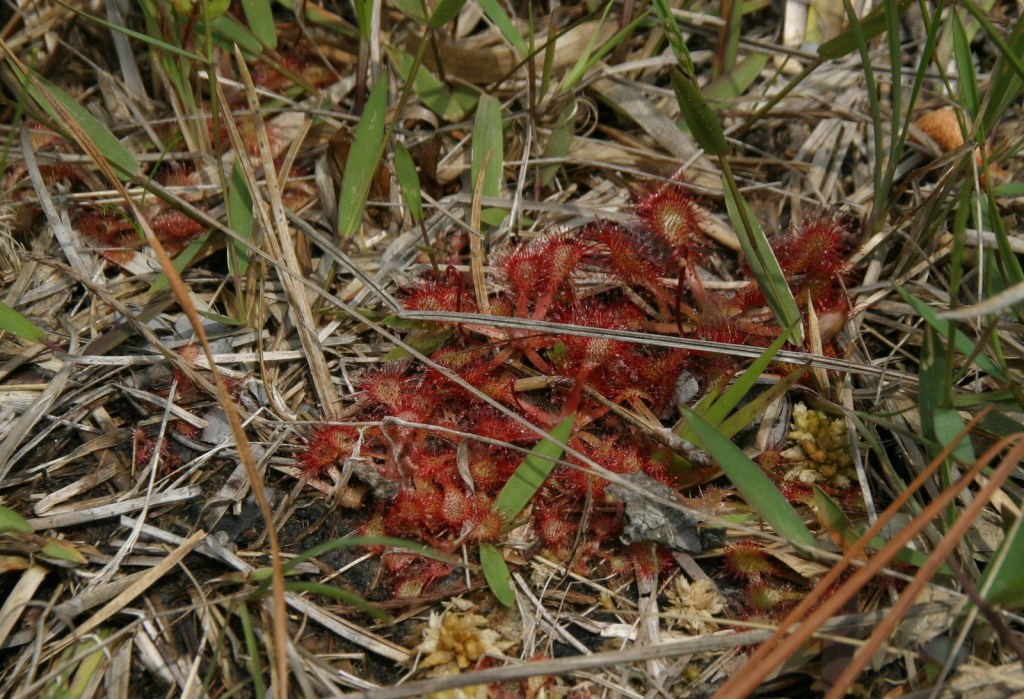
To find some of the 11 species of carnivorous plants in Croatan National Forest, you will have to work a little bit.  Pull off one of the highways that bisect the area and hike to the edge of a pocosin, where scrubby vegetation grows in highly-acidic black soil.  Pitcher plants, bladderworts, sundews, and Venus flytraps utilize different methods to capture insects and spiders in order to sap their nitrogen and other nutrients that are scarce in the water-logged soil.  To trigger a tiny Venus flytrap to close, an insect must touch one hair twice or multiple hairs within 20 seconds.  They are often found adjacent to larger pitcher plants, which lure insects inside by color or odor, then are too slick-walled to escape.  Sundews and the butterwort utilize a sticky substance to capture their prey.  The five species of bladderworts float in shallow water where they capture swimming prey that trigger a trap door.

Best Trail

The Cedar Point Tideland National Recreation Trail is a 1.4-mile loop located partially on a boardwalk near the mouth of the White Oak River.  There are also two long trails through the swamps and pine forests: Neusiok Trail (21 miles) and Weetock Trail (14 miles).  There are no designated trails through Croatan National Forest’s 31,000 acres of designated Wilderness areas. 

Watchable Wildlife

Black bears in this region can get very big since they generally do not hibernate in the winter.  Other large mammals found are bobcats, raccoons, river otters, and muskrats.  Great blue herons, snowy egrets, ospreys, bald eagles, peregrine falcons, wild turkeys, woodcocks, and northern bobwhite quail are major bird species.  There are a variety of reptiles and amphibians, including alligators, anoles, cottonmouths, copperheads, canebrake rattlesnakes, pigmy rattlesnakes, and eastern diamondback rattlesnakes.  The tannic-stained blackwater supports fish like warmouth, redfin pickerel, sunfish, bowfin, yellow bullhead catfish, and the rare swampfish (a species of cavefish). 

Instagram-worthy Photo

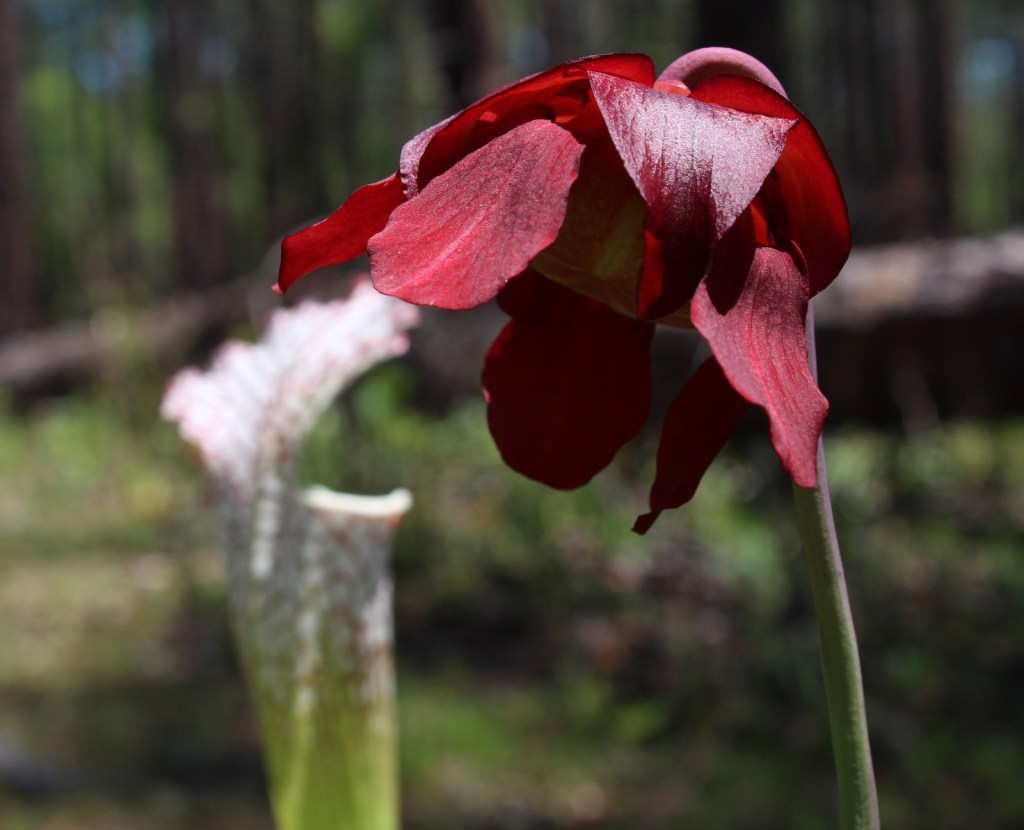
Carnivorous pitcher plants have large showy flowers that bloom in early May.

Peak Season

Spring and fall

Fees

None

Road Conditions

The major highways (17, 58, 70) that cross the National Forest are paved, and the sandy, unpaved roads are generally in good shape except when flooded.

Camping

There are Forest Service campgrounds at Flanner Beach on the Neuse River and Cedar Point along the White Oak River.

Wilderness Areas

Catfish Lake South Wilderness

Pocosin Wilderness

Pond Pine Wilderness

Sheep Ridge Wilderness

Related Sites

Cape Lookout National Seashore (North Carolina)

Fort Raleigh National Historic Site (North Carolina)

Moores Creek National Battlefield (North Carolina)

Nearest National Park
Congaree

Conifer Tree Species

baldcypress, longleaf pine, loblolly pine, shortleaf pine, pond pine, eastern redcedar, Atlantic white-cedar

Flowering Tree Species

black gum, umbrella magnolia, southern magnolia, northern red oak, southern red oak, white oak, water oak, chestnut oak, overcup oak, black cherry, sassafras, American holly, yaupon holly, Hercules’ club, sweetgum, red maple, sugar maple, white alder, witch hazel, American beech, black walnut, tulip-poplar, hophornbeam, musclewood, red mulberry, flowering dogwood, loblolly bay, red bay, sweet bay magnolia, titi

Explore More – What is the origin of the National Forest’s name and how does it relate to Fort Raleigh National Historic Site?

Learn more about this and the 154 other National Forests in our new guidebook Out in the Woods

We are a participant in the Amazon Services LLC Associates Program, an affiliate advertising program designed to provide a means for us to earn fees by linking to Amazon.com and affiliated sites.

Conecuh National Forest

Conecuh National Forest

Alabama

Managed by U.S. Forest Service, Southern Region

171,177acres (83,852 federal/ 87,325 other)

Website: https://www.fs.usda.gov/alabama

Overview

In southern Alabama, Conecuh National Forest was created in 1936 from clearcut and burned-over lands that were replanted with fast-growing slash pine.  Reforestation efforts today focus on native longleaf pine trees that provide habitat for endangered red-cockaded woodpeckers.  The topography of these coastal plain forests is fairly flat with broad ridges flanked by bottomlands and floodplains.  Conecuh National Forest is primarily developed at two Recreation Areas: Open Pond and Blue Lake.

Highlights

Open Pond Recreation Area, Buck Pond, Blue Spring, Open Pond Fire Tower, Yellow River Basin, Blue Lake Recreation Area, Lake Shore Trail, Conecuh National Recreation Trail

Must-Do Activity

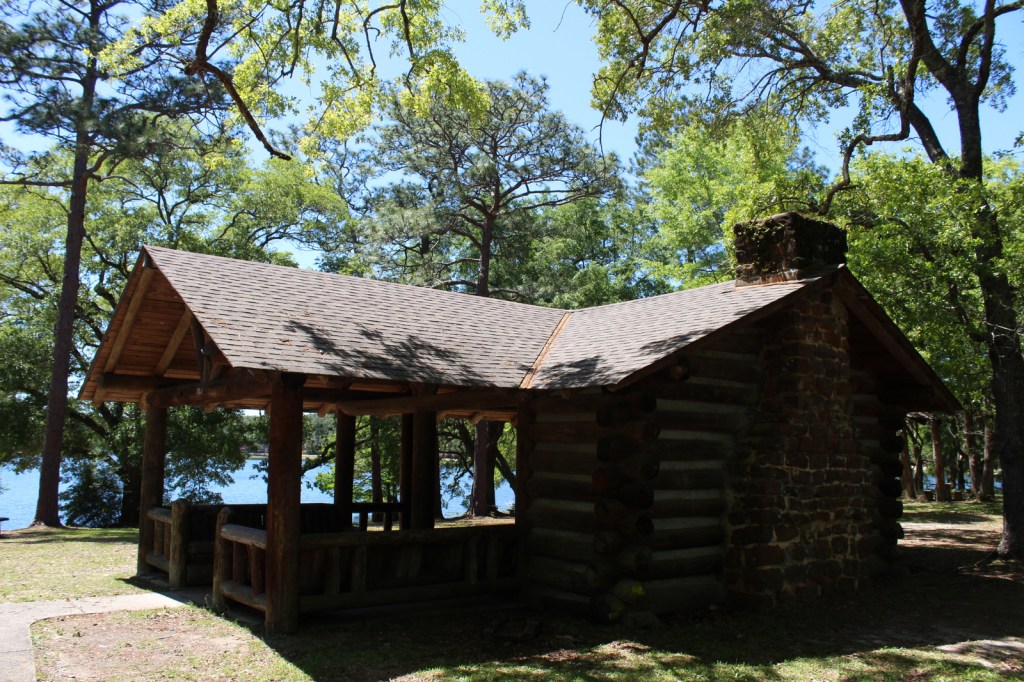
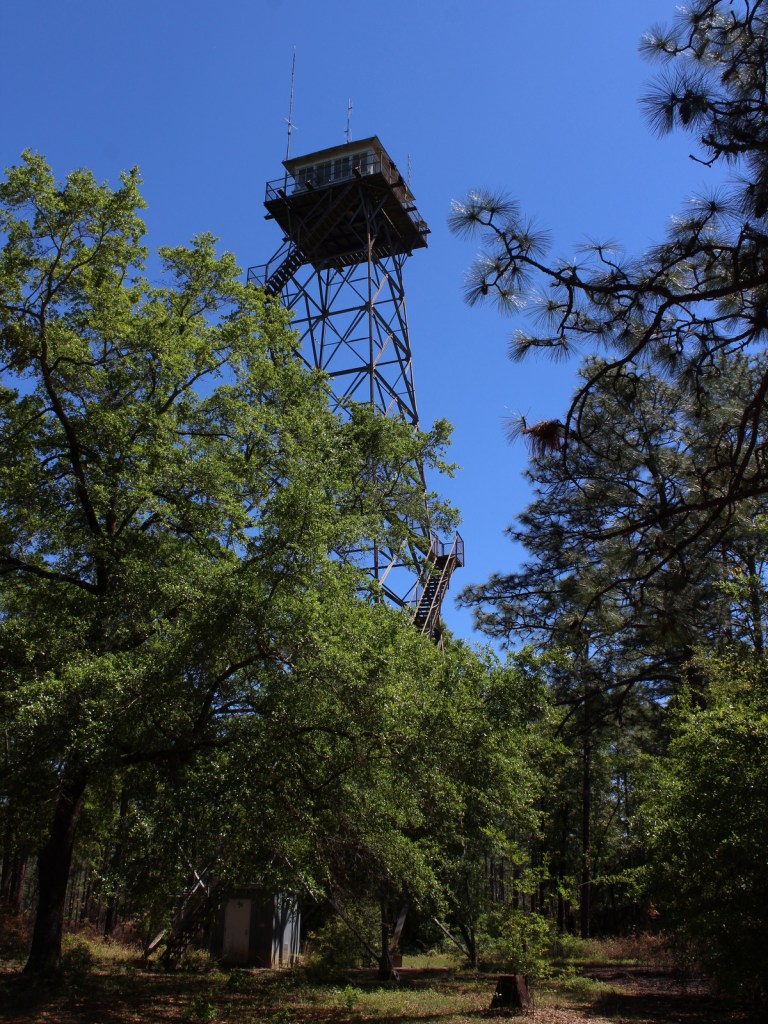
Open Pond Recreation Area (fee) surrounds a 30-acre natural sinkhole lake and has a campground, boat ramps, and a historic 1938 fire tower.  Located only a ten-minute drive away, Blue Lake Recreation Area (fee) offers a day-use picnic area and swimming beach (the only place in the National Forest where swimming is allowed, presumably due to the presence of alligators elsewhere).

Best Trail

The 20-mile long Conecuh Trail was built by the Youth Conservation Corps beginning in 1976 and traverses longleaf pine stands and hardwood bottomlands.  Leaving from Open Pond Recreation Area, the seven-mile long South Loop of the Conecuh Trail passes Blue Spring, but that portion of the trail was closed due to hurricane damage during our visit. 

Watchable Wildlife

Notable wildlife species that inhabit Conecuh National Forest include red-cockaded woodpeckers (see above), wild turkeys, fox squirrels, raccoons, red foxes, gray foxes, bobcats, coyotes, black bears, and alligators.  Fishing is a popular activity, with interesting spiky PVC pipe constructions put in the water to provide habitat for bream, bass, and crappie.

Instagram-worthy Photo

Watch for carnivorous pitcher plants growing in the wet soils on the edge of bogs and baldcypress ponds.

Peak Season

Spring and fall

Fees

There is a day use fee at both Open Pond and Blue Lake Recreation Areas, but an America the Beautiful pass can be substituted.

Road Conditions

Many of the roads in Conecuh National Forest are unpaved, but the sand packs down well and provides a good surface for any vehicle to drive.

Camping

Open Pond Campground contains 75 campsites available on a first-come, first-served basis.

Wilderness Areas

None

Related Sites

Gulf Islands National Seashore (Florida-Mississippi)

Horseshoe Bend National Military Park (Alabama)

Tuskegee Airmen National Historic Site (Alabama)

Nearest National Park

Great Smoky Mountains

Conifer Tree Species

baldcypress, longleaf pine, slash pine

Flowering Tree Species

American holly, flowering dogwood, southern magnolia, swamp tupelo, pumpkin ash, swamp cottonwood, overcup oak, swamp chestnut oak, cherryark oak

Explore More – Believed to be of Muskogee origin, what does the name “Conecuh” translate as?

Learn more about this and the 154 other National Forests in our new guidebook Out in the Woods

We are a participant in the Amazon Services LLC Associates Program, an affiliate advertising program designed to provide a means for us to earn fees by linking to Amazon.com and affiliated sites.