Since White Sands National Monument was upgraded to the 62nd National Park on December 20, 2019, we decided to update our guidebook to the parks. If you already bought your copy on Amazon, please find the new page 308 posted below. White Sands is one of our favorite of the many National Park Service units in New Mexico. You can read more about the park on this blog.
White Sands
New Mexico
148,558 acres
Established 2019
603,008 visitors in 2018
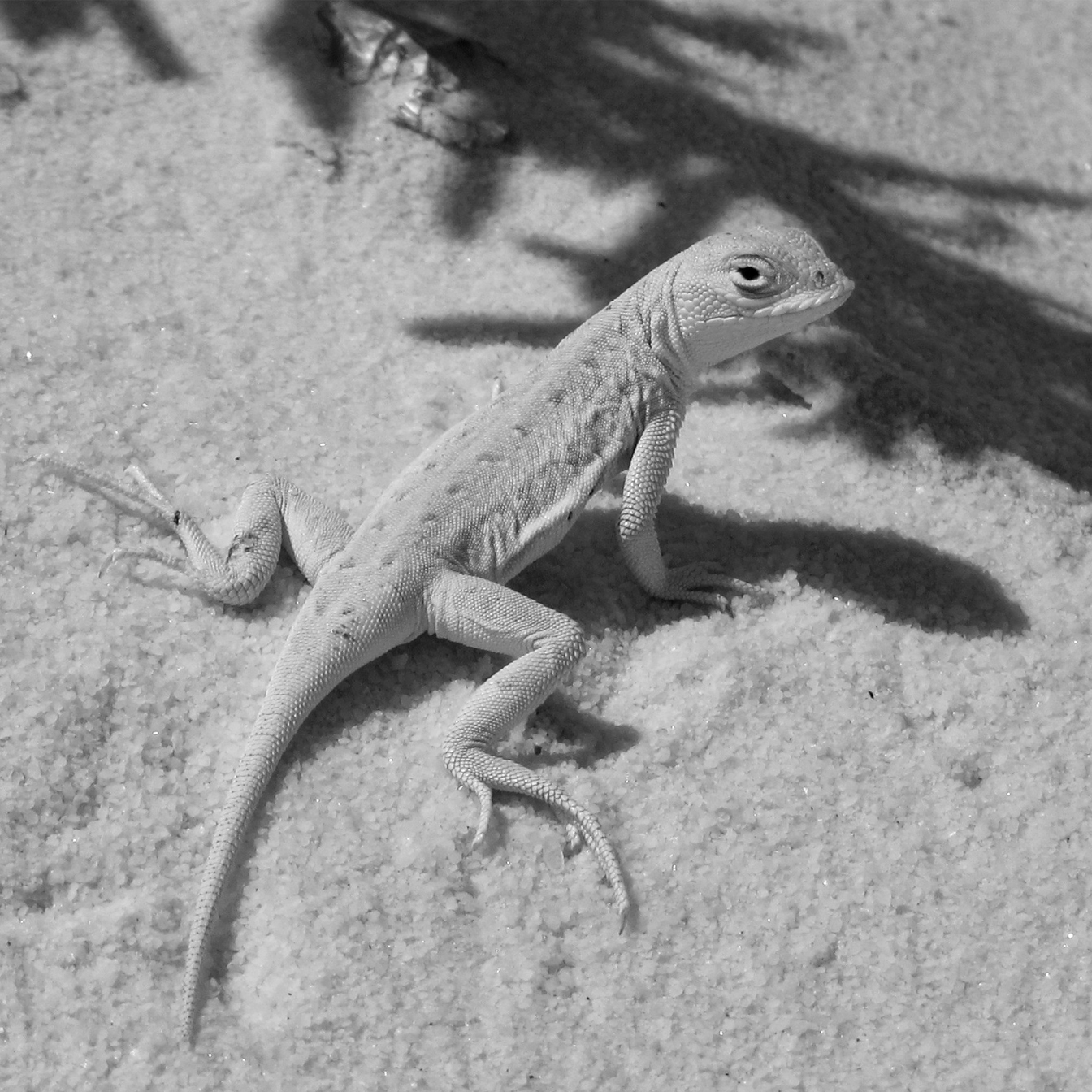
Dunes composed of gypsum make a great destination for snow sledding year round, especially when the sand is wet. Gypsum readily dissolves in water, but here it forms dunes because no river drains the Tularosa Basin. Follow markers on the five-mile roundtrip Alkali Flat Trail that goes up and down dunes and provides views of the San Andres Mountains. Most of the wildlife here is nocturnal, but during the day you may spot bleached earless lizards that evolved to camouflage in the gypsum. The white dunes take on the colors of the sunset if you attend the ranger-guided Sunset Stroll or backpack camp. There is no campground and only ten backcountry campsites, and their availability is dependent upon whether the military is conducting missile tests overnight, so call ahead or check the schedule online. Oliver Lee Memorial State Park offers a full service campground in a beautiful setting south of Alamogordo, New Mexico.
We are a participant in the Amazon Services LLC Associates Program, an affiliate advertising program designed to provide a means for us to earn fees by linking to Amazon.com and affiliated sites.
Carlsbad Caverns in southeastern New Mexico is the most spectacular cave in the United States (and #1 on our Top 10 List). Exploring the Big Room at your own pace is a great option, but you can add to your experience with guided tours of off-limits sections. The King’s Palace Tour is short but scenic; and Left Hand Tunnel was historically used for movies. Lower Cave Tour requires the use of ropes and ladders to access unlit portions of the cave. Slaughter Canyon Cave tour requires an extra hour drive, but visits some astonishing formations. “Wild caving” tours include Spider Cave and the Hall of the White Giant.
Highlights
Big Room, Walnut Canyon Desert Drive, Rattlesnake Springs
Picnic Area, Bat Flight Program
Must-Do Activity
To enjoy the evening Bat Flight Program (where cameras are
prohibited) you must come during the warmer months. Brazilian free-tailed bats migrate to the
cave from the south and around sunset exit from the Natural Entrance in
clockwise circling swarms. You will
swear there are like a “Brazilian” of them, but the actual number is closer to
500,000. For an experience you will hear
more than see, come back before sunrise as the bats zip by your head down into
the cave for their day’s rest.
Best Trail
For your first visit, we recommend taking the self-guided
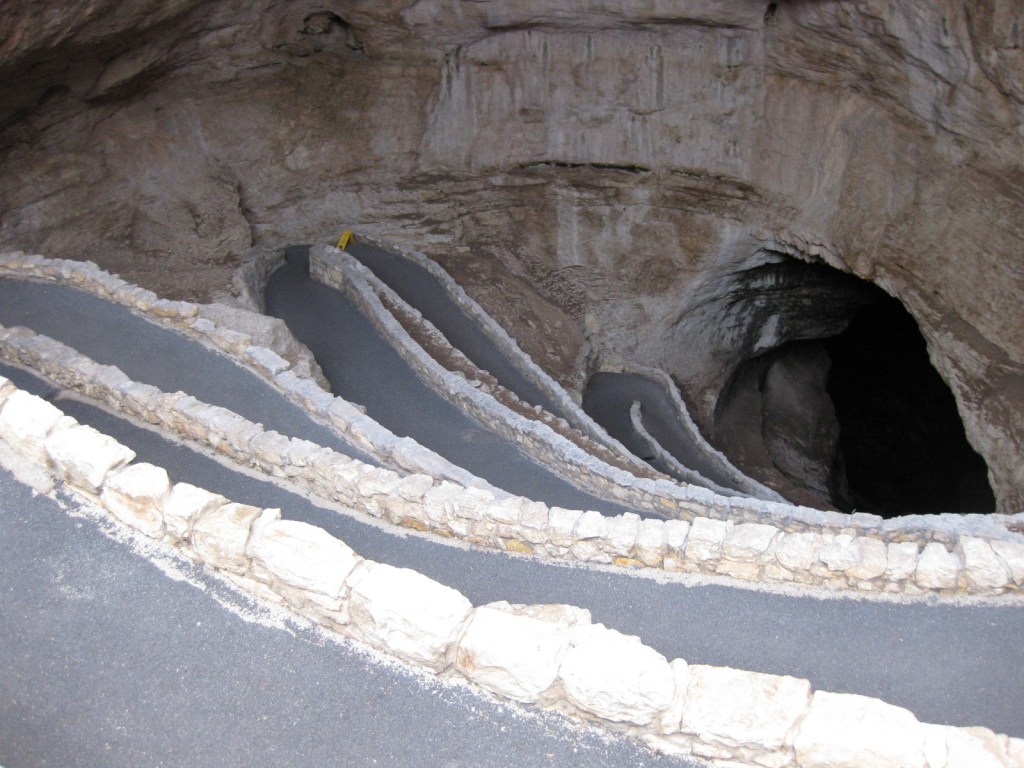
trail from the Natural Entrance down a steep, paved passage into the heart of
the cave, since you can always ride the elevators back up to the surface. After being surrounded by the natural cave
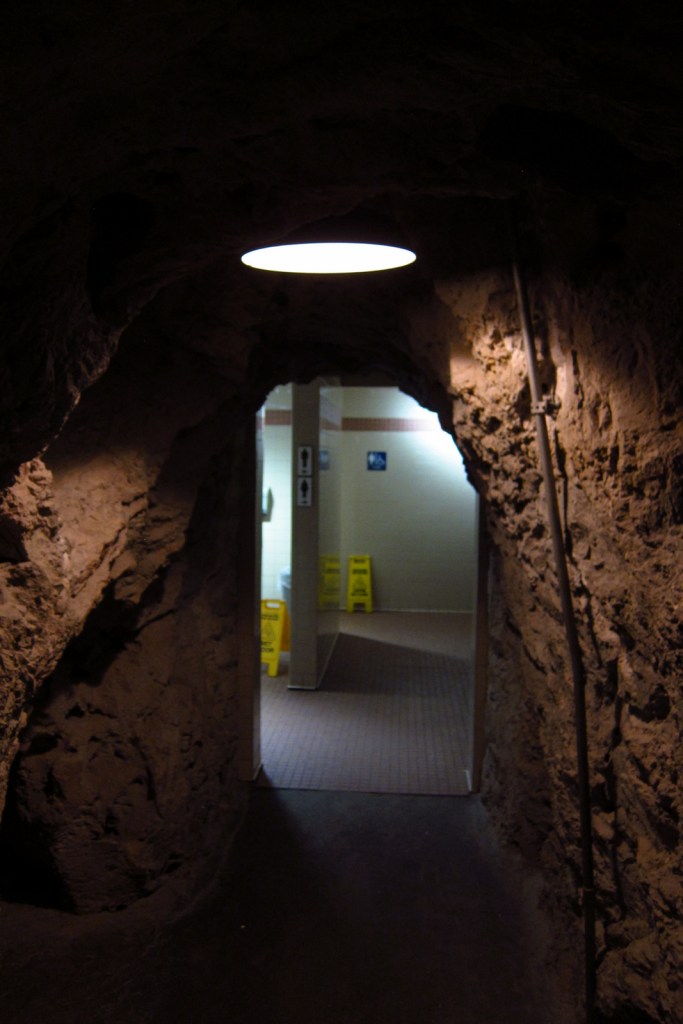
formations, it was a bit jarring to come upon a modern restroom and cafeteria
775 feet underground.
Instagram-worthy
Photo
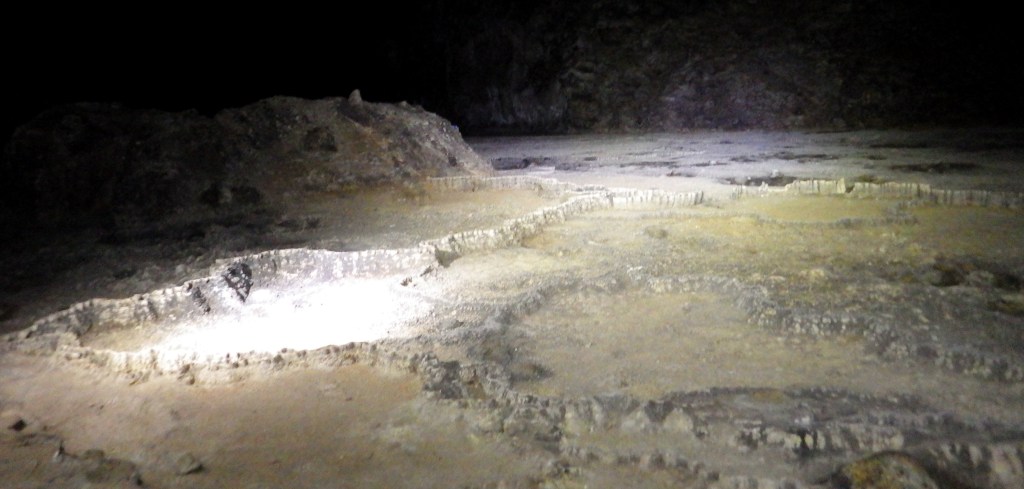
Nothing can prepare you for the immensity of the Big Room, which is big enough to fit eight football fields with a ceiling that rises up to 255 feet. It defies belief that this cavity could have formed naturally. Perhaps the best part of this section of cave is that you can take as much time as you like admiring the formations. For the best photographs, we recommend using a tripod.
Peak Season
Summer, though it can be hot outside the 56°F cave.
No entrance fee, but there is a charge for each guided cave
tour.
Road Conditions
Main entrance road is paved, but Walnut Canyon Desert Drive
and much of the route to Slaughter Canyon Cave are not.
Camping
There are no campgrounds within the park, but there is a private campground near the park entrance in Whites City, New Mexico. Just down the highway in Texas, the National Park Service offers camping at Pine Springs within Guadalupe Mountains National Park. Free permits are required for backcountry camping, with Rattlesnake Canyon off Walnut Canyon Desert Drive being a popular destination.
The trail descending into the Natural Entrance
Scott on the King’s Palace Tour
The Papoose Room seen on the King’s Palace Tour
A massive stalagmite in the Big Room
Scott on the Left Hand Tunnel Tour
The hallway to the underground bathroom
The crowd waiting for the bats to come out
The entrance to Slaughter Canyon Cave
Chinese Wall in Slaughter Canyon Cave
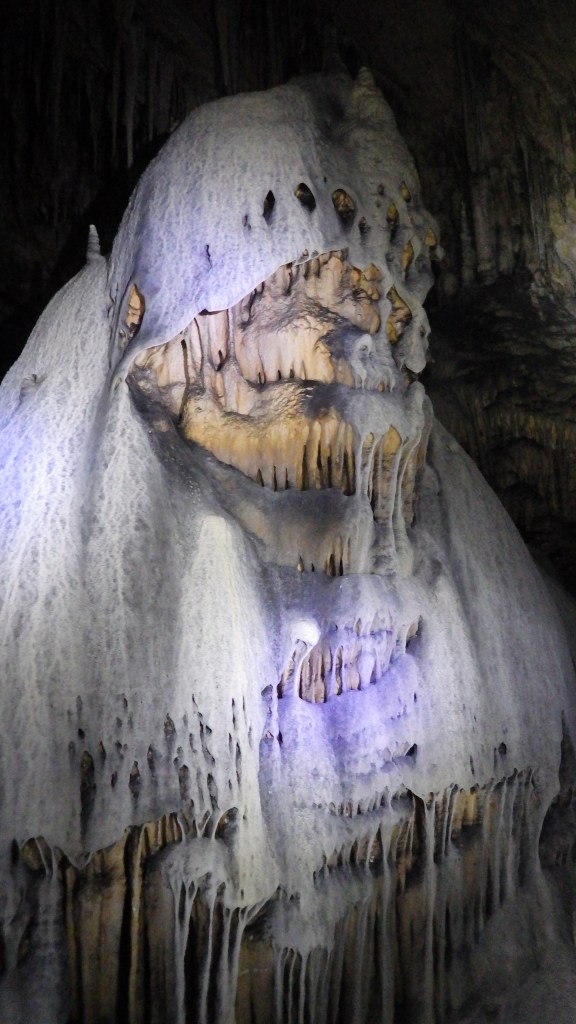
A creepy formation in Slaughter Canyon Cave
Mule deer seen along Walnut Canyon Desert Drive
This design we created to celebrate Carlsbad Caverns National Park is available on a variety of products at Cafe Press and Amazon.
Explore More – Historically, what was mined from the Natural Entrance and Slaughter Canyon Cave?
We are a participant in the Amazon Services LLC Associates Program, an affiliate advertising program designed to provide a means for us to earn fees by linking to Amazon.com and affiliated sites.
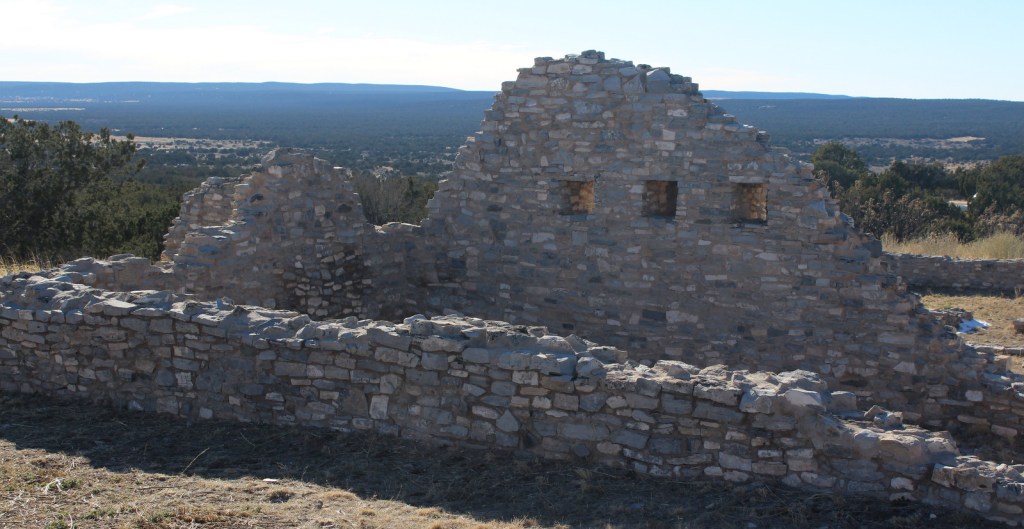
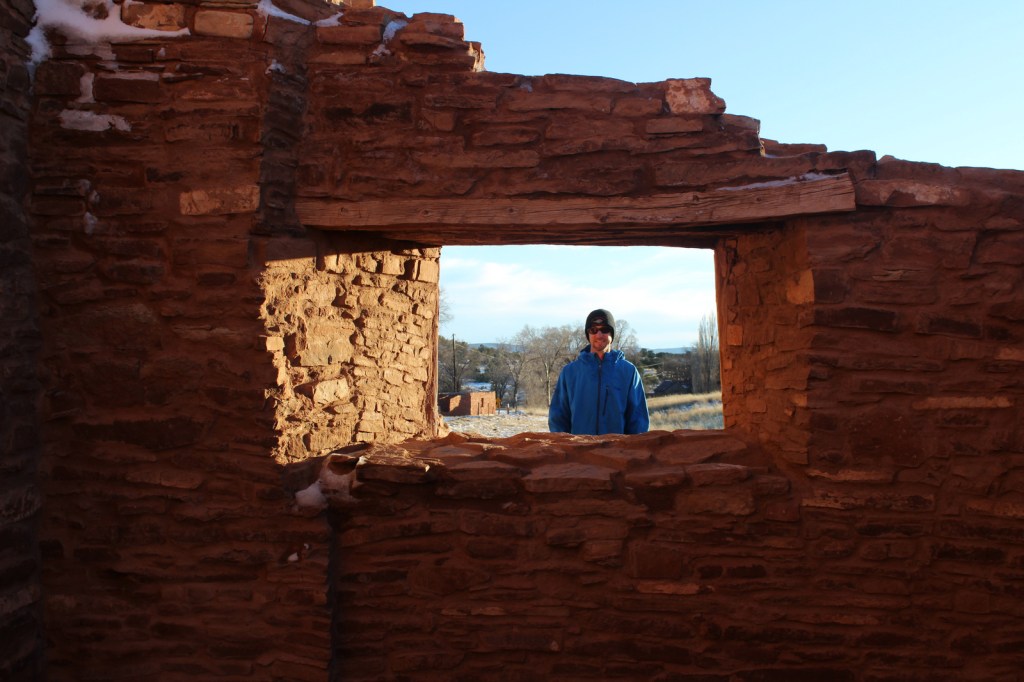
This interesting National Monument protects three separate Spanish missions that date to the 1600s, though its main visitor center in Mountainair, New Mexico is not next to any of them. Their location near salt flats led to the name Salinas and contributed to the pueblos’ abandonment when a major drought struck in the 1670s.
Highlights
Gran Quivira, Quarai, Abó, film at main visitor center
Must-Do Activity
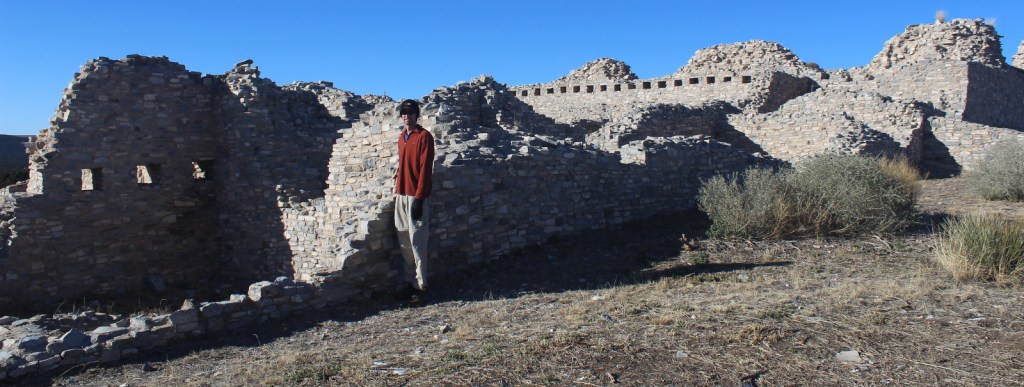
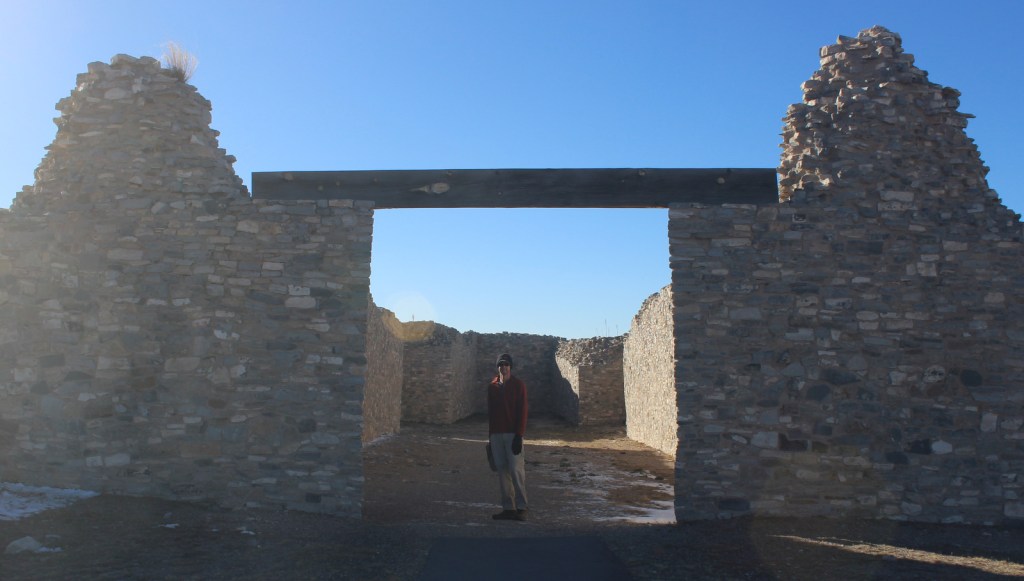
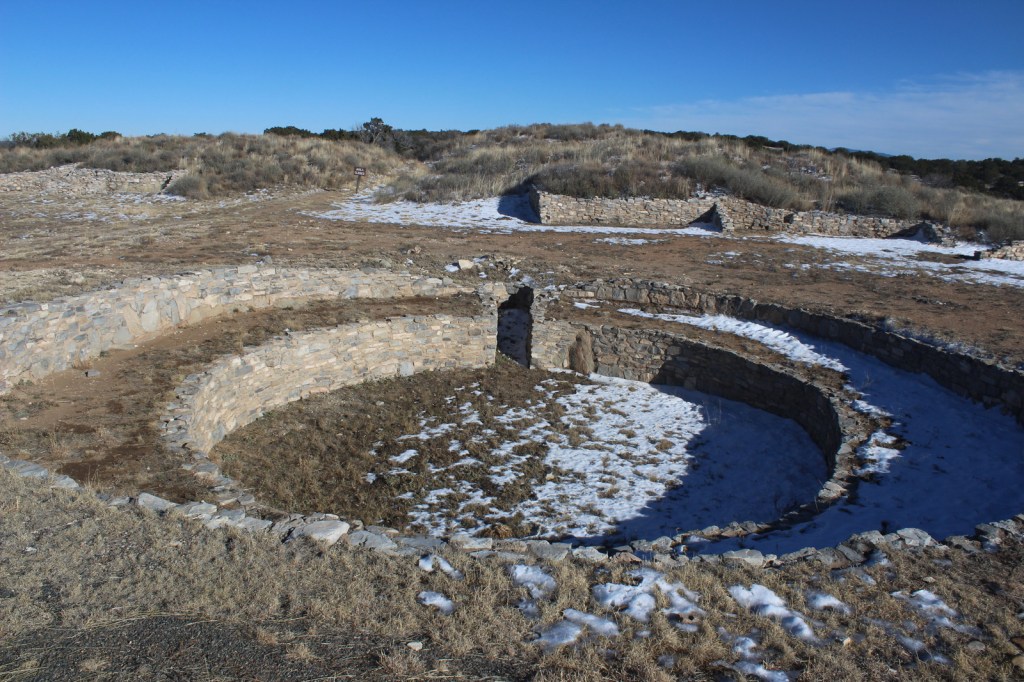
Gran Quivira has the remains of two churches (the second unfinished at the time of abandonment) and the most significantly excavated pueblo ruins (with kivas) of the three sites.
Best Trail
Each of the three pueblos has a paved walkway that leads
through its ruins that leaves from the parking lot and past its contact station
staffed by a National Park Service employee.
Instagram-worthy
Photo
The church at Quarai is the most complete of the three sites and its red walls photograph well at sunset.
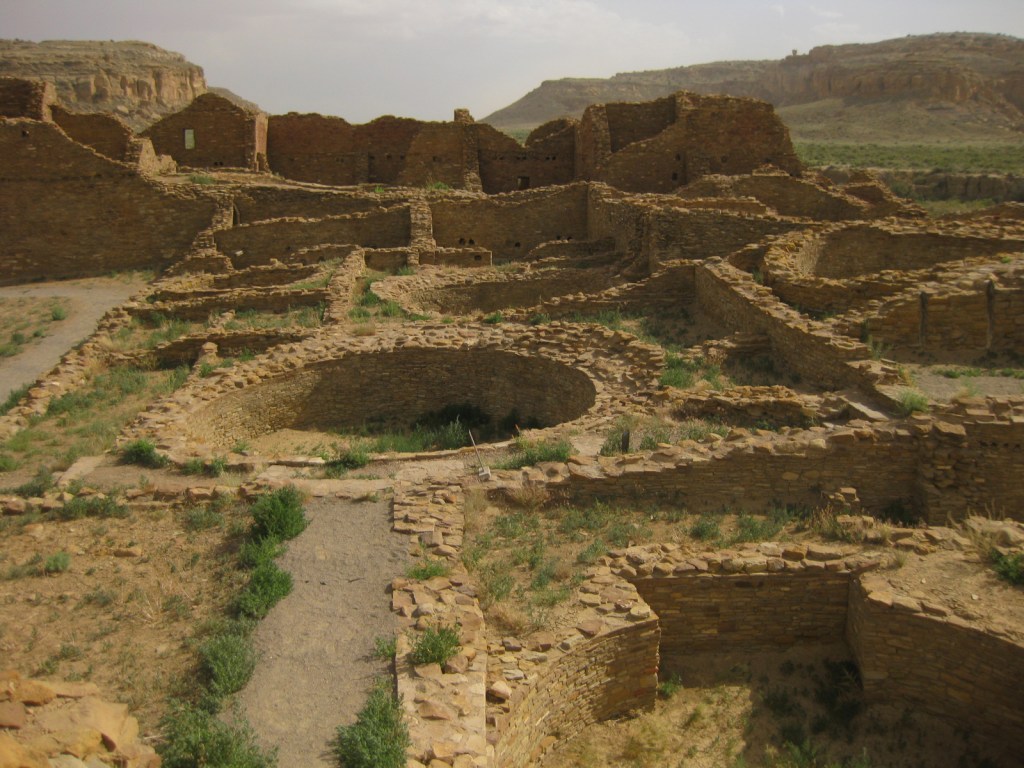
These expansive ruins built in the desert between AD850-1150 represent the best collection of Ancestral Puebloan architecture in the southwest U.S. Over 400 miles of historic roads led to this ceremonial center. Its multiple great houses were first protected in 1907 and can take days to explore fully.
Highlights
Pueblo Bonito, Chetro Ketl, petroglyphs, supernova
pictograph
Must-Do Activity
Walking through the short doorways inside D-shaped Pueblo Bonito, you can admire the intricacy of the walls that have stood over 1,000 years. So much effort was put into building monumental structures in this challenging locale, then it was mysteriously abandoned, making this remarkable park is an awesome place to ponder human civilization, past and future.
Best Trail
A free backcountry permit is required to hike all trails in
the park. Our favorite passes Kin Kletso
and Casa Chiquita 3 miles one-way to a unique pictograph that may depict a
supernova that occurred in AD1054.
Instagram-worthy
Photo
While mostly made of mud bricks, the wood used in the
structures had to be carried over 50 miles from the nearest forests to reach
this spot. An estimated 200,000 trees
were moved over 300 years of construction without the use of pack animals or
wheels.
All access roads to the park are dirt, with the recommended
entry route via County Roads 7900 and 7950, 21 miles west of Highway 550. The roads from the south are more difficult,
especially when wet.
Camping
The small Gallo Campground lies within the park, but we
recommend the free campground in Angel Peak Recreation Area run by the Bureau
of Land Management east of Highway 550.
From your first view of Fajada Butte, you will feel this is a special place
Scott and his mother at Chetro Ketl
The awe-inspiring great kiva at Chetro Ketl
Pueblo Bonito
Supernova pictograph
Raven above a picnic shelter
Elk herd in December
Explore More – Why do visitors strive to arrive for the
summer and winter solstices each year?
During the National Park Service (NPS) centennial in 2016, a
new, ambitious park was established linking three far-flung sites in the states
of Washington, New Mexico, and Tennessee.
The purpose is to tell the story of the “Manhattan Project,” the
military code name during World War II for the secret undertaking to create the
world’s first atomic weapon.
Highlights
Bradbury Science Museum (NM), American Museum of Science and
Energy (TN), Hanford Reach National Monument (WA)
Must-Do Activity
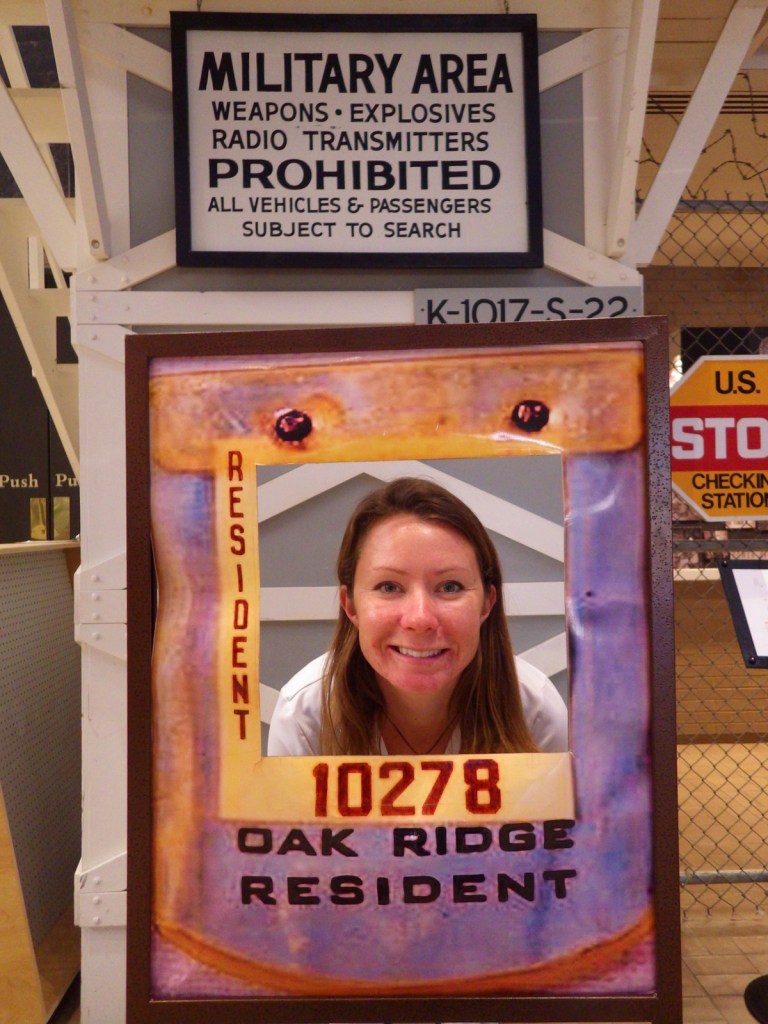
In 1942, hundreds of eastern Tennessee families were
displaced in order to construct Oak Ridge National Laboratory where experimental
nuclear reactors produced plutonium and enriched uranium. More than 75,000 people hurriedly built and
operated this brand new industrial complex, which continues to be used as a
Department of Energy research facility to this day. Due to security and safety concerns, visitors
can only enter on a 3-hour bus tour that leaves from the American Museum of
Science and Energy. The tour is well
worth your time, as it is currently the only way to see Y-12, X-10, and K-25
and learn more about what those code names really mean.
Best Trail
The Hanford Reach is one of the last free-flowing sections
of the Columbia River in eastern Washington and is an important site for salmon
spawning. The area is ecologically
pristine, mostly untouched by development since it became the Hanford Nuclear
Reservation in 1943. It is home to the
world’s first full-scale nuclear reactor that produced the plutonium used by
Los Alamos National Laboratories for its scientific breakthroughs in 1945. Since 2000, Hanford Reach National Monument
has been managed by the U.S. Fish and Wildlife Service and much of the area is
off limits. Other than boating on the
river, the best place to get a feel for the area is to walk around the Ringold
Fish Hatchery.
Instagram-worthy
Photo
The free Bradbury Science Museum in Los Alamos, New Mexico offers
tourists a closer look at the original and ongoing research conducted at Los
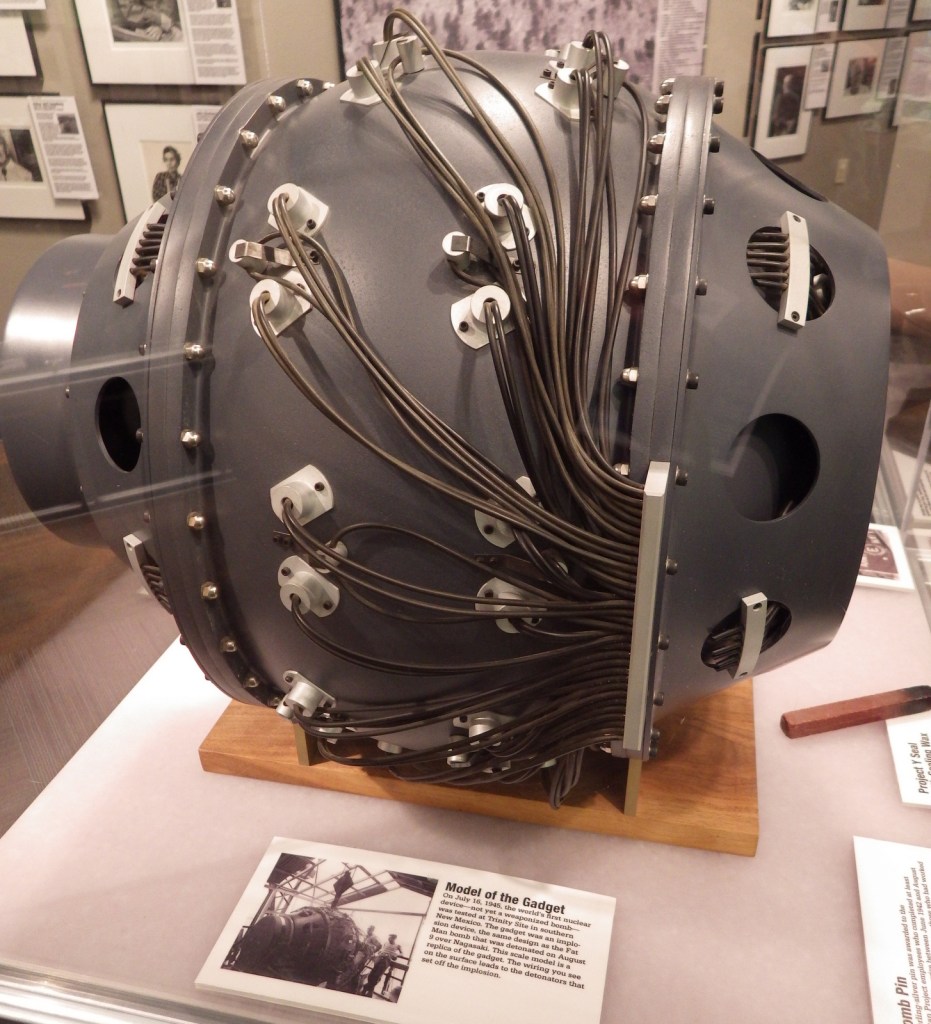
Alamos National Laboratories (LANL), including a scale model of the “Fat Man”
plutonium bomb built here in 1945.
Nearby, the Los Alamos Historical Museum is located in a cabin on
historic Bathtub Row, so named because when the government took over the Ranch School
in 1943 these were the only dwellings equipped with that luxury.
Peak Season
Open year round, but summer is best at the high elevations
of Los Alamos, New Mexico.
$5 per adult for the American Museum of Science and Energy
and a 3-hour tour (11:30-2:30, reservations recommended) of Oak Ridge National
Laboratory in Tennessee.
Road Conditions
All roads paved except around Hanford Reach National
Monument
Camping
Dispersed camping is allowed in Santa Fe National Forest surrounding Los Alamos and it is not far to the campground in Bandelier National Monument.
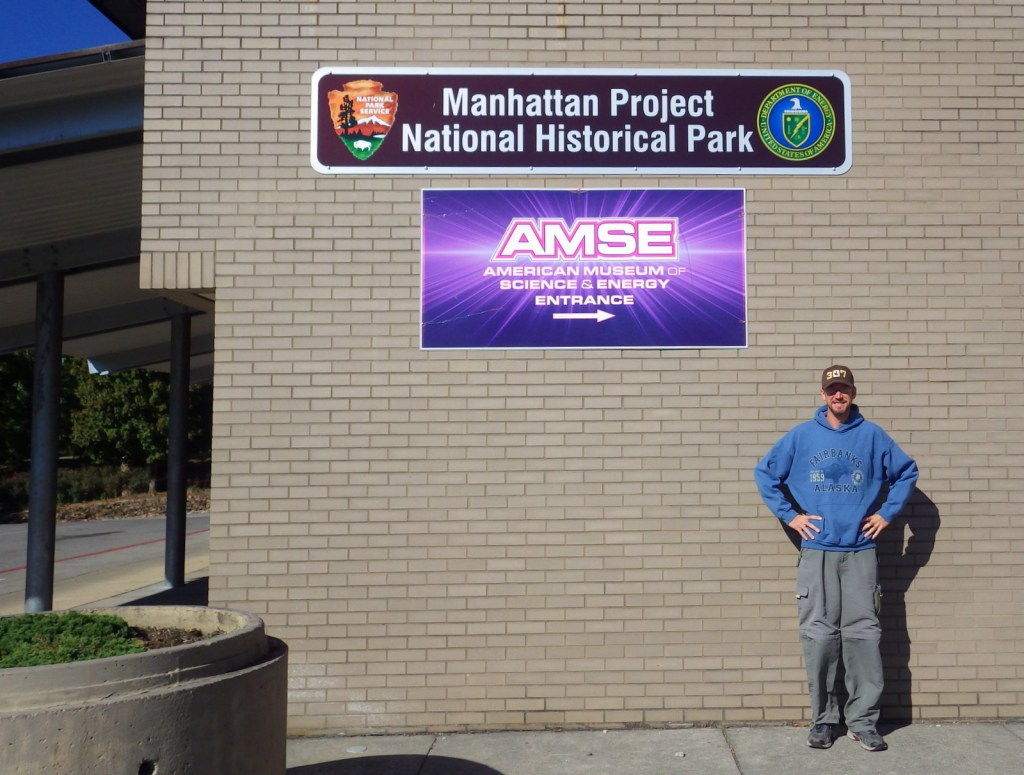
Scott waiting for our tour to start at the American Museum of Science and Energy
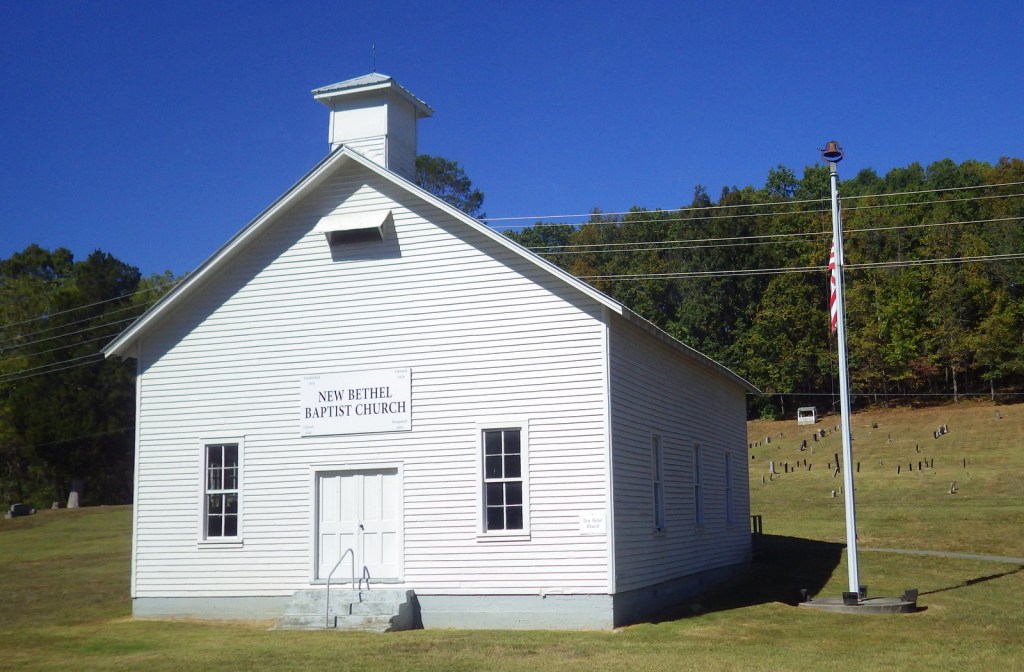
A church abandoned after the U.S. government land seizure in 1942
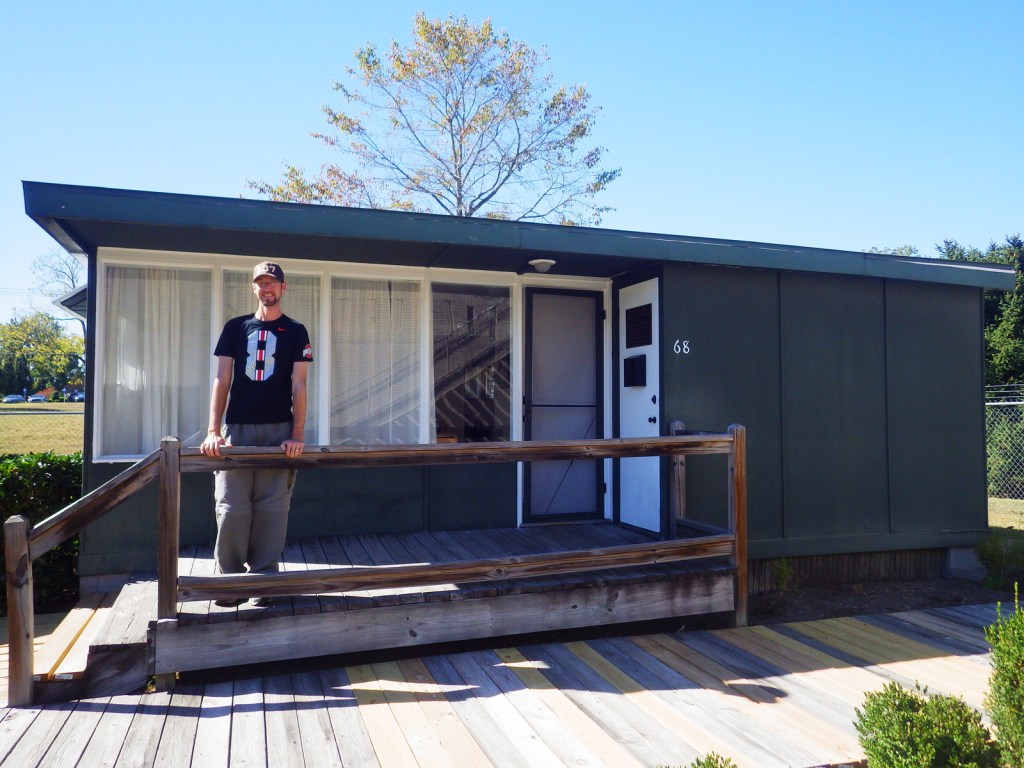
Scott at one of the government houses built for 75,000 Oak Ridge residents
The Columbia River in Hanford Reach National Monument
Ringold Fish Hatchery in Hanford Reach National Monument
Model of the first nuclear device tested at Trinity Site in New Mexico
Atomic memorabilia at the Los Alamos Historical Museum
Explore More – What
was the job of the “Calutron Girls” in Oak Ridge during World War II?
Start your U.S. National Parks, National Forests, and National Monuments adventure here!























 Raven About The Parks