Category Archives: Mississippi

Homochitto National Forest

Homochitto National Forest

Mississippi

Managed by U.S. Forest Service, Southern Region

373,497 acres (191,839 federal/ 181,658 other)

Website: https://www.fs.usda.gov/recarea/mississippi/recarea/?recid=28865

Overview

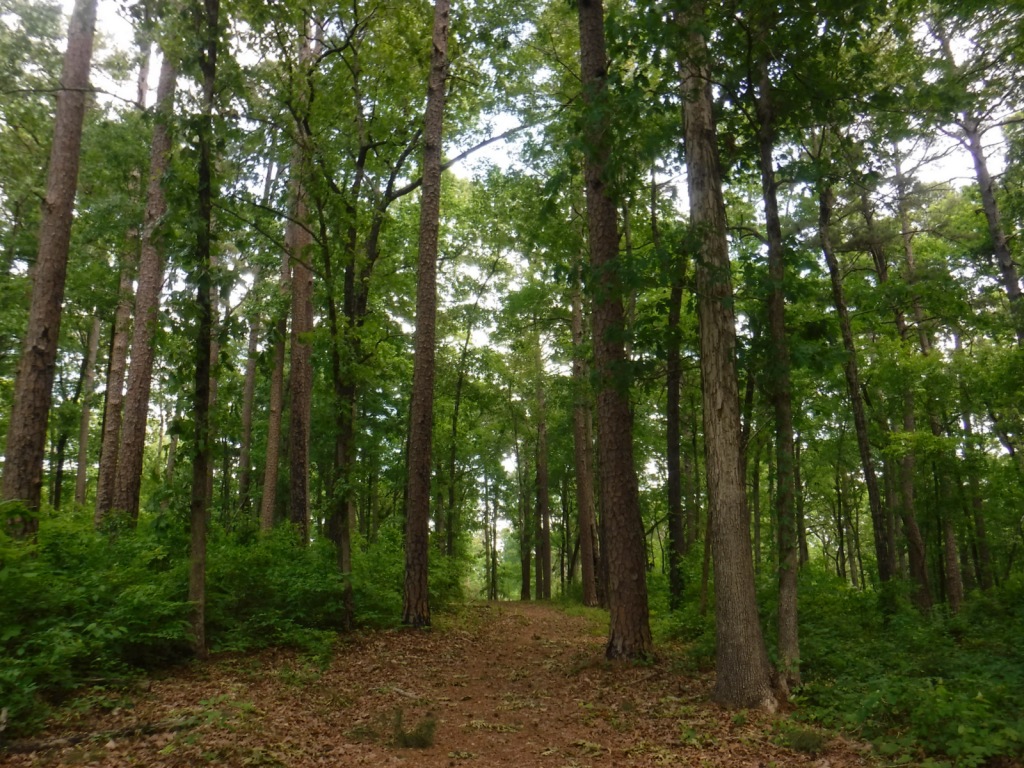
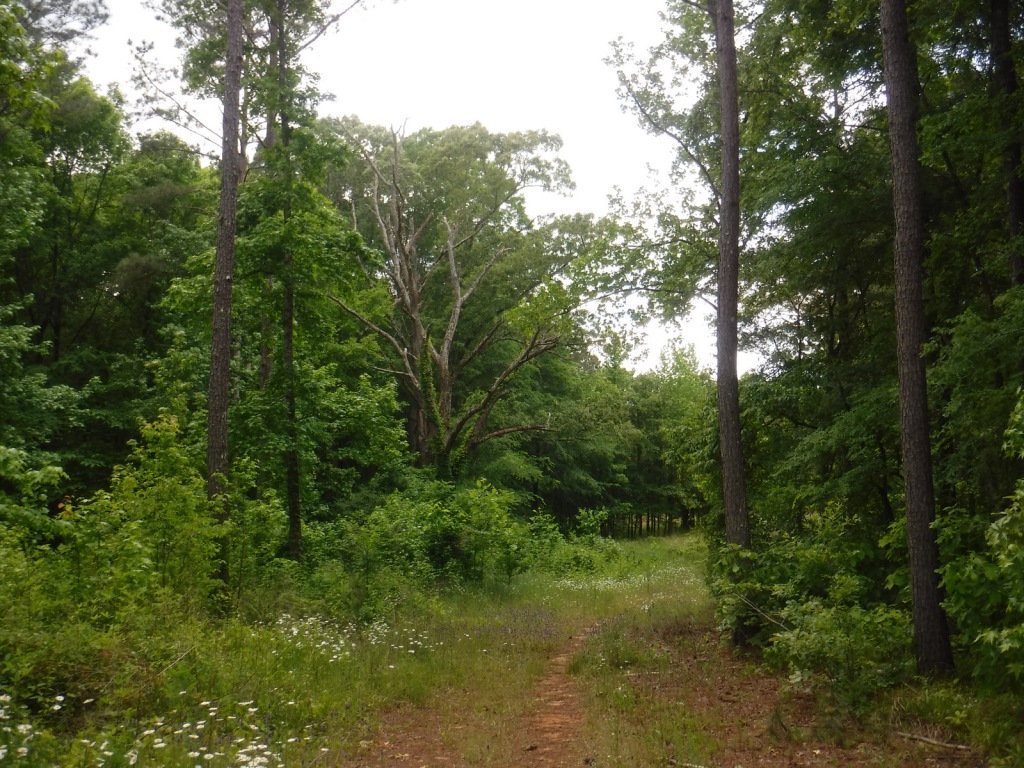
In southwest Mississippi, Homochitto National Forest is comprised of former cotton fields purchased and replanted with trees by the federal government in the 1930s.  It is named for the 90-mile-long Homochitto (“huh-mah-CHIT-ah”) River that runs through the forest on its way to the Mississippi River south of Natchez.  All six National Forests in Mississippi are managed as one administrative unit, including Bienville, De Soto, Delta, Holly Springs, Homochitto, and Tombigbee National Forests.  The Homochitto district ranger station is located in Meadville.

Highlights

Clear Springs Lake Recreation Area, Pipes Lake Recreation Area, Mt. Nebo Recreation Area, Stephenson Lookout Tower, Pellucid Bayou, Brushy Creek Loop, Tally’s Creek Trail, Richardson Creek Trail

Must-Do Activity

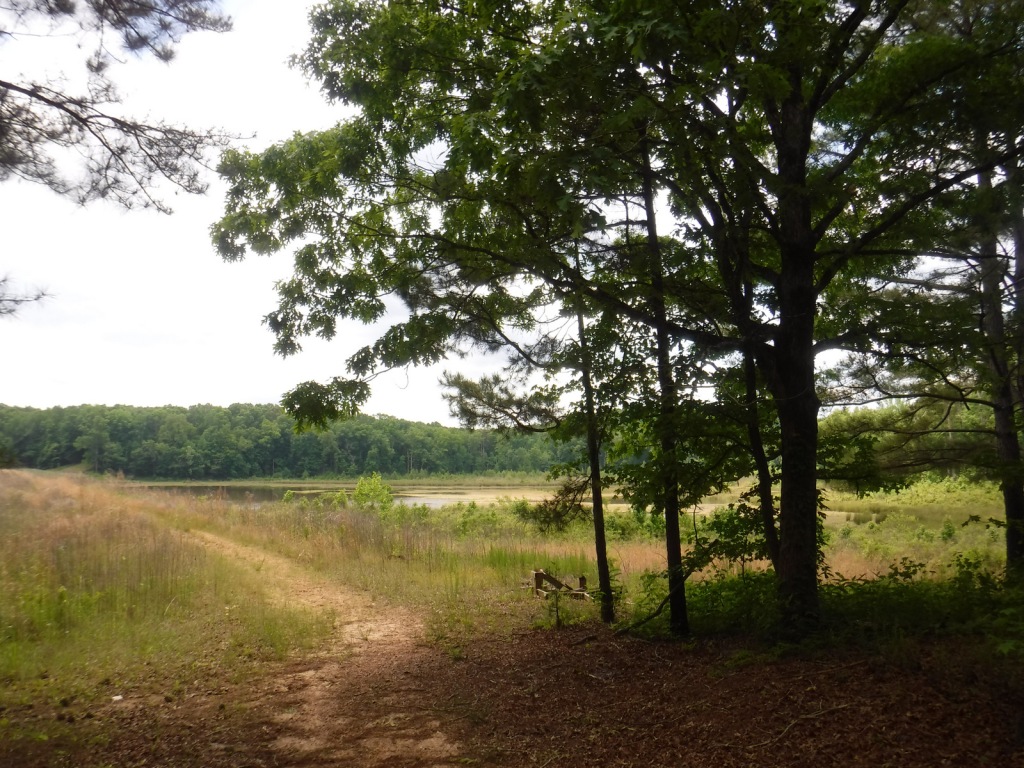
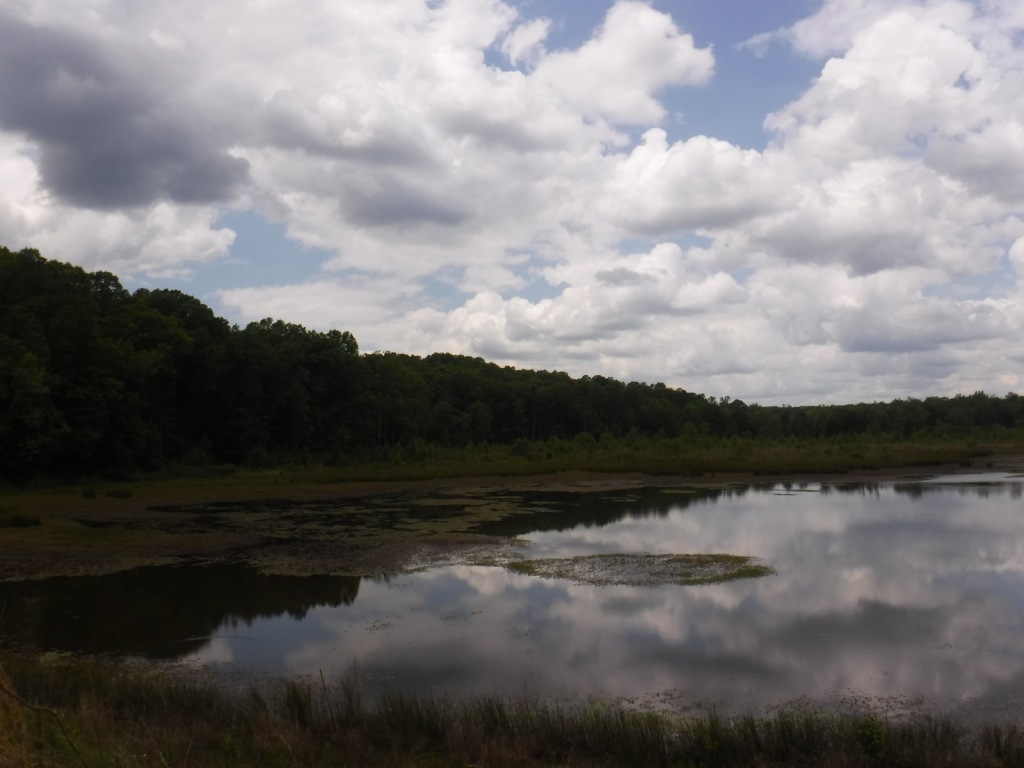
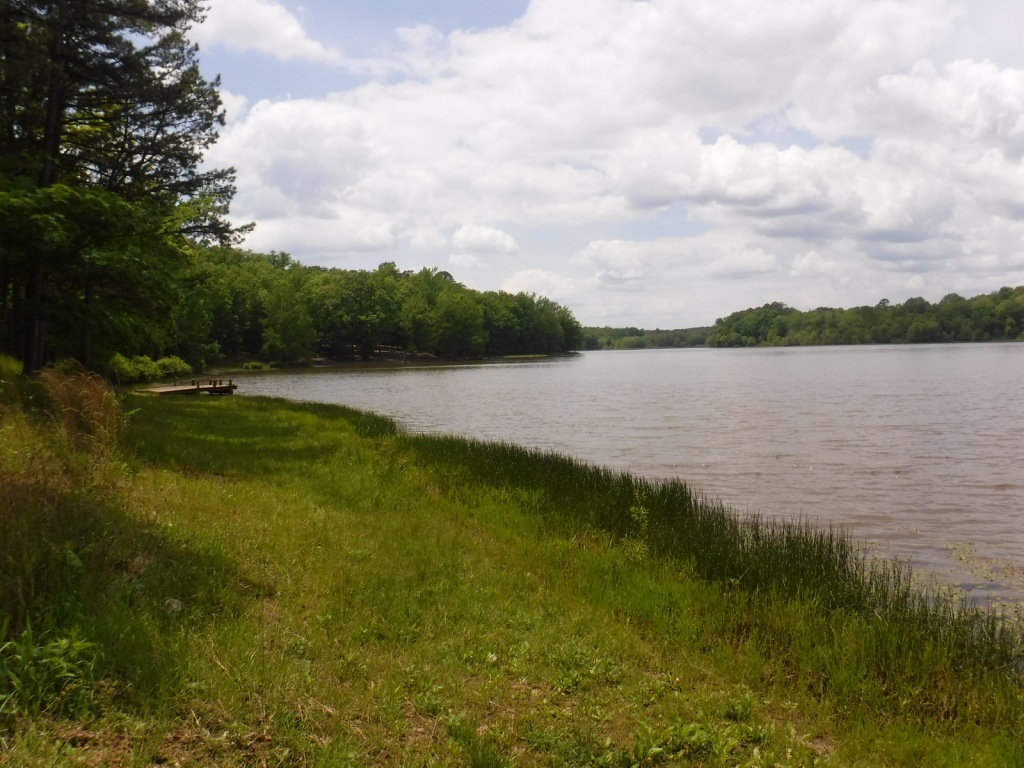
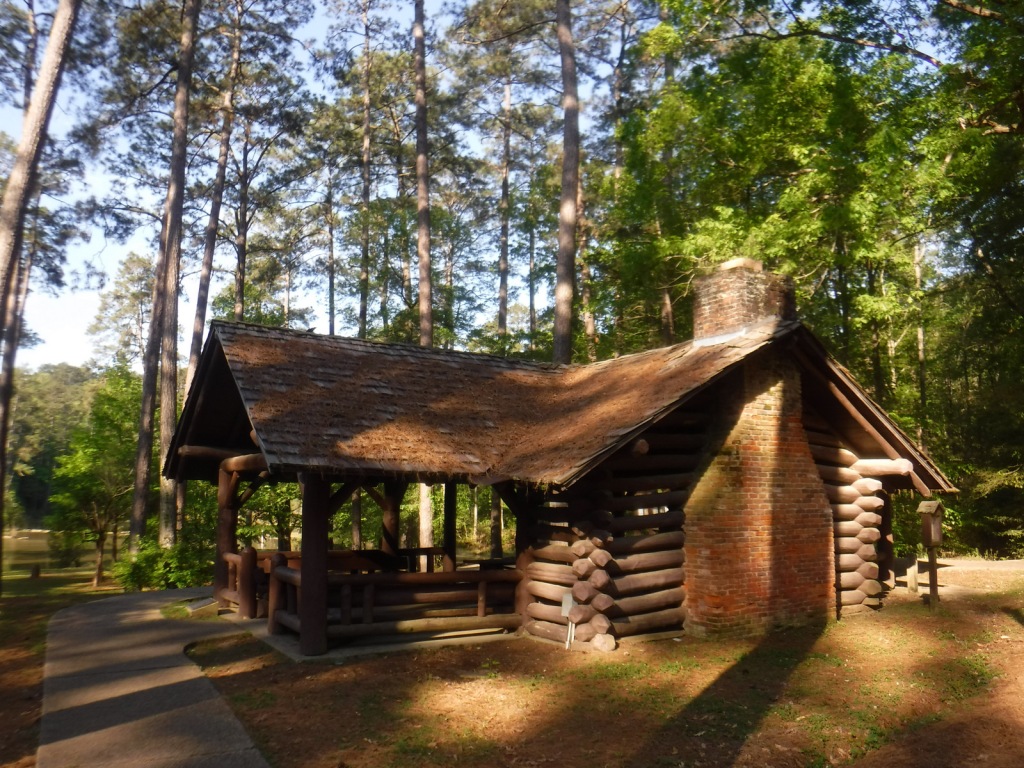
Homochitto National Forest has developed facilities at three small lakes: Clear Springs, Pipes, and Mt. Nebo.  A one-mile trail encircles scenic Clear Springs Lake, which has a picnic shelter built by the Civilian Conservation Corps (CCC) in 1935 listed on the National Register of Historic Places.  Elsewhere, Brushy Creek Loop is a 5.7-mile horse trail that is not recommended for hikers due to abundant mud and manure.

Best Trail

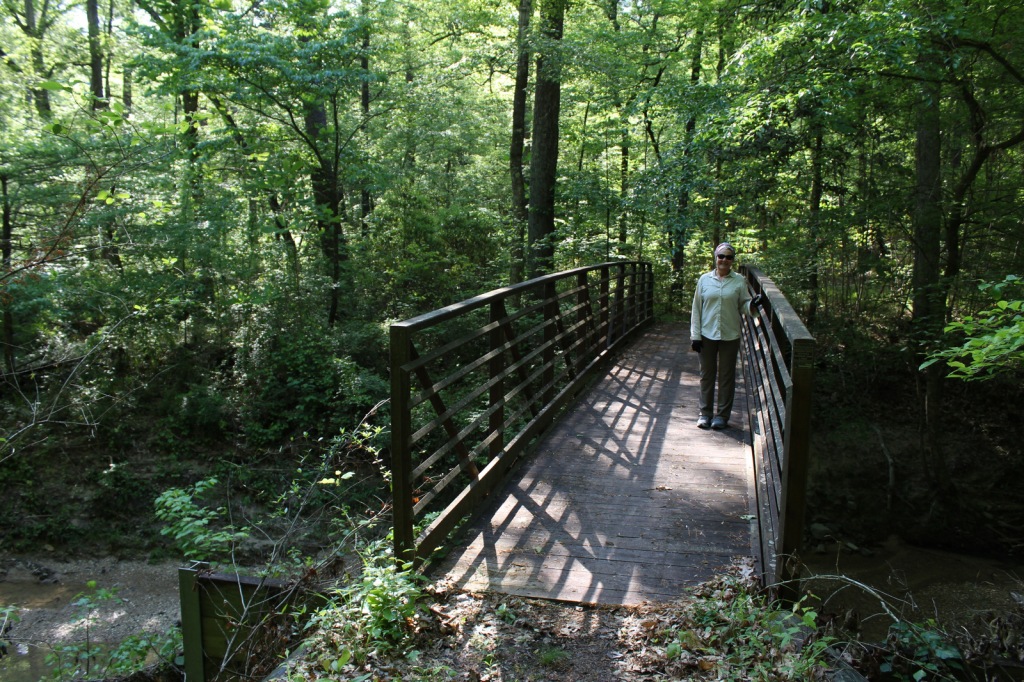
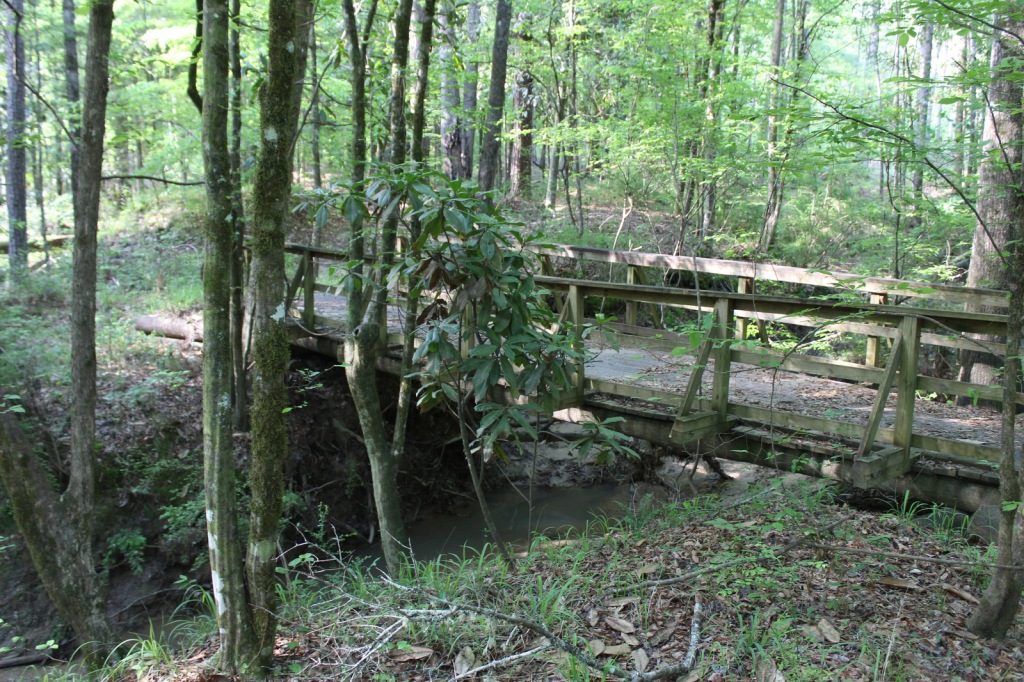
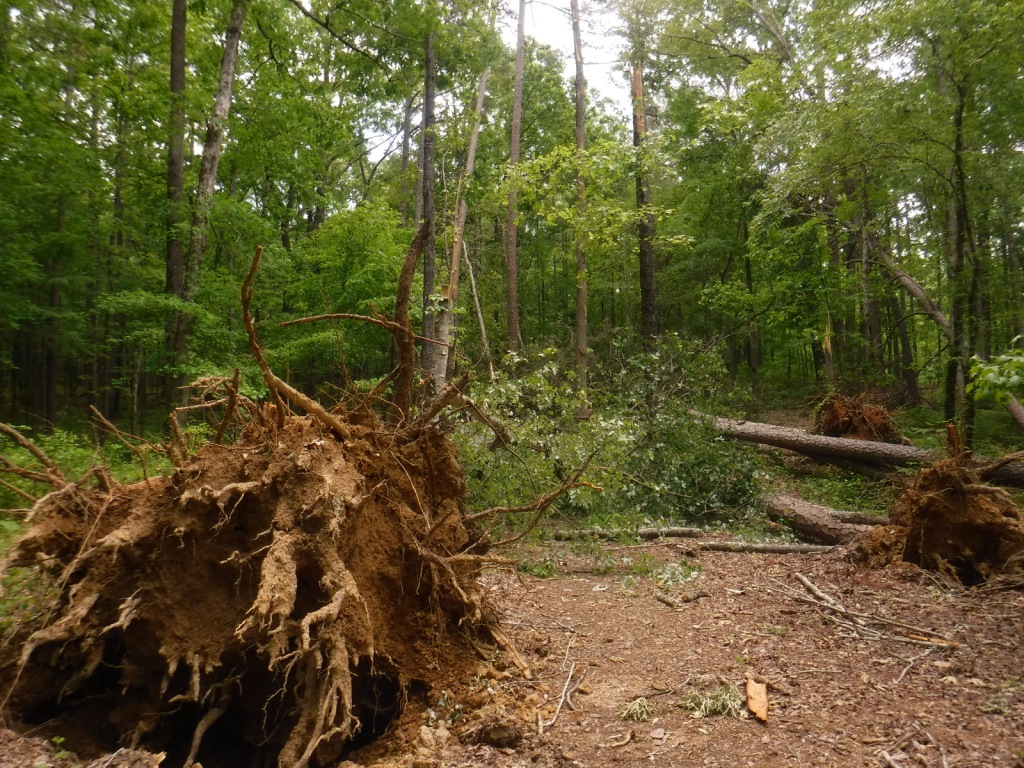
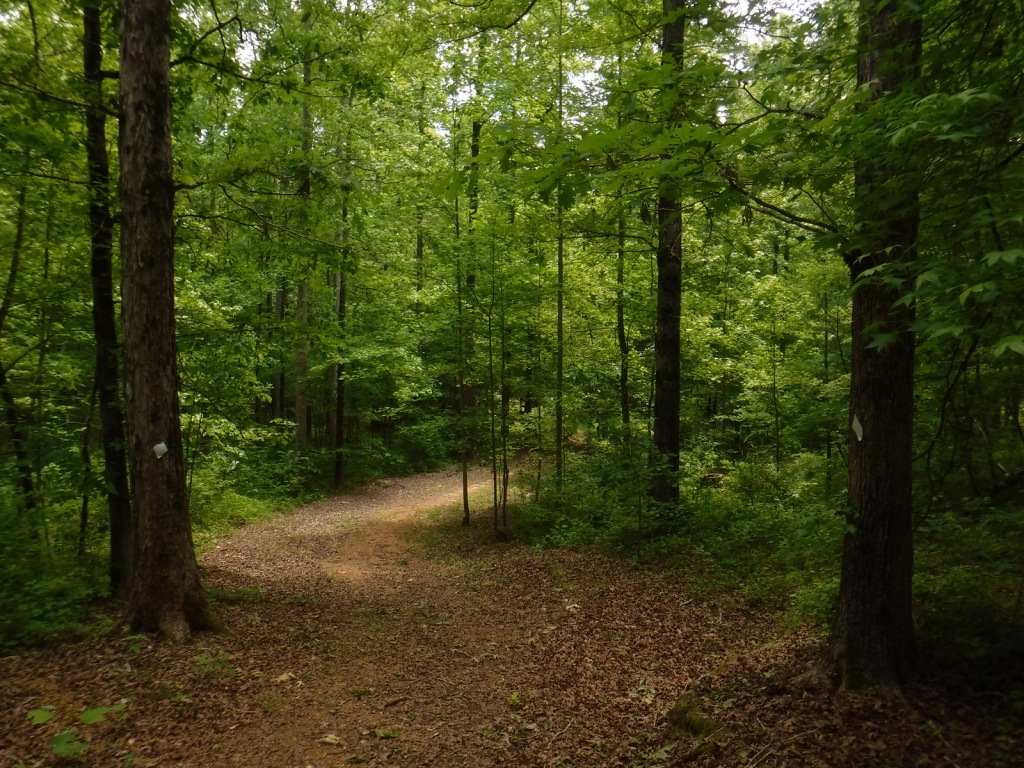
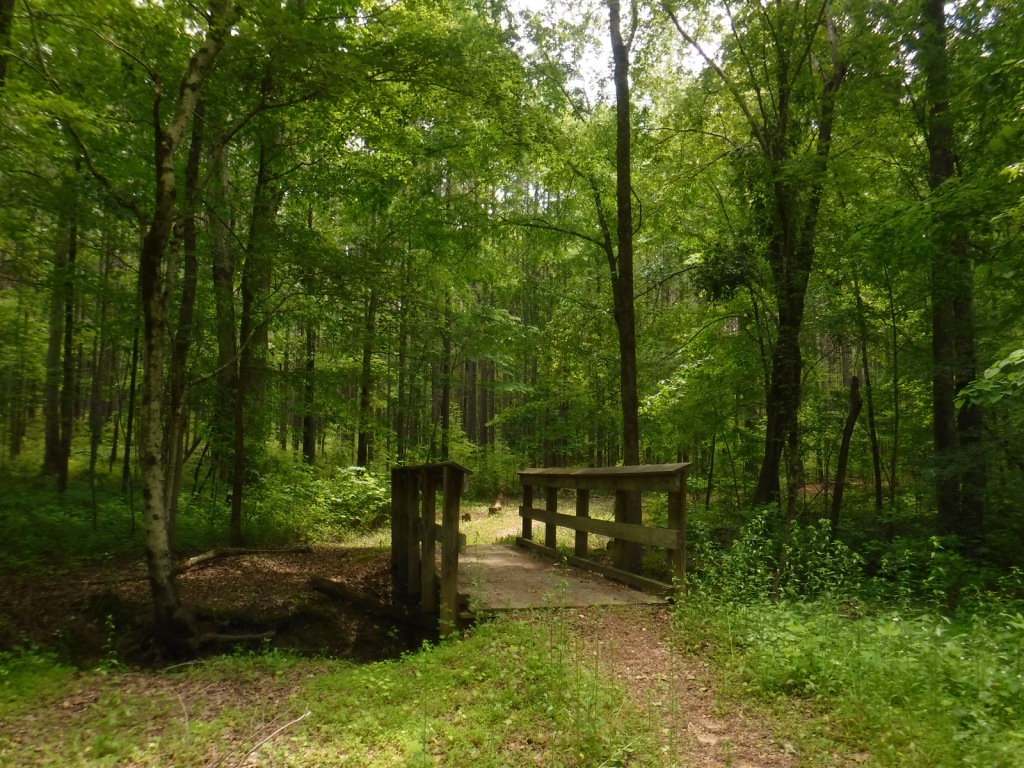
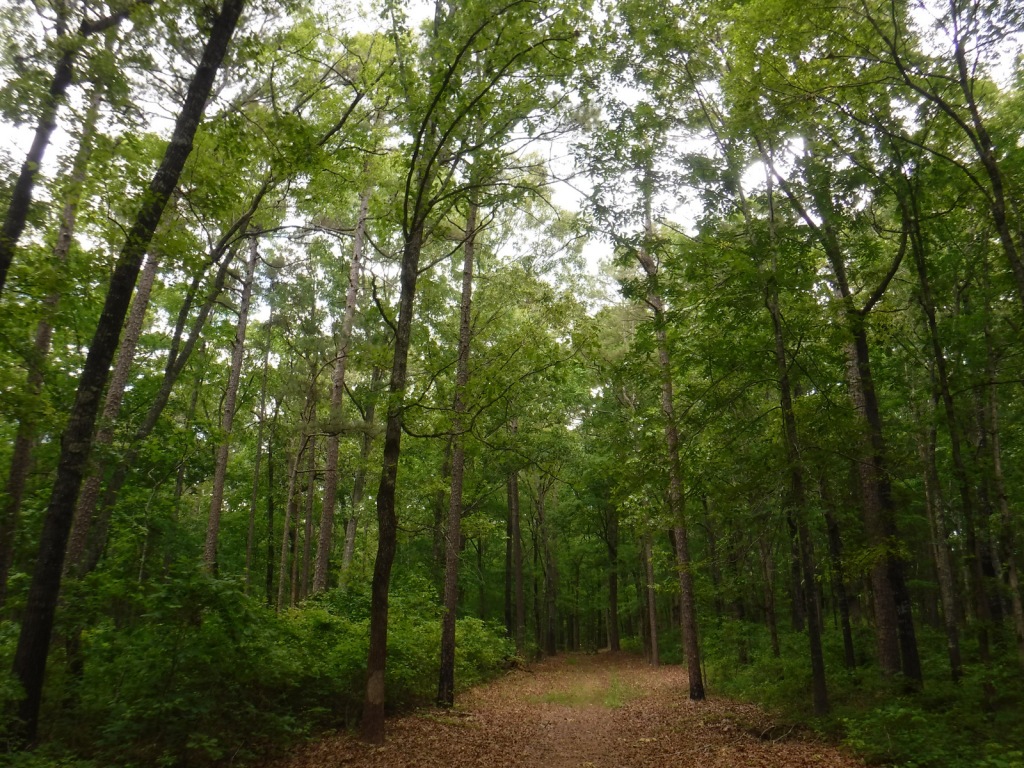
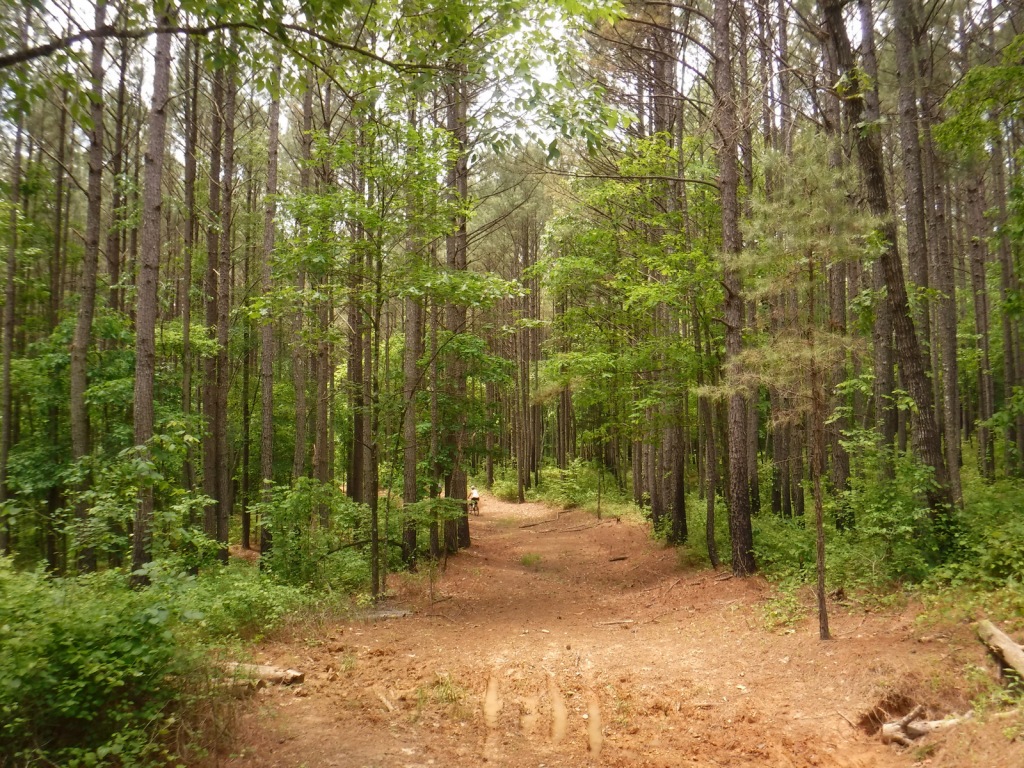
Just north of the Clear Springs Lake Campground is a trailhead (fee) for three long hiking trails, also maintained for mountain biking.  Only the 10-mile-long Richardson Creek Trail was open during our visit with Tally’s Creek (10.8 miles) and Mill Branch (5.6 miles) closed due to downed trees.  The route was well-marked with red blazes and had several nice bridges as it wound through the forested hills around Richardson Creek.

Watchable Wildlife

Clear Springs Lake has a sign warning of alligators, but we did not see any reptiles other than painted turtles.  While camping overnight we heard what possibly was a frog making an interesting call that sounded like a lightsaber from Star Wars.  Birds we spotted were a wild turkey, cardinal, goldfinch, and tufted titmouse.  It is likely the National Forest allows hunting for white-tailed deer, wild turkey, ducks, and invasive wild pigs.  Fishing for largemouth bass, catfish, and other species is allowed at Clear Springs, Pipes, and Mt. Nebo Lakes.

Instagram-worthy Photo

The picnic shelter at Clear Springs Lake was built by the Civilian Conservation Corps (CCC) in 1935 and is listed on the National Register of Historic Places. 
Peak Season

Spring and fall

Fees

Clear Springs Lake Recreation Area charges a day use fee of $5 per vehicle or half price with the America the Beautiful pass. 

Road Conditions

The road is paved to Clear Springs Lake, about 32 miles east of Natchez.

Camping

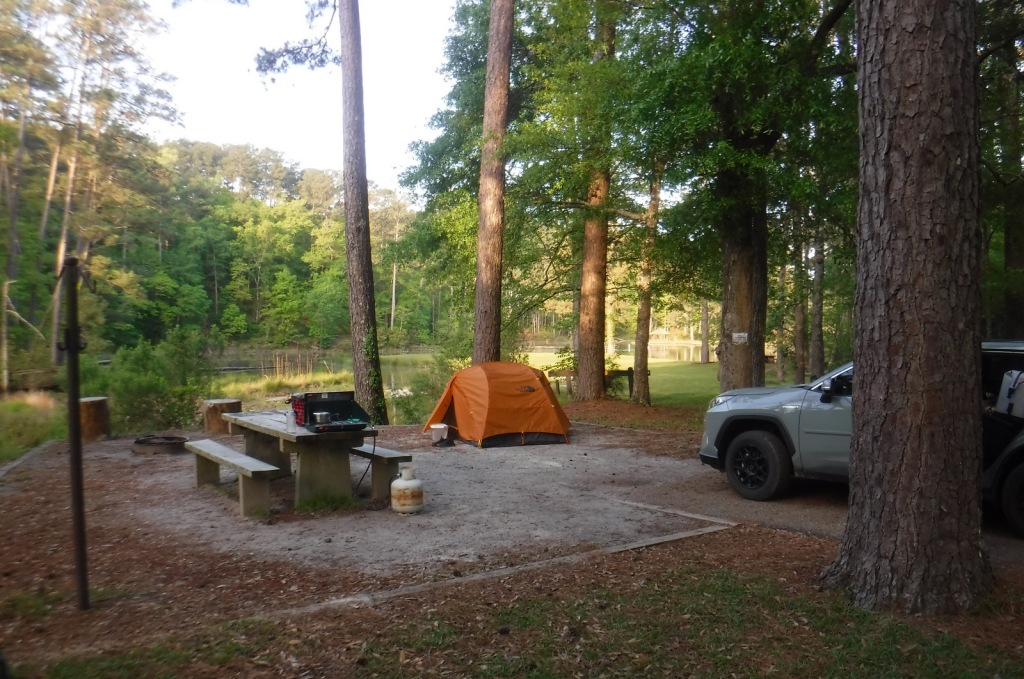
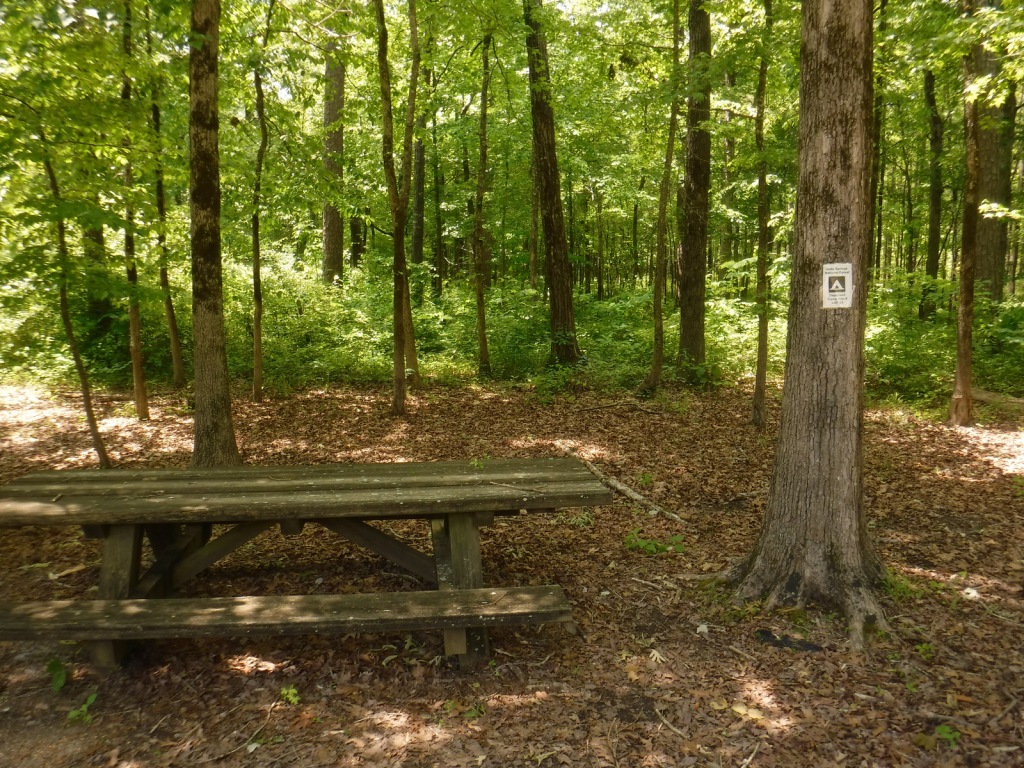
There is a nice campground with showers on Clear Springs Lake, accessed by a paved road four miles south of Highway 84.  Campsites with hookups cost $20 per night and those without cost $7. 

Wilderness Areas

None

Related Sites

De Soto National Forest (Mississippi)

Natchez National Historical Park (Mississippi)

Natchez Trace National Scenic Trail (Mississippi-Alabama-Tennessee)

Nearest National Park

Hot Springs

Conifer Tree Species

baldcypress, shortleaf pine, loblolly pine, longleaf pine

Flowering Tree Species

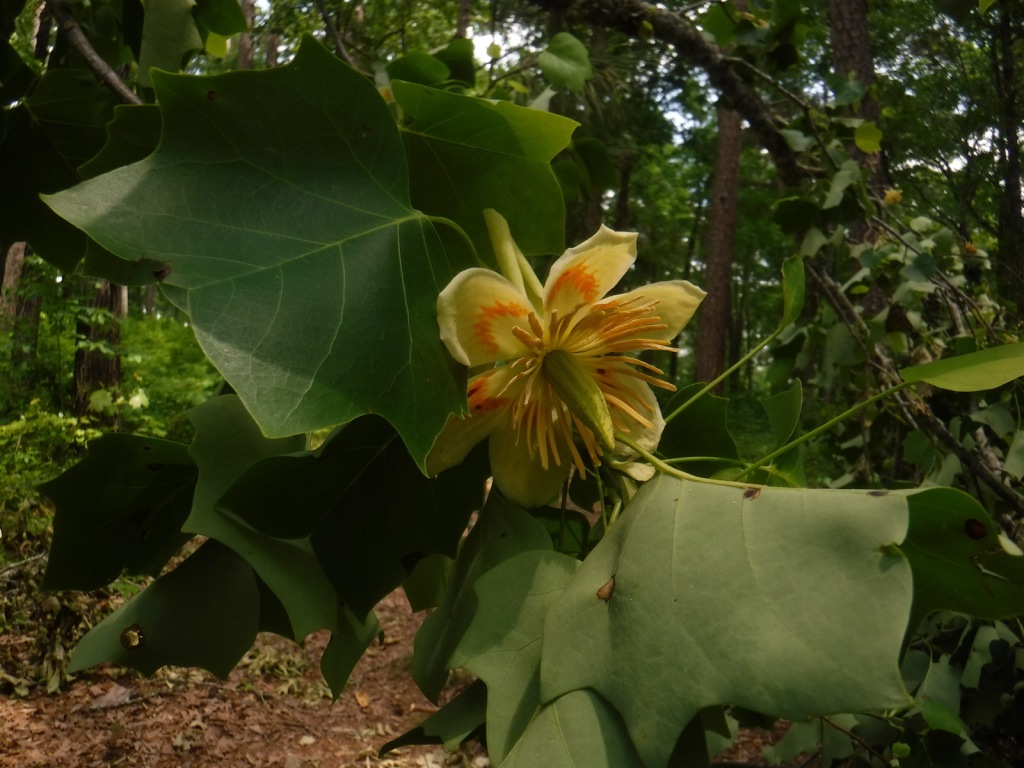
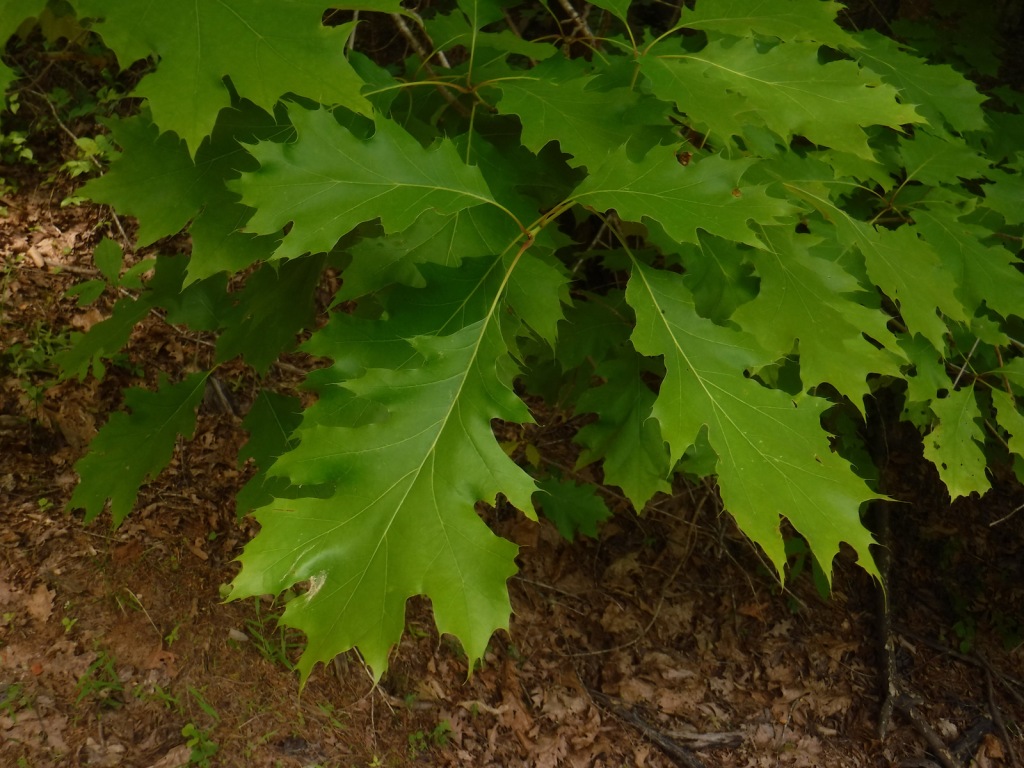
tulip-poplar, American beech, water oak, Nuttall oak, cherrybark oak, southern red oak, sweet bay, red maple, swamp red maple, horse sugar, chesnut oak, sweetgum, devil’s walkingstick, American holly, hophornbeam, southern magnolia, umbrella magnolia, tupelo gum, flowering dogwood

Explore More – The Homochitto River still carries its Choctaw name, which translates as what?

Learn more about this and the 154 other National Forests in our new guidebook Out in the Woods

Holly Springs National Forest

Holly Springs National Forest

Mississippi

Managed by U.S. Forest Service, Southern Region

519,943 acres (155,661 federal/ 364,282 other)

Website: https://www.fs.usda.gov/recarea/mississippi/recarea/?recid=28851

Overview

In northern Mississippi, Holly Springs National Forest was established in 1936 on abandoned agricultural land and it still encompasses 364,282 acres of private property.  To help control erosion, the area was planted by the Civilian Conservation Corps (CCC) with loblolly pine seedlings.  All six National Forests in Mississippi are managed as one administrative unit, including Bienville, De Soto, Delta, Holly Springs, Homochitto, and Tombigbee National Forests.  The Holly Springs district ranger station is headquartered not in the town of Holly Springs, but rather in nearby Oxford, home of the University of Mississippi (or Ole Miss).

Highlights

Chewalla Lake, Puskus Lake, Benton Lookout Tower, Lake Tillatoba, Baker’s Pond Hiking Trail, North Cypress Non-Motorized Trail

Must-Do Activity

There are many small lakes and ponds throughout this region, some of them accessible from boat ramps on National Forest land.  Chewalla Lake Recreation Area is the most developed site offering a swimming beach and campground, plus fishing and boating opportunities.  A 2.3-mile trail at the 260-acre lake passes an overlook and a reconstructed Choctaw burial mound.  In Holly Springs National Forest’s northeast corner off Highway 72, a short trail accesses Baker’s Pond, the source of the Wolf River.  Further south, Lake Tillatoba is a fee-free primitive site managed by Tombigbee National Forest.

Best Trail

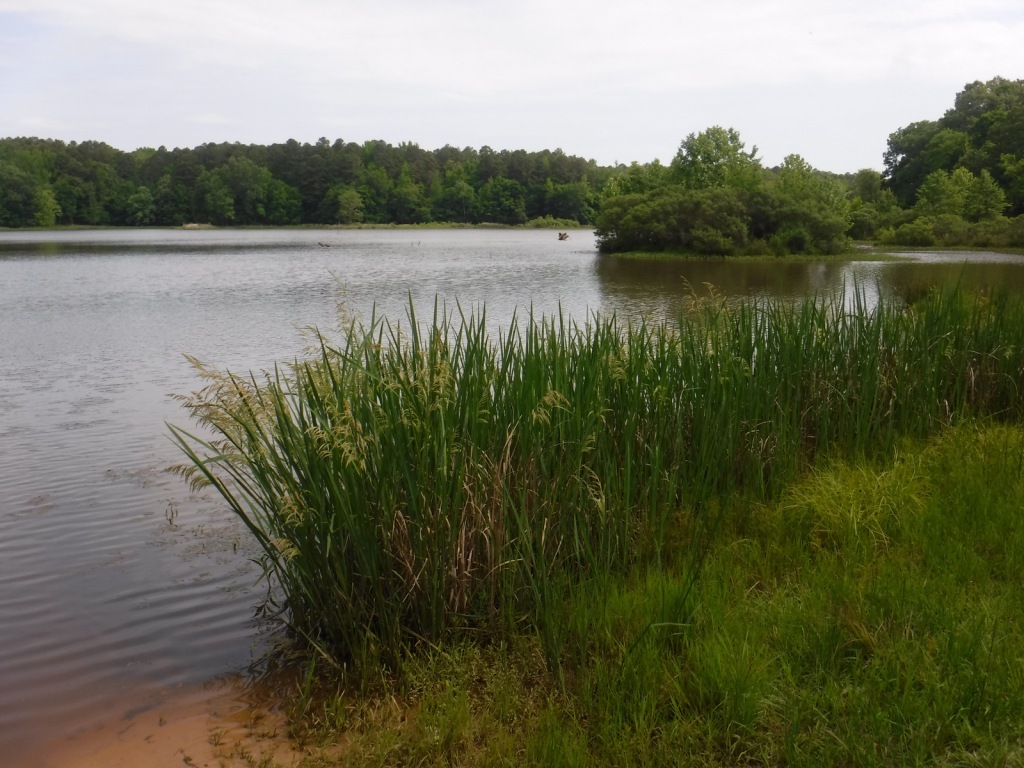
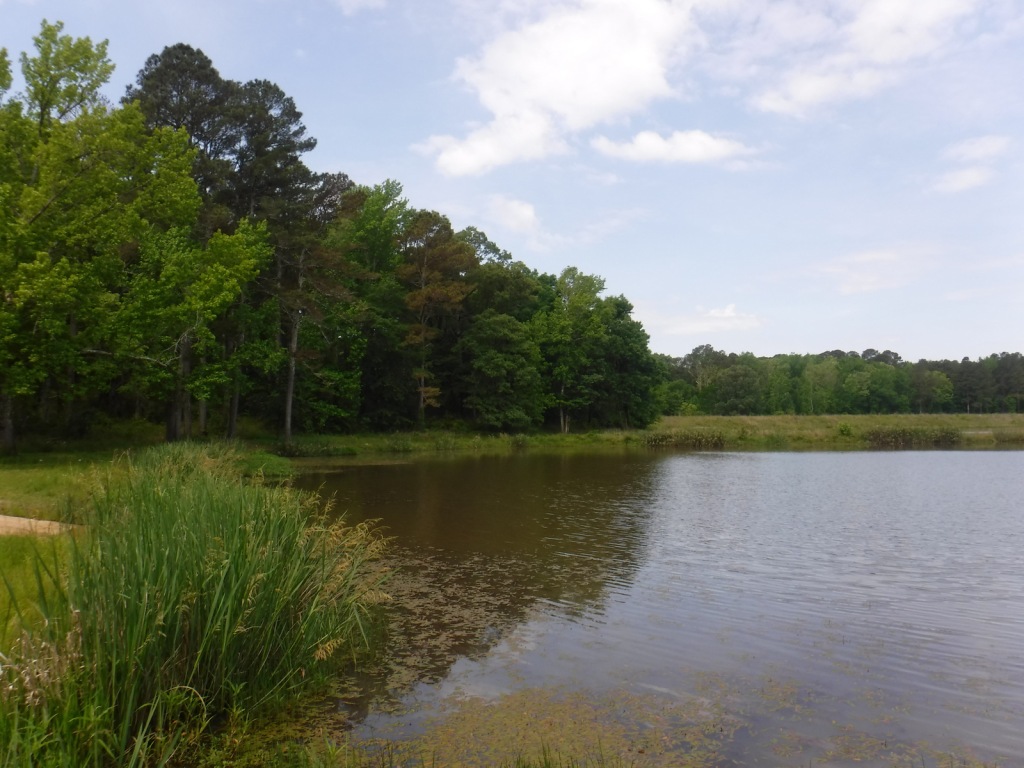
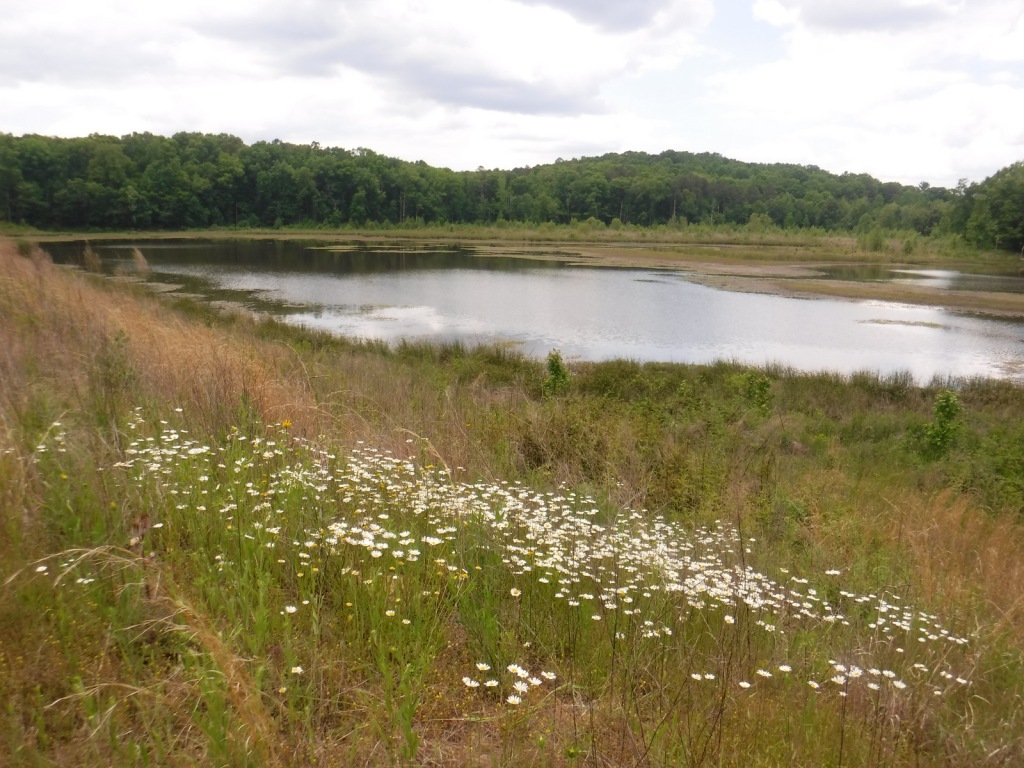
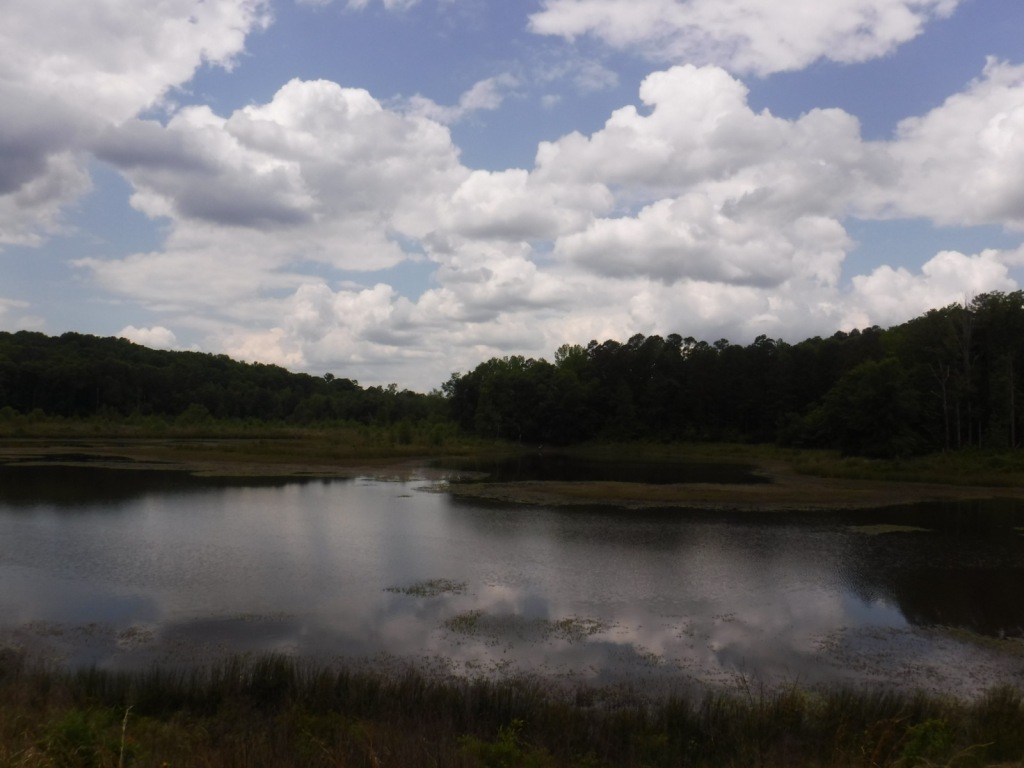
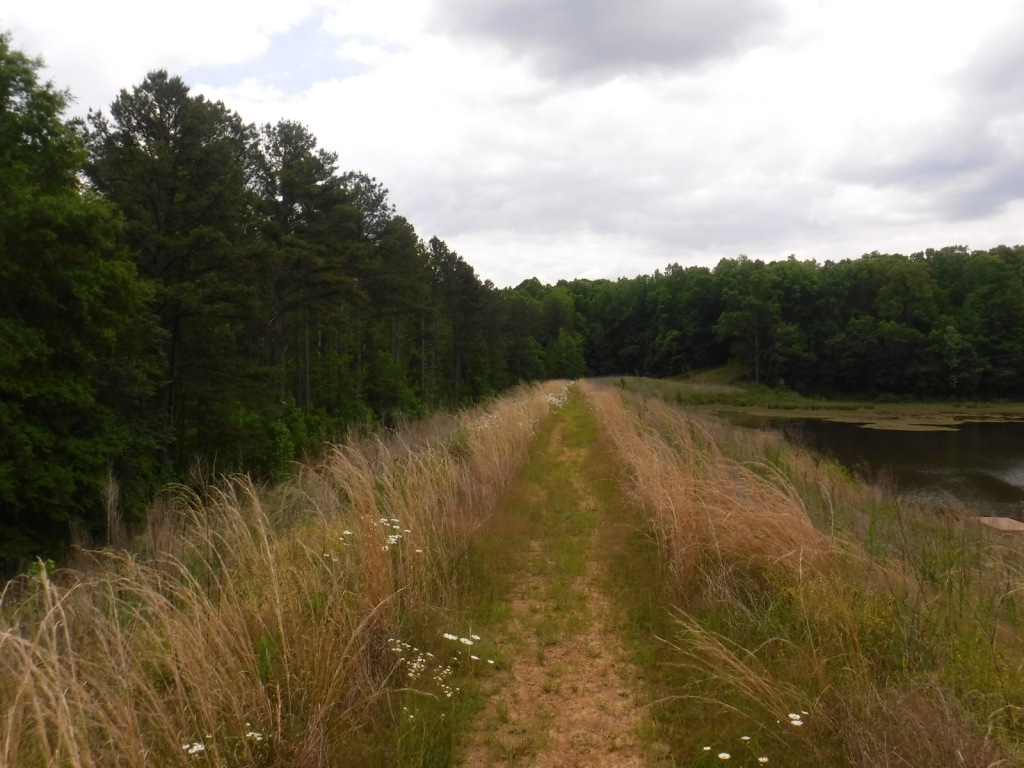
Open to hikers, mountain bikers, and horseback riders, North Cypress Non-Motorized Trail makes a three-mile loop marked by white blazes on trees through a lush green forest.  The most scenic stretch crosses the earthen dam creating North Cypress Lake where sweeping views allow for bird watching.  There are also short hiking trails at Chewalla Lake, Baker’s Pond, and Puskus Lake.

Watchable Wildlife

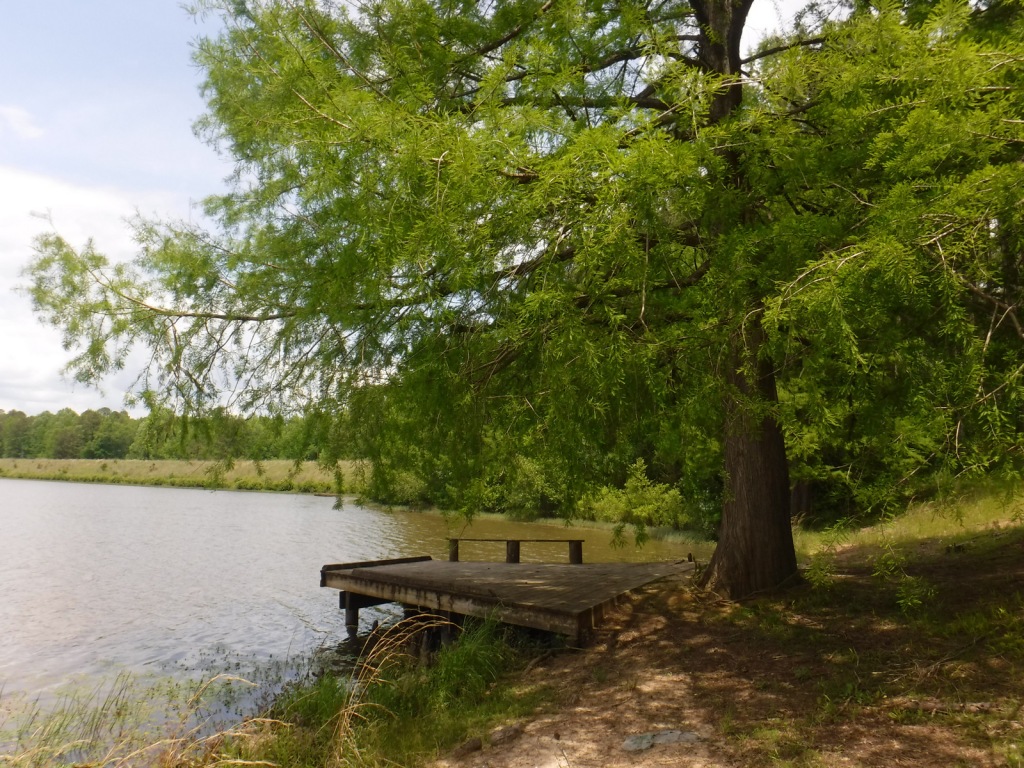
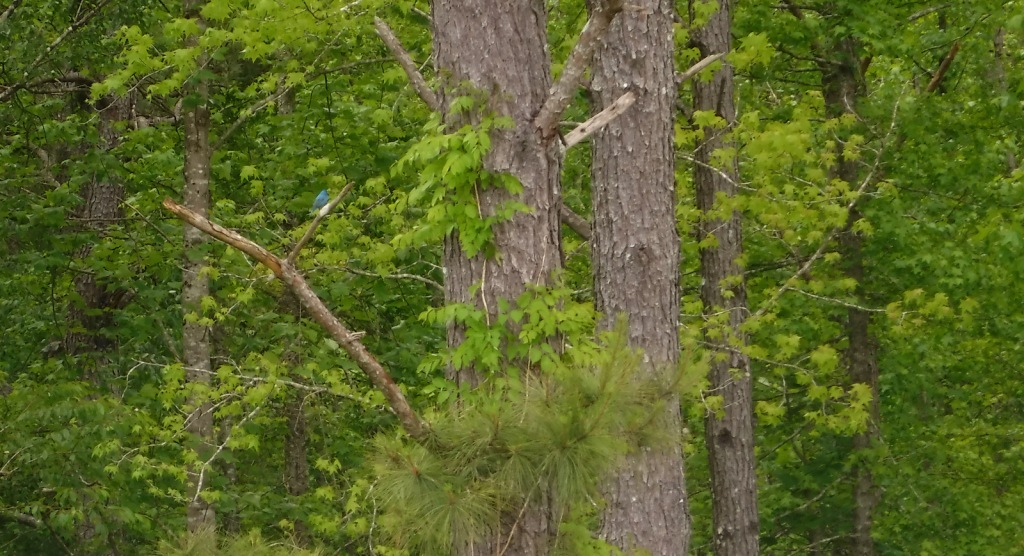
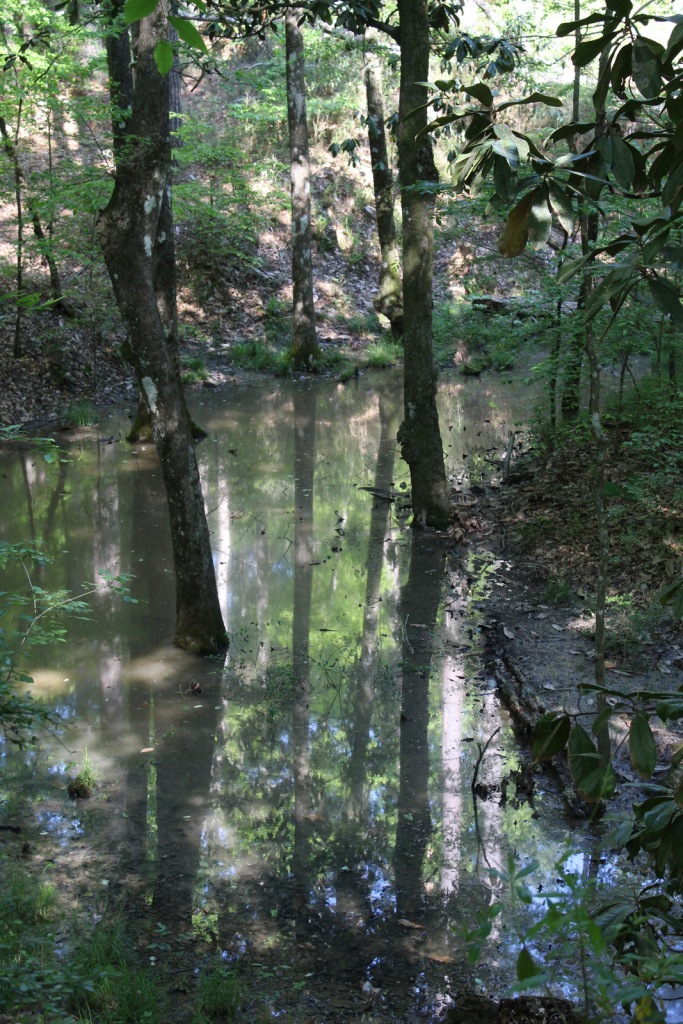
The National Forest’s lakes have largemouth bass, bluegill, catfish, and crappie that attract fishermen.  The forest also provides habitat for white-tailed deer, fox squirrels, raccoons, and wild turkeys.  We saw a red fox and our first indigo bunting on the North Cypress Non-Motorized Trail.

Instagram-worthy Photo

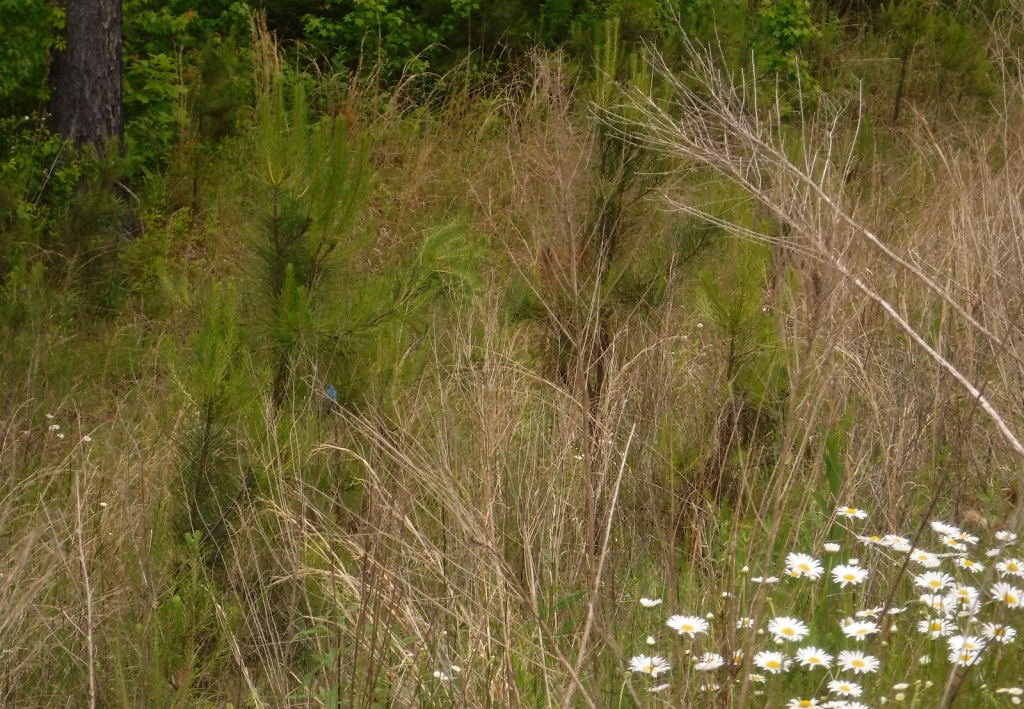
We spotted our first indigo bunting on the dam at North Cypress Lake, but did not have a zoom lens on hand.

Peak Season

Spring and fall

Fees

Chewalla Lake Recreation Area charges a day use fee of $5 per vehicle or America the Beautiful pass (half price with the Senior or Access Passes).  Puskus Lake charges $3 per day and $7 for camping.

Road Conditions

The William Faulkner Memorial Highway (Highway 30) is paved and the dirt roads off it to North Cypress Lake and Puskus Lake were in good enough shape for our passenger vehicle.

Camping

Free primitive camping is allowed at designated sites around the parking area for North Cypress Lake (see Best Trail), 0.6 miles south of Highway 30.  There is large campground on the west side of Chewalla Lake, offering nine sites with hookups ($20 per night) and 27 without ($7).  Free camping for only one night is allowed at Lake Tillatoba, only three miles off Interstate 55.

Wilderness Areas

None

Related Sites

Bienville National Forest (Mississippi)

Brices Cross Roads National Battlefield Site (Mississippi)

Shiloh National Military Park (Tennessee-Mississippi)

Nearest National Park
Hot Springs

Conifer Tree Species

baldcypress, loblolly pine, shortleaf pine

Flowering Tree Species

white oak, northern red oak, southern red oak, black oak, bitternut hickory, mockernut hickory, slippery elm, black cherry, flowering dogwood, redbud, tulip-poplar, black gum, basswood, hackberry, sweetgum, red maple, white ash, green ash, pumpkin ash, tupelo gum, American elm

Explore More – In 1983, which presidential administration proposed auctioning off the entirety of Holly Springs National Forest?

Learn more about this and the 154 other National Forests in our new guidebook Out in the Woods

Delta National Forest

Delta National Forest

Mississippi

Managed by U.S. Forest Service, Southern Region

118,150 acres (60,898 federal/ 57,252 other)

Website: https://www.fs.usda.gov/mississippi

Overview

In western Mississippi, the U.S. Forest Service manages the entirety of Delta National Forest as Sunflower Wildlife Management Area through a Memorandum of Understanding with the state of Mississippi.  The Big and Little Sunflower Rivers run through these bottomland hardwood forests west of the Yazoo River, flooding the landscape throughout the summer.  This is the only National Forest preserving bottomland hardwood forests, which have primarily been converted to agriculture due to their rich soil.  It was in Delta National Forest that the idea for the Teddy Bear was born in 1902, when President Theodore Roosevelt refused to shoot a tethered black bear while hunting. 

Highlights

Blue Lake Recreation Area, Kay Cypress Tree, Lost Lake, Howlett Bayou, Green Ash-Overcup Oak-Sweetgum Research Natural Areas, Rock Bottom Trail

Must-Do Activity

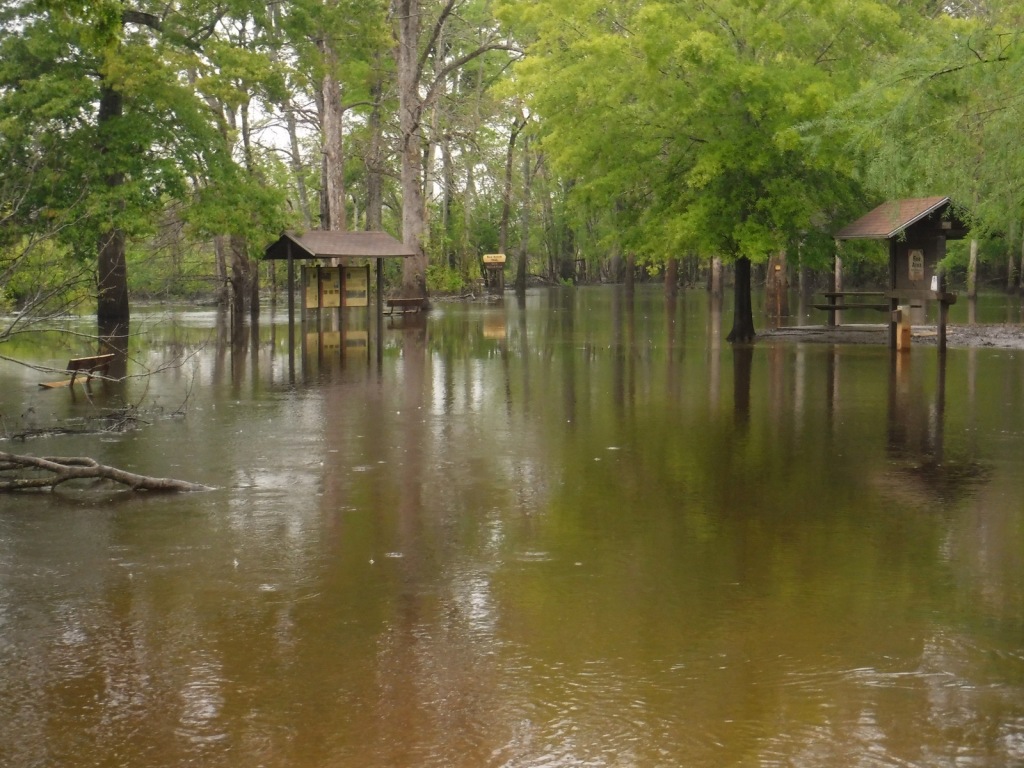
This National Forest is unique because it is flooded throughout the summer, so it is primarily used from September through March.  All vehicles must display a free Daily Visitor Use Permit and all ATV, horse, and bike riders must carry a pass (fee) on the multi-use trails.  The Yazoo-Mississippi Delta (or simply “the Delta”) is a distinct section of western Mississippi renowned for its blues musicians. Throughout this area, there are blues clubs and museums dedicated to preserving the memories of Muddy Waters, B.B. King, Bessie Smith, and others.

Best Trail

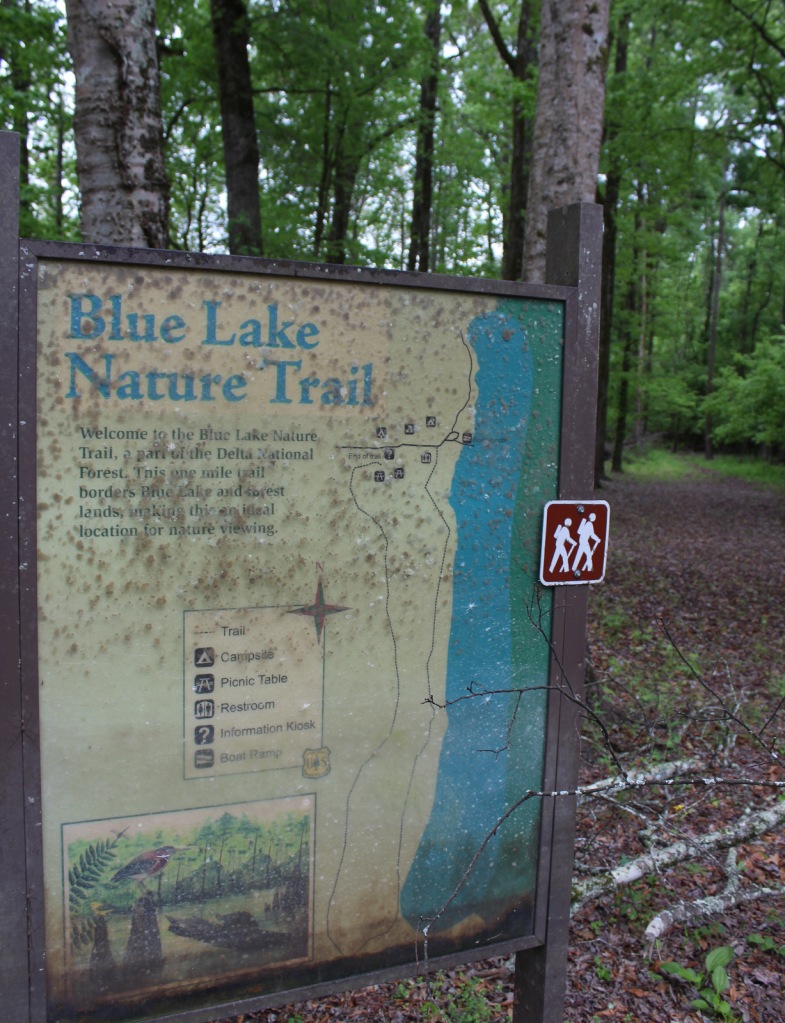
Delta National Forest has two main developed areas at Blue Lake and the Little Sunflower River, with Blue Lake Nature Trail and Rock Bottom Trail found at these sites respectively.  Both were flooded during our April visit, so in lieu of hiking, we opted to launch our inflatable kayak and paddle around Blue Lake to get up close to some huge baldcypress trees. 

Watchable Wildlife

Declared National Natural Landmarks in 1976, the Green Ash-Overcup Oak-Sweetgum Research Natural Areas are rare examples of pristine bottomland hardwood forests.  To improve wintering waterfowl conditions, three of the five greentree reservoirs are pumped and over 100 acres are planted as wildlife food plots.  Established in 1978, the neighboring Panther Swamp National Wildlife Refuge is one of seven refuges in the Theodore Roosevelt National Wildlife Refuge Complex.  The forest’s white-tailed deer herd is in very good condition, as are the numbers of wild turkeys, fox squirrels, swamp rabbits, river otters, raccoons, and American alligators.  The forest is known for its 32 different species of butterflies that congregate in July, with an average population of 21,000.

Instagram-worthy Photo

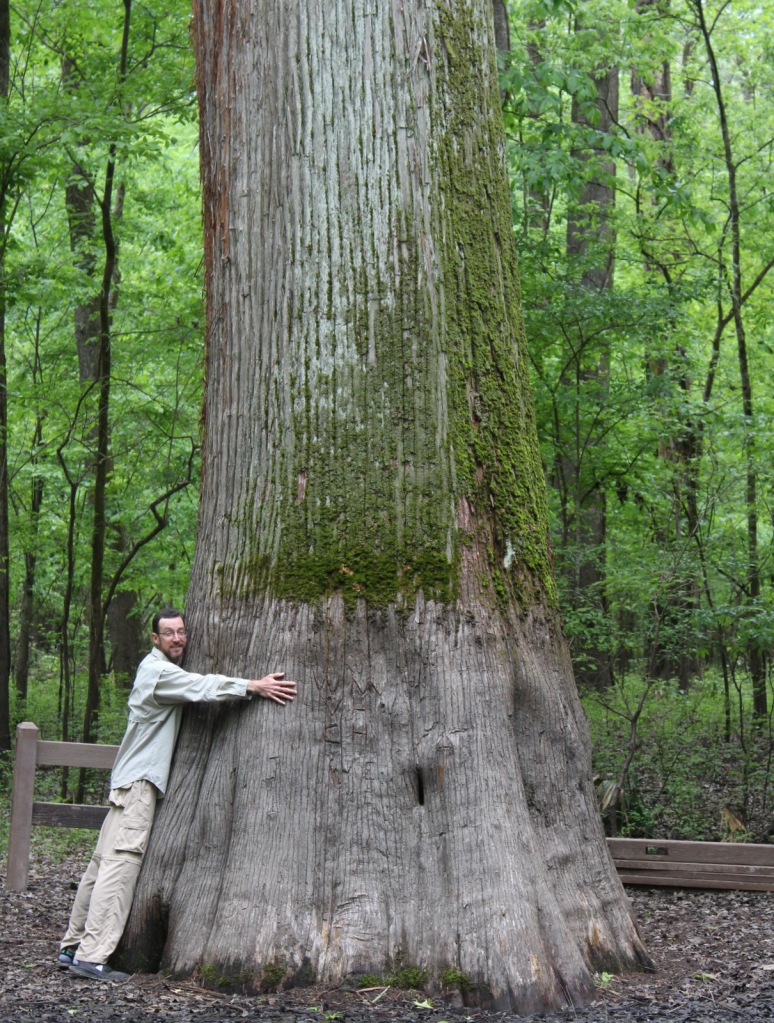
Across from Blue Lake on unpaved Fire Tower Road, be sure to stop at the Kay Cypress Tree, which is more than ten feet in diameter.

Peak Season

Winter

Fees

All vehicles in Sunflower Wildlife Management Area must display a free Daily Visitor Use Permit and all ATV, horse, and bike riders must carry a pass (fee) on the multi-use trails. 

Road Conditions

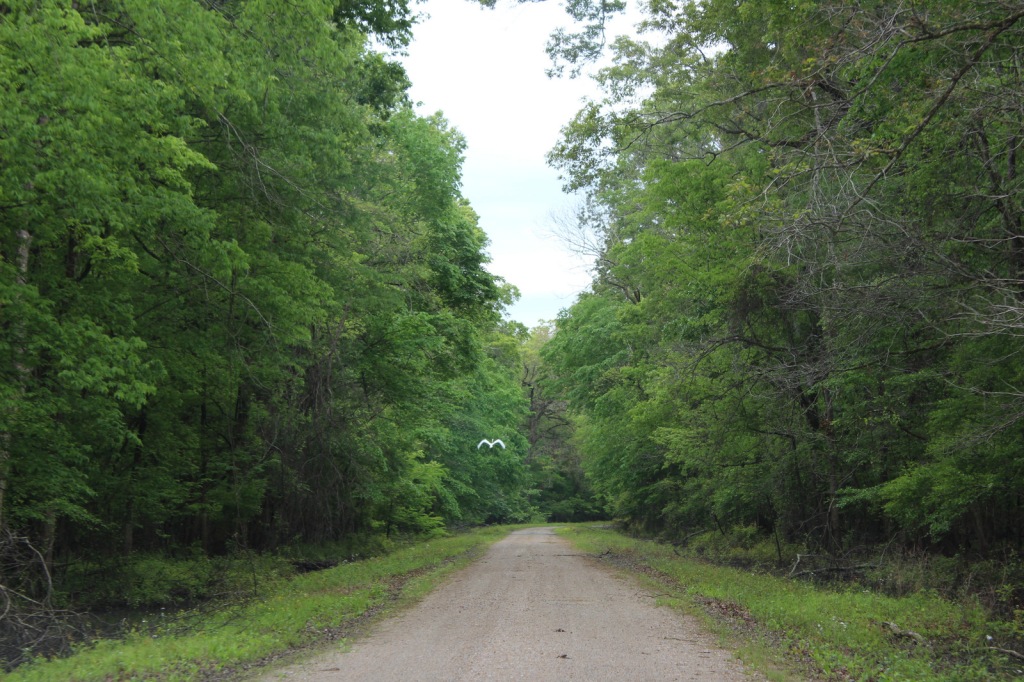
Fire Tower Road is unpaved, but was flat and above floodwater levels during our April visit, as was the road atop the dike along the Little Sunflower River.

Camping

Camping is only allowed at 57 primitive sites with a permit obtainable online ($7 per night fee). 

Wilderness Areas

None

Related Sites

Bienville National Forest (Mississippi)

De Soto National Forest (Mississippi)

Vicksburg National Military Park (Mississippi)

Nearest National Park

Hot Springs

Conifer Tree Species

baldcypress

Flowering Tree Species

Nuttall’s oak, overcup oak, cherrybark oak, willow oak, water oak, bur oak, swamp chestnut oak, water hickory, sweetgum, boxelder, swamp red maple, American elm, green ash, sugarberry, September elm, honeylocust, pecan, black gum, red mulberry, persimmon, deciduous holly, swamp dogwood

Explore More – What was the name of the legendary hunting guide and woodsman who found and tied up the black bear that Teddy Roosevelt refused to shoot in 1902?

Learn more about this and the 154 other National Forests in our new guidebook Out in the Woods

We are a participant in the Amazon Services LLC Associates Program, an affiliate advertising program designed to provide a means for us to earn fees by linking to Amazon.com and affiliated sites.

De Soto National Forest

De Soto National Forest

Mississippi

Managed by U.S. Forest Service, Southern Region

802,944 acres (518,587 federal/ 284,357 other)

Website: https://www.fs.usda.gov/mississippi

Overview

All six National Forests in Mississippi are managed as one administrative unit, with De Soto National Forest being the southernmost of them.  This sandy stretch of forest near the Gulf Coast has some of the last longleaf pine savannahs remaining in North America, providing habitat for multiple species of carnivorous plants.  De Soto National Forest also contains Mississippi’s sole National Wild and Scenic River and its only two designated Wilderness areas: Black Creek and Leaf. 

Highlights

Turkey Fork Recreation Area, Airey Lake, Big Biloxi Recreation Area, Ashe Nursery, Buttercup Flats, Bethel ATV Trail, Rattlesnake Bay ATV Trail, Longleaf Horse Trail, Black Creek National Recreation Trail, Tuxachanie National Recreation Trail, Bigfoot Horse Trail, General Jackson Interpretive Trail

Must-Do Activity

There are several boat launches along Black Creek that also provide access to the 41-mile Black Creek National Recreation Trail that follows its course, which was partially closed during our visit to Fairly Bridge Landing.  The National Forest boasts the 69-mile-long Bethel ATV Trail, as well as routes specifically designed for mountain bikers and horseback riders.

Best Trail

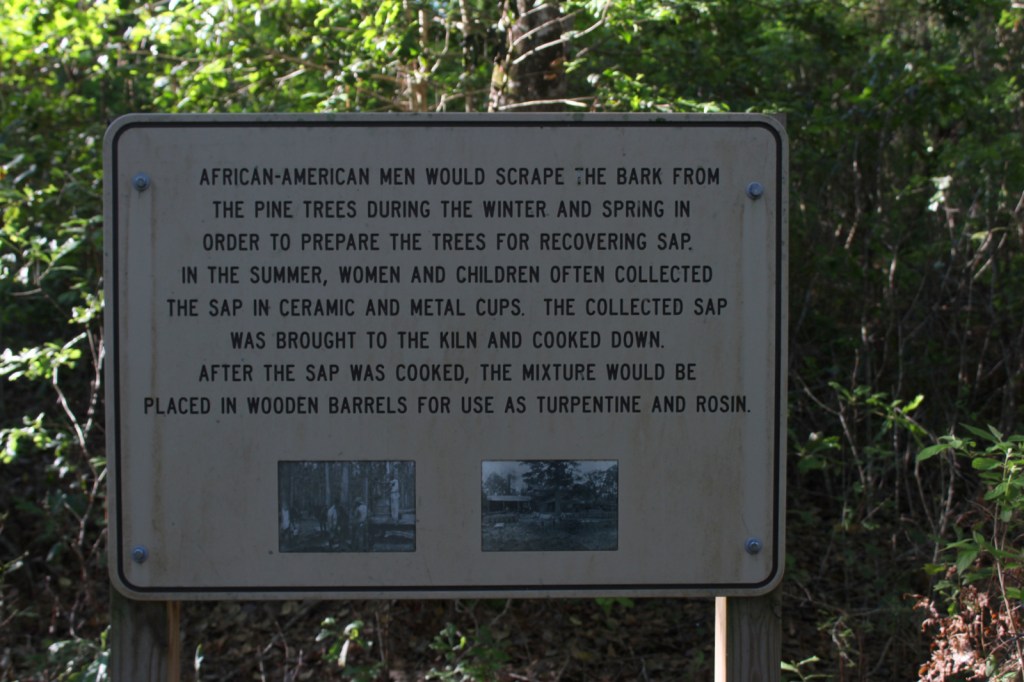
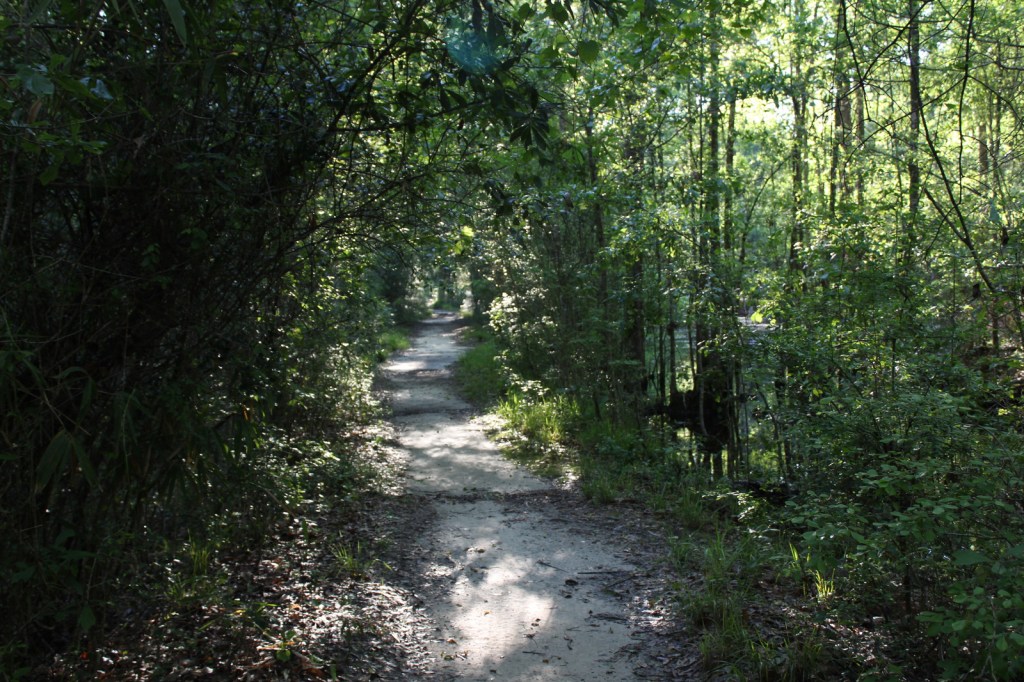
Tuxachanie National Recreation Trail runs 12 miles through the National Forest with its western trailhead easily accessible right on busy Highway 49.  This first four miles of this sandy trail follows an old logging railroad that once led to the abandoned sawmill town of Howison.  Interpretive signs explain how sap was collected from longleaf pine trees, then cooked down in kilns to produce turpentine and rosin.  Near the far eastern end of the trail is a lakeside World War II Prisoner of War camp (see Camping below).

Watchable Wildlife

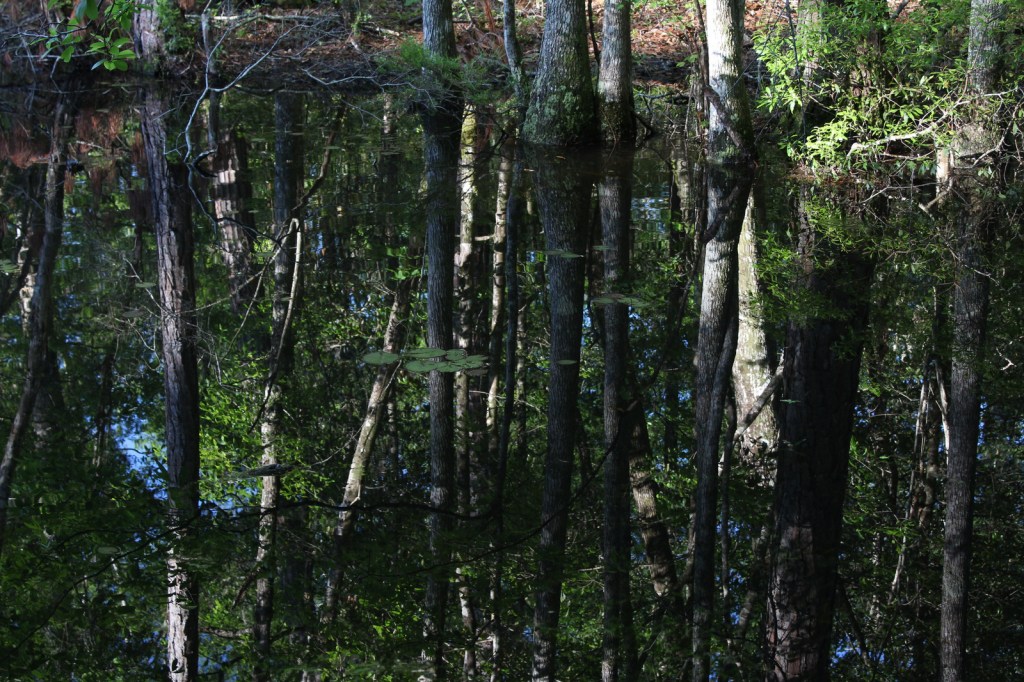
De Soto National Forest has a wide variety of habitats, from sandy pine ridges to flooded tupelo-baldcypress swamps.  White-tailed deer and American alligators are two of the most common types of wildlife.  Wet pine savannahs support rare animal species, like gopher frogs and gopher tortoises, as well as unique orchids and pitcher plants (especially at Buttercup Flats). 

Instagram-worthy Photo

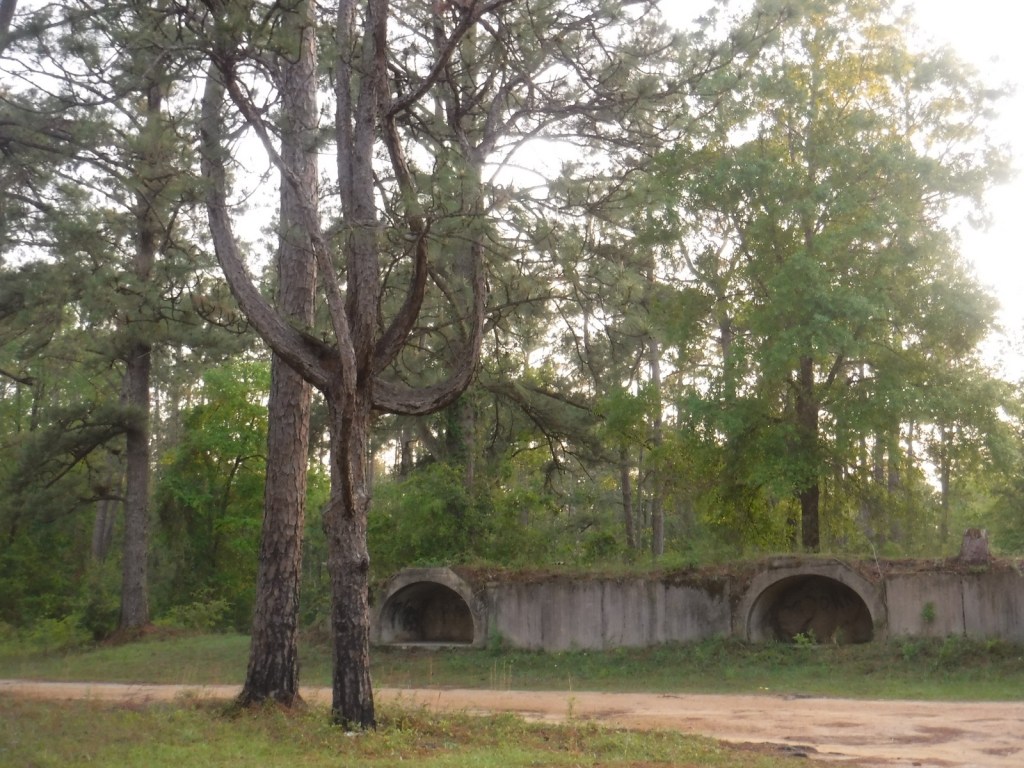
Concrete ammunition bunkers are the only visible remains of the World War II Prisoner of War camp on the Tuxachanie National Recreation Trail.

Peak Season

Spring and fall

Fees

None

Road Conditions

The major highways through the National Forest are paved and even the unpaved roads are flat, packed sand, especially around the World War II Prisoner of War camp.

Camping

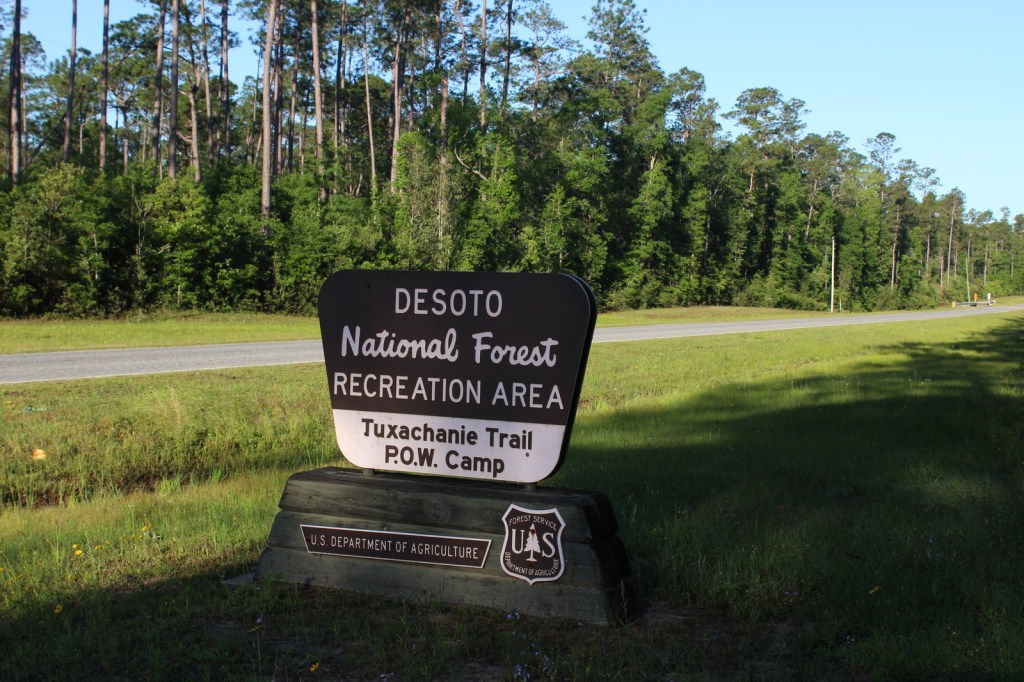
Developed campgrounds are found at Turkey Creek and Big Boloxi Recreation Areas.  There is free dispersed camping allowed at the far eastern end of the Tuxachanie National Recreation Trail, where a lakeside World War II Prisoner of War camp is also reachable by County Road 402.  Be aware that warning signs suggested the pond there has alligators.

Wilderness Areas

Black Creek Wilderness

Leaf Wilderness

Related Sites

Bienville National Forest (Mississippi)

Apalachicola National Forest (Florida)

Gulf Islands National Seashore (Florida)

Nearest National Park

Hot Springs

Conifer Tree Species

baldcypress, loblolly pine, longleaf pine, shortleaf pine

Flowering Tree Species

white oak, southern red oak, willow oak, overcup oak, blackjack oak, laurel oak, shagbark hickory, winged elm, black gum, tupelo gum, sweetgum, red maple, flowering dogwood, tulip-poplar, mountain-laurel, sweet bay, southern magnolia, black cherry, loblolly bay, American holly, yaupon holly, dahoon holly, black titi

Explore More – Why does yaupon holly have to descriptive Latin binomial of Ilex vomitoria?

Learn more about this and the 154 other National Forests in our new guidebook Out in the Woods

We are a participant in the Amazon Services LLC Associates Program, an affiliate advertising program designed to provide a means for us to earn fees by linking to Amazon.com and affiliated sites.

Bienville National Forest

Bienville National Forest

Mississippi

Managed by U.S. Forest Service, Southern Region

382,821 acres (178,541 federal/ 204,280 other)

Website: https://www.fs.usda.gov/mississippi

Overview

Managed collectively with Mississippi’s five other National Forests, Bienville is centered around the town of Forest, which has numerous rooster statues.  The ranger station is located just south of Interstate 20 and has an interpretive trail that passes a pond on a half-mile loop.  Just north of the freeway, there is Harrell Prairie Hill National Natural Landmark and 189 acres of old-growth forest protected in Bienville Pines Scenic Area (which we could not locate any signs nor trailheads to access).

Highlights

Harrell Prairie Hill National Natural Landmark, Marathon Lake Recreation Area, Coursey Lookout Tower, Shongelo Lake Recreation Area, Shockaloe Horse Trail

Must-Do Activity

Marathon Lake is 50 acres in size and got its name from Marathon Lumber Company, which closed in 1929.  The lake was built in the 1950s for recreation in the former logging camp.  Bienville National Forest also has the upper courses of the Leaf and Strong Rivers and several other lakes, including five-acre Shongelo Lake (with a swimming area and hiking trail open May to September), 67-acre Beaver Lake (open year round), and 33-acre Greentree Reservoir (open year round).

Best Trail

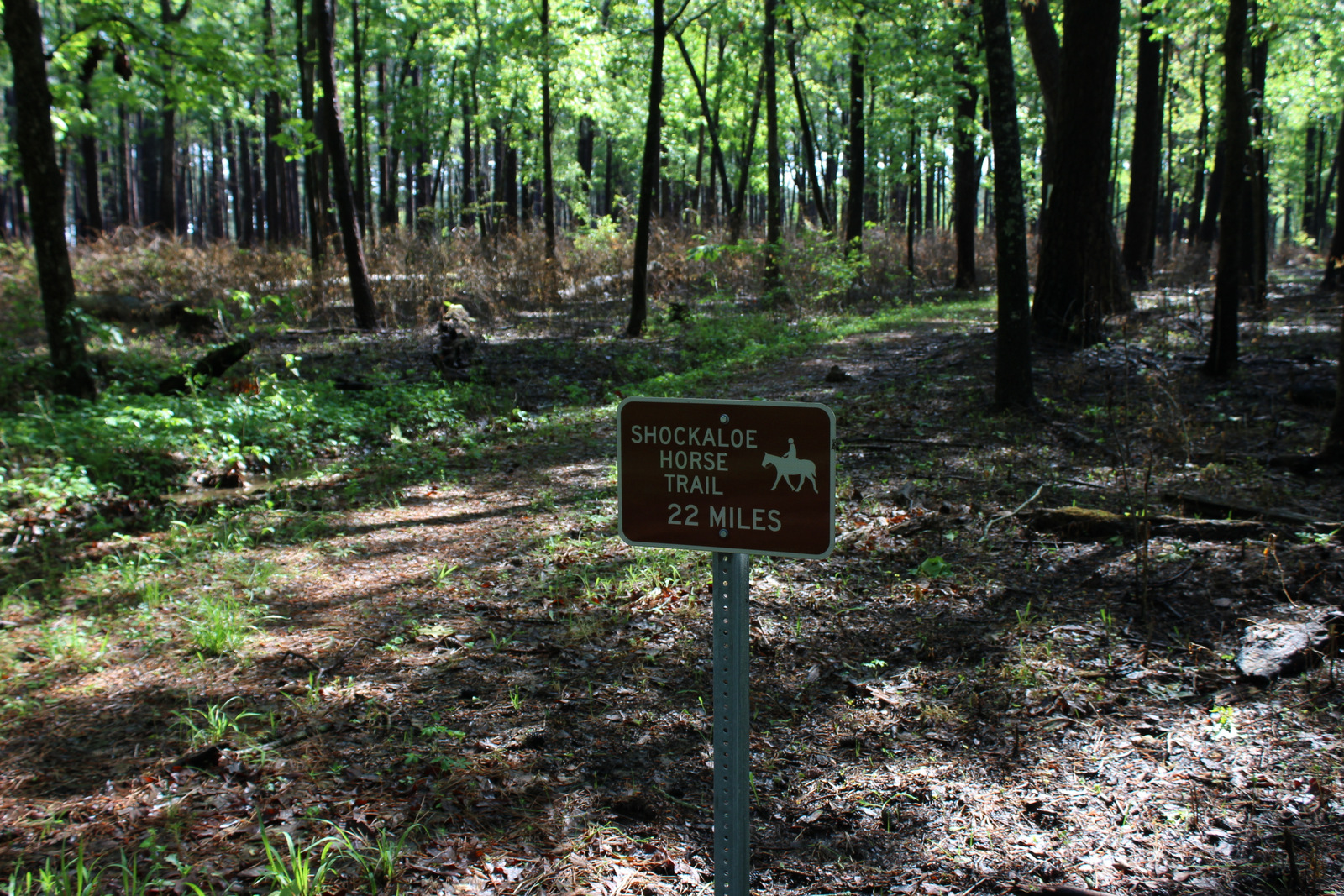
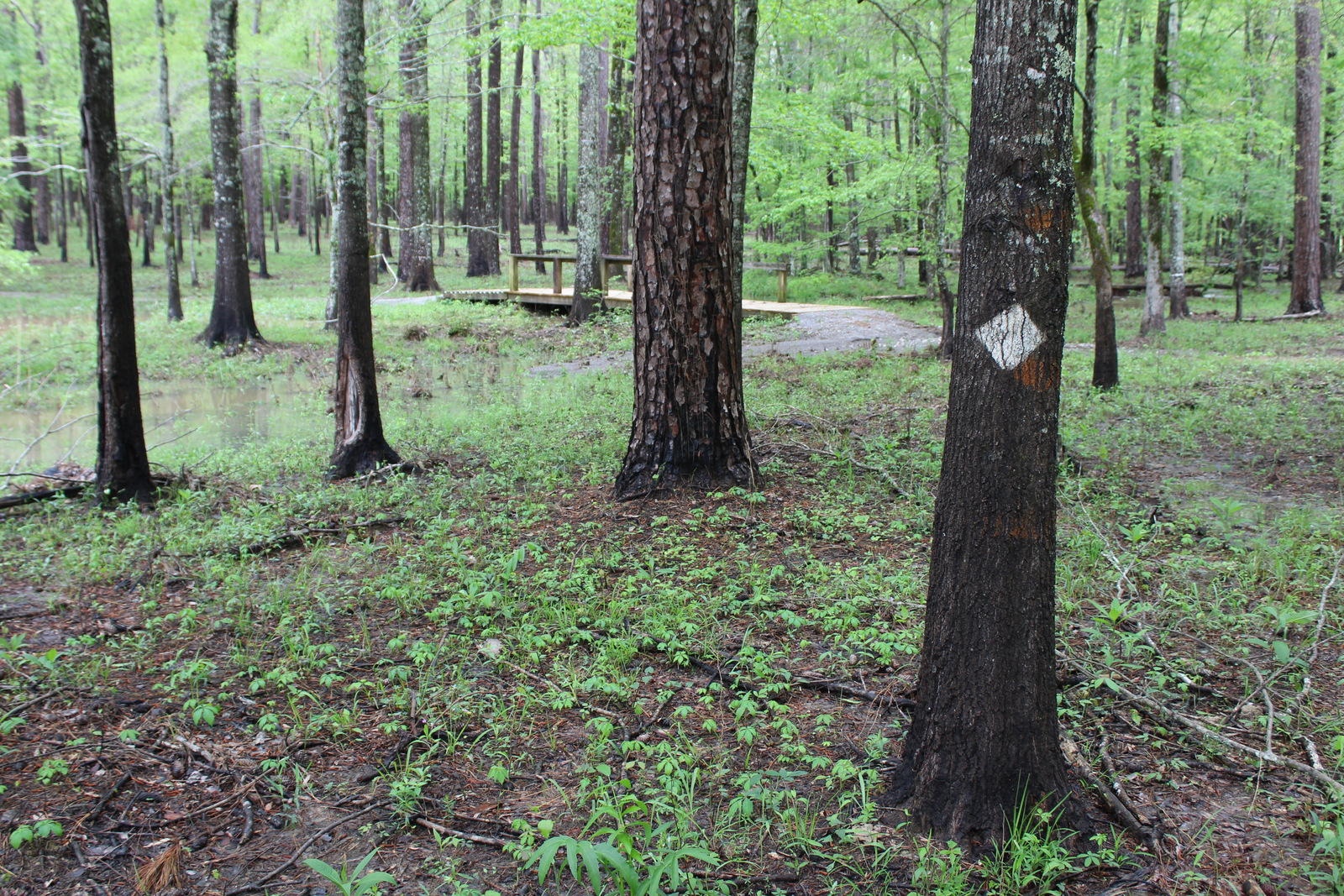
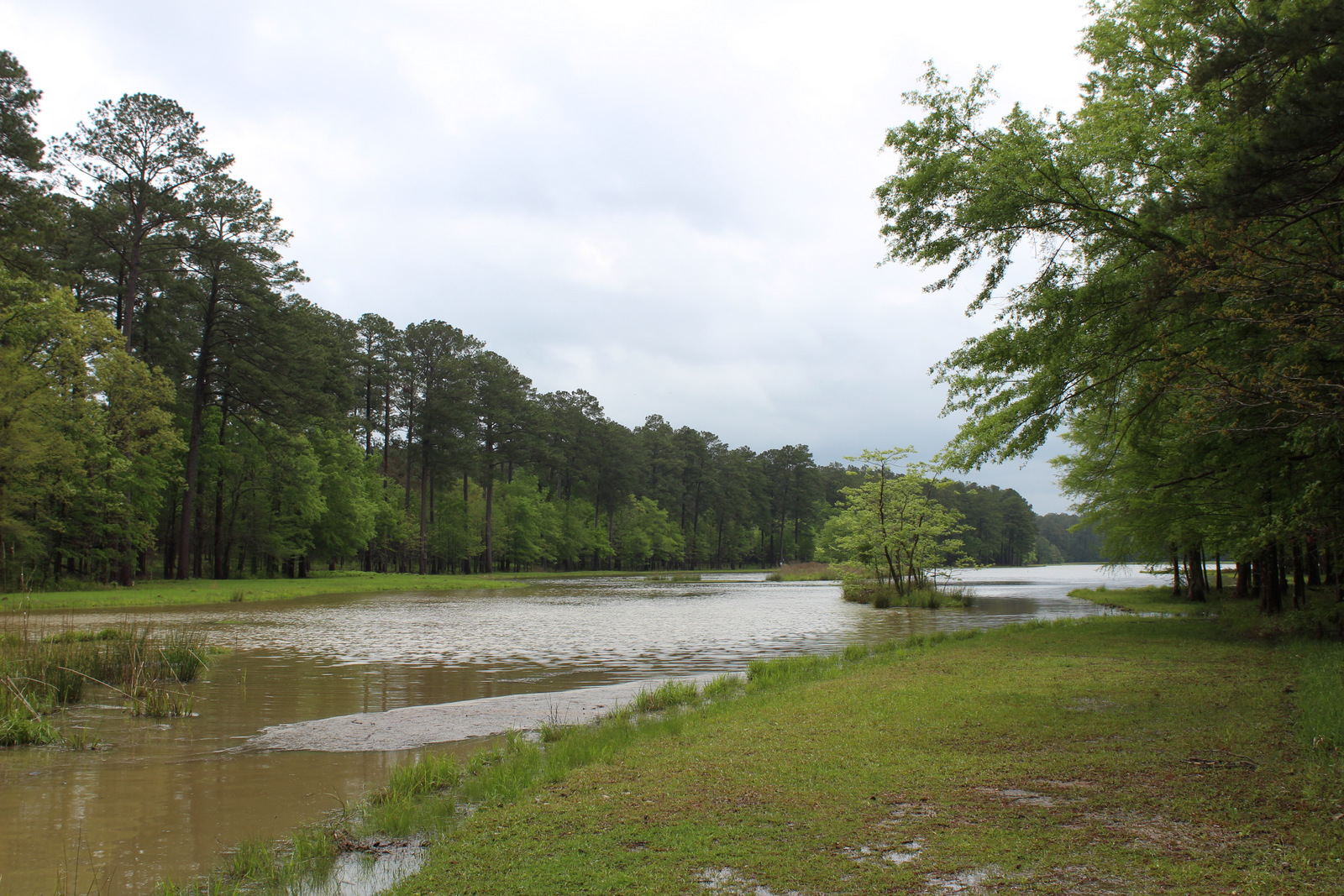
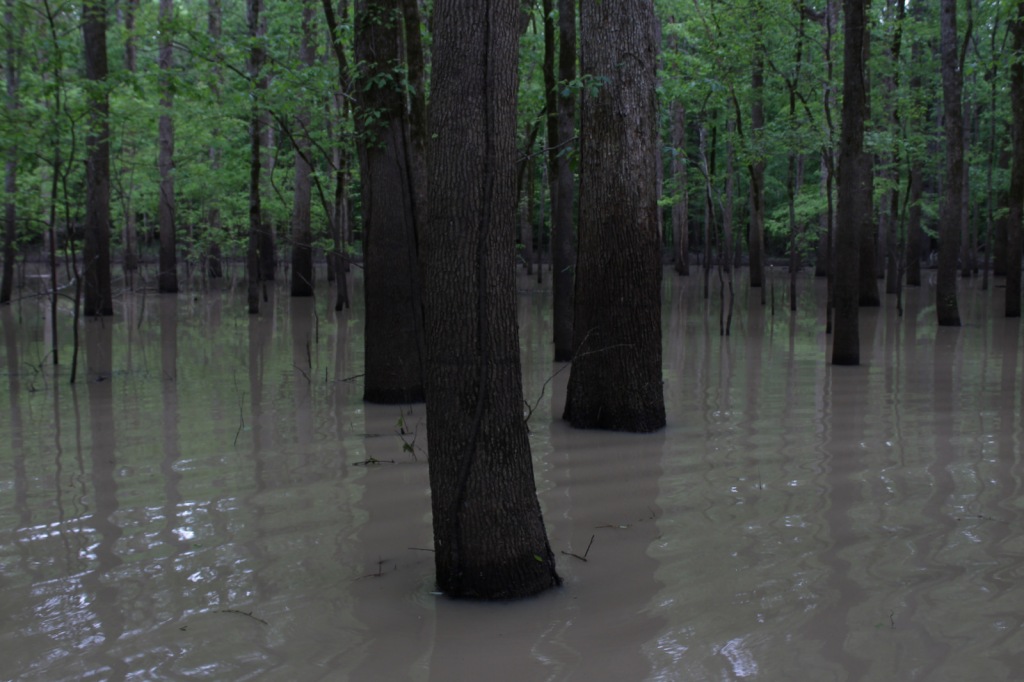
Despite the lake being at flood levels that submerged many parts of the trail, we circumnavigated Marathon Lake in about 1.7 miles and didn’t get our feet wet.  The 22-mile long Shockaloe Horse Trail was too muddy for us to hike in April.

Watchable Wildlife

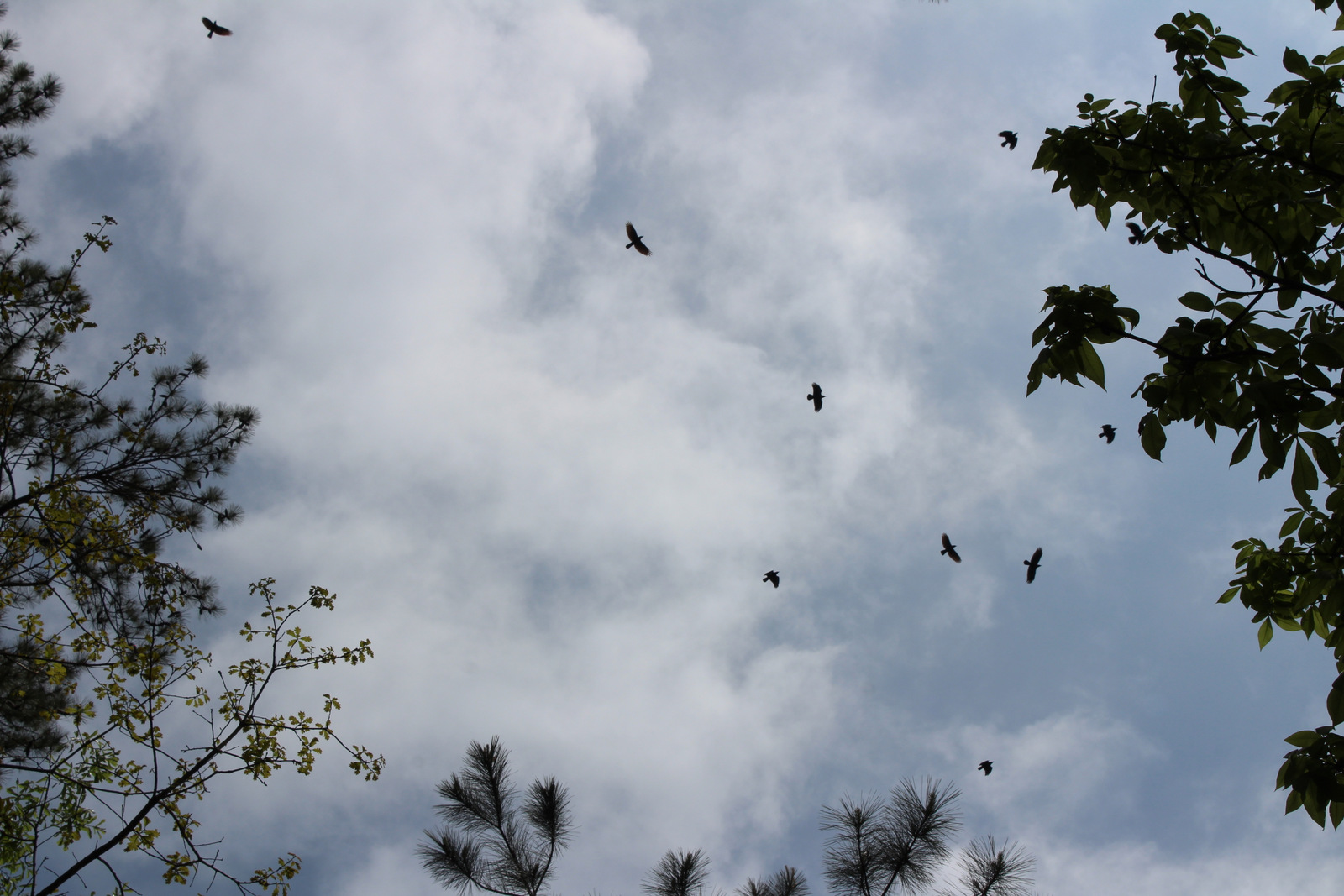
The National Forest’s lakes have largemouth bass, bream, catfish, and crappie that attract fishermen.  At Marathon Lake we saw several great egrets, little blue herons, and a very noisy murder of crows.  Endangered red-cockaded woodpeckers nest in large pines trees (at least 60 years old), especially longleaf pines.  Gray rat snakes can climb trees, so red-cockaded woodpeckers drill small holes around their nesting cavity because fresh pine resin causes the snakes to turn around or slip off the tree.  There are three Wildlife Management Areas within Beinville National Forest that provide hunting opportunities for white-tailed deer, wild turkey, and invasive wild pigs.

Instagram-worthy Photo

Harrell Prairie is the largest and least disturbed alkaline prairie in the state and is burned about every three years to maintain native vegetation.  It is located down Forest Road 518 in Caney Creek Wildlife Management Area, which is closed May 2 to September 14, perhaps to protect wildflowers.

Peak Season

Spring and fall

Fees

There is a $5 day-use fee at Shongalo Lake and Marathon Lake, but no day-use fee at the Shockaloe Trailhead or Greentree Reservoir.

Road Conditions

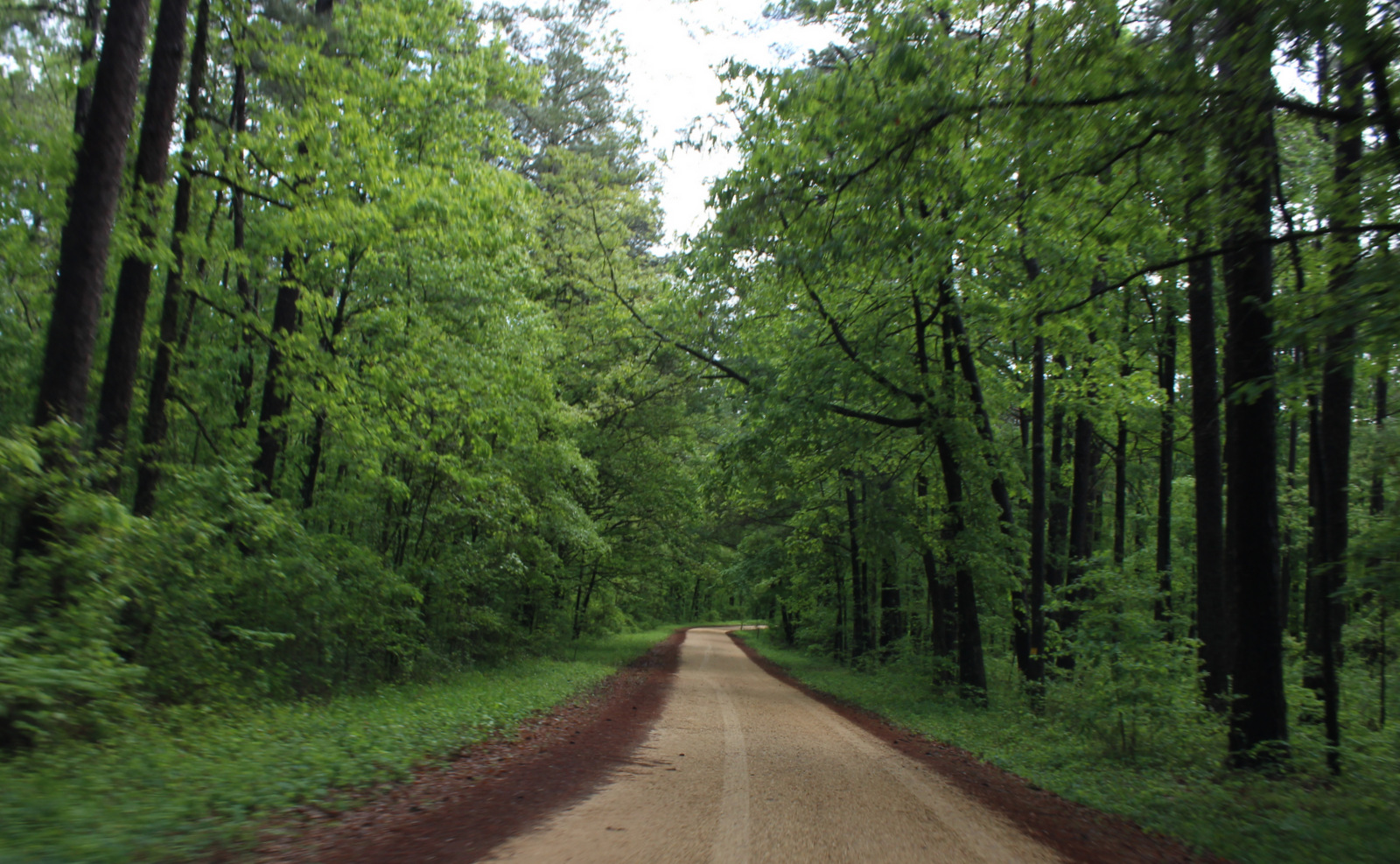
The dirt roads were in good condition in April, even when the trails were flooded and muddy.

Camping

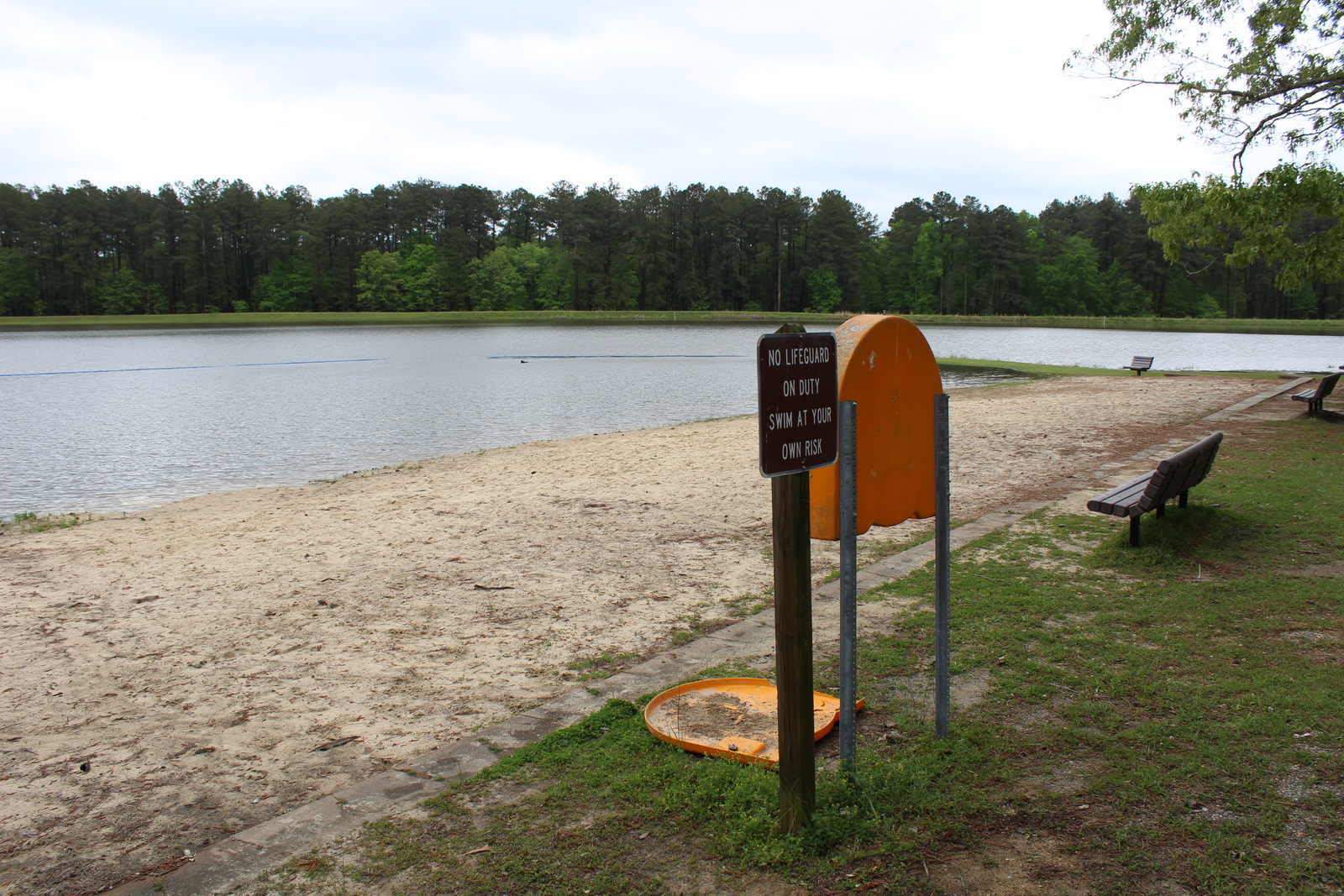
Marathon Lake has 34 campsites ($20 per night with water and electric hook-ups), a boat ramp, a swimming area, and two bath houses with warm showers.  Camping is only $7 per night at Shockaloe Base Camp I, but no camping is allowed at Base Camp II.

Wilderness Areas

None

Related Sites

Natchez Trace National Scenic Trail (Mississippi-Alabama-Tennessee)

Medgar and Myrlie Evers Home National Monument (Mississippi)

Tupelo National Battlefield (Mississippi)

Nearest National Park

Hot Springs (Arkansas)
Conifer Tree Species

baldcypress, loblolly pine, longleaf pine, shortleaf pine

Flowering Tree Species

white oak, southern red oak, willow oak, overcup oak, blackjack oak, laurel oak, shagbark hickory, winged elm, black gum, tupelo gum, sweetgum, red maple, flowering dogwood, tulip-poplar, sweet bay, southern magnolia, black cherry, loblolly bay, Amerian holly, yaupon holly, dahoon holly, black titi, azalea

Explore More – Bienville National Forest is named after whom?