Tag Archives: architecture

Saint Paul’s Church National Historic Site

Overview

St. Paul’s parish in Mount Vernon, New York dates back to 1665, with the first church constructed in 1700.  It was deconsecrated so the federal government could take ownership in 1980.  This was the site of an important election in 1733 when Quakers were prohibited from voting, which led to a change in the law the next year.  That election was covered in a newspaper opposed to Royal Governor William Cosby that subsequently went to court for libel, in a trial that helped established the freedom of the press in America.

Highlights

Church tour, 1833 pipe organ, film, cemetery

Must-Do Activity

Start your visit at the former carriage shed-parish hall where there is a small museum and a short film about the church’s historical significance.  A volunteer will then give you a guided tour of the church that was built between 1763-87, interrupted by the American Revolution.  In 1942, the pews were restored to their original configuration based on a historical document.  If you are lucky, your guide will play the 1833 pipe organ and let you ring the bronze bell that was cast in 1758 at the same foundry in London that made the Liberty Bell.  We met fellow National Park blogger Theresa here on a Saturday morning in September 2019.  She posted about the visit on her excellent blog National Parks with T.

Best Trail

None, but you can walk next door to Dunkin Donuts if you arrive before the site opens.

Instagram-worthy Photo

St. Paul’s cemetery covers five acres and contains about 9,000 graves, dating back to 1704.  Your guide will spend a bit of time covering some famous ones, but be sure to seek out the common grave for Hessian soldiers that used the church as a hospital following the October 1776 Battle of Pell’s Point (fought a mile from here).

Peak Season

Summer

Hours

https://www.nps.gov/sapa/planyourvisit/hours.htm

Fees

None

Road Conditions

There is a small parking lot on site, which is far enough outside Manhattan that driving is feasible.  We took the subway and had a short walk through an industrial neighborhood.

Camping

None

Related Sites

Saratoga National Historical Park (New York)

African Burial Ground National Monument (New York)

Morristown National Historical Park (New Jersey)

Explore More – Who was the New York City publisher who in 1733 printed the inaugural issue of the New York Weekly Journal that later went to trial for libel?
Boston National Historical Park

Overview

Boston National Historical Park is famous for the 2.5-mile Freedom Trail that leads through historic downtown Boston, Massachusetts.  Tourists should not try to drive into the city because parking is difficult and the public transportation system is so good.  We recommend that you hire a guide or bring along your own information because almost nothing along the route has outdoor interpretive signs.

Highlights

Faneuil Hall, Charlestown Navy Yard, Bunker Hill Memorial, burying grounds, Boston Common

Must-Do Activity

One of our favorite misnomers in American history is that the Battle of Bunker Hill actually took place on Breed’s Hill north of Boston.  This first major skirmish took place shortly after the Revolutionary War kicked off in Lexington, Massachusetts in 1775 and is well-known for the Patriot commander that told his men not to “fire ’til you see the whites of their eyes.”  The 221-foot obelisk built to memorialize this fight (which the Patriots lost) was started in 1825 but not completed until 1843.  The National Park Service does not charge to climb the 294 stairs to its peak for great views of the area. 

Best Trail

The famous 2.5-mile long Freedom Trail through downtown Boston, Massachusetts is a walking path marked by a line painted on the sidewalk.  Of the many historic places you will pass along the route, some of the free ones include the site of the 1770 Boston Massacre, Faneuil Hall known as the “Cradle of Liberty” (and now a National Park Service visitor center), the site of the first public school in America established in 1635, several burying grounds, and the Old Corner Bookstore that has been turned into a restaurant.  You can also pay to enter the Old State House and Paul Revere House, among other sites.

Instagram-worthy Photo

If you keep walking the Freedom Trail north you cross the Charlestown Bridge to the Charlestown Navy Yard where you can walk aboard the USS Constitution (“Old Ironsides”), the oldest commissioned warship afloat in the world, and learn about it from active-duty U.S. Navy servicemen and women.

Peak Season

Summer

Hours

https://www.nps.gov/bost/planyourvisit/hours.htm

Fees

None, except at specific buildings like the Old State House and Paul Revere House.

Road Conditions

Roads are paved, but traffic is bad and parking is expensive.  It is best to use public transportation to get into the city and then walk.

Camping

There are camping opportunities (reservations required) in Boston Harbor Islands National Recreation Area, which are accessible by ferry from the city.

Related Sites

Minute Man National Historical Park (Massachusetts)

Boston African American National Historic Site (Massachusetts)

Boston Harbor Islands National Recreation Area (Massachusetts)

Explore More – The live oak wood used to build the USS Constitution came from what island, now managed by the National Park Service?

Christiansted National Historic Site

Overview

Three of the Virgin Islands were purchased by the United States in 1917, supposedly to prevent Germany from establishing a Caribbean naval base during World War I.  The southern island of St. Croix was originally claimed by Spain, England, the Netherlands, and France, before being purchased by Denmark in 1733.  The Danish West India and Guinea Company grew sugarcane on the island utilizing slave labor (until 1848), with slaves outnumbering the free population 9,000 to 1,000.  The port town of Christiansted was planned by Frederick Moth and named in honor of Danish King Christian VI.

Highlights

Fort Christiansvaern, Old Danish Customs House, Steeple Building

Must-Do Activity

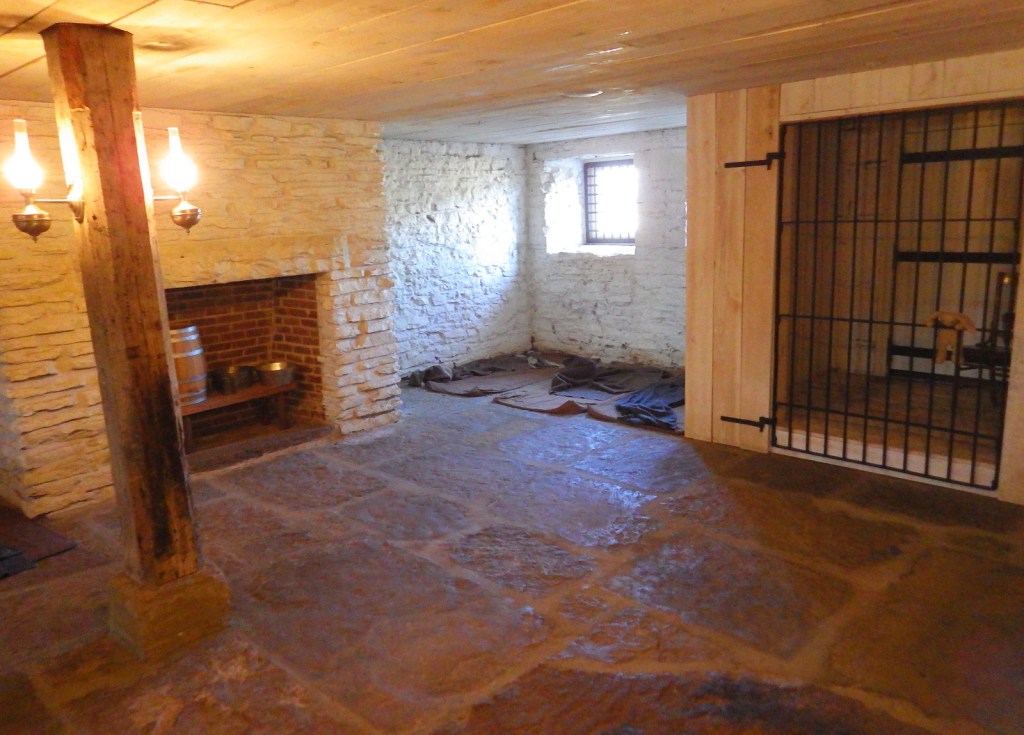
Fort Christiansvaern was completed in 1749 and is the highlight of this National Park Service (NPS) site.  Pick up a self-guided tour booklet at the NPS visitor center so you do not miss any hidden corners, like the dungeon.  Ask a park ranger about tours that may be available to see inside the other six buildings that comprise Christiansted National Historic Site.  The Scale House was under construction during our visit, but typically has exhibits on its bottom floor.

Best Trail

There are no trails, but sidewalks lead from Fort Christiansvaern to the Government House (that is still used for official business) and the Lutheran Church, which is next to a sprawling and interesting cemetery.

Instagram-worthy Photo

The beautiful yellow structures were built in neoclassic style and are best exemplified by the Customs House, which dates to 1841.

Peak Season

Anytime except hurricane season

Hours

https://www.nps.gov/chri/planyourvisit/hours.htm

Fees

$7 per person or America the Beautiful pass

Road Conditions

Roads are paved and there is a designated parking lot at Fort Christiansvaern with a two hour time limit.  Note: you drive on the left side of the road in the U.S. Virgin Islands, but in standard American left-side driver seat vehicles.

Camping

There is no official NPS campground at Salt River Bay National Historical Park and Ecological Preserve, but people camp along the coast there and at many beachside locations around the entire island.

Related Sites

Salt River Bay National Historical Park and Ecological Preserve (Virgin Islands)

Buck Island Reef National Monument (Virgin Islands)

Virgin Islands National Park (Virgin Islands)

Explore More – What famous American patriot worked in Christiansted as a boy (Hint: he has a Broadway musical written about him)?

Fort Frederica National Monument

Overview

The colony of Georgia was established by James Oglethorpe to be an alcohol-free utopia open to commoners in debtors’ prison back in England.  The aristocrats quickly discarded those ideals and introduced slavery after founding a town on the Savannah River in 1733.  That same year, to the south the Spanish constructed Fort Mose as a sanctuary to slaves who fled the British.  In response, Oglethorpe created Fort Frederica on St. Simons Island, with a palisade and 10-foot wide moat around the entire town.  Further, he led an unsuccessful siege of St. Augustine, Florida in 1740.  The Spanish retaliated, but were defeated at Bloody Marsh despite owning a two-to-one advantage in soldiers.

Highlights

Museum, ruins of colonial fort, Bloody Marsh Battle Site

Must-Do Activity

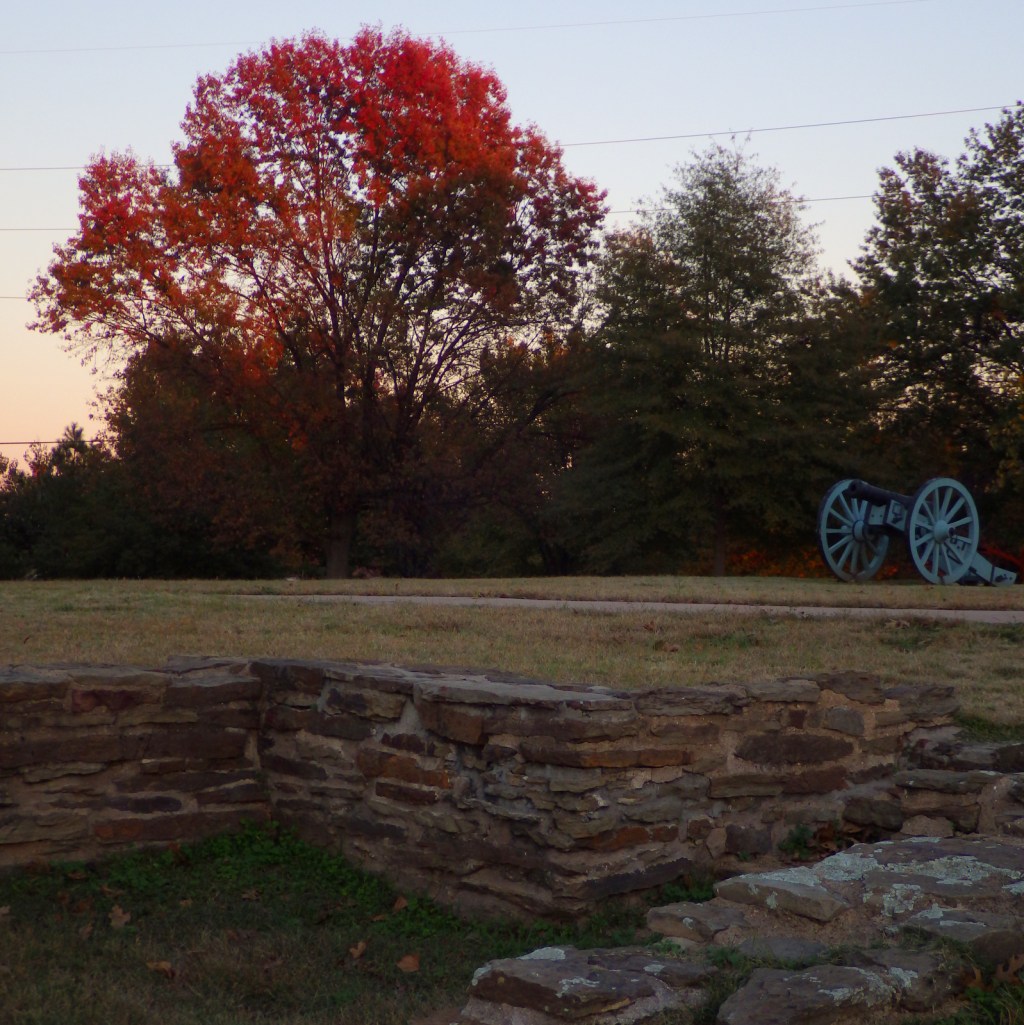
Fort Frederica’s regiment was disbanded in 1749 and the town was abandoned within a decade when it was mostly destroyed by fire.  Today, visitors can walk the ruins underneath picturesque live oak trees draped in Spanish moss.  Fort Frederica National Monument is part of the Gullah/Geechee Cultural Heritage Corridor that honors the unique traditions brought by slaves from West Africa and retained over the centuries on these isolated Atlantic coastal islands.  Cooking gumbo with okra, weaving sweetgrass baskets, and using the word “guber” for peanut are all examples of how the Gullah/Geechee culture has survived into modern times. 

Best Trail

A self-guided tour passes excavated foundations of the town underneath Spanish moss-draped live oak trees.  During our visit in 2016, Hurricane Matthew had knocked down trees closing some of the trails.

Instagram-worthy Photo

The British established Fort Frederica to stop Spanish encroachment from Florida into their American colonies.  The town that formed around the fort peaked at a population of 1,000.  Today it is a beautiful setting with tabby wall ruins and Spanish moss-draped trees.

Peak Season

Spring and fall

Hours

https://www.nps.gov/fofr/planyourvisit/hours.htm

Fees

None, there is no longer a toll for the F.J. Torras Causeway that accesses St. Simons Island.

Road Conditions

All roads paved

Camping

Jekyll Island State Park offers camping 13 miles southeast of Brunswick, Georgia.

Related Sites

Fort Pulaski National Monument (Georgia)

Cumberland Island National Seashore (Georgia)

Fort Caroline National Memorial (Florida)

Explore More – Fort Frederica was named for which member of the British royalty?

Minidoka National Historic Site

Overview

One of the many things that makes this country great is its willingness to remember inglorious moments in its past, such as the internment of 110,000 Japanese-Americans during World War II.  Most of the 13,000 Japanese-Americans imprisoned in central Idaho were from Oregon, Alaska, and Washington, including Bainbridge Island where a memorial stands today that is considered part of Minidoka National Historic Site.

Highlights

Guard tower, film, Honor Roll, barrack, mess hall, baseball field, root cellar

Must-Do Activity

The site in Jerome, Idaho now has a new visitor center that shows an excellent film.  From there (or the guard tower) you can access the 1.6-mile interpretive trail.  There was a portion of the museum at Hagerman Fossil Beds National Monument dedicated to Minidoka National Historic Site, but that may not be there anymore.

Best Trail

A 1.6-mile trail passes historic structures lined with many interpretive signs.  Highlights include the root cellar, baseball field, and a tarpaper mess hall. 

Instagram-worthy Photo

The guard tower on the North Side Canal stands near the Honor Roll, which was recreated to match one from the 1940s that listed Japanese-Americans serving in the U.S. armed forces.

Peak Season

Summer

Hours

https://www.nps.gov/miin/planyourvisit/hours.htm

Fees

None

Road Conditions

The main access road is paved, but some of the surrounding farm roads are dirt.  Follow driving directions on the park website, and note that the site is about an hour away from the town of Minidoka, Idaho. You can park at the guard tower or just down the road at the new visitor center’s gravel parking lot.

Camping

Bruneau Dunes State Park offers camping south of Interstate 90 and is a fun spot to visit with sandboards available for rental.

Related Sites

Manzanar National Historic Site (California)

Tule Lake National Monument (California)

Hagerman Fossil Beds National Monument (Idaho)

Explore More – Minidoka War Relocation Center was the seventh largest city in Idaho on March 1, 1943; what was its maximum population?