All posts by Raven About The Parks

Kootenai National Forest

Kootenai National Forest

Montana, Idaho

Managed by U.S. Forest Service, Northern Region

2,145,268 acres (1,812,380 federal/ 332,888 other)

Website: https://www.fs.usda.gov/kootenai

Overview

In northwest Montana, Kootenai National Forest includes parts of the Cabinet, Purcell, Salish, Selkirk, and Whitefish Mountains on the border of Canada.  In 1975, the 422-foot-tall Libby Dam on the Kootenai River created 90-mile-long international Lake Koocanusa (a contraction of Kootenai-Canada-U.S.A.).  Elevations in Kootenai National Forest range from 1,832 feet up to 8,738-foot Snowshoe Peak in the Cabinet Mountains Wilderness, encompassing a variety of habitats from subalpine meadows to arid plains with cacti.

Highlights

Lake Koocanusa Scenic Byway, Northwest Peak Scenic Area, McGregor Lake, Yaak Falls, Ten Lakes Scenic Area, Ross Creek Cedar Grove Scenic Area, Loon Lake, Tenmile Falls, Bluebird Basin Trail, Vinal McHenry Boulder National Recreation Trail, Pacific Northwest National Scenic Trail

Must-Do Activity

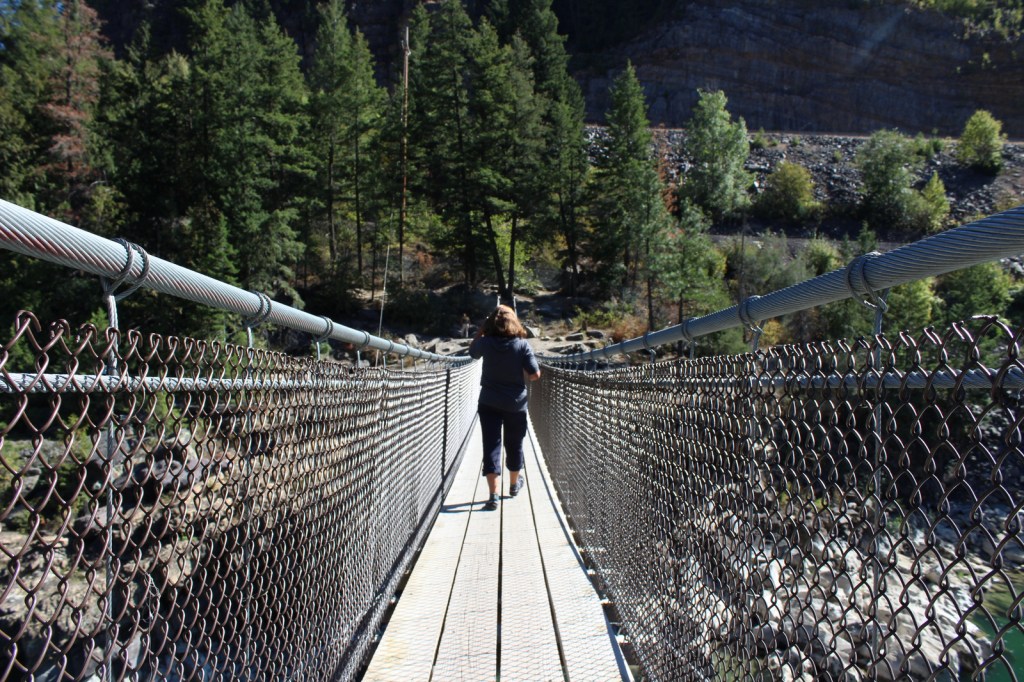
There are more than 1,200 miles of trails in Kootenai National Forest, including 90 miles of the Pacific Northwest National Scenic Trail.  Two of the best places to hike are the Northwest Peak and Ten Lakes Scenic Areas, in the remote upper corners of the National Forest.  Outside of Libby, Montana, Blue Mountain Trail (1.5 miles one-way), Skyline National Recreation Trail (22 miles), and Scenery Mountain Lookout Trail (2.5 miles) all climb to incredible overlooks.  At Kootenai Falls (see Photographic Opportunity), a new suspension bridge crosses the Kootenai River to Forest Service land on the north shore.  From there, Koot Creek Canyon Trail travels another three miles to a dirt road in Kootenai National Forest.

Best Trail

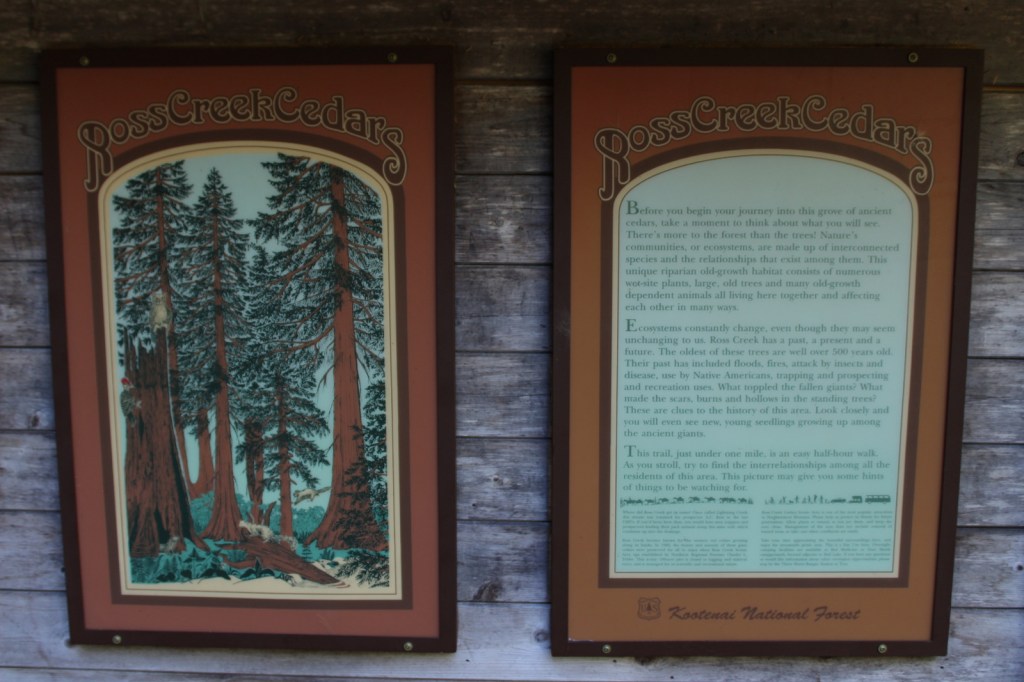
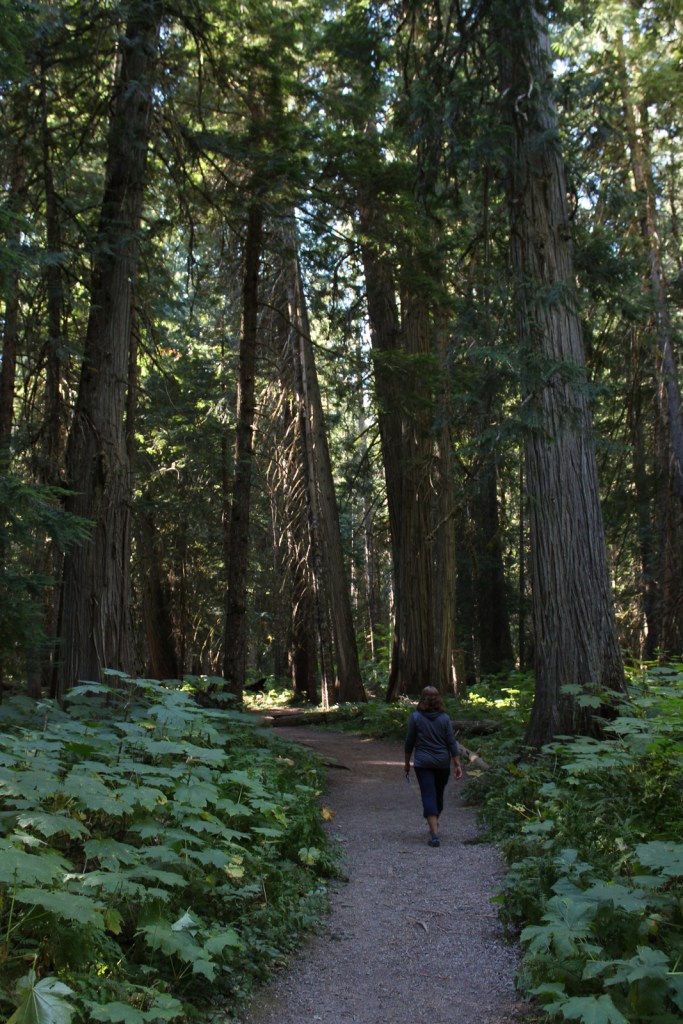
In 1959, Ross Creek Cedar Grove Scenic Area preserved 101 acres of western redcedar trees up to eight feet in diameter.  A one-lane paved road with pullouts leads 4.3 miles from Highway 56 to a large parking area with a day-use fee.  The main trail is a less than one-mile loop with interpretive signs, but continues five miles to the North Fork of Ross Creek.  The old-growth forest is also home to large Douglas-fir, Engelmann spruce, grand fir, and western hemlock trees growing above a lush green understory of ferns and Devil’s-club.

Watchable Wildlife

The mountains provide habitat for grizzly bears, black bears, Canada lynxes, bobcats, mountain lions, wolverines, mink, pine martens, long-tailed weasels, porcupines, snowshoe hares, pika, moose, bighorn sheep, and mountain goats.  Hoskins Lake is a wintering range for mule deer and white-tailed deer, as well as an osprey nesting area in the summer.  The National Forest’s numerous rivers and more than 100 lakes support gamefish like cutthroat, rainbow, brown, and endangered bull trout.  The endangered white sturgeon is also found in this area.

Photographic Opportunity

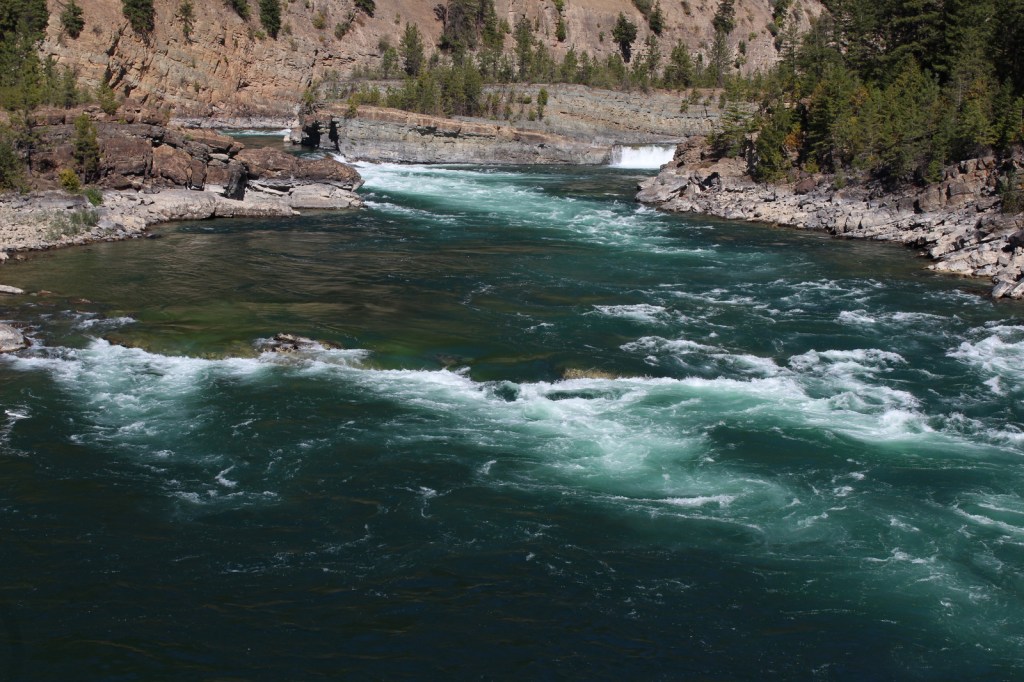
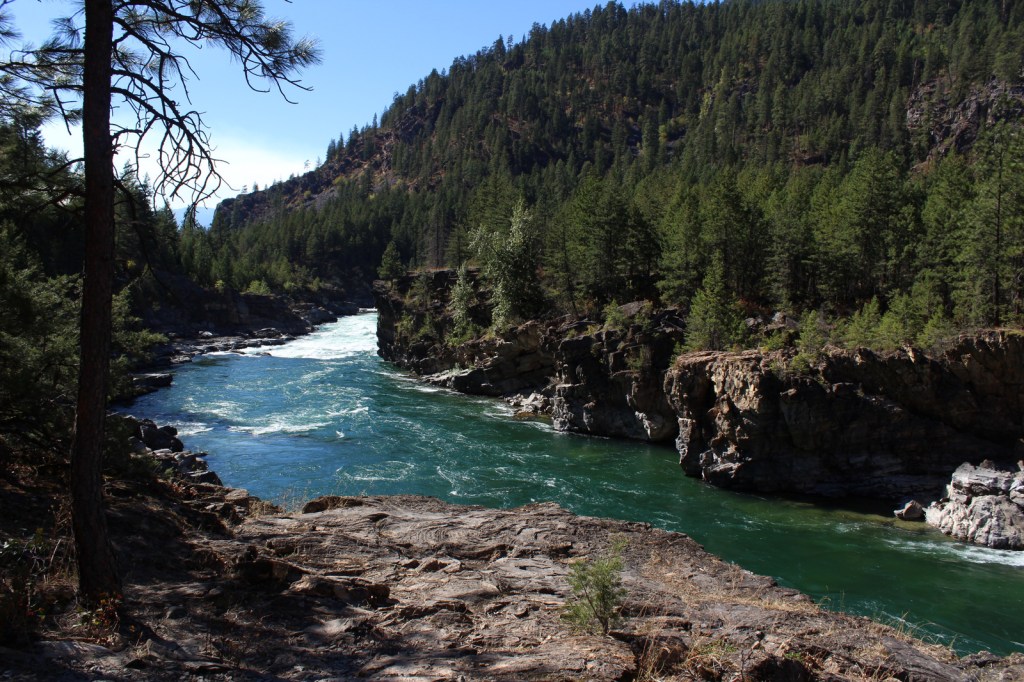
Located in a county park on the side of Highway 2, Kootenai Falls is only about 20 feet tall, but it is impressively wide and beautiful.  An overlook is located one-tenth of a mile from the parking lot, but there is also a walking bridge that crosses over the railroad tracks to a viewpoint at the edge of the falls, and a suspension bridge only a quarter-mile further downstream.

Peak Season

Summer

Fees

Ross Creek Cedar Grove Scenic Area has a day-use fee (or the America the Beautiful pass is also accepted).

Road Conditions

Paved roads like the Lake Koocanusa Scenic Byway, U.S. Highway 2, and State Highway 56 make it easy to explore Kootenai National Forest.  To access Ross Creek Cedar Grove Scenic Area, a one-lane paved road with pullouts leads 4.3 miles from Highway 56.  A nice drive through the Purcell Mountains can be made by looping State Route 508 and Forest Road 68.

Camping

There are Forest Service campgrounds at Kilbrennan Lake, Loon Lake, Rexford Branch, Caribou, Red Top, Whitetail, Pete Creek, Howard Lake, and elsewhere.  Big Creek Baldy Mountain lookout cabin can be rented, too.

Wilderness Areas

Cabinet Mountains Wilderness (also in Kaniksu National Forest)

Related Sites

Kaniksu National Forest (Idaho-Montana-Washington)

Bitterroot National Forest (Montana-Idaho)

Coeur d’Alene National Forest (Idaho)

Nearest National Park

Glacier

Conifer Tree Species

lodgepole pine, whitebark pine, ponderosa pine, Douglas-fir, western hemlock, western redcedar, , western larch, alpine larch, Engelmann spruce, subalpine fir, grand fir

Flowering Tree Species

Rocky Mountain maple, boxelder, quaking aspen, balsam poplar, dwarf birch, paper birch, Piper’s hawthorn, Bebb willow, western mountain-ash, choke cherry, western serviceberry

Explore More – The Kootenai (or Kootenay in Canada) River is named after the local Ktunaxa Indians, which translates as what in the Algonquian language?

Learn more about this and the 154 other National Forests in our new guidebook Out in the Woods

We are a participant in the Amazon Services LLC Associates Program, an affiliate advertising program designed to provide a means for us to earn fees by linking to Amazon.com and affiliated sites.

Top 10 Novels Set in Hawai‘i

We recently returned from our fourth trip to the Hawai‘i, so we are still island dreaming.  We have previously released our Top 10 Non-Fiction Books Set in Alaska and Top 10 Novels Set in Alaska, now we are turning our attention to the 50th state.  There are many novels to choose from set on the Hawaiian Islands, but all our selections are a good introduction to the Aloha State.  The Stench of Honolulu was a contender, but the comic novel is not really set in Hawai‘i, although it is hilarious.  We have not read enough non-fiction about the state to create a separate list, so we put a few of our favorites at the bottom, not including some interesting works by early tourists Mark Twain, Jack London, and Isabella BirdClick here to see all our Top 10 Lists.

10. From Here to Eternity by James Jones (1962)

A ne’er-do-well soldier goes AWOL in the months before the attack on Pearl Harbor from the author of The Thin Red Line

9. Sharks in the Time of Saviors by Kawai Strong Washburn (2020)

There are magical elements in this gritty story that follows a modern Hawaiian family and was selected as a favorite book by former President Barack Obama

8. Hawaii: A Novel by James A. Michener (1959)

Michener’s epic style covers the history of the islands in an easy-to-digest manner; the story about Mark Twain visiting Kilauea Volcano stood out

7. Micro: A Novel by Michael Crichton and Richard Preston (2011)

A work in progress when the Jurassic Park author passed away, this sci-fi thriller set on Oahu was finished by the author of The Cobra Event and The Wild Trees (which is on our Top 10 Non-Fiction Books Set in a National Park)

6. The Descendants by Kaui Hart Hemmings (2007)

This novel of family dynamics was adapted into an excellent movie starring George Clooney

5. Lei and the Fire Goddess by Malia Maunakea (2023)

This juvenile fiction book follows a 12-year-old girl who is swept up in a supernatural quest after insulting the goddess Pele, the sequel Lei and the Invisible Island is out now

4. Hawaiian Myths of Earth, Sea, and Sky by Vivian L. Thompson (1966)

There are many books to choose from about Pele, Maui, and other gods that are a good introduction to the indigenous culture, including the classic by Martha Beckwith

3. Honolulu by Alan Brennert (2009)

An interesting book of historical fiction, Brennert also wrote Moloka’i about the Kalaupapa leper colony

2. Radar Girls by Sara Ackerman (2021)

A romance novel based on the women who worked for the military during World War II; the characters are great and you will probably want to read Ackerman’s other Hawaiian-set books after finishing

…and finally our #1 novel set in Hawai‘i

1. Song of the Exile by Kiana Davenport (1999)

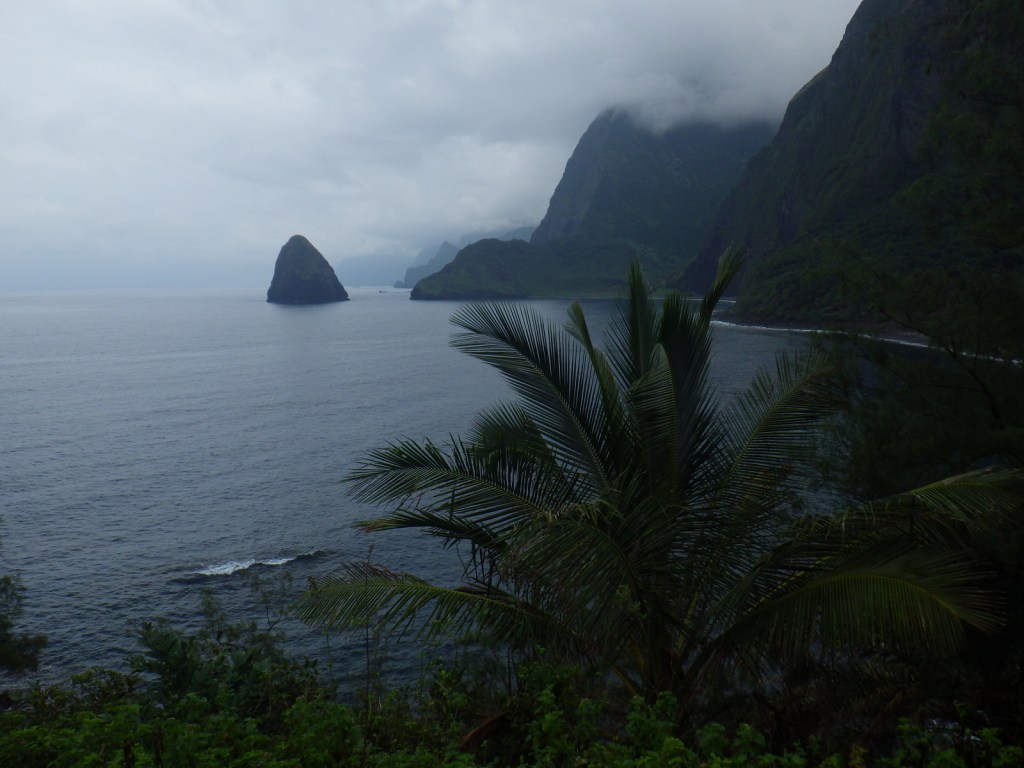
Historical fiction follows the decades of changes experienced by a woman who is exiled to the leper colony that is now Kalaupapa National Historical Park on Molokai Island (the author’s Shark Dialogues and House of Many Gods are also on our list to read)

.

Honorable Mentions (Favorite Non-Fiction Books Set in Hawai‘i)

The Three-Year Swim Club: The Untold Story of Maui’s Sugar Ditch Kids and Their Quest for Olympic Glory by Julie Checkoway (2015)

A gripping non-fiction tale of the sons and daughters of sugarcane workers that set international swimming speed records in the 1930s and ’40s

By Wind, By Wave: An Introduction to Hawai‘i’s Natural History by David L. Eyre (2000)

Invasive species have a long history of disturbing the ecological balance of these islands in the middle of the Pacific Ocean

Unfamiliar Fishes by Sarah Vowell (2011)

The author of Assassination Vacation turns her sarcastic pen on the haole invaders who “settled” Hawai‘i

No Worries Hawaii by Jerry and Janine Sprout (2009)

We have utilized many guidebooks to the islands, but given the overload of information out there this one is actually helpful in prioritizing options

We are a participant in the Amazon Services LLC Associates Program, an affiliate advertising program designed to provide a means for us to earn fees by linking to Amazon.com and affiliated sites.

Governors Island National Monument

Governors Island National Monument

New York

Managed by National Park Service

Established 2001

22 acres

Website: nps.gov/gois

Overview

Originally named Nutten Island by the Dutch who settled New Amsterdam in 1624, this 172-acre island off Manhattan was later set aside for the exclusive use of the British royal governors of New York.  The indigenous Lenape called it Paggank (“Nut Island”) because of its chestnut, hickory, and oak trees.  After 200 years of military use by the Army and Coast Guard, Governors Island was retired in 1996.  Like nearby Castle Clinton National Monument, Fort Jay and Castle Williams date to pre-War of 1812 and were saved from demolition in 1901 by forward-thinking Secretary of War Elihu Root.  Over the decades, the island served as a Civil War prison, a muster area for troops during the Mexican-American War and World War II, the largest Coast Guard base in the nation for its final 30 years, and runway for Wilbur Wright’s 1909 flight around the Statue of Liberty.  Governors Island National Monument is part of a 90-acre National Historic Landmark District that contains the commanding officer’s quarters known as the Admiral’s House.

Learn more about the other 137 National Monuments in our book Monumental America: Your Guide to All 138 National Monuments. It is now available for sale on Amazon.com.

Highlights

Ferry, Castle Williams, Fort Jay

Must-Do Activity

Private boats are not allowed, so the only way to get onto Governors Island is by ferry and it is only open to visitors from Memorial Day weekend through September.  From the Battery Maritime Building in Lower Manhattan you will dock at Soissons Landing near Fort Jay.  There may also be weekend ferry service from Brooklyn Bridge Park Pier 6 and Wall Street/Pier 11 that both land at Yankee Pier near the South Battery.  During special events, living history demonstrations celebrate the island’s military heritage.  Near Soissons Landing, be sure to enter Castle Williams and Fort Jay, which have interpretive signs from the National Park Service.

Best Trail

Most visitors do not go much south of the Parade Ground, but almost the entire island is open for walking or biking (rentals available) on the old roads.

Photographic Opportunity

On a clear day, the ferry boat and island both afford incredible views of the New York City skyline, Ellis Island, and Statue of Liberty.

Peak Season

Summer

Hours

https://www.nps.gov/gois/planyourvisit/basicinfo.htm

Fees

Ferry tickets cost about $5 roundtrip for an adult.

Road Conditions

Roads are heavily trafficked in New York City and there is no designated parking for the National Park Service site, so we recommend you take the subway to access the ferry.

Camping

Collective Retreats has glamping tents and suites on their private property on the west side of Governors Island. Click here to visit their website for details.

Related Sites

Castle Clinton National Monument (New York)

African Burial Ground National Monument (New York)

Hamilton Grange National Memorial (New York)

Explore More – What group owns and manages the other 150 acres of Governors Island that is not part of the National Monument?

Learn more about the other 137 National Monuments in our book Monumental America: Your Guide to All 138 National Monuments
Tule Lake National Monument

Tule Lake National Monument

California

Managed by National Park Service and U.S. Fish and Wildlife Service

Established 2008

1,391 acres

Website: nps.gov/tule

Overview

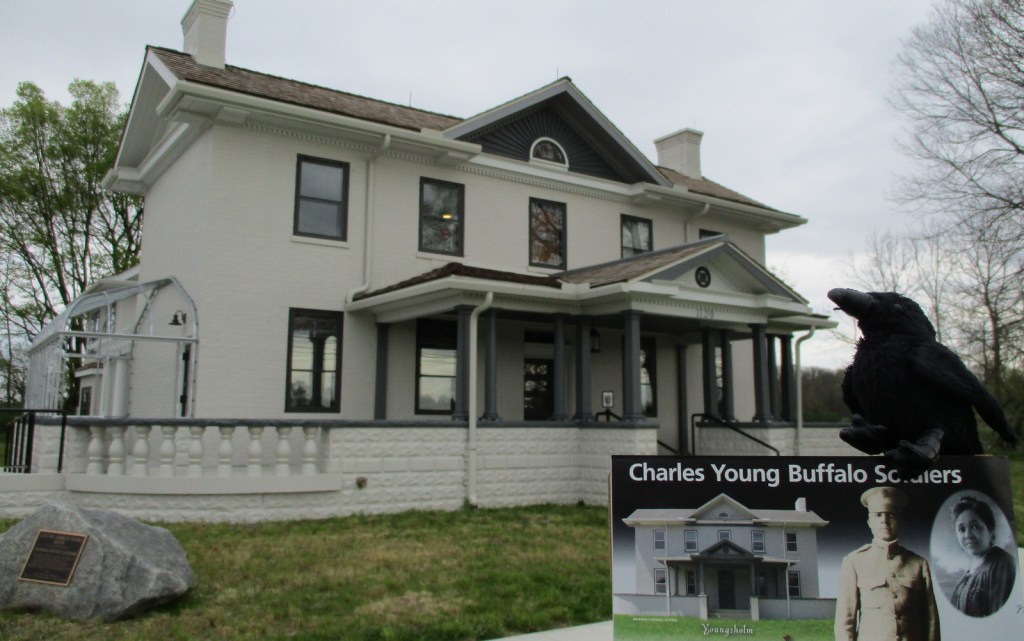
Following the 1941 attack on Pearl Harbor, President Franklin D. Roosevelt signed an executive order authorizing the detention of more than 110,000 U.S. citizens of Japanese descent at ten concentration camps in the contiguous United States.  At Tule Lake War Relocation Center, 7,400 acres were enclosed by barbwire to hold about 12,000 people in northeast California.  Once a loyalty questionnaire was distributed throughout the ten camps, those considered disloyal to the U.S. government were all shipped to the renamed Tule Lake Segregation Center, which held 18,789 inmates at its peak.  Overcrowding, harassment, beatings, and a fatal farm accident led to riots and mass demonstrations, and martial law was declared from November 13, 1943 to January 15, 1944.  This camp was the last to be closed on March 20, 1946, months after the end of the war.  It was named a National Historic Landmark in 2006, and two years later became one of nine sites within World War II Valor in the Pacific National Monument (which included Pearl Harbor National Memorial).  When that was disbanded in 2019, Tule Lake National Monument was created.

Learn more about the other 137 National Monuments in our book Monumental America: Your Guide to All 138 National Monuments. It is now available for sale on Amazon.com.

Highlights

Tulelake-Butte Valley Fairgrounds Museum, Tule Lake Segregation Center prison

Must-Do Activity

Most of the buildings at Tule Lake Segregation Center were moved elsewhere following the war.  One of the few remaining structures is the prison, which is only accessible on ranger-guided tours offered Memorial Day to Labor Day on Thursdays through Sundays (call ahead for required reservations).  The concrete jail had six cells to hold 24 men, but incarcerated over 100 at one time mostly outside in Army tents used as unheated punishment quarters.  The prison is always visible from the National Park Service (NPS) visitor center off Highway 139.  It is worth getting a tour to go inside to see original graffiti from inmates and the reinstalled metal doors that were purchased by a private citizen in the 1940s and kept at their farm for decades.  Tulelake-Butte Valley Fairgrounds Museum (fee) has a one-hour audio tour and there are online virtual tours that show several sites within Tule Lake National Monument, including the inside of the jail prior to the restoration.

Best Trail

There are no designated trails there, but from the NPS visitor center near Newell you can photograph the rock formation known as Peninsula/Castle Rock (solely managed by the U.S. Fish and Wildlife Service).  It is also visible while checking out the rock art at Petroglyph Point within Lava Beds National Monument.

Photographic Opportunity

The Civilian Conservation Corps (CCC) was stationed at Camp Tulelake from 1935 to 1942, constructing 23 buildings and repairing canals.  Several small groups of Japanese Americans were held at Camp Tulelake to separate them from the general population at Tule Lake Segregation Center.  Later in the war, Italian and German POWs were stationed there before the buildings were transferred to the U.S. Fish and Wildlife Service.  Currently, tours of Camp Tulelake are not available due to ongoing preservation work, but you can photograph it through the fence on Hill Road and hike to bird viewing blinds in Tule Lake National Wildlife Refuge.

Peak Season

Summer

Hours

https://www.nps.gov/tule/planyourvisit/hours.htm

Fees

Ranger-guided tours require a reservation, but they are free.  There is an entrance fee for the museum at Tulelake-Butte Valley Fairgrounds.

Road Conditions

Highway 139 and Hill Road are paved, but most of the roads through the former Tule Lake Segregation Center and Tule Lake National Wildlife Refuge are unpaved.

Camping

Indian Well Campground is located in Lava Beds National Monument near the visitor center and Cave Loop Road.  Dirt roads in the nearby Modoc and Klamath National Forests provide free dispersed camping.

Related Sites

Manzanar National Historic Site (California)

Minidoka National Historic Site (Idaho-Washington)

Amache National Historic Site (Colorado)

Explore More – Providing crucial habitat along the Pacific Flyway, what type of migratory birds can be seen at Tule Lake, Clear Lake, and Modoc National Wildlife Refuges?

Learn more about the other 137 National Monuments in our book Monumental America: Your Guide to All 138 National Monuments
Butte Valley National Grassland

Butte Valley National Grassland

California

Managed by U.S. Forest Service, Pacific Southwest Region

19,705 acres

Website: https://www.fs.usda.gov/detail/klamath/about-forest/?cid=FSEPRD494406

Overview

The flat, sandy soils of this former lakebed attracted homesteaders to plow fields and graze livestock, but following droughts in the 1930s it was largely abandoned.  Under the Bankhead-Jones Farm Tennant Act of 1937, these lands were purchased by the federal government and used as a practice bombing range during World War II.  Later, the Soil Conservation Service administered the area and planted more than 4,000 acres of crested wheatgrass.  In 1954, management was reassigned to Klamath National Forest who tried in vain to sell the Butte Valley Land Use Project (LUP) until it was named the newest National Grassland in July 1991.
Highlights

Windmill, Butte Valley Museum

Must-Do Activity

Located in the dry northeast corner of California, Butte Valley National Grassland is dominated by sagebrush, rabbitbrush, bitterbrush, basin wildrye, and intermediate wheatgrass, with western juniper being the only tree species.  Local ranchers graze cattle here under permit with the U.S. Forest Service, so be sure to close all gates behind you as you drive around.  The recommended driving loop is to take Highway 97 to Meiss Lake Sam’s Neck Road for 4.9 miles to Indian Point Road, which has low rock bluffs and a fenced-off windmill along its 4.6-mile length.  Richardson Road will take you 5.2 miles back to Highway 97, just south of the town of Dorris where you can visit the Butte Valley Museum.

Best Trail

There are no defined trails, but you could walk cross-country through the sagebrush or on the dirt roads.

Watchable Wildlife

Large mammals found in Butte Valley National Grassland include bobcats, coyotes, porcupines, jackrabbits, mule deer, Roosevelt elk, pronghorns, and possibly some reintroduced bighorn sheep.  Reptiles include Pacific gopher snakes, western rattlesnakes, California red-sided garter snakes, pygmy horned lizards, and western fence lizards.  We saw several large birds on our visit: a California quail, golden eagle, northern harrier, magpie, and common ravens.  A 35-year study of Swainson’s hawks has been conducted here as they nest in the western juniper trees.  Other bird species of interest include the sandhill crane, red-tailed hawk, ferruginous hawk, rough-legged hawk, prairie falcon, American kestrel, merlin, bald eagle, great horned owl, short-eared owl, and long-eared owl.  The adjacent 11,520-acre Butte Valley Wildlife Area encompasses Meiss Lake, a remnant of a much larger lake that still serves as an important site for migratory waterfowl.

Photographic Opportunity

The eastern face of glacier-covered Mt. Shasta is visible from the National Grassland on clear days.

Peak Season

Summer

Fees

None

Road Conditions

Highway 97 and Meiss Lake Sam’s Neck Road are paved.  We found Richardson Road to be somewhat rutted, but unpaved Indian Point Road was in good shape.  We drove an unnamed two-track road through the center of the National Grassland with a passenger car, although we would recommend a high-clearance vehicle.

Camping

You can probably disperse camp in the National Grassland without a problem, or drive into Klamath National Forest for its campgrounds at Juanita Lake, Martins Dairy, Shafter, and Orr Lake.

Related Sites

Klamath National Forest (California-Oregon)

Tule Lake National Monument (California)

Lava Beds National Monument (California)

Nearest National Park

Lassen Volcanic

Explore More –According to archeological records, how many thousands of years have the Modoc Tribe and their ancestors been in this area?