
Rainbow Bridge National Monument
Utah
Managed by National Park Service
Established 1910
160 acres
Website: nps.gov/rabr
Overview
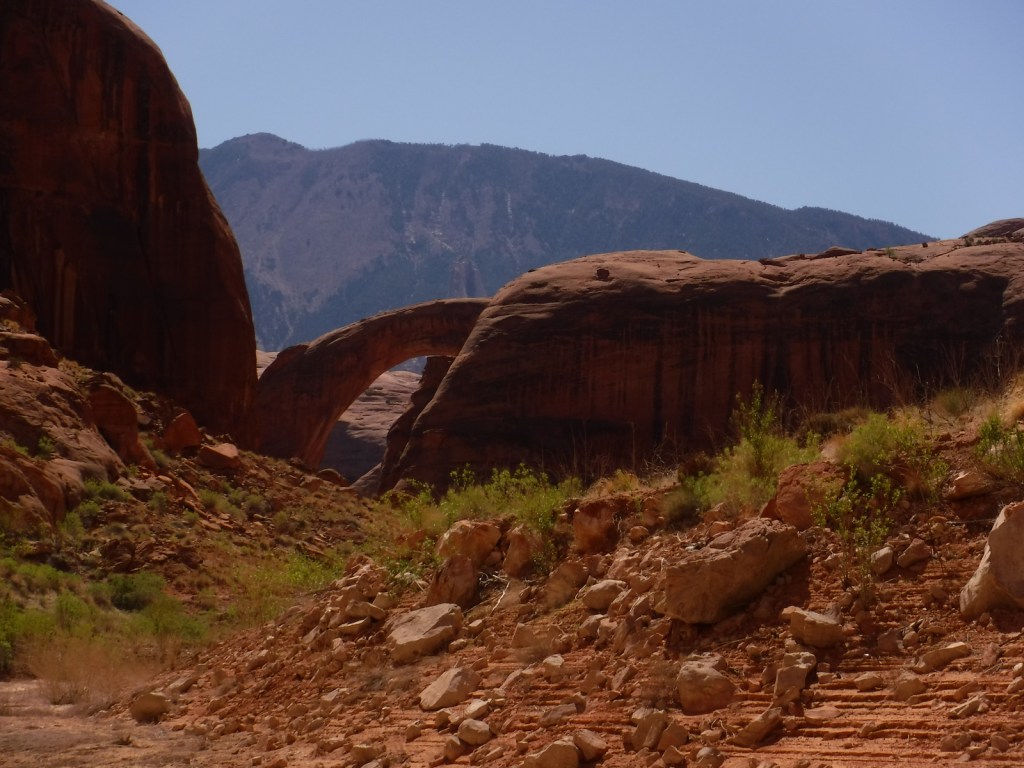
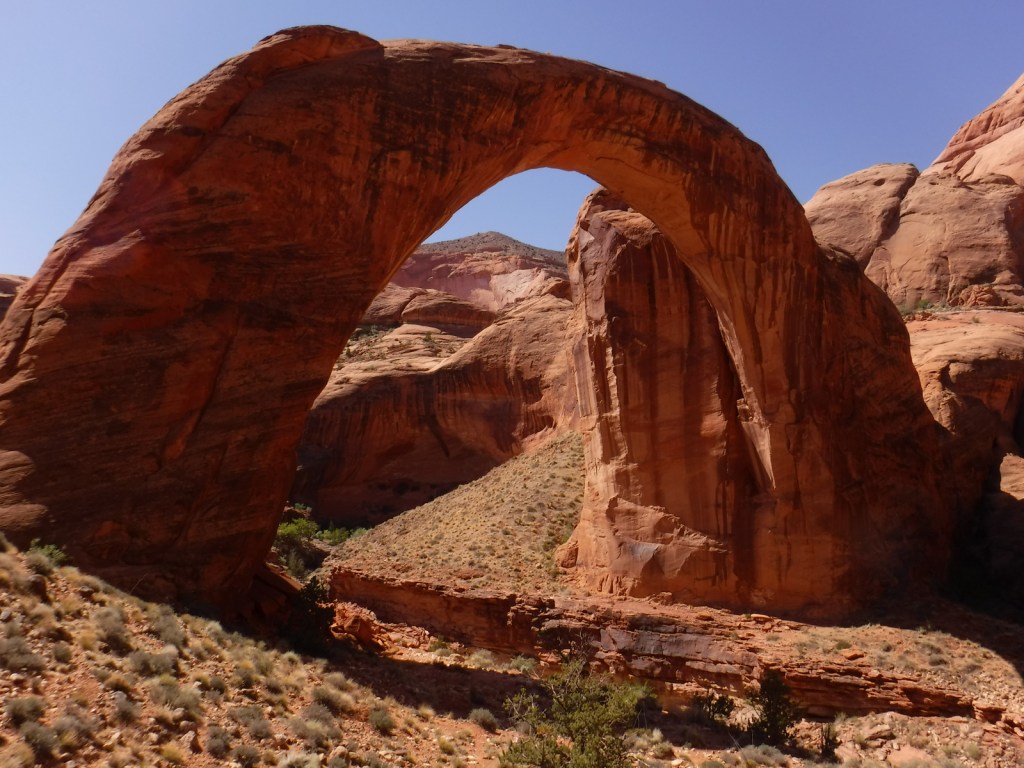
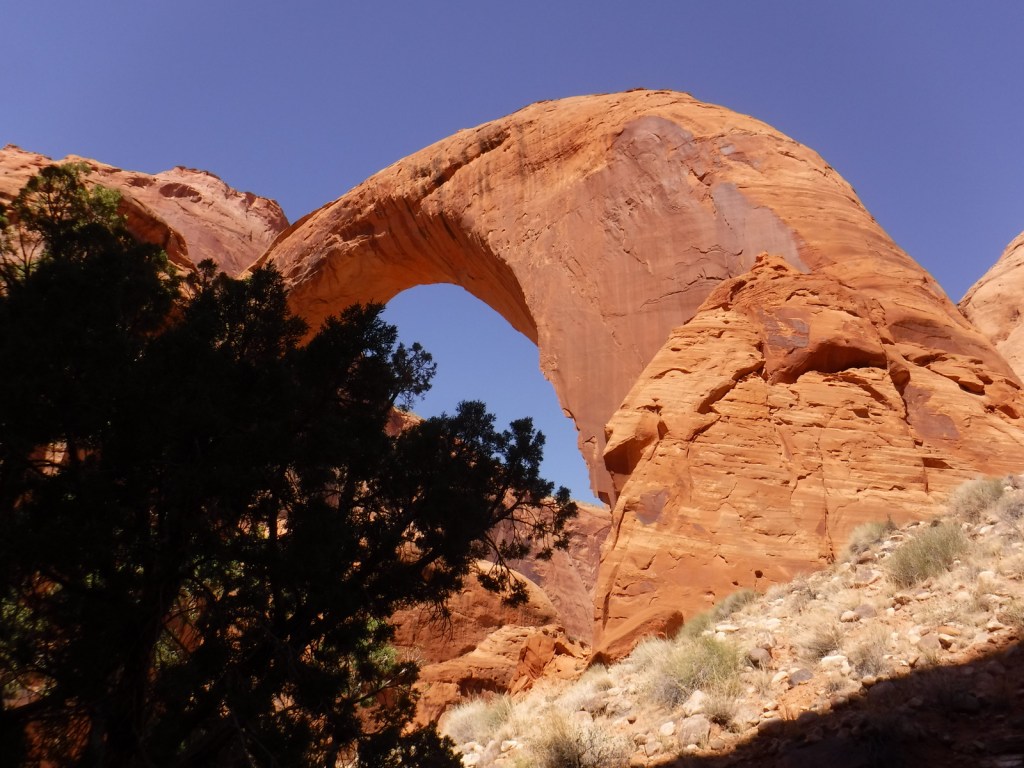
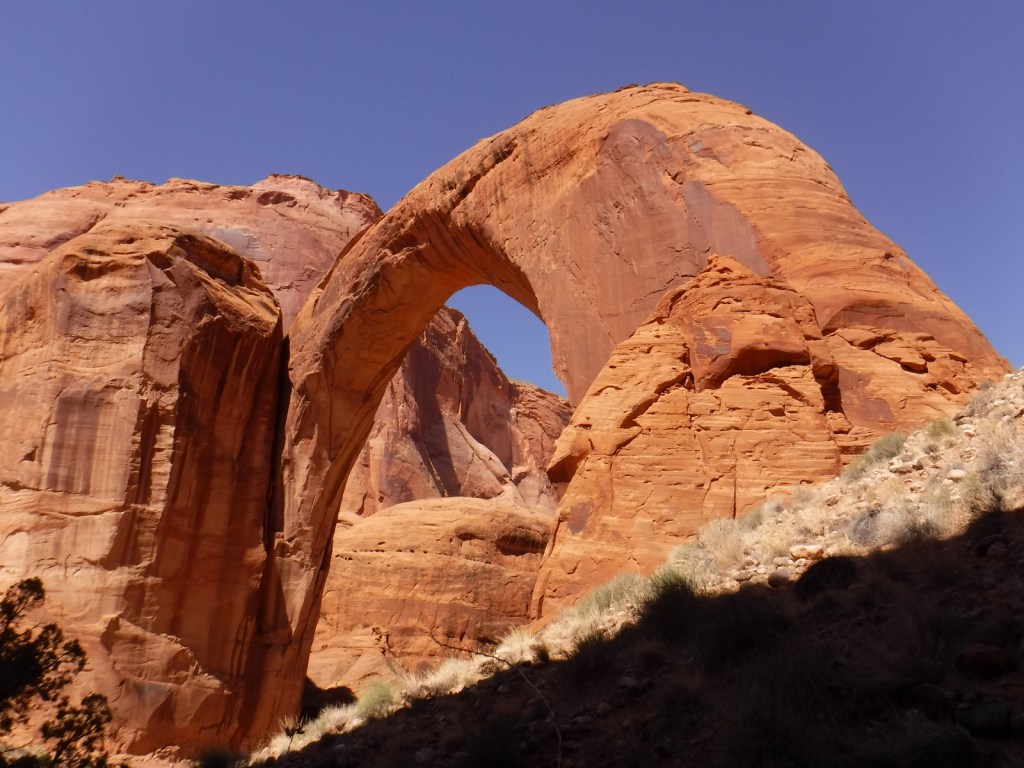
The statistics on Rainbow Bridge are impressive: it spans 275 feet with a height of 290 feet (compare that to the 151-foot-tall Statue of Liberty), and the sandstone at its top is 42 feet thick and 33 feet wide. Before geologists started lumping together natural bridges and arches, it was considered the largest natural bridge in the world formed by water running underneath it. The Navajo and other tribes consider Rainbow Bridge sacred and request that nobody walks beneath its span. When Glen Canyon Dam was completed in 1963, many archaeological sites were submerged beneath Lake Powell and at the reservoir’s peak volume this sacred site has had water reach to its base. The National Park Service (NPS) manages Rainbow Bridge National Monument as part of Glen Canyon National Recreation Area that straddles the Utah-Arizona border.
Learn more about the other 137 National Monuments in our book Monumental America: Your Guide to All 138 National Monuments. It is now available for sale on Amazon.com.

Highlights
Boat ride, Rainbow Bridge
Must-Do Activity
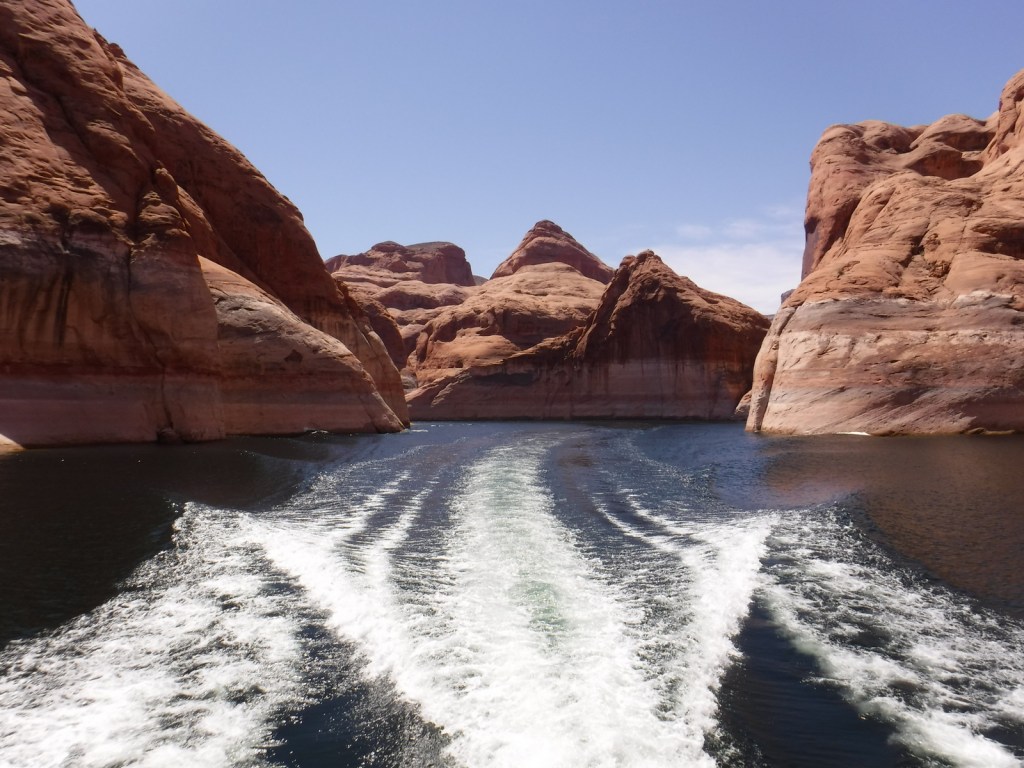
The NPS runs Carl Hayden Visitor Center in Page, Arizona, which is a good place to plan a visit to Rainbow Bridge or purchase tickets for a Glen Canyon Dam tour. If you do not want to attempt to navigate 50 miles one-way in your own boat (rentals available), there are all-day commercial boat trips into Bridge Canyon. Depending on the water level, the hike from the boat dock to the first overlook of the natural bridge is around one-mile one-way and is not wheelchair accessible. Photos do not do Rainbow Bridge justice, and you must see it for yourself to truly appreciate the size of this entry on our Top 10 NPS Sites for Natural Bridges/Arches.
Best Trail
There is always a hike from the boat dock to the overlook, but if you are in good shape continue on the trail around to the left to see the other side of Rainbow Bridge. With proper permits from the Navajo Nation in Window Rock, Arizona, it is possible to backpack into the site on either a 14-mile or 17-mile trail.
Photographic Opportunity
Obviously, Rainbow Bridge is the star attraction here. Navajo legends tell how one of the Hero Twins was saved from drowning when his father Jo’hanaa’éí (the Sun) sent a rainbow, later turned to stone to symbolize a father’s love. Another story says a measuring worm turned itself to stone to save both Hero Twins.

Peak Season
Spring and fall
Hours
https://nps.gov/rabr/planyourvisit/hours.htm
Fees
There is a $30 per vehicle entrance fee at the two marinas in Page (America the Beautiful passes accepted), in addition to charges for guided boat tours.
Road Conditions
The roads are paved to the marinas in Page, Arizona. Glen Canyon National Recreation Area is famous for its backcountry 4×4 roads (like Hole-in-the-Rock Road) and flash floods, so check with a park ranger before attempting anything unpaved. A fee is charged to ferry across Lake Powell between Halls Crossing and Bullfrog Marina.
Camping
There are several developed campgrounds in Glen Canyon National Recreation Area (mostly near marinas), but free primitive camping is also allowed along most dirt roads. A permit is required for backpack camping in the beautiful Coyote Gulch area off Hole-in-the-Rock Road.
Related Sites
Natural Bridges National Monument (Utah)
Capitol Reef National Park (Utah)
Navajo National Monument (Arizona)











Explore More – Where along the trail to the Rainbow Bridge overlook is the three-toed dinosaur print found in the sandstone?

Learn more about the other 137 National Monuments in our book Monumental America: Your Guide to All 138 National Monuments
 Raven About The Parks
Great information and photos. Thanks.
LikeLiked by 1 person
This area is beautiful! We took the boat ride through the canyons to see the gorgeous painted rock. Magnificent!
LikeLiked by 1 person
It sounded like a great place to visit. I plan to be in Page in April so I checked out the tour boats. Unfortunately, it’s a bit too much for my budget. I did like the information and pictures.
LikeLiked by 1 person
It is expensive. Hopefully the photos made up for not seeing it in person.
LikeLike
The pictures did help. Thank You!
LikeLiked by 1 person